
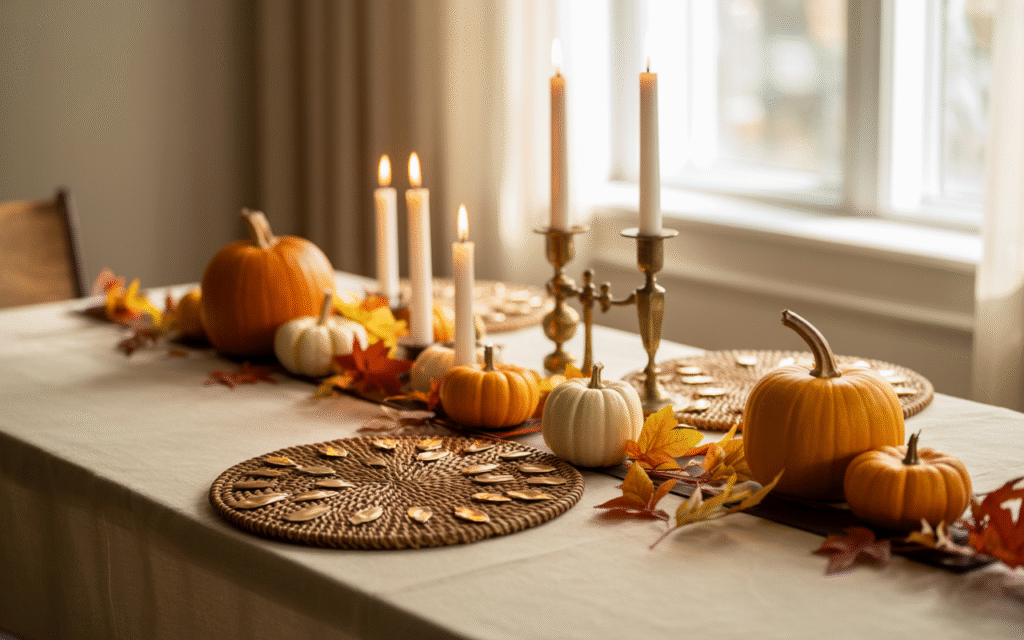
Every fall, the same question comes up over coffee with friends: “How do I make the table feel seasonal without turning it into a prop shelf?” In my experience, the sweet spot is a table that looks warm, functions beautifully, and doesn’t take half a weekend to pull together. Expect ideas with clear measurements, realistic budgets, and setups that leave space for actual serving. I’ve tested these in small flats and big dining rooms, and what works best is starting with a simple base, adding texture, and keeping the centerpiece within one-third the table’s width so plates and elbows still fit comfortably. You’ll finish with a table that feels personal, not performative.
Make a Cozy Linen Base

I always start with the base because it sets the mood for everything else. For fall, linen or cotton in earthy tones like rust, mustard, or olive works beautifully. I’ve found that a full tablecloth is great for formal meals, but for everyday use, a runner (40–45 cm wide / 16–18 inches) down the middle gives a casual but still pulled-together look.
- Materials: Linen runner or cotton in fall tones.
- Time: 10 minutes to iron and spread.
- Cost: ($25–$50) depending on fabric.
Pro tip: If you have a rectangular table, let the runner hang over by about 20–25 cm (8–10 inches) on each side. It looks intentional rather than accidental. For a round table, sometimes I lay two runners at right angles—it creates an “X” effect that feels unique.
Use Pumpkins Beyond Orange
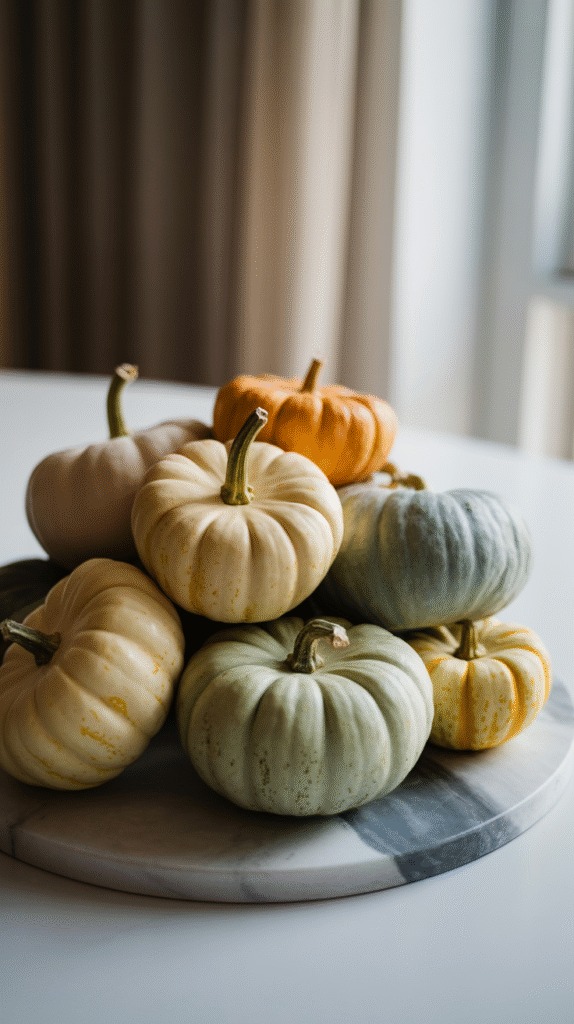
Pumpkins are the obvious fall item, but I avoid piling orange ones everywhere because it can dominate the table. What works best for me is mixing sizes and colors—white mini pumpkins, green heirlooms, even dusty blues.
One year, I sprayed mini pumpkins with matte gold paint and clustered them on marble boards. It cost very little and looked high-end.
- Materials: Assorted pumpkins, spray paint if desired.
- Time: 30 minutes including drying.
- Cost: ($5–$20).
Avoid this: Don’t use too many large pumpkins; one or two is enough. Otherwise, you’ll run out of serving space quickly.
Layer Natural Textures
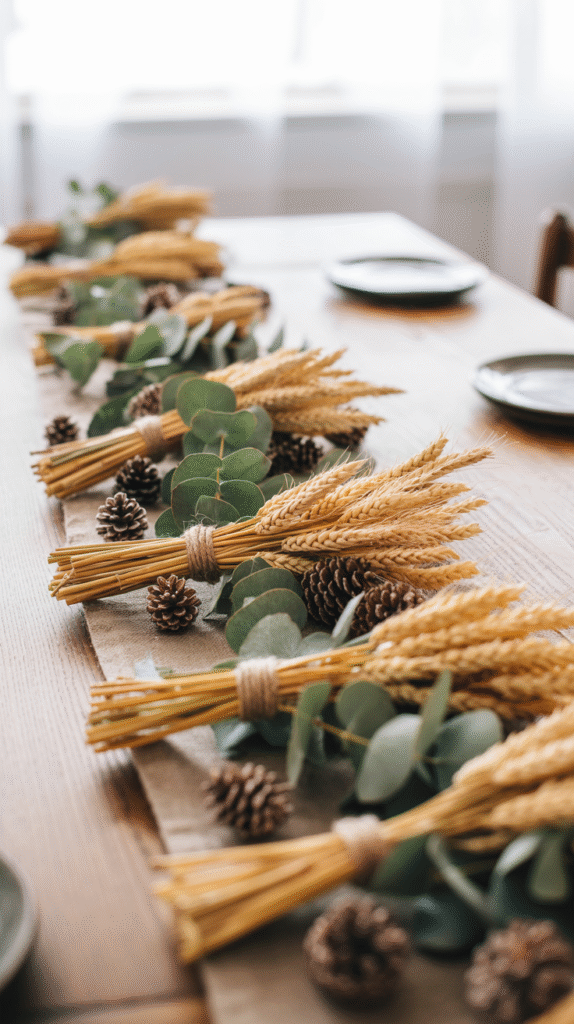
When I visit friends’ homes, I often notice their fall decor feels a little “flat.” The quickest fix is texture. Dried wheat bundles, eucalyptus stems, pinecones—these soften harsh lines on wood tables.
I’ve tied dried wheat into small bunches with twine and laid them flat along a runner. The golden tones immediately made my dark wood table less formal.
- Materials: Wheat stalks, dried eucalyptus, pinecones.
- Time: 20 minutes.
- Cost: ($10–$25).
Pro tip: Avoid artificial stems that feel too plasticky. Real dried ones last for months and smell amazing.
Add Warm, Low-Level Light
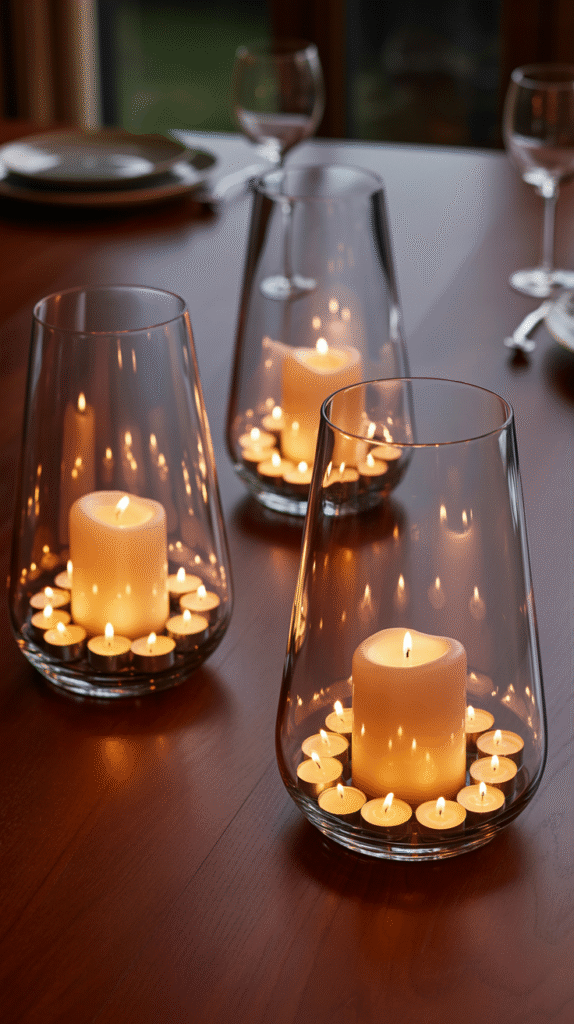
Candles are a must for fall. The one mistake I see often is tall candlesticks that block faces across the table. What I prefer is low, spread-out candlelight: tea lights in glass holders, short pillar candles in varying diameters.
One setup I tested: three glass hurricanes with 10 cm (4-inch) wide ivory pillars, surrounded by tealights. It gave a cozy glow but kept sight lines clear.
- Materials: Pillar candles, tea lights, hurricanes.
- Time: 15 minutes.
- Cost: ($20–$50).
Safety note: Always use unscented candles during meals, otherwise competing smells can ruin the dining experience.
Play with Plaid or Checks
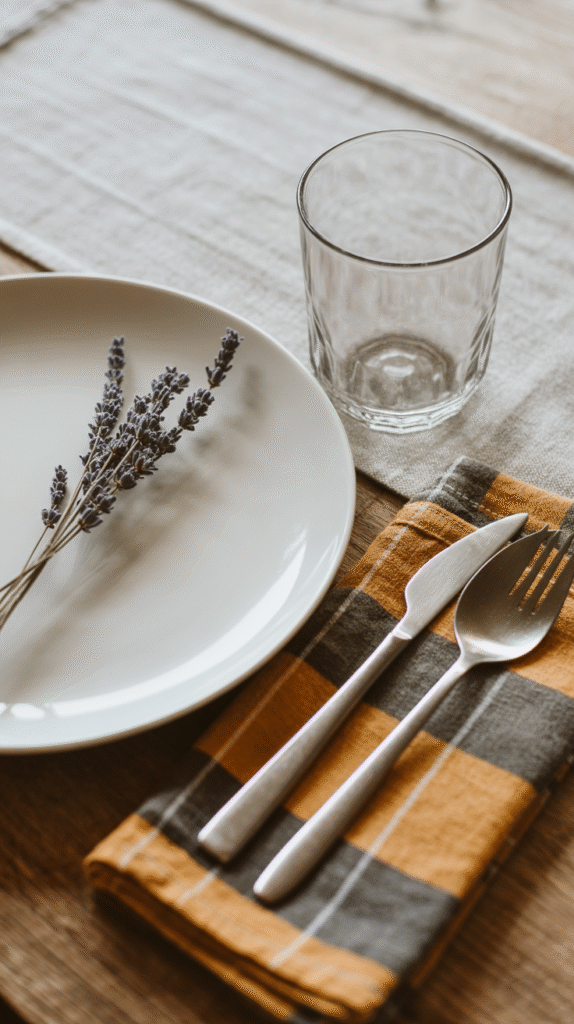
Fabric napkins in plaid patterns instantly say “fall” without screaming it. I fold them simply (no fancy origami—this isn’t a wedding) and tuck them slightly under plates so the color peeks out.
Difficulty: Absolute beginner level. Time: under 5 minutes per place setting.
Once, I even used cut pieces from an old blanket (washed well, of course) as napkins for a friendsgiving dinner. People noticed the creativity. Cost? Zero.
Bring in Wood and Wicker
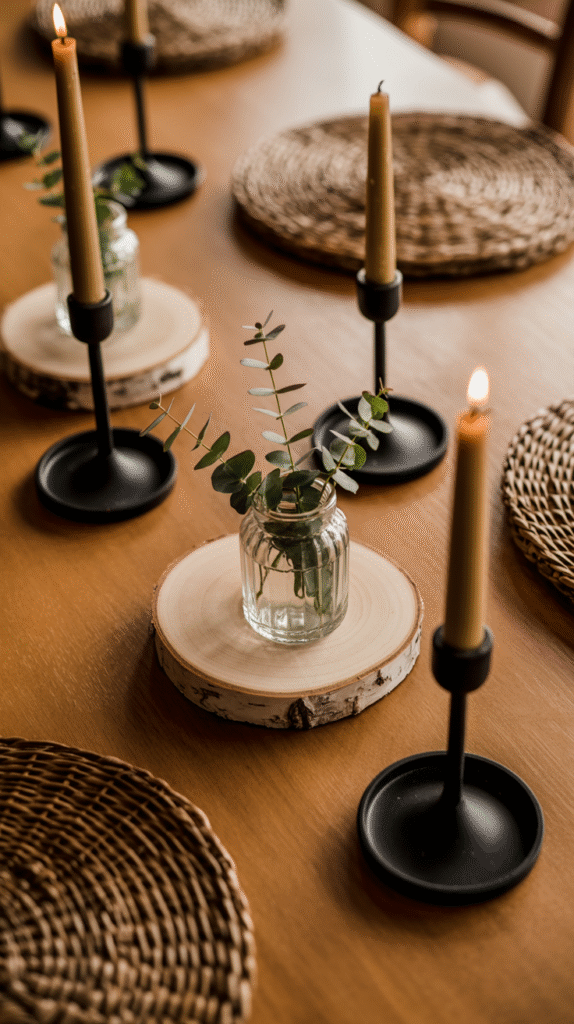
Shiny surfaces need grounding. Whenever I use metallic candle holders or ceramic plates, I balance them with wood slices, wicker chargers, or bamboo trays.
One favorite trick: Using thin birch wood slices (about 15 cm / 6 inches diameter) under small vases. They instantly warm up the look.
Cost ranges: ($10–$30) for a set of 6–8 slices. Time: 10 minutes to arrange.
Use Seasonal Fruit for Color
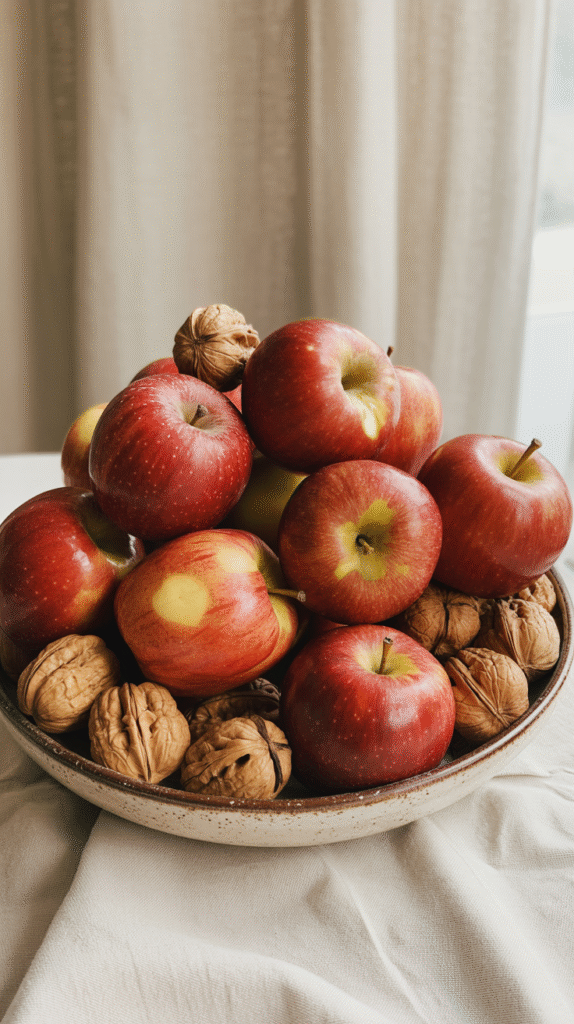
Not everything needs to be decorative-only. Think about fruit as color accents. Pomegranates, pears, apples—they draw the eye and double as snacks.
A few falls ago, I heaped shiny red apples into a shallow ceramic bowl and surrounded them with walnuts in the shell. It became the table’s centerpiece and I only spent about ($7).
Avoid this: Bananas or citrus don’t give fall vibes, so keep it seasonal.
Mix Metal Accents
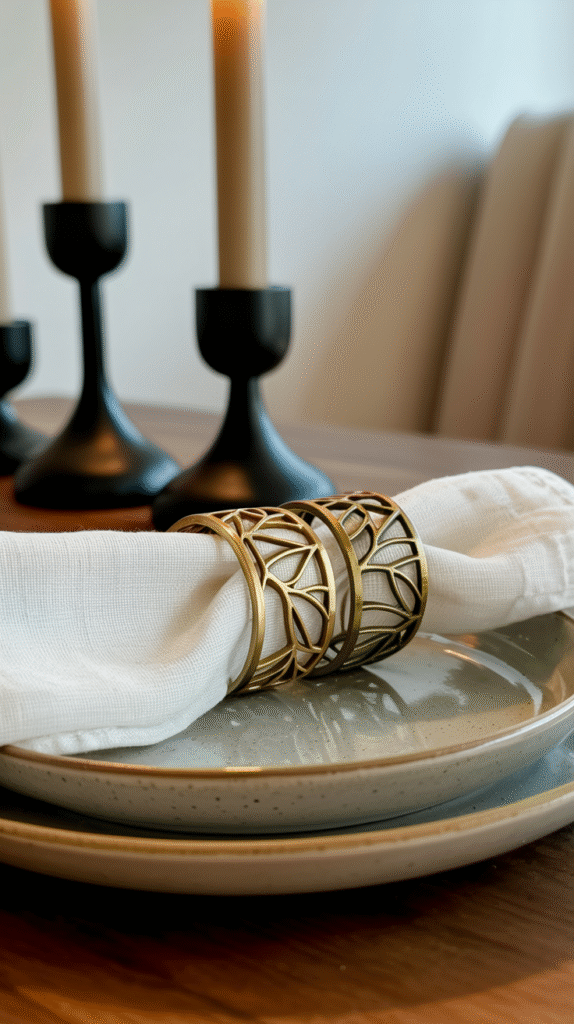
I love a little shimmer in fall decor, but the trick is subtle layering of metals. Brass napkin rings next to matte black candle stands can look modern, not too traditional.
Tip: Stick to two finishes at most; otherwise, it becomes visual noise.
Create a Mini Foraged Centerpiece
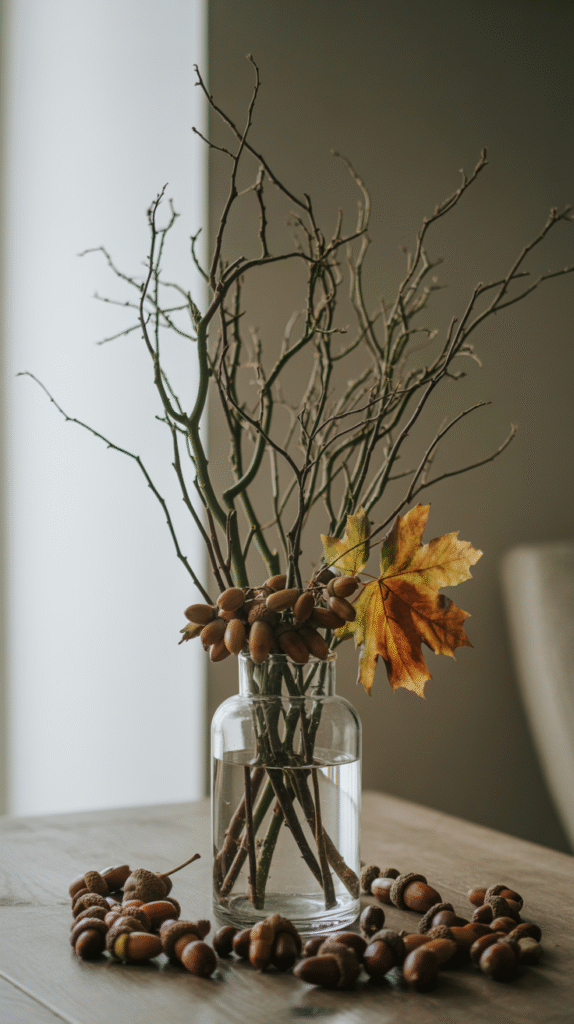
If you like DIY, this is for you. I’ve gone on short walks, collected acorns, dried leaves, and pine branches, then arranged them around a glass vase. It feels authentic because it literally came from your neighborhood.
Difficulty: Beginner.
Cost: Free.
Time: About 45 minutes including gathering.
Swap Plates or Chargers
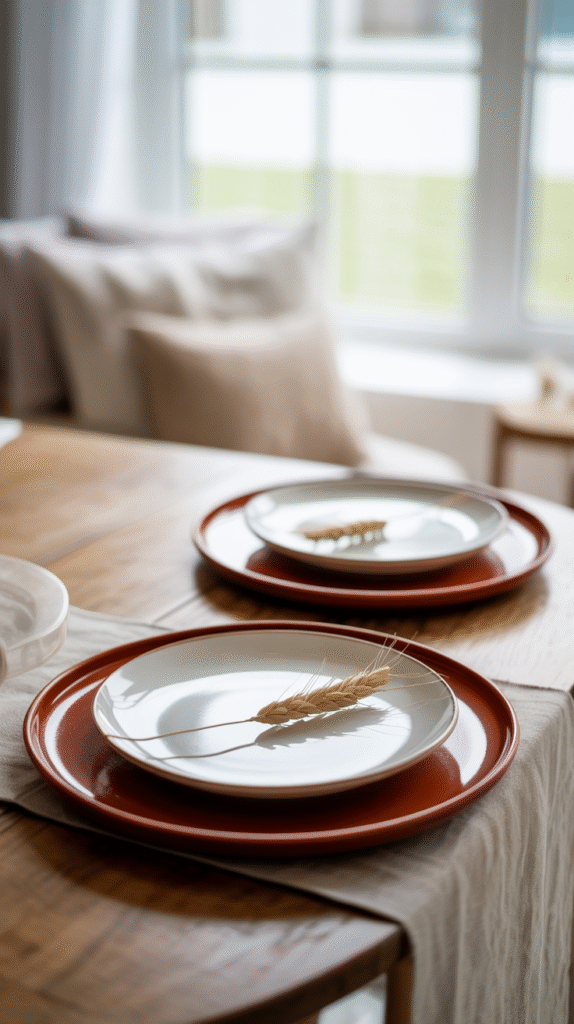
You don’t have to buy all-new dishes. Just changing the chargers or base plates can change the entire mood. A set of deep rust-colored chargers under plain white plates gave my table a completely different feel than the same plates on bare wood.
Approximate cost: ₹3,000 ($35–40) for a set of 6.
Keep Function in Mind
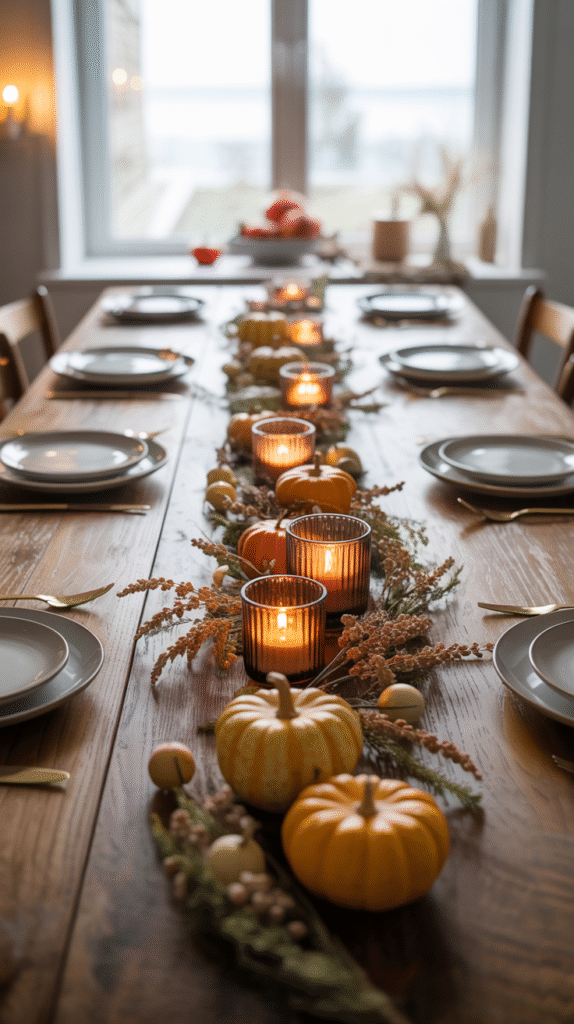
The most common mistake? Going overboard. If food has no place to land, the decor becomes impractical. I once styled a table with so many little accents, I had to clear it off before we even sat down. Lesson learned.
What works best is limiting the main decor to the center 25–30 cm (10–12 inches) of the table. That way, you’ve still got elbow room and plenty of space for serving.
FAQs
1. How do I decorate a small table for fall without clutter?
Stick to one centerpiece, like a bowl of mini pumpkins or a single candle cluster. Scale is everything—avoid big arrangements on small surfaces.
2. What low-cost options still look elegant?
Use seasonal fruit, branches, or wheat stalks from a local market. Pair with a neutral runner you already own. It looks thoughtful without heavy spending.
3. Can I use fake pumpkins or greenery?
Absolutely, as long as the quality is high. In my experience, mixing 70% real items and 30% faux keeps the table looking authentic.
4. How far ahead can I set my fall table?
I usually style it about 2–3 days before hosting. Pumpkins and dried stems will hold up, but fresh flowers can wilt fast.
5. What color palette works best for fall?
Warm earthy tones: mustard, terracotta, rust, forest green, and cream. I avoid neon oranges or super bright yellows—they can look more Halloween than autumn.
Wrap Up
If there’s one thing I’ve learned styling autumn tables for clients and my own home, it’s this: choose a color story, mind the scale, and layer a few textures—then stop. Keep your main arrangement within about one-third of your table’s length or diameter and stick to unscented, low-profile candles so conversations and food stay front and center. Mix a couple of natural elements (wheat, eucalyptus, seasonal fruit) with one metal accent, and you’ll have a setup that looks intentional and lives well through weeknight dinners and weekend hosting. When in doubt, edit once, then remove one more thing—you’ll gain breathing room for serving dishes and guests.