
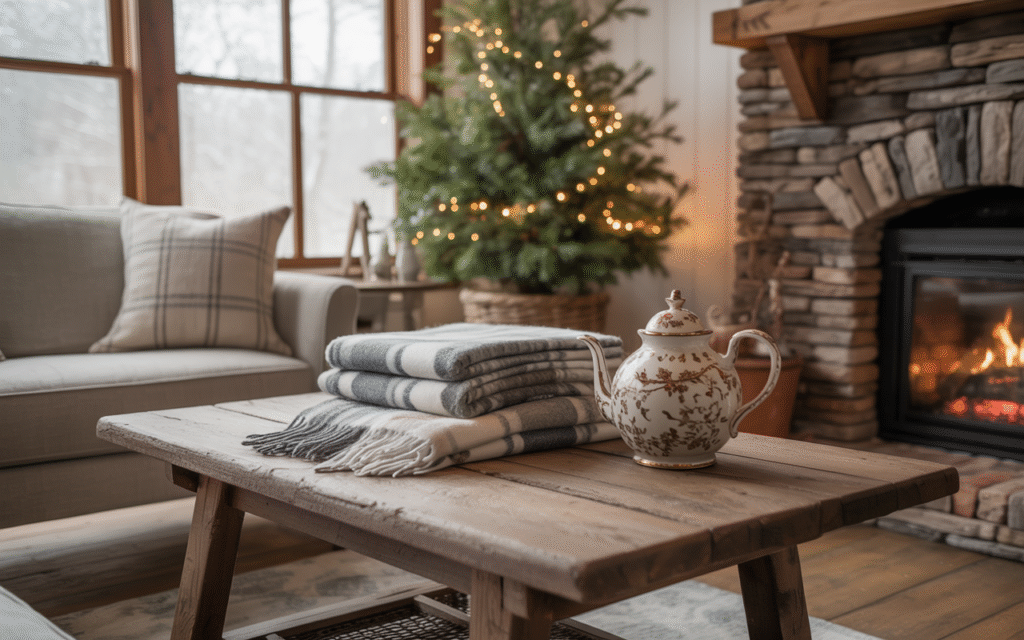
When December rolls around and the holidays are in the air, I hear so many of my friends say, “I want my home to look cozy and special, but I don’t even know where to start.” Maybe it’s you. Maybe you’ve got a bag of decorations that have sat in the attic for years, or you scroll Pinterest for inspiration but feel lost in the sea of ideas. Or perhaps you love the farmhouse look but worry it’ll cost a fortune or take weeks to pull off.
With a handful of tried-and-true ideas, most can get real results in a weekend, using things you already have, things you can DIY, or even thrift store finds that cost next to nothing. I’m not talking about “the perfect farmhouse” you see online—I’m talking about your real living space, for real people, in real time.
This isn’t about trends or spending hundreds on vintage crates; it’s about making your nest feel warm, inviting, and authentically yours. I’ll walk you through 12 winter farmhouse decor ideas—some that take 10 minutes, some that take a little longer—all picked because they work, are easy to adapt, and have made real homes (including mine) feel wonderful. I’ll share which shortcuts actually save time, what mistakes beginners always make (I’ve made them too!), and alternatives for different budgets and skill levels.
By the end, you’ll have a clear, doable plan—not just pretty images, but practical steps you can start on this afternoon. Ready to make this winter your coziest yet? Let’s do this together.
1. Swap Out Your Pillows and Blankets (The Instant Winterizer)
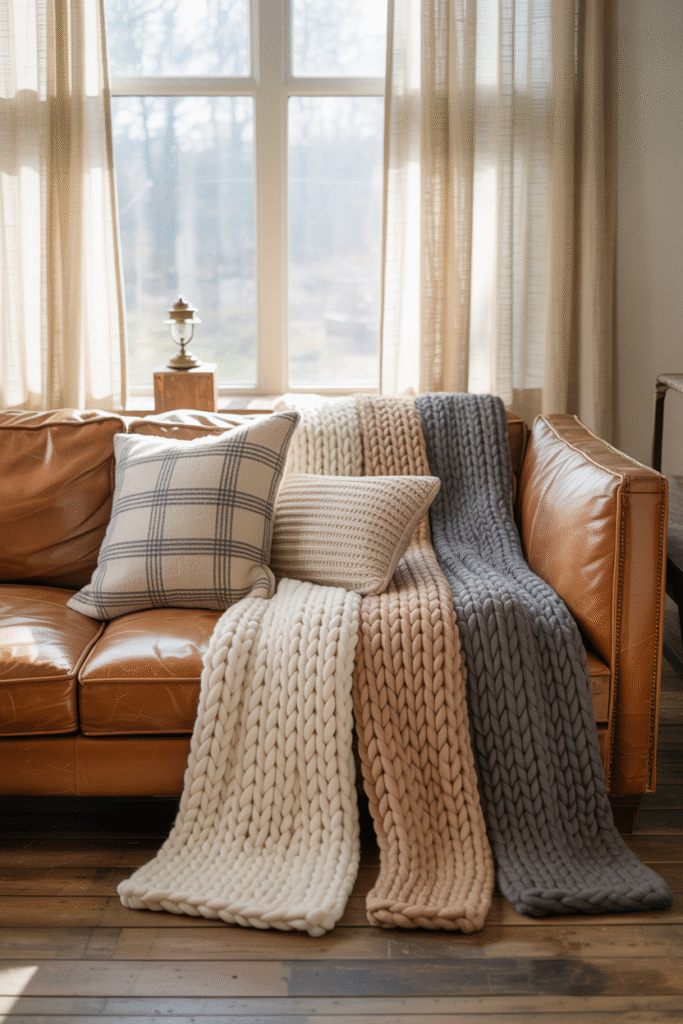
I always say: if nothing else, change your throw pillows and blankets for the season. I’ve found that swapping in a few chunky knit blankets and pillow covers in creams, plaid, or classic checks instantly warms up the room. **Aim for at least two different textures—**think cable knit with a soft faux fur. Even if the rest of your decor stays the same, this one move makes a sofa or bed feel ready for winter.
What works best is picking a neutral base (oatmeal, charcoal, cream) and layering in a pop of color—maybe a sage green or deep red throw pillow. You don’t need to buy a dozen; just three to four well-chosen pieces per seating area makes the difference. Avoid this: Don’t choose fabrics that are too heavy for your everyday use—if it feels too fussy, you’ll never reach for it. Stick with machine-washable covers for real life.
Cost: $15–$50 for a few covers and a throw (cheaper if you shop secondhand).
Time: 10 minutes.
Difficulty: Beginner.
2. Make Your Own Festive Winter Centerpiece
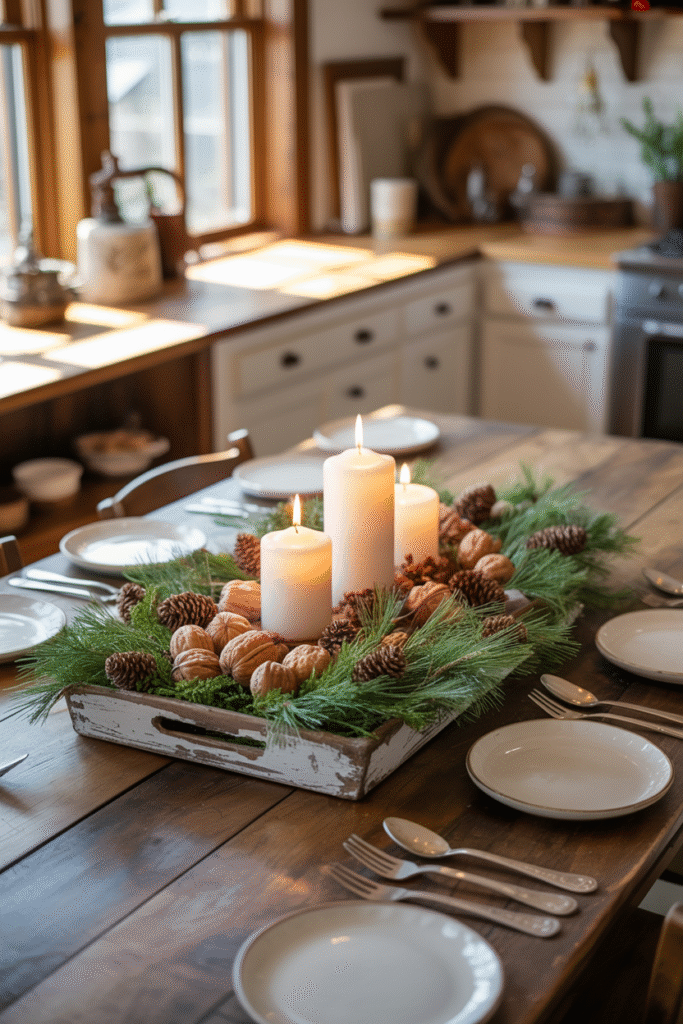
A centerpiece is the heart of the farmhouse table, but buying one can get expensive and doesn’t always look “you.” What I do every year: grab a wooden tray or even a baking sheet, gather some evergreens from the yard (or a grocery store bouquet), add a few pinecones, and maybe a small string of battery-powered fairy lights. You don’t need a florist’s touch to make this look good—just pile it up naturally and let it look a little wild.
Pro tip: If you don’t have pinecones, walnuts in their shells or even apples add that farmhouse charm. Tuck in a candle (unscented, so it doesn’t fight with dinner smells) for warmth. What I’ve seen go wrong: Overcrowding the table so no one has room to eat, or making it too tall and blocking sightlines. Keep it low and wide, about 30 cm (12 in) tall max.
Cost: $5–$20 (sometimes free if you forage).
Time: 15 minutes.
Difficulty: Beginner.
3. Use Battery-Operated Candles for Instant Glow
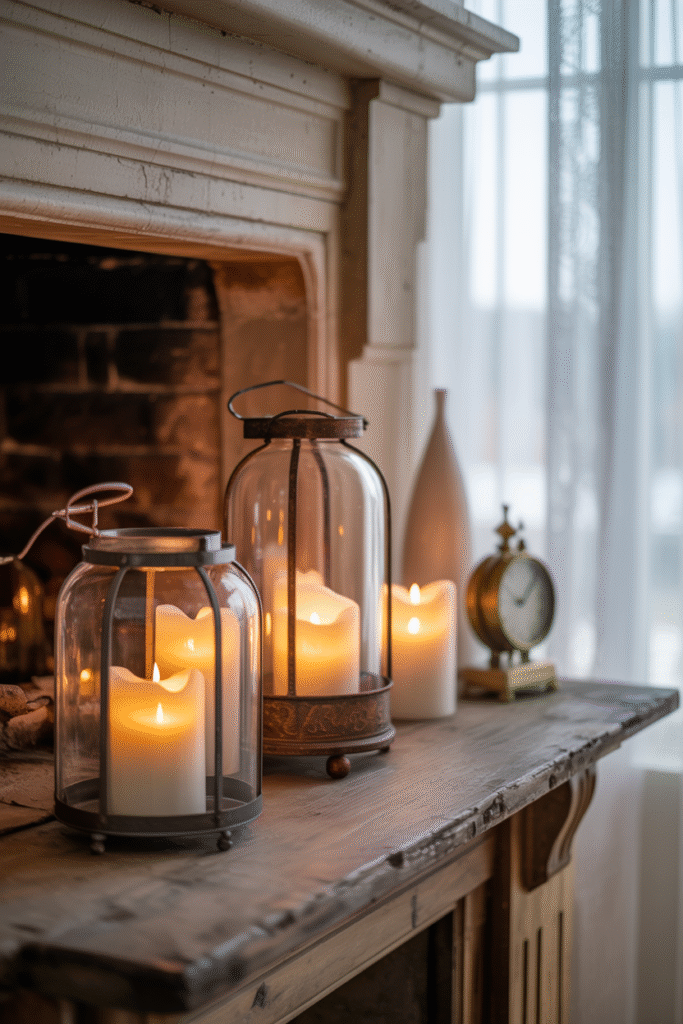
Candles are a winter farmhouse staple, but open flames and pets/kids don’t always mix. I’ve replaced all my real candles with battery-operated ones—no worries about wax spills or fire hazards, and you get the same cozy vibe. Cluster a few on your mantel or in a lantern on the entryway table.
In my experience, white or warm yellow LEDs look the most natural. Skip the ones that flicker wildly—they can look tacky. If you can, buy ones with timers so you don’t have to remember to turn them on each night. Avoid this: Don’t place them too high up where the “flame” isn’t visible; keep them at eye level.
Cost: $10–$30 for a small collection.
Time: 5 minutes to set up.
Difficulty: Beginner.
4. Bring in Nature with Foraged Branches
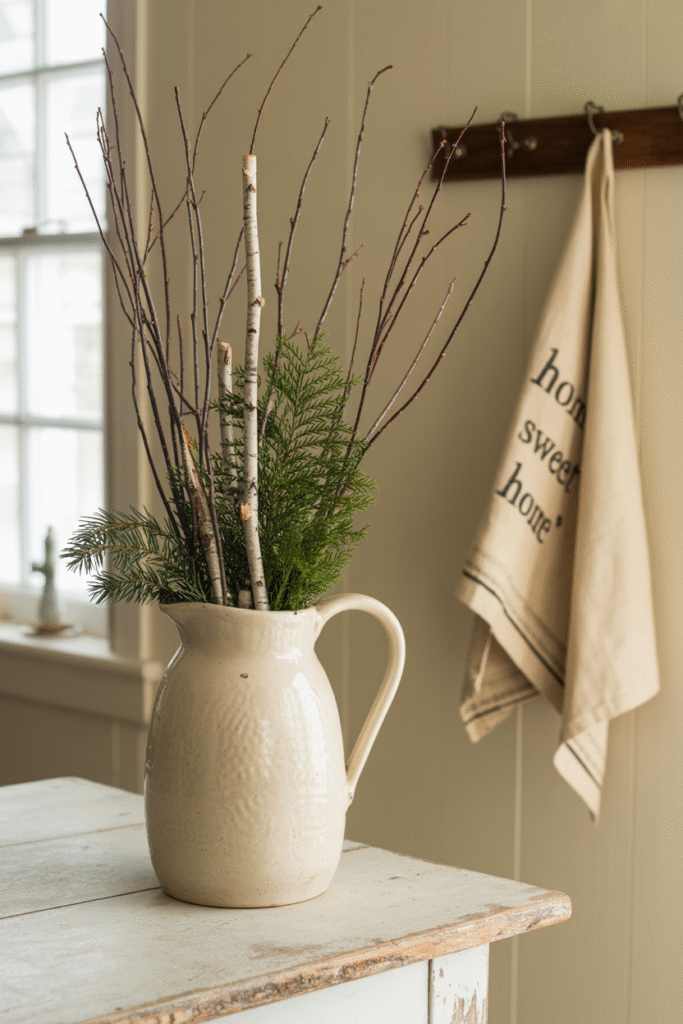
One winter, I was too busy to decorate, so I just stuck some bare branches in a big jug on the dining table. To my surprise, it looked amazing. Now I do it every year. Look for interesting twigs, birch branches, or even red-twig dogwood. Arrange them tall and loose in a chunky vase or rustic pitcher.
What works best is keeping it simple—no need to add ribbons or ornaments unless you want to. Let the natural shapes speak. Pro tip: If you don’t have a vase, use a galvanized bucket or even a cleaned-out tin can wrapped in burlap.
Cost: Free if you forage, $5–$15 for a vase.
Time: 10 minutes.
Difficulty: Beginner.
5. Create a Warm Entryway Welcome
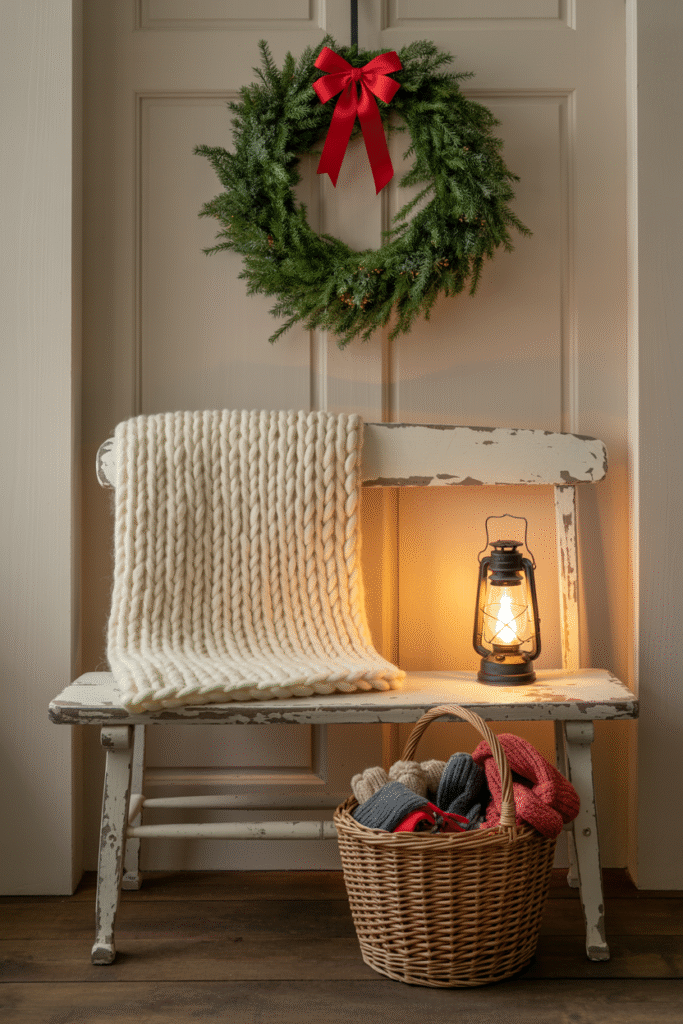
Your entryway sets the tone. I like to use a sturdy bench or stool with a basket underneath for hats and mittens. Add a woven rug for texture, and hang a simple wreath above. In my experience, a lantern with a battery candle or a small chalkboard sign saying “Welcome” makes the space feel intentional.
Pro tip: If your entry is small, use a hook rack instead of a bench—just keep it organized and clutter-free. Avoid this: Overloading the space with too many signs or knickknacks. Farmhouse style thrives on simplicity, not clutter.
Cost: $20–$100 (bench optional, baskets and rugs can be thrifted).
Time: 15–30 minutes.
Difficulty: Beginner.
6. Layer Rugs for Extra Coziness
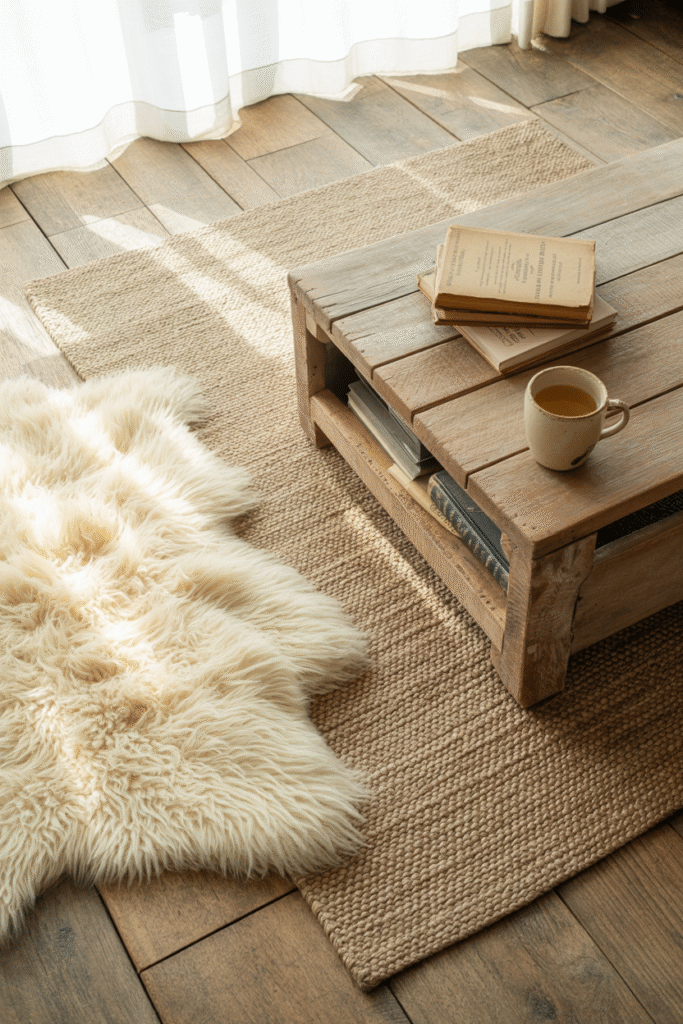
I’ve found that one thin rug never feels quite enough in winter. Try layering a jute or braided rug underneath a smaller, softer one (like sheepskin or a shag) in your living room or bedroom. This is an instant upgrade that adds warmth underfoot and visual texture.
What works best is choosing rugs about 1.5 x 2 meters (5 x 6.5 feet) for the base, with the top one about 1.2 x 1.8 meters (4 x 6 feet). Avoid this: Slippery rugs without a pad—safety first, especially if you have kids or seniors at home.
Cost: $30–$150 depending on quality and source.
Time: 10 minutes.
Difficulty: Beginner.
7. Swap Curtains for Something Heavier
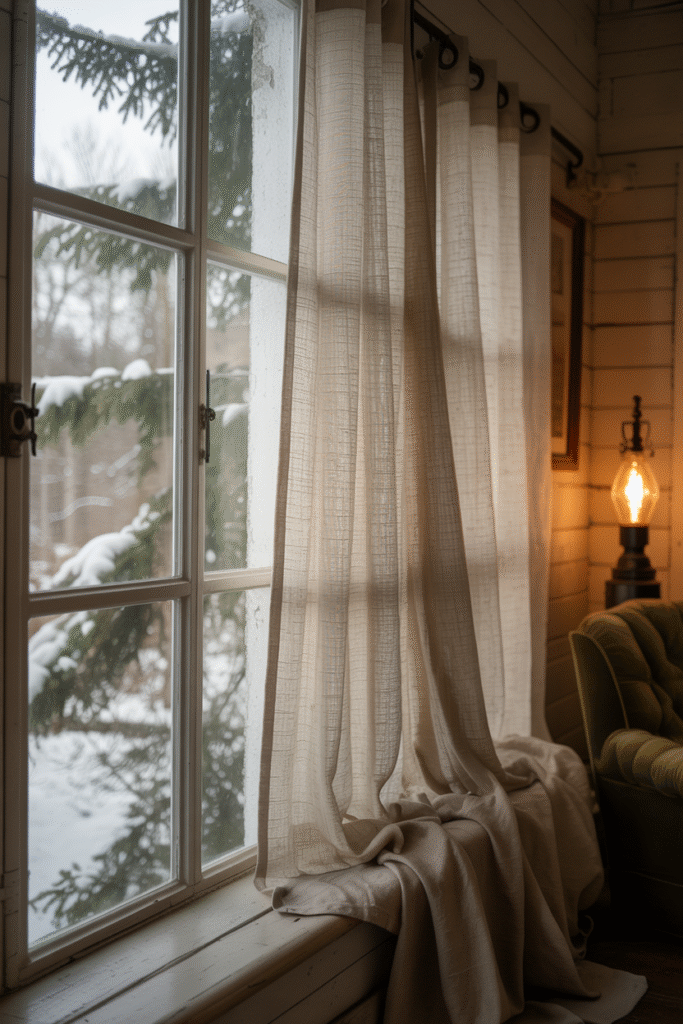
Summer sheers aren’t cutting it in winter. I’ve found that switching to linen, cotton duck, or even flannel curtains in a neutral shade makes a room feel snug and helps block drafts. If you’re on a tight budget, thrift stores often have great options—just measure your windows first!
What works best for me is hanging the curtains high and wide, almost to the ceiling, which makes the room feel bigger and more elegant. Pro tip: If you can’t change the whole curtain, just add a thicker liner behind your existing ones for extra insulation.
Cost: $25–$100 per pair (cheaper if thrifted or DIY).
Time: 20–30 minutes (with a helper).
Difficulty: Intermediate.
8. Use Vintage or Thrifted Wooden Pieces

Farmhouse style loves real wood with character. I’ve found that a single vintage stool, old crate, or primitive wooden bowl on the coffee table adds instant warmth. Don’t worry about “matching”—farmhouse is all about mixing woods and finishes.
What I’ve seen go wrong: People buy distressed-looking new furniture instead of hunting for real vintage, and it can look fake. My advice: Scout your local thrift stores, Facebook Marketplace, or even ask older relatives if they have anything tucked away. A light sanding and a coat of beeswax or matte varnish can refresh wood without losing its character.
Cost: $5–$50 per piece.
Time: Varies (thrifting can take an afternoon, refinishing adds 1–2 hours).
Difficulty: Intermediate.
9. Add Greenery with Potted Herbs or Succulents
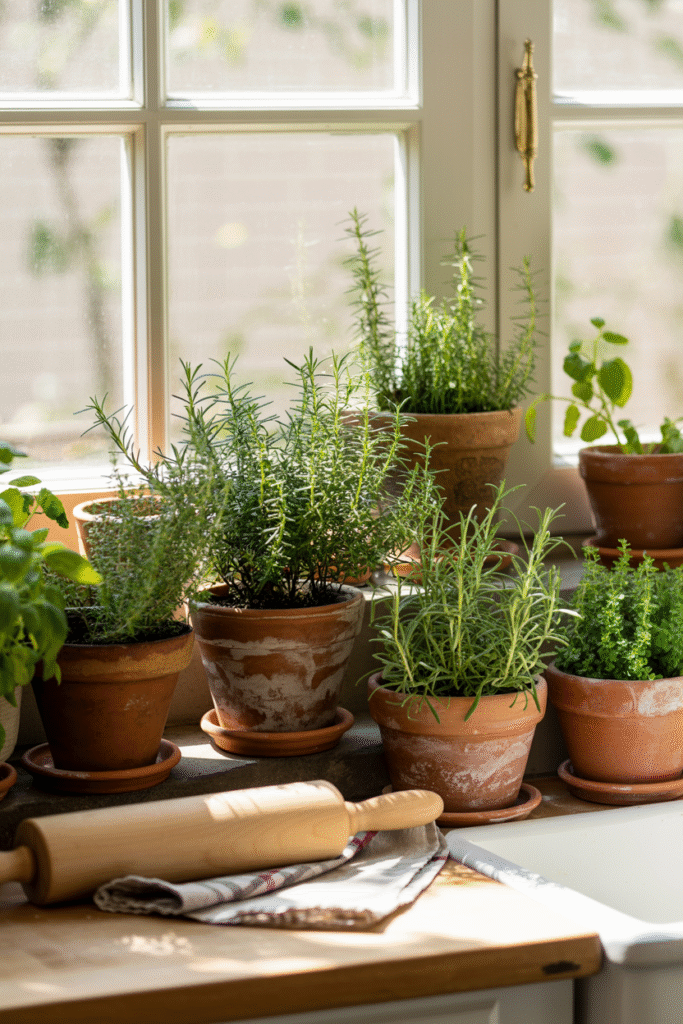
Winter doesn’t mean you can’t have greenery. I love to keep potted rosemary, thyme, or even a small succulent cluster on my kitchen windowsill or coffee table. They add life, smell wonderful, and can be used in cooking.
What works best is using simple terracotta pots or white enamel containers. In my experience, a little group of three different herbs looks intentional without being fussy. Pro tip: If you’re forgetful like me, set a phone reminder to water them weekly.
Cost: $10–$30 for a few plants and pots.
Time: 15 minutes to pot and arrange.
Difficulty: Beginner.
10. Hang a Memory Board or Burlap Bulletin Strip
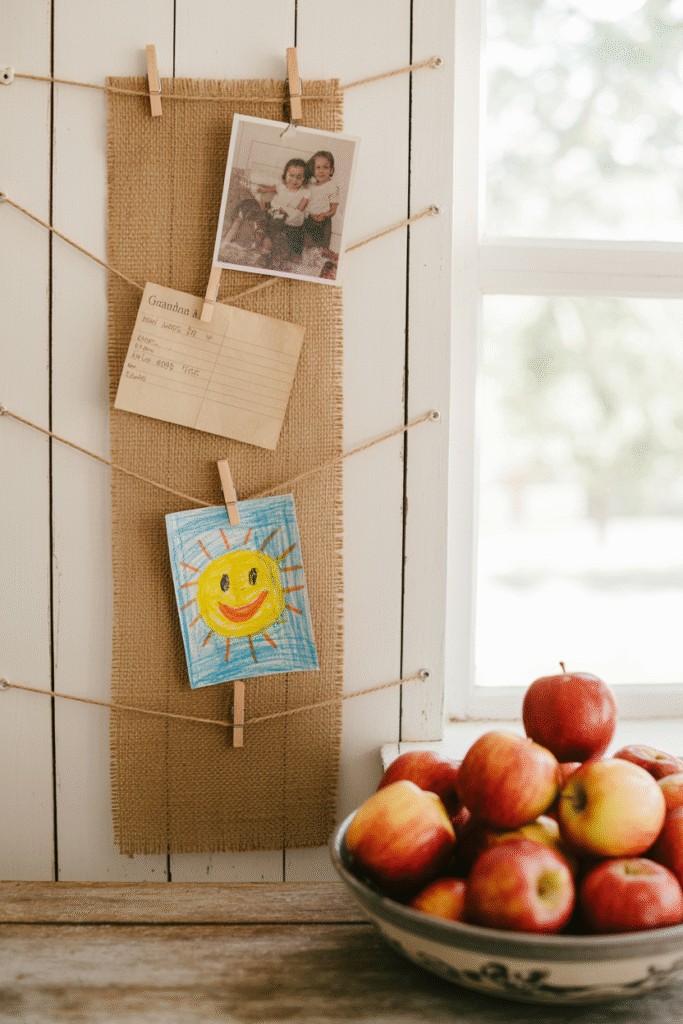
One wall in my kitchen used to be blank and cold. I nailed up a strip of burlap as a bulletin board and now we pin holiday cards, recipe cards, and little notes there. It’s practical, personal, and adds farmhouse texture.
What works best is using a thick burlap ribbon or fabric, about 10 cm (4 in) wide, and stapling it to the wall. Add mini clothespins for easy swapping. Pro tip: If you rent or don’t want to make holes, use removable adhesive strips to hold the burlap up.
Cost: $5–$15.
Time: 10 minutes.
Difficulty: Beginner.
11. Create a Hot Drink Station
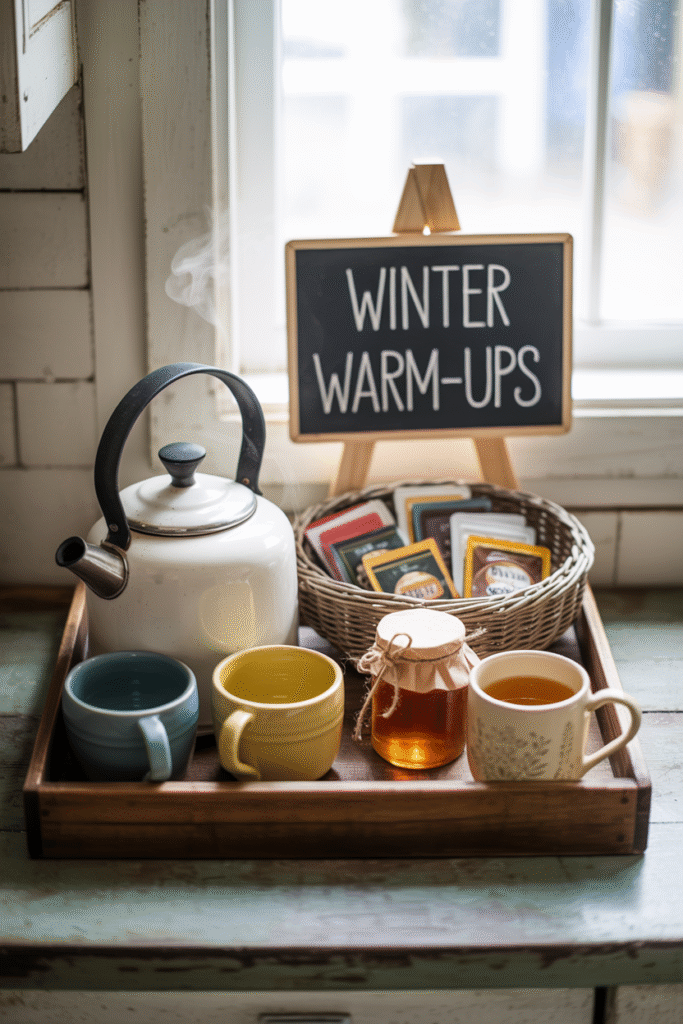
When it’s cold out, I want coffee, tea, or cocoa within reach. I set up a corner of the kitchen counter or a small cart with mugs, a kettle, honey, and a jar of spoons. Add a chalkboard label for “Winter Warm-ups” and maybe a little basket of tea bags.
What I’ve seen go wrong: Making this station too big or complicated—keep it simple and make sure it’s actually where you’ll use it. Pro tip: Use a wooden crate or tray to corral everything, and tuck a tea towel underneath for spills.
Cost: $10–$40 (mostly things you already have).
Time: 10 minutes.
Difficulty: Beginner.
12. Set Up a Collection Corner with Winter Books and Games
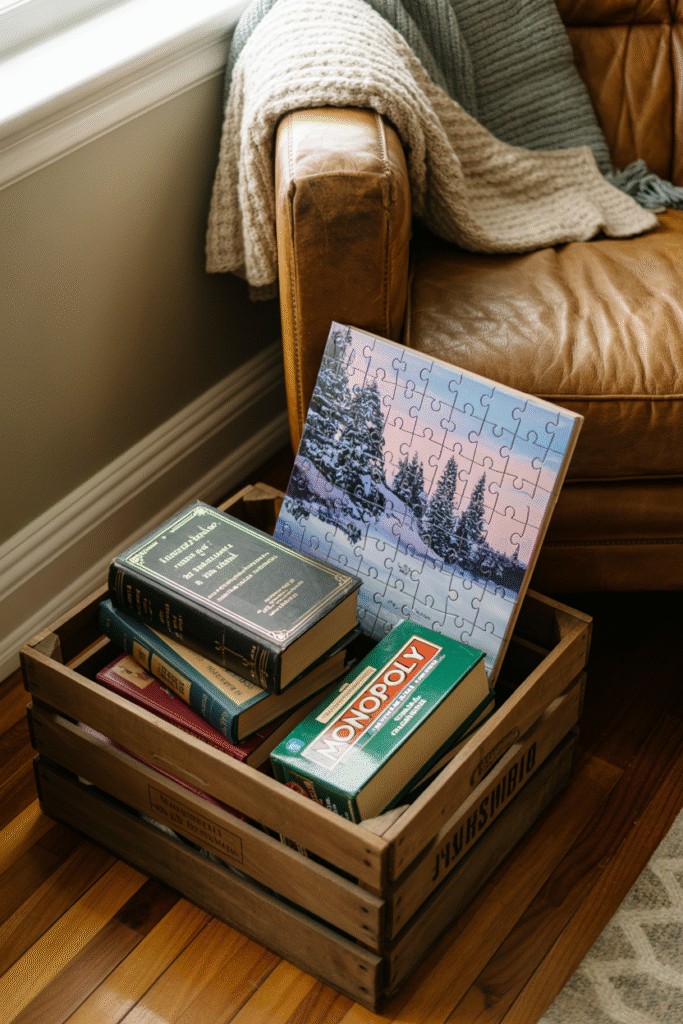
A basket of books, board games, and puzzles by the sofa or fireplace invites everyone to slow down and connect. I’ve found that kids and guests both love this—it’s practical farmhouse charm.
What works best is choosing a mix of things: a classic novel, a holiday storybook, a puzzle with a winter scene. Pro tip: If you don’t have a basket, use a vintage suitcase or wooden crate. Avoid this: Don’t overstuff it—keep it manageable so people actually use it.
Cost: $0–$30 (games and books can be borrowed or thrifted).
Time: 10 minutes.
Difficulty: Beginner.
Real Talk: Common Mistakes and How to Skip Them
Mistake #1: Overdoing the “rustic” look. Farmhouse is about warmth, not clutter. If every surface is covered in signs and mason jars, it feels chaotic, not cozy. Edit as you go.
Mistake #2: Ignoring lighting. Overhead lights alone feel harsh in winter. Layer in table lamps, floor lamps, and candles for a glow that’s gentle on the eyes.
Mistake #3: Buying everything new. The magic is in the mix—your grandma’s cake stand, a thrifted quilt, a handmade mug. Let your space tell your story.
Mistake #4: Skipping comfort for style. If your pretty throw blanket isn’t actually soft, no one will use it. Always choose comfort where it counts.
FAQ: Your Winter Farmhouse Questions, Answered
Q: How much does it cost to get a farmhouse look?
A: It can be almost free if you use what you have or shop secondhand. Focus on texture, simple greenery, and rearranging rather than buying all new decor. Even a $20 thrift run can transform a room.
Q: Do I have to paint my walls white?
A: Not at all! While white is classic, soft greys, warm taupes, and creamy beiges work beautifully. The vibe matters more than the exact shade.
Q: What if I hate clutter?
A: Farmhouse doesn’t have to be cluttered. Edit to a few meaningful items per surface, and store the rest. Clean lines and empty space are just as “farmhouse” as a full shelf.
Q: How do I keep it cozy without looking too holiday-themed after the new year?
A: Stick with winter whites, greenery, and natural textures—avoid obvious holiday colors or motifs. These elements feel seasonal but not dated.
Q: Can I do this in a small apartment?
A: Absolutely. Focus on small swaps—new pillow covers, a single centerpiece, or a compact greenery display. Layered rugs and curtains make even a tiny space feel warm.
Q: What’s the one thing I should do first?
A: Change your lighting. Swap out bulbs for warmer tones, add a table lamp or two, and use those battery candles. Light transforms a room faster than anything else.
Your Winter, Your Way
There’s no single “right” way to do winter farmhouse style. What I’ve learned from my own home (and helping others) is that the best spaces are made by real people, for real life—not by copying Pinterest perfectly. Start small, use what you love, and don’t stress over trends. These 12 ideas are just a beginning. Pick one or two to try this weekend, see how it feels, and go from there.
If you try something and it doesn’t feel right, that’s okay—swap it out, move things around, and make it yours. That’s what makes a house a home, winter after winter.
Let me know how it goes—I’m always here for real questions, not just pretty pictures. Now, go make your space feel as cozy as it looks.