

Have you ever looked at your bathroom and thought, “It just needs… something”? I’ve been there. Sometimes, even after a fresh coat of paint and a spotless mirror, bathrooms can still feel a bit bare or impersonal. Over the years, I’ve found that plants are one of the easiest, most affordable ways to inject life and warmth into a bathroom transforming it from merely functional to truly welcoming. But not just any plant will do. In my experience, bathroom plant decor done right can make your morning routines more pleasant, boost your mood, and even improve air quality. The best part? You don’t need a green thumb or a big budget. With the right choices and a few clever tricks, everyone can create a bathroom that feels alive and fresh. I’ve tried dozens of setups in real homes, made my share of mistakes, and discovered what works best in all kinds of spaces small, windowless, or bright and airy. Here, I’ll walk you through 15 practical, tried-and-true bathroom plant decor ideas, step by step. I’ll share specific plant names, arrangement hacks, lessons learned from real projects, and even a few lesser-known tricks that really make a difference. Expect real talk about light, humidity, and maintenance because the goal is for your plants (and your bathroom) to thrive, not just survive.
Why Bathrooms—And Plants—Need Each Other
Bathrooms are unique spaces: warm, humid (at least after a shower), and often low on natural light. I’ve found that these conditions are actually perfect for certain houseplants the ones that struggle in a dry living room often flourish in a steamy bathroom. Plants like ferns and calatheas, for example, adore the humidity you’re already providing every morning. The right greenery not only softens hard surfaces and adds color, but also makes the air feel fresher. I remember a project where a simple Boston fern in a vintage milk jug turned a dull guest bathroom into a favorite spot for overnight visitors that’s the magic of thoughtful plant placement.
But don’t expect every plant to thrive. I’ve killed my share of succulents and cacti in windowless baths (lesson learned: always match the plant to the room). What works best is choosing varieties that enjoy indirect light and can handle dampness. The payoff is worth the effort: a bathroom filled with healthy plants feels like a mini retreat, even if it’s just a few square meters (square feet).
15 Bathroom Plant Decor Ideas
1. Trailing Vines for Shower Drama
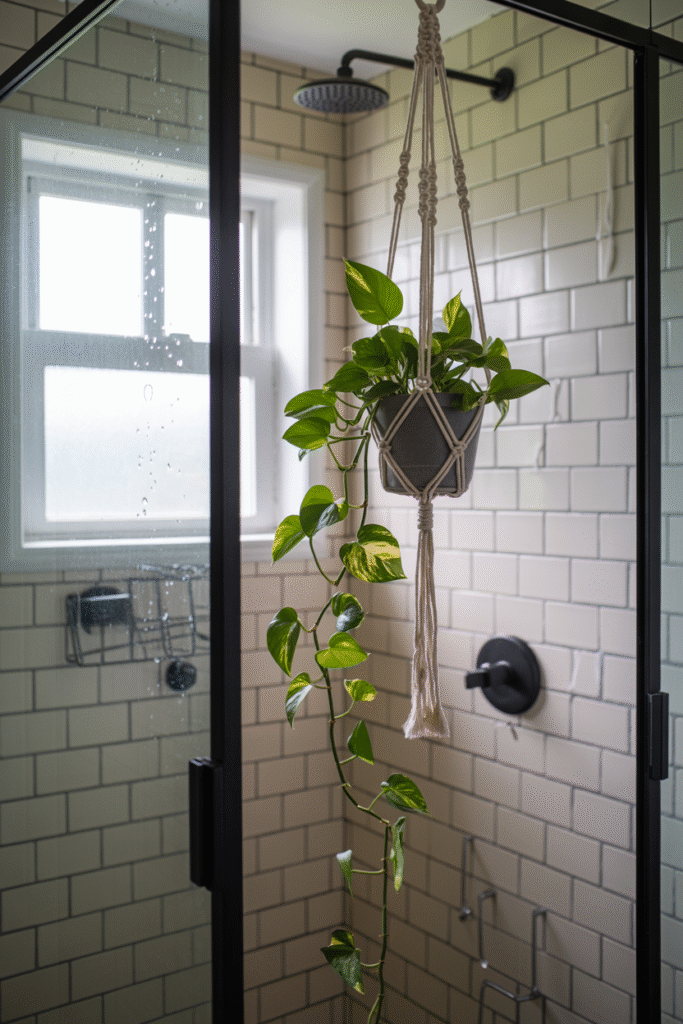
If your shower stall looks a bit stark, try installing a small hanging basket with a trailing plant just outside the splash zone pothos or philodendron work beautifully. In my downstairs powder room, I hung a 15 cm (6 in) macramé hanger from a shower curtain rod and let a golden pothos cascade down. The effect was instant vintage spa vibes. Make sure the pot has drainage holes and a saucer to catch drips. Pro tip: If your shower gets direct light, a spider plant is another great choice.
- Materials: Small hanging basket, macramé hanger, pothos or philodendron, potting mix
- Cost: $10–$20
- Time: 15 minutes to set up
- Difficulty: Beginner
2. The Windowsill Jungle
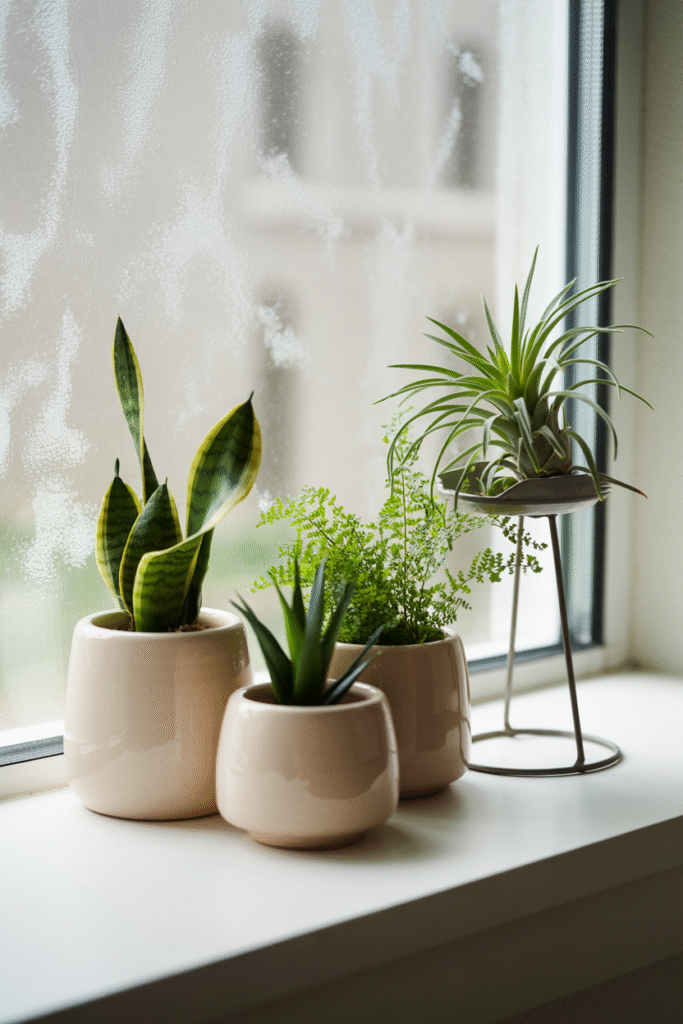
If your bathroom has a windowsill even a narrow one piling up a mix of small pots in different heights adds instant charm. I like grouping air plants (tillandsias), baby snake plants, and a tiny fern at varying heights. Choose glazed ceramic pots to protect surfaces from water damage. In a recent project, lining up three 10 cm (4 in) pots with different textures created a living mini-garden that guests kept asking about. Avoid this: Placing thirsty plants where someone might knock them over while brushing teeth.
- Materials: 2–4 small pots, potting mix, tillandsias, snake plants, ferns
- Cost: $15–$30
- Time: 20 minutes
- Difficulty: Beginner
3. High Humidity Havens Near the Tub
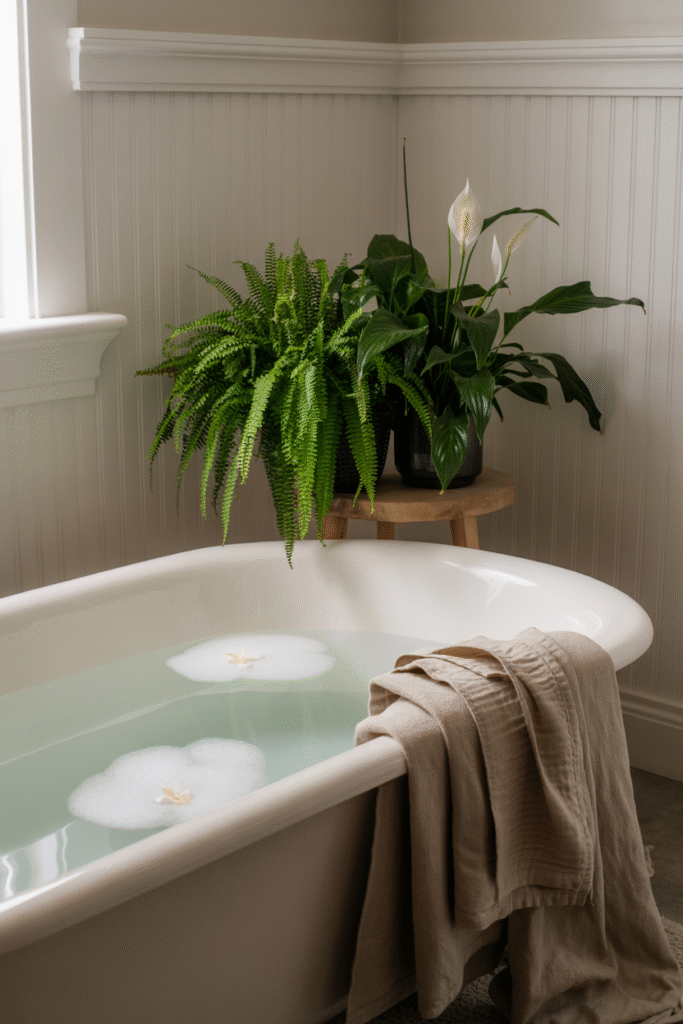
Bathtubs are natural humidifiers. Place moisture lovers here I’ve had great results with bird’s nest ferns and peace lilies on a small stool or wall-mounted shelf about 30 cm (12 in) from the tub’s edge. In my own home, a peace lily actually started blooming more often after I moved it into the bathroom. If you’re worried about little ones or pets, peace lilies are toxic if eaten, so keep them out of reach. Pro tip: Rotate plants in and out of this spot weekly if you have many; they’ll all enjoy the steam.
- Materials: Stool or shelf, peace lily, bird’s nest fern
- Cost: $20–$40
- Time: 10 minutes
- Difficulty: Beginner
4. Floating Shelves for Vertical Interest
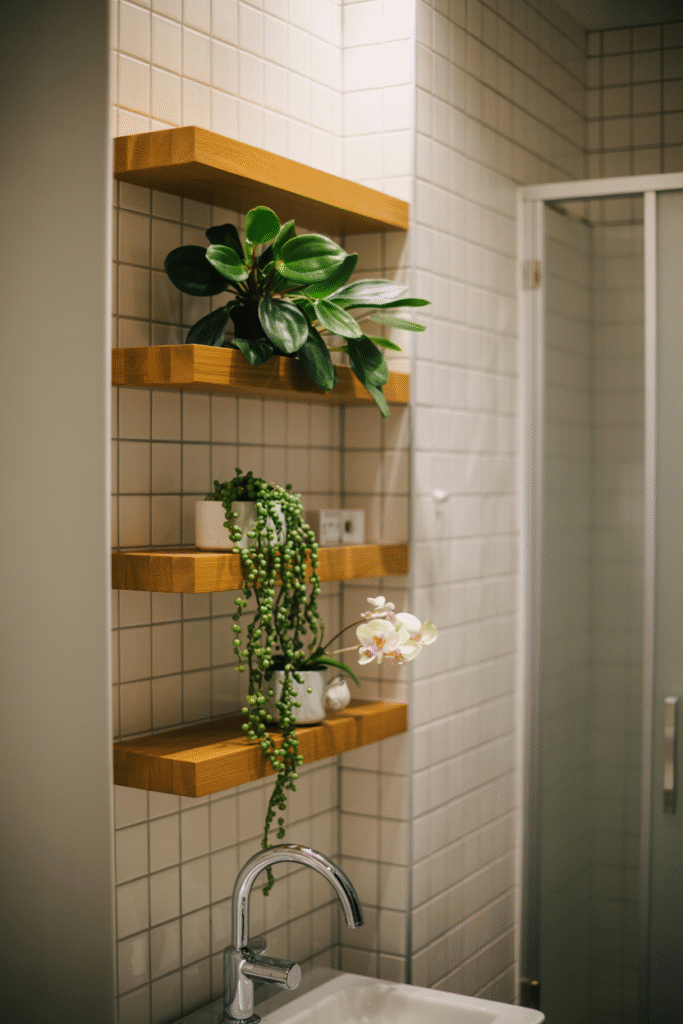
In small bathrooms, think up. Floating wood shelves are a game-changer (and easy to install with basic tools). I like arranging a mix of small plants think peperomia, string of pearls, or even a miniature orchid at different levels. In one tiny city flat, I used three shelves, each 60 cm (24 in) long, staggered at 30 cm (12 in) intervals. Pro tip: Waterproof the shelves with a clear sealant, and always use saucers to protect the finish.
- Materials: Floating shelves, assorted small plants, clear sealant, saucers
- Cost: $30–$60
- Time: 1 hour
- Difficulty: Intermediate
5. The Statement Piece on the Sink
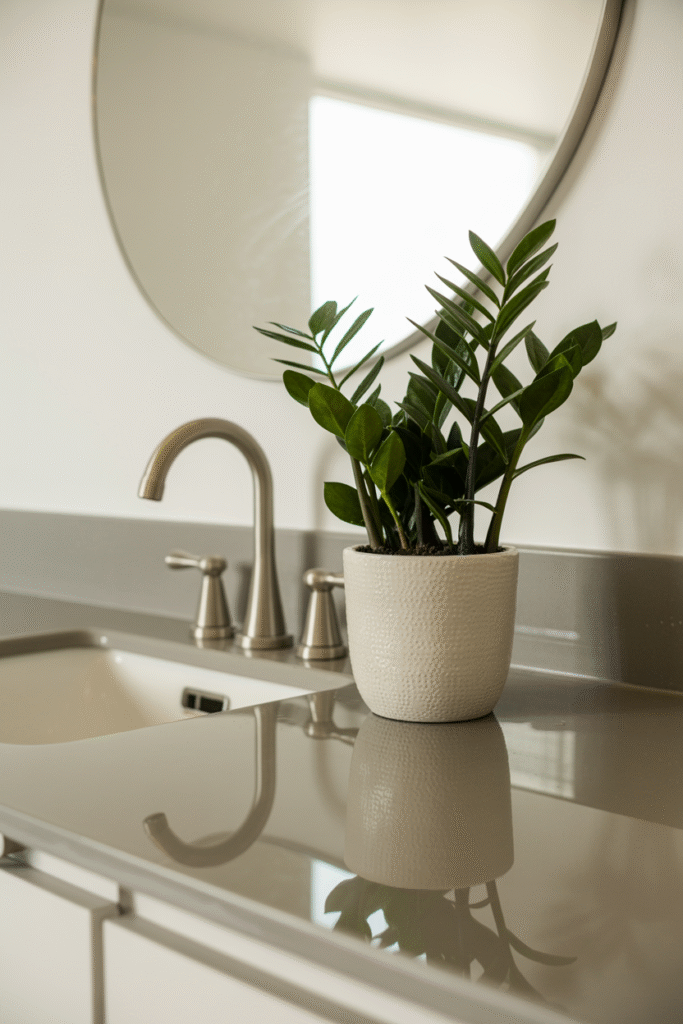
A single, bold plant on the sink counter can become a focal point. In a recent consult, I recommended a ZZ plant in a decorative pot it’s nearly indestructible and thrives in low light. Just keep it at least 30 cm (12 in) from taps to avoid splashes. Pro tip: If space is tight, opt for a container that narrows at the top to maximize surface area.
- Materials: Decorative pot, ZZ plant
- Cost: $15–$25
- Time: 5 minutes
- Difficulty: Beginner
6. Hanging Glass Globes for Air Plants
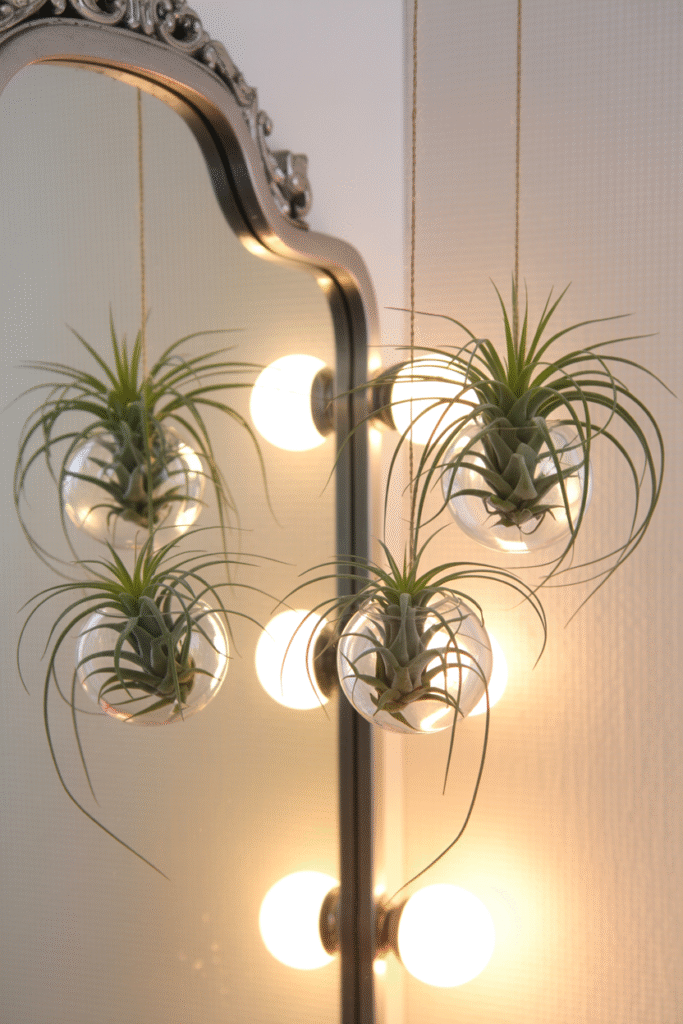
Air plants are foolproof for bathrooms with no windows they don’t even need soil. Hang a few glass globes with built-in hooks near a mirror or light fixture, and drop in tillandsias. I once helped a client with a basement bathroom by hanging three globes at different heights; the reflection from the mirror made it feel like a greenhouse. Just soak the plants for 10 minutes weekly and shake off excess water. Pro tip: Use fishing line for an invisible hanging effect.
- Materials: Glass hanging globes, tillandsias, fishing line
- Cost: $10–$20
- Time: 15 minutes
- Difficulty: Beginner
7. Under the Sink Surprise
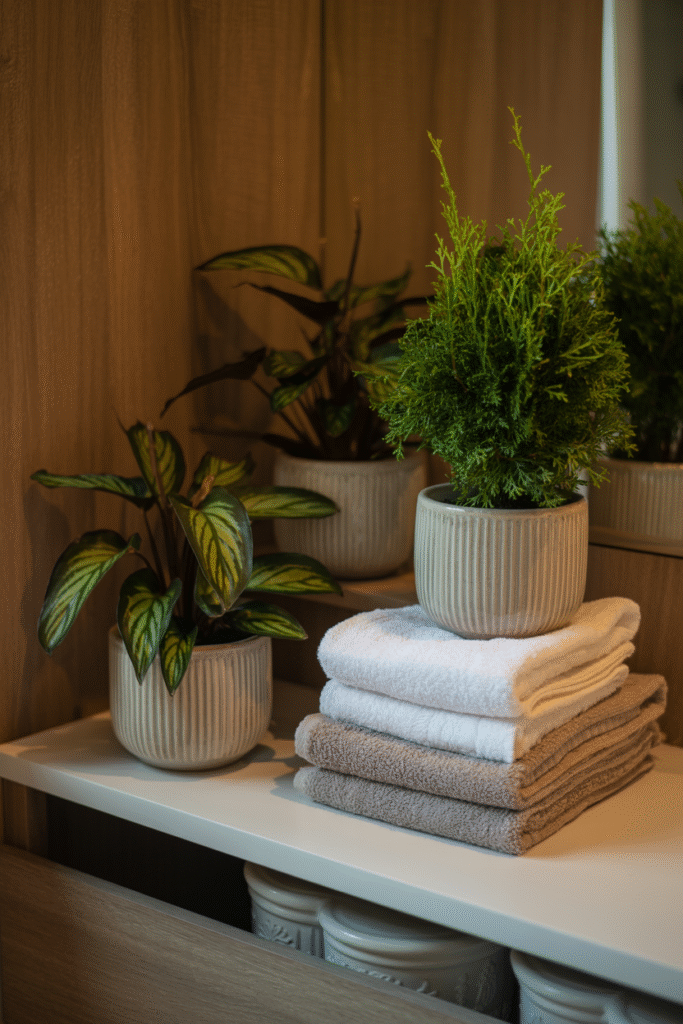
If your vanity is open underneath, tuck a couple of small, low-light plants like cast iron plants or Chinese evergreens in matching pots. I tried this in a guest bath and loved how it softened the hard lines of the vanity—plus, the plants stayed healthy thanks to the warmth from the pipes. Avoid this: Overwatering, since airflow is limited here.
- Materials: 2 small matching pots, cast iron plant or Chinese evergreen
- Cost: $20–$30
- Time: 5 minutes
- Difficulty: Beginner
8. The Medicine Cabinet Garden
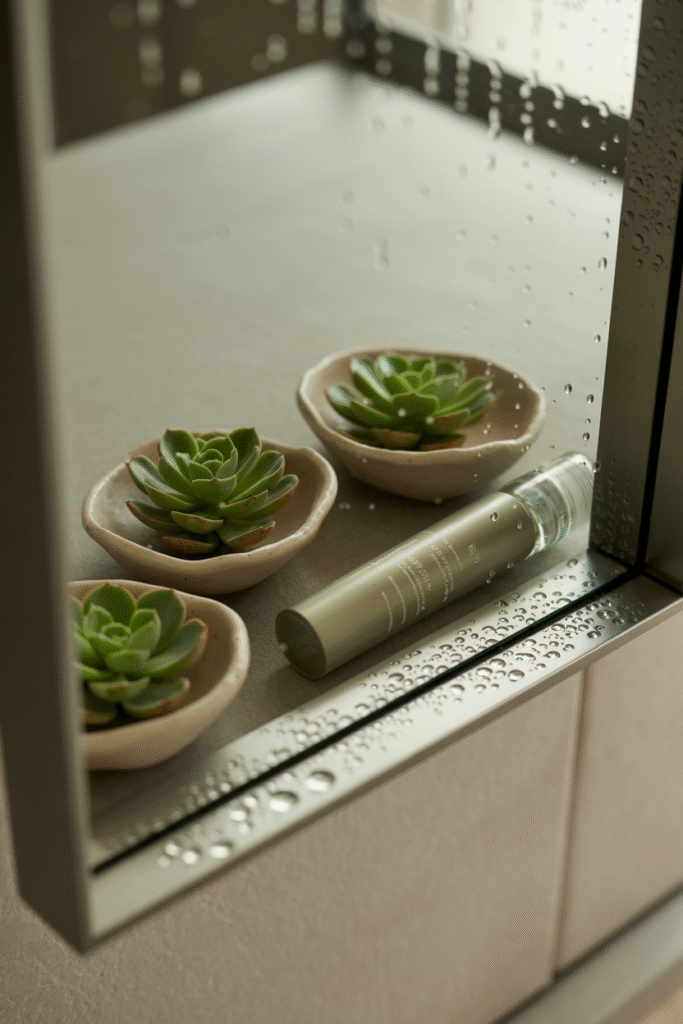
Even a small mirrored cabinet can hold a tiny garden. I lined up three 5 cm (2 in) succulents in shallow ceramic dishes on the shelf of a medicine cabinet they loved the indirect light and humidity from showers. Just open the cabinet while showering to give them a humidity boost. Pro tip: Use a small spray bottle to mist them lightly every few days.
- Materials: 3 shallow dishes, small succulents
- Cost: $10–$15
- Time: 10 minutes
- Difficulty: Beginner
9. Corner Ladder Display
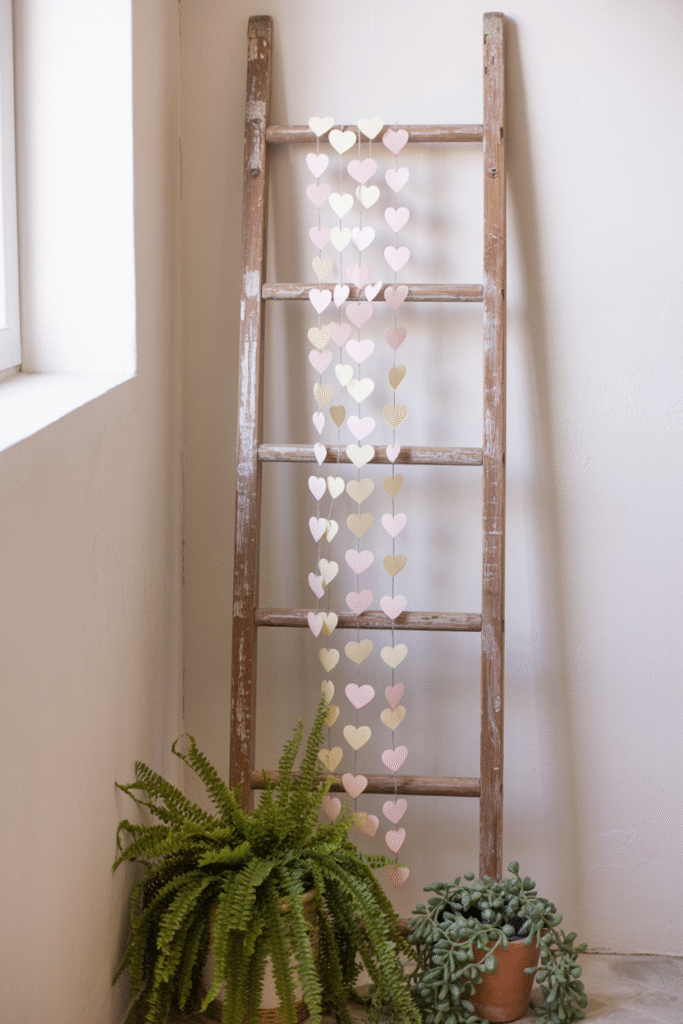
A slim, vintage-style ladder leaned in a corner is perfect for cascading plants. I draped a string of hearts down the rungs, with a small fern and pothos at the base instant vertical garden. The metal rungs helped keep the plants from touching the wall, preventing dampness. Pro tip: Secure the ladder with museum putty if it’s a high-traffic area.
- Materials: Slim ladder, string of hearts, small fern, pothos
- Cost: $30–$50
- Time: 20 minutes
- Difficulty: Intermediate
10. The Over-the-Toilet Unit
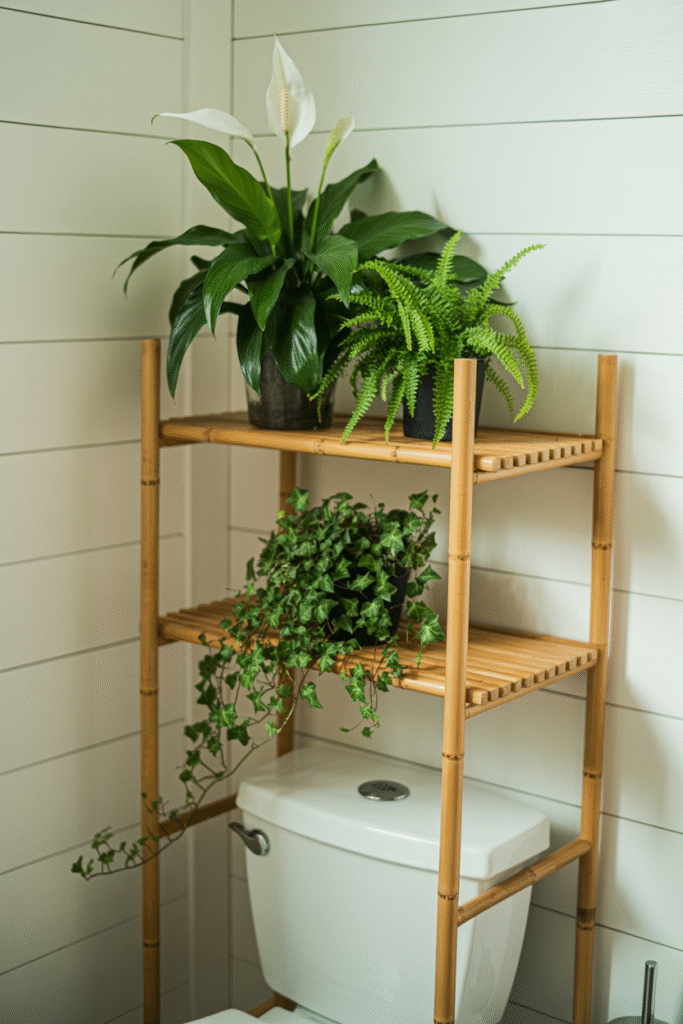
Often wasted space, the area above the toilet is ideal for a narrow shelving unit with a few humidity-loving plants. I used a 60 cm (24 in) bamboo shelf and arranged a peace lily, small fern, and a trailing English ivy it looked curated and lush without feeling cluttered. Pro tip: Make sure the shelf is securely anchored if children are around.
- Materials: Narrow shelf, peace lily, English ivy, small fern
- Cost: $25–$45
- Time: 30 minutes
- Difficulty: Intermediate
11. Bath Caddy with a Twist
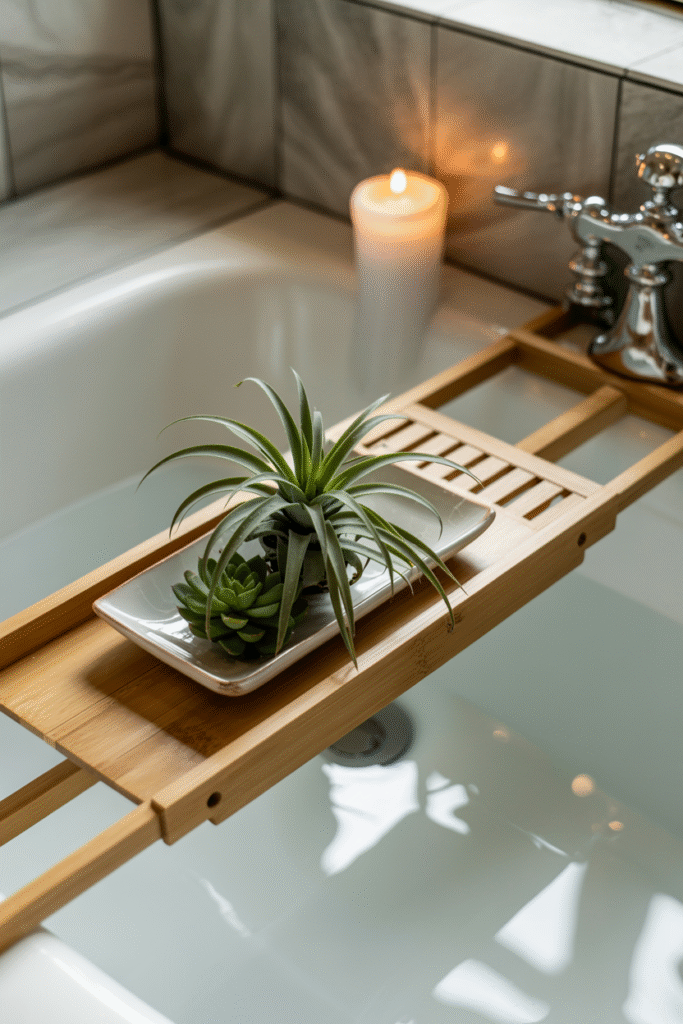
Why not let your bath caddy do double duty? I placed a small, waterproof tray on a bamboo bath caddy and arranged a few air plants and a tiny succulent. It looks like a spa accessory, and the tray protects the wood from water. Pro tip: Choose plants that can handle occasional splashes.
- Materials: Bath caddy, small waterproof tray, air plants, tiny succulent
- Cost: $10–$20
- Time: 5 minutes
- Difficulty: Beginner
12. The Mirror Frame Accent
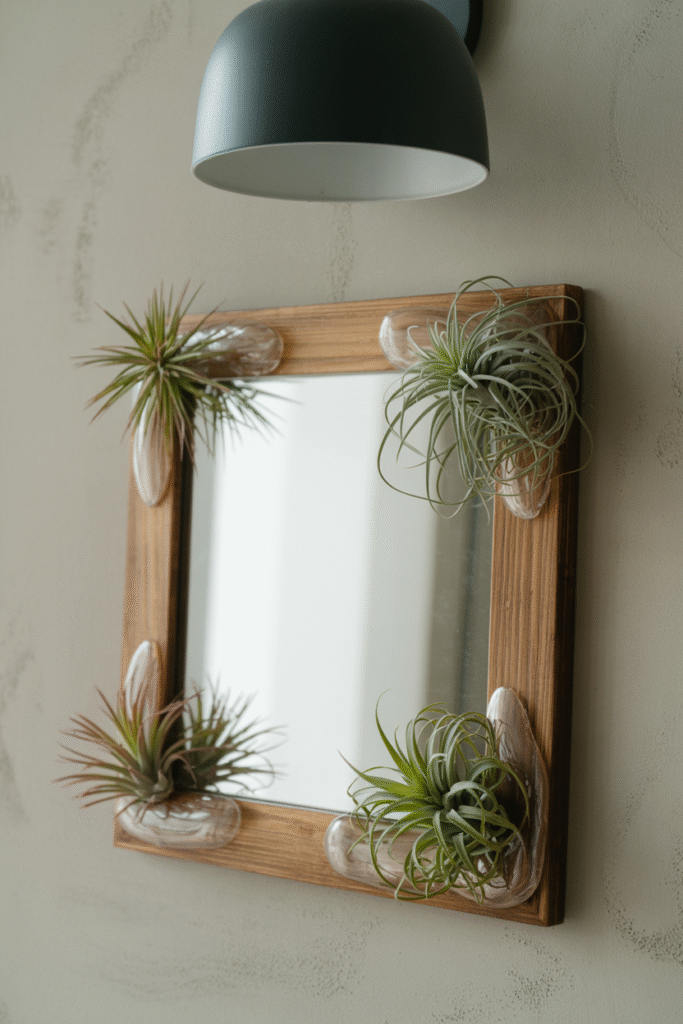
If your mirror has a wide frame, tuck a few small air plants or succulents into the corners. I did this with a rustic wooden mirror and found it added texture without shrinking the space. Pro tip: Secure plants with clear adhesive or museum gel never hot glue, which can damage finishes.
- Materials: Small air plants or succulents, clear adhesive or museum gel
- Cost: $5–$10
- Time: 10 minutes
- Difficulty: Beginner
13. Faux vs. Real—When to Go Artificial
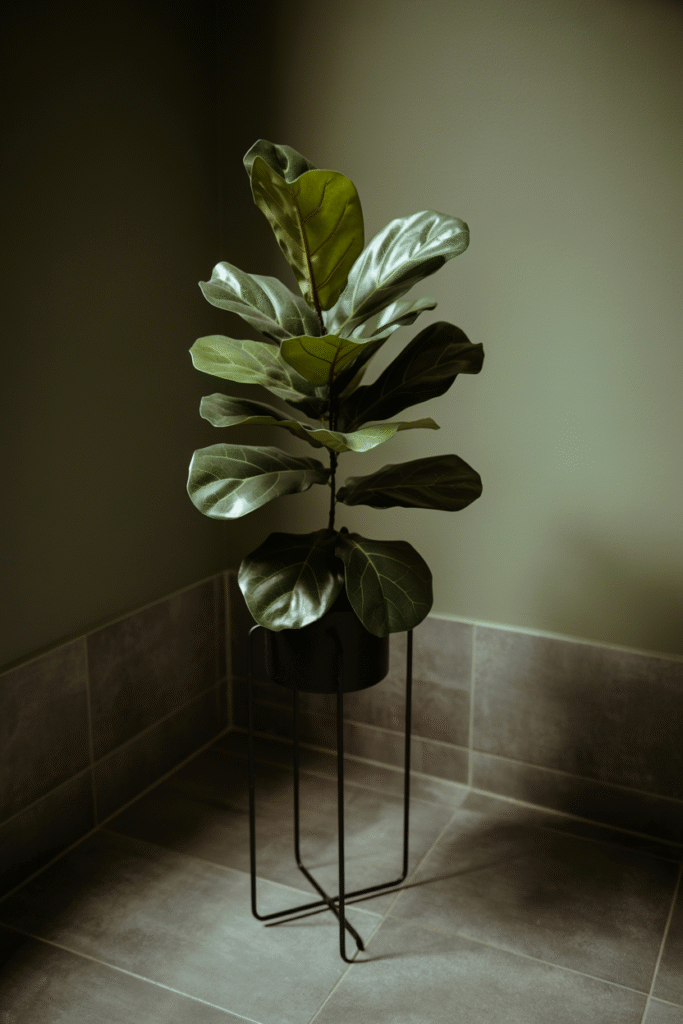
Let’s be honest: not every bathroom is plant-friendly. In one very dark basement bath, I tested both real and realistic faux plants. The faux fiddle-leaf fig looked amazing and never drooped—no one could tell it wasn’t real. Pro tip: If you choose faux, dust regularly and change placement occasionally to avoid a static look.
- Materials: High-quality faux plant, plant stand
- Cost: $15–$40
- Time: 5 minutes
- Difficulty: Beginner
14. The Shower Nook Mini-Garden
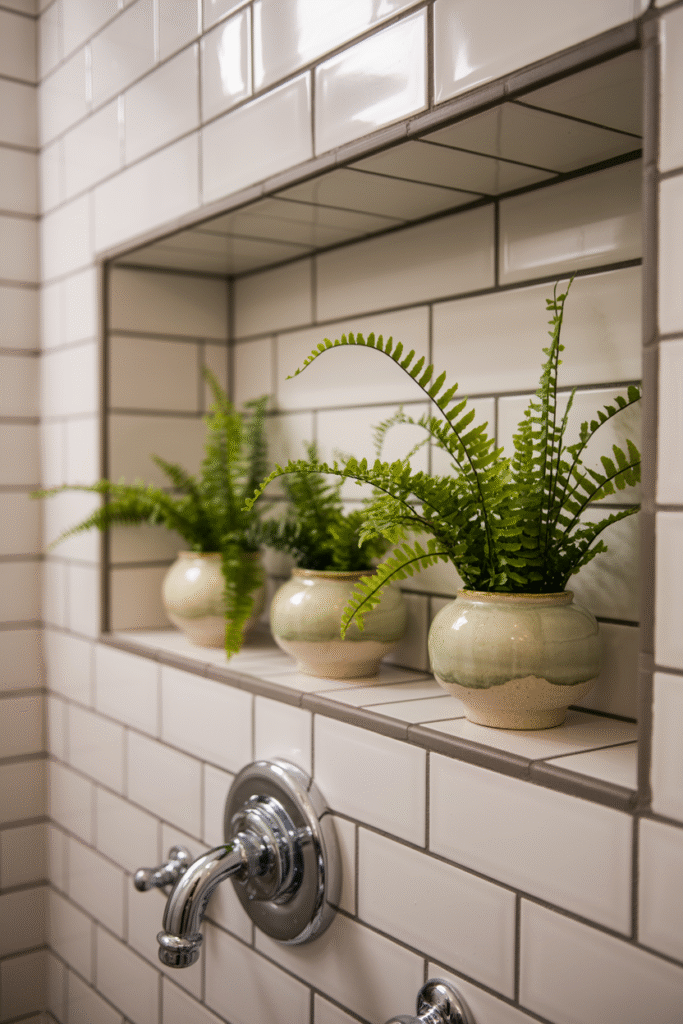
If your shower has a niche or corner ledge, line it with small, waterproof pots (like ceramic or glazed stoneware) filled with humidity-lovers like ferns or bamboo. I arranged three ferns in a client’s shower niche the steam kept them lush, and the green pop against white tiles was striking. Pro tip: Use pots with drainage holes and a small saucer to prevent leaks.
- Materials: Small waterproof pots, 2–3 small ferns or lucky bamboo
- Cost: $20–$35
- Time: 15 minutes
- Difficulty: Beginner
15. The Bath Mat Alternative
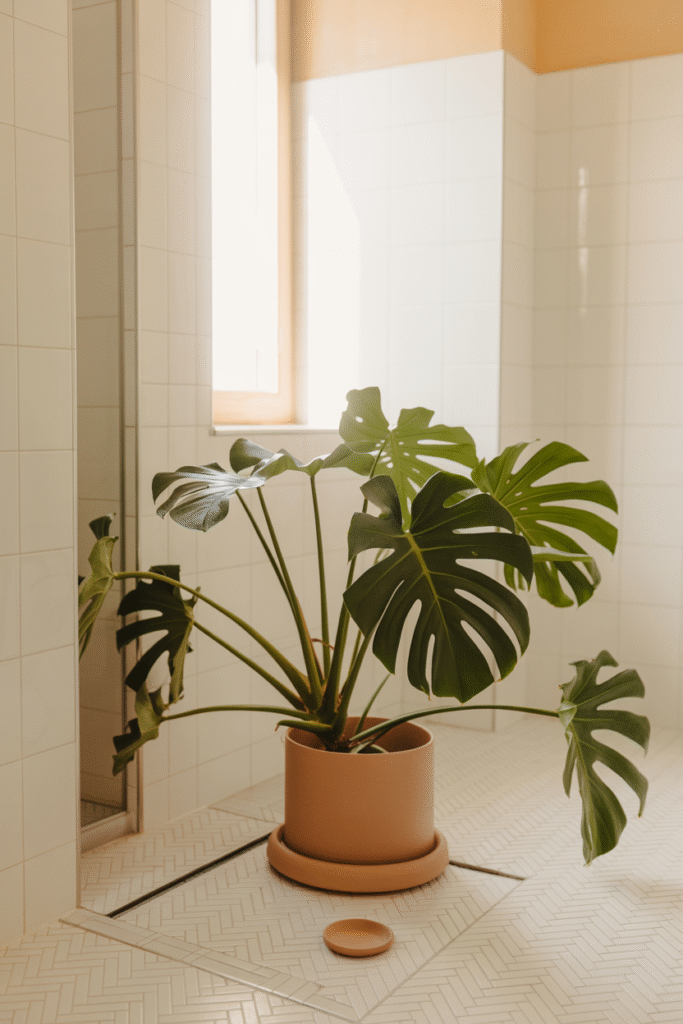
For a truly bold look, try a large, leafy plant like a monstera or palm on a sturdy plant stand where you’d normally place a bath mat. In a spacious bathroom, this made a dramatic statement, and the plant thrived on the steam from showers. Pro tip: Choose a plant that can handle occasional splashes, and move it during deep cleans.
- Materials: Large plant (monstera, palm), sturdy plant stand, saucer
- Cost: $40–$80
- Time: 10 minutes
- Difficulty: Intermediate to advanced
Common Bathroom Plant Mistakes (And How to Avoid Them)
In my years of experimenting, I’ve made every mistake in the book. Here’s what you really need to watch for:
- Overwatering: Bathrooms are humid, so plants often need less water than you’d think. Test the soil with your finger—if the top 2.5 cm (1 in) is dry, it’s time to water.
- Wrong light match: Don’t assume all shade lovers will thrive in the dark. A cast iron plant might, but a succulent will suffer. Always check the plant’s light needs before buying.
- Poor drainage: Potting directly into decorative containers without drainage is a recipe for root rot. Always use pots with holes and a saucer, or double-pot your plants.
- Ignoring temperature swings: Some bathrooms go from steamy to cold between showers. If your bath gets chilly, avoid tropicals and stick to hardier foliage.
- Forgetting to dust: Bathroom plants collect dust and even soap scum over time. Gently wipe leaves or give them a shower rinse every few weeks.
Budget-Friendly Alternatives
You don’t need to spend a fortune. Propagate cuttings from pothos or snake plants they root easily in water and grow quickly in bathrooms. Swap expensive containers for thrift-store finds or DIY macramé hangers. And remember, even a single plant can change a space start small and build over time.
Safety Considerations
Some bathroom plants are toxic if ingested (peace lily, pothos, philodendron). If you have pets or small children, research plant safety before bringing them in. Always secure top-heavy plants, especially in busy bathrooms. And if you use electrical tools (like for shelf installation), make sure everything is rated for damp environments.
Frequently Asked Questions
Q: Can bathroom plants help with humidity?
Yes, certain plants like ferns and peace lilies absorb moisture and can help moderate humidity—though they can’t replace a dehumidifier in very damp spaces.
Q: What if my bathroom has no windows?
Stick to low-light plants like snake plants, ZZ plants, cast iron plants, or high-quality faux options. Air plants are also a good choice for dark baths.
Q: How often should I water bathroom plants?
Most need watering every 1–2 weeks, but always check the soil first. Overwatering is the most common cause of plant death in bathrooms.
Q: Are there plants I should avoid in the bathroom?
Succulents and cacti generally dislike high humidity and low light. Also, avoid plants that need constant pruning if you have little time.
Q: How do I keep bathroom plants clean?
Wipe leaves with a damp cloth, or rinse them in the shower occasionally. Clean pots and saucers to prevent mold.
Q: Can I use real plants in a shared or rental bathroom?
Yes—choose hardy, easy-care plants and use pots that are simple to move if needed. Always check with your landlord if you’re installing shelves or hanging hardware.
Final Thoughts
Bathroom plant decor is one of the easiest ways to make your space feel inviting and it doesn’t have to be complicated. I’ve seen tiny bathrooms transformed with a single fern, and spacious ones brought to life with layered greenery on shelves and ladders. The key is to start with one or two plants that suit your light and humidity. See how they do. Adjust as you go. And most importantly, enjoy the process. And i can say the best bathroom plant setups are the ones that make you smile when you walk in a little slice of nature that’s just for you.