

If you’ve ever found yourself staring at a tiny bathroom maybe the one in your first apartment, an older house, or that awkward ensuite in the guest room and thought, “There’s just not enough space for style and function,” then you’re not alone. I’ve lost count of how many friends, and readers (including myself, in my first flat years ago) have wrestled with cramped layouts, storage dilemmas, and the quest for a relaxing feel in rooms barely bigger than a closet.
But here’s what I’ve learned, both through personal experience and countless projects: small bathrooms can absolutely feel bright, organized, and even a bit luxurious if you treat them as creative opportunities rather than limitations. In this article, I’ll share 17 practical, real-world tips that have helped me (and many others) transform tight spaces. Some you might have heard of, and a few that get overlooked. I’ll walk you through the process step by step, give you honest estimates on time and cost, and make sure you know which pitfalls to avoid. By the end, you’ll have a clear, doable roadmap for making your small bathroom work harder (and look better) than you ever thought possible.
1. Draw your floor plan first
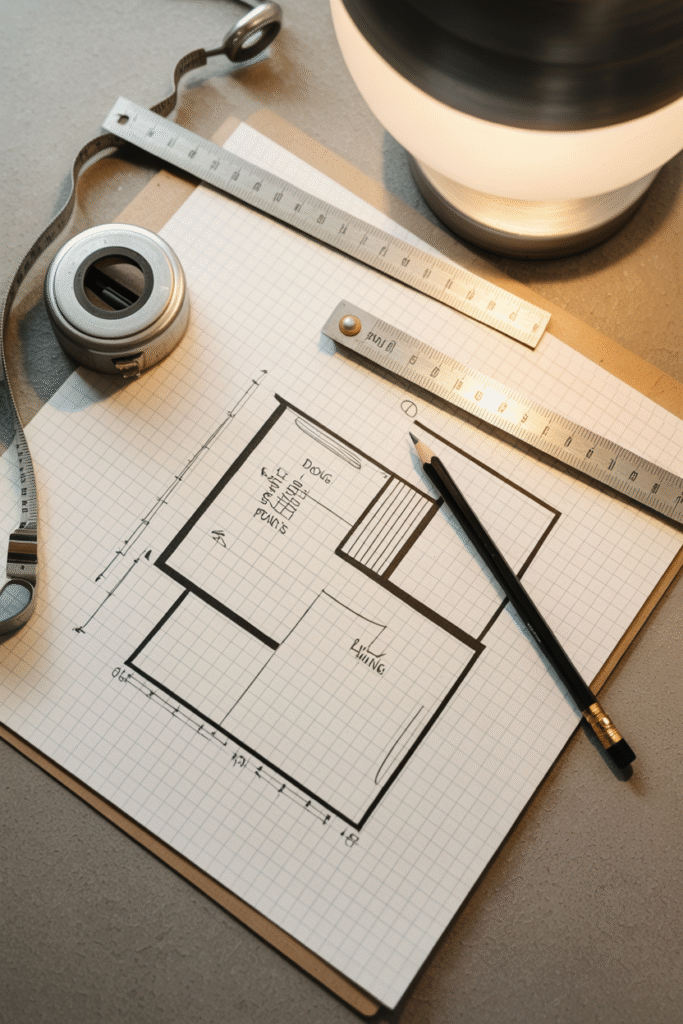
Before you make a single change, grab a tape measure and sketch out your bathroom’s layout. I’ve found that measuring every wall, window, door swing, and plumbing fixture helps you spot clever solutions and avoid costly mistakes later. For example, one client realized only after drawing her floor plan that swapping the sink and toilet gave her enough space for a slim shower stall. Paper or digital both work just make sure you know exactly what you’re working with before you buy any fixtures or tiles.
2. Use the back of the door for storage
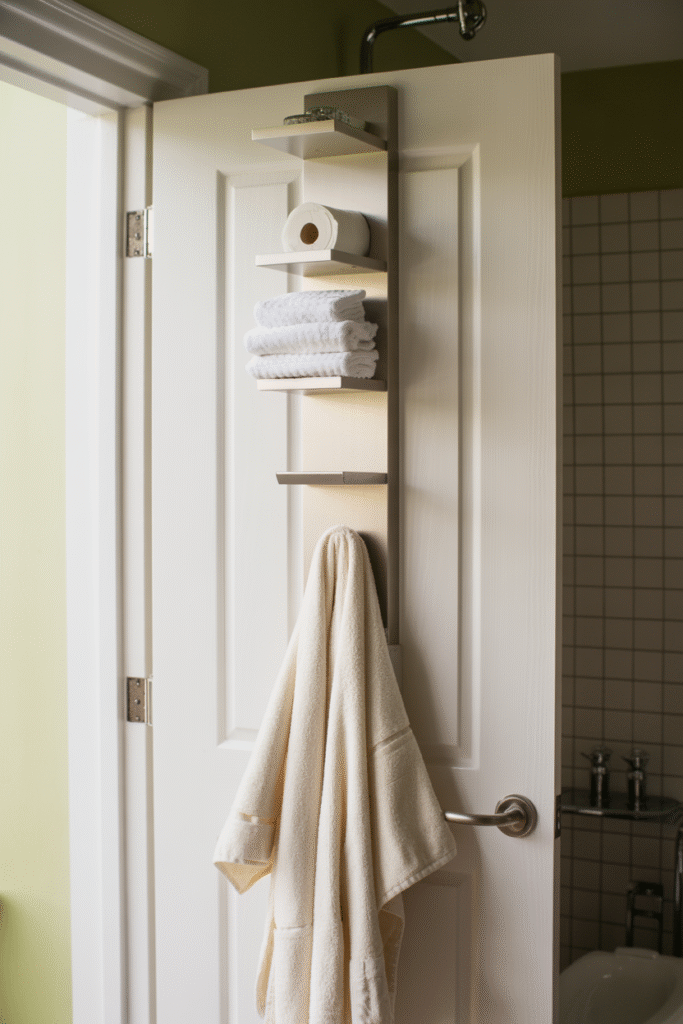
This is one of the most underutilized spaces in a small bathroom. Installing a slim wall-mounted cabinet (about 18 cm / 7 inches deep) or simply adding hooks and rails here can hold extra towels, toilet paper, and daily essentials. In my own flat, this trick eliminated the need for a bulky towel rack and kept the main area clutter-free. Just make sure whatever you hang doesn’t slam into the wall when the door opens—soft-close hardware is a good investment.
3. Go vertical with shelving
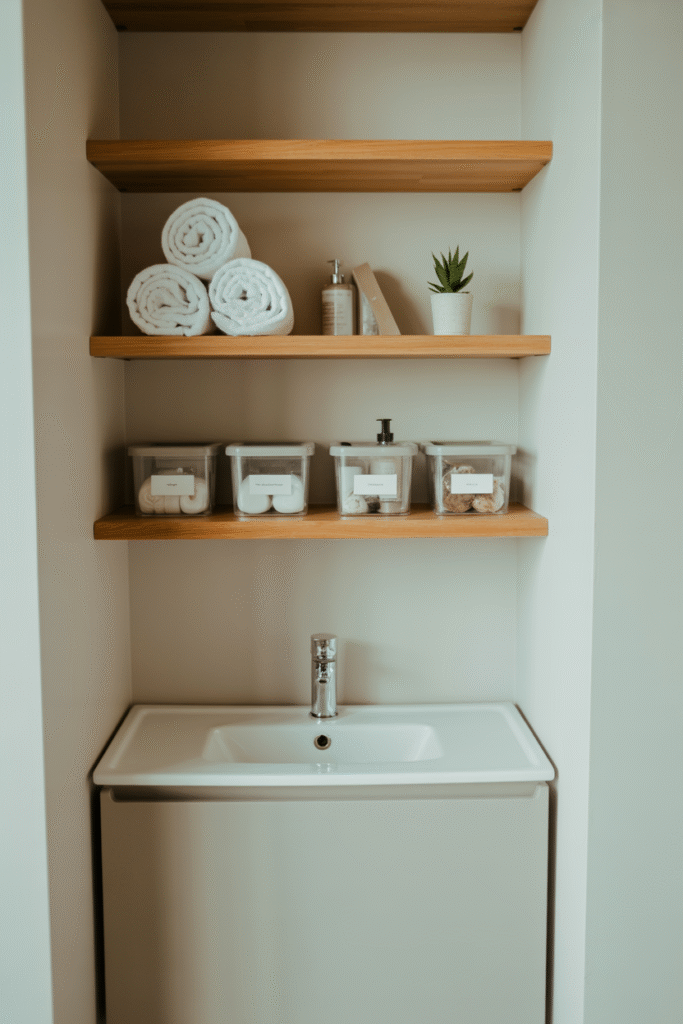
Don’t limit your storage to under the sink. Floating shelves above the sink (about 25 cm / 10 inches deep) are ideal for towels and baskets, while slim, tall cabinets behind the toilet can hold extra rolls and cleaning supplies. I’ve used IKEA’s LILLÅNGEN in several projects it fits almost any budget, looks modern, and adds storage without crowding the space. For renters, tension rods and fabric cubes can be removed when you move.
4. Light from the sides, not just above
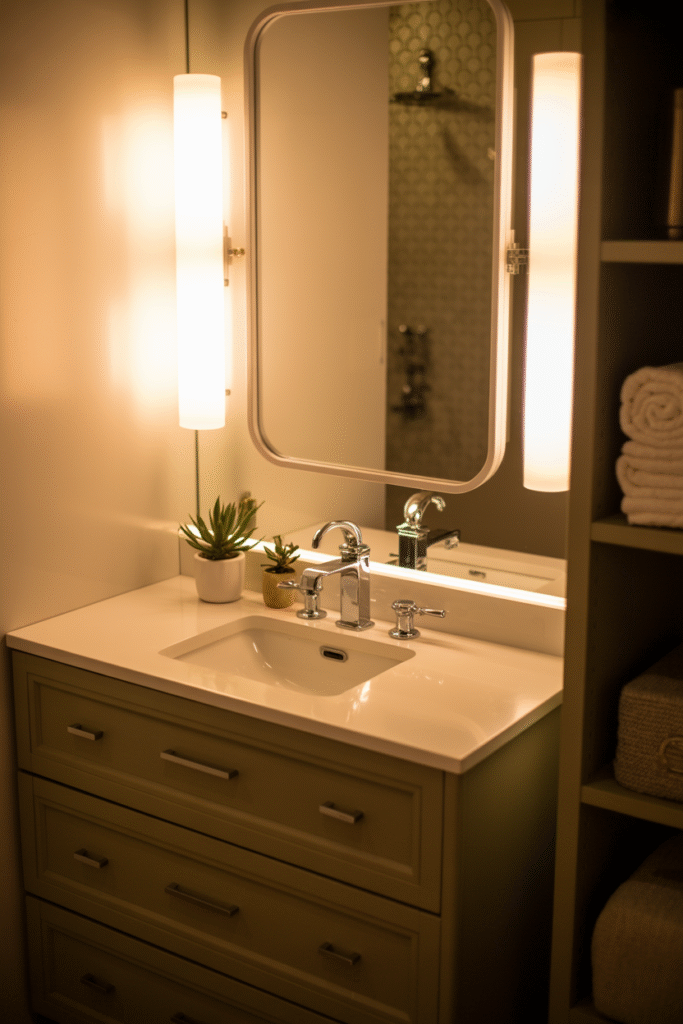
Bright, even lighting makes any room feel less cramped. I always recommend swapping out a single dome light for wall sconces on either side of the mirror, or trying an under-mirror LED strip. This setup gives you better light for daily routines and visually “opens” up the space. In one project, we used battery-powered LEDs—surprisingly effective and easy to install, with no wiring hassle.
5. Match ceiling and wall colour
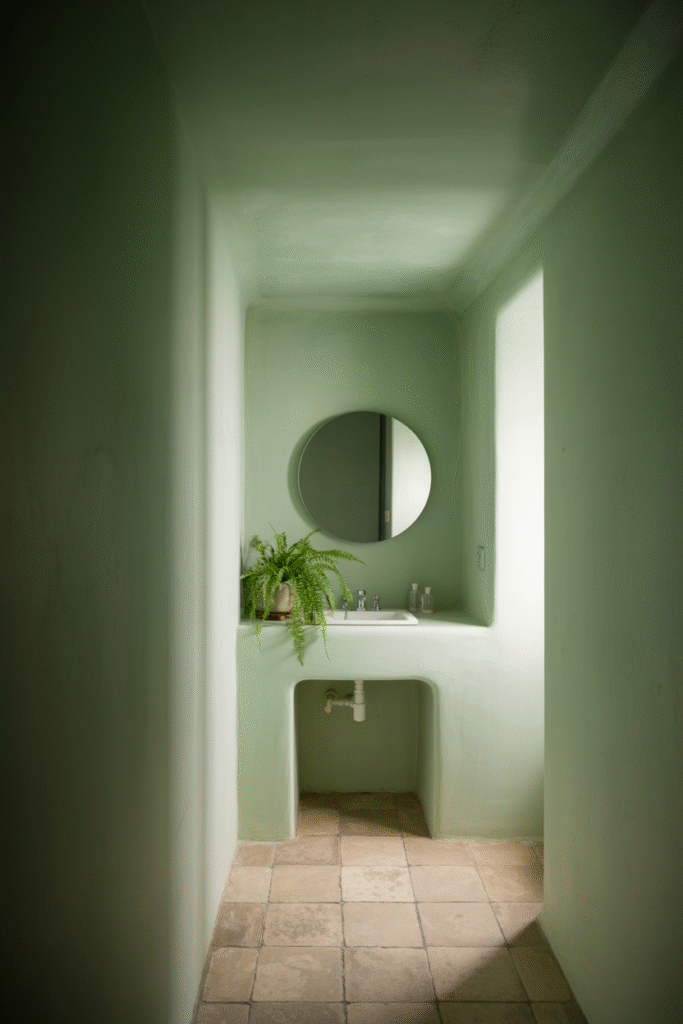
Painting your ceiling the same colour as your walls not stark white creates a cohesive, taller-looking space. In one 2m x 2m bathroom, we used a soft, airy shade of green ceiling-to-floor, and the client was amazed at how much more open it felt. This trick works especially well if you go for a colour one shade lighter than your walls.
6. Tile just the wet areas
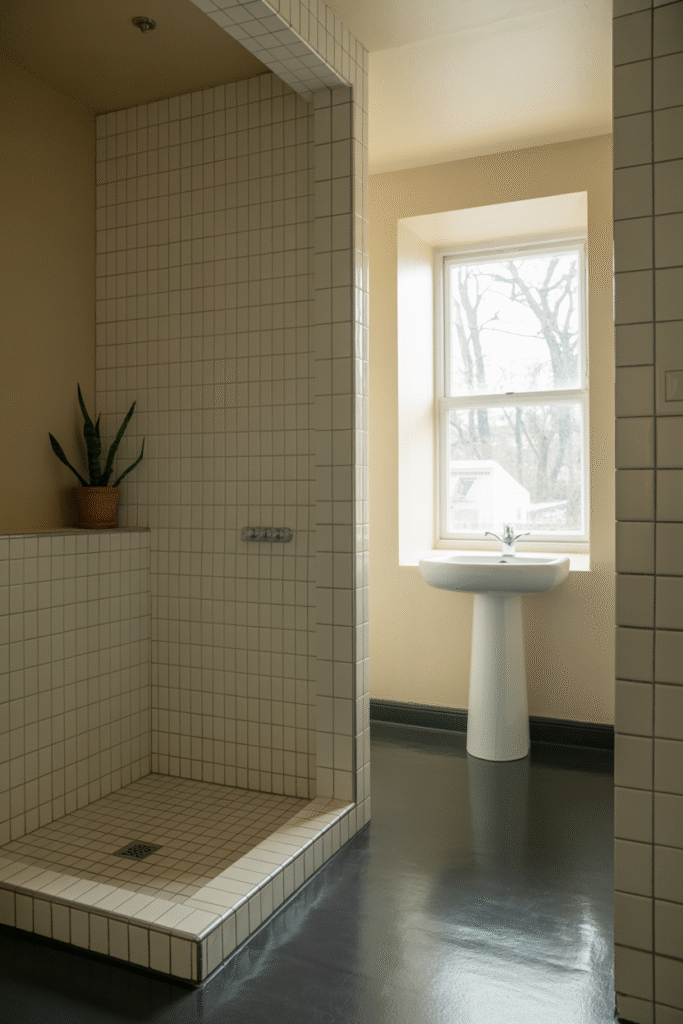
Tiling every wall can visually chop up the room and add unnecessary costs. Instead, I tile just the shower, area behind the sink, and any sections that get wet. In a recent project, we saved both money and visual space by using moisture-resistant paint on the remaining walls—and the result was just as durable, but much less claustrophobic.
7. Choose a wall-mounted sink
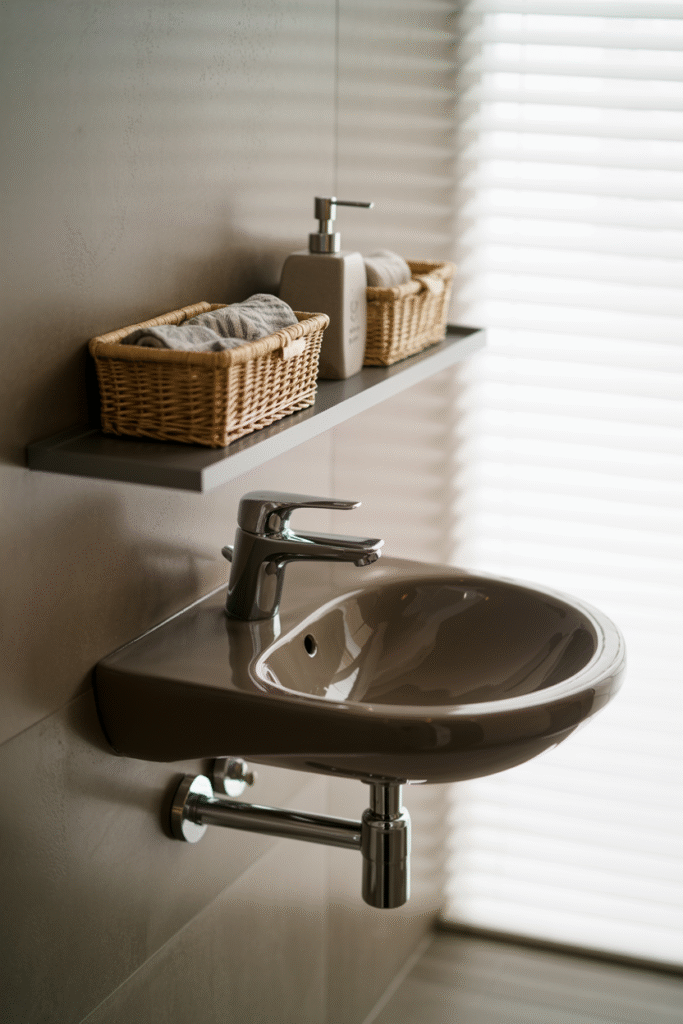
A sink that’s mounted directly to the wall, rather than perched on a vanity, gives you valuable storage space underneath and makes the room feel larger. In my own home, I installed a 45 cm (18 inch) round wall-mounted basin, and even though it was compact, it didn’t feel cramped. The open area below lets you see more of the floor, which tricks the eye into perceiving a bigger space.
8. Swap swinging doors for sliding or pocket doors
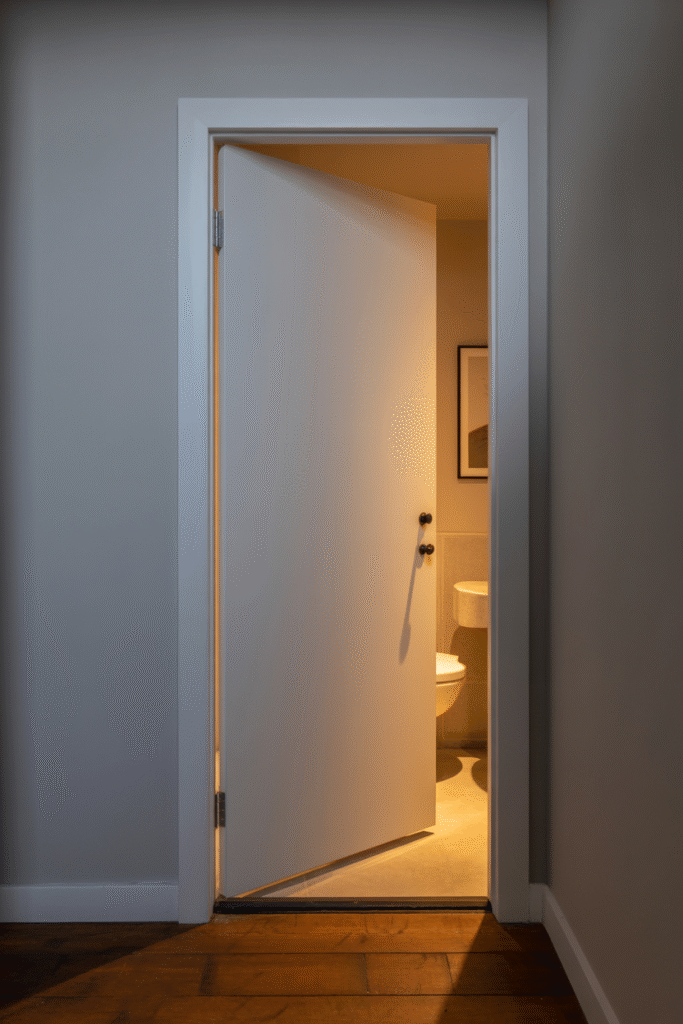
Standard doors that swing inward take up precious space. Even a modest 60 cm (24 inch) door needs almost a metre (3 feet) of clearance to open fully. I’ve helped several clients retrofit pocket doors or slim sliding doors instead, and in every case, the room instantly became more usable. If privacy is a concern, look for models with good sound insulation.
9. Pick a mirror wider than your sink, but not too big
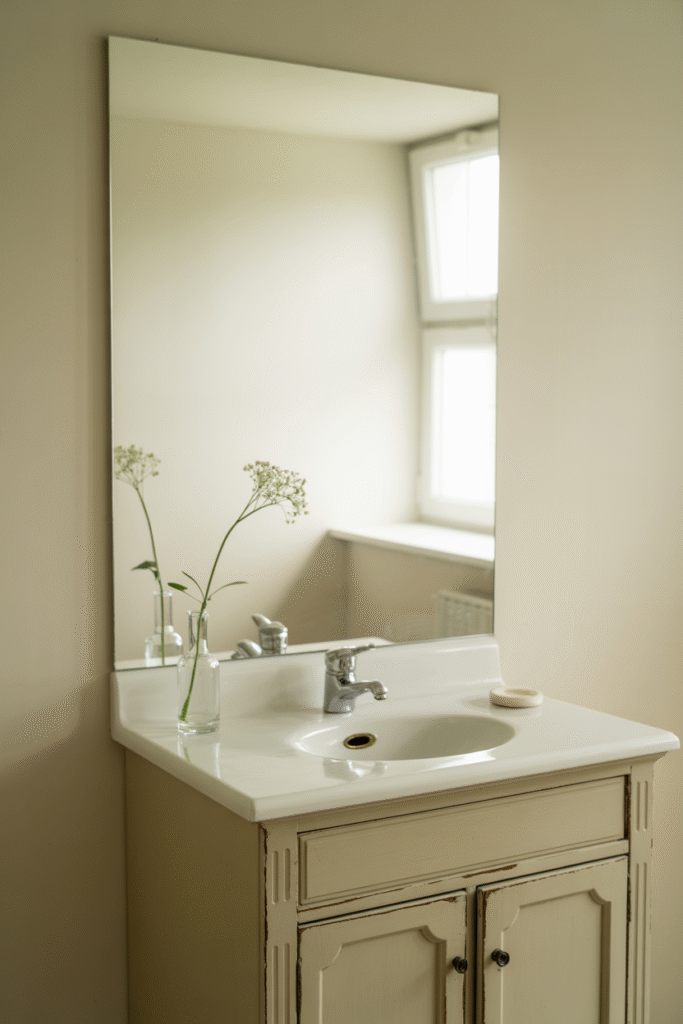
A mirror that’s wider than your sink reflects both more light and more of the room, but don’t go so big that it dominates the space. In a 60 cm (24 inch) wide vanity, a 70 cm (28 inch) wide mirror often strikes the right balance. In my tiny ensuite, I installed two 30 cm (12 inch) round mirrors side by side—sufficient reflection without overcrowding.
10. Use clear, stackable storage
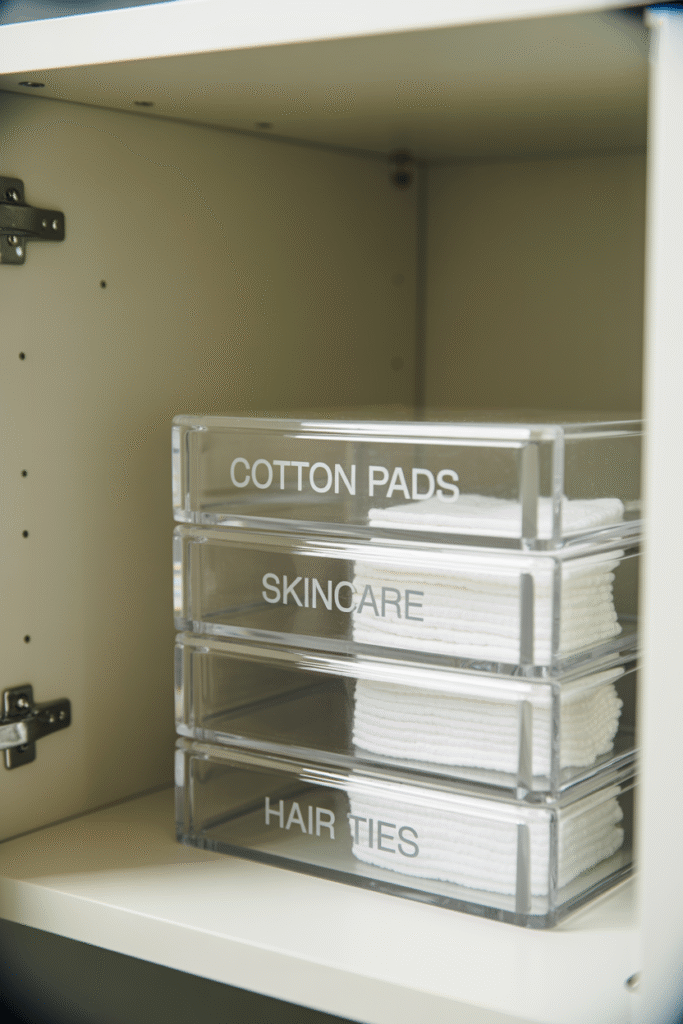
Opaque bins look neat but make it hard to see what’s inside. I’ve found that clear acrylic or glass organisers especially for cotton pads, Q-tips, and cosmetics keep your storage visible and help you actually use what you own. Stackable boxes also maximize shelf efficiency, and you’re less likely to double up on items you already have.
11. Repurpose household items for storage
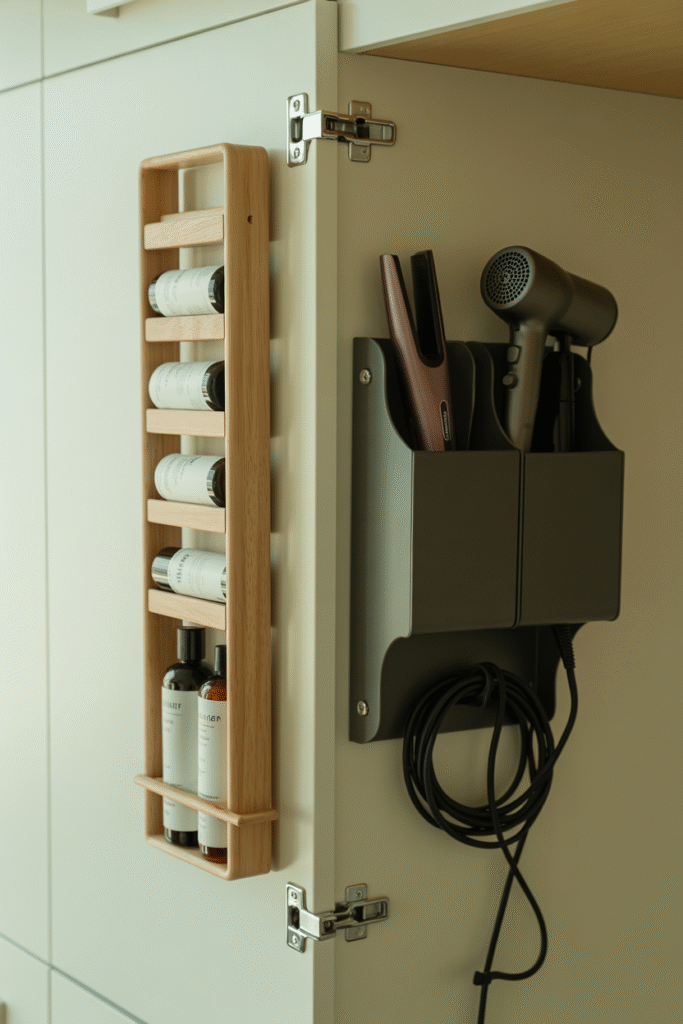
Raid your kitchen or office for storage ideas. For example, a spice rack mounted inside the cabinet door is a great for cosmetics, and a magazine rack can hold hairdryers or curling irons. I once used a slim bamboo dish drying rack next to the sink for rolled towels—not expensive, and it looked like it belonged there.
12. Install a strong exhaust fan or dehumidifier
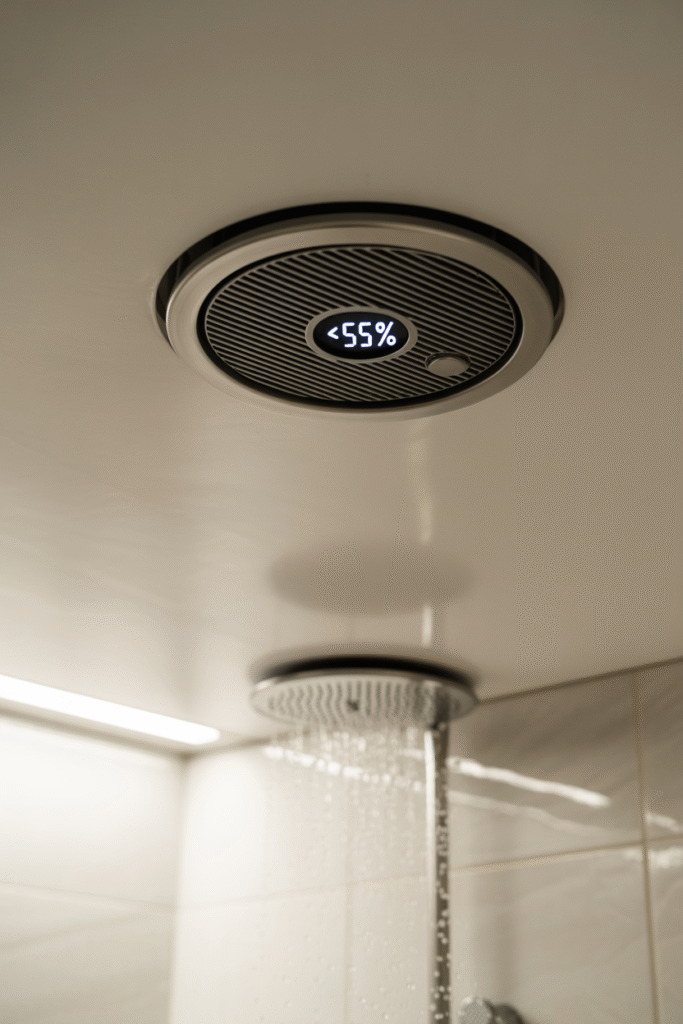
Damp air leads to mould and mildew, especially in small spaces. In my own home, I learned this the hard way after a minor mould patch. Now I always fit an exhaust fan rated for at least 50 CFM, ideally with a humidity sensor. If you rent, a compact dehumidifier tucked behind the sink or toilet can make a real difference.
13. Skip tiny mosaic tiles for flooring
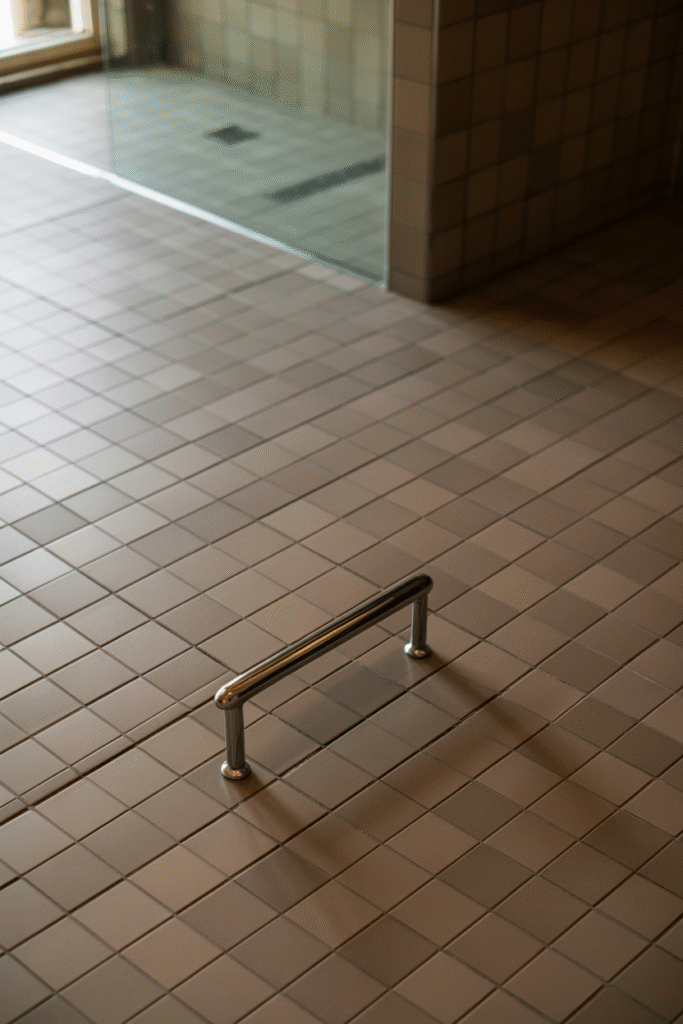
Small tiles mean lots of grout, which both visually and practically breaks up the floor. Large-format tiles—30 cm x 30 cm (1 ft x 1 ft) or bigger—make cleaning easier and create the illusion of more space. In three different projects, clients were amazed at how much bigger their bathrooms looked after this simple change.
14. Install grab bars for safety
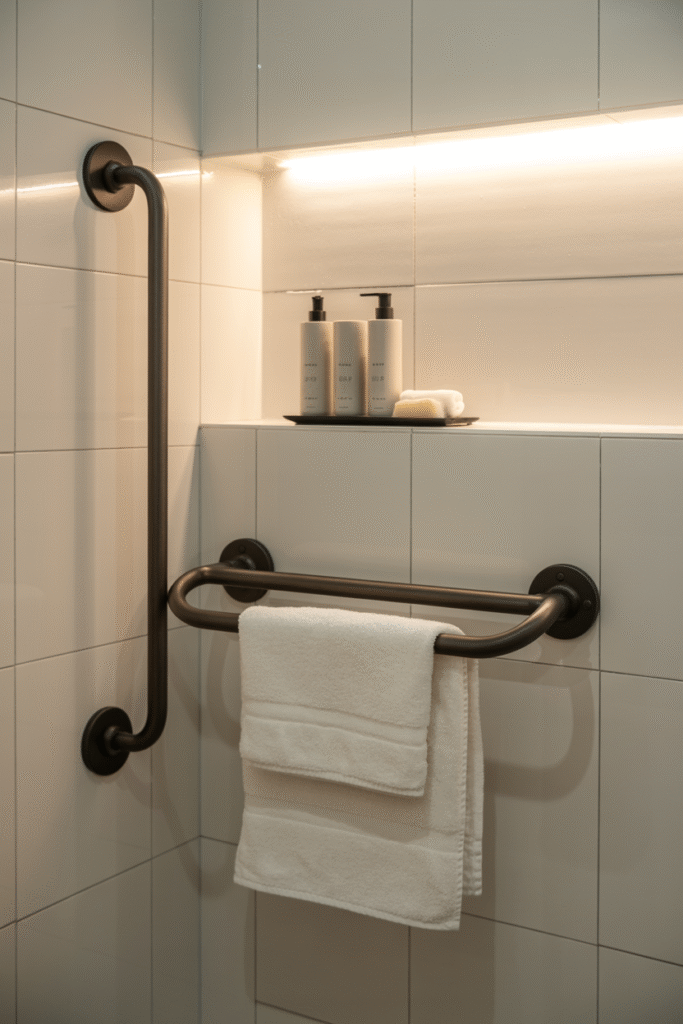
Safety should never be an afterthought, especially if your household includes kids, older adults, or anyone at risk of slipping. Modern grab bars—rated for at least 135 kg (300 lb)—can look chic and double as towel racks. In my grandmother’s bathroom, we chose a matte black bar that didn’t look institutional at all, and it gave everyone peace of mind.
15. Consider a shower curtain over a glass door
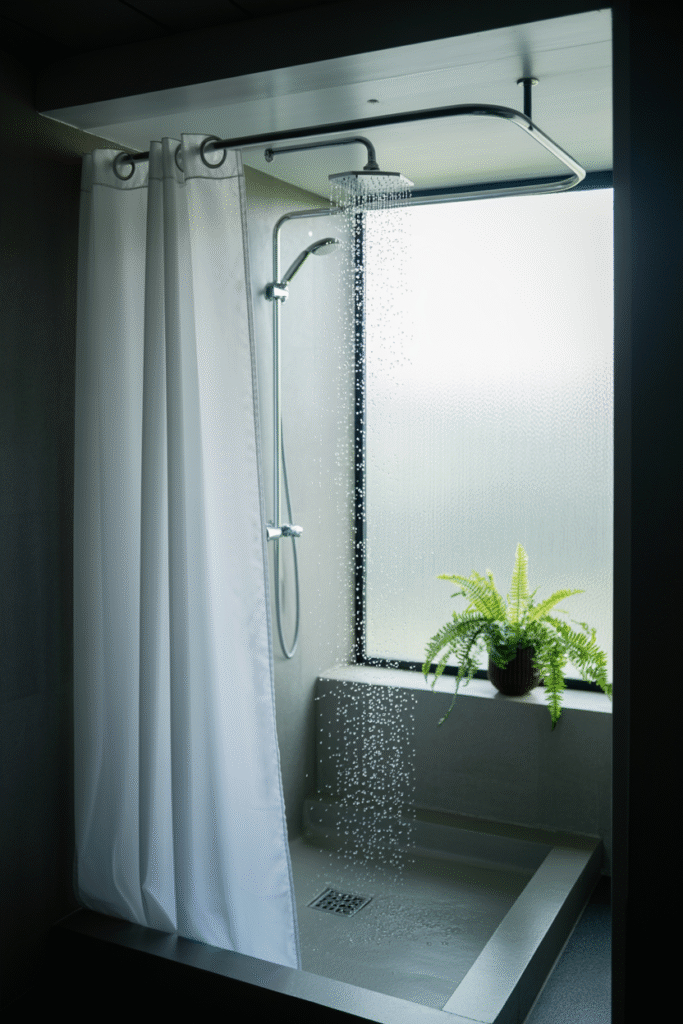
Glass panels look great but need clear space to open. In very tight bathrooms, a ceiling-mounted fabric shower curtain (with a weighted liner to keep water in) gives you a barrier that uses zero floor space and can be changed easily for a fresh look. I recommend a subtle print to hide water spots and liven up a small space.
16. Try a corner shower if you have the space
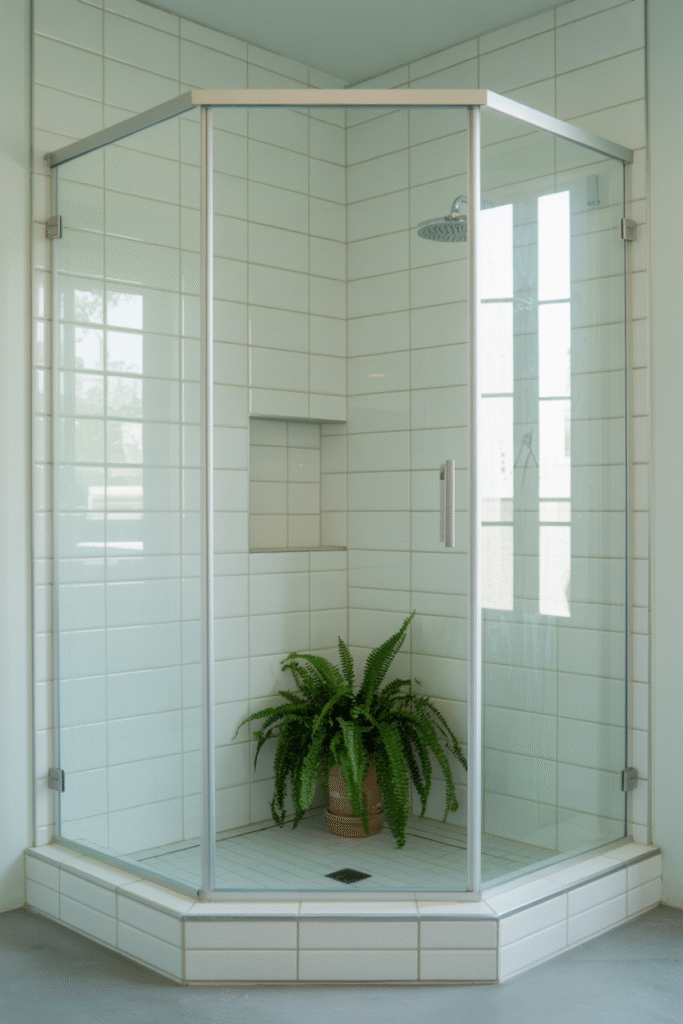
For bathrooms with at least 75 cm x 75 cm (2.5 ft x 2.5 ft), a neo-angle or walk-in corner shower can feel much roomier than a tub-shower combo. I helped a client swap out a bulky built-in tub for a sleek glass corner shower, and she said it was the first time washing up felt relaxing rather than claustrophobic.
17. Pick one style element to repeat for personality
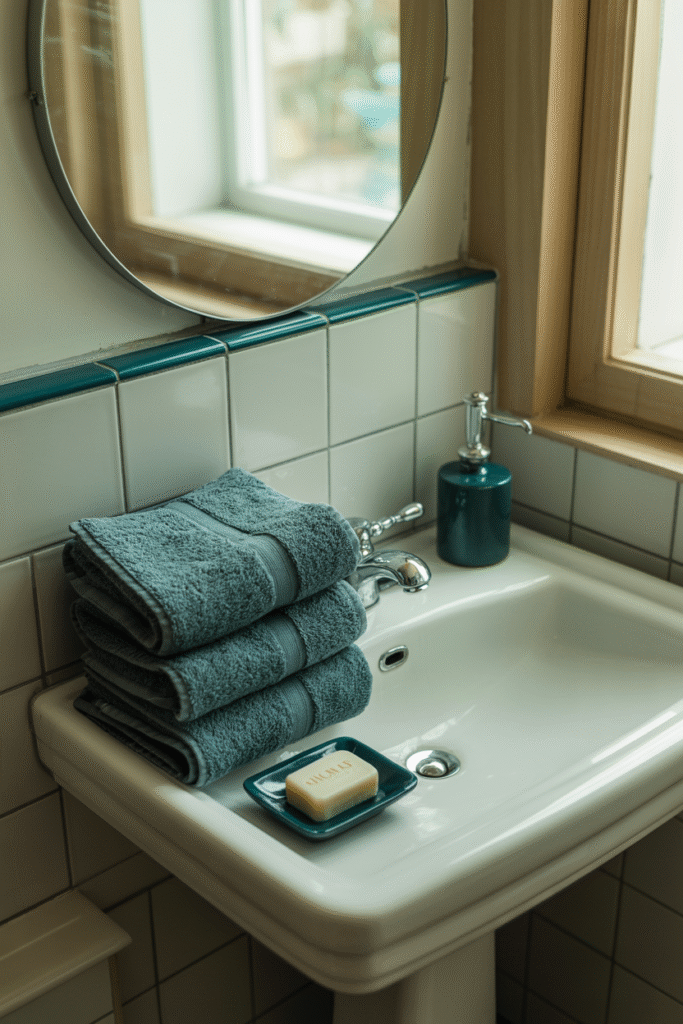
Rather than going “all white” or strictly minimalist, pick a colour, finish, or material and repeat it throughout the room. In my own bathroom, I love subtle teal accents—repeated in the grout, towels, and a single ceramic accessory. This creates unity without making the space feel too “designed” or sterile. Your small bathroom should feel like you, not like a magazine.
FAQ: Questions Homeowners Actually Ask
Can I fit a bathtub in a small bathroom?
You can, but it’s tough. I once squeezed a 120 cm x 70 cm (4 ft x 2.3 ft) freestanding tub into a corner by sacrificing a double vanity—worth it for the client, but not for everyone. For most people, a well-designed shower with a glass door or curtain is more practical.
How do I hide laundry baskets and cleaning supplies?
Look for a tall, slim pull-out cabinet, or use a bench with a lift-up lid. I’ve custom-built several for clients, and they’re a game-changer for daily life.
Is it worth doing built-in storage in a rental?
Probably not, unless you plan to stay for years. Instead, use freestanding units, over-the-toilet organisers, and wall-mounted baskets you can take with you when you move.
What’s the biggest mistake you see in small bathroom design?
Assuming storage is only for under the sink. I’ve found that the best solutions use every vertical inch, and often rethink what “hidden” storage looks like.
Final Word: Small Bathrooms Can Shine
When you step back and look at the whole picture, remember: small bathrooms force us to be creative, intentional, and a bit ruthless about what we bring in. I’ve seen more joy on clients’ faces after finishing a tiny bath makeover than after some much bigger projects.
Most of these ideas are things I’ve tried, tweaked, and recommended for years—not just pulled from Pinterest boards. You can start with one or two, mix in your personality, and gradually build up to a space that feels both practical and, yes, even a bit spa-like.
Got a crammed corner bath or a quirky ensuite? I’d love to hear what you’re working with and what’s tripping you up sometimes the best solutions come from the tightest spaces.