
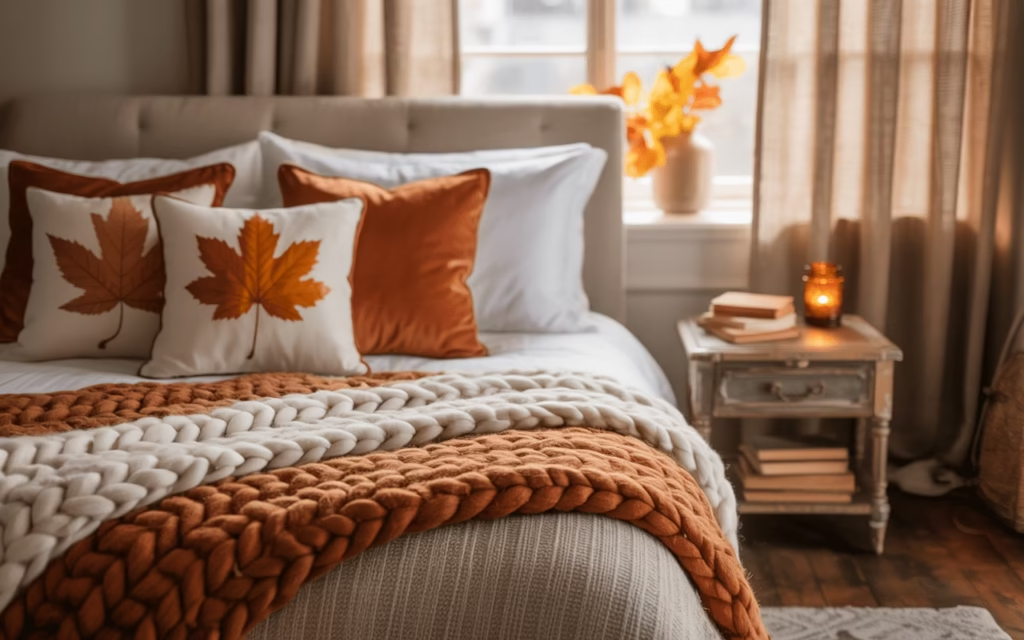
If a bedroom doesn’t feel right in fall, it’s usually because the senses are still stuck in summer too bright, too crisp, too bare. In my experience, a quick five-senses reset changes everything: soften what the eyes see, warm up what the skin touches, add a subtle woodsy scent, and let the room sound and look calmer at dusk. What works best is thinking in small layers, not big overhauls swap cool bulbs for 2700K warm light, add a thicker knit at the foot of the bed, bring in a rug that’s kind to bare feet, and choose colors that still look rich when the sun sets earlier. I’ve found that when the lamps glow like late-afternoon sunshine and the bedding has a bit of weight, the whole space starts to whisper “rest,” not “refresh your inbox.” Give it one weekend and these 11 ideas will guide the senses back into sync less glare, more glow; less chill, more texture; fewer random objects, more intentional moments so the room actually feels like a hug after a long day.
Let’s Get Started!
Layer Textiles for Luxe Warmth
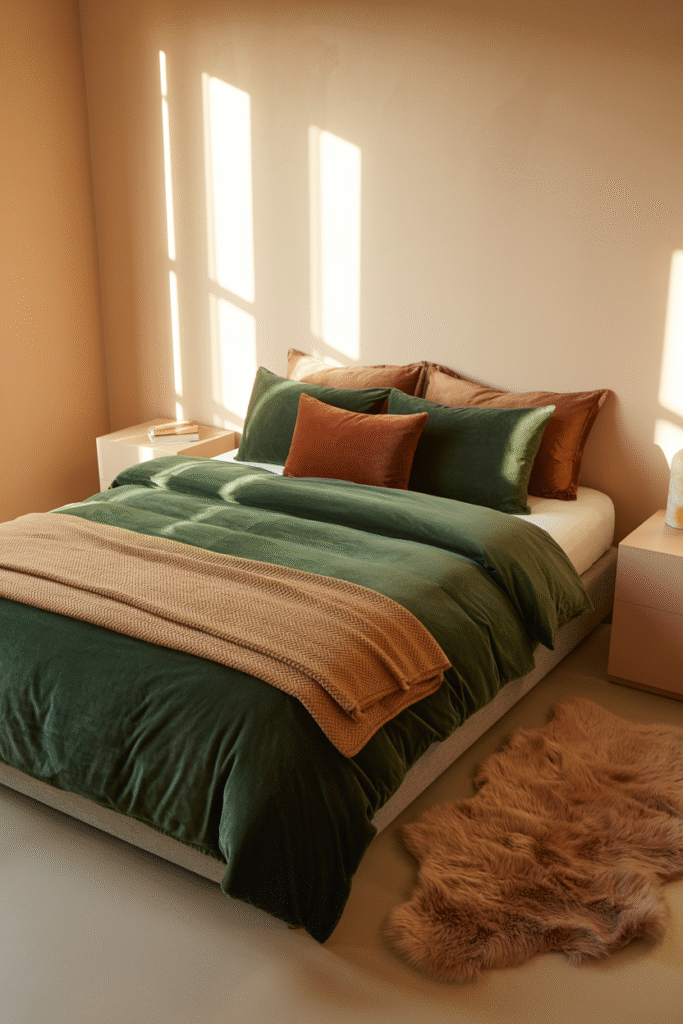
If you only do one thing, make it this: layer your bedding. Swap out summer’s lightweight cotton for duvets in rich jewel tones (emerald, aubergine, amber), and add a knit throw at the foot of the bed. I personally love a flannel-lined duvet cover—it’s a trick from a client in Boston who swears by them for cold nights. Layering goes beyond the bed: try a faux fur or Mongolian wool rug beside your bed (go for at least 120 cm x 180 cm / 47 in x 71 in).
Materials & Measurements:
- Duvet cover (standard: 200 cm x 200 cm / 79 in x 79 in)
- Knit throw (look for 130 cm x 180 cm / 51 in x 71 in)
- Rug (120 cm x 180 cm minimum)
- Extra pillows in autumnal shades
Pro tip: Don’t just match shades—mix textures like velvet, tweed, and cable knit. Real life isn’t a catalog; imperfection is cozy.
Common mistake: Over-layering so it feels bulky. Two throws are fine; six is overkill.
Approximate cost: $100–$300
Time: 30–45 minutes
Difficulty: Beginner
Swap Lighting for a Golden Glow
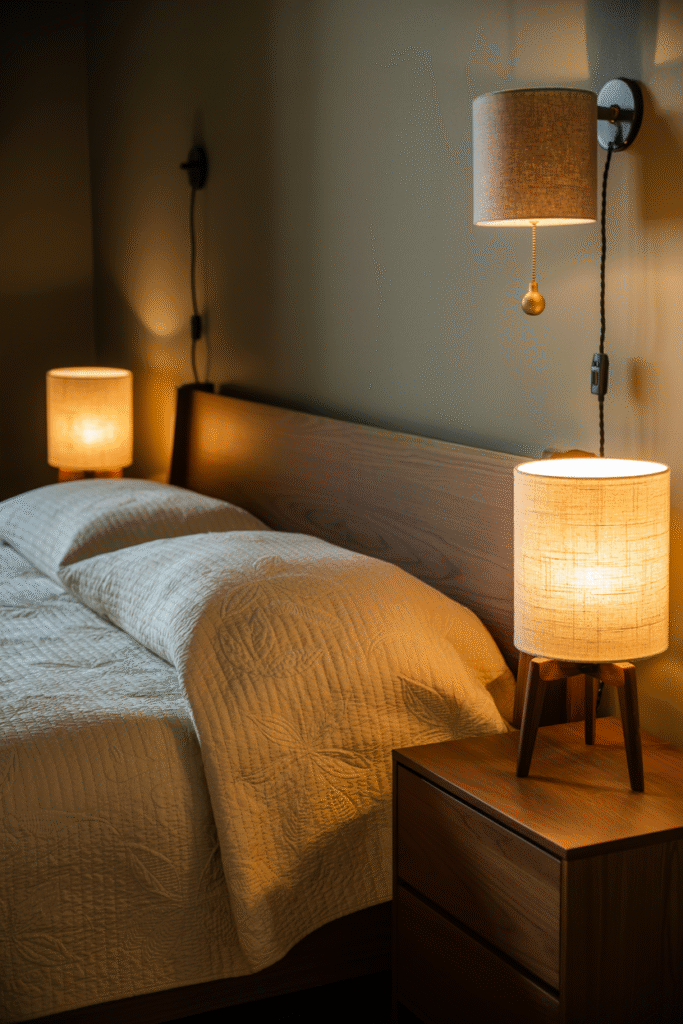
Summer’s bright, white bulbs have their place—but fall begs for something warmer. Change out your cool white LED bulbs for warm white (2700K–3000K). If your overhead is harsh, add table lamps with woven linen or rice paper shades. I’ve found that plug-in wall sconces are a godsend for renters who can’t rewire—attach them with removable hooks, and you’ve got instant ambiance.
Materials & Measurements:
- Bulbs (2700K–3000K, check your fixture base)
- Table lamps (height: 60 cm / 24 in for nightstands)
- Plug-in sconce (cord length: 2–3 m / 6–10 ft)
Personal anecdote: A client with a tiny bedroom hated her overhead light, so we ditched it and used three plug-in sconces instead—instant hygge.
Common mistake: Buying bulbs that are too yellow (below 2700K). You want cozy, not cafeteria.
Approximate cost: $20–$120
Time: 15–30 minutes
Difficulty: Beginner
Bring the Outdoors In (But Leave the Mud on the Porch)
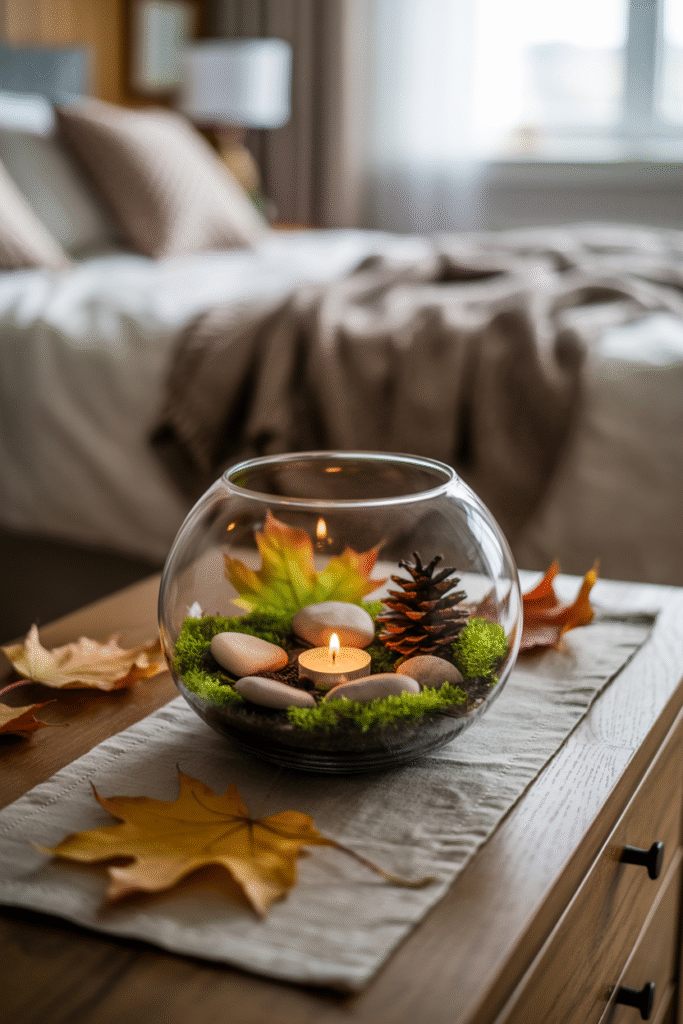
Fall is nature’s last hurrah—so celebrate it. Gather twigs, pinecones, dried grasses, and leaves for a DIY autumn terrarium. Use a low glass bowl (30 cm diameter / 12 in) and layer in small stones, moss, and your finds. Add a tea light candle in the center for a flickering glow.
If you’re not into crafting, just tuck eucalyptus stems behind your headboard or swap your summer flowers for baby’s breath and cinnamon sticks in a vase. I’ve seen kitchens and living rooms get all the love, but bedrooms are personal—adding natural elements makes them feel grounded.
Materials & Measurements:
- Glass bowl (30 cm diameter / 12 in)
- Twigs, leaves, pinecones
- Tea light candles
- Eucalyptus stems
What works best: Forage your own materials in a park or garden. It’s free, sustainable, and more personal than the craft store.
Common mistake: Overloading with too much—keep it simple, not cluttered.
Approximate cost: $0–$30
Time: 20–45 minutes
Difficulty: Beginner
Dress Your Windows Like You Mean It
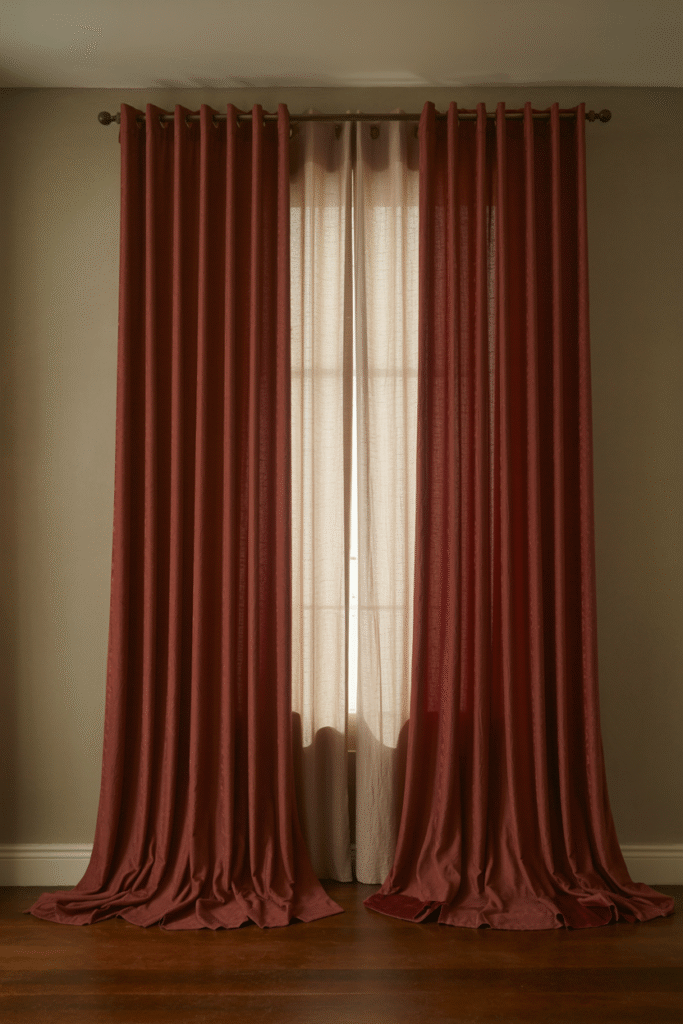
Summer’s sheer curtains feel too light now. Switch to linen, velvet, or heavy cotton drapes in deep hues—burgundy, navy, or charcoal. Hang them 10–15 cm (4–6 in) above the window frame for height, and let them pool just a bit on the floor for luxury. In my own bedroom, I repurposed blackout curtains from the guest room—they’re great for sleeping in, too.
If you’re on a tight budget, fabric shower curtains can work in a pinch, especially if you sew on some faux velvet trim. I tried this in a kids’ room project, and honestly, no one could tell the difference.
Materials & Measurements:
- Curtains (width: double your window’s width for fullness)
- Curtain rod
- Curtain hooks
Pro tip: Steam your curtains after hanging to remove wrinkles and help them hang beautifully.
Common mistake: Buying curtains that are too short. Measure twice, buy once.
Approximate cost: $40–$200
Time: 20–40 minutes
Difficulty: Beginner/Intermediate
Add Texture with Wall Art That Speaks to the Season
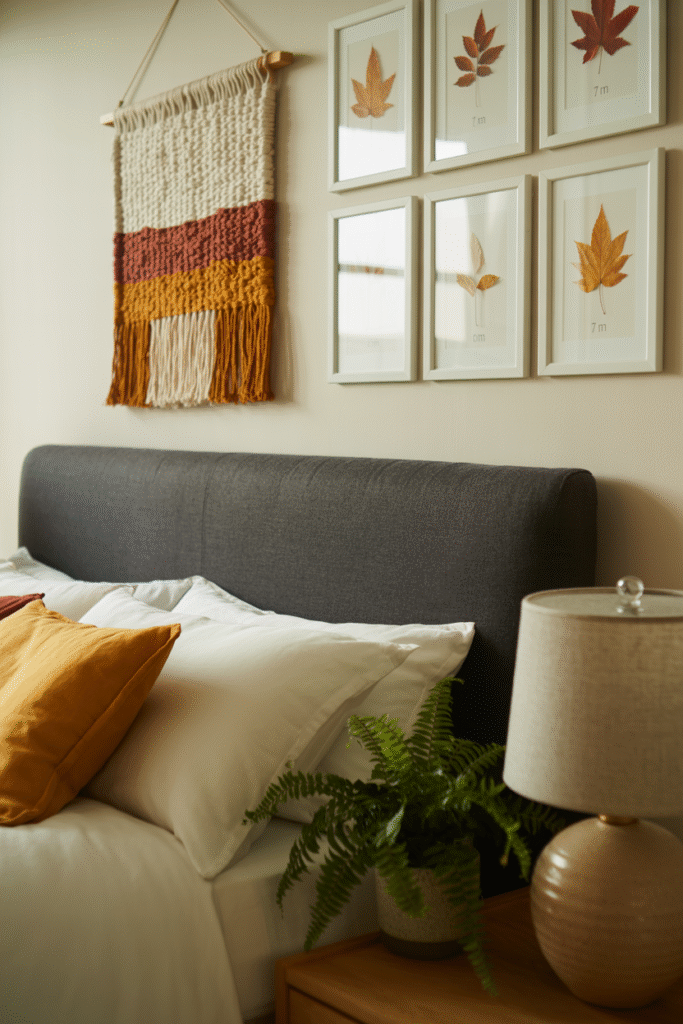
Forget generic prints—fall is all about tactile art. Hang a woven wall hanging above your bed, or DIY one with yarn and a branch. Another winner: frame pressed leaves between two pieces of glass for a natural, personal touch. I tried this last year with my nephew—super easy, and now he’s the “artist” of the bedroom.
If you’re not the crafting type, watercolor prints in autumnal palettes (mustard, olive, rust) add warmth. I always recommend a gallery wall—start with 3–5 pieces of varying sizes, spaced about 5–10 cm (2–4 in) apart.
Materials & Measurements:
- Woven wall hanging or DIY supplies
- Pressed leaves and frames
- Gallery wall art (mix sizes, 3–5 pieces minimum)
What works best: Start small and build. Don’t try to fill a whole wall at once.
Common mistake: Hang art too high. Eye level is best—about 145–155 cm (57–61 in) from the floor to the center.
Approximate cost: $20–$150
Time: 30–60 minutes
Difficulty: Beginner/Intermediate
Introduce Warm Wood Tones
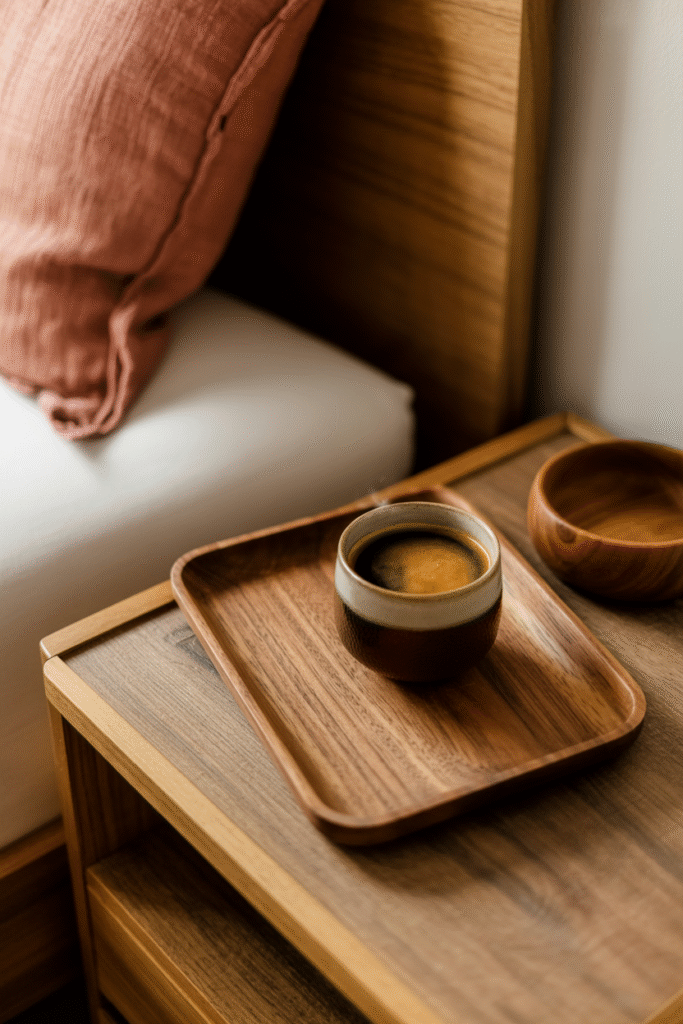
If your furniture is all white or gray, consider accent pieces in walnut, oak, or teak. A bedside table, headboard, or even a simple stool in warm wood instantly adds autumnal warmth. I’ve used stained plywood to DIY a floating nightstand (30 cm x 30 cm / 12 in x 12 in), and it still looks great years later.
Can’t swap furniture? Add wooden picture frames, trays, or bowls. Even something as simple as a walnut jewelry box or a teak coaster set on the nightstand brings in that cozy wood vibe.
Materials & Measurements:
- Wooden nightstand (40–50 cm high / 16–20 in)
- Walnut or oak frames
- Wooden trays or bowls
Pro tip: If you’re staining plywood, sand it first for a smooth finish.
Common mistake: Going too dark—medium tones are easiest to live with year-round.
Approximate cost: $30–$250
Time: 10–120 minutes (depending on DIY vs. buy)
Difficulty: Beginner to Intermediate
Create a Cozy Reading Nook
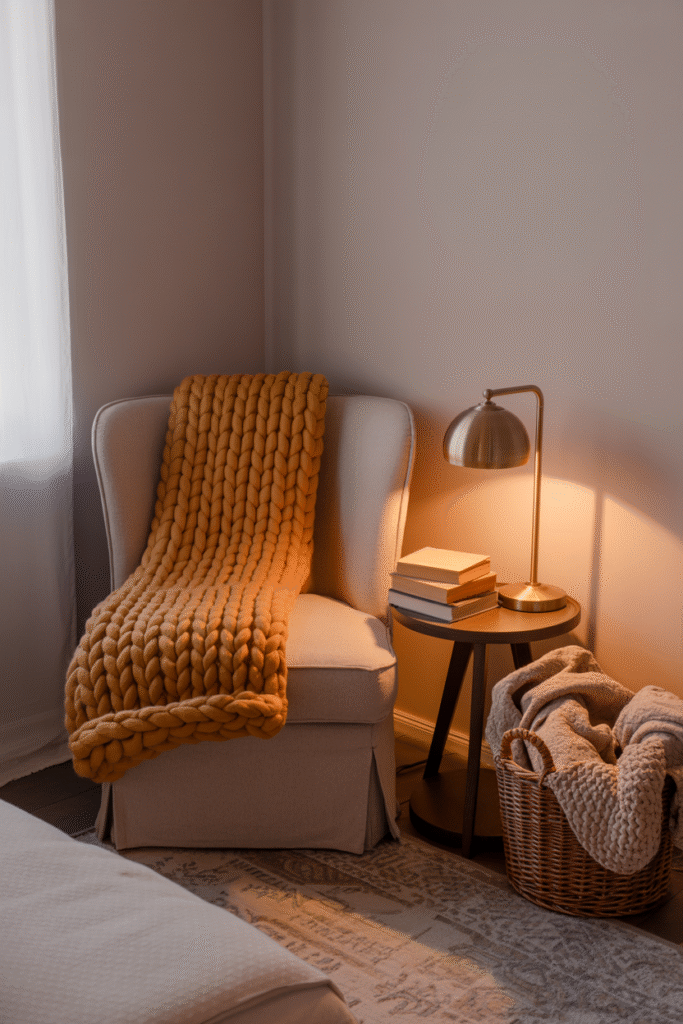
Fall is made for curling up with a book. Carve out a corner with an oversized chair (go for at least 80 cm wide / 31 in), a fluffy throw, and a small side table. Add a basket for blankets and books—I keep one from a thrift store next to my reading spot, and it looks intentional, not messy.
If space is tight, even a floor cushion (60 cm diameter / 24 in) and a pillow can work. I’ve helped high schoolers turn the corners of tiny bedrooms into cozy escapes with just a beanbag and a string of fairy lights.
Materials & Measurements:
- Chair (80 cm wide minimum / 31 in)
- Throw blanket
- Side table (40 cm high / 16 in)
- Basket for storage
What works best: Use a lamp with adjustable brightness for reading.
Common mistake: Picking a chair that’s too small. Go as big as your space allows.
Approximate cost: $50–$400
Time: 20–40 minutes
Difficulty: Beginner/Intermediate
Swap Out Summer’s Scents
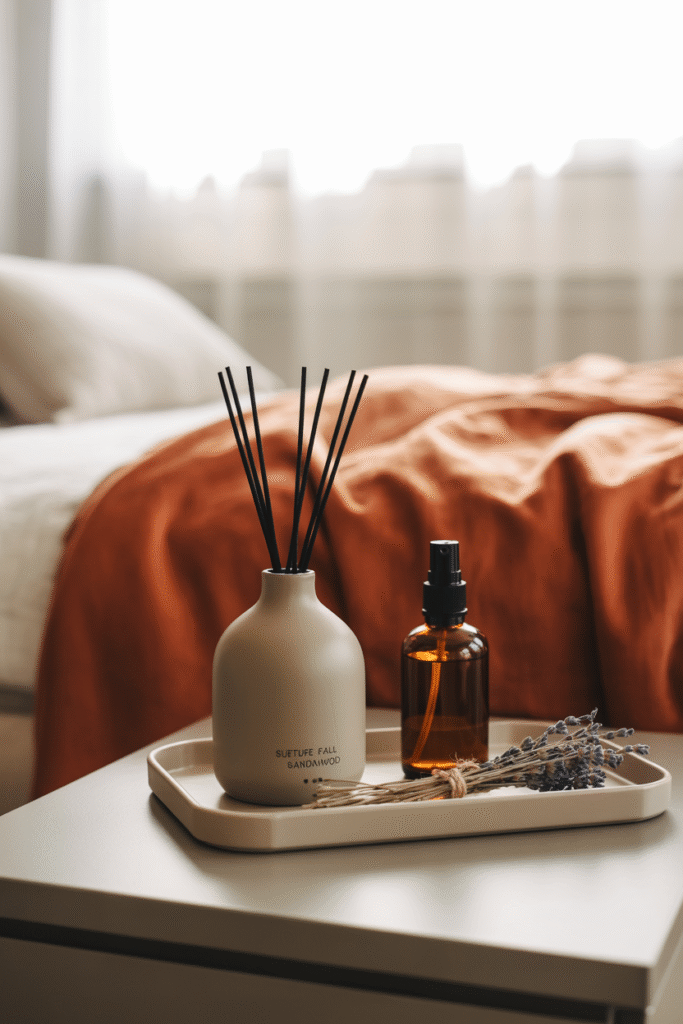
Your bedroom should smell as good as it looks. Fragrance diffusers with cedar, sandalwood, or amber are perfect for fall—avoid anything too sweet. I’ve had clients swear by linen sprays with a touch of lavender and clove.
If you’re sensitive to scents, dried lavender or eucalyptus bundles tucked behind the headboard are subtle and natural. I’ve also used simmer pots on the stove (apple peels, cinnamon, orange) and then just bring the aroma to the bedroom with a small pot.
Materials & Measurements:
- Diffuser and essential oils
- Linen spray
- Dried bundles (lavender, eucalyptus)
Common mistake: Overdoing it with scent. Start subtle, then add more if needed.
Approximate cost: $10–$50
Time: 5–20 minutes
Difficulty: Beginner
Rethink Your Side Table Styling
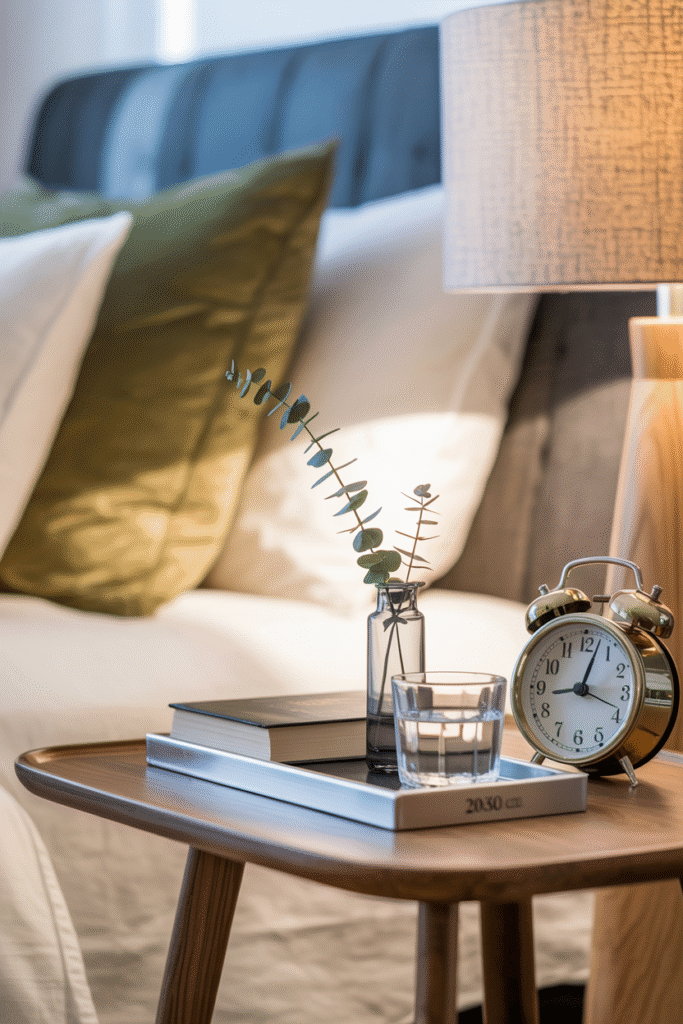
Nightstands often become dumping grounds—let’s fix that. Start by clearing everything off. Add a small tray (20 cm x 30 cm / 8 in x 12 in) to corral essentials: a book, glass of water, and a tiny vase with a single stem. I like to keep a notebook and pen for late-night ideas, too.
For a fall touch, swap out your everyday accessories for copper, brass, or ceramic pieces in earthy tones. In my own bedroom, I use a mini terracotta pot as a ring holder, and it always gets compliments.
Materials & Measurements:
- Tray (20 cm x 30 cm / 8 in x 12 in)
- Mini vase
- Ceramic or copper accessories
Pro tip: Rotate accessories seasonally to keep things fresh.
Common mistake: Cluttering the tray. Less is more.
Approximate cost: $20–$80
Time: 15–30 minutes
Difficulty: Beginner
DIY a Fall-Inspired Headboard
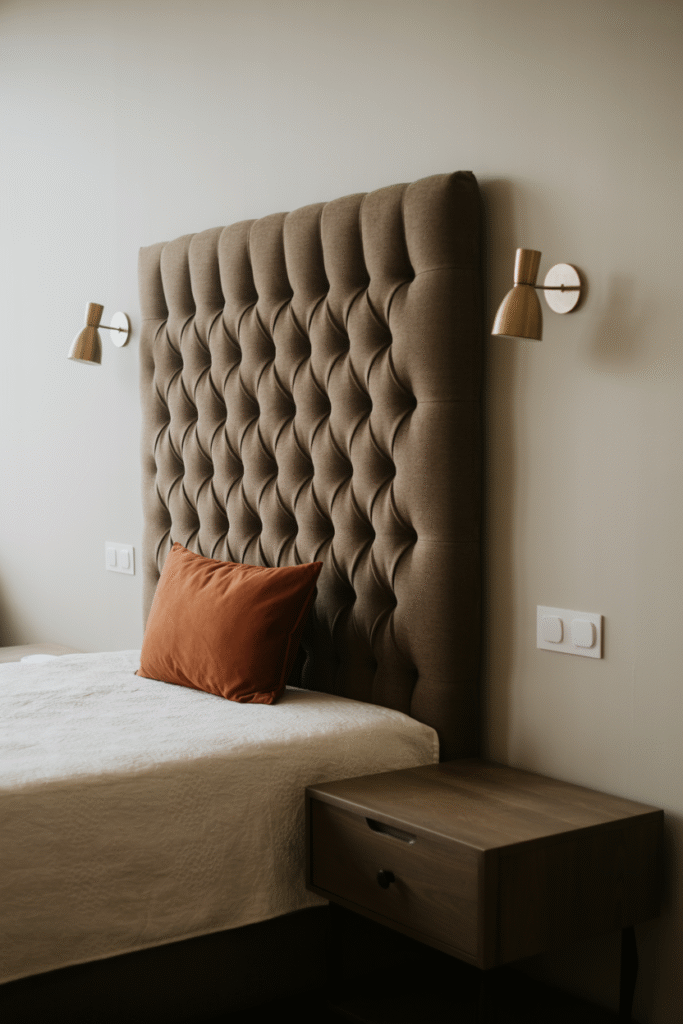
If your bed’s looking a little bare, try a DIY tufted headboard in velvet or tweed. You’ll need plywood (the width of your bed), batting, fabric, and buttons. I’ve made several for clients—the trick is to measure twice and use a staple gun for a pro finish.
If that’s too involved, hang a tapestry or large piece of fabric behind your bed for instant impact. One of my favorite projects was using a vintage wool blanket as a headboard—just attach it with decorative clips.
Materials & Measurements:
- Plywood (width of your bed x 60 cm high / 24 in)
- Batting and fabric
- Buttons
- Staple gun
What works best: Use a thick fabric to hide imperfections if you’re new to DIY.
Common mistake: Using fabric that’s too thin—it won’t hold its shape.
Approximate cost: $50–$200
Time: 90–180 minutes
Difficulty: Intermediate
Rotate Your Accessories Seasonally
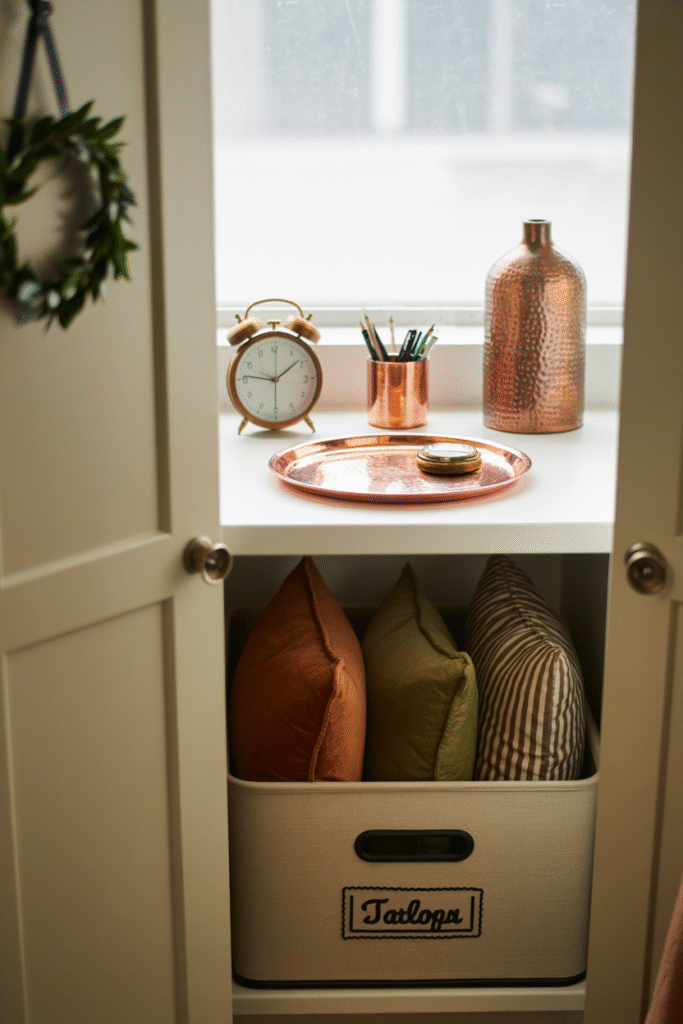
Last but not least, keep a small bin or shelf in your closet for seasonal accessories. Swap out throw pillows, art, trays, and vases as the seasons change. This keeps your space feeling fresh without a full redesign. I’ve got a client who stores her summer linens in a labeled box under the bed—it’s a five-minute job to swap things out.
Don’t forget the small details: switch your alarm clock for one with wood or brass accents, add a copper cup for pens, or hang a mini wreath on the closet door.
Materials & Measurements:
- Storage bin (40 cm x 60 cm / 16 in x 24 in)
- Seasonal accessories
Pro tip: Take a photo of your setup each season—it helps you remember what worked.
Common mistake: Storing things in damp or dusty places. Use airtight bins.
Approximate cost: $10–$100
Time: 20–40 minutes
Difficulty: Beginner
Quick Answers to Real Homeowner Questions
Q: How can I make my bedroom feel more fall-like without spending much money?
Swap your bedding for richer colors, add a knit throw, and bring in natural elements like branches or dried leaves. Lighting matters, too—switch to warm bulbs. These changes are affordable and make a noticeable difference.
Q: What if my bedroom is very small?
Focus on textiles and accessories, not furniture. A single throw, a small vase, and a couple of pillows are enough. Hang a lightweight tapestry if you can’t change the wall color.
Q: How do I keep my bedroom from looking too “Halloween” with fall decor?
Avoid orange and black. Stick to deeper tones: burgundy, olive, rust, navy, and caramel. Natural textures and wood tones keep things sophisticated, not spooky.
Q: What’s the biggest mistake people make with fall bedroom updates?
Overdoing it with too many accessories or going too matchy-matchy. Let your space breathe—three well-placed pumpkins look intentional; ten look like a pop-up shop.
Q: Can I mix modern furniture with fall decor?
Absolutely. Modern lines look great with warm textiles and wood tones. Add a chunky knit throw or a rustic wood tray to soften sleek furniture.
Q: How often should I update my bedroom for the season?
I recommend twice a year—once in fall, once in spring. Rotate a few key pieces, and your space will always feel current without exhausting you.
Final Thoughts
Updating your bedroom for fall doesn’t have to be a huge project. In my experience, even one or two of these changes can make the whole room feel brand-new. Start with what excites you most—whether it’s cozy bedding, warm lighting, or a DIY terrarium—and build from there. And don’t stress about perfection; real homes have character, not catalogs.
If you try any of these ideas, let me know how it goes. And if you come up with a clever fall twist I haven’t tried yet, I’d love to hear about it. Here’s to a bedroom that feels as good as a crisp autumn morning.