

So many of us have that one bedroom that feels a bit cramped maybe it’s a guest room, a child’s first big-kid space, or even your own retreat. The challenge? Making it feel cozy, functional, and stylish without making it feel cluttered or overwhelming. I’ve helped dozens of homeowners tackle small bedrooms, and I can tell you this: with the right approach, even the tiniest room can feel like a sanctuary. In this article, I’ll walk you through practical, tested steps to transform your small bedroom into a space that feels bigger, works better, and reflects your style. You’ll learn how to choose furniture, use color and lighting, maximize storage, and avoid the most common mistakes plus, I’ll share a few tricks I’ve picked up from real projects.
Start with a Clear Vision
Before you buy a single pillow or paint a wall, take a moment to think about how you want the room to feel. Is it a peaceful retreat? A playful kid’s room? A multi-purpose guest space? I once helped a couple turn a 10 sqm (108 sq ft) bedroom into a cozy reading nook by focusing on soft textures and warm lighting. Their only rule? No bulky furniture.
Action Step:
- Sketch a rough floor plan (even on paper) and mark the door, window, and any fixed features.
- Decide on your main goal: comfort, storage, or style.
- List your must-have items (bed, nightstand, wardrobe, etc.).
Choose the Right Bed
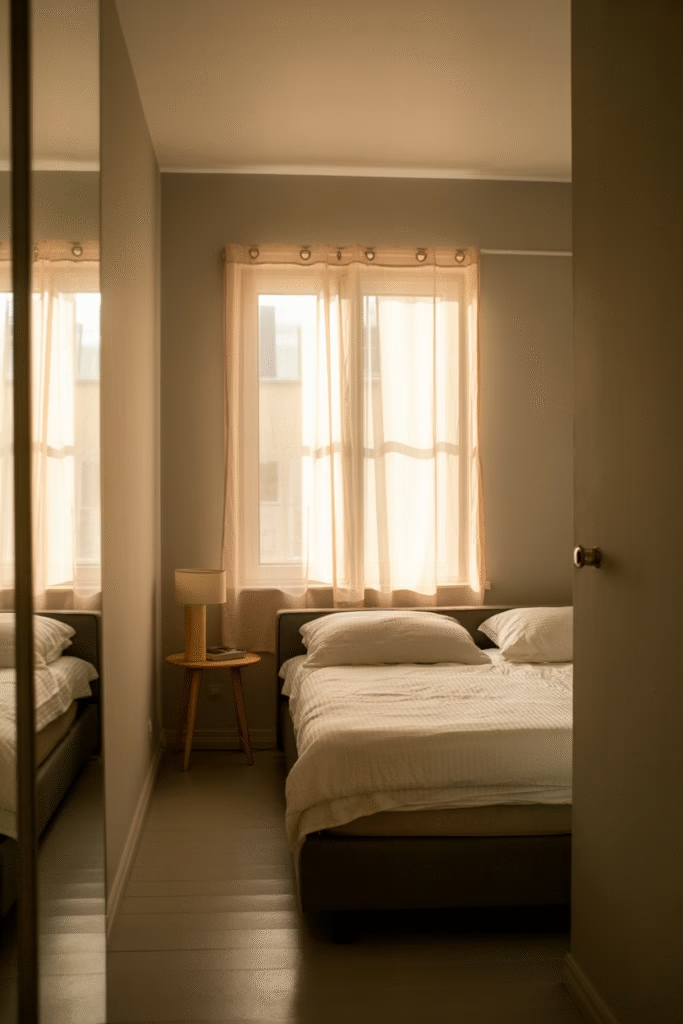
The bed is the anchor of any bedroom, and in a small space, it’s even more important to get it right. I’ve found that a low-profile bed frame (around 30 cm / 12 inches high) makes the room feel more open. If you’re tight on space, consider a platform bed with built-in drawers or a loft bed if ceiling height allows (minimum 2.4 m / 8 ft clearance).
Pro tip:
- Measure your room before buying a bed. For a small bedroom, a single bed (90 cm x 190 cm / 36” x 75”) or a small double (120 cm x 190 cm / 48” x 75”) is usually best.
- If you need extra storage, look for beds with under-bed drawers or lift-up storage compartments.
Common mistake:
- Choosing a bed that’s too big for the room. Leave at least 60 cm (24 inches) of walkway on each side.
Smart Storage Solutions

Storage is the biggest challenge in small bedrooms. The trick is to use vertical space and multi-functional furniture. I once transformed a 12 sqm (130 sq ft) room by installing floating shelves above the bed and using a storage ottoman at the foot of the bed.
Action Steps:
- Use wall-mounted shelves or floating shelves for books, decor, and small items.
- Opt for a wardrobe with sliding doors (saves 15-20 cm / 6-8 inches of space).
- Use under-bed storage bins for off-season clothes or extra bedding.
- Consider a storage ottoman or bench at the foot of the bed.
Pro tip:
- Use baskets or bins to keep things organized and out of sight.
- Label your storage containers for easy access.
Avoid this:
- Overloading the room with too many storage pieces. Stick to 2-3 main storage solutions.
Color and Light: Make It Feel Bigger

Color and lighting can dramatically change how a room feels. I’ve found that light, neutral colors (like soft whites, pale greys, or pastels) make a small bedroom feel more spacious. Dark colors can work, but use them sparingly—maybe on an accent wall or in small decor items.
Action Steps:
- Paint walls in light, neutral tones.
- Use mirrors to reflect light and create the illusion of space.
- Choose sheer curtains to let in natural light.
- Layer lighting with a ceiling fixture, bedside lamp, and maybe a small floor lamp.
Pro tip:
- Place a mirror opposite the window to maximize natural light.
- Use warm white bulbs (2700K-3000K) for a cozy feel.
Common mistake:
- Using too many dark colors or heavy curtains, which can make the room feel smaller and darker.
Furniture That Fits
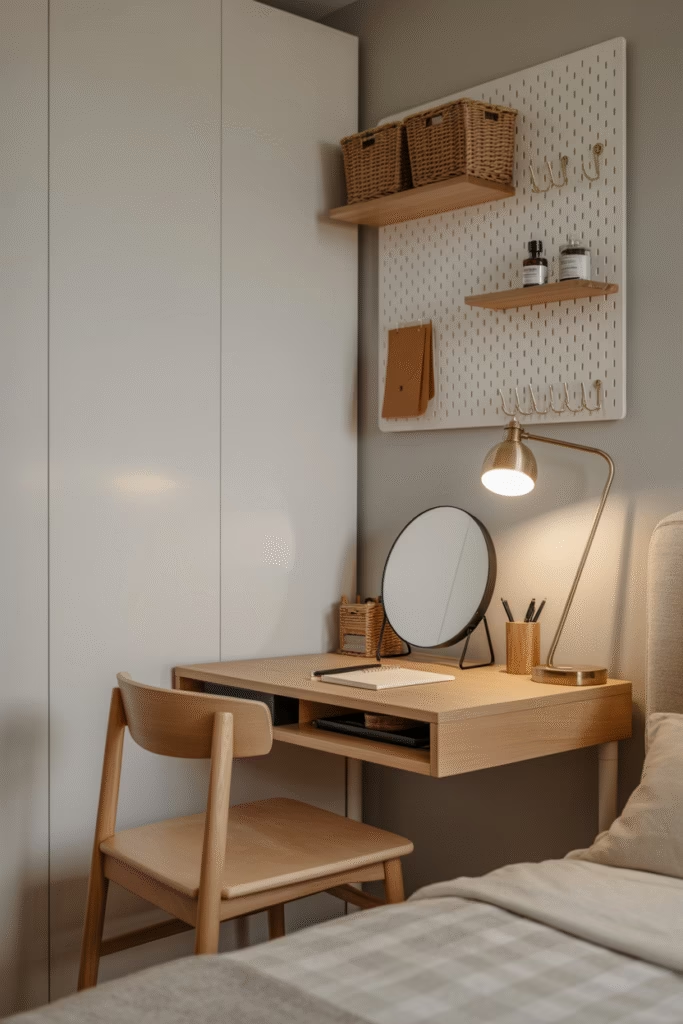
Choosing the right furniture is key. I always recommend measuring twice before buying anything. In a small bedroom, every piece should serve a purpose. For example, a slim nightstand (about 40 cm / 16 inches wide) is enough for a lamp and a book. If you need a desk, look for a wall-mounted fold-down desk or a small writing table.
Action Steps:
- Measure your room and furniture before buying.
- Choose multi-functional pieces (like a nightstand with drawers or a desk that doubles as a vanity).
- Leave at least 60 cm (24 inches) of walkway around furniture.
Pro tip:
- Use furniture with legs to create a sense of openness.
- Avoid bulky, oversized pieces.
Avoid this:
- Filling the room with too much furniture. Stick to the essentials.
Declutter and Organize
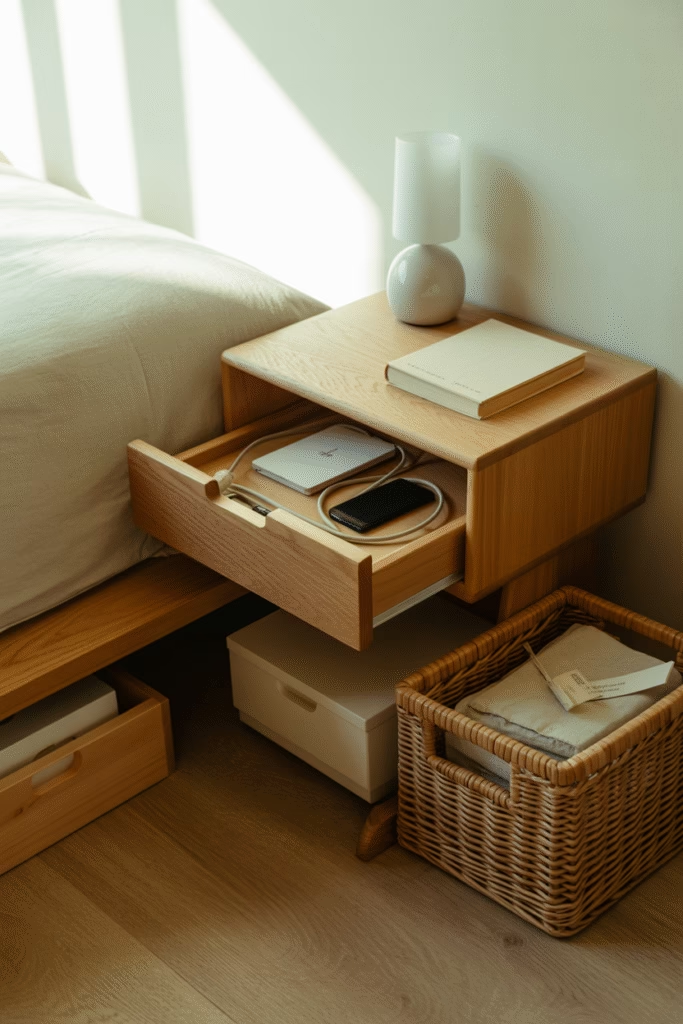
A cluttered room feels smaller and more stressful. I’ve helped clients declutter by sorting items into “keep,” “donate,” and “toss” piles. Use storage bins, baskets, and drawer organizers to keep things tidy.
Action Steps:
- Sort through clothes, books, and decor.
- Donate or sell items you no longer need.
- Use drawer dividers and shelf organizers.
Pro tip:
- Keep surfaces clear—only display a few favorite items.
- Store seasonal items out of sight.
Common mistake:
- Keeping too many decor items on display, which can make the room feel busy.
Personal Touches

A small bedroom should still feel like “you.” I love adding personal touches like framed photos, a favorite throw blanket, or a small plant. In one project, a client added a gallery wall above the bed with family photos and artwork, which made the room feel warm and inviting.
Action Steps:
- Add a few personal items (photos, artwork, plants).
- Use textiles (rugs, throws, cushions) to add color and texture.
- Display a few favorite books or decor pieces.
Pro tip:
- Keep decor minimal—too much can overwhelm a small space.
- Rotate decor seasonally to keep things fresh.
Avoid this:
- Over-decorating. Less is more in a small bedroom.
Common Mistakes and How to Avoid Them
Even with the best intentions, it’s easy to make mistakes in a small bedroom. Here are a few I’ve seen—and how to fix them:
- Mistake: Choosing a bed that’s too big.
Fix: Measure your room and choose a bed that leaves enough space to move around. - Mistake: Overloading the room with furniture.
Fix: Stick to essentials and use multi-functional pieces. - Mistake: Ignoring storage.
Fix: Use vertical space and under-bed storage. - Mistake: Using too many dark colors.
Fix: Stick to light, neutral tones and add color with small decor items.
FAQs
Q: How can I make a small bedroom feel bigger?
A: Use light colors, mirrors, and minimal furniture. Keep surfaces clear and use vertical storage.
Q: What’s the best bed size for a small bedroom?
A: A single bed (90 cm x 190 cm / 36” x 75”) or small double (120 cm x 190 cm / 48” x 75”) is usually best.
Q: How do I maximize storage in a small bedroom?
A: Use under-bed storage, wall-mounted shelves, and multi-functional furniture.
Q: Can I use dark colors in a small bedroom?
A: Yes, but use them sparingly—on an accent wall or in small decor items.
Q: How much space should I leave around the bed?
A: Aim for at least 60 cm (24 inches) of walkway on each side.
Q: What lighting works best in a small bedroom?
A: Layer lighting with a ceiling fixture, bedside lamp, and maybe a small floor lamp. Use warm white bulbs.
Final Thoughts
Decorating a small bedroom doesn’t have to be stressful or expensive. With a clear plan, smart furniture choices, and a few clever tricks, you can create a space that feels bigger, works better, and reflects your style. I’ve seen so many small bedrooms transformed with just a few simple changes—sometimes it’s as easy as swapping out a bulky nightstand or adding a mirror. The key is to focus on what matters most to you and keep things simple. If you’re feeling stuck, start with one small change and build from there. You’ll be amazed at how much difference it can make.