
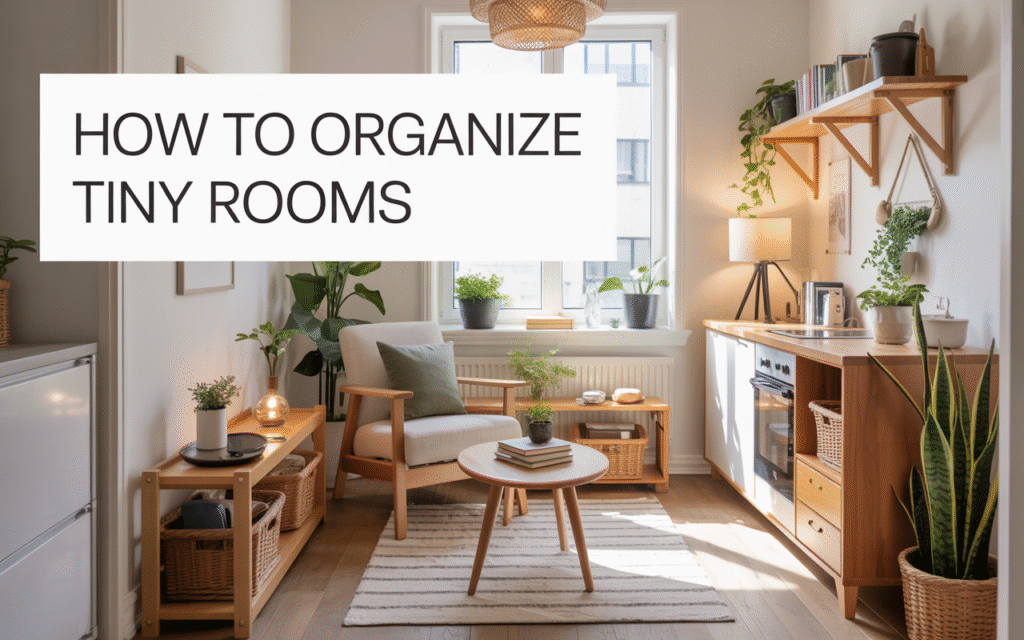
When you live in a home where space feels more like a luxury than a guarantee, the daily question quickly becomes: where do I put all this stuff? Whether it’s a small bedroom, a studio flat, or that extra room that never seems to have a purpose, tiny spaces can feel overwhelming. I’ve been there myself—standing in a cramped room that feels like it shrinks a little more every time something new comes in.
But here’s the good news: small rooms don’t have to feel claustrophobic or cluttered. With the right tricks, you can make them organized, functional, and even inviting. In this article, I’ll share the exact strategies I use in my own projects and homes—ideas you can put into practice today without spending to much.
Start with Ruthless Editing
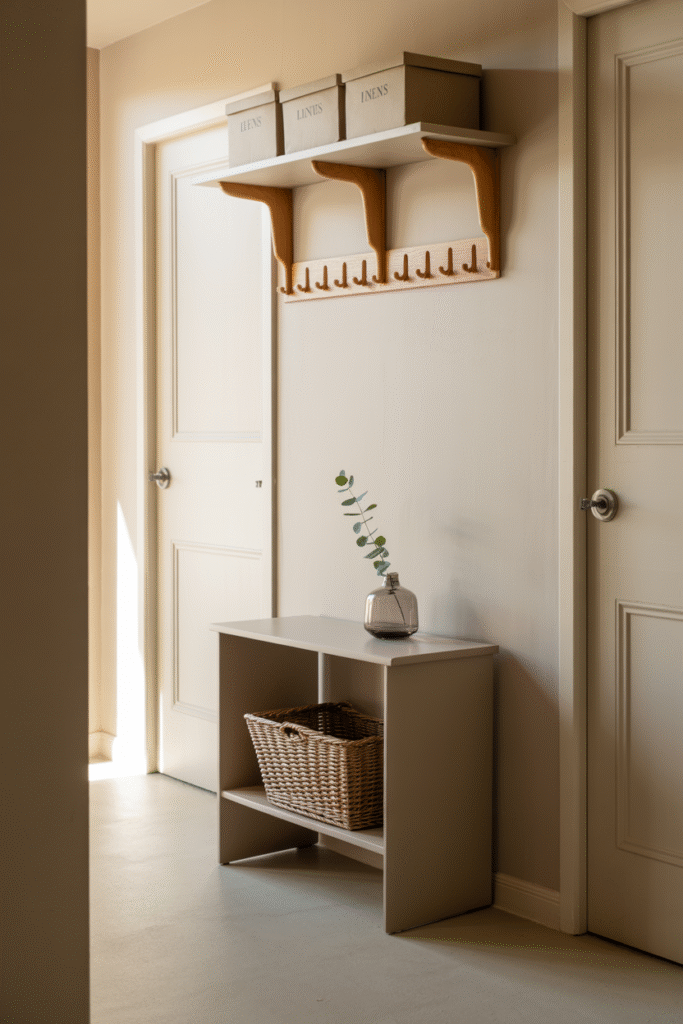
In my experience, the biggest mistake people make with tiny rooms is trying to organize before decluttering. The truth is, no amount of clever shelves will make a room feel calm if there’s simply too much inside it.
Here’s what usually works best:
- Take everything out of the room. Yes, everything.
- Divide items into three groups: keep, donate/sell, store elsewhere.
- For items you’re unsure about, I suggest a 30-day box. Label it, set the date, and if you don’t use anything inside after a month, it probably doesn’t need to return.
Pro tip: When working in small rooms, I recommend keeping only pieces that serve at least two purposes—practical use and personal joy. You don’t have space for things that do neither.
Think Vertical, Not Just Horizontal
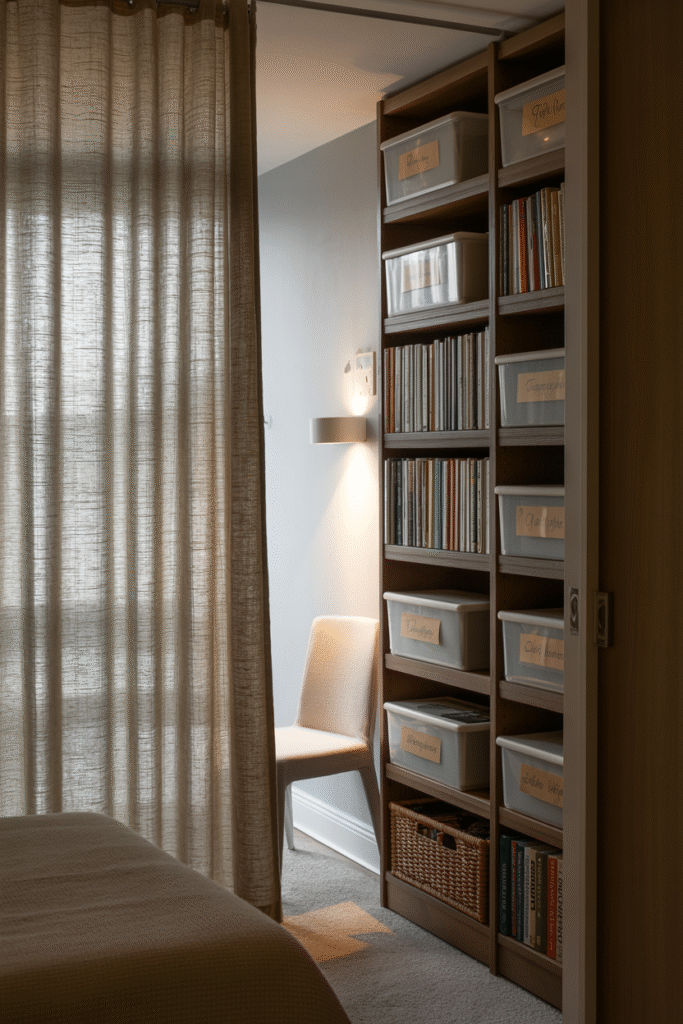
A room that’s tiny in square meters still has height. I’ve always found this is the most underutilized area in small homes.
Ideas I’ve tested with good success:
- Tall shelving units: Go for bookcases at least 180 cm (6 ft) high. Even in bedrooms, a tall narrow shelf can store folded clothes, baskets, or books.
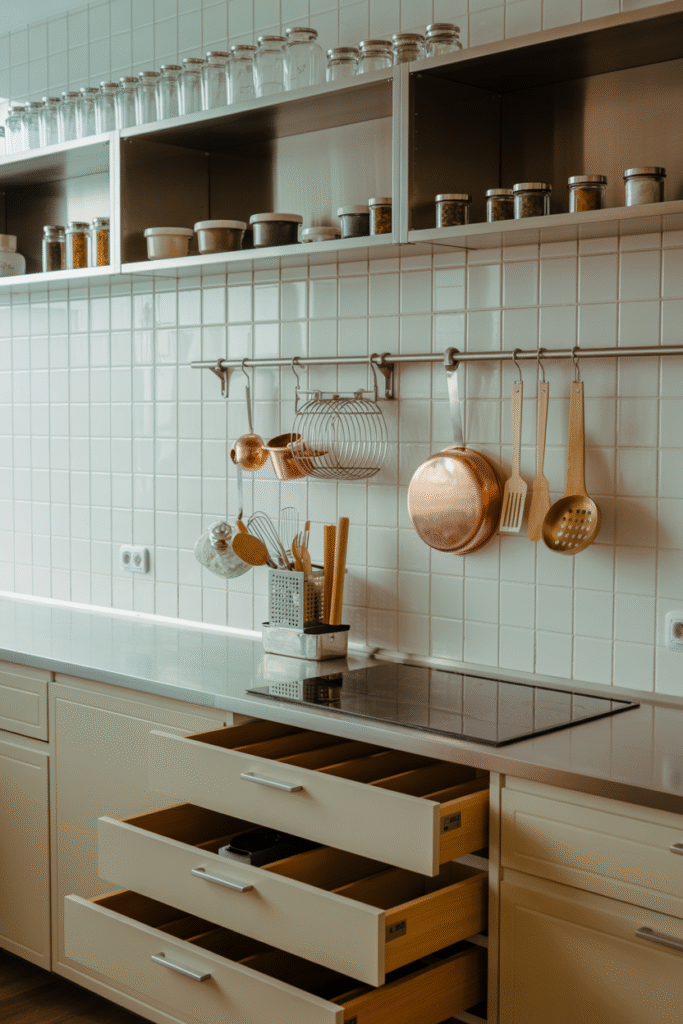
- Wall-mounted storage: Floating shelves, wall hooks, and hanging racks keep floors clear. For example, in one client’s small kitchen, we gained almost 1.5 square metres (16 sq ft) by moving pans onto a wall rail instead of a drawer.
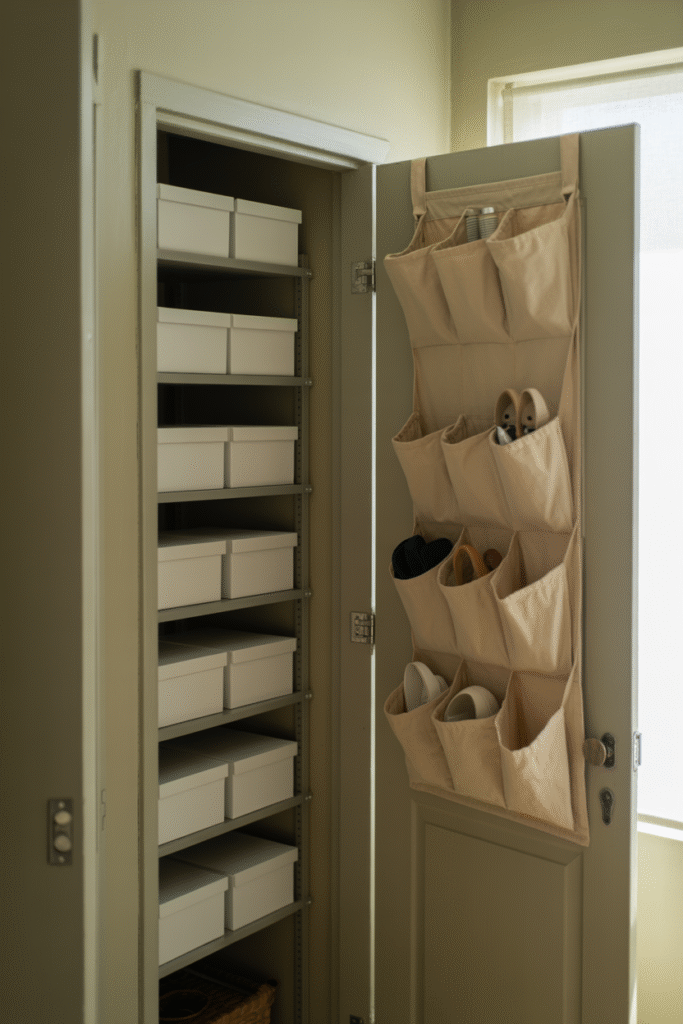
- Over-door racks: Use the space above doors for storage. Great for shoes, cleaning supplies, or seasonal items.
Avoid this: Don’t overload tall units without anchoring them. Always secure large pieces to the wall, especially in children’s rooms.
Furniture That Does Double Duty
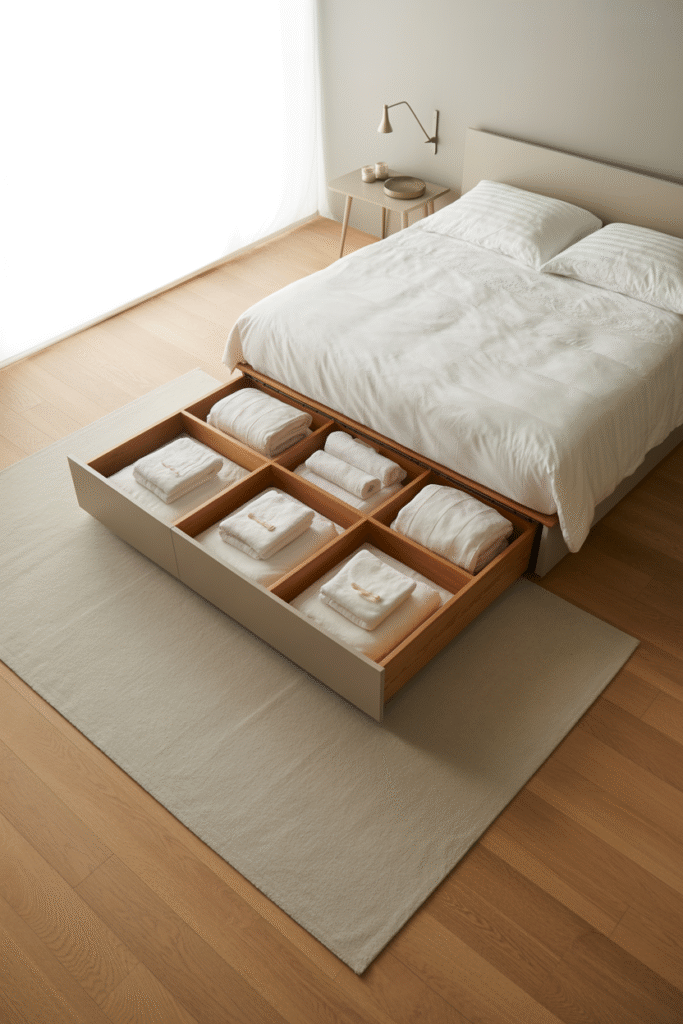
In my own home office (which doubles as a spare bedroom), I struggled with where to put my work things without leaving guests feeling like they’d walked into a supply closet. The solution was investing in multi-purpose furniture.
Some options that work wonders:
- Storage ottomans: A piece that hides bedding while doubling as extra seating.
- Beds with drawers underneath: You can store up to six deep drawers under a standard double bed (140 cm x 200 cm / 55 in x 79 in). Cost-effective and saves a wardrobe.
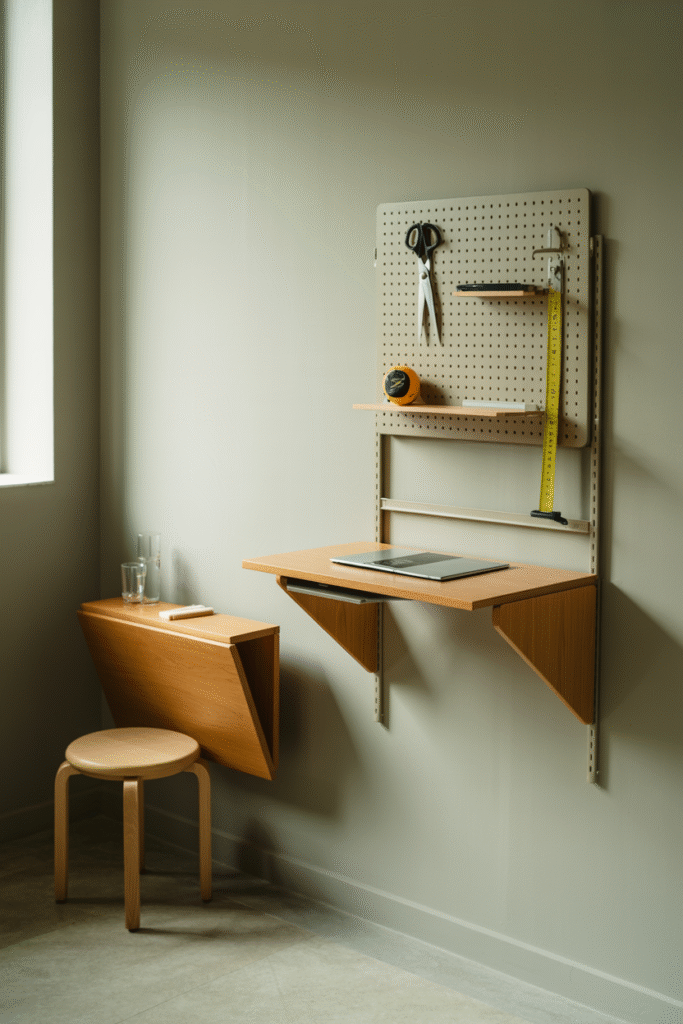
- Fold-out desks: These can be mounted on walls and folded away when not in use—perfect for hobby areas.
- Drop-leaf tables: In one tiny dining corner, a drop-leaf table meant the family could seat six at holidays but fold it down to just 45 cm (18 in) deep the rest of the time.
Pro tip: Look for furniture that compresses in size rather than just adds storage. Tiny rooms breathe easier when surfaces can vanish.
Use Clear Zones, Even in Small Spaces
A tiny room often feels chaotic because everything is spread across every surface. The trick is to designates zones—mini areas within your room to give structure.
For example, in a 9 m² (95 sq ft) bedroom I worked on:
- One wall became a “sleep zone” with only bed-related items.
- The corner by the window was a “reading zone” with a slim chair and a lamp.
- By the door, a “storage zone” with a tall dresser.
Even in such a small room, the sense of separate areas created more calm.
Pro tip: Use rugs or different lighting to reinforce these zones visually, even when the furniture is minimal.
Containers, but Keep Them Consistent
I have a love-hate relationship with containers. On one hand, baskets and bins are a lifesaver for containing clutter. On the other, mismatched or oversized ones can make small rooms look busier.
My rule of thumb:
- Stick to one or two finishes (like natural wicker + white plastic).
- Go for shallow bins (15–20 cm / 6–8 in) for shelves, so items don’t get buried.
- Clear or labeled ones are ideal—because nothing undoes organization faster than mystery boxes.
Mistake to avoid: “Organizing” by shoving everything into pretty baskets. Organized clutter is still clutter.
Light Is Your Silent Organizer
It might sound odd, but lighting dramatically influences how “organized” a small room feels.
- Natural light: Keep windows as open as possible. I recommend Roman shades instead of heavy curtains to avoid crowding.
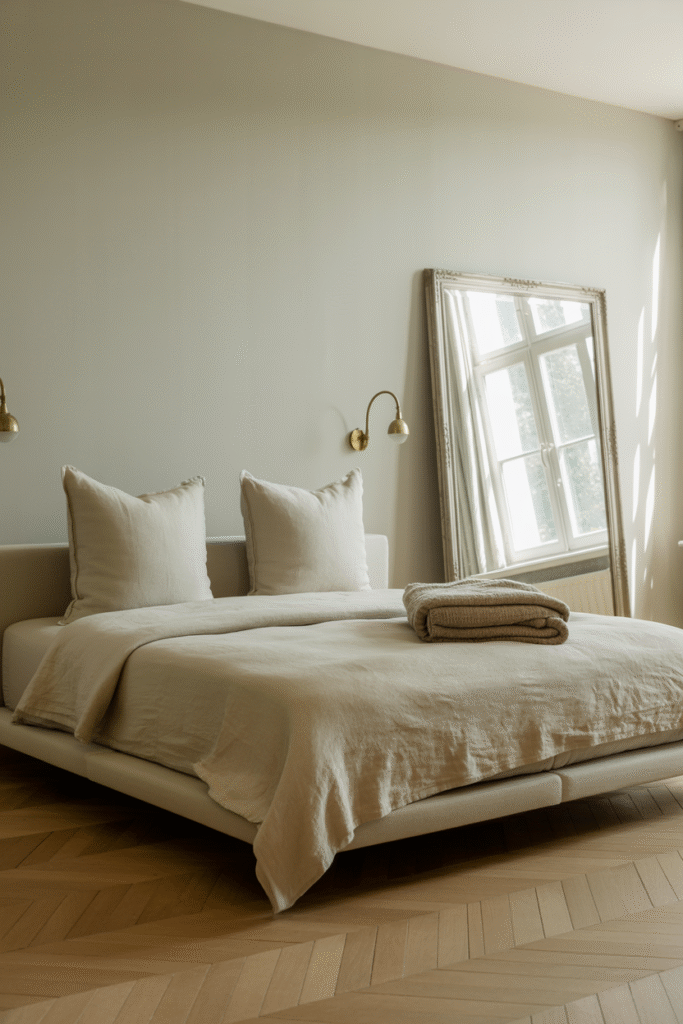
- Layered lighting: In one 8 m² (86 sq ft) guestroom, I switched a bulky floor lamp for two wall sconces above the bed. Suddenly, the walking path opened up, and the whole room looked less cluttered.
- Mirrors: Place one opposite a window to reflect light. Even better if you use mirrored furniture—though sparingly.
Storage Hacks That Have Actually Worked
Here are some practical ideas I’ve personally implemented:
- Under-sofa boxes: Slim rolling bins can slide under most sofas (clearance of 12–15 cm / 5–6 in). Great for kids’ toys or spare blankets.
- Pegboards: Perfect in hobby rooms. Instead of hiding materials, display tools neatly. In a sewing nook, I used one pegboard for scissors, measuring tapes, and small jars of thread.
- Behind-the-door pockets: An inexpensive way to store shoes, toiletries, or snacks in dorm rooms.
Budget tip: Many storage hacks can be pulled off under ₹2,000 (about $25) if you’re willing to DIY.
Common Mistakes to Avoid
- Too many small pieces of furniture: Stick to fewer, larger, multi-purpose items.
- Ignoring scale: A bulky wardrobe in a 10 m² (107 sq ft) room makes it feel half its size. Choose slim, taller pieces.
- Forgetting circulation space: Always leave at least 60–70 cm (24–28 in) of walking clearance.
- Over-decorating: Accessories should be intentional. That third throw pillow? It might look lovely, but if it gets tossed on the floor daily, it’s clutter.
FAQs About Organizing Tiny Rooms
Q: How much should I budget to organize a small bedroom?
A: It depends, but I’ve been able to transform small rooms with just ₹5,000–7,000 (about $60–85) by adding shelves, bins, and one multi-purpose furniture piece.
Q: Is it worth hiring a carpenter for custom furniture in tiny rooms?
A: If your space has unusual dimensions (sloped ceilings, alcoves), custom can be worth it. Otherwise, ready-to-assemble tall furniture often does the trick.
Q: How do I stop a tiny room from feeling too cramped with furniture?
A: Stick to pieces with legs that lift them off the ground, light colors, and compact designs. Avoid dark bulky wardrobes in particular.
Q: What’s the first step if I feel overwhelmed?
A: Always start with decluttering. Take one box, one surface, or one drawer at a time. Clearing makes organizing much easier later.
Q: How do I maintain the organization long-term?
A: Set a “5-minute reset” habit at the end of each day. I do this in my kitchen—just a quick tidy takes the pressure off.
Tiny rooms come with challenges, yes, but I’ve learned through dozens of projects (and plenty of trial and error at home) that they can also feel cozy, functional, and freeing. The key is being intentional—every item, every piece of furniture, every wall must earn its place. Organizing small spaces isn’t about denial, it’s about discovery: finding clever ways to make your tiny room truly work for how you live.