
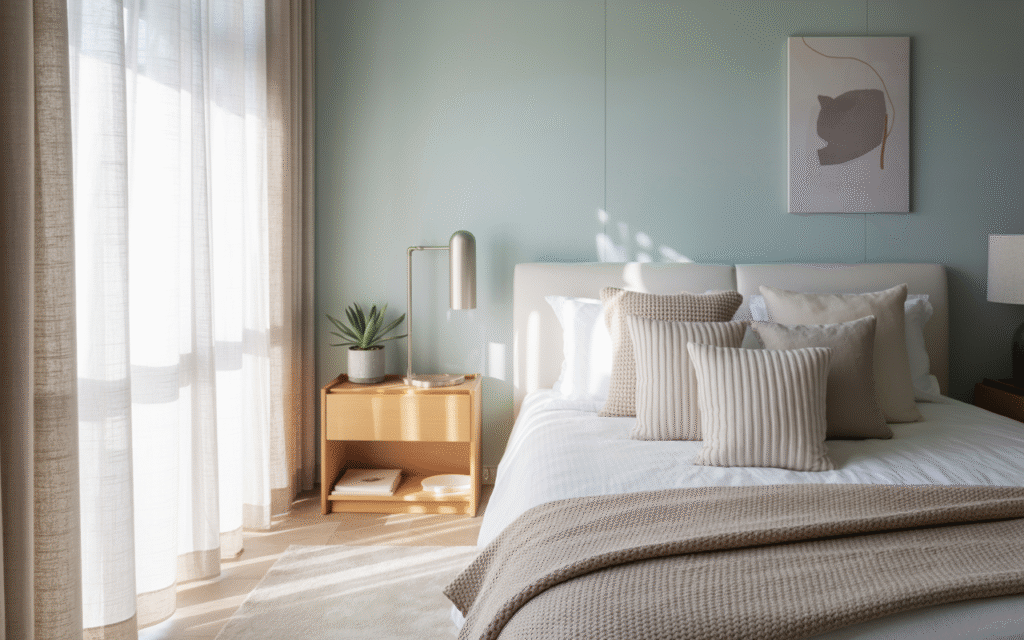
Small bedrooms have a way of calling out every bad habit stacked laundry, awkward furniture, impulse buys that never quite fit. In my experience, the fix isn’t a dramatic makeover; it’s a calm reset that starts with knowing the room’s limits and then letting those limits guide smarter choices. I’ve found that when the layout respects real measurements, the storage stays invisible, and the lighting is warm rather than blinding, the whole space feels calmer within a day. What works best is tackling it in bite-size steps measure, edit, place, then soften so nothing feels chaotic or expensive. Think of this as a friendly checklist rather than a design exam: a few budget moves, a few honest edits, and a few style choices that make the room feel larger, sleep better, and stay tidy without constant effort.
This isn’t about trendy “hacks” I’m sharing the exact steps, measurements, and practical tips I’ve used in real homes, By the end, you’ll have a clear roadmap to a bedroom that feels bigger, works harder, and actually reflects your style even with tight space and a tighter budget.
Rethink Your Bed (It’s Not What You Think)
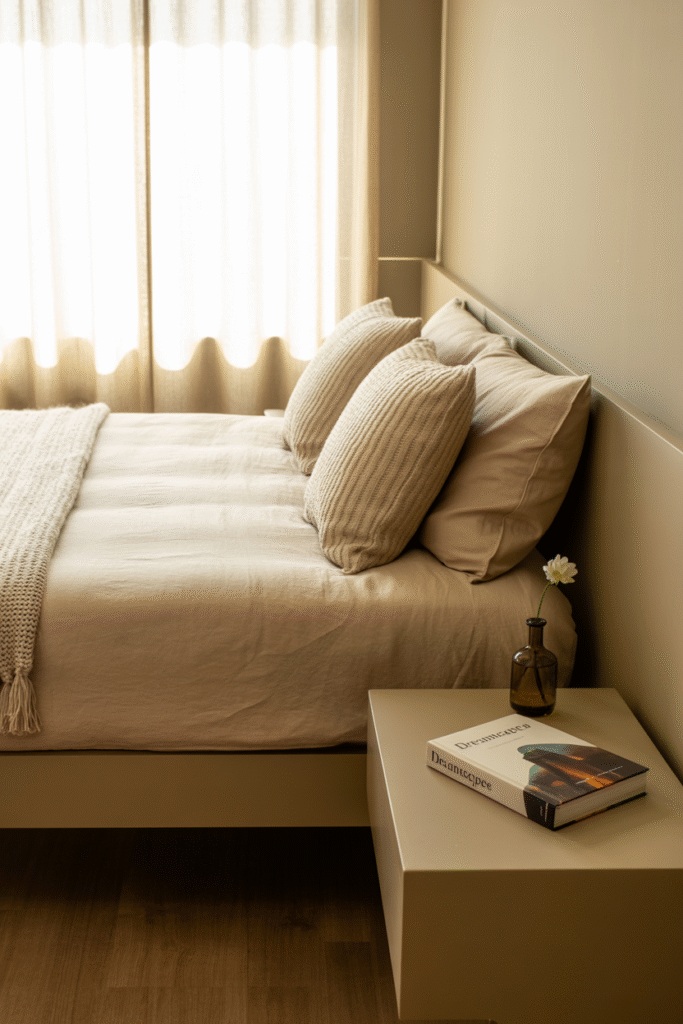
Most people assume a small bedroom means a tiny bed, but I’ve found that a standard double (about 135 cm wide, 190 cm long; 53 x 75 inches) can actually work if you place it right. What matters more is giving yourself space to move around it. Last year, I helped a client rotate her bed so the head was against the longest wall, leaving a clear path to the closet. Suddenly, the room felt twice as big.
- Pro tip: Measure your room first—draw a quick sketch with dimensions. Aim for at least 60 cm (24 inches) of walking space around the bed.
- Avoid this: Pushing the bed into a corner. It usually makes the room feel more cramped, not less.
- Budget move: If you need a new bed, consider a platform bed with built-in storage. IKEA’s MALM (around $180) is a solid choice.
Choose the Right Nightstand (Or Skip It)
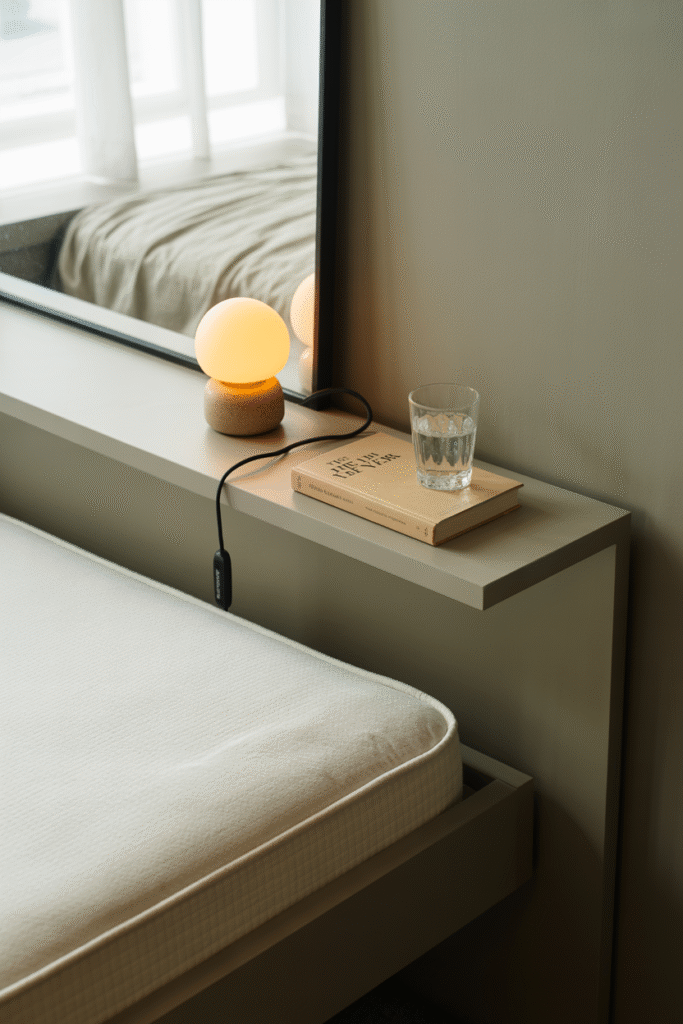
Forget matching sets. In a small room, a bulky nightstand just eats up space. I often use a floating shelf (about 25 cm deep, 60 cm wide; 10 x 24 inches) mounted just above the bed. It holds a lamp, phone, and book without blocking the walkway. If you need a drawer, look for a slim, tall unit—I found one for a client at a local thrift store for ($6).
- Pro tip: Measure your bed height before buying or mounting. The shelf should be within easy reach, about 10–15 cm (4–6 inches) above the mattress.
- Avoid this: Overloading the nightstand. Keep it to essentials: lamp, book, glass of water.
- Budget move: Repurpose a wooden crate or stack of books as a makeshift nightstand. I did this in my first apartment and it looked surprisingly intentional.
Use Light, But Not White, Paint
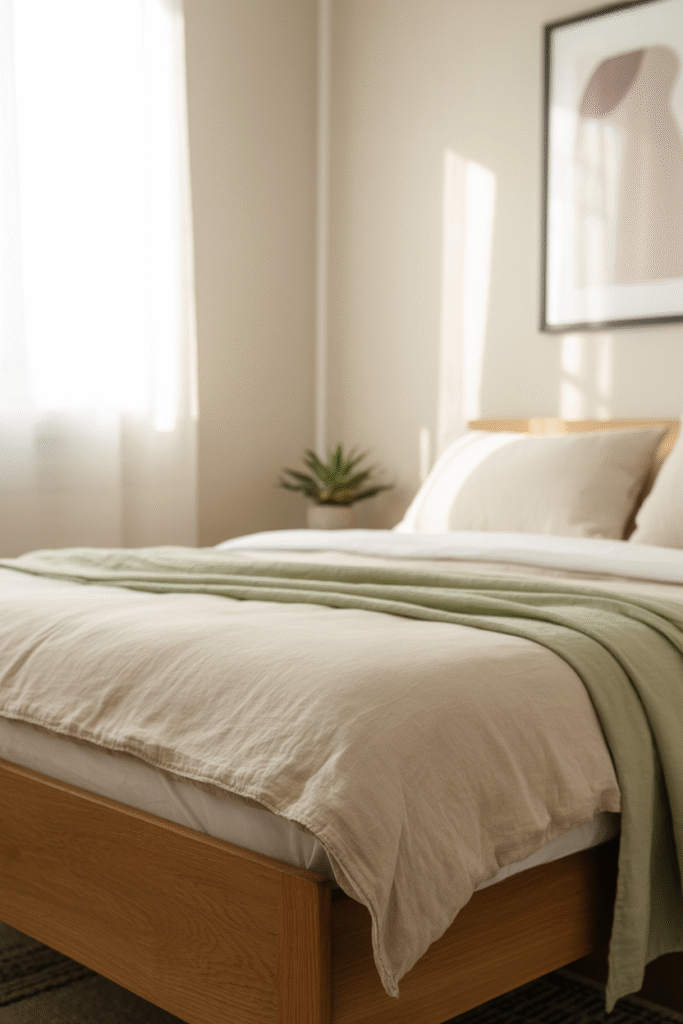
Most “small room” guides say “paint it white,” but I’ve tried that in a dozen rooms and it often feels cold, not cozy. Instead, I go for a soft, warm neutral—think creamy beige, pale sage, or barely-there lavender. These tones reflect light but add personality. For a recent project, we used Asian Paints’ “Morning Mist” (a muted grey-green), and the room instantly felt airy yet inviting.
- Pro tip: Test swatches in natural light. Colors look different in bright sun versus evening bulbs.
- Avoid this: Dark accent walls. They can work in a large room but usually shrink a small one.
- Budget move: Buy a sample pot first (about ₹200/$2.50). You can often do a small room with just two sample pots.
Maximize Vertical Space
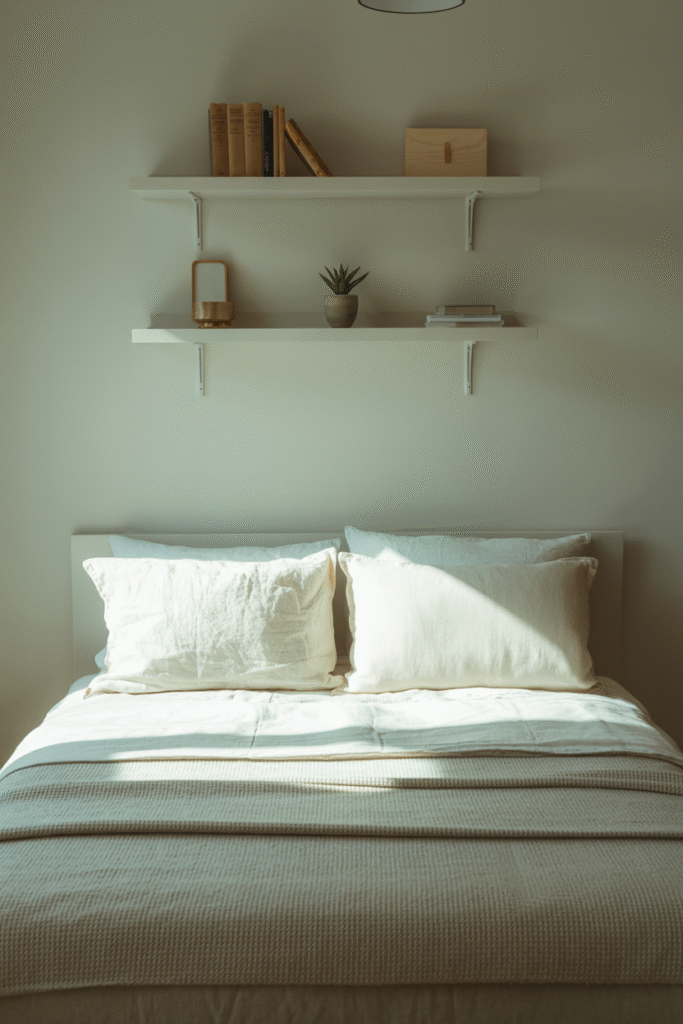
Floor space is gold in a tiny bedroom, so look up. I installed floating shelves above a client’s bed for books and decor. In my own room, I hung a macrame plant hanger in one corner—it adds life without taking up table space. Even a tall, narrow bookshelf (about 30 cm wide, 180 cm tall; 12 x 71 inches) can hold a lot without crowding the room.
- Pro tip: Keep the top shelf for items you don’t use daily. It’s a great spot for seasonal decor or extra bedding.
- Avoid this: Overloading shelves. A few well-chosen pieces look curated; too many look cluttered.
- Budget move: Use command strips to hang lightweight shelves. No drilling, no damage, and they hold up to 2 kg (4.4 lbs) each.
Fold, Hang, or Tuck: Smart Storage Solutions
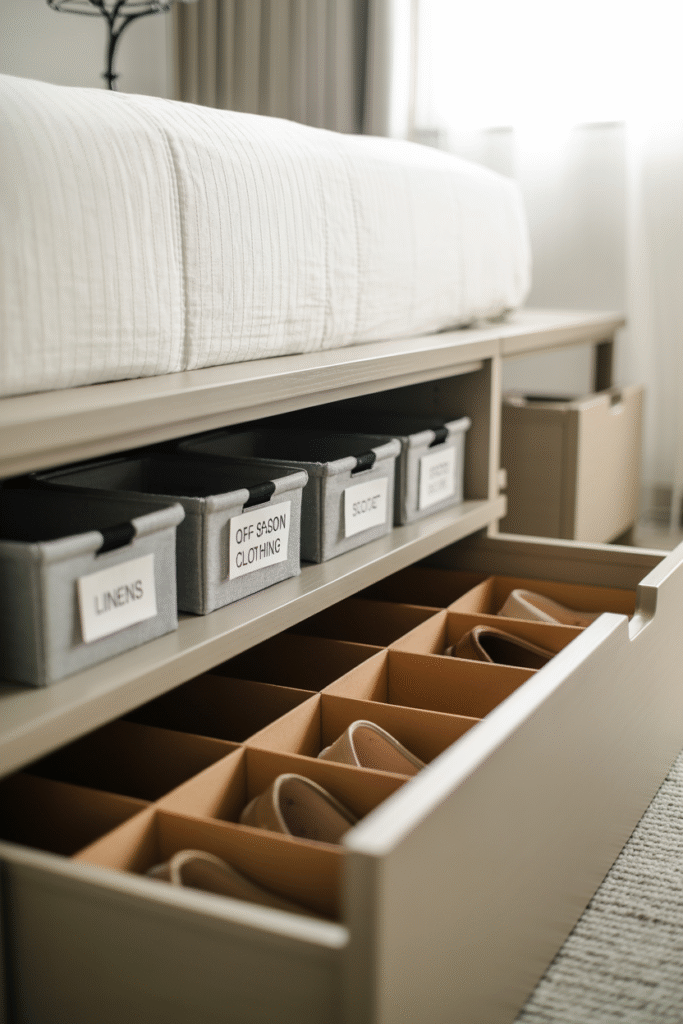
Clutter is the enemy of a small bedroom. I swear by under-bed storage boxes (about 15 cm tall; 6 inches)—they’re perfect for off-season clothes or extra linens. For daily clothes, I use slim, velvet hangers that take up less space than wooden ones. In one project, we added a peg rail (about 120 cm long; 47 inches) above the dresser for bags and hats—instant extra storage that looks chic.
- Pro tip: Measure your under-bed clearance first. Standard plastic bins are about 15 cm tall.
- Avoid this: Storing shoes under the bed. They collect dust and can make the room smell stale over time.
- Budget move: Repurpose shoeboxes as drawer dividers. Wrap them in pretty paper for a custom look.
Let In (and Reflect) Natural Light
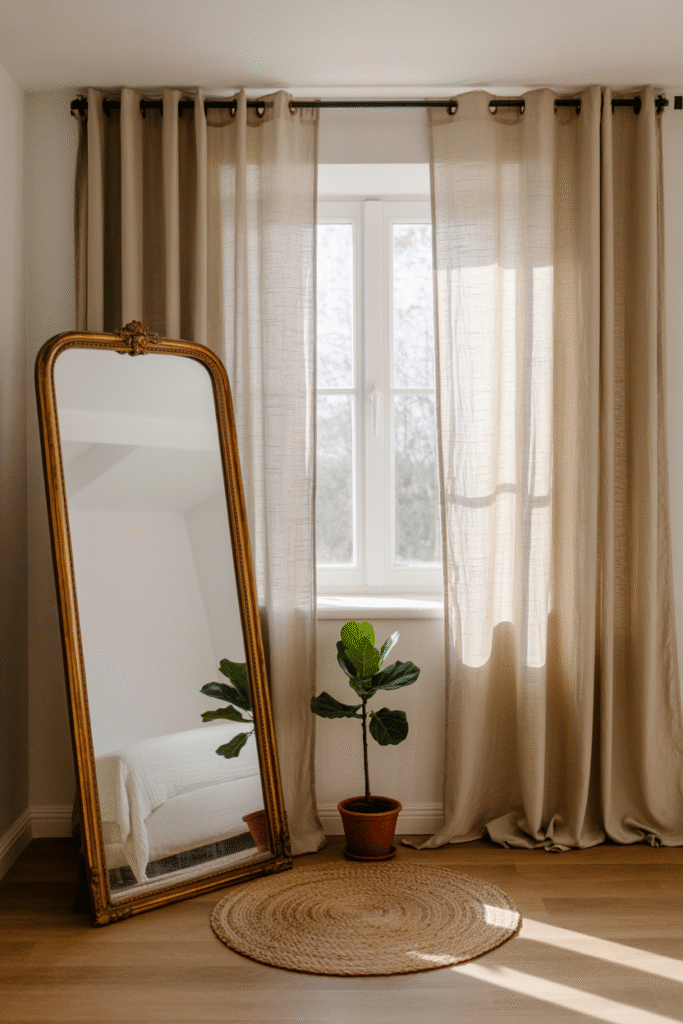
A small room needs all the light it can get. I always suggest sheer curtains—they let in sunlight but still offer privacy. For a truly dramatic effect, try hanging a mirror opposite the window. In a recent makeover, a 60 x 90 cm (24 x 36 inch) mirror doubled the sense of space and brightened a dark corner.
- Pro tip: Hang curtains as high as possible, close to the ceiling. This tricks the eye into thinking the room is taller.
- Avoid this: Heavy, dark drapes. They block light and make the room feel closed in.
- Budget move: Check local markets for discount mirrors—sometimes you can find large ones for under ($12).
Curate Your Decor (Less Is More)
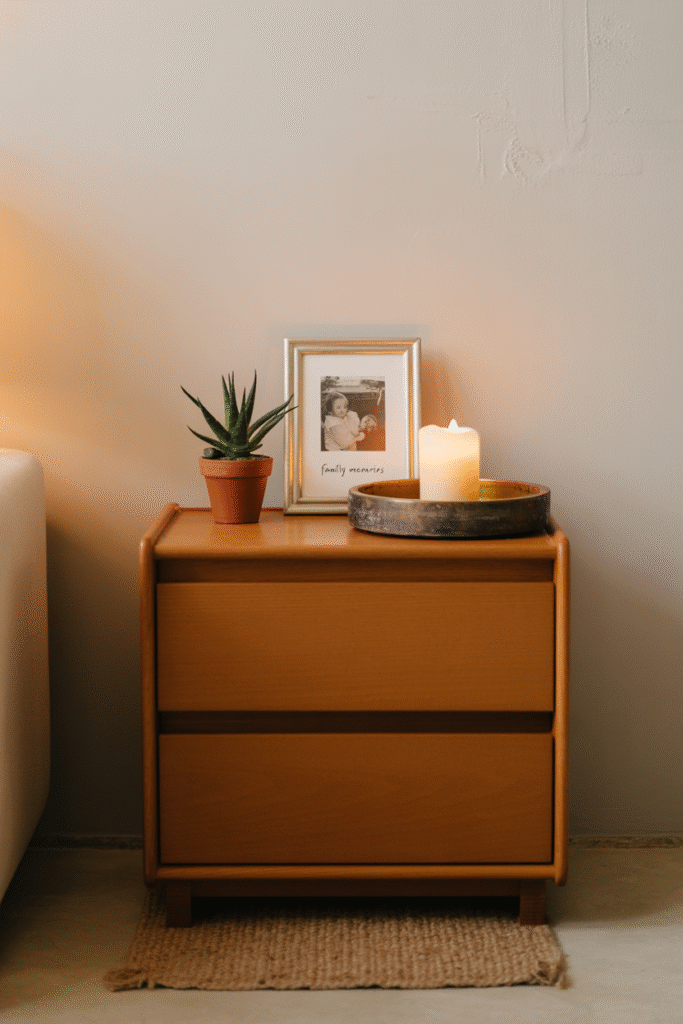
It’s tempting to fill a small room with knick-knacks, but restraint pays off. I limit bedside decor to one or two items—a small plant, a framed photo, or a pretty candle. For wall art, I go for a single, medium-sized piece above the bed instead of a gallery wall.
- Pro tip: Rotate decor seasonally. It keeps the room feeling fresh without overcrowding.
- Avoid this: Too many small frames. They create visual noise.
- Budget move: Print your own photos at a local shop and frame them in simple, neutral frames.
Pick the Right Rug (Size and Placement Matter)
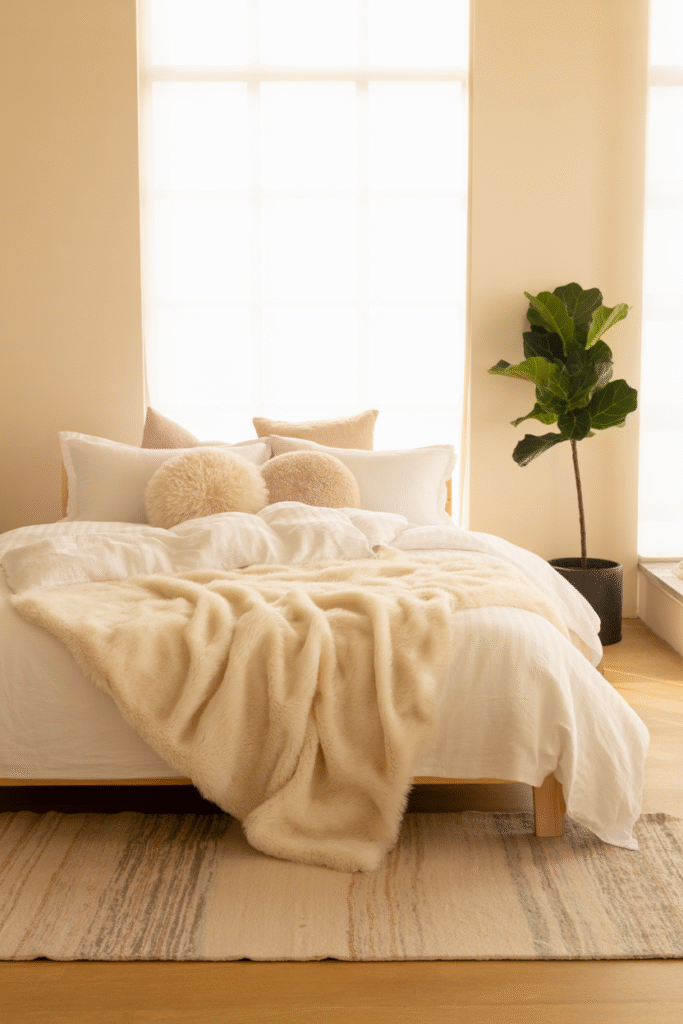
A rug can anchor the room and make it feel cozier, but the wrong size does the opposite. I look for a rug that extends at least 45 cm (18 inches) beyond the edges of the bed on all sides. In a pinch, a 120 x 180 cm (4 x 6 foot) rug works well for a double bed.
- Pro tip: Go for low-pile rugs—easier to clean and less bulky in small spaces.
- Avoid this: Rugs that stop at the edge of the bed. They can make the room feel choppy.
- Budget move: Check online marketplaces for secondhand rugs. I’ve found nearly new ones for half the retail price.
Use Multi-Functional Furniture
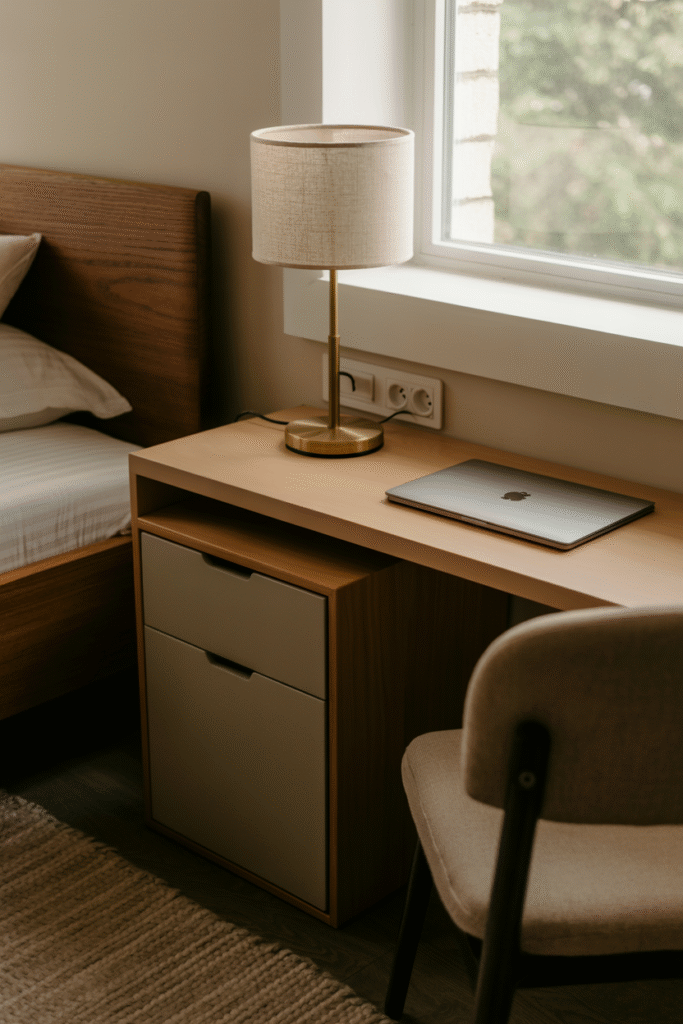
In a really tight space, every piece should earn its keep. I’ve used a storage ottoman as both seating and a place to stash extra blankets. A friend of mine swapped her nightstand for a small desk, turning her bedroom into a cozy work-from-home nook.
- Pro tip: Look for furniture with legs—it creates a sense of openness underneath.
- Avoid this: Oversized chairs or benches. They eat up valuable floor space.
- Budget move: Repaint an old stool or small table to serve as a nightstand or plant stand.
Embrace Texture, Not Just Color
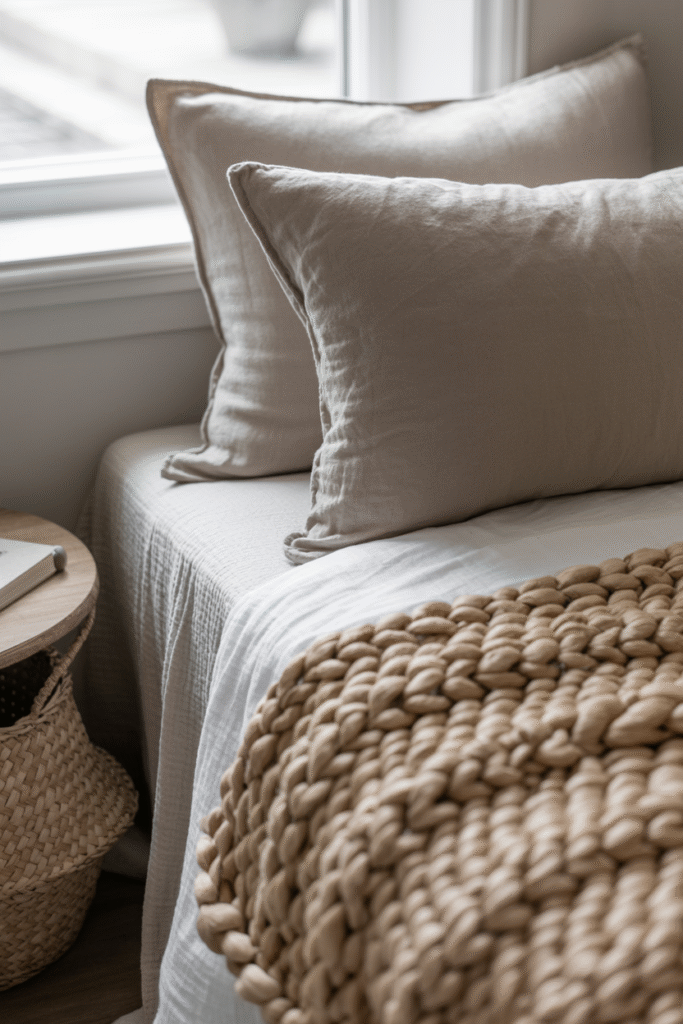
Color gets all the attention, but texture is the secret weapon in small spaces. I love mixing a chunky throw, smooth linen sheets, and a woven basket. These layers add depth without clutter. In one project, a faux fur blanket (about ₹1,500/$18) made a beige room feel instantly luxurious.
- Pro tip: Stick to a neutral base and add texture with accessories.
- Avoid this: Too many bold patterns. They can overwhelm a small room.
- Budget move: Shop end-of-season sales for throws and linens. January and July are often the best times.
Keep Surfaces Clear (Really)
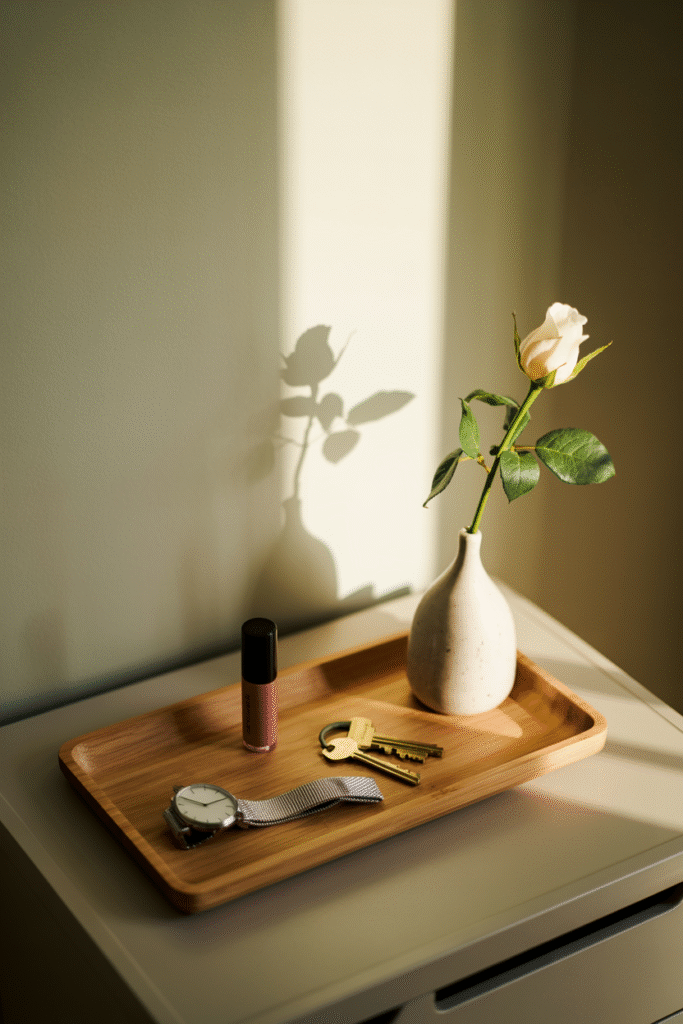
It sounds obvious, but I can’t overstate this: clutter on surfaces makes a small room feel smaller. I make it a habit to clear off my dresser and nightstand every morning. It takes two minutes and makes a huge difference.
- Pro tip: Use a decorative tray to corral small items keys, coins, lip balm.
- Avoid this: Letting laundry pile up on the chair. It’s a slippery slope!
- Budget move: Use pretty boxes or baskets to hide daily clutter. Even a shoebox covered in fabric works.
Add a Touch of Greenery
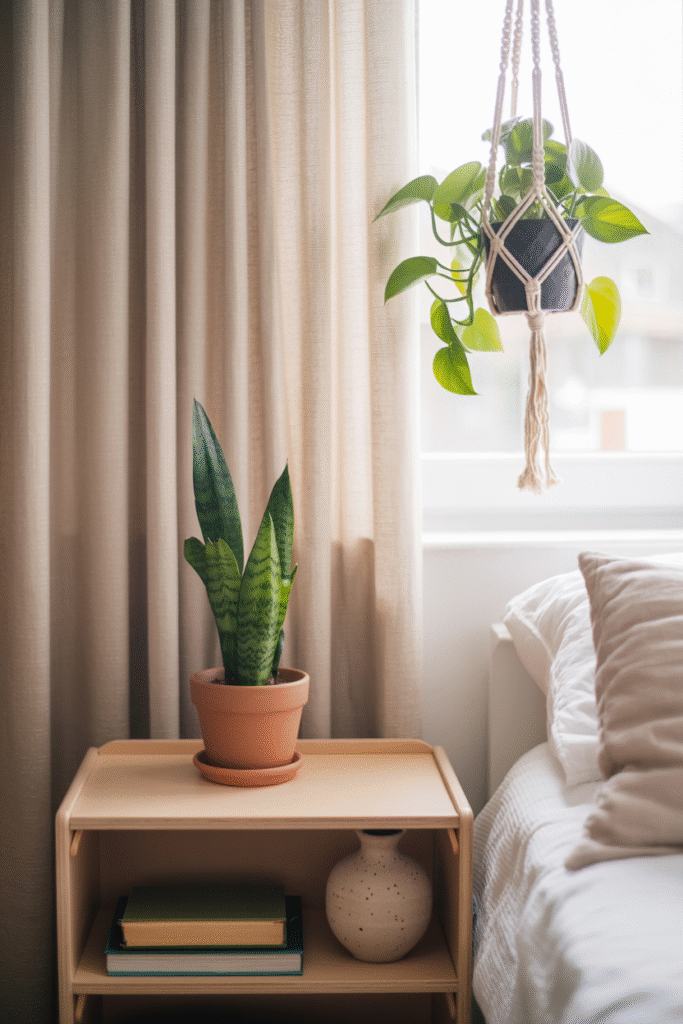
Plants breathe life into a small room. I’ve had great luck with snake plants and pothos—they’re hardy and don’t need much sunlight. A small pot on the windowsill or a hanging planter adds color and freshness.
- Pro tip: If you’re forgetful, try a ZZ plant—they thrive on neglect.
- Avoid this: Overcrowding with too many plants. One or two are enough in a small space.
- Budget move: Propagate cuttings from friends’ plants. I’ve grown a whole pothos from a single snip.
Make It Yours (Personality Without Clutter)
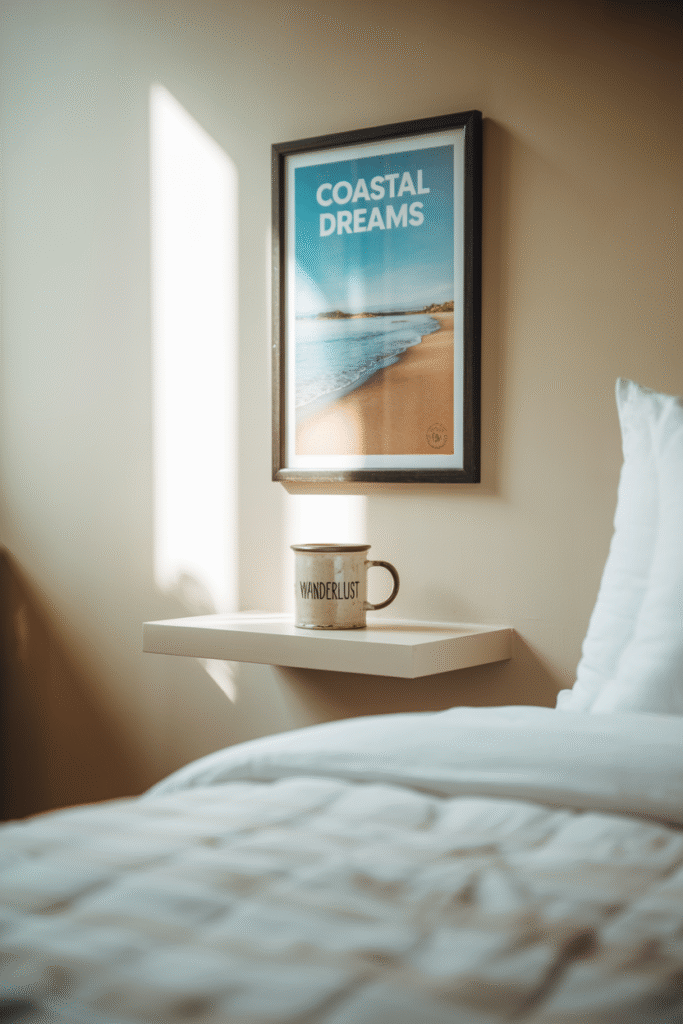
Your bedroom should feel like you. I encourage clients to choose one or two things they love—a favorite poster, a collection of seashells, a special mug for morning tea—and display them proudly. The rest can stay simple.
- Pro tip: Rotate personal items seasonally to keep the room feeling fresh.
- Avoid this: Trying to copy a magazine spread exactly. Your room should suit your life.
- Budget move: Frame postcards or fabric swatches for instant, affordable art.
FAQs: Small Bedroom Decor Questions I Hear All the Time
Q: Can I really fit a queen bed in a small room?
A: You can, but measure first. Aim for at least 60 cm (24 inches) of walking space on three sides. If that’s not possible, consider a double bed instead.
Q: What’s the best color for a small bedroom?
A: Light, warm neutrals work best, but don’t be afraid to add a hint of color. Avoid very dark shades—save those for larger rooms.
Q: How do I make a small room feel luxurious?
A: Texture and quality over quantity. Invest in soft bedding, a cozy throw, and good lighting. Keep surfaces tidy and decor minimal.
Q: Is there a way to add storage without buying new furniture?
A: Absolutely. Use vertical space with shelves, peg rails, or over-the-door organizers. Repurpose boxes and baskets for hidden storage.
Q: What’s the biggest mistake in small bedroom decor?
A: Overcrowding. Too much furniture, too many decorations, or too-large bedding can all make a small room feel even smaller.
Q: How often should I rearrange my small bedroom?
A: There’s no rule, but if a room starts to feel cramped or stale, try moving one piece of furniture. Sometimes a small change makes a big difference.
Wrapping Up: Small Steps, Big Impact
Decorating a small bedroom on a budget isn’t about magic tricks it’s about making thoughtful choices, one step at a time. I’ve seen so many rooms transformed by simple moves like rotating the bed, adding a mirror, or clearing off a nightstand. The goal isn’t perfection; it’s a space that works for your life and makes you happy.
If you try just one thing from this list, start with clutter control. Clear surfaces and smart storage are game-changers. From there, add personal touches, a bit of greenery, and some texture. Before you know it, your small bedroom will feel like the cozy, stylish retreat you deserve without spending a fortune or losing your sanity.