
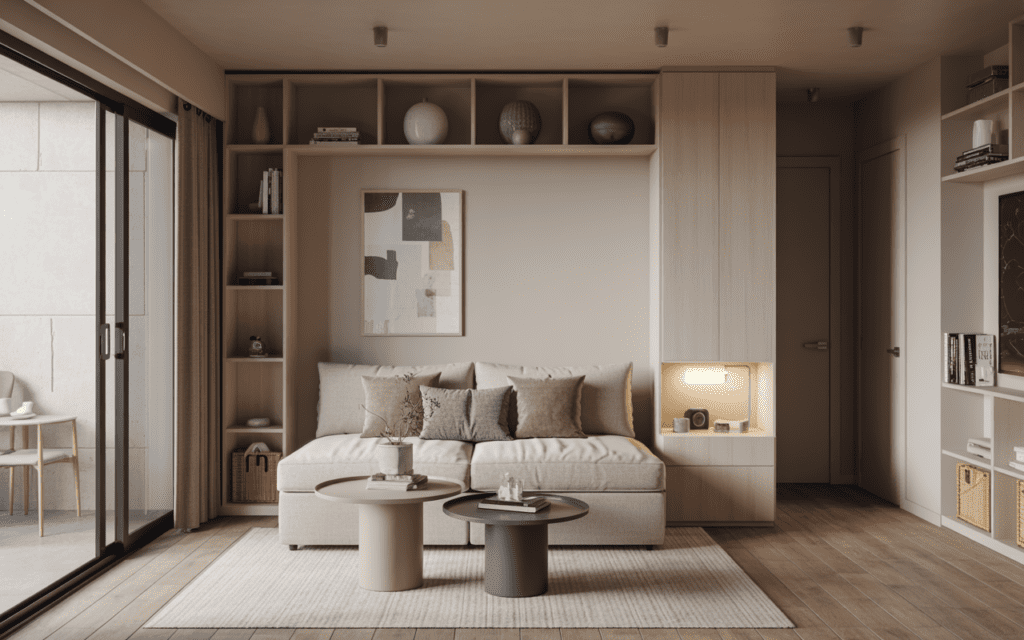
Minimalist apartment decor sounds easy until you actually try to do it. You tell yourself you want a clean, calm, stylish space, but then real life shows up with extra blankets, random chargers, impulse-buy decor, and furniture that somehow looked smaller in the store. Before you know it, your apartment feels crowded, mismatched, and a little chaotic, even if you don’t own that much stuff.
That’s exactly why I love minimalist design. It doesn’t ask you to live in a blank white box or throw away everything you own. It simply helps you create a home that feels lighter, more open, and a lot less stressful to look at every day. In a small apartment, that matters even more because every piece of furniture, every color choice, and every decorative item affects how the whole space feels.
The best part? You don’t need a huge budget or an interior designer to make minimalist decor work. You just need smart ideas that help your apartment look polished without feeling cold or boring. From neutral color palettes and hidden storage to better lighting and intentional styling, these minimalist apartment decor ideas will help you create a space that looks beautiful, functions better, and feels like a breath of fresh air the second you walk in.
1. Start With a Neutral Color Palette
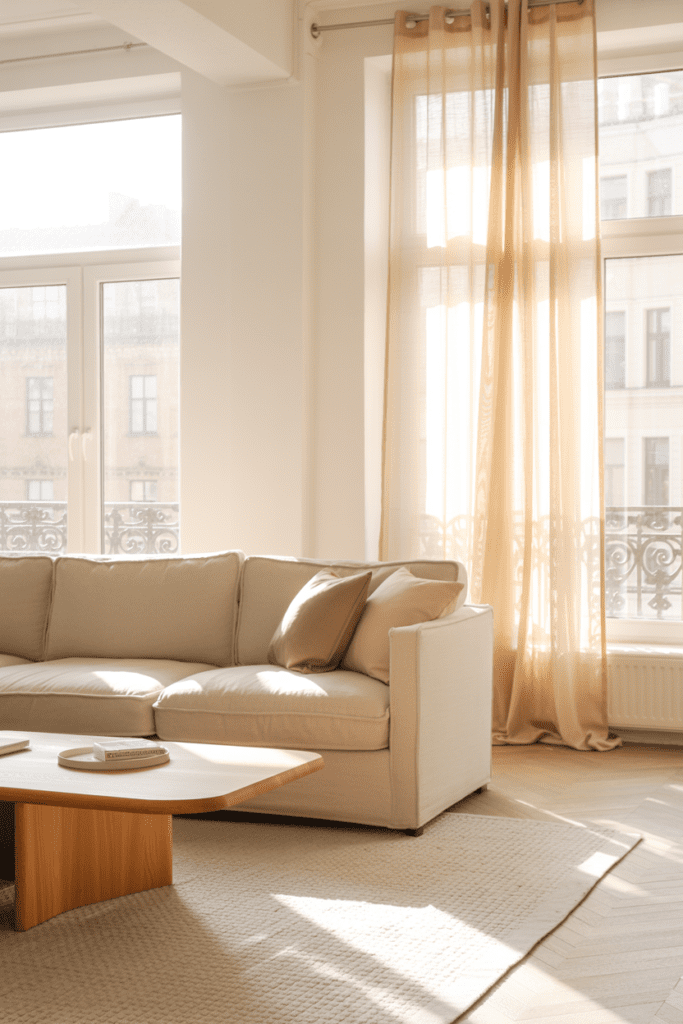
The foundation of every great minimalist apartment is color — or more accurately, the lack of it.
I know, I know. Neutral doesn’t have to mean boring. Think warm whites, soft beiges, dusty taupes, and greiges (grey-beige — yes, it’s a real thing and yes, it slaps). These tones make any space feel instantly larger, cleaner, and more cohesive.
- Stick to 2–3 core colors throughout your entire apartment
- Use white or off-white walls as your base canvas
- Layer in warmth through natural materials like wood and linen
The trick is contrast. A warm cream wall paired with a dark walnut shelf and a white linen throw? Chef’s kiss. 🙂
2. Invest in Multi-Functional Furniture
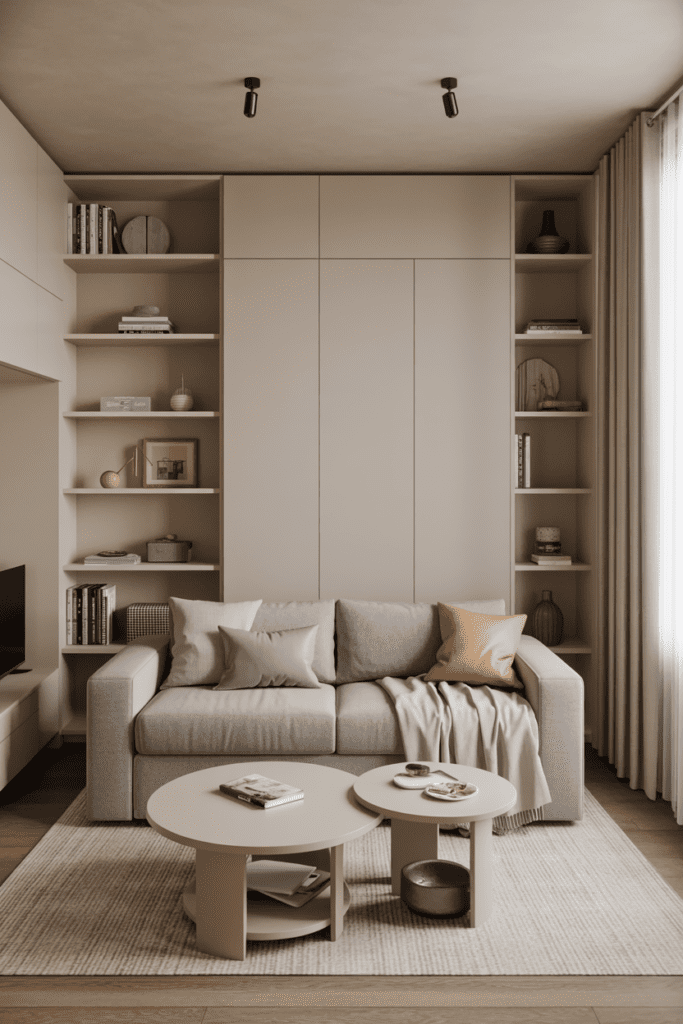
Here’s a question worth asking yourself: does every piece of furniture in your apartment actually earn its place?
In a minimalist apartment, every item needs to pull double — sometimes triple — duty. A storage ottoman that works as a coffee table and extra seating? Absolutely. A decorative stool that also holds your books? Yes please.
Top multi-functional furniture picks for small apartments:
- Sofa beds — perfect for studio apartments doubling as guest rooms
- Ottomans with storage — hide blankets, cables, or that stuff you don’t know what to do with
- Extendable dining tables — stay small daily, expand when you need to
- Beds with under-storage drawers — because under-bed storage is genuinely underrated
IMO, multi-functional furniture is the single best investment you can make in a small space. Buy less, use more.
3. Embrace the “One In, One Out” Rule
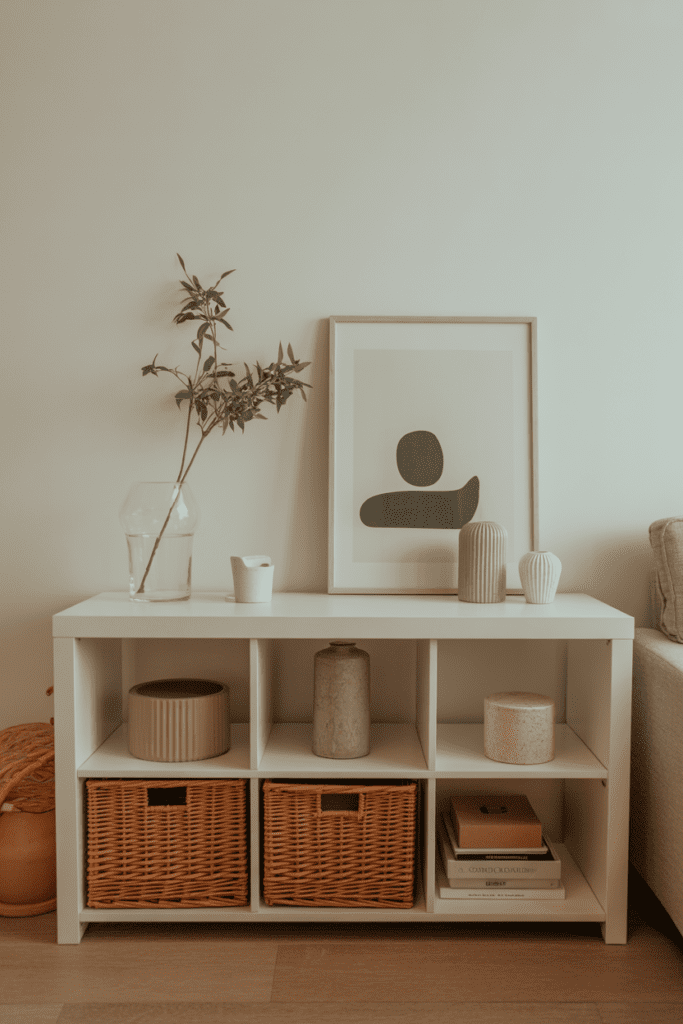
Minimalism isn’t a one-time project. It’s an ongoing habit. And the easiest habit to build? Every time something new comes in, something old goes out.
New candle? An old one leaves. New throw pillow? One gets donated. This rule sounds harsh until you realize how quickly clutter sneaks back in. Three months after a full apartment declutter, you turn around and there’s somehow 14 things on your kitchen counter again. Wild.
Keep it consistent. Keep it intentional. Your future self — the one who doesn’t spend 10 minutes looking for their keys every morning — will thank you.
4. Use Floating Shelves Instead of Bulky Bookcases
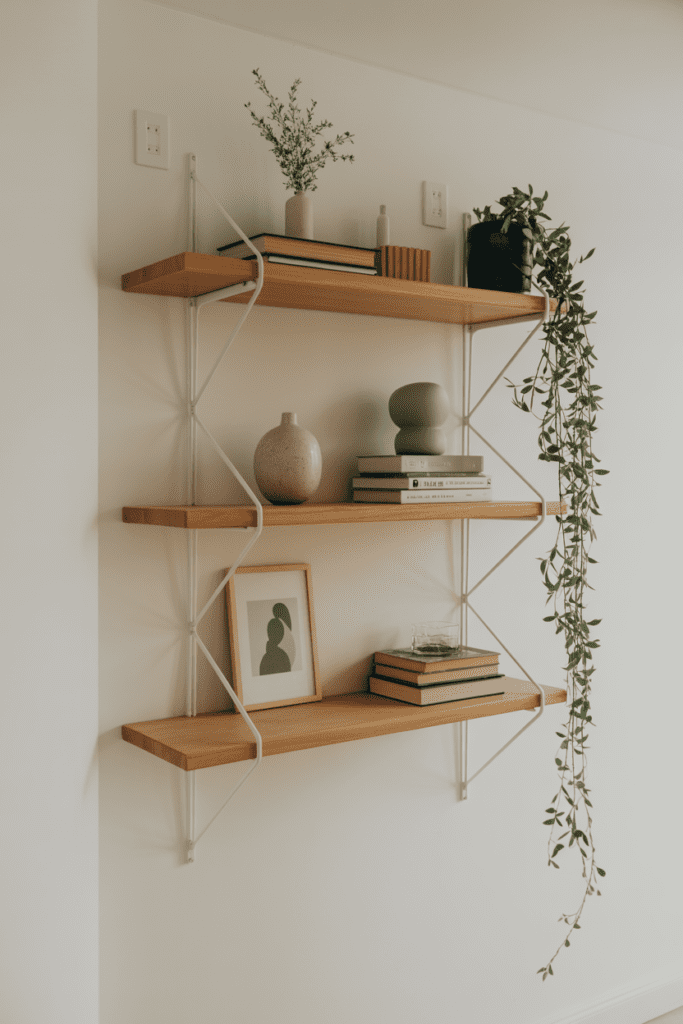
Floating shelves are the minimalist apartment’s best friend. They take up zero floor space, create visual breathing room, and look incredibly clean when styled right.
The key is restraint. A floating shelf isn’t a dumping ground. Pick 3–5 objects max per shelf and leave actual empty space. That negative space isn’t wasted — it’s intentional, and it makes what is there look curated rather than cluttered.
How to Style Floating Shelves Minimally:
- One plant or trailing vine
- One or two books (stacked horizontally or standing upright)
- One small sculptural object or ceramic piece
- Optional: a small framed print leaning against the wall
Resist the urge to fill every inch. Seriously. Step away from the shelf.
5. Let Natural Light Do the Heavy Lifting
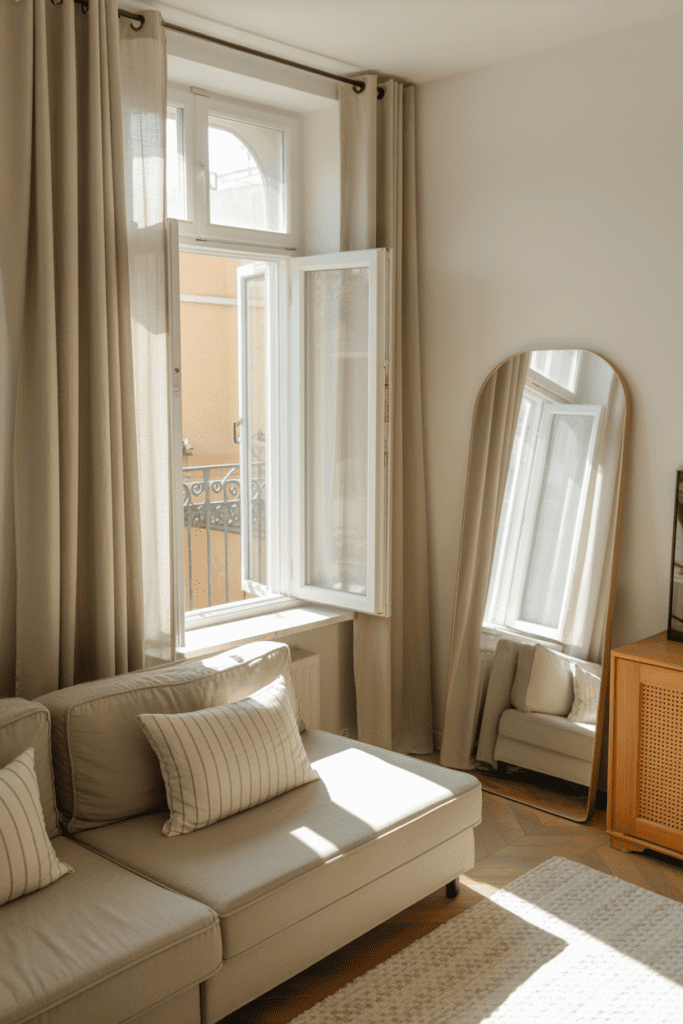
Nothing transforms a room like natural light. If you’re blocking your windows with heavy curtains or bulky furniture, you’re working against yourself.
Swap out dark drapes for sheer linen panels. Pull your sofa away from the window. Use mirrors strategically to bounce light around the room. These small moves make a space feel twice as large without changing a single thing structurally.
A well-lit room with simple decor will always beat a dark room stuffed with beautiful things. Light is the decorator you’re not paying — use it.
6. Go Monochromatic in the Bedroom
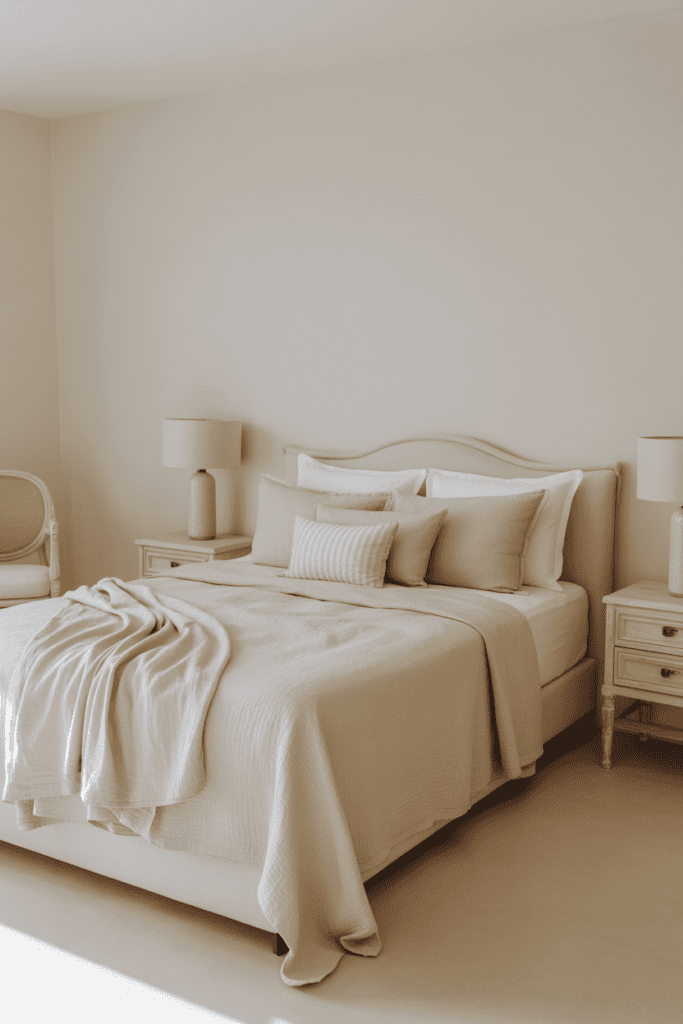
The bedroom is where minimalism pays off the most. You spend a third of your life in there — it should feel like an exhale.
A monochromatic bedroom — where the bedding, walls, and furniture all live in the same color family — creates an effortlessly calm, spa-like atmosphere. All-white bedding with white walls and light oak wood furniture is a classic for a reason. It just works.
Bedroom Minimalism Checklist:
- Remove anything that doesn’t belong (yes, that means the laundry chair)
- Limit bedside table items to 3 things max — lamp, book, water glass
- Use matching nightstands on both sides for visual symmetry
- Keep the floor completely clear — it makes the room feel instantly larger
Ever notice how hotel rooms feel so relaxing? Clean surfaces. Hidden storage. Nothing fighting for your attention. You can recreate that at home.
7. Choose Quality Over Quantity in Every Category
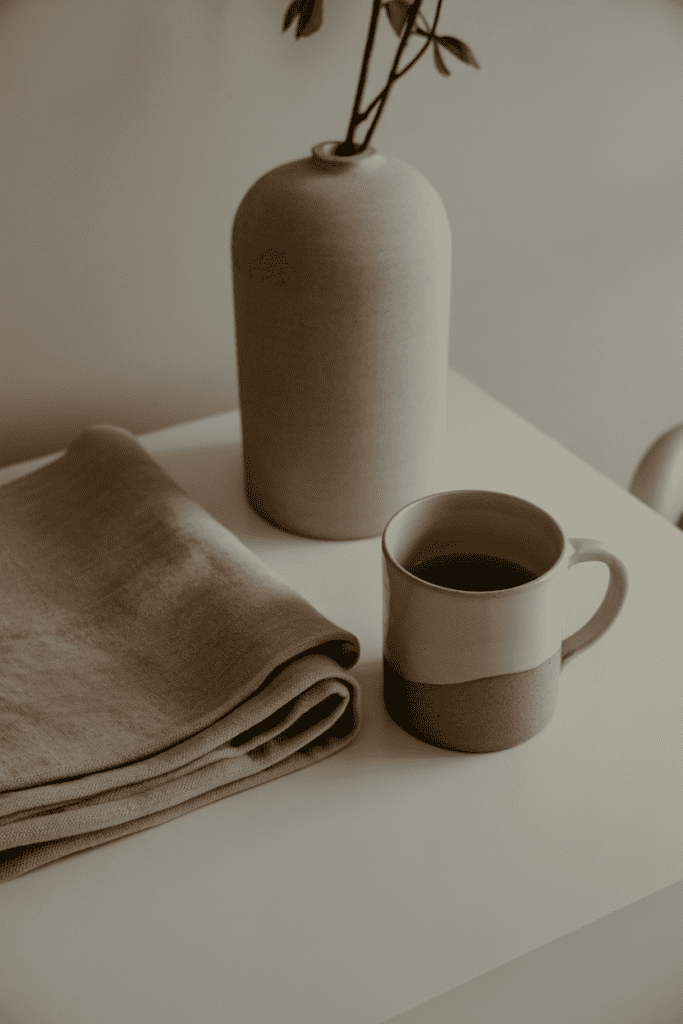
This is the one minimalist principle that genuinely saves money in the long run — even though it doesn’t feel like it upfront.
Buying one really good thing beats buying five mediocre things every single time. One beautiful ceramic mug you love beats a cabinet full of mismatched ones you tolerate. One well-made throw blanket beats three cheap ones that pill after two washes.
It’s not about being precious or snobbish about your stuff. It’s about surrounding yourself only with things you actually like — which, weirdly, makes you appreciate everything more.
8. Bring in Texture to Avoid the “Cold” Look
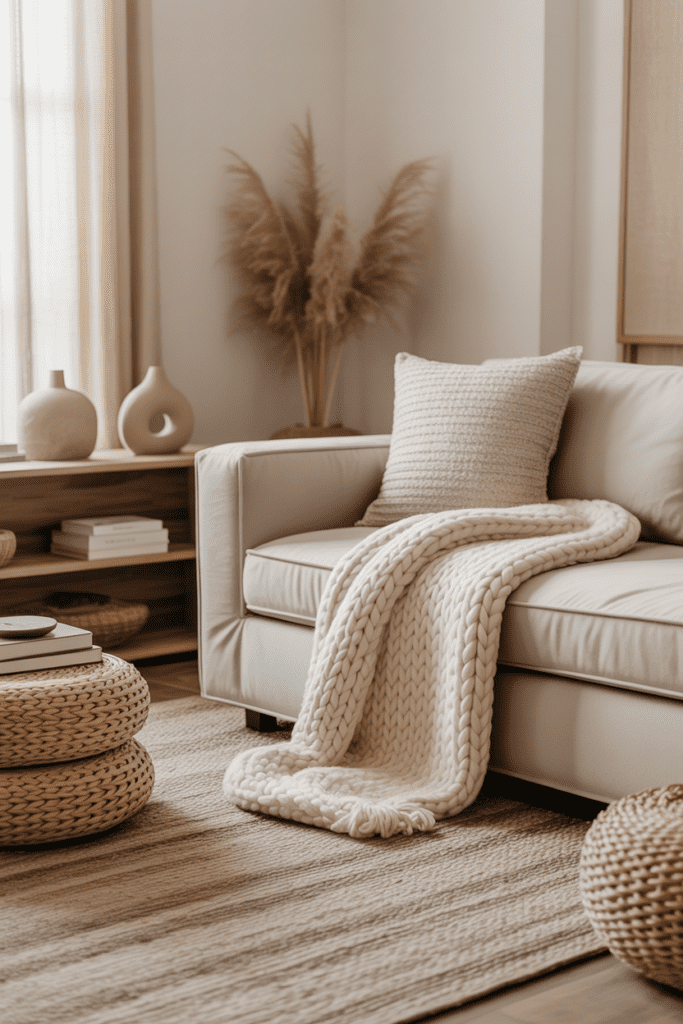
One of the most common minimalist decor mistakes? Making a room feel stark and sterile instead of calm and warm. The fix is texture.
You can keep a neutral color palette and still make a room feel cozy and inviting by layering different textures.
- Chunky knit throws on sofas or chairs
- Woven jute rugs on hardwood floors
- Linen or cotton cushion covers instead of polyester
- Matte ceramic vases instead of glossy plastic ones
- Rattan or cane accents for warmth and visual interest
The goal is a room that looks simple from across the street but feels rich and interesting up close.
9. Tackle the Kitchen Counter Situation
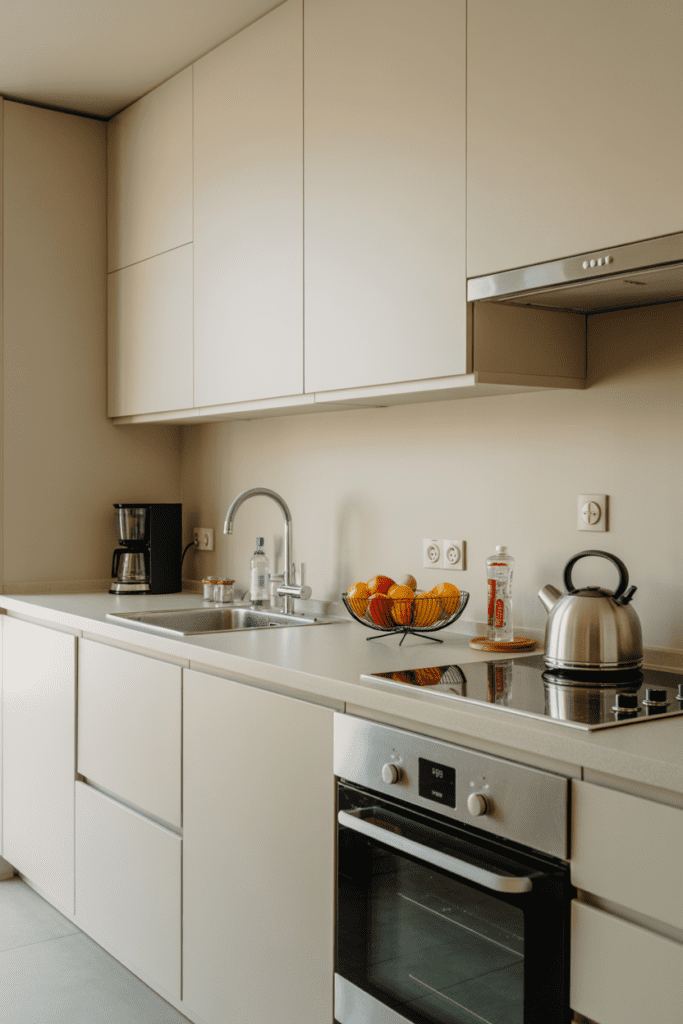
Okay, real talk — the kitchen counter is where minimalism goes to die. :/
Most people’s counters become a graveyard of appliances, mail, fruit bowls, random tools, and that one candle they never burn. Sound familiar?
For a minimalist kitchen, the rule is simple: only items used daily live on the counter. Everything else gets stored, donated, or reconsidered entirely.
Daily Counter Allowlist:
- Coffee maker (if you use it every morning)
- Kettle
- One fruit bowl — but only if you actually put fruit in it
- Knife block OR a magnetic knife strip (takes up less space)
That’s it. Everything else — the air fryer you use twice a month, the blender, the toaster — goes in a cabinet. You’ll be shocked how clean and spacious your kitchen feels with 80% of the counter cleared.
10. Use Art Strategically — Not Everywhere
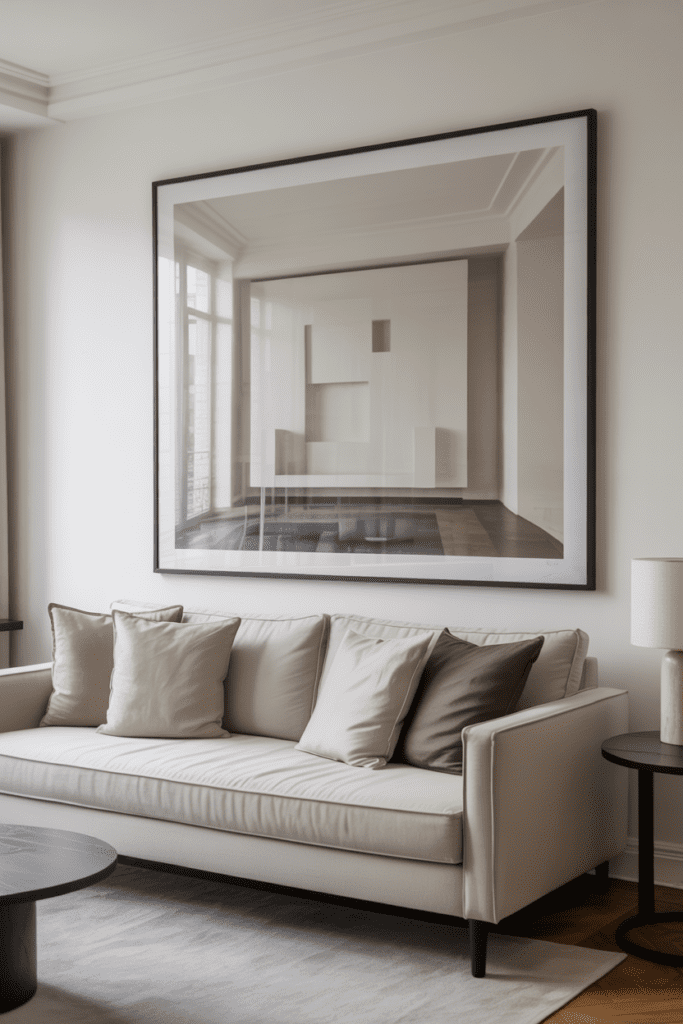
One large piece of intentional wall art beats ten small pieces of forgettable art every time.
In a minimalist apartment, walls should breathe. Picking one or two strong, meaningful pieces per room and leaving the rest of the walls empty makes those pieces feel like actual art — not just wall filler.
Go big when you do hang something. A large canvas or an oversized print creates a visual anchor point for the room and does a lot of heavy lifting design-wise.
Tips for Minimal Wall Art:
- Hang one large piece at eye level above a sofa or bed
- Use simple, thin frames in black, white, or natural wood
- Leave at least 60% of your walls completely bare
- Try leaning art against walls instead of hanging — it feels more casual and is easier to change
FYI — a single framed black-and-white photo in a large white mat can look just as stunning as an expensive painting. The matting and framing do all the work.
11. Rethink Your Entryway
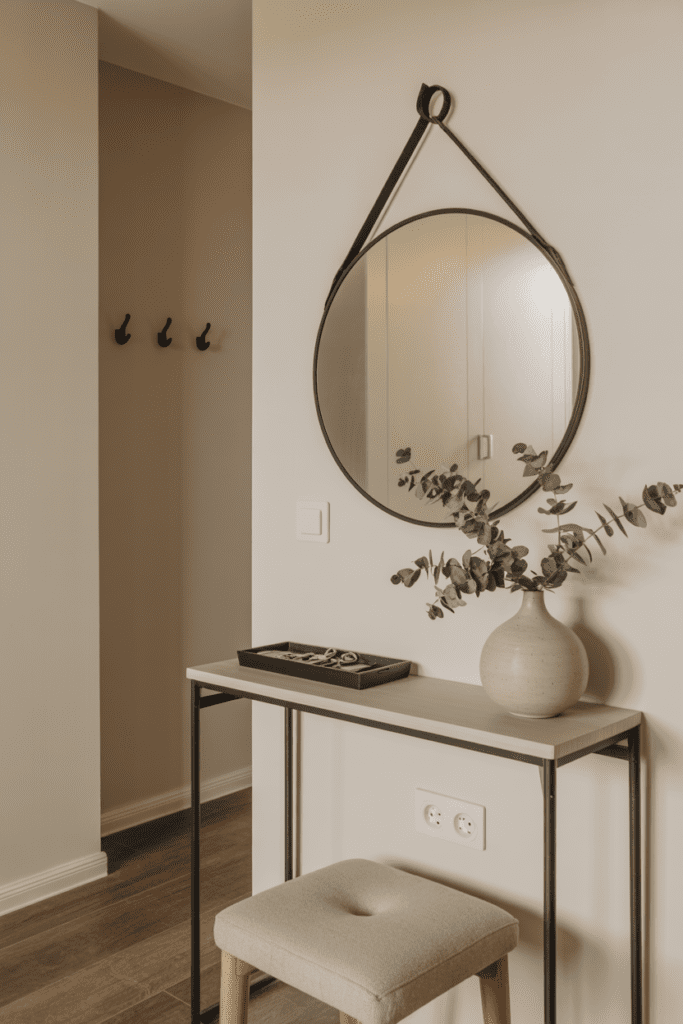
The entryway sets the tone for your entire apartment. Walk in to chaos, and your brain registers it immediately. A clean, intentional entry changes how you feel the moment you step inside.
You don’t need much space to make this work. Even a small corner can become a functional, beautiful entry zone.
- A slim console table or floating shelf for keys and small items
- One mirror to make the space feel larger (and for last-minute outfit checks)
- Hooks for bags and coats — hidden or simple metal hooks, not a giant coat rack
- A small tray for keys, cards, or sunglasses
- One plant or small vase to add life
That’s genuinely all you need. Keep it minimal, keep it functional, and you’ll never walk into a stressful entryway again.
12. Invest in Good Lighting (Beyond the Ceiling Light)
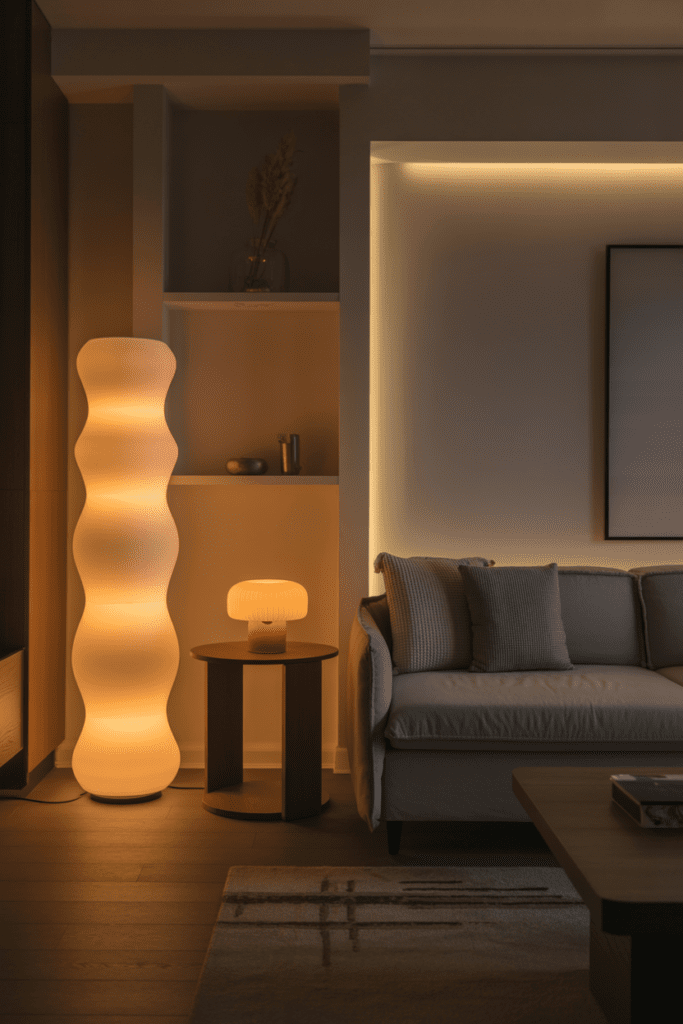
Most apartments come with one overhead ceiling light per room, and honestly? That single overhead light is doing too much work and doing it poorly.
Layered lighting — combining ambient, task, and accent sources — makes a room feel intentional and cozy rather than fluorescent and flat.
Minimalist Lighting Layers:
- Floor lamp in a reading corner for warm ambient glow
- Table lamp on a nightstand or side table
- LED strip lights tucked behind shelves or under cabinets for subtle accent lighting
- Dimmer switches if your landlord will allow it — absolute game changers
Warm bulbs (2700K–3000K color temperature) make everything look better. Cool white office lighting in your living room is not the vibe.
13. Add One Statement Plant (Just One)
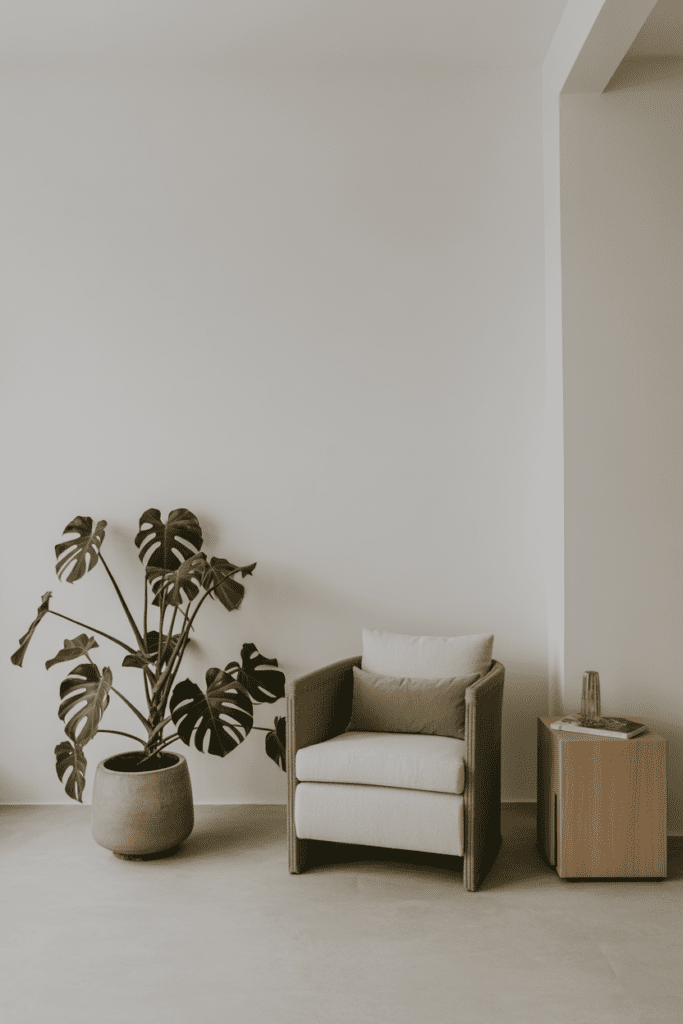
Plants and minimalism go beautifully together — but only when you’re strategic about it. Three tiny succulents scattered around the room don’t read as intentional. One large, dramatic plant does.
Think a tall fiddle leaf fig in a corner. A large monstera on a plant stand. A trailing pothos on a high shelf. One well-placed plant creates life and movement in a room without cluttering it.
If you’re not a plant person (no judgment), a single high-quality faux plant in a beautiful pot does the same visual job. The pot matters just as much as the plant — choose something ceramic, terracotta, or stone-finished over plastic.
14. Organize Storage So It Disappears
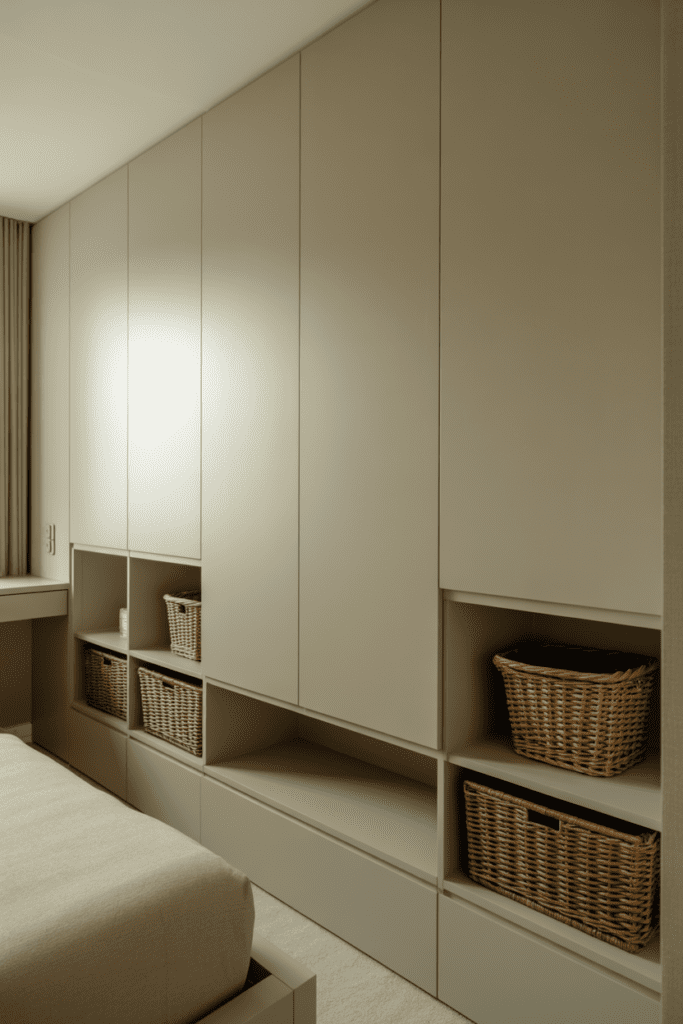
Minimalist apartments don’t actually have less stuff than other apartments. They just hide their stuff better.
Smart storage that disappears into the design is the secret behind every beautifully minimal home you’ve ever admired on Pinterest.
Storage Ideas That Don’t Interrupt the Design:
- Matching storage baskets on shelves instead of random boxes
- Built-in or furniture-integrated storage wherever possible
- Closed cabinets over open shelving for things that aren’t decorative
- Under-bed storage boxes with lids for off-season items
- Cable management — seriously, untamed cables destroy a minimalist aesthetic faster than almost anything else
The goal is to look around your room and see surfaces, not stuff. Everything that has to exist but isn’t beautiful gets a home that keeps it out of sight.
15. Declutter Ruthlessly — Then Decorate
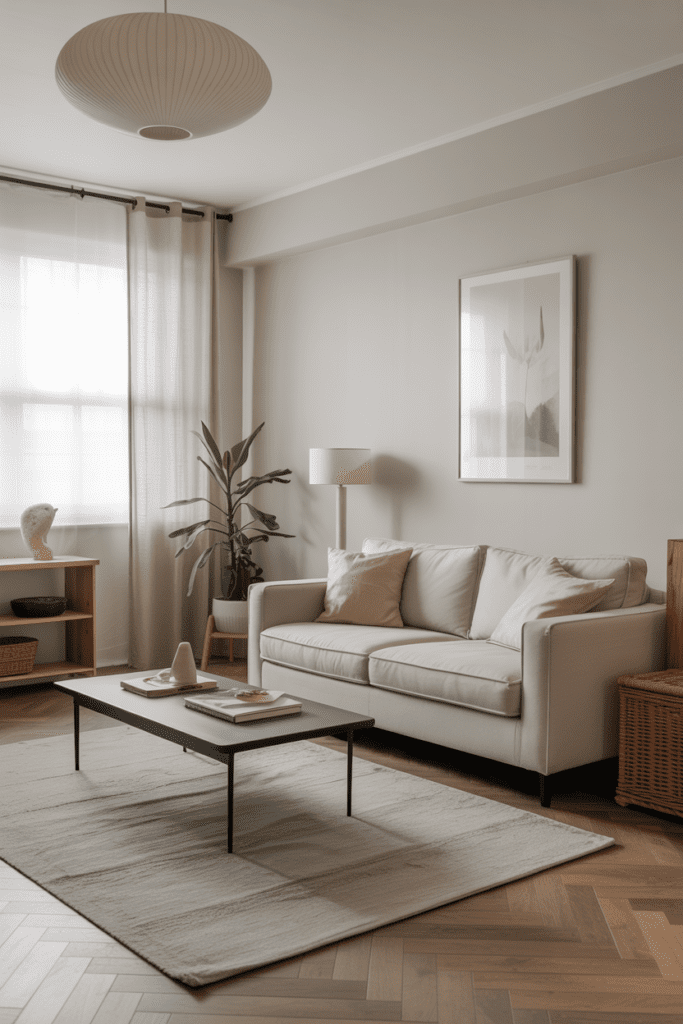
Here’s the most honest advice in this entire article: you can’t decorate your way out of clutter. No amount of beautiful throw pillows or perfectly styled shelves will make a cluttered room look minimalist. The declutter has to come first.
Go room by room. Pick up every object and ask two questions: Do I use this regularly? Does it bring me genuine joy or serve a real function? If the answer to both is no, it leaves.
It’s uncomfortable at first. You’ll second-guess yourself. Then you’ll clear out half a room and stand in it and feel a kind of calm you haven’t felt in your own space for years — and you’ll understand immediately why minimalism has millions of people obsessed with it.
Final Declutter Checklist Before You Decorate:
- Clear all surfaces completely, then add back only intentional items
- Remove anything broken, unused, or kept out of guilt
- Organize what remains into visible (decorative) and invisible (stored) categories
- Only after decluttering — start adding decor elements from this list
Then bring in the art, the plants, the layered lighting, and the textured throws. Everything lands differently when the noise is gone.
Wrapping It Up
Minimalist apartment decor isn’t about living with nothing, it’s about living with intention. Every idea on this list points toward the same core principle: less visual noise, more breathing room, and a space that actually reflects how you want to feel when you’re home.
You don’t have to do all 15 things at once. Pick two or three that feel most relevant to your space right now and start there. Clear your kitchen counter. Buy one large piece of art. Add a floor lamp. Small moves build momentum, and momentum builds the apartment you’ve been pinning for months.
Your space should work for you, not the other way around. Now go make it happen.