
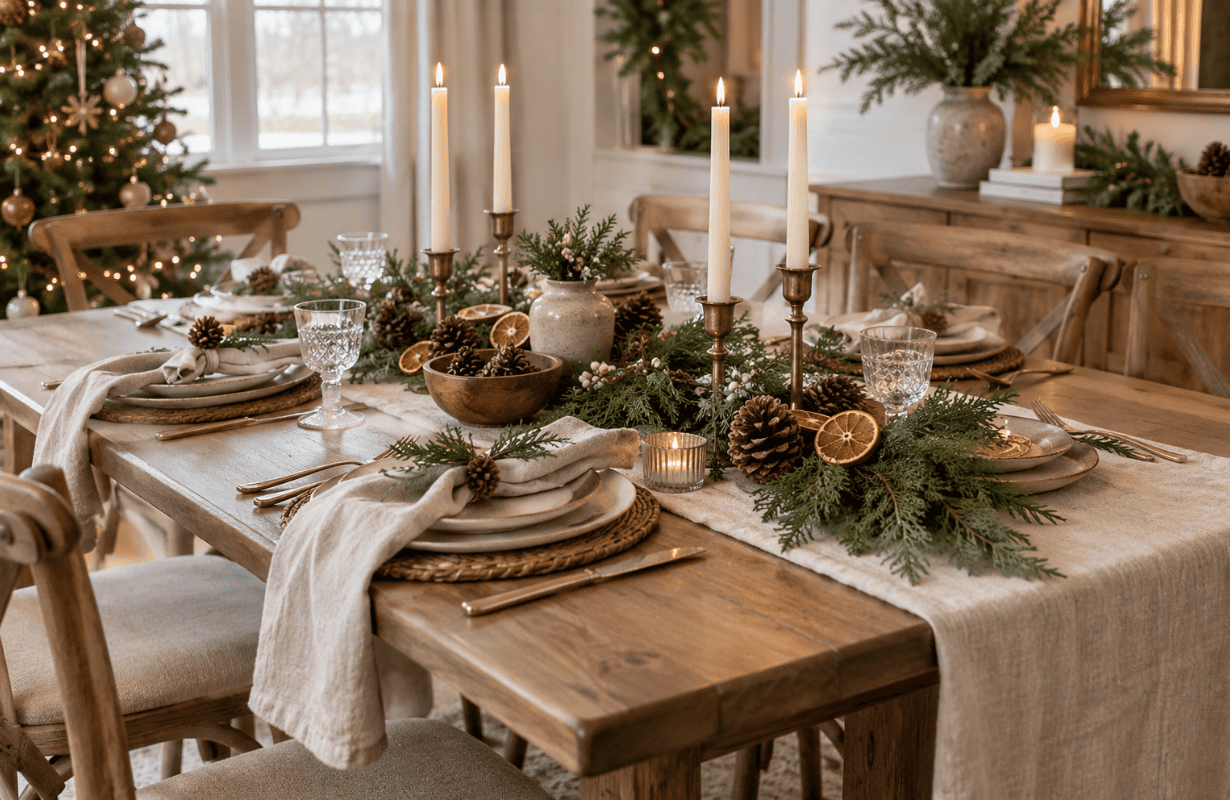
I have a bad habit of decorating the Christmas table and then realizing I’ve left approximately six inches of space for the actual food. The candles look lovely, the greenery is perfectly arranged…and the mashed potatoes are apparently supposed to sit on someone’s lap.
So this year, I’m firmly on team beautiful but practical.
A Christmas table doesn’t need an enormous centerpiece or matching everything to feel special. A few branches of greenery, good-looking napkins, warm candlelight, and one or two festive details can do most of the work. In fact, I usually think the simpler tables end up feeling warmer and more inviting anyway.
These Christmas table decoration ideas range from classic red and green to dried oranges, burgundy velvet, rustic greenery, moody forest green, and simple neutral tablescapes. There’s plenty here to borrow, mix together, or shamelessly copy for Christmas dinner.
And yes, every one of them leaves room for the potatoes.
1. Create a Classic Red and Green Christmas Table
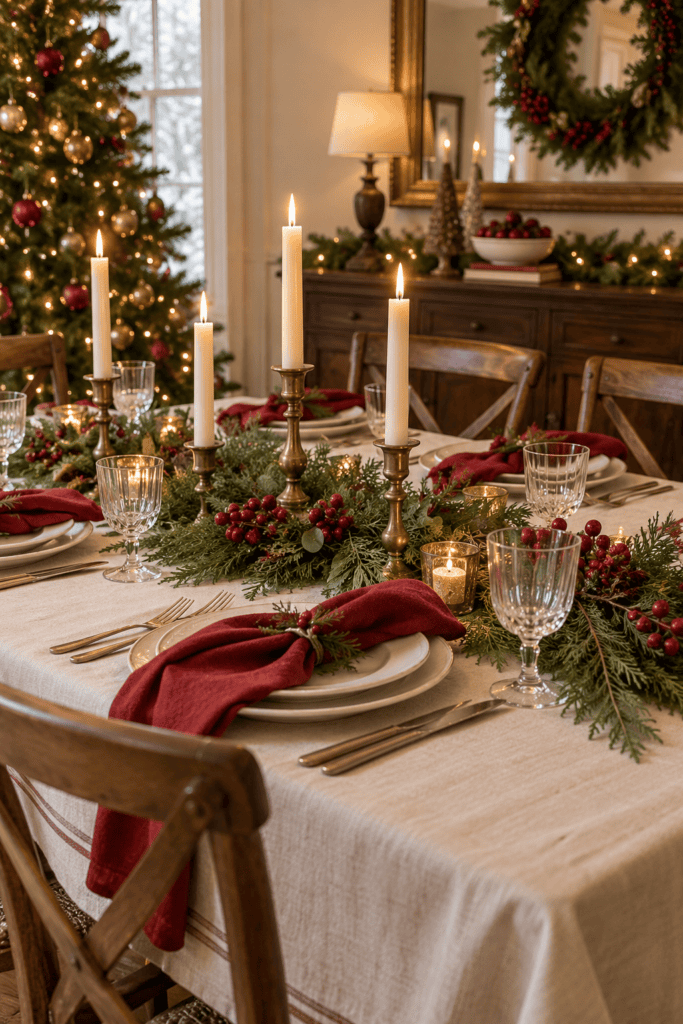
You really can’t go wrong with traditional red and green Christmas table decor. There’s a reason this combination returns every December—it immediately makes a room feel festive without requiring much explanation.
Start with a neutral base, such as a white or warm cream tablecloth. Add deep red cloth napkins, evergreen branches, and a few red berries through the center of the table. White plates help balance the stronger colors and keep everything from becoming too busy.
I’d choose deep cranberry or burgundy red rather than super-bright cherry red if you want the setup to feel a little more sophisticated. Darker reds pair beautifully with natural greenery and warm wood.
Finish the look with brass candlesticks or small gold accents. The metallic details lift the traditional palette without turning dinner into Santa’s personal showroom. 🙂
2. Run Fresh Evergreen Down the Center
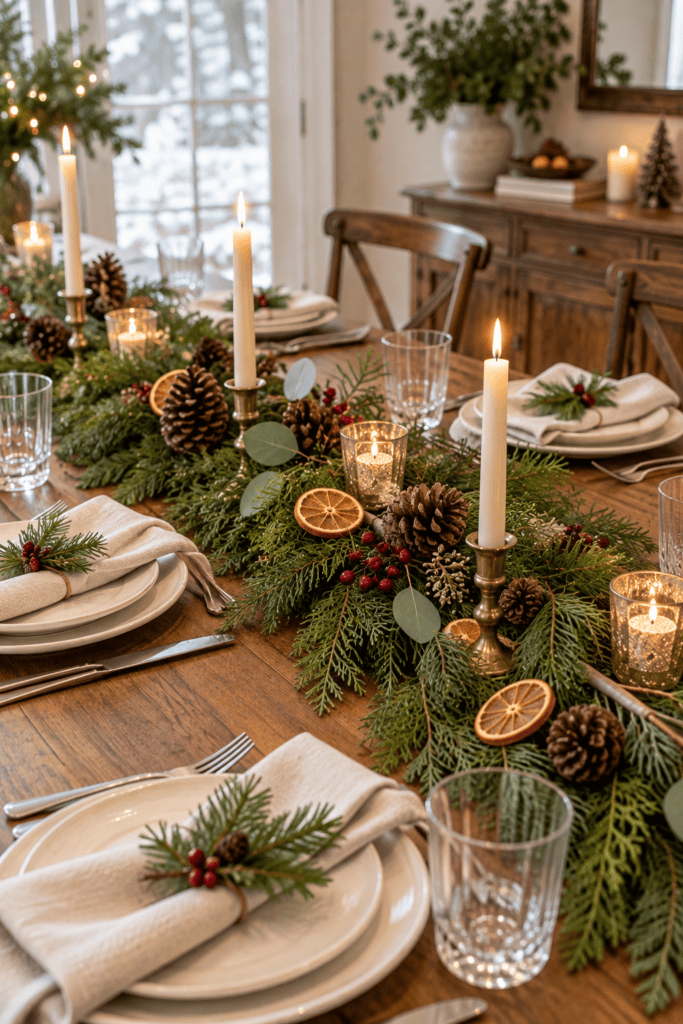
Sometimes the simplest centerpiece creates the biggest impact.
Lay loose branches of cedar, pine, fir, or eucalyptus along the center of your dining table to create a natural Christmas runner. Let the greenery look slightly irregular rather than perfectly arranged. That relaxed shape gives the table much more character.
You can tuck pinecones, dried orange slices, berries, or small ornaments between the branches for extra color. Just keep the arrangement fairly low so guests can comfortably talk across the table.
Want an even easier version? Use several short greenery cuttings instead of constructing one enormous garland. You’ll get almost the same visual effect with considerably less wrestling.
Fresh greenery works especially well on a bare wood table, where the natural textures play beautifully together.
3. Style an Elegant White and Gold Christmas Table
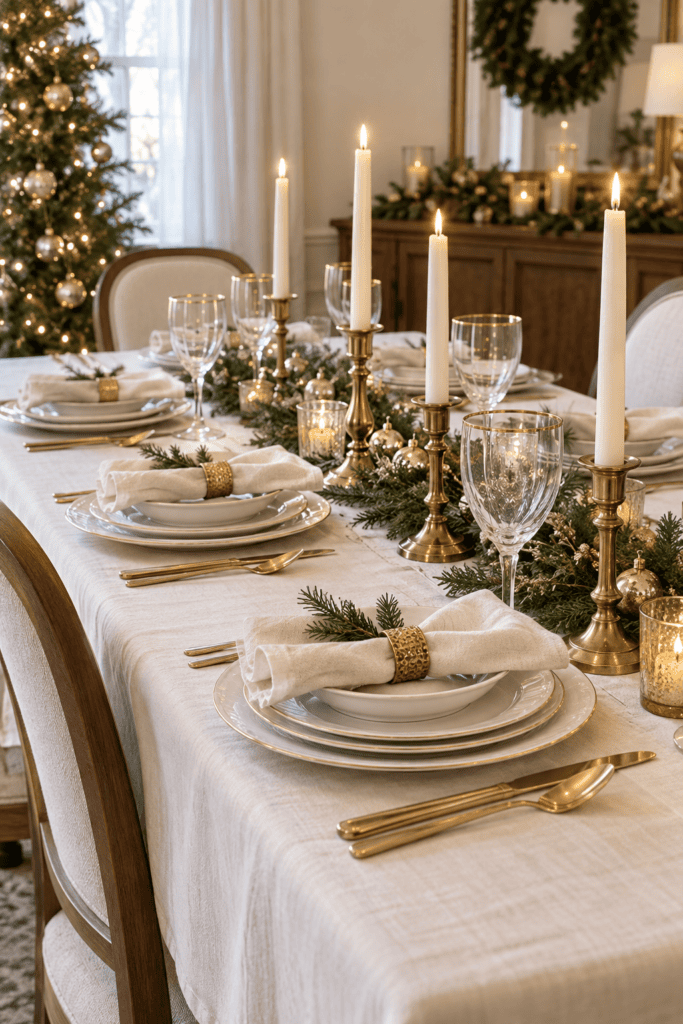
If traditional Christmas colors feel too busy for your home, try white and gold Christmas table decorations instead.
Use crisp or slightly textured white linens with white dinnerware as your foundation. Then introduce gold through flatware, napkin rings, candleholders, or thin-rimmed glasses. A little metallic shine goes surprisingly far.
Add several ivory taper candles and small sprigs of greenery to soften the look. Without those natural details, an all-white-and-gold table can sometimes feel more like a fancy event venue than Christmas dinner.
The secret lies in restraint. Choose two or three gold elements and repeat them, rather than throwing gold onto absolutely everything that sits still long enough.
The finished table feels bright, festive, and elegant without looking overly formal.
4. Build a Cozy Rustic Christmas Tablescape
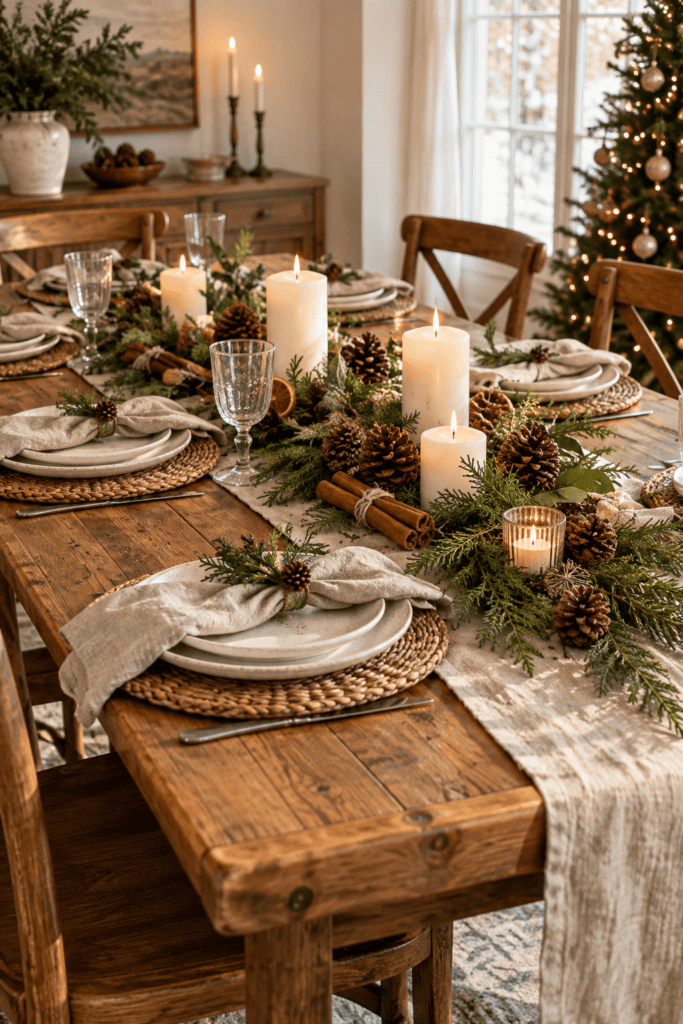
A rustic Christmas table works beautifully when you want dinner to feel relaxed, warm, and welcoming.
Start with an exposed wood dining table if you have one. Add a linen runner in oatmeal, beige, or warm cream, then layer simple ceramic plates and natural woven placemats. The slight imperfections in linen, pottery, and wood actually make this style better.
For the centerpiece, combine pine branches, pinecones, wooden accents, and warm candles. You could also add small bundles of cinnamon sticks or dried orange slices for another natural texture.
IMO, rustic tables look better when you resist the urge to make everything perfectly symmetrical. Let the greenery trail differently on each side. Mix candle heights. Allow the napkins to look casually folded.
Christmas dinner should feel inviting, not like guests need written permission before touching anything.
5. Decorate With Dried Oranges and Greenery
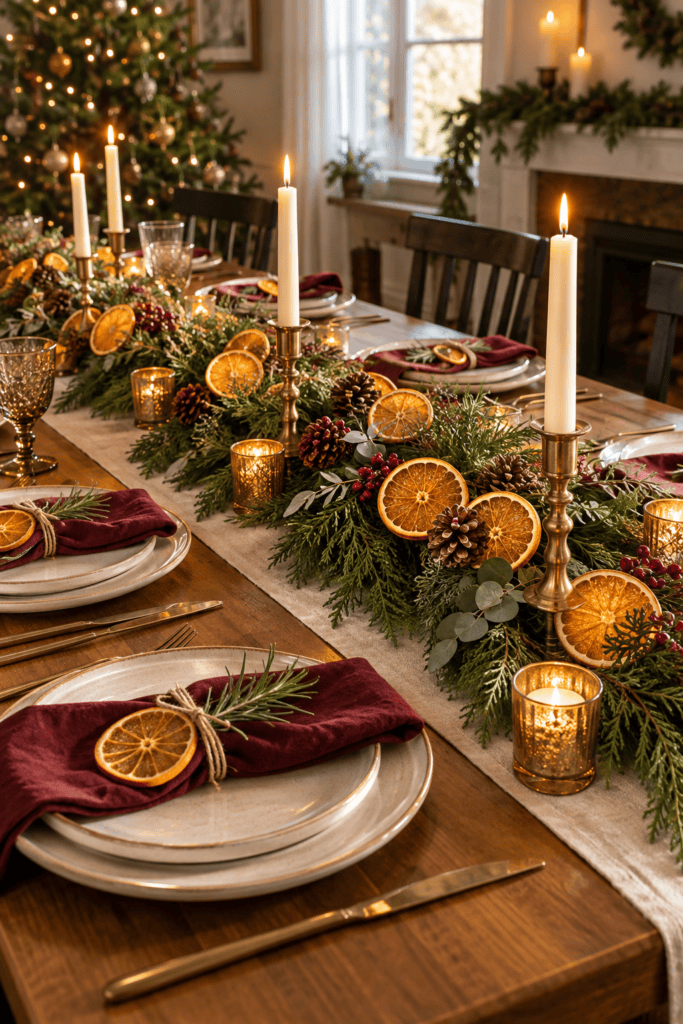
Dried orange slices have become a Christmas decorating favorite for good reason. They add beautiful warm color without feeling flashy or artificial.
Scatter dried orange slices among cedar or fir branches along the middle of your table. Their amber-orange tones look particularly gorgeous beside deep green foliage, natural wood, and candlelight.
You can also tie a dried orange slice onto each napkin using thin velvet ribbon or natural twine. Add a tiny rosemary sprig and suddenly a very inexpensive place setting looks incredibly thoughtful.
For a richer palette, pair the oranges with burgundy napkins. For something lighter, use cream linens and pale wood accents.
And yes, you can absolutely buy dried orange slices instead of spending an afternoon dehydrating oranges. Christmas already gives us enough chores.
6. Use Burgundy Velvet for a Rich, Elegant Look
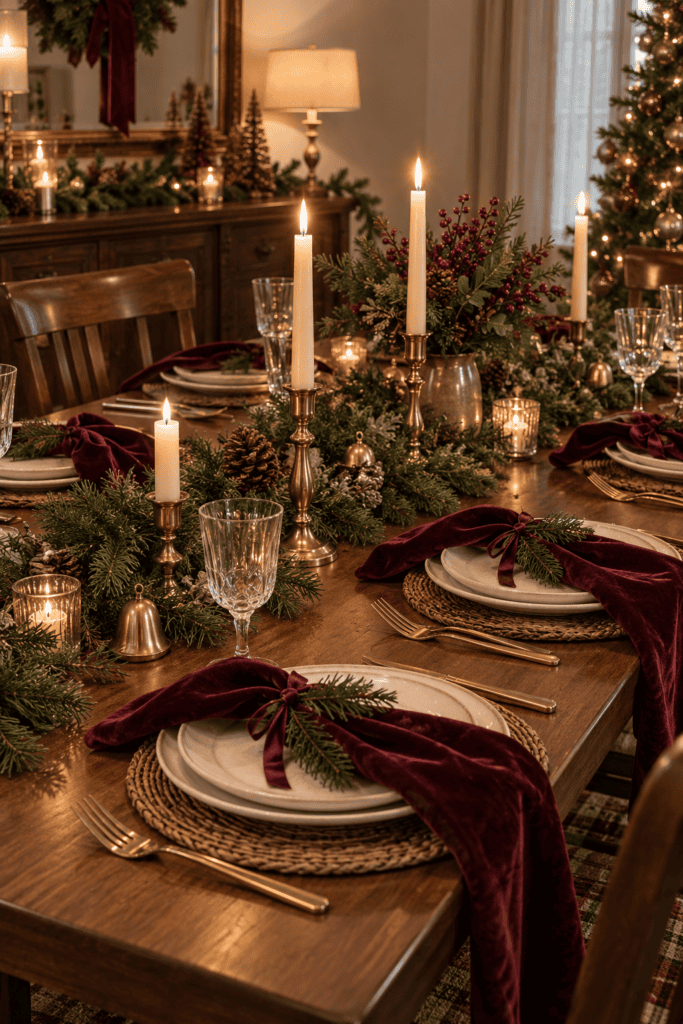
Bright red feels cheerful, but burgundy brings a quieter kind of Christmas drama.
Try burgundy velvet napkins or narrow velvet ribbons paired with cream dinnerware, dark greenery, and antique brass candlesticks. The combination feels festive while staying sophisticated.
You don’t need much velvet either. Tie a slim burgundy ribbon around each folded napkin or around the base of a small place-card sprig. Repeating that tiny detail across the table creates a surprisingly cohesive design.
Warm candlelight makes velvet look particularly beautiful because it emphasizes the fabric’s soft texture.
If your dining room already contains warm wood furniture, this palette works even better. The burgundy, brass, cream, and evergreen tones naturally complement those warmer finishes.
7. Make Candles the Star of the Table
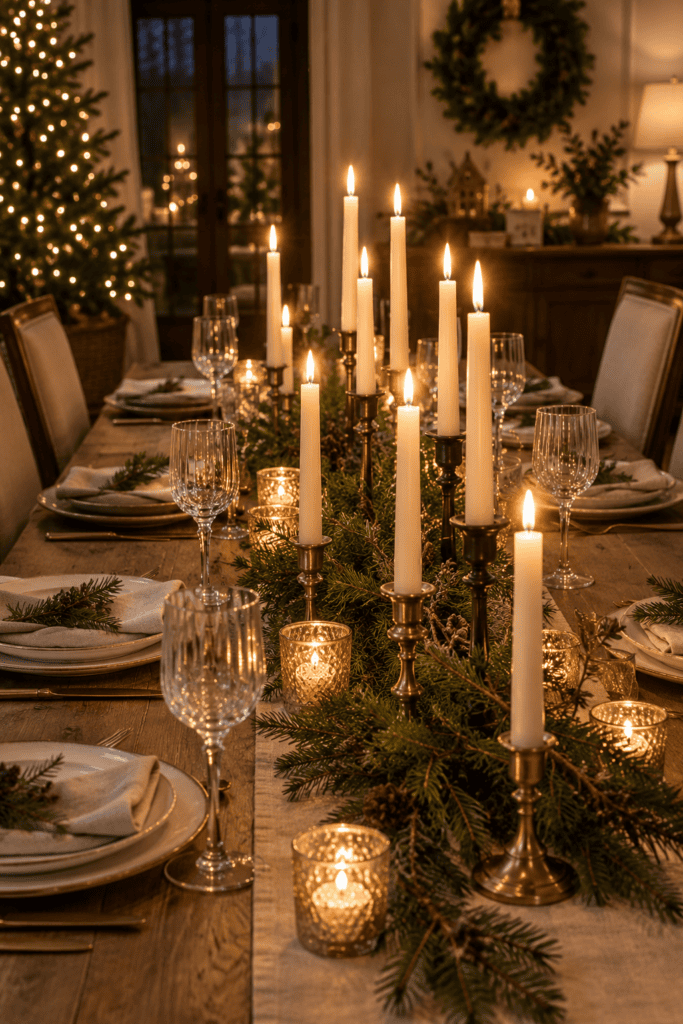
Who says a Christmas centerpiece needs flowers?
Create a candlelit Christmas table centerpiece using taper candles at slightly different heights. Arrange them loosely through the center of the table and weave small evergreen branches around their bases.
Choose warm ivory, cream, burgundy, or forest-green candles depending on your color palette. Personally, I prefer sticking to one candle color because it keeps a large grouping from looking chaotic.
You can combine tall tapers with a few smaller votives for additional layers of light. Just avoid scented candles around dinner. Your roast potatoes probably don’t need to compete with “Frosted Peppermint Wonderland.”
FYI, always keep greenery and other flammable decorations safely away from open flames. Flameless LED candles offer an easy alternative if children, pets, or crowded serving dishes make real candles impractical.
8. Try a Scandinavian-Inspired Christmas Table
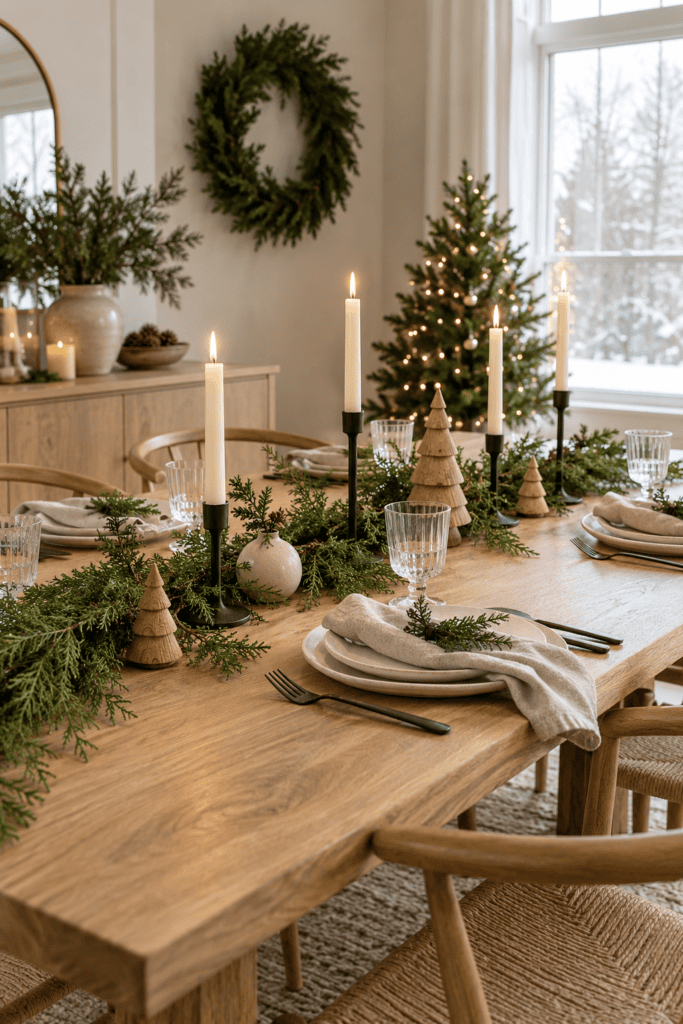
A Scandinavian-style Christmas table proves festive decorating doesn’t require covering every available inch with ornaments.
Keep your palette simple with warm white, natural wood, muted green, and small touches of black or deep red. Use understated ceramic plates, linen napkins, and simple glassware.
Instead of one elaborate centerpiece, place a few evergreen cuttings down the table with small wooden trees or minimalist candleholders. Leave plenty of empty space around everything.
That breathing room matters. It allows individual textures and shapes to stand out while keeping the dining area practical.
This style works especially well in smaller dining rooms because it delivers Christmas atmosphere without making the table feel crowded.
9. Create Mini Christmas Tree Place Settings
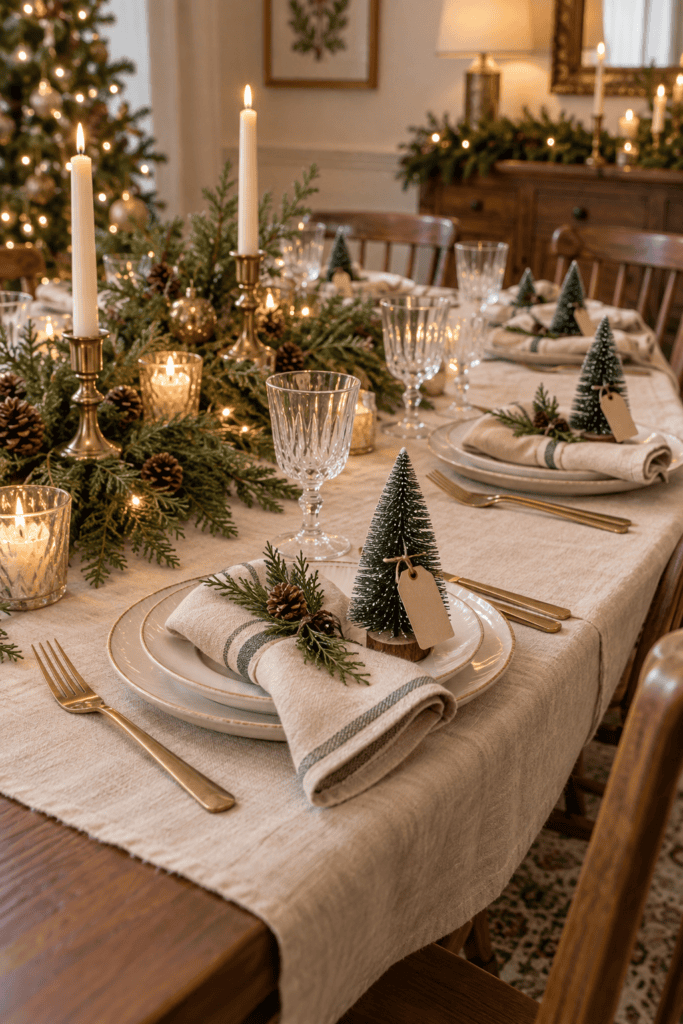
Individual place settings offer a fun opportunity to add details that guests notice once they sit down.
Place a tiny bottle-brush tree, miniature evergreen, or simple wooden Christmas tree beside each plate. Keep the trees small enough that guests don’t need to move them immediately.
Pair them with neutral dinnerware, folded linen napkins, and understated place cards. You could even tie a tiny name tag around each tree if you’re hosting a more organized Christmas dinner.
These little trees can double as favors, too. Guests can take them home afterward, which makes the decoration feel useful rather than disposable.
Want a more natural alternative? Place a small rosemary sprig upright in a tiny pot or holder to mimic the shape of a Christmas tree.
10. Layer Plaid Into Your Christmas Table Decor
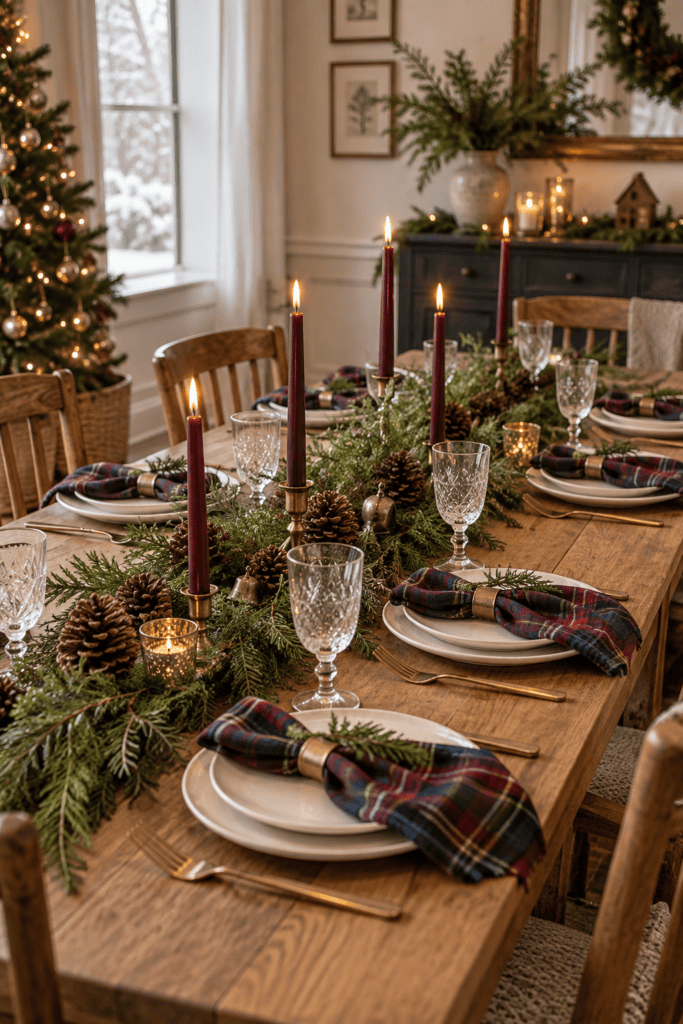
Plaid brings instant coziness to a holiday table, but you don’t need to cover the entire dining room in tartan.
Use plaid selectively through napkins, a narrow table runner, or small ribbon details. A classic pattern featuring forest green, burgundy, navy, or muted red usually works beautifully.
Then keep everything around it simple. White plates, plain glassware, greenery, and wood accessories allow the pattern to become the focal point.
I especially like plaid napkins on a bare wooden table. That combination creates a casual Christmas-cabin feeling without requiring actual log walls or a conveniently located snowstorm outside.
If your plaid contains several colors, pull one shade from the pattern and repeat it elsewhere. For example, burgundy plaid napkins could pair with burgundy taper candles.
Repeating one color creates visual consistency and prevents patterned decor from feeling random.
11. Use Christmas Ornaments as a Centerpiece
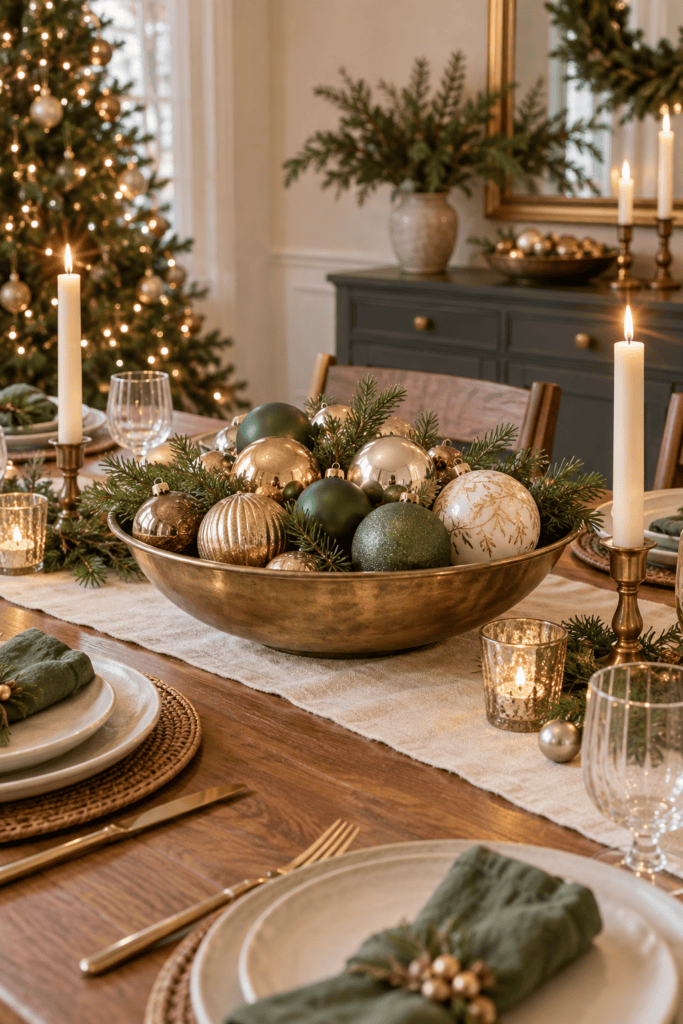
Have a box of extra ornaments that never makes it onto the tree? Put those decorations to work.
Fill a low ceramic bowl, wooden tray, or shallow brass dish with Christmas ornaments in a coordinated color palette. Mix different sizes and finishes to create depth.
For an elegant table, combine champagne, antique gold, cream, and muted green ornaments. For a traditional setup, use red, gold, and green.
Tuck a few small evergreen cuttings between the ornaments so the arrangement feels connected to the rest of your Christmas decor.
Keep the vessel low and fairly wide rather than tall. Guests should see one another across the table without performing awkward sideways head movements around the centerpiece.
This idea also makes decorating ridiculously easy. Ten minutes, one bowl, several ornaments—and suddenly you appear remarkably organized.
12. Create a Winter Woodland Christmas Table
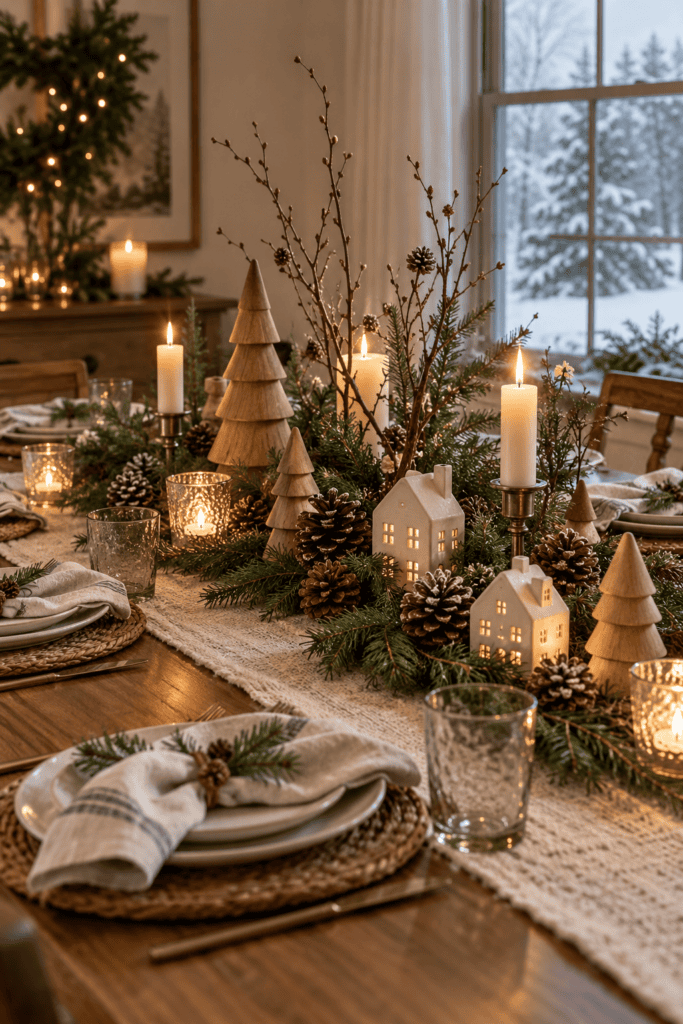
If you prefer natural Christmas decor, take inspiration from a quiet winter forest.
Build the table around evergreen branches, pinecones, bare twigs, wood accents, and soft candlelight. Stick primarily to earthy brown, deep green, cream, and warm white.
Small woodland details can add personality, but keep them subtle. A couple of miniature wooden trees or simple ceramic houses work better than an entire decorative wildlife population occupying the dinner table.
Use textured cream napkins and stoneware plates to keep the setting warm. A woven or linen runner adds another natural layer without competing with the centerpiece.
This look works especially well in casual dining rooms because it feels festive without relying heavily on traditional Christmas red.
13. Add Personalized Christmas Place Settings
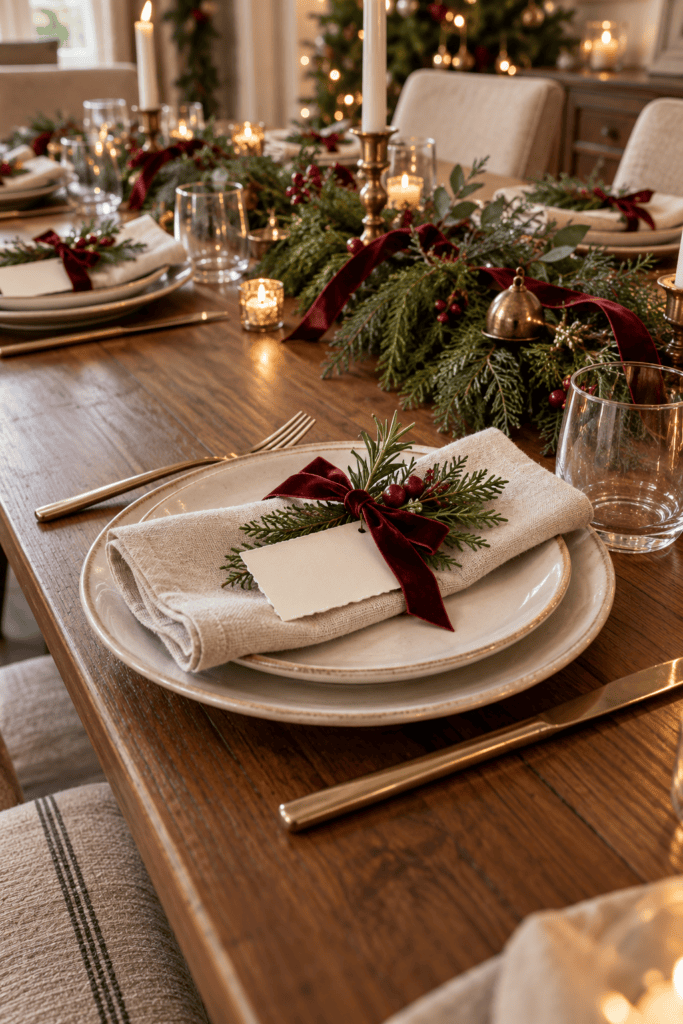
A beautiful centerpiece grabs attention when guests enter the room, but personalized place settings make the table feel genuinely welcoming.
Write each guest’s name on a simple card and pair it with a rosemary sprig, cedar cutting, cinnamon stick, or tiny ornament. Place the card directly over the folded napkin or just above the plate.
You don’t need elaborate calligraphy either. Simple handwritten names often look more charming because they feel personal.
For a polished look, repeat one small material from the centerpiece at every setting. If the centerpiece includes burgundy ribbon, for example, use the same ribbon around each napkin.
Hosting family members who always sit in exactly the same seats anyway? Place cards may technically serve no logistical purpose whatsoever. Use them anyway—they look cute.
14. Go Moody With Forest Green and Brass
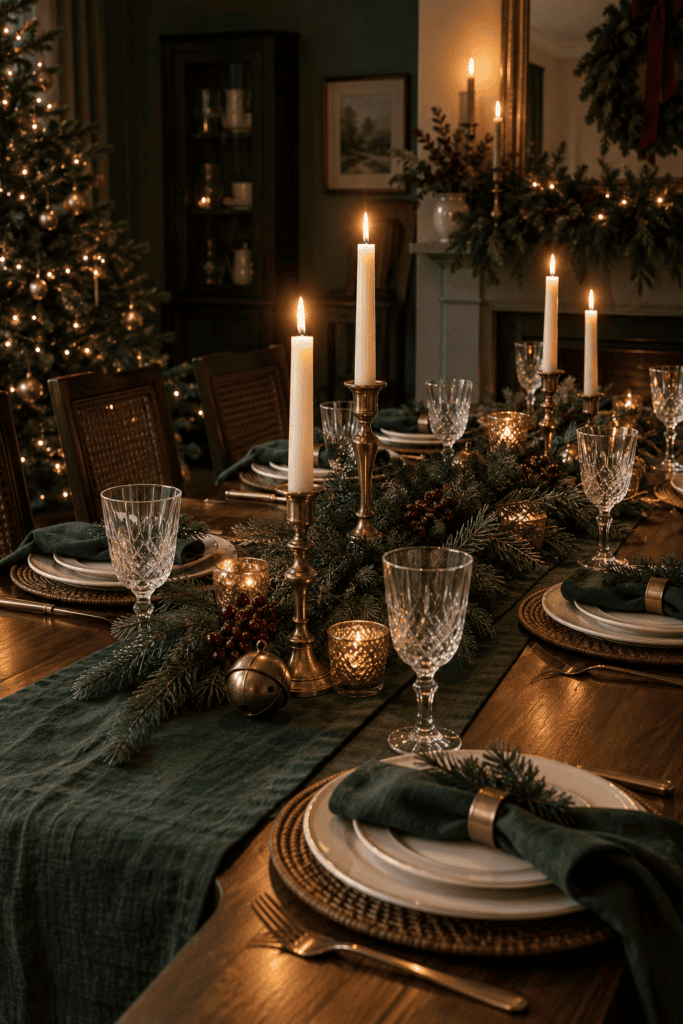
Christmas tables don’t always need to look bright and snowy. A darker palette can feel incredibly cozy during an evening dinner.
Start with deep forest-green napkins or a dark green runner. Pair them with warm cream plates, clear glassware, and aged-brass or gold-toned accents.
Add dark evergreen branches through the center and bring in ivory taper candles for contrast. The pale candlelight keeps the darker greens from making the table feel heavy.
Walnut or medium-to-dark wood furniture works particularly well with this palette. The warm brown undertones connect naturally with brass and green.
If you want another color, introduce tiny touches of burgundy through berries or ribbon. Keep those accents limited so the deep green remains the star.
The result feels intimate, grown-up, and wonderfully suited to Christmas Eve dinner.
15. Create a Warm Neutral Christmas Table
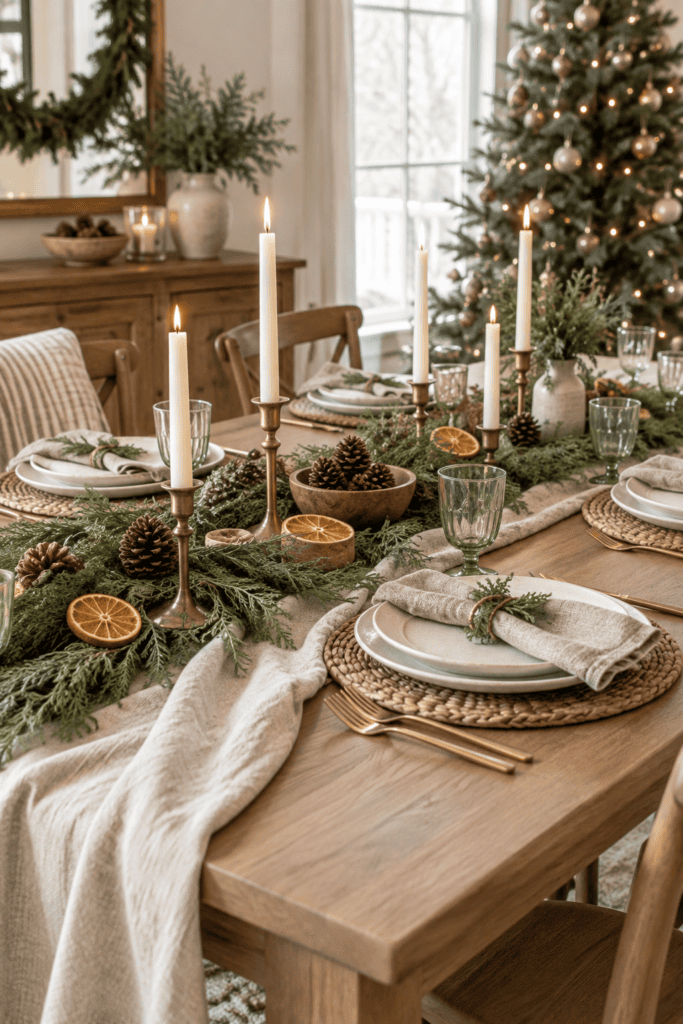
Maybe red and green simply aren’t your thing. No Christmas decorating police will arrive at your door, promise.
Build a neutral Christmas tablescape around cream, beige, taupe, warm wood, and muted greenery. Start with an oatmeal linen runner and simple cream dinnerware.
Add woven placemats, natural linen napkins, wooden accessories, and a loose evergreen centerpiece. Then introduce warmth through ivory candles and subtle brass details.
Texture becomes especially important when you limit the color palette. Combine smooth ceramics with rumpled linen, rough greenery, woven fibers, and natural wood so the table still has plenty of visual interest.
A few pinecones or dried orange slices can add contrast without disrupting the calm palette.
This style also transitions beautifully beyond Christmas Day. Remove a few obviously festive elements and the same setup can work through the rest of winter.
How to Make Your Christmas Table Look Cohesive
You don’t need matching decorations to create a polished table. You simply need a few repeating elements.
Choose one main color, one supporting color, and one natural or metallic accent before you start decorating. For example, you might combine forest green, cream, and brass.
Then repeat those elements across several areas:
- Bring the main color into the napkins or runner.
- Repeat your greenery at the centerpiece and individual place settings.
- Use the same metal finish for candlesticks, flatware, or napkin rings.
- Keep dinnerware relatively simple if the centerpiece contains lots of detail.
- Repeat one small decorative feature, such as ribbon, berries, or dried oranges.
Also consider height. A table looks more interesting when you combine low greenery, medium decorative objects, and taller candles. However, keep the main centerpiece below eye level so guests can actually talk to one another.
And leave room for food. Sounds obvious, right? Yet somehow Christmas decorating has a way of consuming every available surface until the gravy boat needs its own side table.
Final Thoughts
The best Christmas table decoration ideas don’t necessarily involve the most decorations. They create atmosphere through thoughtful color, texture, lighting, and a few details that make guests feel welcome.
You can embrace classic red and green, create a natural evergreen centerpiece, experiment with elegant white and gold, or keep everything calm with warm neutrals. Choose a style that complements your home rather than forcing a completely different aesthetic just because December arrived.