

Charcoal and wood might sound like a bold combo at first, but honestly, that’s exactly why it works so well. Charcoal brings depth, mood, and polish, while wood adds warmth, texture, and that lived-in comfort every living room needs. Put them together, and you get a space that feels grounded, stylish, and a little bit expensive without trying too hard.
I’ve always loved this pairing because it solves one of the biggest decorating problems: a room that looks nice but feels flat. Ever walked into a living room that had all the “right” pieces but somehow felt cold or boring? Yeah, same. Charcoal and wood fix that fast. One adds drama, the other softens the mood, and suddenly the whole room feels balanced.
If you want your space to feel cozy, modern, and a touch dramatic, these charcoal and wood living room ideas will give you plenty to work with. Some feel sleek and contemporary, some lean rustic, and some sit right in that sweet spot between polished and relaxed. Let’s get into it.
1. Pair Charcoal Walls With Warm Oak Furniture
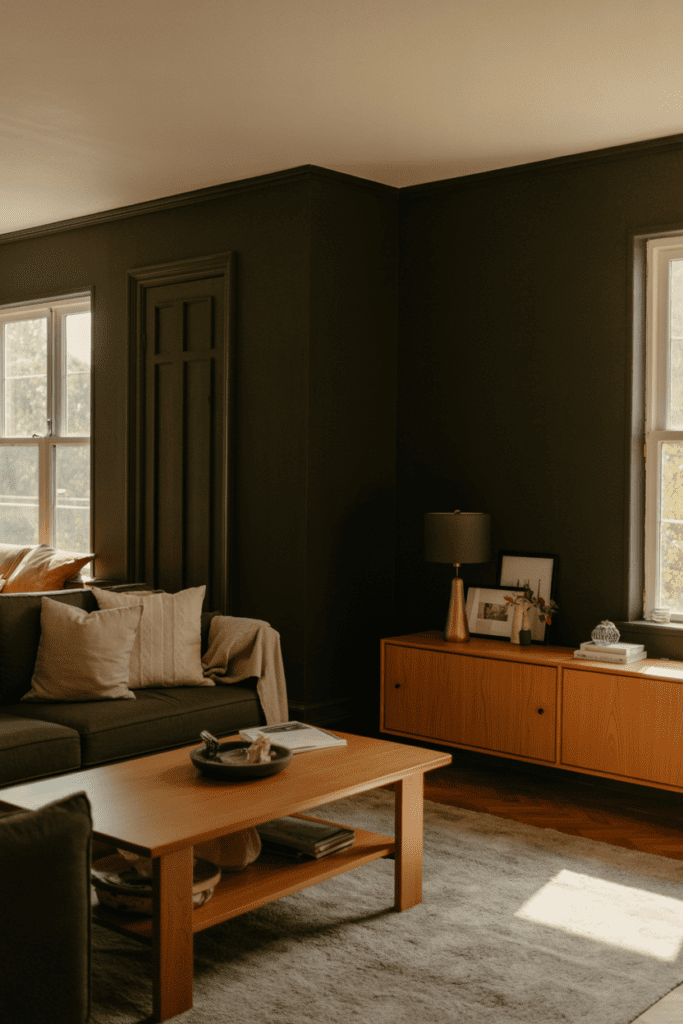
If you want instant contrast, start here. Charcoal walls create a rich backdrop, and warm oak furniture keeps the room from feeling too heavy. This combo looks intentional right away, even if you only swap a few pieces.
I love this look because oak has that honey-toned warmth that plays beautifully against deep gray. The room feels moody, but not gloomy. And let’s be honest, plain white walls don’t always deserve the hype they get.
Why this combo works
- Charcoal adds depth and makes the room feel more sophisticated.
- Oak lightens the visual weight and keeps the palette welcoming.
- The contrast helps furniture, decor, and artwork stand out more clearly.
For the best result, choose oak coffee tables, sideboards, or open shelving with visible grain. That natural texture matters more than people think.
2. Use a Charcoal Sofa as the Anchor Piece
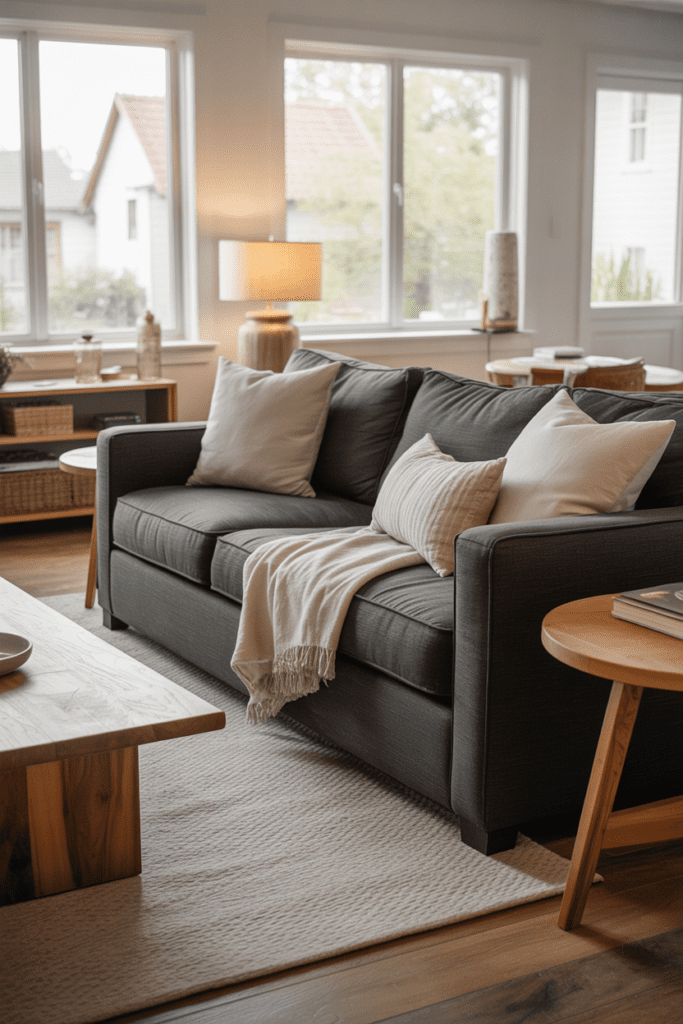
A charcoal sofa gives you a strong foundation without locking you into a harsh black-and-white scheme. It hides everyday wear better than pale upholstery too, which feels like a small miracle if you actually use your living room.
I recommend this idea for anyone who wants a practical starting point. You can layer in wood through the coffee table, side tables, media console, or ceiling beams. The sofa grounds the room, and the wood stops it from feeling too serious.
Best wood tones to pair with a charcoal sofa
- Walnut for a richer, more upscale feel.
- Oak for a brighter, more casual look.
- Reclaimed wood for rustic texture and character.
Ever noticed how some dark sofas make a room feel like a waiting area? Wood accents fix that problem fast.
3. Add Reclaimed Wood for Rustic Warmth
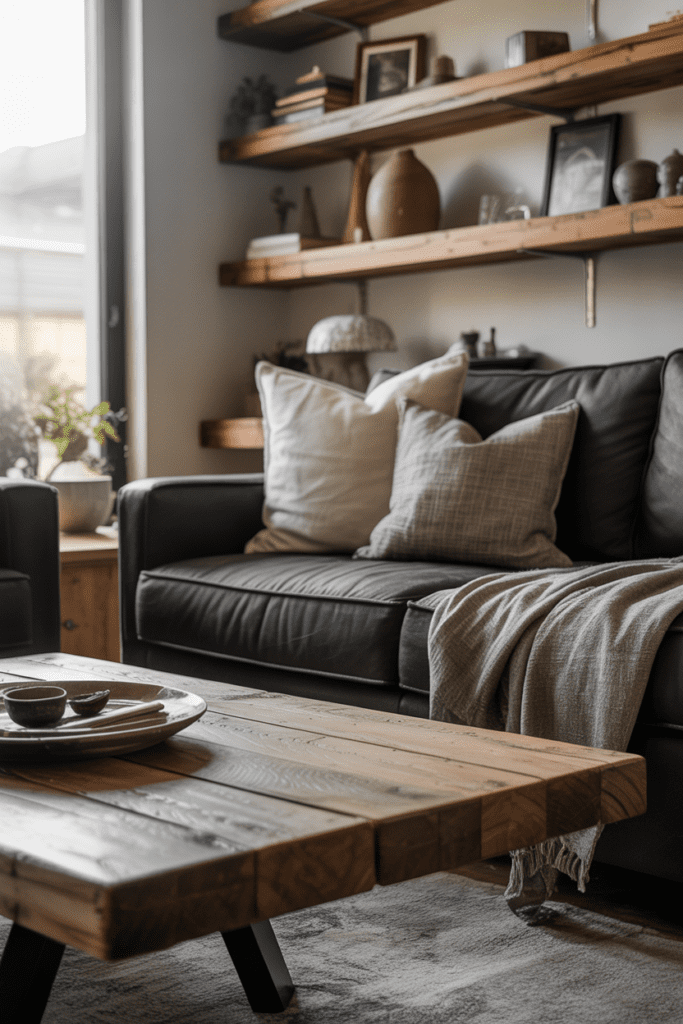
If your charcoal living room starts to feel a bit too polished, reclaimed wood brings back the soul. It adds texture, age, and a slightly imperfect feel that makes the room more inviting.
I’m a big fan of reclaimed wood mantels, chunky coffee tables, or floating shelves. Those weathered knots, cracks, and grain patterns break up the smoothness of darker walls and modern furniture. IMO, a little roughness makes a room feel more real.
Easy ways to use reclaimed wood
- Install a reclaimed wood mantel above the fireplace.
- Use a distressed wood coffee table as the focal point.
- Add open shelving with a raw, natural finish.
This look works especially well if you like modern rustic or industrial decor. It feels curated without looking like you bought the entire room in one panic-scroll session online.
4. Mix Charcoal Sectionals With Walnut Accents
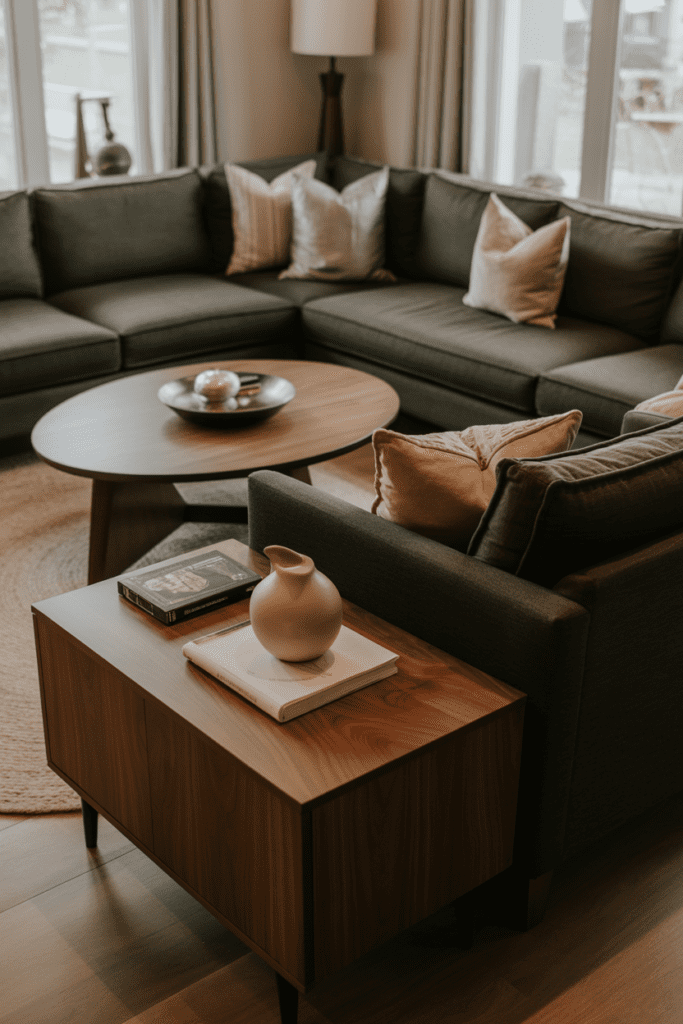
A charcoal sectional gives you comfort and visual weight, while walnut accents add richness and elegance. Walnut usually has a deeper brown tone than oak, so the whole room feels more dramatic and refined.
This combo works beautifully in larger living rooms where you want the furniture to make a statement. Think walnut side tables, a slatted media console, or a sculptural wood coffee table. The contrast looks clean and expensive, but not stiff.
What to include
- A charcoal sectional with clean lines.
- A walnut coffee table or media unit.
- A few cream or beige textiles to soften the darker palette.
That last part matters. Without lighter fabrics, the room can feel a bit too moody, and not in the cool cinematic way.
5. Create Contrast With Charcoal Paneling and Pale Wood Floors
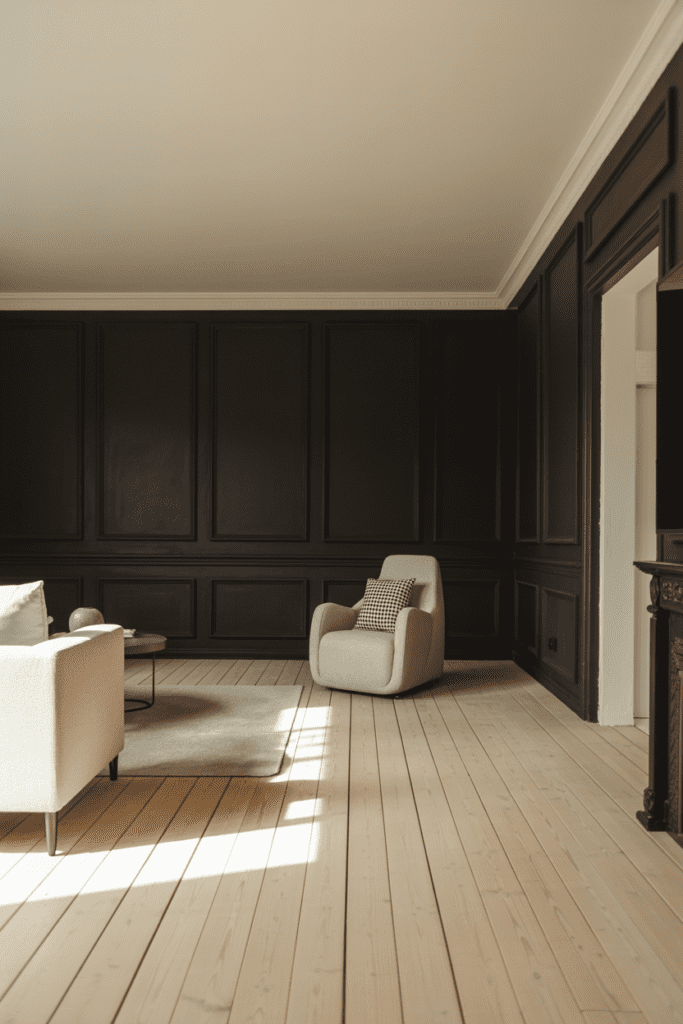
If you want something a little more architectural, try charcoal wall paneling with light wood flooring. This pairing makes the room feel custom and elevated, even if the furniture stays simple.
Charcoal paneling adds structure and visual interest. Pale wood floors reflect light and stop the room from looking closed in. The effect feels modern, sharp, and surprisingly cozy.
Why people love this idea
- Wall paneling adds dimension without clutter.
- Pale wood floors brighten the room instantly.
- The contrast feels clean, timeless, and high-end.
I’ve seen this look work especially well in Scandinavian-inspired interiors. You get all the mood of charcoal, but the room still breathes.
6. Use Wood Ceiling Beams to Warm Up a Dark Palette
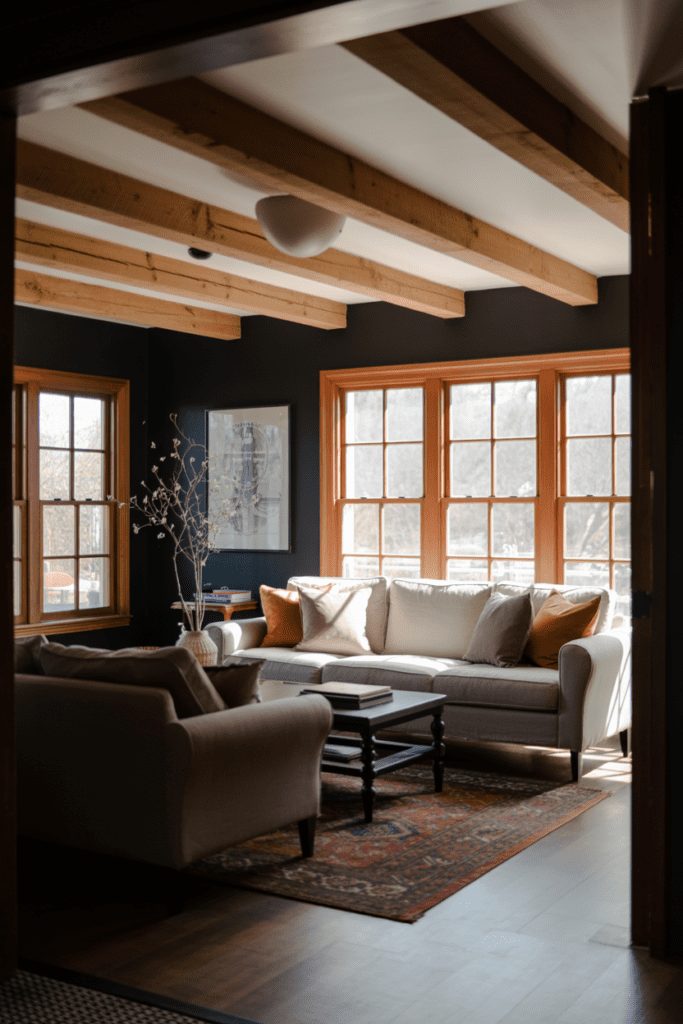
Dark living rooms can look stunning, but they sometimes need one strong warm element to balance them. Wood ceiling beams do that job beautifully. They pull the eye upward and make the room feel layered rather than flat.
This idea works in farmhouse, rustic, transitional, and even modern homes. Natural wood overhead softens charcoal walls, charcoal upholstery, or dark built-ins below. Ever wonder why some dark rooms feel cozy while others feel like a cave? The answer usually involves texture and warmth.
Beam styles to consider
- Rough-hewn beams for rustic charm.
- Smooth stained beams for a polished look.
- Light natural wood beams for contrast in modern spaces.
If you can’t add real beams, faux wood beams still create the same visual effect. No one needs to know unless they plan to inspect your ceiling for sport.
7. Layer Charcoal and Wood Through Built-In Shelving
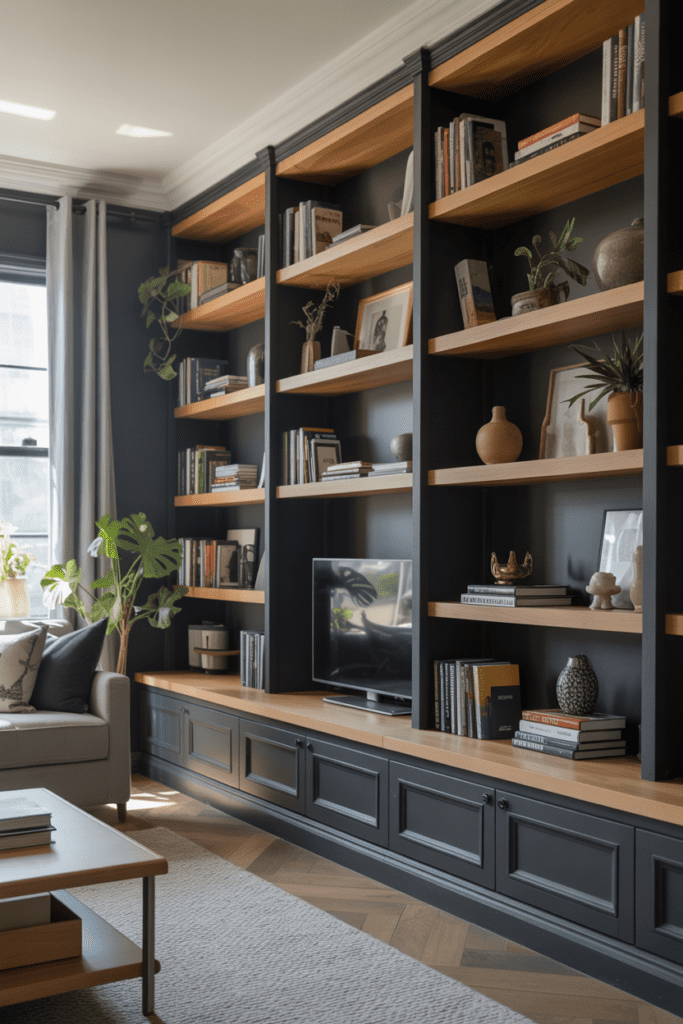
Built-ins make a living room feel intentional, and charcoal-painted shelving with wood shelves or wood backing looks incredibly stylish. You get contrast, storage, and a designer feel all in one move.
I like this idea because it gives you a chance to repeat both materials across the room. The charcoal keeps the built-ins grounded, while the wood adds warmth and keeps the whole unit from feeling too stark.
Styling tips for this look
- Paint the frame in deep charcoal gray.
- Use natural wood shelves for contrast.
- Style with books, ceramics, and greenery in lighter tones.
The key here is restraint. Don’t pack every shelf like you’re preparing for a decor talent show.
8. Choose a Wood Slat Feature Wall Behind a Charcoal Sofa
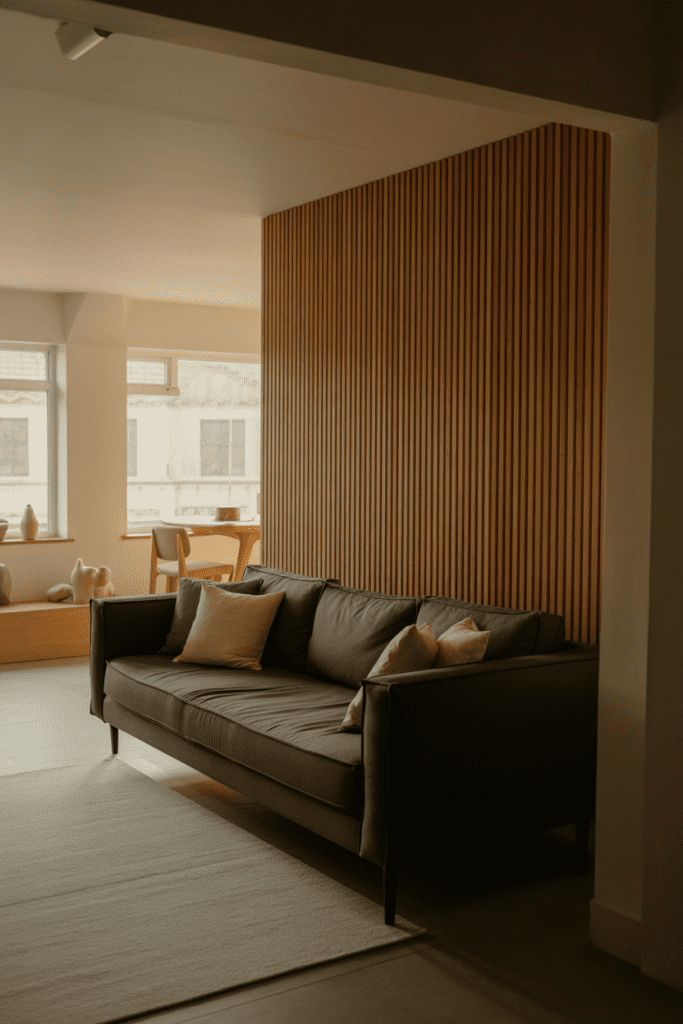
A wood slat wall adds instant texture and a slightly modern-luxury vibe. Place it behind a charcoal sofa, and you create a beautiful focal point without relying on loud art or busy patterns.
Vertical slats also help the room feel taller. That matters a lot in smaller spaces where dark furniture might otherwise feel bulky. I love this setup because it feels clean, warm, and current without chasing trends too hard.
Best finishes for wood slat walls
- Medium oak for a balanced, versatile look.
- Walnut for a richer, moodier finish.
- Natural ash for a lighter, modern contrast.
This idea works especially well if the rest of the room stays simple. Let the wall do the talking.
9. Try a Charcoal Fireplace With a Chunky Wood Mantel
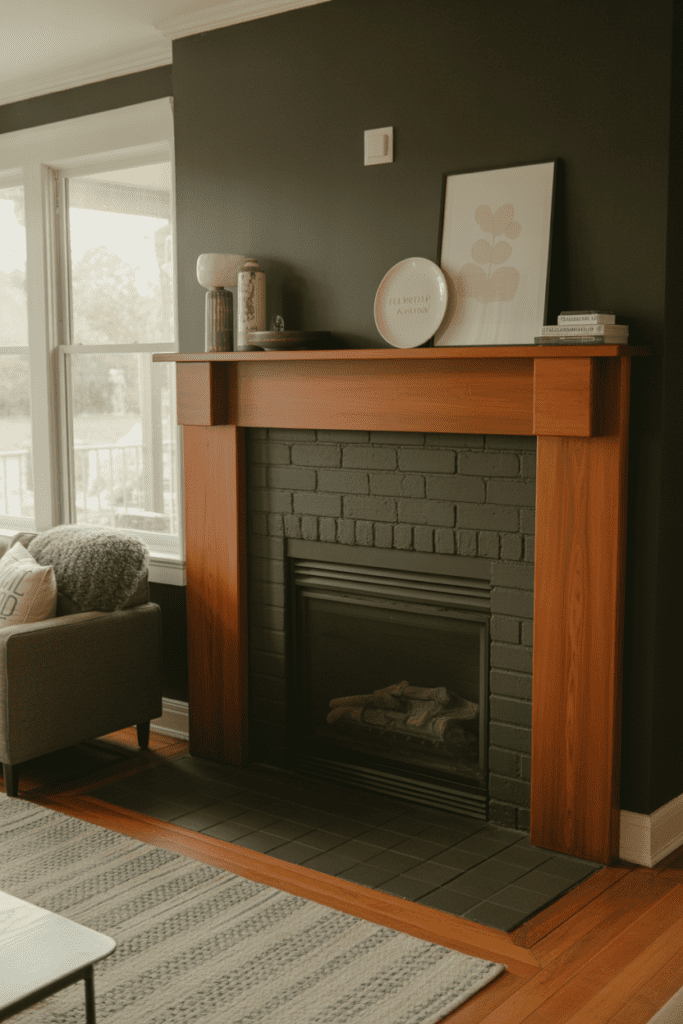
If your living room has a fireplace, don’t waste that opportunity. A charcoal fireplace surround paired with a chunky wood mantel creates a dramatic focal point that feels both cozy and bold.
This combination works because the fireplace naturally draws attention. The charcoal gives it presence, and the wood mantel makes it feel approachable. It’s a little bit dramatic, yes, but in a good way.
Materials that work well
- Painted brick in matte charcoal.
- Smooth stone or tile in deep gray tones.
- A solid wood mantel with visible grain and weight.
I love this look in both modern and rustic homes. The balance feels effortless, even when the fireplace clearly knows it’s the star of the room.
10. Soften the Palette With Cream Textiles
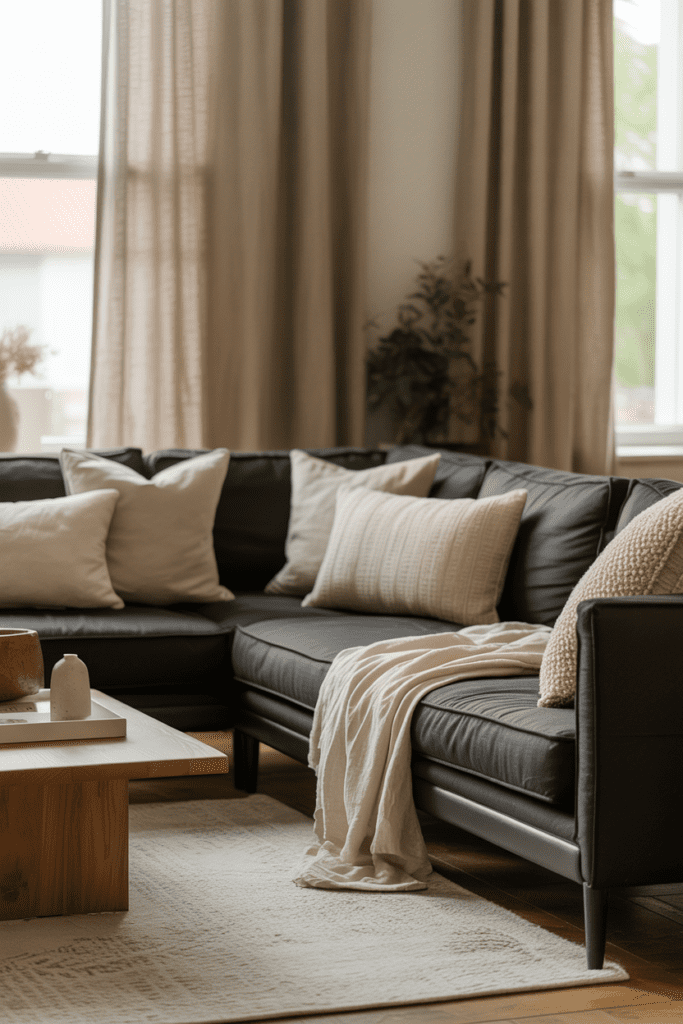
When you use a lot of charcoal and wood, cream textiles help the room breathe. They lighten the mood without ruining the color story, and they make the whole space feel softer and more inviting.
Think cream throw pillows, boucle chairs, linen curtains, or a textured area rug. These lighter layers break up the dark tones and keep the room from looking too serious. Because yes, your living room can be stylish without acting emotionally unavailable.
Where to add cream accents
- On pillows and throws.
- In a large area rug.
- Through curtains or accent chairs.
This idea matters even more in smaller rooms with limited natural light. A few lighter pieces make a huge difference.
11. Mix Matte Black Details With Charcoal and Wood
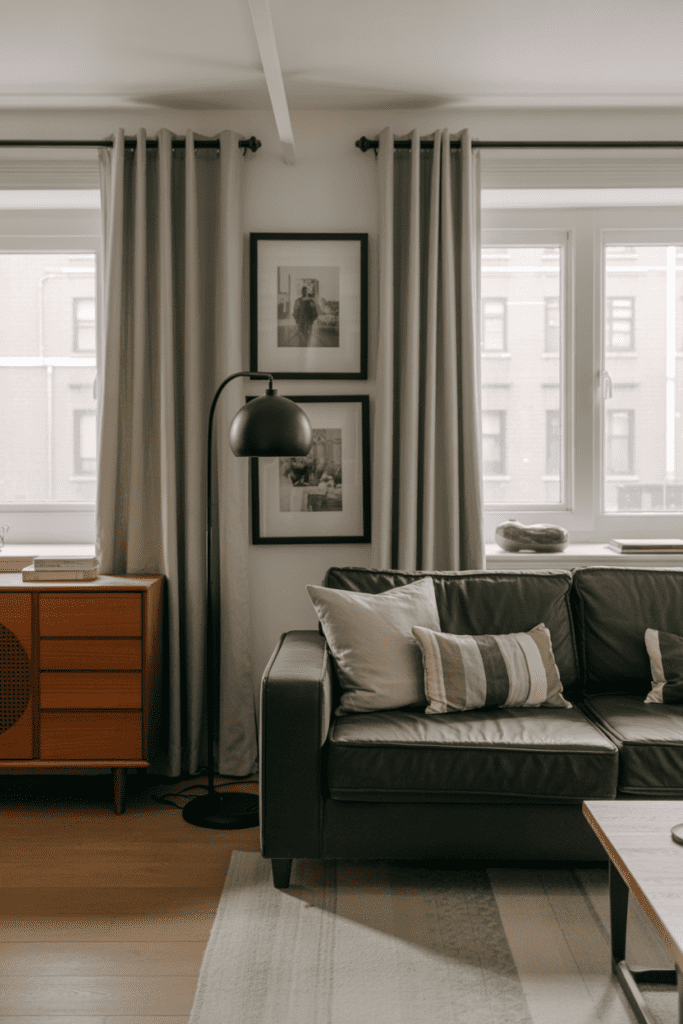
If you want a sharper, more modern look, add matte black accents into the charcoal-and-wood palette. It sounds subtle, but it tightens the whole room visually and makes the design feel more intentional.
Use matte black on lighting, curtain rods, frames, or table legs. These small details create structure and connect the darker tones in the room. FYI, this works best when you use black in moderation instead of turning the space into a furniture showroom for brooding adults.
Good places for black accents
- Floor lamps and wall sconces.
- Metal coffee table legs.
- Picture frames and cabinet hardware.
The wood keeps these details from feeling too cold. That balance does all the heavy lifting.
12. Bring in Leather for Extra Depth
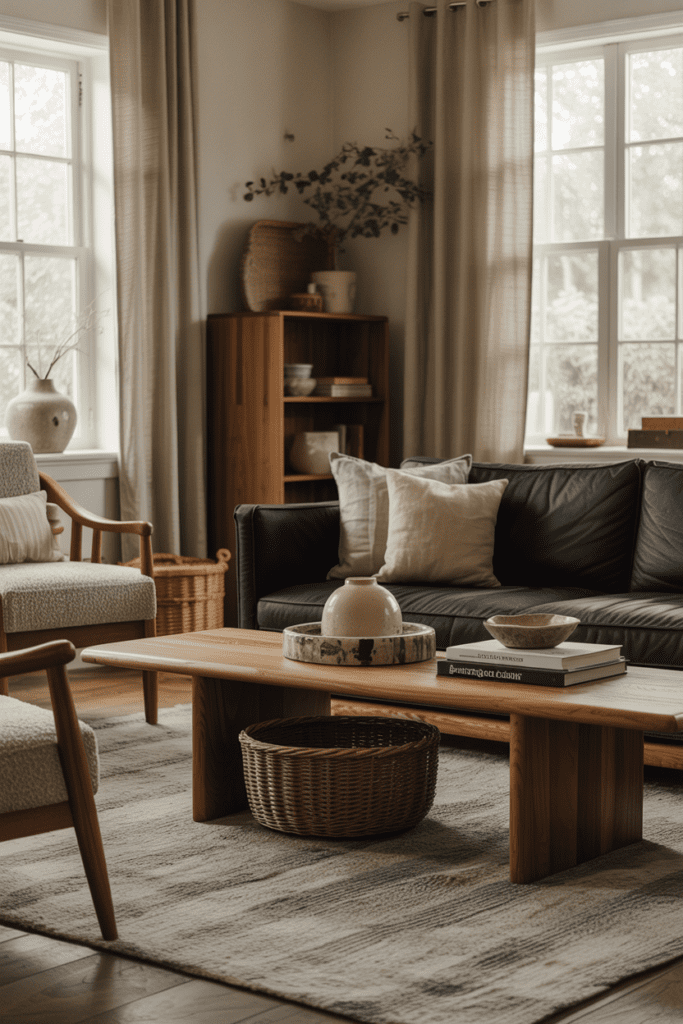
A tan or cognac leather chair looks fantastic in a charcoal and wood living room. It adds another natural element, and it bridges the gap between cool and warm tones beautifully.
I’ve always liked leather in darker rooms because it develops character over time. Charcoal upholstery can look crisp and tailored, while leather adds softness and age. Together, they create a room that feels layered instead of flat.
Best leather pieces to add
- A cognac accent chair.
- A small leather ottoman.
- Leather-trimmed decor like straps, handles, or stools.
This look feels especially good in cozy reading corners or lounge-style spaces. It’s warm, practical, and just polished enough.
13. Use Natural Wood Coffee Tables to Break Up Dark Seating
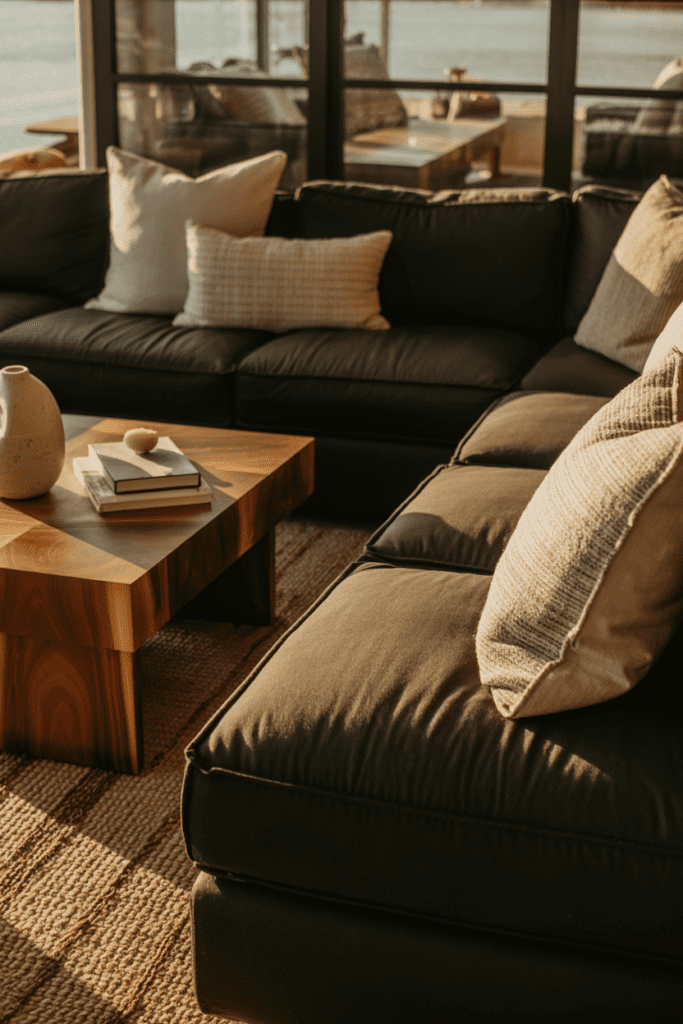
If you already own a charcoal sofa or sectional, a natural wood coffee table offers one of the easiest ways to balance the room. It brings contrast right to the center of the space, where you actually notice it.
Choose a table with texture, visible grain, or a slightly chunky shape. That helps the room feel grounded and warm. Glass tables can work, sure, but wood usually feels less cold and more lived in.
Coffee table styles that fit this palette
- Chunky rustic wood for cozy rooms.
- Mid-century wood tables for clean lines.
- Round pedestal wood tables for softer shapes.
Ever notice how one good coffee table can save an entire room? This is that kind of move.
14. Add Greenery to Freshen the Mood
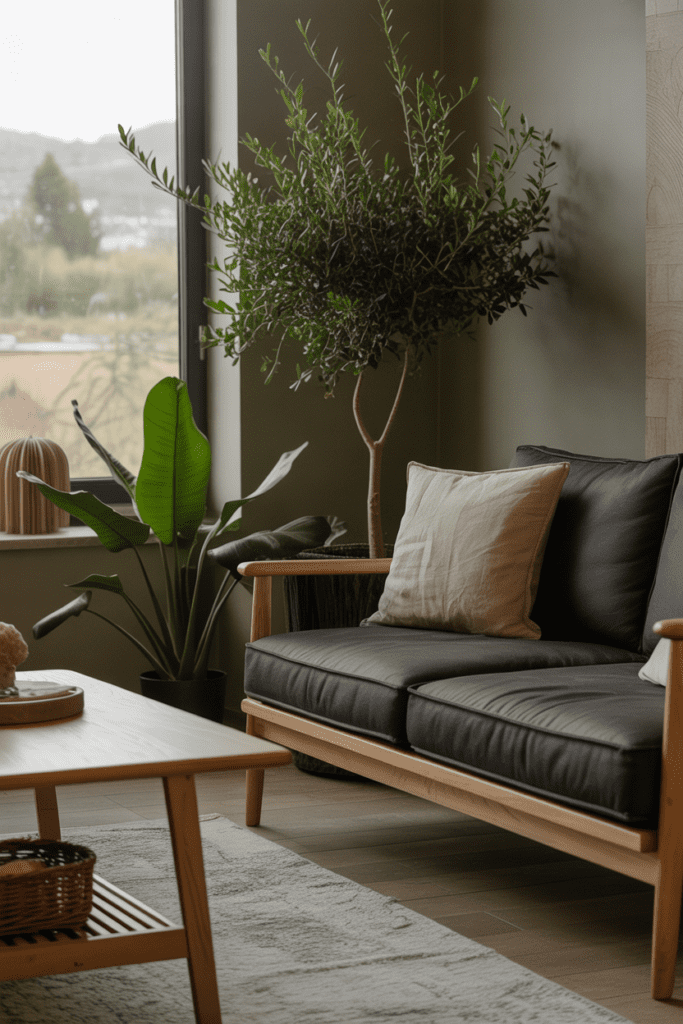
Plants look amazing against charcoal. Green leaves pop beautifully against deep gray, and the wood tones tie everything back to nature. It’s a simple trick, but it works every single time.
You don’t need to turn your living room into a greenhouse either. A fiddle leaf fig, olive tree, pothos, or even a few branches in a vase can soften the palette and add life. This matters most if your room leans modern and needs a little organic energy.
Best plant choices for this look
- Olive trees for a soft, airy feel.
- Snake plants for a modern sculptural touch.
- Pothos for shelves and built-ins.
If real plants and your schedule hate each other, use a high-quality faux one. I won’t judge 🙂
15. Try Charcoal Curtains With Wood Blinds or Bamboo Shades
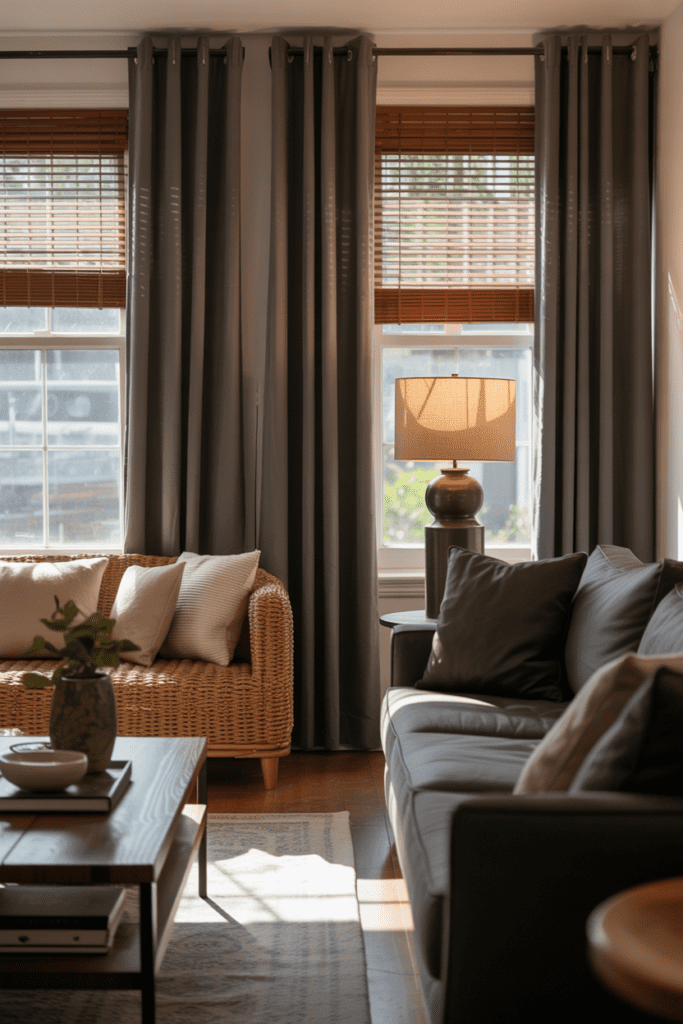
Window treatments can make or break a room, and this combo works especially well. Charcoal curtains add softness and depth, while wood blinds or bamboo shades bring warmth and texture.
This layered look feels thoughtful and practical. You get privacy, light control, and a stronger design story around the windows. Plus, bare windows rarely help a room feel finished.
Why this pairing works
- Charcoal fabric frames the room beautifully.
- Wood or bamboo shades add natural texture.
- The layered effect feels richer and more complete.
Keep the curtain fabric matte and relaxed rather than shiny. You want cozy elegance, not hotel conference room energy.
16. Combine Charcoal Paint With White Trim and Wood Decor
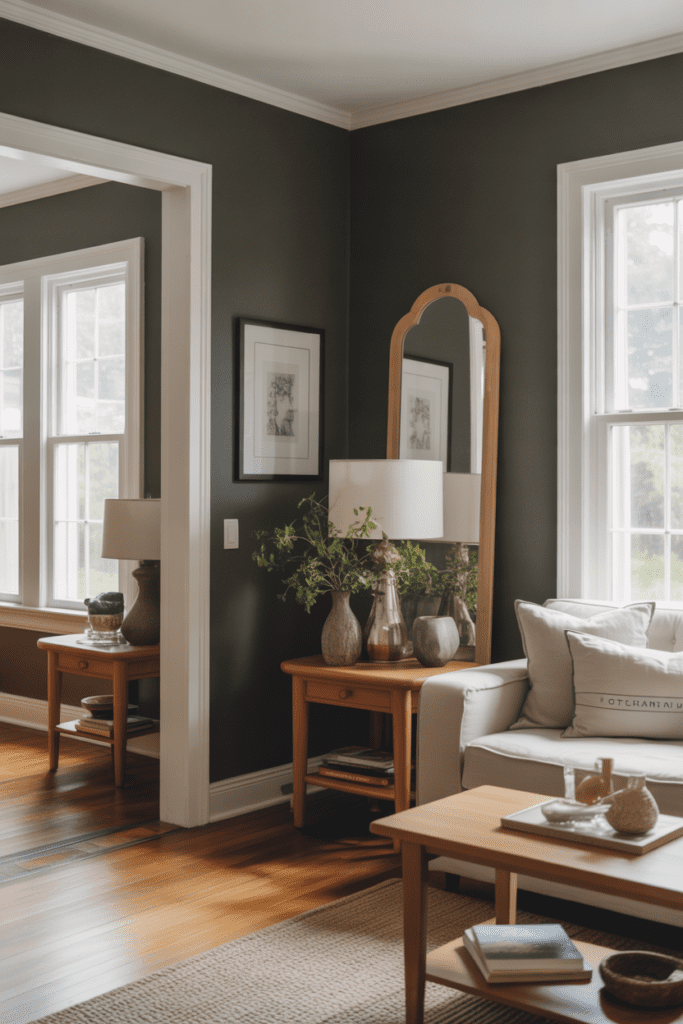
If you like a cleaner look, paint the walls charcoal but keep the trim white. Then bring in wood through furniture and decor. This setup gives you contrast without making the room feel too dark.
I often recommend this for traditional or transitional living rooms. The white trim keeps the architecture crisp, and the wood decor adds the warmth charcoal needs. It feels balanced, classic, and easy to style.
Decor pieces that work here
- Wood-framed mirrors.
- Wood side tables.
- Decorative bowls, trays, and stools in natural finishes.
This approach also helps if you feel nervous about going too dark. The trim gives your eyes a little breathing room.
17. Use Charcoal and Wood in a Small Living Room
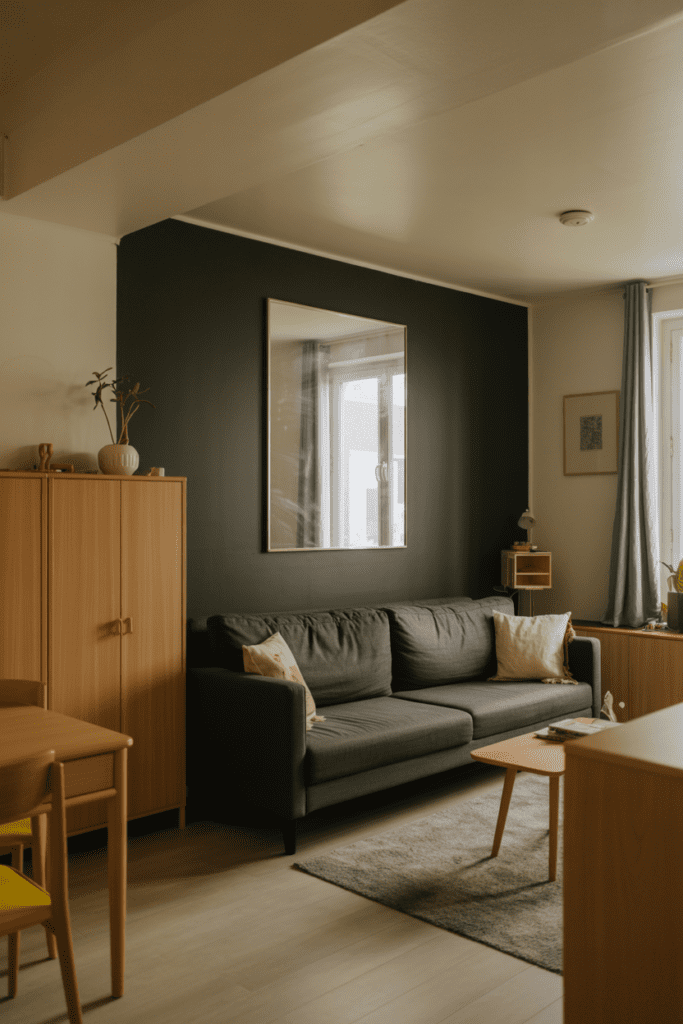
Yes, you can absolutely use this color combo in a small space. You just need to balance the dark tones carefully. A lot of people panic and paint everything white, which feels safe but often looks bland :/
In a smaller room, use charcoal as an accent rather than the dominant color. Try a charcoal sofa, one dark wall, or charcoal decor pieces, then layer in lighter woods to keep the room open and airy.
Small-space tips that actually help
- Choose light or medium wood tones instead of very dark wood.
- Use mirrors and soft lighting to reflect light.
- Keep large pieces simple and avoid overly bulky furniture.
This combo can make a small room feel cozy and stylish instead of cramped. The trick lies in contrast, not excess.
18. Finish With Texture, Not More Color
One of the smartest ways to improve a charcoal and wood living room involves adding more texture instead of more colors. Too many extra shades can muddy the palette and weaken the whole look.
Stick with your charcoal-and-wood base, then layer in texture through rugs, knits, ceramics, linen, boucle, leather, and woven baskets. That gives the room interest without cluttering the design. Want the room to feel expensive? Texture does that job better than random accent colors ever will.
Textures that work beautifully
- Boucle and wool for softness.
- Linen and cotton for relaxed warmth.
- Ceramic and stone for contrast.
- Woven baskets and natural fibers for casual texture.
This idea sounds simple, but it changes everything. A good room rarely needs more stuff. It needs better layers.
How to Make Charcoal and Wood Work Together
If you want this look to feel cohesive, focus on balance. Too much charcoal can make the room feel heavy. Too much wood can make it feel overly rustic. You want both materials to support each other.
Here’s the easiest formula I follow:
- Use charcoal for depth through paint, upholstery, or large accent pieces.
- Use wood for warmth through furniture, beams, shelving, or decor.
- Add lighter textiles to soften the palette.
- Include black accents sparingly for definition.
- Bring in plants or natural textures to keep the room alive.
That mix usually creates the sweet spot. The room feels cozy, polished, and relaxed all at once.
Best Color Pairings for a Charcoal and Wood Living Room
Charcoal and wood already do a lot, so supporting colors should stay fairly simple. You don’t need a rainbow here. You need a few smart choices.
The best companion colors include:
- Cream and ivory for softness.
- White for contrast and brightness.
- Black for modern structure.
- Olive green for an earthy touch.
- Tan or cognac for warmth and richness.
I’d avoid overly icy blues or super-bright primaries unless you really love a high-contrast look. They can fight the cozy, grounded mood pretty quickly.
Common Mistakes to Avoid
Even a great color palette can go wrong if the balance feels off. Luckily, these mistakes are easy to fix once you spot them.
1. Using too many dark pieces
If the walls, sofa, rug, shelves, and curtains all go dark, the room can feel heavy fast. Break things up with lighter textiles, pale wood, or a few reflective surfaces.
2. Ignoring undertones
Not all charcoals look the same. Some lean blue, some brown, and some almost black. Make sure your wood tone complements the undertone instead of fighting it.
3. Forgetting texture
A room with smooth charcoal walls, sleek dark furniture, and no texture can feel flat. Add woven, soft, raw, or natural finishes to bring it to life.
4. Overdecorating the room
This palette already has strong visual presence. You don’t need twenty tiny decor items proving that you own shelves. Choose fewer, better pieces.
Final Thoughts
A charcoal and wood living room feels stylish for a reason. Charcoal adds mood and sophistication, and wood brings warmth and comfort. Together, they create a space that feels balanced, inviting, and far more interesting than another beige room trying not to offend anyone.
If I had to give one piece of advice, I’d say this: start with one strong charcoal element and one beautiful wood tone, then build around them slowly. You don’t need to copy every idea at once. Pick the version that fits your space, trust your eye, and let the room come together naturally.
And honestly, if your living room ends up looking cozy, dramatic, and a little bit designer-worthy without feeling pretentious, that sounds like a win to me