
Living in a small rental can feel like playing a never-ending game of finding somewhere to put your stuff. You finally clear the kitchen counter, only to realize the cabinets are already packed. Your bedroom closet barely fits your clothes, and somehow, the entryway has become the unofficial home for shoes, bags, packages, and everything else you don’t know what to do with.
And the frustrating part? You can’t exactly start knocking down walls or installing custom built-ins when you’re renting.
But here’s the thing: a small space doesn’t necessarily need more square footage. It needs smarter storage. Sometimes, the most useful spots are the ones you’ve been walking past every day without noticing.
These 15 small space storage hacks for renters focus on practical, affordable ways to make a cramped apartment feel more organized without permanent changes. We’re talking about overlooked corners, underused cabinet space, furniture that works twice as hard, and a few surprisingly simple tricks that don’t require a toolbox.
Whether you’re dealing with a tiny studio apartment or a rental home with almost no closets, there’s plenty here worth trying.
1. Use the Space Under Your Bed for Hidden Storage
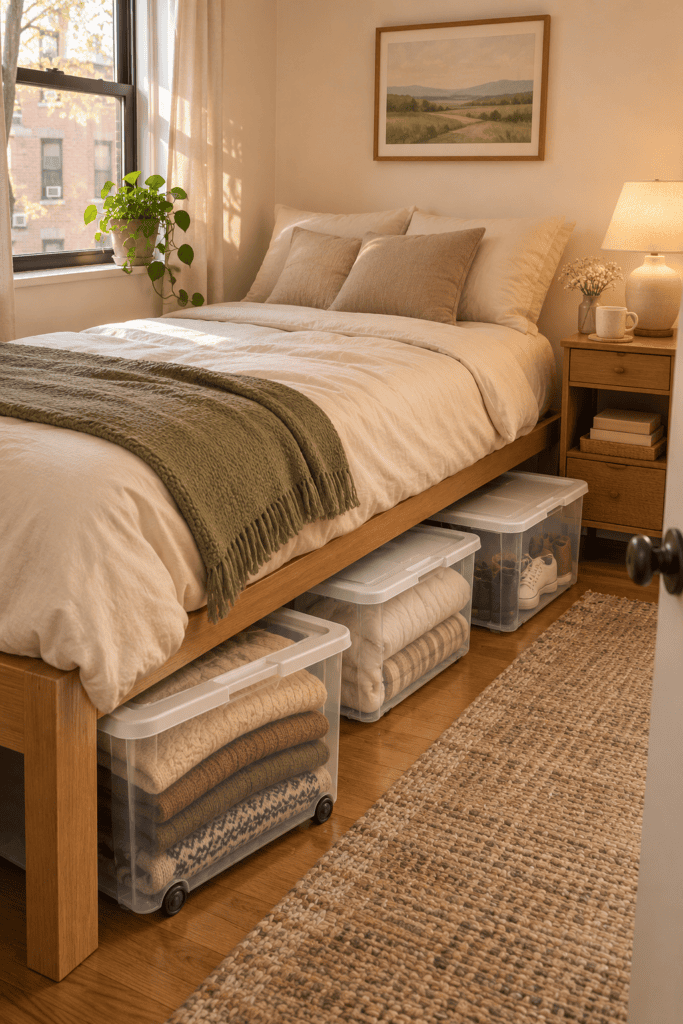
The area underneath your bed is probably one of the most overlooked storage spots in a small apartment. It’s basically a built-in storage zone, except most people leave it empty or let it become a collection of dust bunnies and missing socks.
Low-profile storage bins can hold seasonal clothing, extra bedding, shoes, or those bulky winter sweaters that take up half your closet. Look for containers with wheels if you have hard floors, or soft-sided zippered organizers if your bed sits fairly low.
What makes this renter-friendly storage idea so useful is that you’re not sacrificing any additional floor space. Everything stays tucked away, and your bedroom still looks exactly the same.
If your bed is too low, bed risers can create a few extra inches of clearance, provided they’re compatible with your bed frame and its weight rating. Just measure the available height before buying containers. There’s nothing more annoying than ordering six matching bins only to discover they don’t actually fit.
2. Turn the Back of Every Door Into Storage
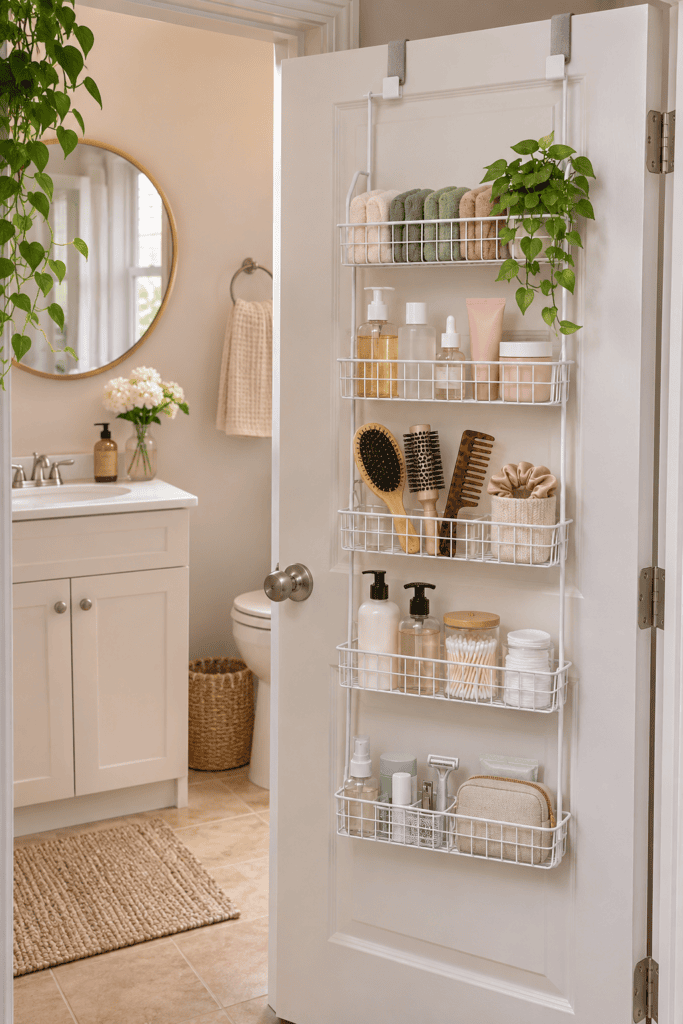
Closet doors, bathroom doors, pantry doors, bedroom doors. They’re all taking up space without doing much beyond opening and closing.
An over-the-door organizer can turn that unused surface into surprisingly useful storage. In the bathroom, use pockets for hair tools, skincare products, and toiletries. In the bedroom, try an over-the-door rack for handbags, scarves, or everyday accessories.
For a pantry, a slim metal basket organizer works particularly well for spices, snacks, plastic wrap, and small packages that otherwise disappear into crowded cabinets.
The trick is choosing an organizer that suits the door. Slim options work better in narrow spaces, and padded hooks can help prevent scratches. Check that the door still closes properly, especially if the frame has very little clearance.
It’s one of those apartment storage hacks that feels almost too obvious once you try it.
3. Choose Furniture That Has Storage Built Right In
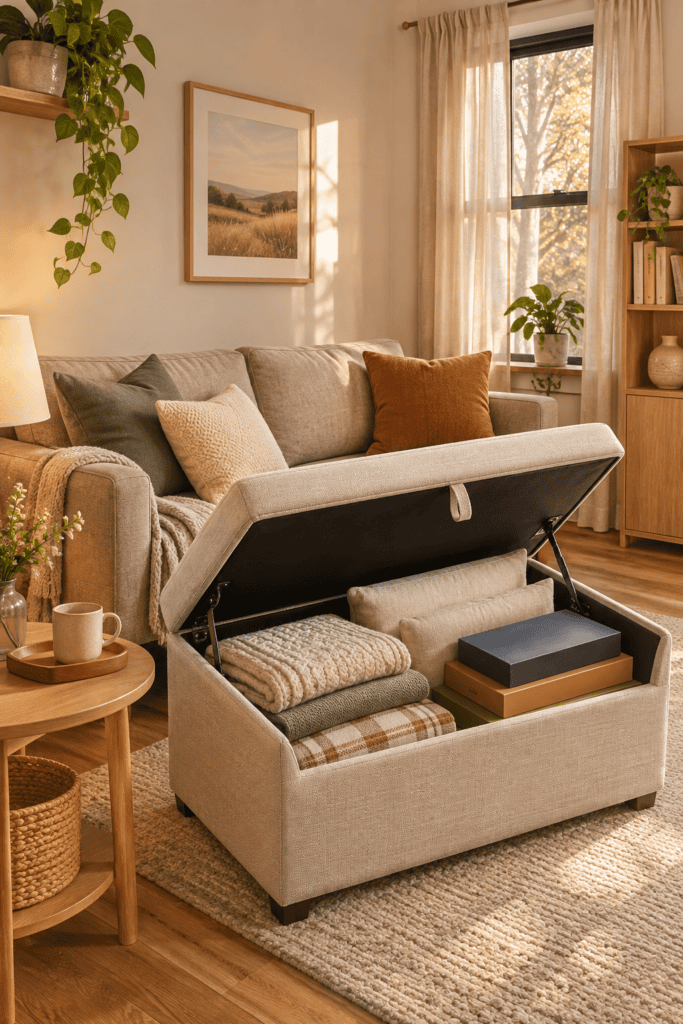
In a small rental, furniture should ideally do more than one job. A coffee table that only holds your remote and a candle? Nice, but a coffee table with hidden storage is a whole lot more useful.
Storage ottomans, lift-top coffee tables, and benches with concealed compartments are particularly good choices because they look like regular furniture while hiding the less attractive everyday clutter.
A storage ottoman in the living room can hold throw blankets, board games, or extra pillows. In a small bedroom, a storage bench at the foot of the bed provides seating and a home for spare linens.
If you’re decorating on a budget, check thrift stores, Facebook Marketplace, or secondhand furniture shops before buying new. Solid storage furniture often shows up for a fraction of its original price.
The best part is that these pieces move with you when your lease ends. No holes, no installation, and no awkward conversation with your landlord.
4. Add Tension Rods Inside Cabinets for Extra Organization
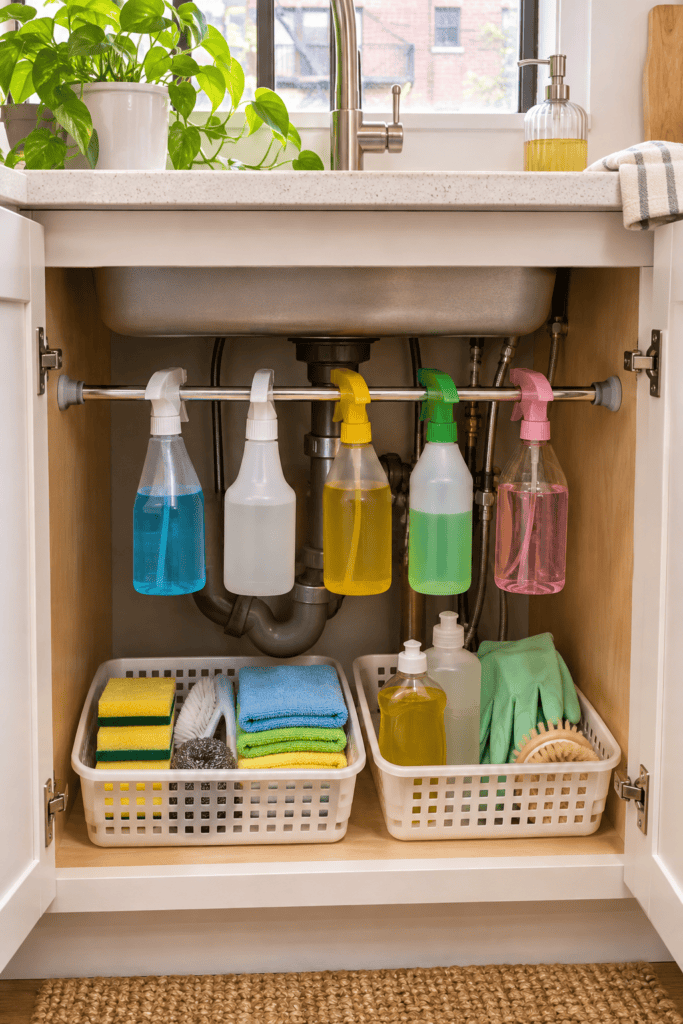
Tension rods are usually associated with curtains, but they’re surprisingly useful for organizing awkward cabinets.
Under the kitchen sink, a sturdy tension rod can hold lightweight spray bottles by their triggers, leaving the bottom of the cabinet available for bins and cleaning supplies. Just make sure the rod fits securely and isn’t carrying more weight than it’s designed for.
You can also use small tension rods vertically inside certain cabinets to separate cutting boards, baking sheets, or serving trays. Instead of stacking everything into one frustrating pile, each item gets its own little section.
Why does this work so well? Because cabinets often have plenty of vertical room that never gets used. Tension rods help divide that space without permanent shelving.
Choose rubber-ended rods to help protect cabinet surfaces, and keep heavier items on the cabinet floor. A simple setup like this can make everyday kitchen storage considerably easier.
5. Make the Most of Awkward Gaps With Slim Rolling Carts
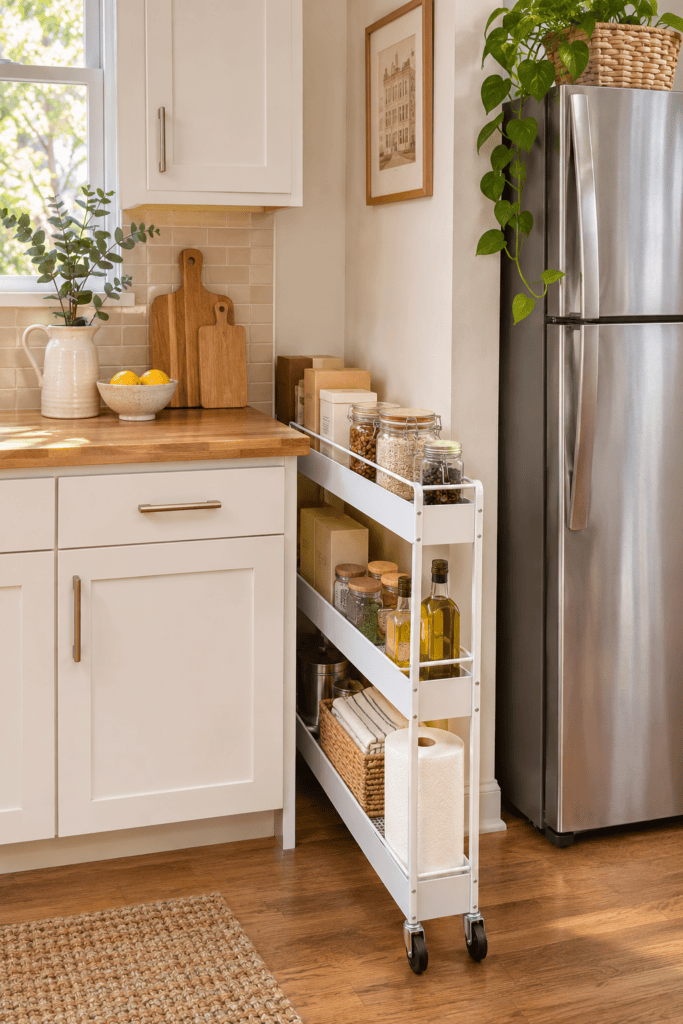
You know that strange little gap between the refrigerator and the counter? Or the narrow space beside your washing machine that’s too small for a normal cabinet?
That’s exactly where a slim rolling storage cart comes in.
These narrow carts typically have two to four shelves and can slide into spaces that would otherwise go unused. They’re great for storing cleaning supplies, pantry extras, laundry products, or small kitchen essentials.
Measure the gap carefully, including any baseboards, appliance handles, and ventilation clearances. You don’t want to block airflow around your refrigerator just to squeeze in a few bottles of dish soap.
For renters, the big advantage is flexibility. There’s no need to install anything, and you can easily roll the cart out when you need something.
A white or neutral-colored cart tends to blend into the room, while a metal version can feel a little more intentional in an industrial-style kitchen.
6. Double Your Cabinet Space With Stackable Shelf Risers
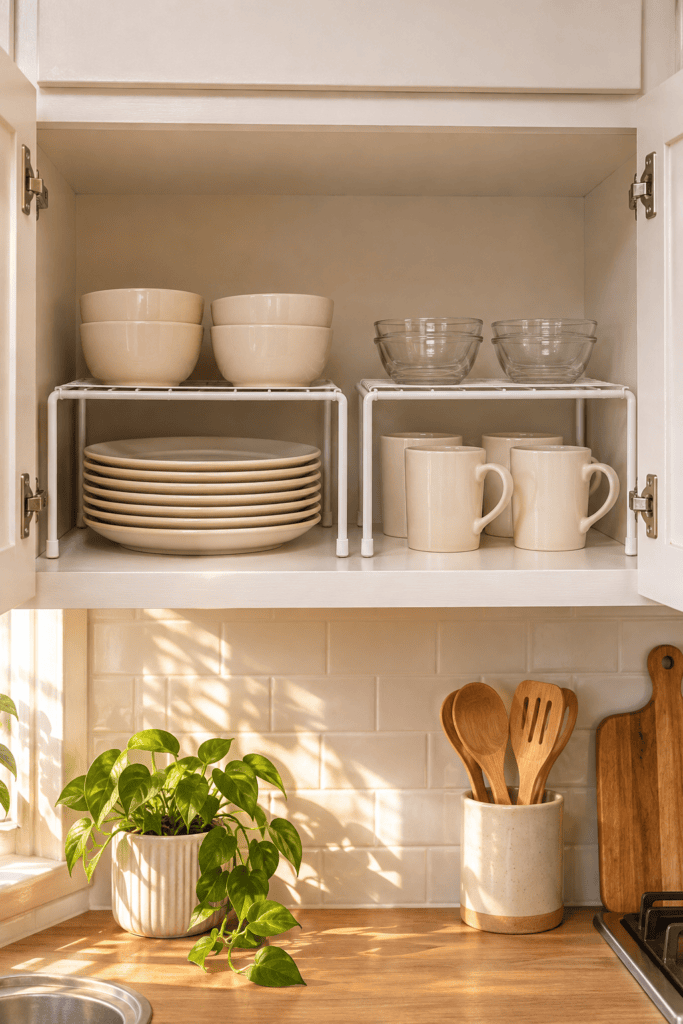
Most kitchen cabinets have one annoying problem: they’re tall enough to hold plenty of things, but the shelves don’t always make good use of that height.
So you stack bowls on plates, mugs on top of other mugs, and eventually everything becomes a balancing act.
Stackable shelf risers solve this by creating a second level inside an existing cabinet. You can keep dinner plates underneath and smaller bowls above, or organize coffee cups without stacking them four high.
They’re especially useful in rental kitchens where the cabinetry is fixed and you can’t add permanent shelving.
Look for adjustable-width or sturdy metal risers that fit the shape of your cabinets. Measure the height of your tallest dishes first, and make sure everything remains easy to reach.
Honestly, this is one of those small kitchen storage ideas that can make an old, poorly designed rental kitchen feel much more functional without changing a single cabinet.
7. Create a Practical Entryway With a Narrow Shoe Cabinet
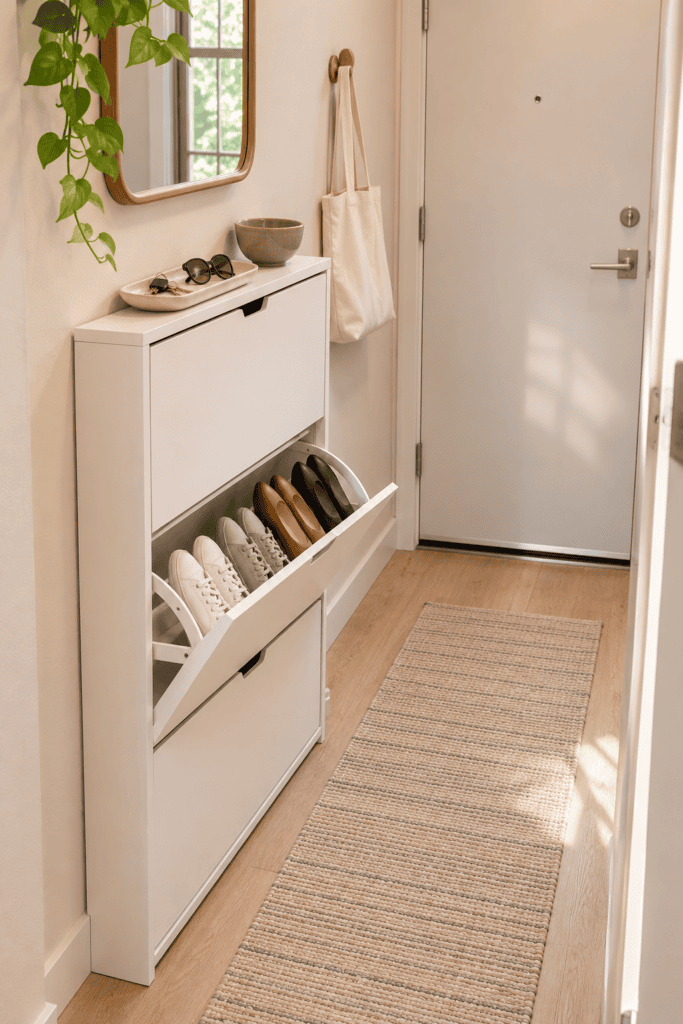
A small apartment entryway can become messy ridiculously quickly. Two pairs of sneakers, a tote bag, and a delivery package later, suddenly the entire space feels crowded.
Instead of a traditional shoe rack that sticks out into the hallway, try a shallow shoe cabinet with tilt-out compartments.
These cabinets store shoes vertically, which means they usually take up much less floor depth than open shoe shelves. Some designs also have a flat top that’s useful for a small tray to hold keys, sunglasses, and mail.
If your entryway is extremely narrow, even a slim freestanding shoe rack or a few stackable shoe organizers can help.
One important thing to remember: tall or narrow cabinets may require wall anchoring for safety. Check your lease before installing one, and choose a stable freestanding alternative if anchoring isn’t permitted.
The goal is to create a specific home for the things you use when leaving and entering, rather than letting them pile up wherever they land.
8. Use Removable Hooks to Organize Empty Wall Space
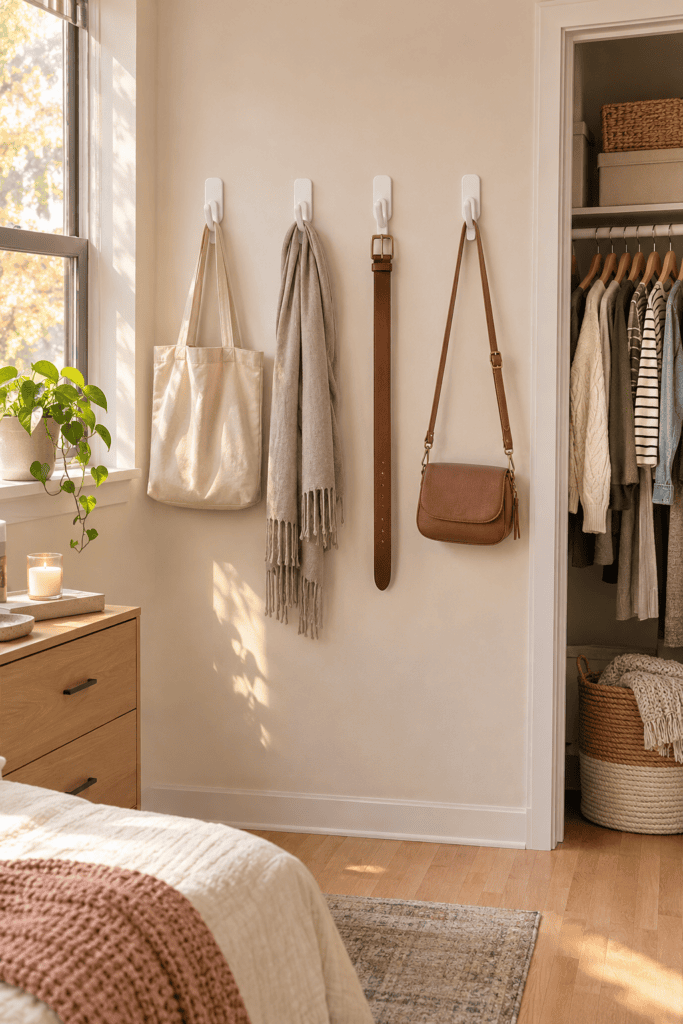
Not every storage solution needs to be a shelf or cabinet. Sometimes, a few strategically placed hooks can solve the problem.
Removable adhesive hooks are particularly helpful in rentals because they can hold lightweight everyday items without drilling holes, provided they’re suitable for the surface and used according to their instructions.
Try placing them inside closet doors for belts and scarves, beside your desk for headphones, or near the entryway for lightweight tote bags.
In the kitchen, small hooks can organize measuring spoons, oven mitts, or frequently used utensils.
The key is not to cover every available wall with hooks. Choose a couple of places where hanging something genuinely improves your daily routine.
Check the weight rating, avoid delicate or textured surfaces, and remember that adhesive products can still damage some paint finishes when removed.
Used thoughtfully, these little additions can free up drawers and countertops without making your apartment look overly busy.
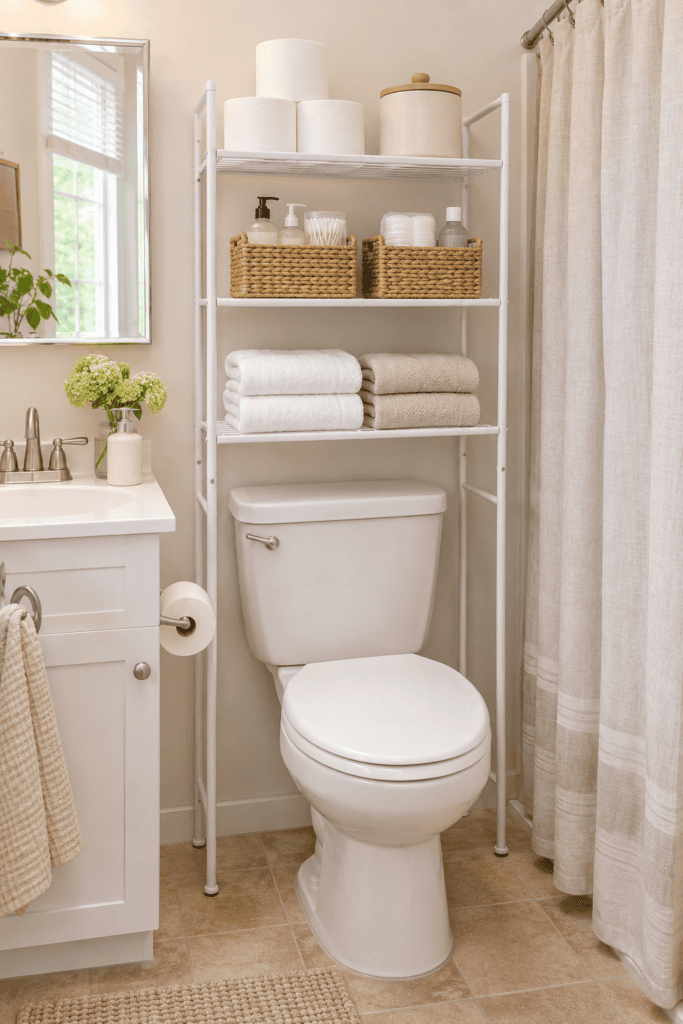
9. Turn the Space Above Your Toilet Into Useful Bathroom Storage
Rental bathrooms are notorious for having almost no storage. You might get one tiny vanity cabinet, a couple of drawers if you’re lucky, and absolutely nowhere sensible to put extra towels.
An over-the-toilet storage unit makes use of the wall area above the toilet without requiring a complete bathroom renovation.
A narrow freestanding shelving unit can hold toilet paper, folded towels, and baskets of toiletries. Choose something with enough clearance around the toilet tank and enough room to access the flush mechanism comfortably.
Baskets are particularly helpful here because they keep smaller items together and prevent the shelves from looking cluttered.
If your bathroom feels cramped, go for light wood, white metal, or open-frame shelving instead of a bulky enclosed cabinet.
Be sure the unit is stable; many designs need wall anchoring to prevent tipping. If you can’t anchor it safely, use a low-profile freestanding bathroom cart elsewhere instead.
It’s a practical way to add bathroom storage without sacrificing the limited floor space you already have.
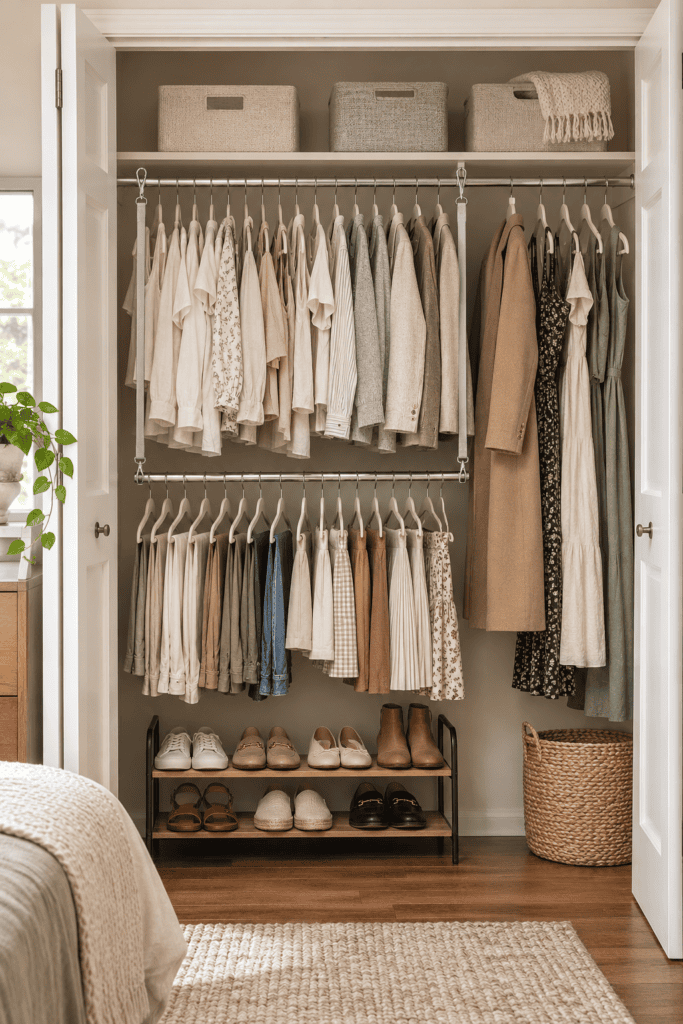
10. Add a Second Hanging Rod to Your Closet
Small rental closets are frustrating because there’s rarely enough hanging space, especially if you’re sharing one with someone else.
But if most of your clothes are shirts, blouses, jackets, or folded-over pants, you might not need the entire height of the closet for each item.
A hanging closet rod extender attaches to your existing rod and creates a second hanging level underneath.
This works particularly well when you keep shorter clothing on both levels. You can hang shirts and lightweight jackets above, with pants or skirts underneath.
Keep longer dresses and coats together at one end so they aren’t squeezed into the double-hanging section.
Before buying anything, check the strength and weight capacity of your existing closet rod. Overloading an older rental closet isn’t worth the risk.
Combine the extra rod with slim hangers, and you’ll often find that the same closet can accommodate noticeably more clothing without becoming difficult to use.
11. Use Vertical Drawer Organizers to Stop Clothes From Piling Up

There’s a reason dresser drawers become messy so quickly. When everything is stacked horizontally, finding one particular T-shirt usually means disturbing the entire pile.
Vertical drawer organization, often called file folding, fixes that problem by arranging clothes upright rather than stacking them.
Use small fabric drawer dividers or adjustable organizers to create sections for socks, underwear, workout clothes, and lightweight shirts.
When everything stands upright, you can see what you own at a glance. You don’t have to dig through the drawer, and there’s less chance of forgotten clothing getting buried at the bottom.
This method works especially well in shallow apartment dressers where space is limited.
You don’t need expensive matching organizers, either. Small cardboard boxes, clean packaging, or inexpensive fabric bins can work perfectly well.
The real advantage isn’t just fitting more into a drawer. It’s making the space easy to maintain, even when you’re getting dressed in a hurry.
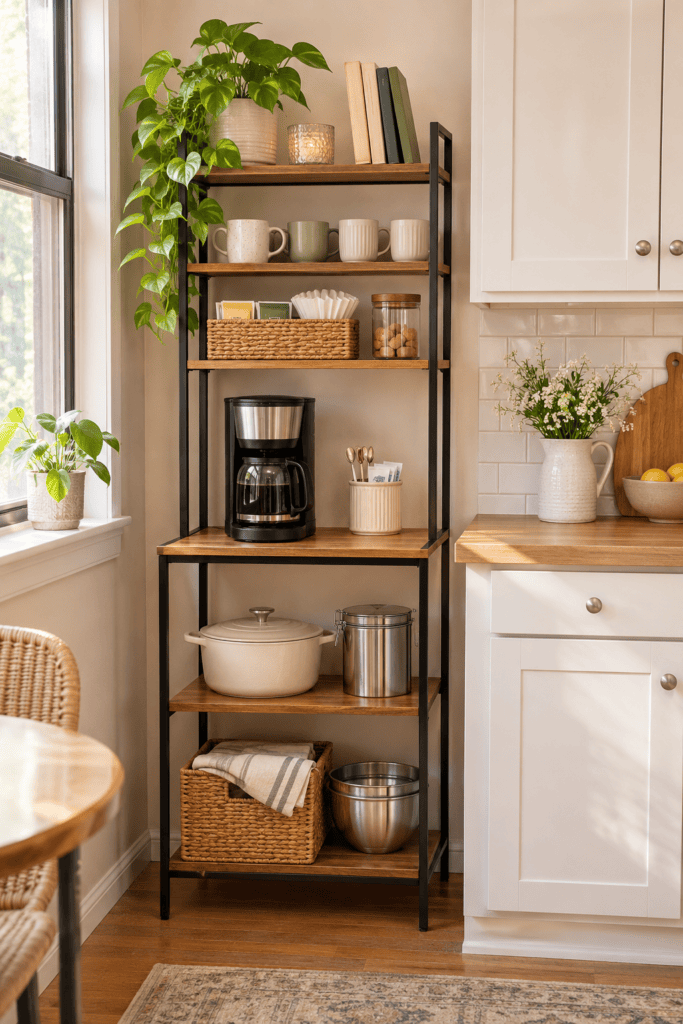
12. Create Extra Kitchen Storage With a Freestanding Baker’s Rack
Sometimes rental kitchens simply don’t have enough cabinet space, no matter how carefully you organize them.
If you have a little unused wall space, a compact freestanding baker’s rack can provide storage without requiring you to install shelves.
These racks are useful for organizing small appliances, coffee supplies, cookbooks, and pantry baskets. A simple metal or wood design can also make an otherwise awkward corner feel like a purposeful part of the kitchen.
For example, you could create a compact coffee station with your coffee maker on a sturdy shelf, mugs below, and a basket of filters and coffee supplies nearby.
Keep heavier appliances on lower shelves, check the manufacturer’s weight limits, and make sure cords don’t stretch across walkways. Taller racks may need anchoring, so pick a stable unit suitable for your rental.
If floor space is really tight, a narrow utility cart may be the better choice. The point is to give frequently used items somewhere to live without filling every inch of your countertop.
13. Store Seasonal Items in Vacuum Bags to Save Closet Space
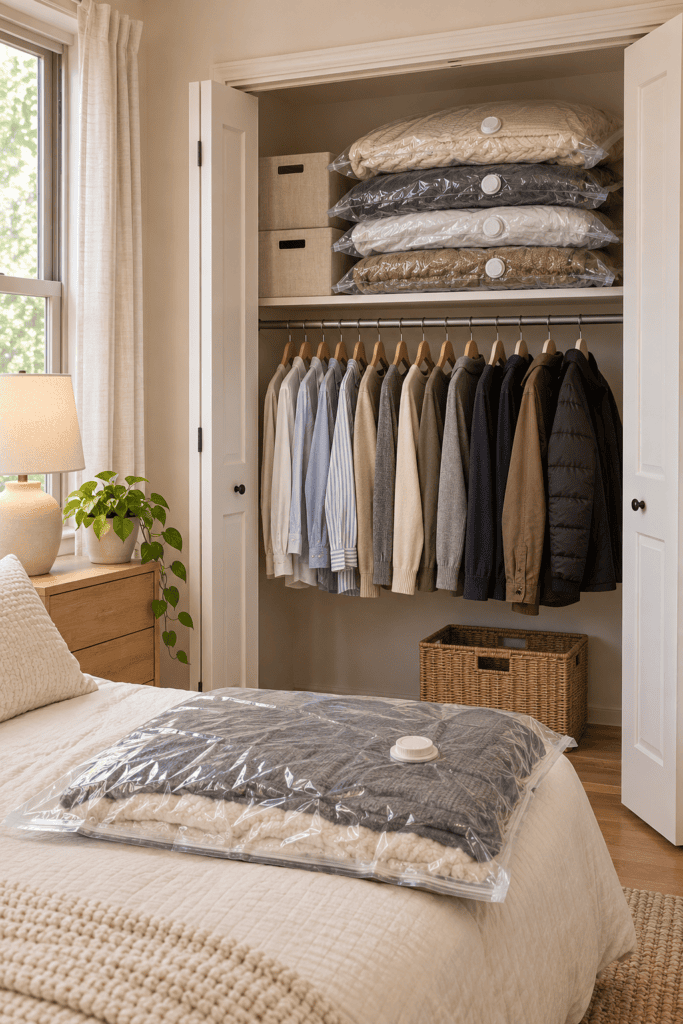
Bulky winter coats, spare comforters, and heavy blankets are some of the biggest storage troublemakers in a small home.
They’re useful for part of the year, but for the remaining months, they take up an unreasonable amount of valuable closet space.
Vacuum storage bags can help compress suitable soft items so they’re easier to fit into bins, under-bed storage, or upper closet shelves.
They’re particularly handy for spare bedding, synthetic comforters, and some seasonal clothing. Always check fabric care recommendations first, since long-term compression can damage delicate materials, down filling, or structured garments.
Make sure everything is completely clean and dry before packing it away. Trapped moisture is the last thing you want inside a sealed storage bag.
Label the bags by season or contents, and keep them in a dry area rather than stuffing them into a damp basement closet.
This isn’t glamorous storage, but it can free up a surprising amount of room when closet space is already limited.
14. Put a Rolling Storage Cart Beside Your Desk or Sofa
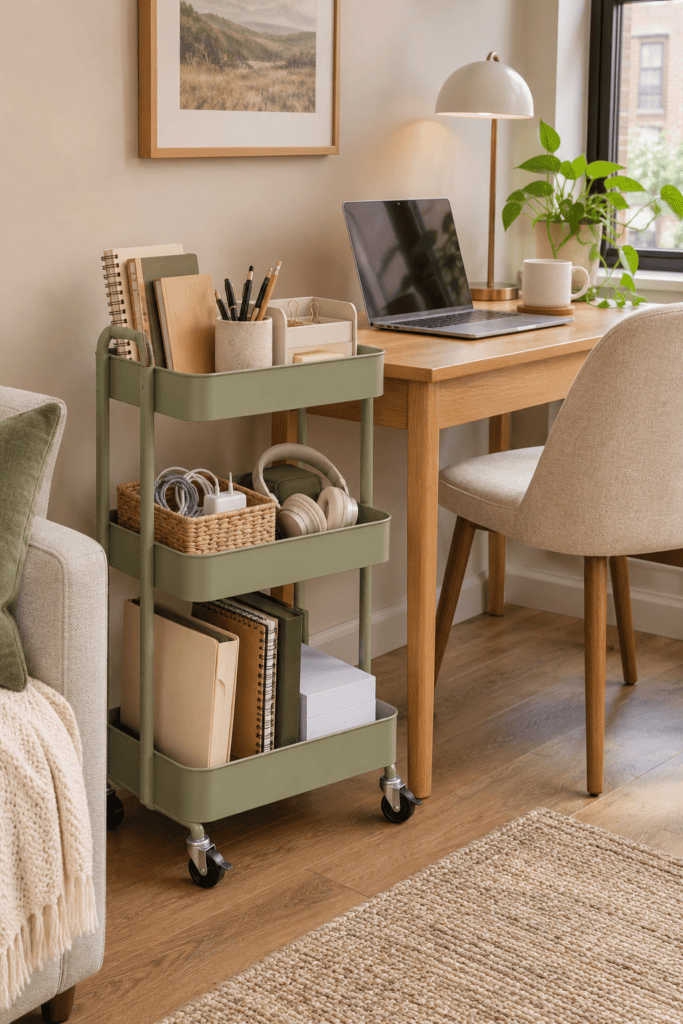
Not every small apartment has room for a proper home office, craft room, or large side table.
And sometimes, that’s exactly why everyday items end up scattered across the sofa, dining table, or kitchen counter.
A small rolling utility cart gives those things a dedicated storage space without requiring another bulky piece of furniture.
Beside a desk, it can hold notebooks, stationery, chargers, and office supplies. Next to the sofa, it works for books, remote controls, knitting supplies, or other hobbies.
If you work from your dining table, a cart is especially useful because you can keep your work essentials organized and simply roll everything away at the end of the day.
Choose one with locking wheels if it’s going to sit on a hard floor, and use small bins to prevent loose items from shifting around.
Unlike fixed shelving, you can move a cart wherever you need it. That flexibility makes a real difference in rooms that have to serve multiple purposes.
15. Use the Top of Your Closet for Labeled Storage Bins
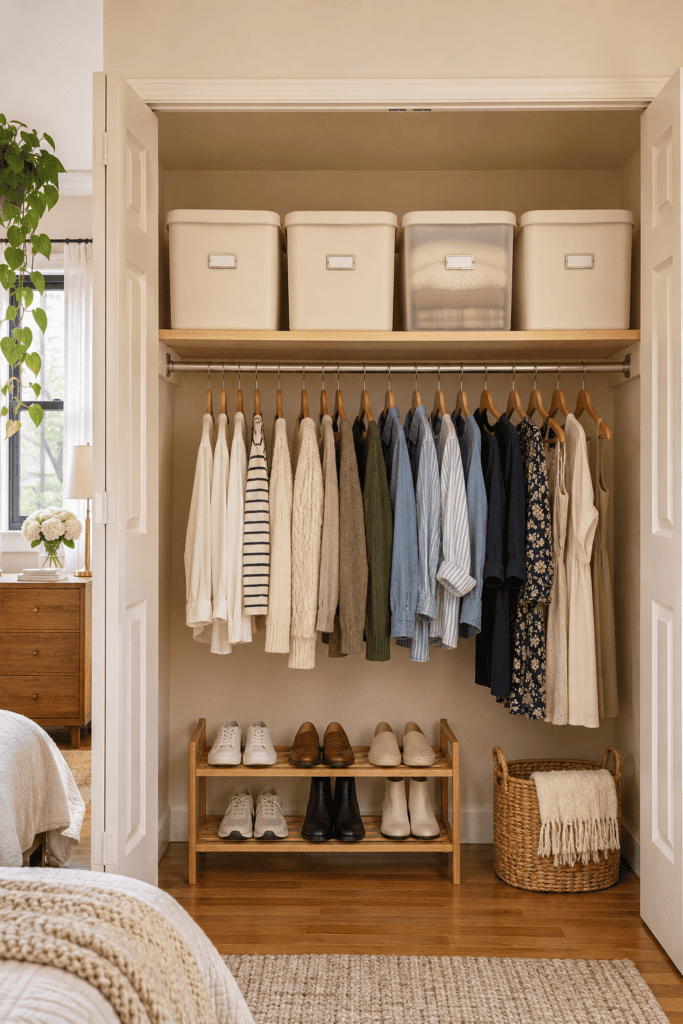
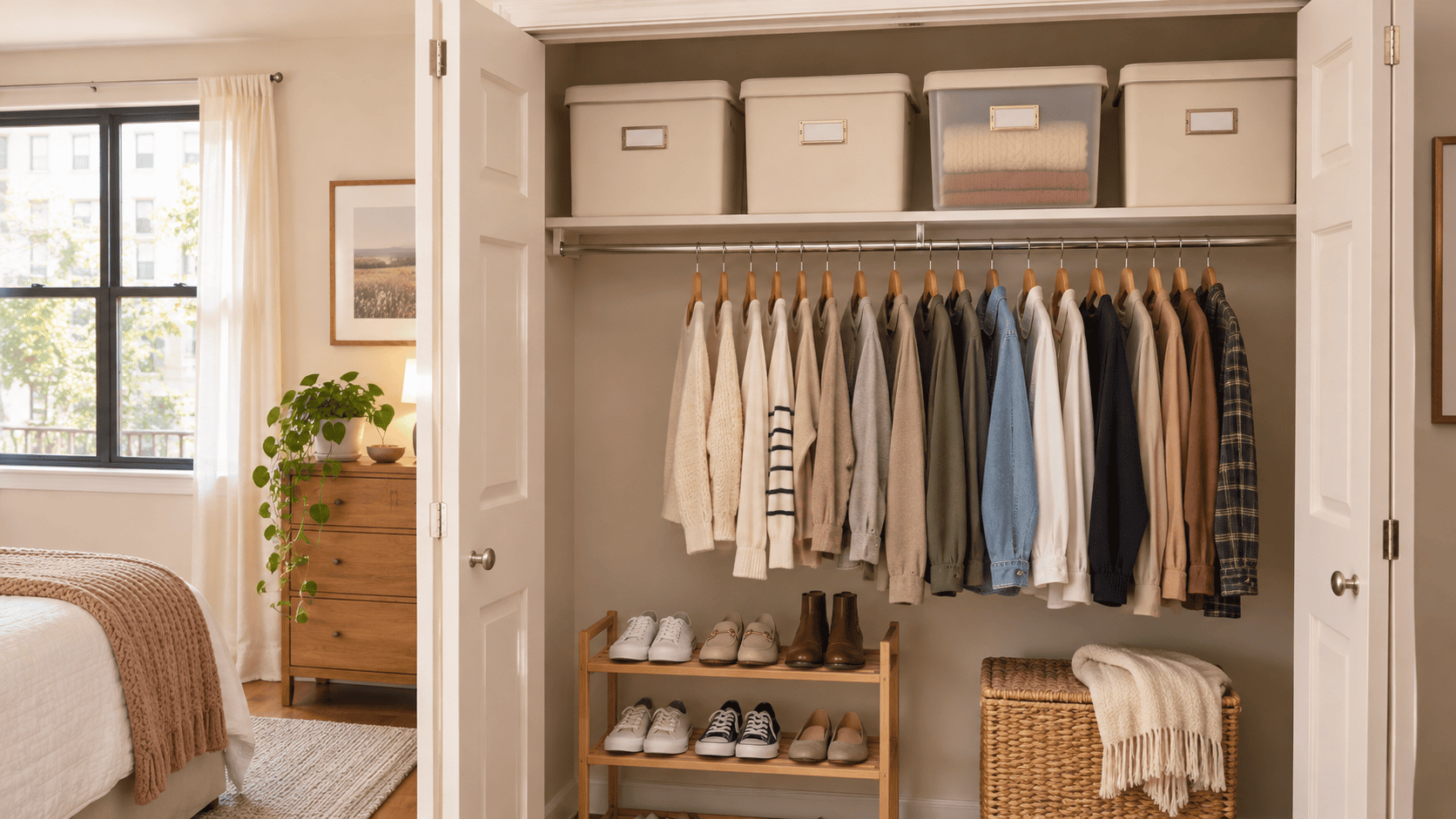
Look up inside your closet. Is there a big empty gap between the top shelf and the ceiling?
In many rentals, that space ends up wasted because it’s awkward to reach and difficult to keep organized.
But it’s actually a good spot for things you don’t need every day, such as holiday decorations, spare pillowcases, travel accessories, or off-season clothing.
Use lightweight storage bins with lids to keep everything contained and protected from dust. Clear bins are useful if you want to see the contents, while matching opaque bins can make an open closet look a little tidier.
Label each container clearly so you don’t have to pull down five different boxes to find one item.
The trick is keeping this space reserved for lightweight, occasional-use belongings. Heavy objects stored overhead can be dangerous to retrieve, especially if you have to stretch or climb.
A sturdy step stool makes access safer, but frequently used items should always stay at a comfortable height.
It may not be the most exciting storage trick, but using those forgotten upper shelves can make the rest of your closet much easier to manage.
A Few Things to Keep in Mind Before Buying More Storage
Before ordering a bunch of baskets, bins, and organizers, it’s worth checking what your apartment actually needs.
- Measure first. Closets, cabinet openings, gaps beside appliances, and under-bed spaces can be smaller than they appear.
- Check your rental agreement. Removable solutions are usually easier to manage, but adhesive products, furniture anchors, and tension-mounted accessories still need consideration.
- Keep daily essentials accessible. The best storage system isn’t the one that hides everything. It’s the one that makes everyday routines easier.
- Don’t ignore safety. Keep heavy items low, respect weight limits, and avoid blocking vents, exits, electrical panels, or walkways.
- Avoid buying organizers before sorting. There’s no point investing in extra storage for things you no longer use or need.
Conclusion
Living in a small rental doesn’t mean you’re stuck with cluttered countertops, overflowing closets, and furniture squeezed into every available corner.
Often, the best small space storage hacks for renters are the simplest ones: making use of the space beneath your bed, organizing an awkward cabinet, adding storage behind a door, or choosing furniture that serves more than one purpose.
And you really don’t need to tackle every room at once.
Start with whichever area frustrates you the most. Maybe it’s the kitchen cabinet that never stays organized or the bedroom closet that seems to shrink every month.
Fix that one problem first, see what works, and build from there.
A small apartment can still feel comfortable, organized, and genuinely enjoyable to live in. Sometimes, it just takes a little creativity with the space you’ve already got.