
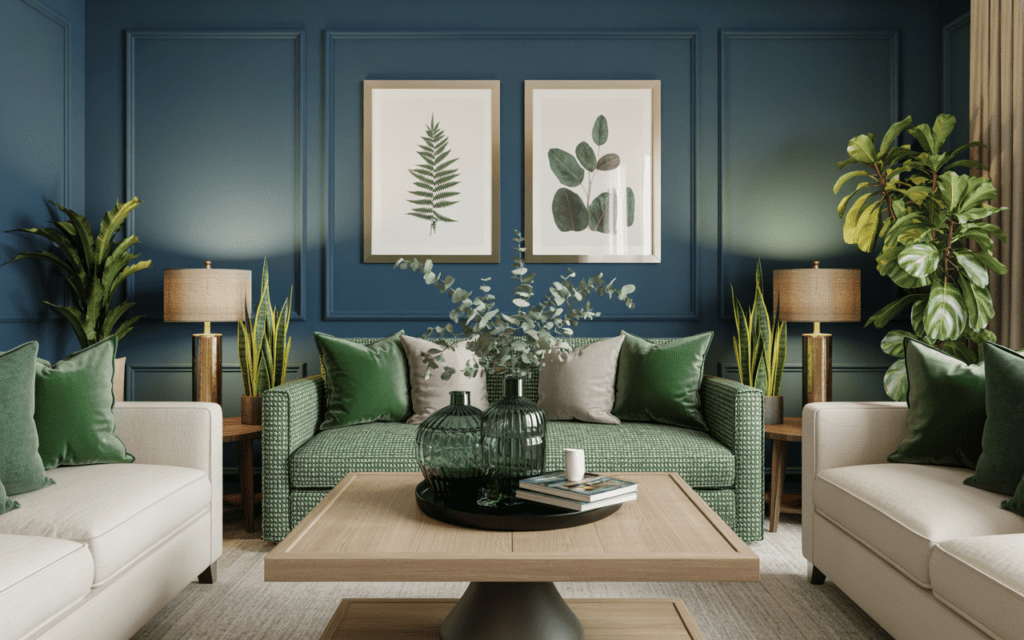
Blue and green in a living room? Honestly, it sounds risky until you see it done well. Then suddenly it looks fresh, layered, stylish, and way more interesting than another beige room pretending to have a personality.
I’ve always loved this color combo because it feels calm without looking boring. Blue brings depth, green adds life, and together they create a space that feels relaxed, collected, and just a little bit fancy. If you want a room that looks polished but still feels like a place where real humans sit down and eat snacks, you’re in the right place.
Why blue and green work so well together
Blue and green sit next to each other on the color wheel, so they naturally get along. That makes them one of the easiest color duos to use in a living room, even if you don’t consider yourself especially “good with color.”
They also pull from nature. Think ocean, trees, moss, sky, eucalyptus, deep lakes, and all those expensive-looking spaces on Pinterest that somehow feel effortless. That natural connection makes blue and green living rooms feel soothing, balanced, and timeless.
Here’s why this combo works so well:
- Blue adds calm and structure
- Green brings warmth and freshness
- Together they create contrast without chaos
- They work in modern, traditional, coastal, vintage, and eclectic spaces
- They pair beautifully with wood, brass, linen, velvet, and natural textures
And really, who doesn’t want a color palette that does most of the work for you?
1. Start with a deep blue sofa and layer in green accents
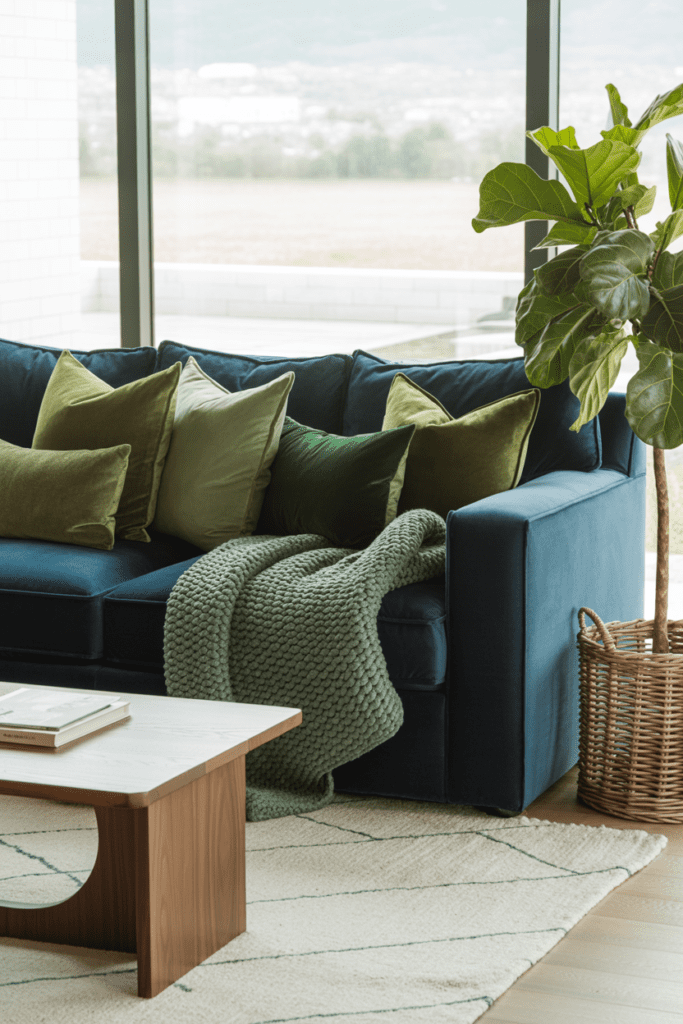
If you want an easy entry point, start with a navy or deep blue sofa. It anchors the room and instantly gives the space a richer, more finished look. Then add green through pillows, throws, and a plant or two.
I like this approach because it feels safe but still stylish. You get the drama of blue without committing every wall or chair to a color experiment gone rogue.
Best accents for this look
- Olive green velvet pillows
- A sage or moss throw blanket
- Botanical wall art
- A large leafy plant in a woven basket
This setup works especially well if your walls stay neutral. The room feels layered, not loud.
2. Paint the walls sage green for a soft, airy backdrop
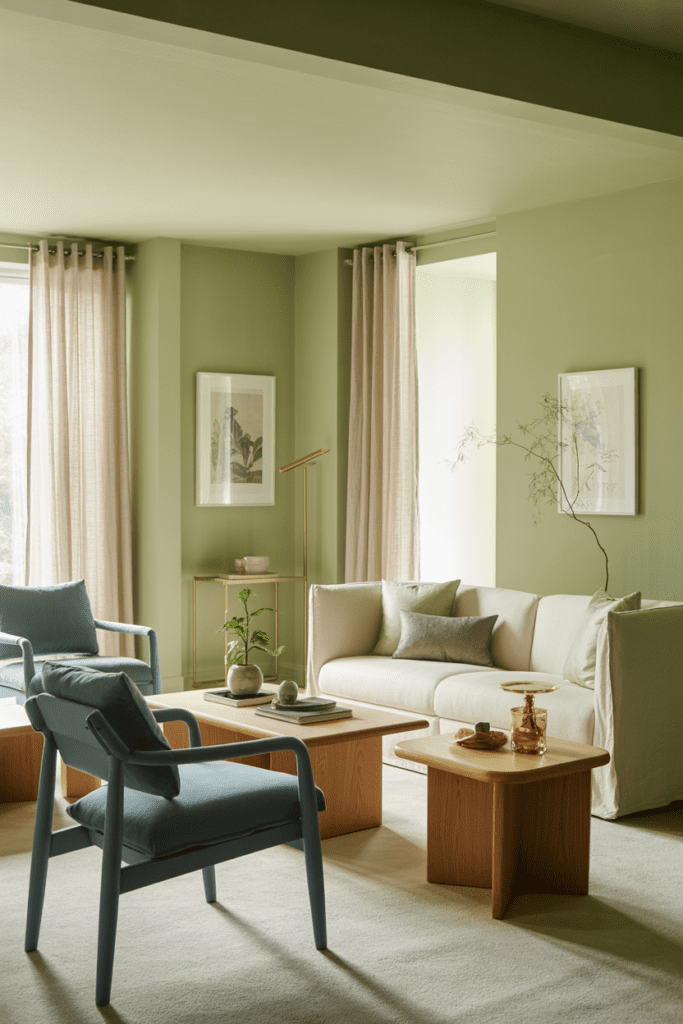
Sage green walls create one of the prettiest backdrops for a living room. They feel light, calm, and slightly earthy without screaming for attention. Pair them with blue furniture or decor, and the whole room settles into that effortless “I definitely hired a designer” energy.
I’ve seen sage green work beautifully in rooms with lots of natural light, but it also softens darker spaces. Ever noticed how some paint colors turn weird by 4 p.m.? Sage usually holds up better than fussier shades.
What pairs well with sage walls
- Dusty blue curtains
- Navy accent chairs
- Cream or ivory sofas
- Light oak furniture
- Brass lighting
Keep the trim crisp white if you want the room to feel fresh and clean.
3. Use emerald green and navy for a rich, dramatic look
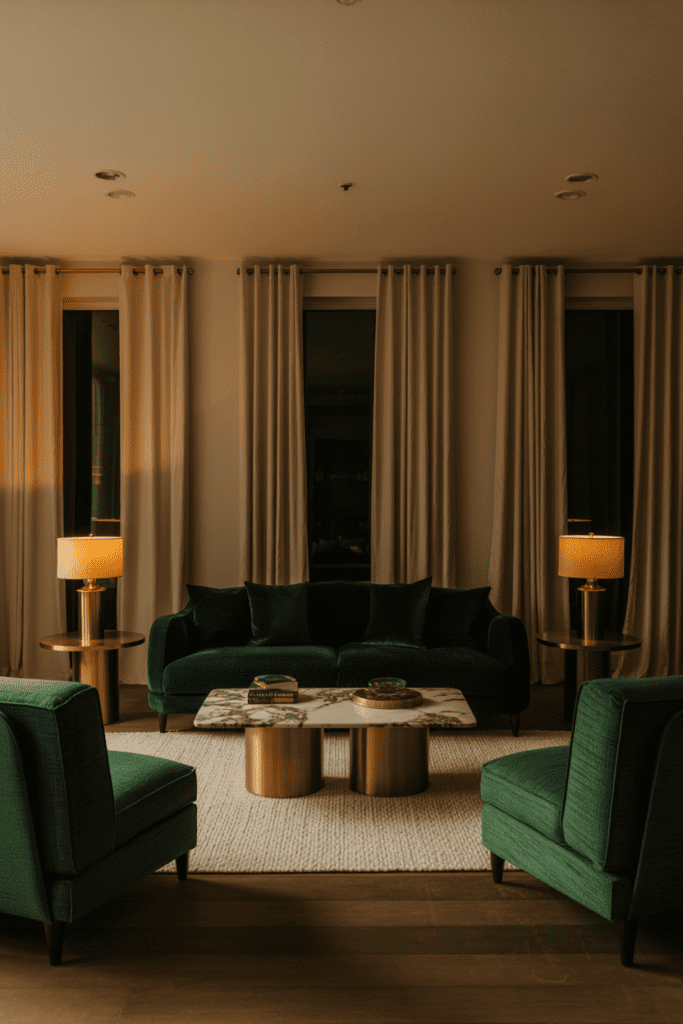
If you love moody interiors, this combo deserves a serious look. Emerald green and navy blue create a deep, luxurious palette that feels bold without becoming chaotic.
This works best when you balance the darker tones with lighter surfaces. Add a pale rug, white curtains, or warm metallic finishes so the room doesn’t start looking like a fancy cave.
How to keep it balanced
- Choose one dominant color, either emerald or navy
- Use the second color in smaller doses
- Add brass, gold, or marble for contrast
- Include soft textures like velvet, boucle, or linen
IMO, velvet looks especially good here. It catches light, adds depth, and makes the whole room feel expensive in the best way.
4. Try blue and green patterned curtains
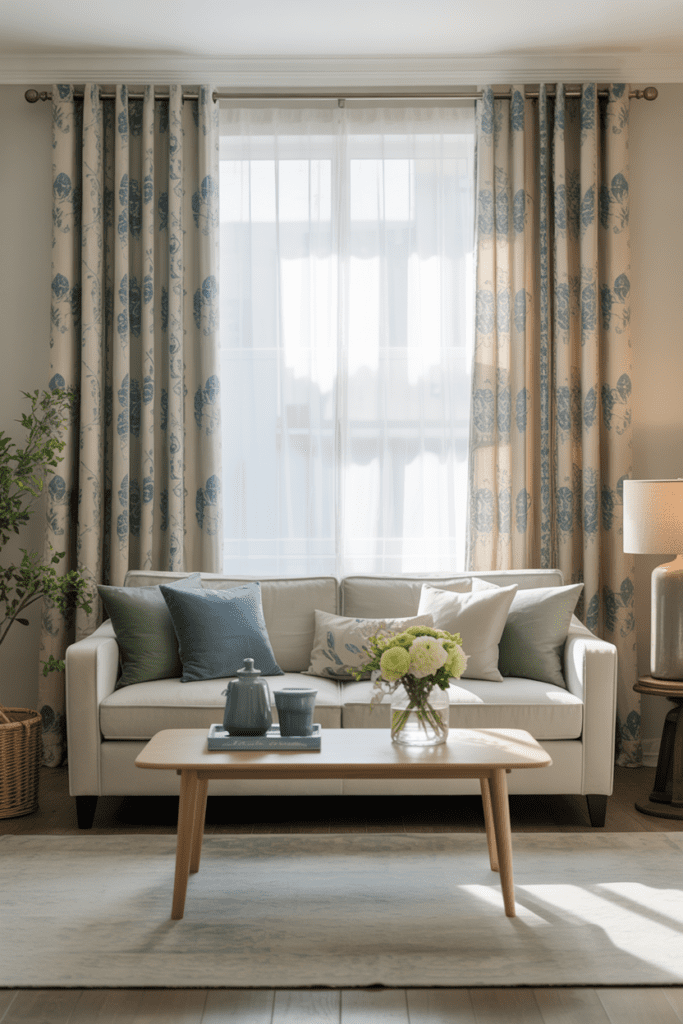
Not every idea needs new furniture or fresh paint. Sometimes the easiest way to bring blue and green into a living room comes through patterned curtains.
Floral prints, abstract designs, or stripe patterns can instantly wake up a neutral room. This option works really well if you want color but don’t feel ready to commit to a green sofa or blue walls just yet.
Choose patterns that include at least one neutral tone, like white, beige, or gray. That keeps the room grounded and stops the windows from stealing the whole show.
5. Mix teal with olive for a relaxed, collected look
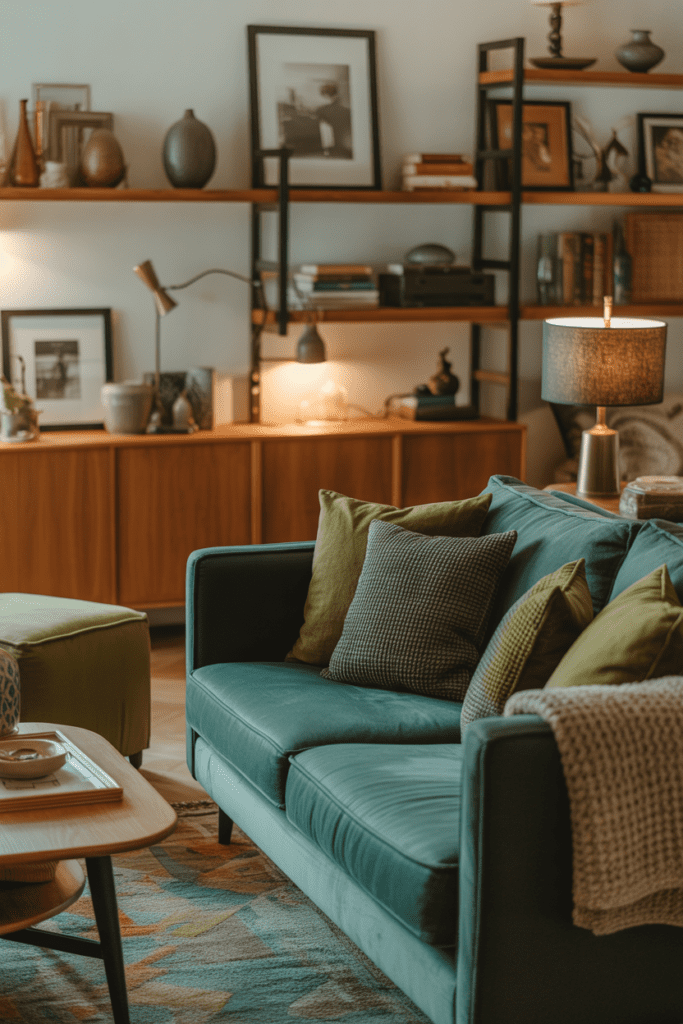
Teal and olive create a slightly moodier, more grown-up version of the blue and green palette. Teal brings that jewel-toned richness, while olive adds warmth and softness.
I love this pairing in living rooms with vintage or eclectic style. It feels curated, not matchy-matchy, which usually makes a room more interesting anyway. Perfectly matched spaces can look a little too eager, if we’re being honest.
Where to use teal and olive
- Teal sofa with olive pillows
- Olive walls with teal artwork
- Teal rug and olive drapes
- Teal and olive mixed in printed textiles
Add wood tones, leather, and black accents if you want the room to feel grounded.
6. Bring in blue and green through artwork
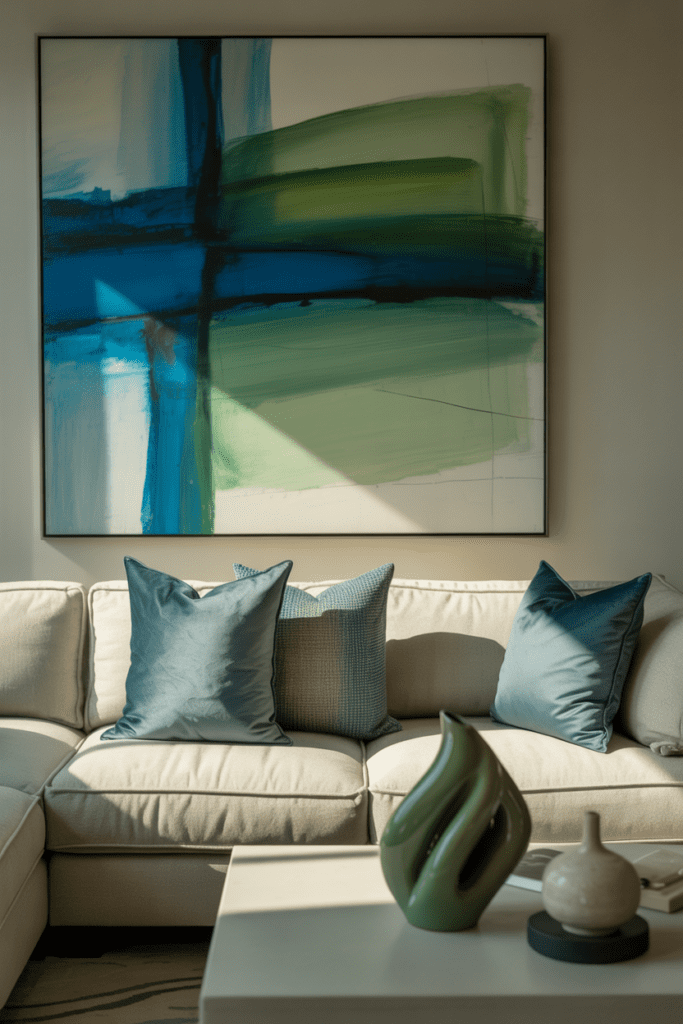
Artwork gives you one of the easiest and lowest-risk ways to test a color palette. A large piece that mixes blue and green can set the tone for the whole room.
This works especially well if your furniture already leans neutral. Pull a deep blue from the art for your pillows, then repeat a green tone in a vase, throw, or plant. Suddenly the room looks intentional instead of random. Funny how that works, right?
Art styles that work well
- Abstract landscape paintings
- Botanical prints
- Coastal-inspired art
- Modern geometric canvases
- Watercolor pieces in layered tones
Go oversized if you can. Small art often looks a little timid above a sofa.
7. Use a blue rug to ground green furniture
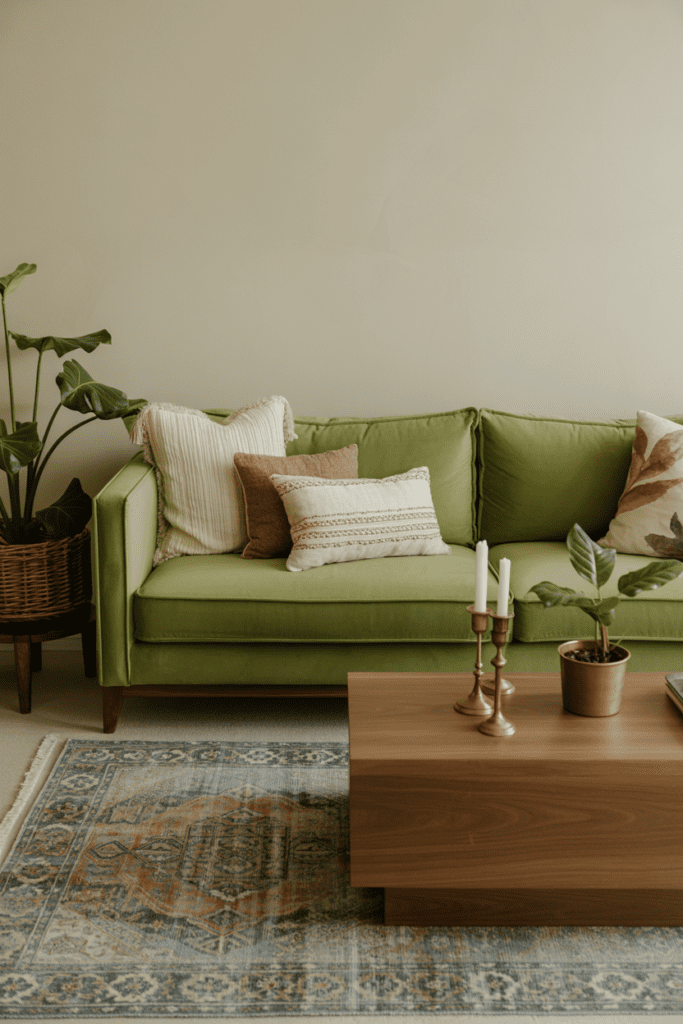
If you already own a green sofa or chair, a blue area rug can pull the room together beautifully. Rugs help anchor the room, define the seating area, and distribute color at floor level, where it feels subtle but effective.
I’ve noticed this works especially well with sage, olive, and forest green upholstery. A faded navy or muted blue patterned rug keeps the room from feeling too heavy and adds visual texture at the same time.
Look for rugs with mixed tones rather than flat, solid color. A bit of pattern hides life’s little messes too, which feels useful unless you live in a showroom.
8. Pair blue and green with warm wood tones
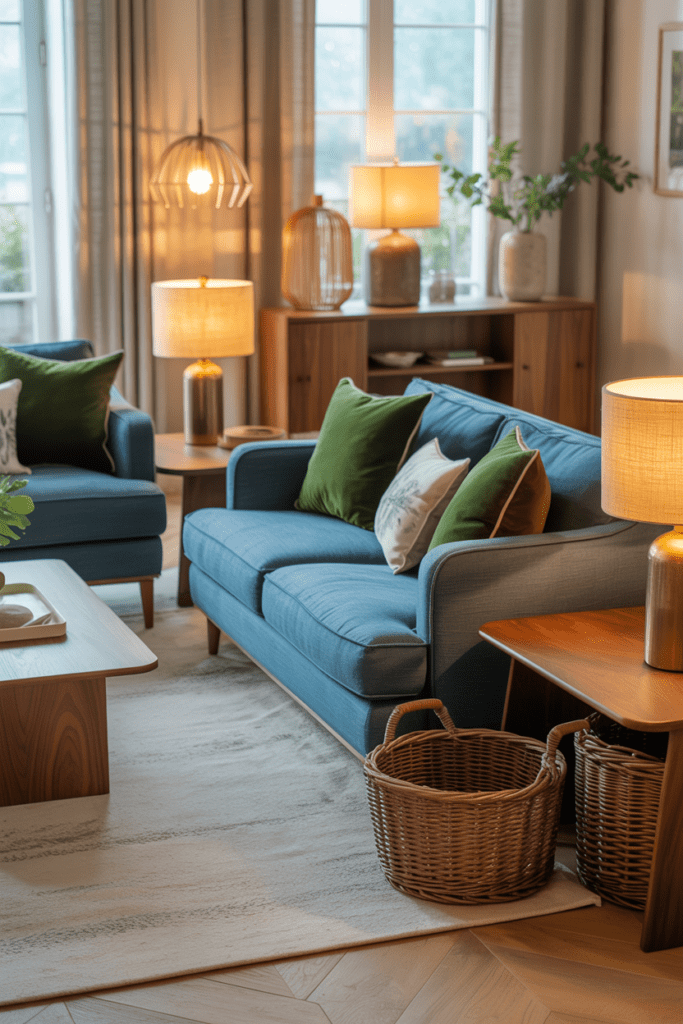
Wood and this color duo just make sense. Blue and green can sometimes feel cool, especially if you choose crisp or dark shades, so warm wood furniture helps balance the palette.
Think walnut coffee tables, oak sideboards, wood frames, or even a vintage carved side table. Those warmer finishes make the room feel more inviting and less like a color theory assignment.
Best wood tones for blue and green rooms
- Medium oak for airy spaces
- Walnut for richer, moodier rooms
- Reclaimed wood for rustic or casual rooms
- Light ash for modern interiors
Wood brings texture and softness without competing for attention.
9. Add a green accent chair to a blue living room
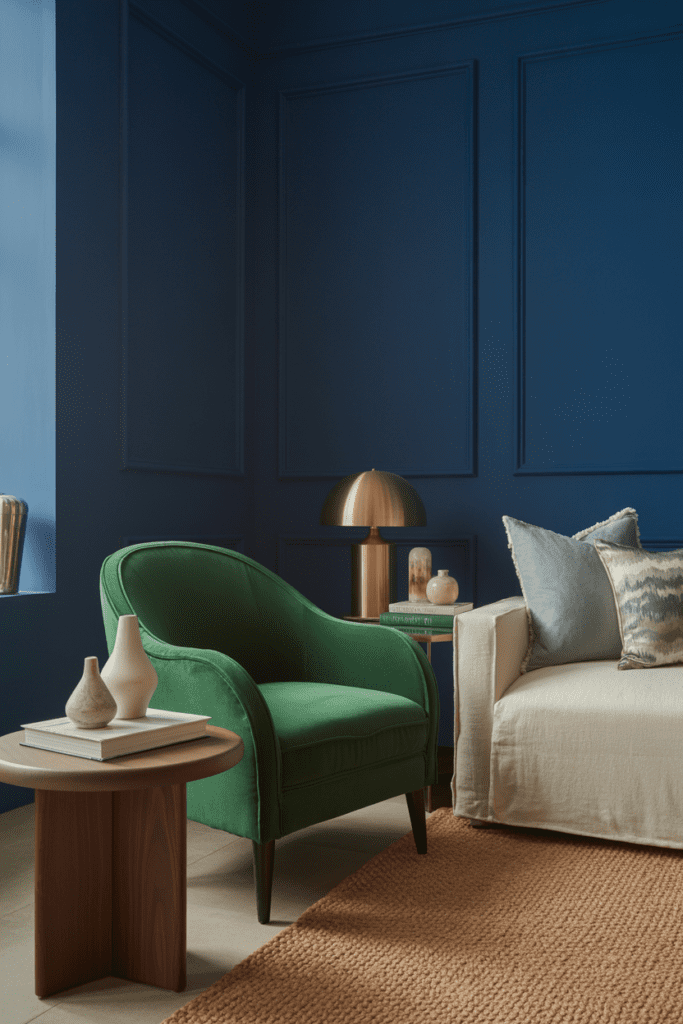
If your living room already has blue walls, a blue sofa, or lots of blue decor, a green accent chair can break things up nicely. It adds contrast and keeps the room from leaning too heavily into one tone.
This is one of my favorite tricks because one chair can change the whole look of a room. A green velvet chair, especially in olive or emerald, feels stylish and practical at the same time.
Place it near a floor lamp or side table to create a cozy little reading spot. Even if nobody reads there, it still looks nice, which counts.
10. Choose dusty blue and soft green for a muted palette
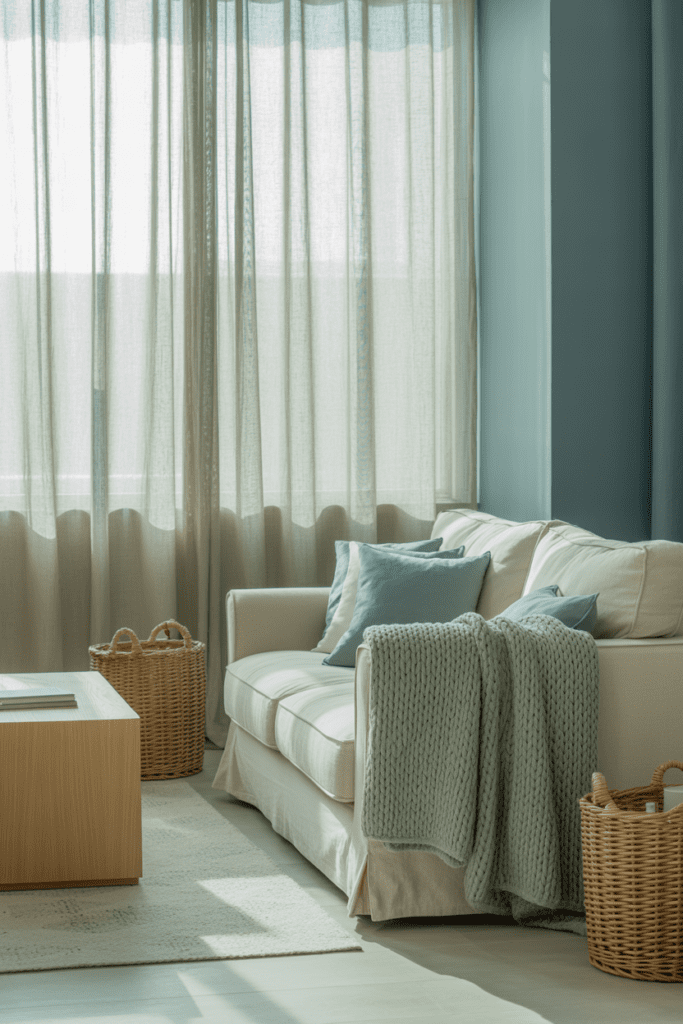
Not every blue and green living room needs dramatic contrast. If you prefer a softer, more relaxed look, try dusty blue, seafoam, sage, or eucalyptus green.
These muted shades feel airy and calming. They work beautifully in smaller living rooms because they add color without making the space feel crowded or intense.
This palette works best with
- Cream upholstery
- Linen curtains
- Light wood furniture
- Woven baskets
- Soft white walls
This kind of room feels peaceful in a very real-world way. It doesn’t beg for compliments, but it definitely gets them.
11. Create contrast with blue walls and green decor
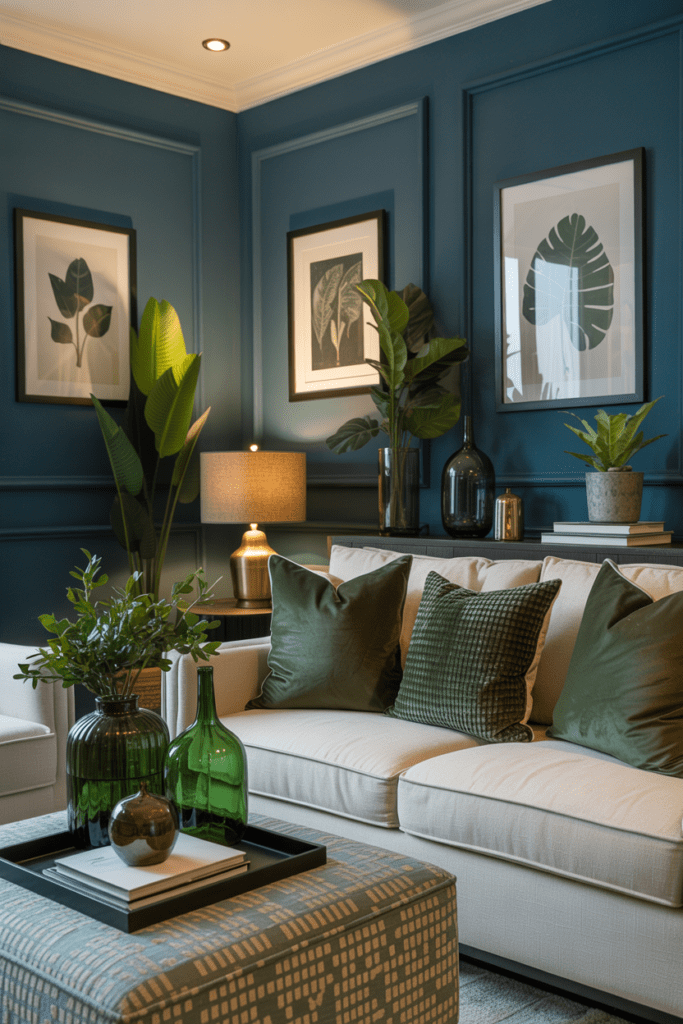
Blue walls create an instant statement, especially in a deeper tone like navy, slate, or smoky blue. Once the walls set the mood, green decor can add life and keep the room from feeling flat.
Use greenery, pillows, ceramics, lampshades, or art to repeat the green throughout the space. That repetition matters. Without it, one random green pillow can look less “designed” and more “I found this on sale.”
Green decor ideas for blue walls
- Olive or emerald throw pillows
- Green glass vases
- Botanical prints
- Real or faux plants
- Green-striped or patterned ottomans
Keep at least a few lighter neutrals in the room so the walls still feel breathable.
12. Mix coastal blue with sea glass green
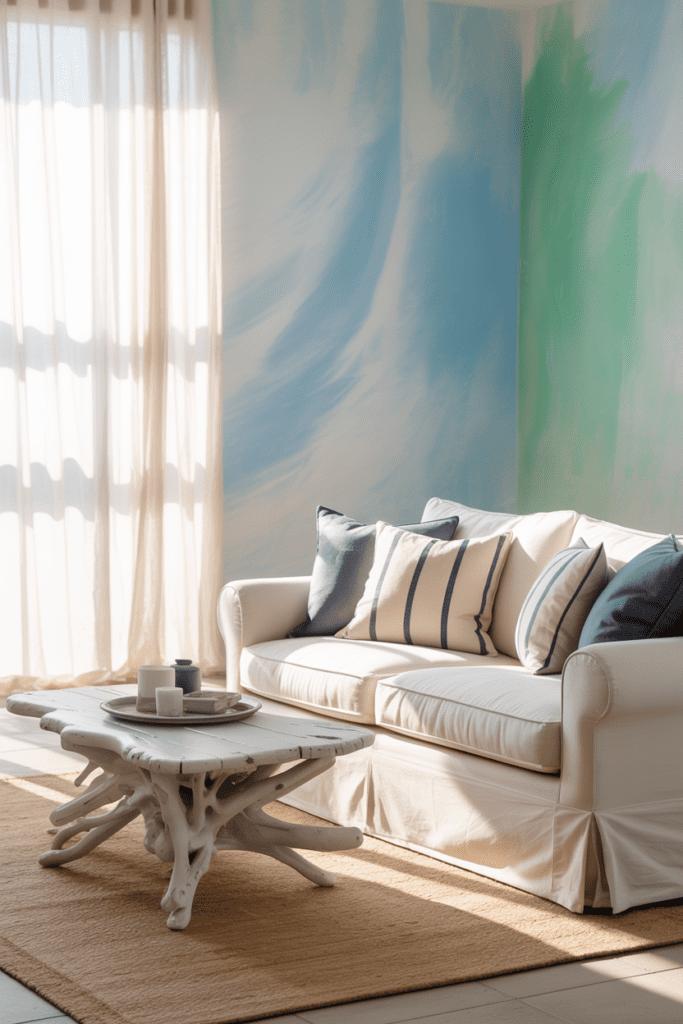
If you want a light, breezy living room, coastal tones can work beautifully. Think soft sky blue, sea glass green, sandy neutrals, and natural materials.
This palette feels fresh and casual without turning your living room into a themed beach rental. That line gets crossed faster than people realize.
How to pull it off
- Use white or cream upholstery
- Add light blue and sea green pillows
- Bring in driftwood or bleached wood tones
- Choose sheer curtains for an airy feel
- Layer in striped or textured fabrics
This look works especially well in bright rooms with plenty of sunlight.
13. Go bold with a two-tone blue and green wall treatment
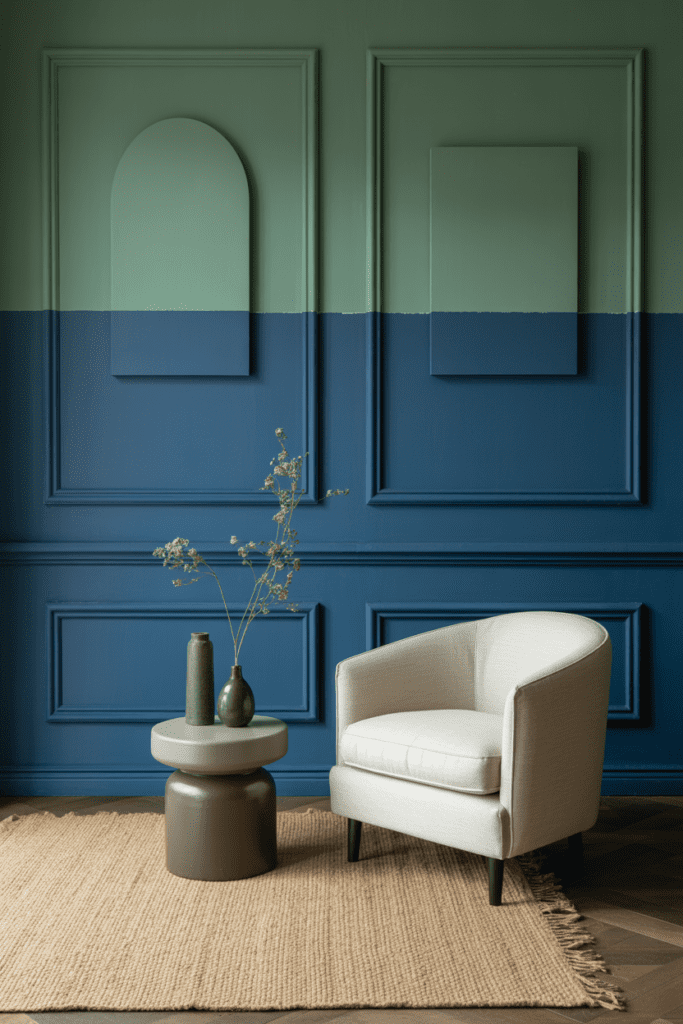
For a more creative approach, try a two-tone wall treatment. Paint the lower portion of the wall one color and the upper portion another, or use paneling in one shade and paint above it in another.
Blue on the bottom and green on top can look surprisingly polished. The key is choosing tones with similar depth so they complement each other instead of fighting for attention.
Tips for two-tone walls
- Pick muted or mid-tone shades for a softer effect
- Use a chair rail or molding for a cleaner transition
- Repeat both colors elsewhere in the room
- Balance the walls with simple furniture and neutral textiles
This idea feels custom and thoughtful, and it gives plain walls a lot more personality.
14. Layer blue and green textiles for an easy refresh
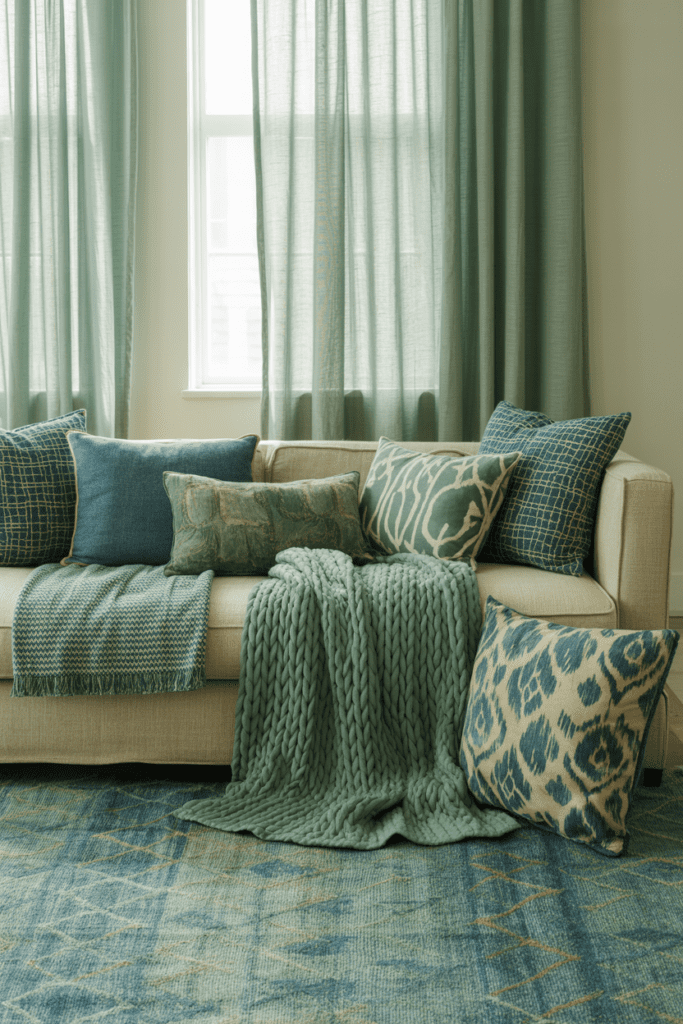
Textiles give you the fastest route to a blue and green living room makeover. Pillows, throws, curtains, and rugs can shift the whole mood of the room without a major commitment.
This works well if you like changing things seasonally or if you simply don’t want to repaint a wall every time inspiration strikes. Fair enough.
Textiles worth swapping first
- Throw pillows in mixed prints
- A chunky knit blanket in blue or green
- Curtains with a subtle botanical pattern
- An area rug with both colors woven in
- Slipcovers for stools or ottomans
Mixing textures matters here. Velvet, linen, cotton, and woven materials create a more layered and lived-in look.
15. Use plants as the green in your palette
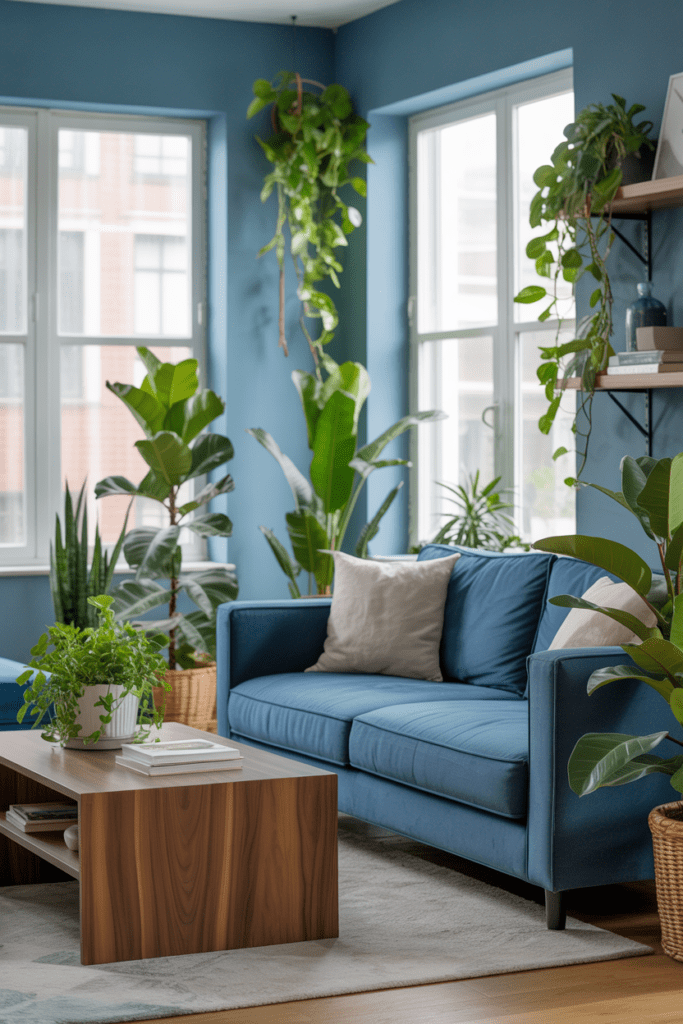
You don’t always need green furniture or paint. Sometimes the easiest way to add green to a blue living room comes from actual plants.
A blue room with leafy greenery looks fresh, vibrant, and more alive instantly. Plus, plants add shape and texture in a way that decor objects can’t always match.
Best plants for living rooms
- Fiddle leaf fig
- Rubber plant
- Pothos
- ZZ plant
- Monstera
If you don’t trust yourself with real plants, go faux. No judgment. Dead plants rarely improve a room :/
16. Add brass and cream to soften the palette
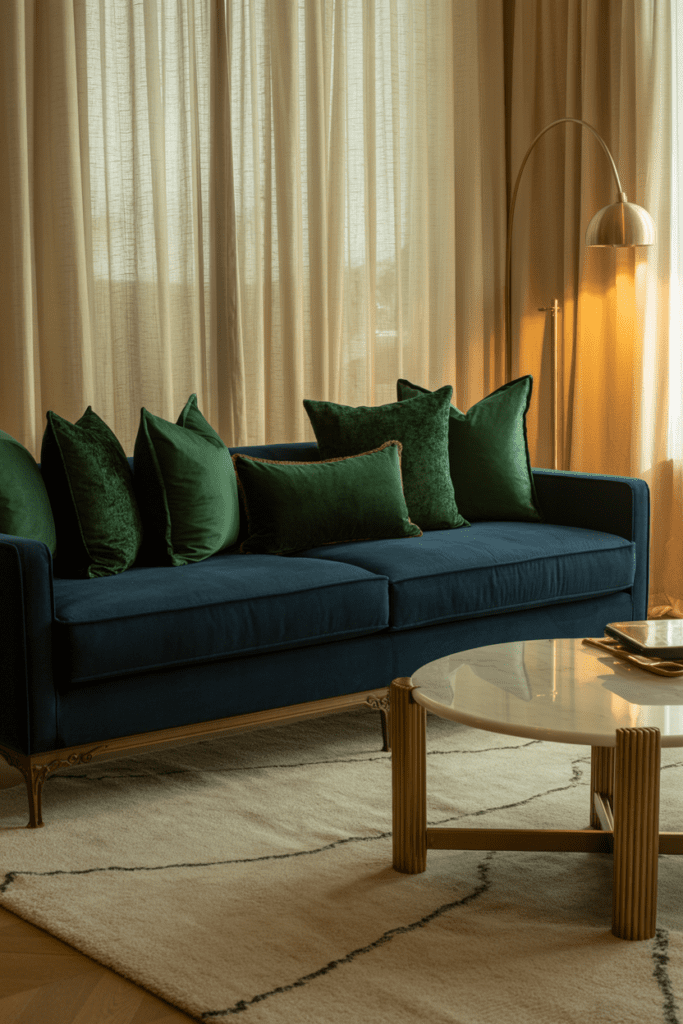
Blue and green can look amazing on their own, but they really shine when you support them with the right neutrals and finishes. Cream softens the palette, and brass adds warmth and a little glow.
That combination keeps the room from feeling too cold or too heavy. It also makes both colors look more intentional and refined.
Use cream in rugs, sofas, lampshades, or curtains. Add brass through lighting, table legs, mirrors, or small decor pieces.
17. Try a blue and green gallery wall
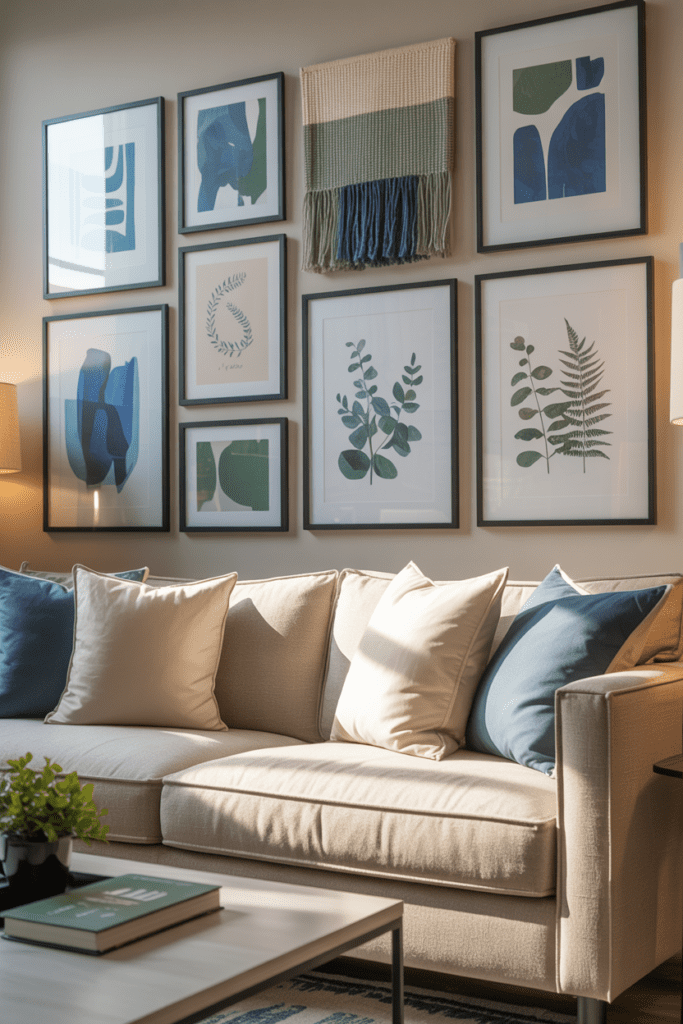
A gallery wall gives you a fun way to repeat both colors across the room. Mix art prints, framed fabric, abstract pieces, and maybe even a mirror to create a display that feels layered and personal.
This idea works especially well in living rooms that need a focal point. It also lets you blend styles more easily, which helps if your room sits somewhere between modern, vintage, and “I bought this because I liked it.”
Gallery wall tips
- Stick to a consistent frame finish
- Repeat blue and green tones across multiple pieces
- Mix large and small artwork
- Leave enough spacing so the arrangement feels intentional
- Add one or two neutral pieces for balance
I like gallery walls because they tell a story. They make a room feel lived in instead of copied from a catalog.
18. Balance the room with plenty of neutrals
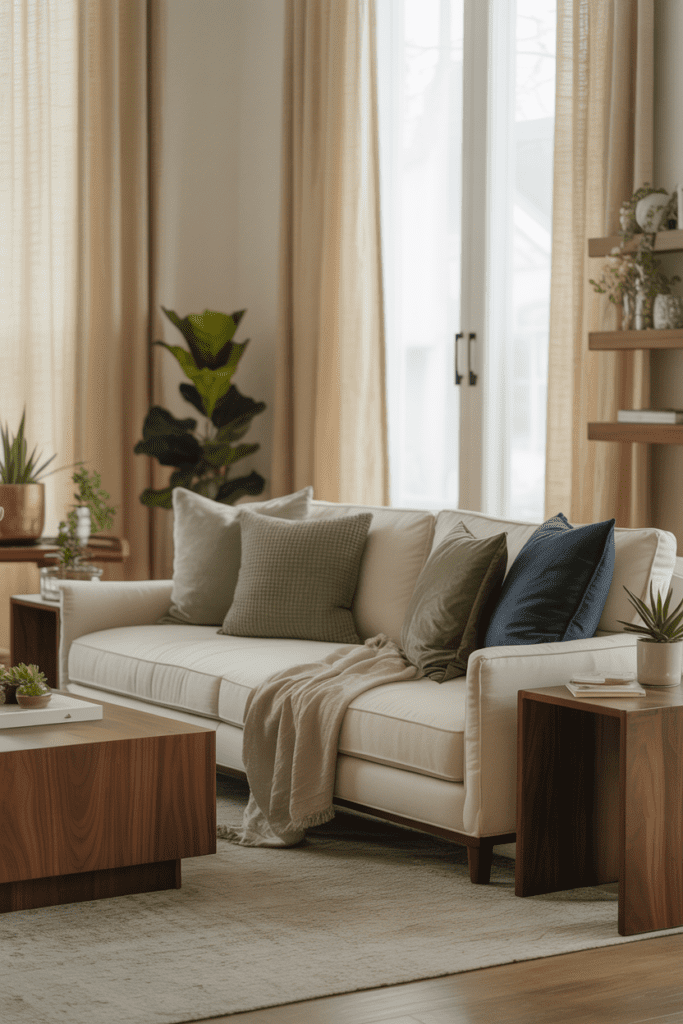
This might sound less exciting than emerald velvet or bold paint, but neutrals matter just as much. A successful blue and green living room almost always includes a few calming basics to let the color breathe.
Use white, cream, beige, taupe, or light gray on larger surfaces if you want the room to feel balanced. That might mean a neutral sofa, a pale rug, or light curtains.
Neutrals that work best
- Warm white for a crisp backdrop
- Cream for softness
- Beige for warmth
- Light gray for a cooler modern look
- Natural linen for texture
FYI, the neutral pieces don’t need to feel boring. Texture keeps them interesting even when the color stays subtle.
How to choose the right blue and green shades
If you feel stuck, start by deciding how you want the room to feel. Do you want it calm, dramatic, airy, cozy, modern, or a little eclectic?
That answer helps narrow your palette fast.
For a calm and airy room
Choose:
- Sage green
- Dusty blue
- Soft white
- Light oak
- Linen textures
For a bold and moody room
Choose:
- Navy blue
- Emerald or forest green
- Walnut wood
- Brass accents
- Velvet fabrics
For a casual and fresh room
Choose:
- Sea glass green
- Sky blue
- Cream upholstery
- Woven textures
- Natural wood finishes
When in doubt, test swatches in your actual room. Paint colors love to act different at home. Very charming behavior.
Common mistakes to avoid
Blue and green look easy together, but a few missteps can make the room feel off. The good news? Most of them are simple to fix.
Avoid these mistakes
- Using too many bold shades at once
- Skipping neutral balance
- Forgetting texture
- Choosing colors with clashing undertones
- Scattering color randomly without repetition
Try to repeat each main color at least three times around the room. That simple trick makes the design feel connected and deliberate.
Quick styling formula for a blue and green living room
If you want a simple formula, use this:
- Pick one dominant color
- Use the second color as an accent or supporting tone
- Add one or two neutrals
- Bring in wood, metal, or woven texture
- Repeat each tone across the room for balance
That’s it. You don’t need a hundred matching accessories or a mood board with 47 circles on it.
Let’s Conclude
Blue and green living room ideas work because they feel both calming and full of personality. You can go soft with sage and dusty blue, rich with emerald and navy, or breezy with coastal tones and natural textures. The best blue and green living rooms balance color, texture, and neutrals so the whole space feels intentional and inviting.
If you ask me, this color combo gives you the best of both worlds. It feels fresh but timeless, bold but livable, stylish but still comfortable enough for everyday life. So if your living room feels flat, maybe it just needs a little blue, a little green, and a lot less fear 🙂