
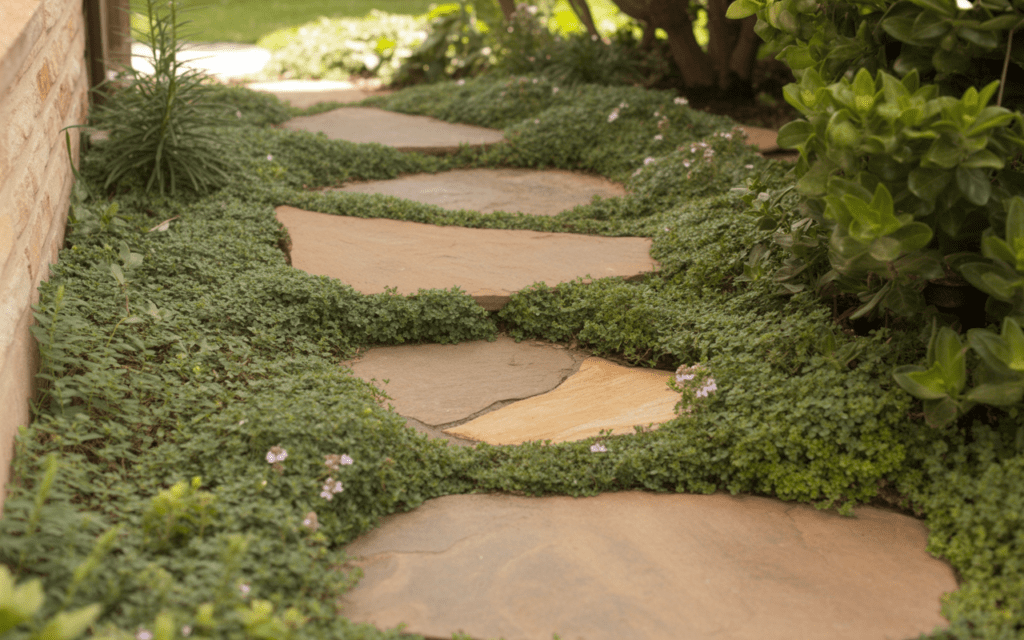
Let’s be honest — the side yard is the forgotten middle child of outdoor spaces. Your backyard gets the fire pit, the front yard gets the flower beds, and the side yard gets… a sad patch of weeds and maybe a forgotten hose. Sound familiar? Well, I’m here to tell you that strip of land between your fence and your house is hiding serious potential. Whether it’s narrow, shady, or just plain weird-shaped, the right pathway can completely transform it. I’ve been obsessing over side yard makeovers for a while now, and trust me — these 15 ideas are absolute game-changers.
Why Your Side Yard Pathway Actually Matters
Before we get into the fun stuff, let’s talk about why a pathway even matters here. A well-designed side yard path does three big things:
- It creates a functional connection between your front and back yard
- It adds curb appeal from angles people actually notice
- It prevents muddy tracks from being dragged through your home
A pathway isn’t just decorative — it’s practical. And when you nail both? That’s the sweet spot.
1. Classic Flagstone Stepping Stones
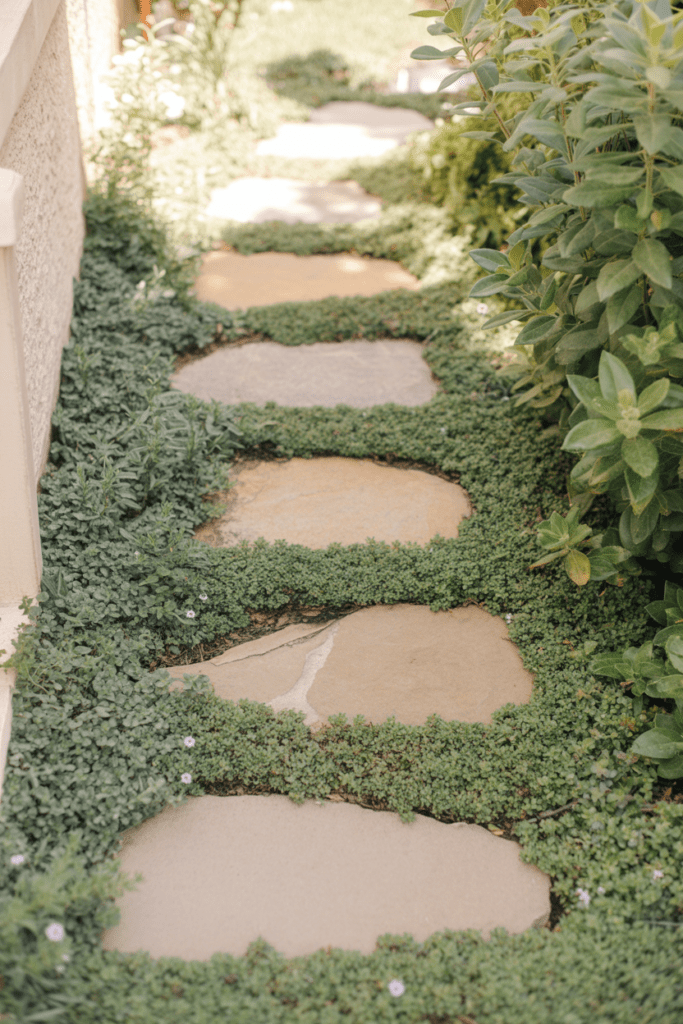
If you’ve seen those dreamy Pinterest-worthy side yards (and I know you have), chances are they’re rocking irregular flagstone stepping stones. The beauty of this look is that it feels organic and effortless — like the stones were always meant to be there.
You can set them in gravel, mulch, or even low ground cover like creeping thyme. The thyme option is my personal favorite because it smells incredible when you step on it. Seriously, it’s like aromatherapy on your commute to the backyard 🙂
Best for: Cottage gardens, rustic homes, and anyone who wants a low-maintenance path that ages beautifully.
2. Poured Concrete Path with Exposed Aggregate
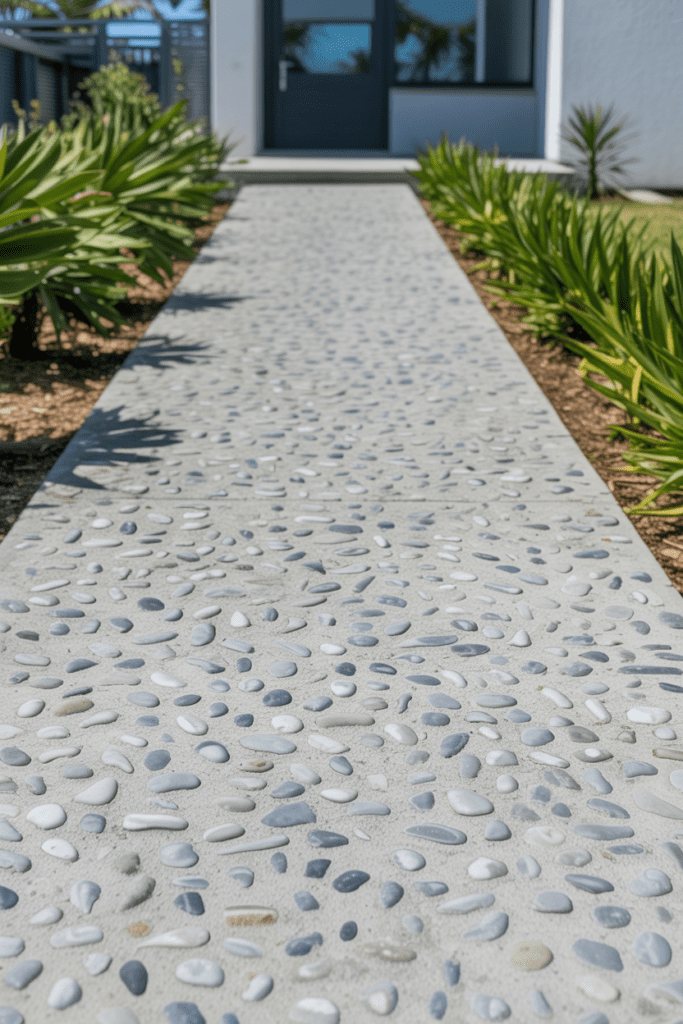
Okay, I know concrete sounds boring. But hear me out — exposed aggregate concrete is a totally different vibe. The surface gets treated to reveal pebbles and stones embedded in the mix, giving it texture, grip, and honestly, a really polished look.
It’s durable, it handles foot traffic like a champ, and it won’t shift around like loose stones. If you have kids or pets running back and forth constantly, this one makes a lot of practical sense.
Best for: Modern homes, high-traffic areas, and people who want zero maintenance after installation.
3. Gravel Path with Timber Edging
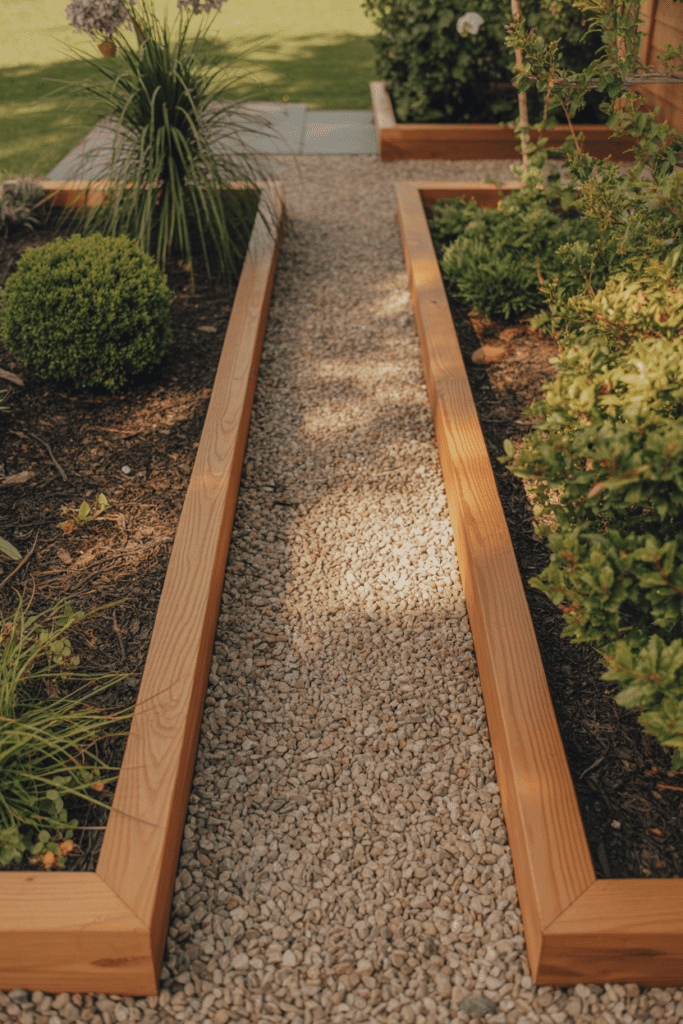
Here’s a combo that just works. Pea gravel or crushed granite contained by timber or steel edging creates a clean, structured look that’s also surprisingly affordable. You can DIY this in a weekend, and it gives your side yard that intentional, designed feel.
The key is proper edging — without it, gravel migrates everywhere and you end up with a crunchy lawn. Use rot-resistant timber like cedar or redwood, or go with metal landscape edging for a more modern finish.
Best for: Budget-conscious homeowners who still want something that looks deliberate and polished.
4. Brick Pathway in a Herringbone Pattern
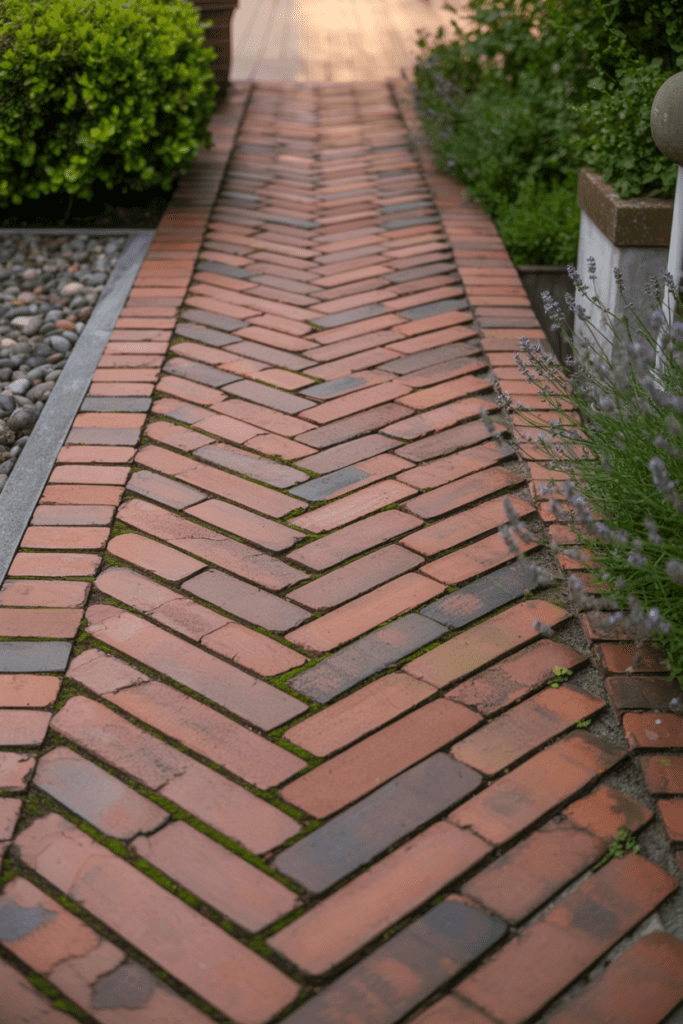
If you want something that screams timeless character, a herringbone brick path is your answer. The interlocking diagonal pattern distributes weight evenly and resists shifting better than straight-laid bricks. Plus, it just looks really, really good.
You can use reclaimed bricks for an aged, storybook feel, or go with new bricks for a crisp finish. Either way, this path style tends to complement traditional and colonial-style homes beautifully.
Best for: Traditional homes, historic neighborhoods, and anyone who wants their pathway to look like it belongs in a period drama.
5. Decomposed Granite Path
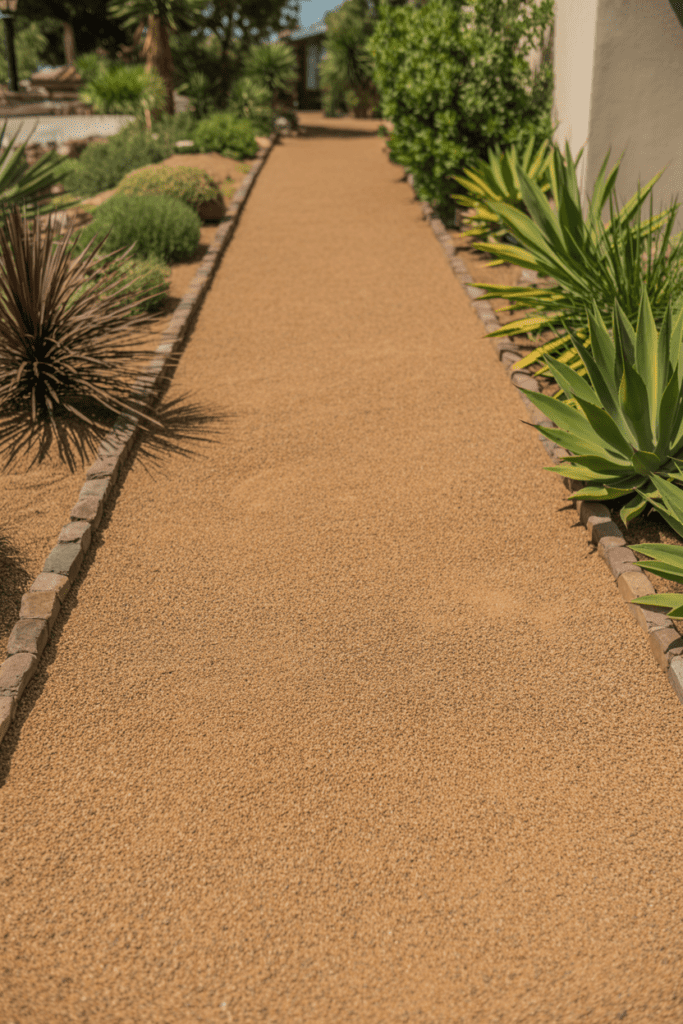
Decomposed granite (DG) is one of those materials that flies under the radar but seriously delivers. It compacts firmly underfoot, drains well, and has this warm, earthy tone that complements almost any planting scheme.
It’s also incredibly low cost compared to pavers or stone. The only catch? You want to add a stabilizer to the mix so it doesn’t get dusty and track into your house. IMO, stabilized DG is one of the smartest choices for a naturalistic-looking path on a real-world budget.
Best for: Drought-tolerant gardens, Mediterranean or Southwest-style homes, and anyone working with a tight budget.
6. Wooden Boardwalk-Style Path
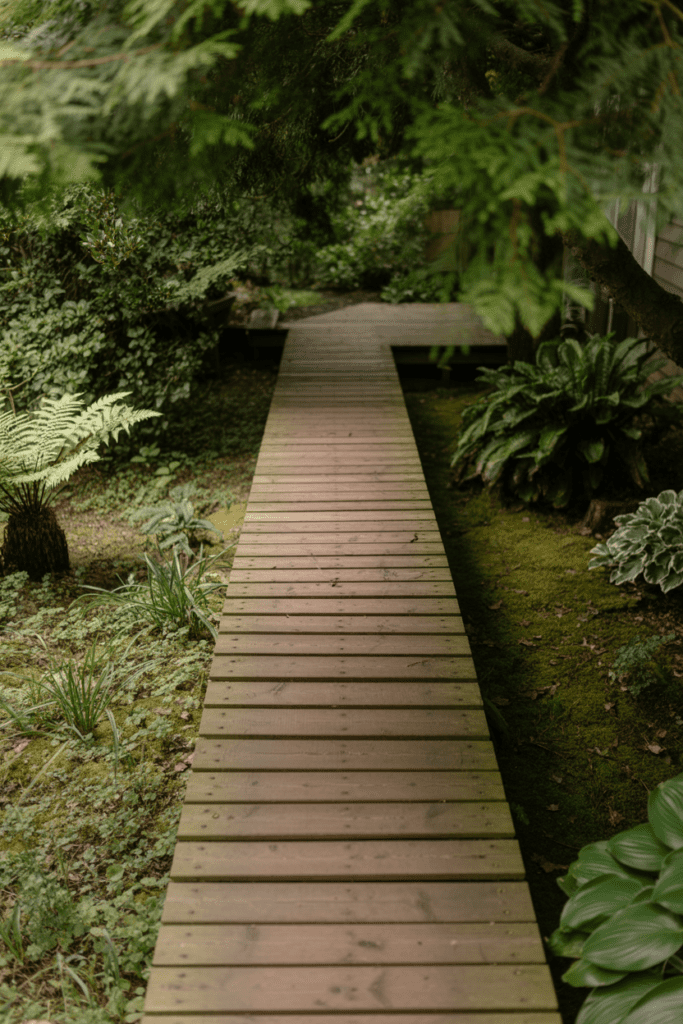
Ever walked a wooden boardwalk through a nature reserve and thought, “I want this in my yard”? Same. A raised wooden boardwalk pathway brings that exact energy to a side yard, especially if the area tends to stay damp or shady.
Use pressure-treated lumber or composite decking boards spaced slightly apart for drainage. The raised profile keeps you out of any wet soil and adds a really charming architectural element to an otherwise overlooked space.
Best for: Shady, moist side yards; coastal or craftsman-style homes; anyone who loves a bit of drama in their landscaping.
7. Moss and Stone Pathway
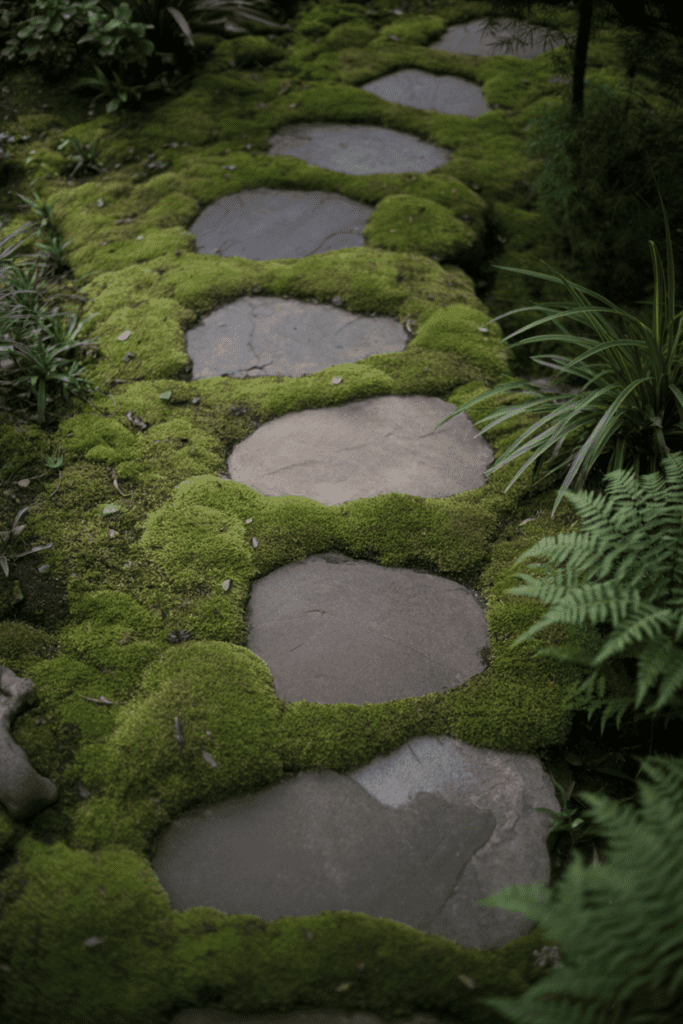
If your side yard is shady and you’ve been fighting that — stop fighting it. Lean into the shade with a moss and stone pathway that looks like something out of a Japanese garden. Flat stones surrounded by lush green moss create a serene, almost magical walkway.
Moss thrives in low-light, moist conditions — the exact environment most side yards offer. You can encourage moss growth by applying a buttermilk-and-moss slurry to the stones. Yes, that’s a real thing. Yes, it actually works.
Best for: Shady side yards, Japanese or Zen-inspired gardens, and anyone who wants a truly unique look.
8. Concrete Pavers with Grass Joints
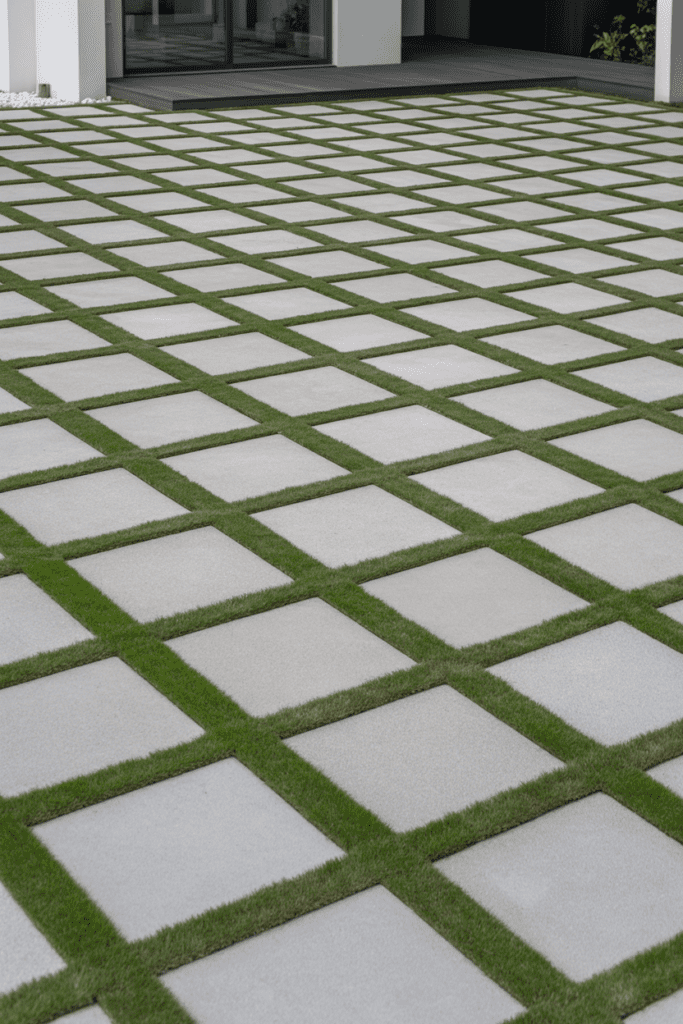
This one hits that sweet spot between structured and soft. Large-format concrete pavers laid with gaps filled in with grass or ground cover create a grid-like pattern that feels contemporary without being cold.
The greenery softens the hard lines of the concrete, and the overall effect is really balanced. You can also use creeping Jenny, mondo grass, or dichondra instead of turf for a lower-maintenance version.
Best for: Modern and minimalist homes, wider side yards, and homeowners who want clean geometry with a natural touch.
9. River Rock Stepping Path
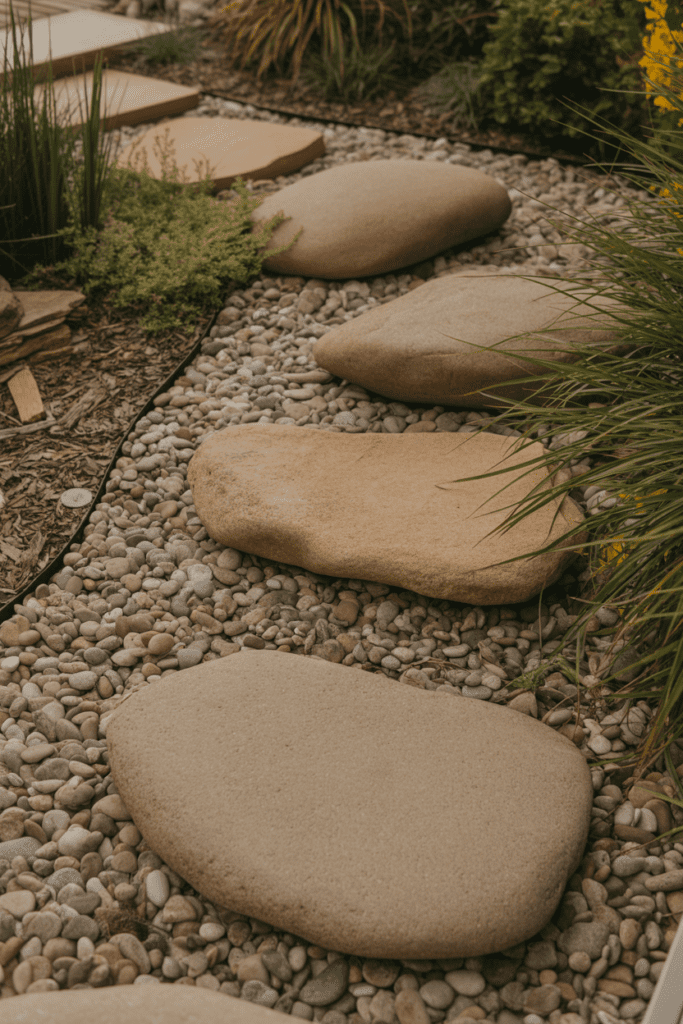
River rock has this smooth, rounded quality that makes it feel collected and intentional. Laying large river rocks as stepping stones through a bed of smaller pebbles or mulch creates a pathway that looks like it evolved naturally over time.
The texture contrast between the large stepping stones and the surrounding material is what makes this work visually. FYI — river rocks also handle water runoff beautifully, so if your side yard doubles as a drainage corridor, this is a smart functional choice too.
Best for: Naturalistic gardens, homes near water, and anyone who loves an earthy, collected aesthetic.
10. Slate Tile Pathway
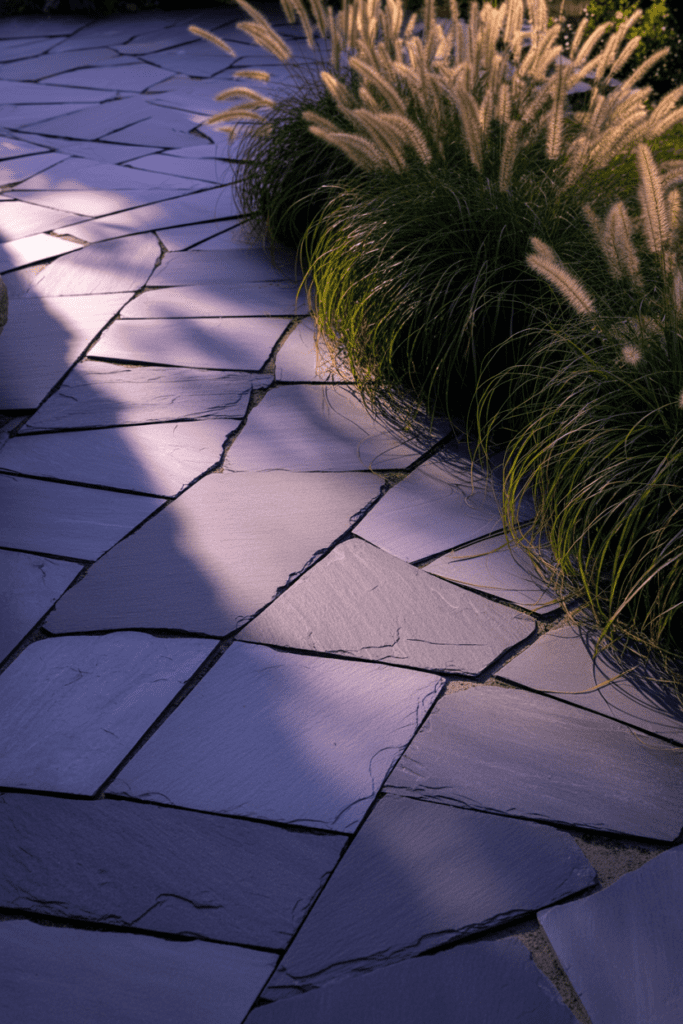
Slate brings this rich, layered texture and deep color palette — charcoals, purples, greens — that honestly looks expensive even when it isn’t. Cutting it into uniform squares or rectangles gives you a more formal look, while irregular pieces feel more organic.
Slate does get slippery when wet, so be strategic about sealing it and consider a slightly roughened finish on the surface. A narrow slate path flanked by ornamental grasses is one of my favorite combinations — the contrast in texture is just chef’s kiss.
Best for: Contemporary or eclectic homes, anyone wanting color and texture in their hardscaping.
11. Recycled Brick and Cobblestone Mix
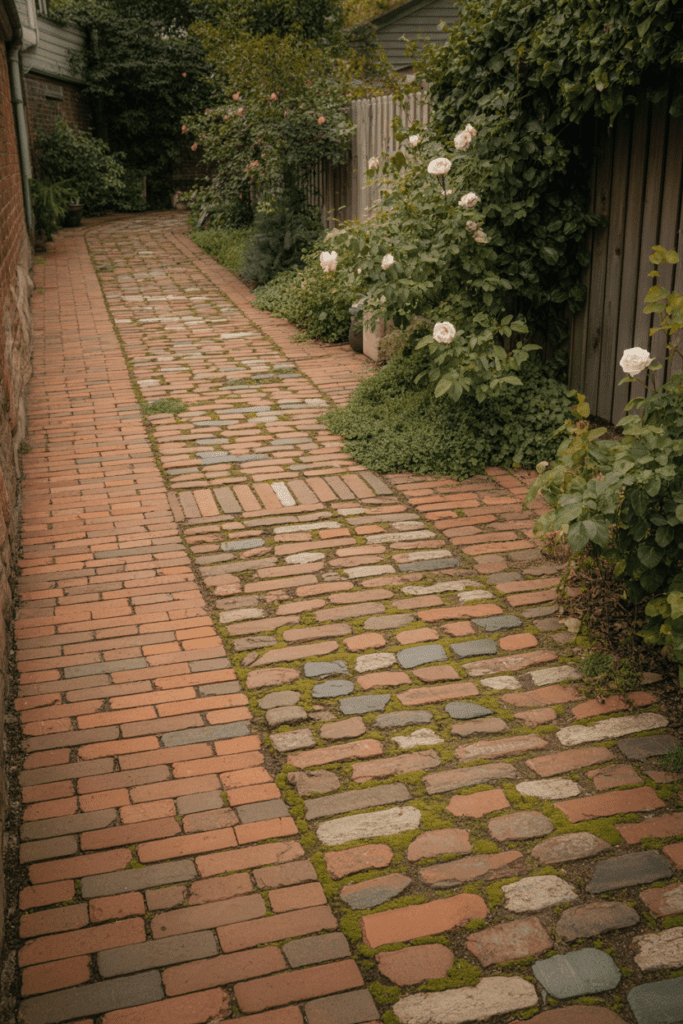
Got access to reclaimed materials? A mixed brick and cobblestone path is a brilliant way to use them. The slight variation in color and material creates a patchwork look that’s full of personality and history.
This works especially well in older neighborhoods where the home itself has some age and character. It’s the kind of pathway that makes people stop and ask about it — and who doesn’t love a conversation piece in their yard?
Best for: Historic homes, eclectic gardens, and anyone who loves upcycling and sustainable design.
12. Simple Mulch Path with Defined Borders
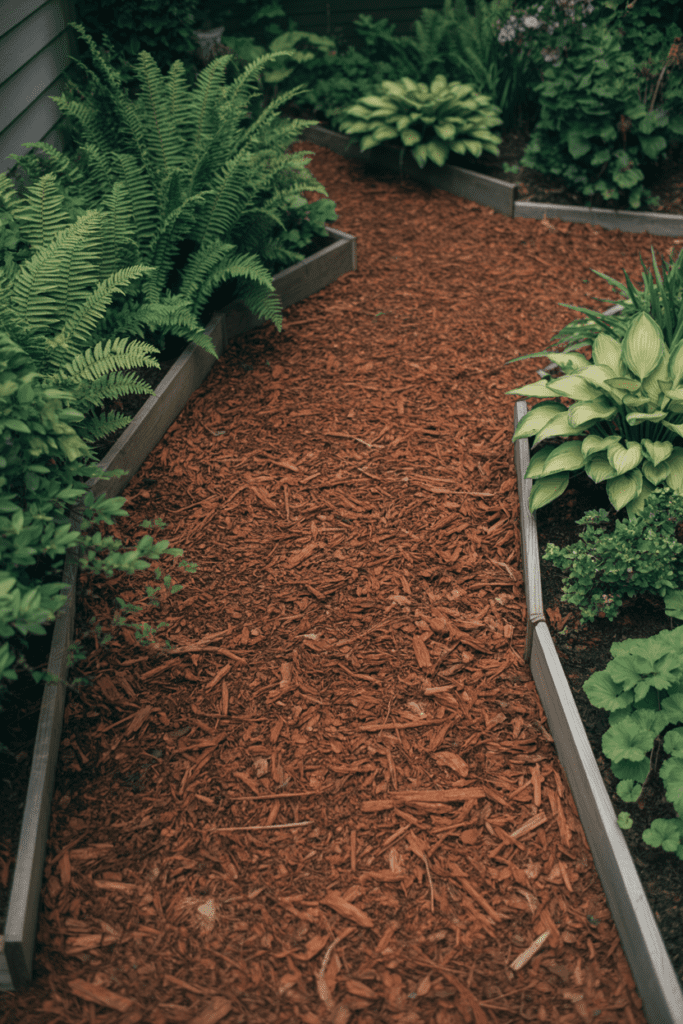
Sometimes simple is exactly right. A mulch pathway with clean metal or stone borders is affordable, easy to install, and blends naturally into planted side yards. Cedar mulch in particular has a warm reddish tone that complements most garden color schemes.
The key to making mulch look intentional (and not just like you dumped a bag there) is the edging. Sharp, defined borders immediately elevate the look. Refresh the mulch once a year and you’re done.
Best for: Cottage gardens, heavily planted side yards, and budget-friendly makeovers.
13. Engraved or Stamped Concrete
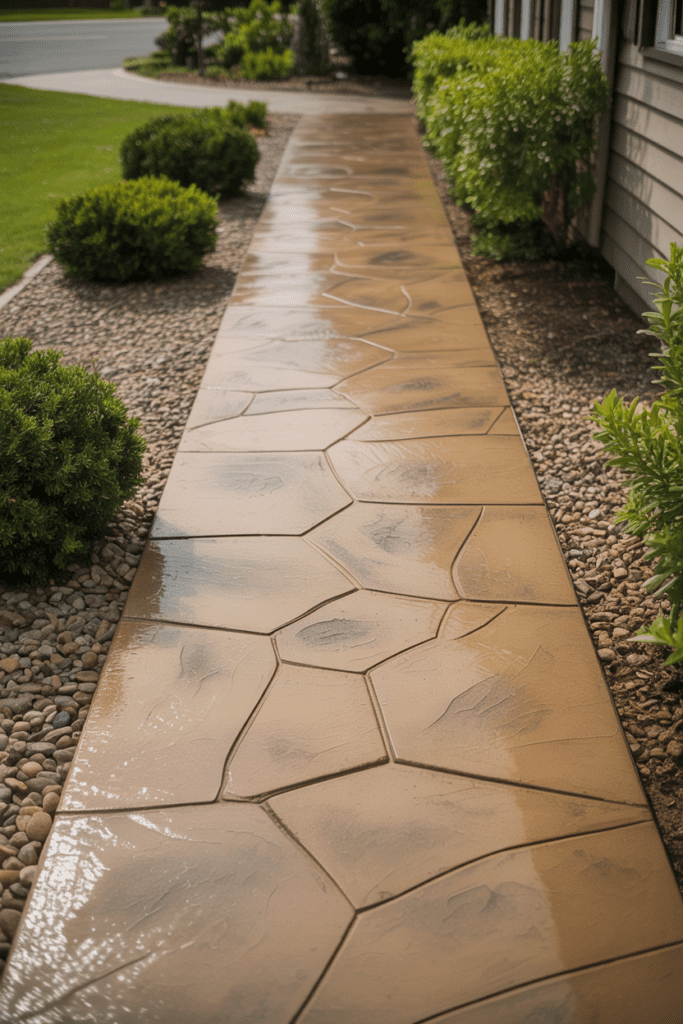
If you want a custom look without the custom price tag of natural stone, stamped concrete is your best friend. You can mimic the look of slate, cobblestone, flagstone, or even wood planks — all with the durability and low maintenance of concrete.
The trick is color. Opt for earthy tones rather than harsh grays to keep it looking natural. A well-done stamped concrete path can genuinely fool the eye, and at a fraction of the cost of the real thing. :/
Best for: Homeowners who want a premium look on a mid-range budget, modern or transitional homes.
14. Gabion Wall-Flanked Path
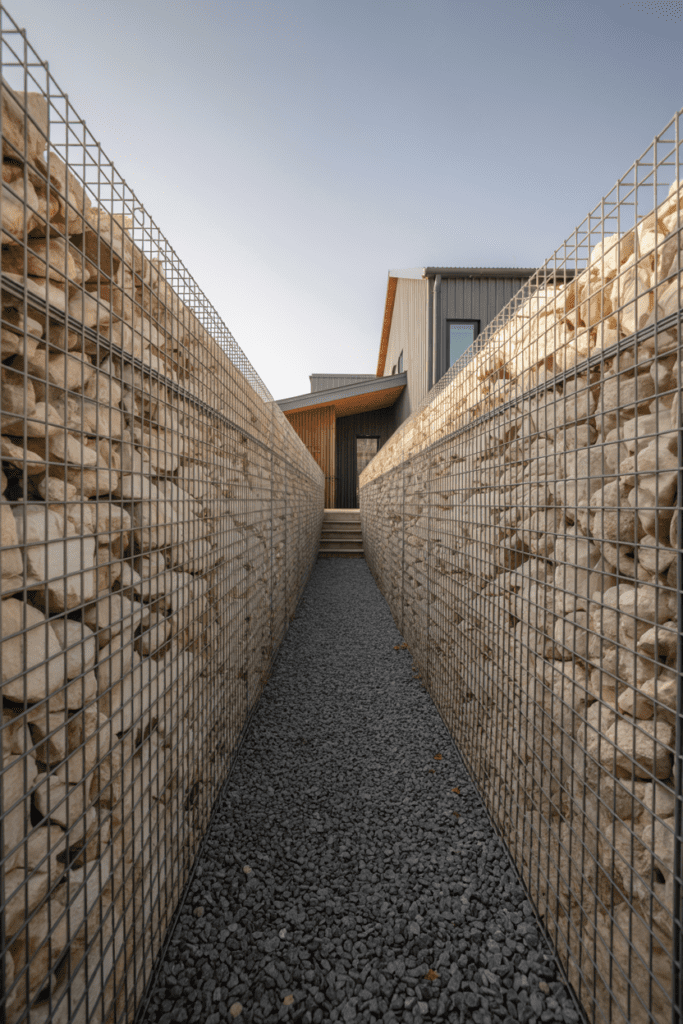
Okay, this one’s a bit more of a statement, but stay with me. Gabion walls — those wire cages filled with rocks — flanking a narrow pathway create a striking, architectural side yard corridor. The rock-filled walls double as retaining structures if your side yard has any grade change.
The industrial texture of the metal wire against the natural stone inside is a look that works surprisingly well with modern, industrial, and even rustic home styles. It’s bold, it’s functional, and it’s definitely not something your neighbors have.
Best for: Sloped side yards, modern or industrial homes, and homeowners who want to make a real design statement.
15. Lighted Pathway with Solar Stake Lights
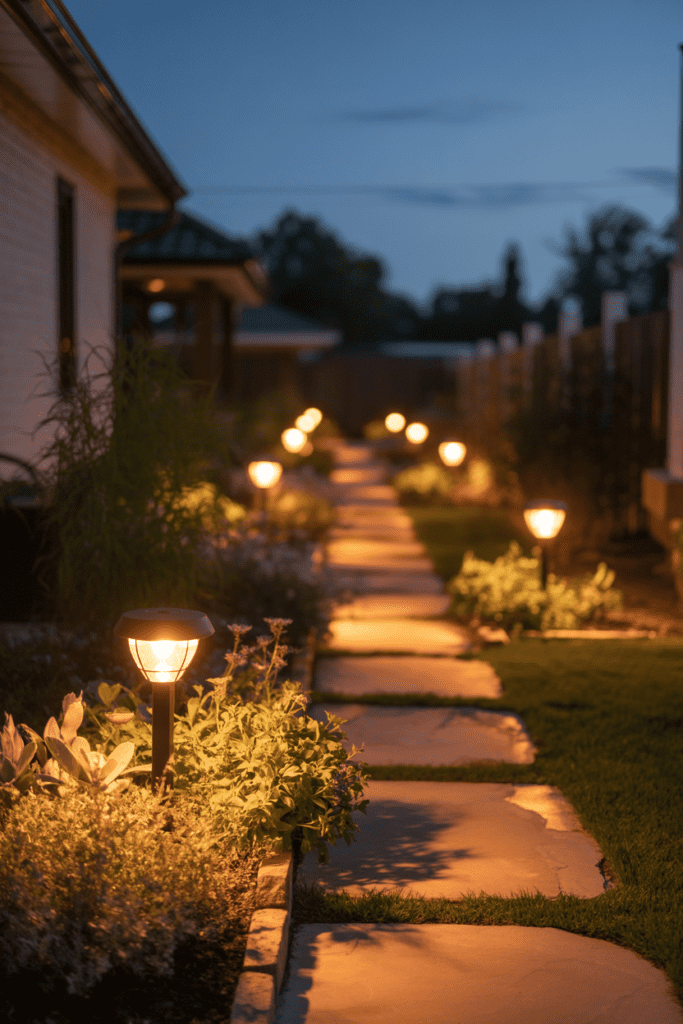
This isn’t a material — it’s a lighting strategy, and it changes everything. Any of the above paths becomes dramatically more beautiful (and safer) when you add solar stake lights along the edges. The warm glow they cast at night turns a functional walkway into an atmospheric experience.
Solar options have gotten genuinely good in recent years — no wiring, no fuss. Pair them with low-growing border plants and you’ve got a pathway that looks as good at 9 PM as it does at noon. Honestly, nighttime curb appeal is underrated and this is the easiest way to unlock it.
Best for: Every single pathway on this list — lighting is a universal upgrade.
Quick Comparison: Choosing the Right Material
Not sure where to start? Here’s a fast reference:
- Tight budget: Mulch, decomposed granite, gravel
- Medium budget: Concrete pavers, stepping stones, brick
- Higher investment: Flagstone, slate, stamped concrete, boardwalk
- Low maintenance: Concrete, exposed aggregate, gravel
- High visual impact: Moss and stone, gabion-flanked, herringbone brick
- Shady/wet conditions: Wooden boardwalk, moss and stone, river rock
Before You Dig — A Few Practical Notes
Before you commit to any of these ideas, keep these things in mind:
- Measure your width carefully. Most side yards range from 3–6 feet. Your path material and scale should match — large pavers in a 3-foot space will feel cramped.
- Check drainage. If water pools in your side yard, choose permeable materials like gravel, DG, or spaced pavers.
- Think about foot traffic. A purely decorative path can be narrower and use softer materials. A path that gets daily use needs durability first.
- Don’t ignore the plants. The best side yard paths are framed by something — ornamental grasses, ferns, hostas, or low shrubs. The hardscaping and planting work together.
Wrap-Up: Your Side Yard Deserves Better
Here’s the thing that narrow strip of land you’ve been ignoring is actually one of the most design-flexible spaces on your property. It doesn’t need to be complicated or expensive to look intentional and beautiful. Pick a material that fits your home’s style, define your edges, and add lighting. That’s really the formula.
Whether you go full flagstone-and-fern glamour or keep it simple with gravel and solar lights, a well-designed pathway makes your whole property feel more complete. So stop walking through the mud every time you take out the trash, and give that side yard the glow-up it’s been patiently waiting for. You’ve got 15 ideas go pick your favorite and get started.