
Minimalism looks deceptively easy: strip things back, keep it clean, done. But anyone who’s actually tried it knows the real challenge isn’t getting rid of stuff. It’s making sure the room still feels alive after you do.
Strip a room down too fast and you’re left with four walls, a lonely sofa, and a vibe that screams “I gave up halfway through.” That’s not minimalism — that’s just empty.
The secret is intentional layering. A truly minimalist living room isn’t a room with less in it — it’s a room where everything present is earning its place. The right sofa, the right rug size, the right lighting, a texture or two these are the things that turn a bare room into something that feels warm, considered, and genuinely stylish.
This guide breaks it all down for you, piece by piece so your living room ends up looking calm and curated, not cold and half-finished.
What Minimalism Actually Means (Because Most People Get It Wrong)
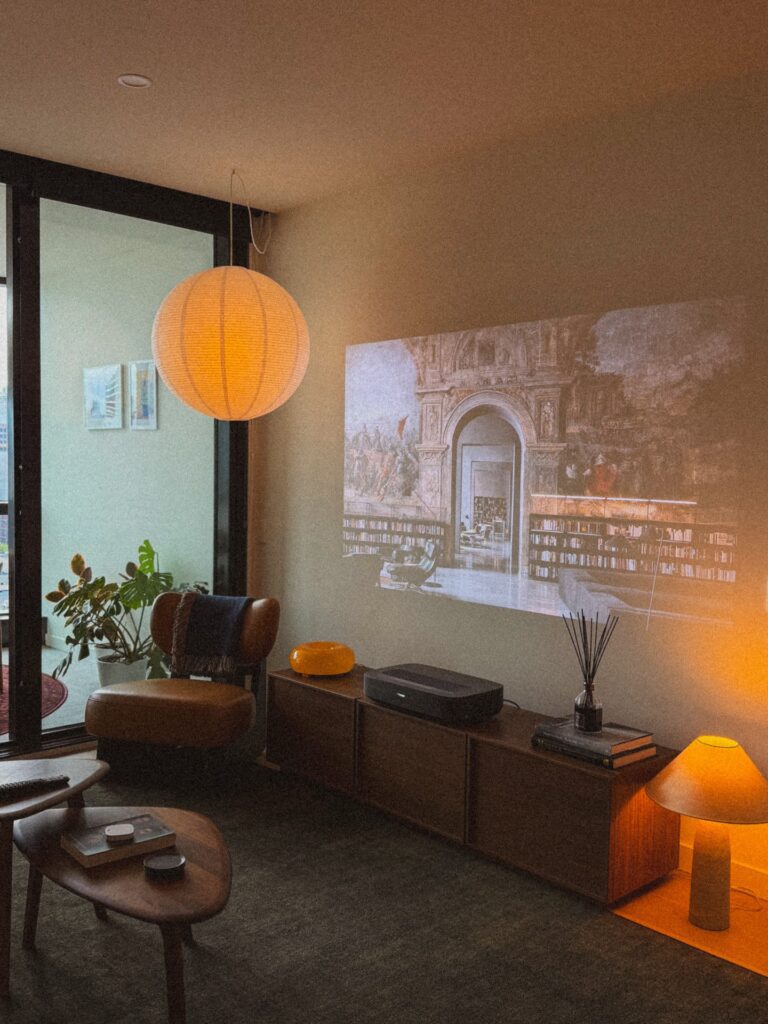
Here’s the thing — minimalism gets misunderstood constantly. People think it means white walls, no décor, and a single sad plant in the corner. That’s not minimalism. That’s just… empty.
True minimalism is about intentional curation. Every object, texture, and color you bring into the room should have a reason for being there. You’re not decorating less — you’re decorating smarter. The goal is a space that feels calm, purposeful, and visually balanced, not stripped of personality.
Think of it like a well-edited outfit. You’re not wearing fewer clothes because you hate fashion. You’re wearing fewer clothes because each piece works hard. That’s the energy you want in your living room.
The “Empty vs. Minimal” Distinction
There’s a real difference between a room that feels spacious and one that feels abandoned. A spacious room has breathing room — intentional negative space that lets your eye rest. An empty room just has… nothing happening.
The fix? Negative space should always be balanced by something worth looking at. A beautiful sofa, a textured rug, a single piece of art — these anchor the room and make the open space feel deliberate rather than forgotten.
Start With a Strong Sofa (It’s the Whole Point)
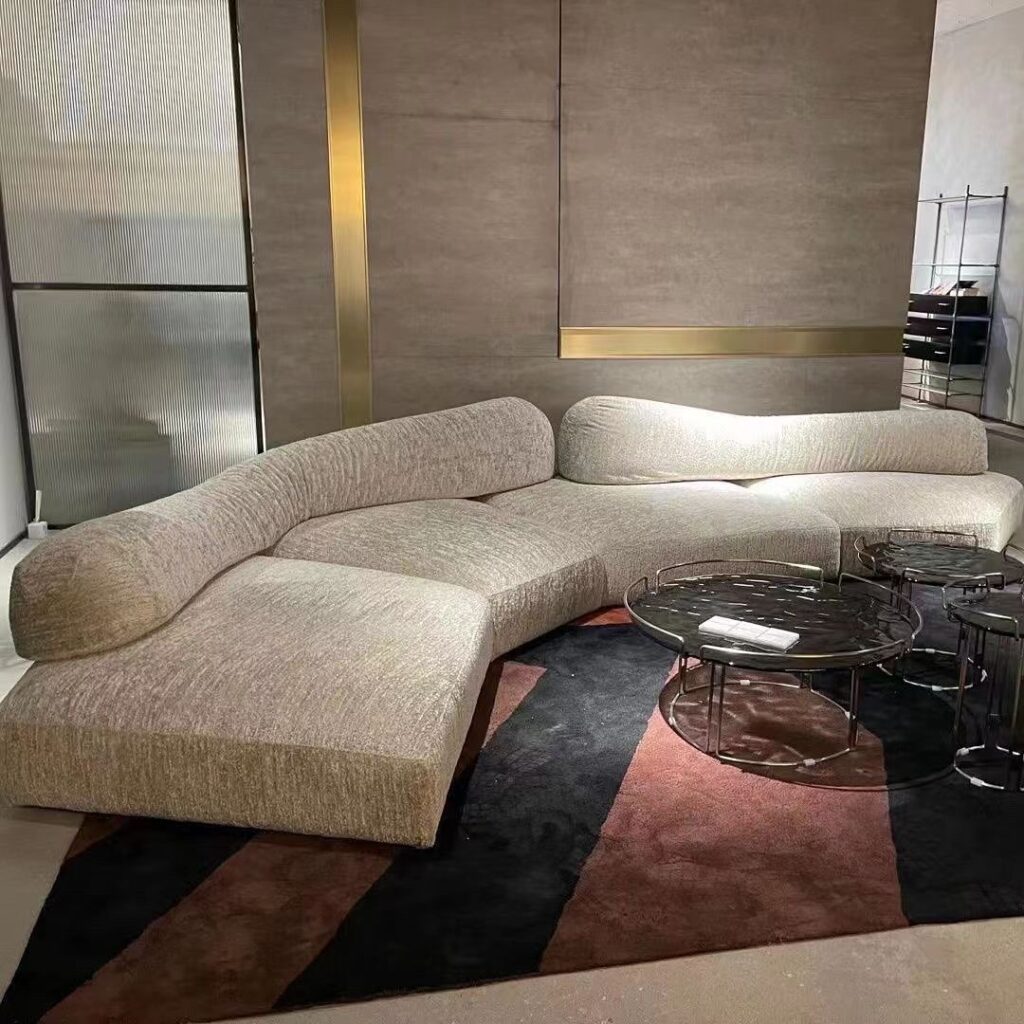
Your sofa is doing the heavy lifting in a minimalist living room. When you’re working with fewer pieces, each one needs to be exceptional. A sad, floppy sofa in a beige room will look depressing. A well-structured sofa with clean lines in a neutral tone? That’s the foundation of everything.
IMO, the best minimalist sofas have:
- Low profiles — they elongate the room visually
- Neutral tones — think warm white, oatmeal, charcoal, or camel
- Solid upholstery — no busy patterns (save that for a single pillow, maybe)
- Visible legs — this lifts the sofa visually and makes the room feel bigger
Don’t try to save money on the sofa if you’re going minimalist. Since it’s one of very few statement pieces, it needs to look great. A cheap sofa will drag the entire room down.
Pillow Placement Without Overdoing It
Here’s where people go wrong — they either pile on 47 decorative pillows or use zero. Neither works. Two to four pillows is the sweet spot for a minimalist sofa. Vary the textures (think chunky knit + linen + velvet) but keep the color palette tight — two or three tones max.
The goal is to make the sofa look lived-in without looking chaotic. You want someone to walk in and think “cozy” not “where do I even sit?”
Layer Textures
If color isn’t doing the heavy lifting in a minimalist room (and it usually isn’t), then texture becomes your best friend. This is the secret that separates a boring neutral room from one that looks like it belongs in an architectural digest spread.
When every surface is smooth and flat, the room reads as flat. But when you layer different textures — rough against smooth, matte against shiny, woven against solid — the room suddenly has depth and warmth.
Here’s a quick texture layering checklist:
- Rug: Go for something with pile, weave, or natural fiber (jute, wool, boucle)
- Throw blanket: Chunky knit or waffle-weave draped casually over the sofa arm
- Cushions: Mix linen, velvet, or cotton — not all the same fabric
- Coffee table: Wood, stone, or rattan adds organic texture to balance hard flooring
- Wall art: Even the frame texture matters — a raw wood or matte black frame reads completely differently than glossy silver
You don’t need color drama to make a minimalist room feel rich. Texture does that job beautifully.
The Rug Rule That Changes Everything
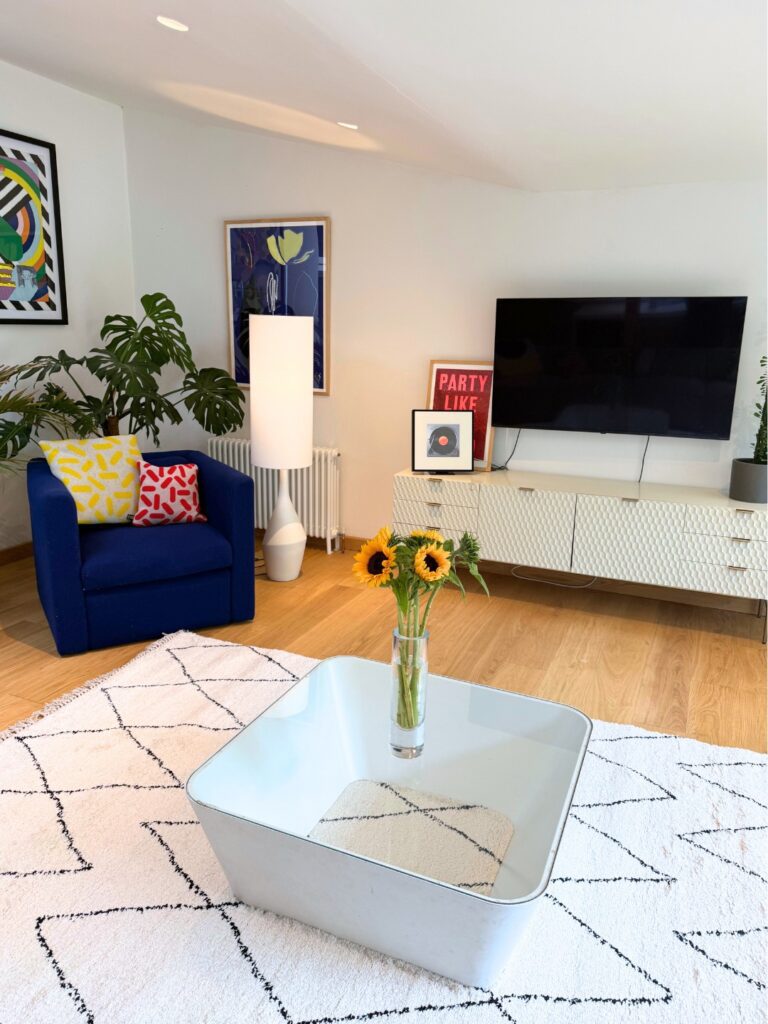
Raise your hand if you’ve made the rug-too-small mistake. (Everyone raises their hand.) It’s probably the most common decorating error in living rooms, and it makes a minimalist space look tragically off.
The rule is simple: your rug should be large enough for all your main furniture legs to sit on it — or at least the front legs. A rug that only sits under the coffee table while your sofa floats on bare floor? That’s a floating island situation, and not the fun tropical kind.
How to Size Your Rug
For a standard living room setup, here’s what actually works:
- 8×10 feet works for most medium living rooms
- 9×12 feet is better if you have a large sectional
- At minimum, the front two legs of your sofa should rest on the rug
A properly sized rug grounds the entire seating area and makes it feel like one cohesive zone rather than random furniture scattered across a floor. In minimalist design, this cohesion is non-negotiable.
Embrace Negative Space (On Purpose)
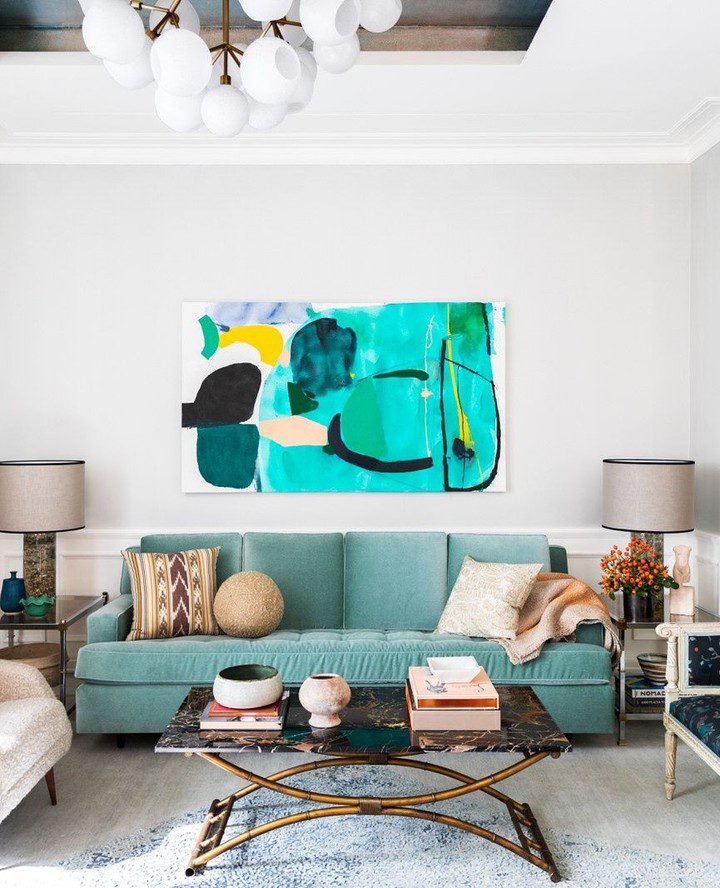
Here’s a concept that trips people up: negative space isn’t a problem to solve. It’s a design tool. In minimalist interiors, the empty areas of your room are just as intentional as the filled ones.
The wall you leave bare isn’t a mistake — it’s breathing room. The floor you leave uncovered isn’t laziness — it’s visual relief. When you accept this, you stop trying to fill every corner and start working with the space instead of against it.
That said, negative space only works when it’s intentional. The difference between a deliberate empty wall and a forgotten empty wall is everything else in the room. If your styled areas are strong and purposeful, the empty areas read as elegant restraint.
What to Put on Your Walls (And What to Skip)
For a minimalist living room, the golden rule for walls is: one statement, done beautifully. That could be:
- A single large-format art print or painting (go bigger than you think — 24×36 inches minimum)
- A collection of three frames in the same color, hung gallery-style in a tight cluster
- A textured wall treatment like limewash paint or a plaster finish on one accent wall
What to skip: random small frames scattered at different heights, motivational quote signs, and gallery walls with 15+ frames. That’s maximalism in disguise and it will work against your whole vibe.
Lighting Is Non-Negotiable
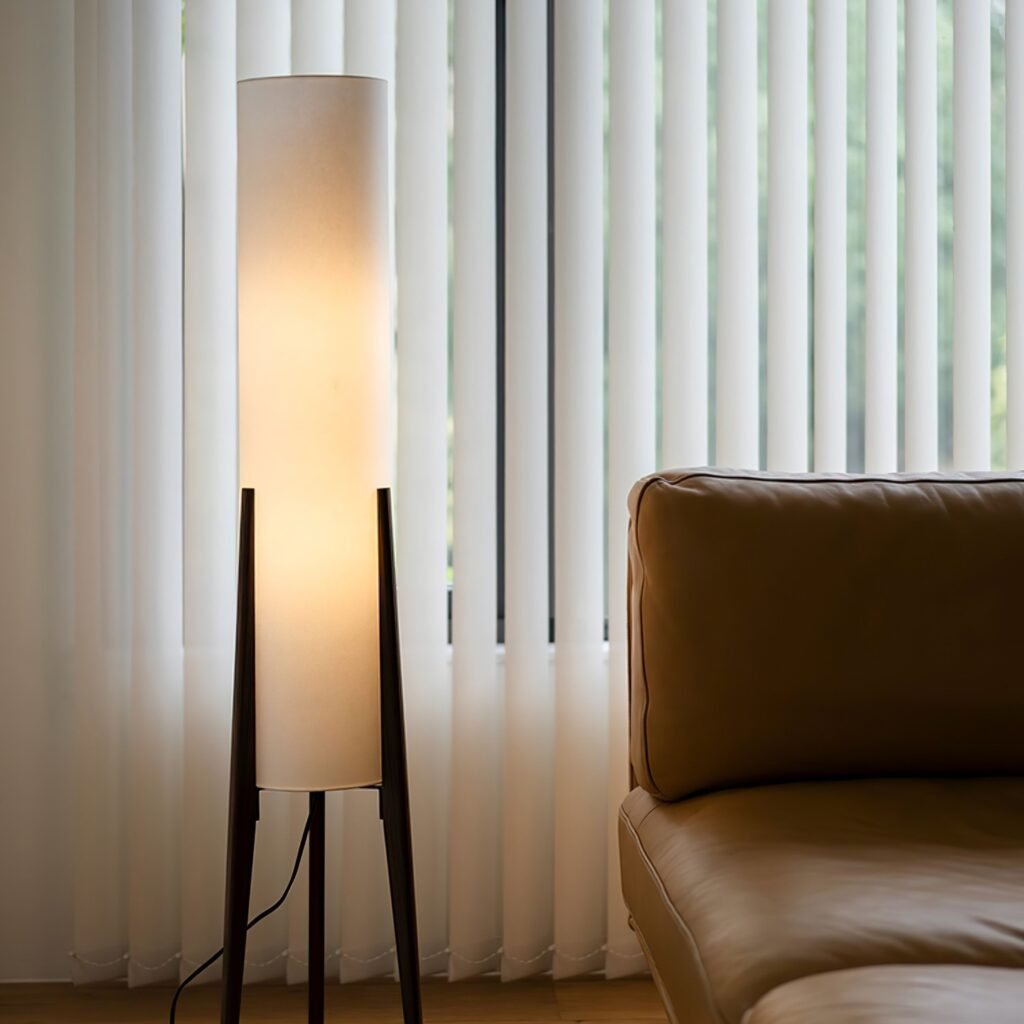
You can nail every single other element in this list and still have a room that feels flat and unwelcoming if your lighting is bad. Lighting is the mood of the room — it’s what makes the difference between “cozy retreat” and “hospital corridor.”
Minimalist rooms especially need thoughtful lighting because they rely on ambiance more than visual busyness to create warmth. Here’s how to layer it right:
Three Types of Light You Need
1. Ambient lighting — your main overhead light. If you’re using a single harsh ceiling fixture, swap it for a statement pendant or a flush mount with a warm-toned bulb (2700K–3000K). This alone will transform your room.
2. Accent lighting — think floor lamps, table lamps, or LED strip lights behind a TV unit. These create pools of warm light that make the room feel layered and intimate.
3. Natural light — maximize it. Swap heavy curtains for linen or sheer panels that let light filter through. Natural light in a minimalist room isn’t just functional, it’s part of the design.
FYI — the temperature of your bulbs matters more than people realize. Warm white (under 3000K) creates a cozy glow. Cool white (4000K+) makes spaces feel clinical. For a living room, always go warm.
Choose a Restrained Color Palette (But Make It Interesting)
Minimalist color palettes don’t have to mean white + more white. That’s the boring version. The interesting version uses two to three colors that work together with intention — often pulling from the same tonal family.
Some combinations that work brilliantly:
- Warm whites + camel + terracotta accents — earthy and grounded
- Greige walls + chocolate brown + cream — rich and sophisticated
- Off-white + sage green + natural wood — fresh but calm
- Charcoal + warm white + brass — modern with edge
The key is keeping your main surfaces (walls, sofa, rug) in the quieter tones and letting your accents (pillows, vases, throws) carry the personality. When you limit the palette, every element you add feels considered rather than random.
The 60-30-10 Rule Simplified
If you want a cheat sheet, use the 60-30-10 rule:
- 60% of the room in your dominant color (walls, large rug, main sofa)
- 30% in a secondary color (chairs, curtains, larger décor)
- 10% in an accent color (pillows, vases, throw, small objects)
It’s a design school classic for a reason — it works every single time.
Add Life With Plants (The Right Way)
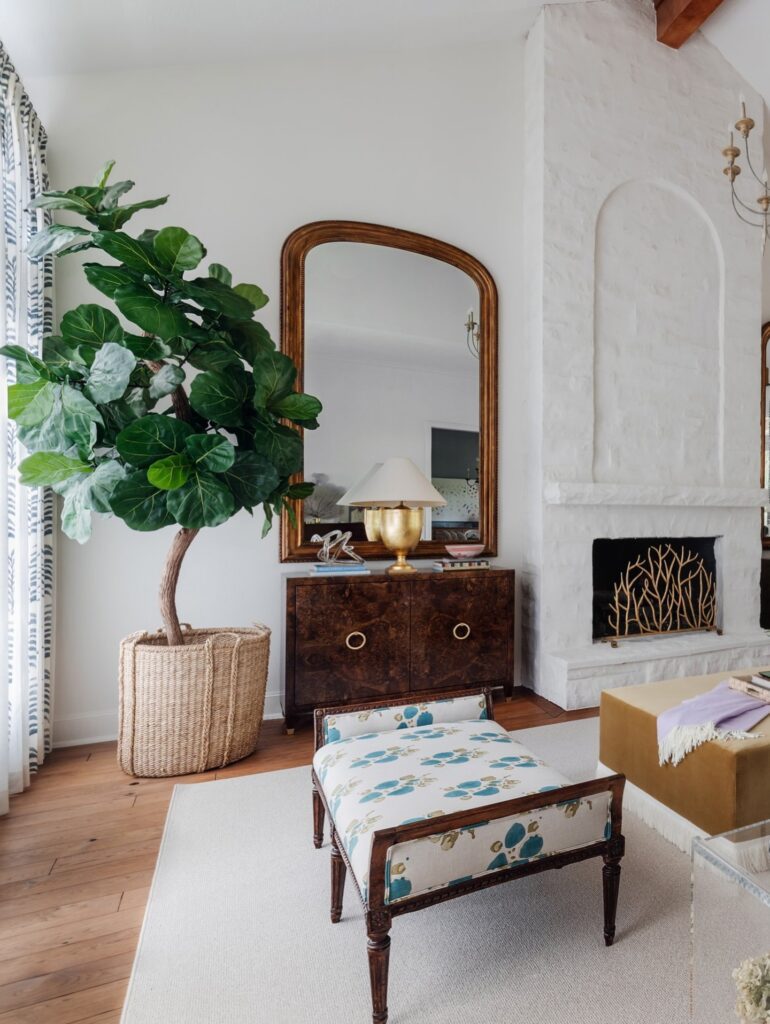
Plants are one of the best things you can bring into a minimalist room, but even here, restraint is the game. One or two well-chosen plants will do infinitely more than a jungle of mismatched pots on every surface.
For minimalist spaces, go for:
- Large, sculptural plants — a fiddle leaf fig, monstera, or olive tree in a simple ceramic or terracotta pot makes a real statement
- Single-stem arrangements — one beautiful branch in a tall vase is effortlessly chic
- Low-maintenance varieties — because a dead plant is the opposite of a design feature
Place plants where they get natural light and where they add visual height or balance. A tall plant in a corner can fill vertical space without cluttering the floor. A trailing plant on a shelf adds softness without demanding too much attention.
Coffee Table Styling That Actually Works
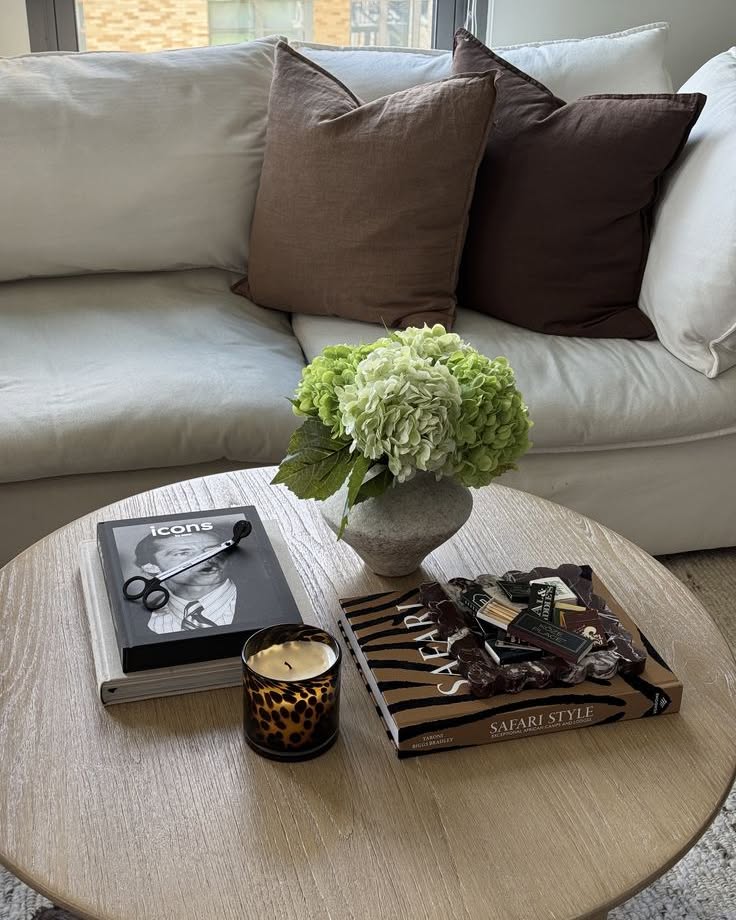
The coffee table is where minimalist rooms often go wrong. People either leave it completely bare (too empty) or style it like a display cabinet at a store (too busy). The sweet spot is three to five objects, grouped with intention.
Here’s a simple formula that works:
- One tray — corrals smaller objects and creates visual order
- One stack of books — adds height and personality
- One organic element — a small plant, a stone, a piece of driftwood
- One decorative object — a sculptural vase, a candle, a ceramic bowl
- Optional: one functional item — a coaster set, a small dish
Keep everything within a similar color palette and vary the heights. Cluster your objects rather than spacing them evenly across the surface — clustering looks intentional, even spacing looks awkward.
Storage That Doesn’t Wreck the Vibe
Minimalism falls apart fast when there’s nowhere to put your stuff. If your living room has no storage, clutter will creep in and destroy everything you’ve built. Smart, hidden storage is a minimalist room’s best friend.
Look for:
- Coffee tables with drawers or lower shelves — remote controls, coasters, and small items disappear beautifully
- Media consoles with closed cabinets — nothing ruins a clean aesthetic like a tangle of cables and DVD cases on display
- Ottomans with internal storage — dual-purpose and practical
- Built-in or floating shelves — when styled intentionally, these add personality without clutter
The rule for open shelving in a minimalist room: style it like a display, not a storage unit. Edit ruthlessly. If it doesn’t look good, it goes behind a closed door.
The Finishing Touches That Tie Everything Together
You’ve got your sofa, your rug, your lighting, your palette, your plants. Now come the small details that elevate everything from “nice” to “wow.”
These are the easy wins people often overlook:
- Candles — a cluster of pillar candles in varying heights on a tray looks beautiful and adds warmth
- Books styled spine-out — stacking books with the pages facing out instead of the spines creates a calm, uniform look
- A single statement mirror — reflects light, makes the room feel larger, and adds a sculptural element
- Consistent hardware and metals — if you mix metals (brass, matte black, chrome), keep it intentional; one dominant metal with a hint of another works better than three competing finishes
These details are small, but in a minimalist room where every element has room to breathe, they matter more than they would in a busier space. 🙂
Common Mistakes to Avoid
Before you go rearrange your entire living room, let’s quickly run through the biggest minimalist styling mistakes so you don’t have to learn them the hard way:
- Going too cold — all-white with no texture or warmth will feel sterile; always add organic materials and warm tones
- Buying cheap on key pieces — in minimalism, quality shows; one great sofa beats three mediocre ones
- Ignoring scale — a tiny rug, a small art print, or a dainty lamp will look lost in a room; go bigger on key pieces
- Over-accessorizing in secret — minimalism doesn’t mean clutter-free surfaces and cluttered shelves; edit everything
- Wrong lighting color temperature — cool bulbs kill the warmth; always go 2700K–3000K in living spaces
Bringing It All Together
Styling a minimalist living room is honestly one of the most satisfying design projects you can take on — once you stop thinking of it as “removing things” and start thinking of it as choosing the right things with intention.
Start with a solid sofa and a properly sized rug. Build your texture layers from there. Get your lighting right (seriously, this step changes everything). Curate a tight color palette and let your accent pieces do the personality work. Add one or two plants, style your coffee table with that simple formula, and hide your clutter in smart storage solutions.
The goal isn’t a room that looks like a showroom it’s a room that feels calm, warm, and completely yours. When someone walks in and says “I love how this feels,” that’s minimalism done right. Not empty. Not cold. Just beautifully, intentionally right.