
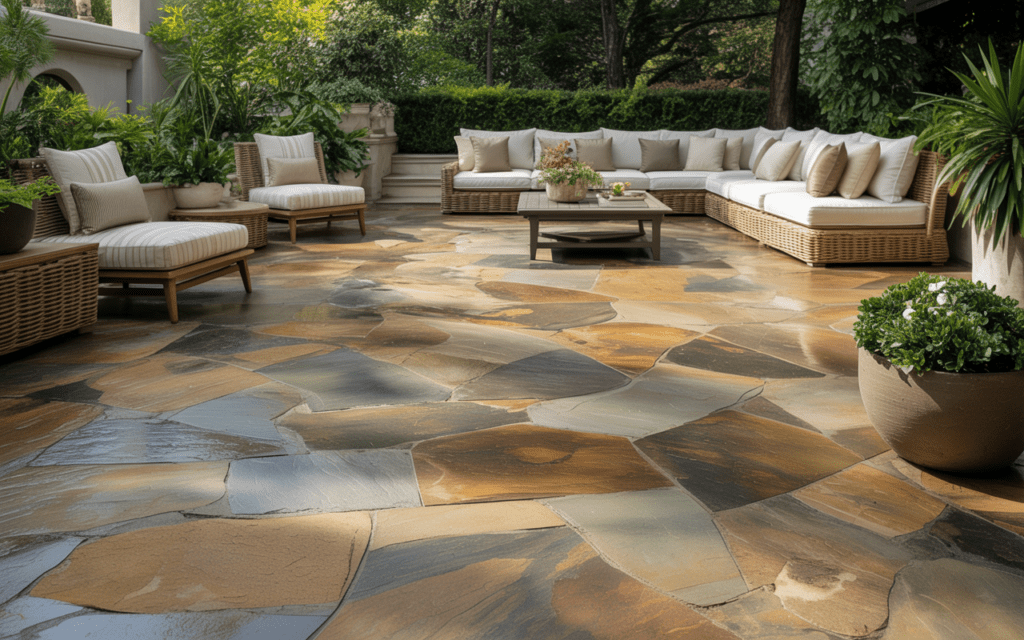
Your patio floor matters more than most people think. You can throw out a cute rug, add string lights, and buy those trendy chairs everyone suddenly owns, but if the floor looks rough, the whole space feels off. A great patio floor sets the mood, improves comfort, and makes your outdoor area feel finished.
I’ve looked at a lot of patios over the years, and honestly, flooring changes everything. Some options feel warm and polished, while others scream “I gave up halfway through this project.” If you want an outdoor space that looks good and actually works for your lifestyle, these outdoor patio flooring ideas will help you figure out what makes sense.
1. Concrete Slab Patio Flooring
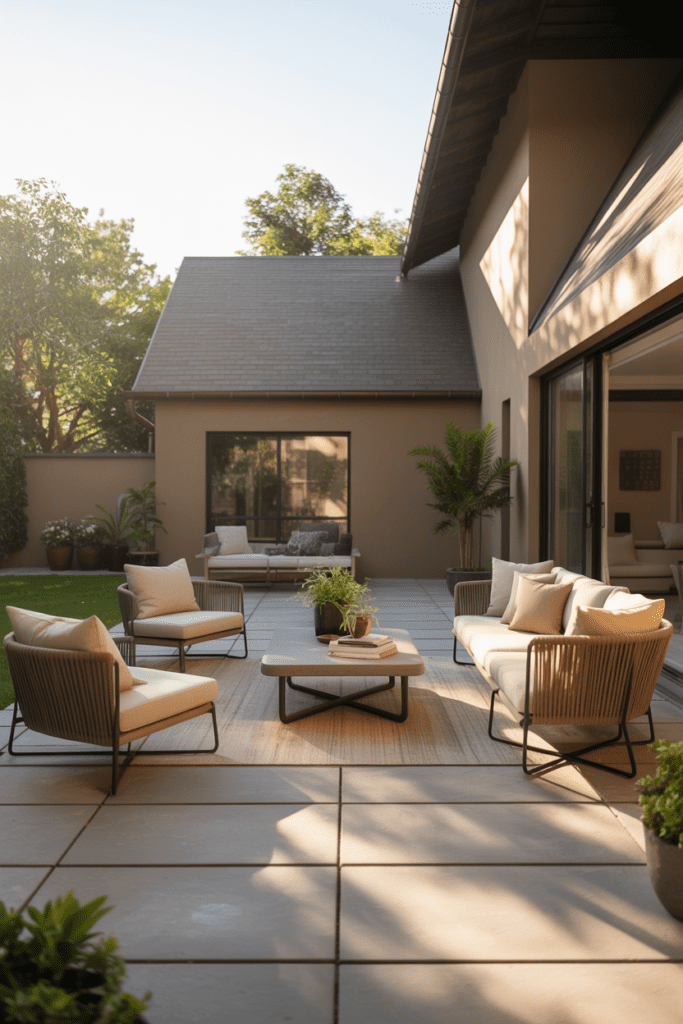
Concrete gets a bad reputation for looking plain, but I think that’s a little unfair. Concrete patio flooring works because it costs less than many premium materials, lasts for years, and fits almost any style. If you want a clean, simple surface, concrete makes that easy.
You can keep it basic, or you can dress it up with stain, texture, or scoring. That flexibility makes concrete one of the most practical patio flooring ideas out there. Ever notice how many modern outdoor spaces start with concrete? That’s not an accident.
Why concrete works
- Budget-friendly compared to natural stone or high-end pavers.
- Low maintenance when you seal it properly.
- Works well for modern, minimalist, and industrial-style patios.
- Handles outdoor furniture easily because the surface stays stable and flat.
A few drawbacks
Concrete can crack over time. That doesn’t mean it always fails, but weather and ground movement can create lines you didn’t exactly request. Charming? Sometimes. Annoying? Also yes.
2. Stamped Concrete for a High-End Look
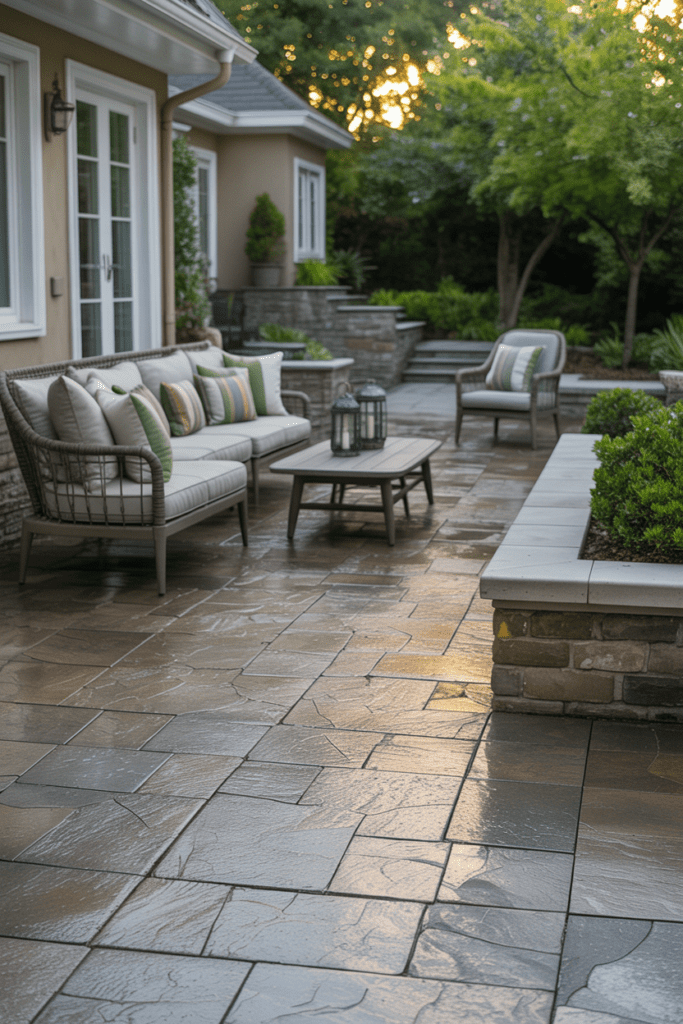
If plain concrete feels too basic, stamped concrete patio flooring gives you more personality. This option mimics the look of brick, slate, stone, or even wood while keeping the durability of concrete. It’s kind of like getting the fancy look without the full fancy-material bill.
I like stamped concrete when someone wants texture and pattern without dealing with lots of separate pieces. It creates a polished finish that feels intentional. IMO, it works especially well for homeowners who want upscale style without endless maintenance.
Best reasons to choose stamped concrete
- Creates the look of stone, brick, or tile.
- Offers a more decorative finish than a basic slab.
- Costs less than many natural materials.
- Works nicely in large outdoor entertaining spaces.
Stamped concrete does need proper installation. If the contractor cuts corners, the final result can look fake fast. And nobody wants a patio floor that tries too hard.
3. Brick Patio Flooring
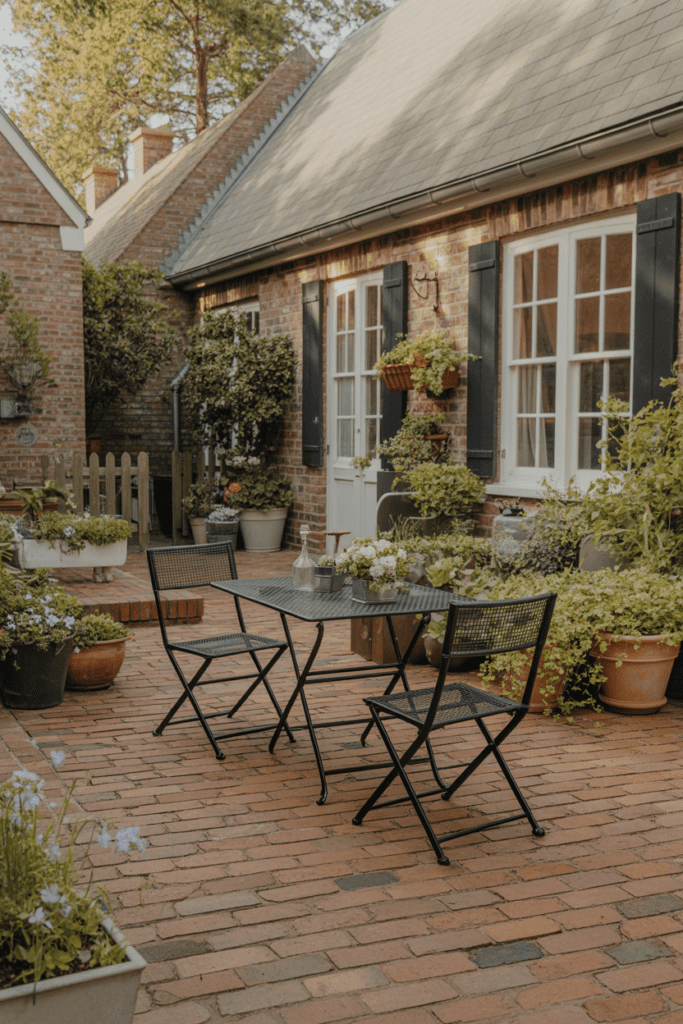
Brick has that timeless charm that just works. When I see a brick patio floor, I immediately think of cozy backyards, classic gardens, and homes with actual personality. Brick adds warmth in a way that concrete sometimes doesn’t.
You can lay brick in herringbone, basket weave, or running bond patterns. That gives you room to customize the look without making the whole project complicated. Want something traditional that still feels inviting? Brick delivers.
What makes brick a favorite
- Classic appearance that never really goes out of style.
- Great for traditional, cottage, and farmhouse patios.
- Available in several patterns for visual interest.
- Brick ages beautifully and often looks better over time.
Things to keep in mind
Brick can grow moss or shift if you don’t install it well. Some people love that weathered look, and some people see it as one more chore. Your tolerance for “charming imperfection” matters here.
4. Natural Stone Patio Flooring
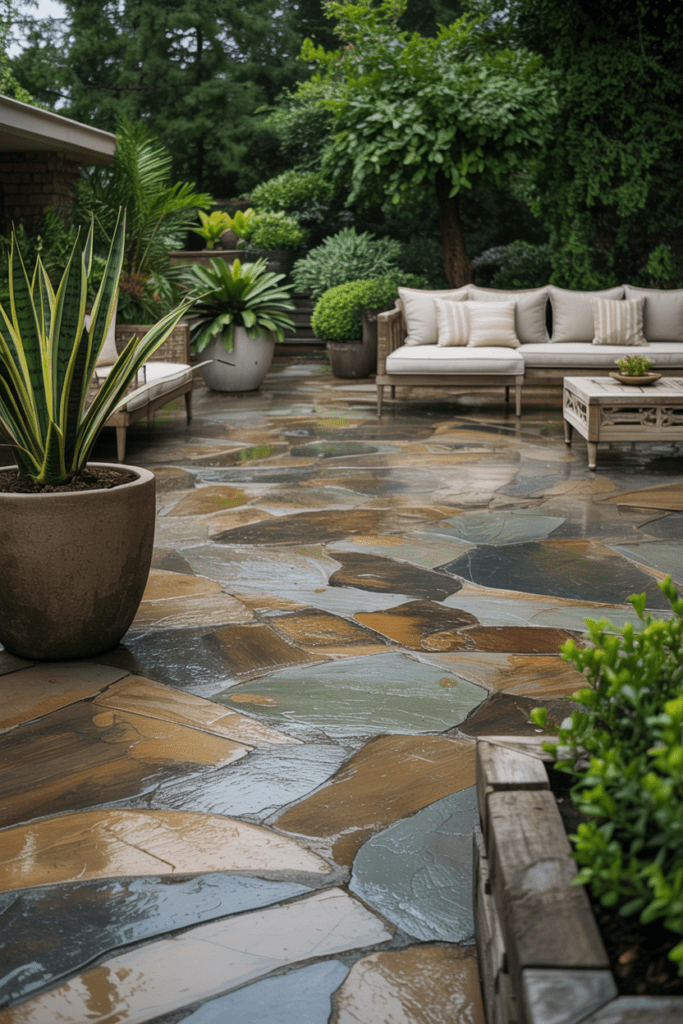
Natural stone looks gorgeous, and yes, I’m biased because it almost always elevates the whole patio. Natural stone patio flooring feels rich, textured, and organic in a way that manufactured materials rarely match. If you want a premium finish, this one deserves a serious look.
Bluestone, slate, travertine, and flagstone all bring different colors and textures. That variety helps you match the flooring to your home’s style. Why settle for average when your patio can look like a boutique resort?
Popular natural stone choices
- Flagstone for a rustic, irregular look.
- Bluestone for a elegant, cool-toned finish.
- Slate for texture and bold character.
- Travertine for a softer, more refined feel.
Why people love it
- High-end appearance with natural variation.
- Excellent durability in many climates.
- Works in rustic, Mediterranean, traditional, and luxury outdoor spaces.
- Adds strong resale appeal.
Stone usually costs more, and installation can get pricey too. Still, if you want one of the best outdoor patio flooring ideas for visual impact, natural stone rarely disappoints.
5. Flagstone Patio Flooring
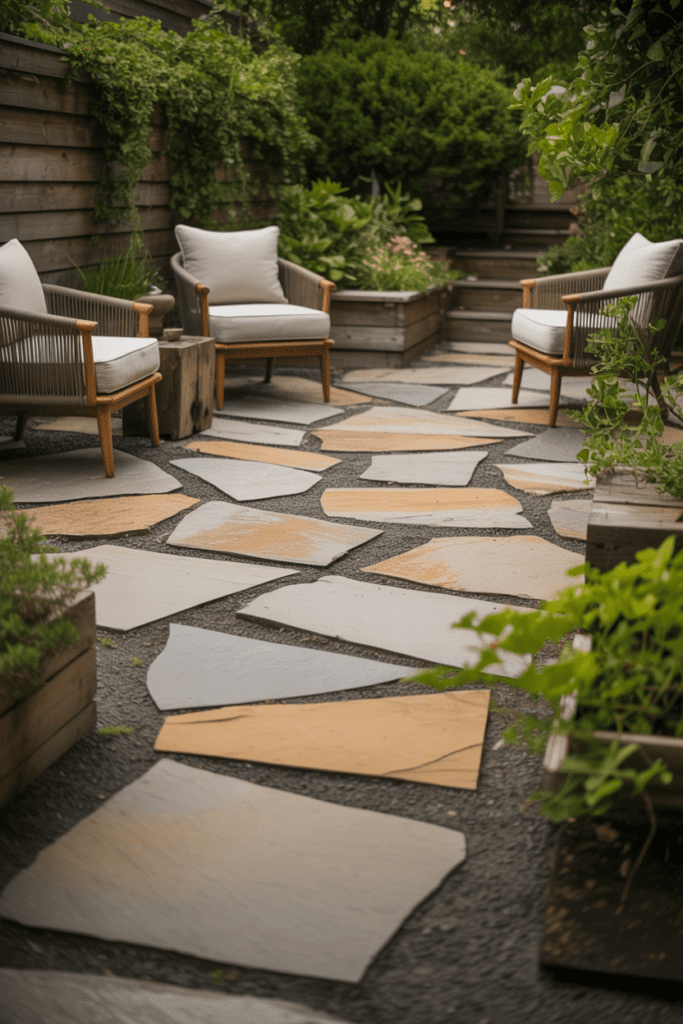
Flagstone deserves its own spotlight because it’s one of the most popular patio materials for good reason. It creates that relaxed, organic layout that feels custom and slightly effortless. Of course, “effortless” usually still costs money, because the universe enjoys irony.
I love flagstone for patios that connect with gardens, gravel paths, or natural landscaping. The irregular pieces feel softer and less formal than perfectly cut pavers. That helps the whole yard look balanced instead of stiff.
Why flagstone stands out
- Natural, irregular shapes create a custom feel.
- Pairs beautifully with greenery and landscaping.
- Offers good traction underfoot.
- Lasts for years with proper installation.
You can install flagstone with mortar or place it over sand and gravel. That choice changes both the look and the cost, so it helps to decide early.
6. Paver Patio Flooring
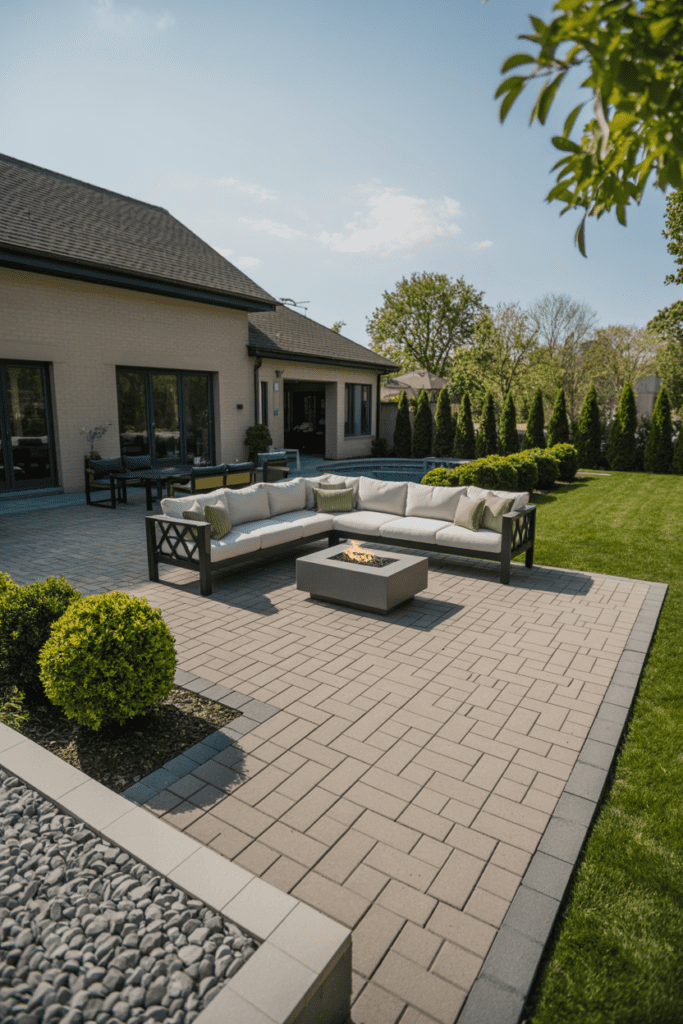
Pavers are one of the smartest choices for homeowners who want durability and design options. Patio pavers come in concrete, stone, and brick styles, and they let you create almost any pattern you want. If you like flexibility, pavers make life easier.
I’ve seen paver patios work in tiny courtyards and large backyards equally well. They look neat, feel intentional, and make repairs simpler because you can replace individual pieces. That alone wins points with me.
Benefits of patio pavers
- Easy to customize with colors, shapes, and layouts.
- Great for modern, traditional, and transitional patios.
- Easier to repair than poured concrete.
- Strong drainage when installed correctly.
Common paver patterns
- Herringbone
- Running bond
- Basket weave
- Random modular layout
Pavers do require prep work. If the base fails, the patio can shift, dip, or wobble, which gets old very quickly.
7. Gravel Patio Flooring
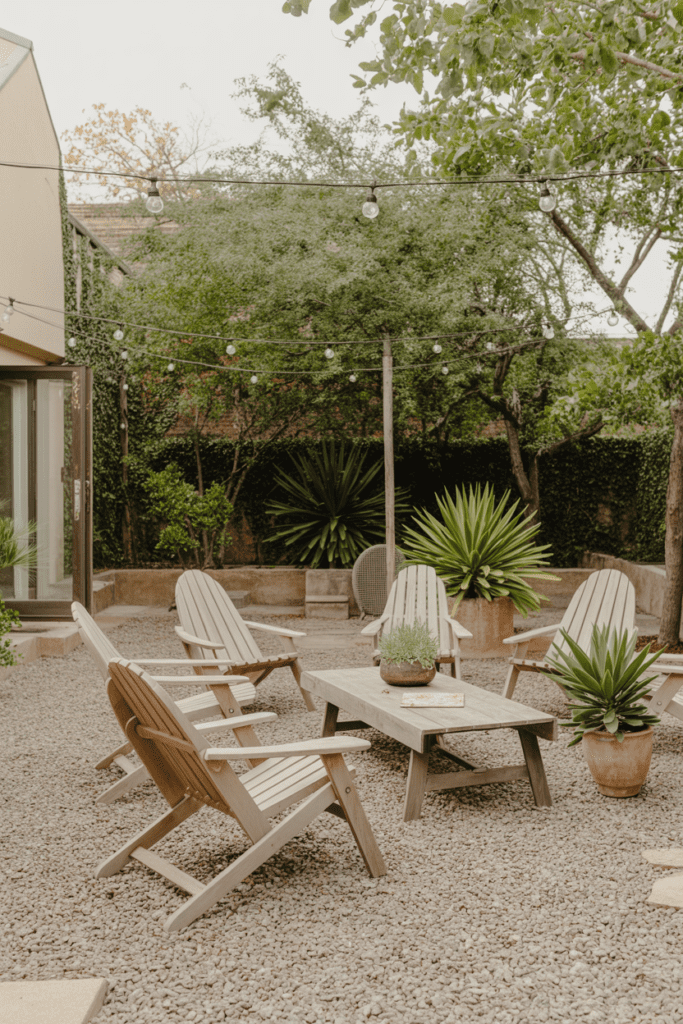
Gravel feels casual, affordable, and surprisingly attractive when done right. Gravel patio flooring works especially well for informal outdoor spaces, garden seating areas, and budget-friendly backyard upgrades. It’s simple, but simple doesn’t mean boring.
I actually like gravel more than some people do because it drains well and gives patios a relaxed look. Plus, installation usually moves faster than more complicated materials. Want a low-cost option that still looks intentional? Gravel deserves a shot.
Why gravel works
- Affordable patio flooring option for tight budgets.
- Excellent drainage during rainy weather.
- Easy to install in many backyard layouts.
- Great for cottage, rustic, and casual outdoor spaces.
Where gravel falls short
Loose gravel moves around. That’s part of the deal. If you hate the idea of occasional raking or hearing stones crunch under chairs, this may not be your forever favorite :/
8. Pea Gravel Patio Flooring
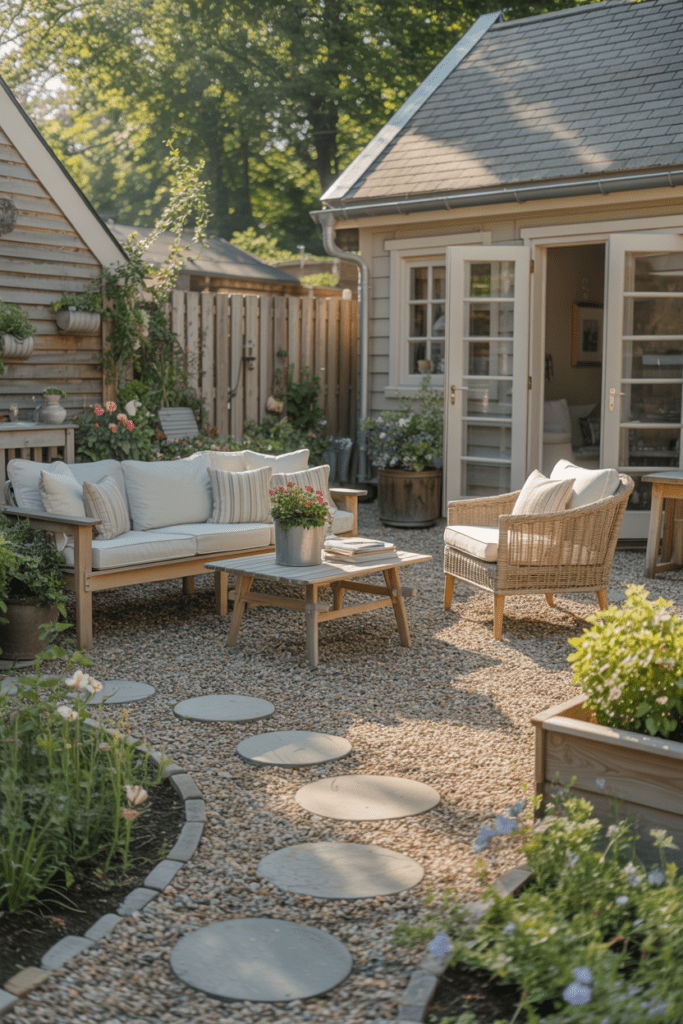
Pea gravel offers a softer version of traditional gravel. The small, rounded stones create a more finished look and feel better underfoot than larger crushed rock. That difference matters more than you’d think.
This option works well in gardens, fire pit zones, and relaxed lounge areas. I’d use edging to keep everything contained, because pea gravel likes to wander like it pays no rent. A little structure goes a long way here.
Best features of pea gravel
- Soft texture compared to rough gravel.
- Works beautifully in casual landscapes.
- Offers solid drainage.
- Usually costs less than stone or pavers.
For best results, pair pea gravel with stepping stones, border edging, or a stabilizing grid. That keeps the patio looking polished instead of messy.
9. Outdoor Tile Patio Flooring
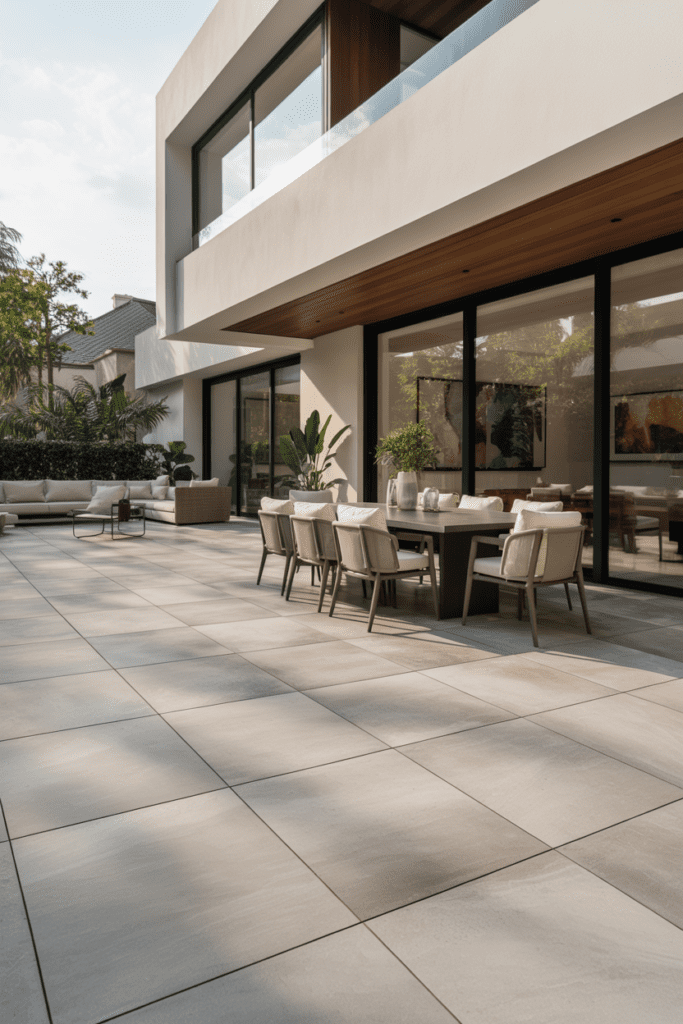
Outdoor tile can look stunning when you choose the right material. Porcelain tile patio flooring gives you crisp lines, modern style, and lots of design flexibility. If you want that clean designer look, tile can absolutely deliver.
I especially like tile for covered patios or areas with a more architectural feel. It creates a polished finish that feels almost like an indoor room extending outside. Ever wanted your backyard to feel a little more put together without becoming fussy? Tile does that nicely.
Good outdoor tile options
- Porcelain tile for durability and low water absorption.
- Textured stone-look tile for a natural appearance.
- Concrete-look tile for a sleek, modern vibe.
What to watch for
Not every tile belongs outside. Choose tile rated for exterior use and slip resistance, or you may end up with a patio that turns into a skating rink after rain. That’s exciting in exactly zero good ways.
10. Deck Tiles for Easy Installation
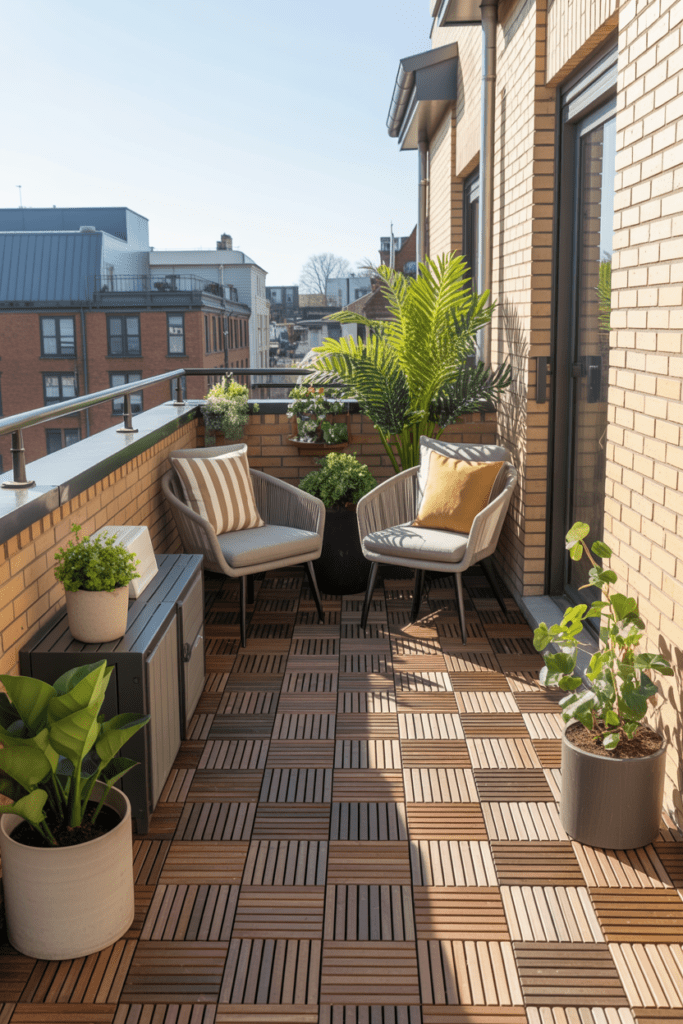
If you want a fast patio refresh, interlocking deck tiles make a lot of sense. These tiles snap together over an existing surface, so they work well for renters, quick makeovers, or anyone who doesn’t want a huge renovation. Sometimes easy really is the better option.
You can find deck tiles in wood, composite, or stone-look materials. They instantly upgrade concrete balconies, rooftop patios, and worn outdoor corners. FYI, this option feels especially satisfying if you enjoy before-and-after projects.
Why deck tiles are popular
- DIY-friendly and easy to install.
- Great for covering old concrete.
- Available in several finishes and colors.
- Ideal for small patios, balconies, and temporary upgrades.
Deck tiles may not last as long as a fully built patio surface, but they offer convenience that many homeowners appreciate.
11. Wood Decking for a Warm Patio Feel
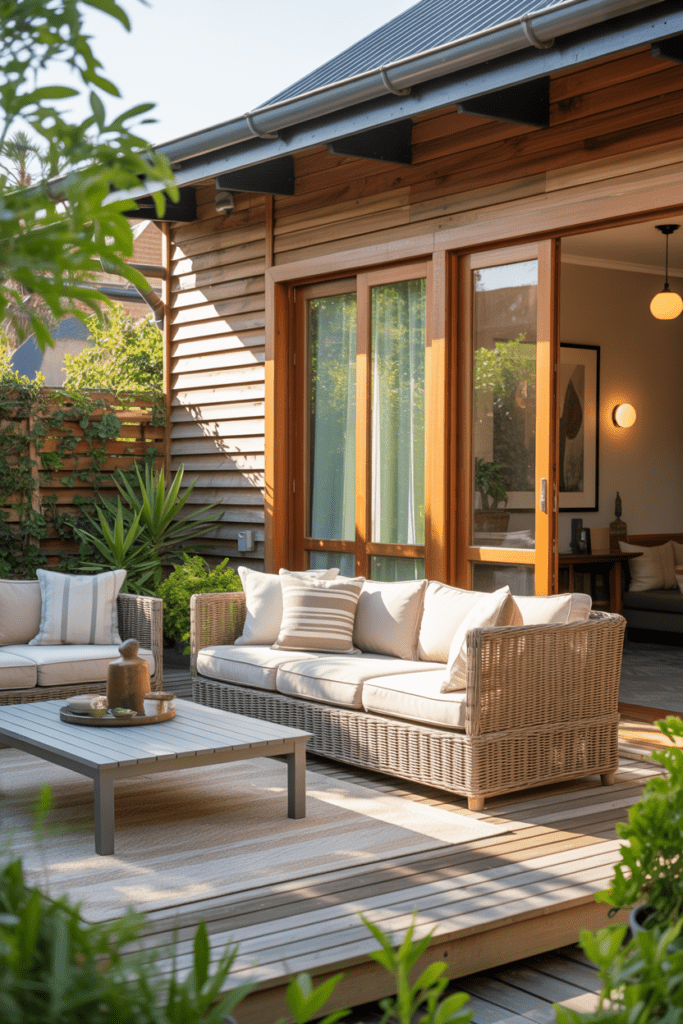
Wood brings warmth that hardscape materials often can’t match. Wood patio flooring feels inviting, natural, and comfortable under bare feet, which matters a lot during outdoor lounging season. If comfort ranks high on your list, wood deserves attention.
I love the look of cedar, redwood, and pressure-treated lumber for outdoor spaces. Wood suits everything from rustic patios to modern backyard decks. It does need maintenance, though, because sunshine and rain don’t exactly pamper it.
Why homeowners choose wood
- Warm, natural appearance.
- Comfortable underfoot in many climates.
- Works well for raised patios, decks, and lounge spaces.
- Can be stained or painted to match your style.
Maintenance checklist
- Seal or stain the wood regularly.
- Inspect for rot or splinters.
- Clean debris and moisture buildup.
- Repair damaged boards quickly.
If you don’t mind upkeep, wood adds a welcoming feel that many other outdoor flooring ideas struggle to match.
12. Composite Decking for Low Maintenance
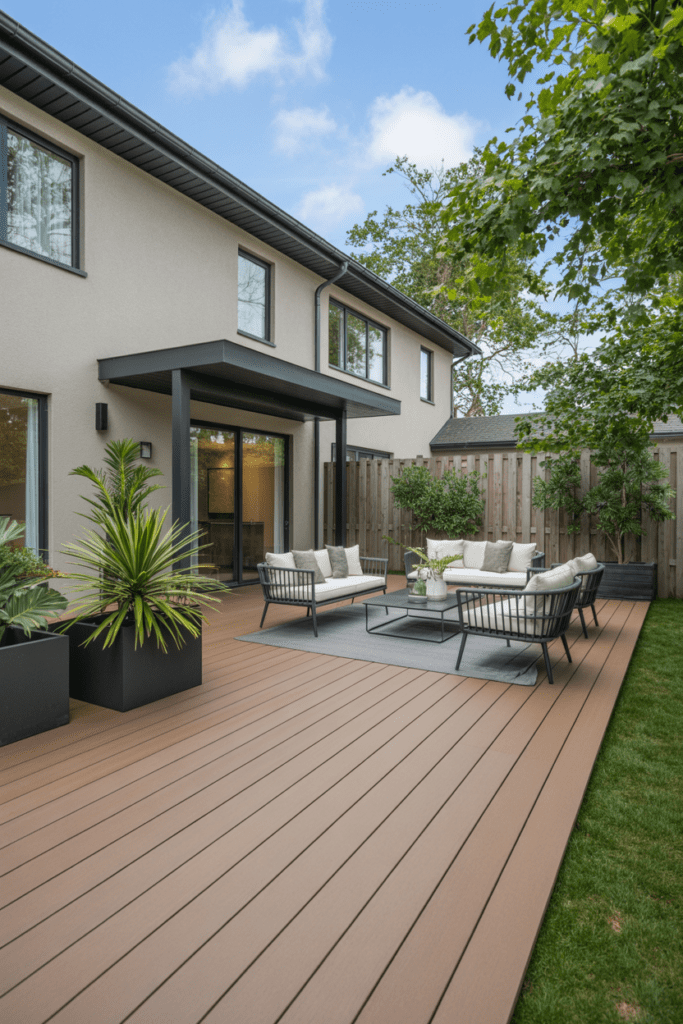
Composite decking gives you the look of wood without so much maintenance drama. It resists rot, fading, and insect damage better than natural wood, which makes life easier. And honestly, easier sounds pretty great when weekend chores already pile up.
I often recommend composite patio flooring to people who want a clean, modern outdoor space with less hassle. It costs more upfront, but it saves time and maintenance later. Isn’t that trade-off worth considering?
Why composite stands out
- Low maintenance compared to natural wood.
- Resists moisture, insects, and warping.
- Available in many wood-look colors.
- Great for busy homeowners who want durability.
Composite can get hot in direct sun, so color choice matters. Lighter shades usually feel better during peak summer afternoons.
13. Travertine Patio Flooring
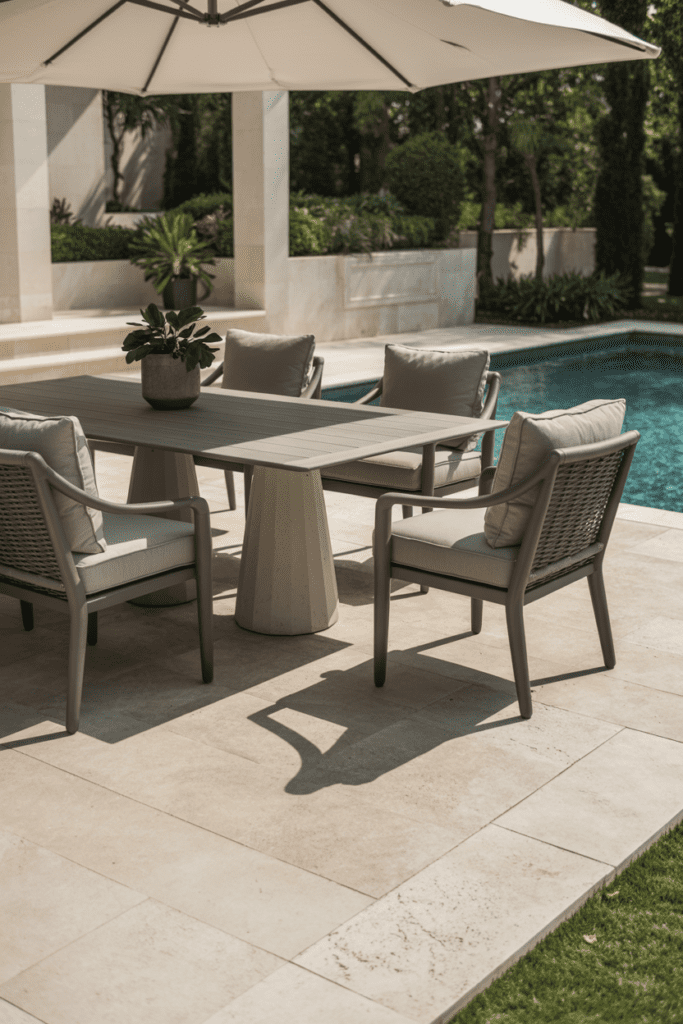
Travertine gives patios a bright, upscale look that feels especially good in sunny climates. This natural stone stays cooler underfoot than some darker materials, which makes it practical as well as pretty. That combo doesn’t happen by accident.
I like travertine for elegant patios around pools, dining areas, and outdoor kitchens. It has a refined texture without feeling too glossy or formal. If you want a patio that whispers “luxury” instead of shouting it, travertine nails the vibe.
Reasons to love travertine
- Cooler underfoot in hot weather.
- Elegant natural stone appearance.
- Works beautifully for Mediterranean, coastal, and upscale patio designs.
- Offers a softer, lighter color palette.
Travertine needs sealing, and some varieties scratch more easily than granite. Still, for beauty and comfort, it remains one of my favorite patio flooring materials.
14. Rubber Pavers for Comfort and Safety
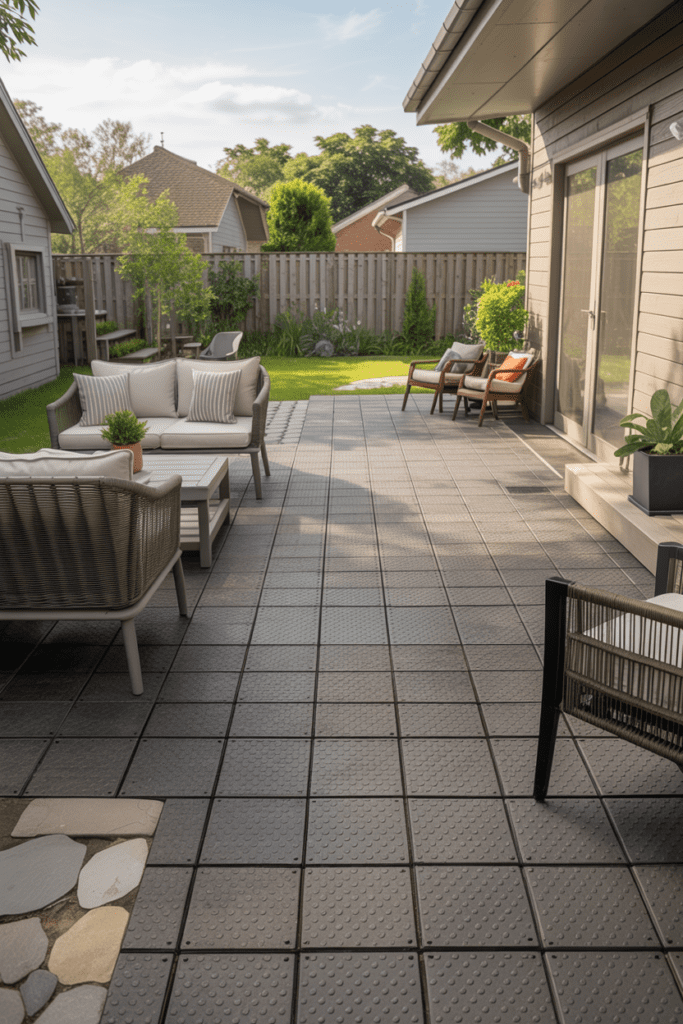
Rubber pavers don’t get much attention, but they solve specific problems really well. Rubber patio flooring offers cushioning, slip resistance, and easy maintenance, which makes it useful in family-friendly spaces. Not every patio needs to look like a luxury resort, right?
This material works nicely near play zones, outdoor gyms, and areas where comfort matters more than a super high-end finish. It also helps soften falls, which parents tend to appreciate. Funny how that suddenly becomes important when kids start launching themselves off furniture.
Best uses for rubber pavers
- Play areas
- Outdoor workout spaces
- Poolside zones
- Multi-use family patios
Main benefits
- Soft underfoot.
- Good slip resistance.
- Often made from recycled materials.
- Easy to replace if damaged.
Rubber pavers won’t give you the same classic appeal as brick or stone, but they win on comfort and practicality.
15. Artificial Turf Combined With Pavers
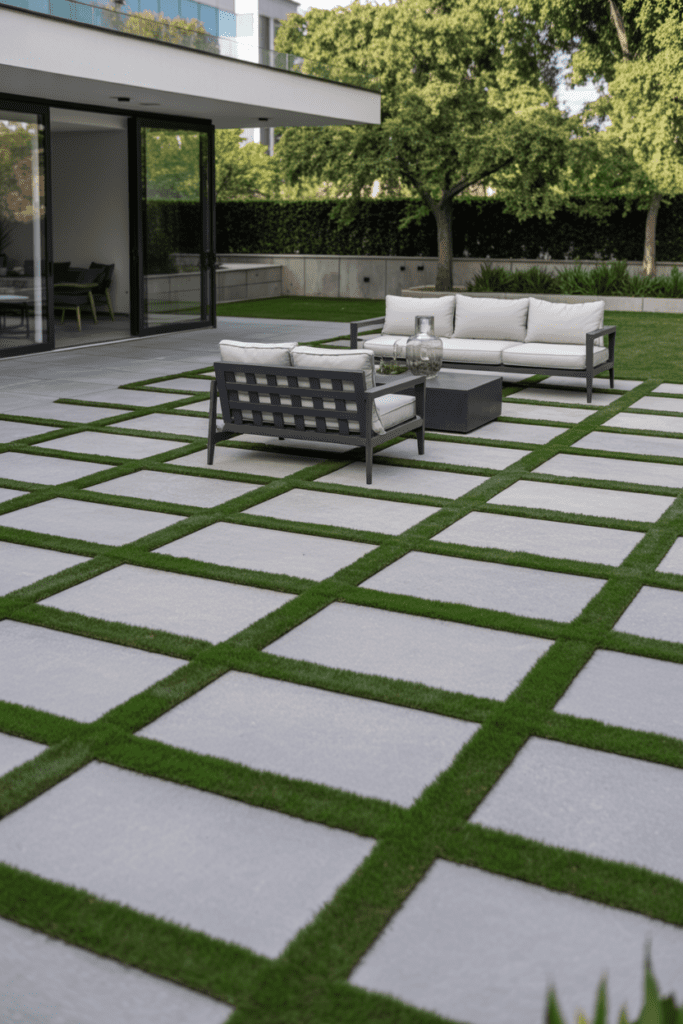
This option isn’t traditional, but it looks sharp when done well. Artificial turf and paver patios mix hard surfaces with green texture, creating a modern outdoor look that feels fresh and low maintenance. If you want something a little different, this combo stands out fast.
I’ve seen this style work beautifully in compact courtyards and contemporary backyards. The pavers create structure, and the turf softens the layout. The result feels clean, graphic, and surprisingly inviting.
Why this combo works
- Modern visual contrast between green turf and hard pavers.
- Less maintenance than natural grass.
- Works well in small patios and urban outdoor spaces.
- Helps create zones for seating and walking.
The key here is restraint. Too much turf can make the space look artificial in a not-great way, so balance matters.
How to Choose the Best Outdoor Patio Flooring
Picking the best patio flooring depends on more than looks. You need to think about budget, weather, maintenance, and how you actually use the space. A gorgeous floor means very little if you end up babying it every weekend.
When I compare outdoor patio flooring ideas, I usually focus on a few practical questions first.
Ask yourself these questions
- What is my budget?
Some materials look amazing but cost a lot to install. - How much maintenance can I handle?
Be honest here. Fantasy-you and real-you may have different opinions. - Does my patio get full sun, heavy rain, or freezing weather?
Climate changes how materials perform. - Do I want a casual look or something more polished?
Style affects the best material choice. - Will kids, pets, or lots of guests use the patio often?
Heavy use calls for durability and comfort.
Best Patio Flooring Ideas by Style
If you feel stuck, matching flooring to style can simplify the decision.
For modern patios
- Concrete
- Stamped concrete
- Porcelain tile
- Artificial turf with pavers
For rustic or cottage patios
- Brick
- Flagstone
- Gravel
- Pea gravel
For upscale outdoor spaces
- Natural stone
- Travertine
- High-end pavers
- Porcelain tile
For low-maintenance patios
- Composite decking
- Concrete
- Rubber pavers
- Deck tiles
Quick Comparison of Patio Flooring Materials
Here’s a simple breakdown to help you narrow things down.
- Concrete: Affordable, durable, simple look.
- Stamped concrete: Decorative, durable, mid-range cost.
- Brick: Timeless, charming, moderate maintenance.
- Natural stone: Premium look, higher cost, strong durability.
- Flagstone: Organic style, durable, more expensive.
- Pavers: Versatile, repairable, strong long-term value.
- Gravel: Cheap, casual, easy drainage.
- Pea gravel: Soft, affordable, relaxed appearance.
- Outdoor tile: Stylish, polished, needs correct product choice.
- Deck tiles: Easy upgrade, DIY-friendly, less permanent.
- Wood: Warm, inviting, requires regular maintenance.
- Composite: Durable, low maintenance, higher upfront cost.
- Travertine: Elegant, cool underfoot, upscale option.
- Rubber pavers: Safe, soft, practical.
- Artificial turf with pavers: Modern, low maintenance, visually unique.
Conclusion
The best patio floor doesn’t just look good in photos. It fits your budget, handles your weather, and matches the way you actually live. That’s the real goal.
If you want timeless charm, go with brick, flagstone, or natural stone. If you want something practical and easy, concrete, pavers, or composite decking make a lot of sense. And if you want a quick upgrade without a giant project, deck tiles or gravel can work surprisingly well 🙂
At the end of the day, the right choice comes down to your space, your style, and your tolerance for maintenance. Pick the option that makes you want to step outside more often, because a patio should feel like an invitation, not another chore pretending to be a design feature.