
Plants change a room fast. One tiny pothos on a shelf somehow turns people into proud plant parents who suddenly say things like, “This corner finally has energy.” Weird how that works, right?
But here’s the problem. Most people want more greenery without sacrificing half their living room floor space. Giant pots everywhere look cool for about three days until you start tripping over them while carrying coffee. That’s where indoor vertical garden ideas come in.
Vertical gardens let you grow upward instead of outward. They save space, create a cozy atmosphere, and honestly make your home look far more expensive than it probably is. I’ve tested a few of these setups myself, and FYI, some are shockingly easy even if you forget to water plants sometimes 🙂
Whether you live in a tiny apartment, a modern condo, or a house that just feels a little boring lately, these indoor vertical garden ideas can completely change the vibe of your space. Some look sleek and modern. Others feel warm and jungle-like. A few even help hide ugly blank walls that stare at you every day like unpaid bills.
Let’s get into the ideas.
1. Floating Shelf Plant Wall
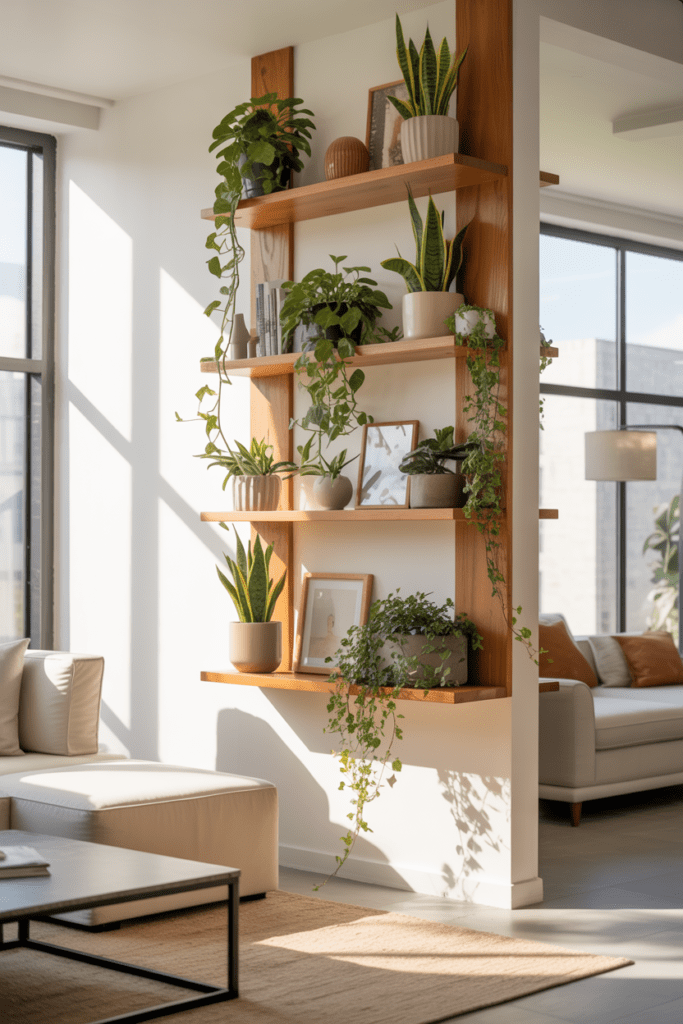
A floating shelf plant wall gives you one of the easiest ways to build an indoor vertical garden without making your home look like a science project. You simply install several wooden shelves vertically and layer plants across them at different heights. The setup looks clean, modern, and surprisingly high-end.
I love this option because it works for almost every decorating style. Rustic homes look great with warm wood shelves, while minimalist apartments look amazing with matte black shelving and simple ceramic pots. You can even mix books, candles, and framed art between plants so the setup feels intentional instead of chaotic.
The secret here comes down to plant variety. Combine trailing plants like pothos with upright plants like snake plants or ZZ plants. The contrast creates depth and keeps the arrangement from looking flat.
A few plants that work especially well include:
- Pothos
- Philodendron
- Snake plants
- Spider plants
- Small ferns
Keep the lower shelves slightly fuller than the top ones. That little trick helps the wall feel balanced instead of top-heavy. Trust me, it matters more than people think.
2. Hanging Pocket Wall Garden
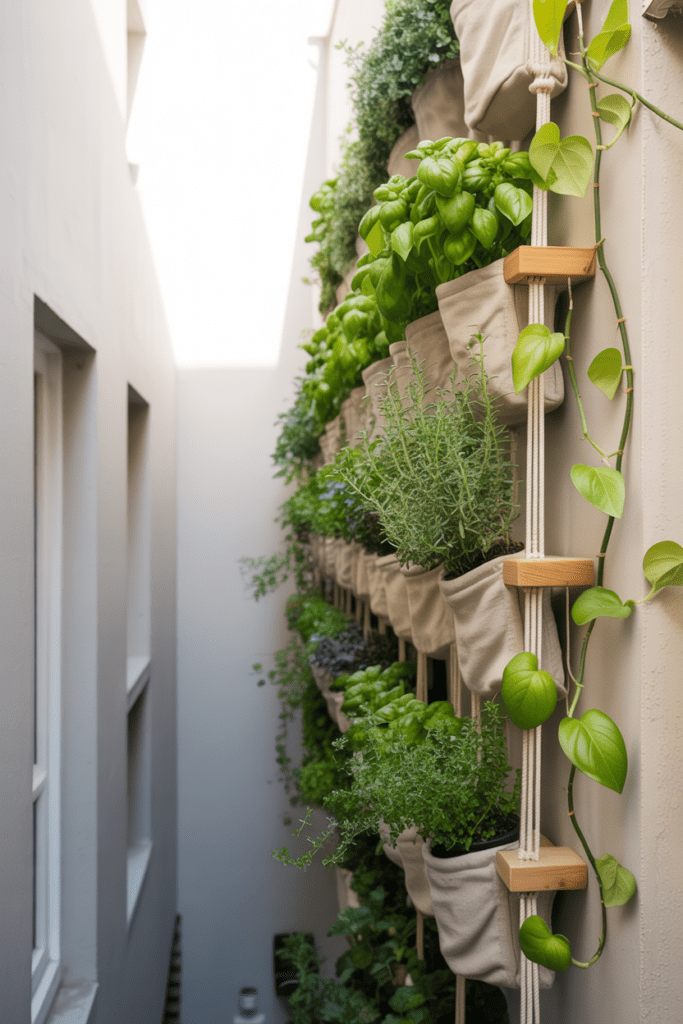
Pocket wall gardens look ridiculously cool while taking up almost zero space. You attach a fabric or felt organizer to the wall and fill each pocket with small plants. That’s it. Seriously.
This setup works especially well in apartments because you can cover a blank wall without adding bulky furniture. I once saw someone turn a boring hallway into a mini jungle using nothing but a hanging pocket organizer and a few trailing plants. The transformation looked dramatic, yet the entire setup probably cost less than one fancy floor lamp.
Herbs also thrive in pocket wall gardens. Imagine walking into your kitchen and grabbing fresh basil straight from the wall while cooking pasta. Feels slightly dramatic in the best way possible.
For the healthiest setup, choose lightweight plants that don’t grow massive roots too quickly. Small pothos, herbs, peperomia, and ferns usually perform really well here.
One quick warning though. Don’t overwater these systems unless you enjoy mysterious wall stains and regret.
3. Ladder Shelf Vertical Garden
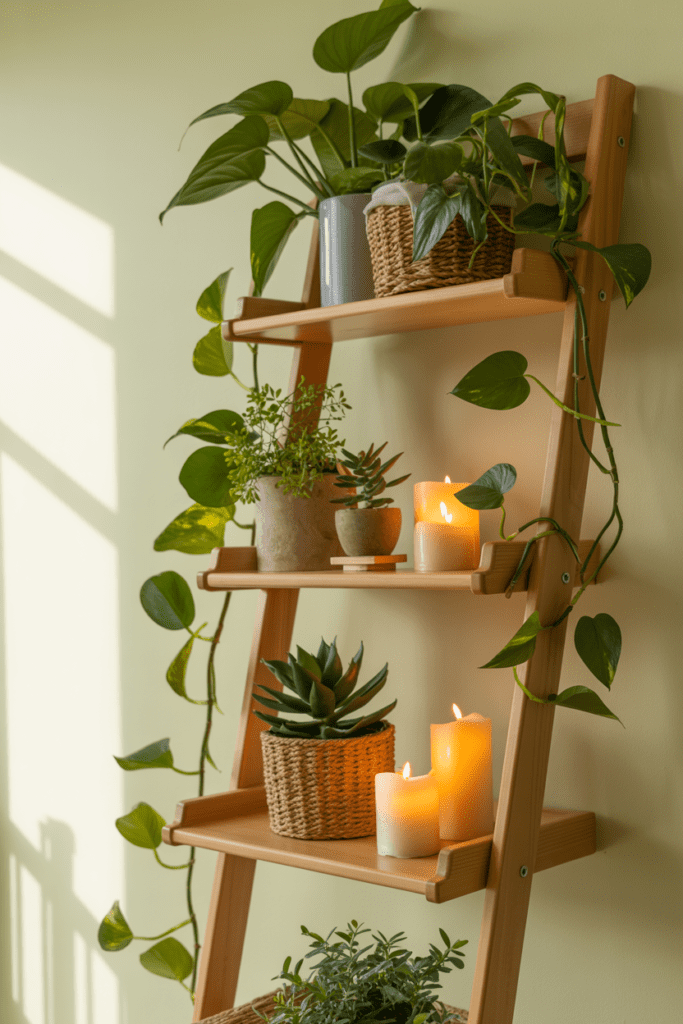
Ladder shelves make indoor vertical gardening almost embarrassingly easy. You lean the ladder shelf against the wall and start adding plants. No drilling. No complicated measuring. No weekend-long DIY meltdown.
This idea works beautifully for renters because you can move everything whenever you want. Plus, ladder shelves naturally create different levels for your plants, which makes the arrangement feel layered and interesting.
I personally love mixing plant sizes on ladder shelves. Put larger plants near the bottom for stability, then gradually work upward with smaller pots and trailing greenery. The finished look feels organic and balanced.
A ladder shelf vertical garden also gives you room to play with decor. You can add:
- Woven baskets
- Small grow lights
- Decorative books
- Candles
- Tiny sculptures
That combination keeps the setup from looking too much like a greenhouse exploded in your living room.
4. Mounted Wooden Crate Garden
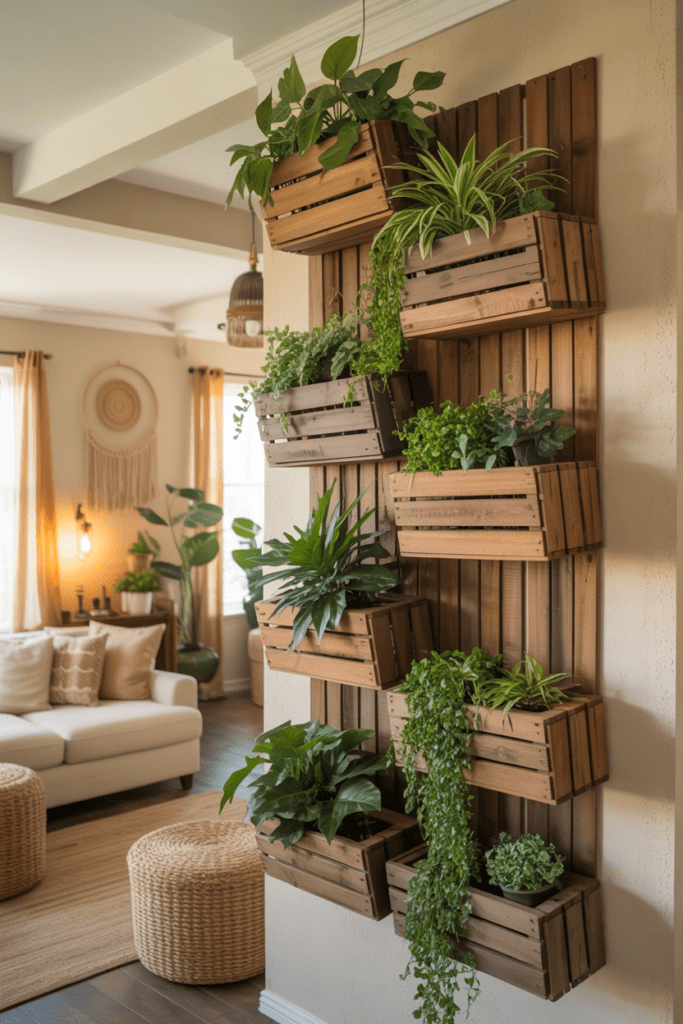
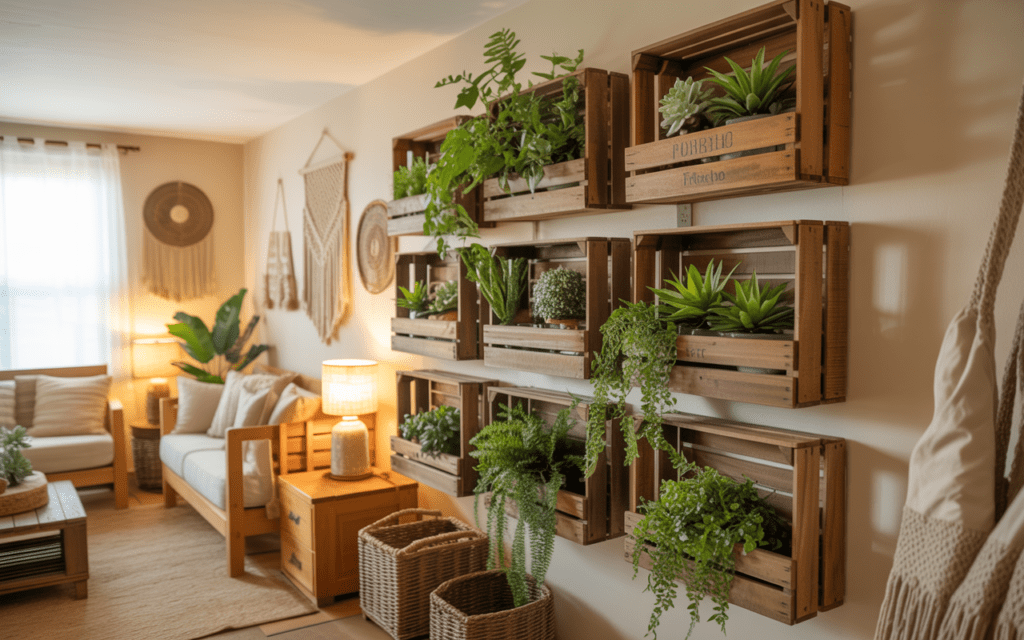
Wooden crates instantly add warmth and texture to a space. Mount a few crates vertically on the wall, and suddenly your boring corner starts looking Pinterest-worthy.
This indoor vertical garden idea works especially well in farmhouse, rustic, or boho-style homes. The natural wood pairs beautifully with leafy green plants, and the crate compartments help separate everything neatly.
You can keep the design symmetrical for a polished look or stagger the crates for something more relaxed. Personally, I prefer the staggered style because it feels more natural and less “I measured this six times while sweating.”
Small potted plants work best here because they’re easier to rearrange. I’d recommend combining trailing vines with upright greenery so the display gains movement and texture.
If you want extra personality, paint the crates white, black, or sage green before hanging them. Tiny change. Massive difference.
5. Indoor Herb Garden Wall
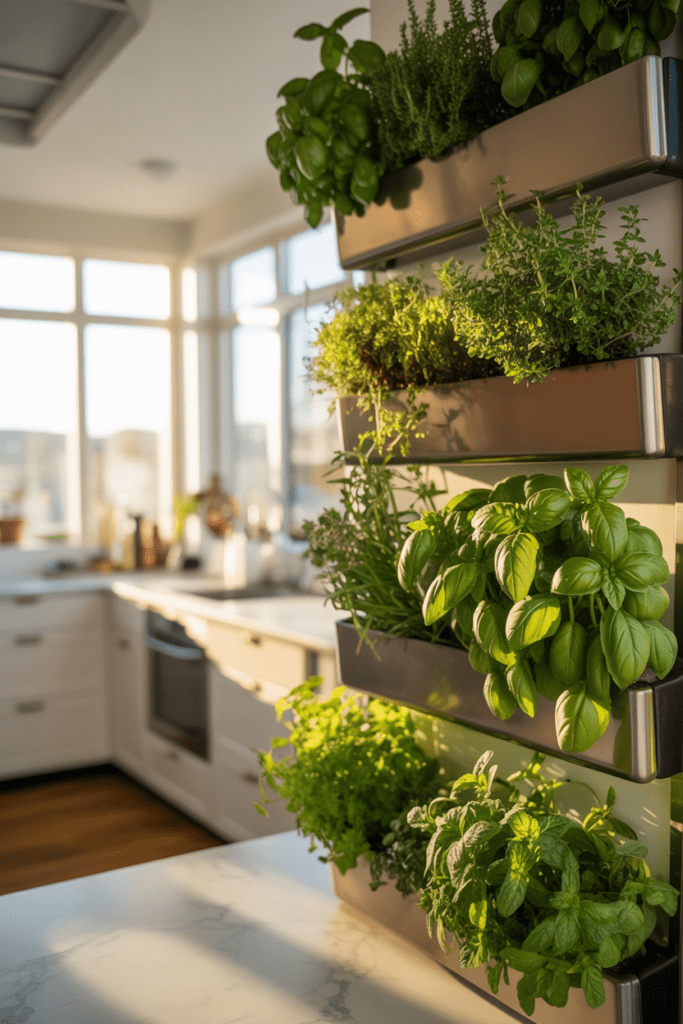
An indoor herb wall looks beautiful and actually serves a purpose. Honestly, functional decor deserves more appreciation.
Kitchen herb walls let you grow fresh ingredients vertically while saving counter space. Basil, mint, parsley, oregano, and thyme all thrive indoors when they receive enough light.
I tried this setup near a sunny kitchen window once, and it genuinely made cooking feel more enjoyable. Suddenly I acted like I hosted a cooking show every time I grabbed fresh basil. Slightly embarrassing? Maybe. Worth it? Absolutely.
Wall-mounted herb planters come in tons of styles now. Some use metal rails, while others use magnetic containers or mounted wood panels. Choose one that matches your kitchen aesthetic so the setup feels cohesive.
For the healthiest herbs:
- Place them near natural sunlight
- Avoid overwatering
- Rotate plants weekly
- Trim herbs regularly
Regular trimming actually helps herbs grow fuller. Nature really said, “Cut me so I can grow better.” Weird flex, but okay.
6. Pegboard Plant Display
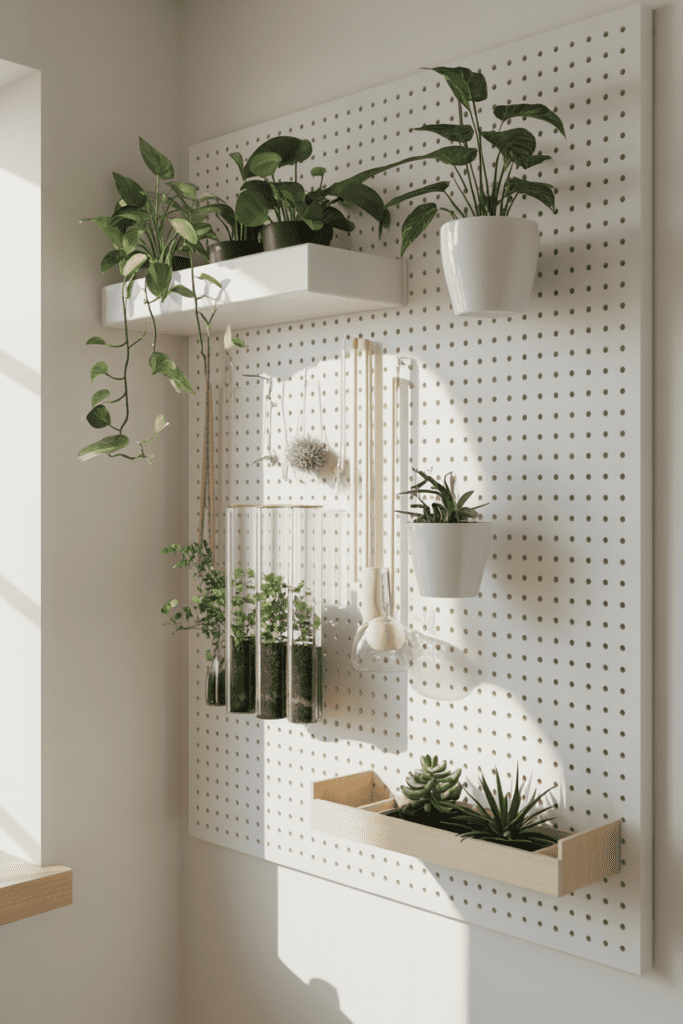
Pegboards aren’t just for garages anymore. People now use them for stylish vertical gardens, and honestly, the trend deserves the hype.
A pegboard plant display gives you flexibility that most indoor vertical garden ideas simply can’t match. You can rearrange shelves, hooks, and hanging planters whenever you want. If you get bored easily with decor, this setup feels perfect.
The clean lines make pegboards especially good for modern or Scandinavian-style interiors. White pegboards create a bright airy look, while black pegboards feel sleek and dramatic.
What makes this setup so useful comes down to customization. You can add:
- Hanging planters
- Tiny shelves
- Plant propagation tubes
- Storage baskets
- Decorative accents
That flexibility allows the wall to evolve over time instead of feeling static.
I also love how organized everything looks. Some plant setups feel chaotic after a few weeks. Pegboards somehow keep the entire display visually clean.
7. Macrame Hanging Plant Wall
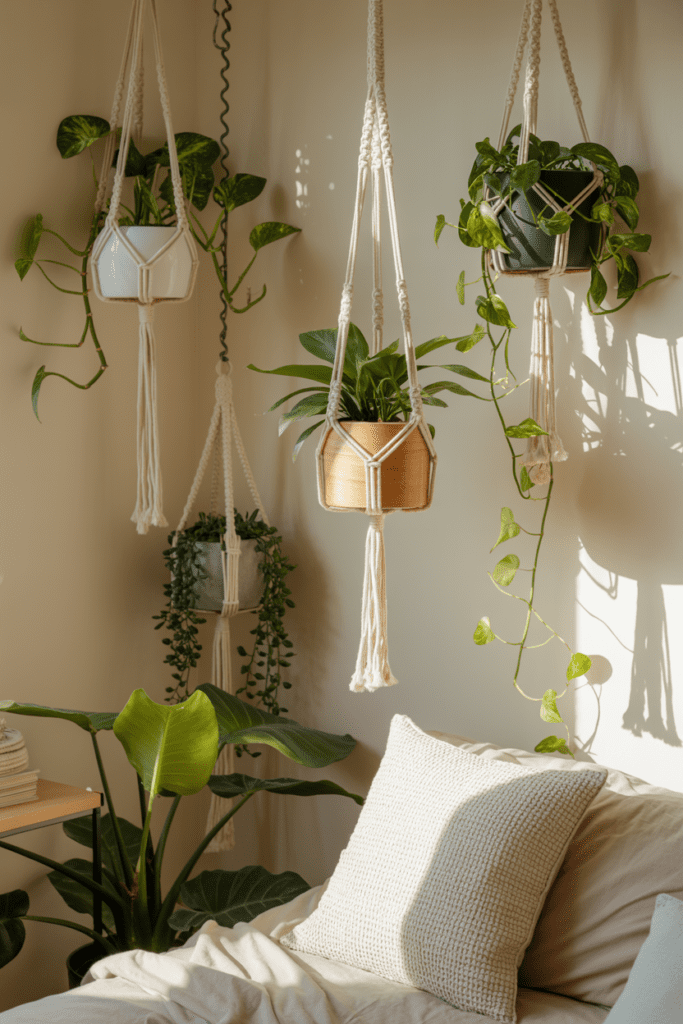
Macrame plant holders instantly make a room feel softer and cozier. Pair several together on one wall, and you get a gorgeous indoor vertical garden with strong boho vibes.
This setup works especially well in bedrooms, reading corners, and apartments with limited floor space. Since the plants hang vertically, you still keep the room feeling open and uncluttered.
The texture from the macrame adds warmth that plain pots sometimes lack. That detail matters more than people realize. A room with greenery feels nice. A room with layered textures and greenery feels designed.
Trailing plants work best here because they naturally spill downward and create movement. Golden pothos, string of pearls, and ivy look amazing in hanging setups.
One thing I learned quickly? Install sturdy hooks. Drywall does not appreciate your confidence.
8. Vertical Pipe Garden
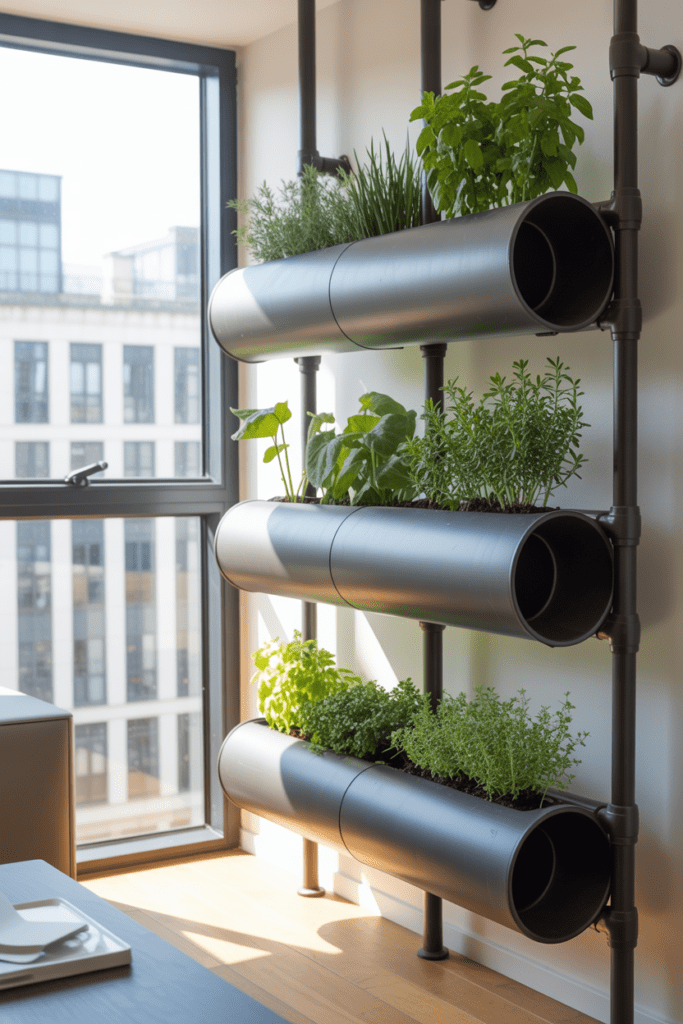
PVC pipe gardens sound weird at first. I know. But once you see one styled properly, you suddenly start pricing pipes online like a completely normal person.
This setup uses vertically mounted pipes with openings cut into them for plants. The finished result looks modern, compact, and surprisingly artistic.
Vertical pipe gardens work especially well for herbs, lettuce, pothos, and smaller houseplants. Many people place them near windows or combine them with grow lights for better growth.
One huge advantage comes from the watering system. You can often water multiple plants at once because the moisture travels downward through the structure. Less work always gets my attention.
For a cleaner appearance:
- Paint the pipes matte black or white
- Keep plant types consistent
- Use matching pots or inserts
- Avoid overcrowding the openings
Minimal styling usually works best here. Otherwise the setup starts looking slightly too “middle school science fair.”
9. Grid Panel Plant Wall
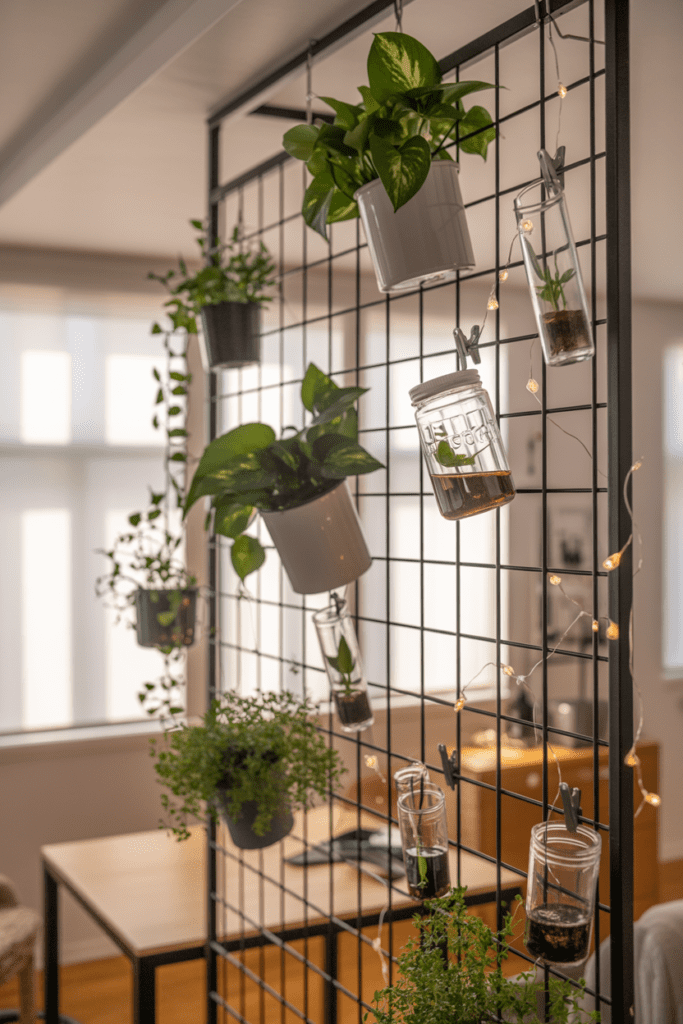
Metal grid panels create one of the most affordable indoor vertical garden ideas you can try. You attach the panel to the wall and hang lightweight planters, baskets, or propagation jars directly from it.
This setup feels modern without looking cold. It also works beautifully in home offices because the greenery softens the room while the structure keeps everything organized.
I especially love grid panels for renters because they feel lightweight and easy to customize. You can switch out plants, rearrange containers, or add decorative pieces whenever you want.
Some great additions include:
- Mini hanging pots
- Clip-on planters
- Fairy lights
- Propagation tubes
- Tiny shelves
The combination of metal and greenery creates a nice contrast. The structured grid keeps the setup visually tidy while the plants add softness and life.
10. Window Frame Vertical Garden
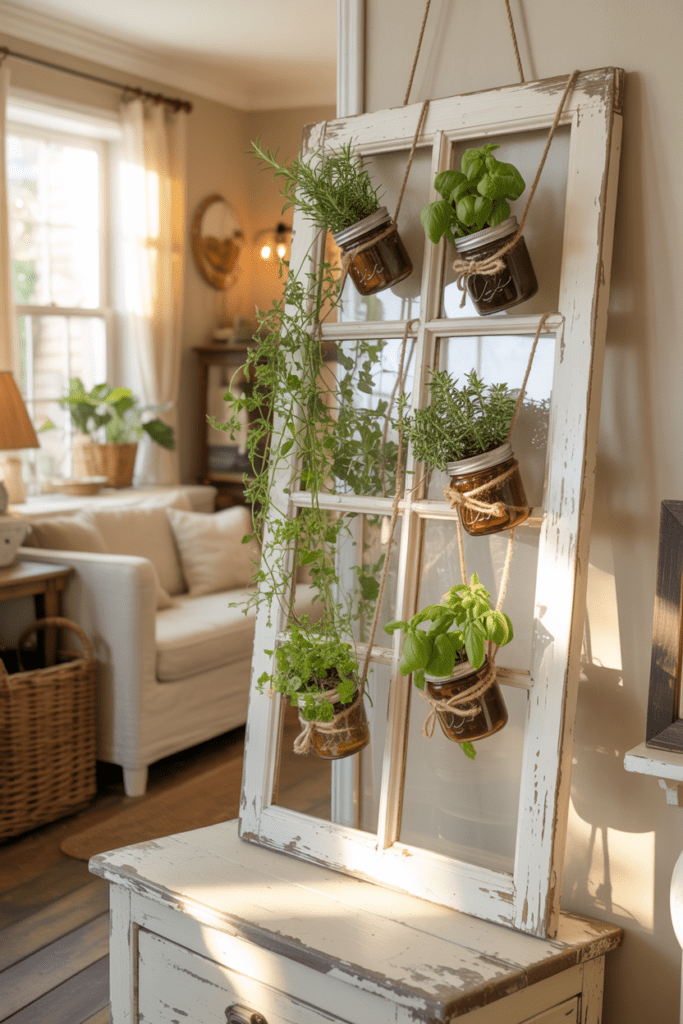
A window frame vertical garden feels charming and slightly vintage in the best way possible. You repurpose an old window frame and attach small planters or hanging jars inside the frame openings.
This idea works beautifully in cottagecore, farmhouse, or rustic interiors. The old frame adds character instantly, even before you add plants.
I saw one setup where someone painted the frame distressed white and filled it with tiny herbs and trailing ivy. The wall looked straight out of a cozy magazine spread.
Small plants usually work best because the frame itself already creates strong visual structure. Too many large plants can make the arrangement feel crowded.
You can also add little decorative touches like handwritten plant labels or tiny string lights. Just don’t overdo it. Sometimes people decorate every inch and suddenly the wall starts screaming for attention.
11. Corner Vertical Plant Stand
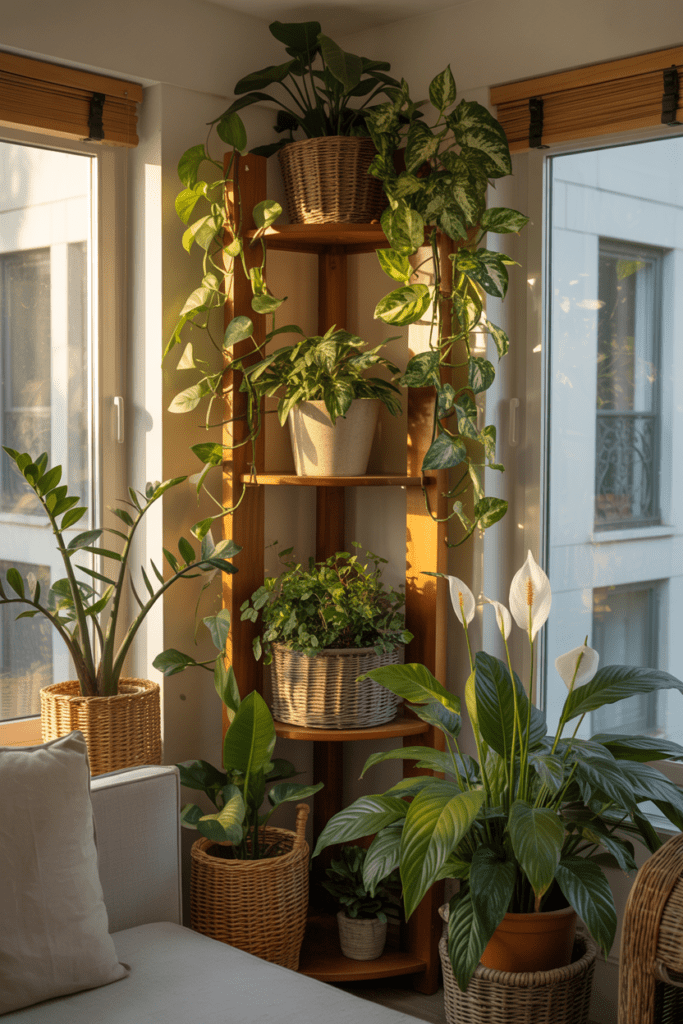
Corners often become dead space in a room. Dust collects there. Random bags appear there. Somehow every unused charger ends up there too.
A corner vertical plant stand fixes that problem fast.
Tall corner shelves let you stack greenery upward while using an area that usually gets ignored. This setup works especially well in small apartments because it maximizes awkward spaces without overwhelming the room.
I recommend combining several plant heights and leaf shapes for a fuller appearance. Mix broad-leaf plants with trailing vines and compact greenery so the arrangement feels layered.
Lighting also matters here. Corners sometimes receive less sunlight, so choose lower-light plants unless you plan to add grow lights.
Some excellent low-light options include:
- ZZ plants
- Snake plants
- Pothos
- Peace lilies
- Chinese evergreen
These plants survive surprisingly well even when life gets busy.
12. Magnetic Wall Planters
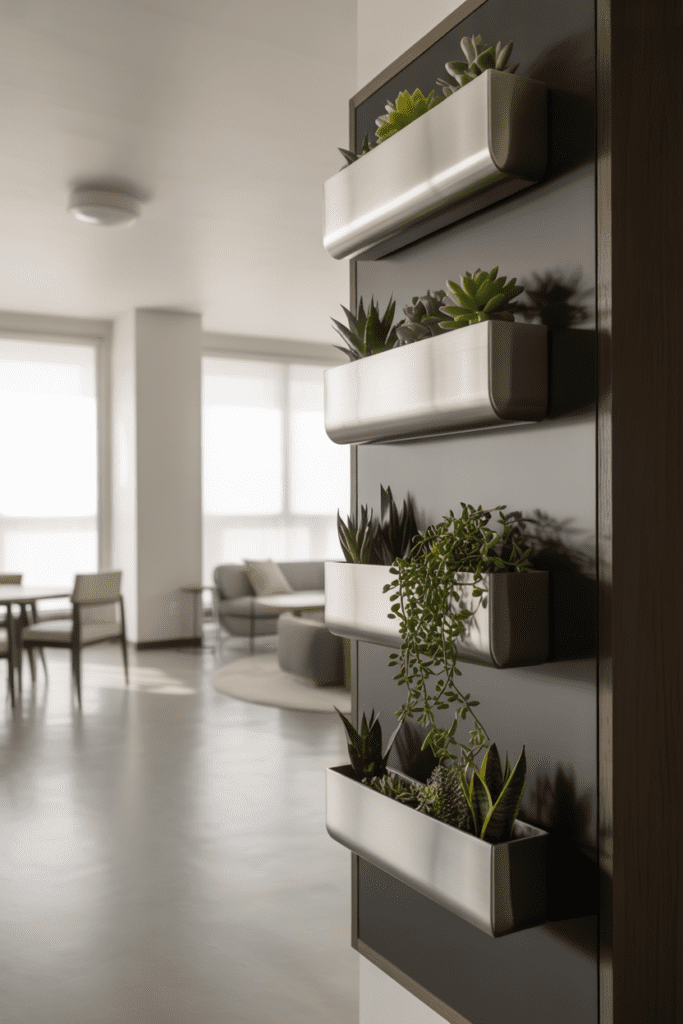
Magnetic wall planters feel sleek, modern, and honestly kind of futuristic. You attach a magnetic board to the wall and place magnetic planters directly onto it.
The setup looks incredibly clean because the planters almost appear to float. This idea works especially well in minimalist homes or modern apartments where clutter ruins the vibe instantly.
Succulents and small plants usually work best because they stay lightweight. Plus, smaller greenery complements the clean aesthetic.
What makes magnetic planters fun comes down to flexibility. You can rearrange everything in seconds without tools or wall damage. Commitment issues? Perfect.
This setup also works well in kitchens or home offices where you want greenery without bulky shelves taking over the room.
13. Indoor Trellis Plant Wall
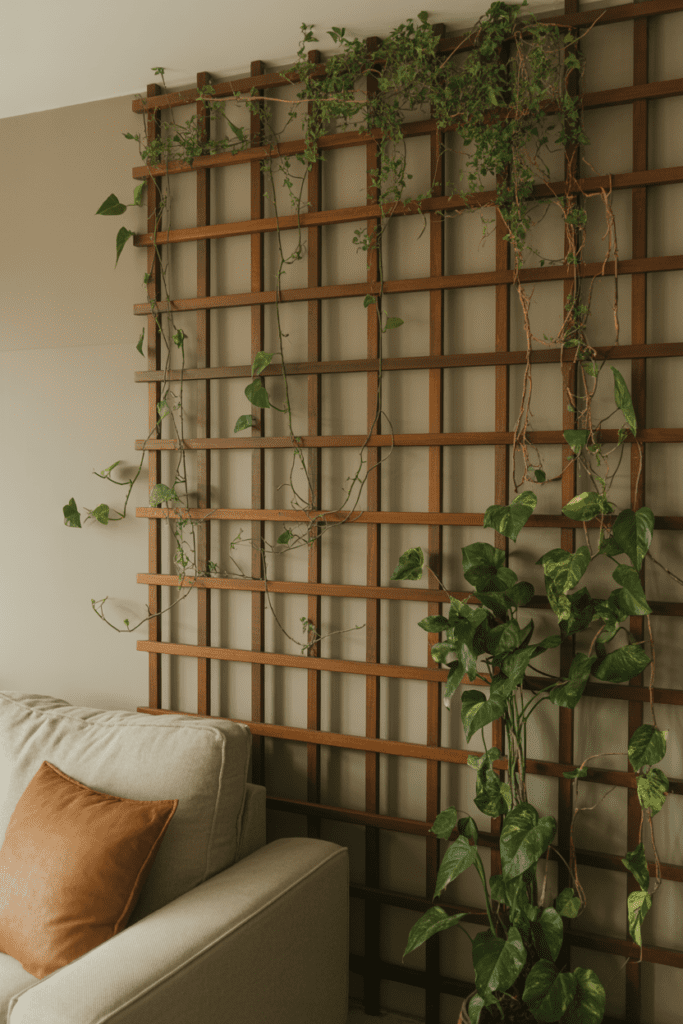
Trellises aren’t just for outdoor gardens anymore. Indoor trellis walls create stunning vertical displays while helping climbing plants grow naturally.
This setup looks especially beautiful with vining plants like pothos, ivy, philodendron, and monstera adansonii. Over time, the vines spread across the trellis and create a lush living wall effect.
I love this option because it evolves naturally. The wall changes every month as the plants grow and climb. You genuinely feel like you’re creating a living piece of decor instead of simply buying one.
Wood trellises create warmth, while black metal trellises feel modern and dramatic. Both styles work beautifully depending on your space.
One important tip though. Train the vines early. Otherwise they start wandering in random directions like confused toddlers.
14. Floating Glass Propagation Wall
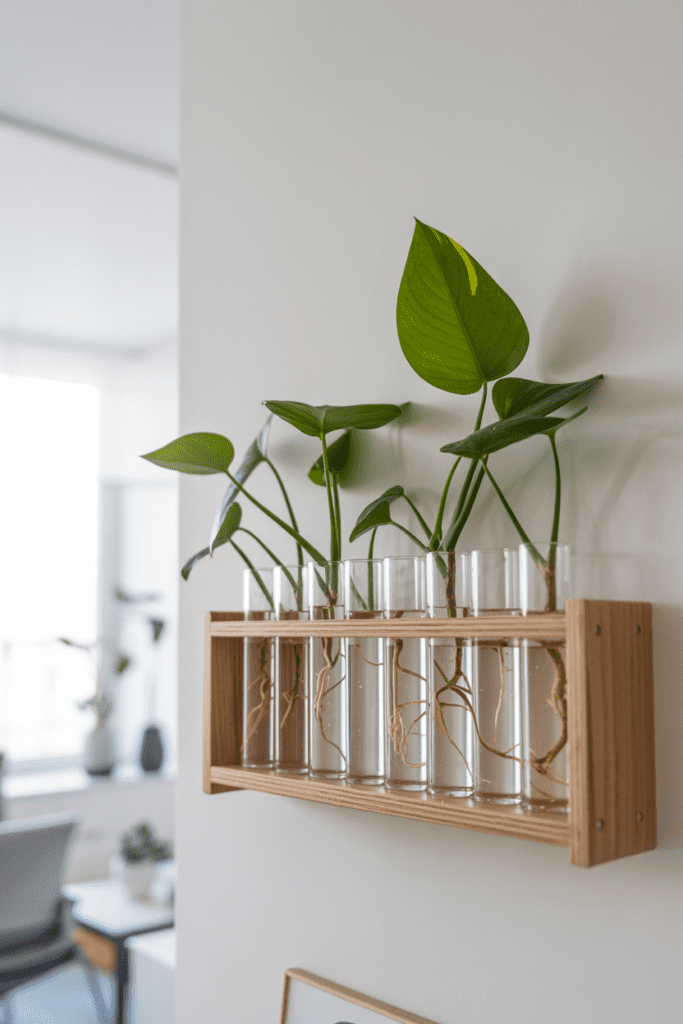
Propagation walls combine decor and plant growth in one setup. You mount glass tubes or jars vertically and place plant cuttings inside water-filled containers.
The result looks clean, artistic, and slightly scientific in a cool way.
I honestly love propagation walls because they make plant care feel interactive. Watching roots slowly grow inside glass containers feels oddly satisfying. Suddenly you check on roots like they’re tiny achievements.
This setup works especially well with:
- Pothos
- Philodendron
- Monstera cuttings
- Tradescantia
- Ivy
Keep the water fresh and place the wall near indirect sunlight for the best results.
Glass propagation walls also make excellent conversation pieces. Guests always notice them because they look different from traditional potted plants.
15. Full Living Wall System
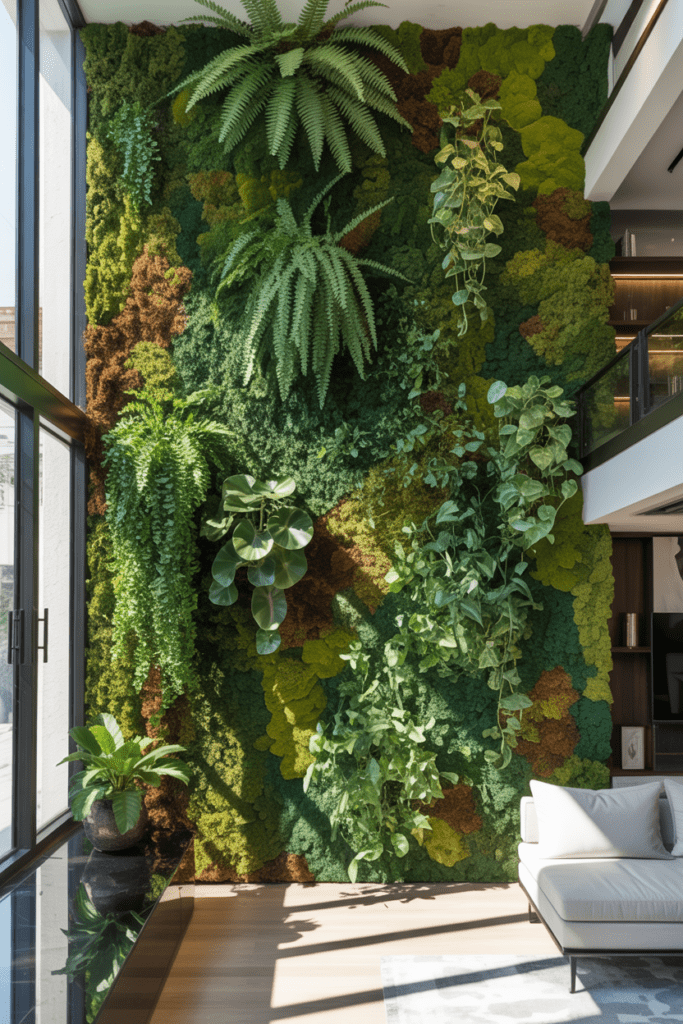
If you want maximum drama, a full living wall system absolutely delivers.
These systems cover large wall sections with dense greenery and create a breathtaking indoor jungle effect. Hotels and fancy restaurants love this style for obvious reasons. The walls look stunning.
But here’s the thing. You can absolutely create a smaller version at home.
Modular living wall systems now make installation much easier than people expect. Many include built-in watering systems and removable planters, which helps simplify maintenance.
For the best appearance, combine different textures and leaf sizes. Mixing ferns, pothos, philodendrons, and moss creates depth and keeps the wall visually interesting.
A few things to consider before installing one:
- Check lighting conditions carefully
- Plan watering access
- Choose low-maintenance plants initially
- Avoid overcrowding immediately
Honestly, even a smaller living wall can transform a room completely. The space suddenly feels calmer, fresher, and way more alive.
Tips for Keeping Your Indoor Vertical Garden Healthy
Even the prettiest vertical garden starts looking sad if the plants struggle. A few smart habits make a massive difference.
Choose the Right Lighting
Most indoor plants need bright indirect light. South-facing windows usually provide the strongest natural light, while darker rooms may need grow lights.
If your plants start stretching or losing color, they probably need more light. Plants communicate pretty clearly once you know what to watch for.
Avoid Overwatering
Overwatering destroys more houseplants than neglect ever could. People panic and water constantly because one leaf looked dramatic for five minutes.
Check the soil first. If the top layer still feels damp, wait.
Use Lightweight Pots
Heavy ceramic planters look beautiful, but they can overload wall-mounted systems quickly. Lightweight plastic or composite pots often work better for vertical gardens.
You can always hide simple pots inside decorative containers if aesthetics matter.
Rotate Plants Occasionally
Plants naturally lean toward light sources. Rotating them every week helps maintain balanced growth and keeps your wall looking fuller.
Little maintenance habits prevent huge problems later.
Why Indoor Vertical Gardens Work So Well
Indoor vertical garden ideas work because they combine beauty and practicality. They save floor space, improve the atmosphere of a room, and create a stronger connection to nature.
Honestly, greenery changes how a home feels. Rooms with plants feel calmer and more welcoming. Even one small vertical setup can make a space feel intentionally designed instead of randomly assembled.
Vertical gardens also help people decorate awkward walls and empty corners without buying bulky furniture. That alone makes them worth considering.
And let’s be real. Watching your plants grow upward across a wall feels incredibly satisfying.
Final Thoughts
You don’t need a giant house or professional design skills to create an amazing indoor vertical garden. Most of these ideas work in tiny apartments, small bedrooms, kitchens, or awkward corners that currently hold absolutely nothing useful.
Start simple if you feel unsure. A floating shelf wall or hanging planter setup can completely transform a room without costing a fortune.
Then once the plant obsession starts because it probably will — you can slowly expand your setup over time. That’s usually how it happens. One pothos turns into fifteen plants faster than anyone expects.
Honestly, though? There are worse addictions.