
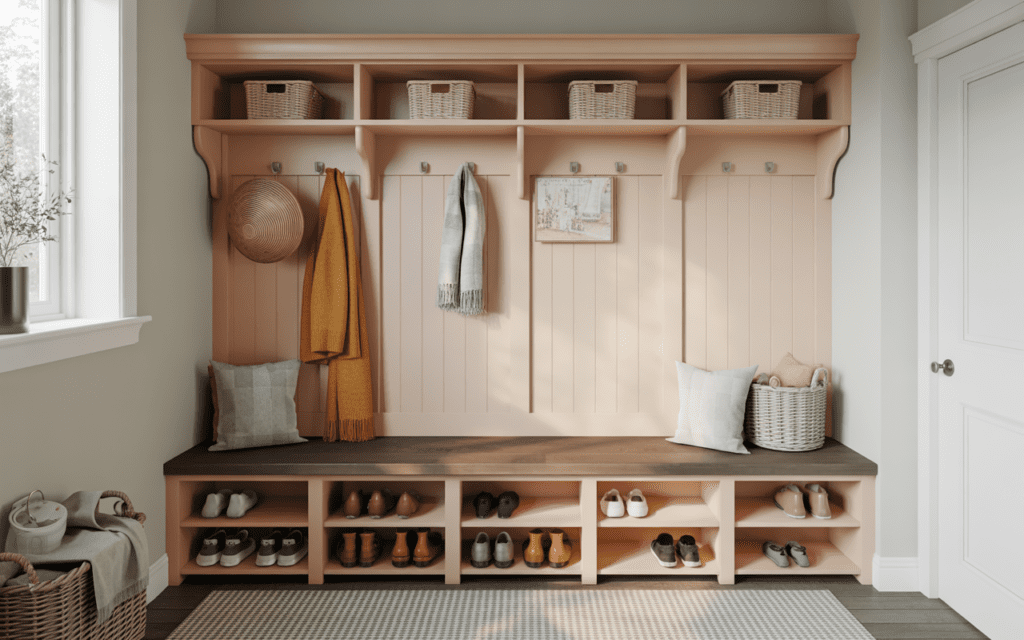
A mudroom can stop looking like a random drop zone and start acting like the calm, organized sidekick your home deserves. And honestly, who doesn’t want fewer shoes scattered like a tiny indoor obstacle course? I’ve always thought the best mudrooms feel quiet and intentional, even when life around them is anything but.
If you want mudroom ideas that look clean and well-planned, the trick is simple: build for the mess, then hide the mess like a pro. That means smart storage, durable finishes, and layouts that actually match how people live. Let’s get into the good stuff.
1. Start With Built-In Cubbies
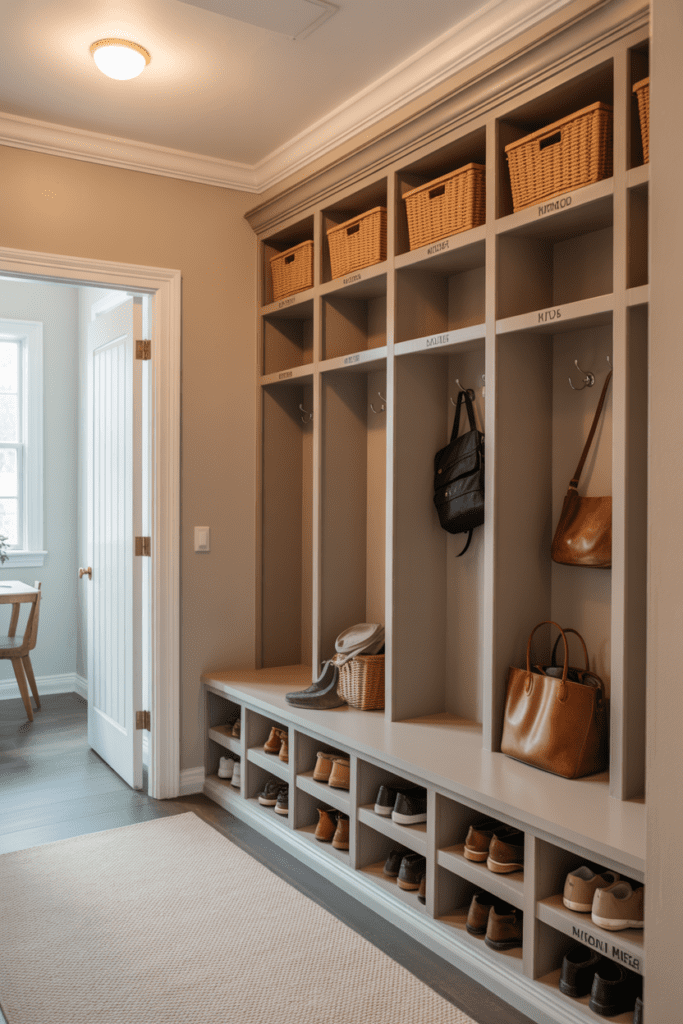
Built-in cubbies make a mudroom feel instantly organized. Each person gets a clear spot for shoes, bags, and random stuff that somehow follows them home. That alone cuts down on the “Where did I put my keys?” drama.
I love cubbies because they make the room look custom, even when the footprint stays small. They also force order, which, FYI, is basically the whole game in a mudroom. Give every family member one cubby, and suddenly the chaos has a home.
Why cubbies work
- They create structure.
- They keep items visible and easy to grab.
- They help the room look symmetrical and tidy.
If you want a clean, polished look, paint the cubbies the same color as the walls. That trick makes the whole setup feel built-in and intentional instead of slapped together.
2. Add Closed Storage for the Ugly Stuff
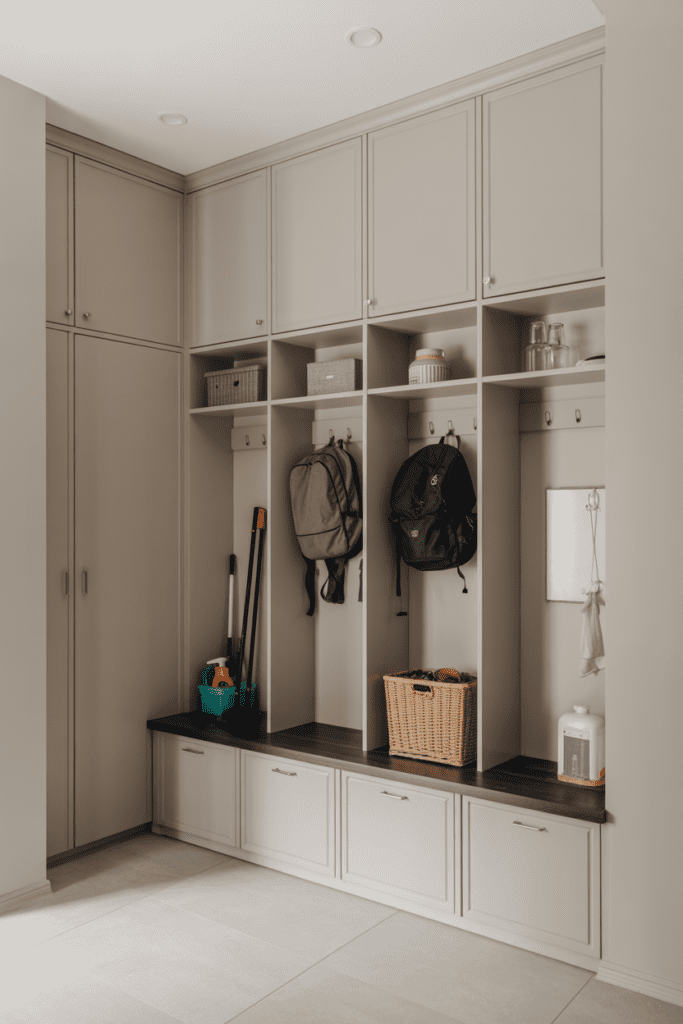
Let’s be honest: not everything deserves a display moment. Cleaning supplies, pet gear, backpacks full of mystery crumbs, and half-used sunscreen bottles all need a hiding place. Closed cabinets do the heavy lifting here.
A mudroom looks cleaner when you reduce visual clutter. That means fewer open baskets stuffed to the brim and more doors that close with a satisfying little “problem solved.” Isn’t that what we all want?
Best closed-storage options
- Tall cabinets for brooms, vacuums, and larger items.
- Lower cabinets for shoes and seasonal gear.
- Overhead cabinets for rarely used extras.
IMO, closed storage matters most in busy homes. If your mudroom doubles as the family landing zone, closed cabinets save your sanity.
3. Use a Bench With Storage Underneath
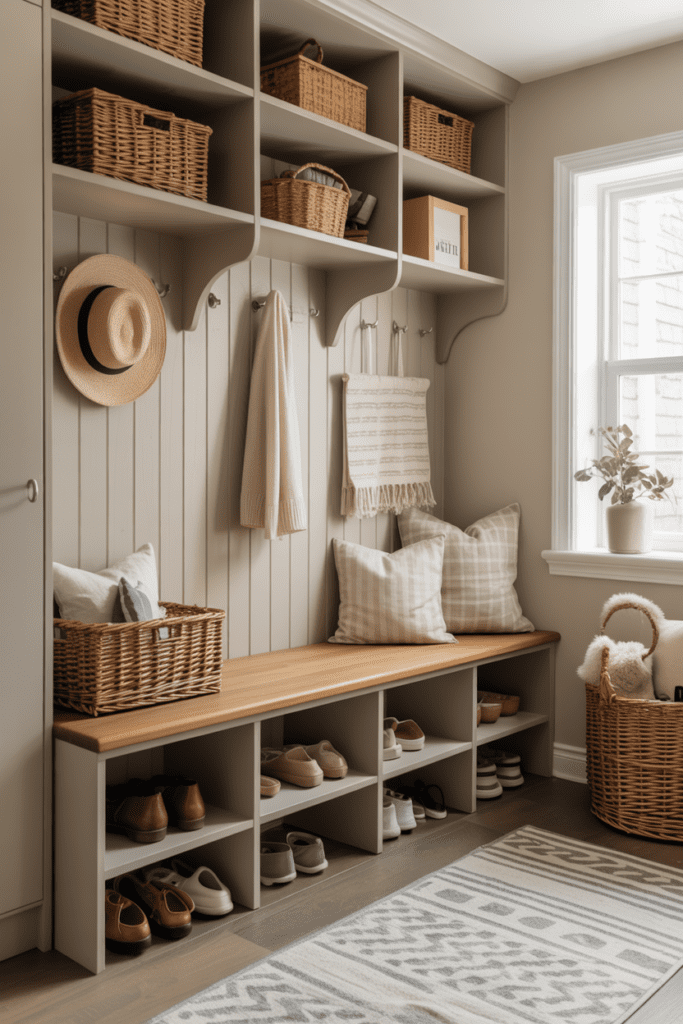
A bench does two jobs at once, which already makes it a winner. It gives people a place to sit while pulling on shoes, and it creates hidden storage underneath. That combo feels clean, practical, and a little bit smug in the best way.
I’ve seen mudrooms turn from messy to manageable just by adding a simple bench. Shoes stop multiplying in the middle of the floor, and people actually use the space the way they should. Funny how that works, right?
Great things to store under a bench
- Shoes and boots.
- Seasonal hats and gloves.
- Sport bags or reusable totes.
A bench with drawers under it looks especially neat. Open cubbies work too, but drawers make the room feel extra polished.
4. Keep the Color Palette Soft and Simple
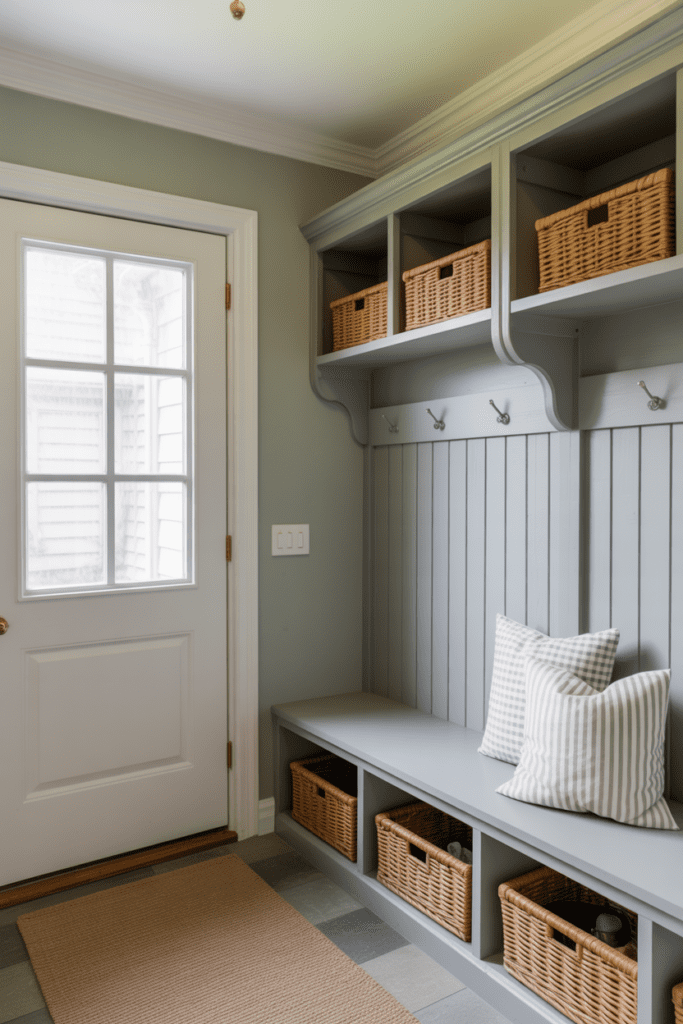
A calm color palette makes a mudroom look clean before anyone even organizes a thing. Soft whites, warm grays, muted greens, and light taupes all help the room feel structured and fresh. Loud colors can work, sure, but they also show every smudge like they enjoy the spotlight.
I usually like a mudroom to feel more like a transition space and less like a personality contest. Use one main color, then bring in one or two accents through baskets, hooks, or tile. That’s enough to keep things interesting without making the room feel busy.
Easy color rules
- Stick to two or three main colors.
- Use darker tones only where you need durability.
- Match trim and storage finishes for a cleaner look.
A restrained palette also makes small mudrooms look bigger. That’s a very nice bonus, considering most mudrooms do not come with mansion-sized square footage.
5. Install a Wall of Hooks
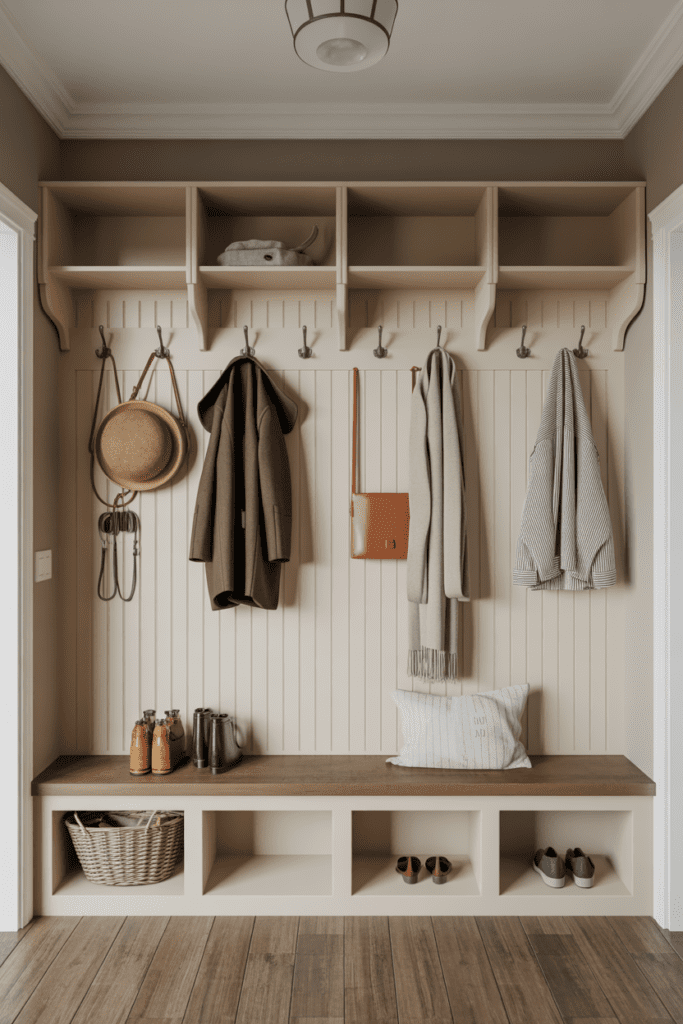
Hooks seem basic, but they pull serious weight in a mudroom. Coats, bags, dog leashes, scarves, and even grocery totes can hang up instead of piling onto chairs. That makes the room feel instantly more open.
The key is spacing. Too many hooks too close together create clutter, while a neat row gives everything room to breathe. Ever noticed how a simple line of hooks can make an entry feel almost organized enough to brag about?
Hook tips that actually help
- Place hooks at different heights for adults and kids.
- Use sturdy metal hooks for heavier coats and bags.
- Group hooks by person or purpose.
If you want the room to look especially clean, line the hooks up in perfect symmetry. Small detail, big payoff.
6. Choose Durable Flooring First
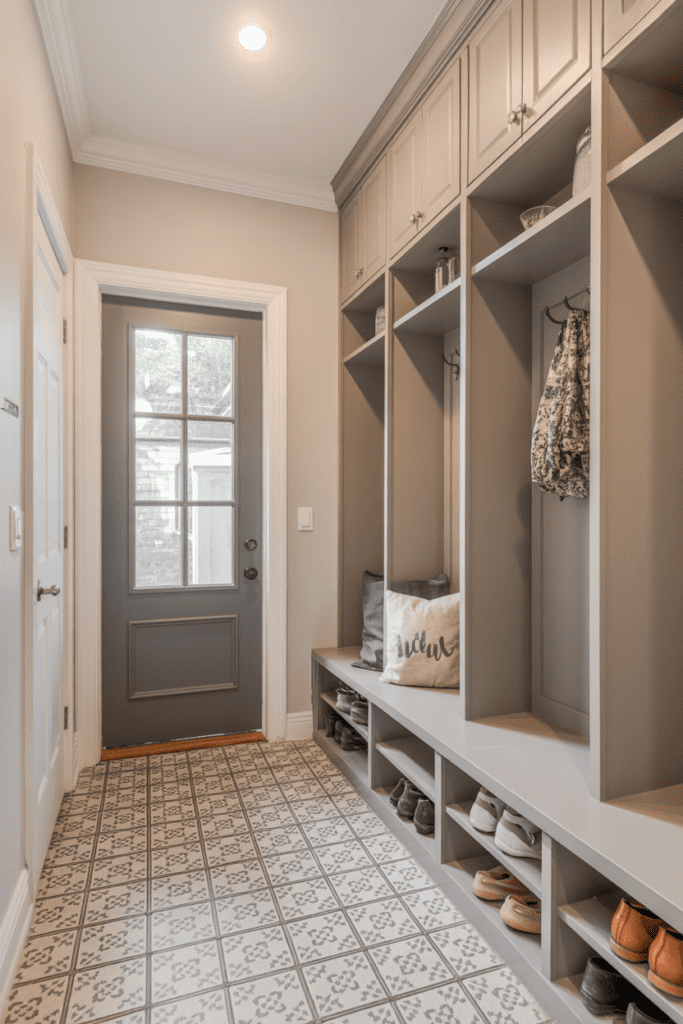
Mudrooms take a beating. Wet shoes, dirt, pet paws, and random outdoor debris all show up uninvited. So the floor needs to handle the mess without looking tired in six months.
Tile, sealed stone, luxury vinyl, and polished concrete all work well because they clean easily and resist wear. I prefer flooring that looks good but doesn’t make me baby it. Life’s too short for floors that panic over a damp boot.
Flooring features to look for
- Water resistance.
- Easy cleanup.
- Slip resistance.
- A finish that hides dirt reasonably well.
Patterned tile can also help disguise everyday grime. That’s one of those design choices that feels clever without trying too hard.
7. Add a Built-In Shoe Cabinet
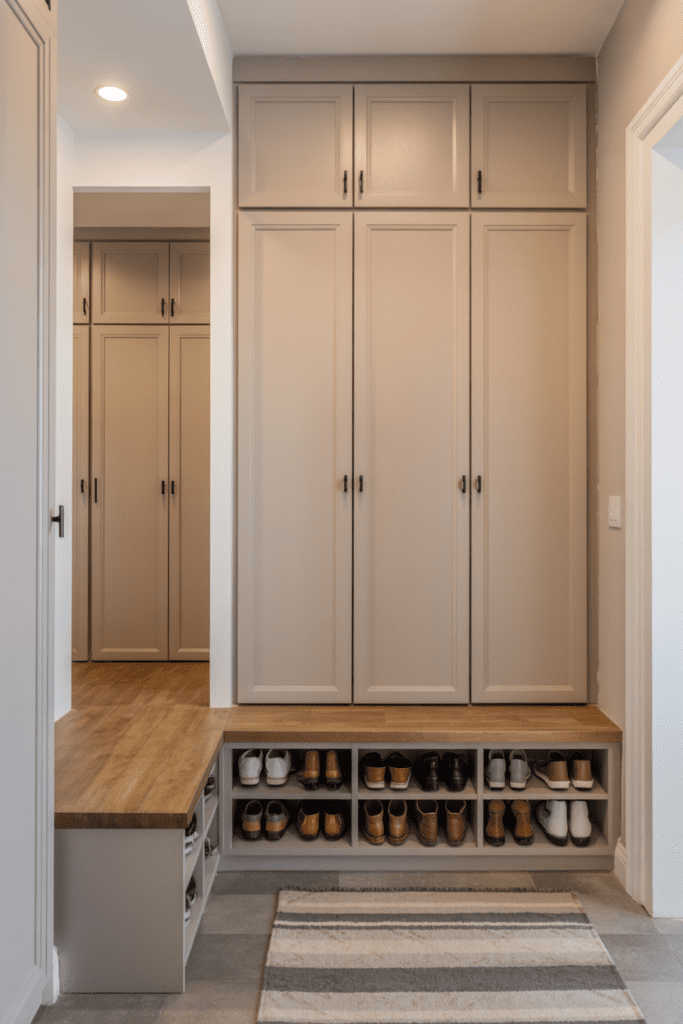
Shoes create mudroom chaos faster than almost anything else. A built-in shoe cabinet solves that problem with style. It keeps footwear contained, lined up, and out of sight instead of forming a sad little pile near the door.
I like shoe cabinets because they help a room look finished. They also prevent the “where did everyone’s shoes go?” search game, which nobody enjoys. Well, maybe toddlers do, but adults? Not so much.
Shoe cabinet benefits
- They hide visual clutter.
- They keep shoes off the floor.
- They make morning routines faster.
If you have a large family, label the shelves or sections. That tiny move saves time and reduces arguments, which feels like a home design win and a life design win.
8. Make the Mudroom Match the Rest of the House
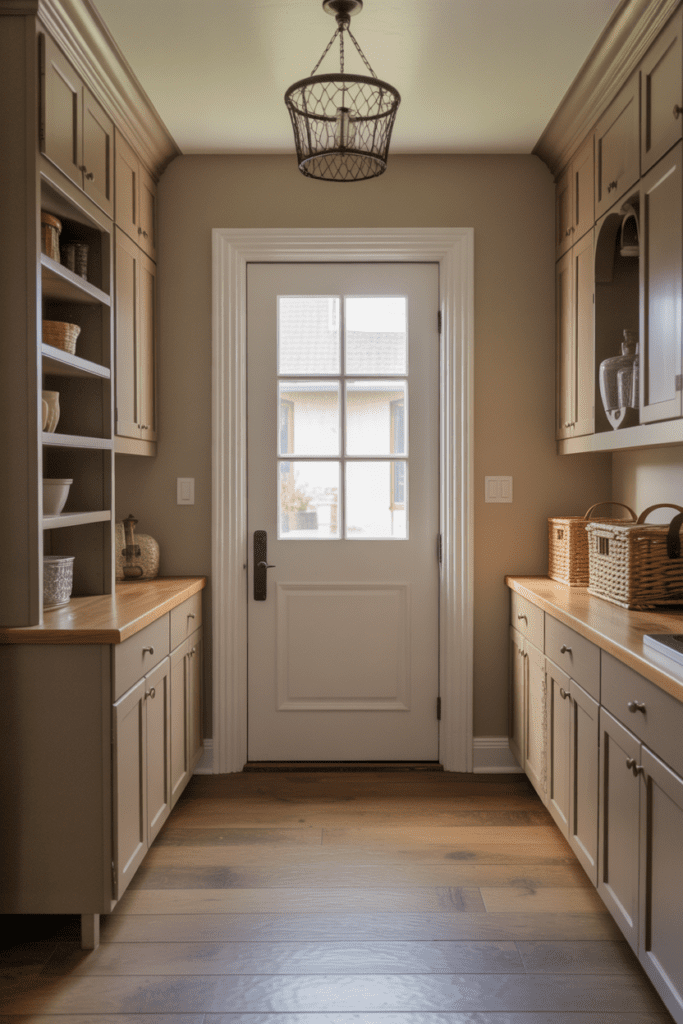
A mudroom looks cleaner when it feels connected to the rest of the home. If your kitchen, hallway, or entry uses certain finishes or colors, echo them here. That creates a smoother transition and makes the whole house feel more intentional.
I’ve always liked mudrooms that feel like a natural extension of the home instead of a side project. The best ones don’t scream “utility room”; they quietly do their job while still looking good. Isn’t that the sweet spot?
Ways to connect the spaces
- Repeat the same cabinet finish.
- Use matching hardware.
- Carry over one accent color or tile style.
This doesn’t mean every room has to look identical. It just means the mudroom should feel like it belongs.
9. Use Baskets for Flexible Storage
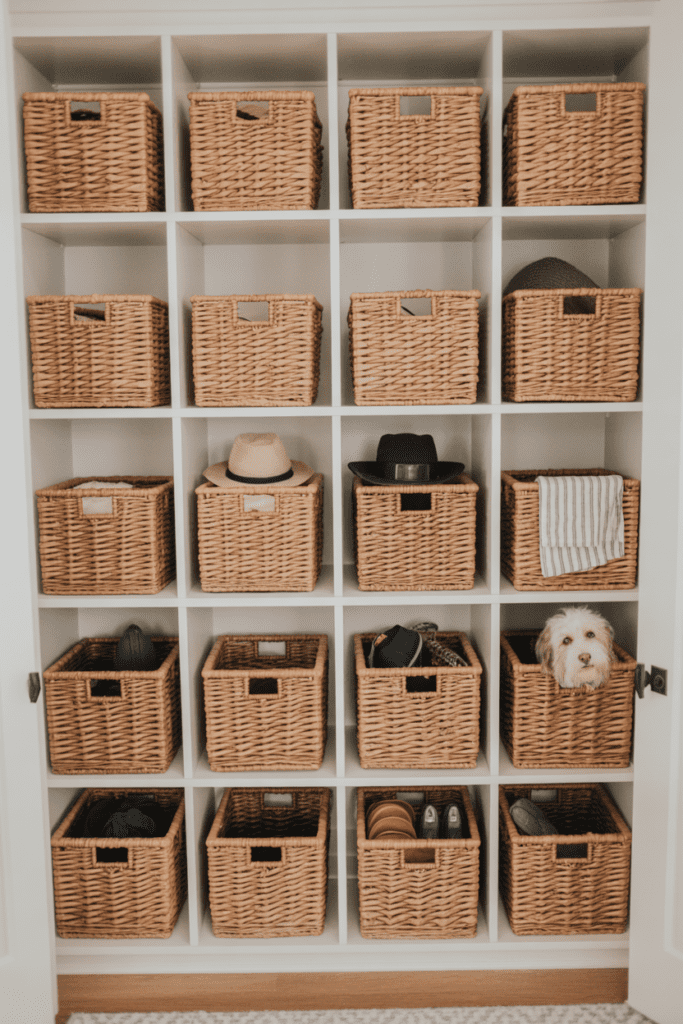
Baskets make mudrooms easier to live with because they adapt fast. One week they hold hats, the next week they hold soccer gear, and somehow they still look neat. That flexibility makes them a smart addition.
Woven baskets, wire baskets, and fabric bins all bring texture while taming clutter. I usually recommend using them for items that don’t need rigid division. Because sometimes you just need a place to toss things and pretend you meant to organize later 🙂
Best uses for baskets
- Winter accessories.
- Pet toys and leashes.
- Reusable shopping bags.
- Daily grab-and-go items.
Pick baskets that fit the shelf size exactly. Loose baskets can make storage look sloppy, and that defeats the whole purpose.
10. Try a Floor-to-Ceiling Storage Wall
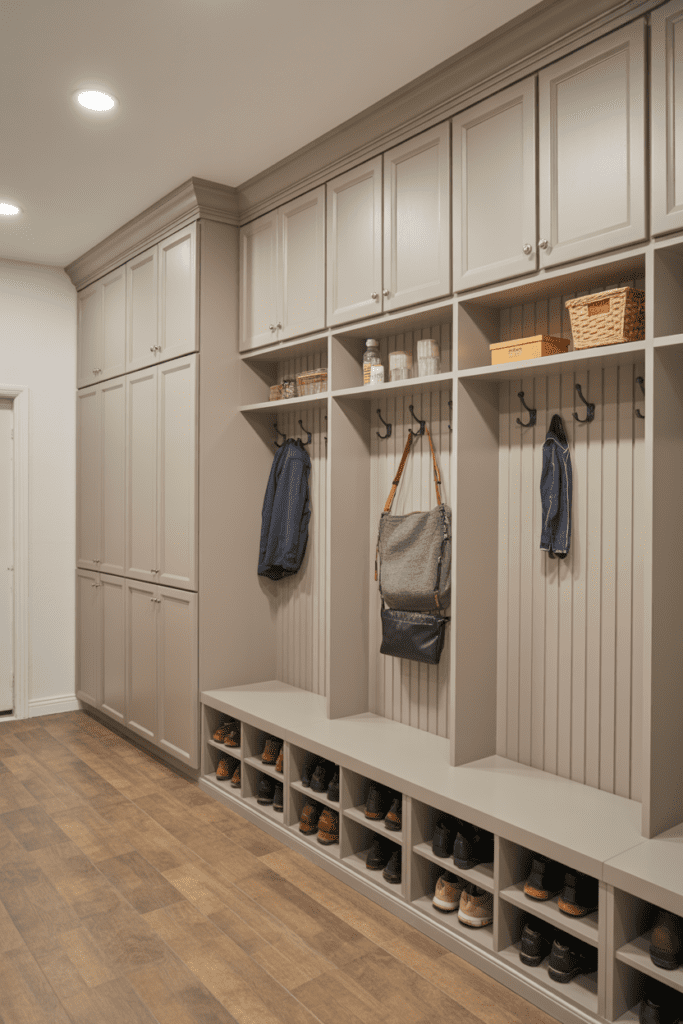
If you have the space, a full storage wall can transform your mudroom. It gives you room for cabinets, hooks, a bench, open cubbies, and maybe even a laundry zone. That kind of setup looks clean because everything has a place and nothing feels improvised.
I like this idea for busy households. It keeps backpacks, coats, shoes, and random life clutter in one organized zone instead of spreading through the house like confetti. Who needs that kind of energy?
What to include in a storage wall
- Upper cabinets for less-used items.
- Middle hooks for coats and bags.
- A bench for seating.
- Lower shoe storage for daily footwear.
This layout works especially well in larger mudrooms or back entries. It gives the room a built-in, custom feel that looks expensive without needing over-the-top decoration.
11. Keep Decor Minimal
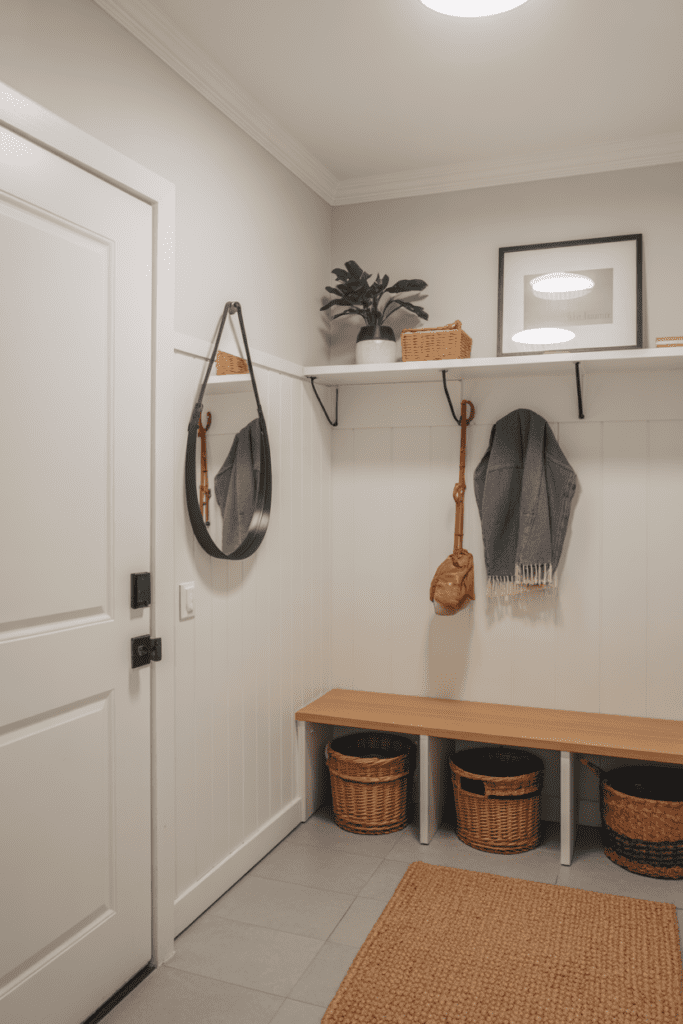
Mudrooms look better when decor stays simple. A framed print, a small mirror, or one plant can add personality without making the room feel crowded. More than that, and you start competing with the coats.
I tend to like one or two intentional decorative touches rather than a wall of “stuff.” The room should feel clean and calm, not like a mini lifestyle showroom trying too hard. You know the type.
Simple decor that works
- One mirror to bounce light.
- One piece of wall art.
- One small plant or vase.
Minimal decor also makes cleaning easier, which matters in a room that already collects dirt. Less decor, less dust, fewer regrets.
12. Use Labels to Keep Everyone Honest
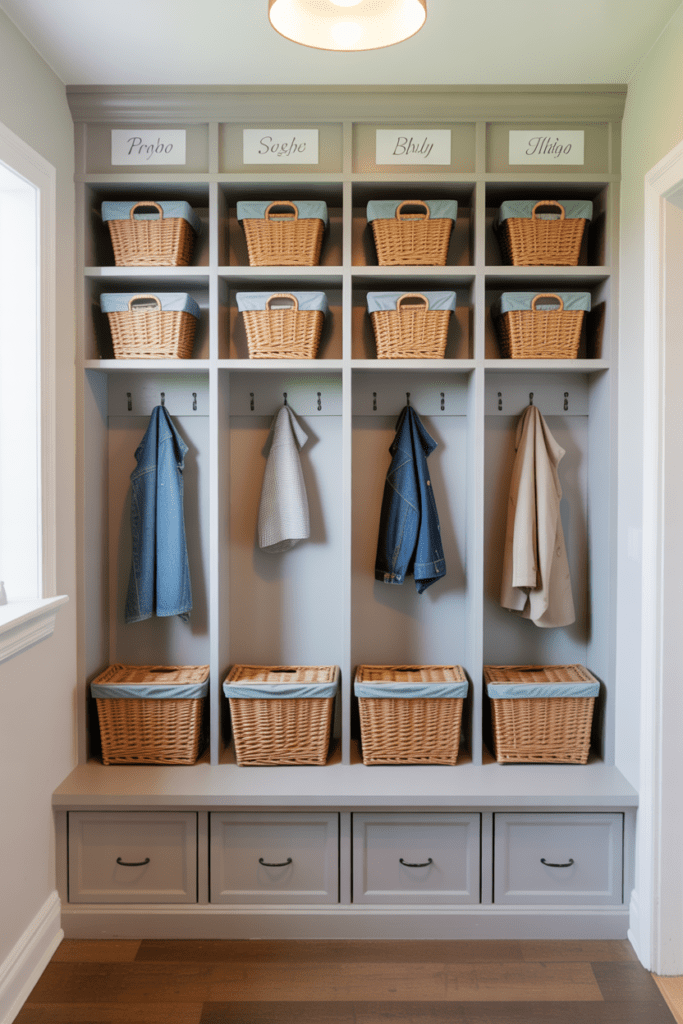
Labels sound tiny, but they make a huge difference in family spaces. When every cubby, basket, or drawer has a name, people know where things go. That means fewer lost items and less guessing.
I especially like labels in homes with kids. Somehow, the moment you label a basket, people suddenly understand what organization means. Strange, I know.
Label ideas
- Names for individual cubbies.
- Category labels for gloves, shoes, and mail.
- Seasonal labels for rotating storage.
Choose clean, simple label styles if you want the room to look more polished. Chalkboard labels can feel casual, while printed labels feel sharper and more modern.
13. Bring in a Mirror
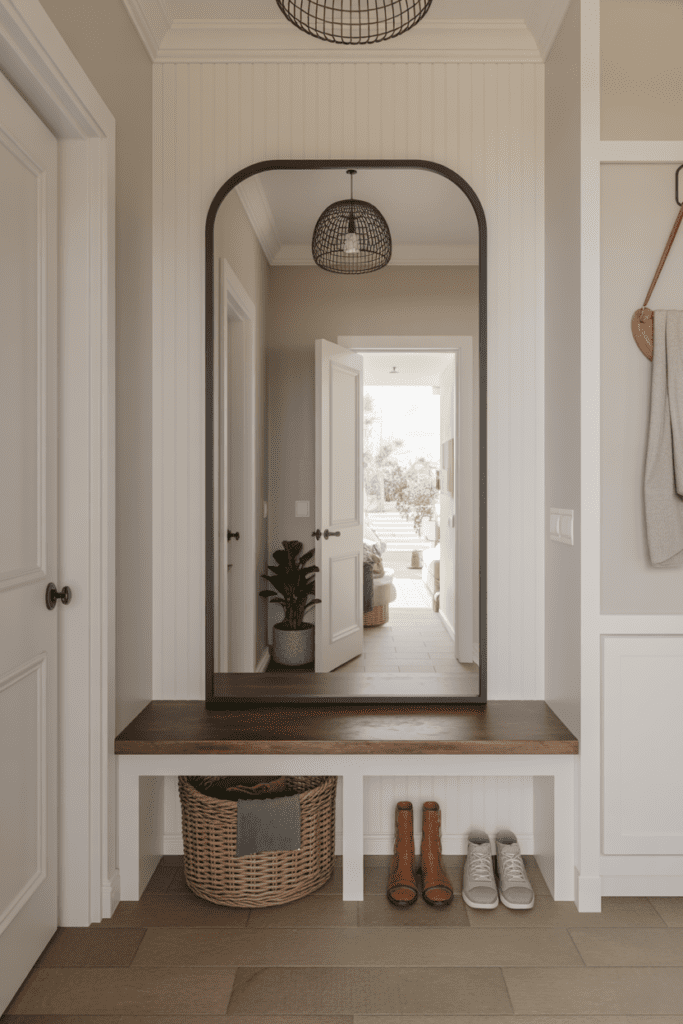
A mirror does more than help people check their hair before heading out. It reflects light, opens up the room, and makes the mudroom feel larger. That’s a lot of work for one object.
I find mirrors especially useful in narrow mudrooms or small entries. They break up the wall visually and add a cleaner, brighter feel. Plus, nobody complains about having one last look before leaving the house, right?
Mirror placement tips
- Hang it above a bench or console.
- Choose a frame that matches the hardware.
- Keep the shape simple for a cleaner look.
Round mirrors soften the room, while rectangular mirrors feel crisp and structured. Pick whichever fits your style better.
14. Use Vertical Space Wisely
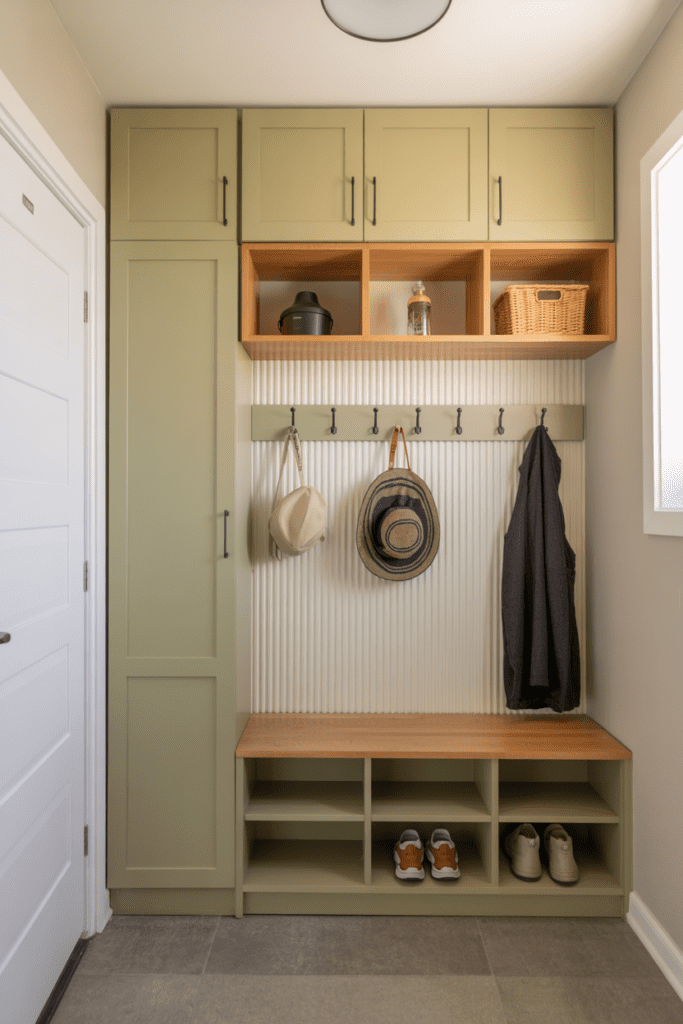
A clean mudroom uses every inch without feeling crowded. Vertical space helps you do that. Tall shelves, stacked cabinets, and high hooks keep everyday clutter off the floor where it usually causes the most trouble.
I’m a big fan of vertical storage because it makes even a compact mudroom feel smart. It also keeps the floor easier to clean, which matters when people track in half the yard. Delightful, obviously.
Smart vertical ideas
- Tall cabinets for bulkier items.
- Upper shelves for seasonal storage.
- Wall-mounted hooks above low storage.
If you use tall storage, keep the most frequently used items at eye level. No one wants to climb for a dog leash every morning.
15. Add a Charging Station
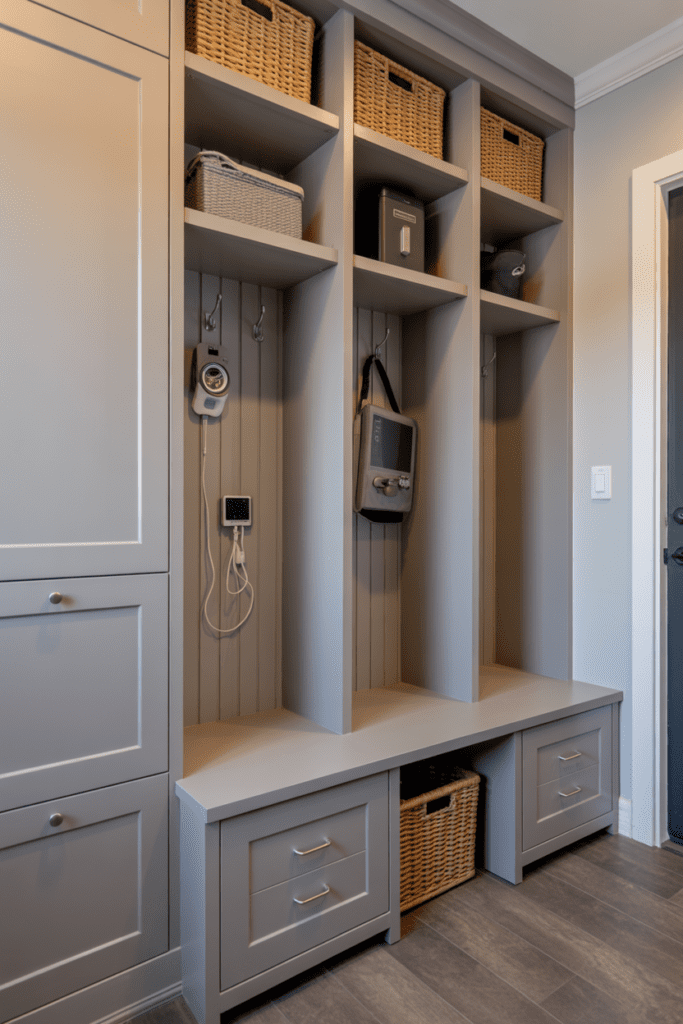
A mudroom charging station sounds small, but it solves a daily headache. Phones, earbuds, tablets, and school devices all need a home near the entry. Otherwise, they end up on the nearest flat surface, which somehow becomes everyone’s problem.
I like charging drawers or hidden outlets because they keep cords out of sight. That helps the room look neat and prevents the dreaded cable jungle. Ever seen six cords tangled together with zero shame? Exactly.
Charging station essentials
- Built-in outlets or a hidden power strip.
- A drawer or shelf for devices.
- Cable management clips or grommets.
This feature works especially well in family mudrooms. It creates a central drop zone for the things everyone forgets to charge until the last minute.
16. Mix Open and Closed Storage
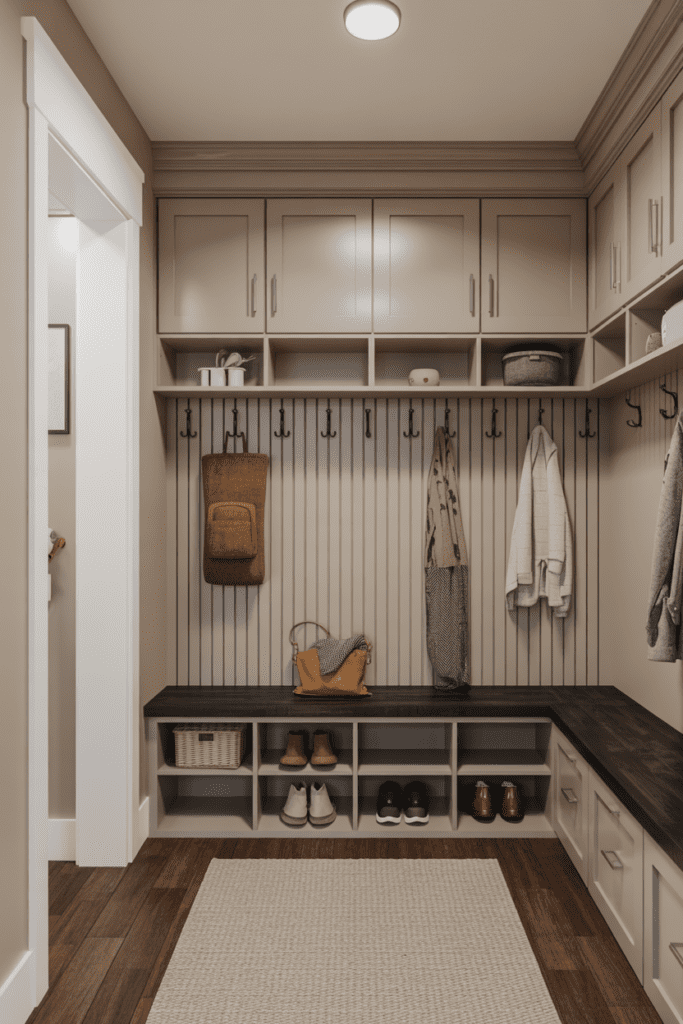
A mudroom looks best when it balances convenience with control. Open storage gives you quick access, while closed storage hides the mess. Use both, and the room feels practical without looking chaotic.
I usually suggest open hooks and cubbies for everyday use, then cabinets for everything else. That way, the room stays easy to use and still looks tidy. Too much of either direction can throw the balance off.
Good balance formula
- Open storage for daily grab items.
- Closed storage for bulkier or messier items.
- A bench or shelf in between to anchor the layout.
This approach works because it reflects real life. Not everything belongs behind a cabinet door, but not everything deserves a front-row seat either.
17. Add Pet-Friendly Features
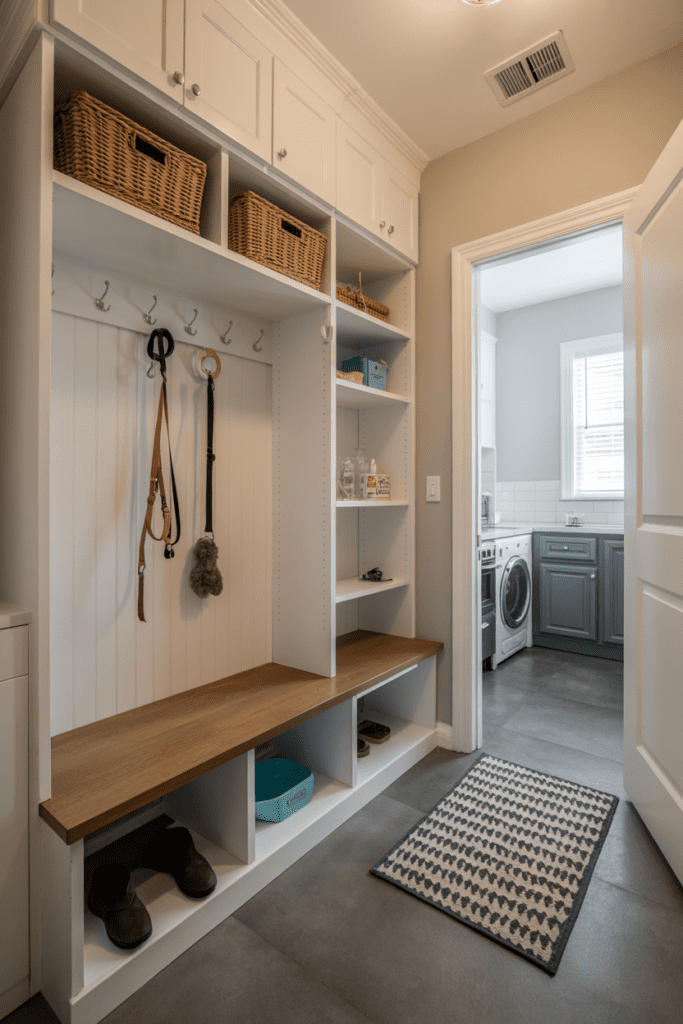
If you have pets, your mudroom probably does more work than your living room. A pet wash station, leash hooks, or a built-in feeding nook can keep everything cleaner and more organized. That’s especially helpful if your dog loves mud almost as much as you hate cleaning it off the floor.
I’ve seen pet-friendly mudrooms make a huge difference in daily routine. You walk in, rinse the paws, hang the leash, and move on. Beautiful, efficient, slightly miraculous.
Pet-friendly upgrades
- A washable floor or wall finish.
- Low hooks for leashes and harnesses.
- A drawer for treats, wipes, and waste bags.
If you have the room, a small dog shower or rinse station adds serious function. It also saves your bathtub from becoming the scene of every muddy emergency.
18. Keep the Layout Easy to Read
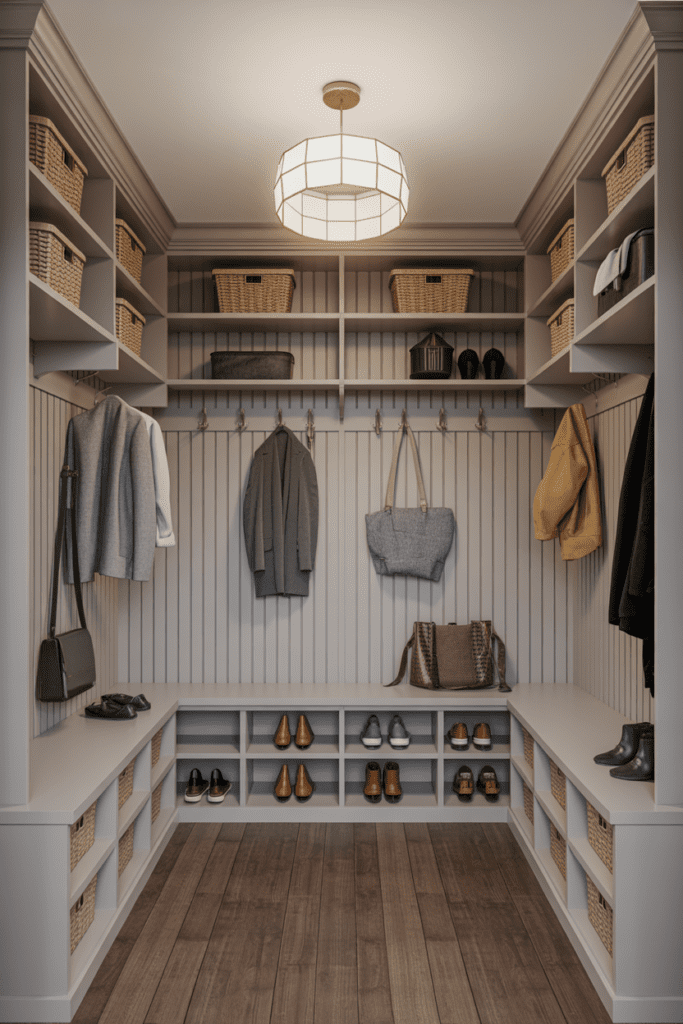
A clean mudroom always starts with a clear layout. When the eye can follow the room easily, the space feels calmer and better planned. That means repeating shapes, aligning storage, and avoiding random gaps that make the room feel unfinished.
I think this is the secret behind most beautiful mudrooms. They don’t just store things well; they organize the visual field too. That’s the part people feel before they even notice it.
Layout rules that help
- Line up hooks, shelves, and cabinets.
- Keep walkways clear.
- Use consistent spacing between features.
If you want the room to feel extra polished, keep storage zones grouped by function. Shoes in one zone, coats in another, bags in a third. Simple, readable, done.
Final Thoughts
A mudroom doesn’t need a massive budget or fancy finishes to look clean and well-planned. It just needs smart storage, clear zones, durable materials, and a layout that fits real life. Once you get those pieces right, the room starts working for you instead of against you.
If you’re planning a mudroom makeover, start with the basics: cubbies, hooks, seating, and closed storage. Then add the little upgrades that make daily life easier, like baskets, labels, or a charging station. Honestly, that’s the difference between a room that merely exists and one that quietly keeps your home running.