
So your garden looks a little… beige. Not literally, but you know what I mean same green hedges, same predictable rows, same “safe” plant choices you picked because they were on sale at the garden center three years ago. I’ve been there. My own backyard used to look like a stock photo nobody wanted to license.
Then I started experimenting with color, and everything changed. Neighbors stopped walking past and started stopping to chat. My coffee mornings on the patio got a whole lot more interesting. Color is the cheapest, fastest way to make a garden feel alive, and I’ve got 17 ideas to prove it.
Here’s the thing nobody tells you when you’re staring at rows of identical green shrubs: color isn’t an “extra.” It’s not the icing you add once the “real” gardening is done. Color is structure. It tells visitors where to look, makes a small yard feel bigger, and turns an okay afternoon into a “let’s just sit out here a little longer” kind of evening. I learned that the hard way, after three seasons of a garden that was technically alive but emotionally flatlining.
What changed things for me wasn’t a huge budget or a landscaping crew. It was a handful of intentional choices — a bold border here, a painted bench there, one dramatic dark-leafed shrub that made everything around it look sharper. Small moves, big payoff. So whether you’ve got a sprawling backyard or a single balcony railing, these 17 ideas will get you there.
Grab a coffee (or a beer, no judgment), and let’s get into it.
1. Go Bold With a Rainbow Border
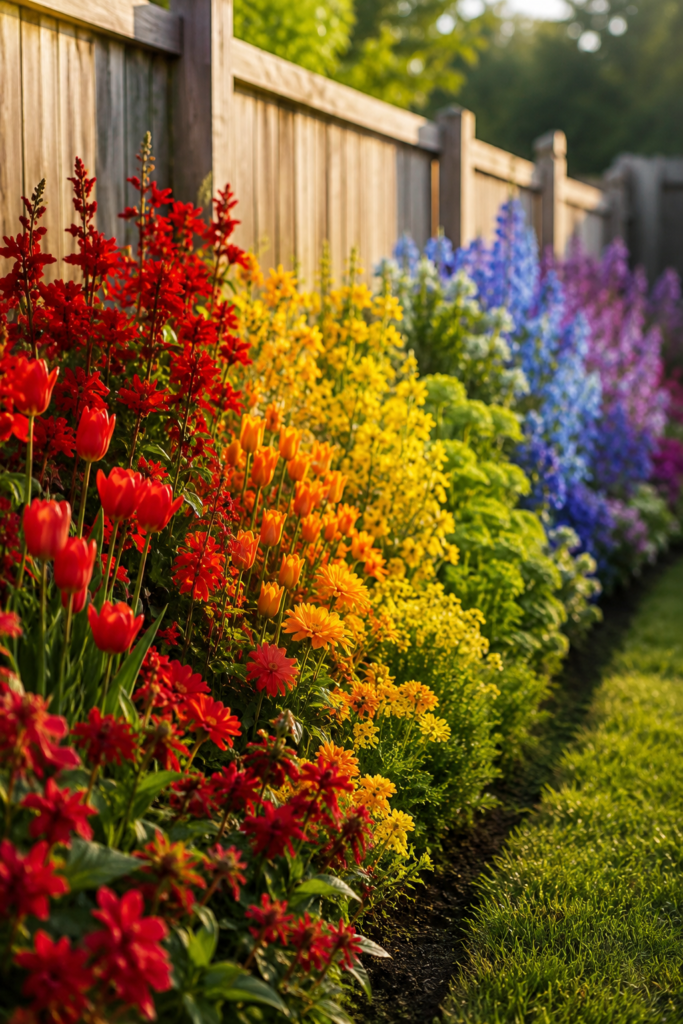
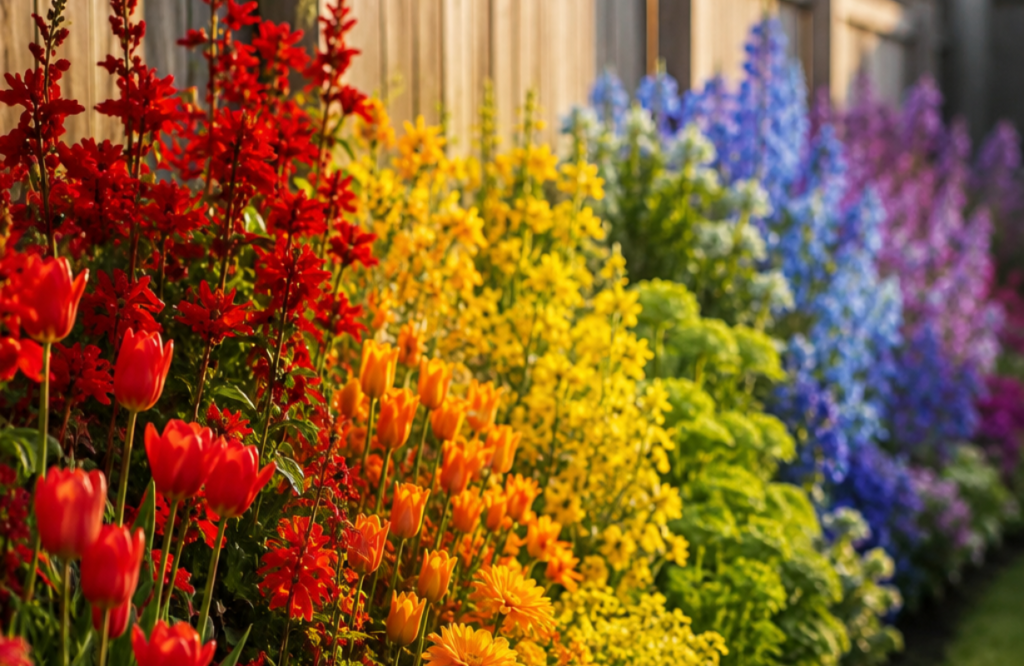
A rainbow border along your fence or walkway is the gardening equivalent of a mic drop. You plant flowers in a gradient — reds into oranges into yellows into greens into blues into purples — and let the whole thing read like a sunset frozen in place.
I tried this along my driveway last spring, and honestly? It’s the best decision I’ve made in years. Zinnias, marigolds, and salvia work great here because they bloom fast and hold their color all summer.
- Zinnias for the reds and oranges
- Black-eyed Susans for yellow
- Salvia for deep blue and purple
Ever wondered why professional gardens always look so intentional? It’s this trick. A gradient border does 80% of the visual work for you.
The key is planting in drifts, not single specimens. One marigold looks like an afterthought. Fifteen marigolds planted together, flowing into a cluster of black-eyed Susans, reads like it was designed by someone who actually knows what they’re doing (even if that someone is you, googling “how far apart do I plant zinnias” at 9pm). Space plants a little closer than the tag suggests, too — nurseries are conservative with spacing, and a slightly crowded border looks fuller and more intentional than a sparse one.
2. Plant a Pollinator Party
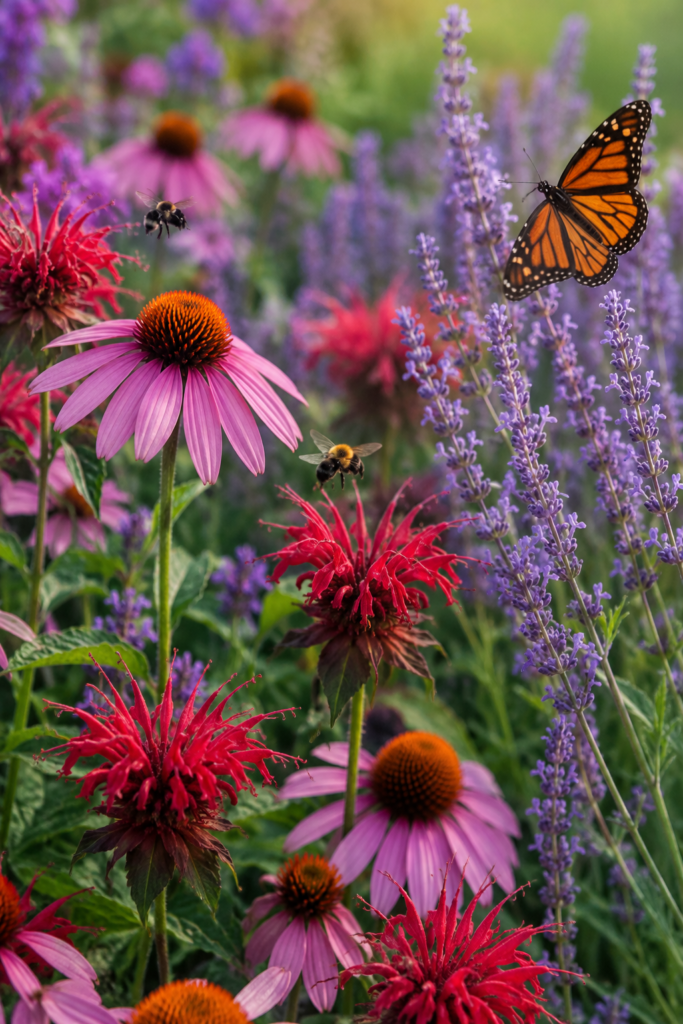
Butterflies and bees don’t care about your Pinterest board — they care about color and nectar. Bright purples, pinks, and yellows attract the most pollinators, so lean into that if you want a garden that’s buzzing (literally) with life.
I planted a small pollinator patch two years ago, and now I get monarchs stopping by every August. It’s genuinely one of my favorite things about summer.
Consider these pollinator magnets:
- Coneflowers (purple, pink, or white)
- Bee balm (bright red or purple)
- Lavender (because obviously)
A quick tip most beginners miss: plant in clusters, not scattered singles. Pollinators conserve energy by visiting groups of the same flower in one pass rather than hopping randomly across your yard. So a tight cluster of five bee balm plants will attract more bees than five bee balm plants scattered across five different beds. It’s efficiency, and honestly, I respect it.
Also, skip the double-bloom hybrid flowers if pollinators are your goal. Those fancy ruffled varieties look great on a plant tag, but many of them have been bred in a way that makes nectar harder to reach — or removes it almost entirely. Stick to open-faced, single-bloom varieties instead.
3. Mix Foliage Colors, Not Just Flowers
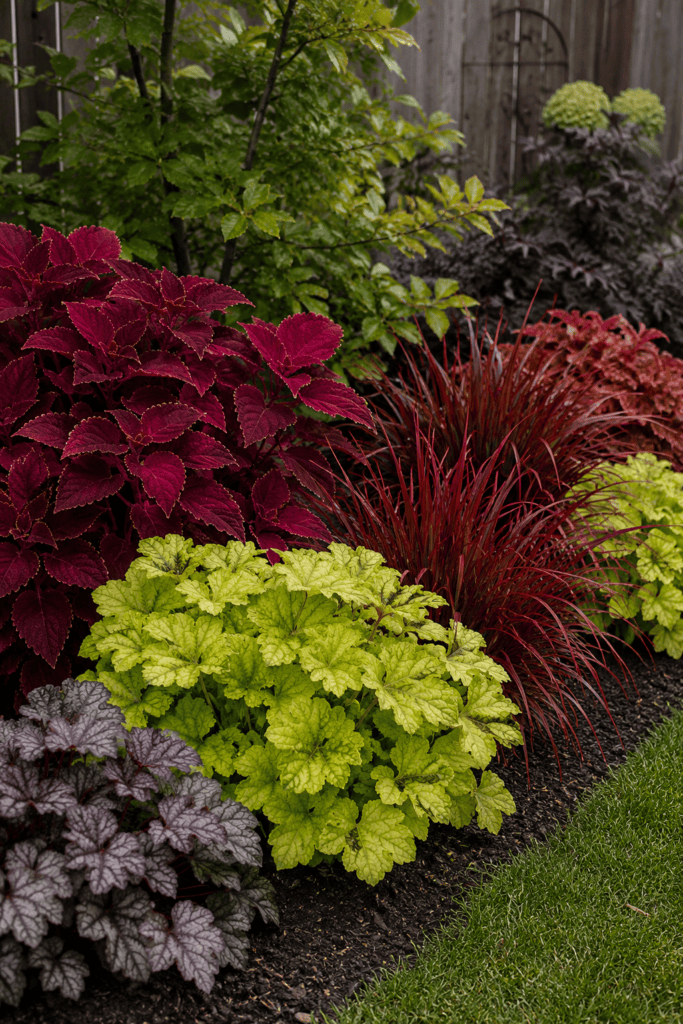
Here’s a mistake I made for years: I only thought about flower color and ignored leaves completely. Big mistake. Foliage color lasts all season, while flowers come and go in a matter of weeks.
Coleus, heuchera, and Japanese blood grass all bring color through their leaves — burgundy, chartreuse, deep purple — without needing a single bloom. IMO, this is the most underrated trick in gardening.
Think about it this way: a flower might bloom for two to six weeks before fading back to green. Foliage color is a full-season commitment. That coleus in your border is bringing the same rich burgundy in June, July, August, and September, no deadheading required. When I finally figured this out, I started building my color plan around foliage first and treating flowers as the seasonal bonus round.
A few more foliage MVPs worth adding to your list:
- Persian shield: iridescent purple-silver leaves that genuinely look fake (in a good way)
- Copper plant: deep bronze-red foliage that holds its color even in full blazing sun
- Caladium: patterned pink-and-green leaves that thrive in shade where flowers often struggle
4. Try a Monochromatic Moon Garden
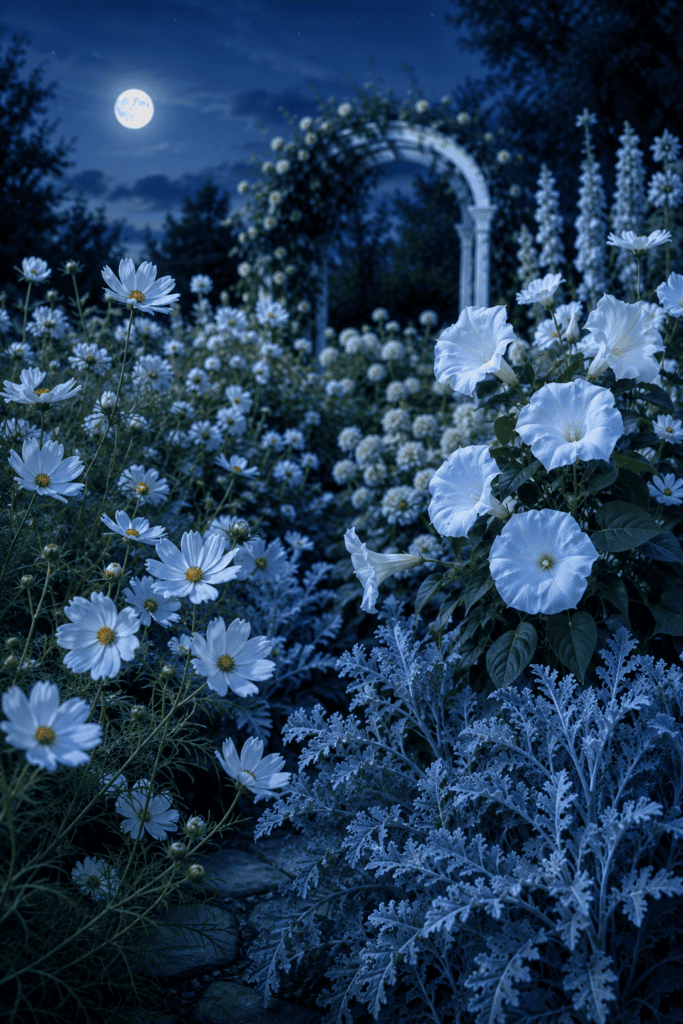
Okay, hear me out on this one. A moon garden uses all-white flowers so the space glows under moonlight. It sounds a little dramatic, but it’s stunning, and it’s low-key one of the most relaxing spaces you can build.
White flowers like moonflowers, white cosmos, and silver dusty miller reflect even faint light beautifully. Sit out there after sunset and tell me it’s not magical 🙂
5. Add Colorful Garden Furniture
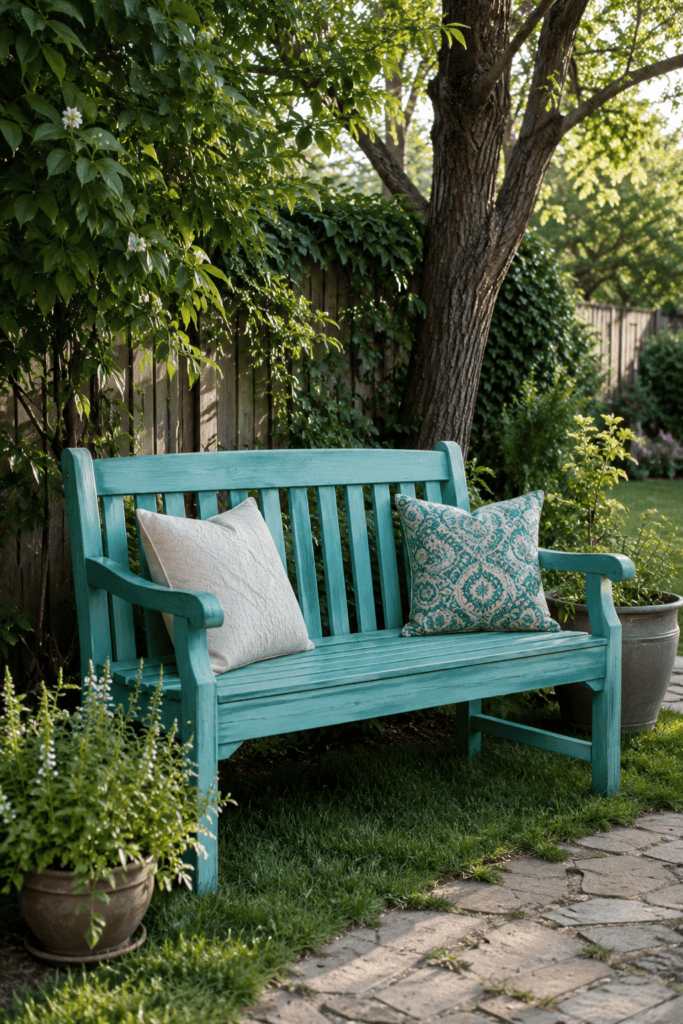
Not everything has to come from a nursery. Painted chairs, a bright blue bench, or a cherry-red table can add color even in the dead of winter when nothing’s blooming. Furniture color is permanent color — no watering required.
I painted an old wooden bench turquoise, and it’s become the focal point of my entire backyard. Sometimes the easiest wins aren’t plants at all.
6. Layer Heights for a 3D Color Effect
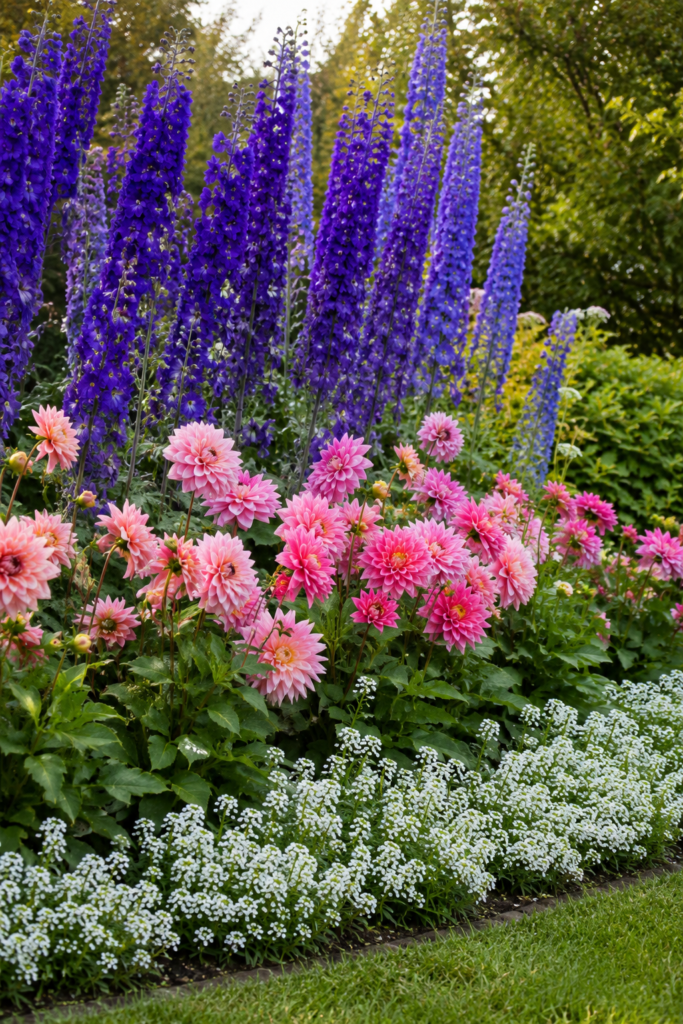
Flat gardens look flat. That’s not a groundbreaking observation, but people forget it constantly. Layering tall, medium, and short plants creates depth, and depth makes color pop even more.
Try this structure:
- Tall back layer: Hollyhocks or delphiniums
- Middle layer: Dahlias or cosmos
- Front layer: Sweet alyssum or petunias
This setup means every color gets its own “stage” instead of competing for attention in one flat plane.
7. Go Tropical With Hot Colors
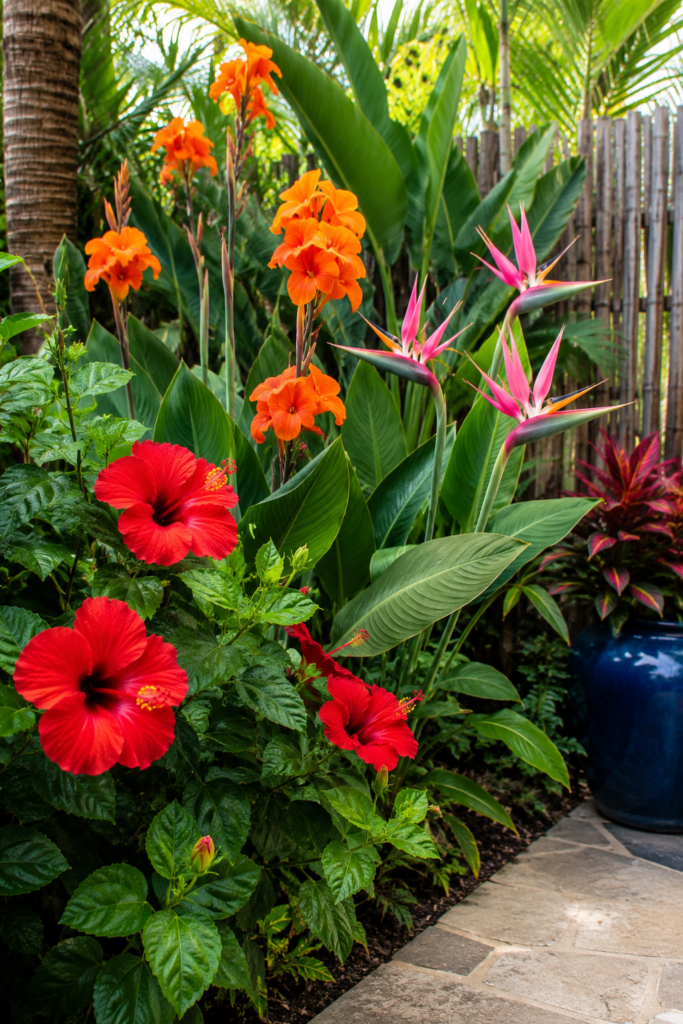
If you want drama, tropical plants deliver. Cannas, hibiscus, and bird of paradise bring saturated reds, oranges, and pinks that feel like a vacation you didn’t have to pay for.
I’ll admit tropical plants require more attention than your average perennial. But the payoff — an explosion of color that makes your yard look like a resort — is worth the extra watering schedule.
Why Tropical Colors Work So Well
Tropical blooms evolved to be seen from a distance by pollinators in dense jungle canopies. That means the colors are naturally more saturated than temperate-climate flowers. Translation: instant visual impact.
If you’re in a cooler climate and worried tropicals won’t survive, don’t panic — you don’t need a greenhouse. Cannas and elephant ears can be dug up and stored indoors over winter, then replanted come spring. It’s an extra step, sure, but it’s a small price for that resort-level color payoff every summer.
8. Use Color to Guide the Eye
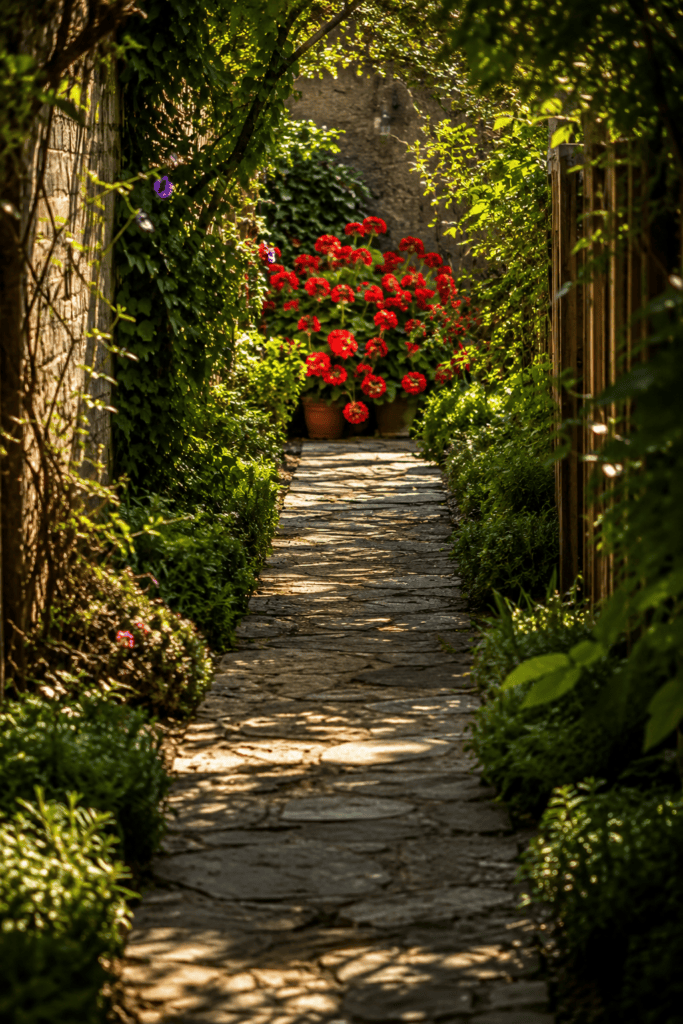
Color isn’t just decoration — it’s a tool. Placing bright colors at the far end of your garden pulls the eye forward, making small spaces feel bigger than they are.
I used this trick in my narrow side yard. A cluster of bright red geraniums at the far end makes the whole space feel twice as deep. It’s basically an optical illusion, and it works every single time.
9. Try a Cutting Garden
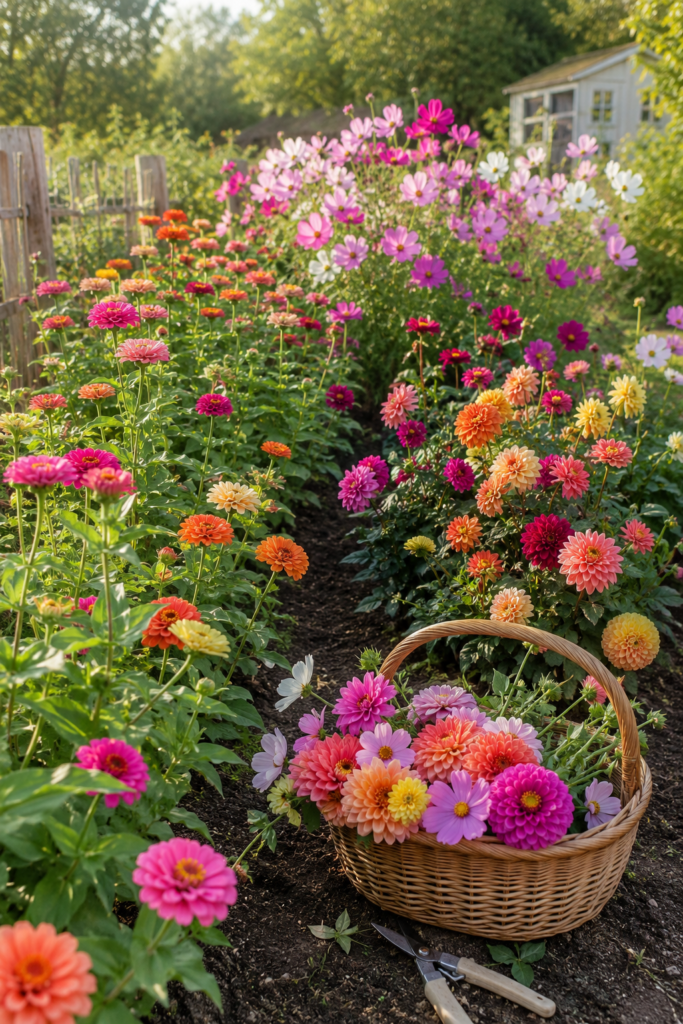
A cutting garden is exactly what it sounds like — a section dedicated purely to growing flowers you’ll cut and bring indoors. Dahlias, zinnias, and cosmos are ideal because the more you cut them, the more they bloom.
I keep a small cutting patch near my kitchen door specifically so I can grab a bouquet on my way inside. Cheap therapy, honestly.
A cutting garden also solves a problem most people don’t realize they have: guilt about cutting flowers from their “display” beds. When your cutting patch is separate, you can snip freely without feeling like you’re ruining your carefully arranged border. Rotate what you plant here each season, and you’ll always have fresh color both outside and on your kitchen table.
10. Add Colorful Foliage Shrubs
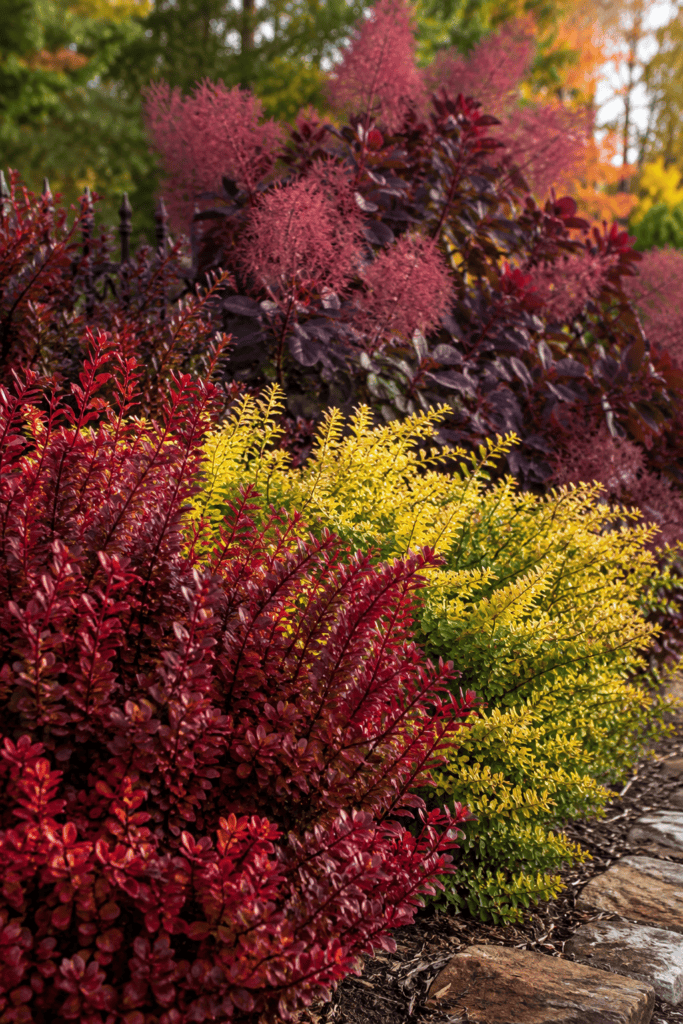
Shrubs get a bad reputation as “boring green background plants.” Colorful shrubs flip that completely. Barberry (deep red), golden spirea, and smoke bush (purple-bronze) add year-round color without any extra maintenance.
- Japanese barberry: deep burgundy leaves
- Golden spirea: bright chartreuse foliage
- Smoke bush: smoky purple leaves with a wispy bloom
11. Create a Color-Themed Container Garden
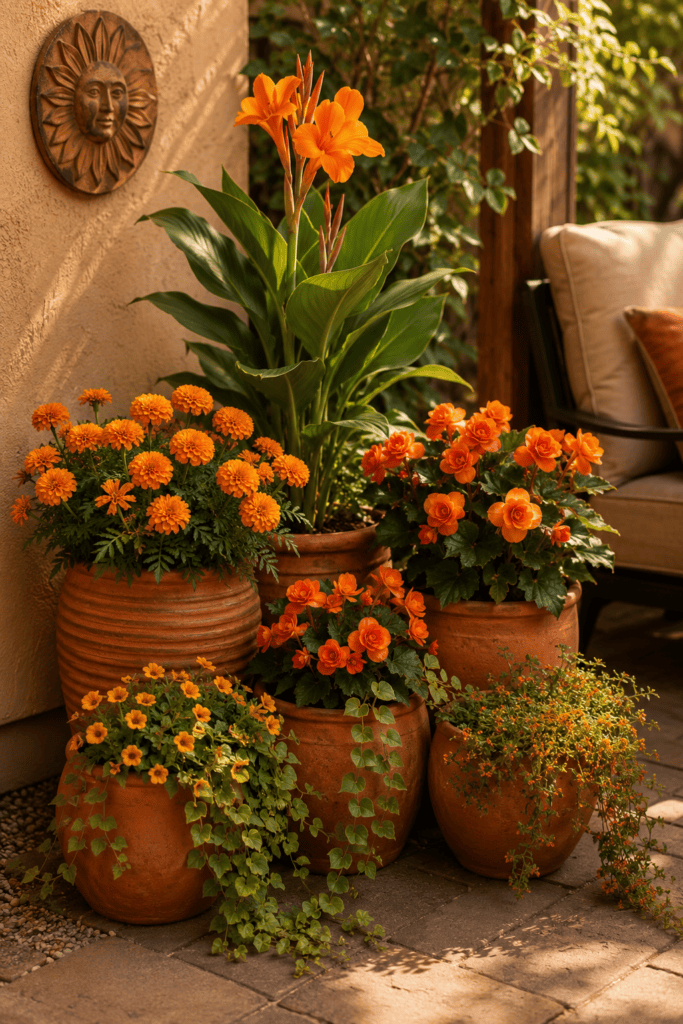
Don’t have a yard? No problem. Containers let you build a full-color display on a balcony, patio, or even a windowsill. Group pots by color family for a cohesive, curated look rather than a random collection of plants.
I run an all-orange container set on my patio every summer — marigolds, orange begonias, and a dwarf canna. It photographs like a professional shoot, and it costs about $40.
The trick to making containers look curated instead of chaotic is the classic “thriller, filler, spiller” formula. Pick one tall standout plant (the thriller), surround it with medium bushy plants in complementary colors (the filler), then add something that cascades over the pot’s edge (the spiller). Do this with a consistent color palette across three or four pots, and suddenly your patio looks like it belongs in a magazine spread instead of a garden center clearance aisle.
12. Plant Color in Unexpected Places
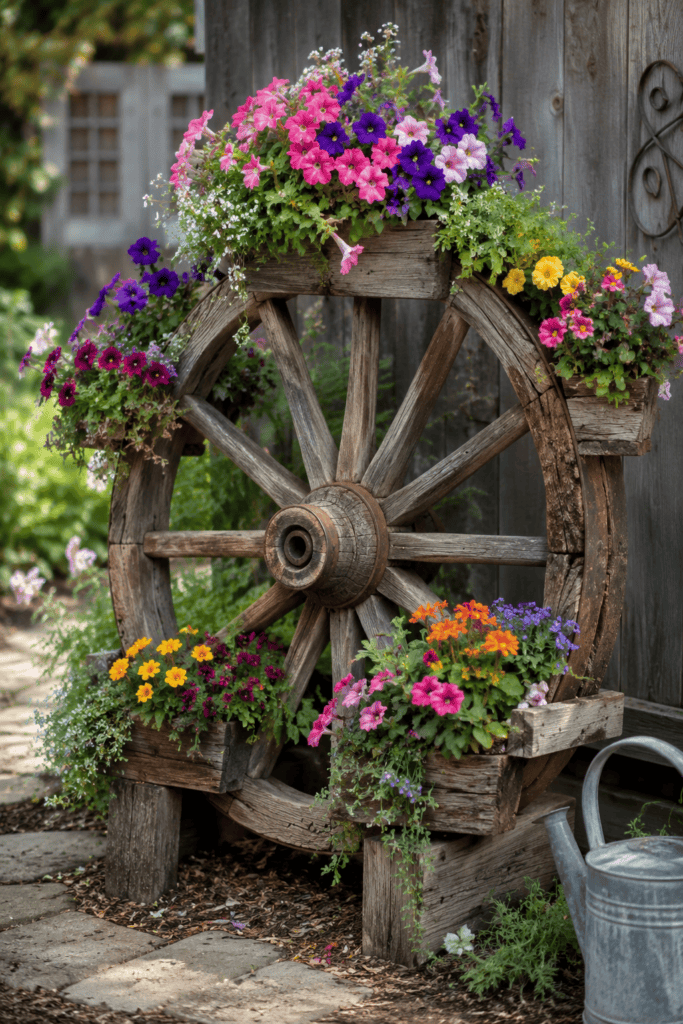
Ever seen flowers growing out of an old boot, wheelbarrow, or rusted bucket? It’s not just a rustic aesthetic trend — it’s a smart way to add color in spots a traditional garden bed can’t reach.
I repurposed an old wagon wheel as a planter stand last year, and it’s become the single most-photographed spot in my yard (according to my very unofficial Instagram-comments audit).
13. Go Dark and Dramatic
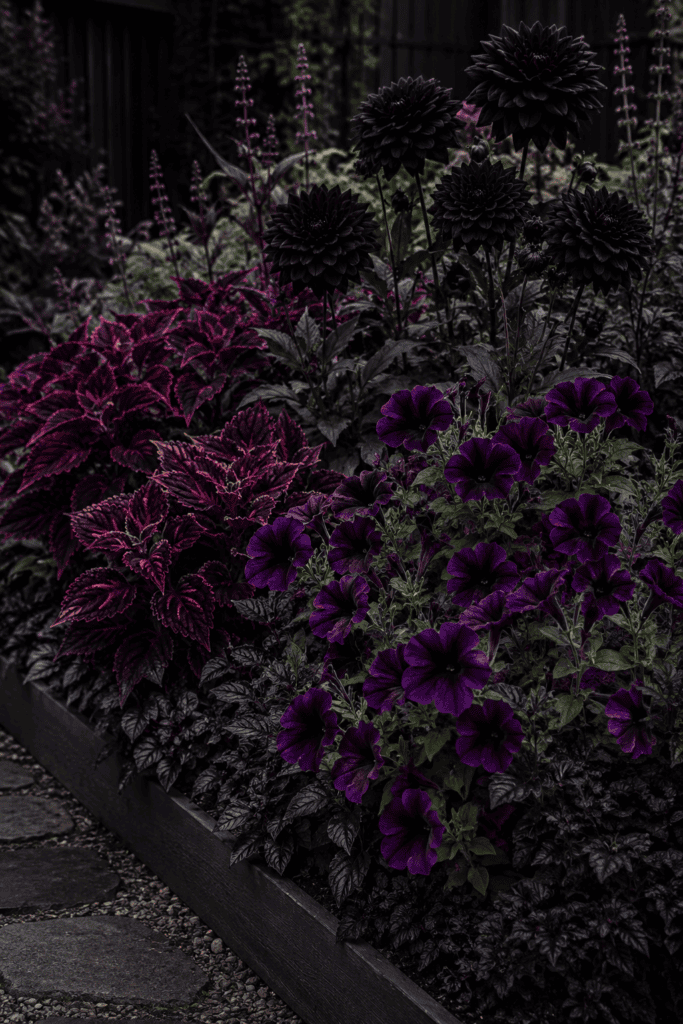
Not every colorful garden has to be bright and cheerful. Deep, moody colors — near-black dahlias, dark purple petunias, burgundy coleus — create a sophisticated, almost gothic look that stands out precisely because it’s different.
This is where I inject a little sarcasm: if your neighbor’s garden looks like a candy shop threw up on their lawn, a dark, moody bed will make yours look like the adults’ table.
Dark plants also work as a visual reset button between bright, busy sections of your garden. If you’ve got a loud rainbow border on one side of the yard, a small patch of near-black dahlias and dusky purple heuchera on the other side gives the eye somewhere calm to land. It’s the garden equivalent of a neutral outfit that makes your statement jewelry pop even harder.
14. Add Colorful Mulch or Ground Cover
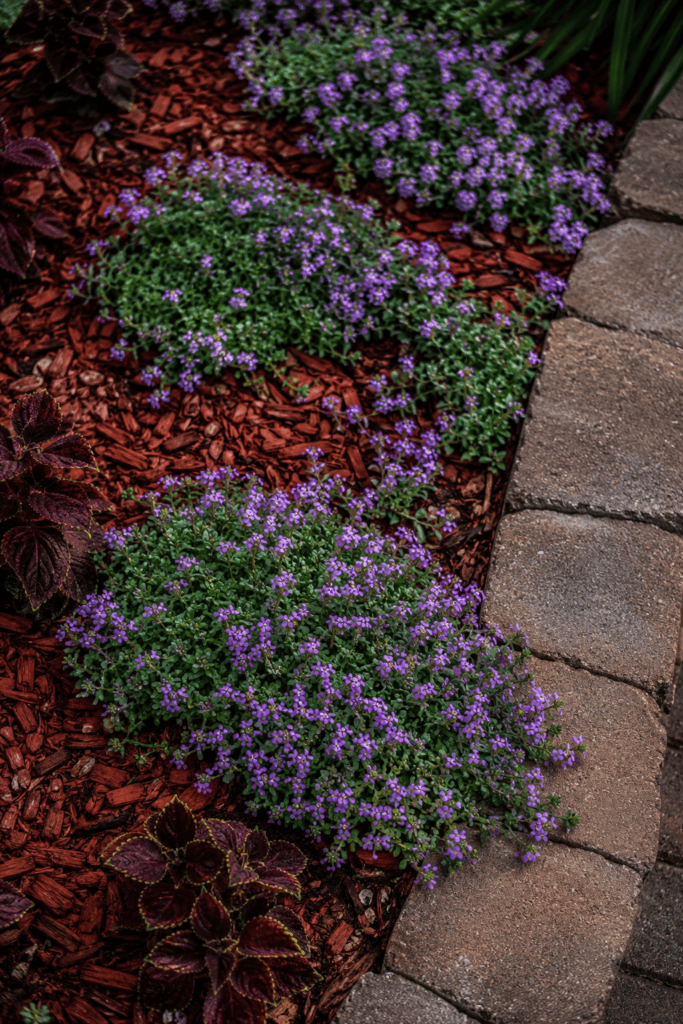
Mulch isn’t just functional — it’s a color choice too. Red, black, and gold mulch each create a completely different backdrop for your plants. Combine that with colorful ground covers like creeping thyme or sedum, and even the “empty” spaces in your garden carry color.
15. Design a Seasonal Color Calendar
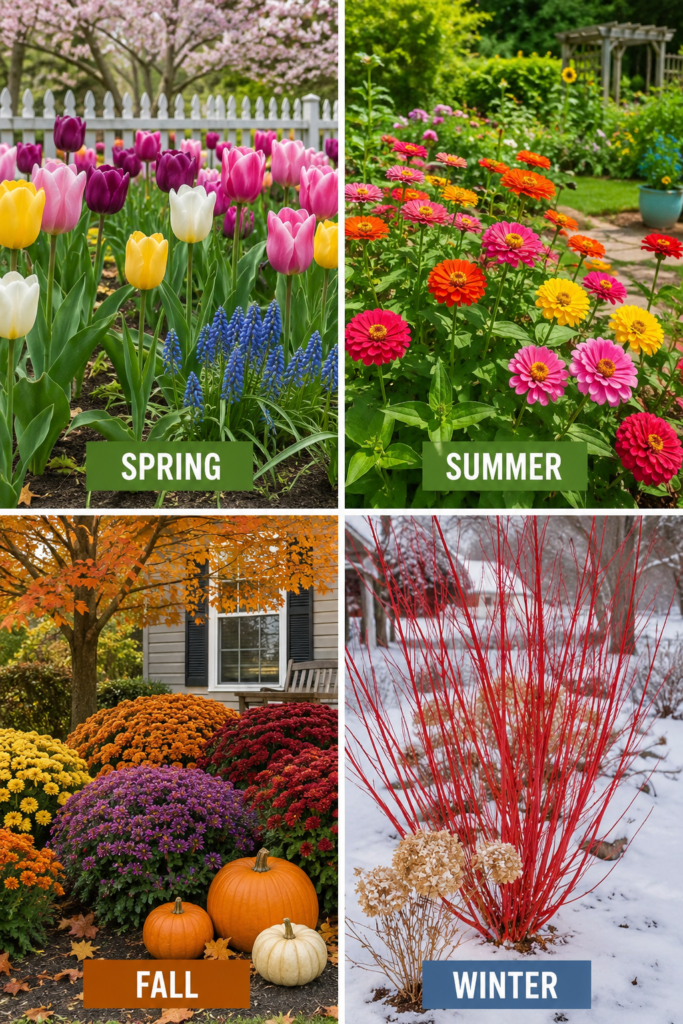
Here’s a genuinely useful idea most people skip: plan your garden so something is always blooming, no matter the season. Crocuses and daffodils for spring, zinnias and dahlias for summer, mums and asters for fall.
I built a simple planting calendar my first year, and it completely changed how I garden. No more three-month stretches of “eh, it’s fine, I guess” green nothingness.
| Season | Colorful Options |
|---|---|
| Spring | Tulips, daffodils, hyacinths |
| Summer | Zinnias, dahlias, cosmos |
| Fall | Mums, asters, ornamental kale |
| Winter | Winterberry, red-twig dogwood |
The mistake most people make with seasonal planning is treating it as a one-time project instead of an ongoing rotation. Every time one section finishes blooming, have the next round already planted and waiting in the wings — literally, in nursery pots off to the side — so you can swap it into the bed the moment things start fading. It sounds like extra work, but it’s maybe twenty minutes every few weeks, and it’s the difference between a garden that peaks once and one that peaks constantly.
Final Thoughts
Seventeen ideas, zero excuses left for a boring backyard. Whether you go full rainbow border or start small with one colorful container, the goal is the same: make your garden a place you actually want to spend time in.
Here’s what I’d say if you’re feeling a little overwhelmed by the list: you don’t need to do all 17 at once. Nobody’s garden transforms overnight, and honestly, the gardens that look “done” all at once tend to look staged and impersonal anyway. The best gardens evolve — a border added one spring, a painted bench added the next, a moon garden corner you finally get around to building three years later because you kept meaning to.