
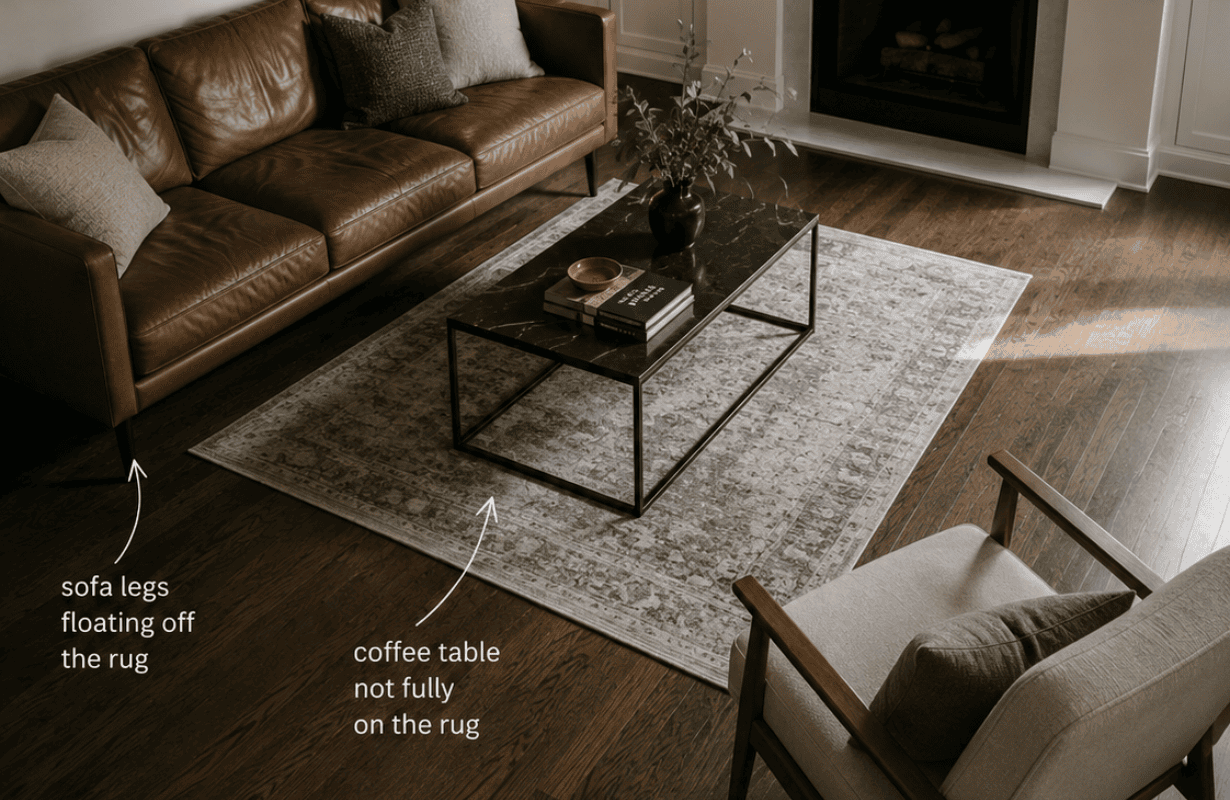
Choosing the wrong rug size is one of the easiest ways to undercut an otherwise great room design. It happens more often than you’d think: a rug arrives, gets unrolled, and instead of pulling the space together, it just sits there looking disconnected from the furniture around it.
The good news is that rug sizing isn’t guesswork. There are clear, practical guidelines for every room in your home living room, dining room, bedroom, and entryway that take the uncertainty out of the process. Get the size right, and your rug becomes the anchor that makes the whole room feel cohesive and intentional.
In this guide, you’ll find room-by-room sizing charts, furniture placement rules, and the small details (like breathing room around the edges) that make the biggest visual difference. Whether you’re furnishing a new space or fixing a rug that’s never quite looked right, here’s everything you need to get it right the first time.
Why Rug Size Matters More Than You Think
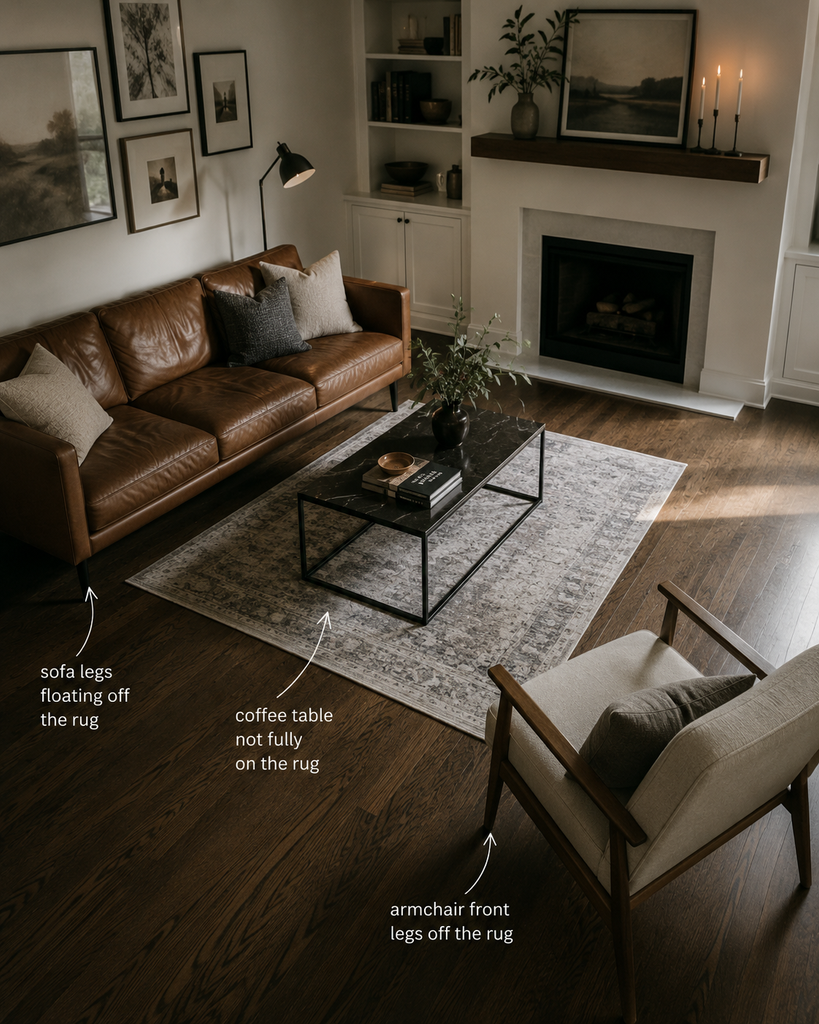
A rug isn’t just something soft to put under your coffee table. It’s the anchor of your room’s layout. Get the size wrong, and your furniture looks like it’s awkwardly floating in space.
Ever walked into a room and felt like something was “off” but couldn’t figure out why? Nine times out of ten, it’s the rug. Too small, and the room feels choppy and disconnected. Too big, and it overwhelms the space like it’s trying to be the main character.
The right rug size ties your furniture together and creates visual flow. It’s the difference between a room that feels intentional and one that feels like you grabbed whatever was on sale.
Measure Your Room Before You Buy Anything
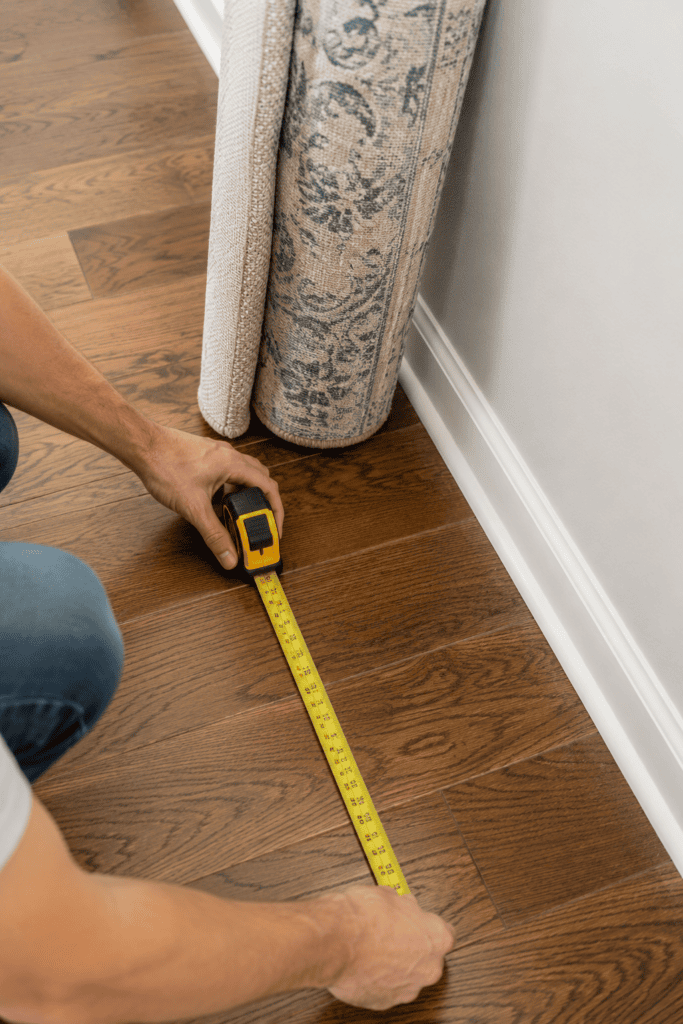
I know, I know—measuring feels like homework. But trust me, this step saves you from a returns nightmare later.
Grab a Tape Measure, Not a Guess
Never eyeball rug dimensions. I made this mistake early on, convinced my “great spatial awareness” would carry me through. It didn’t. I ended up with a rug two feet too short for my dining table, and returning heavy rugs is nobody’s idea of fun.
Here’s what you actually need to measure:
- The full length and width of the room
- The footprint of your main furniture pieces (sofa, bed, dining table)
- The walking paths you need to keep clear
- Any architectural quirks like alcoves, fireplaces, or built-ins
Leave Breathing Room Around the Edges
A good rule of thumb: leave 12 to 18 inches of bare floor between the rug’s edge and the wall. This creates a “frame” effect that makes the room feel balanced instead of cluttered.
Smaller rooms can get away with less breathing room—maybe 8 to 10 inches—while larger rooms can handle more. IMO, this is the detail most people skip, and it’s exactly why their rug ends up looking like an afterthought.
Living Room Rugs: The Furniture Placement Rule
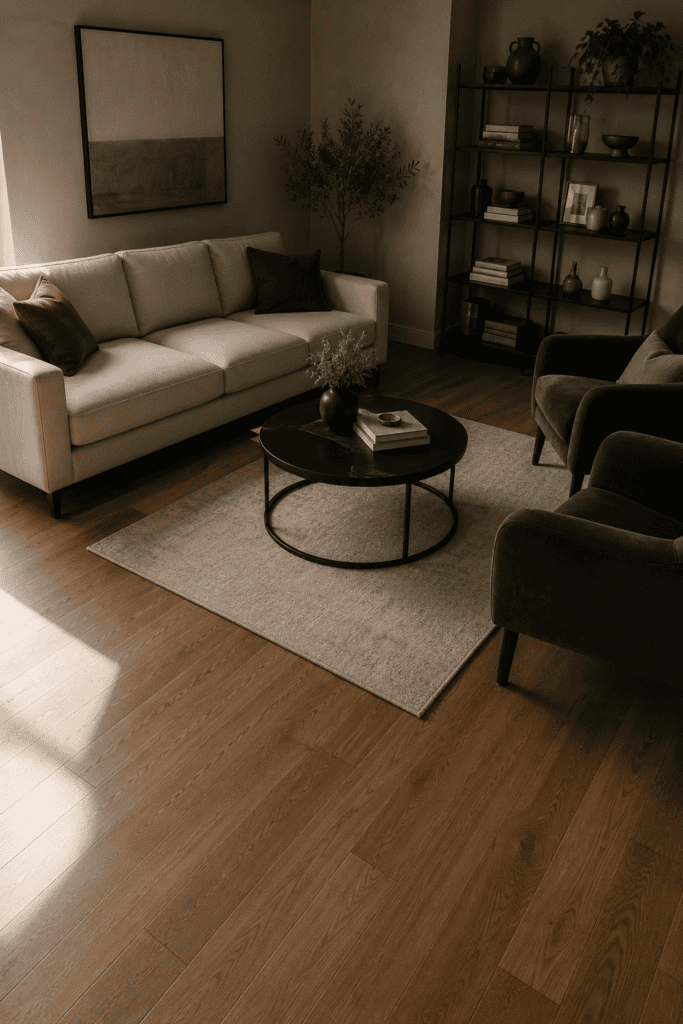
The living room is where rug sizing rules get tested the most because there’s so much furniture to work around. Let’s break down your three main options.
Option 1: All Four Legs On
This is the gold standard for larger living rooms. Every piece of seating—sofa, chairs, ottoman—sits entirely on the rug, all four legs included.
This look creates a cohesive, pulled-together feel. It’s the “I have my life together” of rug placements. If your room is big enough, this is usually your best bet.
Option 2: Front Legs Only
Smaller living room? This is your go-to. The front legs of your sofa and chairs rest on the rug, while the back legs stay on the bare floor.
It’s a smart compromise that still visually anchors your furniture without requiring a rug the size of a small country. I’ve used this trick in a cramped apartment living room, and it genuinely tricked the eye into thinking the space was bigger.
Option 3: Floating Rug (Legs Off)
Honestly? I’d avoid this one unless you have zero other choice. A rug with no furniture touching it at all tends to look small and disconnected, like it wandered in from another room and got lost.
If you must go this route, make sure the rug is at least large enough to fill the central seating area. Otherwise, it just reads as a mistake.
Quick Reference: Living Room Rug Sizes
- Small living room: 5′ x 8′ or 6′ x 9′
- Medium living room: 8′ x 10′
- Large living room: 9′ x 12′ or bigger
- Sectional sofas: Usually need at least a 9′ x 12′ to accommodate the shape properly
Dining Room Rugs: Don’t Forget the Chairs
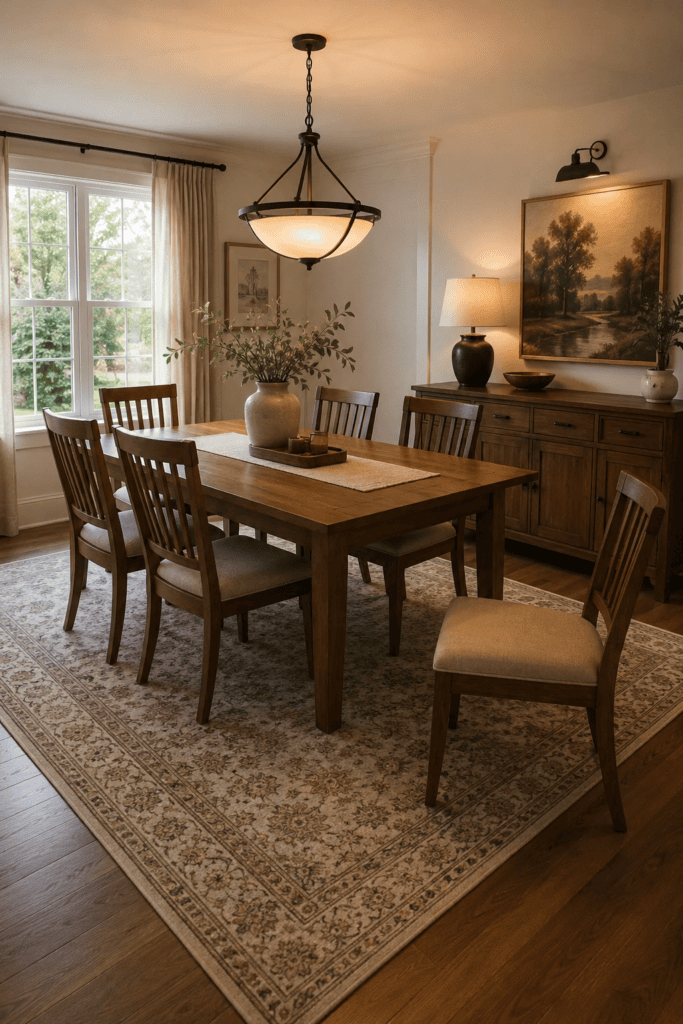
This is where people mess up constantly, myself included at one point. You can’t just measure the table—you have to account for the chairs when they’re pulled out.
The Golden Rule for Dining Rugs
Add 24 to 30 inches on all sides of the table to your measurements. This ensures that when someone pushes their chair back to stand up, the chair legs stay on the rug instead of catching on the edge and creating that awkward scraping sound we all hate.
Ever pulled out a dining chair and had it snag on the rug’s edge? That’s a sizing fail, and it’s completely avoidable.
Common dining rug sizes:
- 4-seat table: 6′ x 9′
- 6-seat table: 8′ x 10′
- 8-seat table: 9′ x 12′ or 10′ x 14′
Shape Matching Matters Too
Match your rug shape to your table shape whenever possible. Round tables pair with round rugs, and rectangular tables pair with rectangular rugs. It’s a small detail, but it makes a noticeable difference in how “finished” the room feels.
Bedroom Rugs: Comfort Meets Style
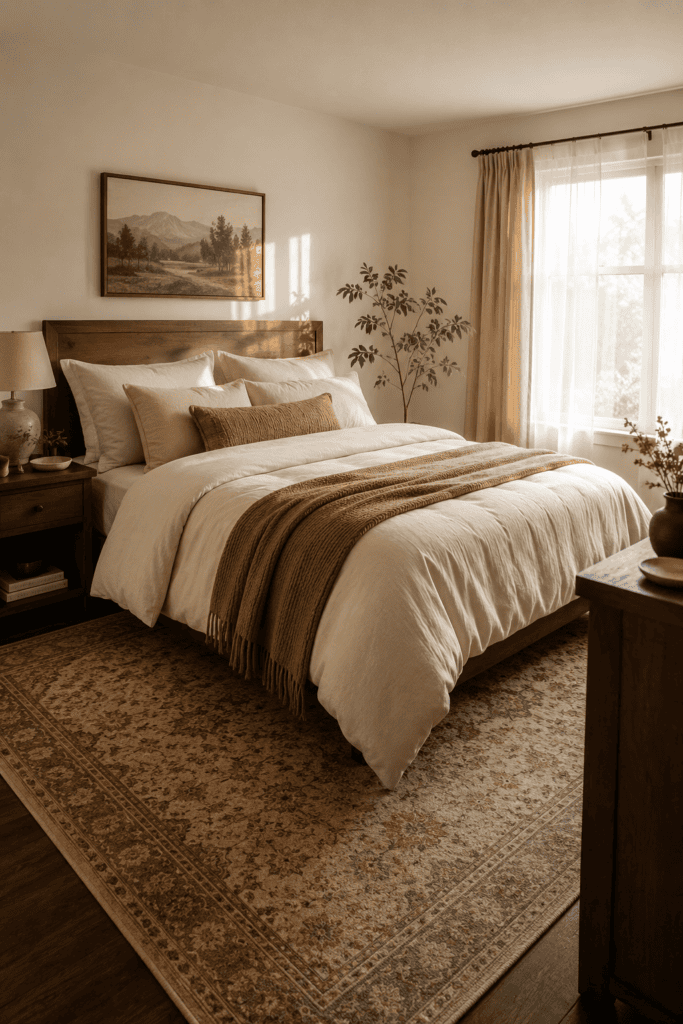
Bedrooms are more forgiving than living rooms, but there are still smart ways to approach sizing depending on your bed size and layout.
The Three Bedroom Layout Options
- Full coverage: The rug extends at least 18 to 24 inches beyond the bed on all sides, so your feet land on soft rug the second you swing out of bed.
- Runner style: Two runners placed on either side of the bed, extending a couple feet beyond the mattress edge. This works great if you love the look but don’t want to invest in one giant rug.
- Partial coverage: The rug sits under the bottom two-thirds of the bed, extending out on the sides and foot of the bed. This is the most budget-friendly option and still looks polished.
Bedroom Rug Size by Bed Size
- Twin bed: 5′ x 7′ or two 2′ x 5′ runners
- Full/Queen bed: 8′ x 10′
- King bed: 9′ x 12′
I personally love the runner approach in guest rooms—it’s cost-effective, and honestly, waking up to soft rug under your feet feels like a tiny luxury every morning. 🙂
Entryway and Hallway Rugs: Small Space, Big Impact
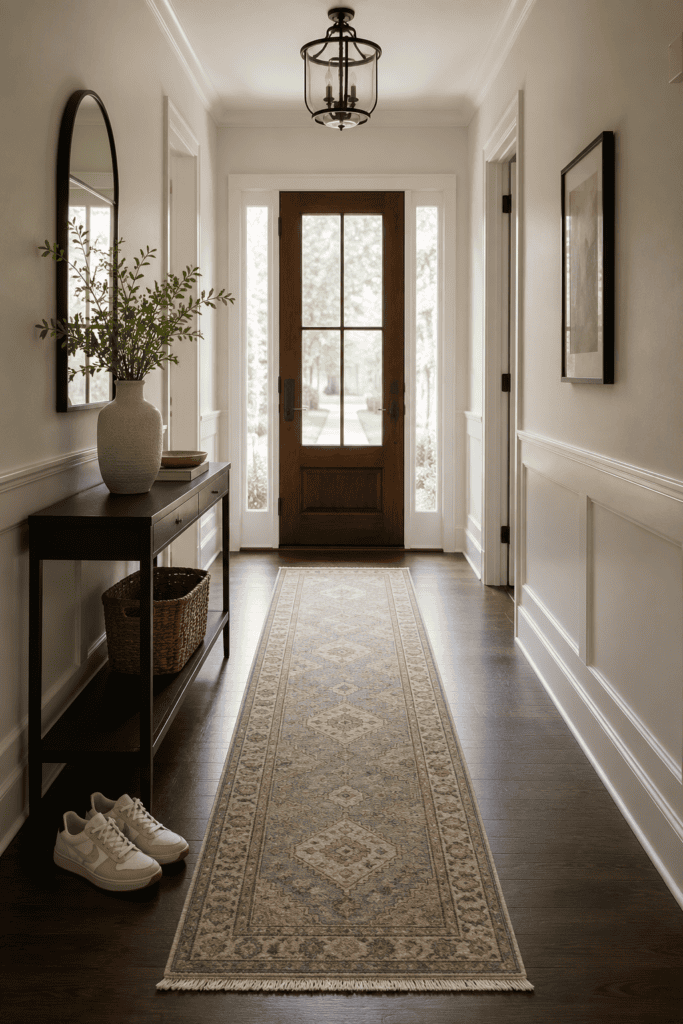
Entryways don’t need massive rugs, but they do need the right proportions to avoid looking like a doormat that got lost.
Sizing Guidelines for Entryways
- Leave at least 4 to 6 inches of flooring visible around the rug’s edges.
- For narrow entryways, a runner rug is almost always your best bet.
- For larger foyers, consider a rug that’s proportional to the space—not tiny, not overwhelming.
Hallway Runners
Hallway runners should be 60 to 75% of the hallway’s length, leaving equal space at both ends. Width-wise, aim for a runner that leaves 4 to 6 inches of floor visible on each side.
FYI, going too narrow with a hallway runner is one of the most overlooked sizing mistakes. It makes an already narrow space feel even more cramped.
Common Rug Sizing Mistakes (And How to Dodge Them)
Let’s talk about the mistakes I see (and have made) over and over again. Consider this your cheat sheet for avoiding regret.
- Buying too small: The single most common mistake. When in doubt, size up.
- Ignoring furniture placement: A rug that doesn’t relate to your furniture layout looks like it doesn’t belong.
- Skipping the breathing room: No frame of bare floor makes the room feel cramped.
- Forgetting about traffic flow: Rugs that block doorways or create tripping hazards are a functional and aesthetic fail.
- Not accounting for chair pull-out space: Especially critical in dining rooms and home offices.
Honestly, most of these mistakes come down to rushing the measuring step. Slow down, grab that tape measure, and save yourself a return shipment.
A Few Extra Pro Tips
Here are some smaller details that make a surprisingly big difference:
- Use painter’s tape to outline your rug dimensions on the floor before buying. This gives you a real visual sense of scale.
- Round up, not down, when you’re stuck between two sizes. A slightly larger rug almost always looks better than a slightly smaller one.
- Layer rugs in awkward or oddly-shaped rooms to create the right proportions without committing to one giant piece.
- Check the rug’s actual dimensions, not just the size category. A “9×12″ rug can sometimes measure closer to 8’6″ x 11’6” depending on the brand.
Layering, in particular, saved a weirdly shaped living room of mine that no single rug size could fix. IMO, it’s an underrated trick that more people should use.
Wrapping It All Up
Choosing the right rug size doesn’t have to feel like solving a geometry problem. Once you understand the furniture placement rules, the breathing room guidelines, and the room-specific sizing charts, you’ll pick the right rug every single time.
Remember: measure first, leave enough bare floor around the edges, and always account for furniture like dining chairs that move. When in doubt, size up rather than down an oversized rug reads as intentional, while an undersized one just reads as a mistake.