
Let’s be honest — nobody warns you about this when you’re apartment hunting or touring a house. You fall in love with the layout, the location, the price, and then you realize the bathroom doesn’t have a single window. And now every morning starts in what feels like a beige little bunker.
I get it, because I’ve been there. For almost two years, my only bathroom was a windowless one squeezed between a hallway and a bedroom, and no matter how clean I kept it, it always felt like walking into a closet that happened to have a toilet in it. I tried candles. I tried a plug-in air freshener that promised to “brighten the mood.” Neither did anything, because the problem was never about smell or tidiness it was about light, and I was tackling the wrong thing entirely.
If this sounds like your bathroom right now, take a breath. This isn’t a “just add a plant” kind of fix. It’s about understanding exactly why the room feels the way it does, and then making a few specific, intentional changes that actually address that — not just cosmetic tweaks that look nice for five minutes and change nothing. No window install, no contractor, no waiting around. Let’s get into it.
Why Windowless Bathrooms Feel So Dark (Even With the Lights On)
Before we get into fixes, it helps to understand what’s actually happening. Most people assume the problem is simply “no natural light,” and while that’s part of it, it’s not the whole story.
Natural light isn’t just brighter — it’s diffused and comes from multiple angles throughout the day, which is why sunlit rooms never feel flat. Artificial light, especially a single overhead fixture (which is what most bathrooms have), creates hard shadows and uneven pools of brightness. That’s why your windowless bathroom can have a light on and still feel dim — the light is technically present, but it’s not doing its job well.
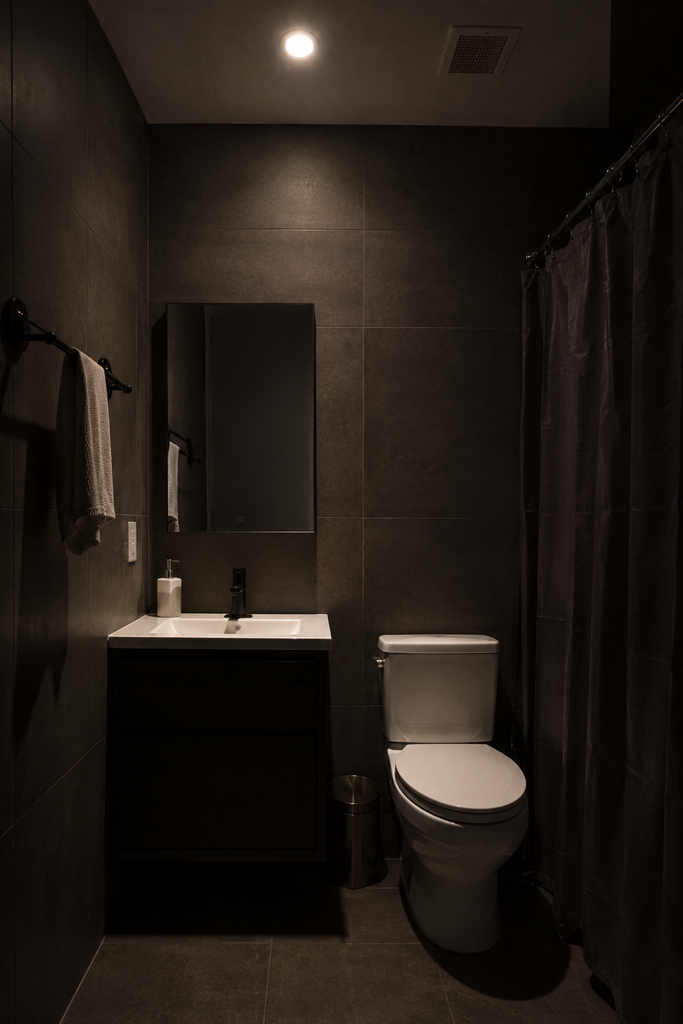
On top of that, windowless bathrooms tend to have darker finishes by default. Builders often go with darker tile or paint in these rooms because “it hides dirt” or because nobody thought too hard about it. Combine flat, harsh lighting with dark or dull surfaces, and you get a room that swallows light instead of bouncing it around.
Common Mistakes People Make
Relying on One Overhead Light
This is probably the single biggest issue I see. One ceiling fixture means one light source, which means shadows everywhere else — under cabinets, in corners, around the mirror. Your brain reads shadows as “dark,” even if the room technically has decent lumens.
Choosing Paint Colors That Are Too Cool or Too Dark
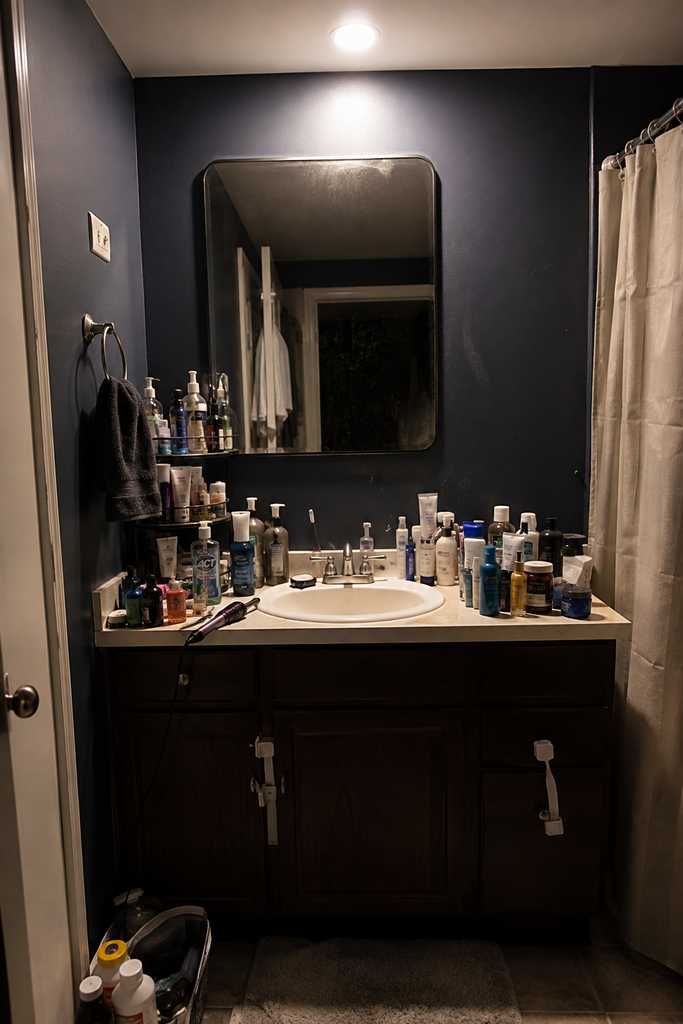
A lot of people go for a “spa-like” navy or deep green because it looks great on Pinterest. What they don’t factor in is that these colors absorb light rather than reflect it. In a room that’s already light-starved, that’s the opposite of what you want.
Ignoring the Mirror
Most bathroom mirrors are small, poorly lit, or positioned in a way that doesn’t reflect any usable light back into the room. A mirror is one of your biggest tools here, and most people treat it as an afterthought.
Cluttering Countertops and Shelves
Visual clutter reads as darkness. Even if the room is technically bright, a countertop packed with bottles, towels, and gadgets makes the whole space feel heavier and smaller than it is.
Core Principles That Will Work
Once you understand why these rooms feel dark, the fixes become pretty obvious. Here’s what you’re actually working with:
1. Light Needs to Bounce, Not Just Shine
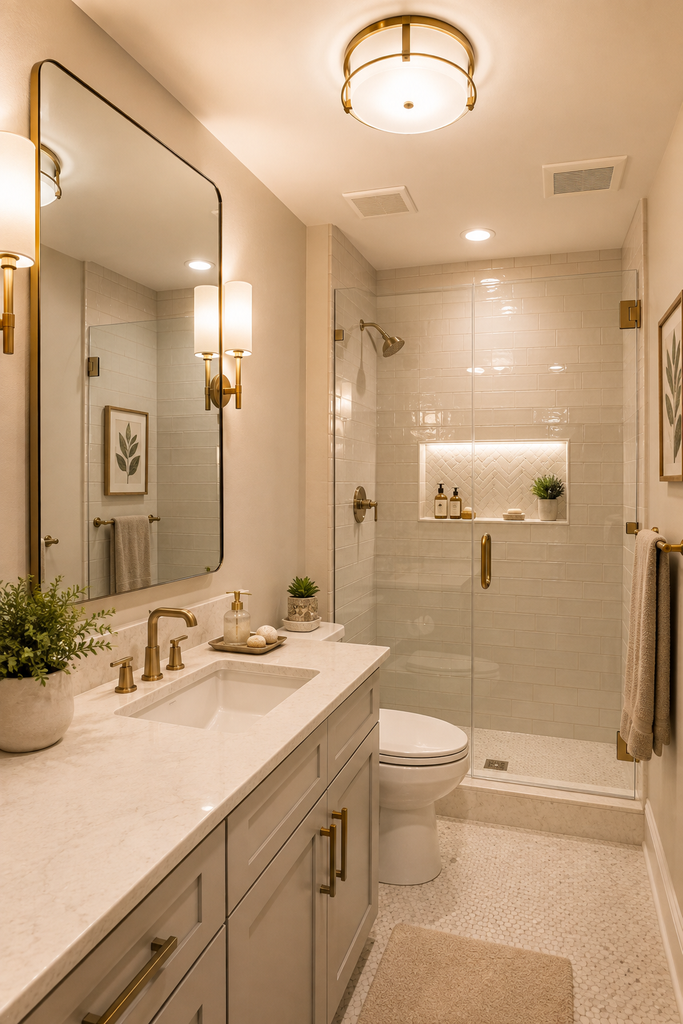
This is the single most important concept. A windowless bathroom doesn’t need more light — it needs light that bounces around the room instead of getting absorbed. That means reflective surfaces (glossy tile, mirrors, light countertops) matter just as much as the bulbs you choose.
2. Color Temperature Changes Everything
Not all “white” light is equal. Warm light (around 2700K) feels cozy but can read as dim and yellow in a small space. Cool white or daylight bulbs (around 4000K–5000K) mimic natural daylight and make everything — including your skin tone — look clearer and brighter. Most people don’t realize their “dark” bathroom is actually just using the wrong bulb temperature.
3. Layered Lighting Beats a Single Fixture
Professional lighting designers almost never rely on one light source, and there’s no reason your bathroom should either. Overhead, vanity, and accent lighting together eliminate shadows in a way one ceiling light simply can’t.
4. Light Colors Aren’t Optional Here
I know matte black and deep colors are trendy right now, but in a windowless bathroom, they’re working against you. Light, soft, slightly warm neutrals reflect the most light without feeling sterile.
Step-by-Step: How to Actually Brighten Your Windowless Bathroom
Step 1: Upgrade Your Lighting First (Not Last)
This is where most people should start, but usually don’t. Swap out your existing bulbs for LED bulbs in the 4000K–5000K range. If your fixture allows it, go for the highest reasonable wattage equivalent — bathrooms genuinely need more lumens than people expect, especially windowless ones.
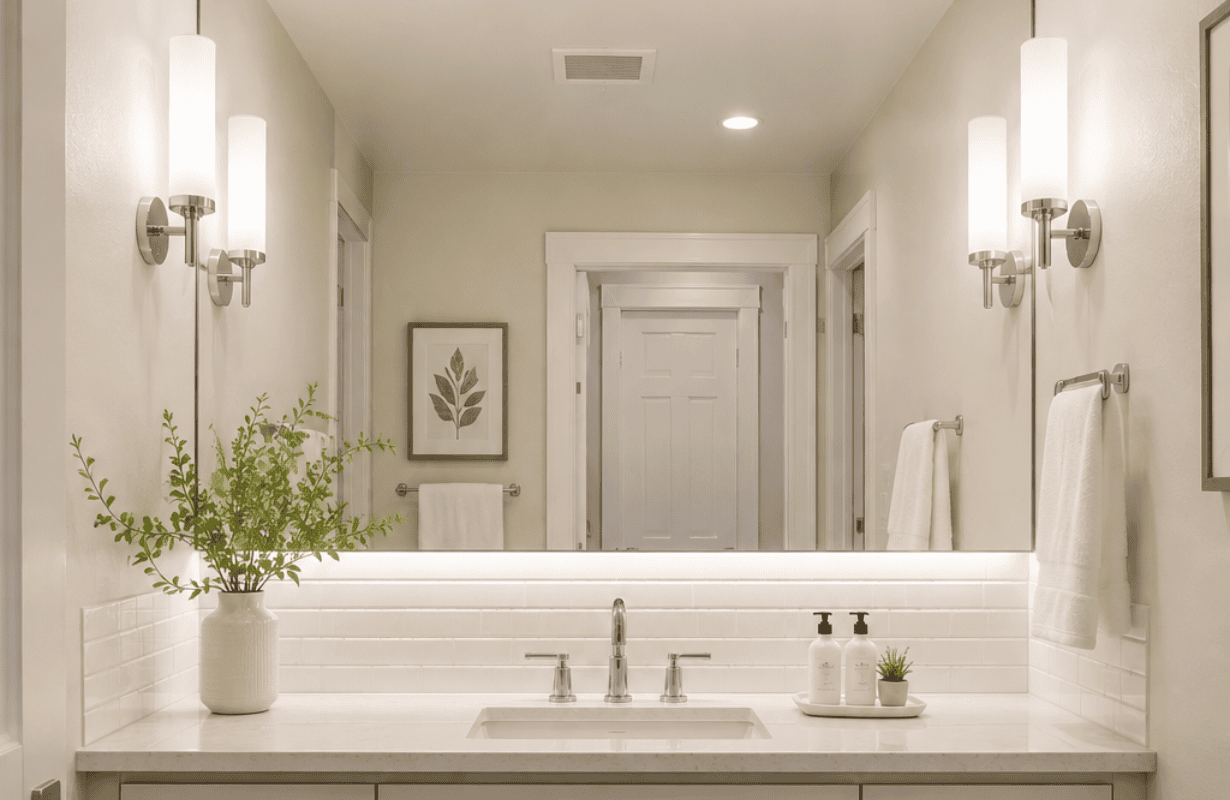
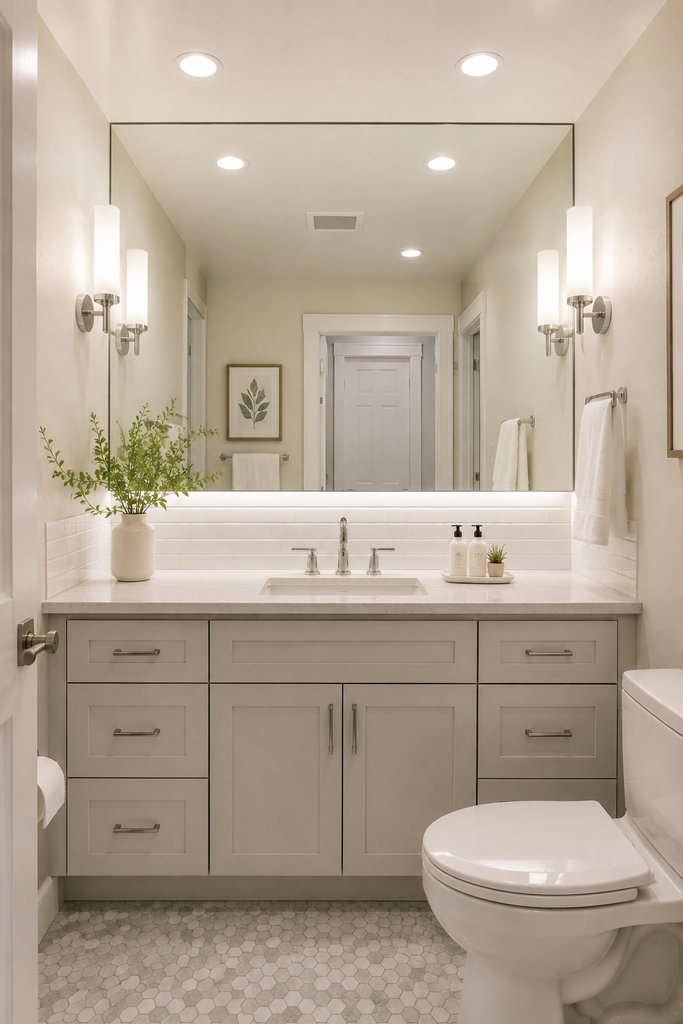
Then add a second light source. Vanity sconces on either side of the mirror (not just above it) eliminate the harsh shadows that a single overhead light casts on your face and around the room. This is a classic hotel-bathroom trick, and it makes a bigger difference than people expect.
Step 2: Rethink Your Mirror
A bigger mirror isn’t just about vanity — it’s a functional light tool. Mirrors bounce whatever light hits them back into the room, effectively doubling your light source. If you can, go for a mirror that spans most of the wall above your sink rather than a small medicine-cabinet-sized one.
If a full mirror swap isn’t in the budget right now, even adding a second smaller mirror on an adjacent wall creates a bounce effect that noticeably opens up the space.
Step 3: Lighten Your Wall Color
This one feels obvious, but the execution matters. Go for warm whites, soft creams, or light greiges instead of stark, cold white (which can feel clinical) or anything mid-to-dark toned. A satin or eggshell finish will reflect more light than a flat matte finish, so factor that into your paint choice too.
If you’re renting and can’t paint, peel-and-stick wallpaper in a light tone is a legitimate workaround that a lot of people overlook.
Step 4: Swap Dark Textiles for Light Ones
Dark bath mats, dark towels, and heavy shower curtains all add visual weight to a room that’s already working against itself. Switching to white or light neutral textiles isn’t just a style choice — it removes visual “dark spots” that your eye naturally gets drawn to.
Step 5: Declutter the Surfaces
Clear your countertop down to two or three items max. Store the rest in a cabinet or a simple tray you can tuck away. What actually works here isn’t fancy organization systems — it’s just having less stuff visible. Less visual noise reads as more open, brighter space, even without changing a single light bulb.
Step 6: Add a Glossy or Reflective Element
This could be a glossy subway tile backsplash, a metallic-framed mirror, or even glass shelving instead of wood. Reflective surfaces catch and redistribute light in a way matte surfaces just can’t. You don’t need to overhaul your whole bathroom — even one glossy accent tile strip can shift how the room feels.
Practical Tips People Usually Skip
- Keep the exhaust fan running longer than you think you need to. Humidity dulls surfaces over time (especially mirrors and glossy tile), which quietly reduces how much light bounces around your bathroom.
- Use a warm-toned nightlight instead of flipping on the harsh overhead light for middle-of-the-night trips. It sounds unrelated to “brightness,” but it keeps your eyes adjusted to the room’s actual lighting rather than shocking them awake with a fully lit space.
- If you have a door, keep it open when the bathroom isn’t in use. Letting light from the hallway spill in, even slightly, prevents that “walking into a dark box” feeling every time you enter.
- Avoid frosted or heavily patterned shower curtains. They block light from bouncing between the shower area and the rest of the room, which matters more in small spaces than people realize.
Conclusion
Making a windowless bathroom feel brighter isn’t about one big fix it’s about stacking a handful of small, deliberate choices: better bulbs, a bigger mirror, lighter colors, less clutter, and a few reflective surfaces. None of these require a renovation, and most of them cost less than you’d expect.
Start with the lighting and mirror those two changes alone will get you most of the way there. Then layer in the color and clutter fixes as you have time and budget. Your windowless bathroom will never have the same light as one with a window, but it can absolutely stop feeling like a dark, forgotten corner of your home.