
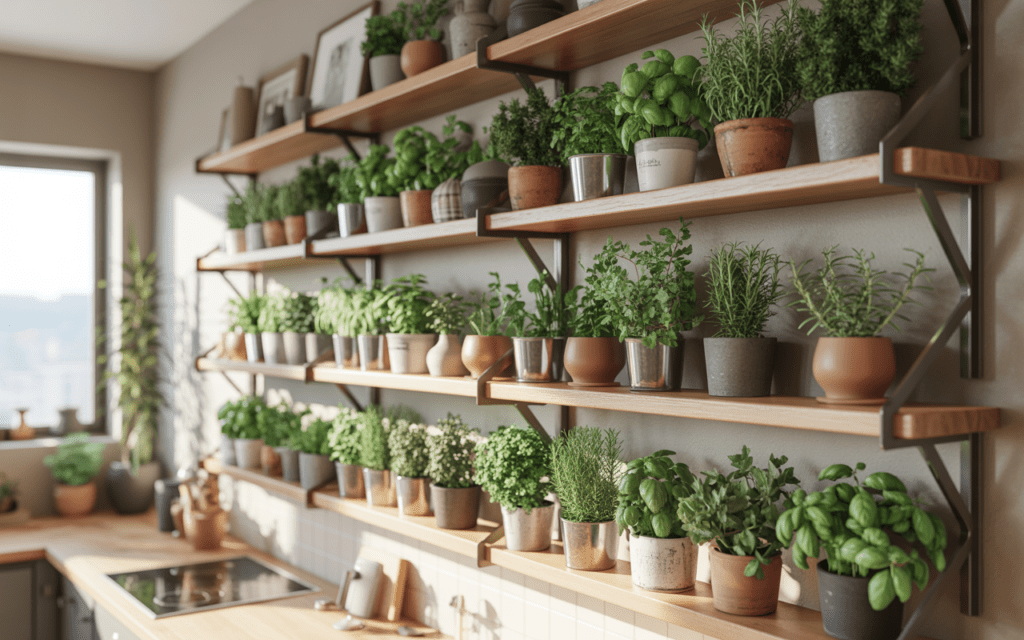
Fresh herbs change everything. One tiny snip of basil can make your pasta taste like you suddenly own a fancy little café in Italy. And honestly? Growing herbs indoors feels weirdly satisfying. You water a tiny plant, it survives, and suddenly you feel like the most responsible person alive. Amazing.
I started my first indoor herb garden with exactly one sad-looking mint plant sitting near my kitchen window. I forgot to water it twice, overwatered it once, and somehow it still survived. That tiny success turned into a full obsession. Now I’ve got herbs sitting in jars, shelves, hanging planters, and honestly, probably places they shouldn’t even be.
If you want fresh herbs without trekking outside every five minutes, these indoor herb garden ideas will make your kitchen, apartment, or tiny corner space feel greener, fresher, and way more alive. Plus, buying fresh herbs every week gets expensive fast. Those tiny grocery store packets act like they contain gold flakes or something :/
Let’s get into the best indoor herb garden ideas that actually work.
1. Create a Sunny Kitchen Windowsill Garden
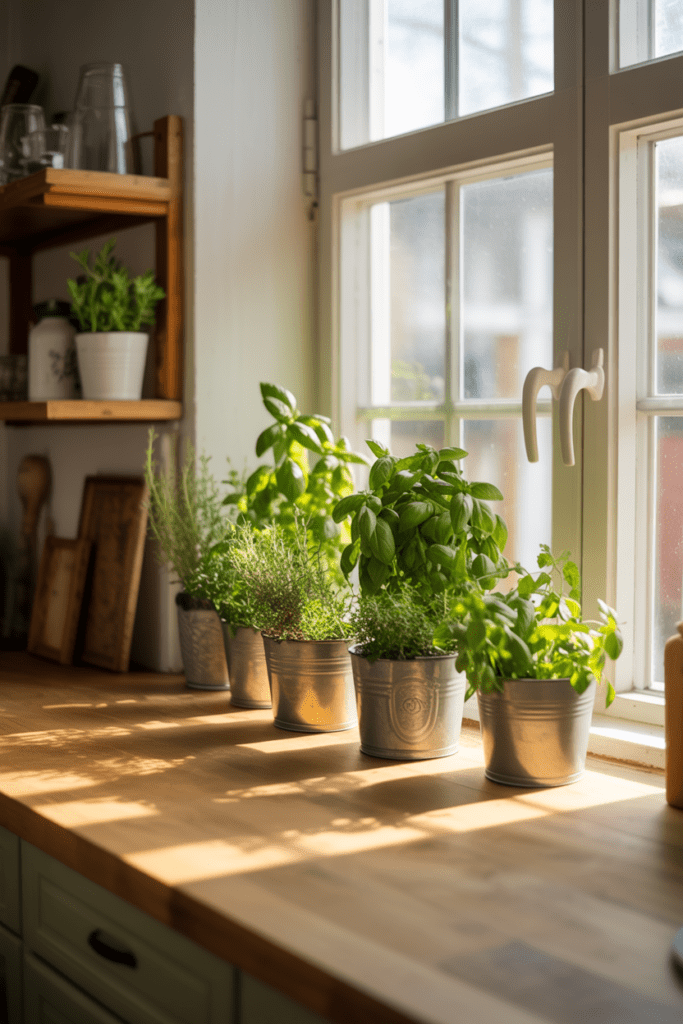
A kitchen windowsill remains the classic indoor herb garden setup for one simple reason: it works.
Most herbs love sunlight. Basil, parsley, thyme, oregano, and cilantro thrive when they get around six hours of direct light daily. A bright kitchen window gives herbs easy access to sunlight while keeping them close when you cook.
I love this setup because it feels effortless. You chop pasta ingredients, grab a handful of basil, and suddenly dinner feels ten times fancier.
Best Herbs for a Windowsill Garden
- Basil
- Thyme
- Oregano
- Parsley
- Chives
- Mint
Pro Tip
Use matching pots or mason jars for a cleaner look. Tiny mismatched plastic nursery pots can make your kitchen look like a mini gardening accident happened overnight.
South-facing windows usually provide the best light for indoor herbs.
2. Use Mason Jars for a Simple DIY Herb Garden
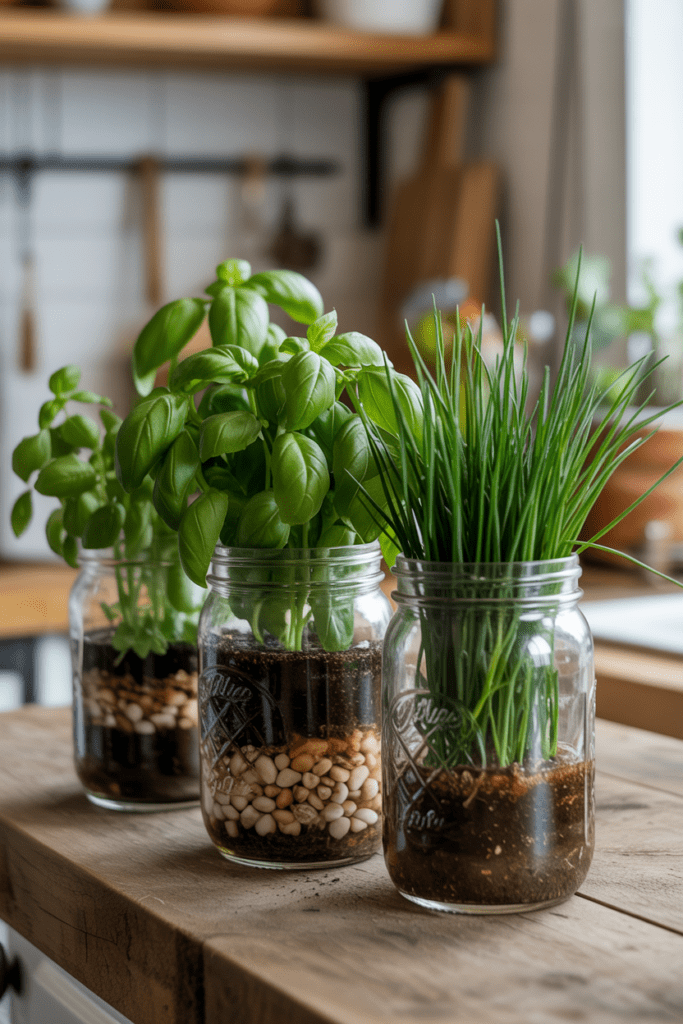
Mason jar herb gardens look ridiculously cute. They also cost almost nothing if you already have jars lying around.
You can grow herbs directly in mason jars, but you need drainage. Herbs hate soggy roots. Nobody likes wet socks, and apparently plants feel the same way.
Add small pebbles at the bottom before adding soil. That simple trick helps prevent root rot.
Why People Love Mason Jar Herb Gardens
- Affordable setup
- Easy for beginners
- Perfect for apartments
- Looks great in farmhouse kitchens
- Easy to move around
I especially love mason jars for mint and chives because they grow quickly and look fuller faster.
Clear jars also let you monitor moisture levels easily.
3. Install Floating Shelves for a Vertical Herb Garden
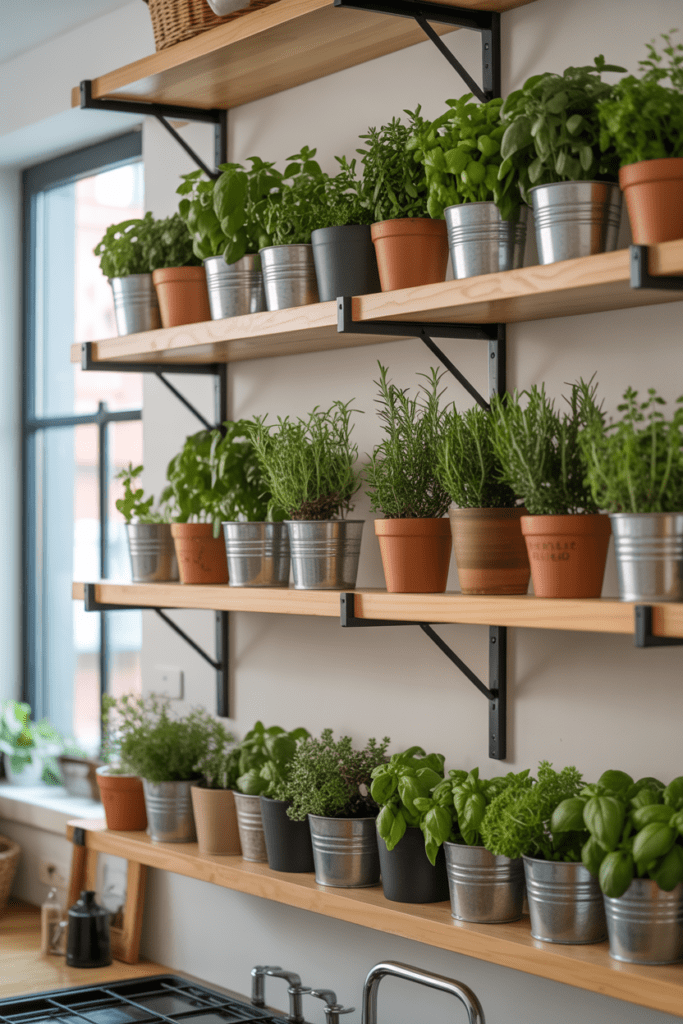
Running out of counter space? Welcome to adulthood.
Floating shelves solve that problem beautifully. Instead of spreading herbs across every surface in your kitchen, you can build upward.
Vertical herb gardens save space while creating a stylish focal point. Plus, rows of green herbs instantly make a room feel cozy and alive.
Best Shelf Placement Ideas
- Near bright windows
- Above coffee stations
- Next to kitchen sinks
- Along dining room walls
Mix different pot textures for a layered look. Ceramic, terracotta, and matte planters work especially well together.
Vertical herb gardens work perfectly in small apartments and condos.
4. Try a Hanging Herb Garden
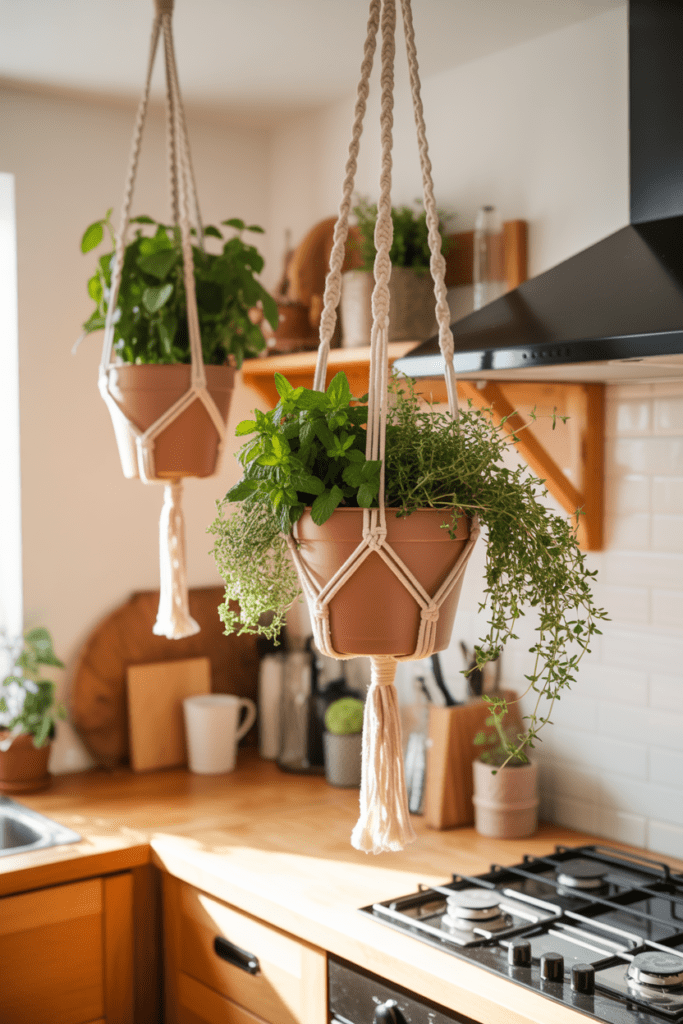
Hanging herb gardens make ordinary kitchens look straight out of Pinterest.
If you lack shelf or counter space, hanging planters free up valuable room while adding visual interest. Macrame holders especially create a soft, cozy vibe.
I tried this setup with trailing herbs and honestly became obsessed.
Herbs That Work Well in Hanging Planters
- Mint
- Oregano
- Thyme
- Creeping rosemary
Important Tip
Don’t hang herbs too high. If grabbing basil requires a ladder, the setup becomes annoying fast.
Keep hanging herbs close enough for easy watering and trimming.
5. Build a Tiered Indoor Herb Stand
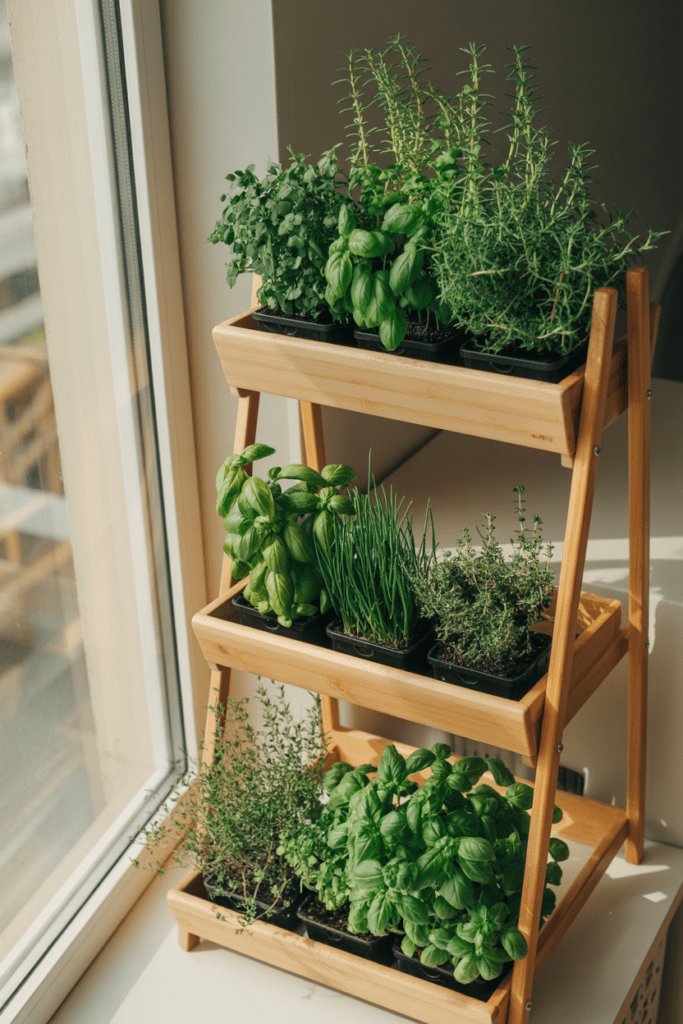
Tiered plant stands help you fit more herbs into smaller spaces.
Instead of one row of plants competing for sunlight, a tiered stand gives each herb better exposure. It also creates a fuller indoor garden appearance without overcrowding.
This setup works especially well near large windows.
Why Tiered Herb Gardens Work So Well
- Better organization
- Easier watering
- More sunlight distribution
- Great for compact homes
- Stylish decorative display
Wooden tiered stands add warmth, while black metal stands create a modern vibe.
Tiered herb displays make even tiny herb collections look intentional and polished.
6. Use a Hydroponic Indoor Herb Garden System
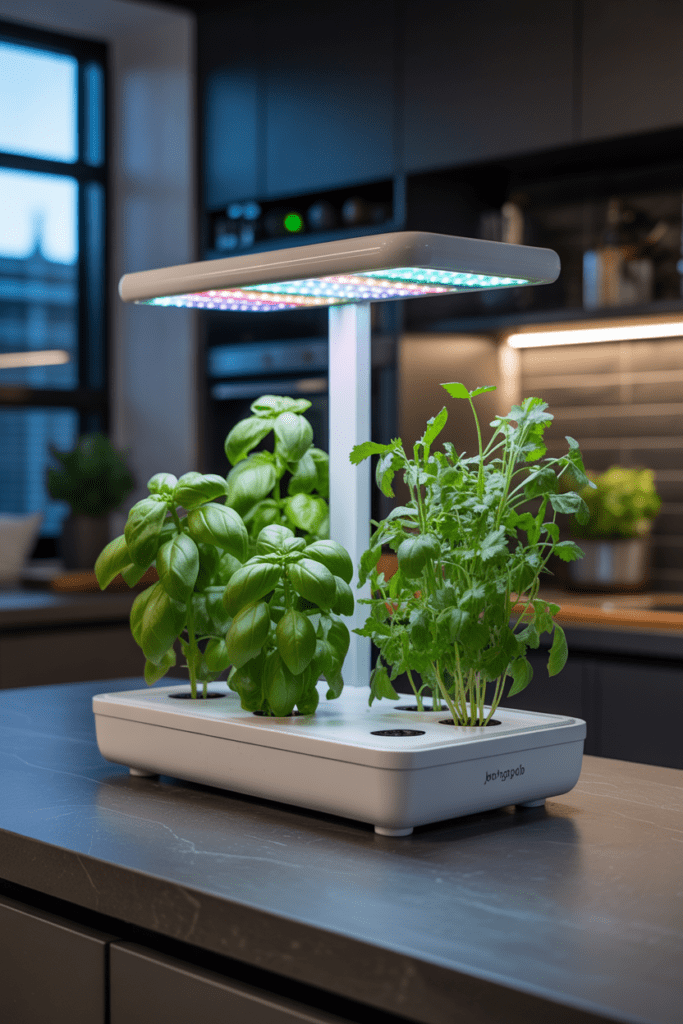
Hydroponic herb gardens sound intimidating, but they’re surprisingly beginner-friendly.
These systems grow herbs in water instead of soil. Many modern hydroponic kits even include built-in grow lights and automatic watering systems. Basically, technology decided plants needed upgrades too.
Benefits of Hydroponic Herb Gardens
- Faster growth
- Less mess
- Fewer pests
- Ideal for low-light homes
- Easy maintenance
I tested one during winter when my kitchen barely got sunlight, and my basil still exploded with growth.
Popular Herbs for Hydroponics
- Basil
- Cilantro
- Dill
- Mint
- Parsley
Hydroponic systems work especially well for year-round herb gardening.
7. Repurpose Tea Tins and Vintage Containers
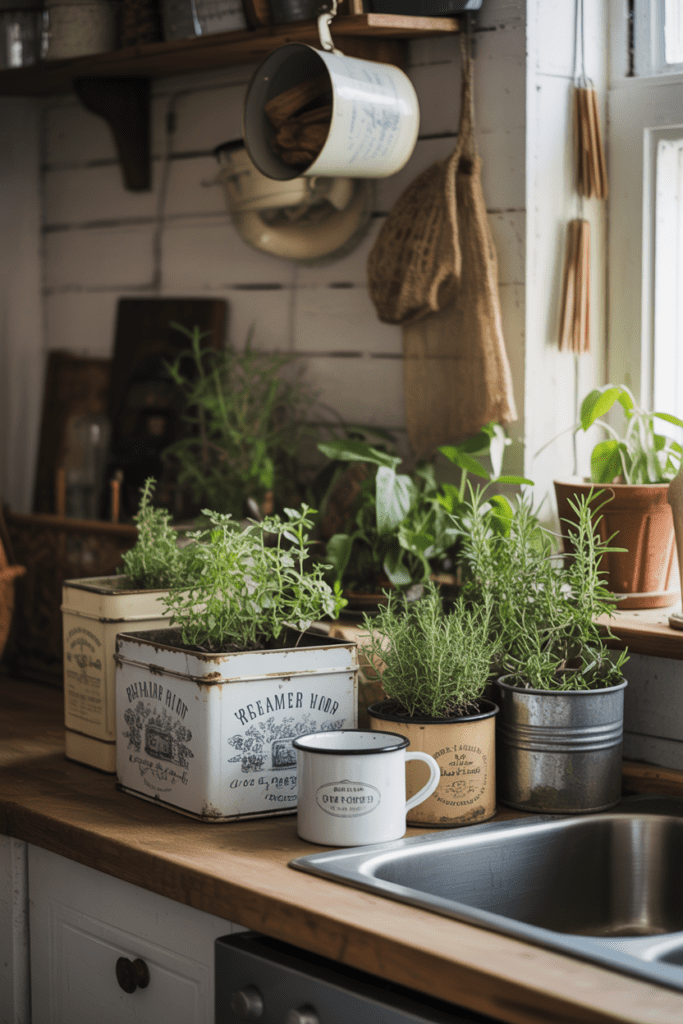
Want your indoor herb garden to feel unique instead of cookie-cutter? Repurpose old containers.
Vintage tea tins, enamel mugs, wooden boxes, and even old colanders can become herb planters.
This idea adds personality fast. Your indoor garden suddenly feels collected and cozy instead of looking like you panic-bought random planters online at 2 a.m.
Container Ideas Worth Trying
- Tea tins
- Coffee cans
- Ceramic bowls
- Wooden crates
- Enamel cups
- Old mugs
Just remember to add drainage holes whenever possible.
Creative containers instantly make herb gardens feel more decorative and personal.
8. Create a Minimalist Herb Garden Setup
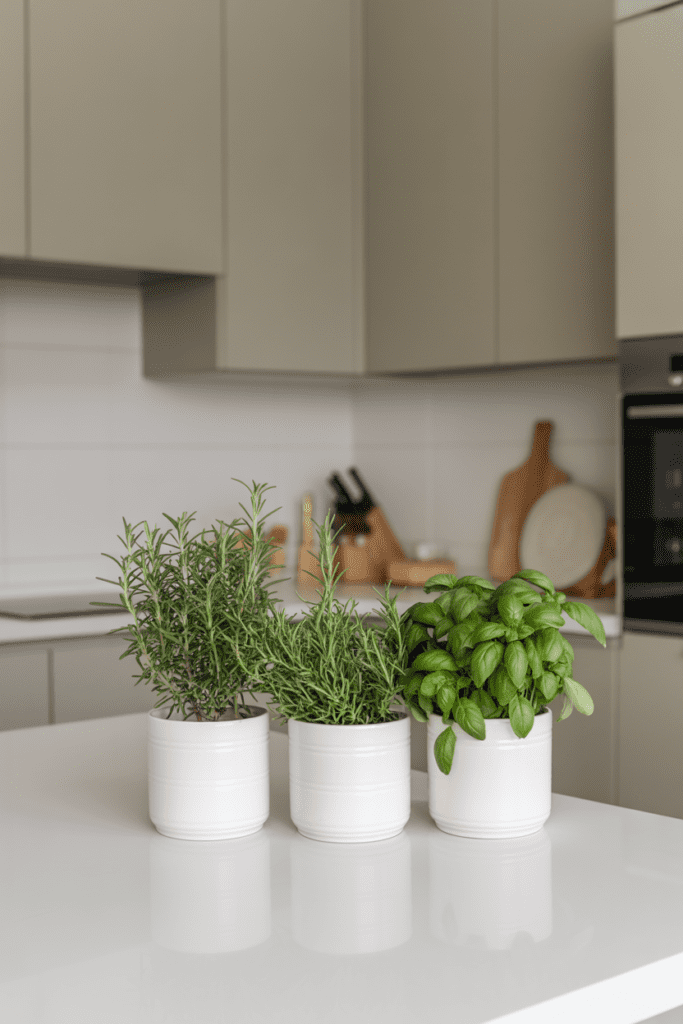
Minimalist herb gardens look clean, calming, and ridiculously expensive even when they aren’t.
Stick with neutral planters, simple shelving, and just a few carefully chosen herbs. This setup works beautifully in modern kitchens.
I love minimalist herb gardens because they never feel cluttered. Sometimes less really does look better.
Best Herbs for a Minimalist Look
- Rosemary
- Basil
- Sage
- Thyme
Styling Tips
- Use white ceramic pots
- Keep labels simple
- Limit color palettes
- Space plants evenly
Minimalist herb gardens create a calm and organized kitchen atmosphere.
9. Add Herb Labels for a Charming Touch
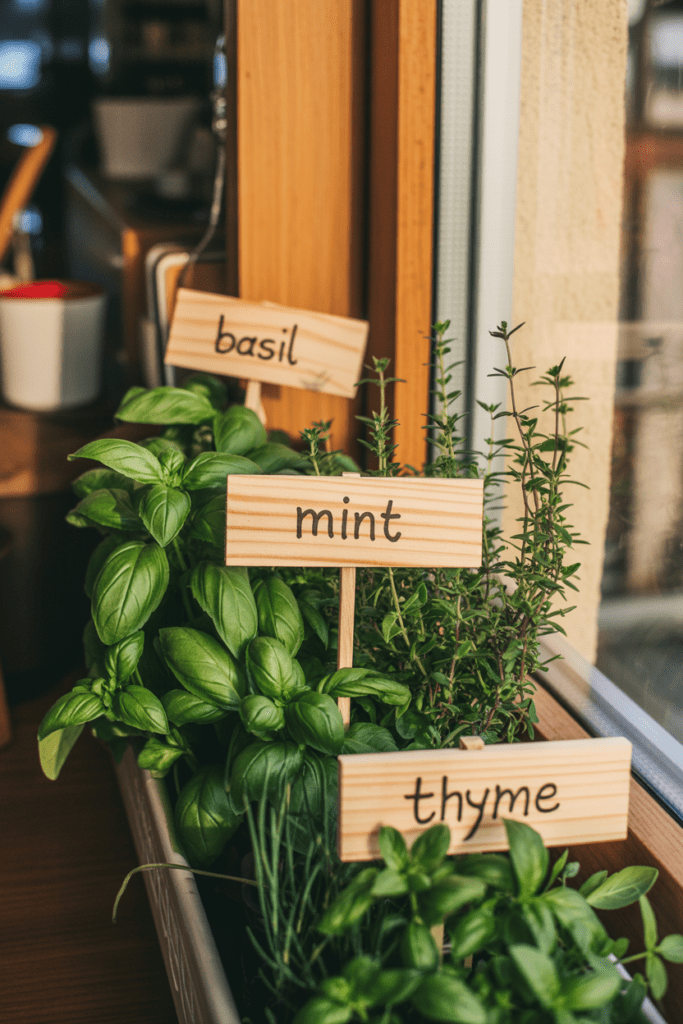
Tiny herb labels somehow make everything look cuter.
Seriously, even beginner gardens instantly feel more polished with labeled herbs.
You can use:
- Chalkboard markers
- Wooden tags
- Metal labels
- Handwritten stones
- Mini chalkboards
This idea also prevents accidental herb confusion. Trust me, grabbing mint instead of oregano for pasta creates emotional damage.
Easy DIY Label Ideas
- Popsicle sticks
- Painted rocks
- Cork labels
- Mini clothespins
Herb labels improve both style and functionality.
10. Grow Herbs Under LED Grow Lights
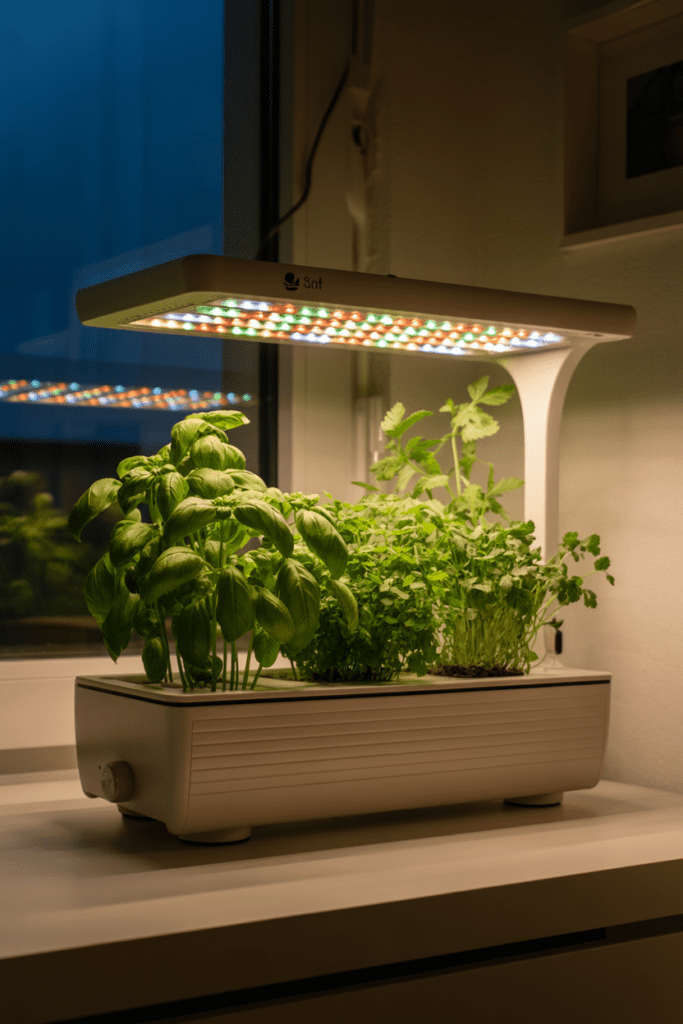
Not everyone gets perfect sunlight. Some apartments basically function as decorative caves.
LED grow lights solve that problem fast.
Modern grow lights look much sleeker than older bulky versions. Many even come in stylish designs that blend into home decor.
Why Grow Lights Matter
- Support year-round growth
- Prevent leggy herbs
- Improve leaf production
- Help herbs grow faster
Best Herbs for Grow Lights
- Basil
- Cilantro
- Parsley
- Dill
- Chives
Position lights about 6–12 inches above herbs for best results.
LED grow lights help indoor herbs thrive during darker seasons.
11. Turn a Rolling Cart Into a Mobile Herb Garden
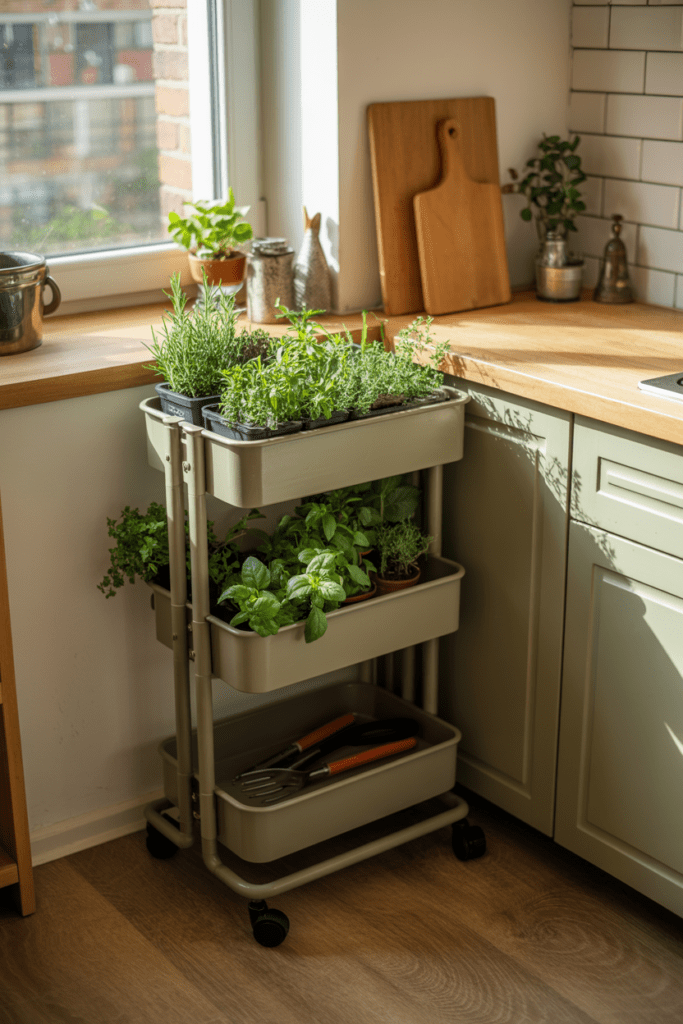
Rolling carts make indoor herb gardening incredibly flexible.
You can move herbs toward sunlight during the day and roll them out of the way when needed. This setup works especially well in small apartments.
I tried this once during winter because sunlight shifted constantly in my kitchen. The cart honestly saved my herbs.
Why Rolling Herb Carts Work
- Portable setup
- Great for renters
- Easy access for watering
- Adds storage space
- Stylish and functional
Use the bottom shelves for gardening supplies like scissors, watering cans, and extra soil.
Mobile herb gardens adapt easily to changing light conditions.
12. Build an Indoor Herb Wall
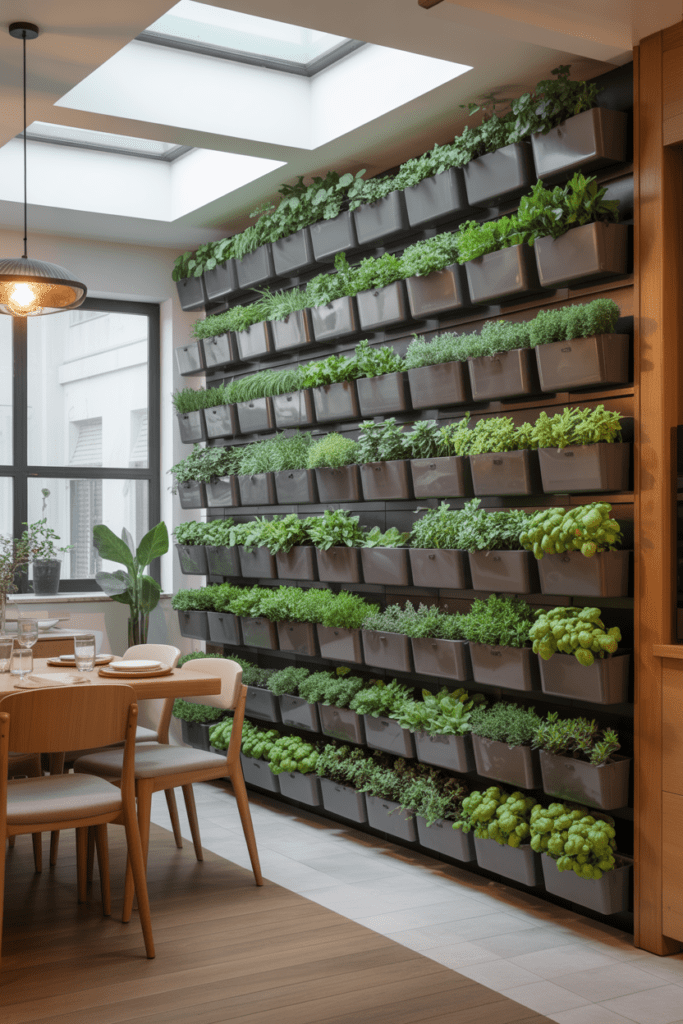
An indoor herb wall creates serious visual impact.
This idea works best if you want your herbs to double as decor. Instead of hiding plants in corners, you turn them into a living design feature.
Ever walked into a café with plants covering the walls and instantly thought, “Wow, these people definitely have their life together”? Same energy.
Ways to Create an Herb Wall
- Wall-mounted planters
- Pegboards
- Pocket organizers
- Wooden wall grids
- Mounted mason jars
Best Herbs for Herb Walls
- Thyme
- Mint
- Oregano
- Basil
- Parsley
Indoor herb walls combine functionality with bold home decor.
13. Grow Herbs in Matching Ceramic Pots
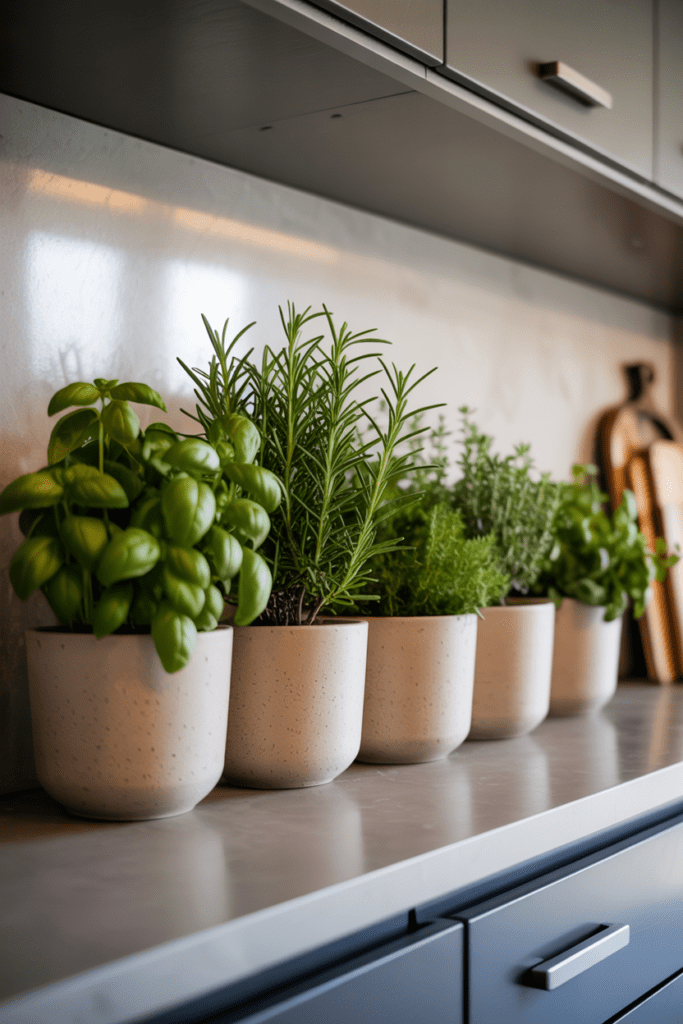
Matching ceramic pots make indoor herb gardens look elevated instantly.
Even basic herbs feel sophisticated when displayed in coordinated containers.
I especially love matte ceramic pots because they work with almost every decorating style.
Popular Ceramic Pot Colors
- White
- Black
- Beige
- Sage green
- Terracotta
Why Ceramic Pots Work Well
- Durable material
- Stylish appearance
- Better insulation for roots
- Easy to clean
Matching containers create a cohesive and designer-inspired herb garden look.
14. Create a Rustic Farmhouse Herb Garden
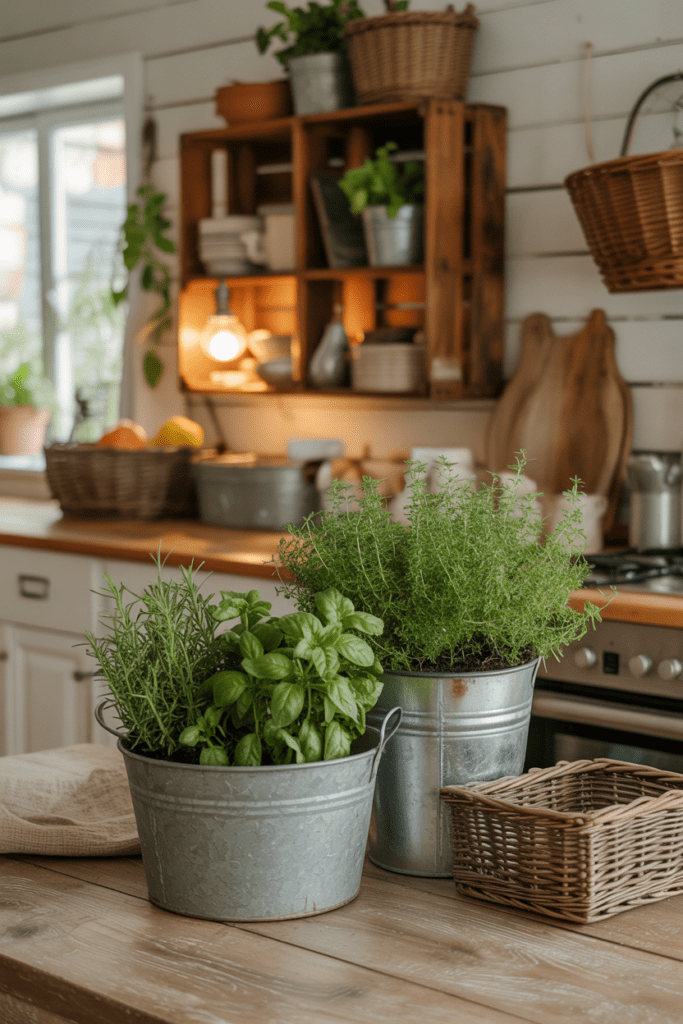
Farmhouse herb gardens feel warm, relaxed, and welcoming.
This style works beautifully with rustic wood, galvanized metal, woven baskets, and vintage-inspired accessories.
The best part? Slight imperfections actually make farmhouse decor look better. Crooked wood shelf? Rustic charm. Uneven basket? Totally intentional. Convenient, honestly.
Farmhouse Herb Garden Essentials
- Galvanized pots
- Wooden crates
- Woven baskets
- Chalkboard labels
- Distressed shelves
Best Herbs for Farmhouse Gardens
- Rosemary
- Sage
- Thyme
- Basil
Farmhouse herb gardens add warmth and character to kitchens and dining spaces.
15. Combine Herbs With Decorative Houseplants
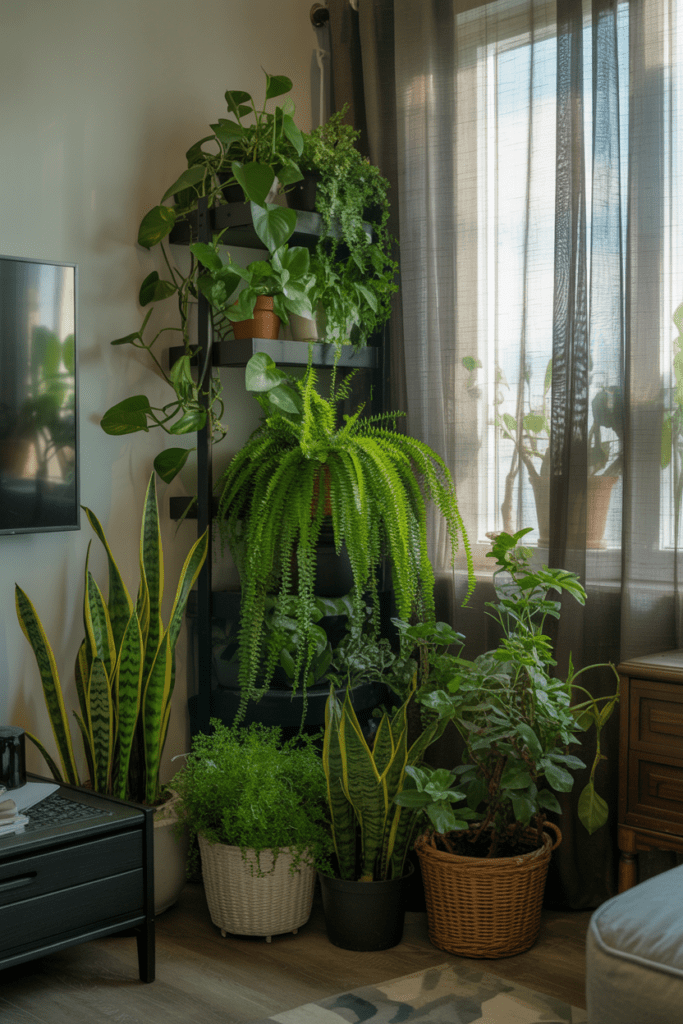
Who says herb gardens need to stand alone?
Mixing herbs with decorative houseplants creates a fuller, layered indoor garden look.
Pair herbs with pothos, snake plants, or small ferns for extra texture. The combination makes your space feel lush without looking chaotic.
Great Companion Plants for Herbs
- Pothos
- Spider plants
- Ferns
- Snake plants
- ZZ plants
Styling Tip
Vary plant heights to create dimension. Tall plants behind smaller herbs make displays look more balanced.
Mixing herbs with houseplants creates a richer and more dynamic indoor garden setup.
Best Herbs to Grow Indoors
Not every herb thrives indoors equally. Some herbs practically beg for indoor life, while others act dramatic the second lighting changes.
If you’re just starting out, focus on easy herbs first.
Beginner-Friendly Indoor Herbs
Basil
Basil grows quickly and smells incredible. Give it sunlight and regular trimming, and it rewards you fast.
Mint
Mint practically grows out of pure determination. Seriously, this plant refuses to quit.
Chives
Chives need minimal care and fit perfectly in small spaces.
Parsley
Parsley grows steadily indoors with enough light and moderate watering.
Thyme
Thyme handles indoor environments well because it prefers slightly drier soil.
Herbs That Need Extra Attention
- Cilantro
- Dill
- Rosemary
These herbs can thrive indoors, but they sometimes act a little fussy. Cilantro especially bolts faster than a toddler running toward candy.
Indoor Herb Garden Care Tips
Even the prettiest herb garden struggles without proper care.
The good news? Indoor herbs usually stay low-maintenance when you follow a few basic rules.
Give Herbs Enough Sunlight
Most herbs need:
- 6–8 hours of sunlight daily
- Bright indirect or direct light
- South-facing windows when possible
If sunlight feels limited, use LED grow lights.
Avoid Overwatering
Overwatering kills indoor herbs faster than almost anything else.
Check the soil before watering. If the top inch still feels damp, wait another day.
Trim Herbs Regularly
Regular harvesting encourages fuller growth.
Don’t let herbs grow tall and scraggly. Pinching leaves often keeps plants bushier.
Use Proper Drainage
Always use pots with drainage holes whenever possible.
Soggy roots quickly lead to root rot, fungus, and sad-looking herbs.
Rotate Plants Weekly
Plants naturally lean toward sunlight.
Rotating pots weekly helps herbs grow evenly instead of looking lopsided.
Common Indoor Herb Garden Mistakes
Almost everyone makes mistakes with indoor herbs at first. I definitely did.
The trick involves learning quickly before every plant stages a dramatic collapse.
Keeping Herbs Too Far From Light
Low light causes weak, stretched-out herbs.
If herbs look thin and pale, they probably need more sunlight.
Choosing Oversized Pots
Huge pots hold extra moisture, which increases overwatering risks.
Start with smaller containers and upgrade gradually.
Ignoring Humidity
Indoor heating dries air quickly during winter.
Some herbs appreciate occasional misting or nearby humidity trays.
Harvesting Too Aggressively
Never remove more than one-third of the plant at once.
Herbs need enough leaves to continue growing properly.
Why Indoor Herb Gardens Feel So Rewarding
Indoor herb gardening goes beyond aesthetics.
Fresh herbs make cooking more enjoyable, brighten indoor spaces, and create small daily moments of satisfaction. There’s something genuinely calming about watering herbs while waiting for coffee to brew.
Plus, indoor plants make homes feel alive.
Ever notice how sterile rooms instantly feel softer with greenery nearby? Herbs do that while also making your pasta better. Honestly, that’s multitasking at its finest.
Indoor herb gardens also encourage healthier cooking habits. Fresh basil, parsley, cilantro, and mint make meals taste fresher without much effort.
And let’s be real: snipping herbs you grew yourself feels oddly powerful. Like yes, behold my tiny indoor farming empire.
Final Thoughts
Indoor herb gardens don’t need massive kitchens, fancy equipment, or expert gardening skills.
You can start with one sunny windowsill, a few small pots, and herbs you actually use while cooking. From there, your indoor garden can grow into floating shelves, hanging planters, hydroponic systems, or even a full herb wall if you’re feeling ambitious.
The best indoor herb garden ideas combine practicality with personality. Some people love clean minimalist setups. Others prefer rustic farmhouse charm or quirky vintage containers. There’s honestly no wrong approach as long as your herbs get enough light and care.
Start small, experiment often, and don’t panic if one plant dies. Every herb gardener has accidentally destroyed at least one basil plant. It’s basically a rite of passage. FYI, mint usually survives almost anything, so maybe start there 🙂