
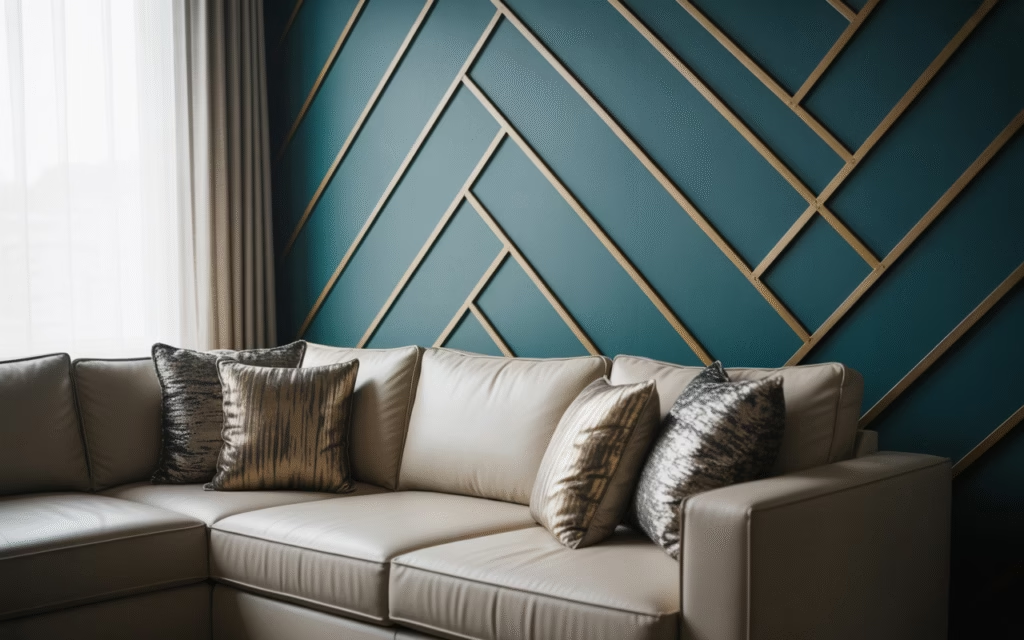
Here’s a simple truth: most living rooms don’t need more furniture they need a point of view. An accent wall does exactly that without dragging you into a full-scale renovation or blowing your budget. In my experience, choosing one surface to carry color, texture, or craft instantly sets the tone for how the rest of the room should look and feel. Think of it as your room’s handshake: confident, memorable, and aligned with how you actually live. What works best is picking a wall that already gets attention like behind the sofa and giving it purpose with materials that add depth, not just decoration. If you’re tired of moving pillows around to “fix” a flat room, this is the shift that finally sticks.
Creating a standout accent wall isn’t about following trends blindly. It’s about choosing one surface to tell your story whether that’s texture, color, memory, or craftsmanship. Over the past decade, I’ve helped homeowners transform lackluster spaces using accent walls that don’t just look good but work for their lifestyle, budget, and skill level. And in 2026, the focus shifts even more toward personalization, sustainability, and tactile depth.
In this guide, I’m sharing 15 accent wall ideas, Each includes material lists, approximate costs, time investment, and honest notes on what to watch out for. Whether you’re a beginner with a paintbrush or a seasoned DIYer ready to tackle reclaimed wood, there’s something here that will click.
Why One Wall Changes Everything
Before we dive in, let’s talk about why a single wall has such power. The human eye naturally lands on contrast. In a room of neutral tones, even a slight shift in color or texture draws attention. But more than that, an accent wall creates rhythm. It gives the room a starting point.
I remember helping a young couple refresh their 400 sq ft living area. The space felt flat two sofas, a TV, and beige on every wall. We painted the wall behind the sofa in a deep terracotta **B2500 using eco-friendly clay paint. The change took one weekend and cost under ₹3,500 (about $42). Suddenly, the room had depth. The warmth pulled in the wooden coffee table and handmade rug. It wasn’t just prettier it felt lived in.
That’s the goal: not perfection, but presence.
1. Paint with Purpose: Deep, Earthy Tones

Let’s start simple. Paint is the most accessible tool, but most people play it too safe. Cream on cream doesn’t create drama. Instead, go for rich, nature-inspired hues: forest green, burnt umber, slate blue.
What works best is choosing a color that complements your largest textile—like your rug or sofa. I keep a fabric swatch kit in my studio for this reason.
- Paint type: Matte or eggshell finish (hides imperfections)
- Coverage: 1 liter per 10 m² (108 sq ft)
- Time: 2 days (including drying)
- Cost: ₹1,800–₹3,000 ($22–$36) for quality emulsion
Pro tip: Test your color in natural and artificial light. A shade that looks warm at noon may turn purple under LED bulbs.
Avoid this: painting the wall with the TV mount. Dark colors can create glare and make screens harder to see.
2. Vertical Reclaimed Wood Planking

This one’s a favorite. I installed it in my own apartment three years ago, and it still gets compliments. Reclaimed wood brings history—each knot and groove tells a story.
Use salvaged teak or Burma teak from old doors or furniture. Cut into 10 cm (4”) wide planks, sanded smooth but not polished—keep the patina.
- Installation: Use panel adhesive and finish nails
- Time: 3–4 days (measuring, cutting, installing)
- Cost: ₹6,000–₹10,000 ($72–$120) depending on wood source
- Difficulty: Intermediate
What I’ve found is that leaving a 5 mm (¼”) gap between planks adds shadow lines, enhancing texture. Stain lightly with natural oil—linseed or tung—to protect without sealing off the wood’s breathability.
Safety note: Wear a mask when sanding. Old wood can carry dust and residues.
3. Limewash Finish for Organic Texture

Limewash is having a moment—and for good reason. It’s breathable, eco-friendly, and creates a soft, chalky finish that changes with the light.
I used it in a coastal home, where humidity rules. Unlike regular paint, limewash allows walls to “breathe,” reducing mold risk.
- Application: 2–3 coats with a stiff brush
- Drying time: 24 hours between coats
- Cost: ₹4,500 per 15 m² ($54)
- Finish: Matte, slightly mottled
Pro tip: Embrace the imperfections. Each stroke leaves variation—that’s the charm.
Avoid this: Using in high-touch areas. Limewash isn’t scrub-proof.
4. Floating Shelves as Functional Art

Not all accent walls need to be about surface. Try floating shelves in a bold arrangement.
Use solid mango wood or blackened steel brackets with oak planks. Arrange in an asymmetrical grid—odd numbers work best.
- Shelf dimensions: 20 cm deep x 80–120 cm long (8” x 32–48”)
- Spacing: 25–30 cm (10–12”) between shelves
- Time: 1 day
- Cost: ₹2,500–₹5,000 ($30–$60)
Style with a mix of books, small plants, and handmade ceramics. I always leave 30% empty—clutter kills the effect.
5. Woven Rattan or Cane Panels

Bring in warmth with natural fiber. I sourced pre-framed cane panels (60 x 60 cm) from a crafts collective for a recent project.
Install with panel adhesive or wooden battens. The honeycomb pattern casts beautiful shadows in afternoon light.
- Time: 1 day
- Cost: ₹8,000 for 6 panels ($96)
- Best for: Modern, tropical, or Japandi styles
Pro tip: Pair with indirect lighting—like a floor lamp behind a chair—to amplify texture.
6. Painted Stripes with a Twist

Stripes don’t have to be predictable. Try varying widths—15 cm, 30 cm, 15 cm—and a tonal palette (e.g., three shades of sage).
Use frog tape for clean edges. Paint the lighter base first, then the darker stripes.
- Time: 3 days (taping, painting, touch-ups)
- Cost: Same as regular paint
- Difficulty: Beginner-friendly but detail-oriented
Avoid this: Horizontal stripes in a low-ceiling room—they can make it feel shorter.
7. Exposed Brick (Real or Faux)

If you’re lucky enough to have original brick, clean and seal it. For others, thin brick veneer is a solid alternative.
I used red clay veneer tiles in a loft. Installed like backsplash—adhesive and grout.
- Coverage: 0.74 m² per box (8 sq ft)
- Time: 2–3 days
- Cost: ₹900 per sq ft ($10.80)
Pro tip: Grout in a shade slightly darker than the brick for definition.
8. Geometric Stencil with Metallic Accent

For a playful yet elegant look, try a custom stencil. I designed a mandala-inspired pattern using a laser-cut template.
Paint the wall in a deep navy, then use gold acrylic glaze for the stencil.
- Time: 4–5 days (base, stencil, detail)
- Cost: ₹2,000–₹4,000 ($24–$48)
- Skill level: Intermediate
What works best is keeping furniture simple—let the wall be the star.
9. Chalkboard or Magnetic Paint for Kids’ Zones

In family homes, make the accent wall interactive. Use chalkboard paint or magnetic primer under a bold color.
I did this in a home—deep green wall with chalkboard finish. Kids draw, parents pin notes.
- Time: 3 days
- Cost: ₹2,500 ($30)
- Top coat: Clear matte sealer to prevent staining
Pro tip: Use liquid chalk markers—they’re easier to clean.
10. Tile Accent with Handmade Craft

Go beyond subway tiles. Try hand-painted blue pottery or terracotta tiles with carved patterns.
Install in a vertical strip behind a console or flanking a fireplace.
- Tile size: 15 x 15 cm (6” x 6”)
- Grout: Cement-based, sanded
- Time: 3–4 days
- Cost: ₹1,200 per sq ft ($14.40)
What I’ve found is that mixing tile types—like smooth and textured—adds depth.
11. Wallpaper with a Local Story

Forget generic florals. Look for artisan wallpapers—block-printed cotton, khadi-based, or digital prints of traditional motifs.
I used a hand-blocked Warli design in a home. The wallpaper was mounted on non-woven backing for durability.
- Roll size: 52 cm x 10 m (20.5” x 33’)
- Time: 1–2 days
- Cost: ₹3,800 per roll ($46)
- Installation: Paste-the-wall method
Pro tip: Use a seam roller to prevent bubbling.
12. Textured Plaster (Tadelakt or Venetian)

For a luxe, seamless finish, try Venetian plaster. It’s made from marble dust and lime, troweled in thin layers.
I used it in a bedroom-living combo. The wall catches light like silk.
- Layers: 3–4 coats
- Burnishing: Required for sheen
- Time: 4–5 days
- Cost: ₹7,500 per 10 m² ($90)
Avoid this: DIY unless you’ve practiced. Hire a specialist or take a workshop.
13. Painted Mural with a Personal Touch

A mural doesn’t need to be complex. Try a single botanical motif—like a monstera or olive branch—painted freehand.
Use acrylics with matte medium to prevent shine.
- Time: 3–4 days
- Cost: ₹1,500 in paint ($18)
- Skill level: Beginner with practice
Pro tip: Sketch lightly with pencil first. Wipe mistakes with a damp cloth.
14. Mirror Panels for Light and Space

In smaller living rooms, framed mirror panels can double the sense of space.
Use bevelled edge mirrors, 60 x 90 cm (24” x 36”), arranged vertically.
- Installation: Mirror mastic adhesive
- Time: 1 day
- Cost: ₹4,000 for three panels ($48)
Avoid this: Placing opposite cluttered corners—it magnifies mess.
15. Indoor Vertical Garden Wall

For the bold, try a living wall. I built a modular panel system with moisture-retaining felt pockets.
Planted with pothos, ferns, and succulents.
- Irrigation: Drip system or manual watering
- Light: Needs 4–6 hours of indirect sun
- Time: 2 days to install
- Cost: ₹12,000 for 2 m² ($144)
Pro tip: Use a moisture meter. Overwatering kills more plants than neglect.
FAQs: Real Questions, Straight Answers
Q: Which wall should I choose for an accent?
A: The one that draws the eye first—usually behind the sofa or TV. Avoid narrow walls; they can feel overwhelmed.
Q: Can I combine two ideas—like wood and paint?
A: Yes, but keep one dominant. For example, paint the wall deep green, then add a single reclaimed wood shelf as a focal point.
Q: How do I maintain a textured wall?
A: Dust regularly with a soft microfiber cloth. For limewash or plaster, avoid wet wiping—use a dry brush.
Q: Are accent walls going out of style?
A: Not at all. In 2026, they’re evolving—less about bold color, more about materiality and craft. Think depth, not just drama.
Q: What if I rent?
A: Go removable. Use peel-and-stick tiles, fabric panels, or framed textiles. I’ve used a large tapestry mounted on a slim wooden frame—looks custom, comes down in minutes.
Q: How long should an accent wall last?
A: With proper materials, 5–10 years. Paint may need touch-ups; wood and tile last longer.
At The End
If you’ve been on the fence, pick one idea and plan a weekend around it tape the layout, gather materials, and commit to a single wall. I’ve found that once the focal point is set, the rest of your decisions lighting, art, even the rug start falling into place. Accent walls aren’t about trends so much as clarity: they define zones, set mood, and give the room a story worth telling. Start small, work carefully, and let the wall lead the way.