

Let’s be honest, at some point, someone convinced us all that empty space was sophisticated. That a shelf with three objects on it meant you had “taste,” and that filling every inch of a surface meant you had a problem. Well, I’m here to respectfully disagree, and I think your shelves deserve better than that kind of restraint.
Maximalism is having a full-blown renaissance right now, and honestly, it never should have left. More color, more texture, more personality, more stuff that actually means something to you, that’s the whole idea. And nowhere does maximalism shine brighter than on a well-styled shelf. A bookshelf, a floating wall shelf, a built-in, it doesn’t matter. Give it some room to breathe and some room to be loud, and it becomes one of the most expressive design elements in your entire home.
Here’s what I love most about maximalist shelf styling: it’s deeply personal. Unlike a sofa or a dining table, a shelf is where your actual life shows up the books you’ve read, the objects you’ve collected, the little weird things you love for no explainable reason.
1. Stack Books Horizontally and Vertically
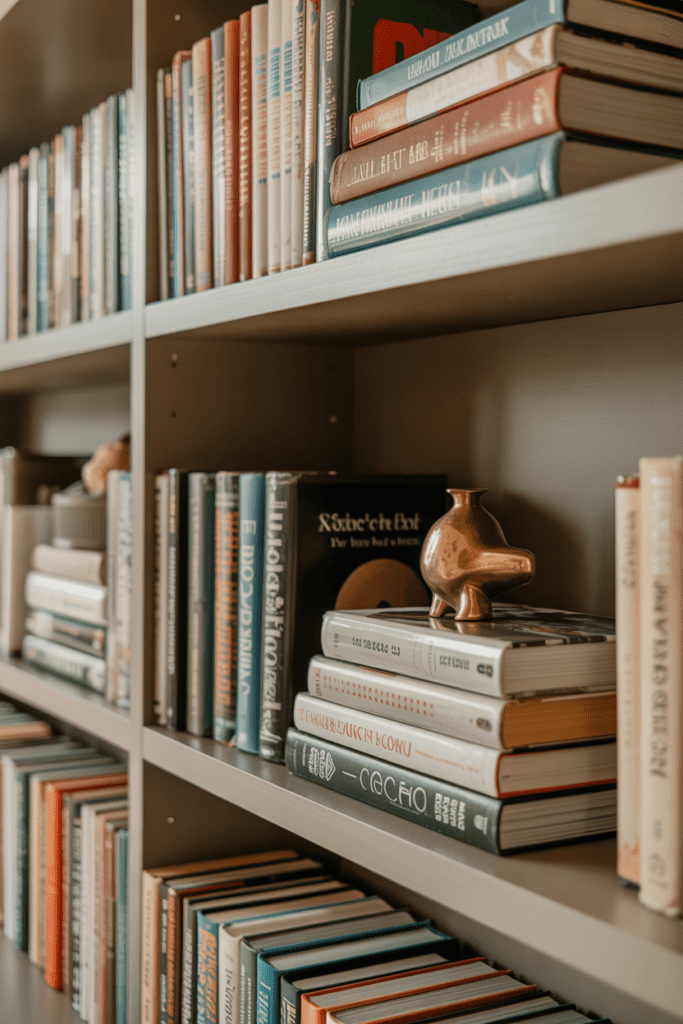
Here’s the thing about books — they’re not just for reading. They’re the backbone of any maximalist shelf, and the way you arrange them matters more than you’d think.
Mix vertical stacks with horizontal ones to create visual rhythm. Lay three books flat, stack two upright beside them, then place a small object on top of the horizontal stack. Suddenly you’ve got height variation and depth without trying too hard.
Pro tip: Group books by color for a cohesive look, or mix it up wildly for that “organized chaos” vibe that maximalism does so well. IMO, color-grouping gives you the best of both worlds — it looks intentional but still feels rich and full.
2. Layer Frames at Different Depths
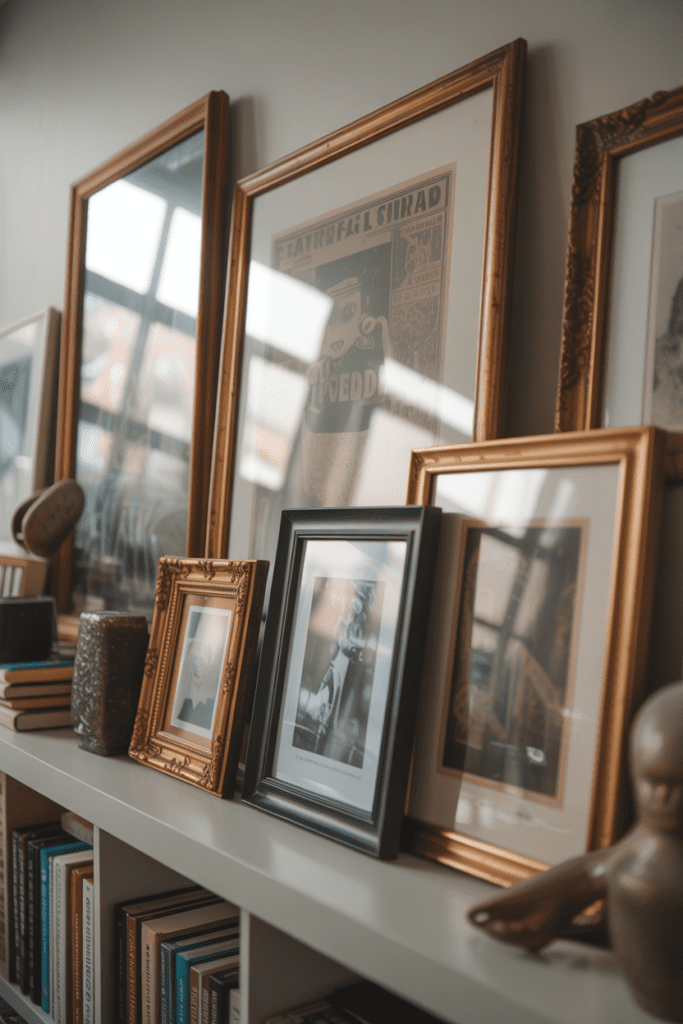
Don’t just hang frames on the wall — lean them on shelves at varying depths. Lean a large framed print at the back, a smaller one in front, and maybe a tiny one slightly to the side. This creates a layered, gallery-like effect without requiring a single nail.
This works especially well with shelves that have some depth to them. Mix ornate frames with simple ones, black with gold, vintage with modern. The contrast is literally the point.
Rhetorical question time: Have you ever noticed how the most interesting shelves you’ve pinned always seem to have something leaning casually against something else? That’s not an accident — it’s a technique.
3. Bring In Living Plants (Lots of Them)
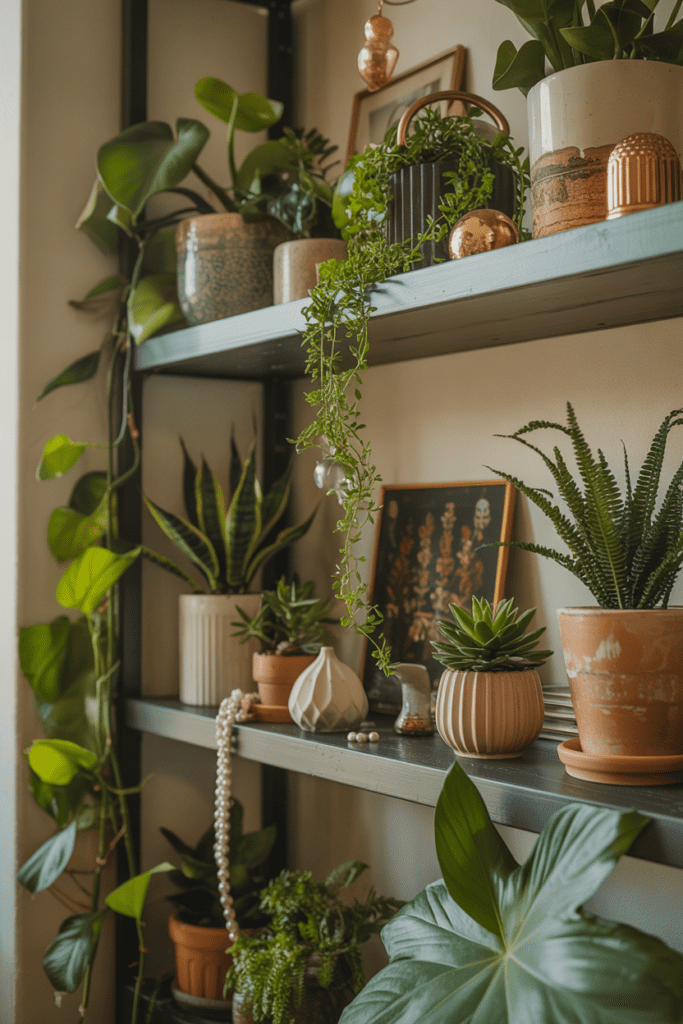
Maximalism and plants are a match made in decorating heaven. Trailing plants like pothos or string of pearls spilling over shelf edges add a lush, almost jungle-like quality that makes a shelf feel alive.
Don’t stop at one. Cluster small succulents, tuck in a tiny fern, drape a trailing vine. The more the merrier — that’s kind of the whole philosophy here.
Mix planters too: terracotta next to a glazed ceramic pot next to a woven basket planter. The variety adds texture, and texture is everything in maximalist styling.
4. Mix Metals Without Apology
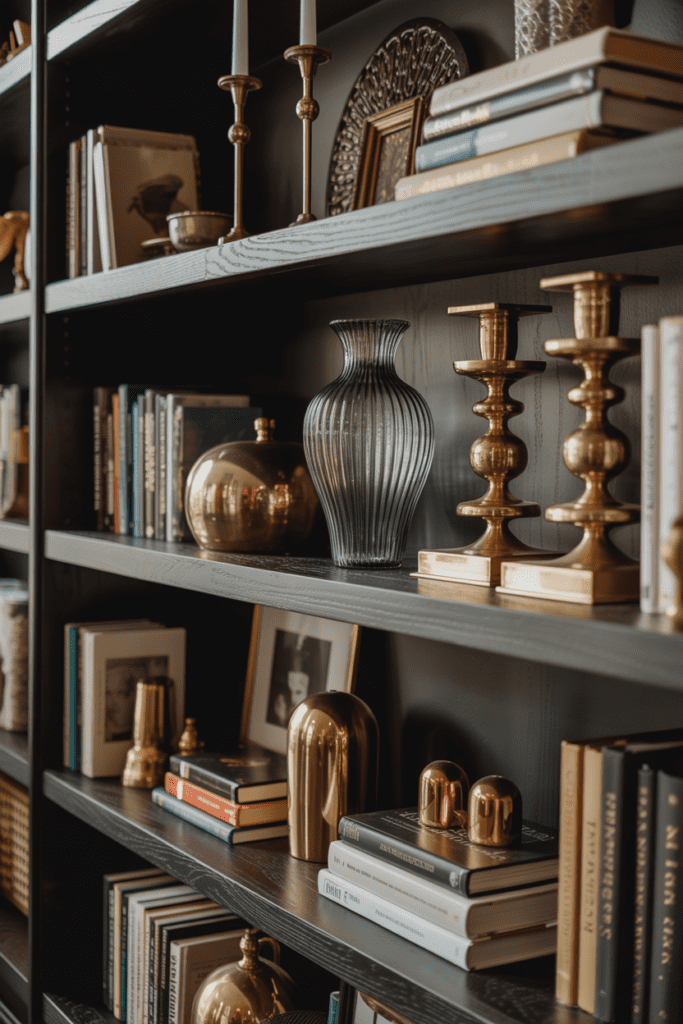
Gold, brass, silver, copper — who said you had to pick just one? Mixing metals is one of the fastest ways to add richness and depth to a shelf display. A brass candlestick next to a silver vase next to a copper bookend? Chef’s kiss.
The key is balance. You don’t want every single item to be metallic — that tips into “flashy” rather than “layered.” Aim for metal accents scattered throughout rather than clustered in one spot.
This trick works especially well when you’ve got a mostly neutral color palette on the shelf. The metals do the heavy lifting visually without overwhelming the eye.
5. Use Odd Numbers When Grouping Objects
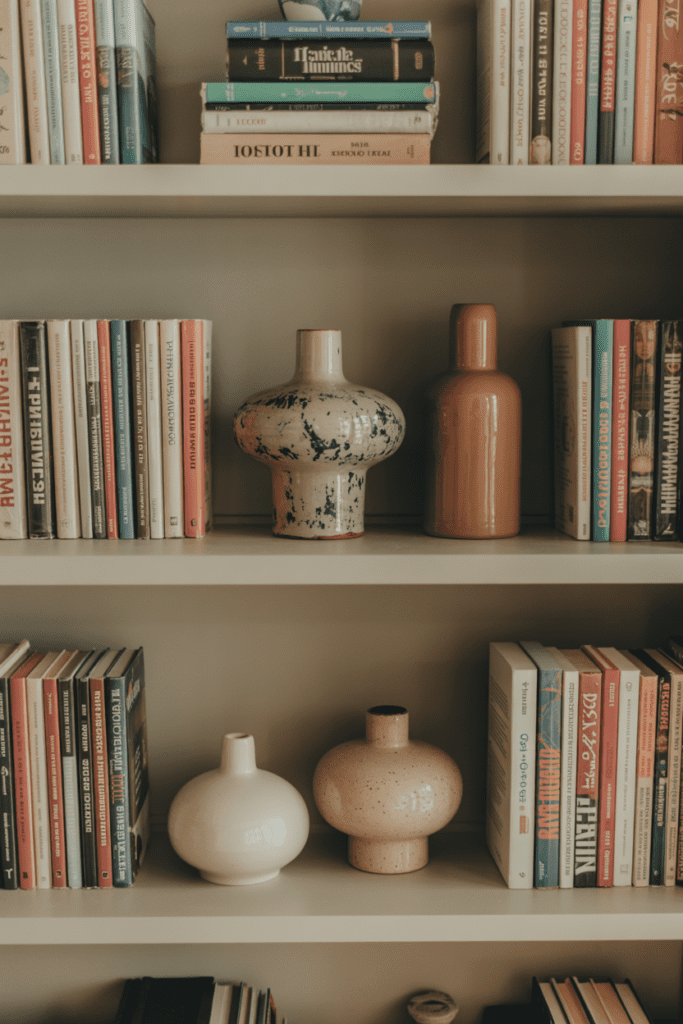
This is one of those styling rules that designers swear by, and honestly? It works every single time. Group objects in threes or fives rather than twos or fours. Odd numbers feel dynamic and natural; even numbers feel static and a little stiff.
Try three vases of different heights together, or five small objects arranged in a loose cluster. Your eye naturally moves around odd-numbered groupings in a way that feels satisfying without feeling overly symmetrical.
- 3 items: Perfect for a tight corner or small shelf
- 5 items: Great for a wider stretch of shelf space
- 7 items: Go for it if you’ve got the room — maximalism, remember?
6. Incorporate Meaningful Tchotchkes and Souvenirs
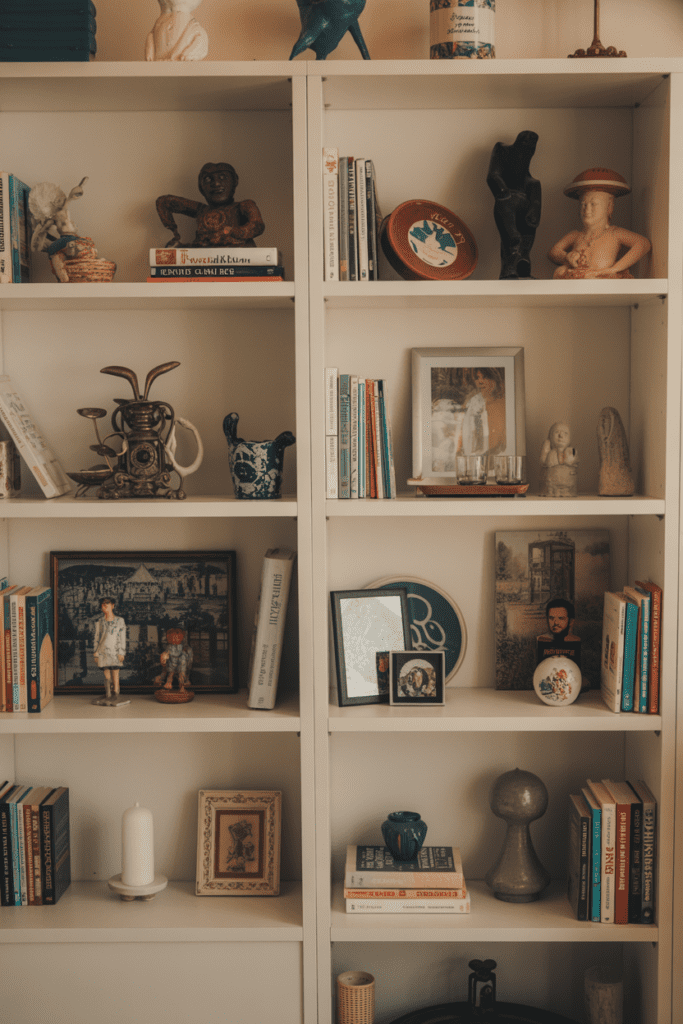
One thing maximalist shelves do that minimalist ones simply can’t: they tell your story. That little ceramic cat you picked up at a market in Jaipur, the snow globe from a childhood trip, the weird little figurine your best friend gave you as a joke — all of it belongs.
Personal objects add soul to a shelf. They make it yours. And in maximalism, authenticity is the whole game. Don’t edit out the stuff that means something to you just because it doesn’t “match.”
The trick is placement. Anchor meaningful objects with something visually substantial nearby — a tall vase, a stack of books — so they feel intentional rather than forgotten.
7. Play With Scale Dramatically
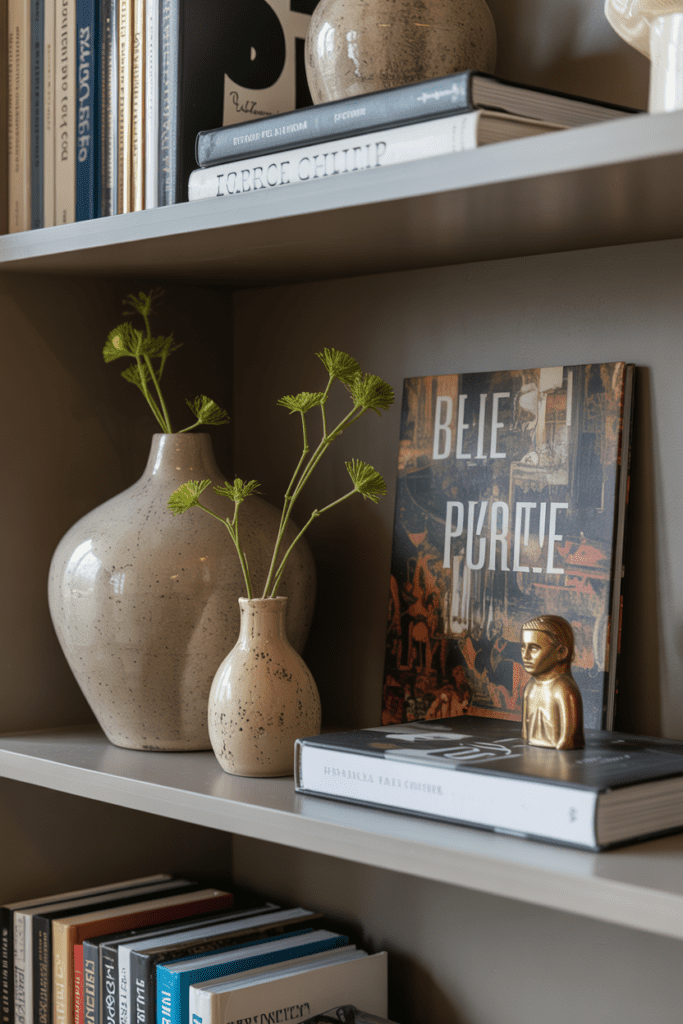
Contrast in scale is one of the most powerful tools in maximalist styling. Place a large, oversized vase next to a tiny bud vase. Put a massive art book next to a small figurine. The dramatic difference in size creates visual tension that keeps the eye engaged.
Most people default to similarly-sized objects, which makes a shelf look flat and forgettable. Go big and small simultaneously, and watch the whole thing come alive.
A shelf full of medium-sized items is honestly the worst-case scenario in maximalist styling. It reads as busy without being interesting — the one thing you don’t want. 🙂
8. Add Woven and Textile Elements
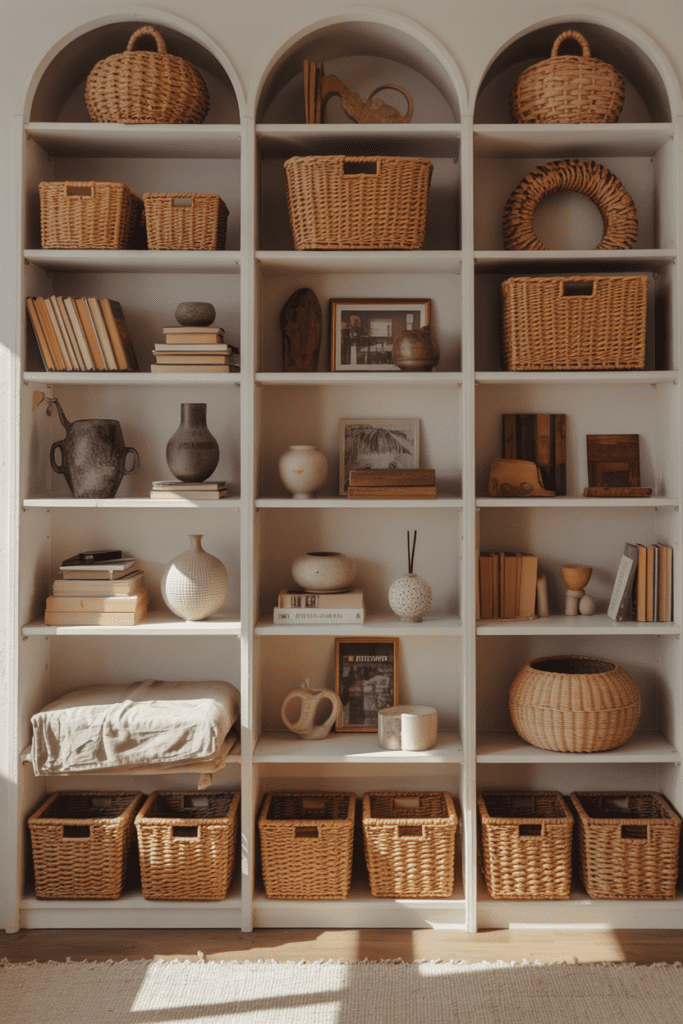
Shelves tend to skew hard — ceramics, glass, wood, metal. Introduce something soft and woven to break up all that rigidity: a small woven basket, a rolled-up textile, a macramé hanging tucked in the corner.
Texture contrast is just as important as color or height contrast. When everything on a shelf is smooth and hard, it starts to feel cold. A bit of weave or fabric warms the whole thing up instantly.
Rolled linen napkins in a small basket, a folded throw draped over a lower shelf, a woven tray used as a base for a grouping — these are all easy, affordable ways to add softness.
9. Use Color Strategically, Not Randomly
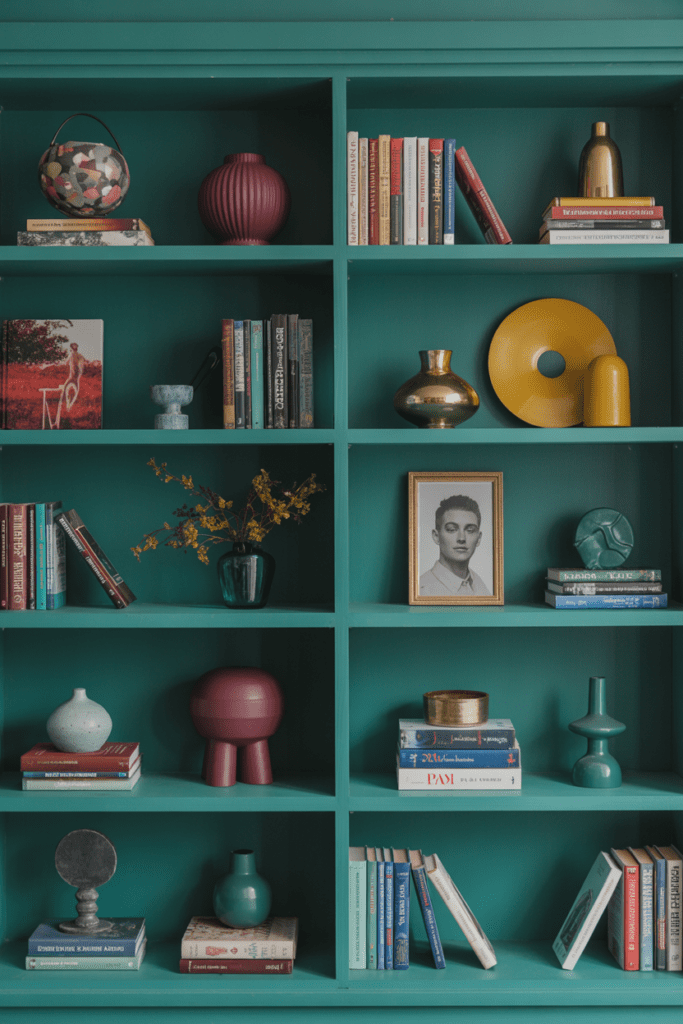
Here’s where people sometimes go sideways with maximalism — they confuse “more” with “everything.” Maximalism isn’t about using every color at once; it’s about using color confidently and deliberately.
Pick a palette — even a loose one — and let it guide your object choices. Maybe it’s jewel tones: deep emerald, cobalt blue, burgundy, and gold. Maybe it’s earthy and warm: terracotta, mustard, rust, and cream. Within that palette, go absolutely wild.
When your shelf has color cohesion underneath all the layering and variety, it reads as intentionally designed rather than chaotic. That’s the sweet spot.
10. Lean Into Dark and Moody Backdrops
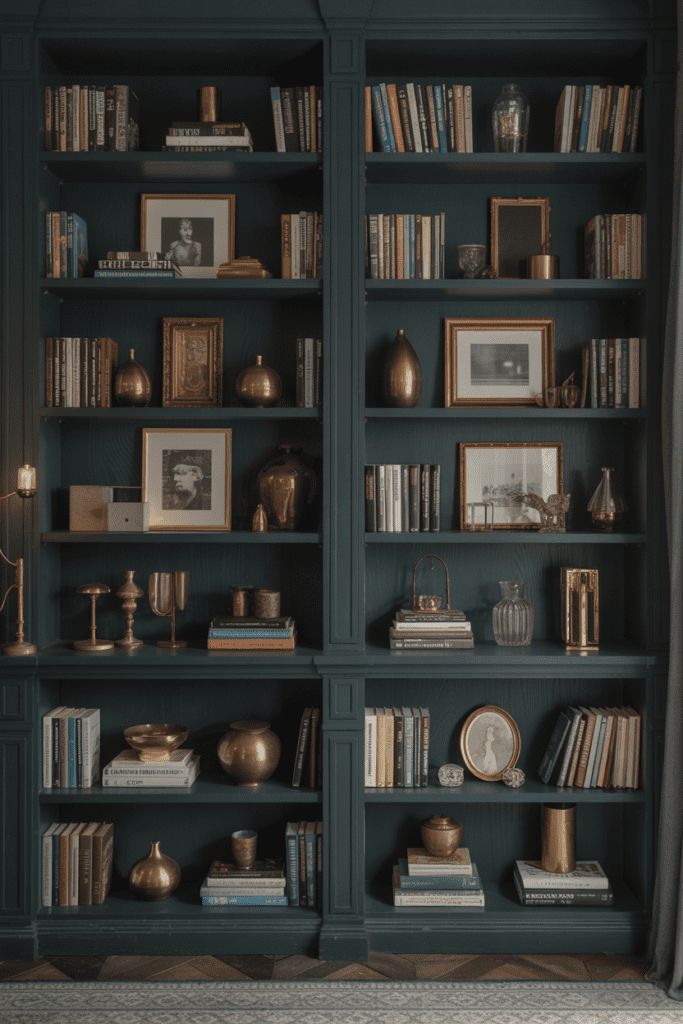
Want to make your shelf objects pop instantly? Paint the back wall of your shelving unit a deep, moody color. Forest green, navy, charcoal, deep plum — any of these will make everything sitting in front of it look more dramatic and intentional.
This is one of my personal favorites because it costs almost nothing and makes a massive difference. Even a built-in bookcase painted on the back in a rich dark tone suddenly feels like a curated installation.
FYI, you can do this even if you’re renting — use removable wallpaper in a bold pattern or deep color on the back panels. Same effect, zero commitment.
11. Stack and Layer Trays and Platters
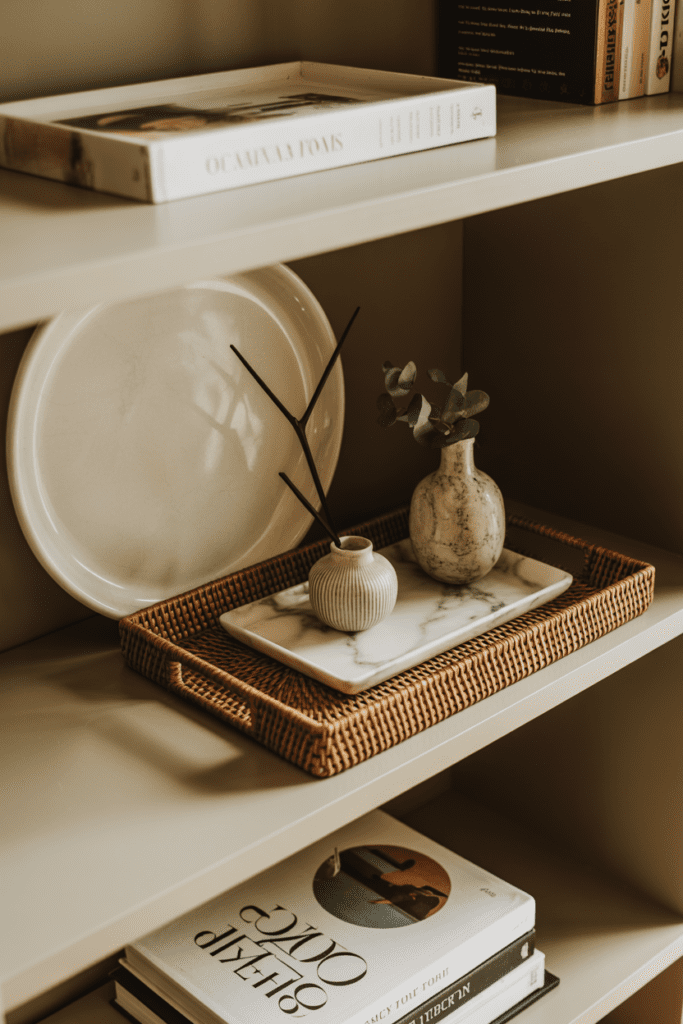
Decorative trays aren’t just for coffee tables. Use trays on shelves as a base to corral groupings of smaller objects — it gives them a defined home and makes the arrangement look purposeful.
Stack two or three decorative platters or trays vertically and lean them against the back of the shelf like art. Mix a marble tray with a lacquered one with a rattan one. The variety is the point.
Using trays also helps when you want to shift things around occasionally. You pick up the tray, rearrange what’s on it, and put it back. Easy styling refresh without rebuilding the whole shelf.
12. Include Statement Lighting
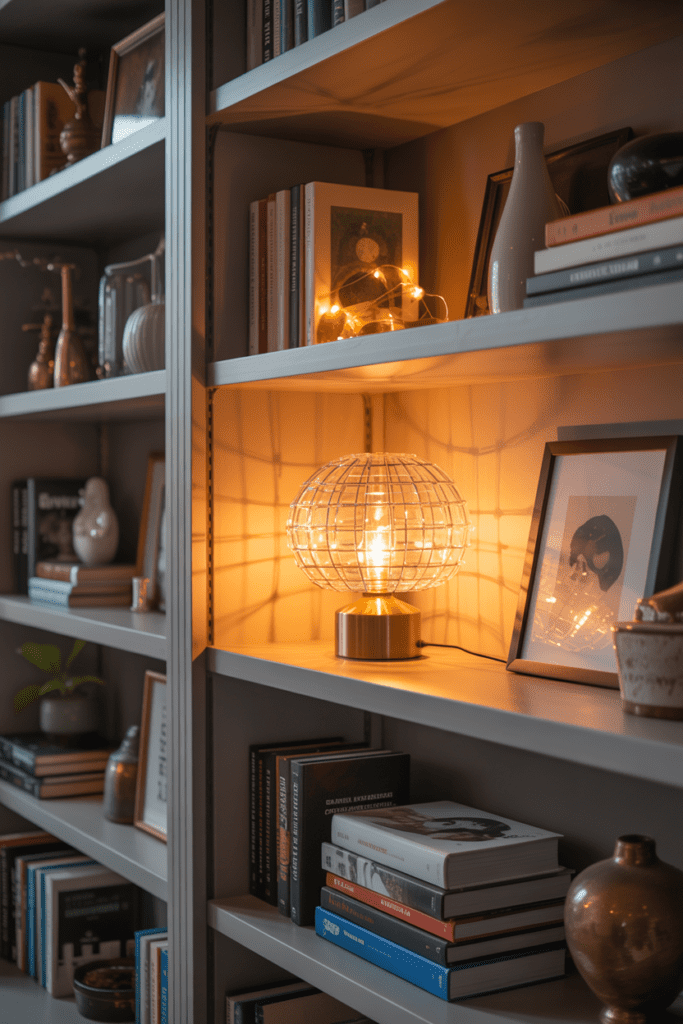
A small lamp or a strand of warm fairy lights on a shelf changes everything about how the space feels, especially in the evening. Light adds warmth, depth, and that ineffable cozy quality that makes a room feel lived-in and loved.
A small brass table lamp on a lower shelf, a battery-operated LED puck light tucked behind objects to create a glow, or a looping strand of warm Edison bulbs draped through the shelf — all of these work beautifully.
Lighting is the one element most people forget about when styling shelves, which is honestly a crime. Good lighting makes every single other element look better. It’s the secret weapon of every interior stylist.
13. Mix Art Styles Fearlessly
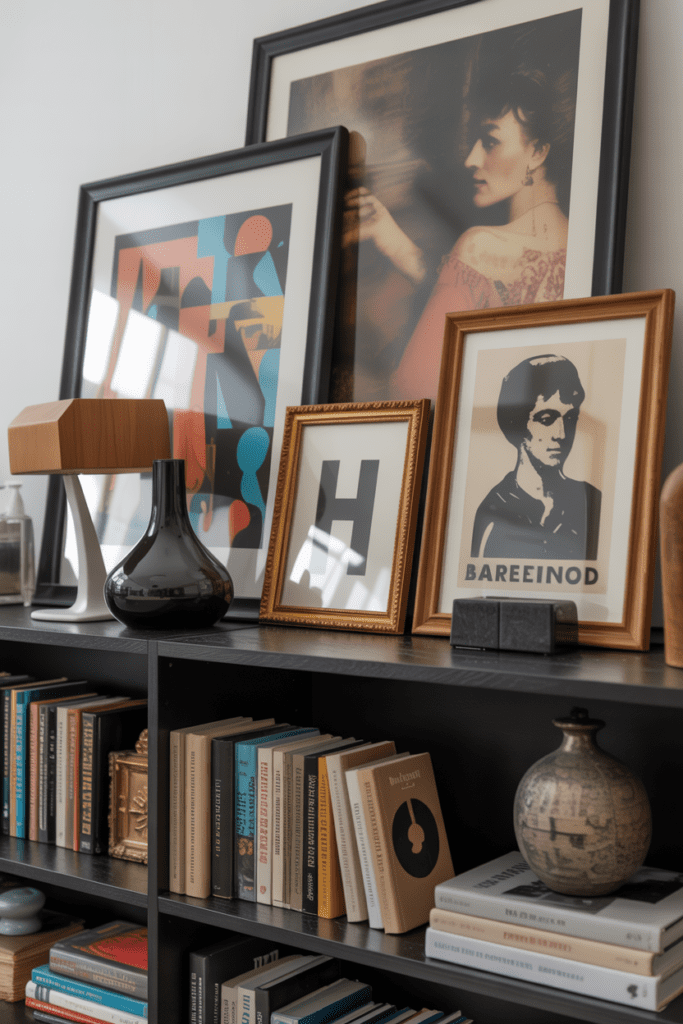
Maximalist shelves thrive on contrast, and nothing creates contrast quite like mixing art styles. A tiny abstract print next to a classical portrait print next to a bold graphic poster? Sounds like it shouldn’t work. Looks amazing.
Don’t feel bound by a single aesthetic. If you’ve got a quirky illustration you love sitting next to a moody fine-art photograph, put them together. In maximalism, the unexpected pairing is often the most interesting one.
The one thing to watch: keep frame styles somewhat consistent (or at least complementary) even when the art inside varies wildly. Frames act as a unifying element that keeps the mix from feeling purely accidental.
14. Bring In Natural Elements
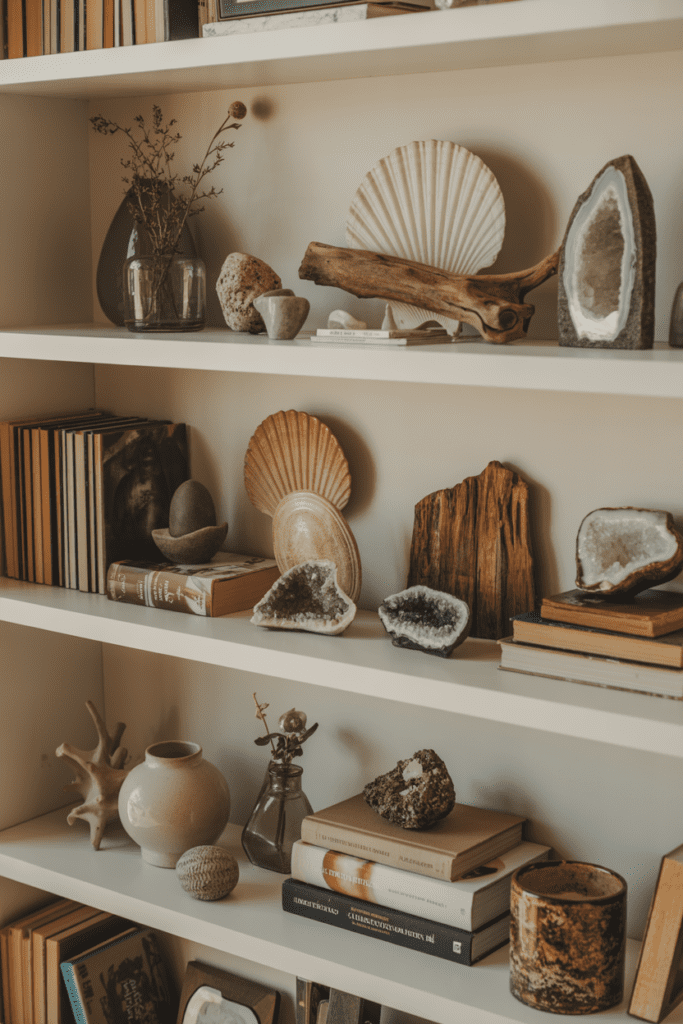
Shells, driftwood, dried botanicals, geodes, crystals, pinecones — natural elements add an organic, grounding quality to maximalist shelves that keeps them from feeling synthetic or over-designed.
A cluster of geodes tucked between books, a small piece of driftwood leaning against a frame, a vase of dried pampas grass shooting up behind smaller objects — these touches connect the shelf to something real and textural.
Natural elements also tend to be free or very cheap, which is a nice bonus when you’re trying to layer a lot of stuff without spending a fortune. A quick walk on a beach or through a park can yield some genuinely beautiful shelf additions.
15. Rotate and Refresh Seasonally
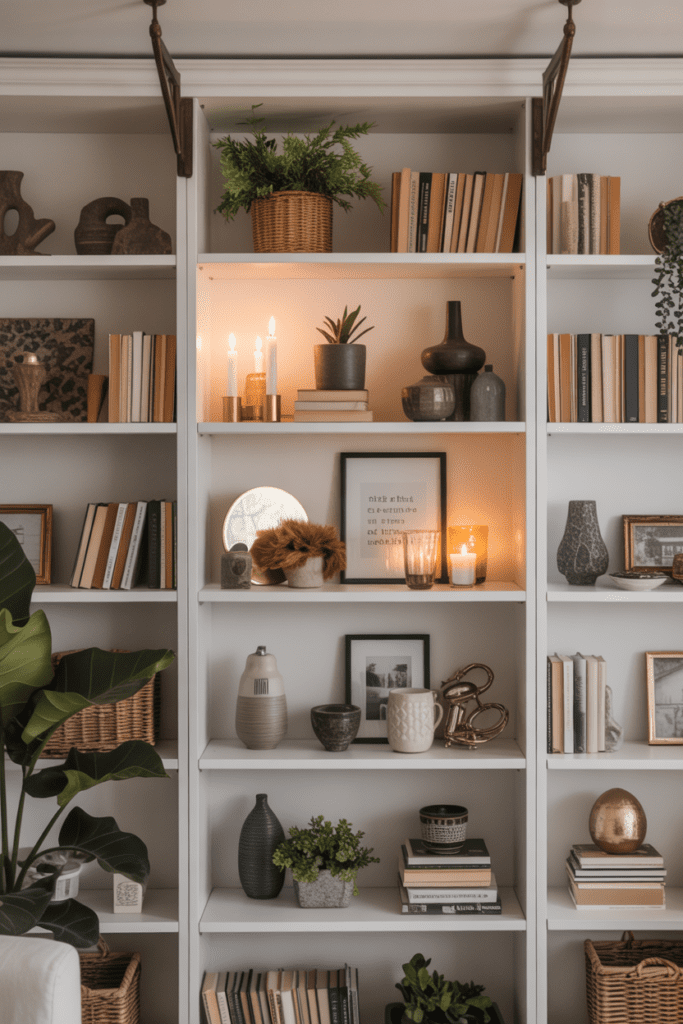
Here’s the thing that truly separates a great maximalist shelf from a stagnant one: great shelves evolve. Don’t treat your styling as a one-and-done project. Swap things out seasonally, add new finds, retire pieces that no longer feel exciting.
In winter, lean into cozy textures, darker tones, and warm metals. In spring, bring in fresh greens, lighter ceramics, and floral elements. Summer calls for bright colors, natural textures, and airy vibes.
This keeps the shelf feeling alive and intentional rather than like a collection of stuff that accumulated over time and never moved. It’s also just genuinely fun — restyling a shelf is one of the lowest-cost, highest-impact ways to refresh a room instantly. :/ (Yeah, it can get a little addictive.)
Pulling It All Together
Maximalist shelf styling is really about one thing: confidence. Confidence to layer more than feels “safe,” to mix styles that don’t obviously match, to display the objects that mean something to you without editing them out for the sake of looking minimal.
The 15 ideas above aren’t rules, they’re starting points. Use them to build a shelf that feels like you, loud and layered and full of personality.