

When most people picture a vegetable garden, they imagine a few random tomato cages, a zucchini plant that gets wildly out of control, and maybe one sad row of lettuce hanging on for dear life. But a great backyard vegetable garden can look so much better and work so much harder when you start with the right layout. The way you arrange your garden affects everything from how much food you grow to how easy it feels to water, weed, harvest, and actually enjoy the space.
That’s why garden layout matters more than most people think. A smart setup can help you use every inch of your backyard wisely, keep things organized, and make the whole garden feel more intentional instead of chaotic. Whether you have a tiny patch of grass, a roomy backyard, or one of those awkward in-between spaces that never seem easy to plan, the right design can make a huge difference.
I’ve always loved looking at backyard vegetable garden ideas because they’re practical, but they also say a lot about how you want to live.
1. The Classic Row Garden
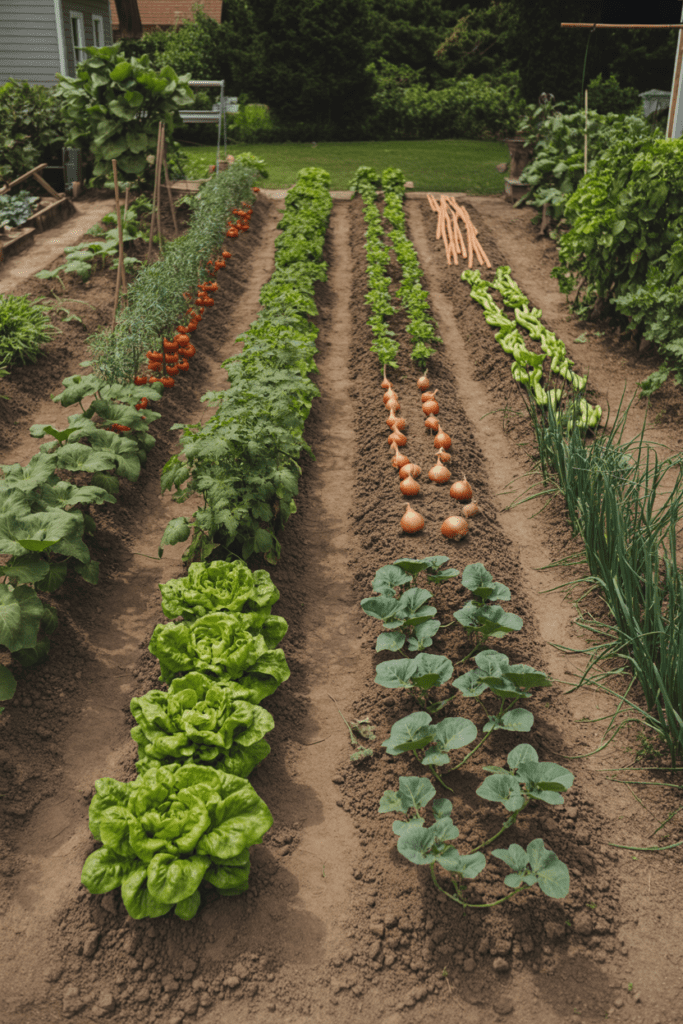
Let’s start with the OG of vegetable gardens — the traditional row layout. You plant your vegetables in straight, parallel rows with walking paths in between. It’s simple, it’s efficient, and it’s what your grandparents probably used.
Rows work best in large, open backyards where you have plenty of room to spread out. The wide spacing between rows gives you easy access for weeding, watering, and harvesting. The downside? You use a lot of space just for walking.
Best for: Large backyards, beginner gardeners, single-crop planting.
2. Raised Bed Garden Layout
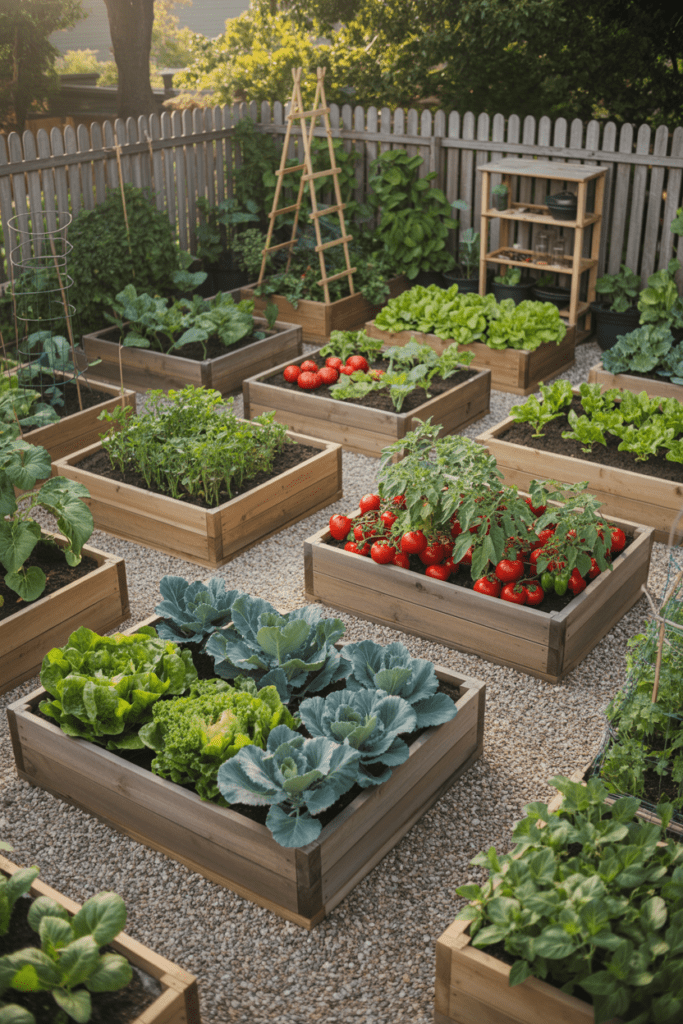
Raised beds are basically the overachievers of the garden world — and honestly, they deserve the hype. You build frames (usually from wood, metal, or stone) and fill them with premium soil mix, which means you control the growing environment completely.
The standard raised bed runs about 4 feet wide so you can reach the center from either side without stepping in. Heights range from 6 inches to 2 feet, and taller beds are a lifesaver if bending over is not your thing.
- Excellent drainage and soil quality control
- Fewer weeds (since you’re not working with native soil)
- Warms up faster in spring for earlier planting
- Easy to customize with trellises and row covers
Best for: Compact yards, gardeners with soil quality issues, anyone who wants a cleaner, more organized look.
3. Square Foot Gardening
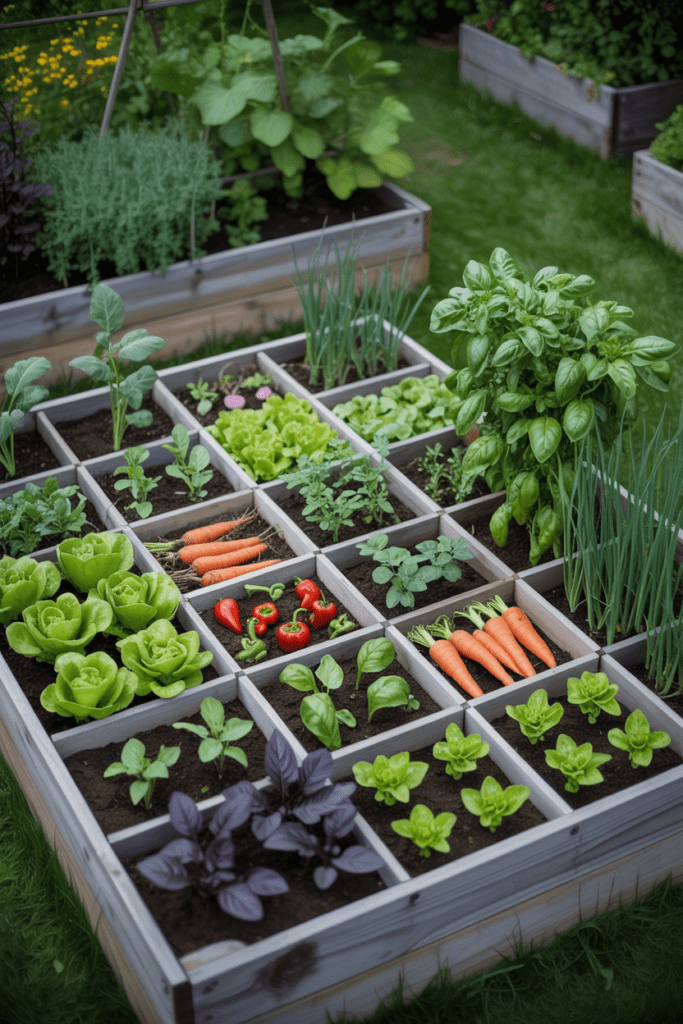
Ever heard of Mel Bartholomew’s square foot method? It’s essentially raised beds taken to a logical, math-nerd extreme — and I mean that as a compliment. You divide your bed into a grid of 1-foot squares and plant a specific number of plants per square based on their size.
Carrots get 16 per square. Tomatoes get one. Lettuce gets four. It sounds overly precise, but it genuinely maximizes your yield in minimal space. IMO, it’s one of the smartest layouts for small backyards.
Best for: Small spaces, gardeners who want maximum yield from minimum square footage.
4. Keyhole Garden Layout
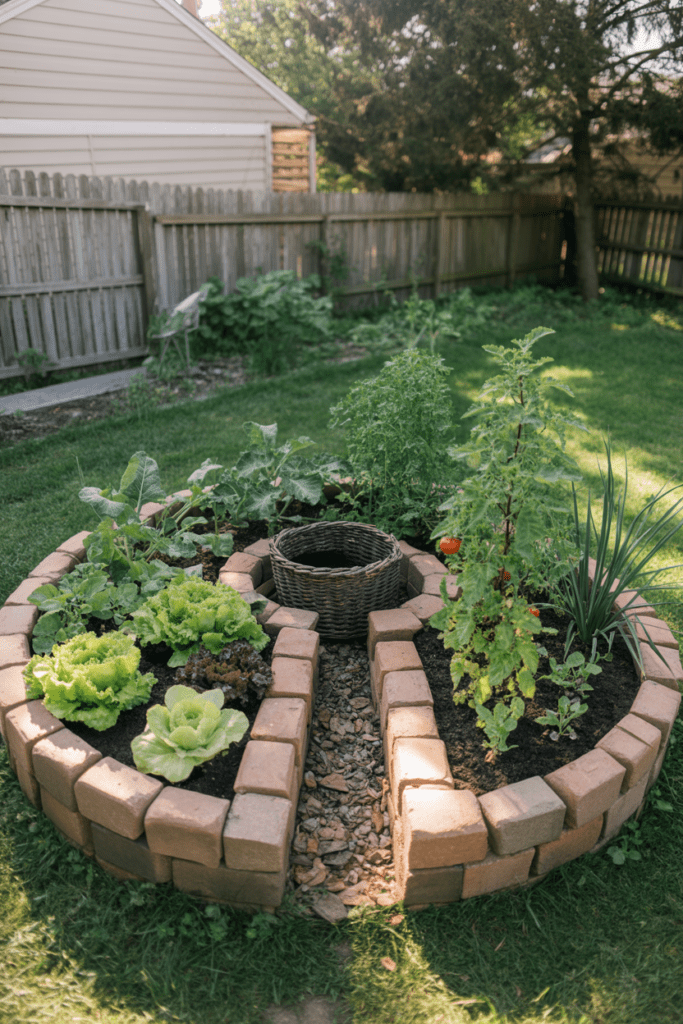
Picture a circle with a narrow path cut into the center — that’s a keyhole garden. You access the middle of the round bed from that central “keyhole” path, which means zero wasted space on walking paths around the outside.
Keyhole gardens are big in permaculture circles (pun intended) and work especially well in hot, dry climates. Many designs include a central composting basket so nutrients feed the bed from the middle outward. Efficient and clever.
Best for: Water-conscious gardeners, permaculture enthusiasts, hot or arid climates.
5. Potager Garden (French Kitchen Garden)
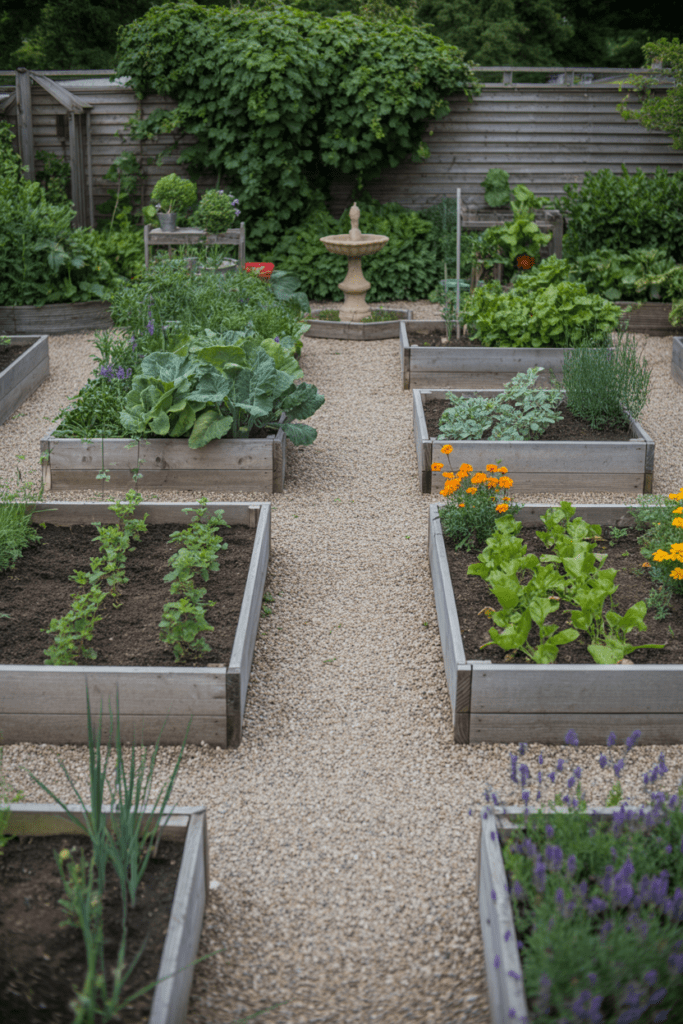
If you want your vegetable garden to look like something from a French countryside estate, the potager style is your answer. A potager combines vegetables, herbs, and edible flowers in a formal, symmetrical layout — usually with geometric beds separated by gravel or stone paths.
It’s functional and beautiful, which is why food bloggers (hi, that’s me) absolutely love photographing them. Imagine rows of purple basil next to red lettuce next to marigolds — it’s a feast for the eyes before it’s a feast for the table.
Best for: Gardeners who want aesthetics AND productivity, cottage or traditional home styles.
6. Vertical Garden Layout
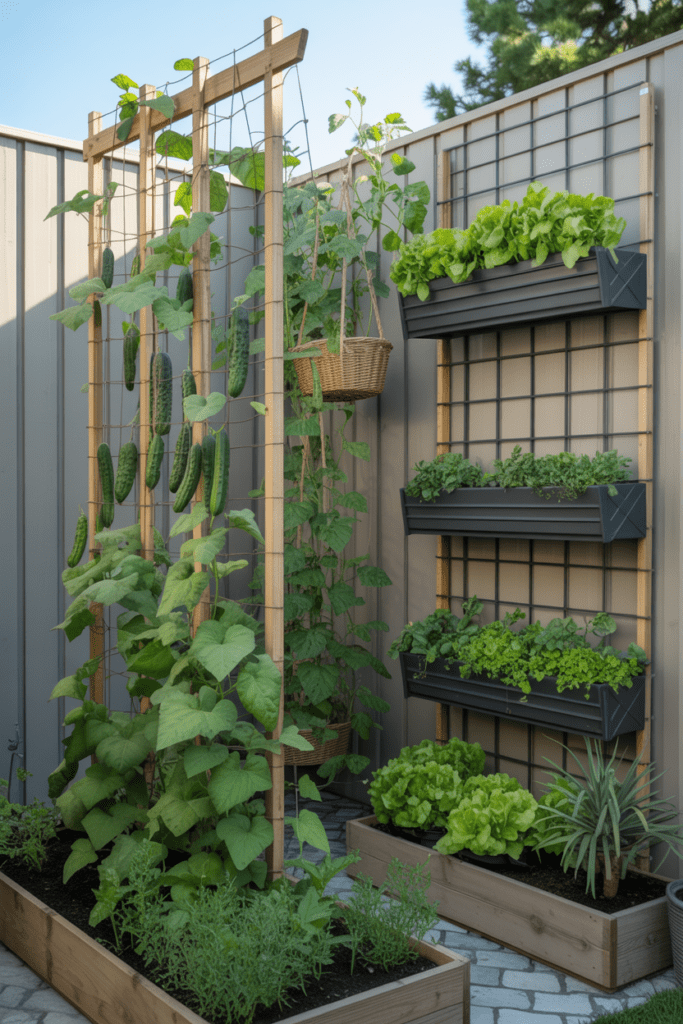
Working with a truly tiny backyard? Go up, not out. Vertical gardening uses trellises, wall-mounted planters, towers, and hanging systems to grow vegetables on a vertical plane rather than a horizontal one.
Cucumbers, beans, peas, and even small squash varieties thrive when trained upward. You can attach a trellis system to a fence or build a freestanding A-frame trellis in the middle of your garden to double as a living divider. Plus, the visual height it adds to a garden is chef’s kiss.
- Works on patios, balconies, and narrow side yards
- Improves air circulation around plants
- Makes harvesting way easier (no bending!)
- Creates natural privacy screens
Best for: Urban gardens, small spaces, renters with limited ground access.
7. The Three Sisters Layout
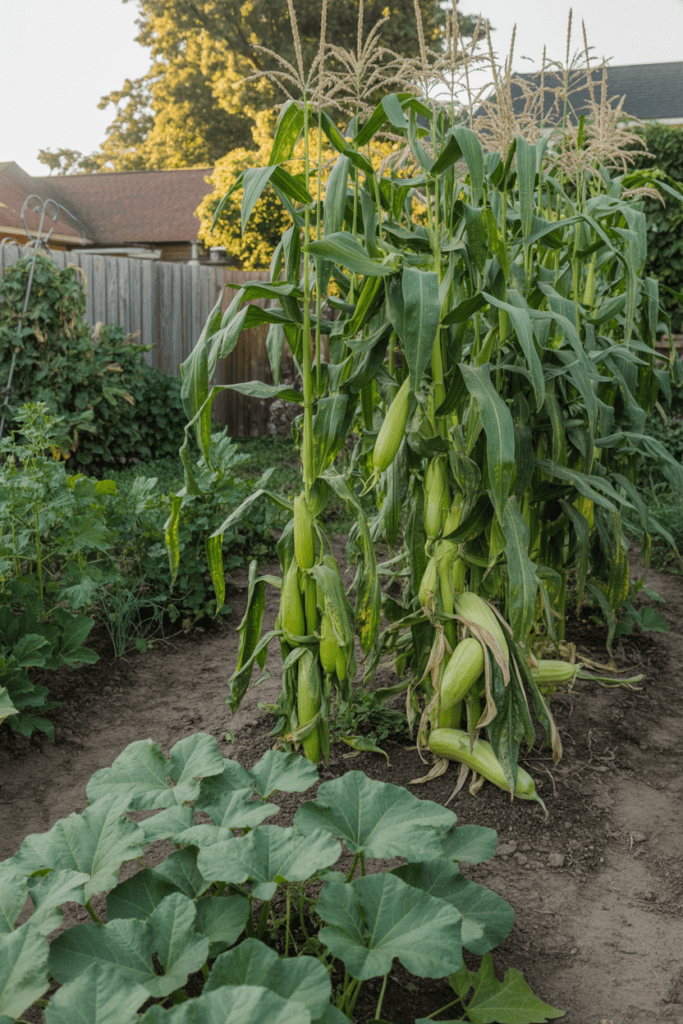
Here’s a layout with genuine history behind it — the Three Sisters method comes from Indigenous North American agricultural traditions and plants corn, beans, and squash together in a symbiotic trio. The corn grows tall and gives the beans something to climb. The beans fix nitrogen in the soil. The squash spreads wide and shades out weeds.
It’s companion planting in its most elegant form. Plant them together in mounds, spacing mounds about 4 feet apart. You’ll get three crops and a natural pest-management system in one layout. Not bad for a setup that’s thousands of years old.
Best for: Mid-to-large gardens, gardeners interested in companion planting or sustainable methods.
8. Circular Garden Layout
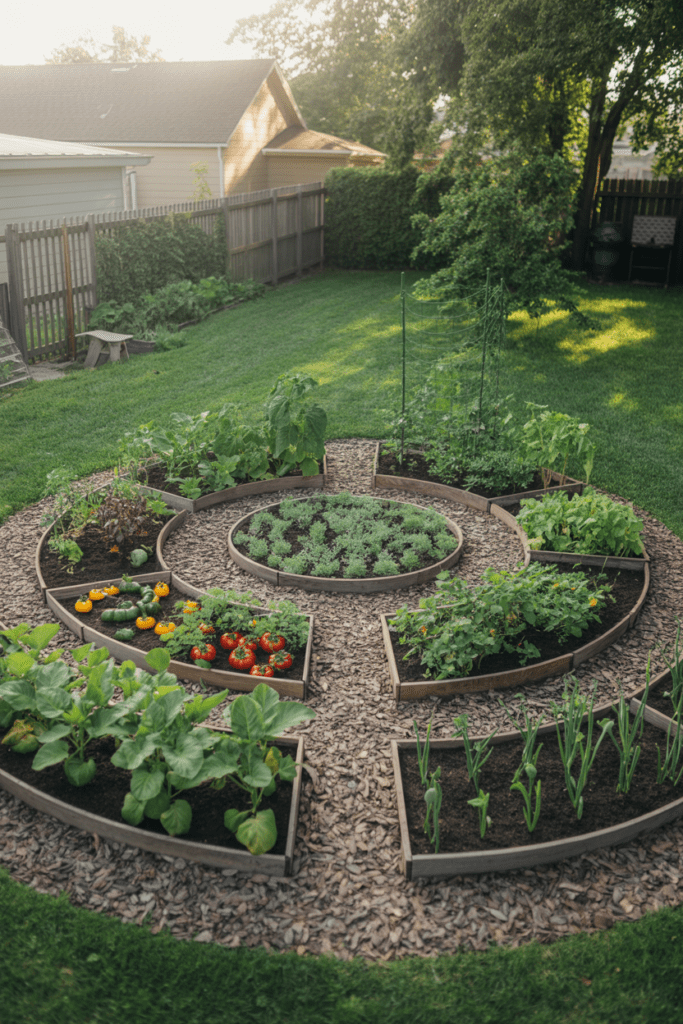
Round gardens feel lush and intentional, like someone actually planned this and didn’t just throw seeds at the ground (we’ve all been there :/). A circular layout radiates paths outward from a central focal point — think a birdbath, a large pot, or a sculptural trellis at the center.
You divide the circle into wedge-shaped planting sections, rotating crops between sections each season. It’s visually stunning and surprisingly practical because every section gets similar sun exposure.
Best for: Gardeners with a central yard feature, those who want a wow-factor layout.
9. Companion Planting Layout
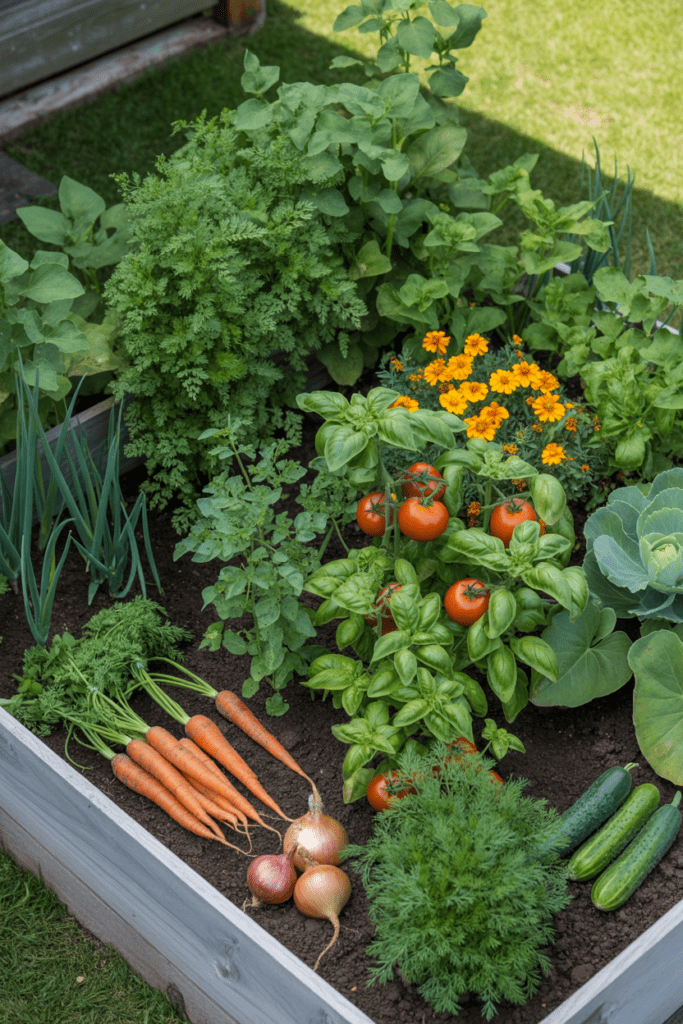
Companion planting isn’t really a single layout — it’s a planting philosophy you apply to any layout. The idea is that certain plants grow better when placed near specific neighbors. Tomatoes love basil. Carrots and onions confuse each other’s pests. Nasturtiums lure aphids away from your vegetables.
When you design your garden layout around companion planting principles, you reduce pests, improve flavor (yes, this is a real thing), and sometimes boost yields. I personally swear by planting basil near every tomato plant — it genuinely seems to make a difference.
Key companion planting combos:
- Tomatoes + Basil + Marigolds
- Carrots + Onions + Leeks
- Cucumbers + Dill + Radishes
- Brassicas + Nasturtiums + Sage
Best for: Organic gardeners, pest-sensitive crops, anyone tired of pesticides.
10. U-Shaped Garden Layout
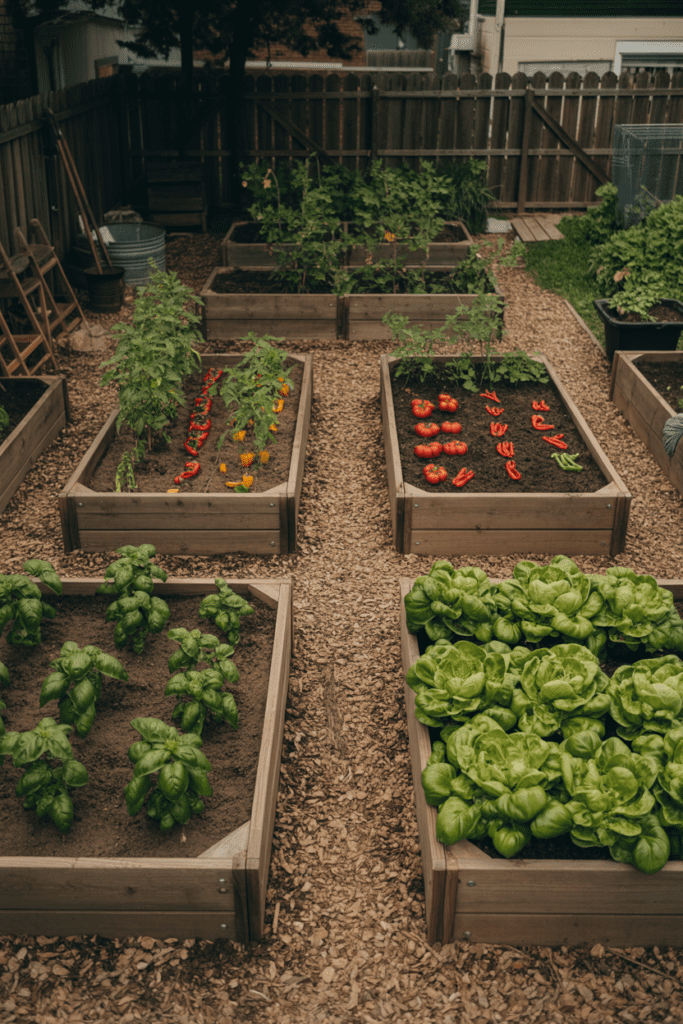
The U-shaped layout is essentially three raised beds arranged in a horseshoe pattern. You stand in the open center and can reach all three beds without ever stepping into the soil. It’s ergonomic, efficient, and surprisingly satisfying to work in.
This layout works brilliantly when you build all three beds at counter height (around 30–36 inches), turning your garden into something that feels more like an outdoor kitchen workspace than a mud pit. FYI — it also makes a phenomenal photography backdrop if you’re shooting food content.
Best for: Ergonomic gardening, small to medium yards, anyone with mobility concerns.
11. Spiral Herb and Vegetable Garden
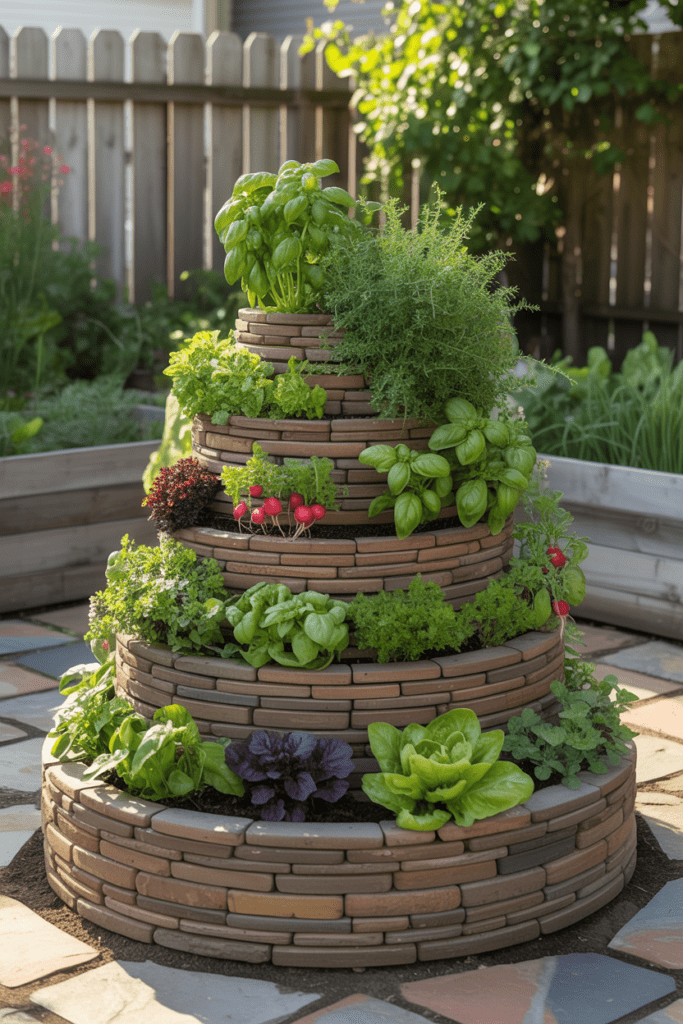
A garden spiral is a raised mound built in a spiral shape, where the height creates multiple microclimates in a very small footprint. The top of the spiral is drier and gets more sun, while the base stays moister and shadier.
This is usually used for herbs, but you can absolutely include compact vegetables like lettuce, radishes, and small peppers. It’s an architectural garden feature that doubles as a growing space — and it photographs beautifully for any home or garden content.
Best for: Herb-focused gardeners, small spaces, decorative garden design.
12. Straw Bale Garden Layout
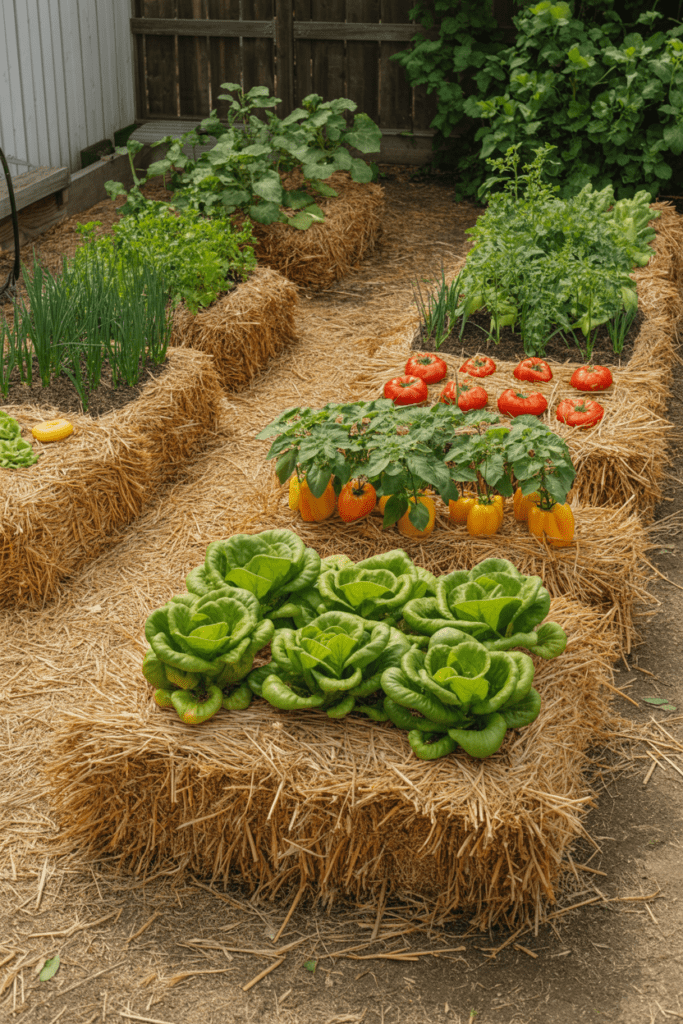
Ever thought about gardening in your growing medium instead of on it? Straw bale gardening uses bales as self-contained growing containers — you condition them for a couple of weeks, then plant directly into the decomposing straw.
Arrange bales in rows or a U-shape. They sit above ground naturally, giving you excellent drainage and warm soil temperatures. At the end of the season, the bales have broken down into free compost. Practically zero setup cost if you can source bales cheaply.
Best for: Renters, temporary gardens, gardeners who want no-dig solutions.
13. Mandala Garden Layout
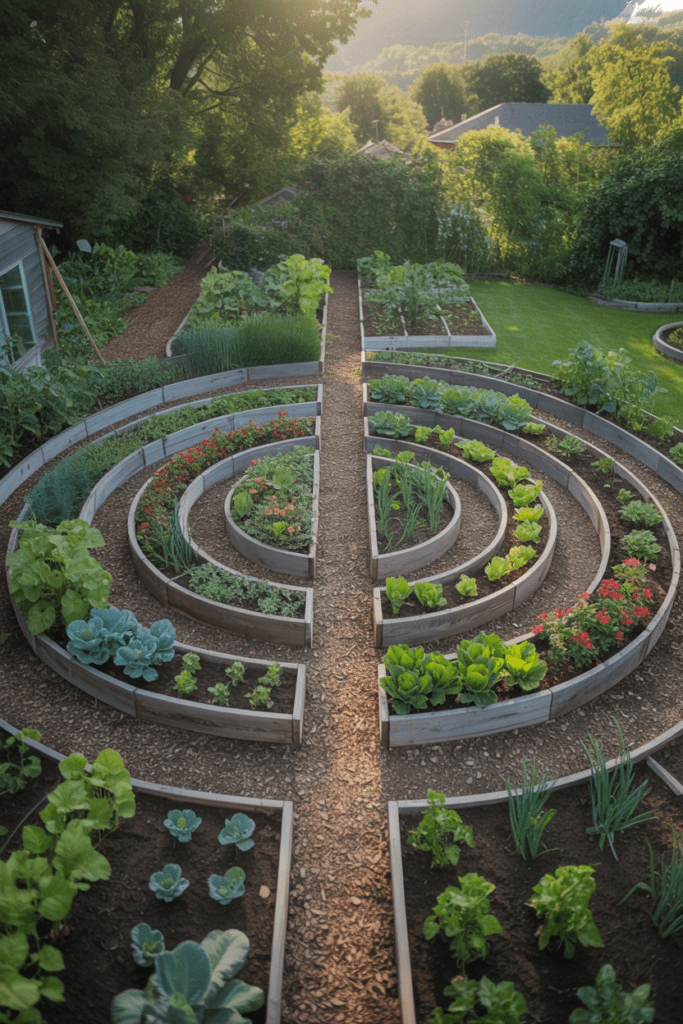
The mandala garden is the most visually dramatic layout on this list, and I’m not exaggerating. It’s a large circular design with intricate, symmetrical planting beds radiating outward from the center, often inspired by actual mandala geometry.
These gardens typically feature a central focal point (a fruit tree, fountain, or large perennial) surrounded by alternating planting sections and paths. They’re labor-intensive to set up, but the result is a garden that genuinely looks like art. Worth every bit of effort if aesthetics matter to you.
Best for: Large yards, serious gardeners, anyone who wants a show-stopping design.
14. Lasagna Garden (No-Dig Layered Beds)
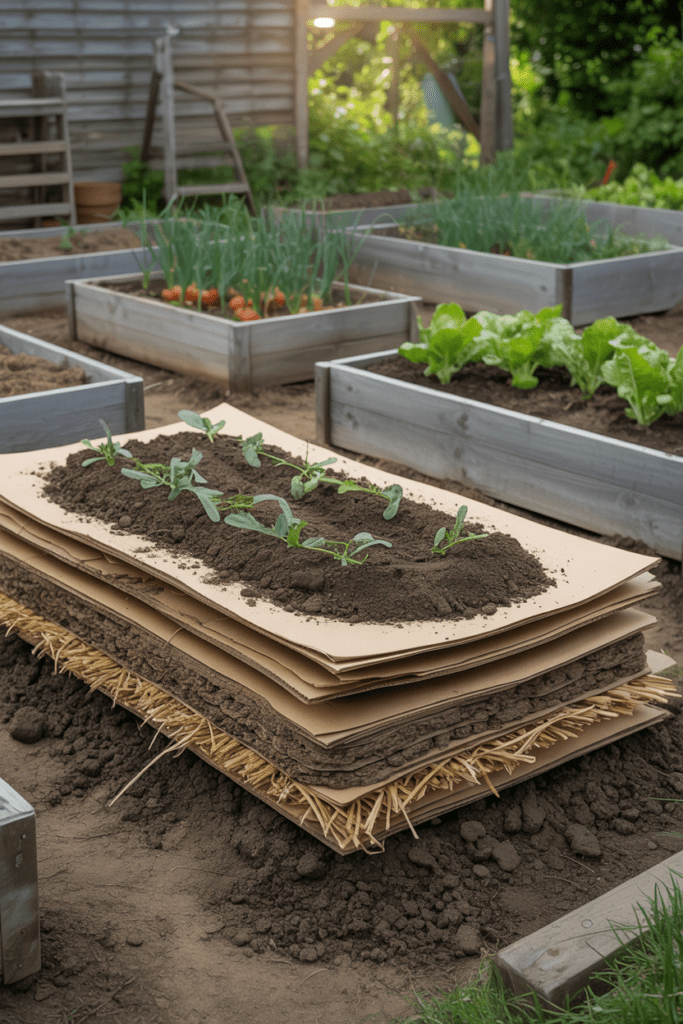
Forget tilling. The lasagna method — also called no-dig or sheet mulching — builds garden beds by layering organic materials directly on top of your lawn. Cardboard goes down first to smother grass, then alternating layers of carbon-rich and nitrogen-rich materials build up your growing medium.
By spring, you have rich, workable soil without ever picking up a tiller. It’s perfect for converting lawn areas into garden space without the back-breaking work. And yes, it really does work — I’ve seen barren grass patches turn into productive beds in a single season.
Layers typically include:
- Cardboard (weed barrier)
- Straw or dried leaves
- Compost or aged manure
- Topsoil or garden mix on top
Best for: Converting lawn to garden, no-dig gardeners, spring prep in fall.
15. Container Garden Layout
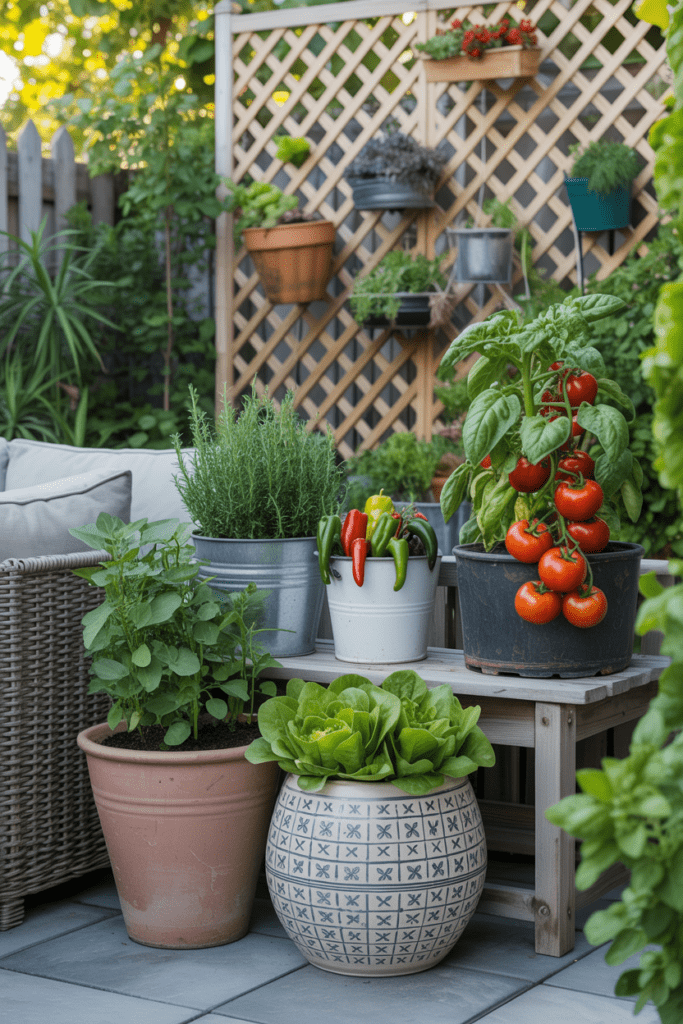
Don’t have in-ground planting space? Container gardening isn’t a consolation prize — it’s a fully legitimate strategy with real advantages. Containers let you move plants to optimize sun exposure, protect them from frost, and keep aggressive spreaders (looking at you, mint) from taking over your entire yard.
Arrange containers in clusters by plant type, or mix heights for visual interest. Use large containers (at least 5 gallons) for tomatoes, peppers, and eggplant. Smaller containers work well for herbs, lettuce, and radishes.
Best for: Patios, balconies, renters, anyone who wants flexibility.
16. Tiered Hillside Garden Layout
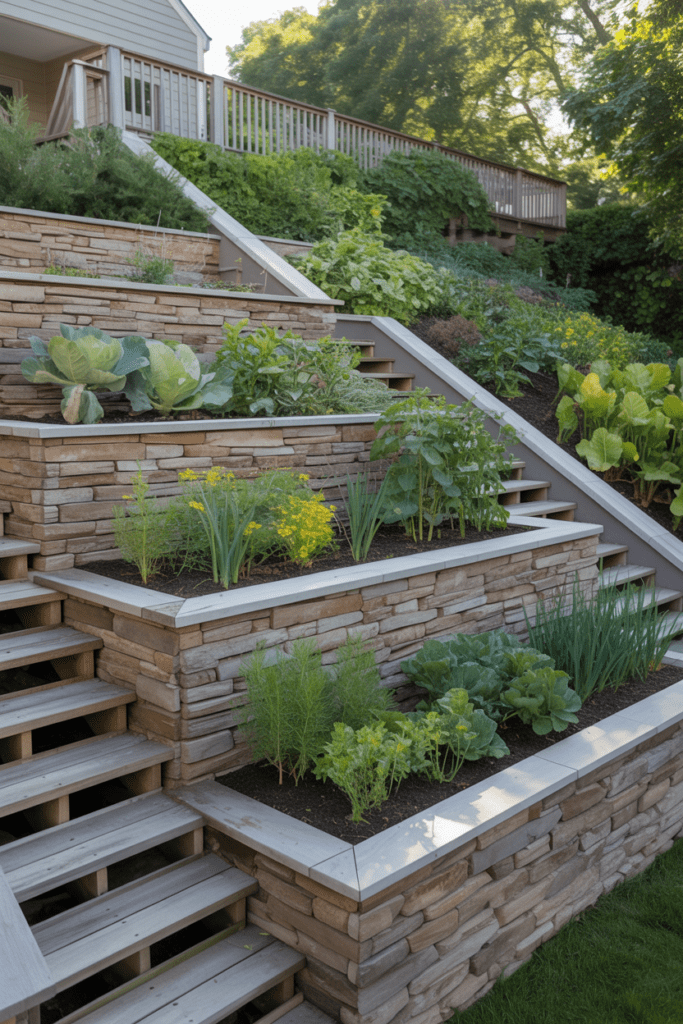
Got a sloped backyard? Instead of fighting the grade, work with it. Tiered hillside gardens use retaining walls to create level planting terraces on sloped land, preventing soil erosion while creating beautiful, layered growing spaces.
Each tier acts as its own raised bed, and the visual effect of food growing in cascading layers is genuinely stunning. Tall plants go at the top, mid-size in the middle, and low-growing or trailing plants at the bottom where they can spill over the retaining wall naturally.
Best for: Sloped yards, homes with hillside lots, anyone dealing with erosion issues.
17. Food Forest Layout
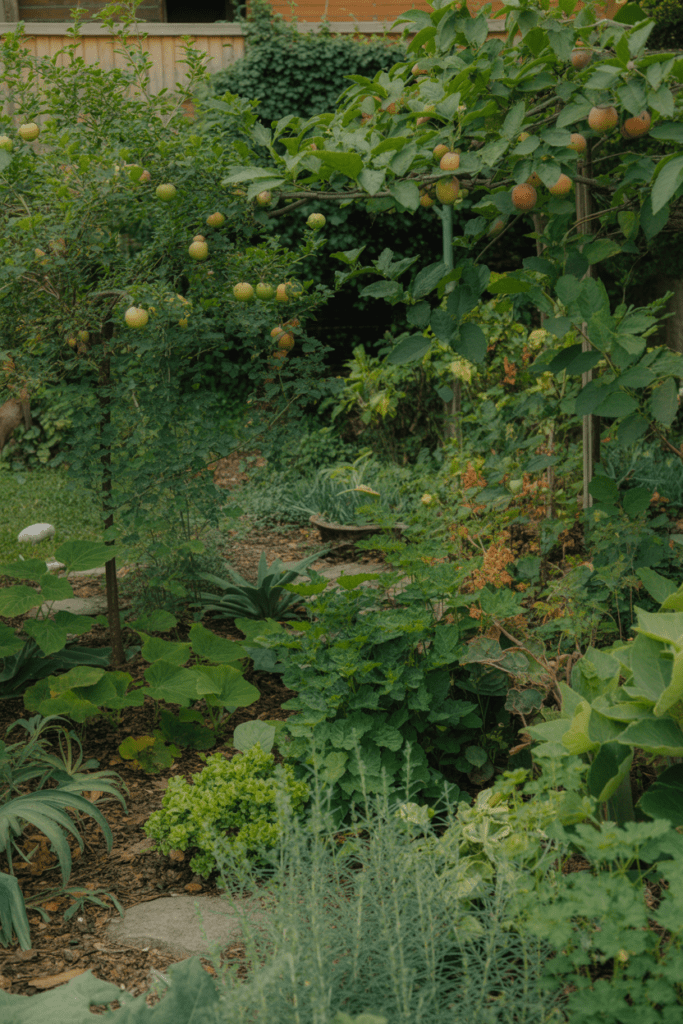
This is the longest-term, most ambitious layout on the list — and easily the most rewarding if you commit to it. A food forest mimics the structure of a natural forest but replaces wild plants with edible species across multiple layers: canopy trees, understory trees, shrubs, herbs, ground covers, and root crops.
It takes years to mature but essentially becomes self-sustaining once established. You’re not gardening — you’re designing an ecosystem. For backyard-scale versions, think fruit trees at the back, berry bushes in the middle tier, herbs and vegetables carpeting the ground between them.
Best for: Long-term homesteaders, large properties, gardeners who want low-maintenance abundance over time.
How to Choose the Right Layout for Your Backyard
So now you’ve got 17 options staring you down — how do you actually pick one? Ask yourself these three questions:
1. How much space do I have?
Tiny patio? Containers or vertical gardens. Medium suburban yard? Raised beds or square foot gardening. Large open yard? Row gardens, food forests, or mandala designs.
2. How much time can I commit?
If weekends are your only garden time, go with raised beds or lasagna gardens — they’re low-maintenance once established. If you love tinkering, companion planting or food forest layouts reward that extra attention.
3. What’s my main goal?
Maximum yield → Square foot gardening or raised beds
Aesthetics → Potager or mandala garden
Sustainability → Three Sisters, companion planting, or food forest
Zero budget → Straw bale or lasagna garden
Quick Tips Before You Start Digging
Before you commit to any layout, keep these basics in mind:
- Sun first, everything else second. Most vegetables need 6–8 hours of direct sun. Map your yard’s sun exposure before placing any beds.
- Water access matters. Place your garden close enough to a water source that you’ll actually use it consistently.
- Start smaller than you think. Every new gardener overestimates how much they’ll maintain. One or two well-maintained raised beds beat five neglected ones every time.
- Improve your soil. Whatever layout you choose, rich, well-draining soil packed with organic matter is the real secret to a productive garden.
- Plan for rotation. Don’t plant the same crops in the same spots year after year — rotating crops prevents disease buildup and keeps soil nutrients balanced.
Final Thoughts
There’s no single “best” backyard vegetable garden layout there’s only the best one for your specific space, goals, and lifestyle. The most beautiful garden you can build is one you’ll actually maintain and enjoy.
Pick one layout from this list, start this weekend, and don’t overthink it. Your future self will be very glad you did when you’re eating homegrown tomatoes in August. And honestly? Even a slightly chaotic garden beats no garden at all, I say this from personal experience and zero regrets.
Now stop reading and go dig something up. 🌱