

Eclectic dining rooms have a way of feeling instantly more interesting, don’t they? They look layered, personal, and full of character in a way that perfectly matched spaces just can’t pull off. If you’ve ever looked at a dining room and thought, “This looks nice, but it also looks like nobody actually lives here,” then yep that’s exactly why eclectic style feels so refreshing.
The best part about an eclectic dining room is that it gives you room to breathe creatively. You can mix old and new, polished and rustic, bold and subtle, and somehow it all works together when you do it with intention. One room might pair a sleek modern table with vintage chairs, while another might bring in colorful art, a dramatic rug, and lighting that looks a little bit fancy and a little bit rebellious. Honestly, that freedom is half the fun.
I love this style because it doesn’t ask you to follow a strict formula. It asks you to build a space that feels collected over time, not copied from a catalog. And let’s be honest, that’s a lot more fun than buying a perfectly matching dining set and pretending it has personality.
Let’s get into 17 ideas that’ll seriously inspire you.
1. Mix Chairs Like You Mean It
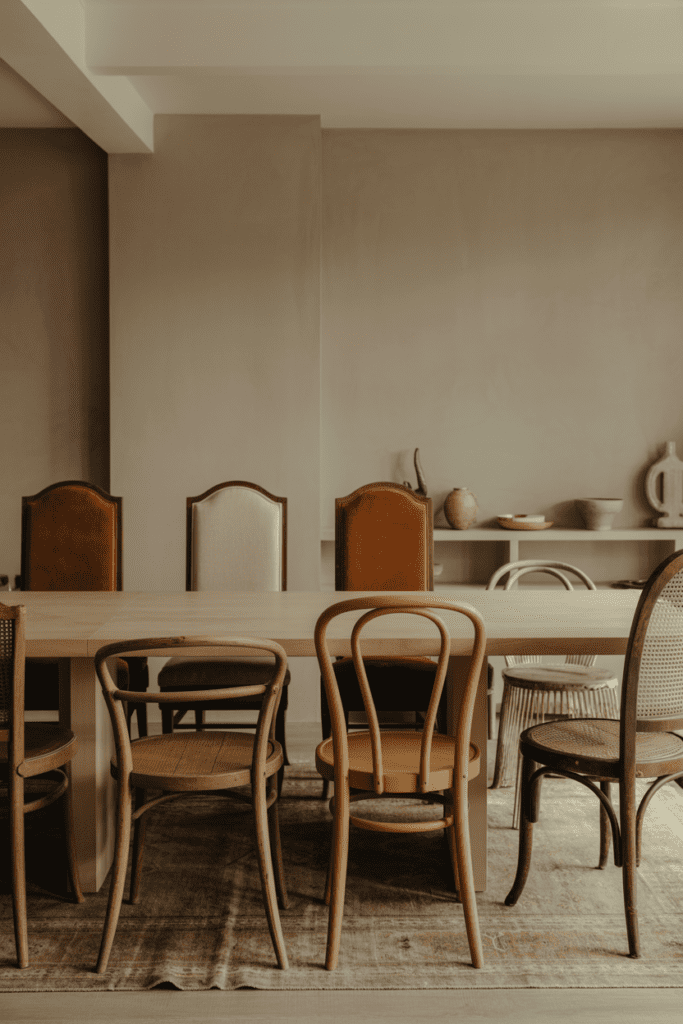
The single biggest upgrade you can make to any dining room? Ditch the matching chairs.
Seriously, nobody who has an interesting home owns six identical chairs. Mix a couple of upholstered wingbacks at the heads of the table with rattan or wooden side chairs along the length. The trick is to keep one unifying element — same color palette, same leg finish, or same seat height — so it looks intentional, not chaotic.
- Pair velvet chairs in jewel tones with raw wood seating
- Mix vintage bentwood chairs with modern acrylic ghost chairs
- Use a bench on one side and mix-and-match chairs on the other
This one move adds so much visual texture that everything else kind of falls into place.
2. Go Bold with a Statement Ceiling
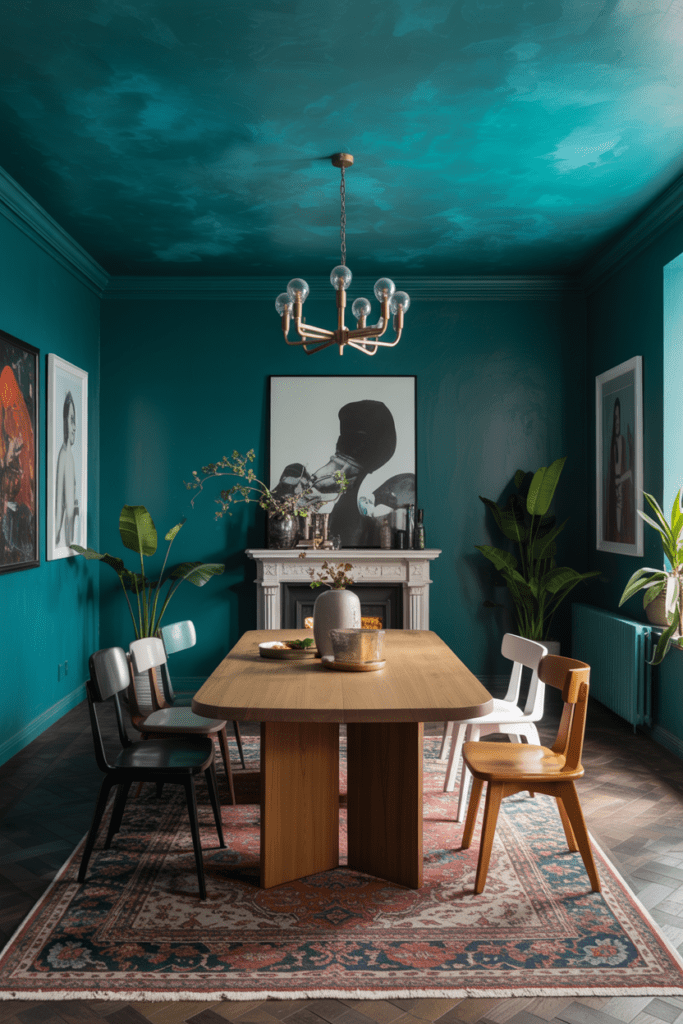
Most people treat the ceiling like a fifth wall they’d rather forget about. Big mistake. Huge.
A painted ceiling or patterned wallpaper overhead instantly transforms a dining room from forgettable to unforgettable. Think deep navy, terracotta, or even a moody forest green. If paint feels too permanent, removable wallpaper on the ceiling is having a serious moment right now — and honestly, it looks incredible.
The ceiling is the one surface nobody’s eye lands on first, which makes it the perfect place to sneak in something wild.
3. Layer Multiple Light Sources
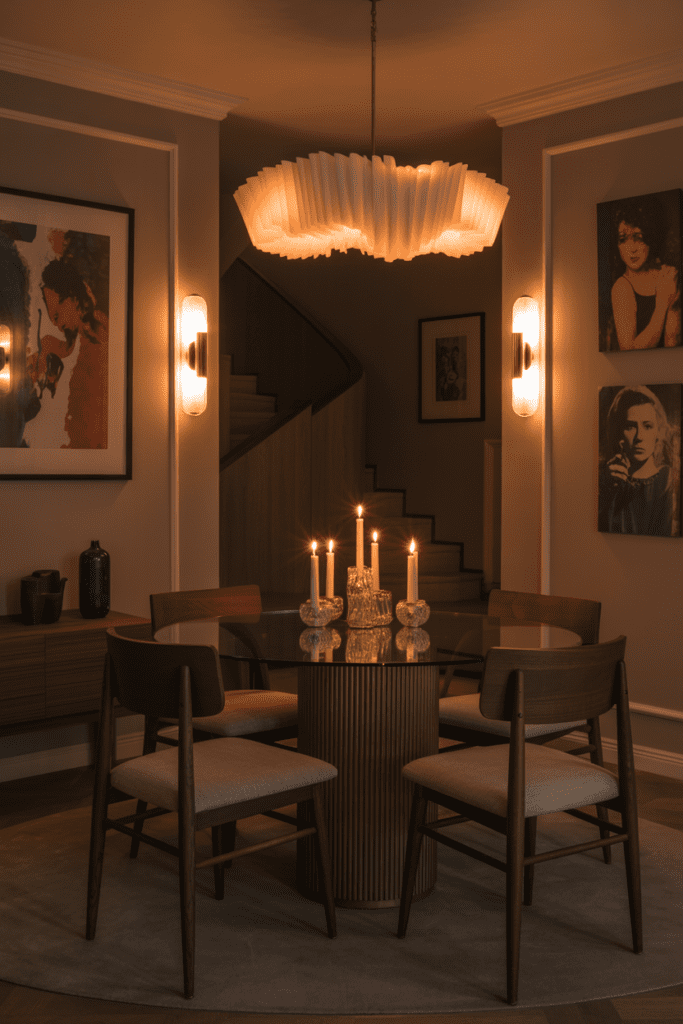
Can we talk about how a single overhead fixture is the fluorescent equivalent of a waiting room? You deserve better lighting than that.
Eclectic dining rooms layer at least two or three light sources:
- A statement pendant or chandelier for overhead drama
- Wall sconces on either side for warm ambient glow
- Candles or a table runner with tea lights for intimate evenings
The chandelier doesn’t need to match anything else in the room — IMO, that’s actually the whole point. A Moroccan brass lantern over a Scandinavian table over a Persian rug? Chef’s kiss. It just works.
4. Bring in an Unexpected Rug
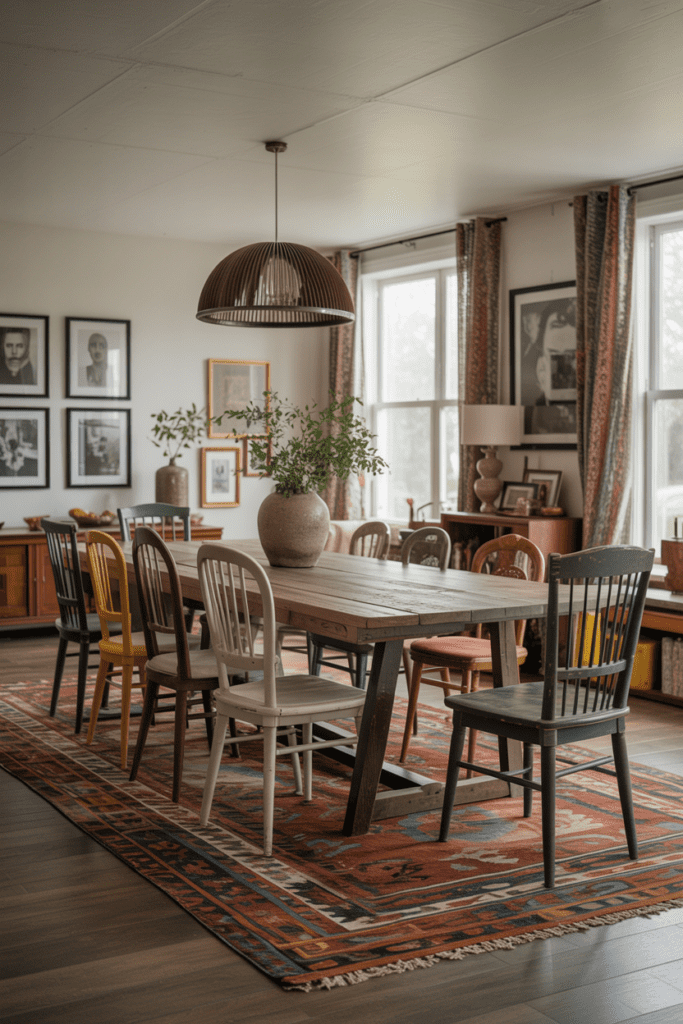
A rug under the dining table is one of those things that either looks amazing or creates a vacuum problem, depending on who you ask. But done right, it anchors the whole room.
Go for something with pattern and personality — a vintage kilim, a bold geometric, or even a worn oriental rug with beautiful patina. The key rule: make sure it’s large enough that chairs stay on the rug even when pulled out. Nothing looks worse than a tiny rug marooned under a big table.
Don’t be afraid of color here. The rug is doing the heavy lifting so your walls and furniture can breathe.
5. Build a Gallery Wall That Has a Story
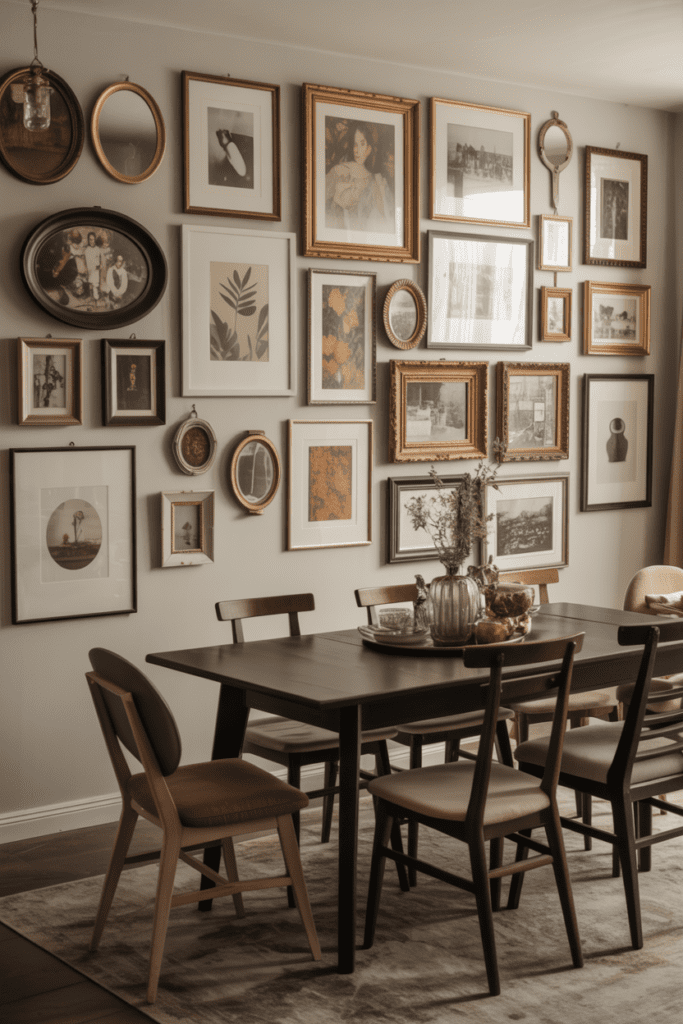
An eclectic gallery wall isn’t just throwing random frames on a wall. It’s more like curating a visual autobiography.
Mix framed botanical prints with abstract art, old family photos, vintage mirrors, and even a sculptural wall piece. Keep the frames varied — gold, black, natural wood — but maintain some consistency in how you arrange them (consistent spacing, or a consistent bottom line). This approach makes the wall feel collected over time rather than assembled in an afternoon.
The story your wall tells is entirely up to you. That’s what makes it eclectic.
6. Use a Dining Table That Breaks the Rules
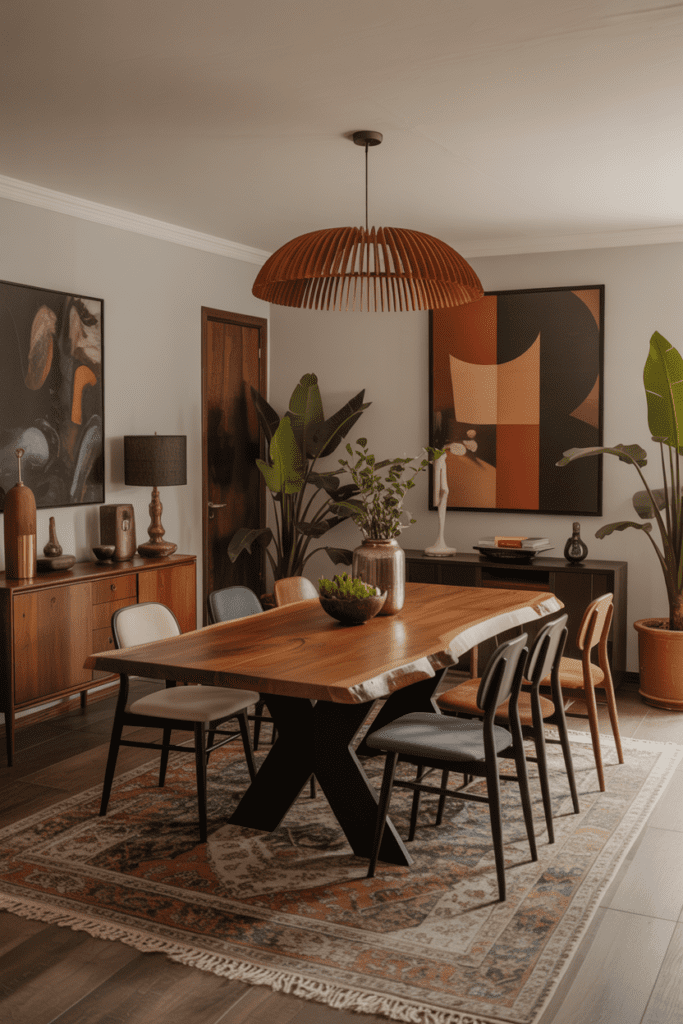
A round marble table. A live-edge wooden slab. An industrial factory table on hairpin legs. Your dining table is the centerpiece, and it should make a statement.
Eclectic design actually thrives when the table itself is unconventional. A painted table in a deep emerald or black adds drama without requiring you to change anything else. A raw wood table brings warmth that no amount of décor can manufacture.
FYI — if you’re shopping secondhand, dining tables are one of the best furniture categories to find at estate sales and vintage markets. You’ll pay a fraction of retail and get something with actual character.
7. Treat One Wall as an Accent Powerhouse
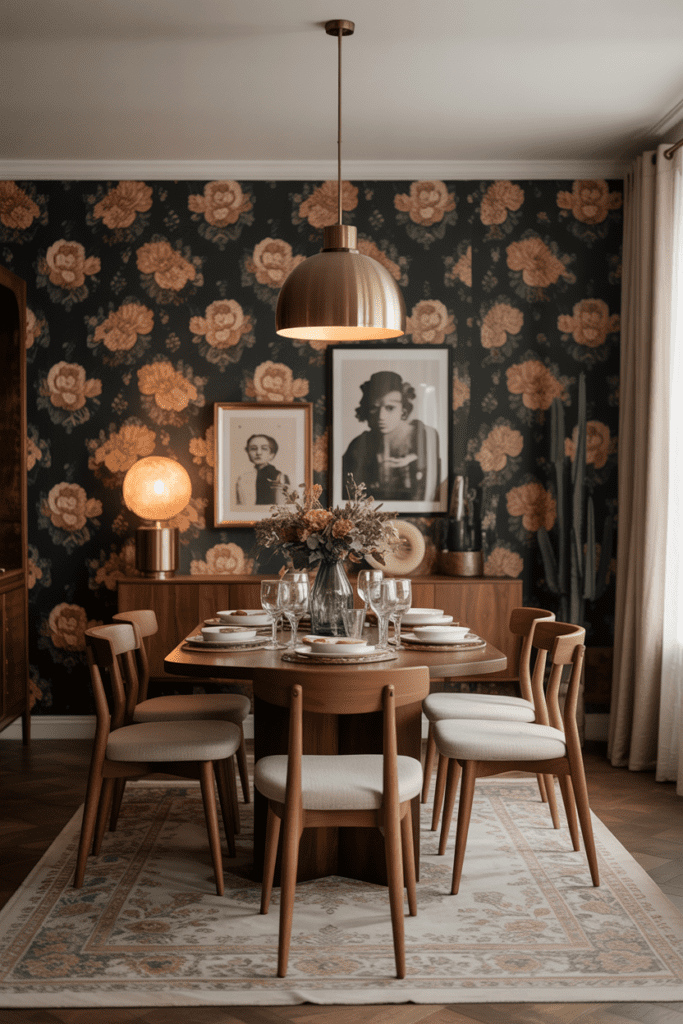
You don’t need to wallpaper the entire room. Pick one wall — usually the one your table faces or the one behind a buffet — and go absolutely wild with it.
Options that work beautifully in eclectic dining rooms:
- Maximalist floral or botanical wallpaper
- Exposed brick (real or faux — both look great)
- Deep paint in a saturated color like plum, rust, or teal
- Vertical shiplap or wood paneling painted in a bold hue
One strong accent wall gives you a focal point without making the room feel overwhelming.
8. Add a Vintage Buffet or Sideboard
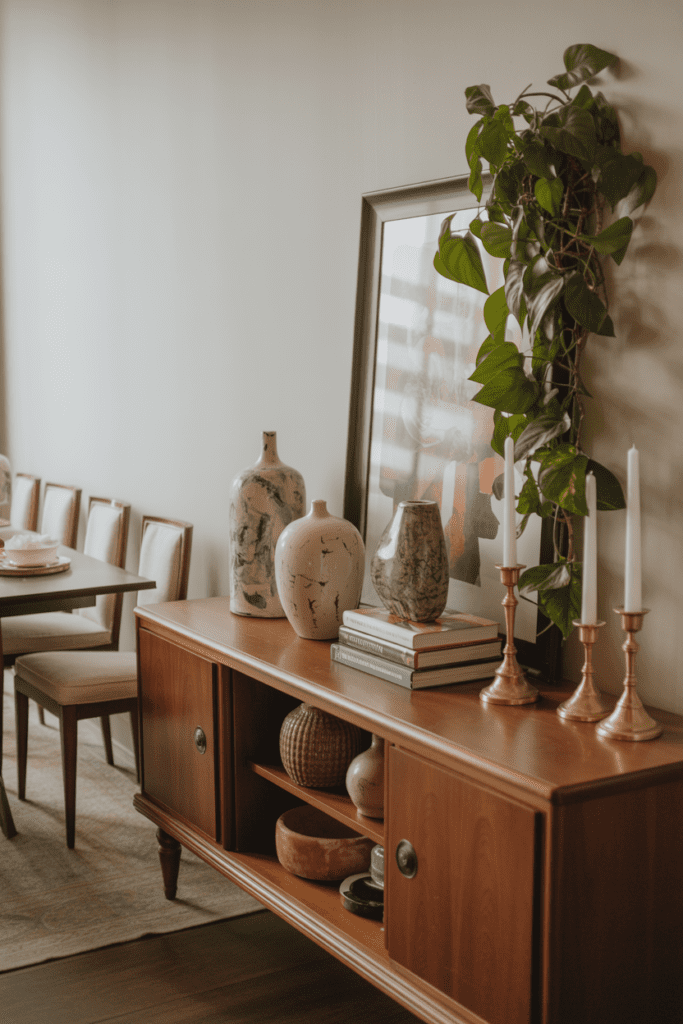
This is one of those pieces that does double duty — storage AND style. A vintage mid-century sideboard, an antique French buffet, or even a repurposed old dresser works beautifully as dining room storage.
Style the top like you mean it: a collection of mismatched vases, a trailing pothos plant, a stack of art books, maybe a vintage bar tray. The sideboard becomes a little still-life that adds personality without cluttering the actual table.
Bonus: it gives you somewhere to put all the things that normally pile up on the dining table. You know what I’m talking about. :/
9. Play with Scale in Décor
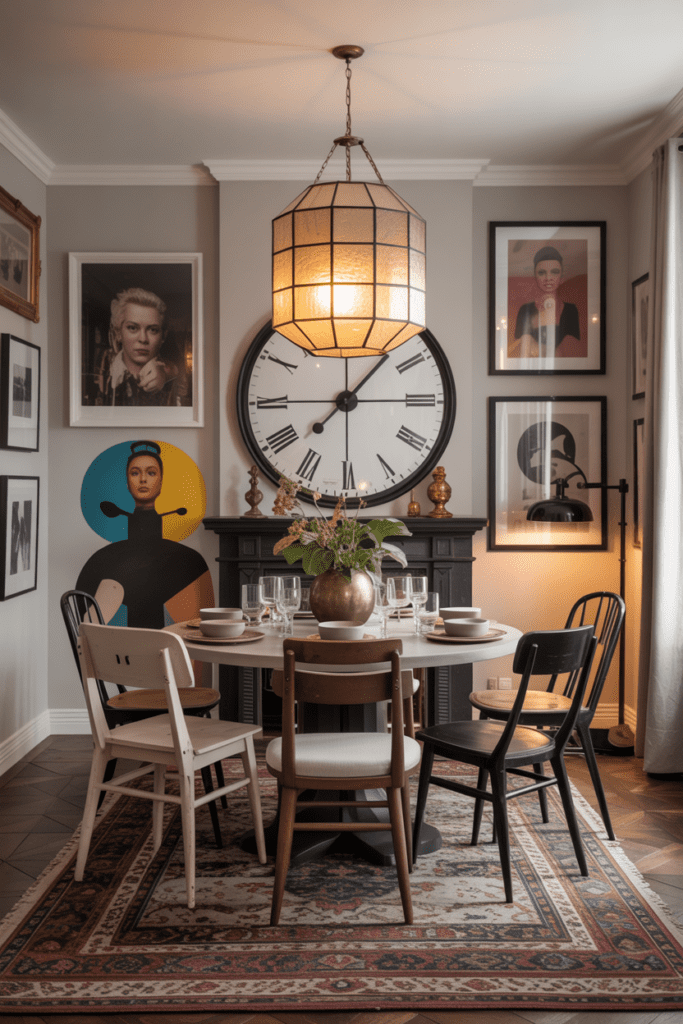
Eclectic rooms have a secret weapon — they’re not afraid of oversized or undersized elements that create visual tension. A giant vintage clock on a small wall. An enormous lantern pendant over a modest table. A tiny antique mirror in a sea of large art.
Scale contrast keeps the eye moving around the room and makes the space feel dynamic rather than static. When everything is proportionally “correct,” a room can feel a little safe. Safe is boring. Mix it up.
10. Introduce Unexpected Materials
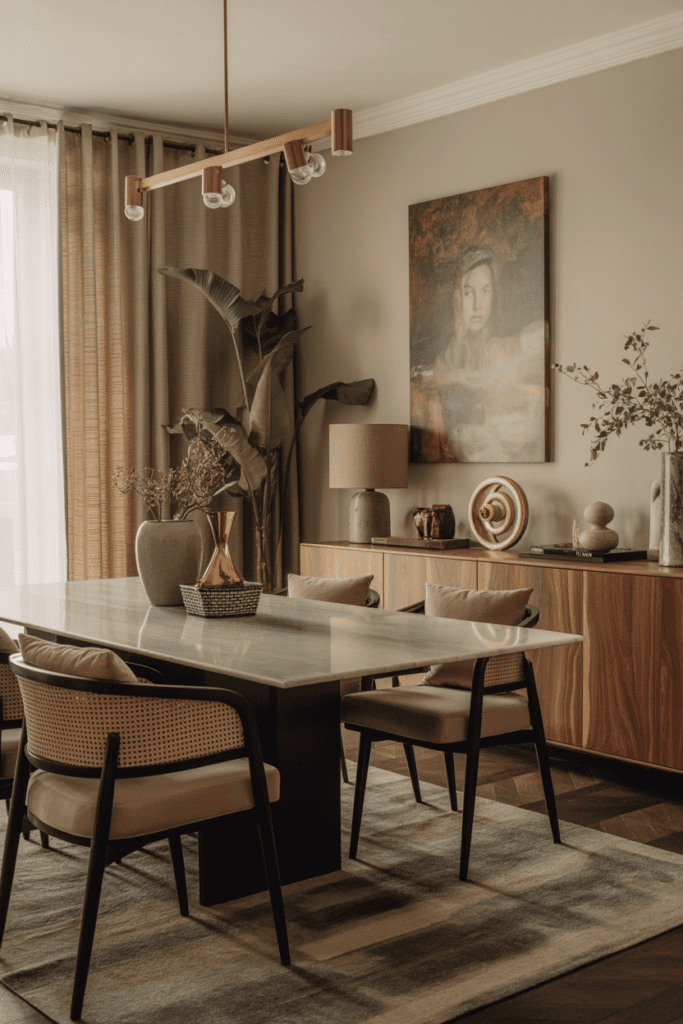
This is where eclectic really earns its name. The magic happens when you put materials together that have no business working but absolutely do:
- Rattan + marble — organic meets elegant
- Concrete + velvet — industrial meets lush
- Raw wood + brass — rustic meets refined
- Woven textiles + lacquered surfaces — texture meets polish
When you start thinking about materials rather than just colors, your design game shifts to a whole new level. Walk through your dining room and ask yourself: how many different materials can I spot? If the answer is two or three, it’s time to add more.
11. Use Plants as Structural Elements
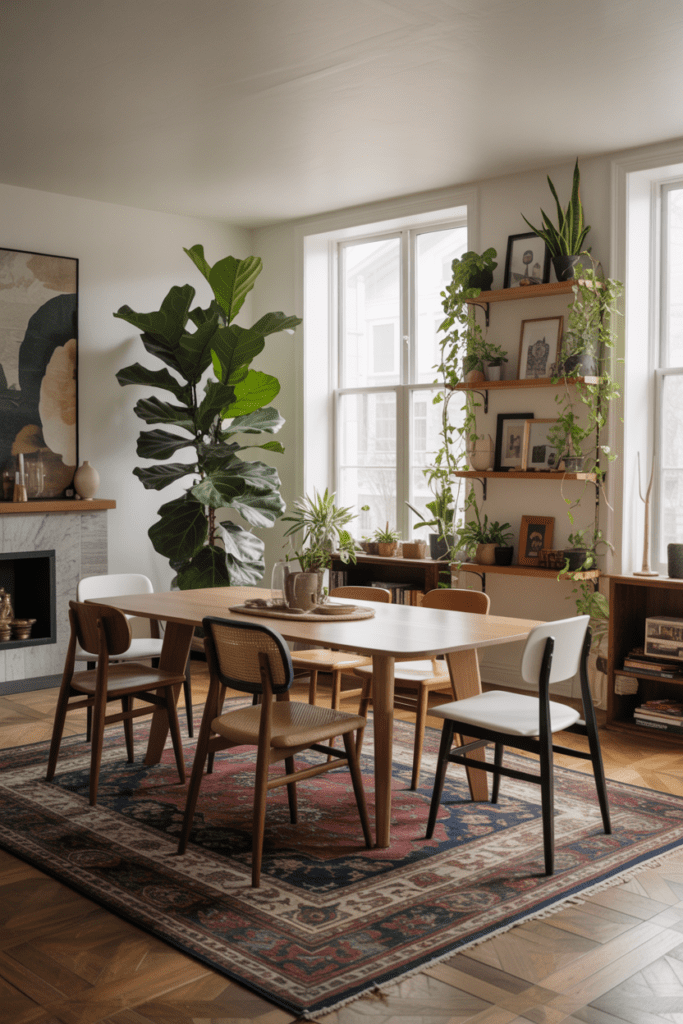
Not just a small succulent on the windowsill. We’re talking big, dramatic plants that actually contribute to the architecture of the room.
A large fiddle leaf fig in a corner. A trailing pothos cascading from a high shelf. A cluster of varying-height plants near the window that creates a little indoor jungle moment. Plants add life, texture, and color — and they make a room feel lived-in in the best possible way.
In an eclectic dining room, plants also soften the impact of all those bold choices. They’re the neutral that isn’t boring.
12. Layer Textiles Generously
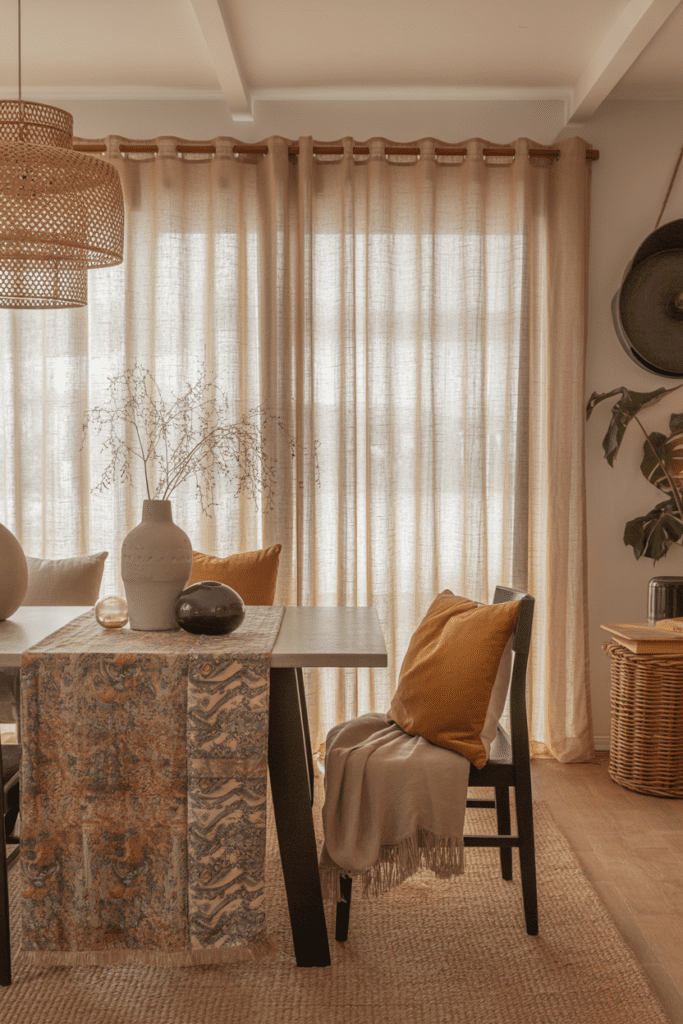
Textiles are the fastest way to make a dining room feel warm and inviting. And in an eclectic space, you get to layer them without apology.
- A linen or cotton table runner in a rich color or pattern
- Chair cushions in different but complementary fabrics
- Curtains in something textural — boucle, velvet, linen
- A throw draped over a bench or chair
Don’t match everything. A kilim-inspired cushion next to a solid velvet seat pad next to a woven rattan chair? That’s the dream.
13. Collect and Display Interesting Ceramics
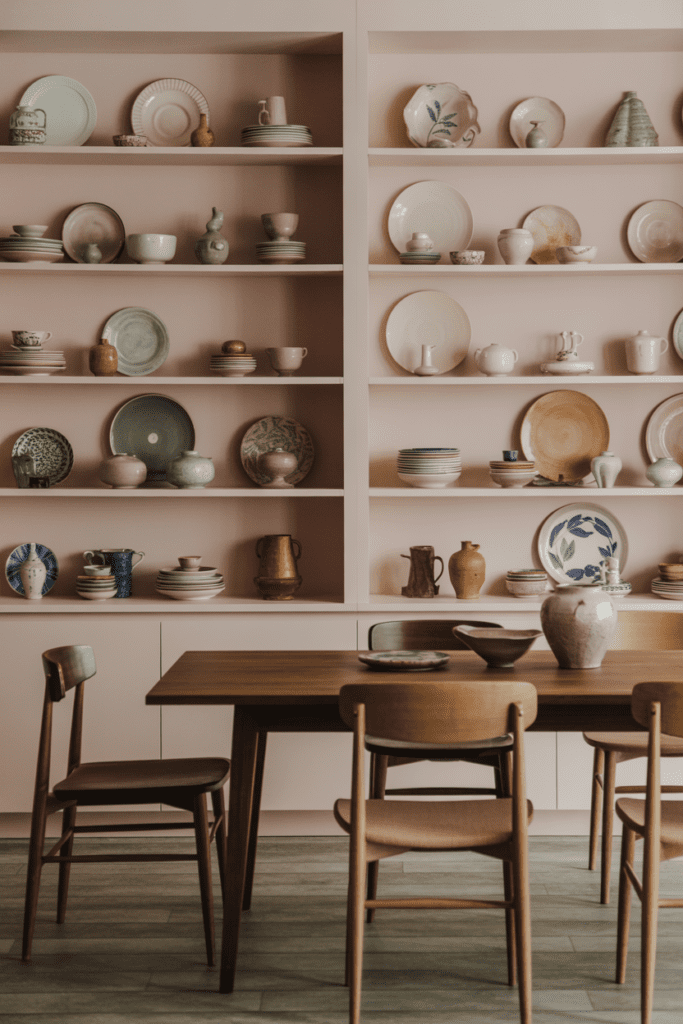
Here’s something I absolutely love — using ceramics as décor. A curated collection of mismatched plates, vintage pottery, and handmade ceramics displayed on open shelving or a plate wall does more for a dining room than almost any other décor choice.
It feels personal, it feels collected, and it tells a story. Think hand-thrown mugs, colorful glazed bowls, vintage blue-and-white plates mixed with rustic stoneware. The imperfection is the whole point.
Open shelving lets you treat your ceramics like art. Because honestly, they are.
14. Don’t Ignore the Windows
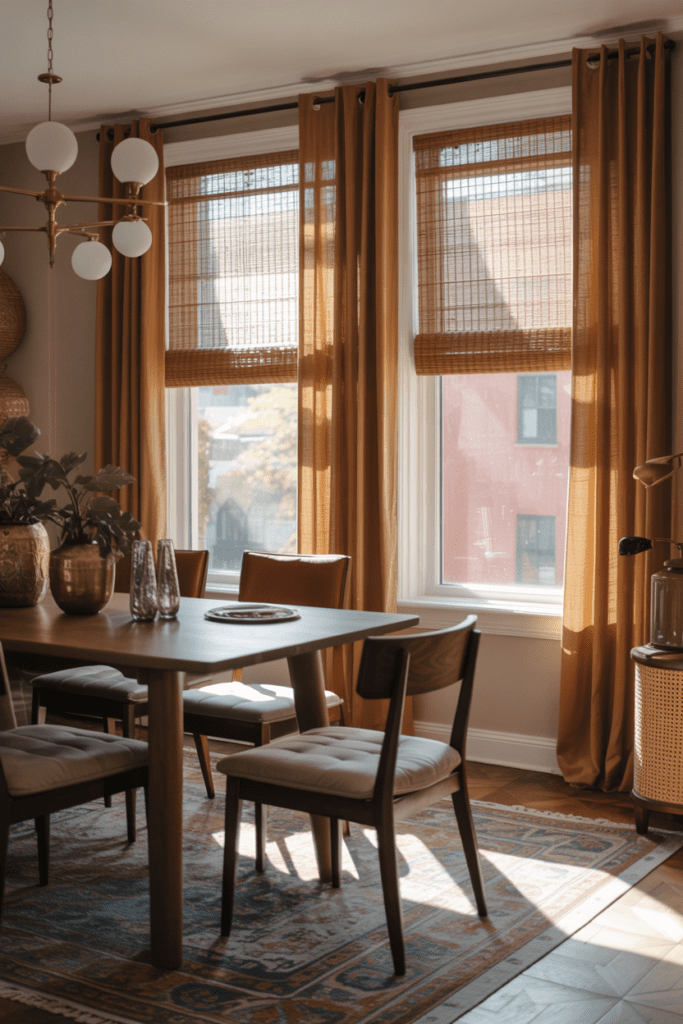
Bare windows in a dining room are a missed opportunity. The right window treatment frames the whole room and adds another layer of texture.
For eclectic spaces, think:
- Woven wood shades for organic warmth
- Velvet curtains in a jewel tone for drama
- Sheer linen panels layered under something heavier
- No curtains at all but with a painted window frame in a contrasting color
The window is essentially a picture frame — treat it like one.
15. Add a Mirror for Depth and Light
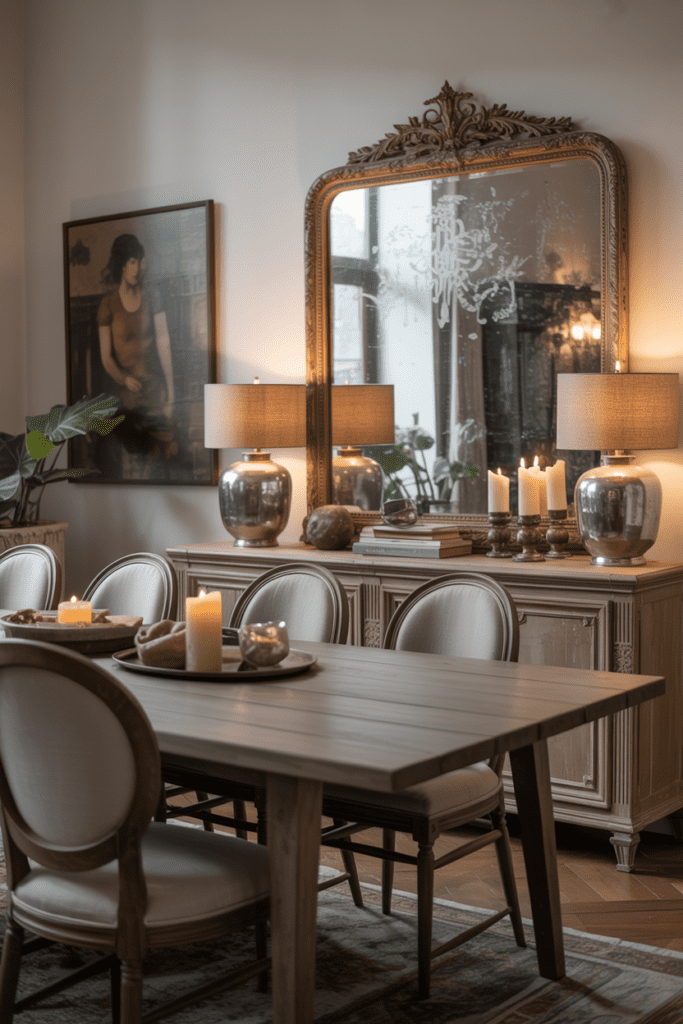
A large, well-placed mirror can double the perceived size of a dining room and bounce light beautifully. In an eclectic space, the mirror itself is décor — go for an ornate gold frame, a sunburst shape, an arched vintage find, or even a collection of smaller mismatched mirrors grouped together.
Lean it against a wall if you don’t want to commit to hanging. A large leaning mirror behind a buffet sideboard is one of the most-pinned dining room looks for a reason.
16. Create a Cozy Reading or Bar Nook Corner
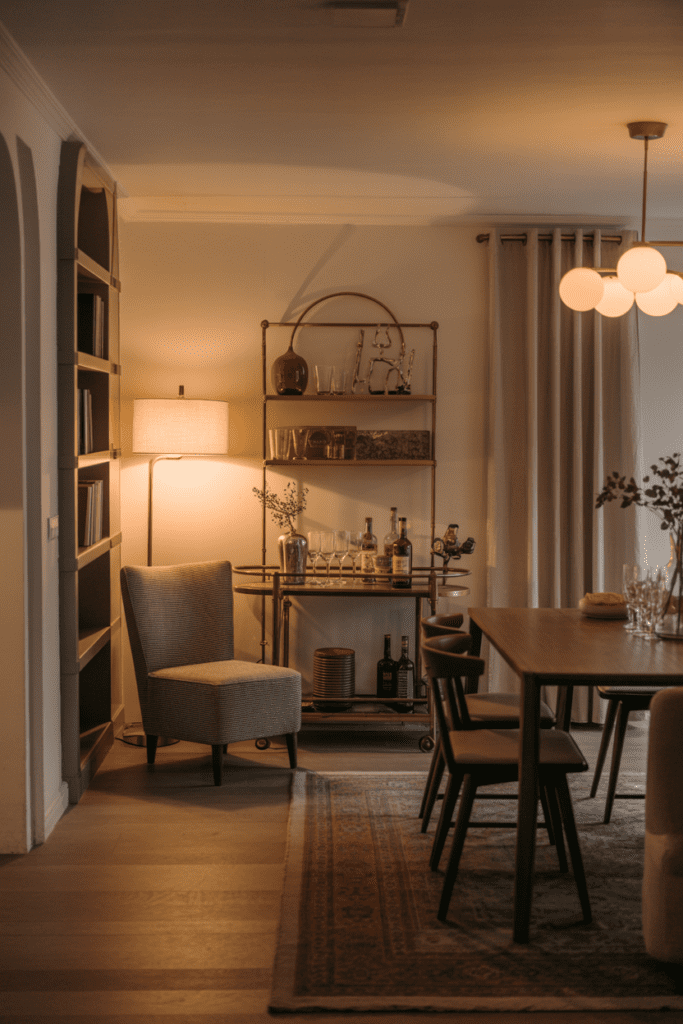
Eclectic dining rooms work best when they feel like they have multiple layers of purpose. If you have the space, carve out a little bar cart corner, a small reading nook, or even a coffee station that sits adjacent to the dining area.
- A bar cart styled with mismatched glassware and vintage bottles
- A small armchair in the corner with a floor lamp for after-dinner lounging
- A bookshelf built into the wall that doubles as art storage
This layering of function is what makes eclectic spaces feel genuinely lived-in rather than staged.
17. Commit to Personal, Unexpected Accessories
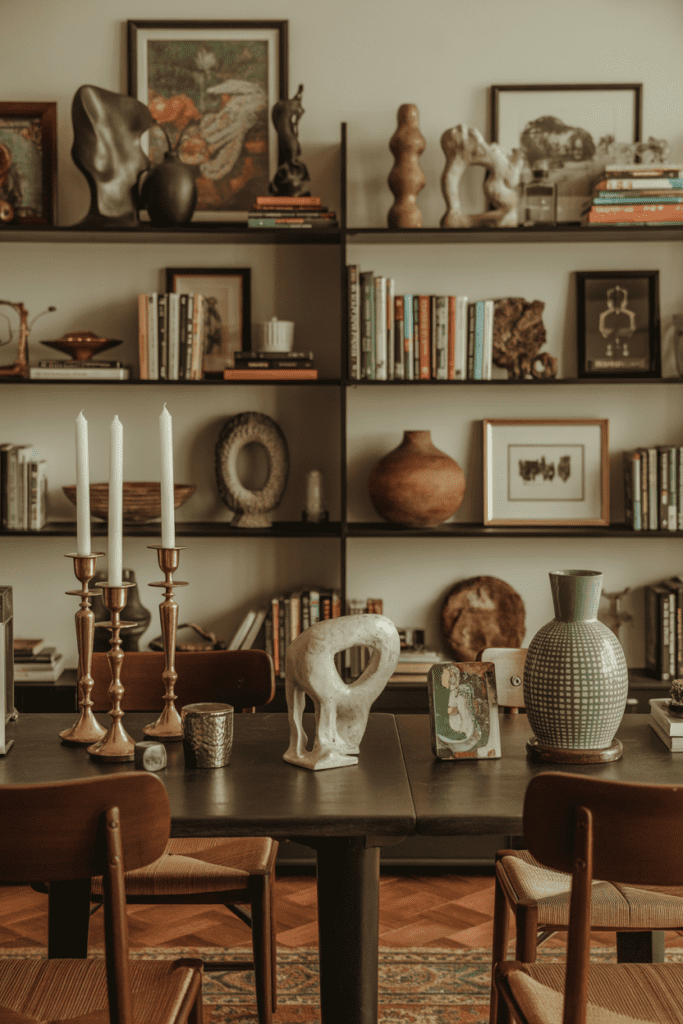
This is the one that ties everything together. The final layer of an eclectic dining room is the stuff that’s genuinely yours — weird and wonderful objects you’ve picked up over the years, gifts that mean something, things you bought on a trip.
That hand-painted vase from a local ceramicist. The brass candlesticks from your grandmother. The stack of art books you actually read. The weird little sculptural object you bought at a market because it made you laugh.
These accessories aren’t afterthoughts. They’re the point. An eclectic room without personality is just a messy room. With personality, it’s a masterpiece.
Putting It All Together
Here’s the honest truth about eclectic dining rooms: they take confidence. You have to be willing to commit to the mix, trust your eye, and stop asking “does this match?” and start asking “does this feel right?”
The 17 ideas above aren’t a checklist. They’re a toolkit. Start with two or three that excite you most maybe the mixed chairs and the statement ceiling, or the gallery wall and the vintage sideboard — and build from there. Eclectic rooms evolve over time, and that’s part of their beauty.
Remember: the goal isn’t perfection, it’s personality. A room that looks like you actually live in it, love it, and collected it over time beats any perfectly coordinated showroom every single day of the week 🙂
So go ahead, mix that chandelier with the rattan chairs and the Persian rug. Your dining room is waiting.