
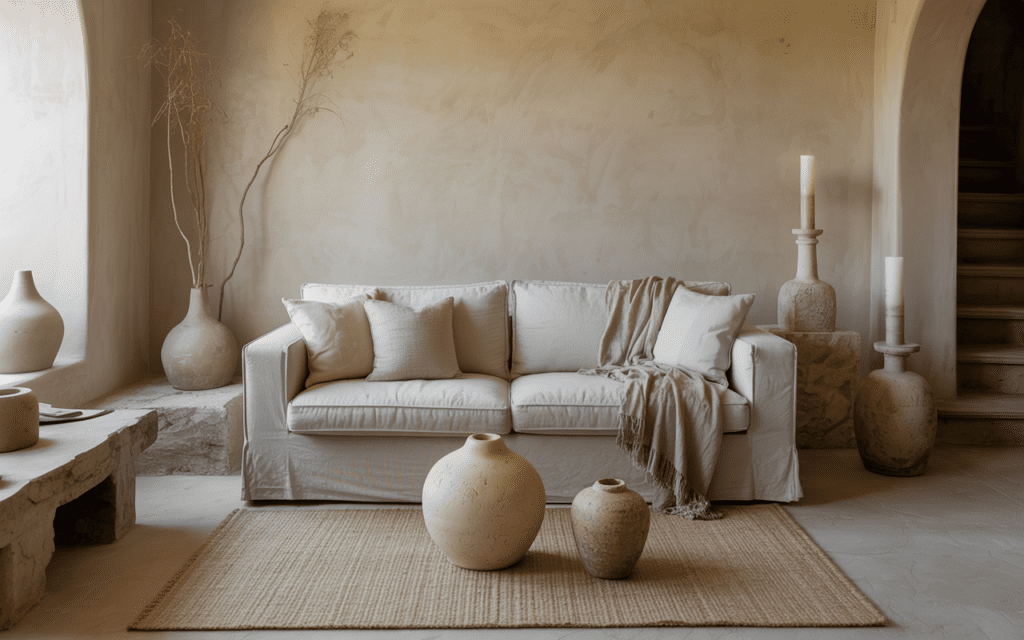
If your living room feels a little too polished, a little too perfect, and honestly a little too “catalog staged,” wabi sabi might be exactly what you need. This style celebrates imperfection, simplicity, texture, and calm, which sounds refreshingly human in a world obsessed with spotless everything.
I’ve always loved living rooms that feel lived in. Not messy, not chaotic, just real. A slightly wrinkled linen cushion, a handmade bowl with an uneven edge, a wood table that shows its grain like it has stories to tell those details charm me way more than anything glossy and overly matched. If you feel the same, you’re going to love these wabi sabi living room design ideas.
1. Start with a Soft, Earthy Color Palette
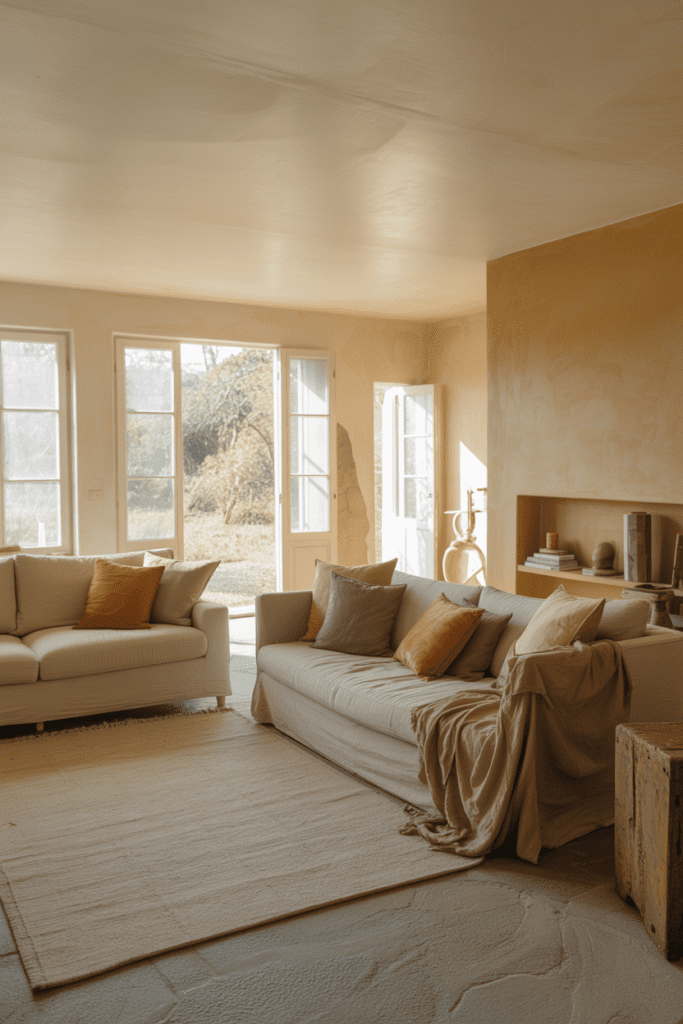
A strong wabi sabi living room always begins with color. You want shades that feel grounded, quiet, and natural rather than loud or attention-seeking. Think warm whites, clay, sand, taupe, mushroom, muted olive, charcoal, and soft brown.
These colors calm the room instantly. They also make your furniture, textures, and handmade decor stand out without shouting for attention. Ever notice how a room feels more expensive when the colors stop trying so hard?
Best colors for a wabi sabi living room
- Off-white for walls and larger surfaces.
- Beige and taupe for softness and warmth.
- Stone gray for subtle depth.
- Muted green for a nature-inspired touch.
- Terracotta or clay for earthy character.
I’d avoid crisp, icy whites here. They often make the space feel sterile, and wabi sabi definitely doesn’t want your living room to feel like a dental clinic.
2. Choose Furniture with Organic Shapes
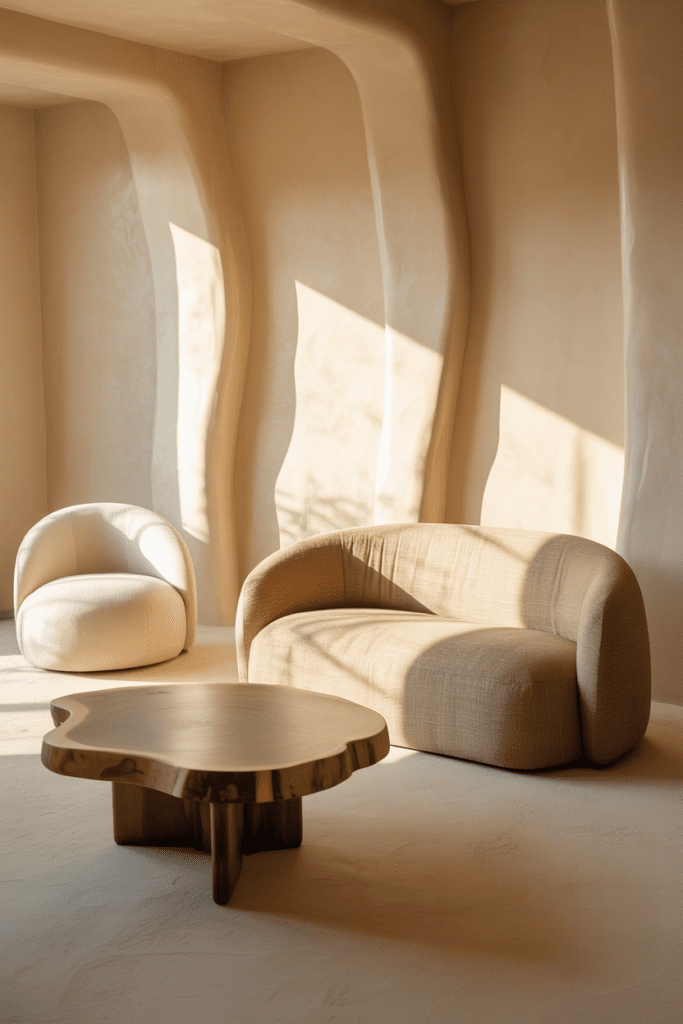
Straight lines have their place, but wabi sabi style loves a little softness. Curved silhouettes, rounded edges, low-profile sofas, and imperfect handmade pieces create a room that feels natural instead of rigid.
Look for furniture that feels almost sculptural. A chunky coffee table, a curved armchair, or a slightly uneven side stool can make the space feel more relaxed and much more interesting.
What to look for
- Rounded coffee tables
- Soft-edged sofas
- Low wooden benches
- Handmade stools
- Simple silhouettes without ornate detailing
IMO, one beautifully shaped piece does more for the room than five trendy pieces fighting for attention.
3. Embrace Raw Wood Finishes
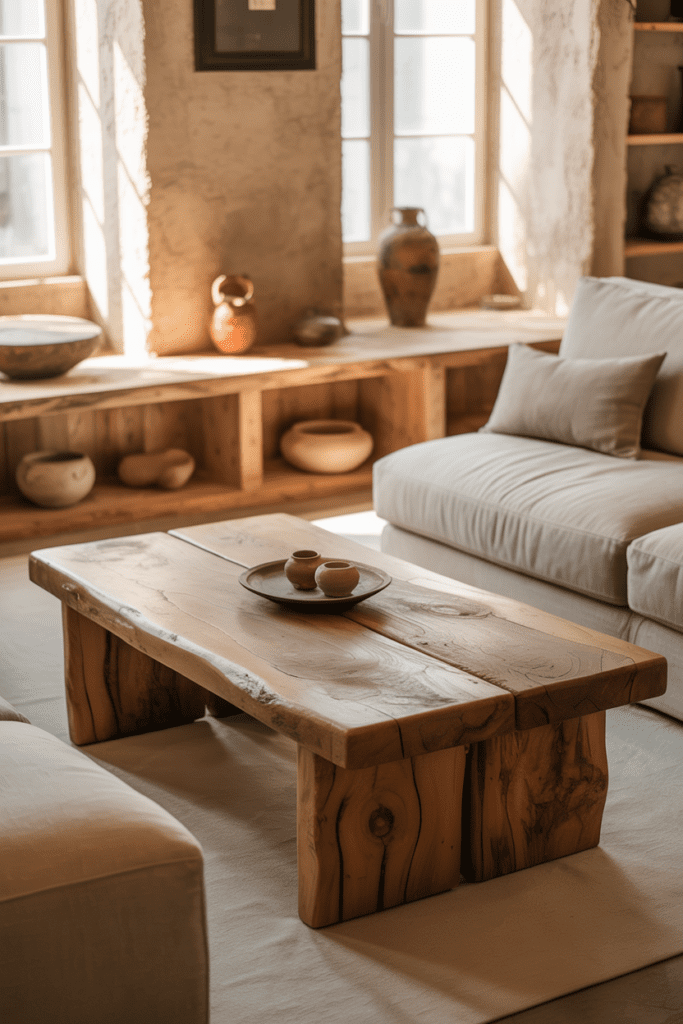
Raw wood practically carries wabi sabi on its back. It brings warmth, visible grain, knots, texture, and that slightly imperfect beauty this style depends on. A polished lacquered finish looks too formal, but raw or lightly finished wood feels honest.
I especially love wood that shows age. Reclaimed oak, worn walnut, rustic ash, or weathered pine add instant soul to a living room. Why buy something that looks machine-perfect when you can choose something with actual character?
Great raw wood pieces for this look
- Coffee tables with visible grain
- Open shelving in natural wood
- Side tables with irregular edges
- Wood benches instead of formal consoles
- Ceiling beams if your space already has them
The key here is restraint. Let the wood look like wood. Don’t bury it under thick shine and call it natural. Nice try, but no.
4. Layer Plenty of Natural Textures
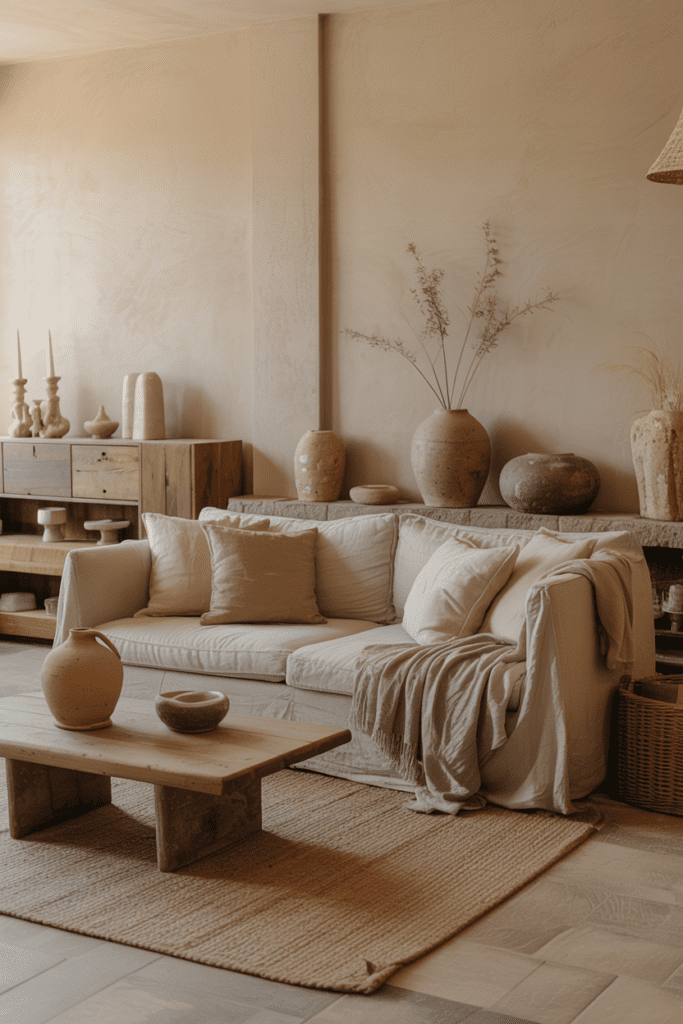
Texture matters more than almost anything in a wabi sabi living room design. Since the palette stays neutral, texture creates the depth that keeps the room from looking flat or boring.
Mix materials that feel organic and tactile. Think linen, cotton, wool, jute, clay, stone, aged wood, plaster, and ceramics. These materials add warmth without cluttering the room.
Easy texture ideas
- A linen slipcovered sofa
- A jute or wool area rug
- Nubby throw blankets
- Clay vases
- Stone candle holders
- Textured plaster walls
I’ve noticed that even a plain room starts looking intentional when you layer textures well. Suddenly that simple beige sofa looks like a design choice instead of a default setting 🙂
5. Pick Handmade and Imperfect Decor
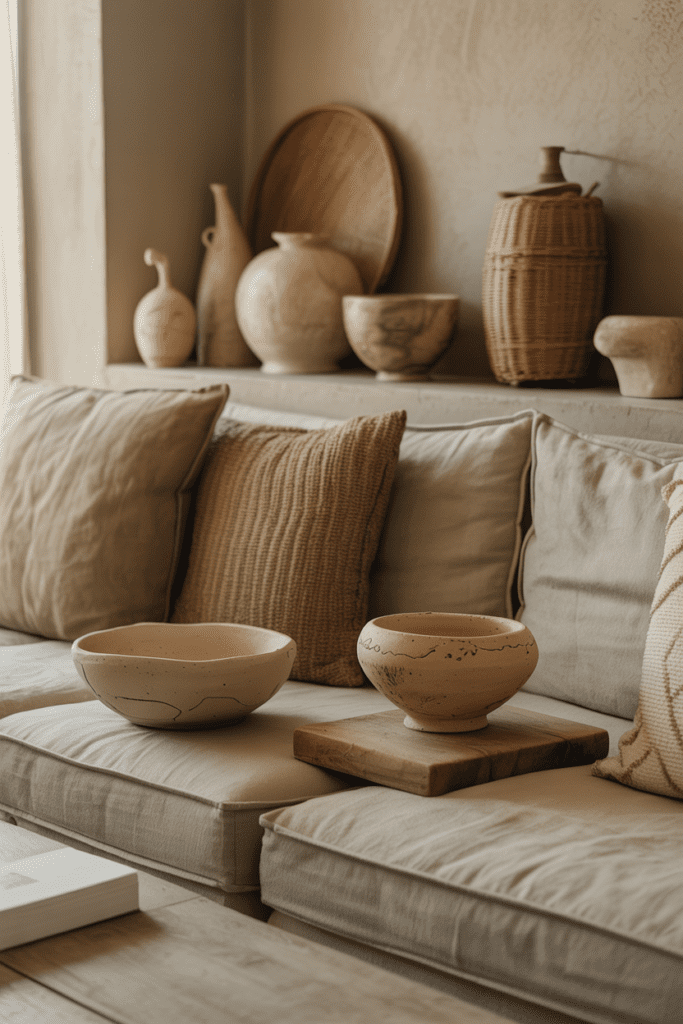
Perfection kills the mood in wabi sabi interiors. Handmade pieces save it. They bring subtle irregularities that make the room feel personal, warm, and real.
Choose ceramics with uneven rims, woven baskets with natural variation, hand-thrown vases, or artisan bowls that don’t look mass-produced. Those little imperfections create charm. They also stop your room from looking like you ordered the entire thing from page 47 of the same catalog.
Decor that works beautifully
- Handmade pottery
- Uneven ceramic bowls
- Woven baskets
- Textile wall hangings
- Hand-carved wooden objects
- Art with raw brushstrokes
One or two thoughtful handmade pieces often make a bigger impact than shelves full of generic decor.
6. Keep the Layout Calm and Uncluttered
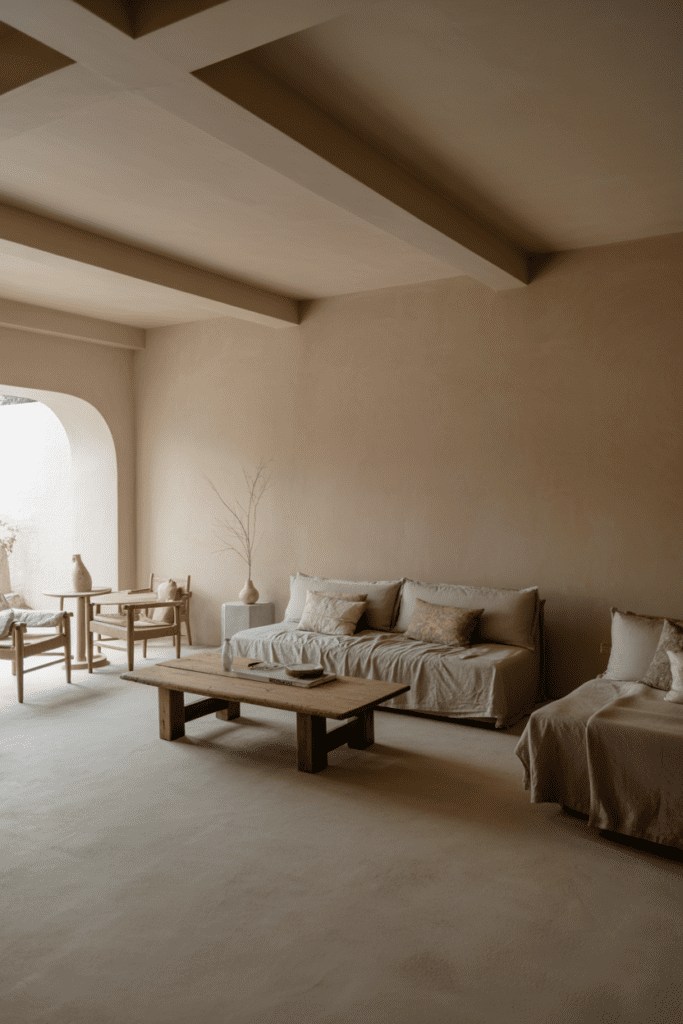
Wabi sabi doesn’t mean empty, but it definitely doesn’t mean overstuffed. Your layout should feel open, breathable, and easy to move through. Every piece should have space around it.
I like to remove one thing from the room and then see how it feels. Nine times out of ten, the room looks better right away. Funny how that works, right?
How to simplify your layout
- Leave negative space around larger furniture.
- Use fewer but better pieces.
- Avoid crowding every wall.
- Keep pathways open and natural.
- Let one focal point lead the room.
This approach makes the room feel calmer. It also helps each item earn its place.
7. Use Linen Everywhere You Can
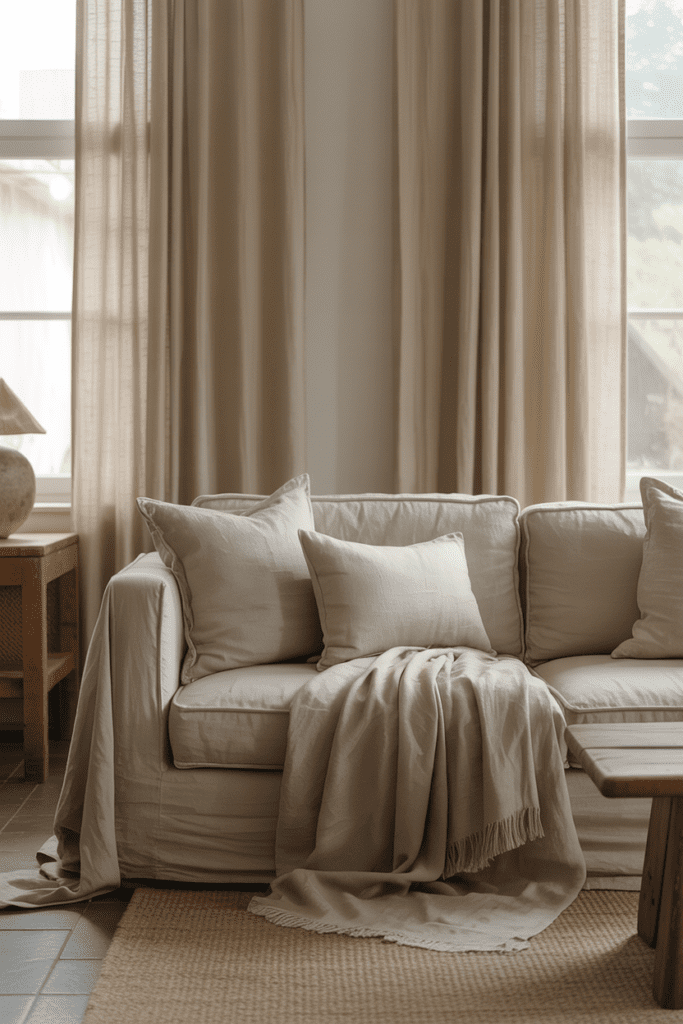
Linen brings that relaxed, slightly rumpled elegance that fits wabi sabi perfectly. It never looks stiff, and that’s exactly the point. A few creases only make it better.
Add linen through curtains, cushion covers, slipcovers, or throws. The fabric softens the room visually while keeping everything airy and understated.
Best linen additions
- Full-length linen curtains
- Neutral linen pillow covers
- Linen sofa slipcovers
- Lightweight linen throws
I genuinely think linen does half the styling work for you. It says, “Yes, I care about design, but I also enjoy sitting down like a normal person.”
8. Add a Low Coffee Table with Presence
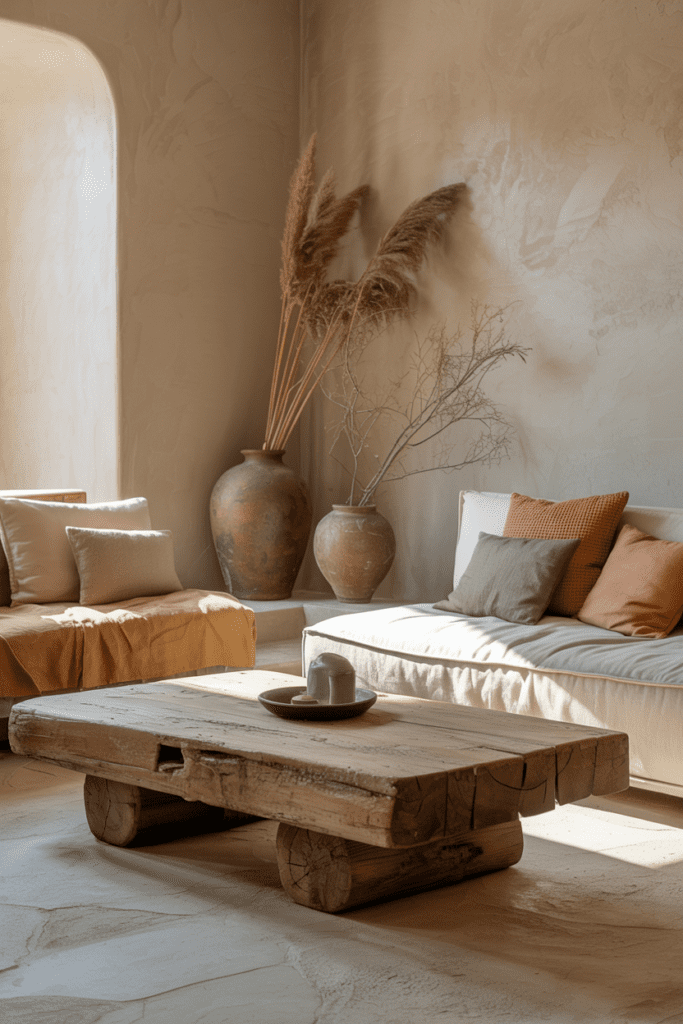
A low coffee table grounds the living room and gives it that relaxed, almost meditative feel that wabi sabi does so well. Instead of choosing something sleek and shiny, go for a table with texture, weight, and a slightly rustic feel.
Wood, stone, plaster, or concrete-look finishes work beautifully here. The shape matters too. Round, oval, or chunky rectangular forms often feel softer and more natural than sharp, angular styles.
Coffee table styles to consider
- Chunky reclaimed wood tables
- Round stone-look tables
- Plaster-finish pedestal tables
- Simple low-profile wood slabs
A good coffee table should feel grounded, not flashy. This isn’t the place for mirrored legs and drama unless your living room secretly wants to audition for reality TV.
9. Let Walls Stay Simple and Textured
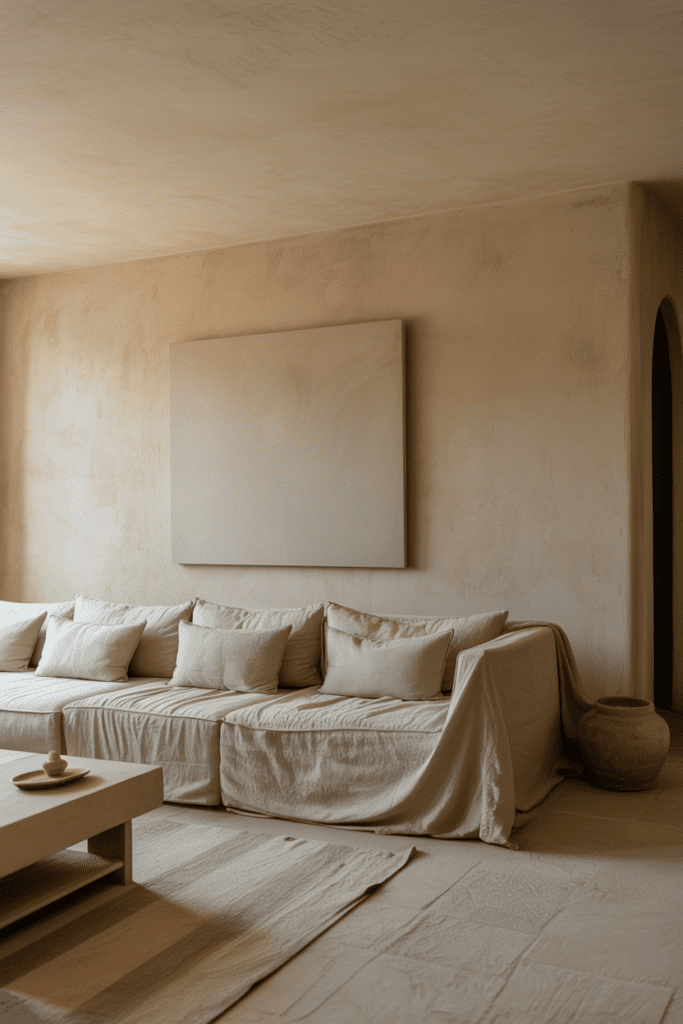
You don’t need busy gallery walls to make a wabi sabi living room feel complete. In fact, plain walls often work better. The trick is to make them feel warm and tactile.
Plaster, limewash, soft matte paint, or subtle texture can transform basic walls into something beautiful. Even a simple painted wall in a warm neutral tone creates the right backdrop.
Wall ideas that fit this style
- Limewash walls
- Soft beige matte paint
- Textured plaster finishes
- One oversized minimal artwork
- A single sculptural wall hanging
I love walls that whisper instead of yell. They calm the room down and let the materials do the talking.
10. Decorate with Branches, Greenery, and Nature
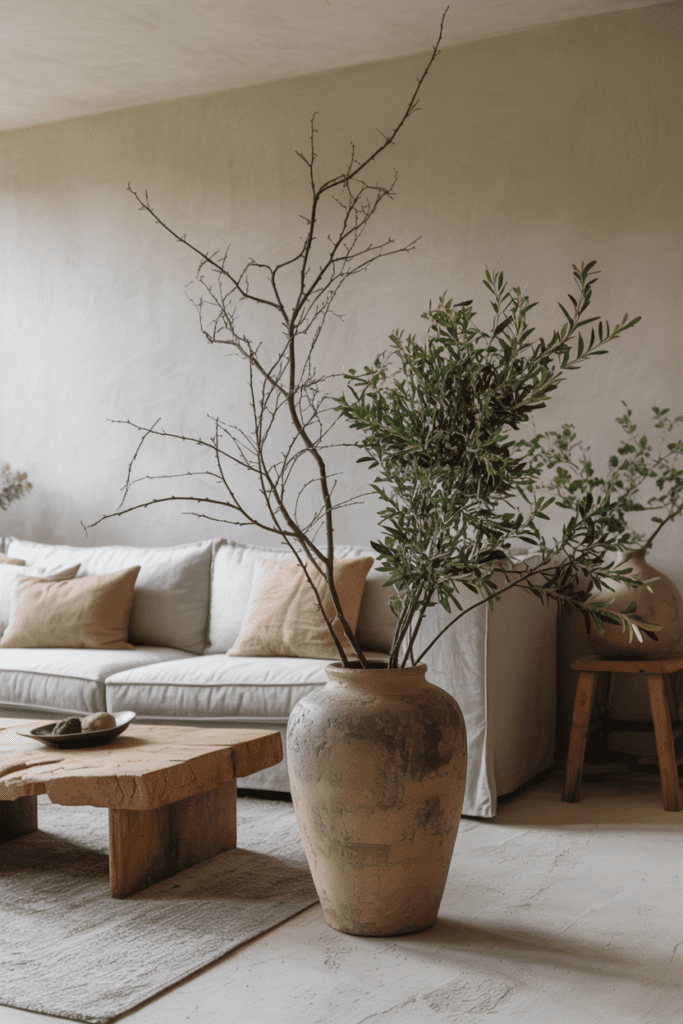
Nature plays a huge role in wabi sabi interiors. You don’t need perfect flower arrangements or polished faux stems. In fact, slightly wild branches and loose greenery work better.
A tall ceramic vase with olive branches, eucalyptus, bare twigs, or seasonal foliage instantly gives the room life. It also adds movement and softness without feeling fussy.
Natural accents that work well
- Olive branches
- Eucalyptus stems
- Bare branches in clay vases
- Potted olive trees
- Loose seasonal greenery
FYI, one dramatic branch arrangement can do more than ten tiny decor objects scattered everywhere. It looks cleaner, stronger, and much less random.
11. Use Soft, Ambient Lighting
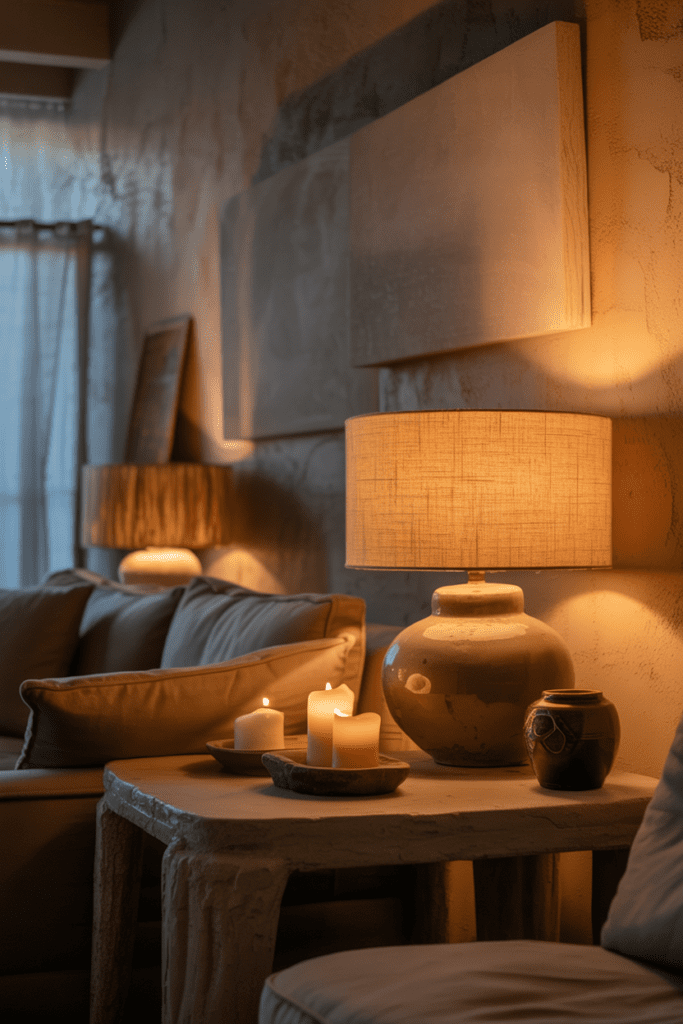
Harsh overhead lighting ruins the mood fast. Wabi sabi living rooms need lighting that feels warm, layered, and a little moody. You want the room to glow, not glare.
Use table lamps, floor lamps, wall sconces, and candles to create softer pools of light. Warm bulbs help a lot too. Cool white lighting makes everything feel flat, and nobody wants their beautiful earthy room to feel like a break room.
Best lighting choices
- Warm-toned table lamps
- Paper or linen lampshades
- Ceramic lamp bases
- Wall sconces for soft evening light
- Candles in stone or clay holders
When I style cozy rooms, lighting always changes everything. You can have gorgeous furniture, but bad lighting still makes the whole room look awkward :/
12. Choose a Rug That Looks Lived-In
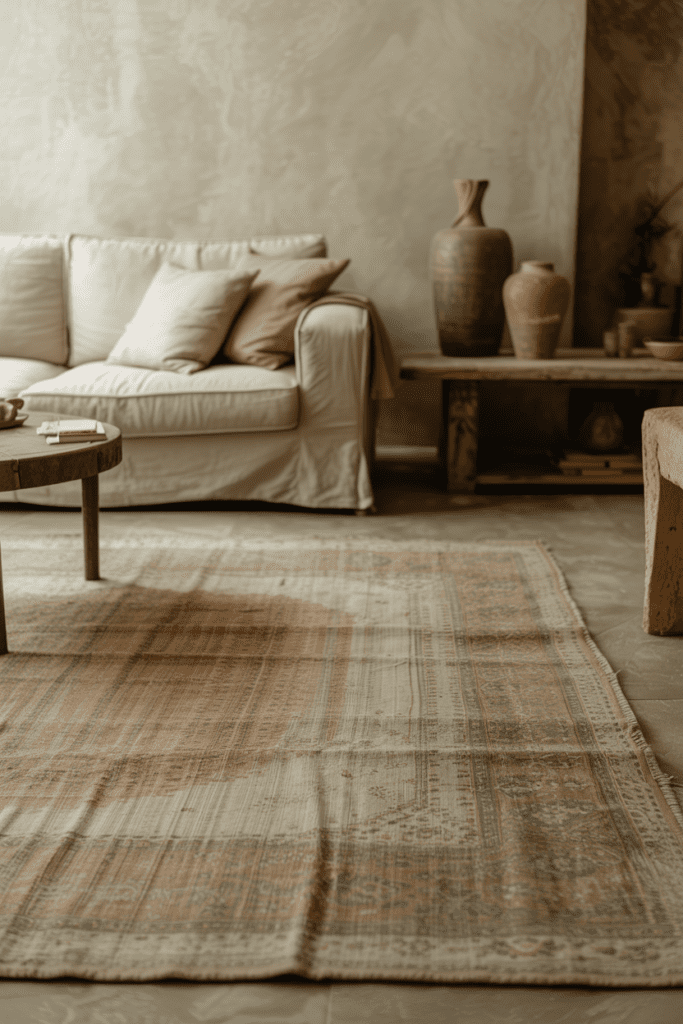
The right rug adds softness, warmth, and subtle age to the room. In a wabi sabi space, I’d skip anything overly shiny, overly patterned, or painfully pristine.
Instead, look for rugs with muted tones, faded designs, handwoven textures, or natural fibers. The rug should feel comfortable and grounded, not like it’s afraid someone might step on it.
Rug styles that suit wabi sabi
- Wool rugs in soft neutrals
- Vintage-style faded rugs
- Jute rugs with texture
- Flatweave rugs in earthy tones
- Handwoven rugs with subtle irregularity
A slightly worn rug often looks better here than a brand-new one. That gentle patina adds the kind of depth you simply can’t fake well.
13. Mix Old and New Pieces
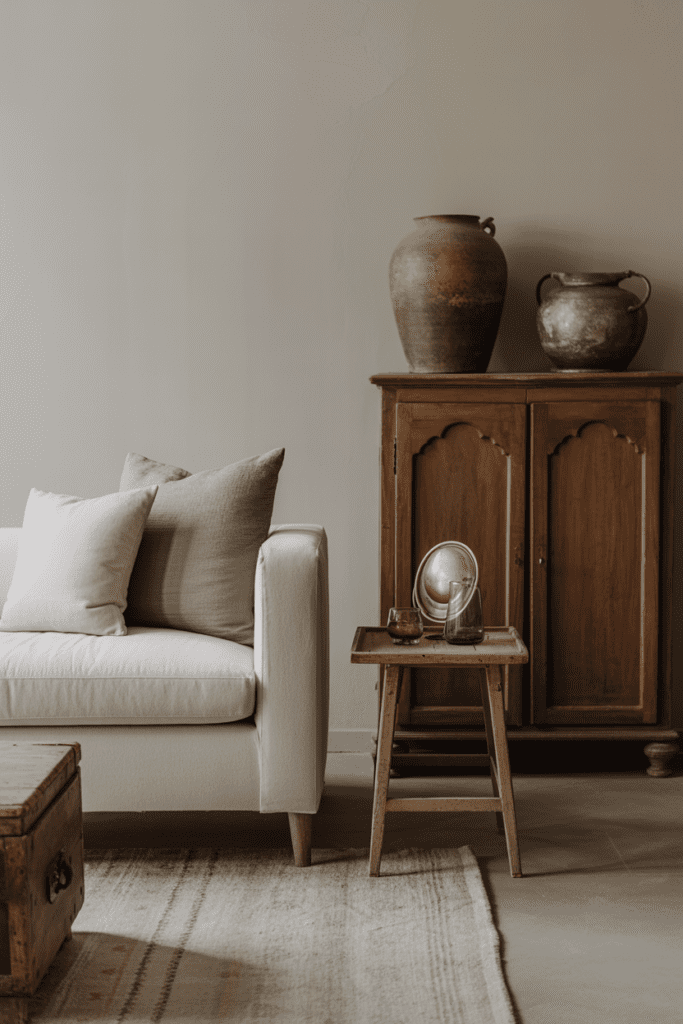
One of my favorite wabi sabi living room ideas involves mixing modern comfort with vintage soul. A clean-lined sofa next to an antique wood stool or aged cabinet creates instant balance.
That contrast makes the room feel collected over time instead of decorated in one shopping spree. Ever walked into a room that looked too matched? It usually feels lifeless, even if everything costs a fortune.
Easy ways to mix old and new
- Pair a modern sofa with a vintage side table.
- Add an antique cabinet to a simple neutral room.
- Style old pottery on a modern shelf.
- Use a timeworn bench under contemporary art.
This mix keeps the room interesting. It also feels much more personal.
14. Focus on Meaningful Decor, Not More Decor
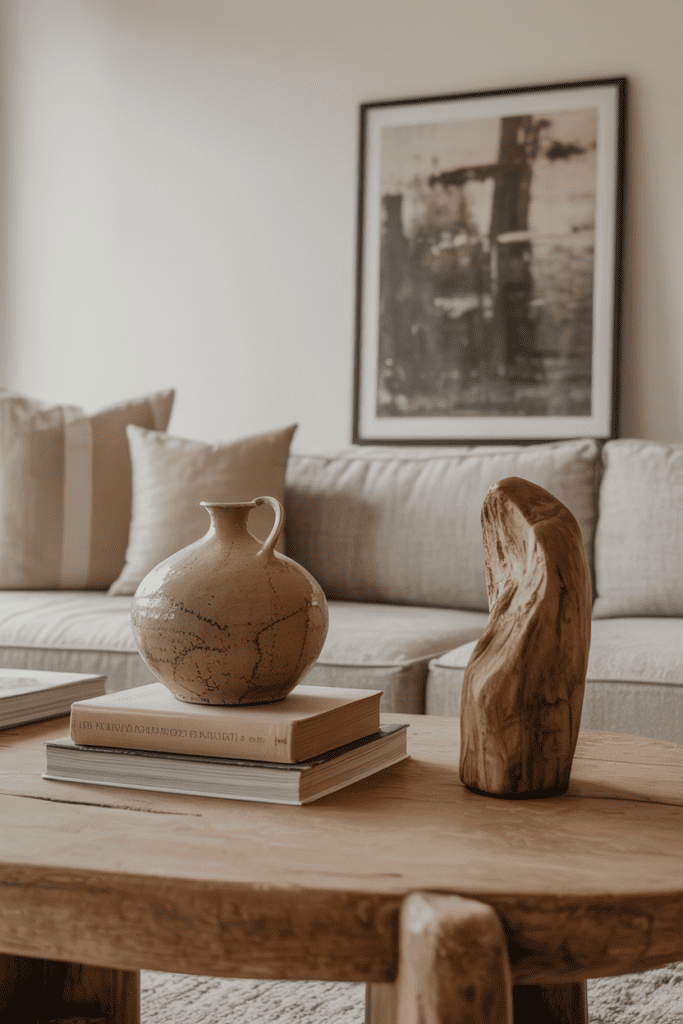
Wabi sabi style asks you to edit your space with intention. Instead of filling every surface, choose fewer objects that actually mean something or add genuine beauty.
That could mean a ceramic vase you found while traveling, a handmade bowl from a local maker, or a framed sketch that makes you pause every time you pass it. Why decorate with filler when a few strong pieces do the job better?
Ask yourself before adding decor
- Does this piece add warmth or texture?
- Does it feel personal or meaningful?
- Does it support the calm look of the room?
- Would I miss it if I removed it?
I use that last question a lot. If I wouldn’t miss it, out it goes. Brutal? Maybe. Effective? Absolutely.
15. Try Floor Seating or Low-Level Styling
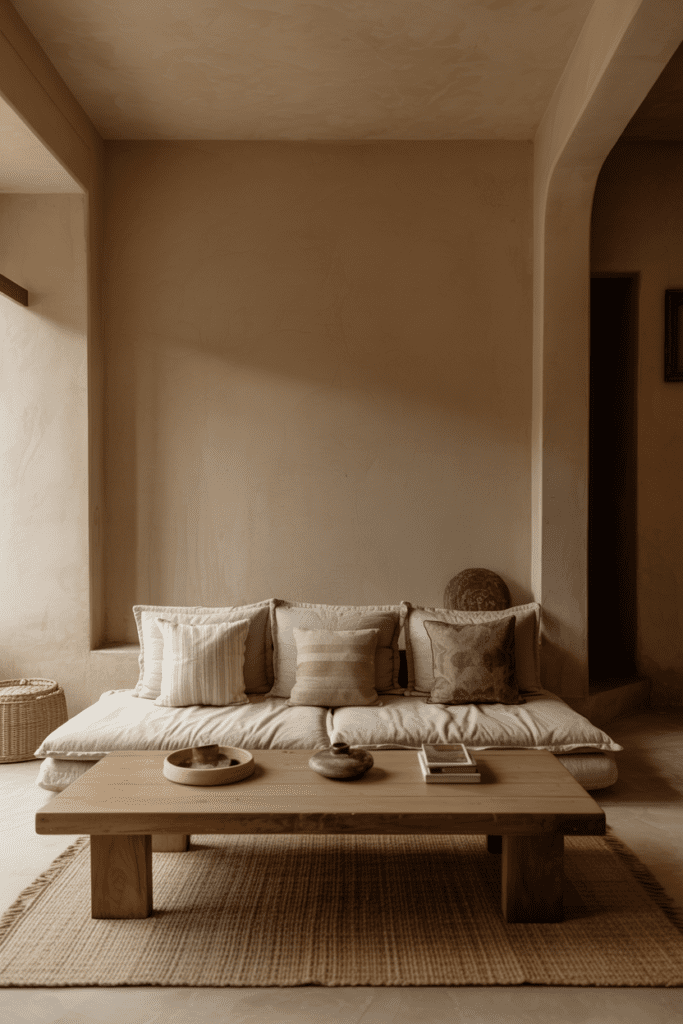
Low-profile living feels very natural in wabi sabi interiors. You don’t need to turn your room into a meditation studio, but you can bring in that grounded feeling with lower furniture and styling.
Think floor cushions, low benches, or a coffee table that sits closer to the ground. This approach makes the room feel relaxed and intimate. It also encourages slower, cozier living, which sounds pretty great compared with the usual rush.
Ways to create a lower visual line
- Use a low sofa
- Add floor cushions
- Choose a short coffee table
- Keep artwork slightly lower than usual
- Style shelves with a grounded, simple look
This works especially well in small living rooms because it opens up visual space above the furniture.
16. Highlight Imperfect Ceramics and Pottery
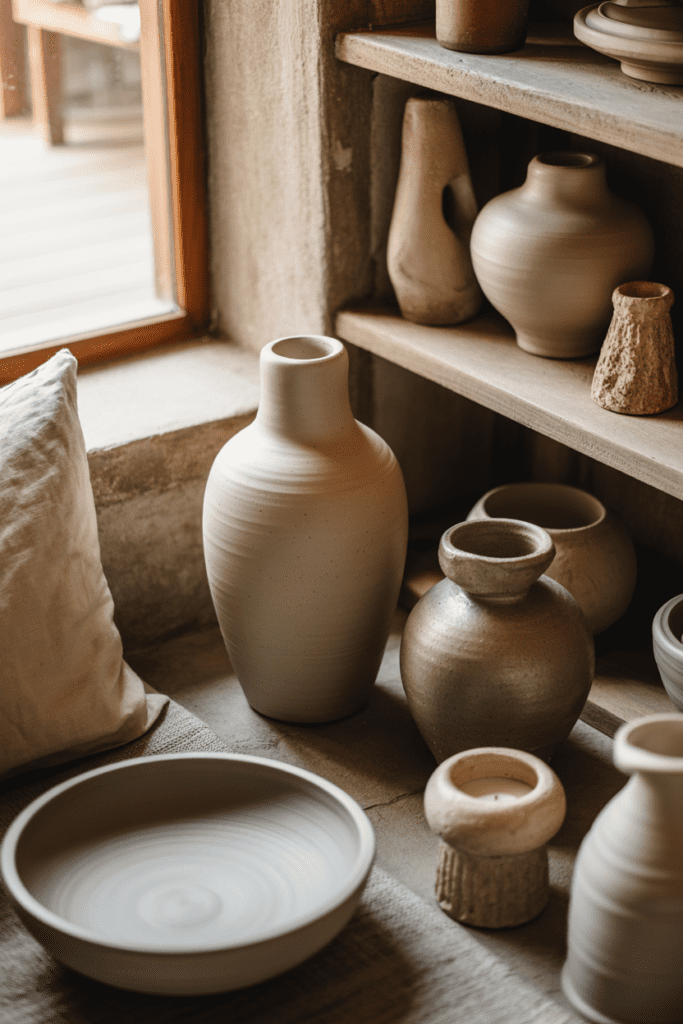
If you want one easy trick for wabi sabi living room decor, start with ceramics. Handmade pottery brings exactly the uneven texture and understated beauty this style loves.
Display a few pieces on a console, coffee table, or shelf. Don’t crowd them. Let each piece breathe so its shape, glaze, and imperfection stand out.
Best pottery pieces to use
- Large clay vases
- Matte ceramic bowls
- Hand-thrown candle holders
- Sculptural earthenware vessels
- Unglazed pottery in earthy tones
I always gravitate toward pieces that look slightly flawed. A wonky rim or rough texture feels more beautiful to me than something machine-perfect. Maybe that says something about me, but I’m fine with that.
17. Create Quiet Contrast with Black Accents
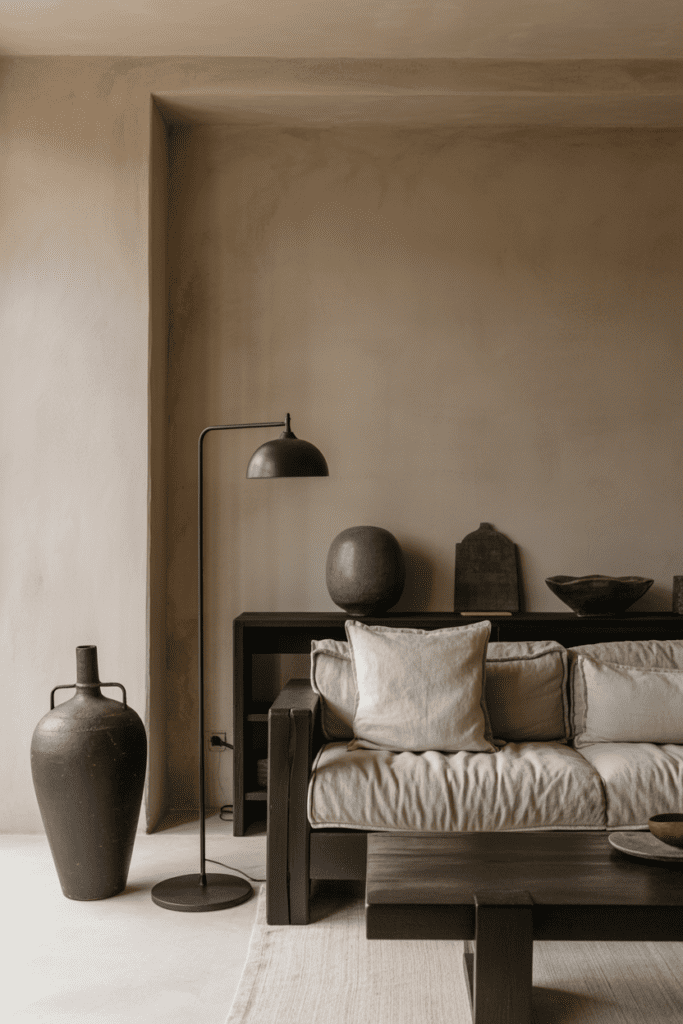
Wabi sabi rooms often stay soft and tonal, but a little contrast helps anchor the space. Black accents add structure without overpowering the calm mood. The trick lies in using them sparingly.
A black floor lamp, dark picture frame, charcoal vase, or black wood side table can sharpen the look beautifully. These accents stop the room from drifting into bland territory.
Smart ways to use black
- A black metal floor lamp
- Charcoal ceramics
- Dark wood frames
- Black candle holders
- A small black side table
You only need a few of these accents. Add too many, and the room starts feeling heavy instead of balanced.
18. Let the Room Evolve Slowly
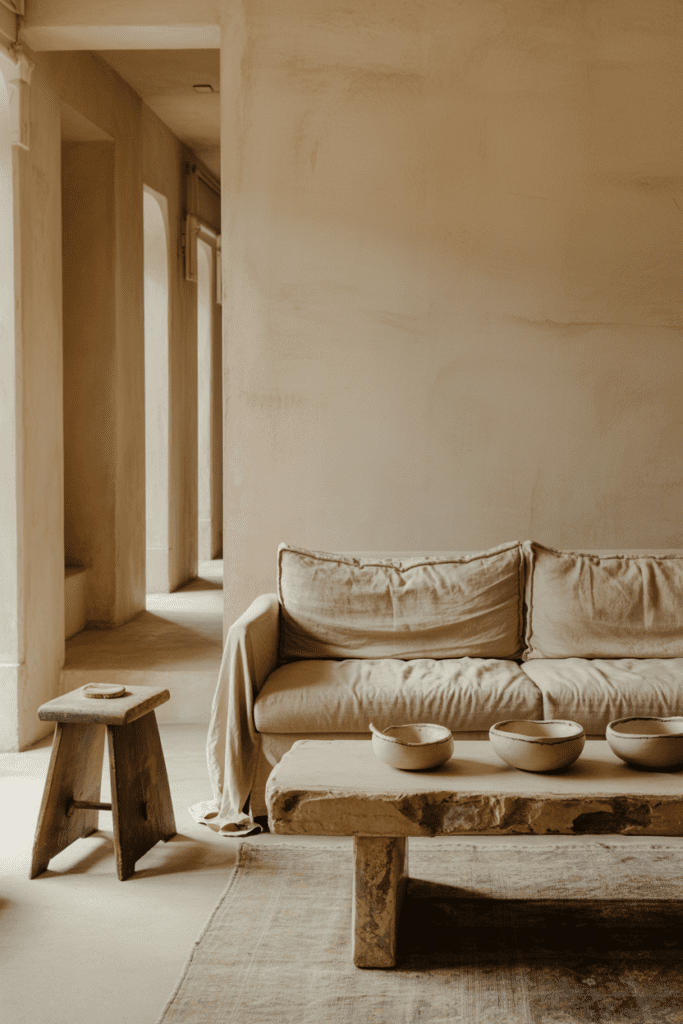
This might be the most important idea of all. Wabi sabi living rooms don’t come together overnight, and honestly, they shouldn’t. The style feels best when it grows naturally over time.
You might start with a neutral sofa, then add a vintage stool next month, then find the perfect clay vase three weeks later. That slower process usually creates a better room because you make more thoughtful choices. Shocking, I know.
Why slow decorating works
- You avoid impulse buys.
- You notice what the room actually needs.
- You collect more meaningful pieces.
- You create a layered, lived-in look.
- You spend money more wisely.
When I rush a room, I almost always regret something. When I let a space unfold slowly, it feels more authentic every single time.
How to Pull the Look Together
If you want your wabi sabi living room design to feel cohesive, keep coming back to a few core principles. You don’t need to copy every idea on this list. You just need to build around the right mood.
The core formula
- Choose a soft earthy palette
- Use natural materials
- Favor handmade and imperfect pieces
- Keep the layout simple and breathable
- Add warm lighting and subtle texture
- Mix in old pieces for soul
- Decorate with restraint
That’s really the magic of wabi sabi. It doesn’t ask for perfection. It asks for honesty.
Common Mistakes to Avoid
A lot of people love the look of wabi sabi but accidentally push it in the wrong direction. The room either ends up too empty, too staged, or too rustic in a forced way.
Avoid these mistakes
- Buying everything brand new and calling it “organic”
- Using beige with no texture or contrast
- Overdecorating with fake rustic accessories
- Making the room so minimal it feels cold
- Choosing trendy pieces that don’t age well
- Ignoring comfort for the sake of aesthetics
The room should feel calm, warm, and personal. If it starts looking like a movie set about “minimalism,” pull it back a little.
Final Thoughts
The best wabi sabi living room ideas don’t chase perfection. They create comfort, character, and quiet beauty through natural materials, soft colors, meaningful decor, and a little imperfection in all the right places.
So if your living room feels too polished or too busy, start small. Swap in linen, add a raw wood table, bring home a handmade vase, and let the room breathe. You don’t need a flawless makeover. You just need a space that feels good to live in, which, honestly, matters a lot more.