

Your entryway is the first thing guests see, and honestly, it deserves better than a bare wall and a sad little hook for your keys. If you’ve ever walked into someone’s home and felt that instant wow before you even said hello, you already know the power of a well-designed entryway. That’s maximalism doing its job, and doing it loud.
Minimalism had its moment. But more and more, people are leaning back into color, texture, pattern, and personality. Maximalist entryways aren’t about clutter, they’re about intention with abundance. There’s a difference, and once you see it, you can’t unsee it.
So let’s talk about 15 bold, beautiful, and genuinely exciting entryway ideas that’ll make your front door the best introduction your home has ever had.
1. Go All In on a Statement Wallpaper
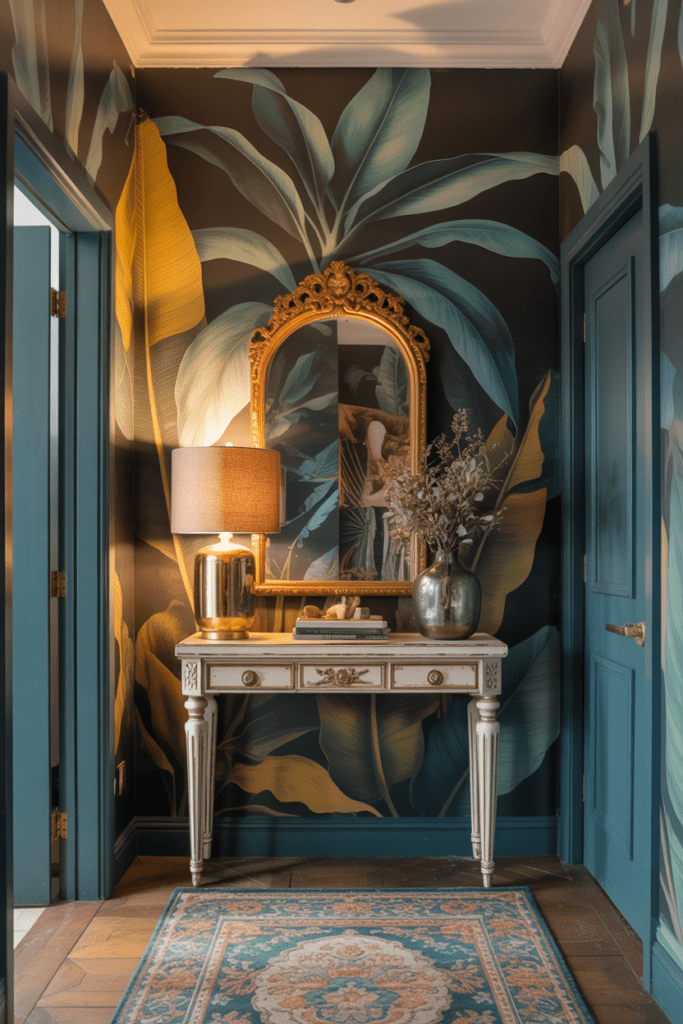
If there’s one thing maximalism demands, it’s commitment. And nothing says “I’m committed” quite like floor-to-ceiling statement wallpaper.
Think oversized botanical prints, dramatic damask patterns, or even a hand-painted mural effect. Your entryway has a relatively small footprint, which actually makes it the perfect low-risk space to try a bold wallpaper you’d never dare put in your living room.
Pro tip: Dark, moody backgrounds with large-scale motifs — think deep teal with gold leaves or navy with ivory florals — photograph beautifully and look absolutely stunning in person.
Don’t be afraid to go big. The pattern should be large enough that you see it clearly even in a narrow hallway. Tiny prints in a small space just look busy; large prints look intentional.
2. Layer Your Rugs
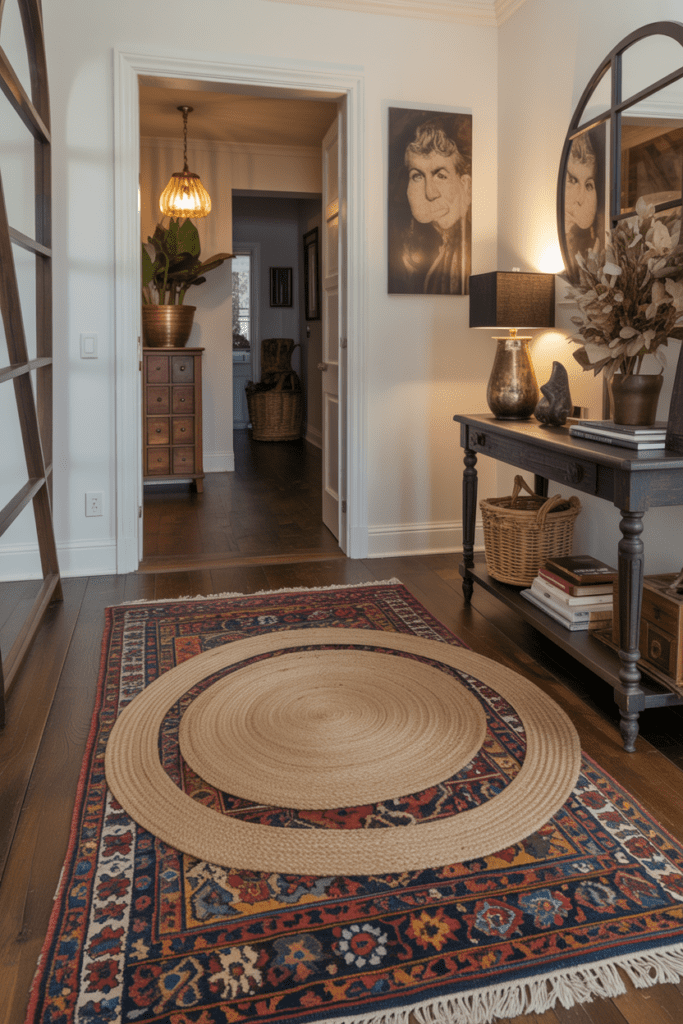
Layering rugs is one of those design moves that sounds chaotic on paper but looks absolutely incredible when you pull it off. Start with a larger, neutral-toned base rug, then layer a smaller, patterned runner on top.
A jute or sisal base gives you texture and warmth, while a vintage Persian or Moroccan runner on top adds all the color and personality. The trick is to make sure the two rugs share at least one color in common — that’s what ties it together and keeps it from looking like an accident.
- Use a non-slip pad between the layers so nobody’s doing an unintentional dance move when they walk in
- Keep the top rug at least 6 inches smaller on all sides than the base
- Bold geometric patterns or faded vintage florals work best for the top layer
This one move can completely transform a plain entryway into something that looks seriously curated.
3. Install a Grand Mirror (Bigger Than You Think You Need)
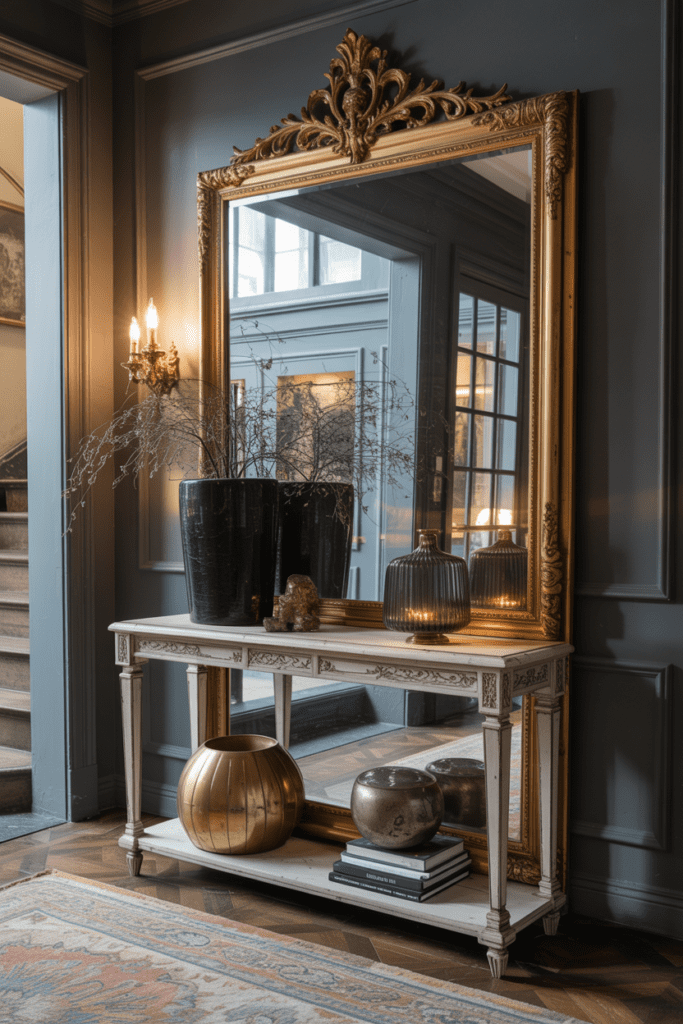
Here’s a fun rule for maximalist design: whatever size mirror you’re considering, go one size bigger. Oversized mirrors do double duty — they bounce light around and make the space feel larger, while also acting as a major design statement.
An ornate gold-framed mirror leaning against a gallery wall? Stunning. A giant arch mirror with a hammered brass frame above a console table? Chef’s kiss. A vintage beveled mirror with an intricate carved frame? Also yes.
The frame matters as much as the mirror itself. In maximalist design, the frame is the art. Go ornate, go layered, go sculptural — this is not the moment for frameless.
4. Create a Gallery Wall That Tells Your Story
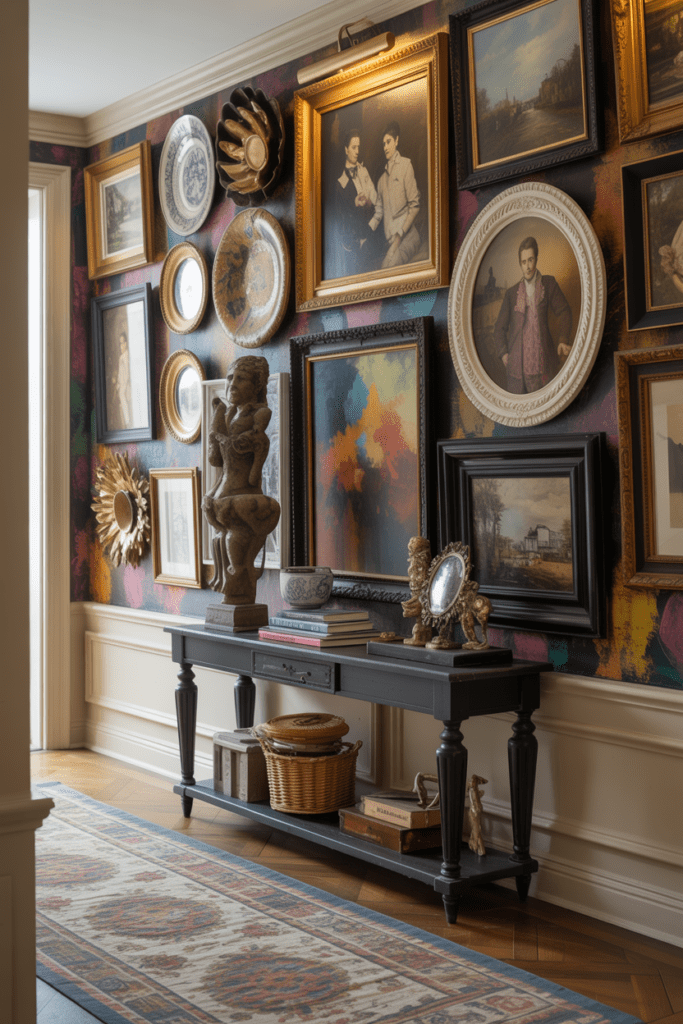
Forget the perfectly spaced, matching-frame gallery walls you see in every home staging photo. A maximalist gallery wall is personal, layered, and a little unpredictable.
Mix sizes, mix frame finishes, mix art styles. Hang a vintage oil painting next to a modern print next to a decorative plate next to a small mirror. The unifying factor shouldn’t be the frames — it should be the feeling. Pick a color palette that runs through your pieces and let the rest be beautifully mismatched.
Some combinations that work incredibly well together:
- Antique gold frames mixed with black lacquered frames
- Oil paintings alongside graphic prints and textile wall hangings
- Family photos in ornate frames mixed with botanical illustrations
- Sculptural wall objects (like brass sunbursts or ceramic pieces) interspersed between framed art
A gallery wall in an entryway sets the tone for your entire home. Make it count.
5. Add a Dramatic Console Table
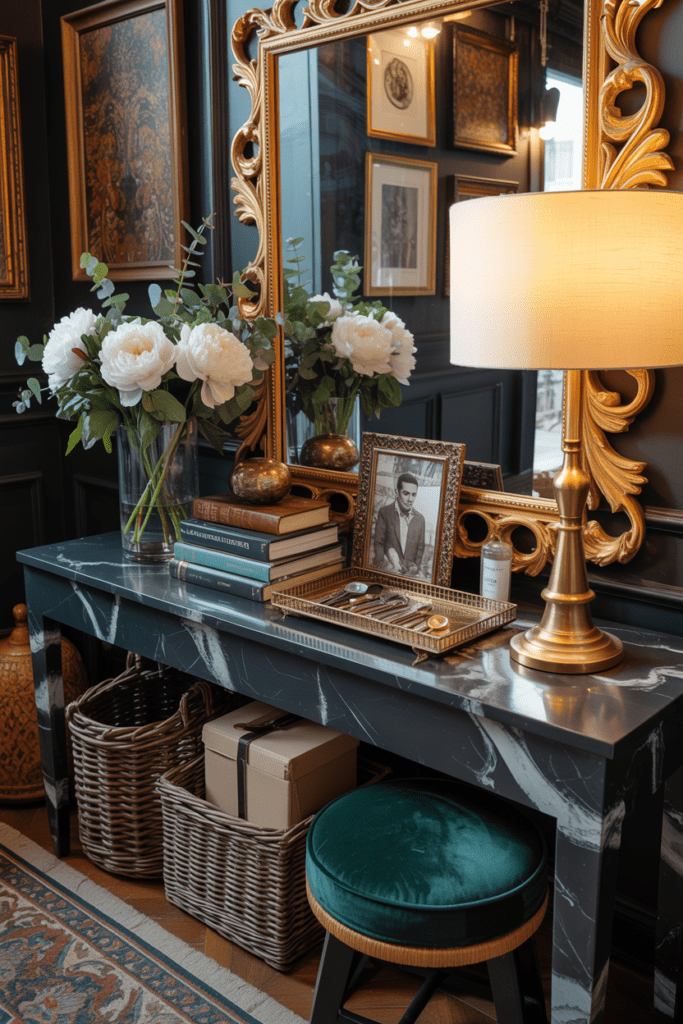
Your console table is the anchor of your entryway, so treat it like the main character it is. Skip the plain wood rectangle and look for something with personality — a marble top with gilded iron legs, a hand-painted lacquered finish, or an intricately carved wooden piece with vintage charm.
Style the top of your console table in intentional layers:
- A tall lamp or pair of candle holders for height
- A stack of books or decorative boxes in the middle
- A small tray to corral keys and everyday items (because functional is still important :))
- Fresh flowers or a sculptural vase to bring life to the space
Don’t leave the space underneath the console bare. A pair of decorative baskets, a small upholstered bench, or even an interesting sculpture underneath adds that layered, collected feeling maximalism is all about.
6. Use Bold, Dark Paint Colors
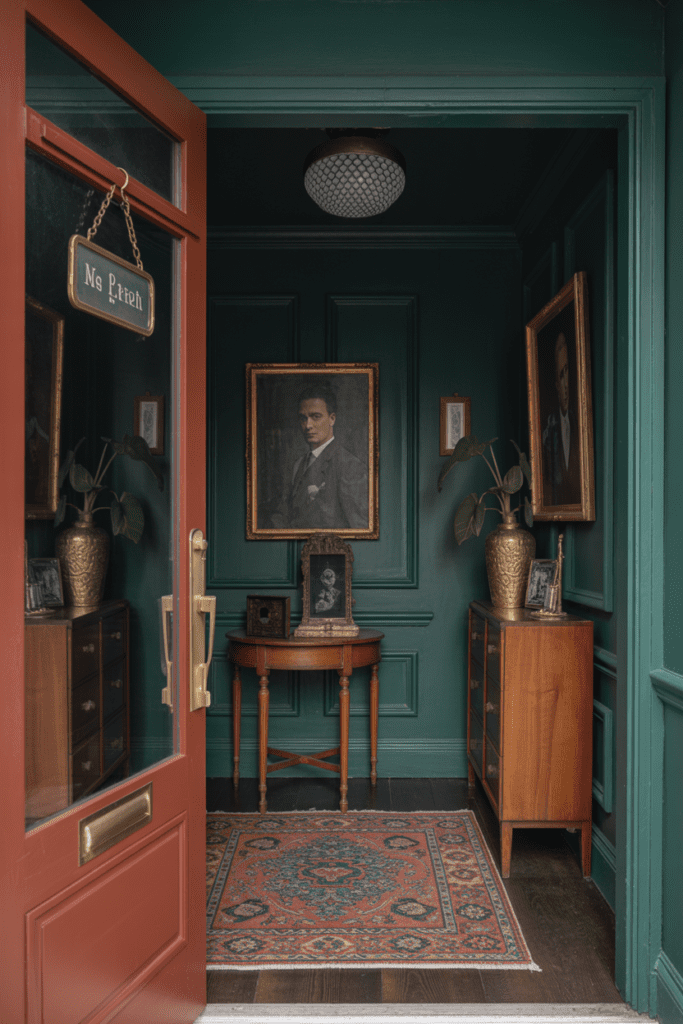
If wallpaper feels like too much commitment, bold paint is your best friend. Deep, saturated colors transform a plain entryway into something moody and immersive — and they’re a lot easier to change if you decide you want something new in a year.
Some colors that absolutely kill it in entryways:
- Forest green — rich, earthy, and surprisingly versatile
- Deep navy — elegant and dramatic without feeling oppressive
- Oxblood red — bold, historic, and incredibly warm
- Charcoal black — yes, black walls, and yes, they look amazing
- Terracotta — warm, Mediterranean, and totally having a moment
Dark colors in a small entryway might seem counterintuitive, but they actually create a cozy, enveloping feeling that makes guests feel immediately welcomed. FYI, pairing dark walls with warm lighting makes all the difference — cool LED bulbs will kill the vibe instantly.
7. Layer Lighting Like a Pro
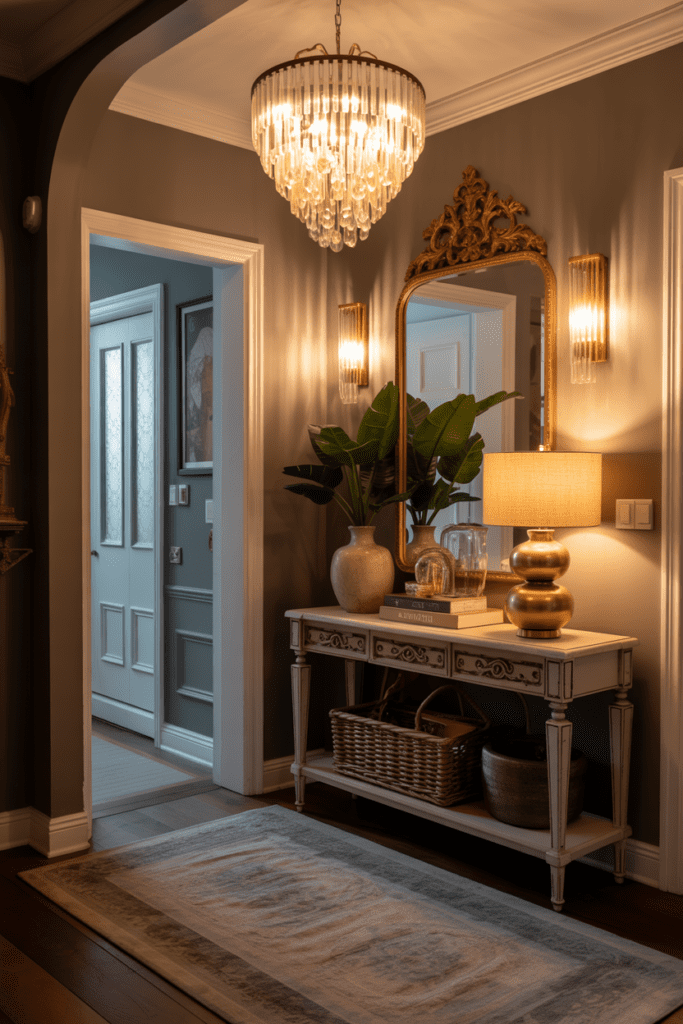
Speaking of lighting — this is where so many entryways fall short. A single overhead light does absolutely nothing for a space that deserves drama. Maximalist entryways use multiple light sources at different heights.
Think about it in three layers:
- Ambient lighting — your ceiling fixture, ideally a chandelier or dramatic pendant
- Accent lighting — wall sconces flanking your mirror or gallery wall
- Task/decorative lighting — a table lamp on your console for warm, intimate glow
An oversized chandelier in an entryway is one of those design choices that immediately signals you’re serious about your space. Even in a modest-height entryway, a lower-hanging chandelier with interesting shape and finish makes a statement worth noticing.
Warm bulbs (around 2700K) are non-negotiable here. You want guests to feel welcomed, not interrogated.
8. Bring In Unexpected Texture
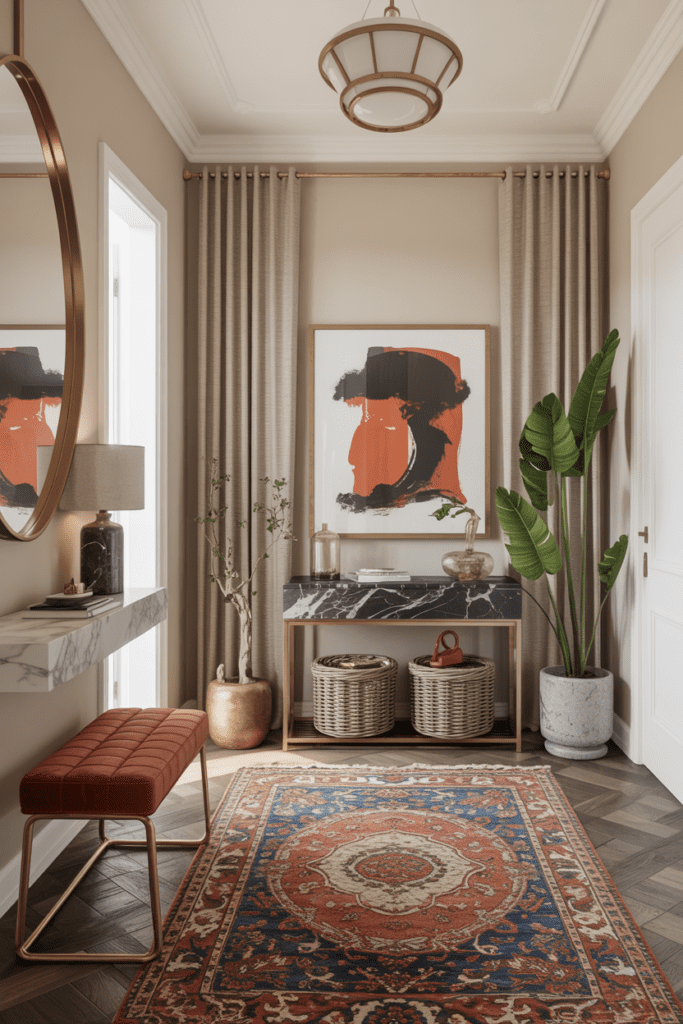
Maximalism loves texture almost as much as it loves color. Combining different materials and surfaces is what gives a maximalist entryway its richness. It’s the difference between a space that looks designed and one that looks decorated.
Try mixing:
- Velvet upholstery on a small bench or chair
- Rattan or wicker in a basket or small table
- Marble on your console surface or floor tiles
- Brass or bronze hardware and accents
- Linen or silk in a window treatment or pillow
When you layer textures thoughtfully, the space becomes visually interesting even without a ton of color. But combine texture with bold color? That’s when things get really exciting.
9. Install a Bold Tile Floor
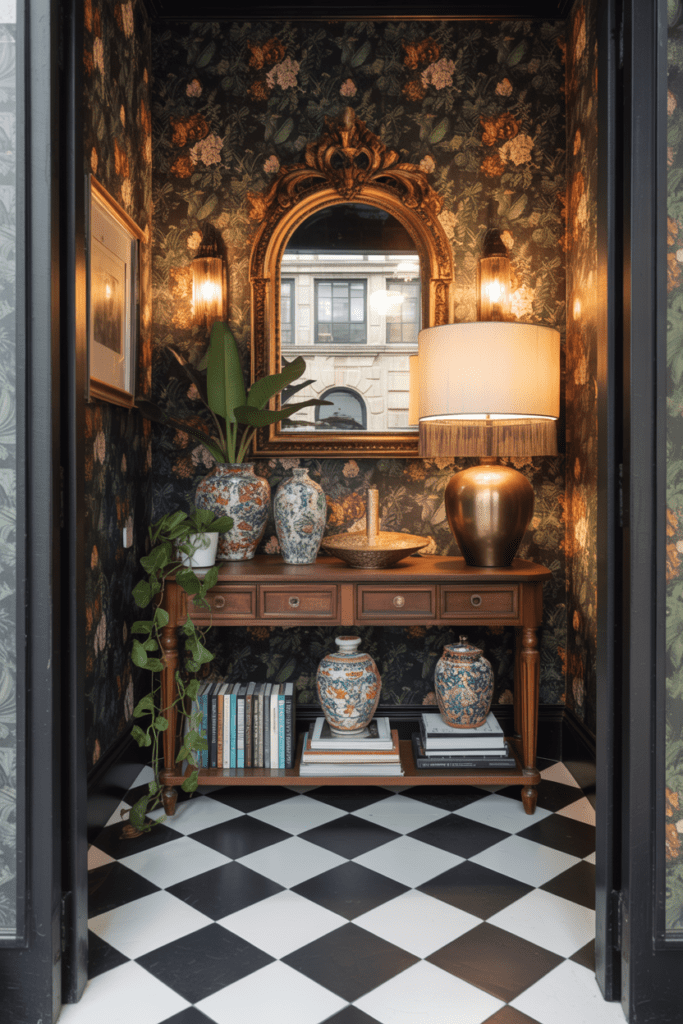
If you’re doing any kind of renovation or starting fresh, don’t sleep on a statement floor tile. The entryway floor is literally the first surface guests step on — it deserves attention.
Encaustic cement tiles with geometric patterns, Victorian-style black and white checkerboard, or intricate Moroccan-inspired mosaics all work beautifully in a maximalist entryway. The floor becomes a piece of art in itself.
Can’t do a full tile renovation? A painted floor in a bold checkerboard or stenciled pattern is a surprisingly achievable DIY that looks incredibly high-end when done well.
10. Curate a Bold Plant Moment
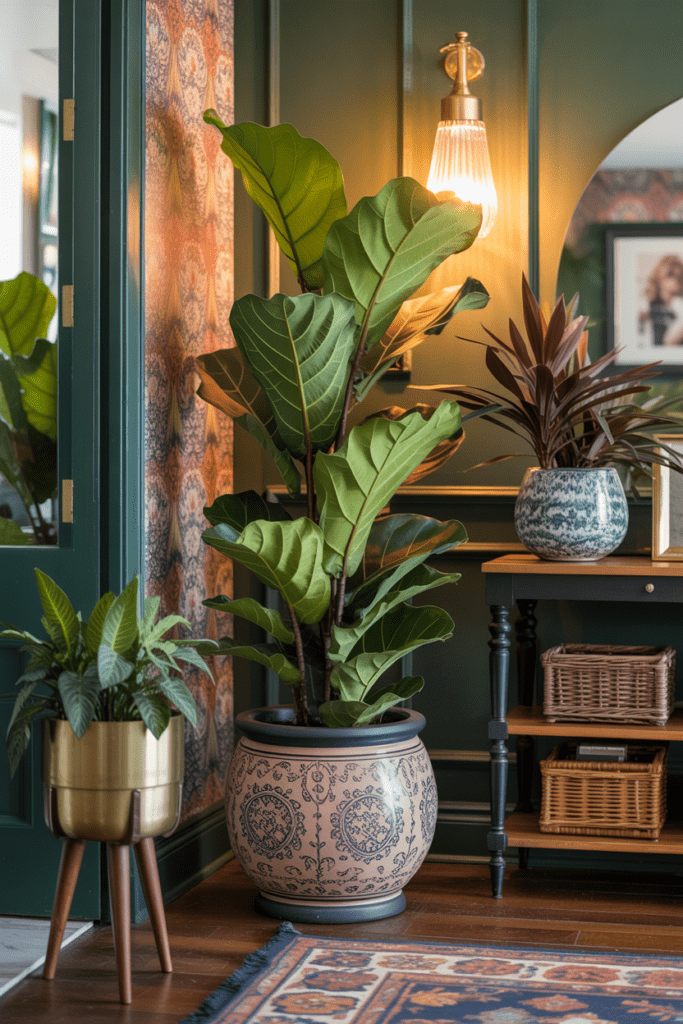
Plants in a maximalist entryway aren’t just a potted fern in the corner. Go big, go architectural, and go layered. A tall fiddle leaf fig or bird of paradise in a dramatic pot immediately draws the eye upward and adds life to the space.
Layer in smaller plants at different heights — on top of your console, on a small plant stand, or even hung from the wall. Choose pots that contribute to your color story: terracotta, hand-painted ceramic, matte black, or glazed jewel tones all work well in a maximalist context.
The goal is for it to feel like you’ve created a little indoor garden moment right at the entrance. And honestly? Guests always comment on a great plant display. It’s one of the easiest ways to make your entryway feel alive and welcoming.
11. Don’t Ignore the Ceiling
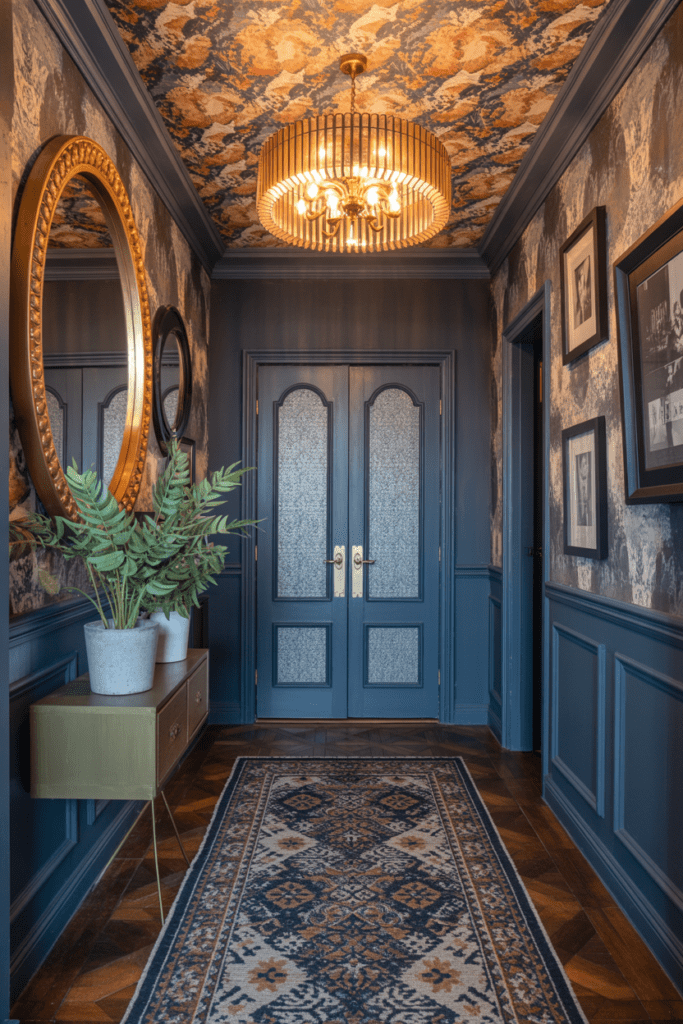
The ceiling is the most neglected surface in most homes, which is exactly why maximalism says to pay attention to it. A bold ceiling treatment in an entryway creates a surprising, dramatic moment that guests rarely expect.
Options worth considering:
- Wallpaper on the ceiling — yes, it’s a thing, and yes, it’s stunning
- A deep, contrasting paint color that makes the ceiling feel intentional
- Exposed decorative beams painted in a rich, dark color
- A bold stenciled pattern for a hand-painted feel
- Pressed tin ceiling tiles for a vintage, architectural touch
Even something as simple as painting your ceiling the same color as your walls (instead of leaving it white) creates a wrapped, immersive feeling that’s unmistakably maximalist.
12. Layer Window Treatments
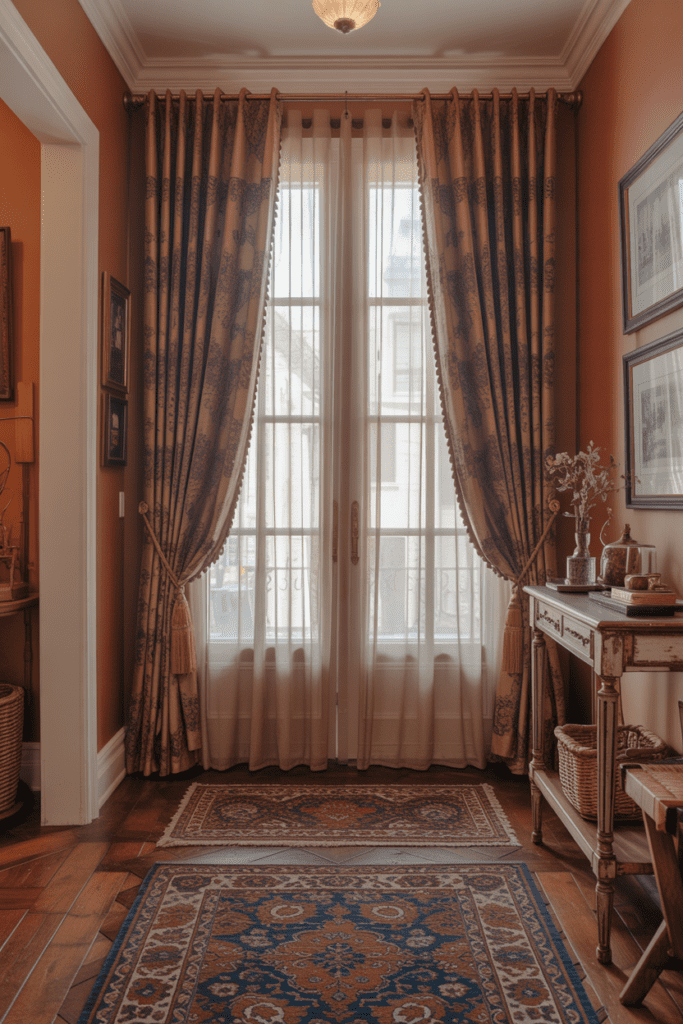
If your entryway has a window — even a small one beside the door — don’t just hang a simple blind and call it a day. Layered window treatments are a classic maximalist move.
Start with a sheer curtain panel that lets in light, then add a heavier drape in a bold pattern or rich color on top. Use a decorative curtain rod with ornate finials that contribute to your overall aesthetic. The rod and hardware are part of the design, not just the functional parts you’re supposed to hide.
Floor-length curtains that puddle slightly on the ground feel luxurious and intentional. Even in a narrow entryway, a single long drape panel framing a window adds serious drama.
13. Incorporate Vintage and Antique Finds
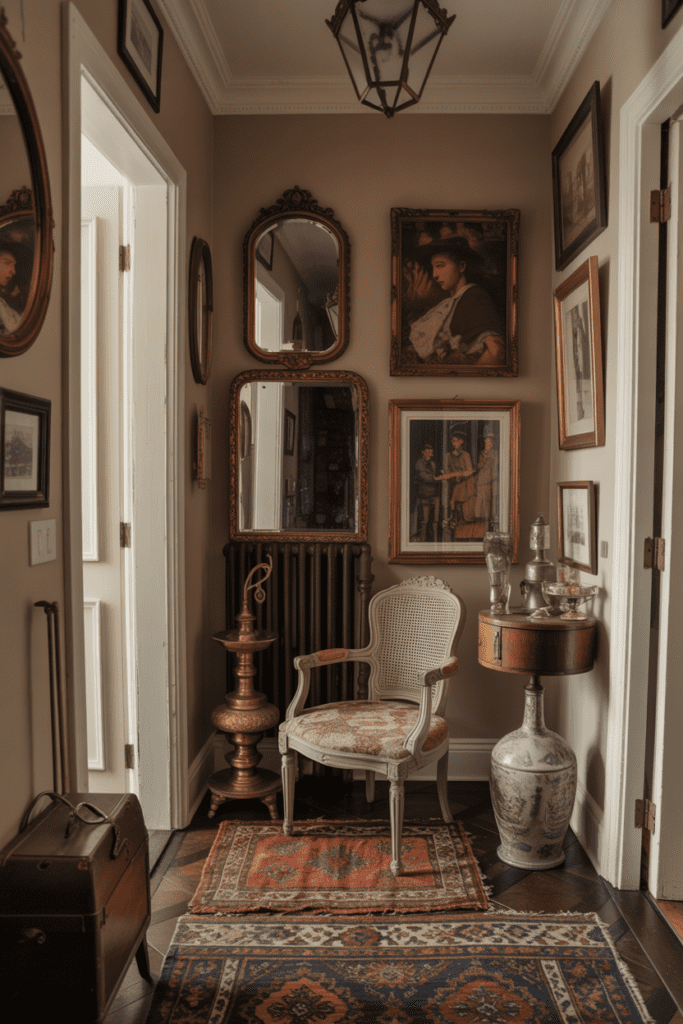
One of the hallmarks of truly great maximalist design is the sense that a space has been collected over time — that it has history and personality. Vintage and antique pieces are essential to achieving that lived-in, curated feeling.
Visit estate sales, antique markets, or even thrift stores and look for:
- Ornate mirrors with aged or gilded frames
- Vintage ceramic umbrella stands or decorative urns
- Antique side chairs with interesting carved details
- Old paintings or prints with ornate frames
- Brass or bronze decorative objects like bookends, figurines, or candleholders
IMO, one genuinely old piece in a room does more for the atmosphere than ten brand-new “antique-inspired” pieces ever will. The patina, the imperfections, the history — that’s what gives a maximalist entryway its soul.
14. Build a Maximalist Entryway Vignette
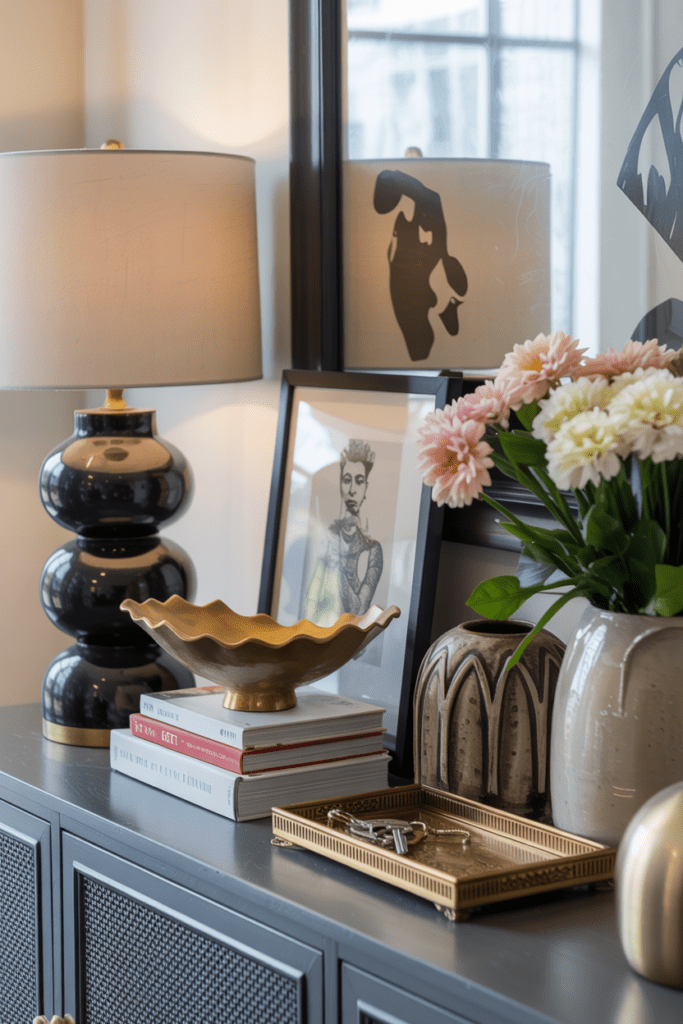
A vignette is essentially a mini curated scene — a small grouping of objects that tells a visual story. A well-styled entryway vignette on your console table is the finishing touch that pulls everything together.
The classic formula for a successful vignette:
- Something tall (a lamp, tall vase, or stack of books)
- Something round or sculptural (a decorative bowl, globe, or figurine)
- Something natural (flowers, greenery, a branch, a stone)
- Something personal (a framed photo, a meaningful object, a small souvenir)
- Something functional (a tray for keys, a small dish for change)
The key is grouping things in odd numbers — three or five objects feel more natural and interesting than four or six. And don’t line them up in a row; stagger heights and depths so the eye has somewhere interesting to travel.
15. Make Your Front Door the Star
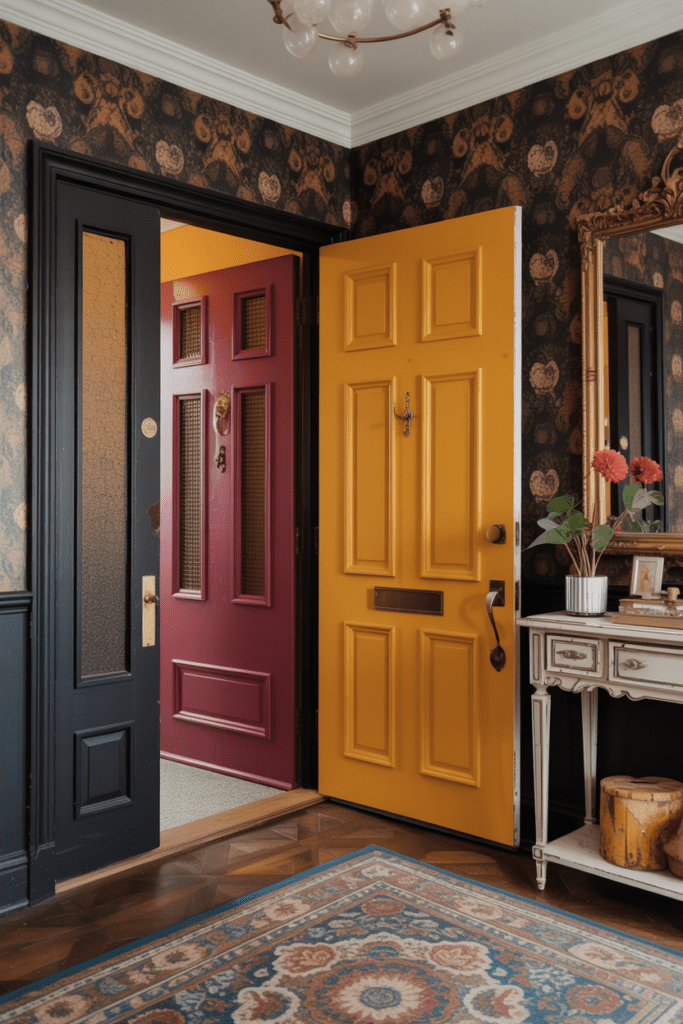
Here’s one that people almost always overlook: the inside of your front door is part of your entryway design. And in maximalist spaces, it’s an opportunity.
Paint the inside of your door a bold accent color — something that pops against your wall color. Deep red, glossy black, bright mustard, or rich cobalt can all look incredible. Add a decorative door knocker or handle on the inside that adds to the visual interest.
You can also add a door curtain or portière — a fabric panel hung from the door frame — for a moody, layered look that also helps with drafts. It’s an old-school design trick that looks incredibly chic in a maximalist context.
And if your door has any glass panels, consider a decorative film or stained glass insert that throws colored light into the entryway on sunny days. Few things are more magical or more maximalist than that.
Bringing It All Together
Here’s the thing about maximalism it’s not about piling everything in and hoping for the best. It’s about bold choices made with intention. Every element in a maximalist entryway should earn its place by contributing to a cohesive, layered, personality-filled whole.
Start with your foundation: floor, walls, and ceiling. Build up with your furniture anchors: console table, mirror, lighting. Then layer in texture, plants, art, and objects that reflect who you actually are. The goal is a space that feels like you before a guest even takes off their coat.
You don’t have to do all 15 of these ideas at once in fact, please don’t, unless you’ve got unlimited budget and a very patient household. Pick three to five that excite you most, do them really well, and build from there. Maximalism rewards patience and curation just as much as it rewards boldness.