
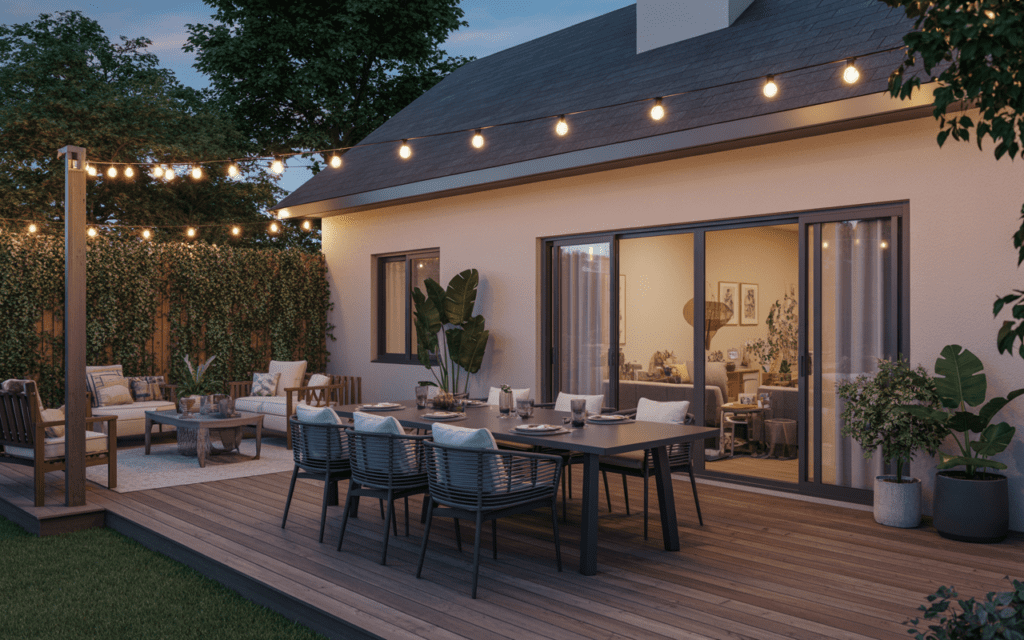
Want to turn that plain old back-of-house area into a space you actually use? Good, because a deck can do way more than just sit there looking respectable and underappreciated. I’ve always liked decks that feel like a natural extension of the house, not a last-minute add-on someone slapped in after a long Saturday and one too many “we’ll figure it out later” conversations.
Why the back deck matters
A deck off the back of the house does one very important job: it connects indoor life with outdoor life without making you feel like you need hiking boots to cross the yard. The best designs don’t just add square footage; they make the whole home feel easier to live in. Houzz points out that a deck can bridge the gap between inside and outside, and Wayfair notes that it works especially well as a livable extension of the home.
The trick is to match the deck to how you actually live. Do you eat outside? Host friends? Want a quiet coffee spot? Or do you just want somewhere to put a chair and pretend you’re in a resort for 20 minutes? That choice shapes everything else.
1. Mixed-material deck
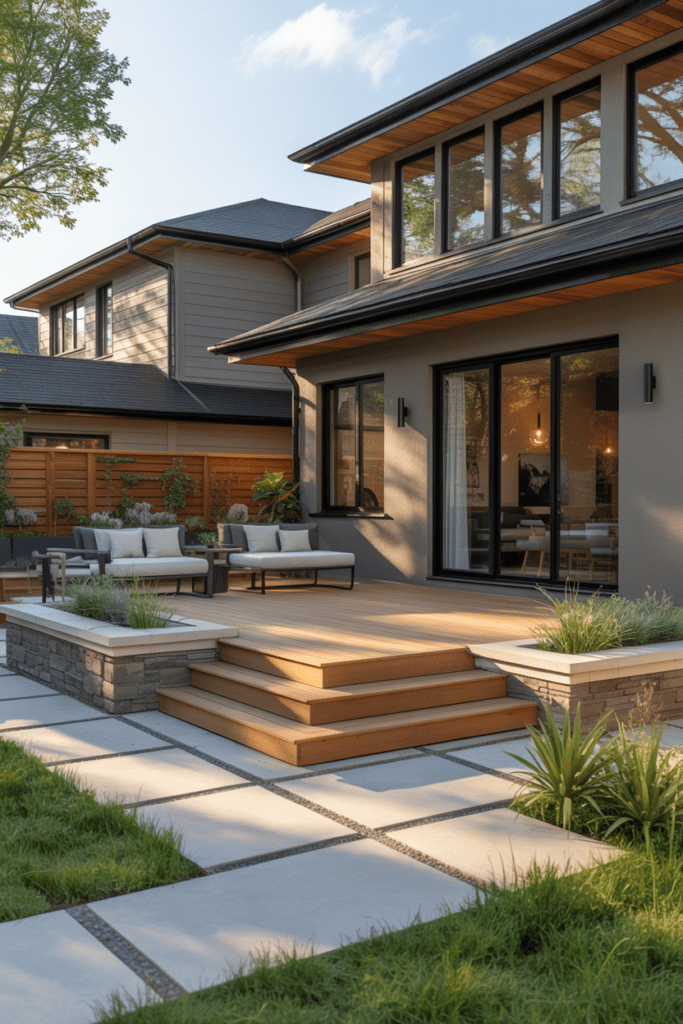
This is one of my favorite looks because it avoids the “flat wooden box” problem. Pairing wood with concrete, stone, or metal gives the space more texture and makes it feel intentional, especially on modern homes. Houzz specifically highlights mixed-material decks with concrete walls, stairs, planters, and built-in seating.
A mixed-material design works well if you want the deck to feel architectural rather than purely decorative. It also helps define zones without adding a bunch of clutter. IMO, that’s a win because nobody needs a deck that looks like it was furnished by a storage unit.
2. Tree-hugging deck
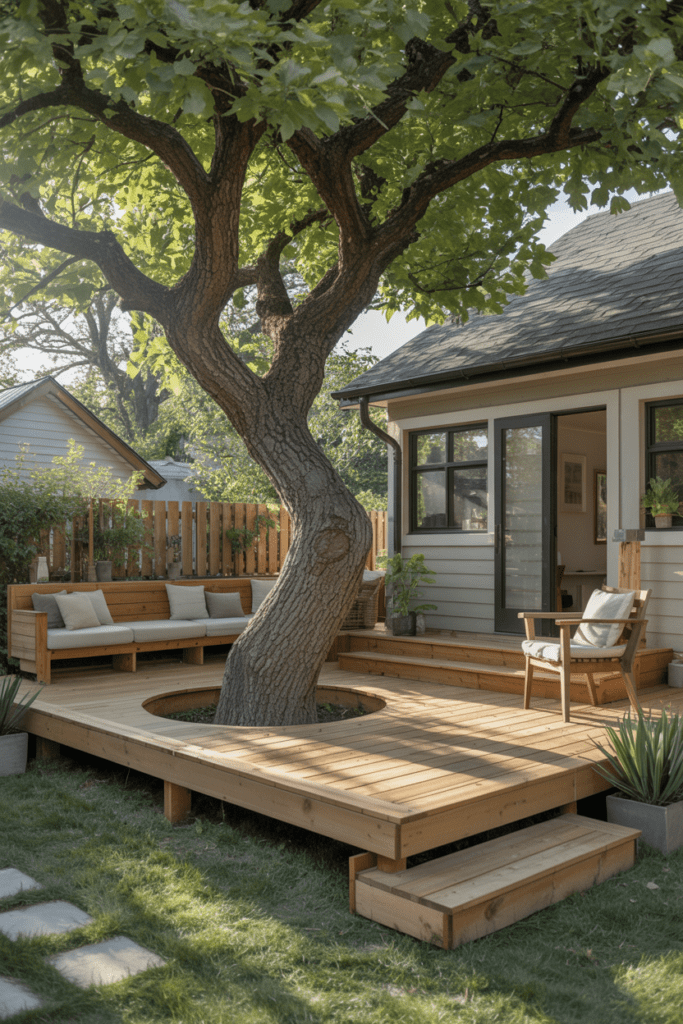
If you’ve got a great tree near the back of the house, don’t fight it—work around it. A tree-hugging deck wraps around the trunk and turns an obstacle into the main character. Houzz recommends consulting an arborist so you leave enough room for the tree’s mature size, which is the responsible thing to do and also the less dramatic thing to do.
This style feels organic and playful, and it helps the deck blend into the yard instead of sitting awkwardly in the middle of it. I love this idea for homes that want a softer, more natural outdoor look. Ever wondered why some backyards feel cozy while others feel like a parking pad with furniture? This is part of the answer.
3. Petite deck
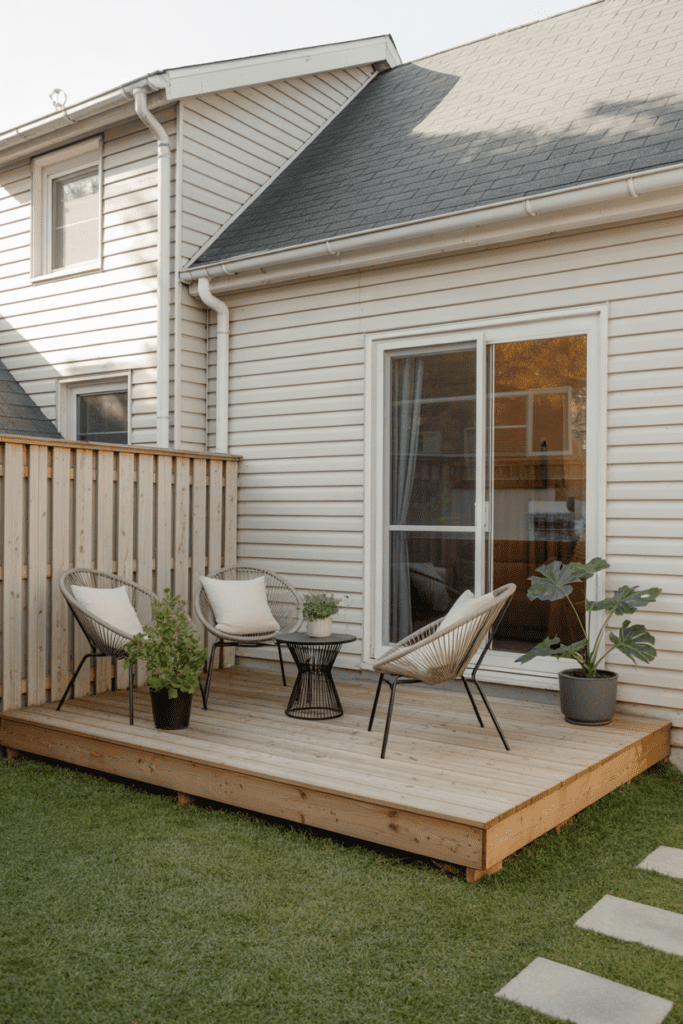
A small backyard does not need a giant deck to feel useful. In fact, a petite deck can make a compact yard feel bigger because it creates a defined, usable surface instead of a cramped patch of grass nobody wants to stand on. Houzz says small decks can make the space feel larger and more usable, which is exactly the kind of practical magic people like to ignore until they see it work.
Keep the furniture light and the layout simple. One chair too many and suddenly the deck starts acting like it pays rent. A petite deck works best when it stays clean, efficient, and easy to move through.
4. Dining deck
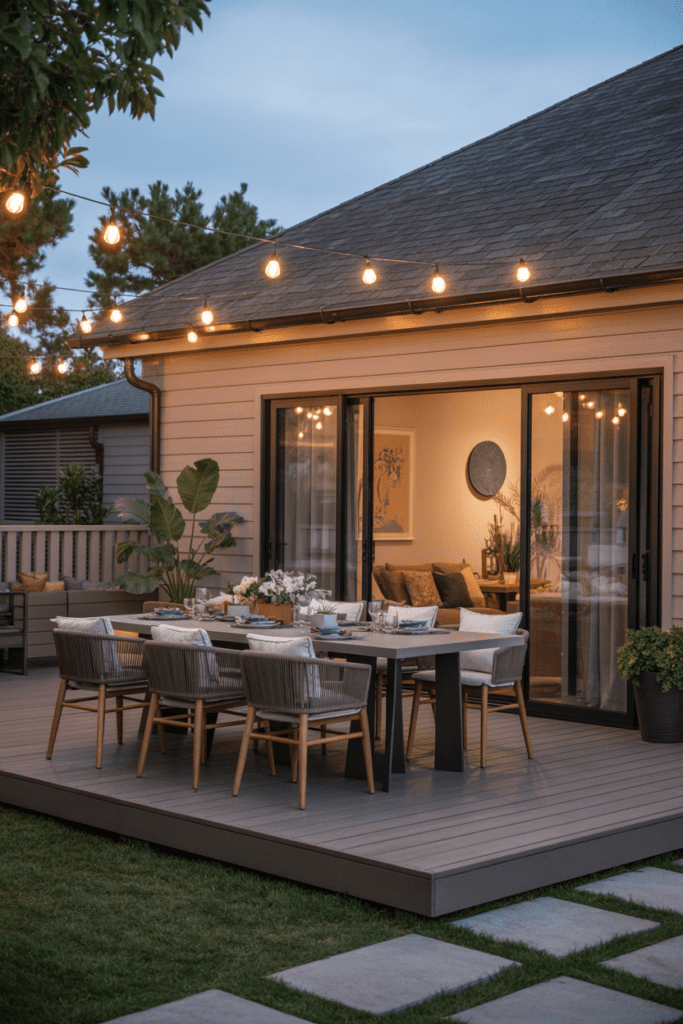
If you love eating outdoors, build the deck around that habit. Houzz recommends placing the dining deck close to the house and ideally under a tree or near string lights for a better dining atmosphere. Wayfair also highlights a dedicated outdoor dining space as one of the easiest ways to make a deck feel like a real living area.
I’m a big fan of this layout because it gives the deck a clear job. No awkward “where do we put the table?” guessing game. Add a table sized for your usual crowd, and you instantly get a space that feels planned instead of accidental.
5. Corner deck
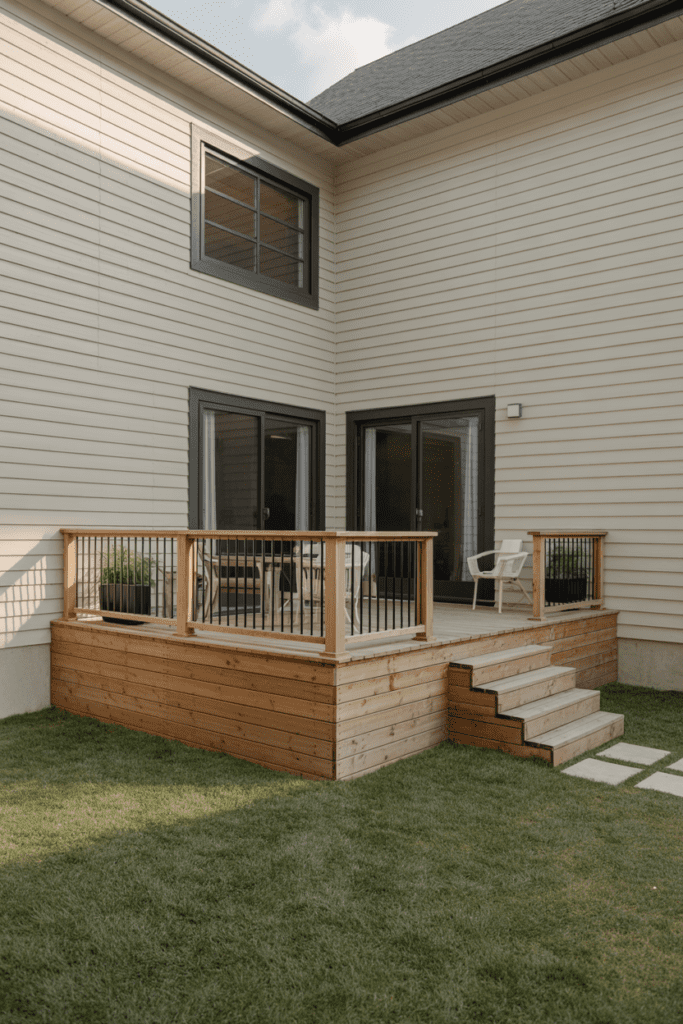
Got a weird missing corner in the home’s layout? Fill it with a corner deck. Houzz points out that a corner deck can complement the architecture and that sliding glass doors make the transition even better. That’s a smart move because corners often feel wasted, and nobody enjoys wasted outdoor space.
A corner deck can also create a nice sense of enclosure without boxing you in. It feels tucked in, which makes it perfect for morning coffee, an after-work drink, or quietly judging your neighbor’s lawn habits.
6. Curved deck
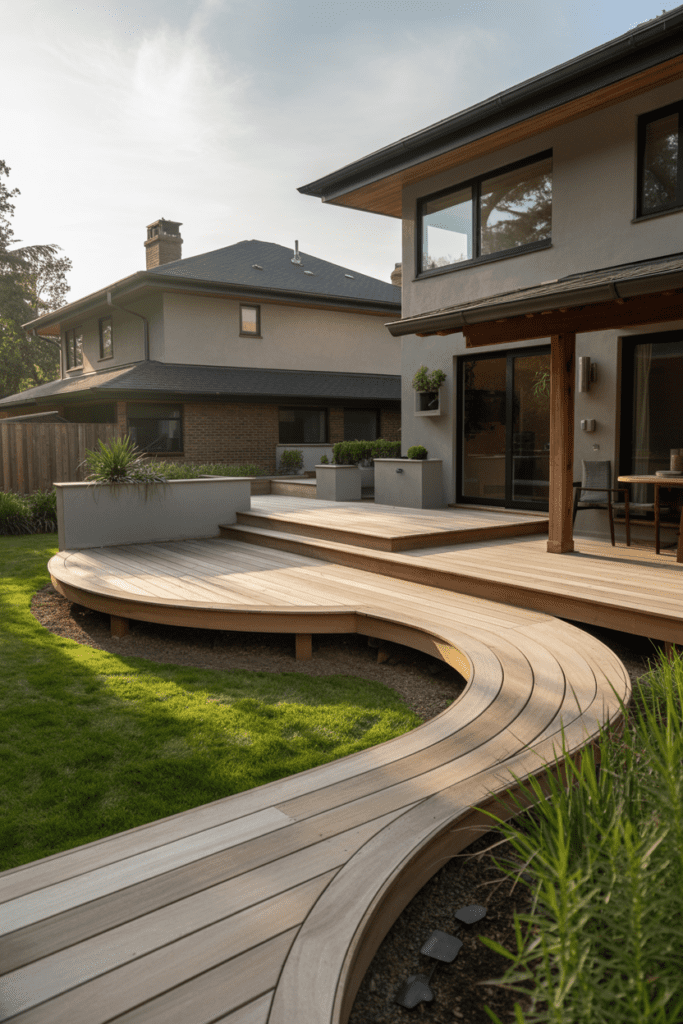
Straight lines aren’t the only option, thankfully. A curved deck softens the look of a modern home and adds movement to a backyard that might otherwise feel too rigid. Houzz says a curved deck balances sharp architectural forms and can work with retaining walls and steps for extra structure.
This design stands out because it feels custom. It also gently guides the eye through the yard, which makes the whole outdoor area feel more layered. If your house leans modern, this might be the one that makes people ask, “Okay, who designed this?”
7. Bump-out deck
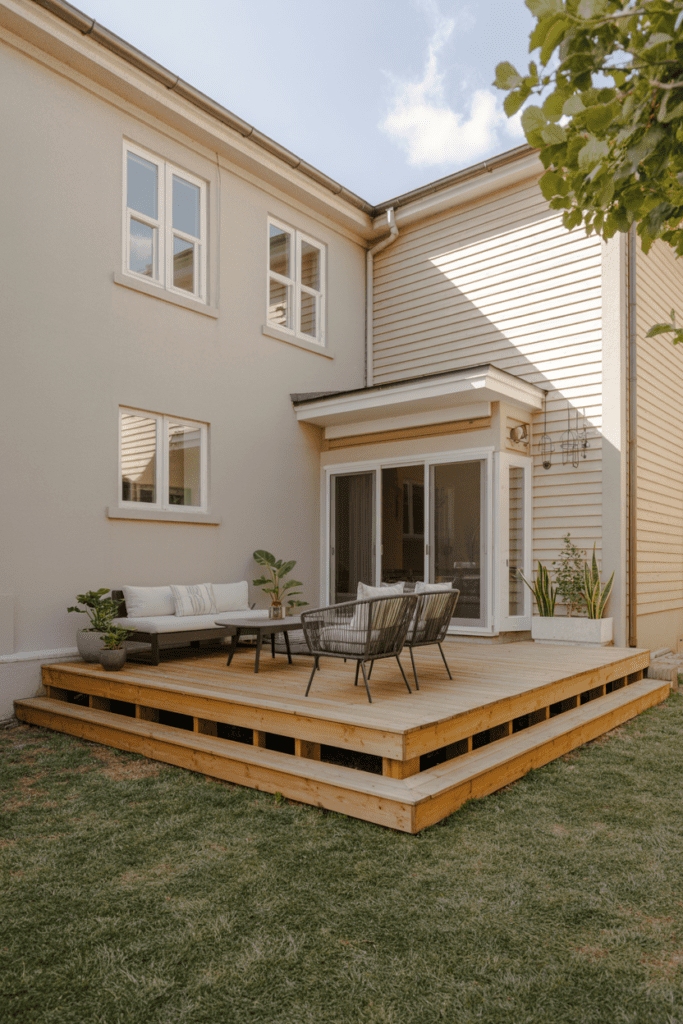
A bump-out deck adds a little extra shape instead of sticking to a plain rectangle. Houzz describes it as a way to help the deck settle into the landscape while also improving views. That small expansion can make the whole design feel less formal and more relaxed.
I like bump-outs because they let you create one standout area without rebuilding everything. Maybe you extend one side for a lounge chair, a plant corner, or a grill setup. Simple idea, big payoff.
8. Master bedroom deck
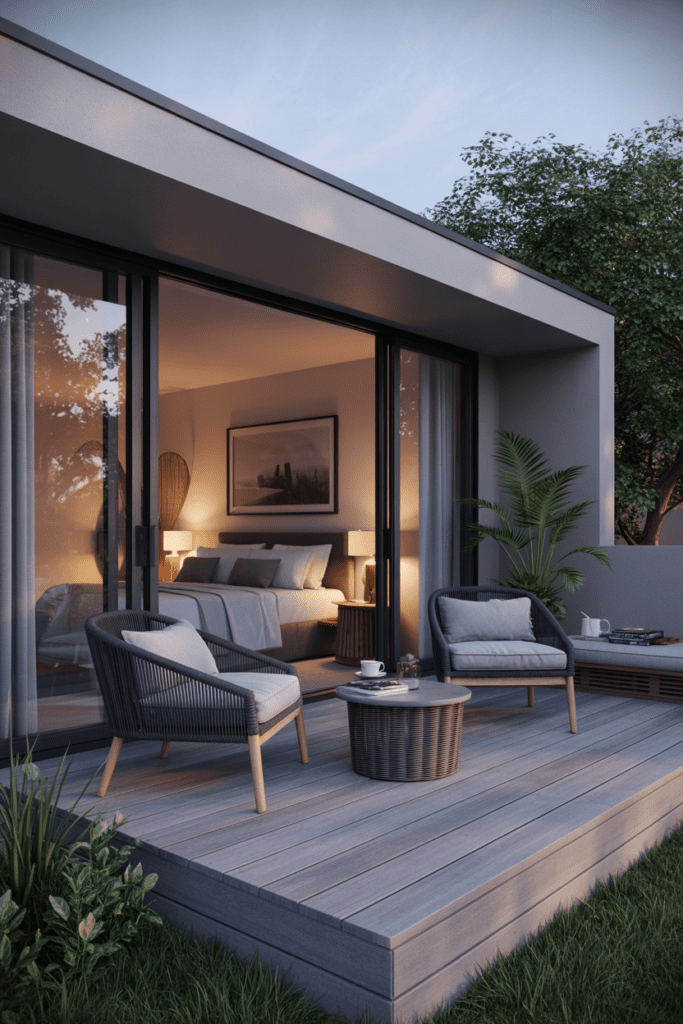
A small deck off the bedroom can change the entire feel of the house. Houzz gives a perfect example: a compact space with just enough room for two lounge chairs and a table for a drink and a book. That’s not flashy, but honestly, who needs flashy when you can have peaceful?
This kind of deck turns private downtime into an actual ritual. You step outside, sit down, and suddenly your home feels more like a retreat. It’s a small upgrade that makes a surprisingly large difference.
9. Shed deck
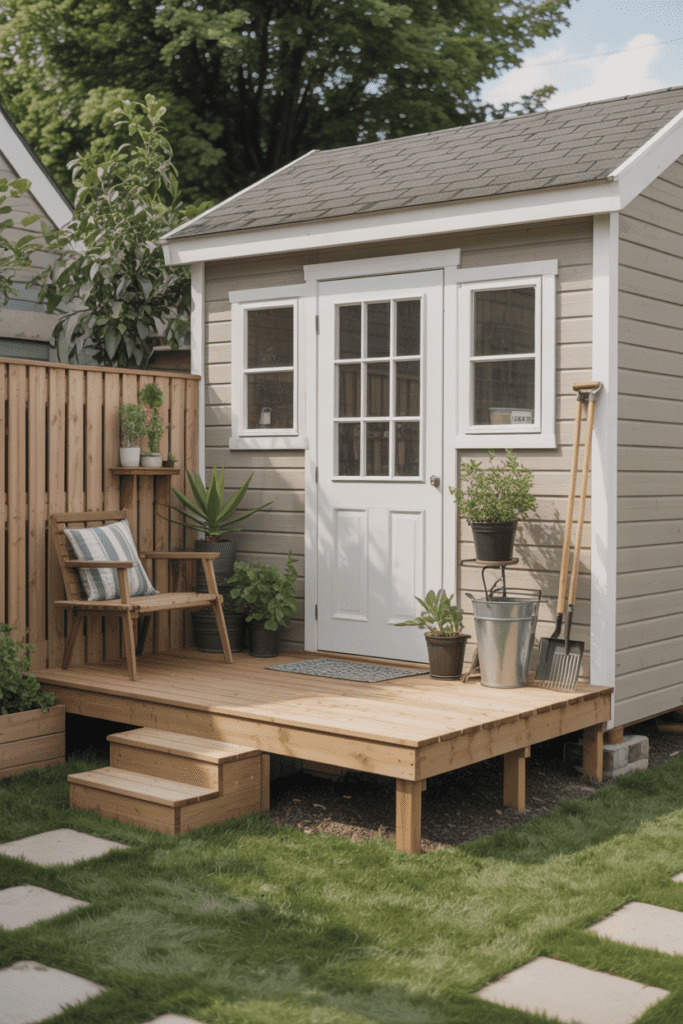
A shed does not have to look like the forgotten cousin in the backyard. Houzz suggests adding a mini deck across the entrance so the structure feels more welcoming and more useful. That little platform can make a shed feel like a destination instead of a storage box with identity issues.
This idea works especially well if you use the shed as a hobby room, garden tool station, or kids’ play space. The deck gives the area a finished look and makes access easier too. Small touches matter more than people think.
10. Layered deck
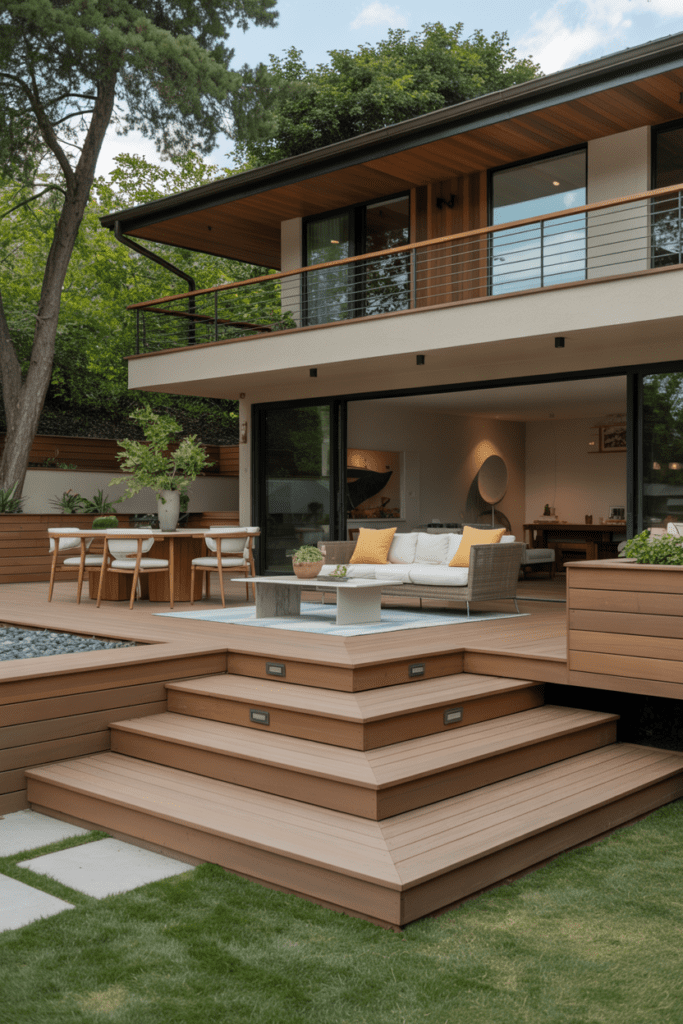
Layered decking creates visual interest and helps separate functions without walls. Houzz highlights layered decks as a strong fit for contemporary homes and small urban lots. The different levels add depth, which means the design feels more dynamic the moment you step outside.
This is a great choice if you want one area for lounging and another for dining or grilling. Why cram everything onto one flat plane when you can give each activity its own place? That’s not just style; that’s sanity.
11. Meandering deck
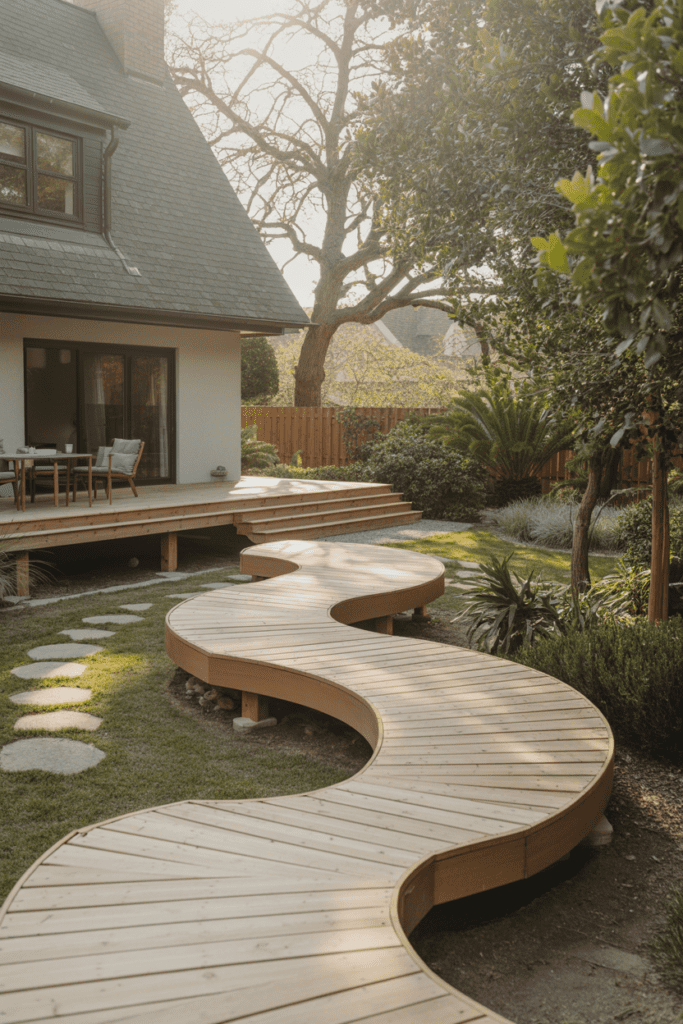
A meandering deck starts beside the house and keeps going through the yard like it has places to be. Houzz describes it as curving and snaking through the backyard to encourage exploration, which gives the whole space a more storybook feel. It turns the backyard into a path instead of a dead end.
I’d use this when the yard already has interesting features like trees, planters, or sculptures. The deck becomes the route between them. FYI, this idea works best when you want the outdoors to feel like a journey rather than a single hangout spot.
12. Garden path deck
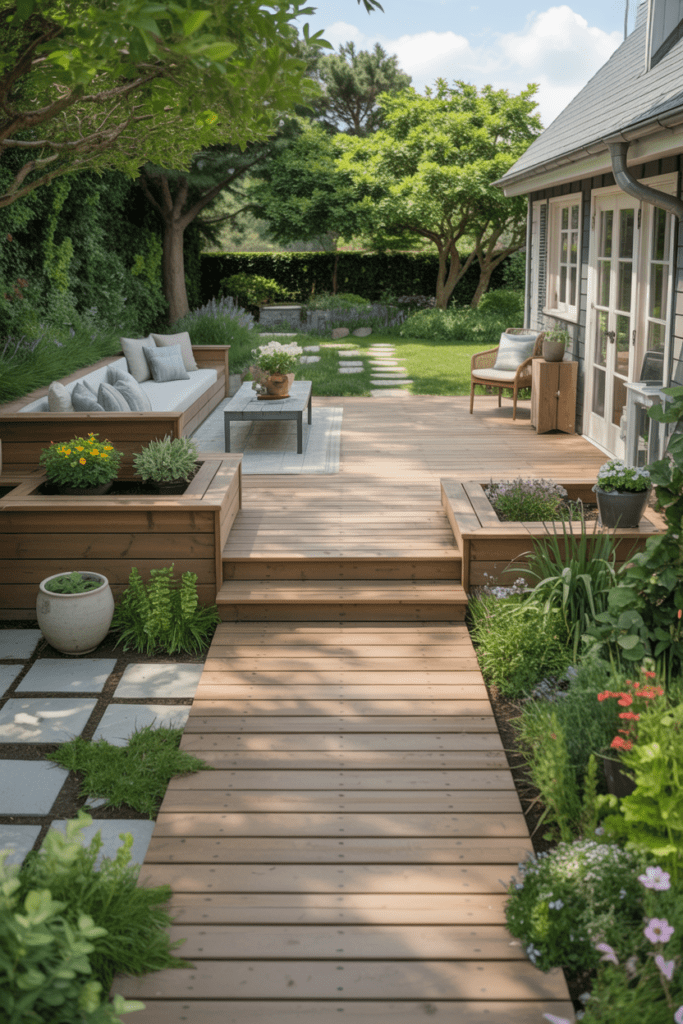
A garden path deck connects several smaller platforms into one flowing layout. Houzz says mixing narrow pathway decks with wider platforms draws people through the space, and I think that’s a clever way to make a larger yard feel curated. It also gives you more chances to create little moments along the way.
You could use one platform for seating, another for a planter feature, and another for a quiet bench. That kind of layout feels thoughtful without trying too hard, which is usually where good design lives. Not every outdoor project needs to scream for attention.
13. Multi-level deck
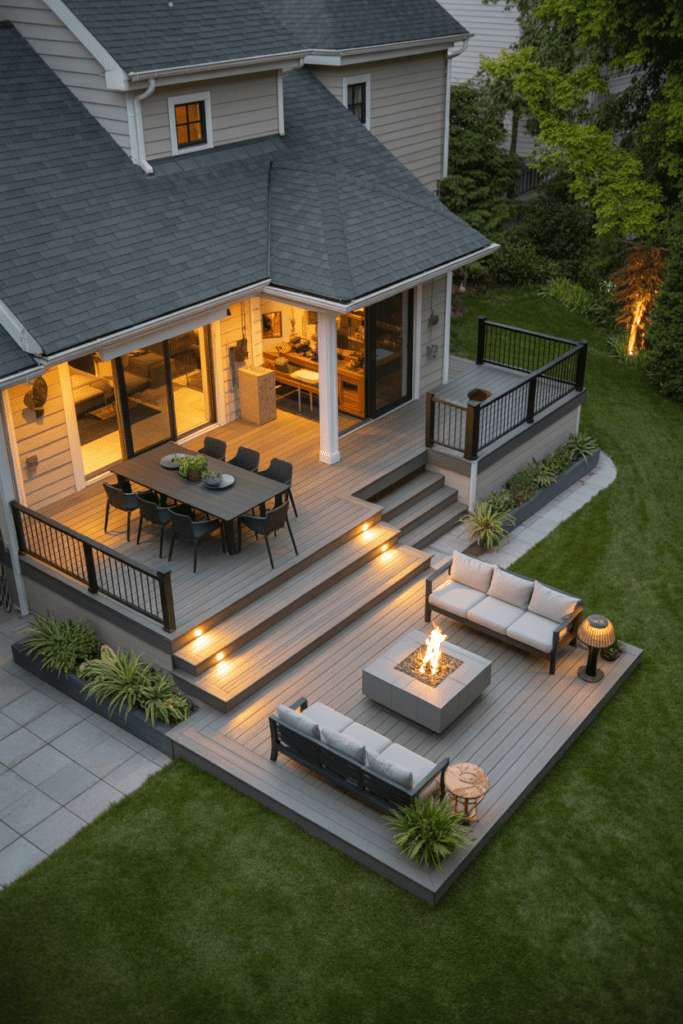
If your lot slopes or feels narrow, multi-level decking solves a lot of problems fast. Houzz notes that upper levels work well near the kitchen for easy food access, while lower levels can hold seating or a fire pit. That separation helps the space feel organized and more private.
I like multi-level decks because they naturally create zones without forcing awkward furniture arrangements. You can grill upstairs, lounge downstairs, and keep the traffic flowing. Isn’t that better than everyone piling into one hotspot and pretending it feels spacious?
14. Destination deck
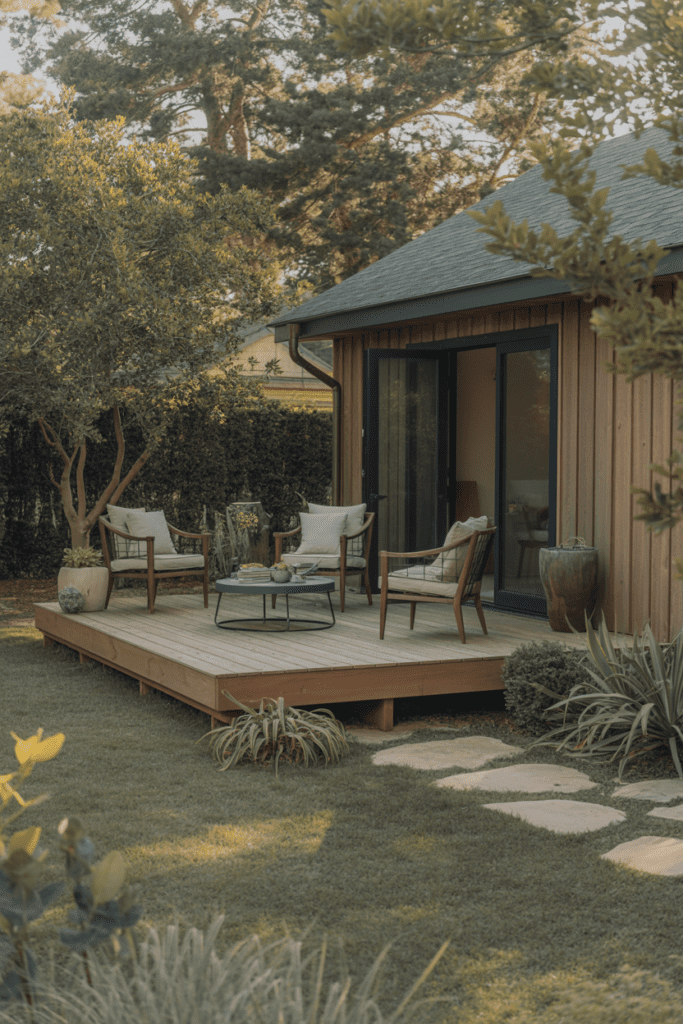
A destination deck sits away from the house in the spot that feels best. Houzz explains that you can place it in a favorite corner of the yard and nestle it into trees or planting so it feels like part of the landscape. This works beautifully when you want a true escape zone.
I think this is one of the most underrated deck ideas because it changes the mood completely. You don’t just step outside; you head somewhere. That tiny shift makes the yard feel bigger and the experience feel intentional.
15. Low-slung deck
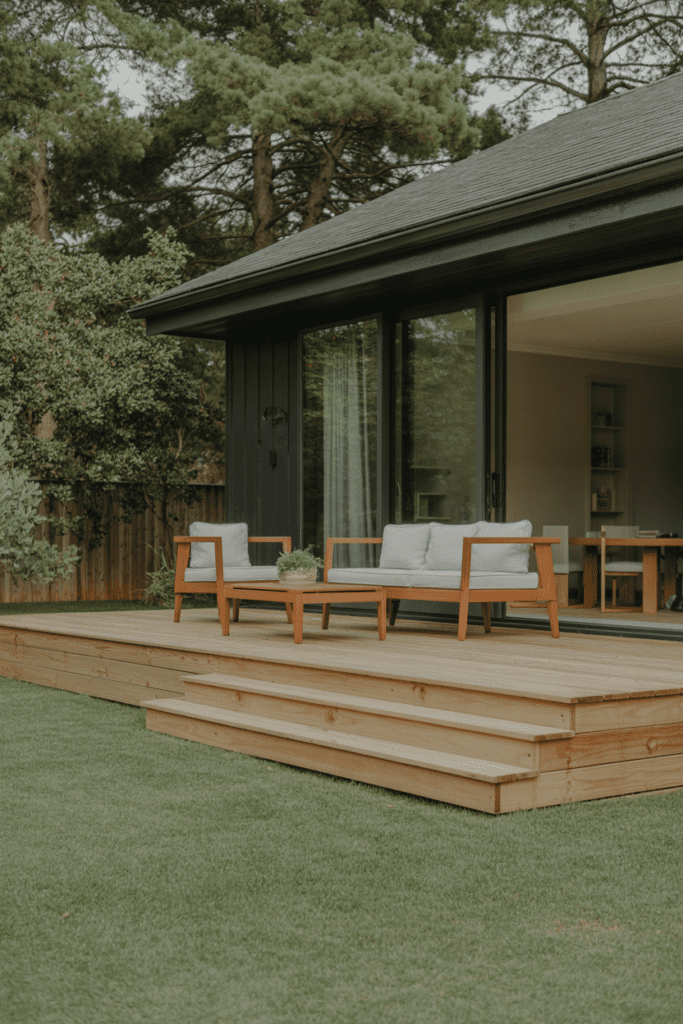
A low-slung deck barely rises off the ground, but it still creates a stronger connection between the house and yard than grass or gravel alone. Houzz points out that even a low deck can make the indoor-outdoor transition feel smoother. That matters more than people realize because comfort often comes from ease, not drama.
This style works especially well when you want something simple and unobtrusive. It gives you a clean surface for furniture, planters, and casual seating without overpowering the backyard. Sometimes the quietest design choice ends up looking the best.
16. Breezeway deck
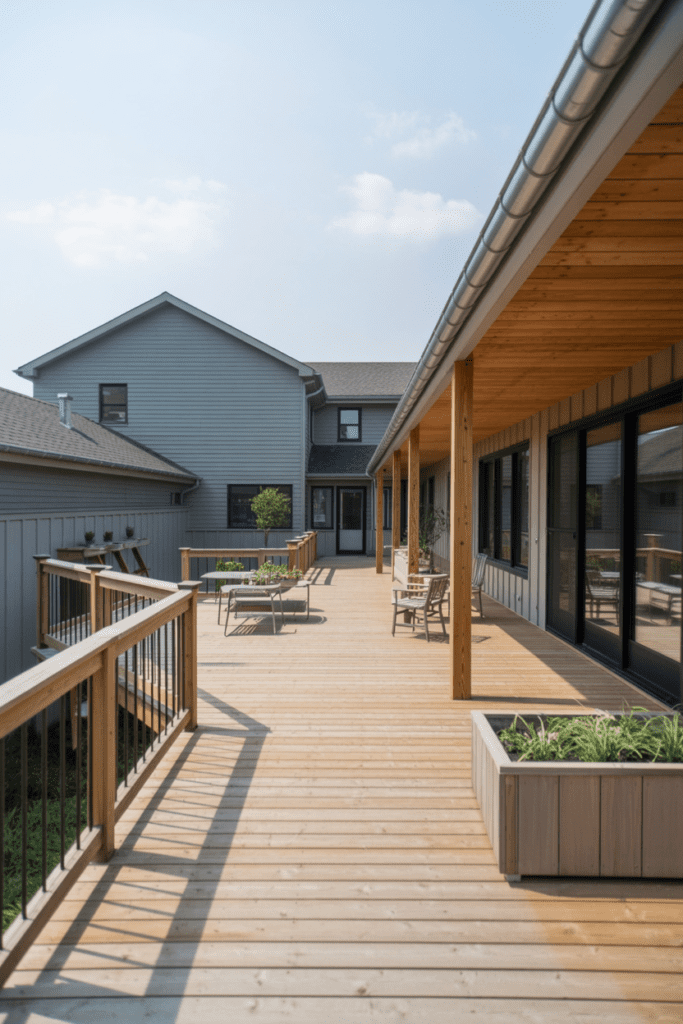
A breezeway deck helps connect different parts of a property or even separate structures on the same lot. Houzz describes it as a practical way to add outdoor living space while linking buildings together. That makes it useful and visually smart at the same time.
I like this idea for larger homes, guest spaces, or properties with detached rooms. It creates a natural flow and makes the whole place feel more connected. Why make people walk across random paving stones when you can give them a proper deck route?
17. Party deck
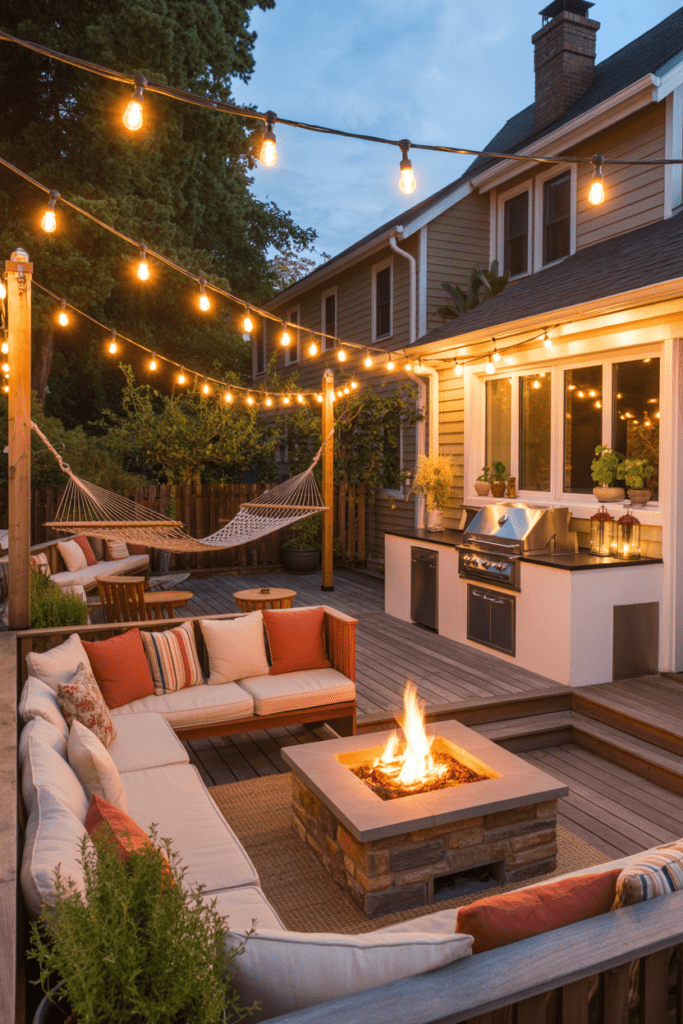
If your backyard exists mainly for food, friends, and the occasional loud laugh, build a party deck. Houzz’s featured deck includes room for a hammock, fire pit, outdoor kitchen, and built-in seating, which sounds less like a deck and more like a very good weekend plan. This is the version for people who actually use their outdoor space instead of just admiring it from inside.
Wayfair also supports the idea of turning a deck into a bar, dining spot, or fire-pit hangout, so you have plenty of ways to build the vibe. Add lighting, storage, and flexible seating, and you get a space that handles both small family nights and full-on get-togethers. And yes, the grill can absolutely become the unofficial king of the deck.
Styling tips
A great deck idea still needs smart styling to work in real life. Wayfair recommends conversation sets, dining zones, pergolas, gardening stations, bar setups, and deck-safe fire pits, all of which can turn a plain platform into a real outdoor room. Houzz also shows how plants, layers, and connected pathways help a deck feel more inviting.
Here are a few easy moves that make a big difference:
- Use outdoor rugs to define zones.
- Add string lights for warmth and evening use.
- Mix in planters so the deck feels connected to the yard.
- Choose furniture by activity, not just by looks.
- Leave breathing room, because clutter makes even a beautiful deck feel small.
Closing thoughts
The best deck ideas off the back of the house all do the same basic thing: they make outdoor space feel easy to use, good to look at, and worth stepping into. Whether you choose a petite deck, a layered layout, or a full-blown party zone, the right design depends on how you live, not just how the yard looks from the kitchen window.
If I had to pick one rule, it would be this: design the deck for real life first and aesthetics second, then let the style follow along.