
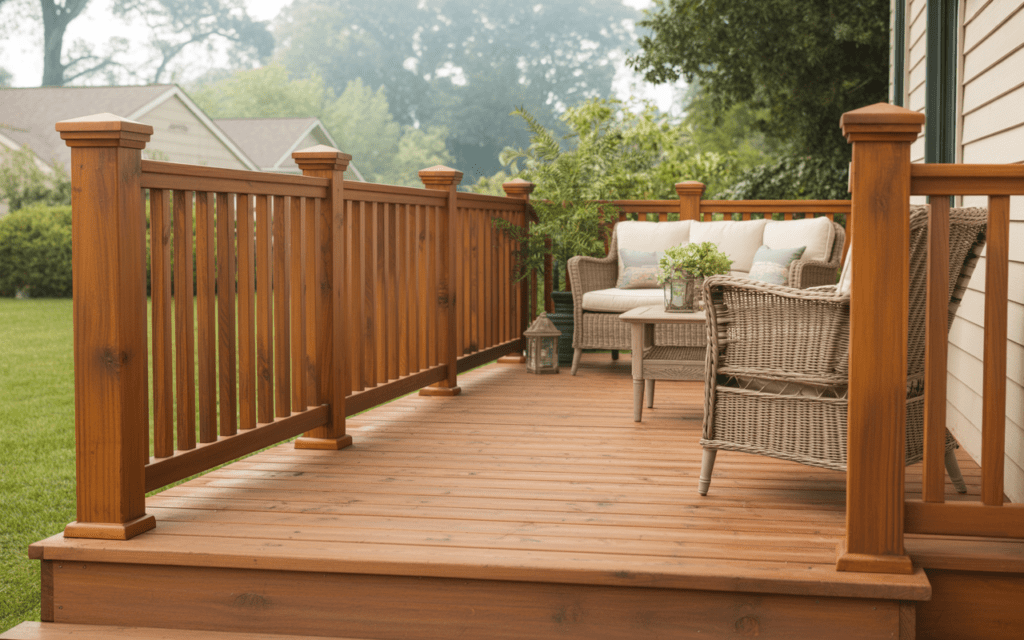
Your deck railing does more than mark the edge it defines the entire look and feel of your outdoor space. The right design can make a deck feel open, modern, cozy, or even a little luxurious, while the wrong choice can drag everything down.
With so many styles available, choosing the right one can feel overwhelming. Should you go sleek and minimal, warm and classic, or something bold that stands out? These 14 deck railing ideas will help you find a design that fits your space, matches your home, and actually makes your deck more enjoyable to use.
Why deck railing matters
Deck railing does two big jobs: it keeps your space safe and it adds style. That sounds obvious, sure, but people still treat it like a boring checklist item. That’s a mistake.
A railing sets the tone for the whole deck. Want a clean modern look? Want a rustic backyard hangout? Want something that barely disappears into the view? The railing makes that choice for you.
Here’s what I usually think about first:
- Safety, especially for raised decks.
- Durability, because weather loves to mess with wood.
- Maintenance, because nobody wants another weekend project every month.
- Style, because yes, looks matter.
- View, because a bulky railing can ruin a pretty backyard fast.
1. Classic wood railing
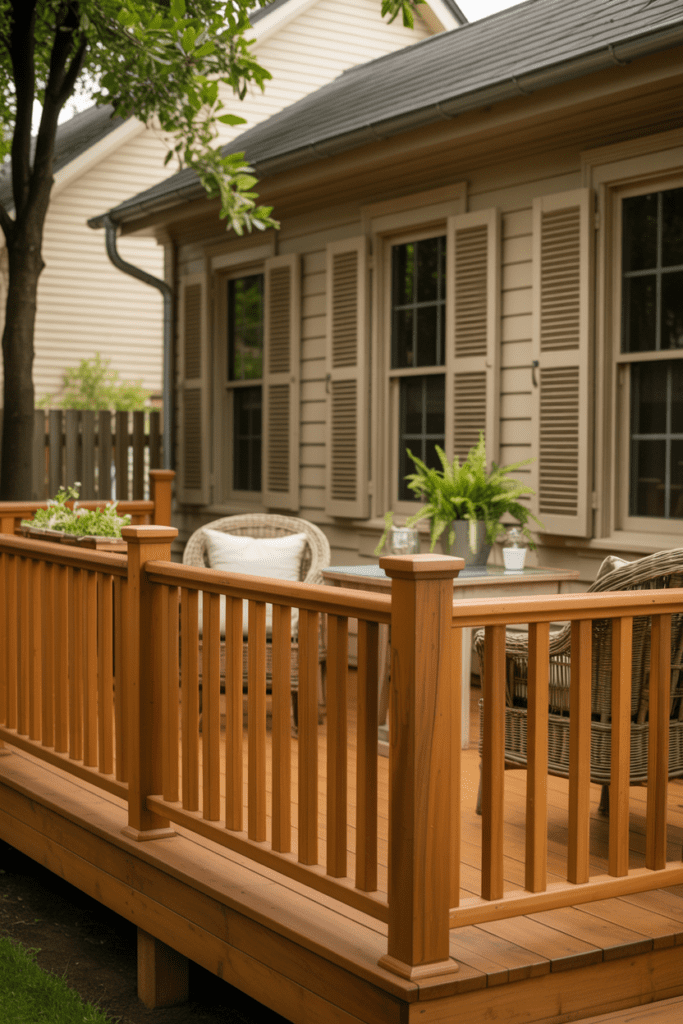
Wood railing never really goes out of style. It gives your deck a warm, natural look that works well with almost any home. If you like a traditional backyard feel, this one almost always delivers.
I like wood because it feels familiar and cozy. It also lets you customize the shape, color, and finish pretty easily. The catch? Wood needs care, and if you ignore it, it will absolutely remind you who’s boss.
Best for
- Traditional homes.
- Cottage-style decks.
- People who don’t mind staining or sealing.
Why it works
- Affordable and flexible.
- Easy to paint or stain.
- Blends nicely with natural surroundings.
2. Cable railing
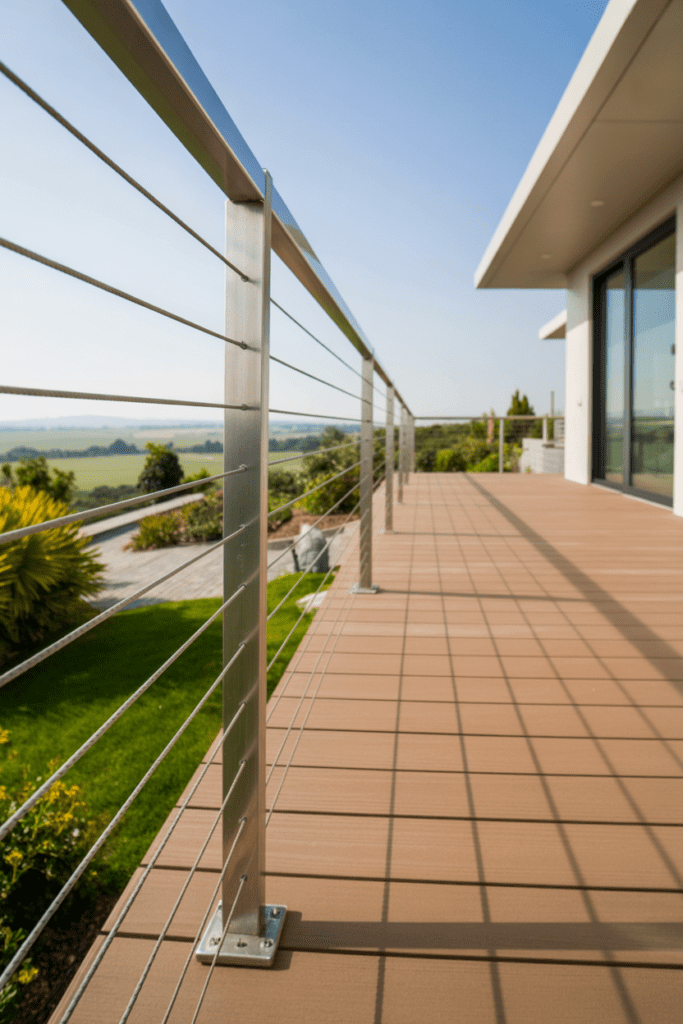
Cable railing gives you a sleek, open look that keeps the view front and center. I love this option when a deck overlooks a garden, pool, or open landscape. Why block the good stuff, right?
It uses slim horizontal or vertical steel cables between posts, which creates a clean and modern effect. FYI, this style also makes a small deck feel less cramped.
Best for
- Modern homes.
- Scenic views.
- Minimalist outdoor spaces.
Things to know
- Great visibility.
- Low visual clutter.
- Needs proper tension and good installation.
3. Glass panel railing
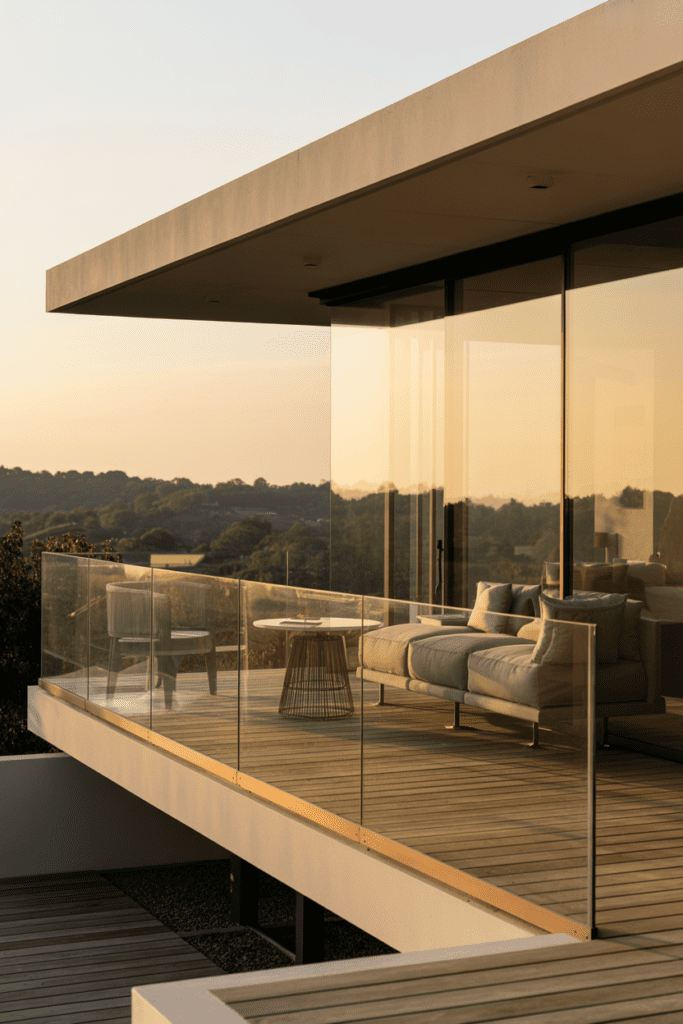
Glass panel railing looks polished, elegant, and a little fancy in the best way. It gives you a near-uninterrupted view while still creating a strong safety barrier. Ever wondered why luxury decks often use it? There’s your answer.
I’ll be honest: this style looks amazing when clean, but fingerprints, dust, and weather can test your patience. Still, if your goal is a high-end finish, it’s hard to beat.
Best for
- Coastal decks.
- Contemporary homes.
- Homes with a view.
Why people love it
- Clear sightlines.
- Sleek, upscale appearance.
- Works well with metal or wood frames.
4. Metal baluster railing
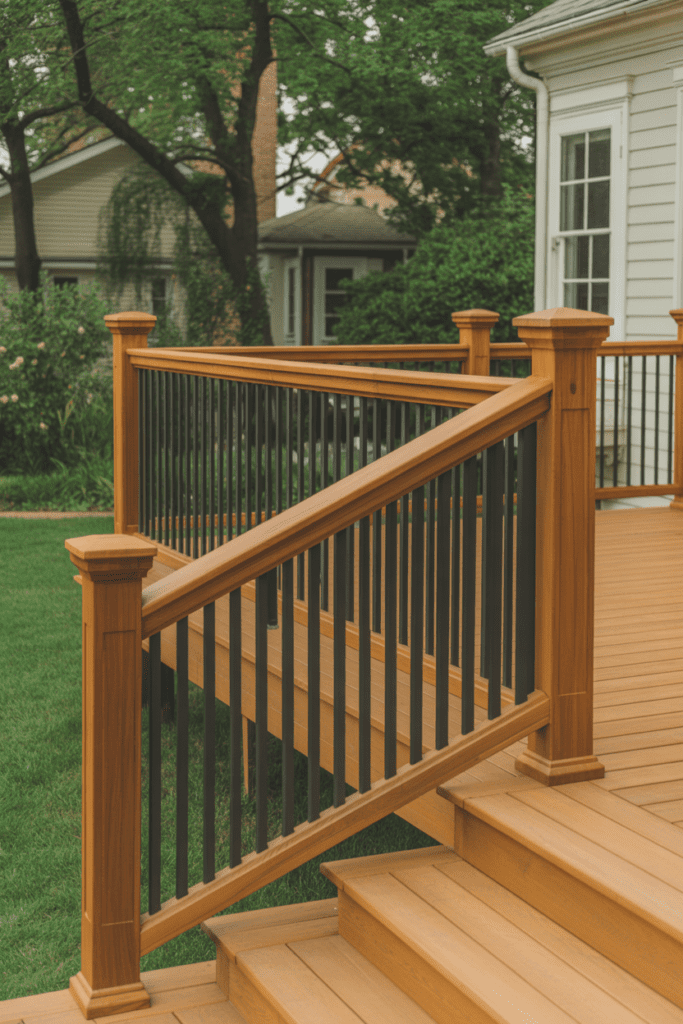
Metal balusters give you a strong, classic look with a little more edge than plain wood spindles. They pair well with wood rails and posts, which creates a nice mixed-material feel. That combo usually looks balanced instead of trying too hard, which I appreciate.
You can choose simple straight balusters or decorative ones with curves and details. If you want something sturdy and stylish without going full modern, this is a solid pick.
Best for
- Traditional and transitional homes.
- Family decks.
- People who want durability with style.
Benefits
- Strong and long-lasting.
- Less maintenance than all-wood designs.
- Easy to mix with wood finishes.
5. Horizontal slat railing
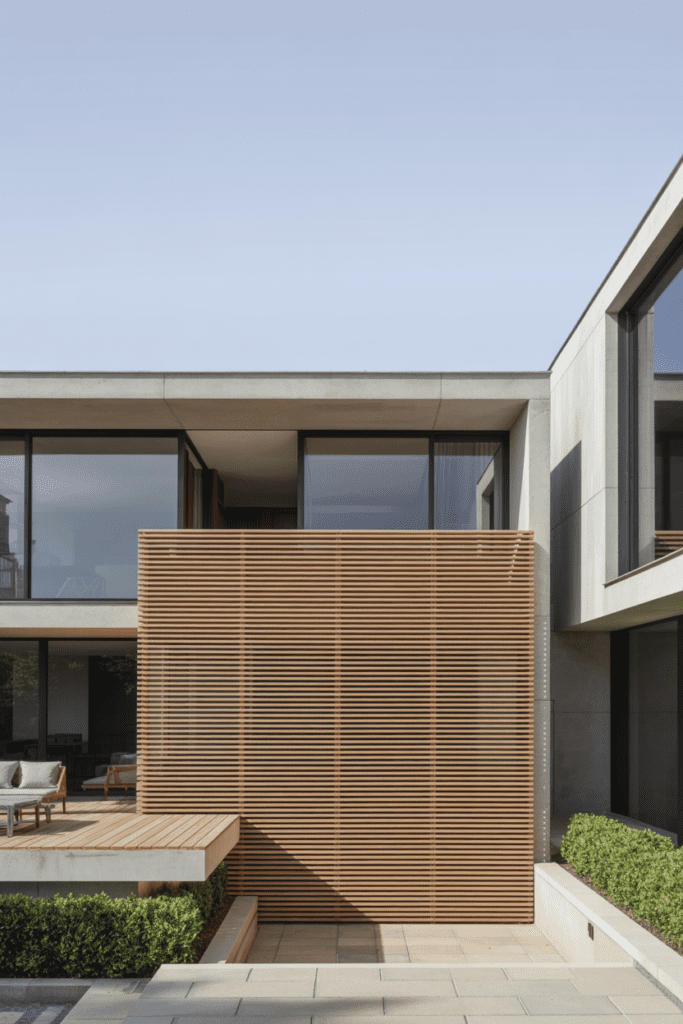
Horizontal slats bring a modern, architectural feel to your deck. They make the whole space look crisp and intentional, almost like you hired a designer when you just really didn’t want a boring railing. Nice little illusion, IMO.
This style often uses wood, composite, or metal slats arranged side by side. It works especially well with clean-lined homes and contemporary landscaping.
Best for
- Modern homes.
- Urban patios.
- Minimalist outdoor spaces.
Things to consider
- Can create a privacy screen.
- Needs careful spacing for safety and code compliance.
- Looks best when the rest of the deck stays simple.
6. Mixed material railing
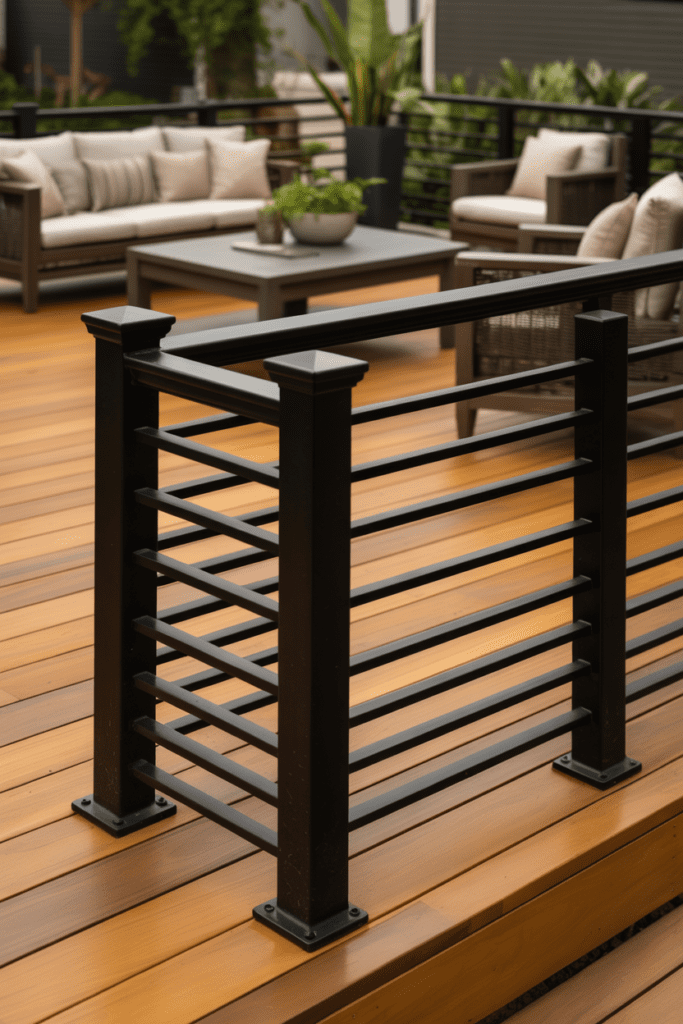
Mixed material railing combines two or more materials, like wood and metal or metal and cable. This option feels creative without looking random, as long as you keep the design balanced. Think of it like layering textures in an outfit, but for your deck.
I like this approach because it gives you room to match the railing to your house style. A wood top rail with black metal balusters, for example, feels timeless and fresh at the same time.
Popular combinations
- Wood + metal.
- Composite + aluminum.
- Cable + steel posts.
Why it stands out
- Adds visual interest.
- Lets you mix warmth and durability.
- Adapts to many design styles.
7. Composite railing
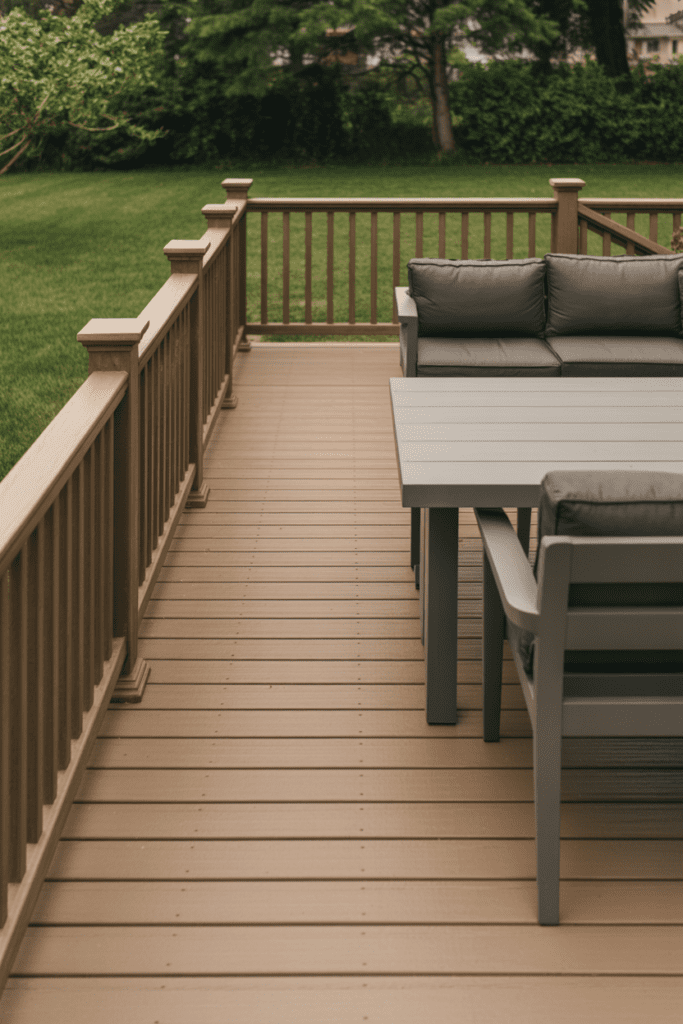
Composite railing gives you the look of wood without as much maintenance. That alone wins a lot of people over. Who wants to sand, stain, and seal every season if they can skip most of that drama?
Composite materials resist rot, splintering, and fading better than natural wood. They also come in a bunch of colors and finishes, so you can still get a custom look.
Best for
- Busy homeowners.
- Harsh climates.
- Low-maintenance outdoor living.
Why it’s smart
- Easy to maintain.
- Holds up well over time.
- Offers a polished, consistent look.
8. Rustic log railing
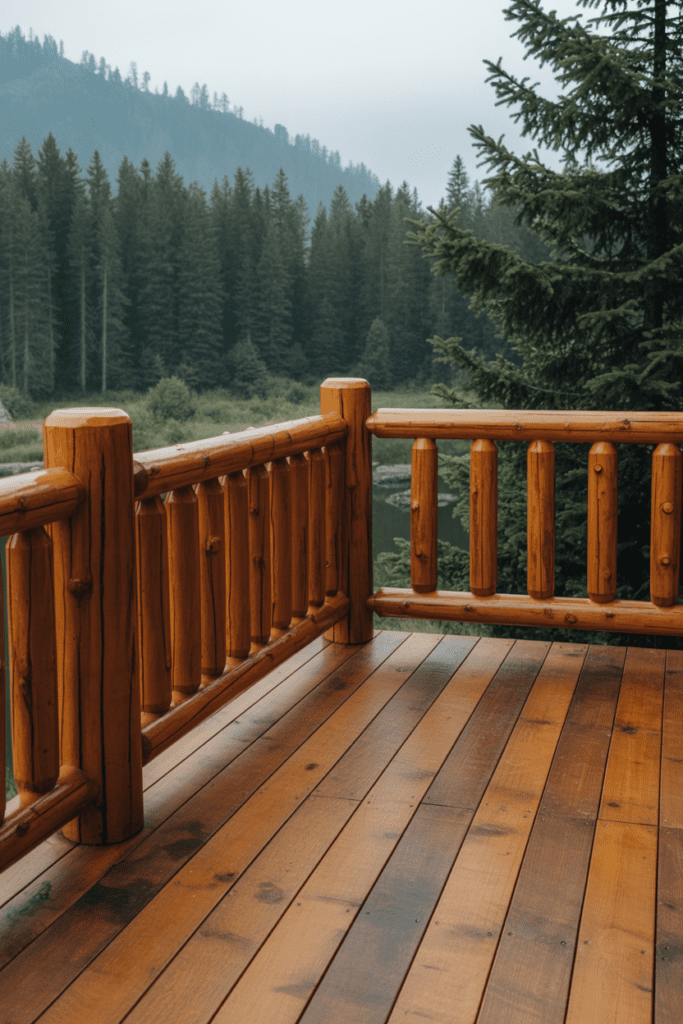
Rustic log railing brings a cabin-like feel to a deck. It works beautifully with lake houses, mountain homes, or any outdoor space that leans natural and rugged. If you want your deck to feel like it belongs in the woods, this is a strong move.
I’ve always liked this style because it feels honest and grounded. It doesn’t try to look sleek or flashy. It just says, “Yep, this deck is here to relax.”
Best for
- Cabins and lodges.
- Rural homes.
- Nature-focused settings.
Highlights
- Natural character.
- Sturdy and earthy appearance.
- Works well with stone or wood accents.
9. Privacy railing
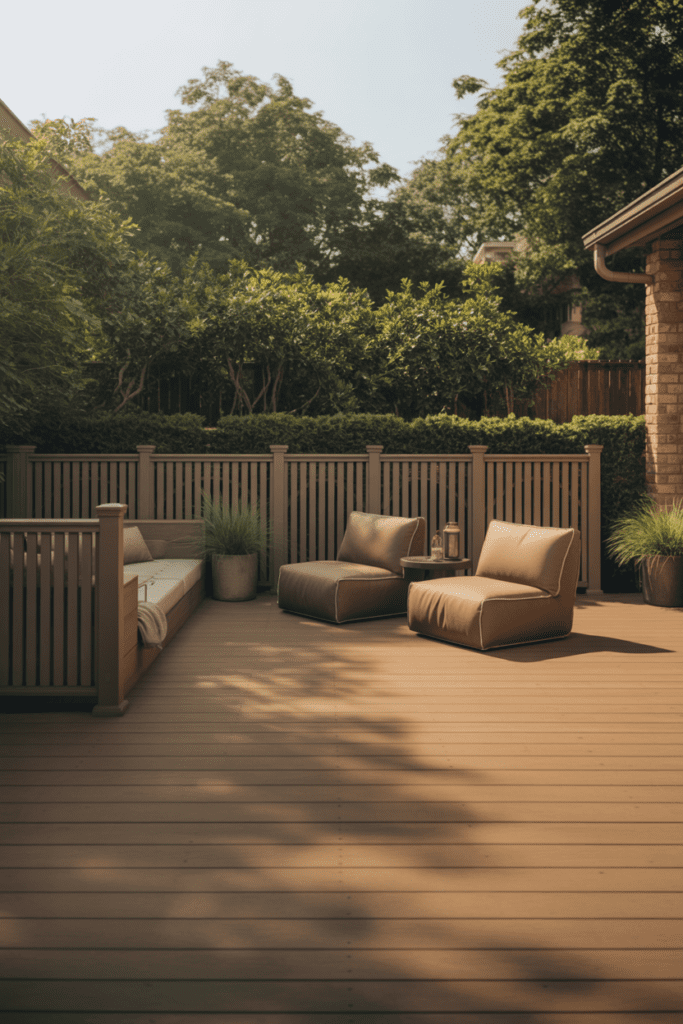
Privacy railing does exactly what the name suggests: it adds seclusion. It can block neighbors, reduce wind, and make your deck feel like a true retreat. Sometimes that matters more than having an open view, especially if your deck sits close to other homes.
You can build privacy into the railing with solid panels, slats, or decorative inserts. The trick is keeping it from feeling heavy or boxy.
Best for
- Townhomes.
- Close-quarters backyards.
- Outdoor lounges and hot tub areas.
Good design tips
- Use lighter colors to prevent a closed-in feeling.
- Mix open and solid sections.
- Add planters or lighting for softness.
10. Wire mesh railing
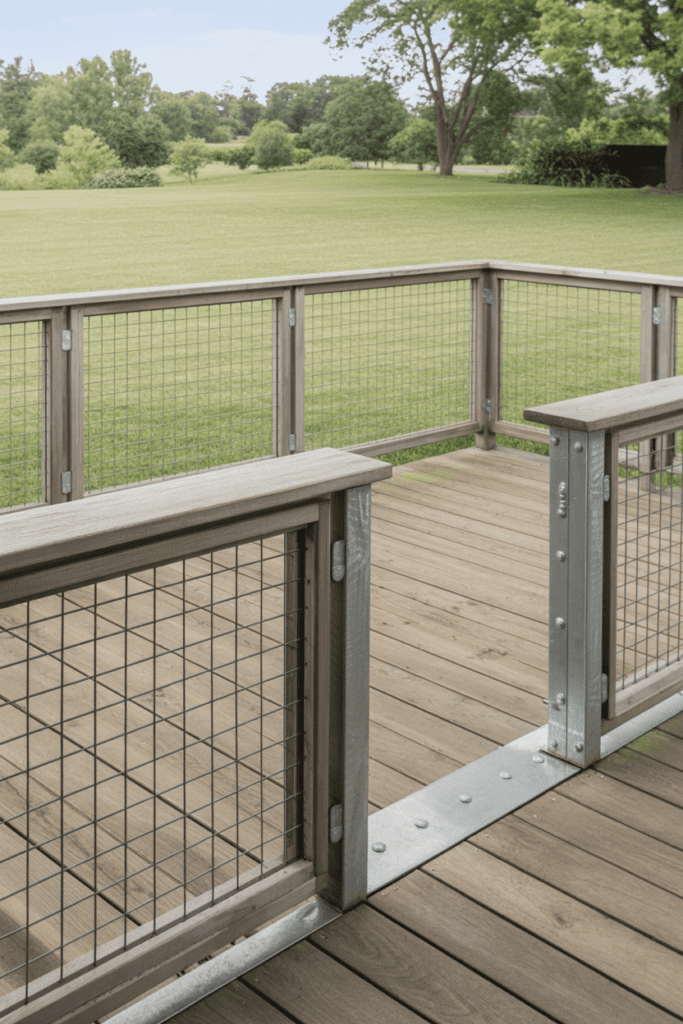
Wire mesh railing gives you a lightweight industrial look with good visibility. It feels practical, durable, and a little unexpected in a good way. It also works nicely if you want something safer for kids or pets without going with full glass.
This style usually uses metal frames with wire mesh panels stretched between them. It can look modern, rustic, or even a bit coastal depending on the finish.
Best for
- Family decks.
- Mountain or farmhouse styles.
- Homes that need a durable barrier.
Why it’s useful
- Strong and protective.
- Easy to see through.
- Can feel less bulky than solid panels.
11. White painted railing
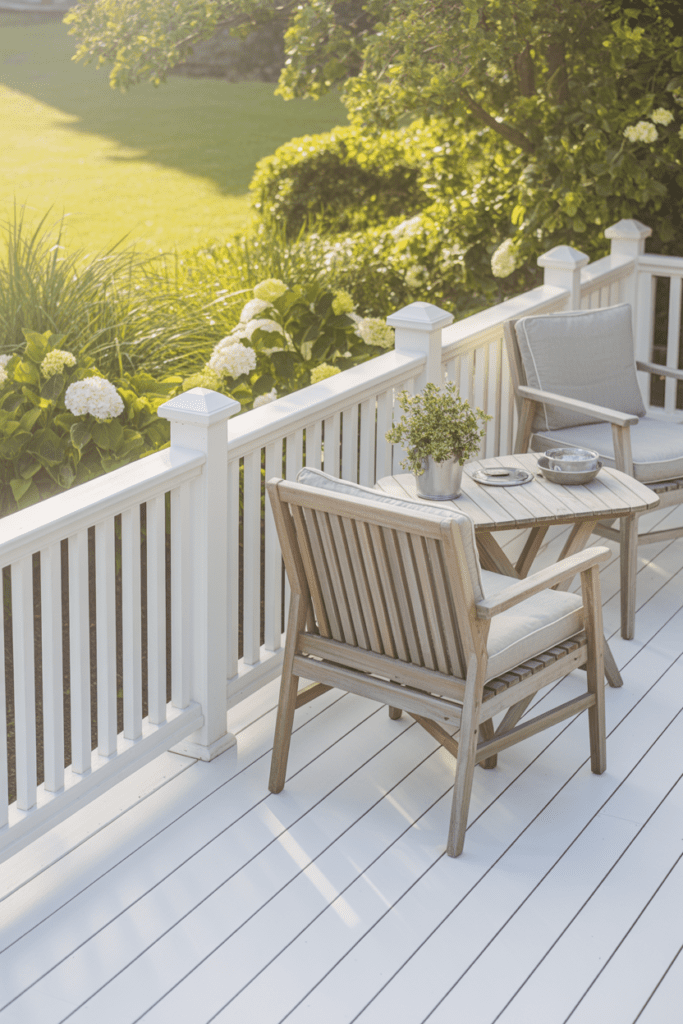
White railing brings a crisp, clean look that brightens the whole deck. It works especially well with coastal, cottage, or farmhouse designs. And yes, it does make your deck look a little more polished instantly.
The tradeoff? White shows dirt more easily. Surprising, I know. Still, if you like a fresh and timeless look, this option stays popular for a reason.
Best for
- Classic homes.
- Porches and wraparound decks.
- Bright, airy outdoor spaces.
Advantages
- Timeless appearance.
- Pairs well with almost any exterior color.
- Helps a deck feel open and cheerful.
12. Black railing
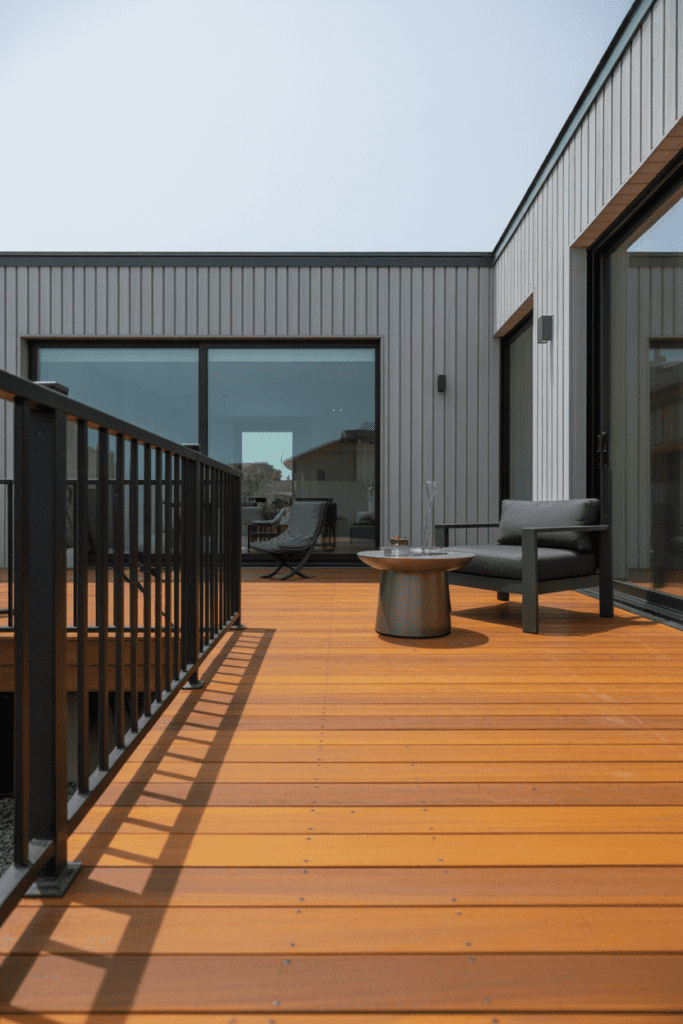
Black railing has become a favorite for modern and transitional homes. It creates contrast, frames the deck nicely, and makes the whole design feel intentional. It also hides some wear better than lighter colors, which is a bonus.
I think black railing works especially well when you want the rest of the deck to shine. It supports the look without stealing the spotlight. That’s the kind of quiet confidence I respect.
Best for
- Modern homes.
- Industrial-inspired spaces.
- Decks with warm wood tones.
Why it works
- Bold but versatile.
- Easy to pair with different materials.
- Makes lines and structure stand out.
13. Curved railing
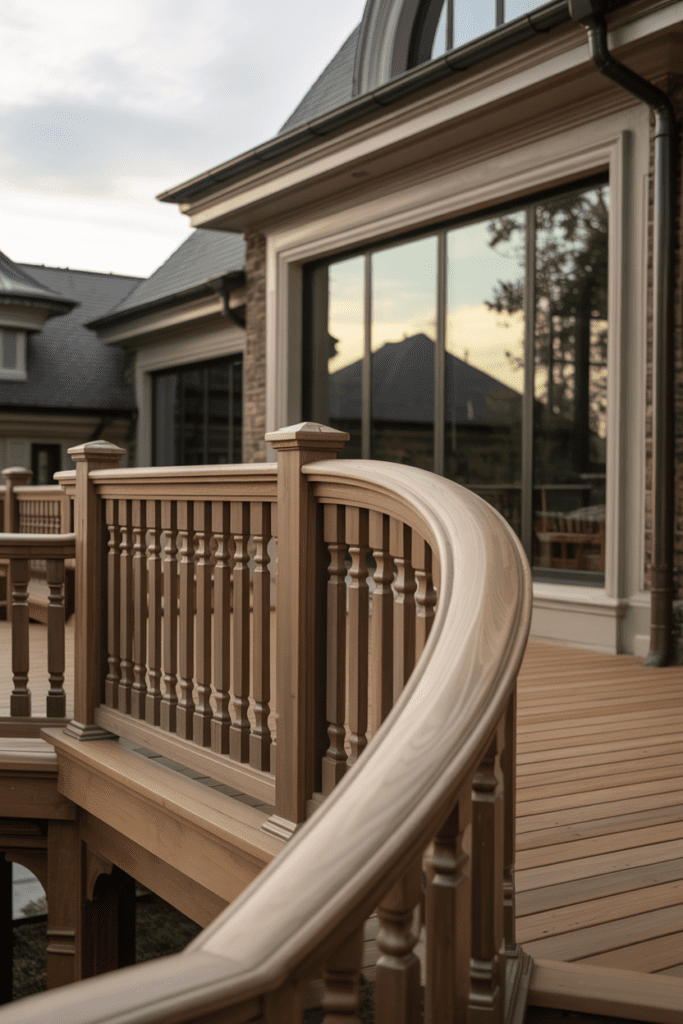
Curved railing adds a soft, elegant touch that straight lines just can’t match. It works beautifully on rounded decks, stairs, or wraparound spaces. If your deck design already feels a little special, curved railing takes that idea further.
This style usually costs more and takes more planning, so it’s not the casual, throw-it-together option. But wow, does it make an impression.
Best for
- Custom decks.
- Grand outdoor spaces.
- Homes with architectural detail.
Why people choose it
- Elegant flow.
- Softens boxy layouts.
- Creates a more custom appearance.
14. Railing with built-in lighting
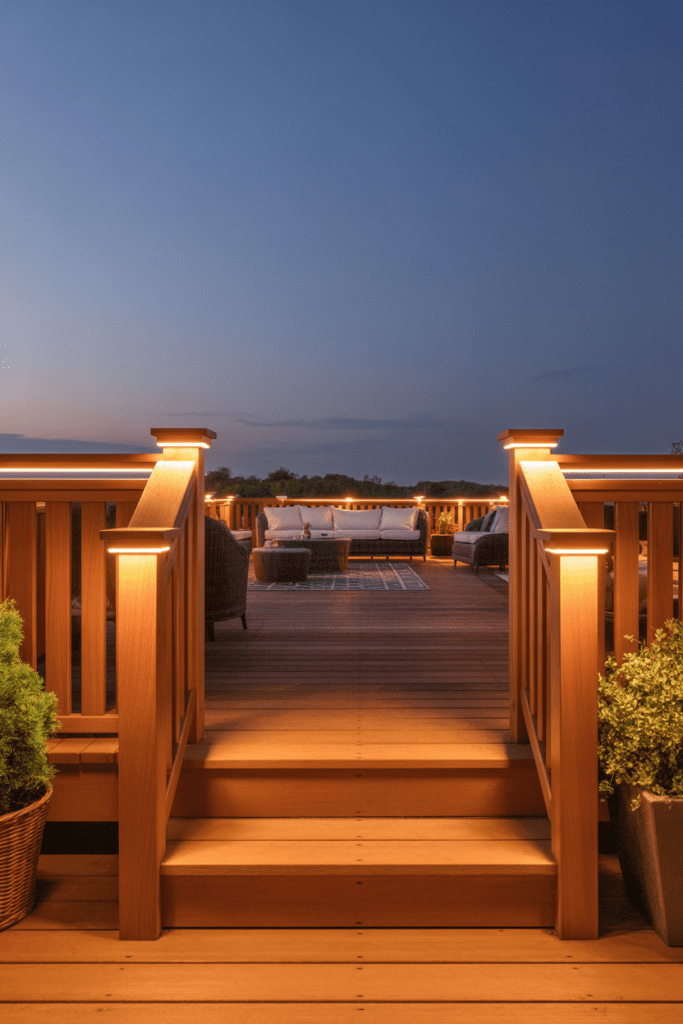
Railing with built-in lighting might be the smartest idea on this whole list. It improves safety, boosts atmosphere, and makes the deck usable after sunset. Why stop enjoying your deck just because the sun clocked out early?
You can add lights under the cap rail, along posts, or inside steps. I love this option because it feels practical and a little magical at night 🙂
Best for
- Entertaining decks.
- Stairs and multi-level decks.
- Homeowners who love evening gatherings.
Benefits
- Better nighttime safety.
- Creates a cozy vibe.
- Makes the deck look more finished.
How to choose the right railing
Picking the best railing comes down to more than looks. You need to think about how you use the deck, how much upkeep you can handle, and what kind of view you want to keep. A gorgeous railing that drives you nuts every season is not a win.
Ask yourself these questions
- Do I want privacy or an open view?
- Do I prefer low maintenance materials?
- Does my home lean modern, classic, rustic, or coastal?
- Do I need something kid-friendly or pet-friendly?
- How much budget do I really want to spend?
Quick rule of thumb
- Choose wood if you want warmth and flexibility.
- Choose metal or cable if you want a modern feel.
- Choose glass if you want the cleanest view.
- Choose composite if you want less maintenance.
Design tips that make any railing better
A good railing style matters, but the details matter just as much. Small choices can turn a decent deck into a great one. And no, you do not need to overload it with fancy extras like you’re decorating a spaceship.
Simple upgrades that help
- Match the railing to your home’s trim.
- Keep post spacing neat and consistent.
- Use colors that complement your siding and decking.
- Add lighting if you use the deck at night.
- Keep the design from fighting the view.
My honest advice
If your deck already has a strong focal point, don’t make the railing too loud. Let one thing shine. That usually creates a cleaner, more expensive-looking result without spending more money.
Final thoughts
The best deck railing ideas balance safety, style, and comfort. Some people want a railing that disappears into the background, while others want it to become a design feature. Both approaches work, as long as you choose with intention.
If I had to narrow it down, I’d say cable, black metal, composite, and built-in lighting give you some of the most versatile and attractive results. But the right choice depends on your home, your budget, and how you actually use the space. After all, what’s the point of a deck if it doesn’t feel like your kind of place?
So if your deck needs a refresh, start with the railing. It might be the easiest way to change the whole mood without rebuilding the entire thing.