
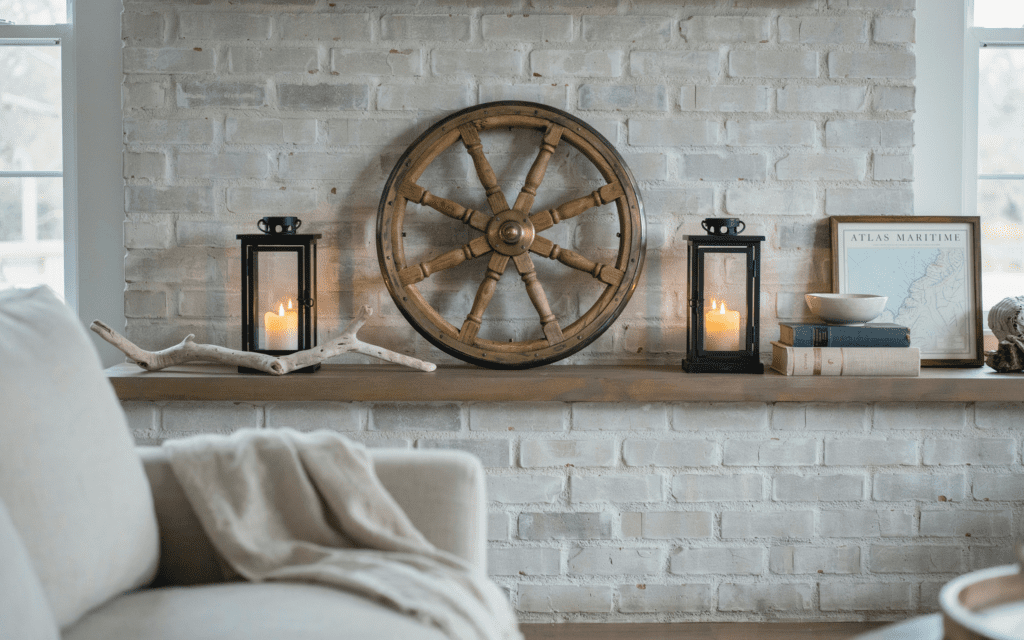
Creating a home that feels calm, fresh, and visually inviting doesn’t require a beachfront property or a complete renovation. Nautical home decor offers a timeless way to bring in that relaxed coastal atmosphere using thoughtful design elements, balanced color palettes, and natural textures. With the right approach, even the most ordinary space can reflect the charm and openness of seaside living.
From subtle accents like rope details and soft linen fabrics to statement pieces such as driftwood furniture and nautical wall art, this style blends simplicity with character. The appeal lies in its versatility—it works just as well in compact apartments as it does in spacious homes. Curious how to bring that effortless coastal vibe into your space without going overboard? These 17 nautical home decor ideas will help you strike the perfect balance between style and comfort while keeping everything visually cohesive.
1. Anchor the Room with a Statement Rope Piece
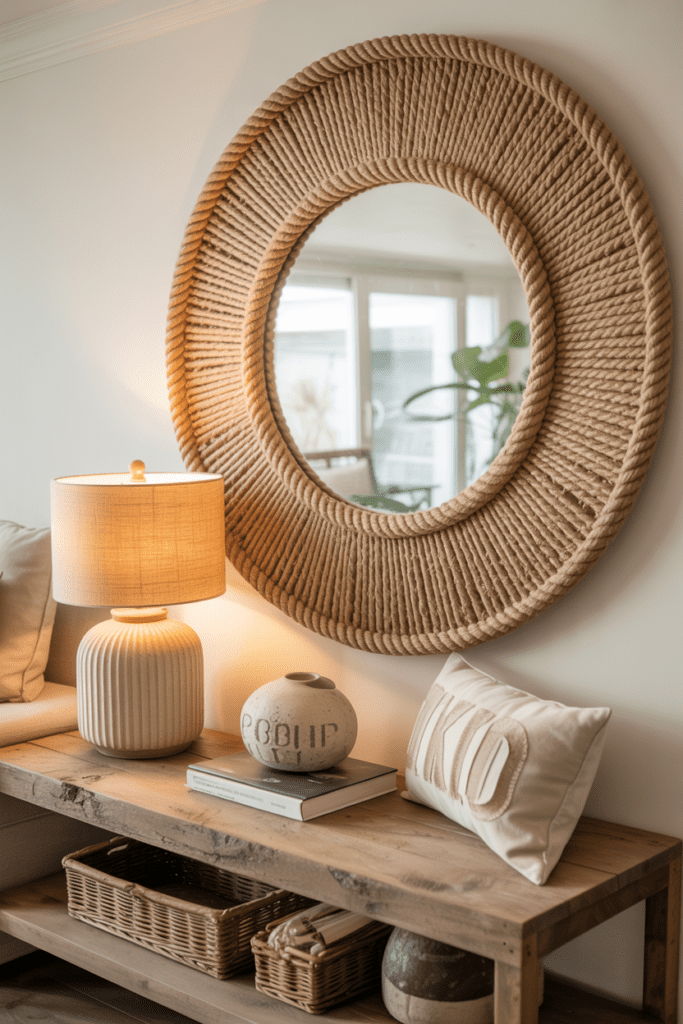
Nothing says “nautical” quite like thick, braided rope — and no, I’m not talking about rigging your living room like a pirate ship. Think decorative rope mirrors, rope-wrapped vases, or even a rope chandelier. These pieces add texture and that unmistakable seafaring feel without going overboard (pun absolutely intended).
A rope mirror above a console table is honestly one of the easiest wins in nautical decor. It’s bold, it’s textural, and it costs a fraction of what a fancy statement mirror would. IMO, it’s one of the best “high impact, low effort” moves you can make.
Quick tips for rope decor:
- Stick to natural jute or manila rope for an authentic look
- Avoid synthetic, shiny rope — it looks cheap
- Use it sparingly; one or two rope pieces per room is plenty
2. Go for a Navy, White, and Sand Color Palette
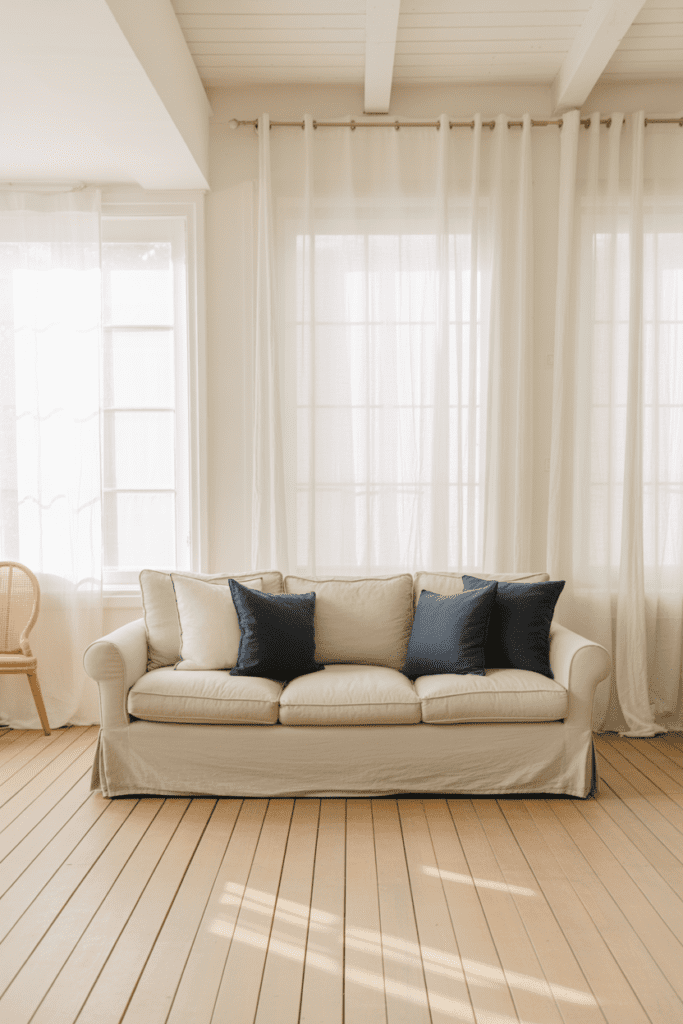
Here’s the thing about nautical decor — the color palette does half the work for you. Navy blue, crisp white, and warm sand tones form the holy trinity of coastal style. Get this combination right, and you’ve already won.
Navy and white together feel classic and clean. Add sand or natural wood tones to keep things warm and grounded. This palette works on walls, furniture, textiles, and accessories — it’s incredibly versatile.
Ever wondered why this combination never goes out of style? It mirrors the actual colors of the sea, the sky, and the shore. Your brain literally relaxes when it sees it. Pretty clever, right?
3. Hang Vintage Nautical Maps as Wall Art
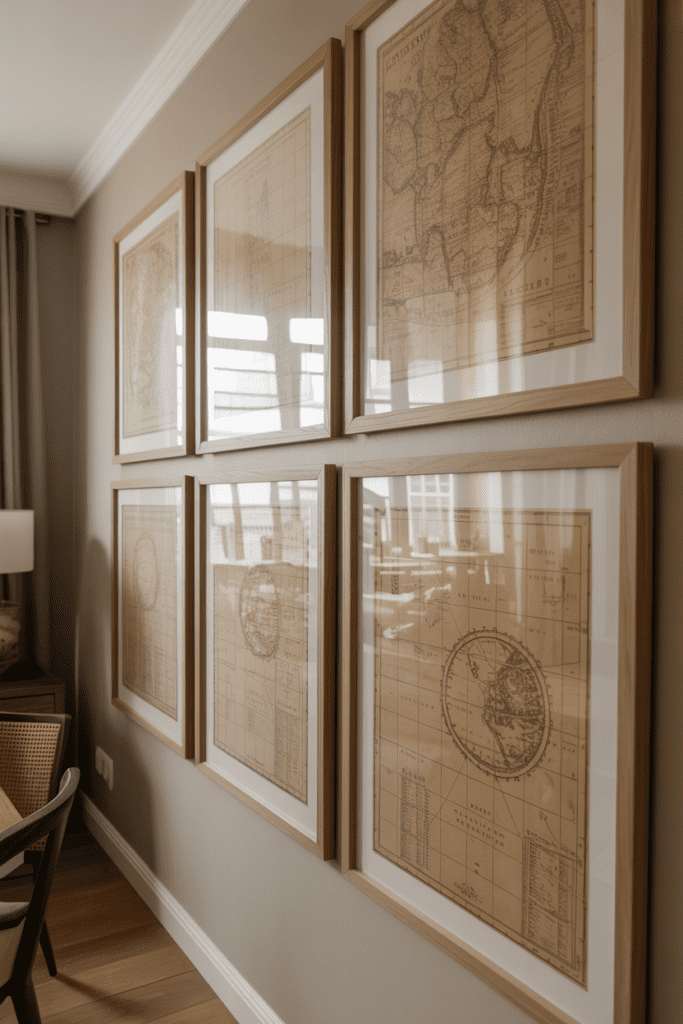
Forget generic canvas prints. Old nautical maps and sea charts make for genuinely stunning wall art — they’re interesting to look at, they spark conversation, and they carry a sense of history and adventure.
You can find vintage-style reproductions online for very reasonable prices, or hunt for actual antique maps at flea markets. Frame them simply in thin black or natural wood frames and let the maps do the talking.
Why this works so well:
- Maps add intellectual depth to the decor, not just visual
- They work in living rooms, studies, and hallways
- Large-format maps can anchor an entire gallery wall
4. Use Striped Textiles Strategically
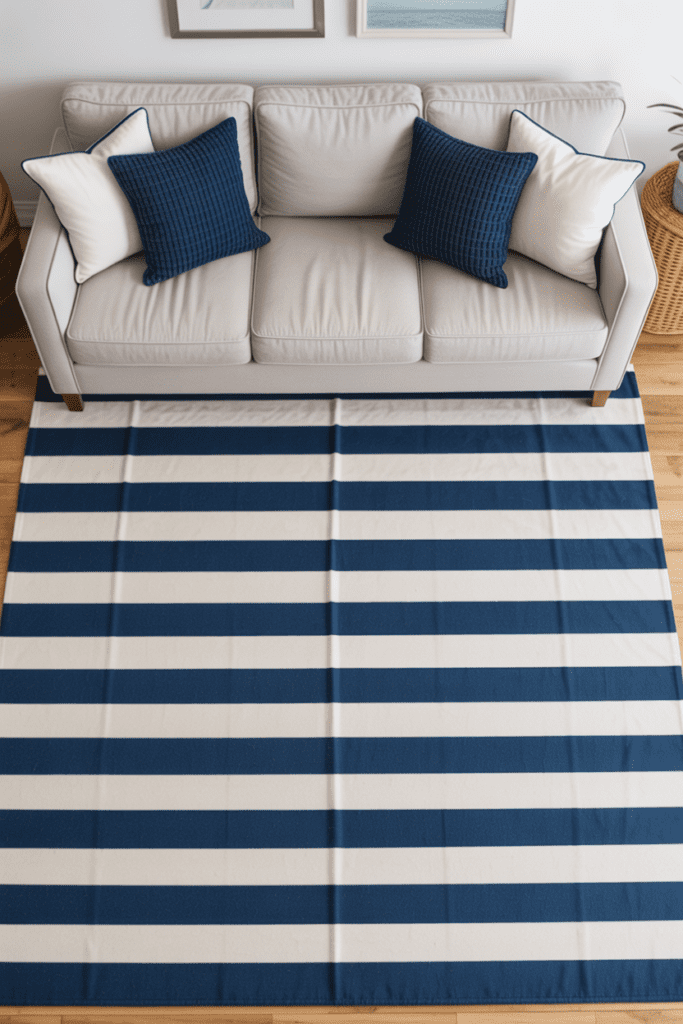
Stripes are the bread and butter of nautical style — but you have to be strategic about them. Horizontal navy-and-white stripes on throw pillows, area rugs, or curtains instantly evoke that coastal, Breton vibe.
The trick is not to stripe everything. One or two striped elements per room is chic. Six striped elements is a headache. Pick your hero stripe piece and build around it.
A striped rug under a neutral sofa with solid navy throw pillows? Chef’s kiss. A striped rug, striped curtains, striped pillows, and a striped throw? That’s… a lot. :/
5. Add a Ship Wheel as a Focal Point
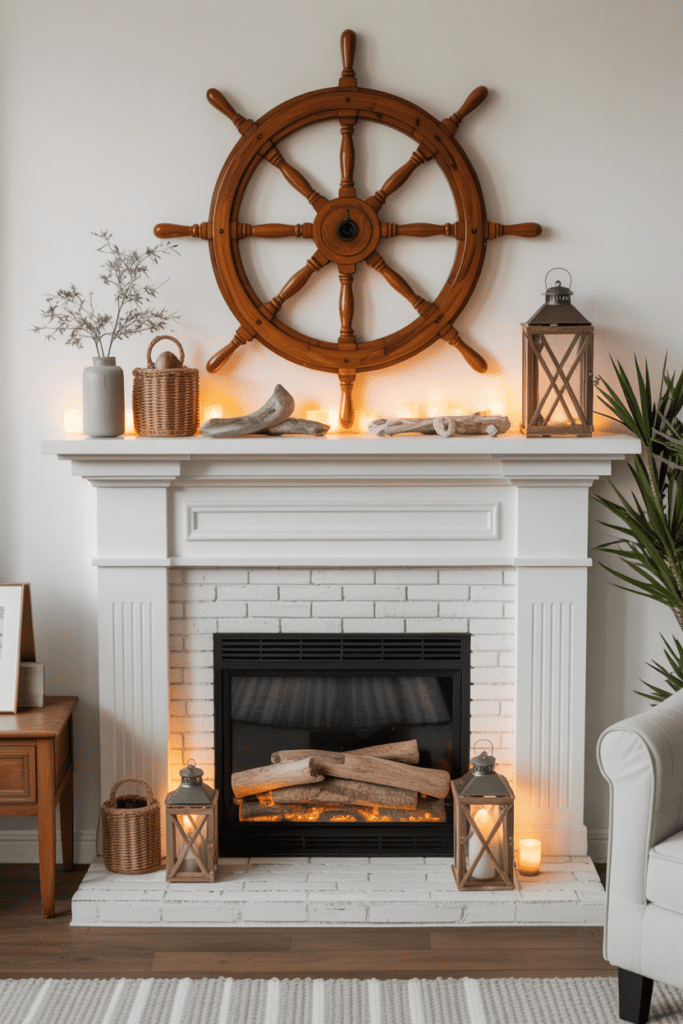
A decorative ship wheel is one of those pieces that people either love or think is too on-the-nose. Here’s my take: if you style it right, it’s absolutely stunning. If you just stick it on a wall and call it a day, it looks like a prop from a Halloween party.
The key is context. A ship wheel works beautifully as part of a curated gallery wall, above a fireplace mantel, or as part of a larger vignette on a shelf. Give it breathing room and pair it with more subtle nautical elements.
6. Bring In Driftwood Décor
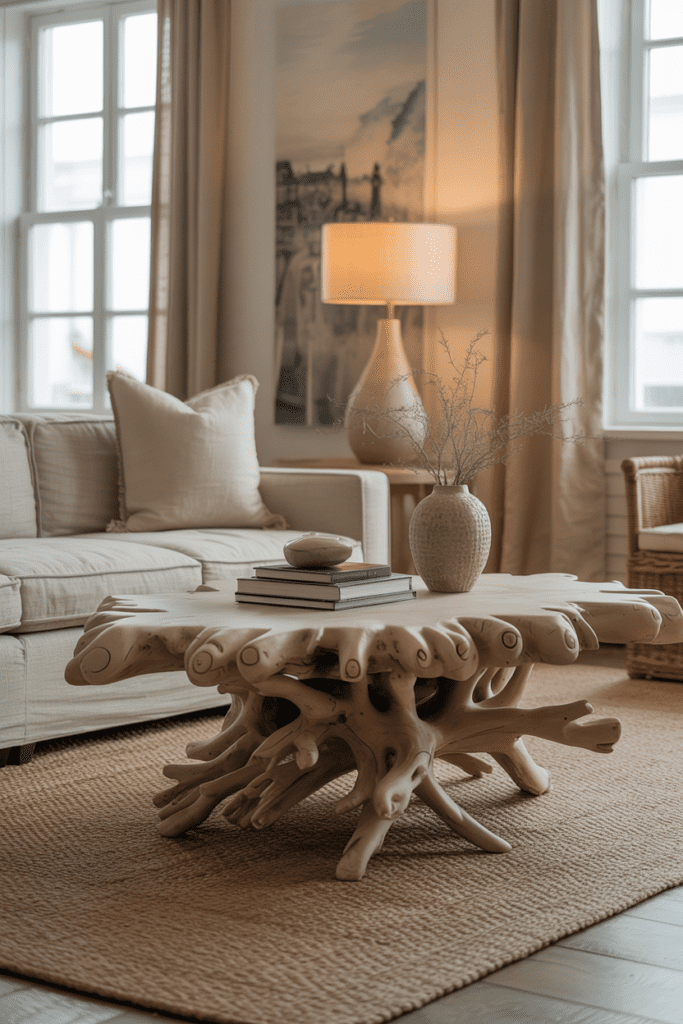
Driftwood is one of the most underrated materials in coastal decor. It’s natural, sculptural, and completely free if you’re near a beach (lucky you). Even if you’re buying it, driftwood pieces — whether raw, framed, or turned into furniture — bring incredible organic texture to a space.
A driftwood coffee table, a collection of small driftwood pieces on a shelf, or even a driftwood lamp base — all of these feel collected and authentic rather than mass-produced.
7. Incorporate Woven Seagrass and Rattan
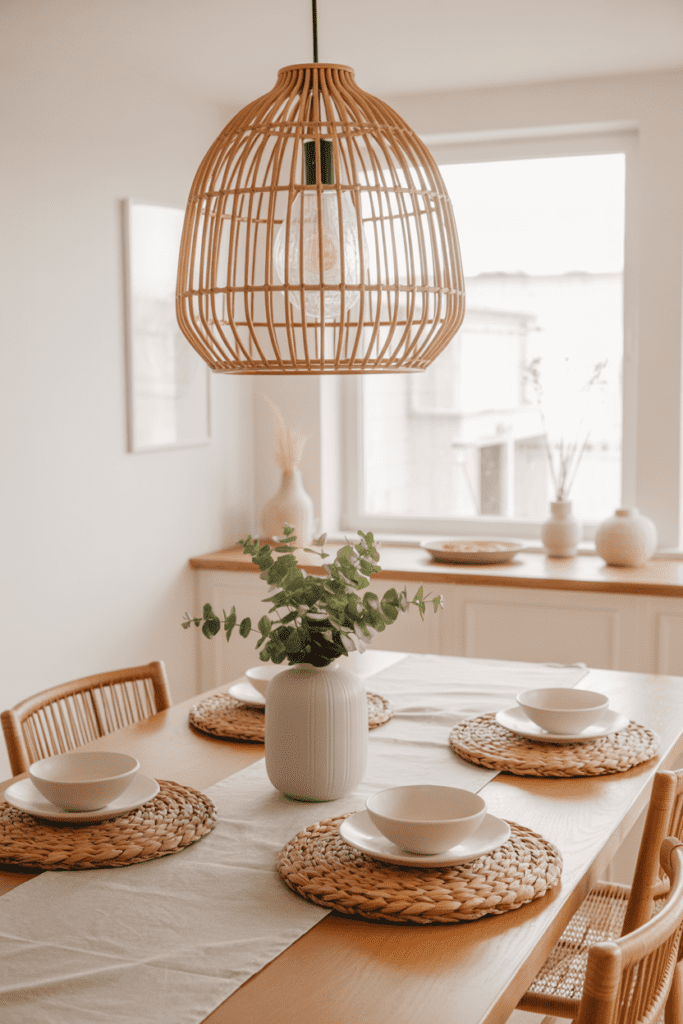
Seagrass baskets, rattan chairs, and woven placemats connect the nautical aesthetic to the natural world in the best possible way. These materials feel beachy without being cliché, and they layer beautifully with navy and white tones.
A rattan pendant light over a dining table is one of those decor choices that photographs incredibly well and looks even better in person. Pair it with a linen tablecloth and some simple white ceramics, and you’ve basically created a coastal restaurant vibe at home.
8. Display Collected Shells and Coral (Tastefully)
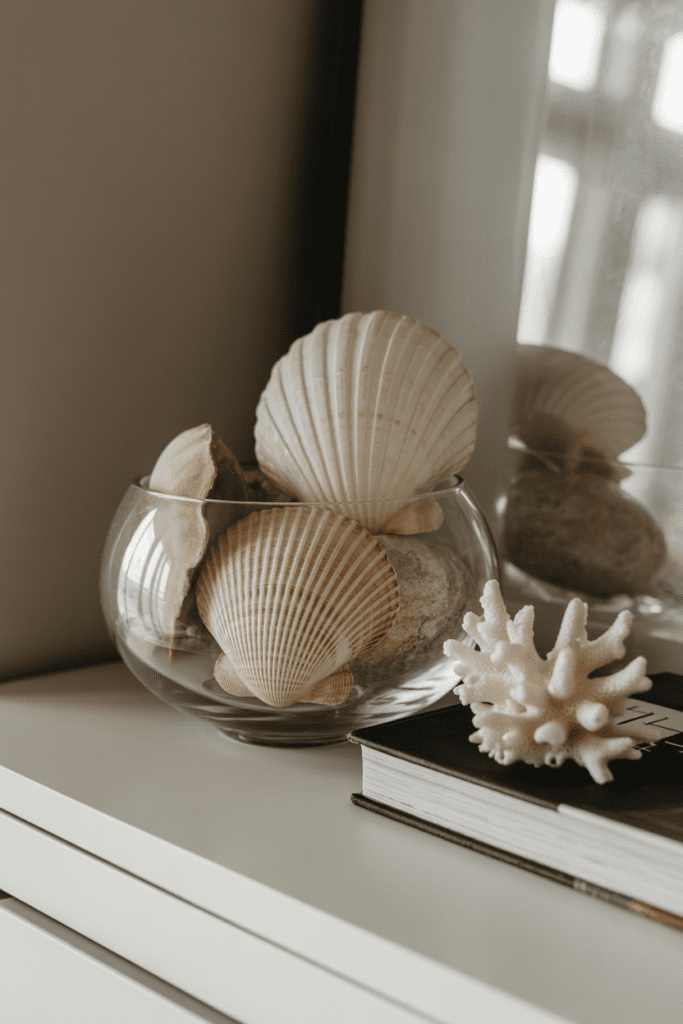
Okay, hear me out — shells and coral can absolutely work in home decor, but there’s a fine line between “curated coastal collection” and “souvenir shop explosion.” The key word here is restraint.
A few large statement shells in a glass bowl, a piece of white coral on a stack of books, or a shadow box with shells you’ve actually collected from travels — these feel personal and intentional.
What to avoid:
- Shells hot-glued onto frames or mirrors (just… no)
- Tiny shells scattered everywhere with no purpose
- Fake coral in neon colors
9. Install Porthole-Style Mirrors
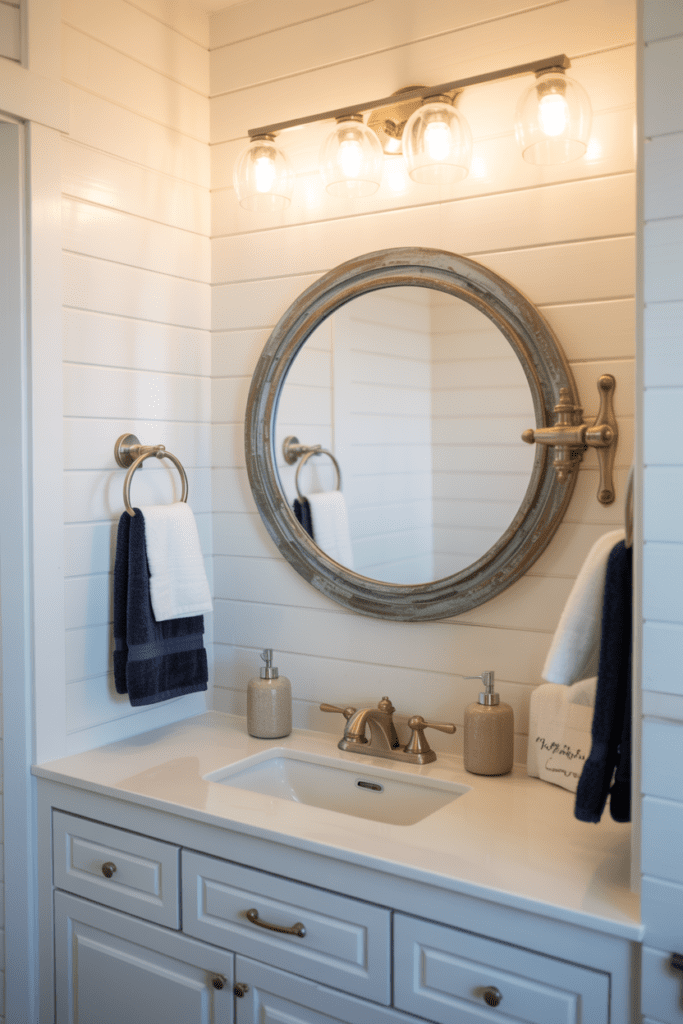
Round porthole mirrors are one of the cleverest nautical decor hacks out there. They reference the sea without being literal, they work in almost every room, and they make small spaces feel larger.
A porthole mirror in a bathroom is an absolute game-changer — it’s functional, it looks intentional, and it transforms the whole feel of the room. Grouping two or three porthole mirrors of different sizes on a wall creates a dynamic, ship-inspired gallery moment.
10. Use Lantern-Style Lighting
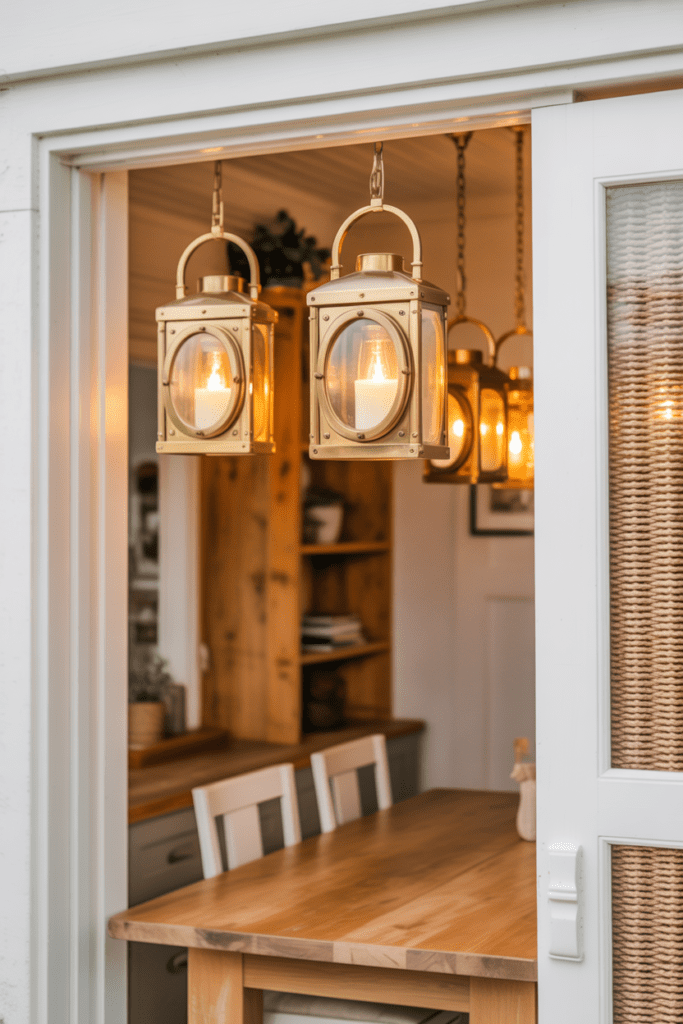
Nautical lanterns — whether wall-mounted, hanging, or tabletop — bring a warm, seafaring quality to any room. Think brass or aged bronze finishes, glass panels, and clean geometric shapes.
Lantern-style pendant lights work especially well in entryways, kitchens, and dining rooms. They reference lighthouse and ship lighting in a way that’s subtle but instantly recognizable to anyone who loves coastal style.
FYI, brass fixtures are having a massive moment right now, and nautical lanterns fit perfectly into that trend. Win-win. 🙂
11. Layer in Linen and Cotton Fabrics
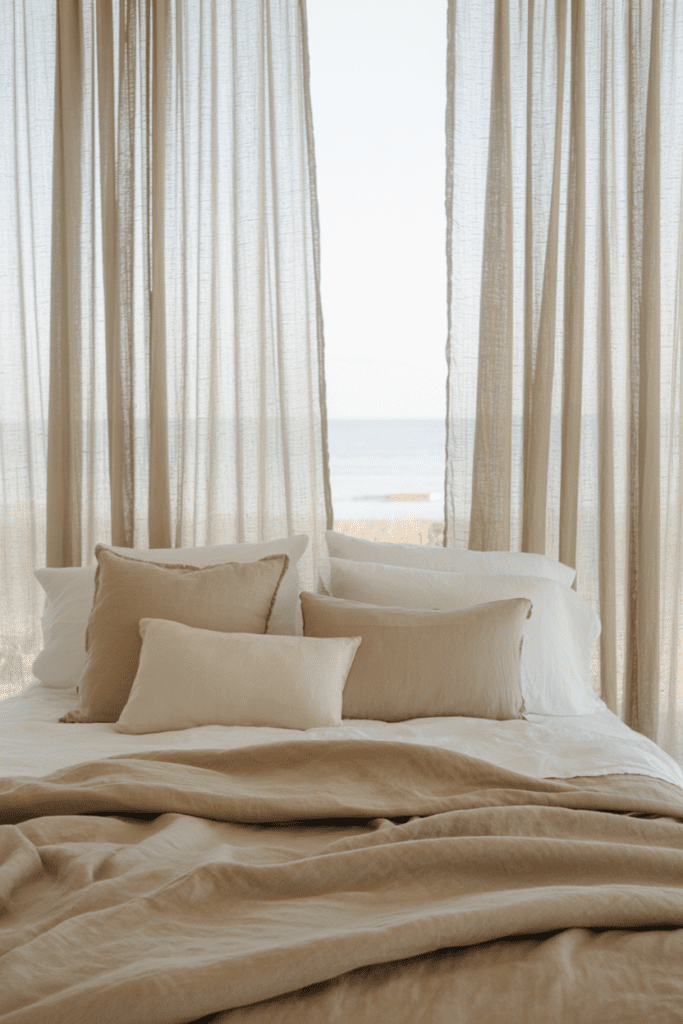
The fabrics you choose matter just as much as the furniture and accessories. Natural linen and cotton in light, neutral tones feel inherently coastal — they’re breathable, casual, and unpretentious.
Swap out heavy velvet or synthetic curtains for sheer linen panels. Replace stiff throw pillows with soft, slightly wrinkled linen covers. The goal is to create a space that feels like a relaxed beach house, not a formal dining room.
12. Add a Nautical Chart or Compass Rose Detail
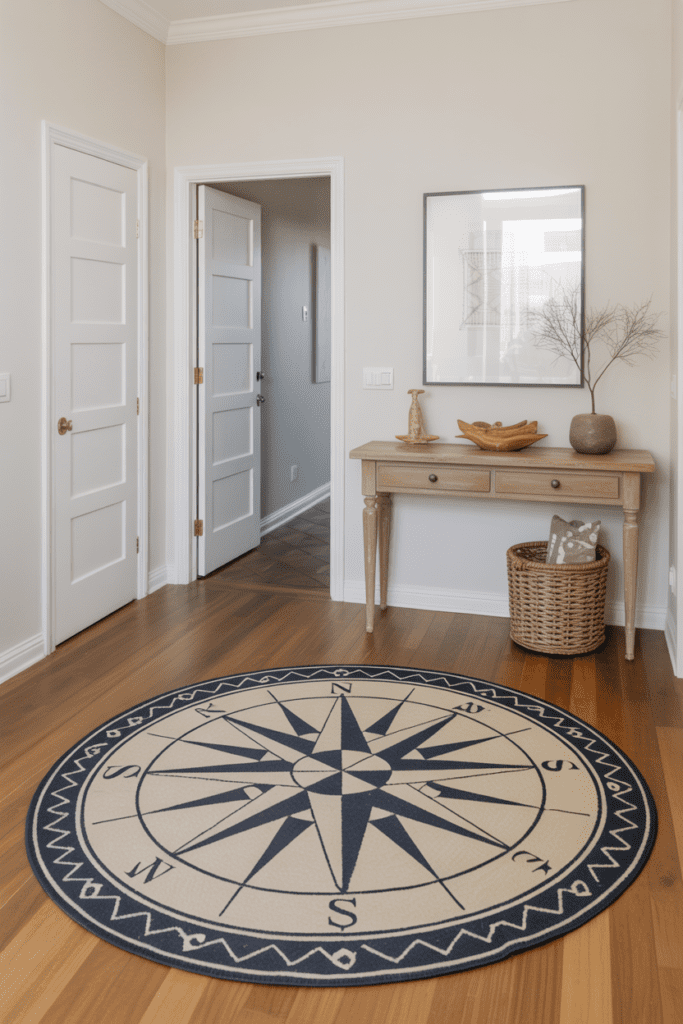
A compass rose motif — whether on a rug, a tile backsplash, a throw pillow, or framed art — is one of those design details that nautical decor enthusiasts absolutely love. It’s specific enough to feel intentional but versatile enough to work in many styles.
A compass rose rug in an entryway sets the tone for the whole home before anyone even walks through to the main rooms. It’s a small detail with a big impact.
13. Use Blue-and-White Ceramic Accessories
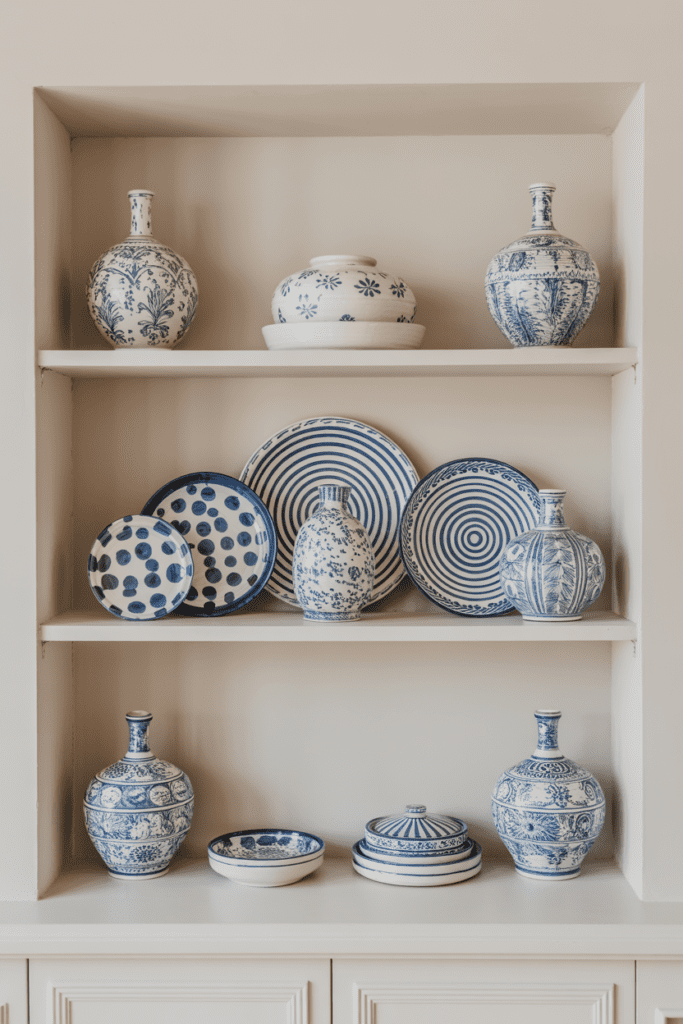
Blue and white ceramics have a long, rich design history across coastal cultures — from Portuguese azulejo tiles to Greek island pottery. Incorporating blue and white ceramics into your nautical decor adds depth, history, and elegance.
Think blue-and-white vases, bowls, plates displayed on a shelf, or even tile accents in a kitchen or bathroom. These pieces layer beautifully with the navy and white palette and feel collected rather than matched.
14. Create a Gallery Wall with Nautical Prints
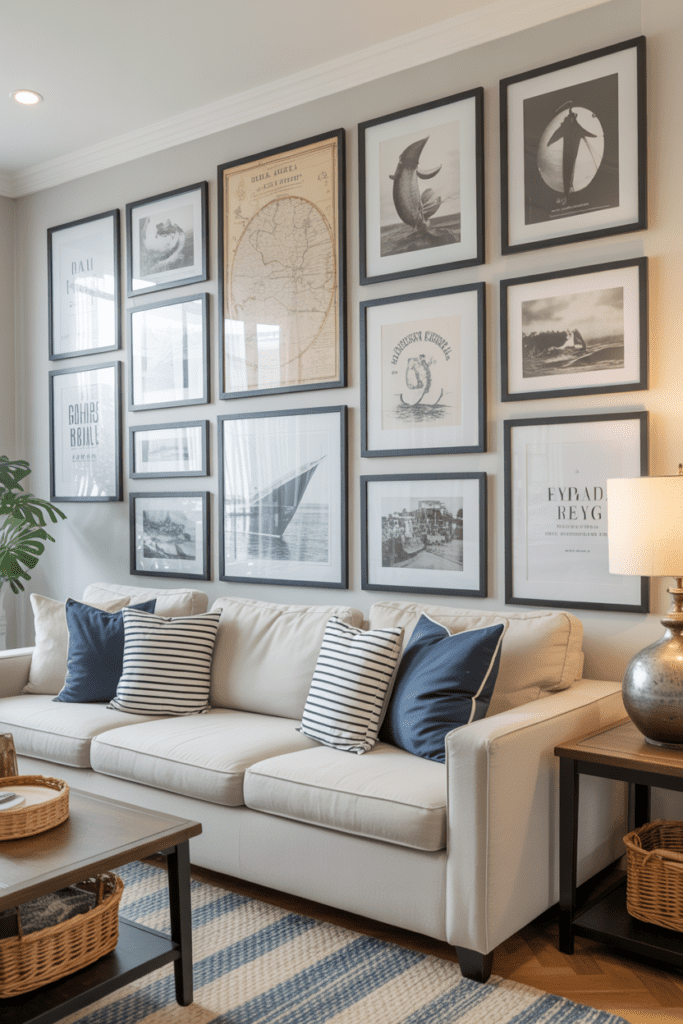
A well-curated nautical gallery wall can be the defining feature of an entire room. The trick is mixing different types of prints — vintage maps, botanical prints of sea life, typography prints with sea-related quotes, black-and-white photography of boats or coastlines — to create visual interest.
Building a great nautical gallery wall:
- Mix frame sizes but keep the finish consistent (all black, all natural wood, etc.)
- Include at least one large anchor piece to ground the arrangement
- Leave breathing room between frames — don’t pack them too tightly
- Combine horizontal and vertical orientations for dynamism
15. Bring in Natural Light with Sheer Curtains
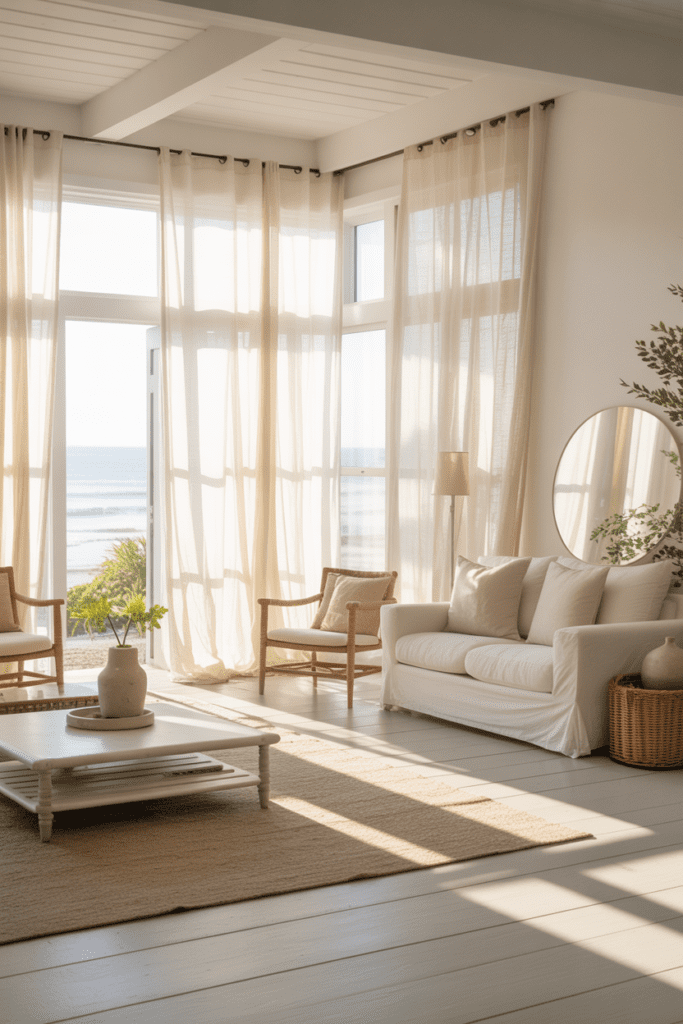
One thing almost every coastal home has in common? Lots of natural light. You can replicate this feeling even without ocean views by maximizing the light you do have.
Swap heavy curtains for sheer white or linen panels that let light filter through softly. Add mirrors strategically to bounce light around the room. The goal is to create that bright, airy feeling that makes you think of a morning on the waterfront.
16. Use Wooden Elements with a Weathered Finish
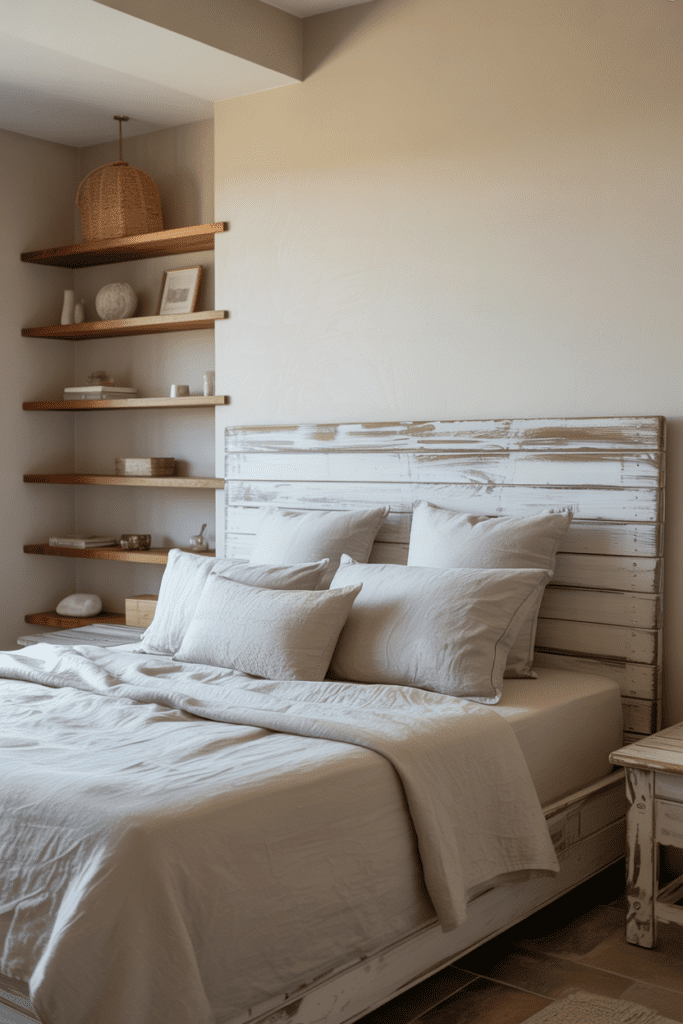
Weathered or whitewashed wood is a cornerstone of nautical and coastal decor. It references old boat decks, seaside boardwalks, and beach house architecture in the most natural way possible.
A whitewashed wooden console table, a reclaimed wood shelf, or a weathered wood headboard can completely transform the feel of a room. These pieces work best when they’re simple in design — let the texture and finish do the storytelling.
Best places to use weathered wood:
- Headboards and bed frames
- Console or entryway tables
- Open shelving in kitchens
- Accent walls or ceiling beams
17. Add Aquatic Life Art and Sculptures
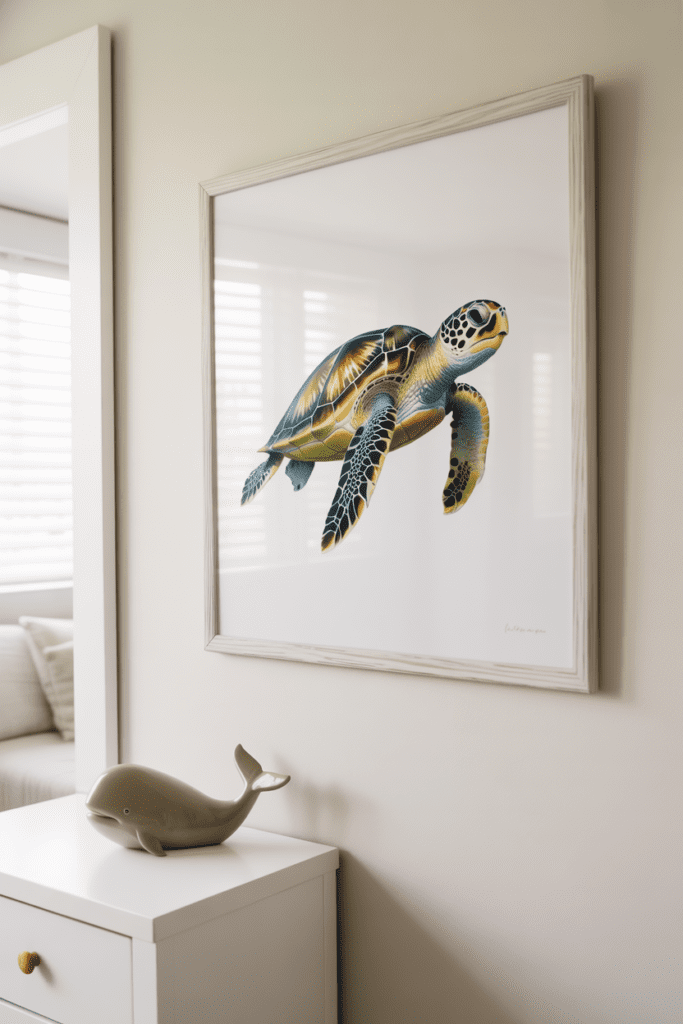
Last but definitely not least — art and sculptures inspired by sea life add a playful, organic dimension to nautical decor. Think watercolor prints of fish, jellyfish, or sea turtles; ceramic whale figurines; or sculptural starfish.
The key, again, is intentionality. One beautifully framed watercolor print of a sea turtle in a bathroom feels sophisticated. A dozen plastic fish scattered around a living room feels chaotic. Choose pieces that genuinely excite you, display them thoughtfully, and let them breathe.
How to Pull It All Together
Now that you’ve got 17 ideas, you’re probably wondering: how do I actually combine these without making my home look like a naval museum? Good question.
The answer is layering with restraint. Pick a core palette (navy, white, sand), choose three to five ideas that genuinely resonate with your personal style, and build from there. Not every room needs every element — in fact, the best nautical spaces feel curated and considered, not comprehensive.
A simple room-by-room approach:
- Living room: Rope mirror, striped rug, blue-and-white ceramics, linen pillows
- Bedroom: Weathered wood headboard, sheer curtains, nautical map art, natural textures
- Bathroom: Porthole mirror, lantern lighting, shell accessories, navy and white towels
- Entryway: Compass rose rug, lantern pendant, gallery wall
Start small, see what feels right, and keep adding. Nautical decor is one of those styles that grows organically — the more you live with it, the more clearly you’ll see what your space actually needs.
Final Thoughts
Nautical home decor isn’t about recreating a ship’s cabin or proving you own a boat (though if you do, respect). It’s about bringing the calm, open, breezy energy of the coast into your everyday life wherever you happen to live.
The ideas in this list range from big, statement-making moves like a driftwood coffee table to small, affordable touches like a rope-wrapped vase. The beauty of nautical decor is that it scales to your budget, your space, and your personal style. You don’t have to do everything — you just have to do a few things really well.
So pick your favorites, start with one room, and see where the current takes you.