
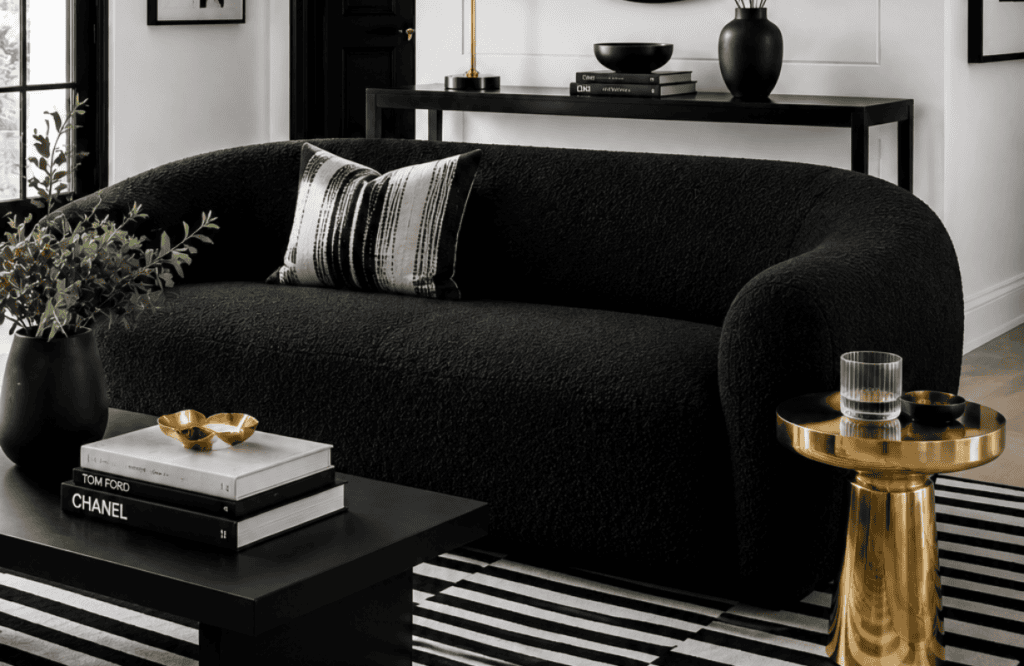
Picture this: you walk into a living room and immediately forget you’re standing in an apartment. No cramped corners, no builder-grade beige walls, no random popcorn ceiling texture staring back at you. Just pure, unapologetic style packed into a space that happens to share walls with a neighbor.
I’ve spent years touring apartments, scrolling design blogs at 1 a.m., and occasionally judging my own living room a little too harshly. Through all that, I’ve learned one thing: luxury apartment living rooms aren’t about square footage they’re about smart choices. You don’t need a mansion to feel like you’re living in one, and you definitely don’t need a decorator on speed dial.
What actually separates a “nice” apartment from a genuinely luxurious one? It usually comes down to a handful of decisions: the furniture you commit to, the lighting you choose, the restraint you show with clutter, and the confidence to pick a direction and stick with it. Renters get a bad rap for being stuck with boring spaces, but honestly, some of the most stunning living rooms I’ve seen were in rentals, not owned homes.
So let’s get into 15 living rooms that prove small (or even mid-sized) spaces can absolutely deliver that high-end feel. I’ll walk you through what makes each style work, what to steal for your own place, what it might cost you in upkeep, and where I think some trends are honestly overrated. Ready? Let’s go.
1. The Modern Minimalist Living Room
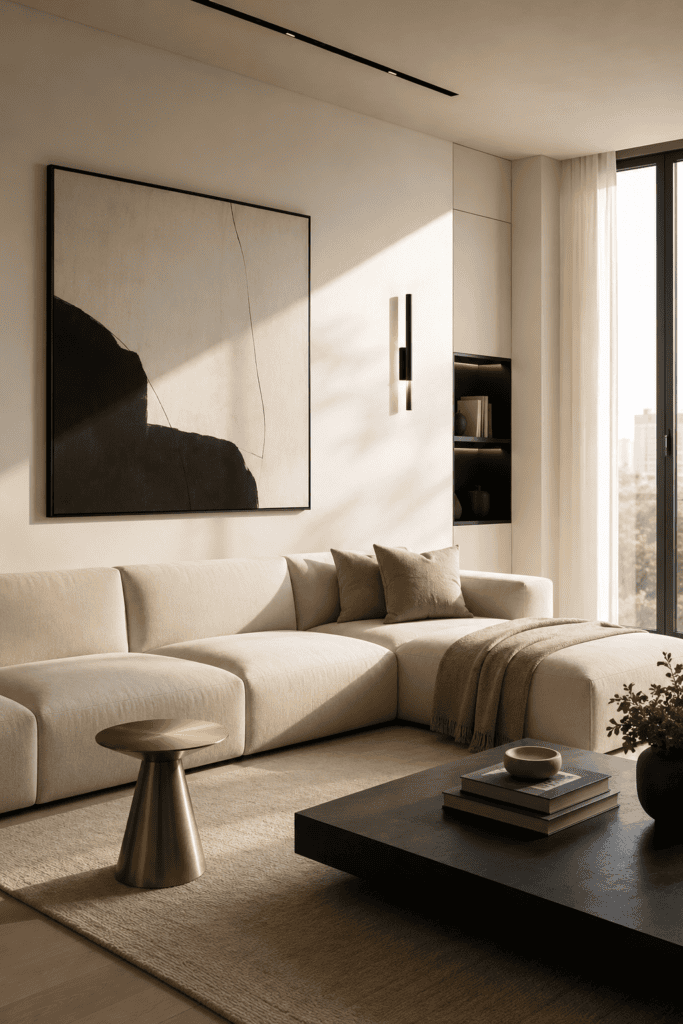
Minimalism gets a bad reputation for feeling cold, but done right, it’s the opposite. This style leans on clean lines, neutral palettes, and quality over quantity.
Think one statement sofa instead of five mismatched pieces. Think a single piece of art instead of a gallery wall crammed with stuff you grabbed on sale because it was 40% off.
- A low-profile sectional in cream or charcoal
- One oversized piece of abstract art
- Matte black or brushed brass accents
- Hidden storage so nothing looks cluttered
- A single statement lamp instead of three mismatched ones
IMO, minimalism works best in smaller apartments because it tricks the eye into thinking there’s more space than there actually is. Ever notice how a cluttered room instantly feels smaller? Yeah, that’s not a coincidence—your brain is trying to process every object in the room, and the more it has to sort through, the more chaotic everything feels.
2. The Warm Industrial Loft Look
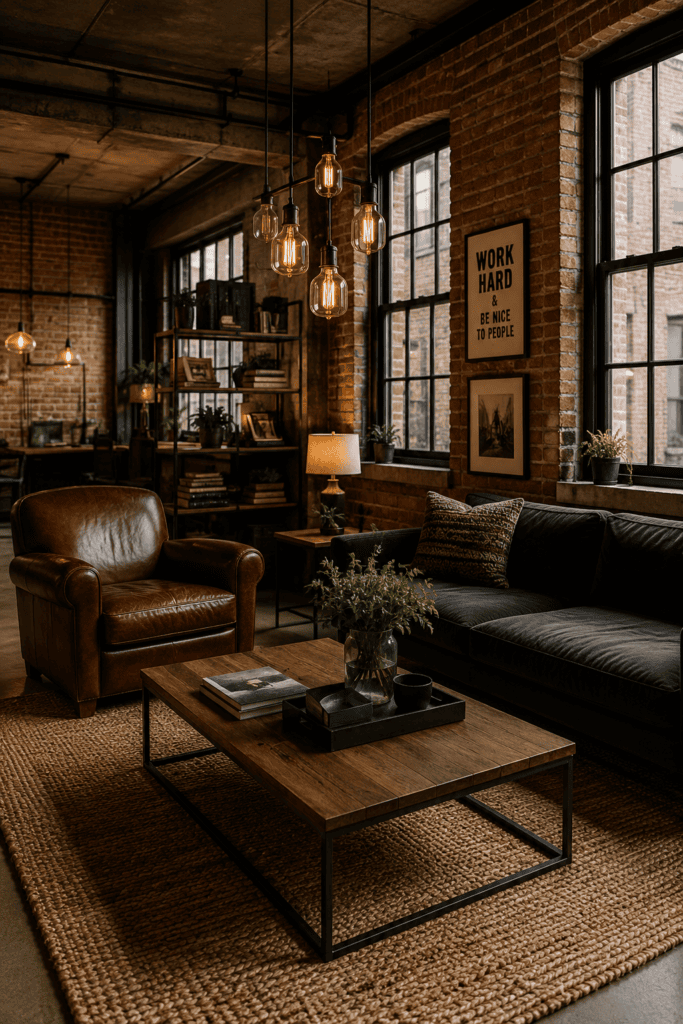
Exposed brick. Concrete ceilings. Black metal window frames. This look screams “converted warehouse,” even if your apartment was built in 2015 and has never seen a factory floor in its life.
The trick is balancing all that hard, cold material with warm textures—think leather sofas, wool throws, and wood coffee tables. Otherwise you end up with a space that feels more like a parking garage than a home.
I lived in a loft-style apartment for two years, and I’ll be honest: the exposed pipes looked amazing in photos but collected dust like nobody’s business. Worth it? Mostly, yes. Just don’t skip the dusting, or you’ll be sneezing every time you turn on the ceiling fan.
What Makes It Work
- Exposed brick or a faux brick accent wall
- Leather club chairs
- Black metal shelving
- Warm Edison-bulb lighting
- A large area rug to soften all that concrete underfoot
One thing people underestimate with industrial style is acoustics. All that hard surface—brick, concrete, metal—bounces sound around like crazy. A big rug and some heavy curtains aren’t just decorative here; they’re doing real work to keep the room from echoing like an actual warehouse.
3. The Scandinavian-Inspired Retreat
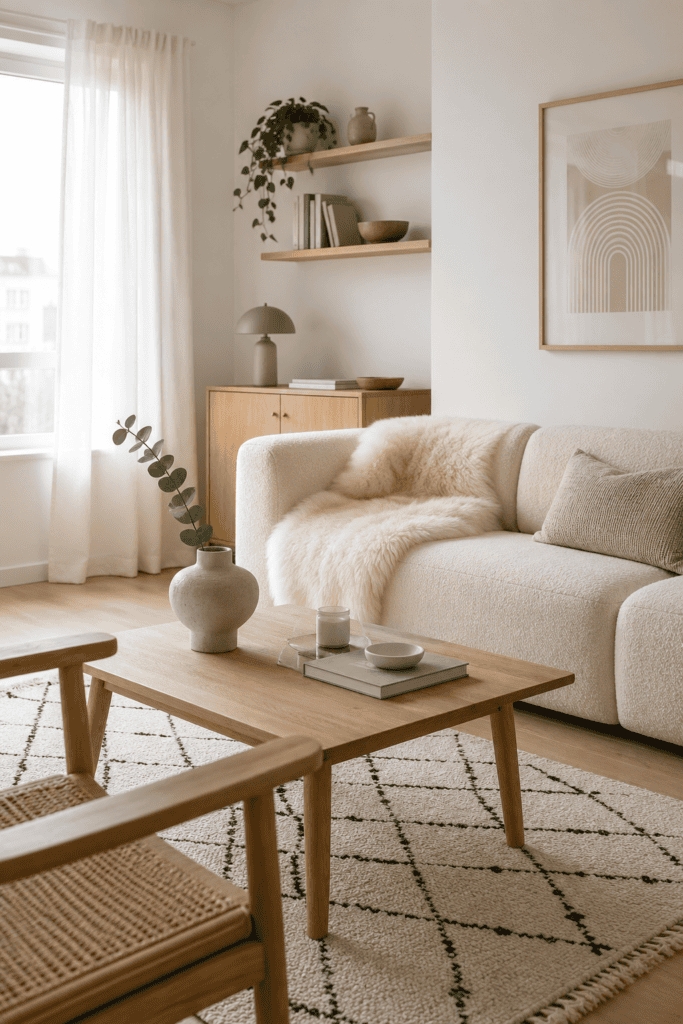
Scandi design has been everywhere for a reason—it’s functional, cozy, and effortlessly elegant. Light wood, soft textiles, and a muted color palette define this look.
This style thrives in apartments with good natural light. If your living room only gets sunlight for twenty minutes a day, you might need to lean harder into layered lighting to compensate, because a Scandi room under fluorescent overhead lighting just feels sad.
- Light oak furniture
- Wool or sheepskin throws
- Sheer curtains for soft, diffused light
- Simple, geometric rugs
- Ceramic or glass vases with a single stem of greenery
Ever wonder why hotel lobbies in Copenhagen look so effortlessly chic? This is basically why. Scandinavian interiors prioritize function first, then layer beauty on top of that function, instead of the other way around. Nothing in a well-done Scandi room is purely decorative—the throw blanket actually gets used, the reading lamp actually gets turned on.
4. The Glam Living Room With Metallic Accents
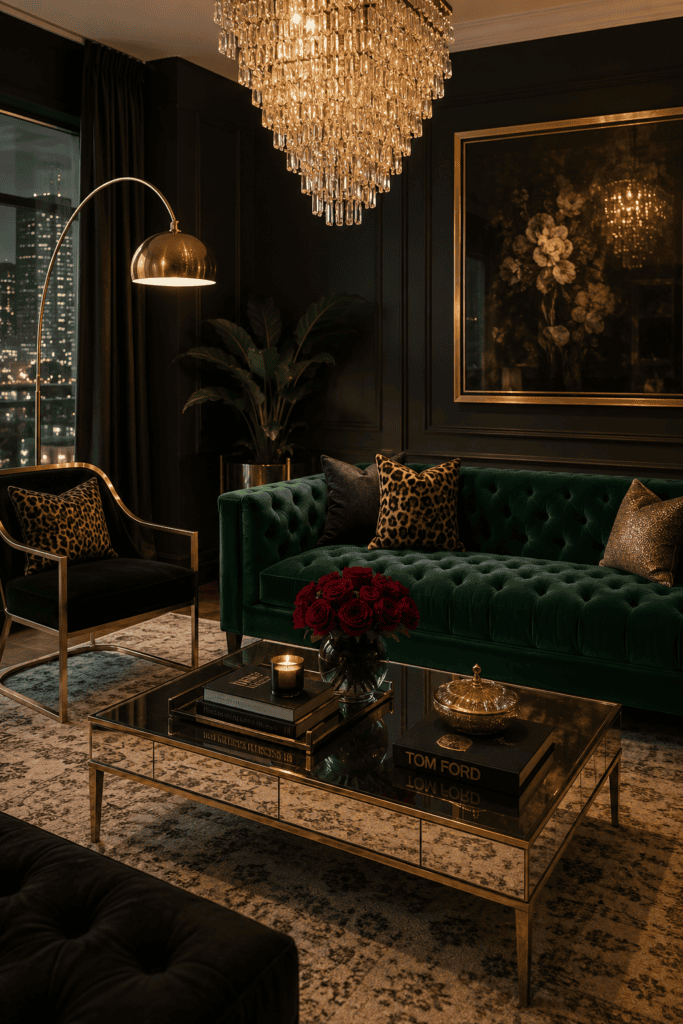
This one’s for people who want their living room to feel like a night out. Velvet upholstery, mirrored furniture, and gold or brass fixtures create instant drama.
The key here is restraint. One glam piece looks luxurious. Five glam pieces look like a nightclub that closed down in 2011 and never got the memo.
- A tufted velvet sofa in emerald or navy
- A mirrored coffee table
- Brass floor lamps
- Statement chandelier lighting
- A single bold accent chair, not three
I’ll admit, I was skeptical about velvet furniture at first—seemed high-maintenance, seemed like the kind of thing you’d baby forever. But a good performance velvet holds up surprisingly well, even with a cat who insists on testing every surface in the apartment. Just steer clear of the cheap stuff; it pills and flattens fast, and then your glam sofa looks more “thrift store” than “five-star hotel.”
5. The Neutral Palette With Bold Textures
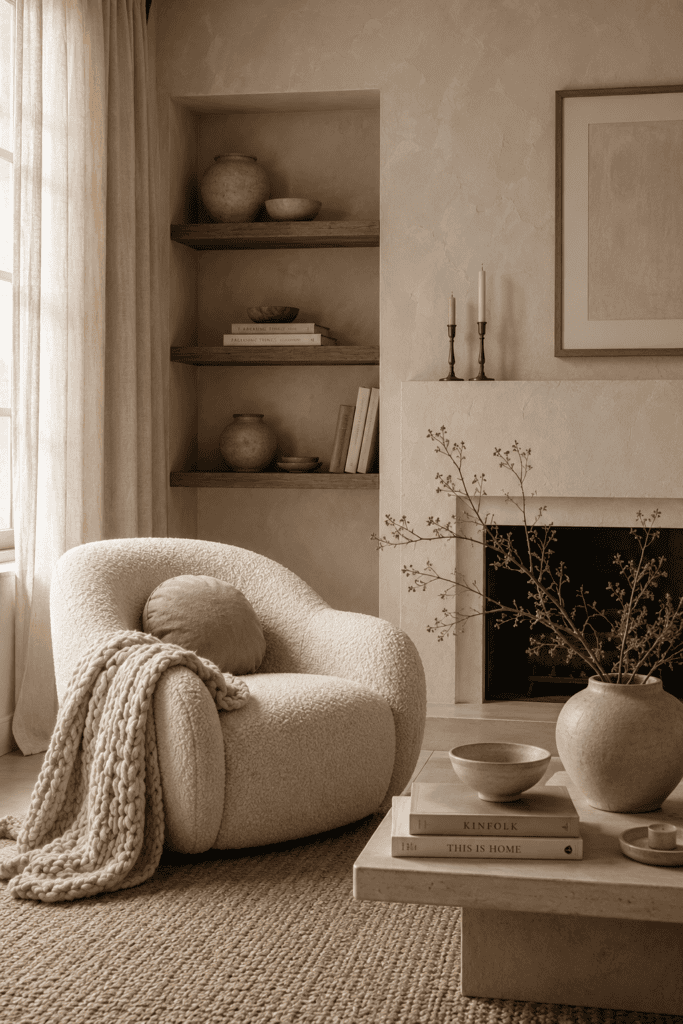
Not every luxury living room needs color to feel expensive. Some of the most sophisticated spaces stick to beige, cream, and taupe, then layer in texture to keep things interesting.
- Bouclé armchairs
- Chunky knit throws
- Textured wallpaper or plaster walls
- Natural fiber rugs (jute, sisal)
- Linen or tweed upholstery for contrast
This approach works especially well in small apartment living rooms because monochrome color schemes visually expand a space. It’s a classic designer trick, and honestly, it just works. When everything sits in the same tonal family, your eye doesn’t get stopped by hard color transitions, so the whole room reads as bigger and calmer.
The risk with this style is flatness. If every texture is smooth, a neutral room can feel like a hospital waiting room. That’s why texture is doing all the heavy lifting here—bouclé, boucle-adjacent knits, nubby linen, and rough-hewn wood keep things visually interesting even without a single bold color in sight.
6. The Bold Maximalist Statement Room
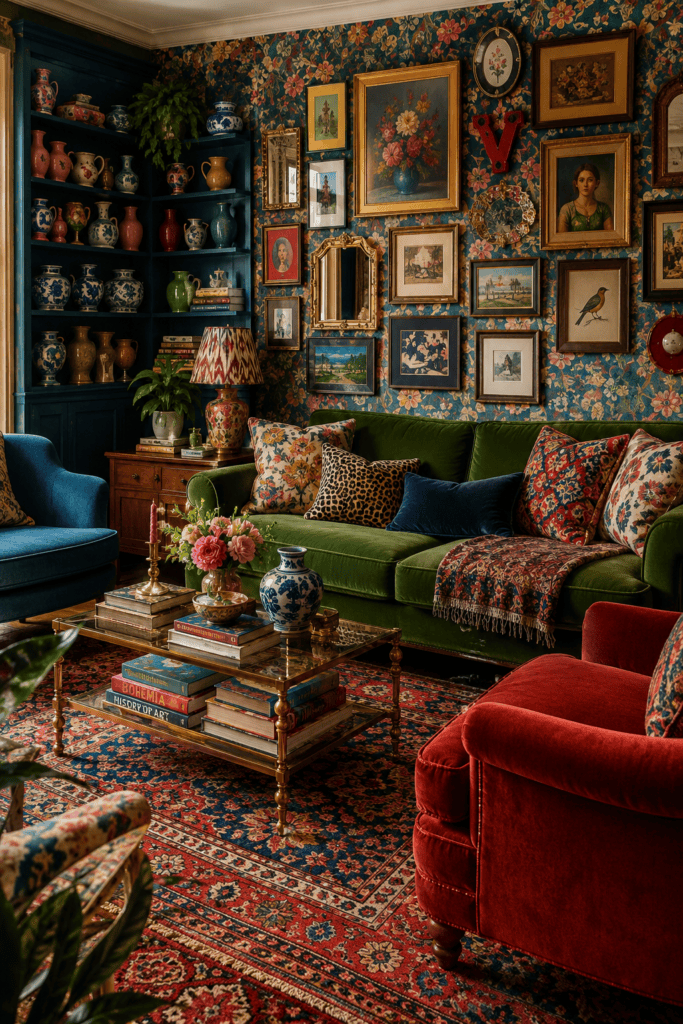
If minimalism isn’t your thing, welcome to the other end of the spectrum. Maximalist living rooms layer patterns, colors, and personal collections into a space that tells a story.
This isn’t about clutter—it’s curated chaos, if that makes sense. Every piece earns its spot, even if there are a lot of spots to earn.
- Patterned wallpaper
- Layered rugs
- Gallery walls with mismatched frames
- Bold color-blocked furniture
- Collected objects displayed with intention (books, ceramics, travel finds)
Fair warning: this style isn’t for the indecisive. You need to commit, or it just looks like you couldn’t pick a theme. The best maximalist rooms I’ve seen have one unifying thread—maybe a color that repeats throughout, or a specific era of design—that ties all the “more is more” energy together instead of letting it spiral into visual noise.
7. The Coastal-Inspired Luxe Look
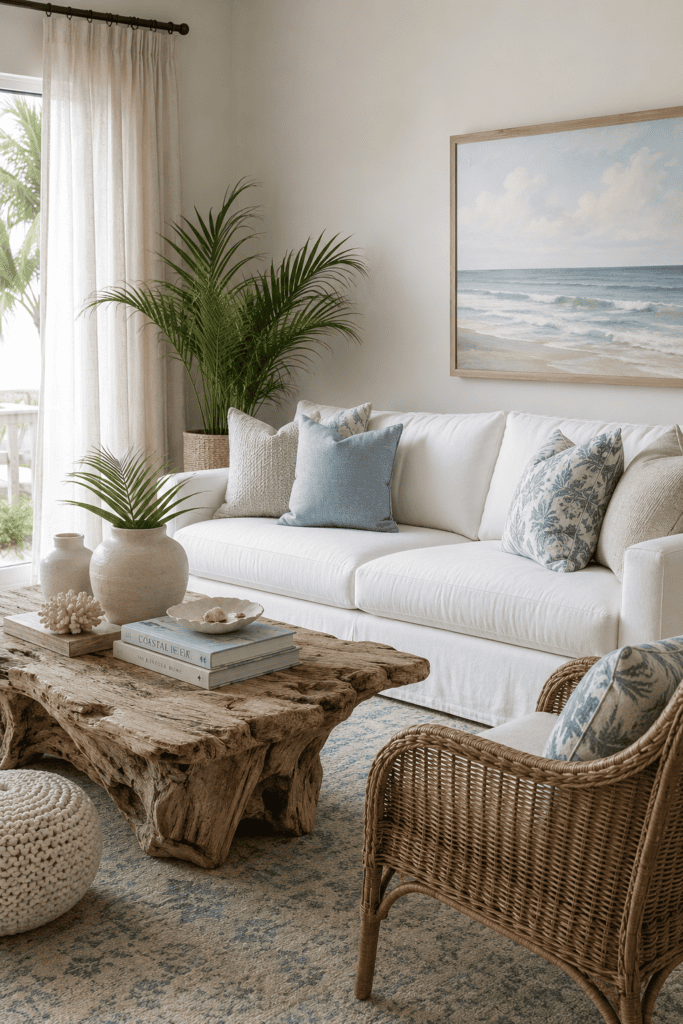
Coastal design has evolved way past anchors and seashells (thank goodness, because nobody needs another decorative ship’s wheel). Modern coastal apartments use soft blues, whites, and natural textures to create a relaxed but polished feel.
- Linen slipcovered sofas
- Woven rattan accent chairs
- Driftwood-toned coffee tables
- Airy, sheer window treatments
- Ceramic accents in sandy, sun-bleached tones
This style is basically the living room equivalent of a deep breath. If your day-to-day is stressful, IMO this is one of the most calming options on this list. There’s a reason spa lobbies and boutique hotels near the water lean into this aesthetic—it genuinely lowers the temperature of a room, visually speaking.
8. The Dark and Moody Living Room
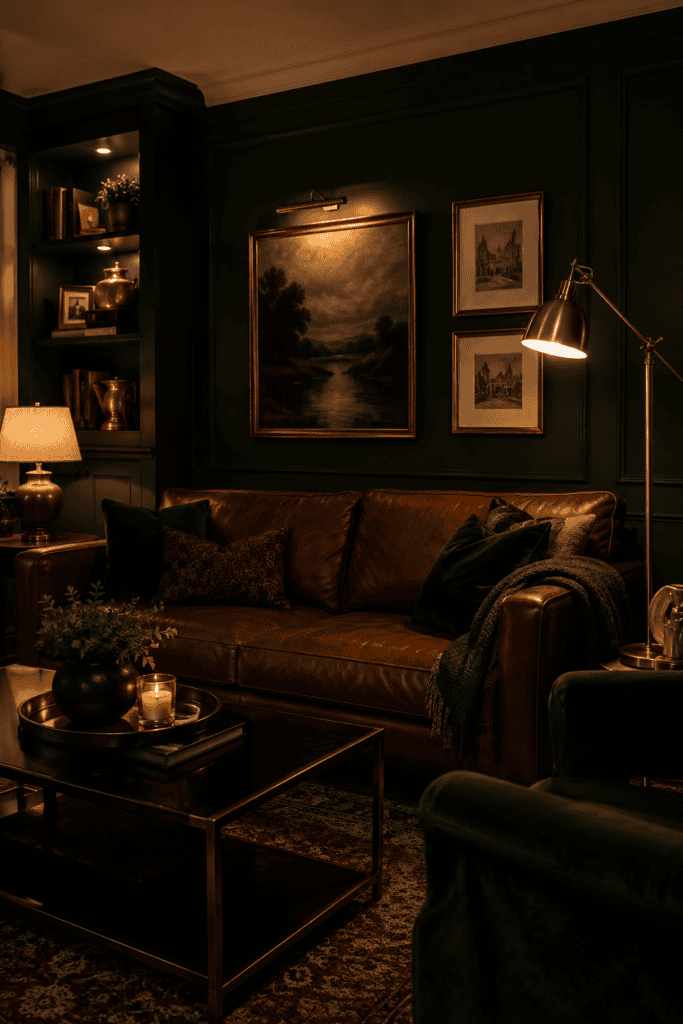
Dark walls in a small apartment sound like a design disaster waiting to happen—but hear me out. Deep charcoal, forest green, or navy walls paired with the right lighting can make a room feel intimate and expensive, not cramped.
- Charcoal or deep green accent walls
- Warm ambient lighting (never harsh overheads)
- Brass or gold hardware for contrast
- Rich velvet or leather furniture
- Layered lamps instead of one central light source
The secret is lighting. Skip the moody wall color if you’re only working with a single overhead fixture. Layered lighting is non-negotiable here—you need floor lamps, table lamps, maybe a few candles, all working together so the dark walls feel cozy instead of cave-like.
I painted one room in a past apartment a deep forest green, and I remember being genuinely nervous about it beforehand. Turned out to be my favorite room in the whole place. It photographed beautifully at night and felt like a completely different space once the sun went down.
9. The Japandi Fusion Style
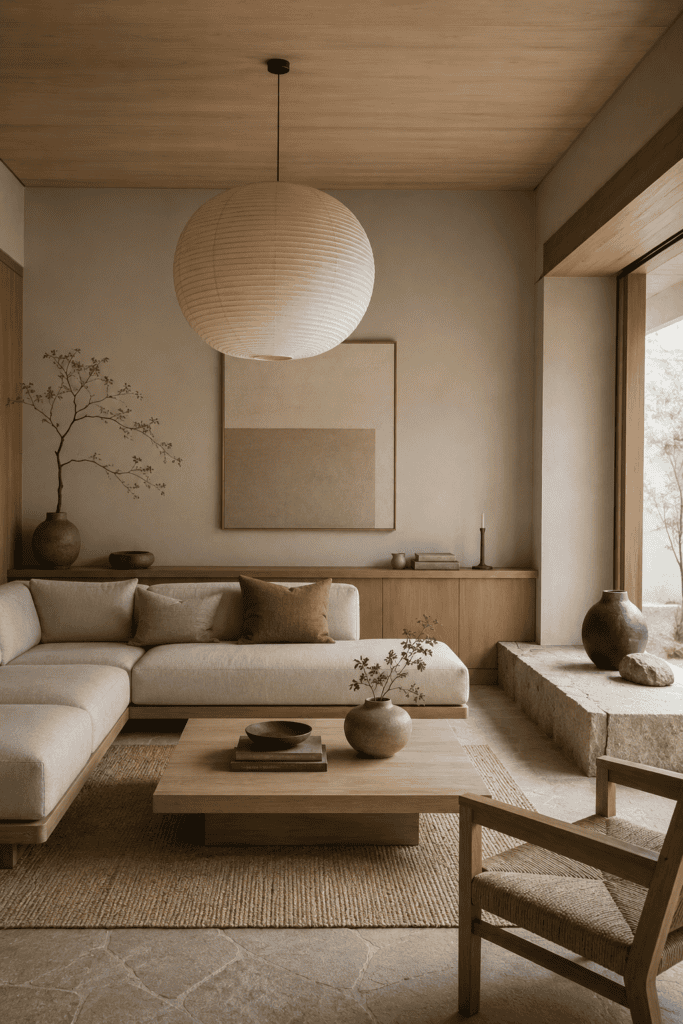
Japandi combines Japanese minimalism with Scandinavian warmth, and honestly, it might be the most balanced style on this entire list. Natural materials, low furniture, and a restrained color palette define the look.
- Low-profile wood furniture
- Neutral linen upholstery
- Paper or rice-paper lantern lighting
- Minimal, purposeful decor
- Ceramic or stoneware accessories with visible texture
This is a great pick if you want “luxury” without anything feeling over-the-top. It’s understated, but it never looks cheap. Japandi rooms tend to age really well too—since the style avoids trendy colors or shapes, you’re not going to look back in five years and cringe at your choices.
10. The Art Deco Revival Living Room
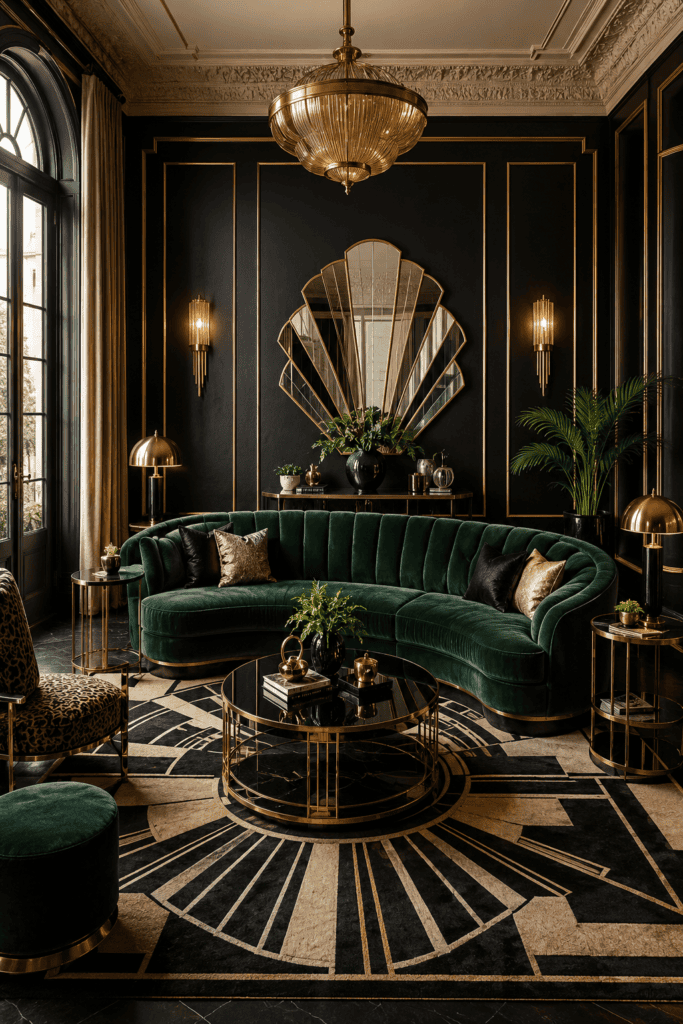
Art Deco is having a serious moment, and I’m here for it. Geometric patterns, bold color contrasts, and metallic finishes bring old Hollywood glamour into a modern apartment.
- Geometric-patterned rugs
- Curved velvet sofas
- Brass and glass side tables
- Fan-shaped mirrors or wall art
- Black-and-gold color pairings for maximum drama
This style works incredibly well in apartments with high ceilings or crown molding, since it plays into that vintage architectural detail instead of fighting it. If your apartment already has some pre-war bones—arched doorways, original moldings—Art Deco practically designs itself around them.
11. The Biophilic Living Room (Plant Lovers, This Is Yours)
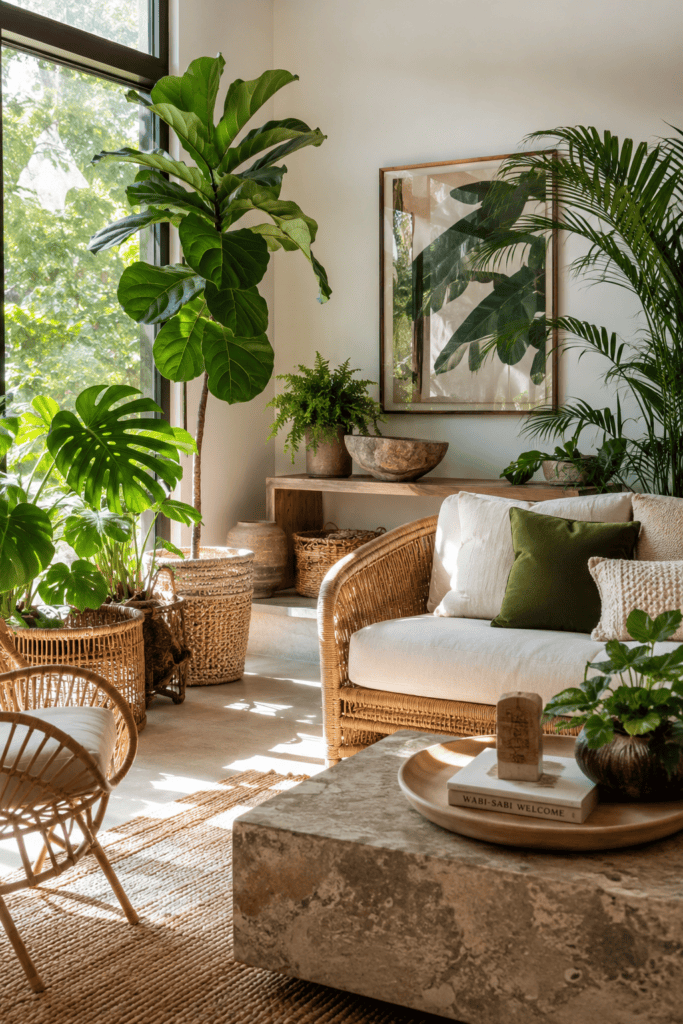
Biophilic design brings nature indoors through plants, natural light, and organic materials. It’s not just an aesthetic choice—it genuinely improves air quality and mood.
- Large statement plants (fiddle leaf figs, monstera)
- Wood and rattan furniture
- Stone or ceramic accents
- Maximized natural light
- Woven baskets and natural fiber textures throughout
Full disclosure: I’ve killed more plants than I’d like to admit. If you’re in the same boat, high-quality faux plants have come a long way. No judgment here—a realistic faux monstera in the corner of your living room does 90% of the visual work without any of the watering guilt.
12. The Multi-Functional Small-Space Living Room
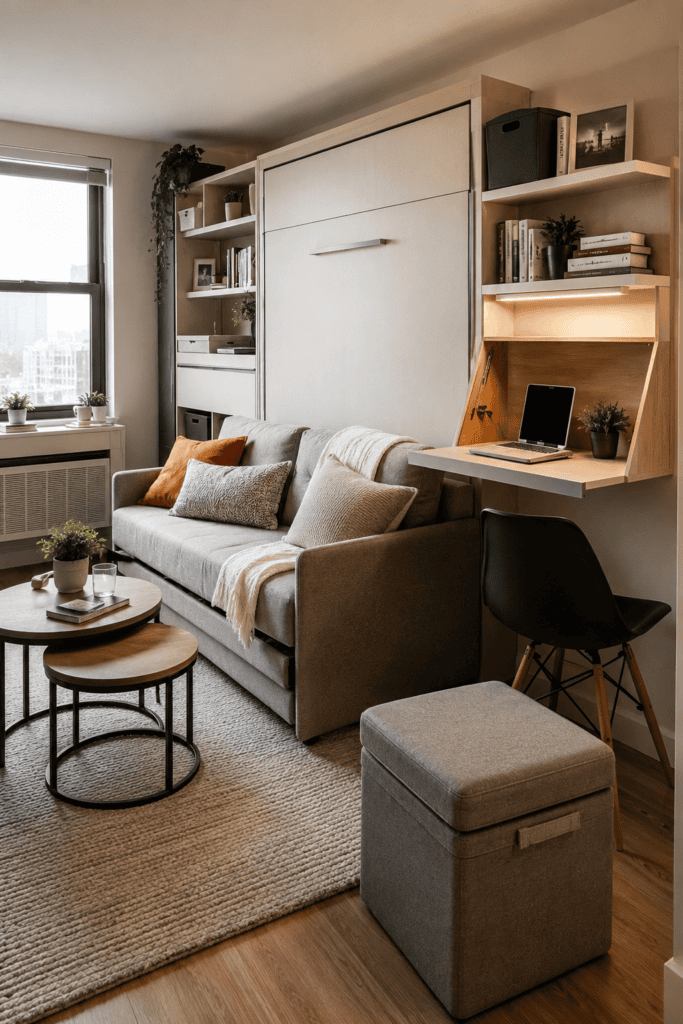
For studio apartments or tiny living rooms, luxury means smart, multi-functional furniture that doesn’t sacrifice style for practicality.
- Sofa beds with premium upholstery
- Nesting coffee tables
- Wall-mounted, fold-down desks
- Ottomans that double as storage
- Modular shelving that adapts as your needs change
This category doesn’t get enough credit in design magazines, but it’s arguably the most impressive. Making a 400-square-foot room feel luxurious? That takes actual skill. Anyone can make a 2,000-square-foot living room look good—give me the person who makes a studio apartment feel like a boutique hotel suite, and I’ll be genuinely impressed.
13. The Monochromatic Black-and-White Living Room
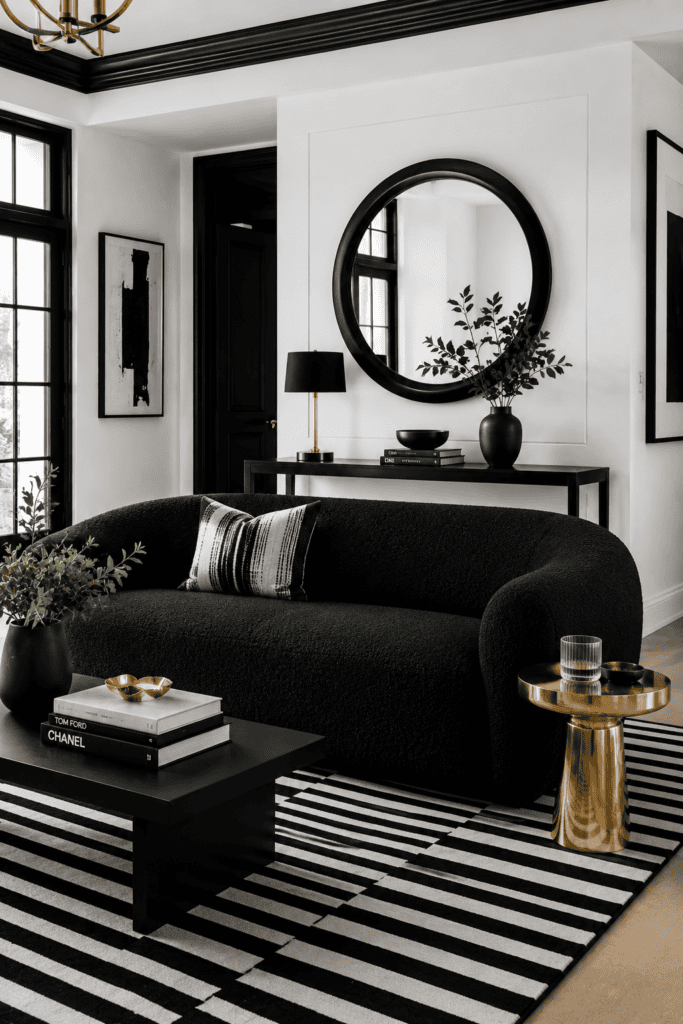
There’s a reason black-and-white color schemes never go out of style—they’re timeless, sharp, and surprisingly easy to execute. High contrast, clean lines, and a few metallic accents keep it from feeling flat.
- White walls with black trim or molding
- A black leather or bouclé sofa
- Checkerboard or striped area rugs
- Gold or chrome accent pieces
- A single bold black-framed mirror as a focal point
This one photographs incredibly well, FYI, if you’re the type who cares about how your apartment looks on Instagram. It also happens to be one of the easiest styles to update seasonally—swap a few pillows or a throw blanket, and the whole room feels refreshed without a full redesign.
14. The Old-World European Living Room
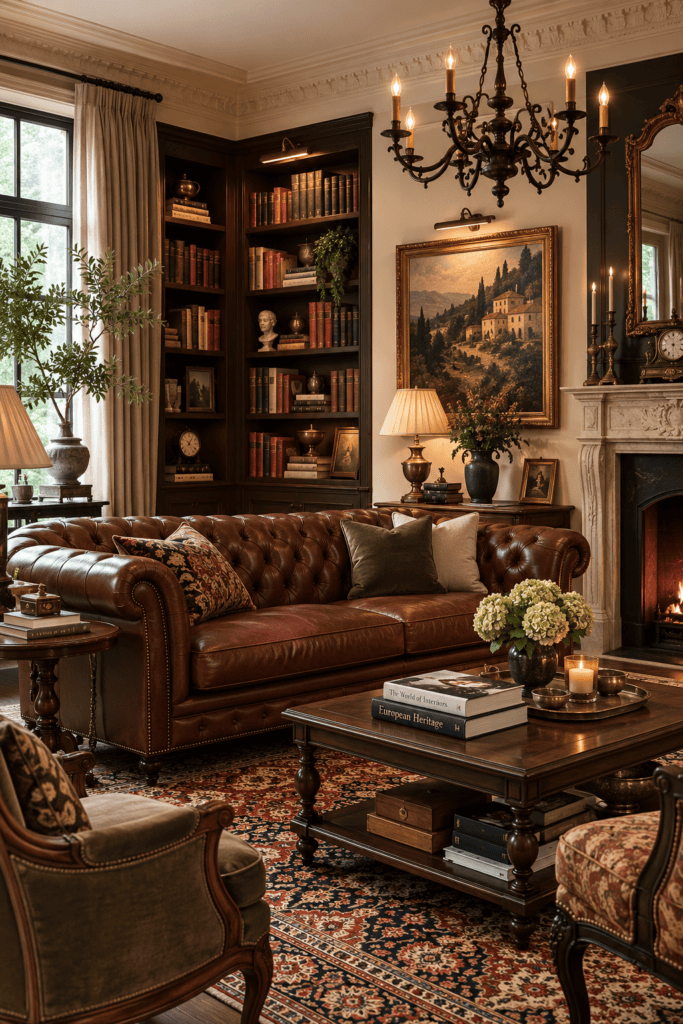
This look borrows from classic European interiors: ornate moldings, rich wood tones, and antique-inspired furniture. It feels formal without being stiff.
- Tufted leather chesterfield sofas
- Dark wood bookshelves
- Vintage rugs with intricate patterns
- Crystal or wrought-iron lighting fixtures
- Aged brass or bronze hardware throughout
It’s a heavier aesthetic, so it works best in apartments with more square footage. Cramming this style into a tiny studio can backfire fast—you end up with a room that feels stuffed rather than stately. If your space is on the smaller side, pick one or two statement pieces from this list rather than going all in.
15. The High-Contrast Designer Showroom Look
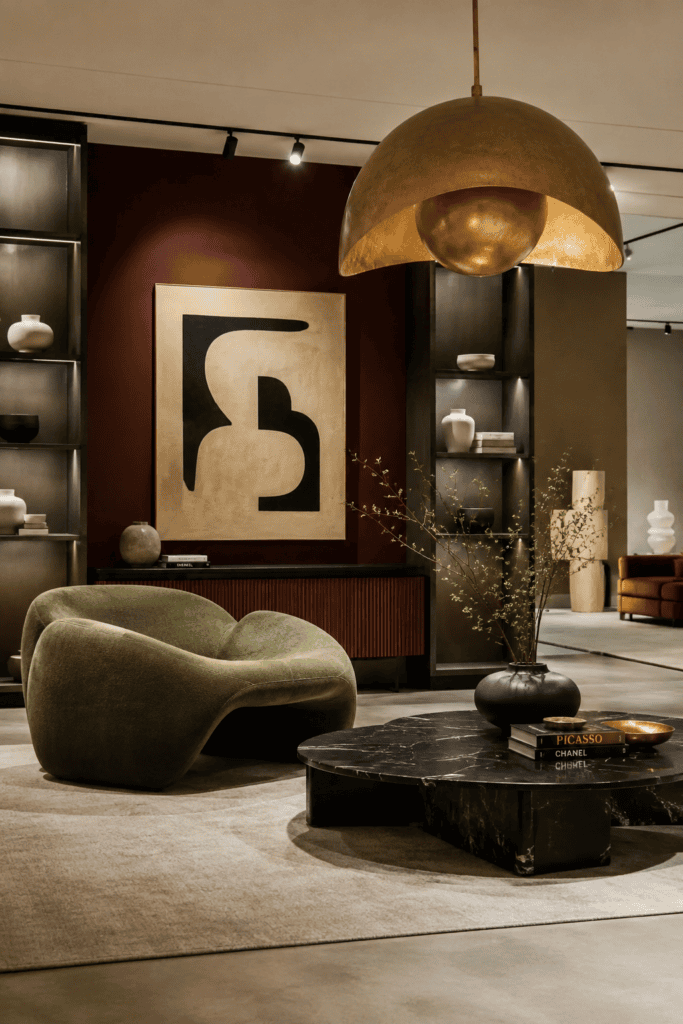
Finally, we’ve got the living room that looks like it was styled for a magazine shoot—because honestly, it probably was. This style mixes bold furniture silhouettes, statement lighting, and curated art into a cohesive, gallery-like space.
- Sculptural furniture pieces
- Oversized statement lighting
- A single, bold accent wall
- Carefully curated (not cluttered) shelving
- One “hero” piece that anchors the whole room
This is peak “luxury apartment living room” energy. It takes confidence to pull off, but when it works, it really works 🙂 The trick is choosing one hero piece—a sculptural chair, a dramatic light fixture, whatever—and letting everything else in the room support it, rather than competing with it for attention.
How to Pick the Right Style for Your Space
With fifteen options on the table, it’s fair to feel a little overwhelmed. Here’s how I’d narrow it down if I were starting from scratch.
First, look at your natural light. Scandi, coastal, and biophilic styles all lean on sunlight to really shine, so if your apartment is dim, you might want to steer toward dark and moody or glam instead, where you’re working with lighting rather than fighting against a lack of it.
Second, be honest about your maintenance tolerance. Velvet, light-colored rugs, and all-white palettes look incredible in photos but require actual upkeep. If you’ve got kids, pets, or just zero interest in spot-cleaning a sofa every week, lean toward darker, more forgiving materials.
Third, think about your ceiling height and architectural details. Art Deco and old-world European styles need some architectural presence to really land. Minimalism and Japandi, on the other hand, work in almost any shell, which makes them safe bets for standard-issue rental apartments.
Final Thoughts: Which Style Fits Your Space?
Here’s the truth: luxury doesn’t come from a price tag—it comes from intentional design choices. Whether you gravitate toward moody and dramatic or light and airy, the best living rooms all share one thing in common: nothing in the room is there by accident.
So which of these 15 styles caught your eye? Maybe you’re already picturing that velvet sofa or wondering if your cat would destroy it in a week (mine would). Whatever direction you choose, remember that the best apartment living rooms feel like you, not like a showroom you’re just borrowing for a while.