
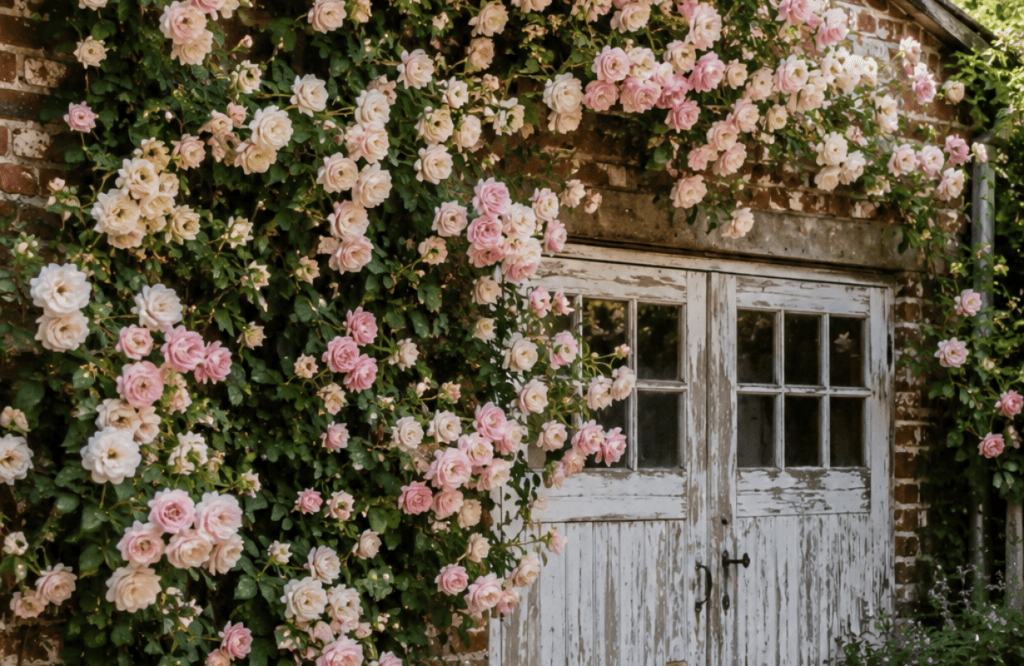
Picture a garden that looks like it grew itself, roses spilling over a crumbling brick wall, lavender brushing your ankles, and not a single straight line in sight. That’s the English garden, a style that’s been charming visitors for centuries and shows zero signs of going out of fashion.
What makes it work isn’t luck. It’s a mix of structure, softness, and a willingness to let plants spill past their boundaries, all layered together so carefully that it ends up looking completely unplanned.
If you want a garden that feels lived-in, layered, and a little bit magical, you’re in the right place. Here are 17 English garden ideas to steal, adapt, or just admire, so grab a cup of tea and let’s get into it.
1. Start With a Cottage Garden Border
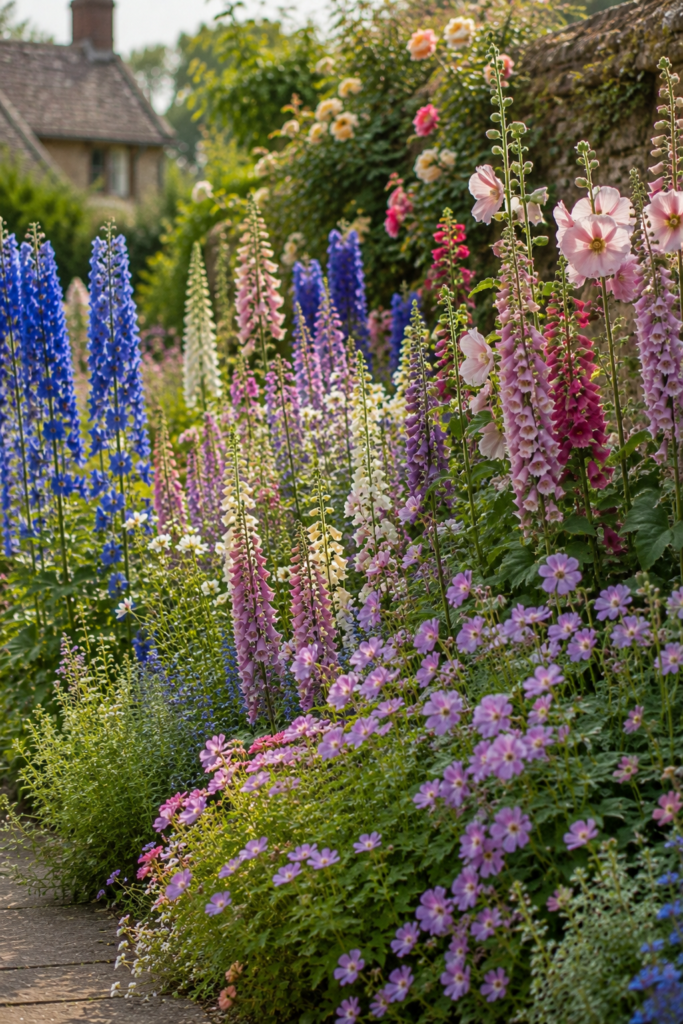
The classic English cottage border is the heart of this whole style. It’s dense, colorful, and looks effortless, even though it takes real planning behind the scenes.
Mix perennials like delphiniums, foxgloves, and hollyhocks with shorter fillers like geraniums and lady’s mantle. The trick is layering heights so nothing looks flat, and packing plants in tighter than you’d think is normal.
Do you need to follow strict rules here? Not really. IMO, the messier it looks, the better it works. My first attempt at a border looked like a garden center threw up on my lawn, and somehow that was exactly right.
Give it a full growing season before you judge it. Cottage borders look sparse the first year and completely take over by year two.
2. Let a Climbing Rose Take Over Something
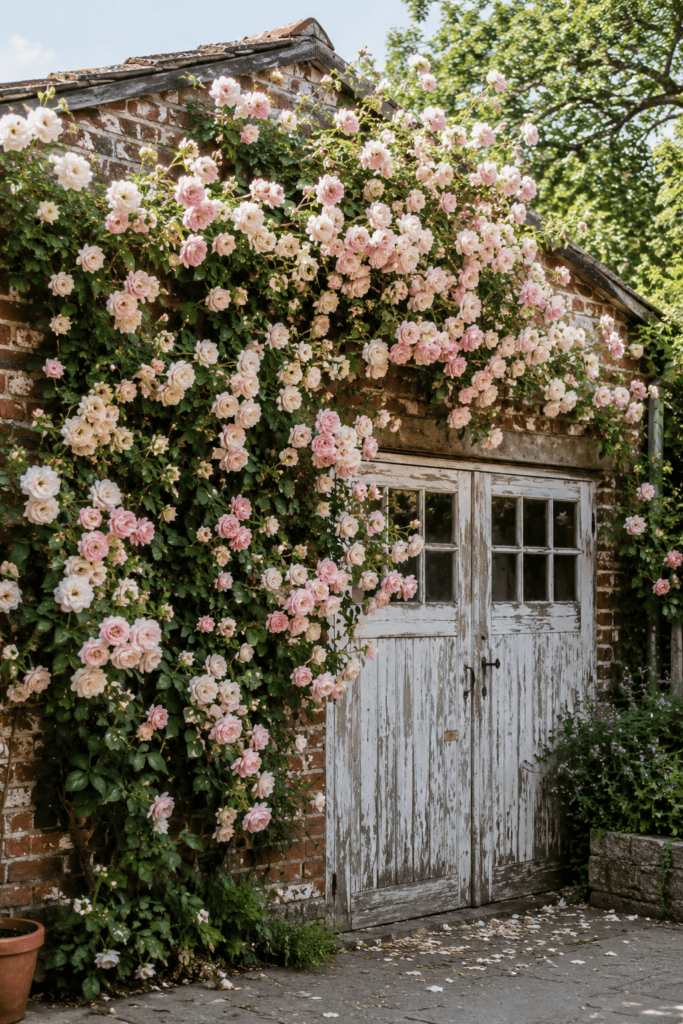
Nothing screams English garden louder than a rose climbing up a wall, arbor, or fence. I planted a ‘New Dawn’ rose against my garage three years ago, and it’s now basically eating the building.
Climbing roses give you:
- Vertical interest without eating up ground space
- A fragrant focal point near seating areas
- That romantic, storybook look everyone secretly wants
- Cover for boring structures like garden sheds or fences
Just prune them properly each winter, or they’ll turn into a thorny nightmare. Trust me, I skipped pruning one year out of pure laziness, and the following summer I needed gloves, a ladder, and a small amount of bravery just to walk past it.
Pick a variety suited to your climate, too. Some climbers sulk in shade, while others handle it just fine.
3. Build a Winding Gravel Path
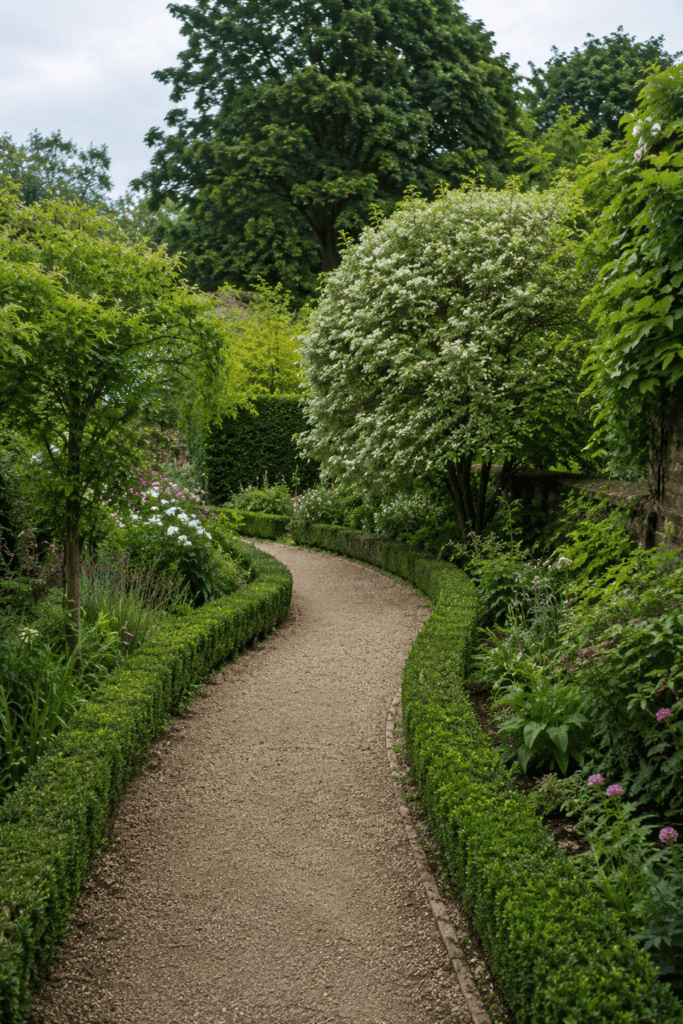
Straight paths feel corporate. Curved gravel paths feel like a stroll through the countryside, which is exactly the point.
Lay the path so it disappears around a corner or behind a shrub. This creates mystery and makes a small garden feel bigger than it is, since you can’t see the whole thing at once.
Gravel also has a practical upside: it drains well, it’s cheap compared to paving, and it makes a satisfying crunch underfoot. That crunch alone is worth it, honestly.
Edge the path with brick, timber, or low box hedging to keep the gravel from migrating into your beds every time it rains.
4. Add a Rustic Wooden Arbor or Arch
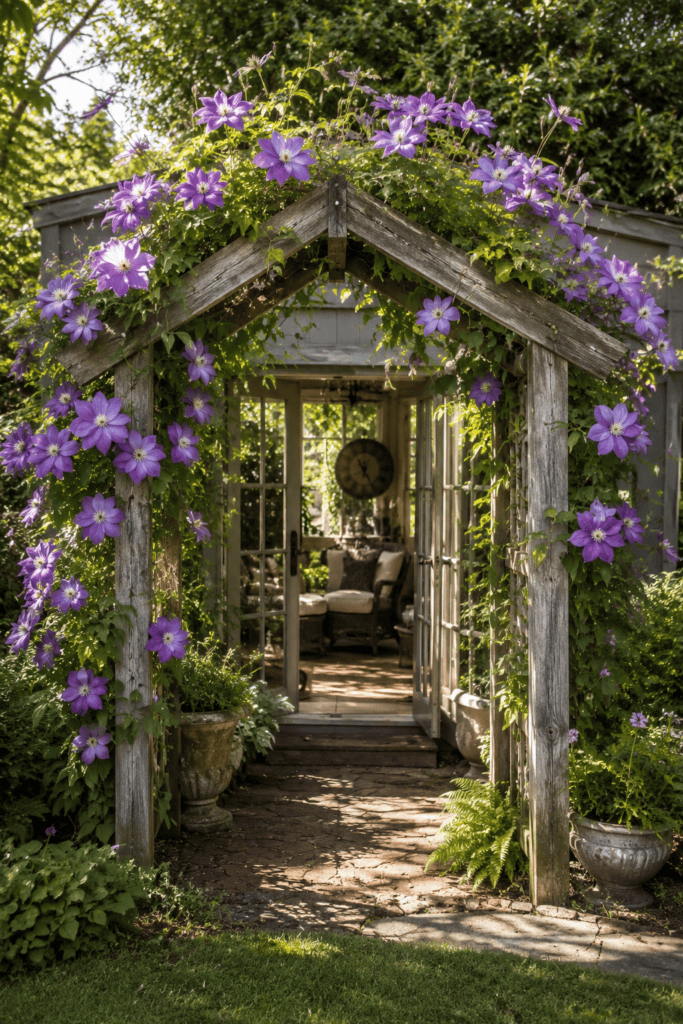
An arbor covered in clematis or roses instantly makes your garden look like it belongs in a period drama. I built mine from reclaimed timber, and honestly, the “imperfect” weathered look only helped.
Position it as an entrance to a different garden “room,” and you’ve got instant charm. It also gives your eye a natural stopping point, which makes the whole space feel more designed.
Don’t overthink the construction. A simple frame with a few crossbeams is plenty. The plants growing over it do most of the visual work anyway.
5. Create Distinct Garden Rooms
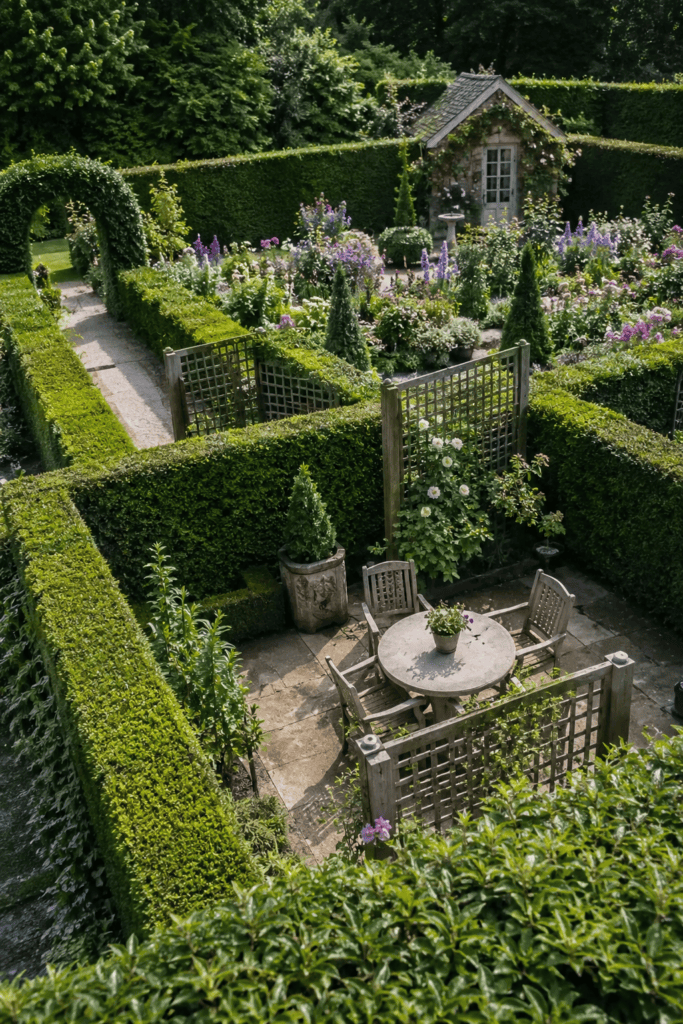
English gardens rarely feel like one open space. Instead, they’re broken into little rooms using hedges, fences, or trellises, each with its own mood.
Try dividing your space into:
- A quiet reading nook tucked behind a hedge
- A vegetable and herb patch near the kitchen
- A flower-focused border that gets the best afternoon light
- A small seating area near the house for morning coffee
Each “room” gets its own personality, and walking between them feels like a mini adventure. Even a tiny backyard can pull this off with a couple of well-placed hedges or a simple trellis screen.
The reveal is half the fun. You want visitors turning a corner and going “oh wow,” not seeing the whole layout from the back door.
6. Plant a Proper Herbaceous Border
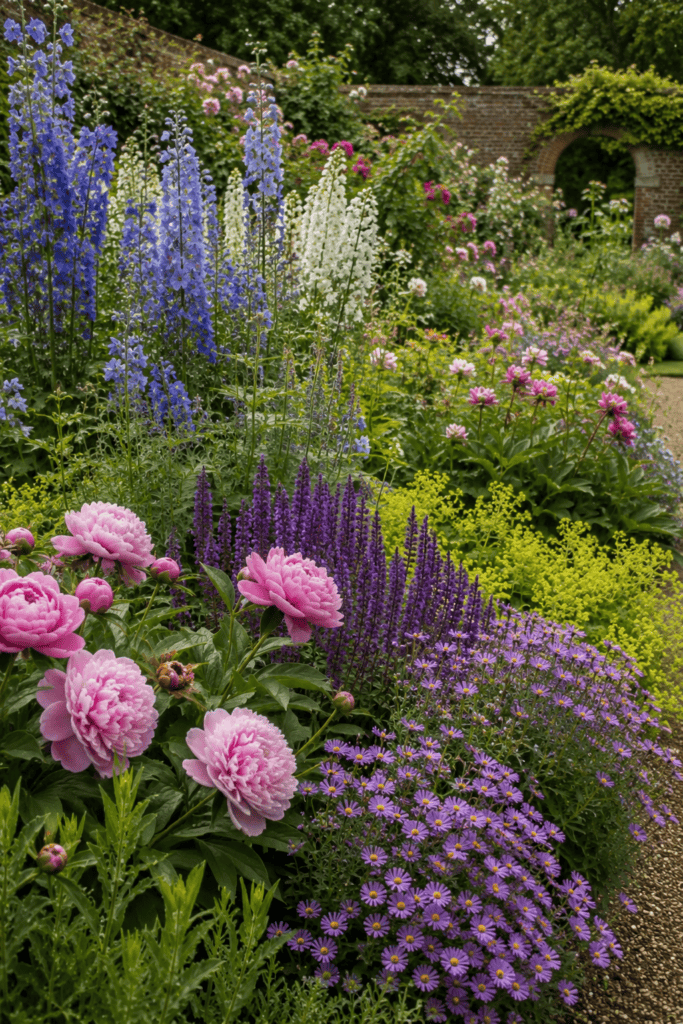
This is the border that inspired half of Instagram gardening content. A herbaceous border is packed with perennials that die back in winter and burst back to life in spring, so the display changes constantly.
Layer tall plants at the back, medium ones in the middle, and low growers up front. Peonies, salvias, and asters are reliable performers, and delphiniums add that dramatic vertical spike everyone associates with English gardens.
Stagger your bloom times, too. Ever wondered why some borders look incredible from May straight through October? It’s because someone planned for early, mid, and late-season flowers instead of one big burst that fades fast.
7. Use Boxwood for Structure
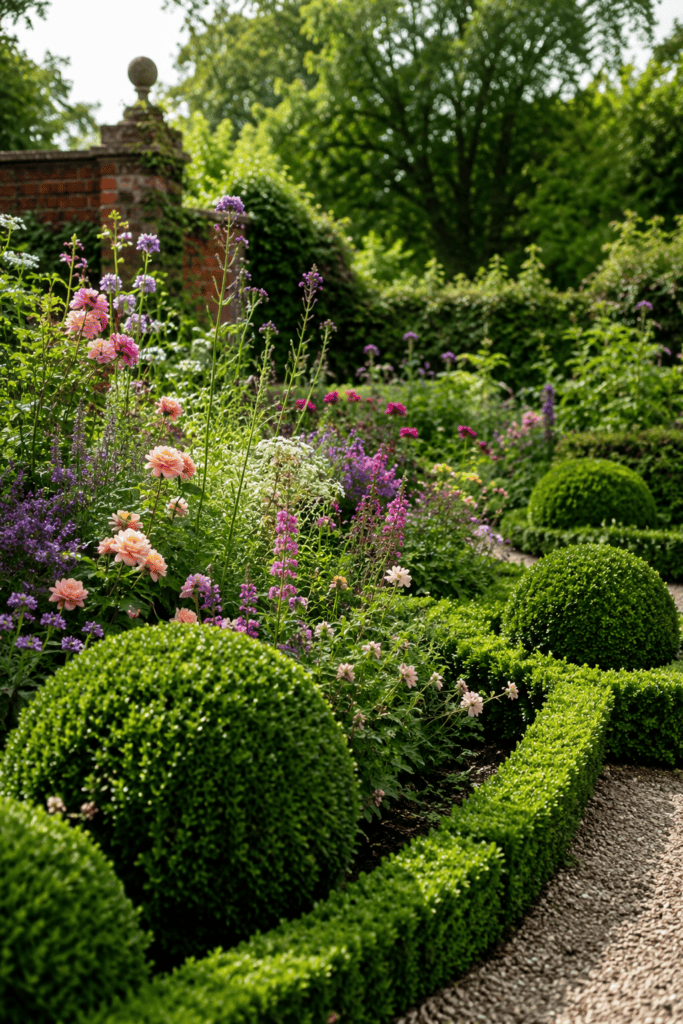
Ever wondered why English gardens look organized even when they’re bursting with color? It’s usually boxwood hedging doing the heavy lifting behind the scenes.
Clipped boxwood balls, low hedges, or knot gardens give your wild planting some visual boundaries. Without it, things can look chaotic fast, like a border that’s given up rather than one that’s romantically overgrown.
Boxwood also holds its shape through winter, so your garden still has structure when everything else has died back. If boxwood blight is a concern in your area, look into alternatives like dwarf holly or yew, which give a similar clipped look.
8. Grow a Wildflower Meadow Patch
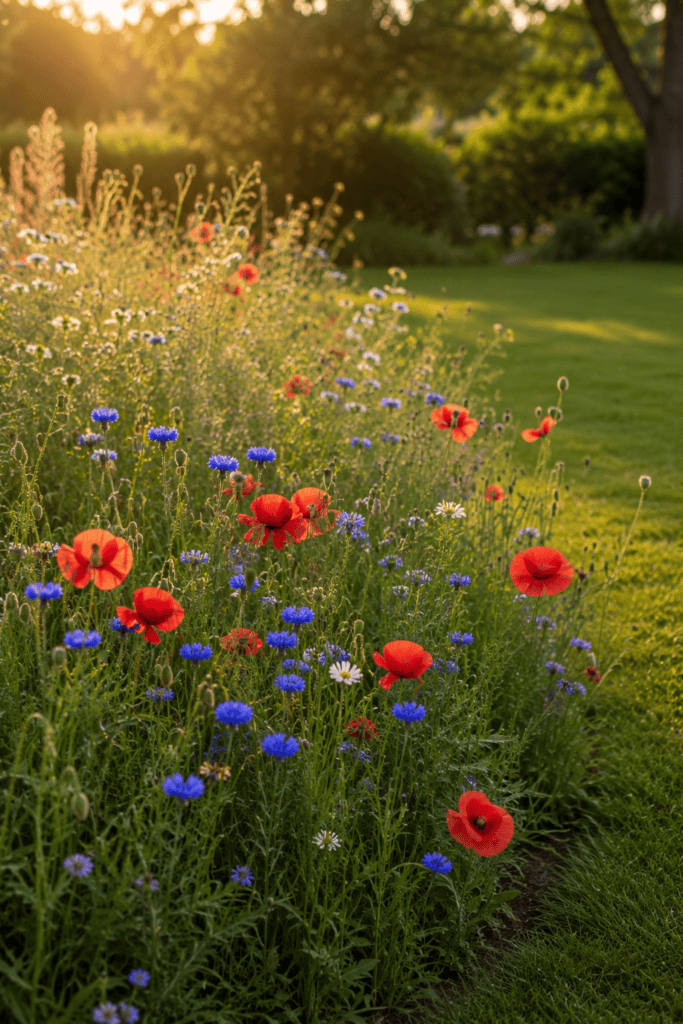
If you’ve got extra space, dedicate a section to a mini wildflower meadow. It’s low-maintenance, pollinator-friendly, and gives your garden that “untouched countryside” vibe.
I let a corner of my lawn grow wild one summer, half out of laziness, and it turned into the prettiest patch of poppies and cornflowers I’ve ever had. Sometimes doing less really is doing more 🙂
You do need one bit of discipline, though: cut it back once a year, usually in late summer or early autumn, and remove the clippings. Otherwise the soil gets too rich and grasses take over, crowding out the wildflowers.
9. Install a Weathered Stone or Brick Wall
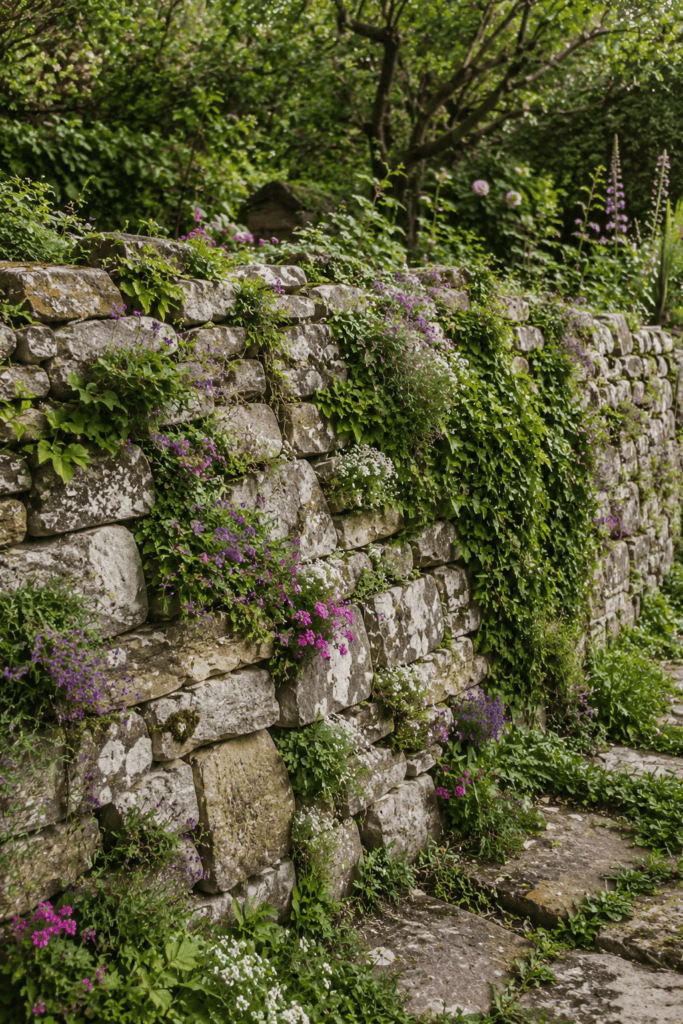
Old stone walls are basically a signature feature of English gardens. They provide:
- Structure and privacy without feeling like a barrier
- A warm backdrop for climbing plants and espaliered fruit trees
- Microclimates where heat-loving plants thrive, since stone holds warmth
- A natural home for alpines and trailing plants in the gaps
Can’t build a full wall? Even a low brick edging along a border adds that classic look. A reclaimed brick supplier can also save you a fortune compared to buying new, and the weathered color is honestly better anyway.
10. Add a Kitchen Garden
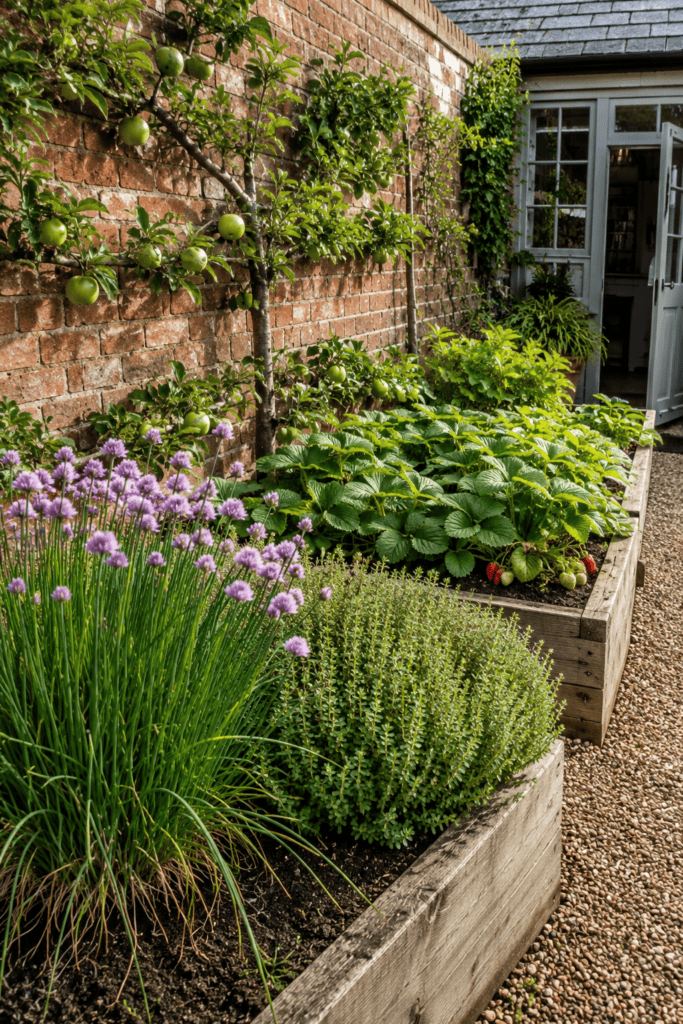
English gardens have always mixed beauty with practicality. A kitchen garden with raised beds for herbs, salad greens, and soft fruit fits right in, and it looks good doing it.
Plant rows of chives, thyme, and strawberries near your kitchen door. FYI, having fresh herbs steps away from your stove is a genuinely life-improving upgrade, and it makes cooking dinner feel fancier than it actually is.
Add a few espaliered apple or pear trees along a sunny wall if you have the space. They’re decorative, productive, and take up almost no ground space, which is a rare combination.
11. Include a Water Feature
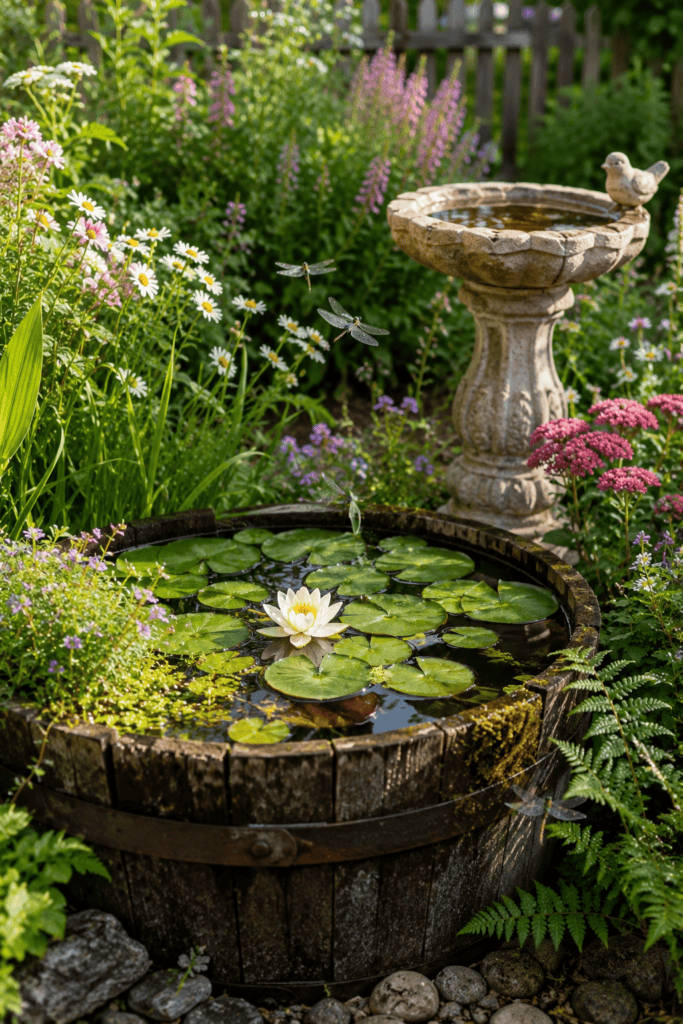
A small pond, fountain, or even a simple stone birdbath adds movement and sound. Water features draw in birds and dragonflies, which makes the whole garden feel alive rather than just decorative.
You don’t need anything grand. A modest half-barrel pond can look just as charming as an elaborate koi pond, and it’s a lot less work to maintain.
If you have kids or pets running around, consider a bubbling urn fountain instead of open water. You still get that soothing trickling sound without the safety concerns.
12. Let Self-Seeding Plants Do Their Thing
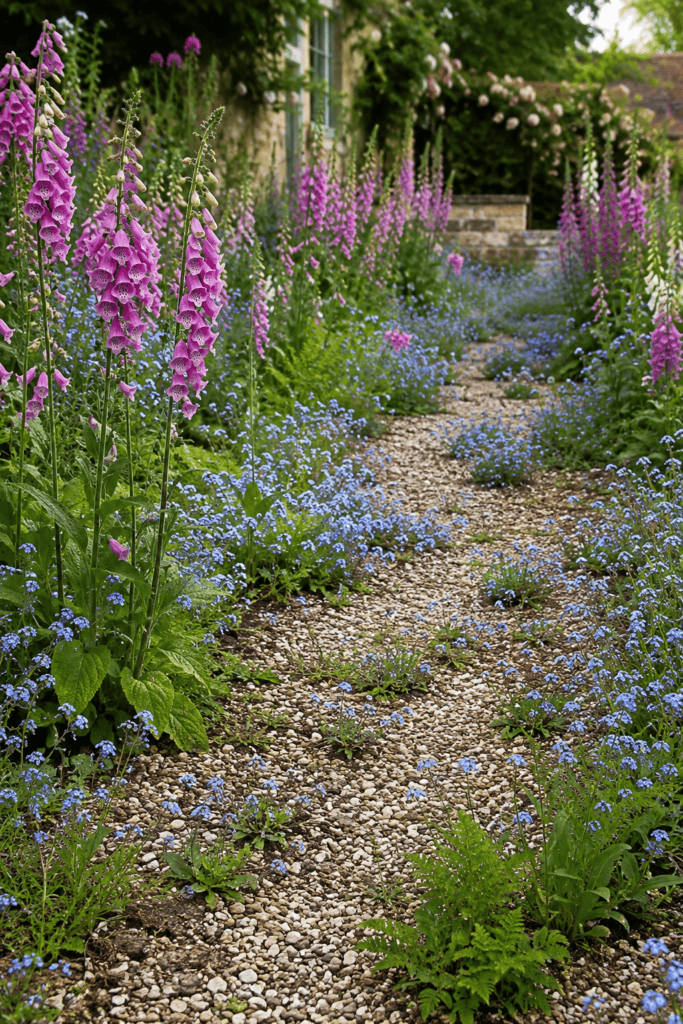
Forget-me-nots, poppies, and foxgloves love to spread themselves around, popping up in cracks and unexpected corners. This randomness is exactly what gives English gardens their “grown, not designed” feel.
I stopped fighting the foxgloves that kept appearing in my gravel path, and now it’s one of my favorite parts of the garden. They show up where you’d never plant them on purpose, and somehow it always looks right.
Just be selective about which self-seeders you welcome in. Some, like certain mints or bindweed, will happily take over the entire garden if you let them.
13. Use a Potting Shed as a Focal Point
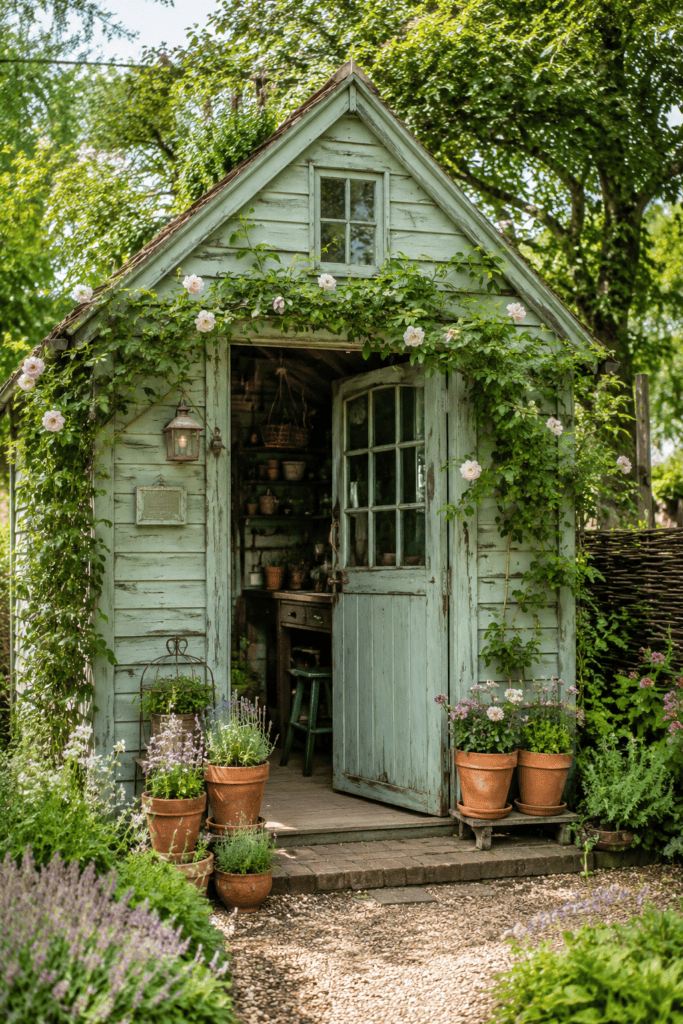
A weathered potting shed does double duty: it’s storage and it’s decoration. Paint it a soft sage green, add a few climbing plants around the door, and it instantly becomes a charming garden feature rather than an eyesore.
Add a small window box or a couple of terracotta pots by the entrance for extra charm. Even a shed you use purely for storing tools and pots can become the prettiest structure in the yard with minimal effort.
14. Mix Formal Structure With Informal Planting
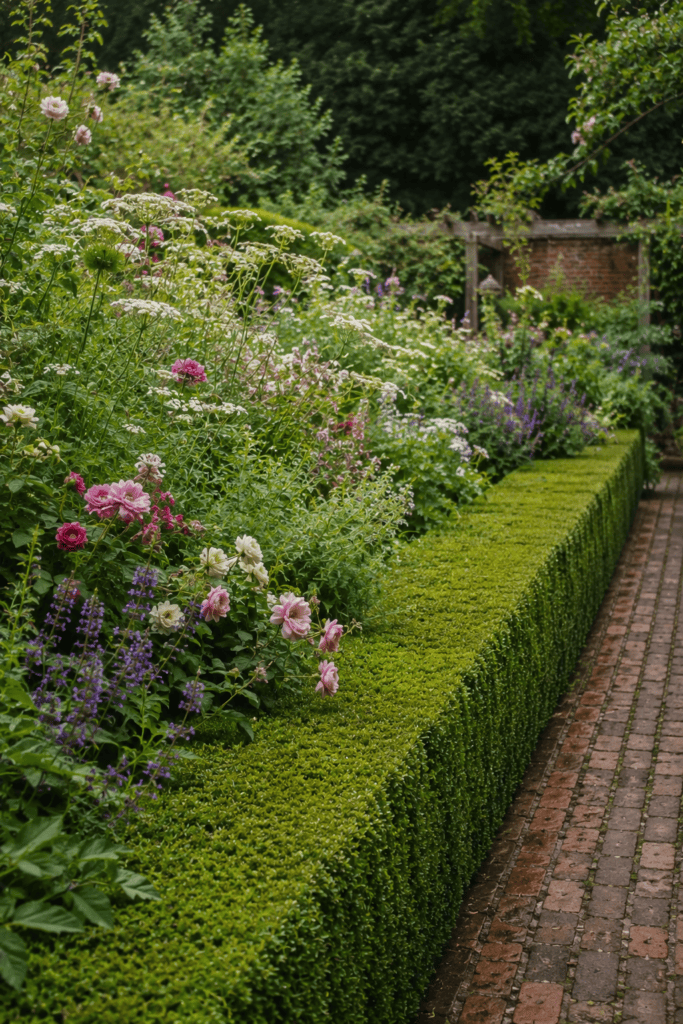
This might be the defining trick of English garden design. You pair rigid structure (clipped hedges, symmetrical paths, tidy edges) with loose, chaotic planting that spills over every boundary.
The contrast is what makes it work. Too formal, and it feels stiff and a bit sterile. Too wild, and it looks neglected. Balance both, and you get that famous English charm that photographs beautifully but still feels alive.
A good test: if your garden looks like it’s trying too hard, add more chaos. If it looks like it’s out of control, add more structure.
15. Add Vintage or Weathered Garden Furniture
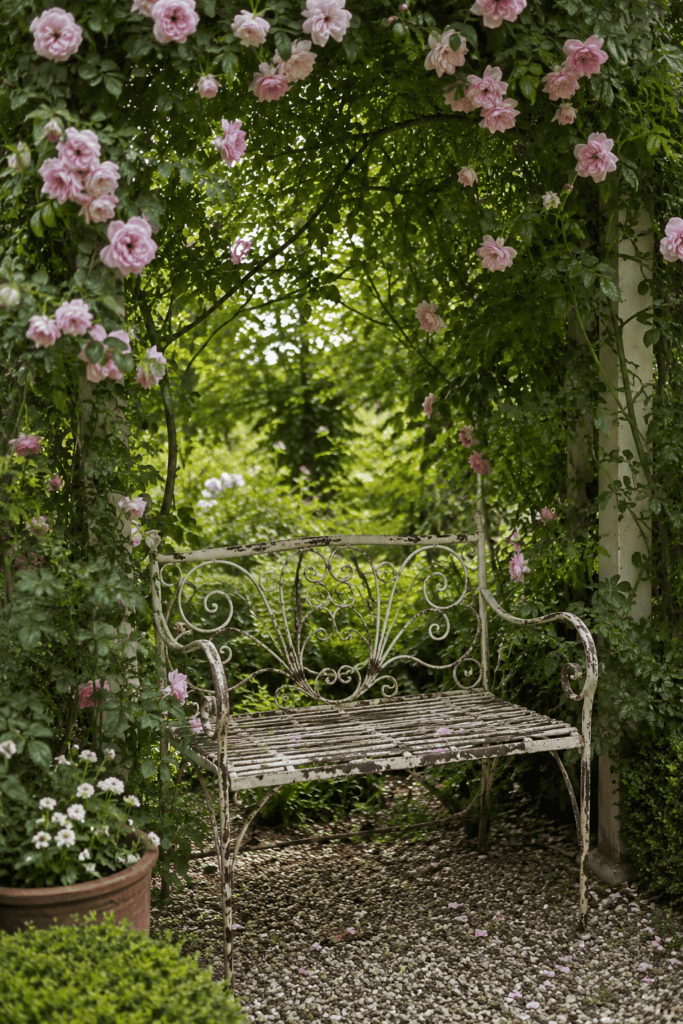
Skip the shiny new patio set. A worn wrought-iron bench or a wooden table with peeling paint fits the aesthetic far better than anything straight out of a big-box store.
Look for:
- Reclaimed or antique-style furniture from salvage yards or estate sales
- Pieces with a bit of rust or patina rather than a flawless finish
- Simple materials like wood, iron, or stone
- A couple of mismatched chairs rather than a matching set
It should look like it’s been there for decades, even if you bought it last month. If a piece looks too new, leave it outside through a season or two and let the weather do its job.
16. Plant in Drifts, Not Rows
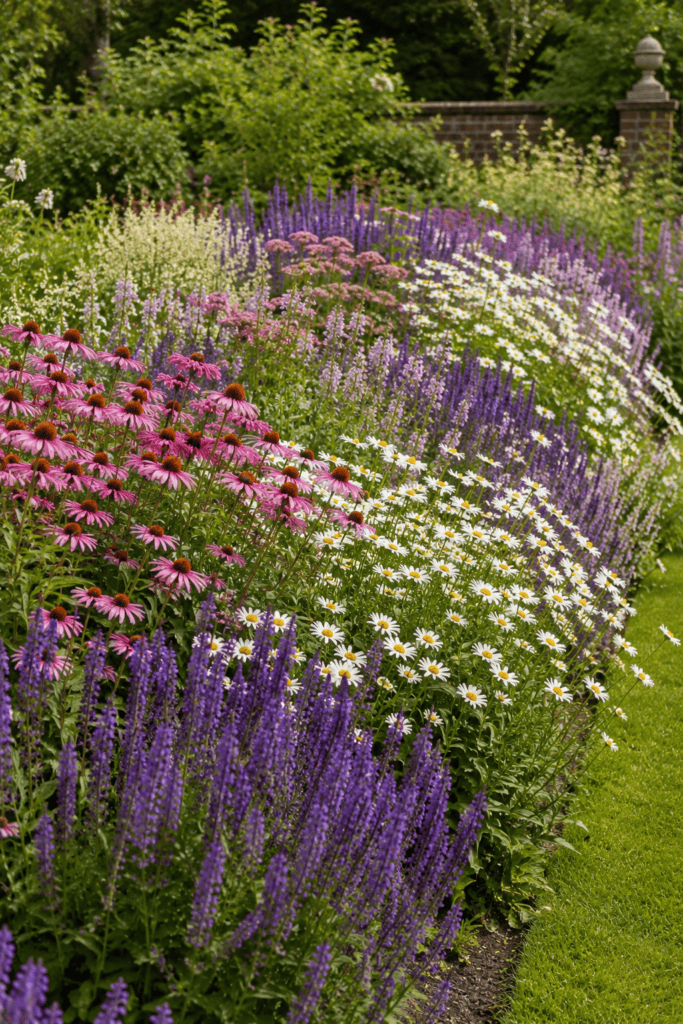
Never plant in straight, tidy rows. Instead, plant in loose, irregular clusters, or “drifts,” that flow into each other like they were scattered by wind rather than measured with a ruler.
This one small shift changes everything. Rows look like a nursery display. Drifts look like nature designed it herself, which is exactly the illusion you’re going for.
Plant in odd numbers, too, threes, fives, sevens. Even numbers tend to look artificially balanced, while odd groupings feel more natural to the eye.
17. Let Ivy or Clematis Soften Hard Edges
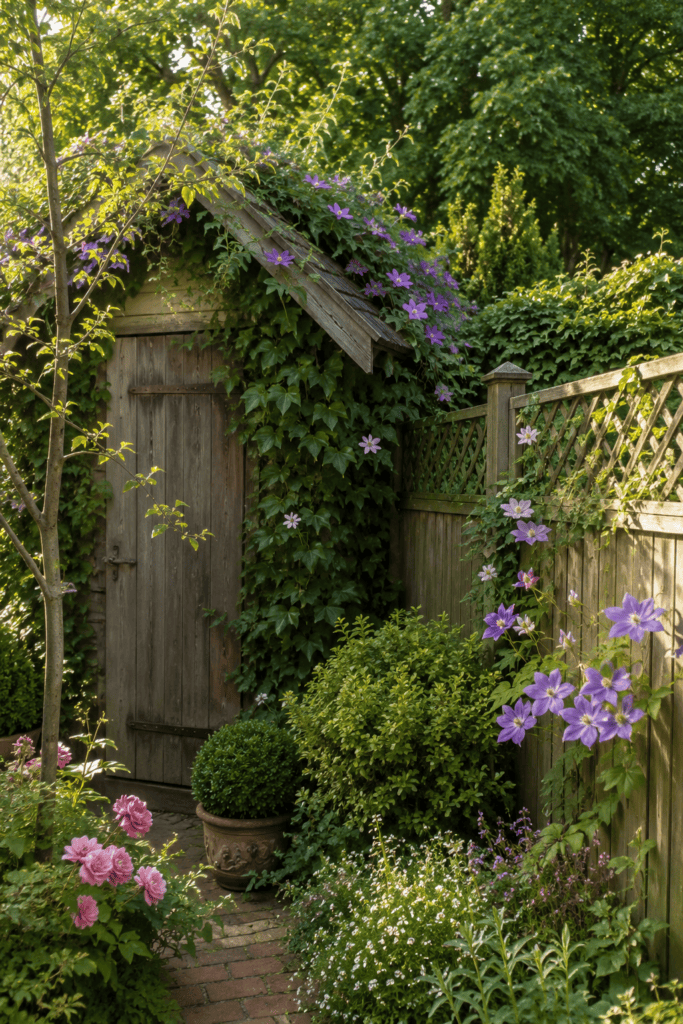
Every garden has hard surfaces, walls, fences, sheds. Cover them. Ivy, clematis, and honeysuckle soften these edges and tie the whole space together into one cohesive picture.
Just keep an eye on aggressive growers like ivy, or they’ll take over more than you bargained for. Trust me, I learned that one the hard way after it crept under my roof tiles and I spent an entire Saturday pulling it back out.
Clematis is a gentler option if you want the same softening effect with less risk of structural damage down the line.
Final Thoughts: Your English Garden, Your Rules
An English garden isn’t about perfection. It’s about layers, texture, and a little bit of glorious chaos that somehow still looks intentional.
Start small. Pick two or three ideas from this list, maybe a climbing rose here, a gravel path there, and build from there. Your garden will keep evolving anyway, and honestly, that’s half the fun. Nobody builds an English garden in one weekend, and anyone who tells you otherwise is selling something.
Give yourself permission to make mistakes along the way, too. Some plants will die, some layouts won’t work the way you pictured them, and that’s genuinely part of the process. Every English garden worth admiring has years of trial and error hiding underneath all that beauty.