

My garden used to look like a Pinterest board had a panic attack. Too many trends, zero personality, and a gnome that didn’t even match the color scheme. Then I went rustic, and everything clicked. If you want a yard that feels lived-in, warm, and effortlessly charming instead of showroom-perfect, you’re in the right place.
I’ve spent the last few years ripping out plastic edging, hauling reclaimed wood, and learning (the hard way) which “rustic” ideas actually hold up outdoors. This isn’t theory. Everything here comes from stuff I’ve built, killed plants trying, or stole from a neighbor with suspiciously good taste. Let’s get into the 17 ideas that’ll turn your garden into the cozy, weathered-in-a-good-way space you actually want to sit in.
Here’s the thing nobody tells you about rustic garden design: it’s actually more forgiving than the manicured, everything-in-a-row look. Crooked fence boards? Charming. A slightly lopsided herb spiral? Part of the aesthetic. That’s why I love this style for anyone who’s tired of fussing over perfection and just wants a space that feels warm and welcoming. Grab a coffee, and let’s walk through what actually works.
1. Build a Reclaimed Wood Raised Bed
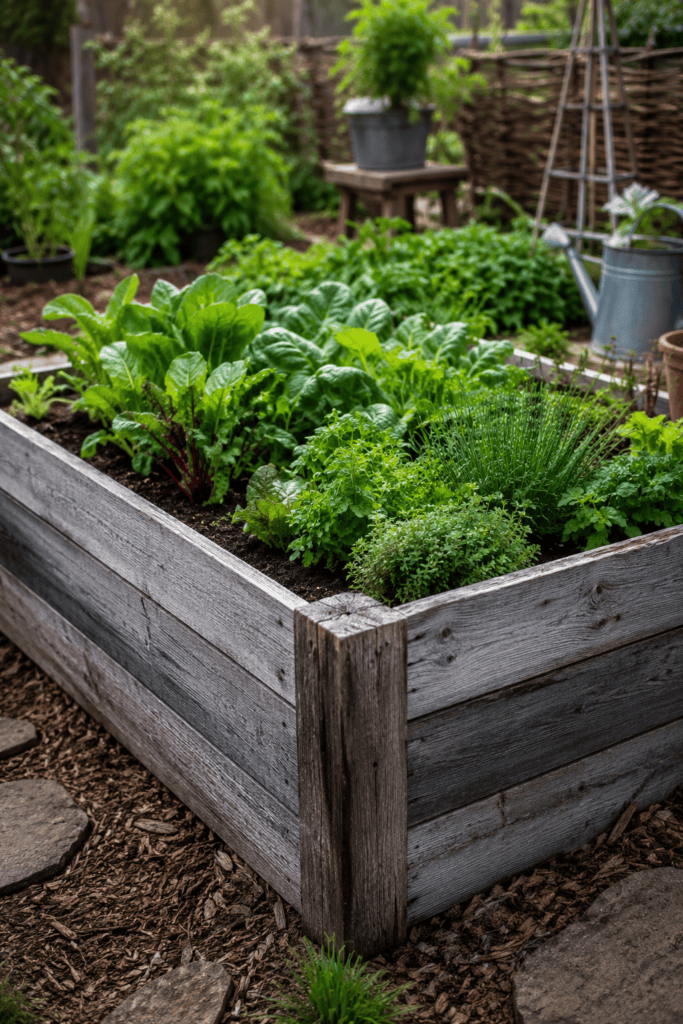
Skip the pristine cedar kits from the big box store. Reclaimed wood raised garden beds bring instant character, and IMO they look ten times better once they’ve weathered a season or two.
I built mine from old fence panels a neighbor was tossing out. Free wood, zero regrets, and the silvery-gray patina looks like it cost extra.
- Use rot-resistant wood like cedar or oak when possible
- Line the inside with landscape fabric to extend its life
- Vary the heights for visual interest across multiple beds
- Stagger the boards slightly instead of stacking them perfectly flush for a more authentic, hand-built look
One thing I learned the hard way: don’t skip the drainage. My first bed turned into a swamp after a week of rain because I sealed the bottom too well. Leave gaps between the base boards or drill a few holes so water actually has somewhere to go.
2. Hang a Rustic Wooden Ladder Planter
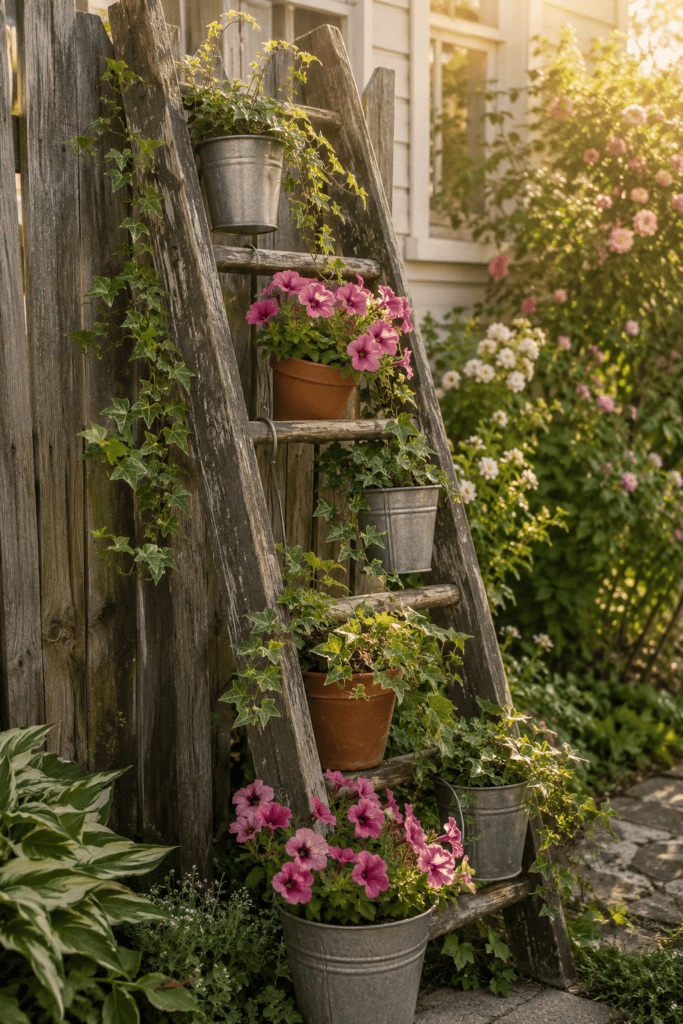
An old wooden ladder leaned against a fence does more heavy lifting for “rustic charm” than almost anything else on this list. Ever wondered why farmhouse gardens always look so put-together? It’s usually one clever vertical piece like this.
Prop it up, hang a few galvanized buckets or terracotta pots from the rungs, and fill them with trailing plants like ivy or petunias. It solves the “I have no space” problem while looking intentional rather than crammed.
I’ve got mine leaning against a shed wall that used to be an eyesore. Now it’s the first thing people notice when they walk into the backyard. Rotate the plants seasonally, and the ladder becomes a living piece rather than a one-note decoration.
3. Add a Gravel Pathway with Wooden Edging
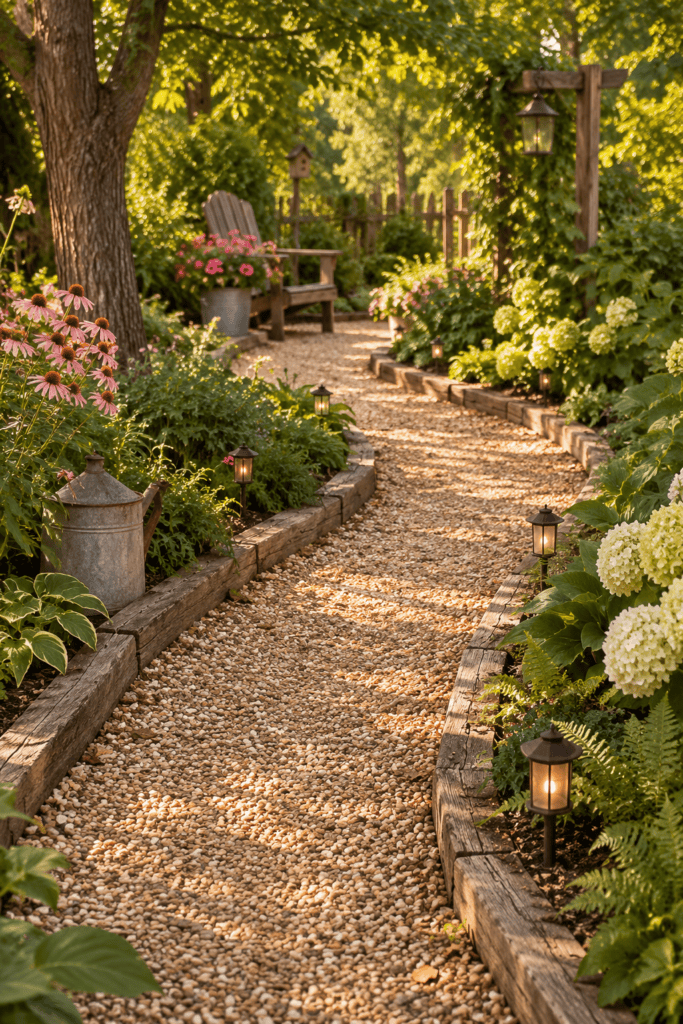
Smooth pavers feel modern. Gravel paths bordered by rough-hewn timber feel like a story. Gravel pathways are also cheap, low-maintenance, and drain beautifully after rain, which matters more than people admit.
I edged mine with old railroad-tie offcuts, and the crunch underfoot has become genuinely my favorite garden sound. Small joy, but a real one.
If you’re comparing gravel to bark mulch for pathways, gravel wins on longevity every time. Mulch breaks down and needs replacing yearly; gravel just sits there looking good for a decade. It costs a bit more upfront, but IMO it pays for itself within two seasons of not buying more mulch bags.
4. Repurpose an Old Wheelbarrow as a Planter
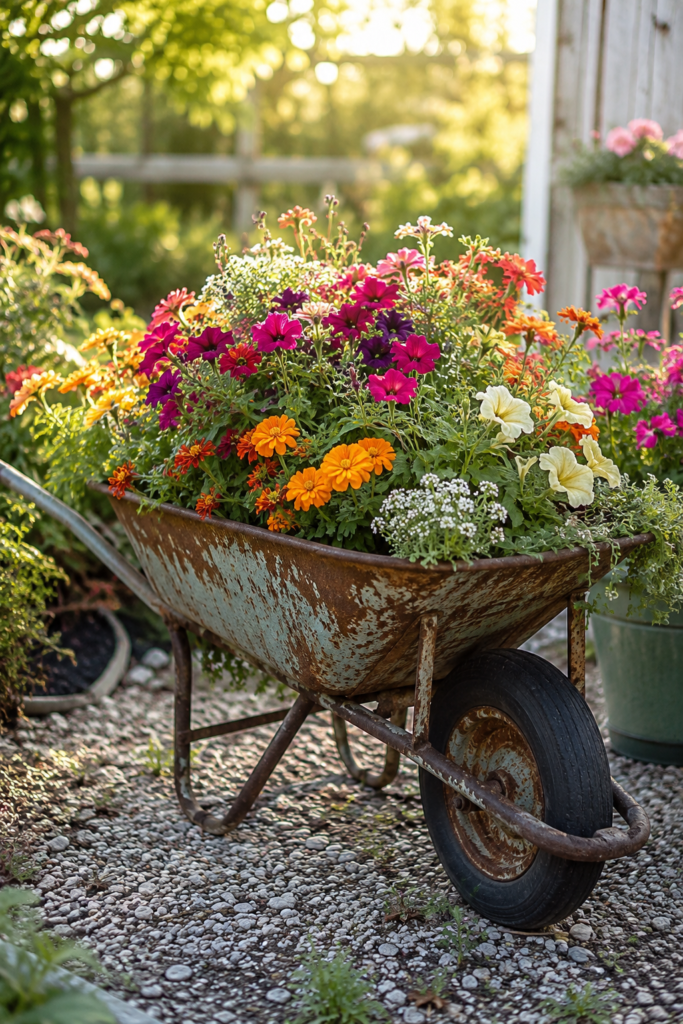
This one’s a cliché for a reason: it works. A rusted, slightly dented wheelbarrow overflowing with flowers is rustic garden shorthand, and it takes about twenty minutes to set up.
- Drill a few drainage holes in the base
- Fill with well-draining potting soil
- Plant a mix of trailing and upright flowers for contrast
Don’t have an old wheelbarrow lying around? Check yard sales. Someone’s grandpa definitely has three.
5. Install a Weathered Wood Fence
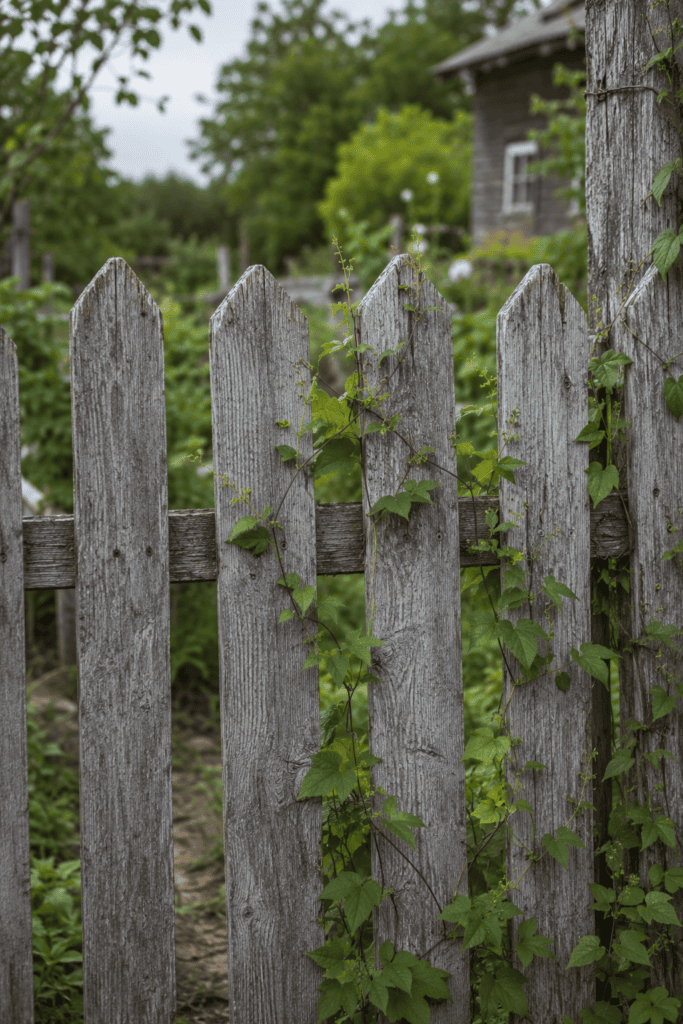
A crisp white picket fence says “suburb.” A weathered wood fence says “this place has stories.” Untreated wood grays naturally over time, and honestly, that’s the whole point—don’t fight it with stain.
If you’re starting from scratch, rough-sawn boards installed with slightly uneven spacing look far more authentic than a perfectly uniform fence. Precision is the enemy of rustic, and that’s a hill I’ll die on.
Can’t build one from scratch? A cheaper shortcut is buying new cedar panels and speeding up the weathering process yourself. A weak vinegar-and-water spray, applied a few times over a couple weeks, ages wood noticeably faster than waiting on nature alone.
6. Create a Fire Pit Seating Area with Log Stools

Nothing pulls a rustic garden together like a fire pit surrounded by log stools. It’s functional, it’s atmospheric, and it gives people a reason to actually linger in your garden after dark.
I used a metal fire ring, ringed it with flat stones, and cut a few thick log rounds for seating. Cheap, sturdy, and it looks like it belongs there.
What You’ll Need
- A fire-safe pit (metal ring or dug-out stone base)
- Log rounds, 16–18 inches tall, sanded flat on top
- Gravel or stone base to prevent moisture rot
Keep the log stools off direct soil contact if you want them lasting more than a season. I skipped this step my first year, and by spring, one of my “stools” was basically compost. A simple paver underneath each one solves the problem completely.
7. Use Mason Jars as Hanging Lanterns
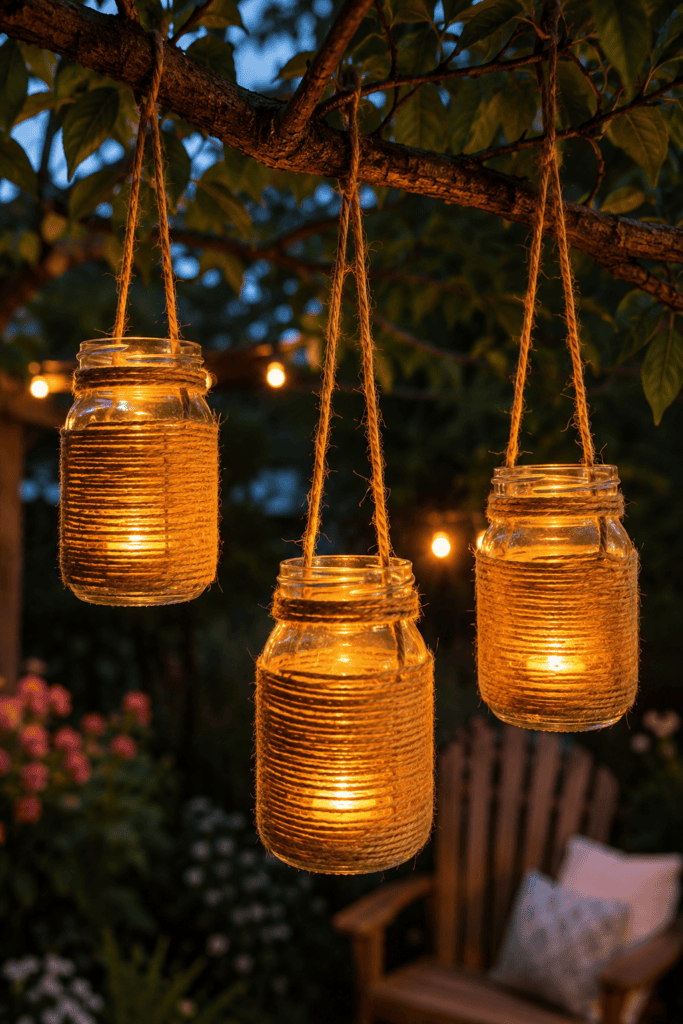
Mason jar lighting gets mocked sometimes as overdone, and fair, but there’s a reason it stuck around: it genuinely works. Add a battery-operated tea light or fairy lights inside, hang them from a tree branch or pergola beam, and you’ve got soft, flattering evening light without running electrical wire everywhere.
Pro tip: wrap the jar necks in jute twine before hanging. It hides the wire and adds texture.
I tried real candles in mine once. Once. The wind blew one out, wax dripped everywhere, and I spent twenty minutes cleaning a jar at 10 PM. Battery tea lights aren’t as romantic, sure, but they won’t ruin your evening either :/
8. Build a Rustic Arbor Entrance
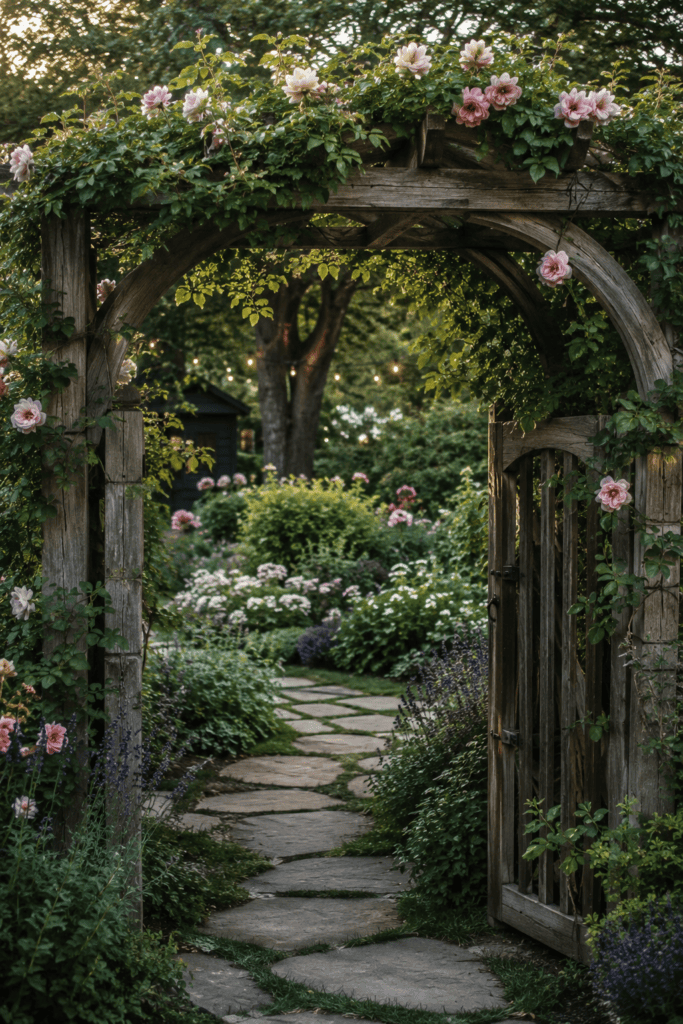
A simple wooden arbor at your garden entrance instantly signals “something nice is happening beyond this point.” Train climbing roses, clematis, or wisteria over it, and give it a few years to fill in.
I’ll be honest: mine looked awkward and bare for the first year. Patience pays off here, so don’t panic if yours does too.
Choosing the right climbing plant matters more than people think. Roses look stunning but need regular pruning and pest checks. Clematis is lower-maintenance but slower to establish. If you want fast coverage with minimal fuss, honeysuckle is honestly the underrated MVP of arbor plants.
9. Add a Vintage Watering Can Display
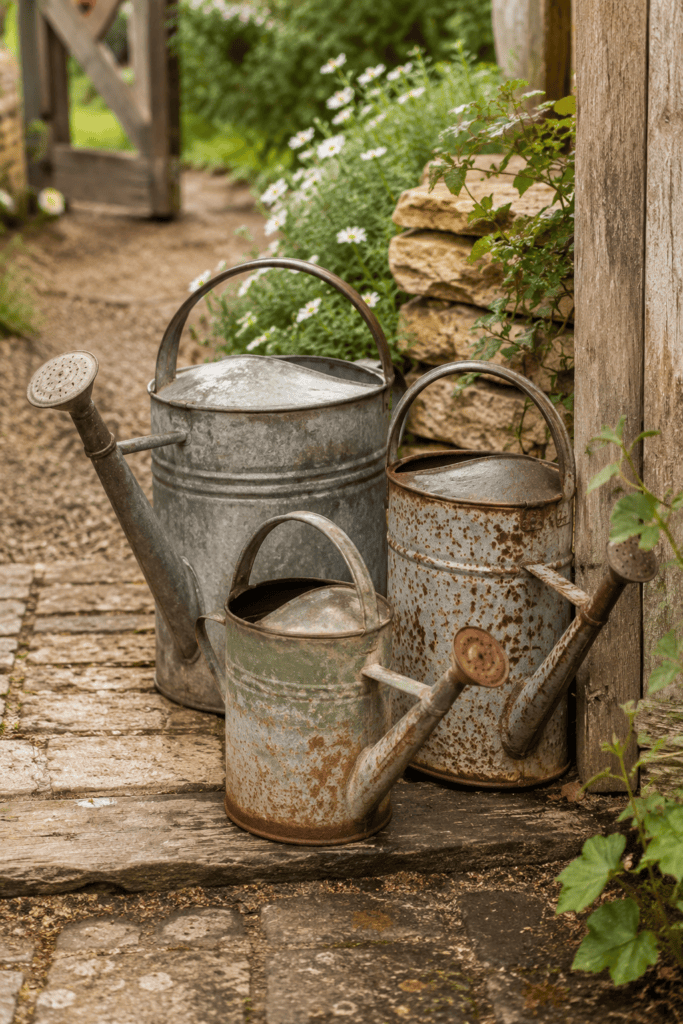
An old galvanized watering can, slightly dented and definitely not functional anymore, makes a surprisingly good decorative anchor. Group a few different sizes near your entryway or beside a bed for an easy vignette.
- Mix metals: galvanized steel, copper, weathered tin
- Group in odd numbers (three works best visually)
- Let a few rust naturally instead of sealing them
10. Plant a Wildflower Border
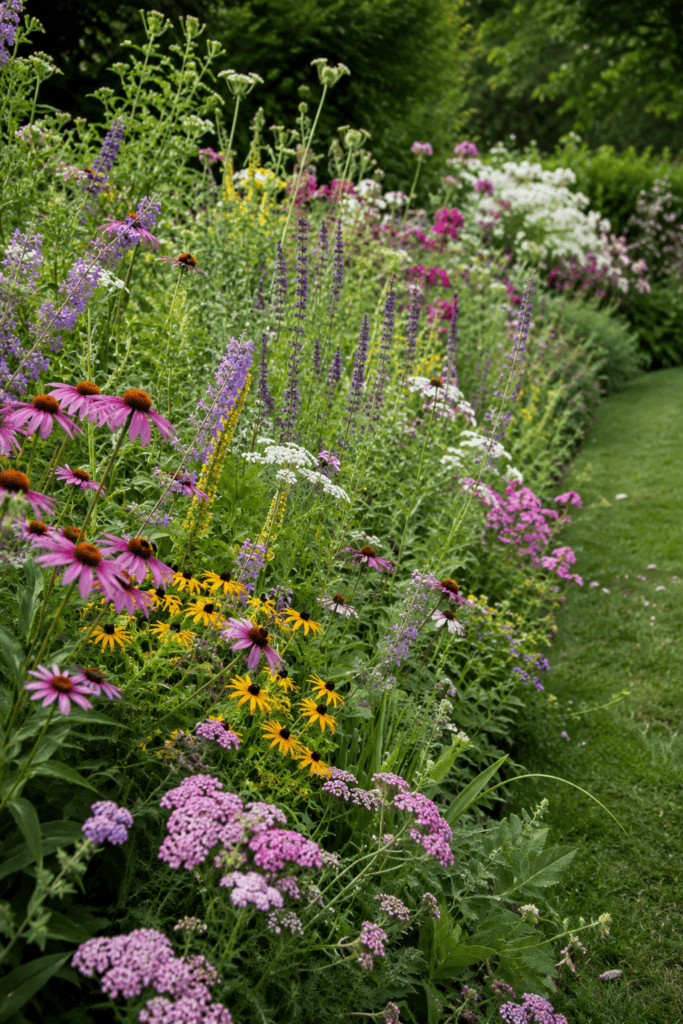
Wildflower borders are the lazy gardener’s secret weapon (I say that with love, I am the lazy gardener). They require minimal maintenance, support pollinators, and look intentionally untamed rather than neglected.
Mix native species suited to your climate zone for the best results. A quick search for your region’s native wildflower mix will save you a lot of trial and error.
Timing matters too. Most wildflower seed mixes do best sown in early fall or early spring, depending on your zone, so they get a natural cold stretch before germinating. Skip that step and you’ll get patchy, disappointing results—trust me, I planted mine mid-summer once and got exactly four flowers for my trouble.
11. Use Old Barrels as Planters or Water Features
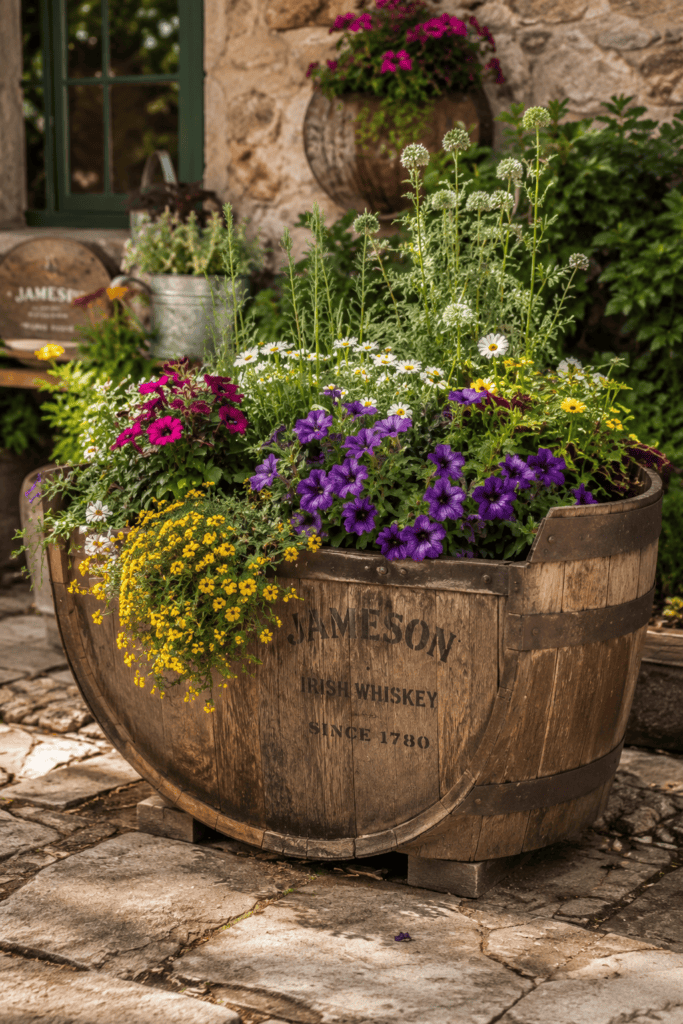
Whiskey barrels, wine barrels, even old rain barrels: cut in half, they make fantastic rustic planters. Left whole with a small pump, they become a simple water feature.
I converted one into a mini fountain, and the sound of trickling water changed the whole feel of my patio. Small investment, disproportionately big payoff.
If you go the planter route instead, drill drainage holes before you fill it, not after. Sounds obvious, but I’ve made that mistake, and drilling through soggy soil is not a fun Saturday activity.
12. Build a Stone or Brick Herb Spiral
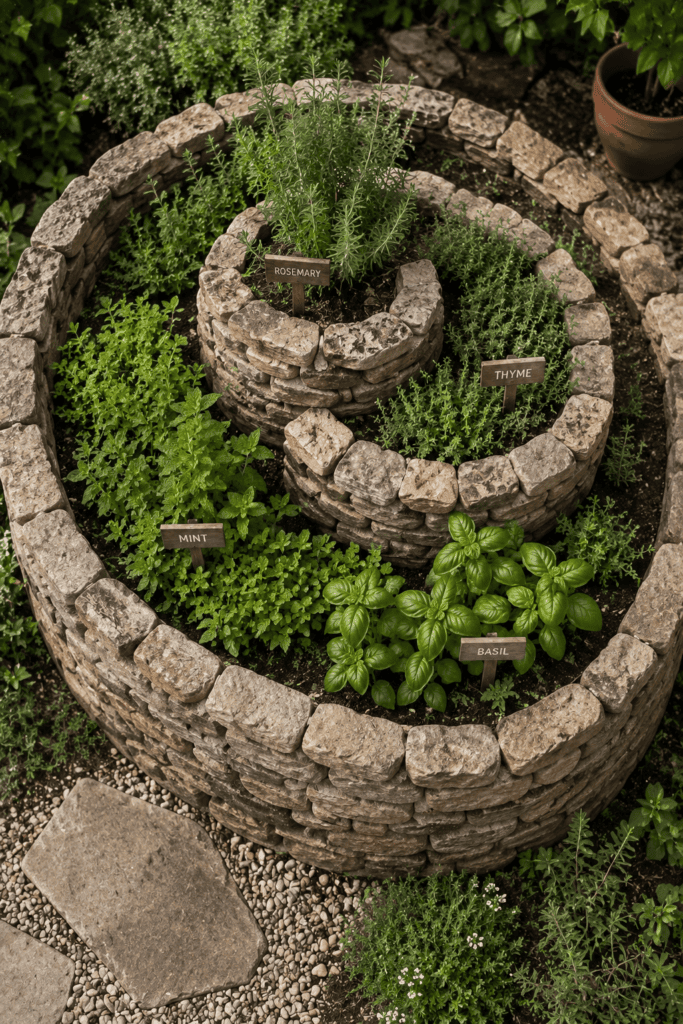
An herb spiral is one of those ideas that looks complicated but is genuinely simple to build, and it solves a real problem: different herbs want different amounts of sun and moisture. The spiral shape naturally creates those microclimates.
- Rosemary and thyme thrive near the sunny top
- Mint and parsley do well midway
- Moisture-loving herbs like basil sit lower, near the base
Build the spiral with stacked stone or brick, whichever you have easier access to, and don’t stress about perfect symmetry. Mine leans slightly to one side, and honestly, it just adds to the handmade look.
13. Hang String Lights on Rustic Wooden Posts
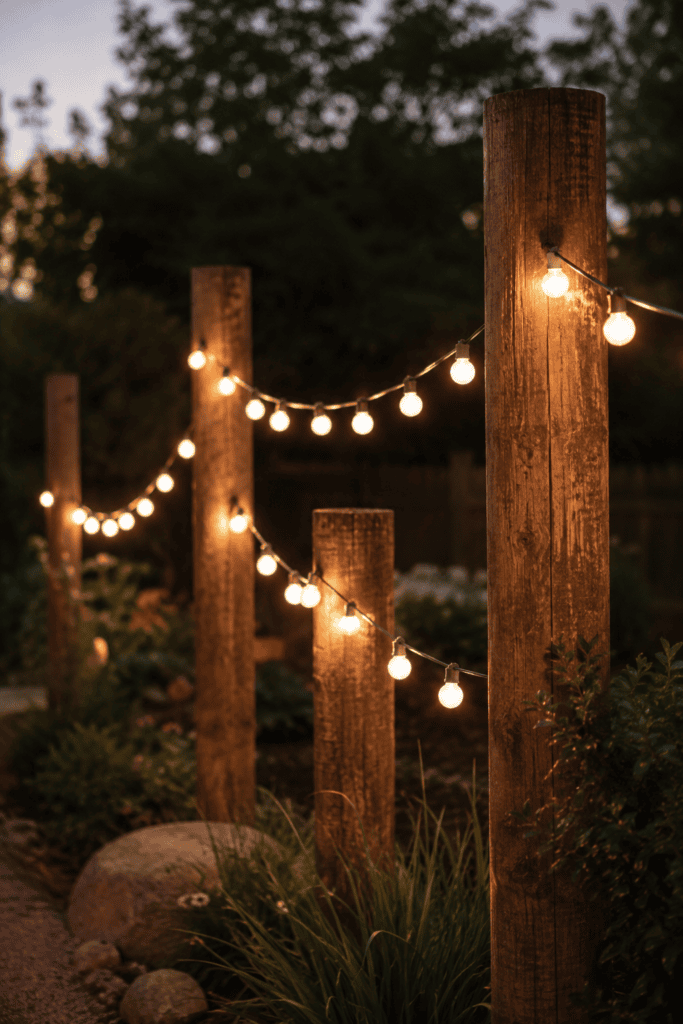
Forget sleek modern lighting fixtures. Rough wooden posts strung with warm-toned string lights create that golden-hour glow every evening, not just at sunset.
Set posts at varying heights and stagger them slightly off-grid rather than in a perfectly straight line. Symmetry, again, is not your friend here.
Go with warm white bulbs, not cool white. Cool white reads as a parking lot; warm white reads as a cozy evening hangout. It’s a tiny detail, but it makes a genuinely huge difference in the final vibe.
14. Create a Cottage-Style Flower Bed
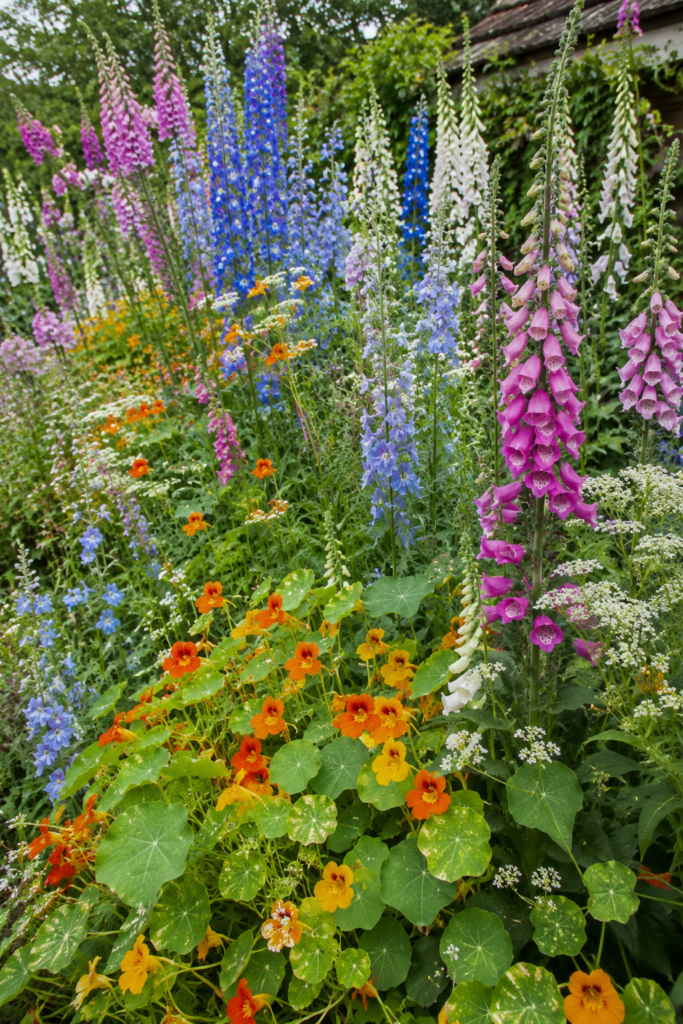
Cottage gardens are the OG rustic aesthetic: dense, layered, slightly chaotic, and gorgeous. Combine tall spires like foxglove or delphinium with lower, sprawling plants like nasturtium or sweet alyssum.
The trick? Plant closer together than feels comfortable. A cottage bed with visible mulch between plants just reads as “not finished yet.”
Layer in some self-seeding annuals too, like cosmos or calendula. They’ll reappear every year with minimal effort, filling in gaps naturally as the bed matures. Ever wondered why some cottage gardens look better every single year? That’s usually why.
15. Add a Rustic Potting Bench
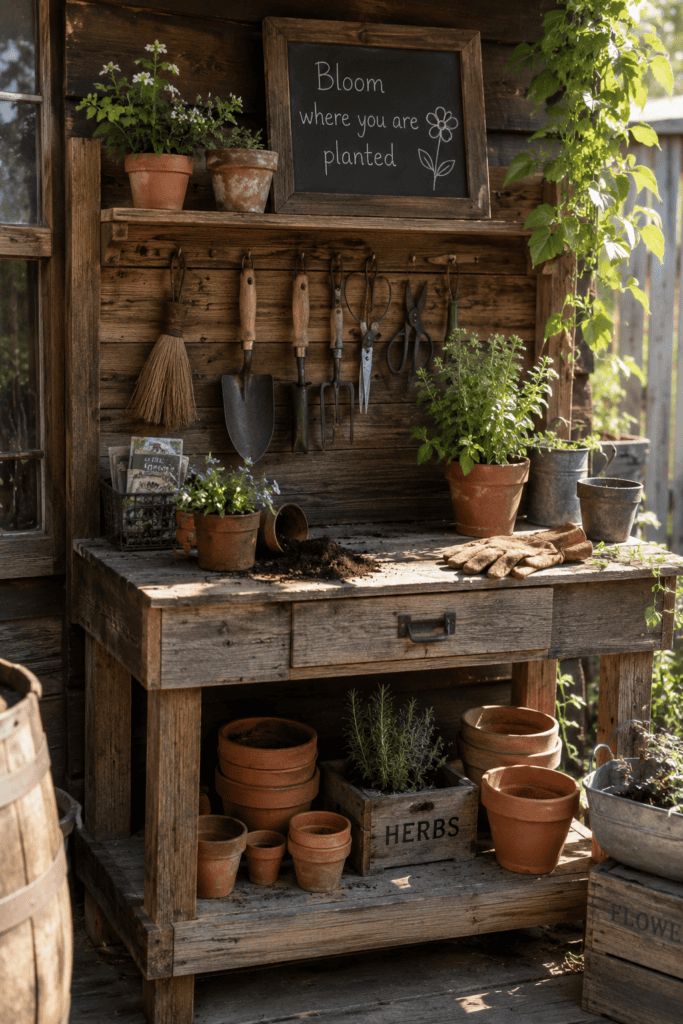
A potting bench built from reclaimed lumber gives you a dedicated workspace and instant rustic appeal. Mine has a shelf underneath for terracotta pots, a few rusty hooks for tools, and a zinc tray on top that catches soil spills.
Honestly, half the appeal is just having somewhere to dump dirty gloves that isn’t my kitchen counter. My partner appreciates it too, if I’m being honest 🙂
Add a small chalkboard or a piece of scrap plywood above the bench for jotting down planting dates or reminders. It’s a small functional touch that also happens to look great photographed for, say, a Pinterest board.
16. Use Salvaged Windows as Garden Décor
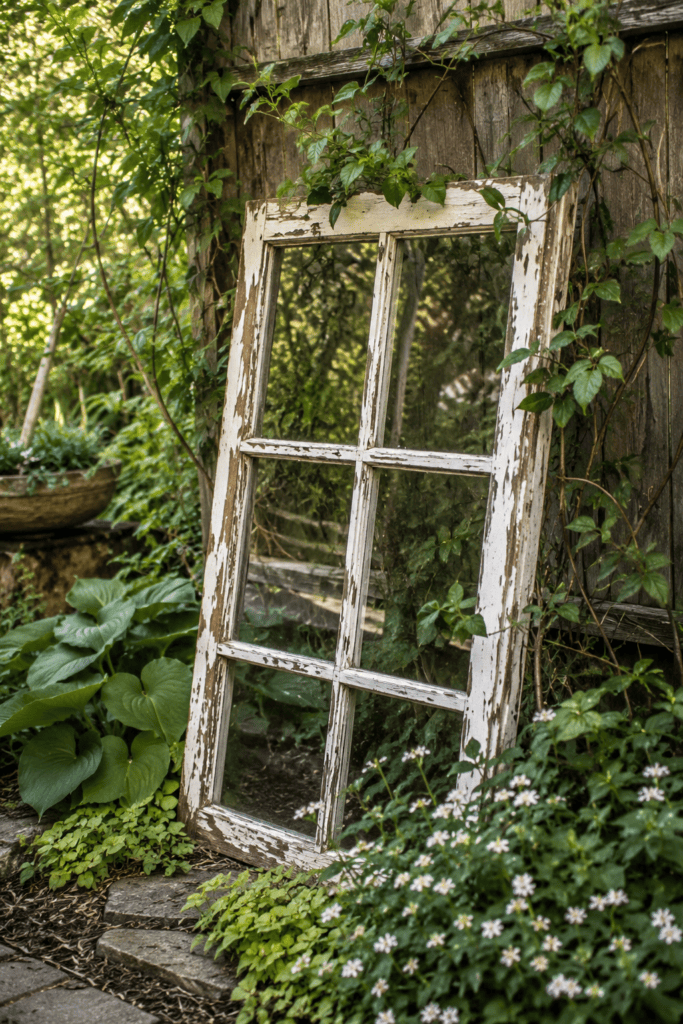
Old window frames, glass intact or removed, make surprisingly striking garden art. Lean one against a fence, hang it from a wall, or use the frame to border a small flower bed.
- Frames without glass work well as raised bed dividers
- Frames with intact glass make charming mini greenhouses over seedlings
- Peeling paint is a feature, not a flaw
Salvage yards and architectural reuse stores are goldmines for this stuff, usually way cheaper than buying new “distressed” decor from a home goods store that charges extra for pre-made imperfection. Ironic, but that’s retail for you.
17. Install a Rustic Bridge Over a Dry Creek Bed
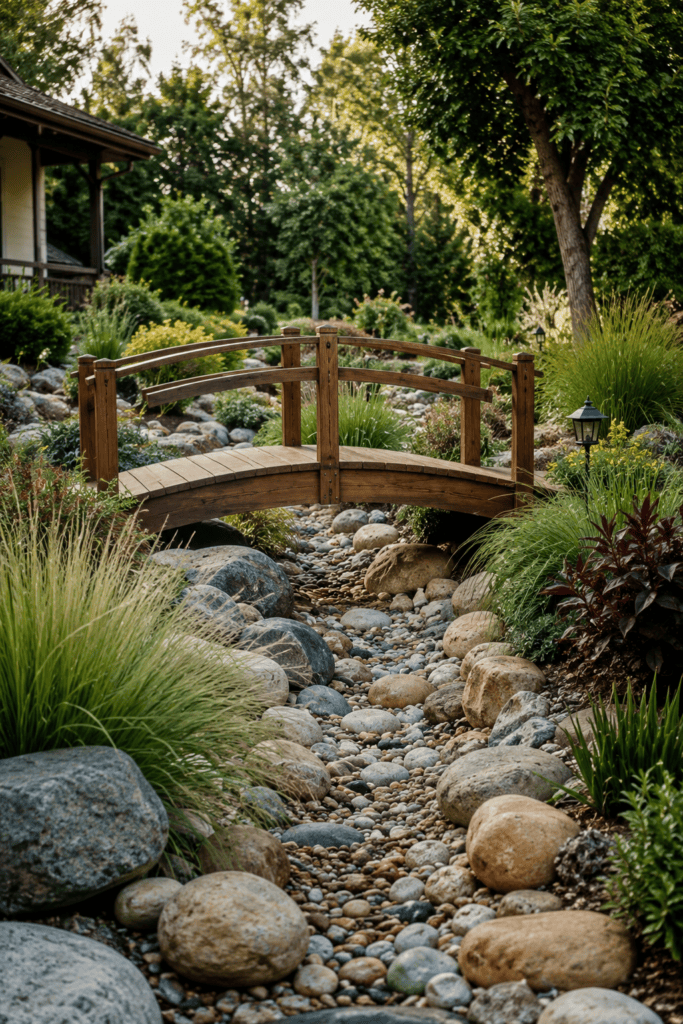
If your garden has any kind of slope or drainage issue, a dry creek bed with a small wooden bridge solves a practical problem while looking like something out of a storybook. River rocks handle water runoff, and the bridge gives the whole area a focal point.
This was, hands down, the most labor-intensive project on this list. Was it worth hauling that many rocks? IMO, yes, but ask me again after my next chiropractor appointment.
Vary your river rock sizes for the most natural look. All-uniform stones read as store-bought, while a mix of small pebbles and larger boulders looks like an actual creek carved it over time. Plant ornamental grasses along the edges to soften the transition between the “creek” and the surrounding lawn.
Bringing It All Together
Rustic gardens work because they embrace imperfection instead of fighting it. Weathered wood, mismatched containers, and slightly wild plantings all tell the same story: this space is loved, not just decorated. You don’t need a huge budget or acres of land to pull this off—most of these ideas start with materials you can find secondhand or repurpose from what’s already sitting in your garage.
Pick two or three ideas from this list that fit your space and start there. A ladder planter and a fire pit seating area can transform a small backyard in a single weekend. Build from there, let things weather naturally, and resist the urge to make everything match perfectly.