
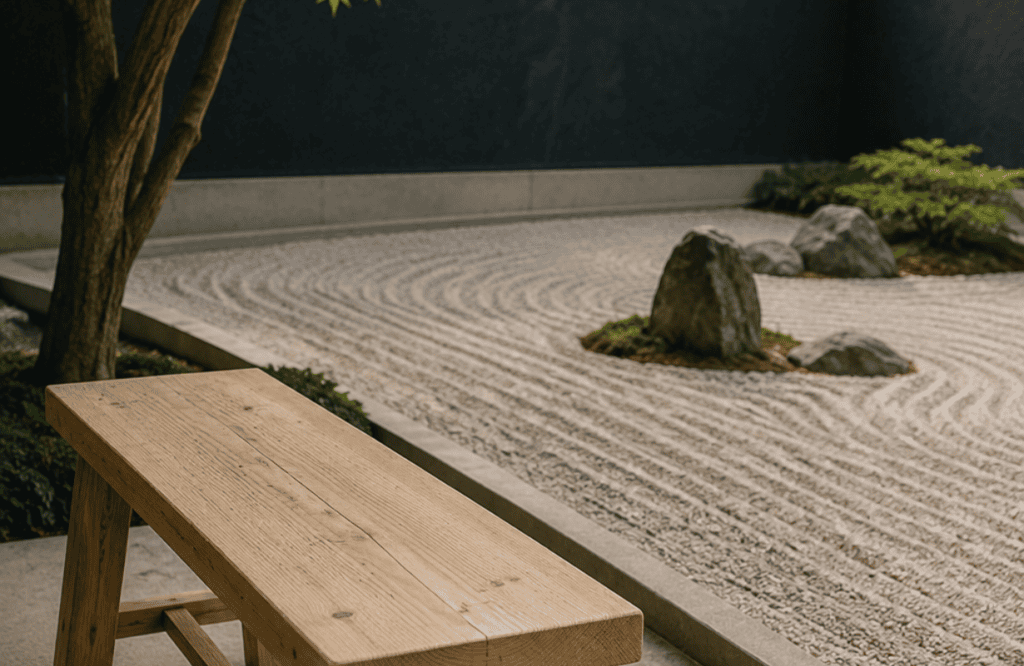
Ever notice how a tiny patch of raked sand can feel more calming than an entire room full of stuff? That’s basically the magic trick behind a zen garden. Strip away the clutter, add a few rocks and some intentional emptiness, and suddenly a space feels like it can breathe.
Zen gardens aren’t some fleeting design trend, either. They’re rooted in centuries-old Japanese landscape traditions built specifically to encourage stillness, focus, and a slower pace of life. The best part? You don’t need a temple-sized budget or a sprawling yard to get that same effect at home.
Whether you’re working with a full backyard, a tiny balcony, or just a corner of your desk, there’s a version of this idea that fits. Below are 13 ways to bring that calm, minimalist energy into your own space — from full-scale koi ponds to tabletop trays you can build in an afternoon.
1. The Classic Miniature Rock Garden
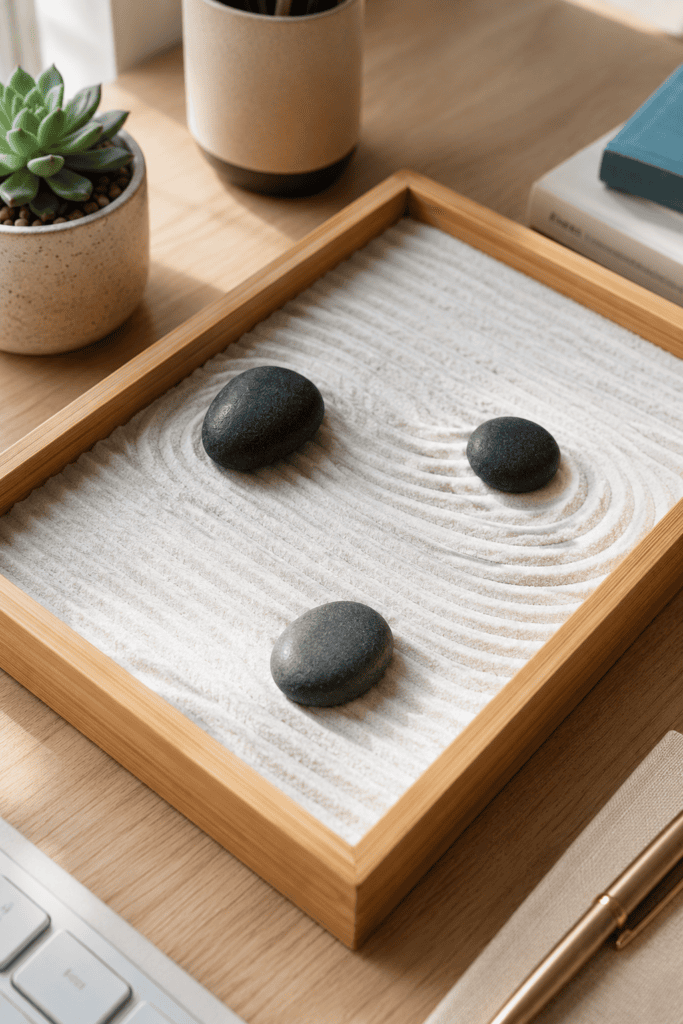
This is the one everyone pictures when you say “zen garden.” A shallow tray of fine gravel or sand, a few carefully placed rocks, and a small rake for tracing patterns.
I keep mine on my desk, and IMO it’s the single best five-minute stress reset I’ve found. Ever notice how just moving the rake through sand quiets your thoughts faster than scrolling your phone ever could? That’s the whole point.
Key elements to include:
- Fine sand or crushed granite (avoid anything too coarse — it won’t hold a pattern)
- 3–5 rocks of varying sizes, never placed in even numbers
- A small wooden rake, ideally handmade
Common Raking Patterns to Try
Don’t just drag the rake in straight lines and call it done. Each pattern actually carries its own meaning and visual effect:
- Straight parallel lines: Represent calm, still water
- Concentric circles around rocks: Mimic ripples spreading outward
- Wave patterns: Suggest movement and ocean currents
I switch mine up depending on my mood, which sounds dramatic, but honestly, raking angry circles after a rough day hits different.
2. A Full-Size Backyard Zen Garden
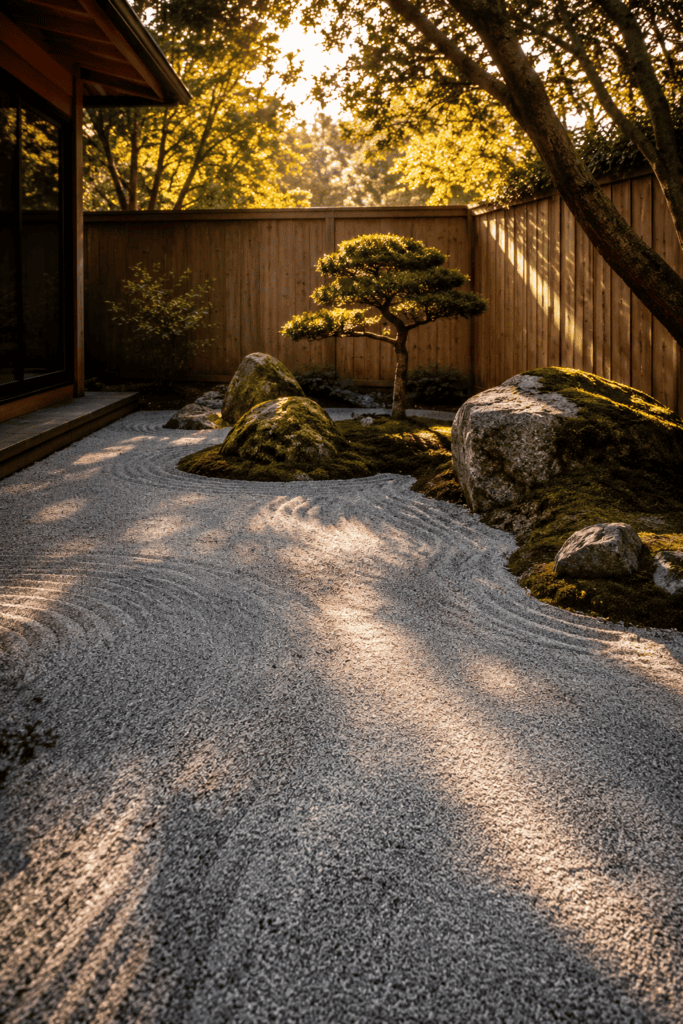
Go bigger if you’ve got the space. A backyard zen garden transforms an unused corner into a genuine retreat, not just a novelty item on your patio table.
I converted a patch of dead grass that nothing would grow in, and it became the best decision I made that whole year. The trick is committing to the emptiness — resist the urge to cram it full of plants and ornaments.
3. Moss Instead of Sand
Not everyone loves raking sand, and that’s fair. Moss gardens offer a softer, greener alternative that still nails that tranquil, minimalist vibe.
Moss thrives in shade and doesn’t need constant grooming, which makes it perfect for lazy gardeners like me. I switched half my garden to moss after realizing I hate raking on windy days :/ The wind just undoes everything in seconds.
Why Moss Works So Well
- It requires almost no maintenance once established
- It stays green through most of the year
- It pairs beautifully with stone pathways
4. Bamboo Water Feature (Shishi-Odoshi)
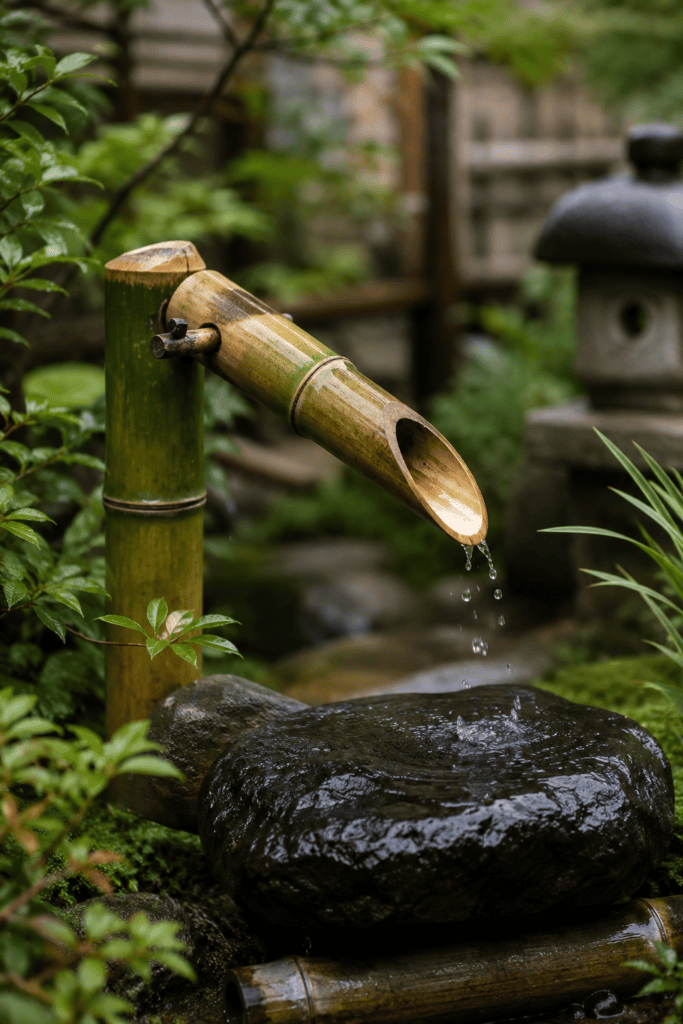
That hollow bamboo piece that fills with water, tips, and clacks against a rock? It’s called a shishi-odoshi, and it’s genuinely mesmerizing.
I installed one near my patio, and honestly, the rhythmic clack every 30 seconds became oddly addictive. Guests always ask about it first — it’s a conversation starter and a stress reliever rolled into one.
5. Dry Riverbed Design
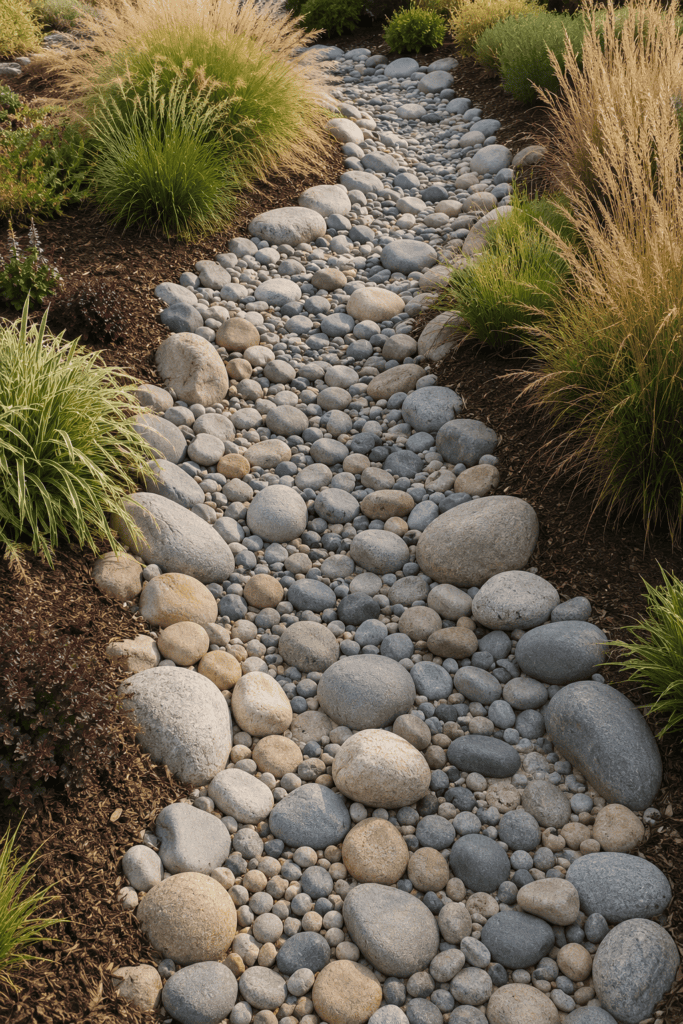
A dry riverbed uses smooth stones arranged to mimic a flowing stream, minus the actual water and maintenance headaches. It’s an excellent option if you want visual movement without a real water feature.
I built mine along a slope where water used to pool after rain, and it solved a drainage problem while looking intentional. Two birds, one zen stone path.
What you’ll need:
- River rocks in varying sizes
- Smaller pebbles for the “water” effect
- Larger boulders to frame the edges
Best Rocks to Use
Not all stones work equally well here. Smooth, rounded river rocks look natural and mimic actual erosion, while jagged landscaping stones tend to look out of place and, frankly, a little lazy. Mix sizes generously — a riverbed made entirely of same-sized pebbles looks more like a driveway than a stream.
6. Bonsai Tree Centerpiece
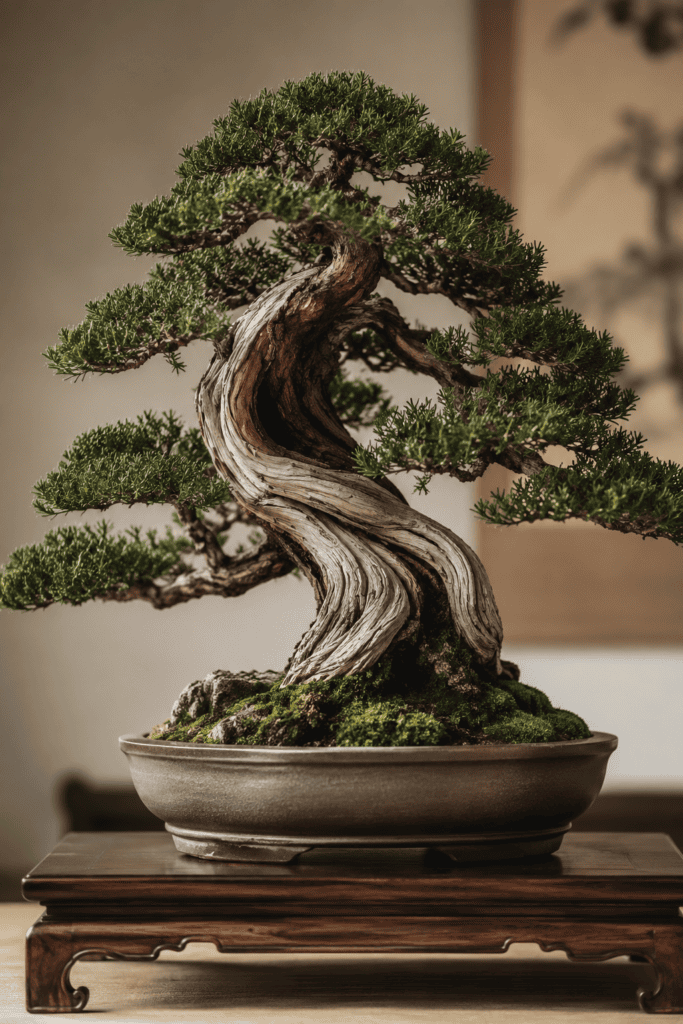
Nothing says patience quite like a bonsai tree. Growing one teaches you more about restraint than any self-help book I’ve read.
Fair warning: bonsai isn’t a “set it and forget it” hobby. I killed my first one within three months because I assumed it needed zero attention. Big mistake. These trees need regular pruning, careful watering, and honestly, a bit of obsession.
If you’re just starting out, skip the fancy juniper varieties everyone recommends online. I’d suggest a Chinese elm or ficus instead — both forgive beginner mistakes far better and tolerate indoor conditions if you don’t have consistent outdoor sun. Save the finicky pines for once you’ve actually kept a tree alive for a full year.
7. Stone Lantern Focal Point
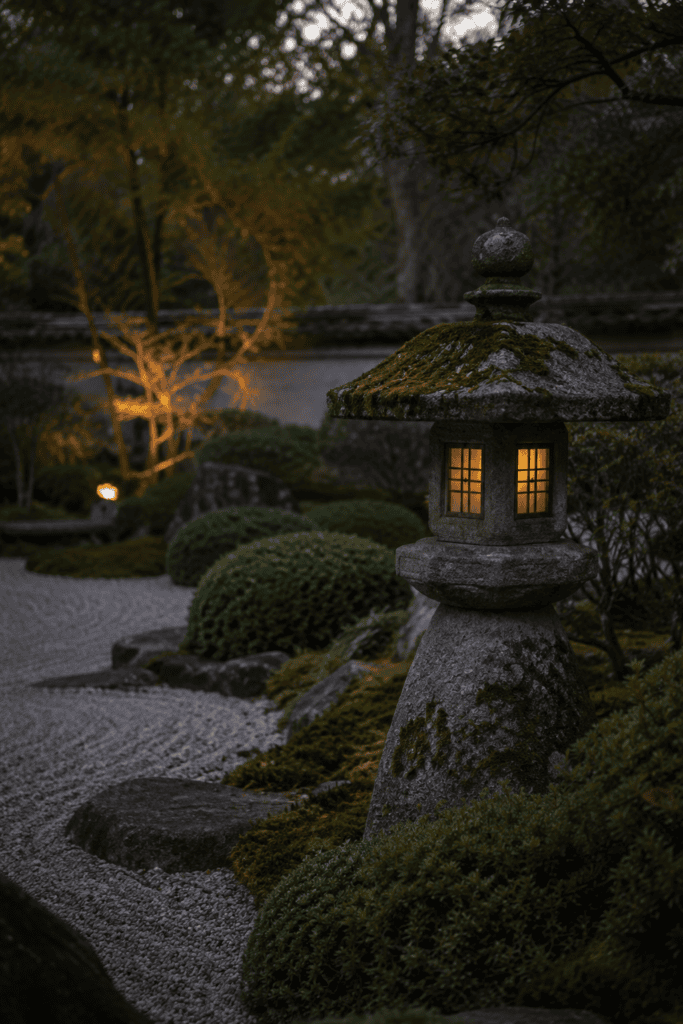
A stone lantern, or toro, instantly adds authenticity to any zen garden design. These aren’t just decorative — traditionally, they lit pathways in Japanese gardens and temples.
I placed mine off-center, which looked far more natural than dead center. Symmetry is overrated here; zen gardens thrive on asymmetry and subtle imperfection.
8. Gravel Pathways
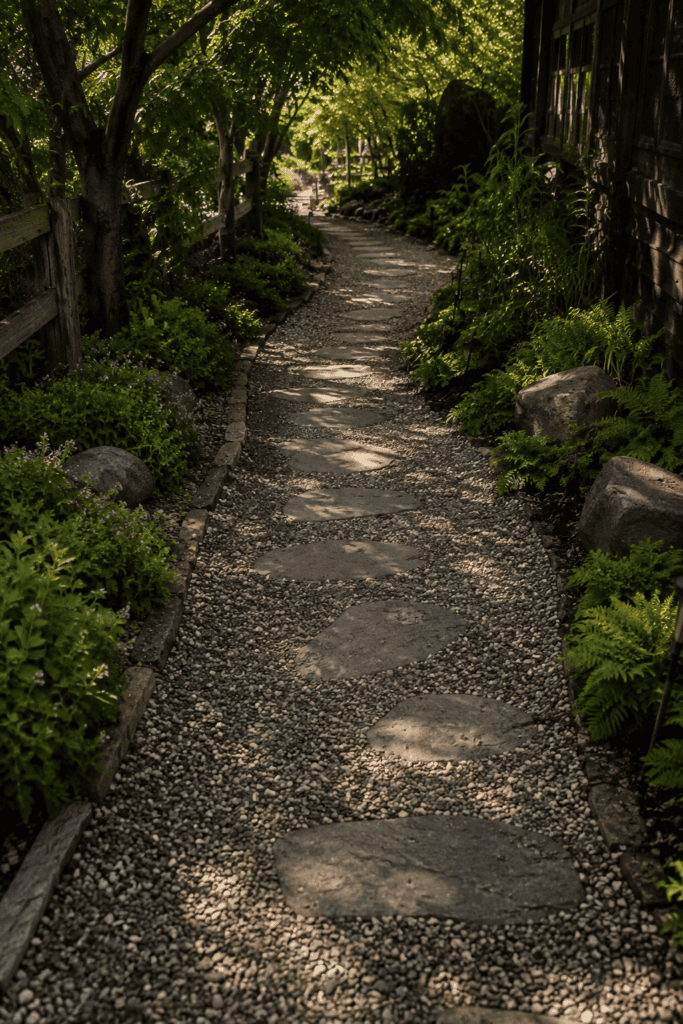
Gravel paths guide visitors through the garden while adding texture and sound underfoot. The crunch of footsteps on gravel is oddly satisfying — like bubble wrap for adults.
Keep the path narrow and winding rather than straight. A meandering path forces you to slow down, which is basically the entire philosophy behind zen design.
9. Minimalist Bench or Seating Area
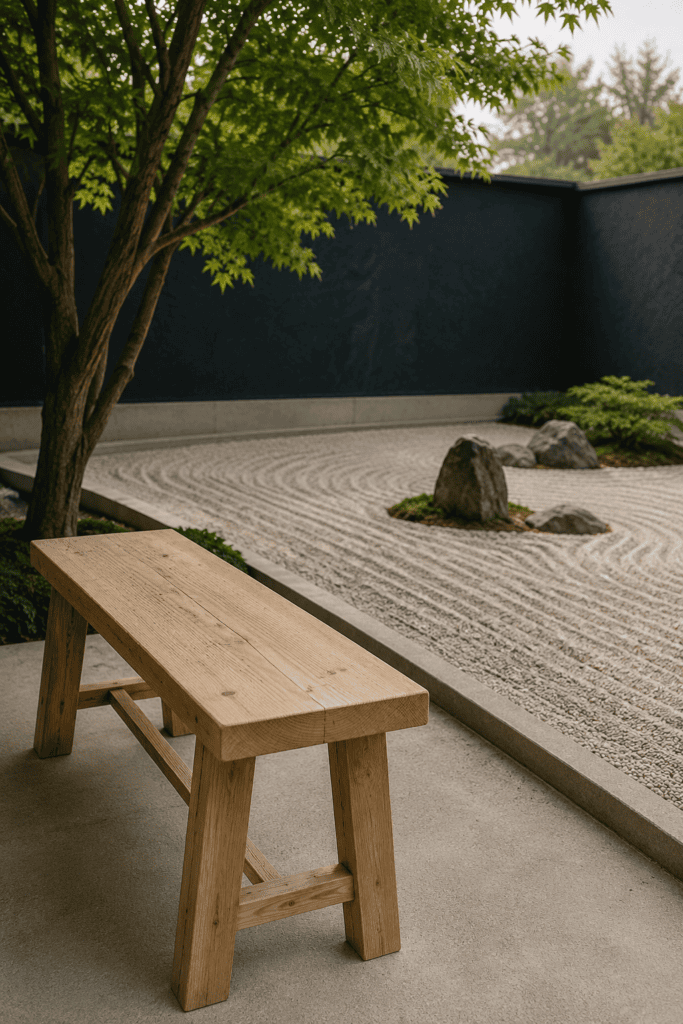
Every zen garden needs a spot to just sit and stare blankly at rocks — that’s not laziness, that’s the whole point. A simple wooden bench works better than anything ornate or oversized.
I made the mistake of adding a huge patio set first, and it completely wrecked the scale of the space. Less furniture, more presence. That’s the real lesson here.
10. Bridge Over a Dry or Real Stream
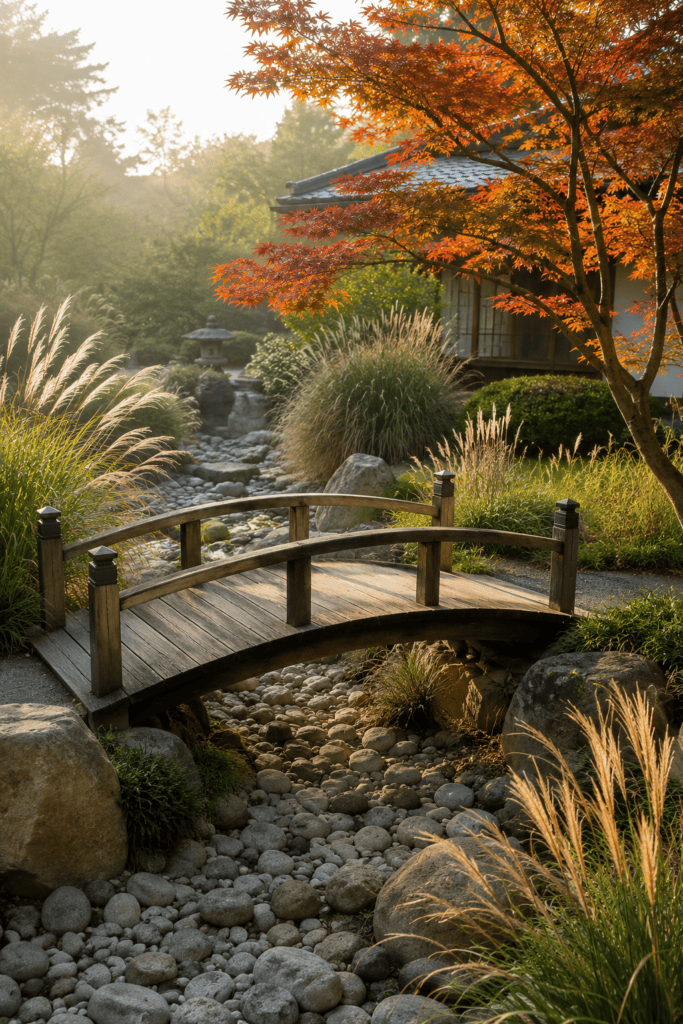
A small wooden bridge adds a fairy-tale quality without feeling gimmicky, especially over a dry riverbed or koi pond. It creates a visual journey, guiding the eye (and feet) from one section to another.
Keep it low to the ground and simple in design. Ornate isn’t the goal; understated elegance is.
11. Zen Garden With a Koi Pond
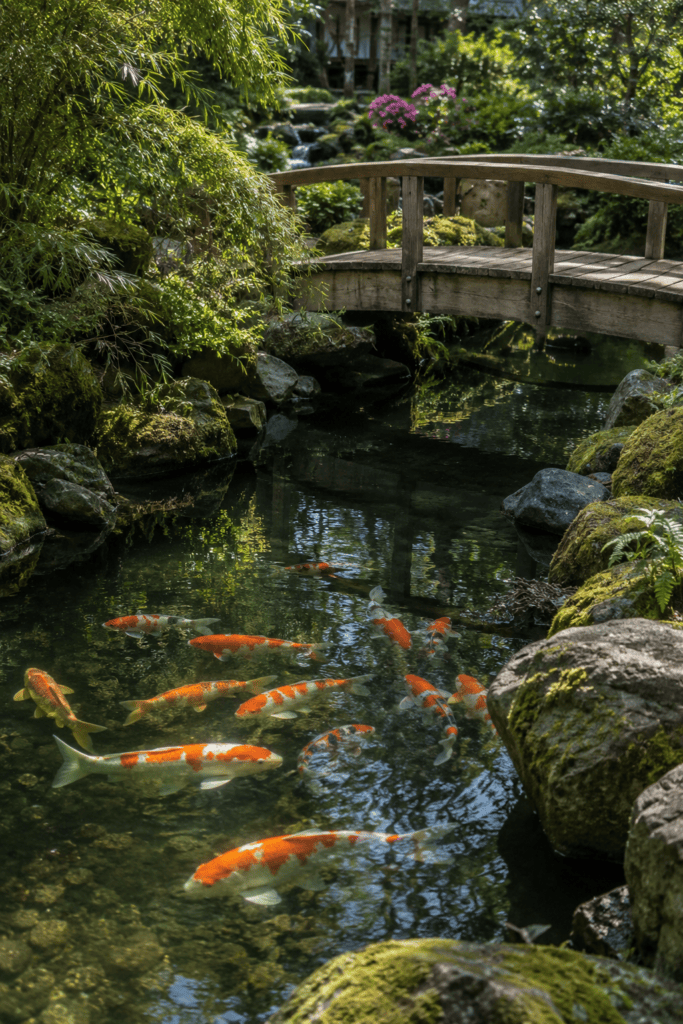
If you have the budget and space, a koi pond takes your zen garden from “nice backyard feature” to “genuinely impressive retreat.” Watching koi glide through still water is weirdly hypnotic — better than most meditation apps, IMO.
- Requires a filtration system and regular maintenance
- Needs adequate depth (at least 3 feet) for fish health
- Pairs beautifully with a stone bridge or bamboo fountain
Is it more work than sand and rocks? Absolutely. Is it worth it? For me, yes — but I’ll admit it’s not for everyone.
12. Vertical Zen Garden for Small Spaces
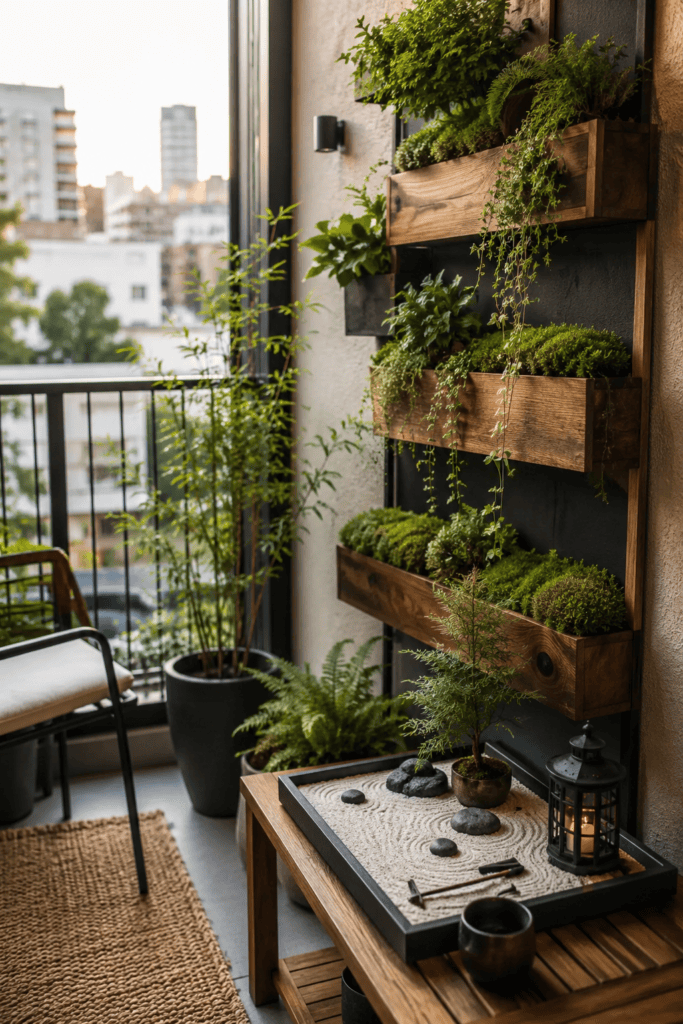
Don’t have a yard? No problem. A vertical zen garden using wall-mounted planters, small trays, and hanging moss panels brings the aesthetic to balconies and tiny apartments.
I built one on my apartment balcony using recycled wooden crates, and it fooled every visitor into thinking I actually knew what I was doing with plants. Small space doesn’t mean small impact.
13. Indoor Tabletop Zen Garden
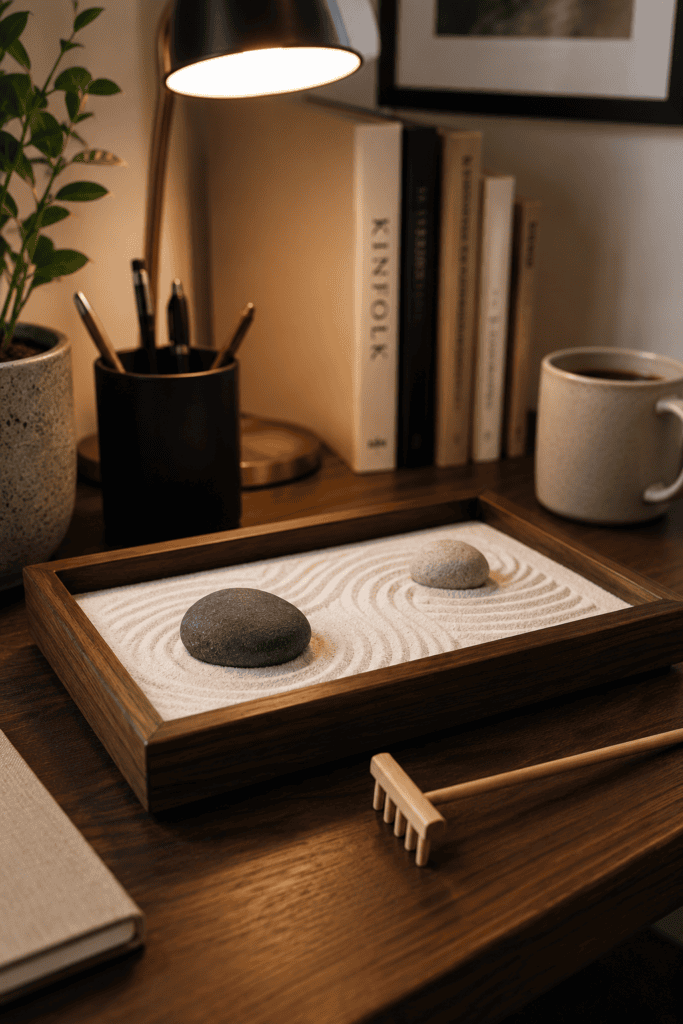
Can’t commit to an outdoor project? A tabletop zen garden fits on any desk or shelf and delivers the same calming ritual in miniature form. Ever wondered why offices started stocking these on desks a few years back? Turns out, a two-minute raking break genuinely helps focus.
Keep it simple:
- A shallow wooden tray
- Fine sand
- Two or three small stones
- A mini rake or fork
That’s it. No green thumb required, no yard needed.
Which Zen Garden Idea Fits Your Space?
Choosing the right style comes down to space, time, and how much maintenance you’re genuinely willing to handle. Here’s my honest breakdown:
- Tiny space, low effort: Tabletop garden or vertical wall design
- Some yard, moderate effort: Dry riverbed, gravel path, or moss garden
- Big yard, big commitment: Koi pond, full backyard design, or bonsai centerpiece
Don’t overthink this decision. Start small, see how you feel maintaining it, then expand if it sticks.
Final Thoughts
A zen garden isn’t about perfection — it’s about creating a space that forces you to slow down, even for five minutes a day. Whether you go with a simple sand tray or commit to a full koi pond, the goal stays the same: calm over chaos.
FYI, you don’t need to nail every element on this list to get the benefits. Pick two or three that fit your space and budget, then build from there. My first attempt was a lopsided sand tray with a rake stolen from my kid’s sandbox, and somehow, it still worked 🙂
So, which idea are you trying first? Grab a rake, clear a small patch of space, and start experimenting.