
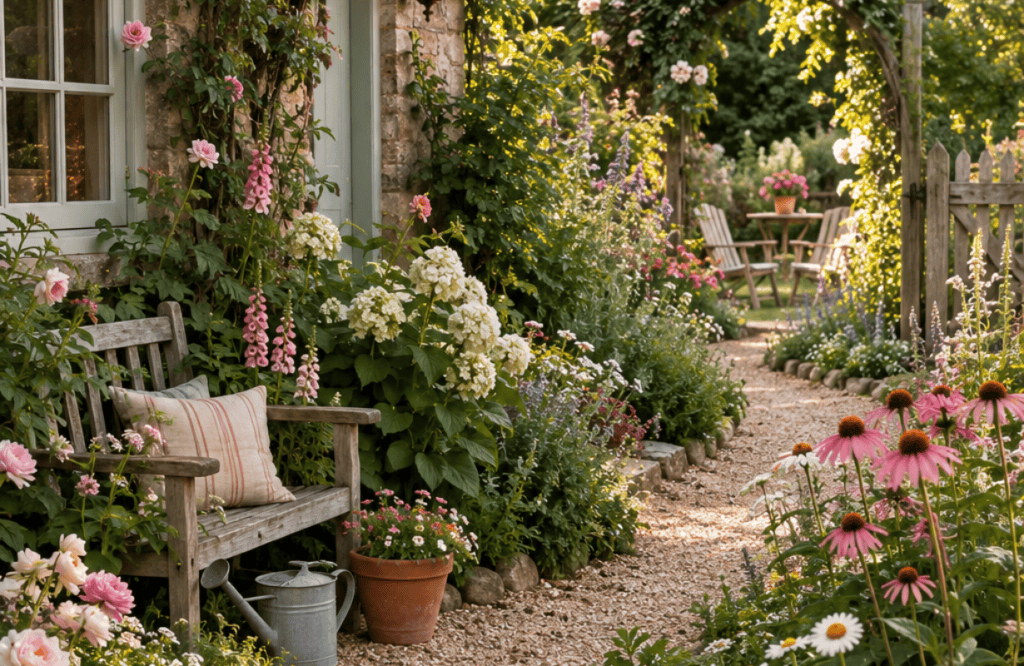
Picture this: a garden so charming it looks like it belongs on a postcard, but you didn’t hire a landscaper or spend a fortune to get there. That’s the magic of a cottage garden, and honestly? I fell in love with the style the moment I ripped out my sad, boring lawn strip five years ago. If you want a garden that feels lived-in, romantic, and a little wild (in the best way), stick with me.
I’ve killed more plants than I care to admit while figuring this stuff out, so consider this your shortcut. No fluff, no filler—just 17 real ideas you can actually use.
What makes a cottage garden different from every other style out there? It’s not about following strict rules—it’s about abundance, texture, and a sense that nature designed it, not you. Think overflowing beds, flowers tumbling over pathways, and a general “organized chaos” that somehow just works. FYI, this style is incredibly forgiving for beginners, which is exactly why I fell for it in the first place. You don’t need perfect symmetry or an expensive irrigation system you just need a willingness to let plants do their thing.
Whether you’re working with a sprawling backyard or a tiny patio, these ideas scale up or down depending on your space. Grab a coffee, maybe a notebook, and let’s get into it.
1. Ditch the Straight Lines
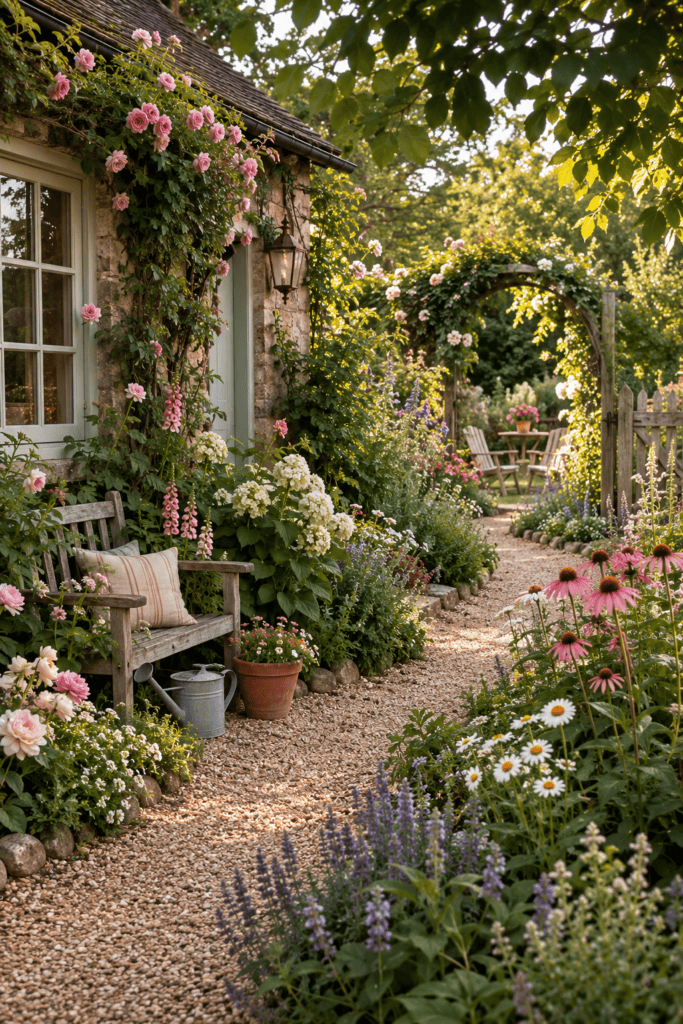
Cottage gardens don’t do rigid rows. Curved beds and meandering paths are the whole point here.
Ever wondered why formal gardens feel stiff while cottage gardens feel inviting? It’s the lack of symmetry. I redesigned my front bed into a soft curve last spring, and it instantly looked ten years more established.
- Sketch your bed shape with a garden hose before you dig
- Aim for gentle curves, not sharp zigzags
- Let the path width vary slightly for a natural feel
Here’s a trick I wish someone told me earlier: walk the space first before you commit to anything permanent. Lay the hose down, live with it for a few days, and adjust as needed. You’ll notice which curves actually make sense with how you move through the yard, and which ones just look good on paper but feel awkward in real life.
2. Layer Your Plants Like a Cake
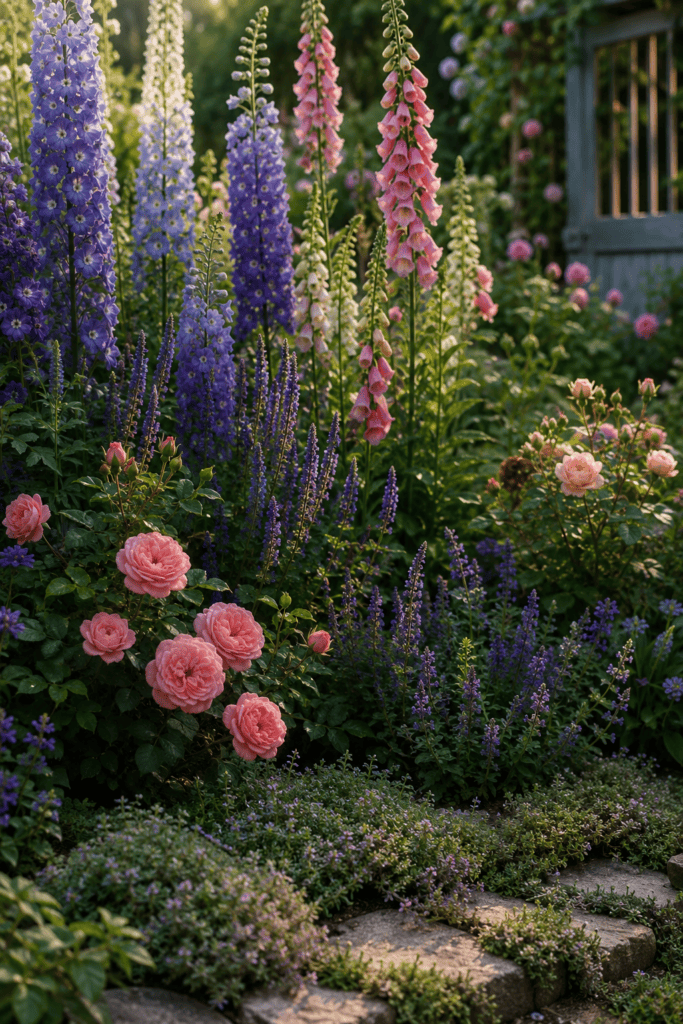
Height layering is non-negotiable if you want that overflowing, abundant look. Tall plants go in back, medium ones in the middle, and low growers spill over the front edge.
I learned this the hard way after planting everything the same height and ending up with what looked like a green hedge. Boring. Now I stagger heights constantly, and the difference is night and day.
- Back layer: delphiniums, hollyhocks, foxgloves
- Middle layer: roses, peonies, salvia
- Front layer: lady’s mantle, catmint, creeping thyme
One thing I’d add: don’t treat these layers as rigid boundaries. Let a tall plant occasionally poke through the middle layer, or let a front-row grower wander back a bit. That slight unpredictability is what separates a cottage garden from a landscaped border at a corporate office park.
3. Let Roses Do the Heavy Lifting
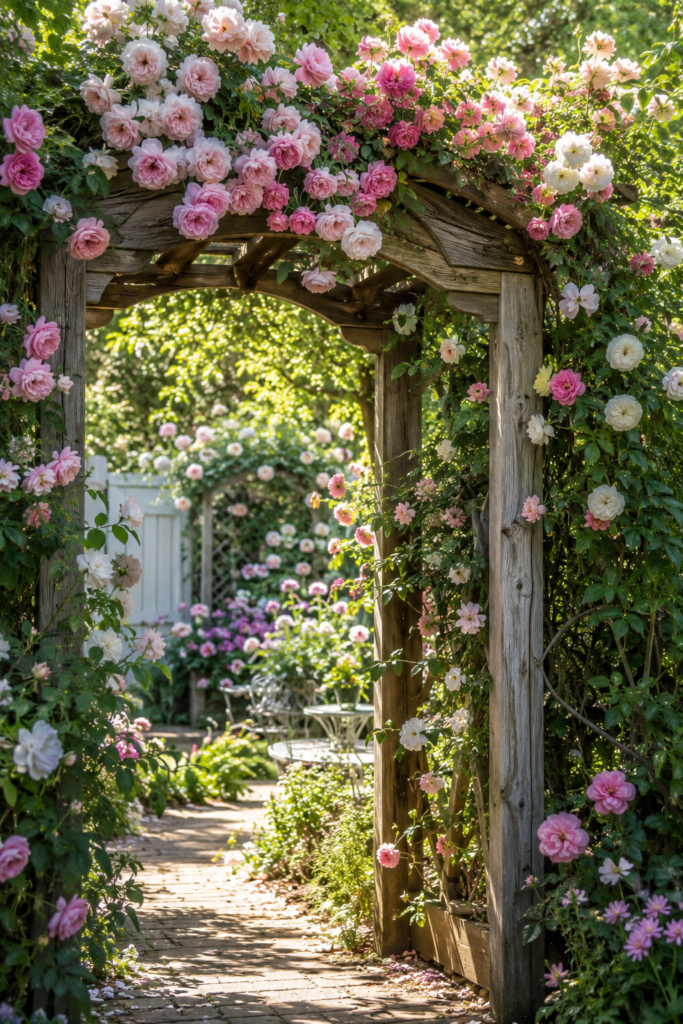
No cottage garden feels complete without climbing roses scrambling up an arch or fence. IMO, this is the single fastest way to make any yard look storybook-ready.
Choose disease-resistant varieties if you don’t want to spend your weekends fighting black spot. I went with ‘New Dawn’ on my arbor, and it’s been ridiculously low-maintenance for something that looks so dramatic.
Compare that to a hybrid tea rose I tried years ago, which needed constant spraying and still looked sad by August. Climbing roses bred for hardiness will save you time, money, and a fair amount of frustration. If you’re new to roses, start with one reliable variety before experimenting with the fussier heirloom types.
4. Add a Rustic Arbor or Arch
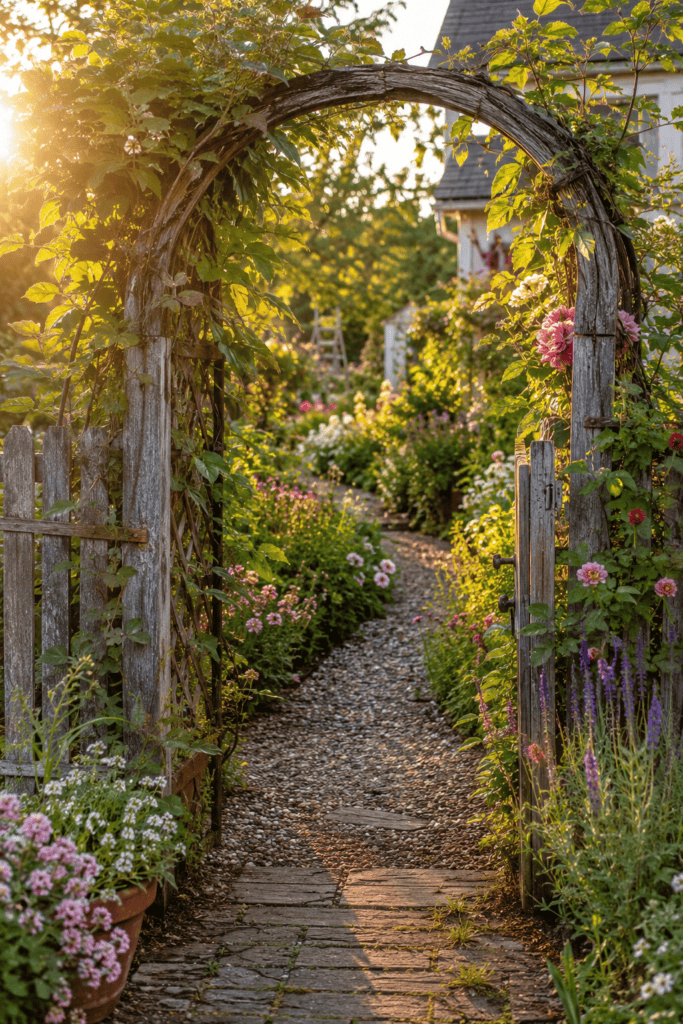
Speaking of arches—vertical structures add instant charm and give climbing plants somewhere to go. A weathered wooden arbor practically screams “cottage” the second you see it.
You don’t need anything fancy. A simple cedar arch from a hardware store works just as well as a custom-built one, and your wallet will thank you.
Position matters more than material, though. Place your arch at the entrance to a path or garden bed so it acts as a natural transition point—somewhere that visually says “you’re entering the good part now.” Over time, weather and vines will soften any hard edges anyway, so don’t stress over getting a flawless finish.
5. Mix Herbs Right In with the Flowers
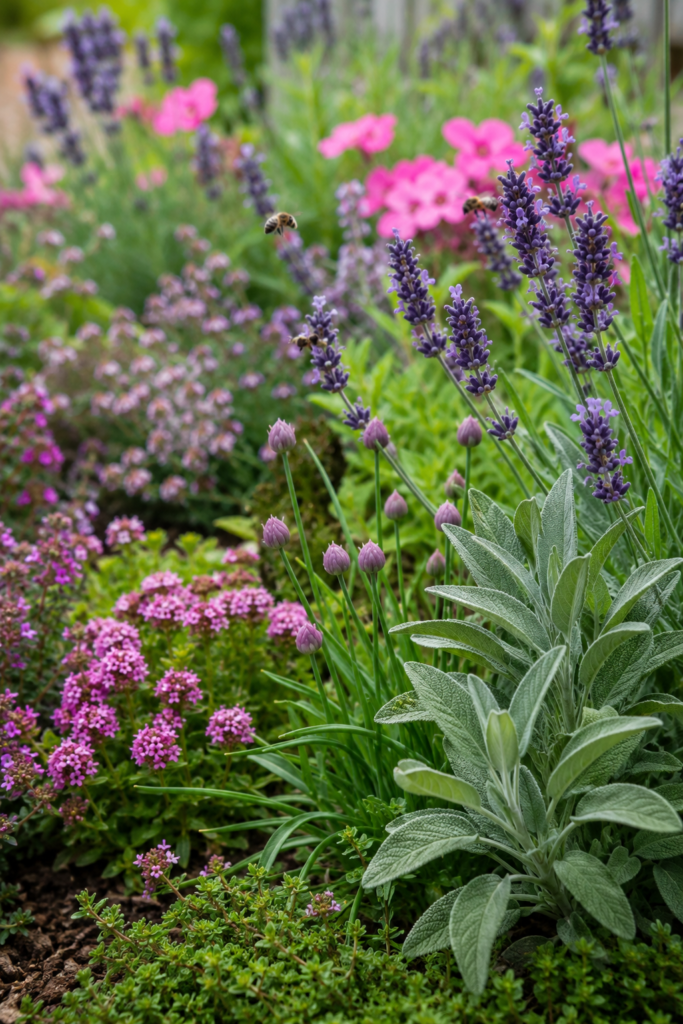
Here’s a comparison worth making: traditional gardens separate herbs into their own tidy plot, but cottage gardens toss them right in with the flowers. Interplanting herbs and blooms was actually practical for cottage owners centuries ago—kitchen ingredients grew steps from the door.
- Lavender pairs beautifully with roses
- Chives produce pretty purple blooms that pollinators love
- Sage adds silvery texture between brighter flowers
6. Go Big on Self-Seeding Flowers
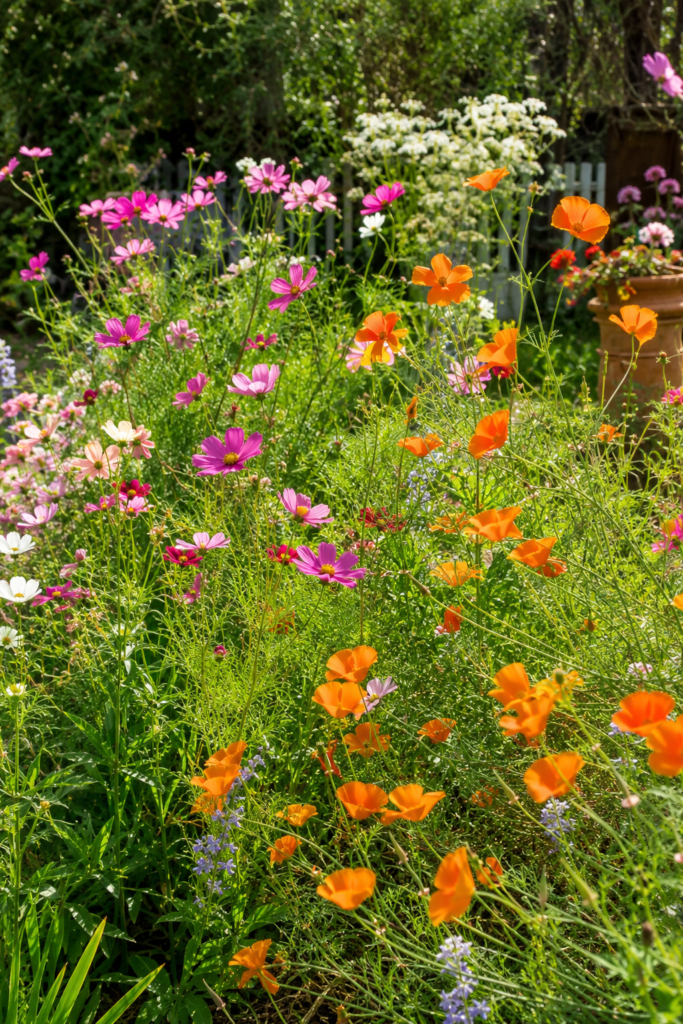
Self-seeding annuals like poppies, foxgloves, and cosmos are cottage garden royalty. Plant them once, and they’ll politely reseed themselves year after year.
Is this a little unpredictable? Sure. But that unpredictability is exactly what gives cottage gardens their relaxed, “happened naturally” vibe instead of looking like it came from a design catalog.
I let a patch of California poppies reseed wherever they wanted for two summers straight, and now I have this gorgeous orange drift that shifts slightly every year. Could I have planned it better with a strict design? Probably. But would it look this alive? Absolutely not.
7. Use a Picket Fence (But Let It Get a Little Wild)
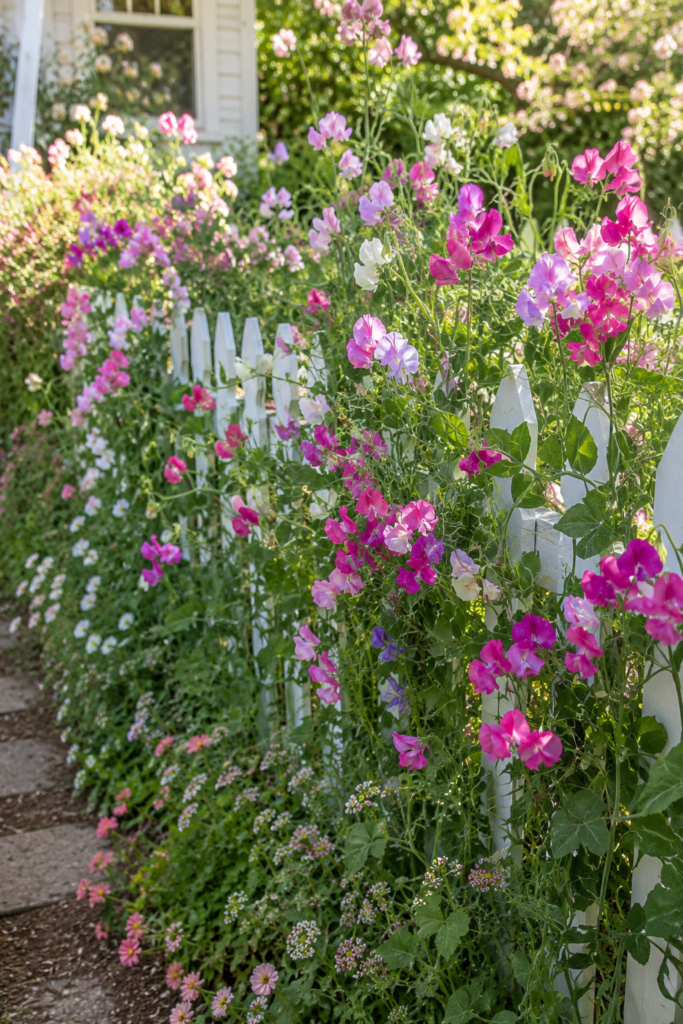
A classic white picket fence frames a cottage garden perfectly, but here’s the trick: let plants spill over and through it. A pristine, plant-free fence just looks like, well, a fence.
I planted sweet peas along mine, and by midsummer you can barely see the pickets underneath all that green and pink. That’s exactly the look you want.
8. Include a Focal Point
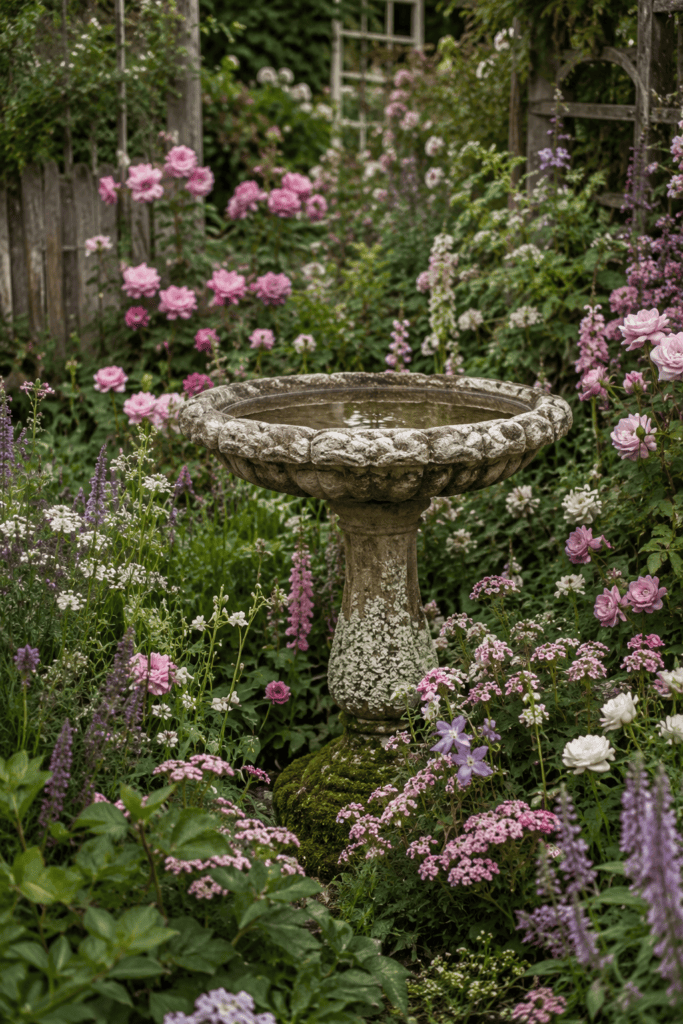
Every great cottage garden needs a focal point to anchor the eye—a birdbath, sundial, or an old wheelbarrow overflowing with blooms. Without one, the eye just wanders aimlessly through all that lush chaos.
- A weathered stone urn works great in a corner bed
- A simple bench under a tree doubles as seating and a visual anchor
- Repurposed vintage items (think old watering cans or wooden ladders) add character for free
The trick is choosing just one or two focal points, not five. I made this mistake early on, scattering ornaments everywhere until my garden looked more like a flea market than a flower bed. Pick your favorite piece, give it some breathing room, and let the plants do the rest of the talking.
9. Plant in Odd Numbers
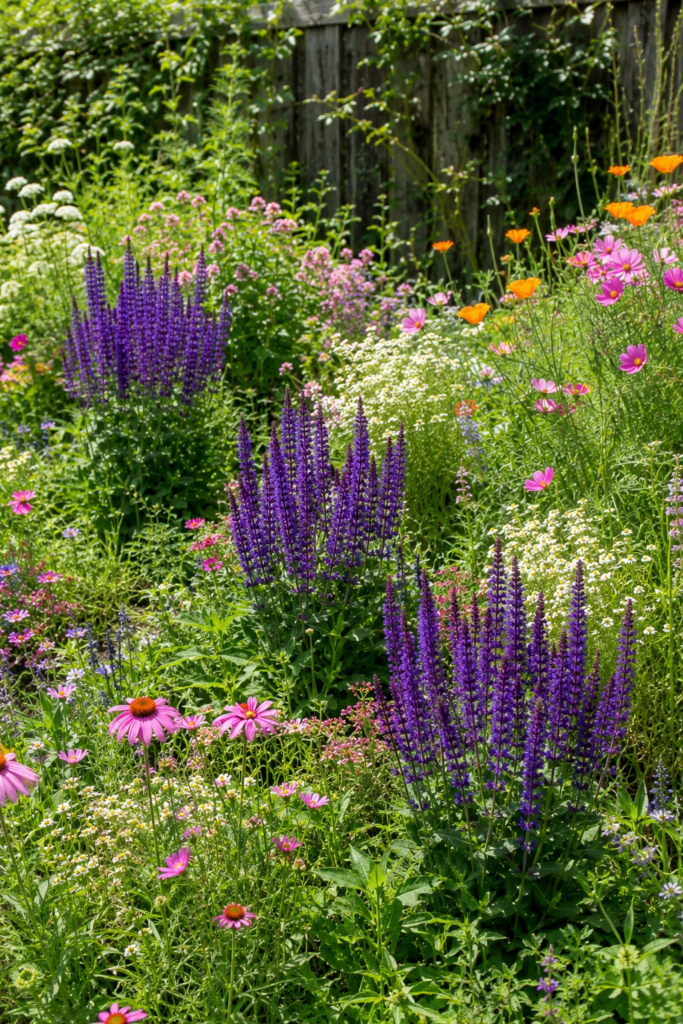
This is a classic garden design rule that applies double for cottage style: plant in groups of three or five, never in even pairs. Even numbers read as formal and planned; odd numbers read as natural.
I used to plant everything in twos because it seemed tidy. Turns out tidy is the enemy here. Once I switched to odd-numbered clusters, my beds instantly looked fuller and more organic.
10. Add a Cozy Seating Nook
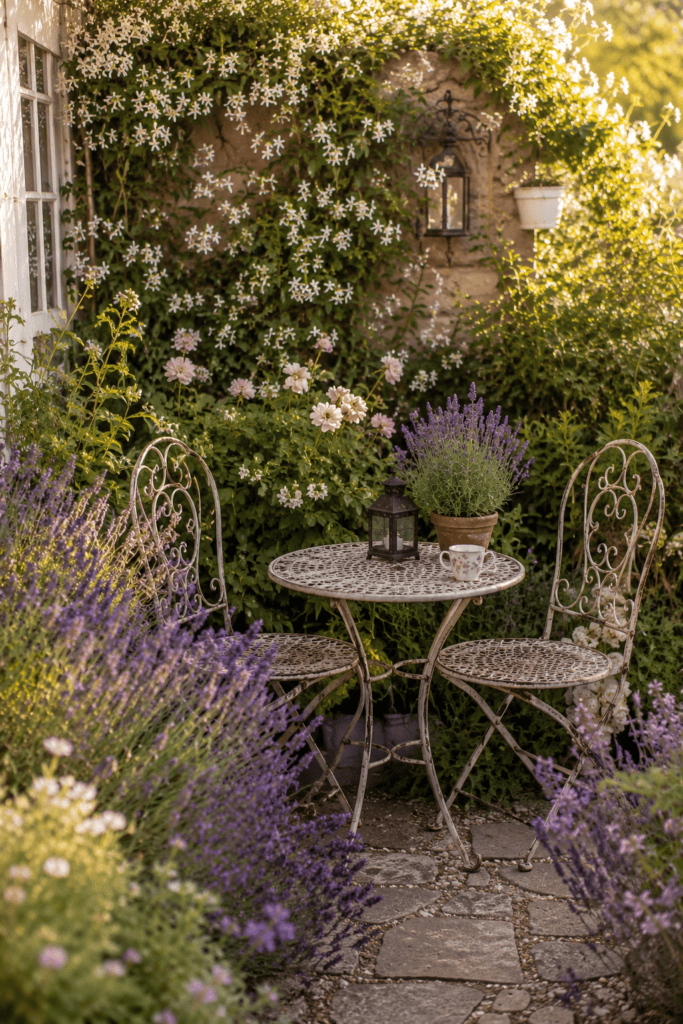
You need somewhere to actually enjoy all this beauty, right? A small seating area tucked into the greenery makes the whole garden feel like an escape rather than just something you look at from the kitchen window.
- A simple wrought-iron bistro set works in tight spaces
- Surround the seating with fragrant plants like jasmine or lavender
- Add a small side table for your coffee (or wine, no judgment here)
Don’t overthink the furniture, either. A weathered bench pulled from a garage sale often fits the vibe better than anything brand new. IMO, a little rust and peeling paint adds more charm to a cottage garden than a pristine patio set ever could.
11. Choose a Soft, Romantic Color Palette
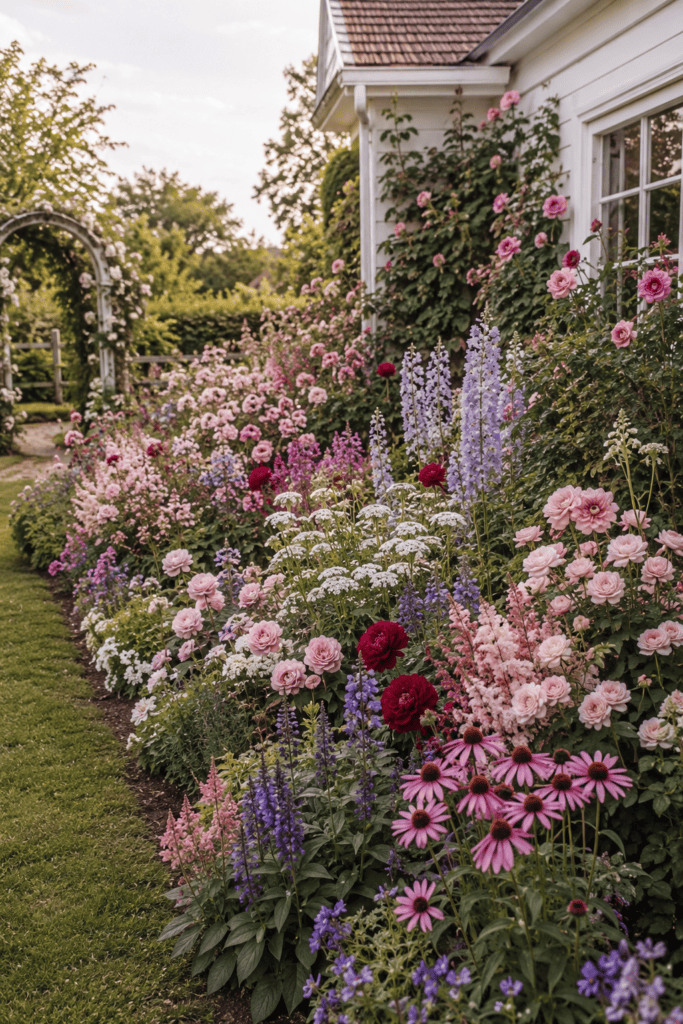
Cottage gardens thrive on soft pastels mixed with pops of bold color—think pinks, lavenders, whites, and the occasional splash of deep red or orange for contrast. Ever notice how these gardens never feel garish despite having a dozen colors going at once?
That’s because the pastel base ties everything together while bolder blooms act as accents, not the main event. Balance is everything.
12. Let Vines Take Over Structures
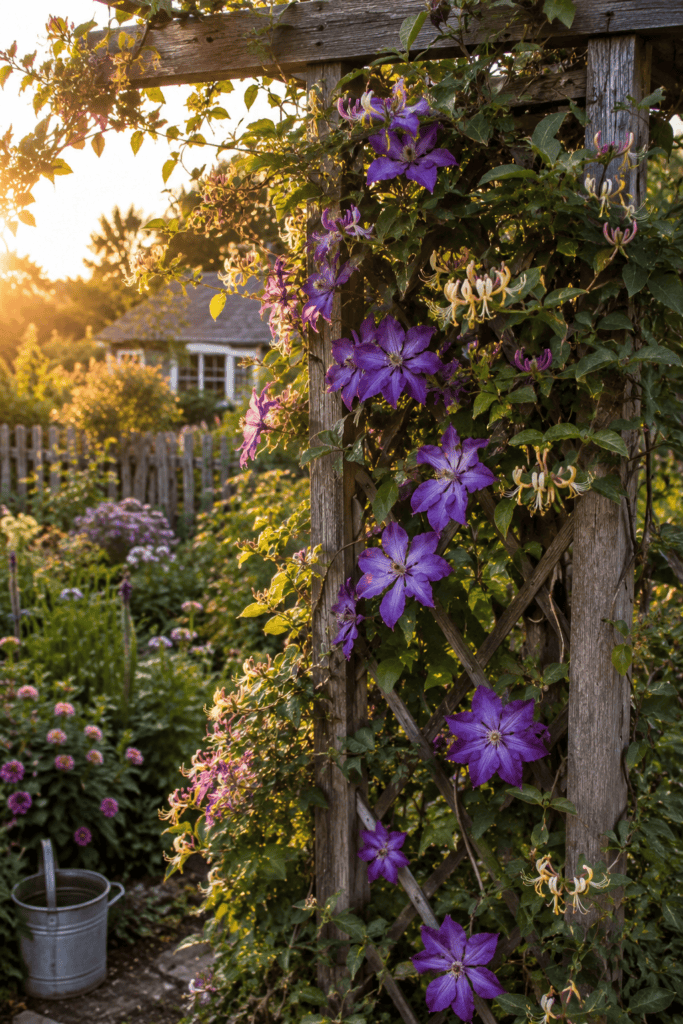
Climbing vines on trellises, walls, and fences add that lush, established feel almost overnight. Clematis, honeysuckle, and morning glory are all solid picks depending on your climate.
I planted clematis next to my mailbox post two years ago, and now people actually stop to take pictures of it. Free curb appeal, basically.
Just make sure whatever structure you’re using can actually handle the weight of a mature vine. I learned this after a flimsy trellis collapsed under a particularly enthusiastic honeysuckle. Invest in something sturdy upfront, and you won’t be rebuilding it mid-season.
13. Incorporate a Kitchen Garden Corner
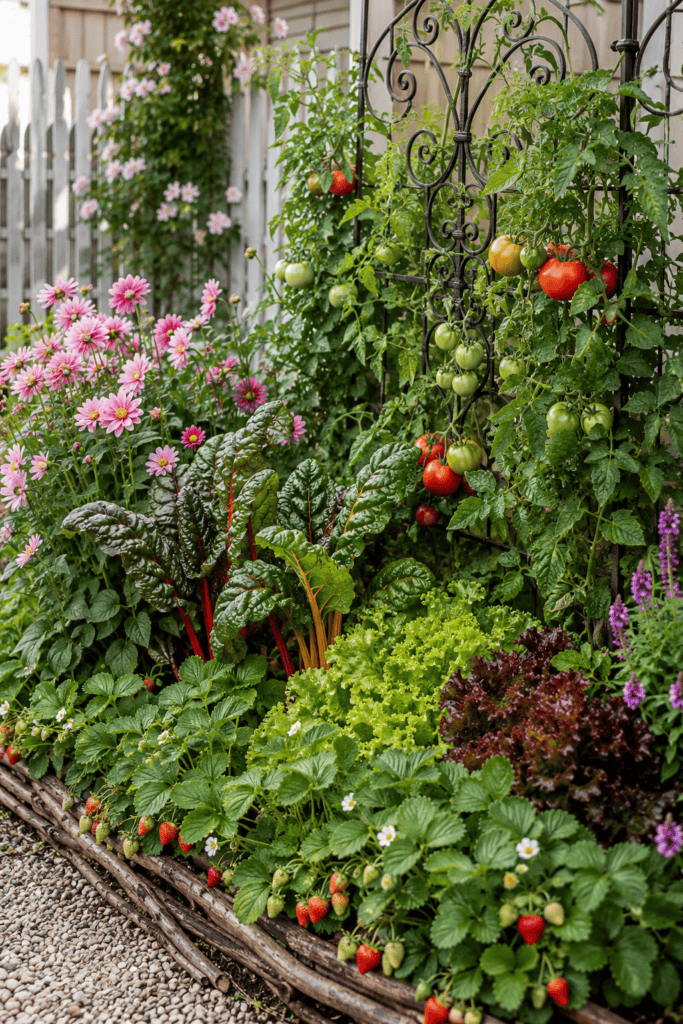
Historically, cottage gardens were as practical as they were pretty—hence the tradition of tucking a small vegetable or herb patch somewhere within the flower beds. It’s charming and functional. Win-win, IMO.
- Tomatoes and beans can climb decorative trellises
- Lettuce and chard add colorful texture between flowers
- Strawberries make a great low-growing edging plant
14. Use Reclaimed and Vintage Materials
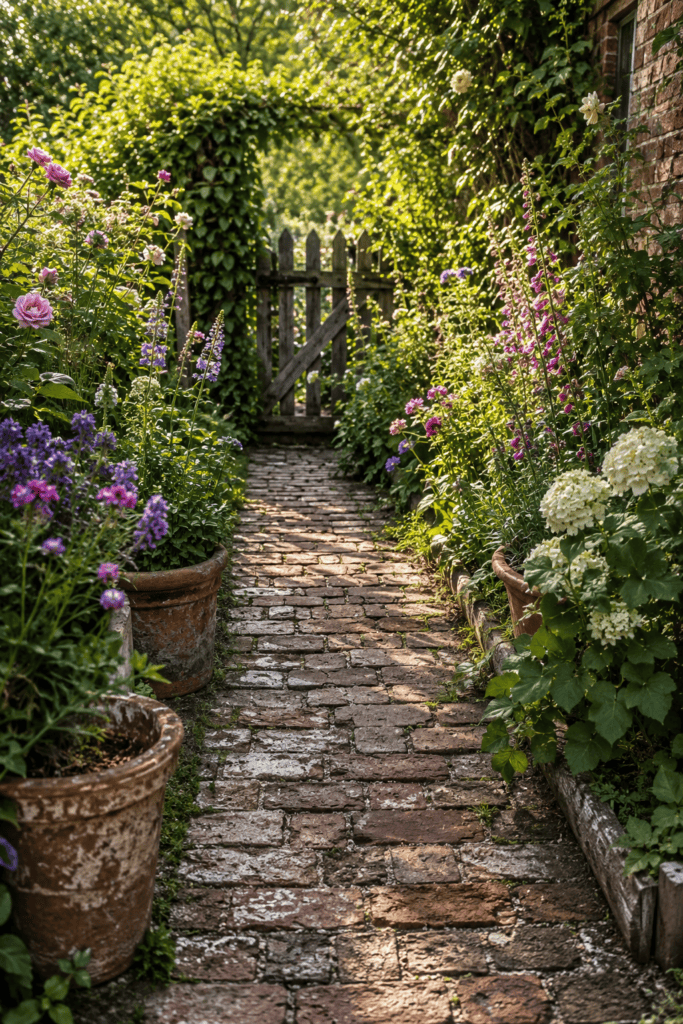
Reclaimed brick paths, old wooden gates, and weathered terracotta pots all add instant authenticity that new materials just can’t replicate. Brand-new pavers look sharp, sure, but they also look like they were installed last Tuesday.
I scored a stack of old bricks from a demolition site for practically nothing, and they’ve aged into my path beautifully. Sometimes the cheapest option really is the best one.
Check local salvage yards, demolition sites, or even neighborhood listing apps before buying anything new. People give away perfectly good bricks, gates, and pots all the time because they’re renovating and just want the stuff gone. Your garden gets instant character, and your budget stays intact.
15. Don’t Skip the Ground Cover
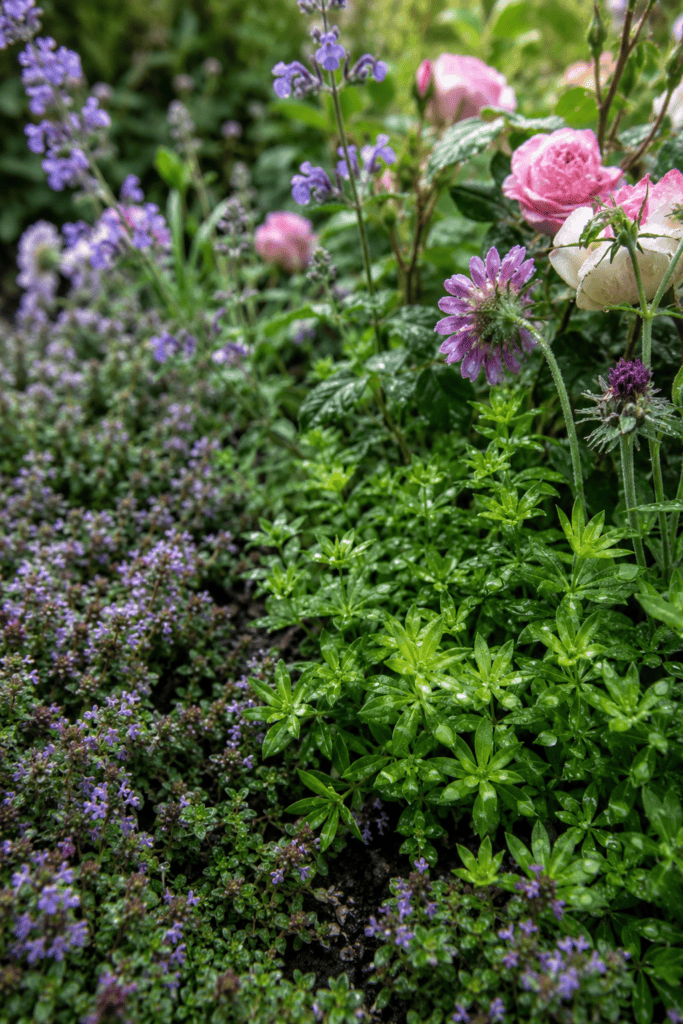
Bare soil between plants is basically an invitation for weeds, so fill those gaps with low, spreading ground cover instead. Creeping thyme, sweet woodruff, and lady’s mantle all work great and look intentional rather than neglected.
- Creeping thyme releases a lovely scent when stepped on
- Sweet woodruff thrives in shadier spots
- Ground cover reduces watering needs by shading the soil
16. Attract Pollinators on Purpose
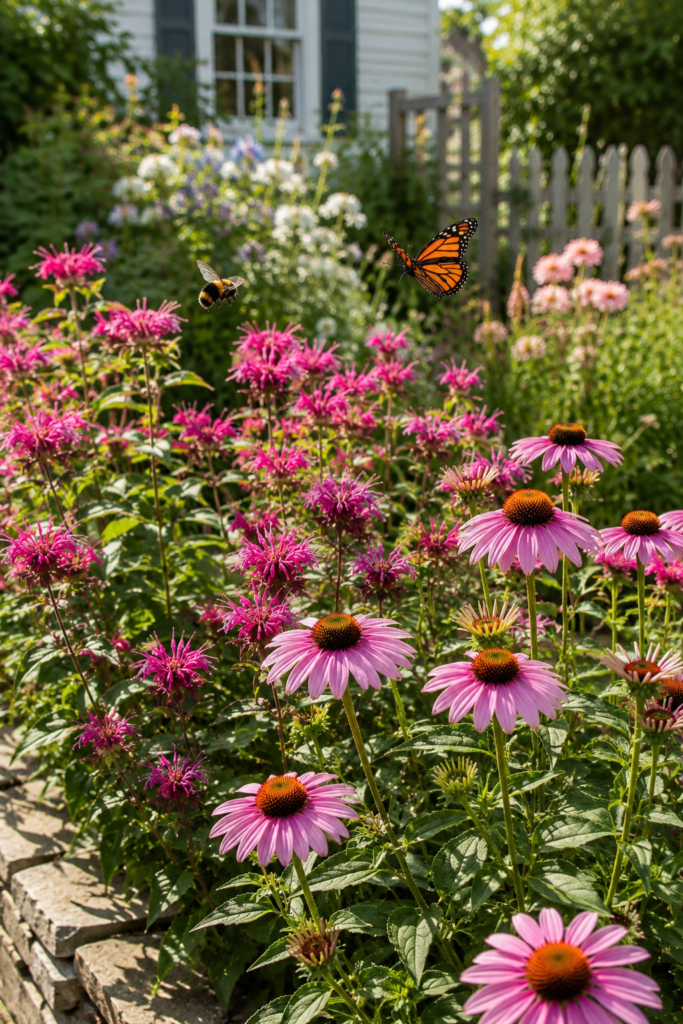
A cottage garden buzzing with bees and butterflies isn’t an accident—it’s designed that way. Include plants like coneflowers, bee balm, and salvia specifically to draw pollinators in.
Not only does this help your local ecosystem (something I didn’t care about until I actually saw the difference in my tomato yields), it also adds movement and life to the garden that a static flower bed just can’t match.
17. Embrace a Little Imperfection
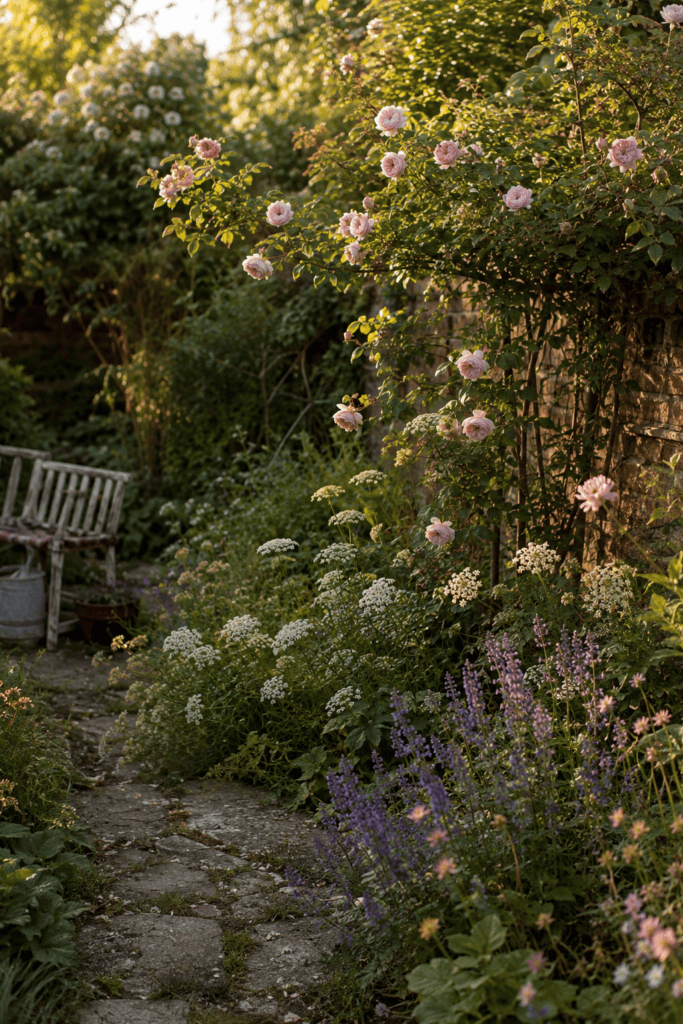
Here’s my final and honestly favorite tip: stop trying to make it perfect. A slightly overgrown corner, a plant that reseeded somewhere unplanned, a rose that’s climbing where you didn’t intend—that’s not a mistake, that’s the whole aesthetic.
I used to stress over every stray weed until I realized cottage gardens are supposed to look a little untamed. Once I let go of the need for control, mine finally started looking like the gardens I’d been drooling over on Pinterest for years 🙂
Common Questions About Cottage Gardens
How much space do I actually need?
Less than you’d think. Cottage gardens work in small spaces just as well as large ones—it’s about density and layering, not square footage. I’ve seen gorgeous cottage-style container gardens on apartment balconies that pack in just as much charm as a quarter-acre yard.
Is a cottage garden high-maintenance?
It depends on your plant choices, but generally, no. Once established, self-seeding annuals and hardy perennials mostly take care of themselves. The biggest time investment happens in year one while everything gets rooted in; after that, you’re mostly just deadheading and occasional pruning.
What’s the biggest mistake beginners make?
Spacing plants too far apart. Cottage gardens rely on that lush, overflowing look, so if you leave big gaps “for growth,” you’ll end up with patchy beds and weeds filling the empty space instead. Plant closer than feels comfortable—trust me on this one.
Can I start a cottage garden in a climate with harsh winters?
Absolutely. Just swap in cold-hardy perennials suited to your zone, like peonies, coneflowers, or bee balm, and treat tender favorites as annuals you replant each spring. Check your USDA hardiness zone before buying anything, since a plant that thrives in one region might not survive a winter in another.
Wrapping It Up
There you have it—17 ways to turn any yard into a lush, romantic escape without needing a professional landscaping crew or an unlimited budget. The real secret? Layering, curves, and a willingness to let things grow a little wild.
Start with two or three ideas from this list, see how they settle into your space, and build from there. Your cottage garden won’t look “finished” overnight, and honestly, that’s the whole point—it’s supposed to feel like it’s been growing forever.
Remember, this style rewards patience over perfection. Some seasons a bed will look incredible, and others it’ll look like it needs a haircut—and that’s fine. Gardens are living things, not static decorations, so give yourself permission to experiment, fail, and try again next spring.