
Your backyard fence is doing more work than you think. It’s not just a property line; it’s the backdrop to every barbecue, the privacy screen for your questionable dance moves, and honestly, the first thing people notice when they walk into your yard. I’ve torn out three fences on my own property over the years (don’t ask about the second one, it involved a chainsaw and poor judgment), and I’ve learned that picking the right fence style makes or breaks the whole space.
Here’s the thing most homeowners get wrong: they pick a fence based on a single photo they saw online, without thinking about their actual climate, budget, or how much yard work they’re realistically willing to do. A gorgeous cedar fence photographed in perfect lighting looks a whole lot different after two summers of rain and zero maintenance. I learned that lesson the hard way, and I’d rather you skip the trial and error.
So let’s talk about it. Whether you’re after privacy, curb appeal, or just something that won’t rot in five years, I’ve got 15 backyard fence ideas that actually work in real yards, not just in glossy magazine spreads. I’ll walk through what each style actually costs you in time and money, not just how it looks on day one. By the end, you should have a much clearer picture of which option fits your space, your climate, and your patience level.
1. Classic Horizontal Wood Slats
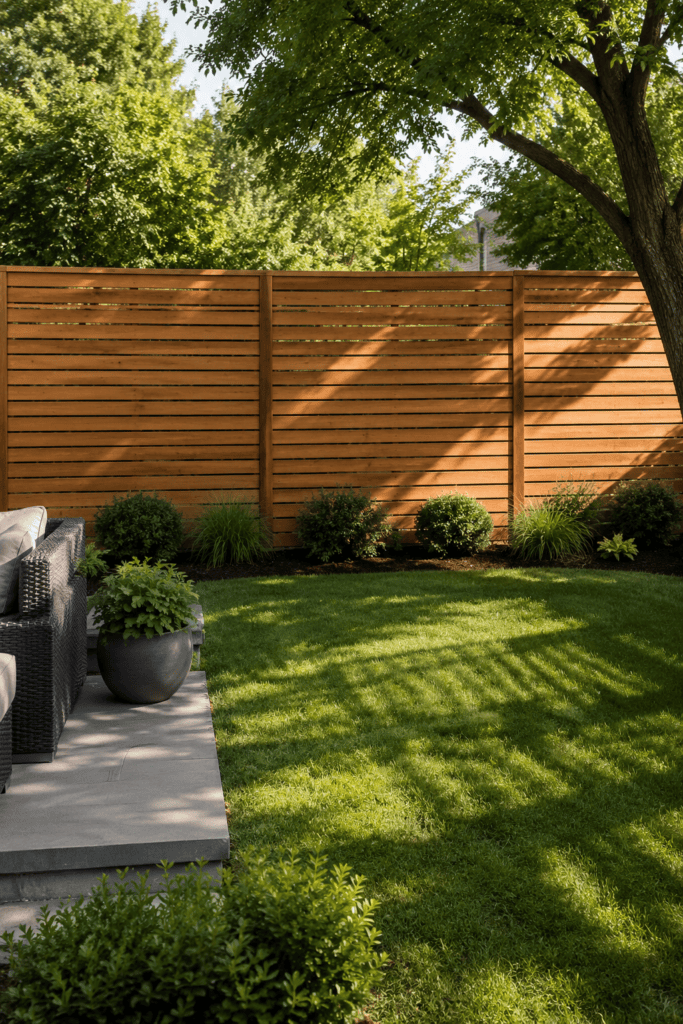
Horizontal fencing has basically taken over the modern backyard scene, and IMO it’s for good reason. The clean lines make even a small yard look wider than it is. I installed a horizontal cedar fence at my last house and got compliments from neighbors who’d never said two words to me before.
Why it works:
- Creates a modern, streamlined look
- Works with almost any home style, from craftsman to contemporary
- Cedar and redwood naturally resist rot and insects
Ever wondered why designers keep pushing horizontal lines? They visually stretch your space, making a cramped backyard feel a whole lot bigger. It’s the same trick interior designers use with horizontal stripes on a small room, except here it actually holds up outdoors.
One thing worth mentioning: horizontal slats need slightly beefier framing than vertical designs, since gravity pulls harder on boards running sideways over a long span. Skimp on the internal support posts and you’ll end up with sagging boards within a couple of years. Spend the extra money on proper framing upfront, and this fence will genuinely outlast most other wood styles on this list.
2. Classic Vertical Picket Fence
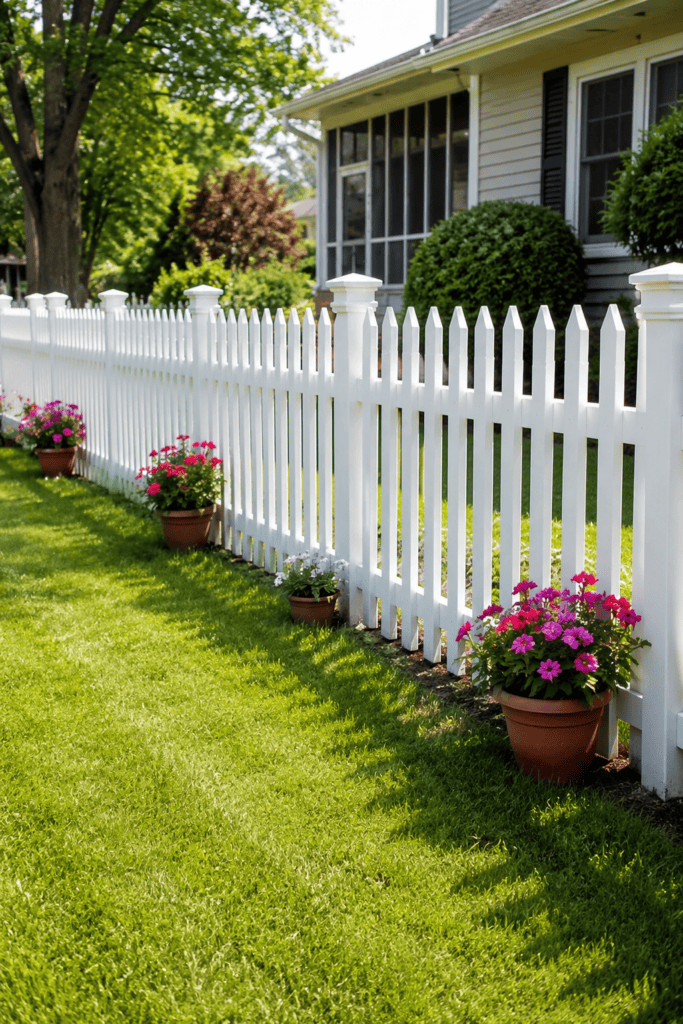
There’s a reason the picket fence became a cultural symbol — it just works. A vertical picket fence gives you that timeless, welcoming look without trying too hard. It’s simple, it’s affordable, and it plays nice with pretty much any landscaping style.
This isn’t the most exciting option on the list, sure. But sometimes boring and reliable beats flashy and fragile, especially if you’re on a budget.
A picket fence also happens to be one of the easiest styles to DIY, which matters if you’re trying to save on installation costs. Most home improvement stores sell pre-built panel sections, so you’re mainly just setting posts and hanging panels. IMO, it’s a great weekend project even if you’ve never touched a power drill before.
3. Board-on-Board Privacy Fence
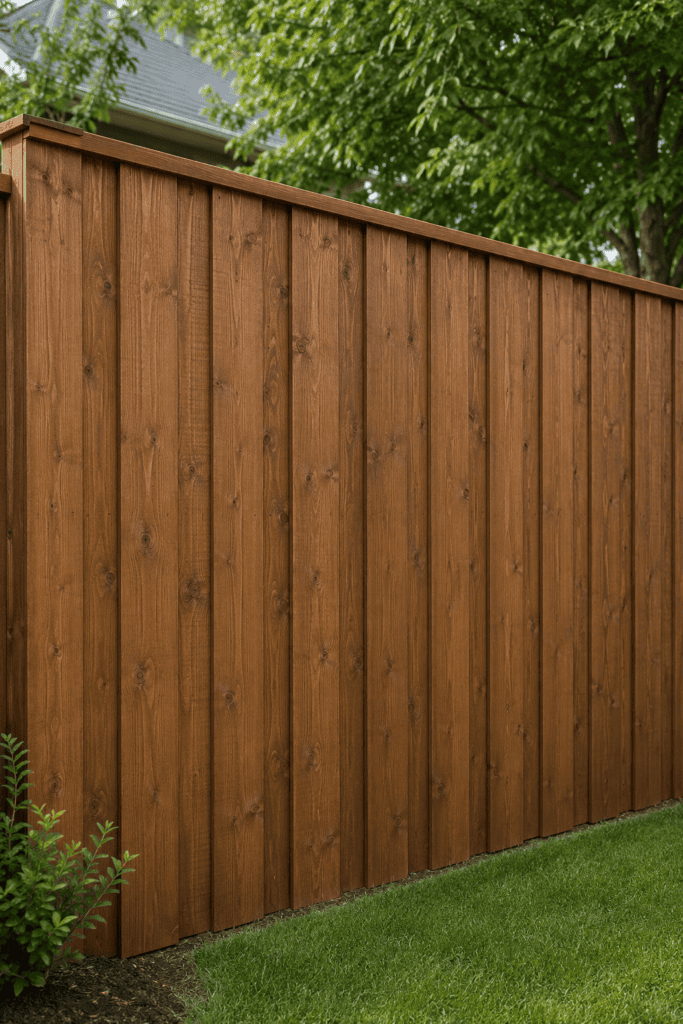
If your neighbor’s teenager insists on practicing drums at 7 AM and you want zero visual access to that chaos, board-on-board is your answer. The overlapping boards eliminate gaps completely, unlike standard privacy fences that can show slivers of light (and sightlines) between panels.
Key benefits:
- Total privacy with no gaps
- Sturdy against wind since boards overlap on both sides
- Looks finished from both your yard and your neighbor’s
I switched to board-on-board after my old privacy fence let my dog stare down the neighbor’s cat for hours. Worth every penny.
The tradeoff is material cost. Since you’re essentially doubling up on boards, you’ll use more lumber than a standard single-layer privacy fence. It also takes longer to install, so factor in extra labor if you’re hiring it out. But if privacy is your number-one priority, this style delivers better than almost anything else on this list.
4. Shadowbox Fence
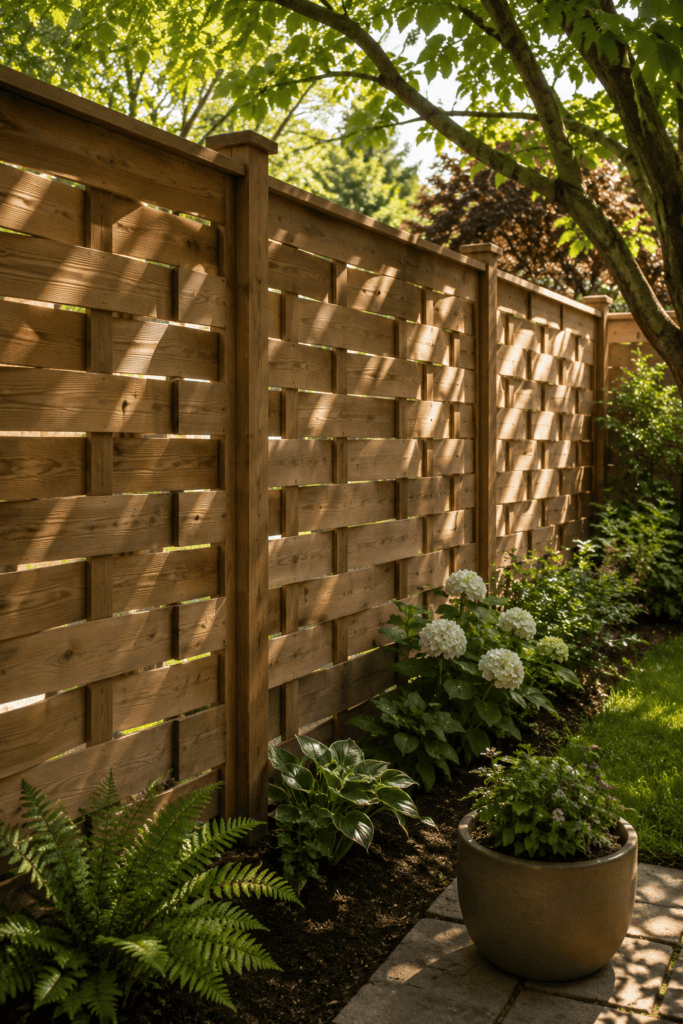
Shadowbox fencing alternates boards on opposite sides of the rails, creating a woven, semi-private look. It’s a nice middle ground if you want privacy but don’t want your yard to feel like a fortress. Plus, both sides of the fence look identical, so your neighbor won’t complain about staring at ugly rails all day.
The small gaps between boards also let air flow through, which helps in windy areas where a solid privacy fence would take a beating during storms. I’ve seen shadowbox fences survive winds that knocked down neighboring solid panels completely. If you live somewhere with strong seasonal winds, that airflow isn’t just a style choice, it’s practical engineering.
5. Metal Ranch-Style Fence
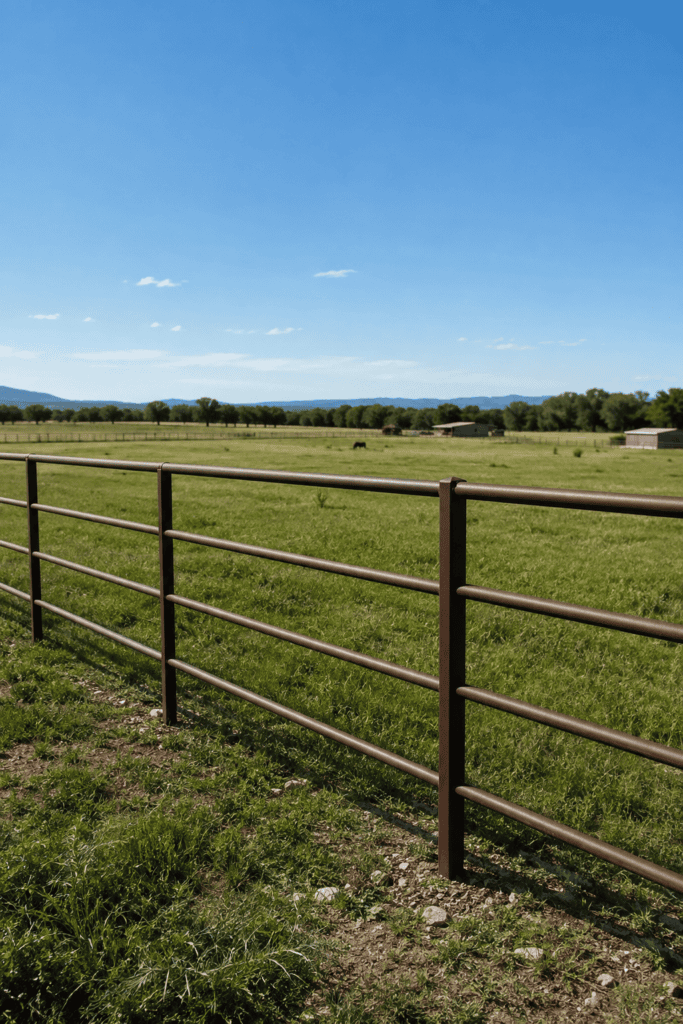
Got acreage, horses, or just a love for that rustic Western vibe? Metal ranch fencing delivers durability without demanding constant upkeep. Unlike wood, it won’t warp, splinter, or need restaining every couple of years.
- Low maintenance: no sealing or staining required
- Long lifespan: often 20+ years with minimal care
- Open sightlines: great for larger properties where you want visibility
Steel and aluminum both work well here, but they behave pretty differently over time. Steel is stronger and better for containing larger livestock, but it can rust if the coating gets scratched. Aluminum costs a bit more upfront but won’t rust at all, which makes it the better long-term investment if budget allows. Either way, this style says “I have land and I’m not afraid to use it” better than almost anything else on this list.
6. Bamboo Fencing
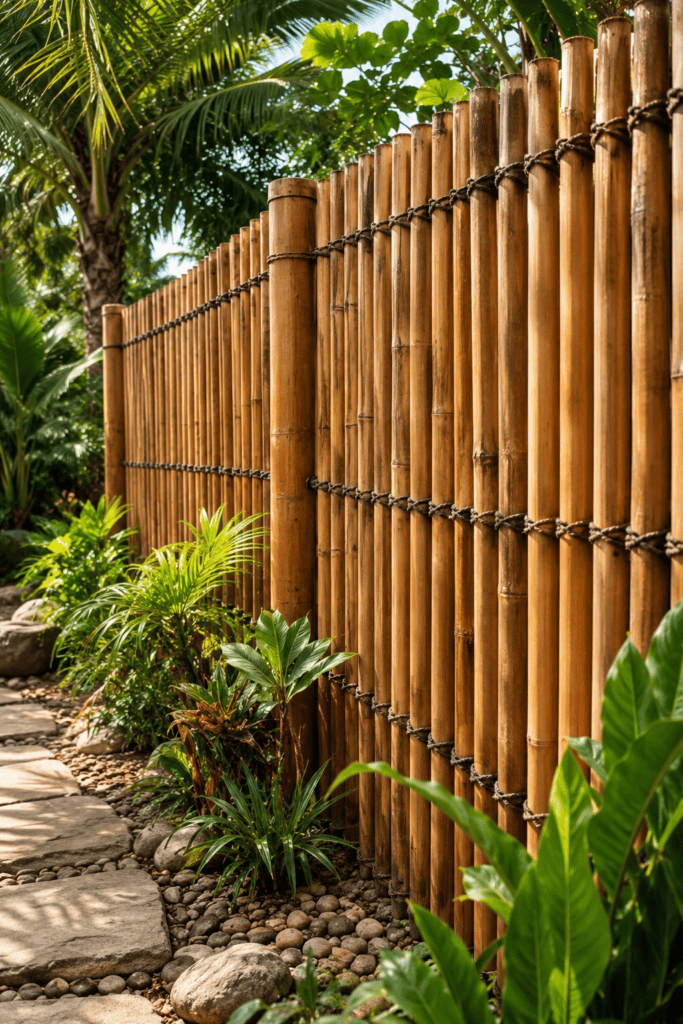
Bamboo brings an instant tropical or zen-garden feel, and it’s more sustainable than most hardwoods since it regrows so fast. I used bamboo rolls to dress up an old chain-link fence, and it transformed the whole backyard in an afternoon. 🙂
Heads up though — cheap bamboo rolls can fade and fray within a couple of seasons, so invest in a quality product if you want it to last.
7. Corrugated Metal and Wood Combo
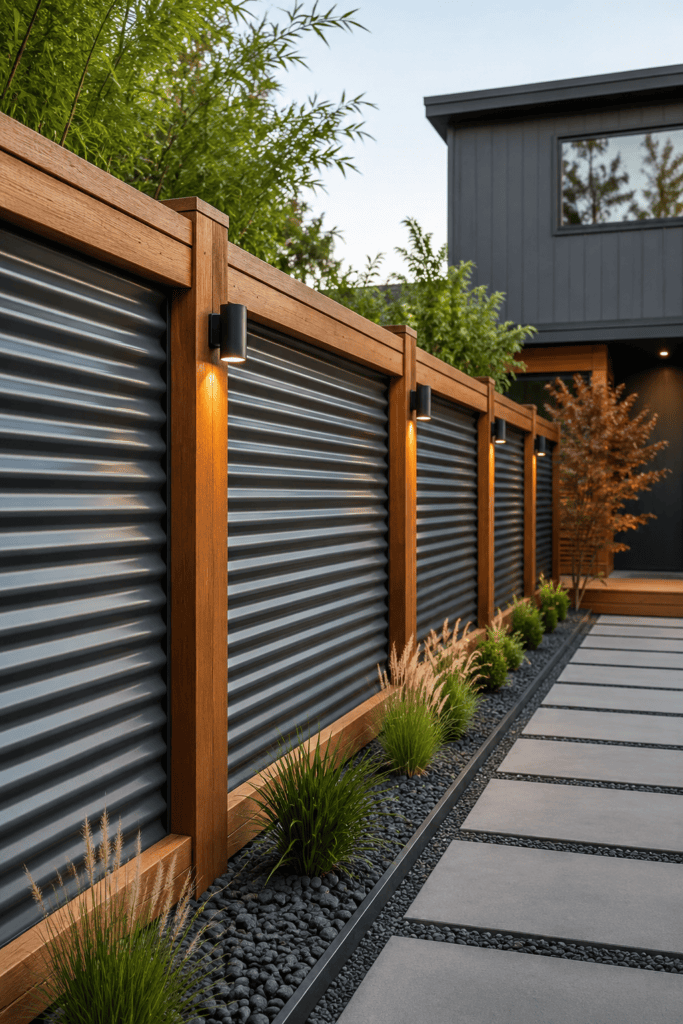
This is one of my favorite modern combos, and it photographs beautifully for anyone obsessed with their backyard’s Instagram potential. Pairing corrugated metal panels with wood framing gives you an industrial-meets-natural look that’s genuinely unique.
Why people love it:
- Extremely durable metal panels
- Warm wood framing softens the industrial edge
- Stands out without looking gimmicky
8. Living Green Wall or Hedge Fence
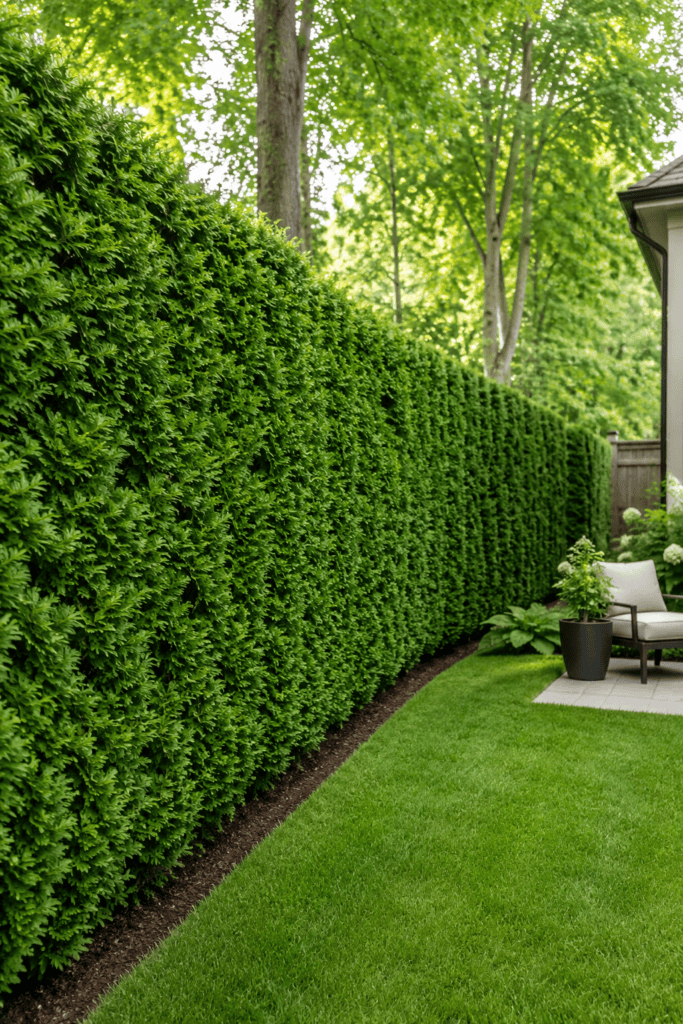
Want a fence, but also don’t want it to look like a fence? A living wall made of dense shrubs, boxwood, or arborvitae gives you privacy while adding greenery. Bonus: it filters noise better than most solid fences ever could.
The catch? Growing a proper hedge fence takes patience. You’re looking at a couple of years before it fills in completely, so this isn’t for anyone wanting instant results.
9. Vinyl Privacy Fence
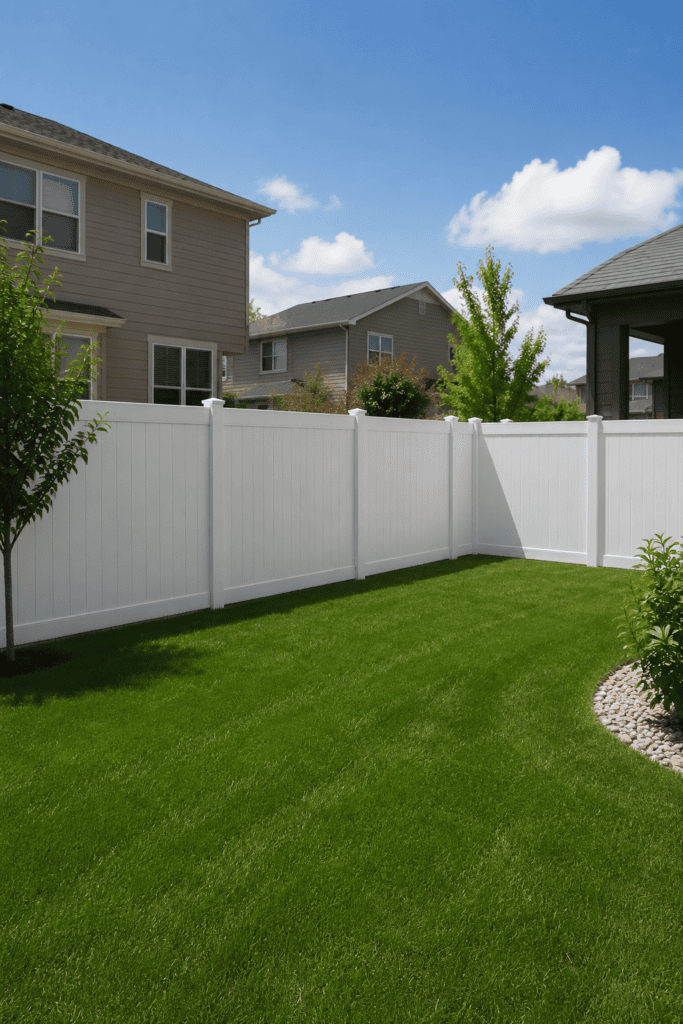
Vinyl gets a bad reputation for looking cheap, but modern vinyl fencing has come a long way. It won’t rot, it won’t need painting, and it shrugs off moisture like it’s nothing.
Comparing vinyl to wood:
- Vinyl: near-zero maintenance, higher upfront cost, doesn’t rot or warp
- Wood: cheaper initially, needs regular staining, has a natural look many people prefer
I’ll be honest — I still prefer the look of real wood grain. But if you hate yard maintenance, vinyl is hard to beat.
Modern vinyl also comes in wood-grain textures now, so you don’t have to settle for that flat, glossy plastic look people associate with cheap vinyl from the 90s. It’s worth spending a little extra on a textured finish if the smooth look bothers you. And since vinyl doesn’t warp or crack in extreme heat the way it used to, it’s become a genuinely solid option for hot climates where wood fences tend to dry out and split.
10. Split Rail Fence
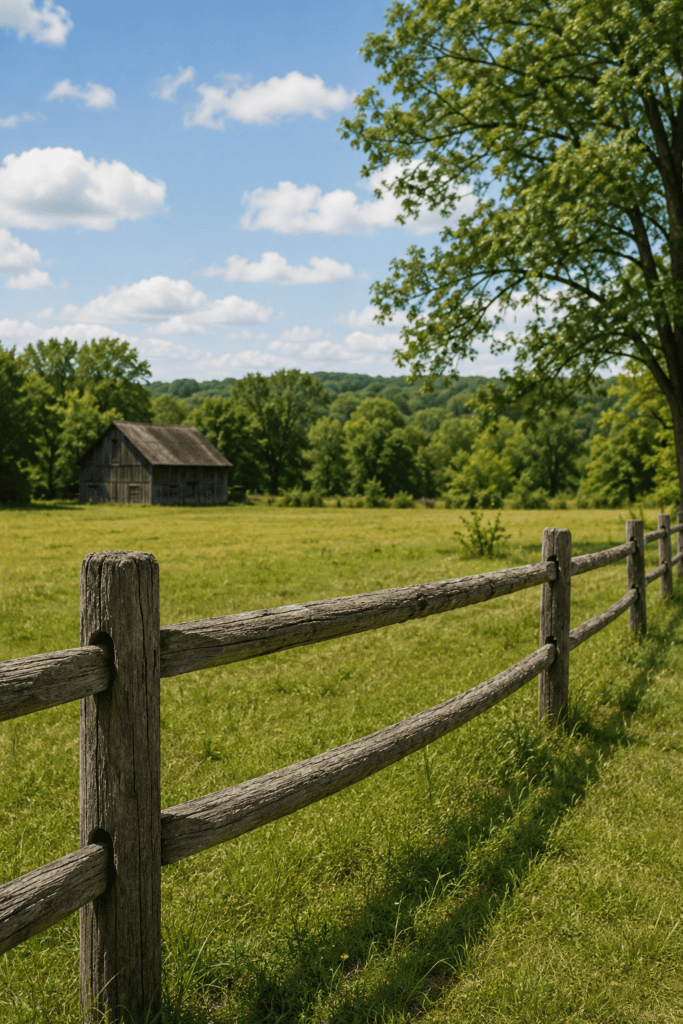
Split rail fencing is the fence equivalent of a light jacket: it defines a boundary without making a big statement. It’s cheap, quick to install, and gives off a relaxed, countryside charm.
Don’t expect privacy here, though. This style is purely decorative or for keeping pets contained, not for blocking nosy neighbors.
That said, split rail pairs beautifully with wire mesh backing if you need to actually contain smaller pets or kids. You get the charming, open look while still keeping the dog from making a break for the neighbor’s yard. It’s one of the cheapest fence options you’ll find, and installation is fast enough to knock out in a single weekend.
11. Lattice-Top Privacy Fence
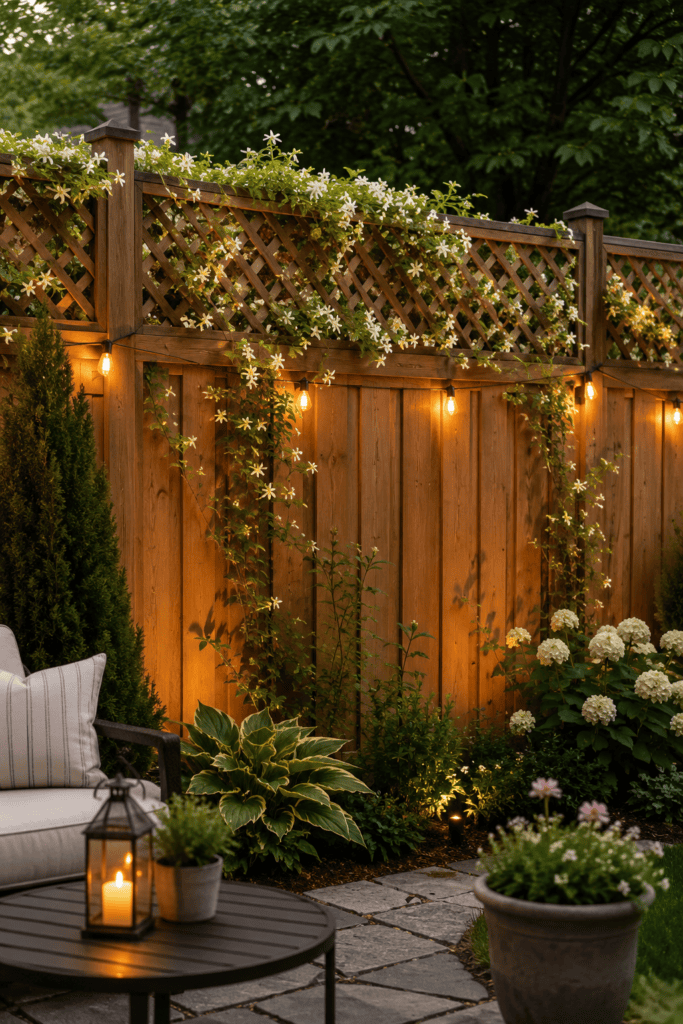
Adding a lattice topper to a standard privacy fence softens the whole look while letting light and breeze filter through the top few feet. It’s an easy upgrade if your existing fence feels too closed-off or boxy.
Perfect for:
- Yards that want privacy but not a “prison wall” vibe
- Adding climbing vines like jasmine or clematis
- Softening a plain fence without a full rebuild
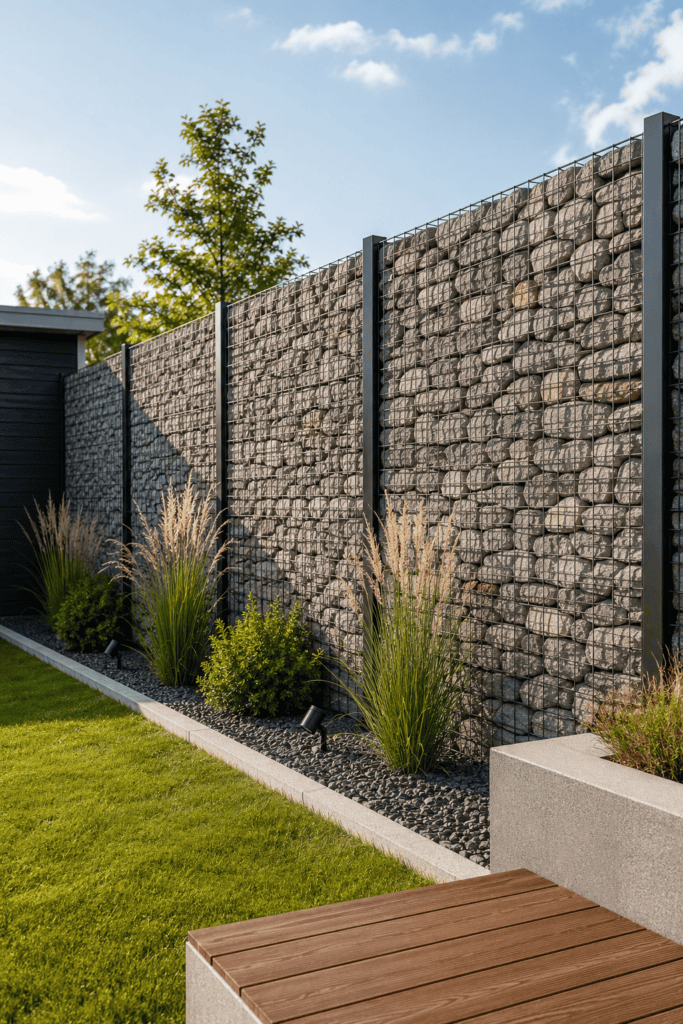
12. Gabion Wall Fence
Gabion fences use wire cages filled with stone, and honestly, they look incredible in the right setting. They’re heavy, sturdy, and virtually indestructible against weather. This isn’t a budget option by any means, but for a modern, architectural backyard, it’s stunning.
Ever seen one in person? The texture and shadow play from the stones give a depth that flat fencing just can’t match.
Gabion fences also double as excellent sound barriers, since dense stone absorbs noise far better than thin wood panels. If you live near a busy road, this might be the single best option on this list for cutting down traffic noise. Just be prepared for a heavier installation process, since these fences typically need a solid, level foundation to support all that stone weight.
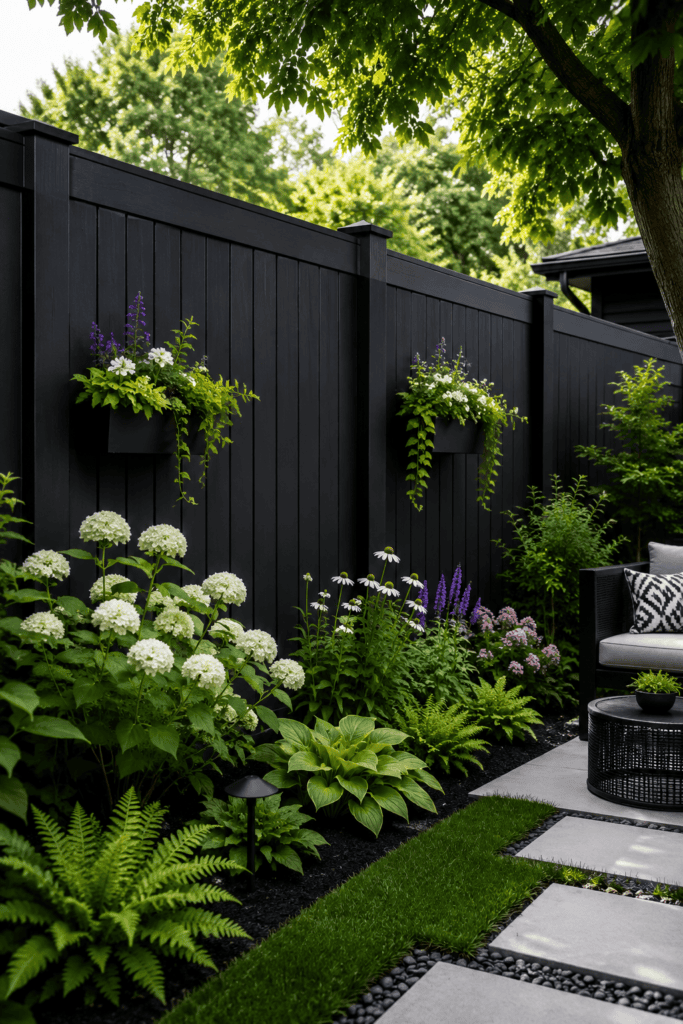
13. Bright, Bold Painted Fence
Sometimes the fence style matters less than the color choice. A simple wood privacy fence painted in a bold navy, black, or forest green completely changes the mood of a backyard. FYI, darker fence colors also make your greenery pop way more than plain natural wood does.
I painted mine matte black last summer, and my plants suddenly looked twice as vibrant against it. Cheap trick, huge payoff.
14. Chain-Link with a Modern Upgrade
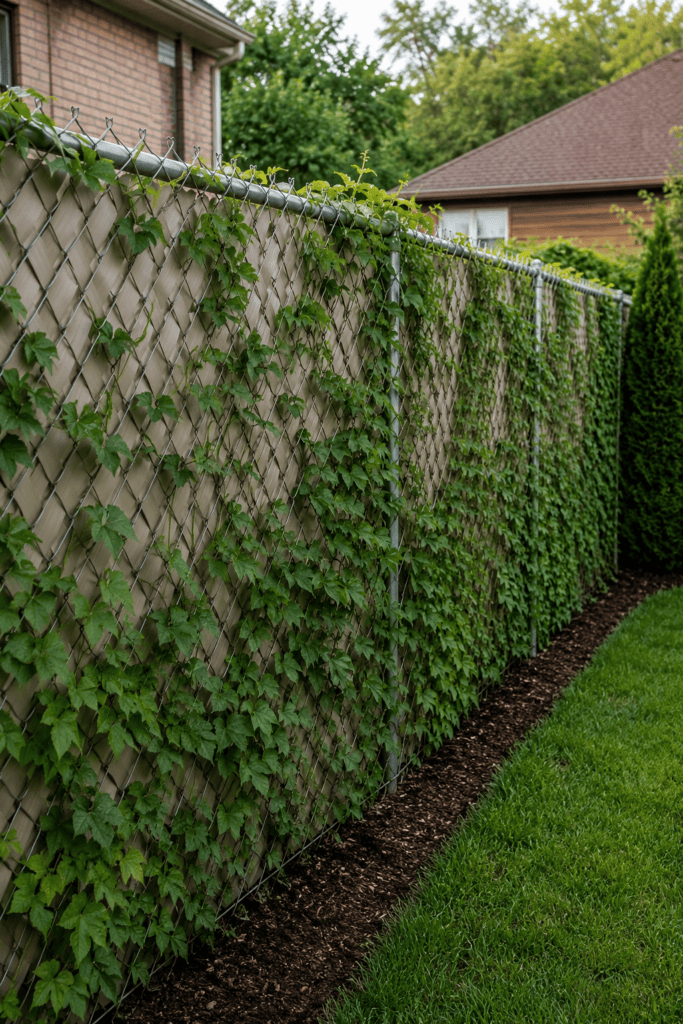
Look, chain-link fencing gets a lot of hate, and honestly, some of it is deserved. But if you’re stuck with one (rentals, budget constraints, whatever), you can dress it up with privacy slats, climbing plants, or a bamboo screen. It’s not glamorous, but it’s practical.
Quick fixes for chain-link:
- Privacy slats woven through the links
- Fast-growing vines like morning glory
- Faux hedge panels zip-tied to the fence
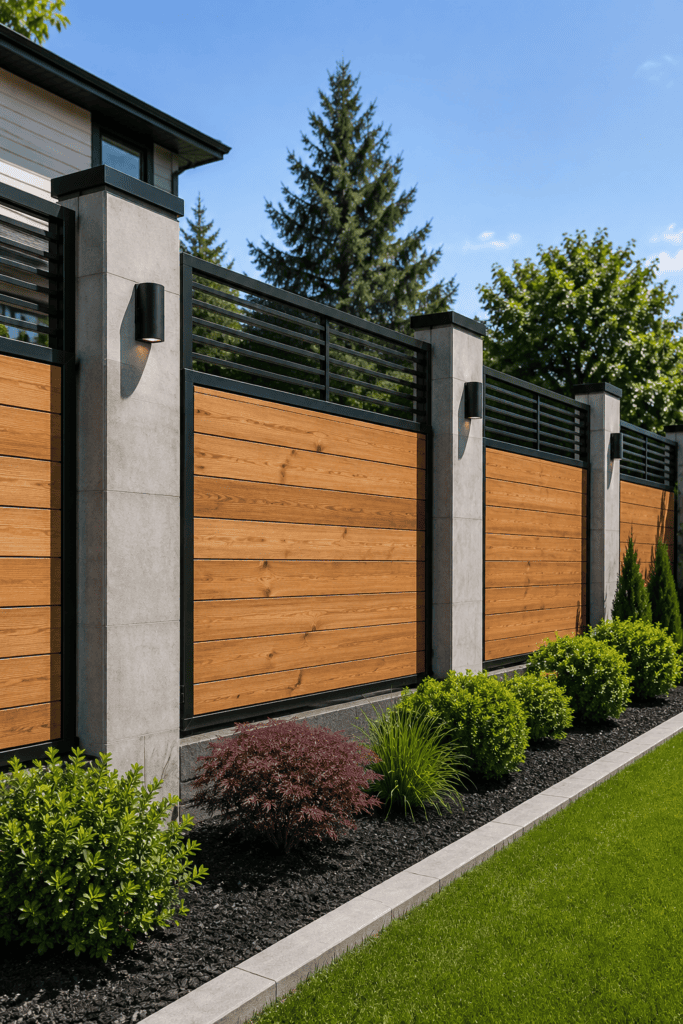
15. Mixed-Material Modern Fence
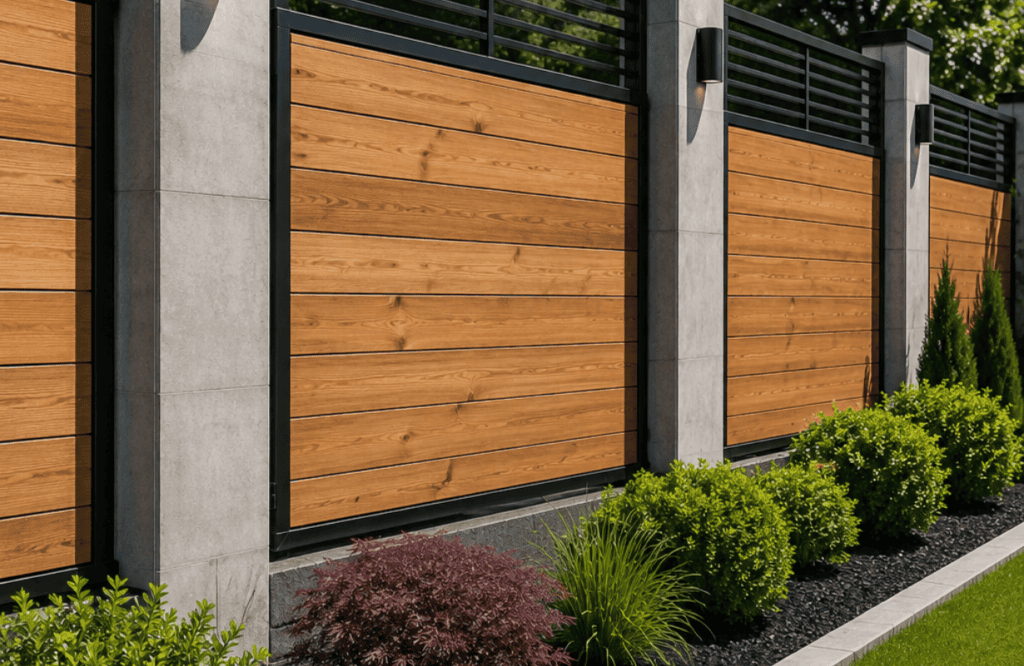
Combining wood, metal, and even concrete or stone posts creates a fence that looks custom-designed, even if you built it from standard materials. This is the option for people who can’t commit to just one style (no judgment, I get it).
Popular combos:
- Wood panels with steel frame posts
- Concrete base with horizontal wood slats
- Stone pillars connecting metal panel sections
The result feels architectural and intentional rather than like you grabbed whatever was on sale at the hardware store.
Picking the Right Fence for Your Yard
Before you commit to any of these, think through a few practical questions:
- What’s your main goal — privacy, decoration, or containing pets and kids?
- How much maintenance are you actually willing to do each year?
- What’s your budget, both for installation and long-term upkeep?
- Does your HOA (if you have one) restrict height, material, or color?
IMO, the biggest mistake people make is choosing a fence based purely on looks without considering maintenance. A gorgeous cedar fence that you never stain will look rough within a few years. Pick something that matches both your aesthetic and your actual lifestyle.
Quick Answers to Common Fence Questions
Before wrapping up, let’s knock out a few questions I get asked constantly whenever fence talk comes up.
How long does a wood fence actually last? With proper sealing and occasional staining, a well-built wood fence typically lasts 15 to 20 years. Skip the maintenance, though, and you’re looking at closer to 8 to 10 years before boards start warping or rotting.
Do I need a permit to build a fence? In most areas, yes, especially for fences over a certain height (often 6 feet). Always check with your local building department before digging a single post hole. IMO, this step gets overlooked constantly, and it can cost you a fine or a forced teardown later.
What’s the cheapest fence option overall? Chain-link and split rail typically come in as the most budget-friendly choices, both in materials and installation labor. If you want privacy on a budget, dressing up chain-link with slats is usually cheaper than a full wood privacy fence.
Can I mix fence styles around my property? Absolutely, and honestly, a lot of homeowners already do this without realizing it. A common approach is privacy fencing along the back property line paired with a shorter, more decorative style facing the street.
Final Thoughts
Your backyard fence sets the tone for the entire space, so it’s worth taking the time to get it right. Whether you go bold with a painted privacy fence or keep things classic with vertical pickets, make sure the choice fits your climate, your budget, and how much upkeep you’re genuinely willing to commit to.
I’ve made fence mistakes so you don’t have to (RIP, fence number two). So take these 15 ideas, walk your yard, and picture which one actually fits the life you’re living out there — not just the Pinterest board you’ve been saving.