
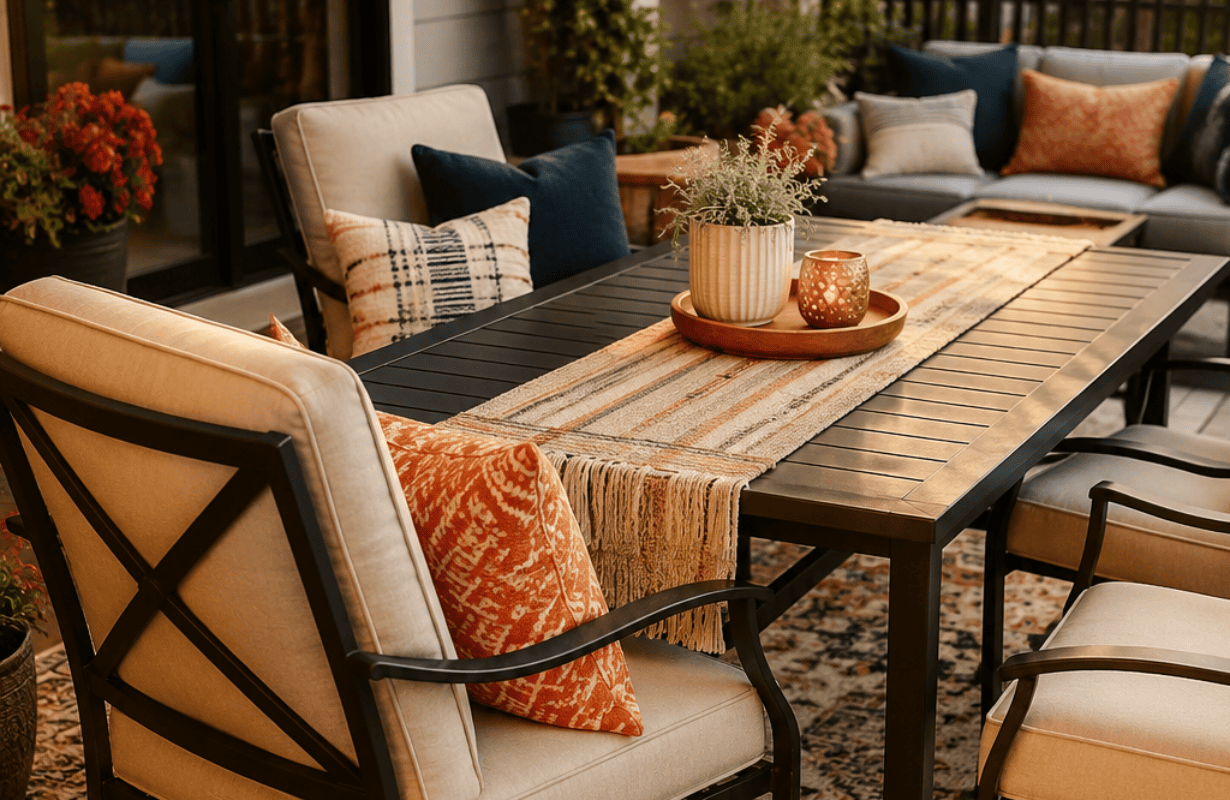
Your backyard is basically screaming for a glow-up right now, and I get it. Mine looked like a storage unit for broken lawn chairs and half-dead potted plants for way too long. So I did something about it, and honestly? The difference between “meh” and “wow” came down to a handful of smart moves I wish I’d made years ago.
I’ve spent the last few summers ripping out sad flower beds, arguing with a string of patio lights that refused to cooperate, and slowly turning a neglected yard into the kind of space where people actually want to hang out. IMO, an outdoor makeover doesn’t need a massive budget or a contractor on speed dial. It needs the right ideas, applied in the right order.
Here’s the thing nobody mentions when you start browsing outdoor inspiration online: most of those dreamy spaces took years to build, not one lucky weekend. That should be freeing, not discouraging. You don’t need to nail every element at once. You just need a solid list of ideas and enough patience to tackle them one at a time.
Let’s get into the 18 outdoor makeover ideas that made the biggest difference for me and that’ll work no matter what kind of space you’re starting with, whether that’s a sprawling backyard or a tiny apartment balcony.
1. Start With a Real Plan, Not Just Pinterest Boards
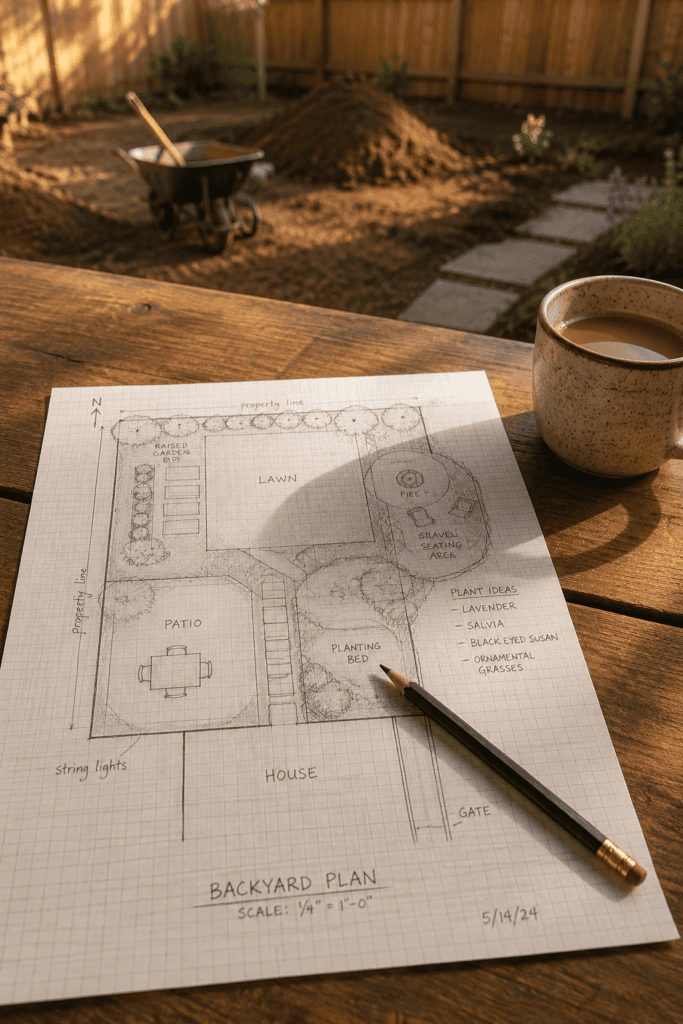
Ever wondered why some yards look pulled-together while others look like a collection of random purchases? It’s planning. Before you buy a single plant or string light, sketch your space and figure out zones: eating, lounging, gardening, whatever you need.
I skipped this step my first year and ended up with a fire pit six feet from my vegetable bed. Smoke and tomatoes don’t mix, folks. Take an afternoon, map it out, and save yourself the redo.
Grab graph paper, a napkin, whatever’s lying around, and mark where the sun hits at different times of day. This matters way more than people think. A seating area that bakes in direct afternoon sun for four hours straight isn’t a seating area—it’s a suggestion nobody will accept.
Think about traffic flow too. Where do people naturally walk when they step outside? Your paths and zones should follow that instinct, not fight it. I redirected a walkway once to “match the design,” and guess what—everyone still cut across the grass anyway.
2. Define Your Patio or Deck Boundaries
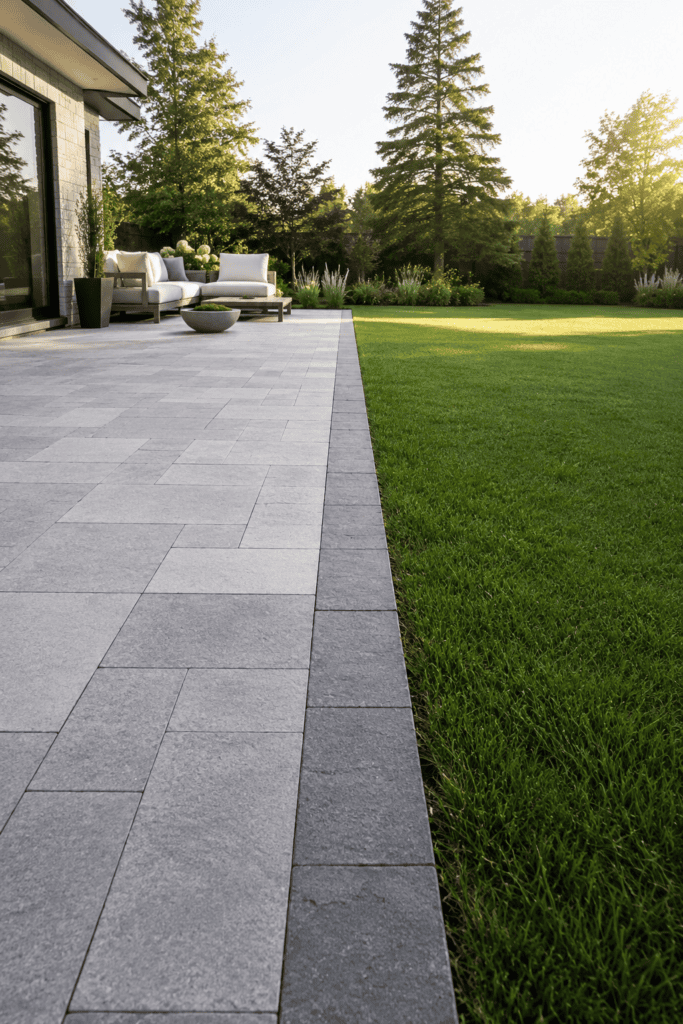
A patio makeover starts with clear edges. Use pavers, gravel, or a simple border to separate your hangout zone from the rest of the yard. This single move makes any space feel intentional instead of accidental.
- Pavers for a clean, modern boundary
- Gravel for a budget-friendly, low-maintenance edge
- Timber edging for a rustic, natural look
I went with pavers because I’m lazy about weeding, and three years later, zero regrets.
Size matters here too, and not in the way you’d assume. A patio that’s too small feels cramped the second you add a table and four chairs. Measure your furniture first, then add at least three feet of breathing room around every piece so people can actually walk without doing an awkward chair-scooting dance.
3. Upgrade Your Outdoor Furniture Strategically
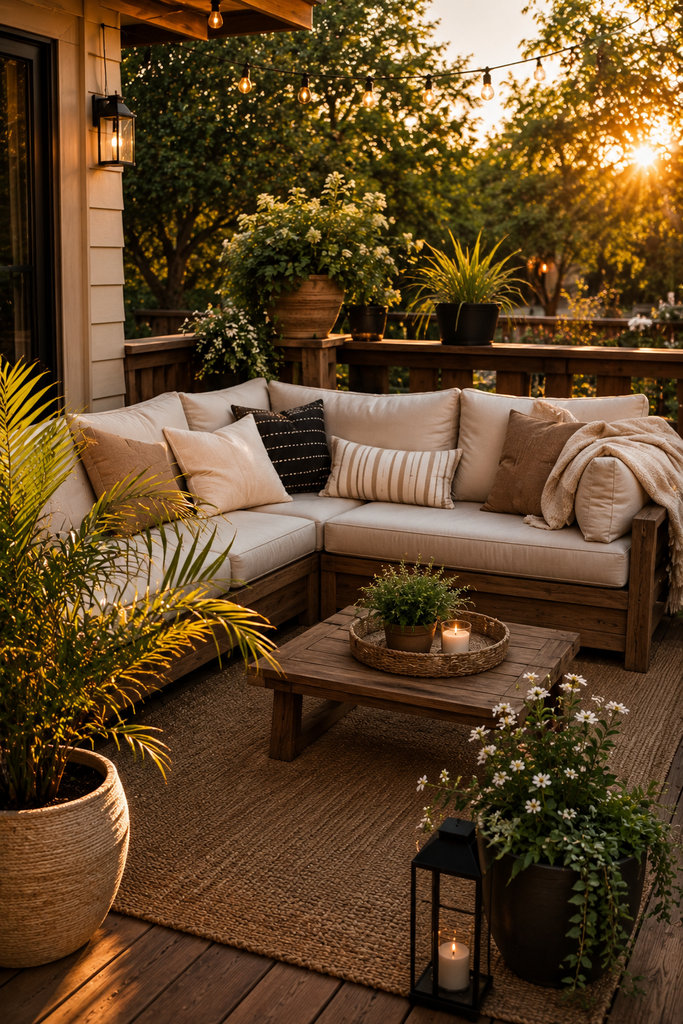
You don’t need to replace everything at once. Focus on one anchor piece—a good sectional, a sturdy dining set, or a couple of statement chairs—and build around it.
I made the mistake of buying cheap resin chairs my first go-round. They cracked within a season. Spend more on the pieces you’ll use daily, and save the budget cuts for accent items nobody’s sitting on for hours.
What to Look for in Durable Furniture
- Powder-coated aluminum frames resist rust way better than basic steel
- Sunbrella or similar fade-resistant fabric actually survives direct sun
- Removable cushion covers make cleaning a non-issue instead of a nightmare
Comparing materials matters more than people realize. Wicker looks charming but demands more upkeep than most people expect, especially in humid climates where it can warp. Aluminum wins on durability and weight, but it can feel cold and impersonal without the right cushions. Wood brings warmth instantly, though it needs regular sealing to survive the elements. I’d take a mid-range aluminum set with great cushions over a cheap wood set any day—the cushions do more visual work than the frame ever will.
4. Add Layered Lighting (Not Just One String of Lights)
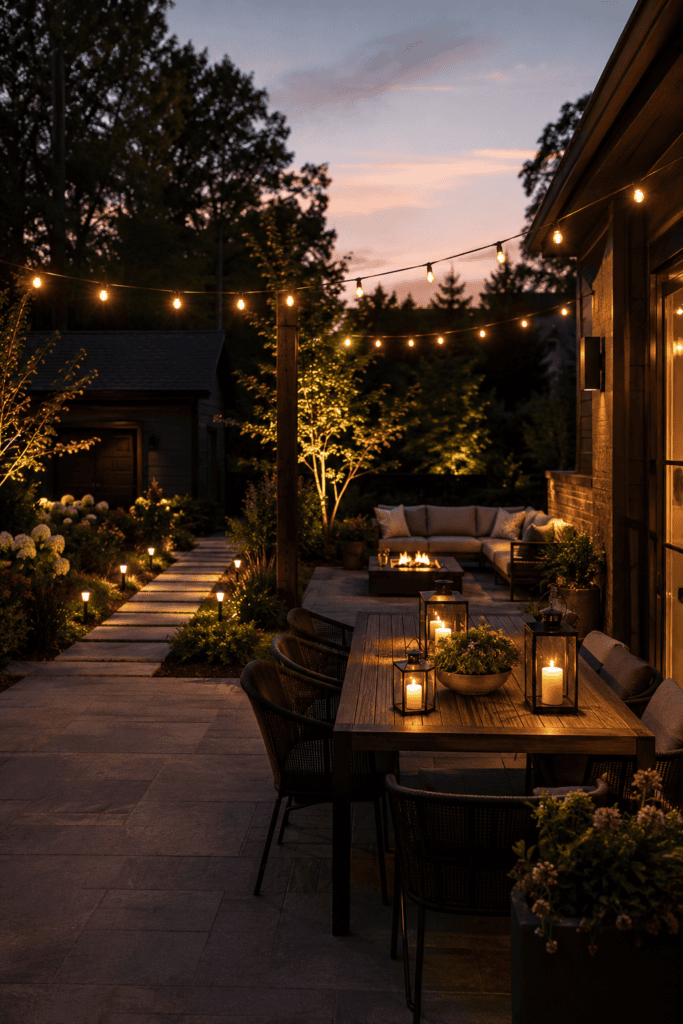
One strand of fairy lights does not a makeover make. Layer your lighting with string lights up high, path lights along walkways, and lanterns at table level. This creates depth instead of flat, single-source glow.
I learned this the hard way after my first setup left half the yard in shadow and the other half blindingly lit. Ever tried eating dinner outside squinting into a spotlight? Not fun.
Warm white bulbs beat cool white every single time for ambiance—cool white makes your patio look like a parking lot, and nobody’s going for that vibe. Solar path lights are a genuinely smart entry point since they need zero wiring, though I’ll be honest, cheap ones die fast. Spend a bit more upfront and they’ll actually last more than one season.
5. Bring in a Fire Feature
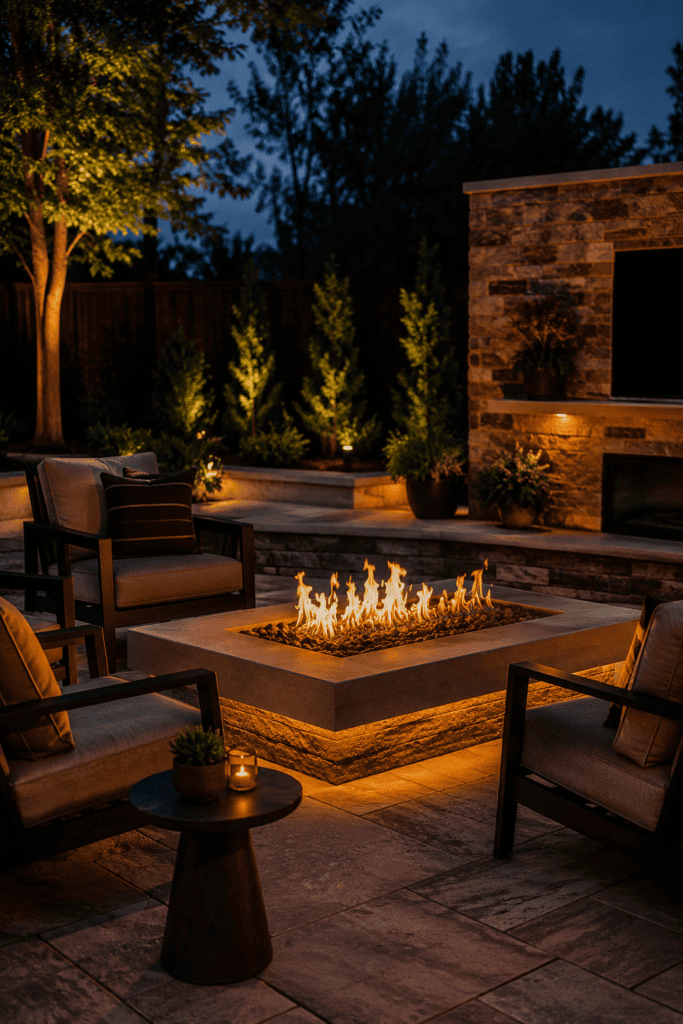
A fire pit or outdoor fireplace instantly makes your space feel like a destination, not just a yard. Options range dramatically:
- Portable fire pits: cheap, flexible, easy to store
- Built-in fire pits: permanent, polished, pricier
- Gas fire tables: no smoke, no wood-chopping, just flip a switch
I went with a portable steel fire pit first to test if we’d actually use it. We did—constantly—so upgrading to something more permanent felt justified instead of impulsive.
6. Rethink Your Plant Game
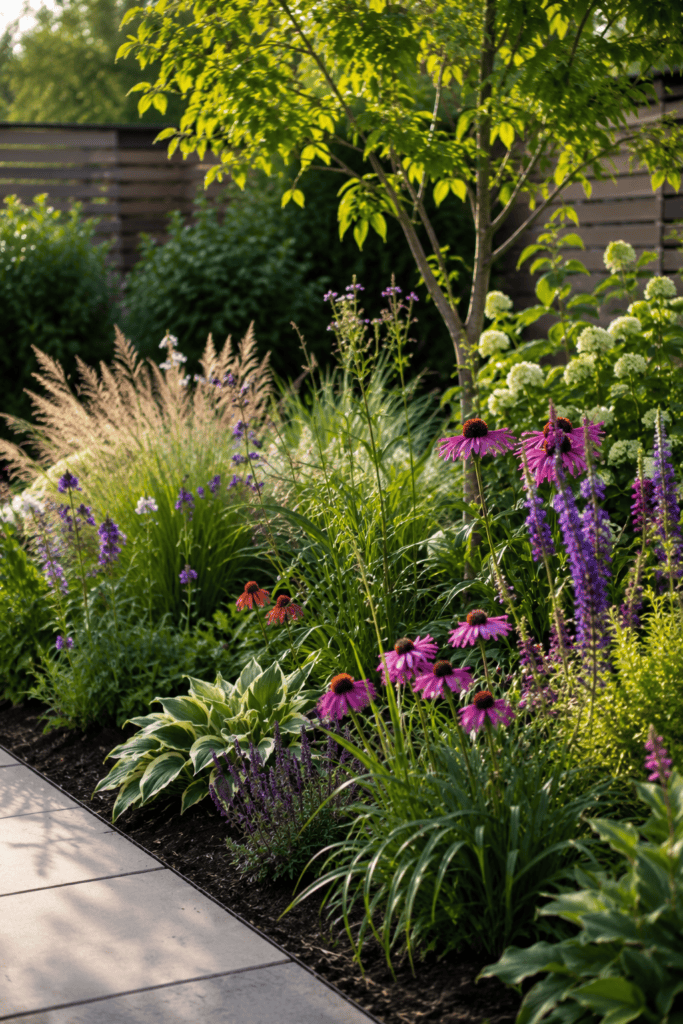
Skip the generic row of identical shrubs. Mix heights, textures, and bloom times so something’s always looking good. Ornamental grasses next to flowering perennials next to a small tree creates way more visual interest than a matching hedge line.
Rhetorical question time: why does everyone default to the same three boxwood shrubs? Boring. Branch out a little.
Think in layers, front to back: low groundcover, mid-height perennials, then taller shrubs or a small tree behind. This creates depth even in a narrow bed. I also learned to plant in odd numbers—threes and fives look intentional, while pairs tend to look accidental, like you just grabbed whatever the nursery had left.
7. Install a Vertical Garden
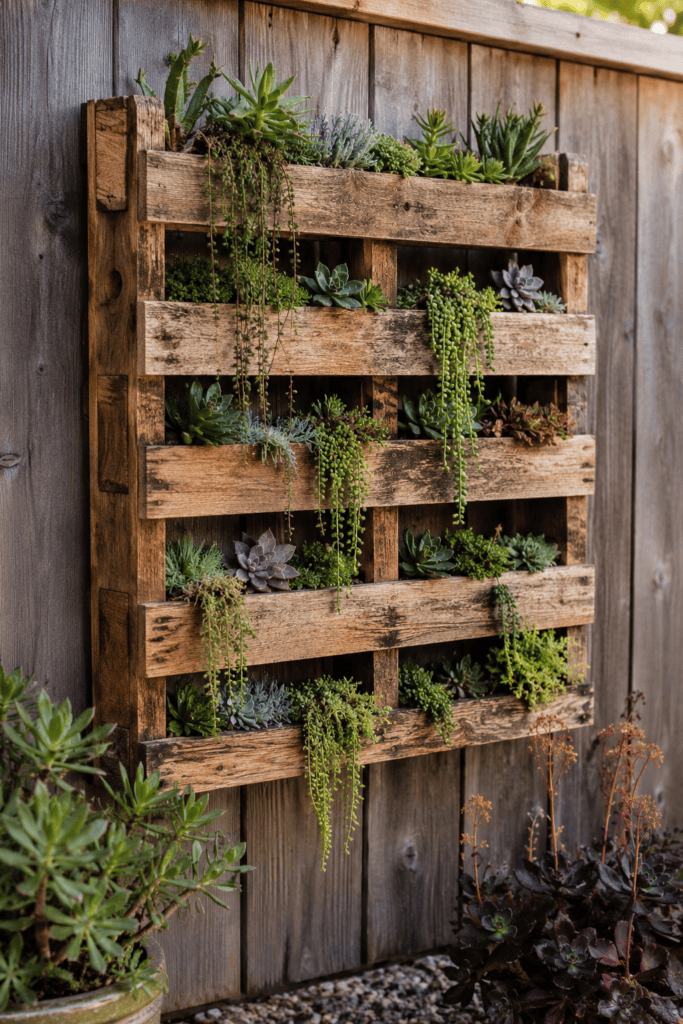
If your yard is small (or your patience for weeding is nonexistent), a vertical garden solves both problems. Wall-mounted planters, trellises, or a simple pallet garden add greenery without eating up floor space.
I built one out of an old wooden pallet, some landscape fabric, and succulents. Took an afternoon, cost under $40, and it’s still my favorite feature three years later.
8. Create a Cozy Seating Nook
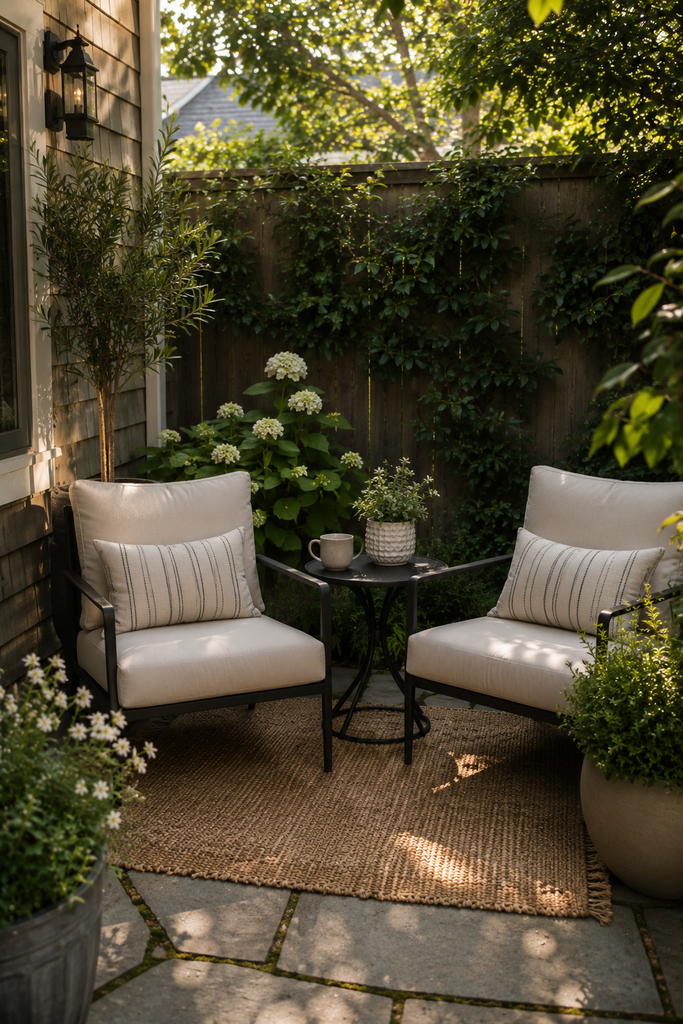
Not every outdoor space needs to be a full entertaining zone. A small seating nook—two chairs, a side table, maybe a fire bowl—works wonders for a reading spot or morning coffee corner.
I tucked mine into a corner near the fence, added a small rug (yes, an outdoor rug works fine), and it’s become my go-to spot for literally everything from phone calls to naps.
9. Add a Water Feature
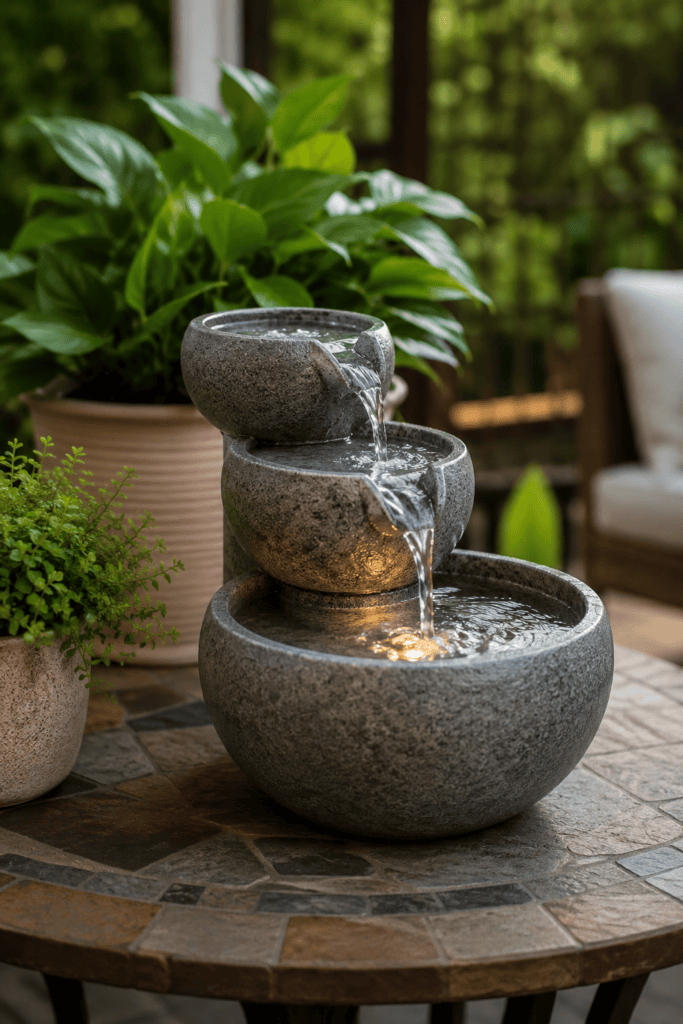
There’s something about moving water that instantly relaxes a space. Consider:
- A tabletop fountain for tiny patios
- A pondless waterfall for a more immersive feel
- A simple bird bath if you want low-effort ambiance
I’m not going to pretend a giant koi pond is realistic for most budgets, but even a small fountain drowns out street noise surprisingly well.
Placement makes or breaks a water feature. Tuck it near your seating area, not off in some far corner where you’ll forget it exists. And check the pump noise before you commit—some run louder than you’d expect, which kind of defeats the whole “peaceful ambiance” goal.
10. Build or Buy a Pergola
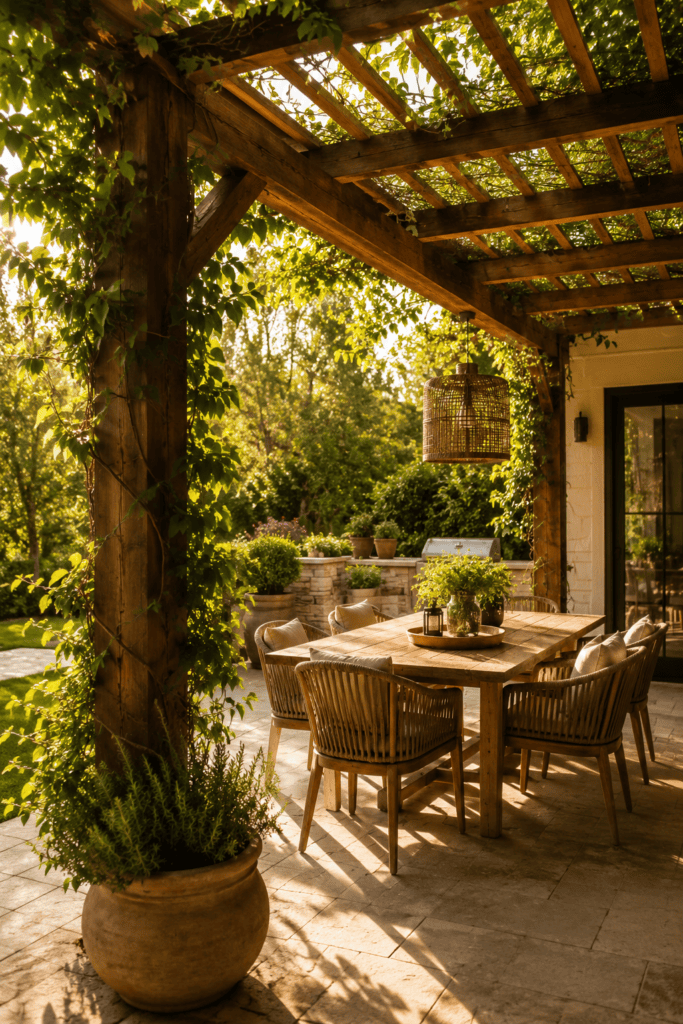
A pergola adds structure, shade, and instant architectural interest. You can go prefab, DIY it from a kit, or hire it out—all valid paths depending on your budget and skill level.
I compared building from scratch versus buying a kit, and honestly, the kit saved me weeks of headache for maybe 20% more cost. Sometimes the DIY route isn’t actually cheaper once you factor in your time and the inevitable trip back to the hardware store. :/
11. Add Shade Sails for a Modern Look
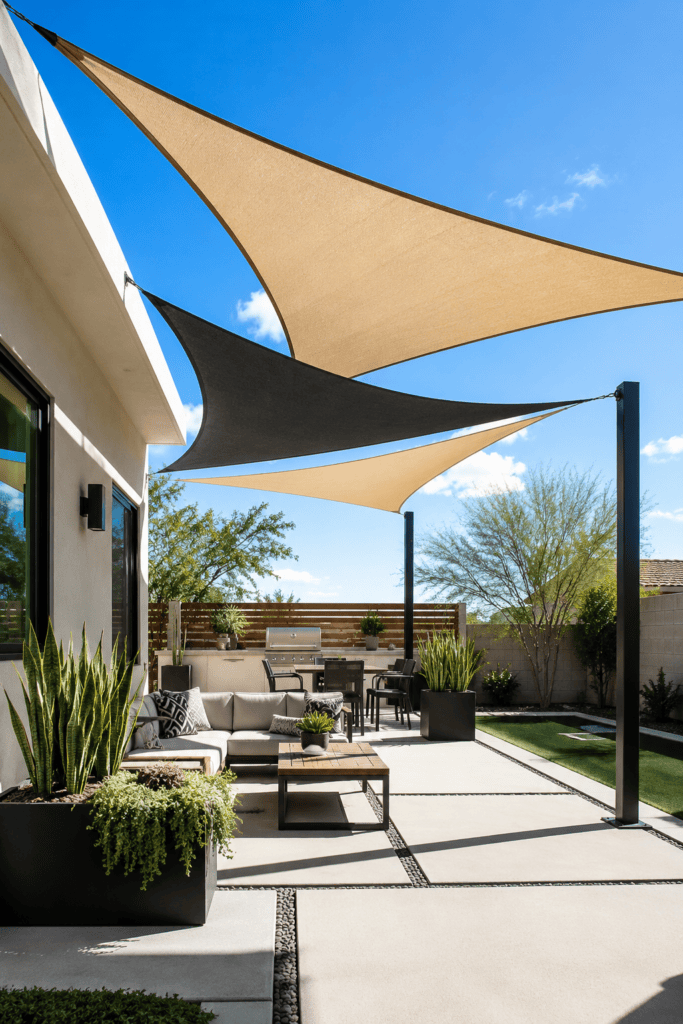
If a pergola feels like overkill, shade sails give you sun protection with a sleek, modern vibe. They’re cheaper, faster to install, and honestly look pretty sharp against a simple backyard backdrop.
Just make sure you anchor them properly—wind will absolutely test your installation, and a flapping shade sail at 2 a.m. is nobody’s idea of fun.
12. Upgrade Your Outdoor Flooring
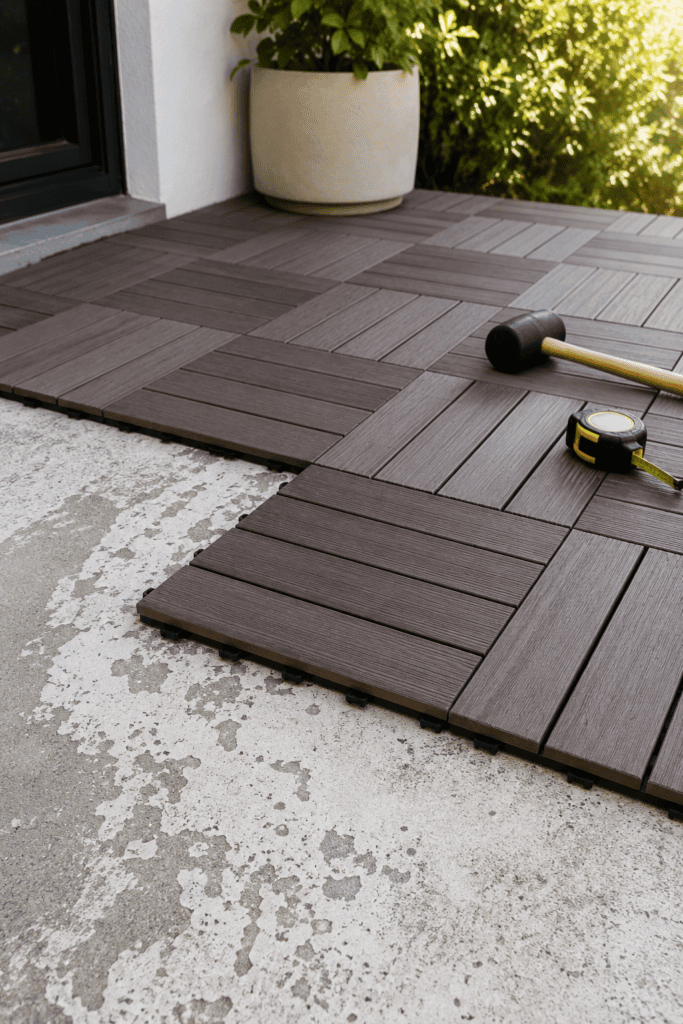
Old concrete cracking under your feet? Consider composite decking, interlocking deck tiles, or stained concrete as an upgrade. Each option has trade-offs worth weighing.
| Flooring Option | Cost | Maintenance | Best For |
|---|---|---|---|
| Composite decking | High | Low | Long-term durability |
| Interlocking tiles | Low-Medium | Low | Renters, quick upgrades |
| Stained concrete | Medium | Medium | Existing concrete patios |
I went with interlocking deck tiles over an ugly concrete slab, and it took one weekend to completely transform the look.
Composite decking costs more upfront, sure, but it doesn’t splinter, rot, or need restaining every couple of years like real wood does. If you’re renting or just testing out a design before committing, interlocking tiles let you experiment without the permanence—and you can take them with you if you move.
13. Install an Outdoor Kitchen or Grill Station
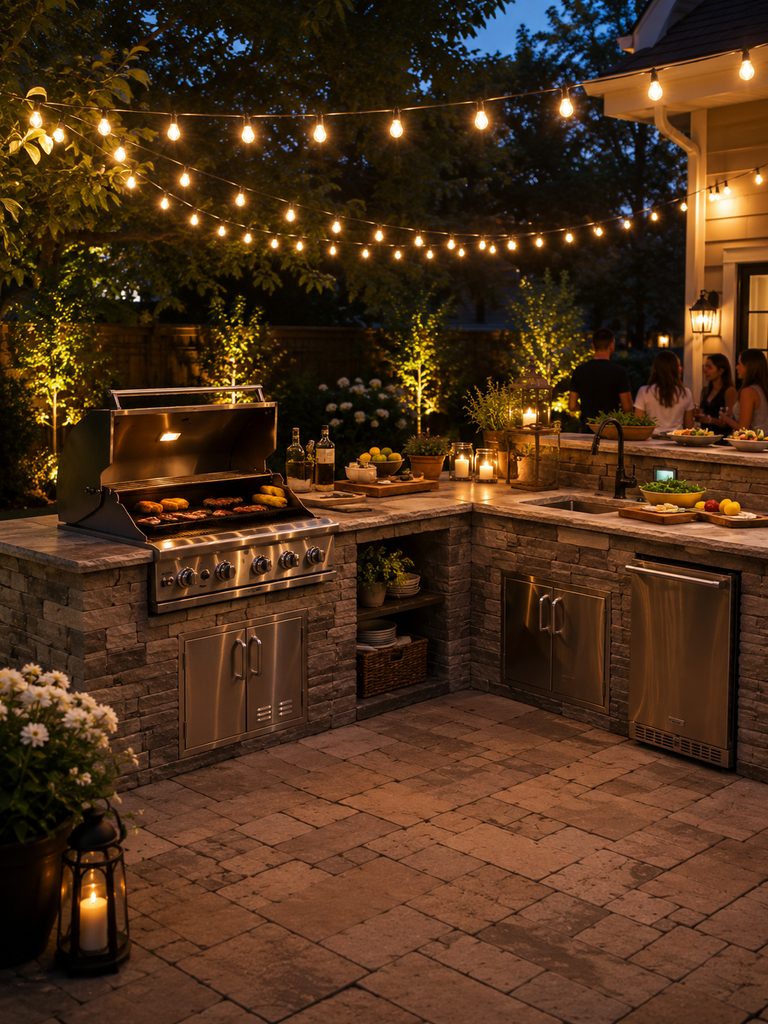
Even a modest grill station with a small counter and storage upgrades your entertaining game significantly. You don’t need a full outdoor kitchen with a pizza oven (though hey, if the budget allows, go for it).
I added a simple L-shaped counter around my existing grill, and suddenly guests stopped crowding my actual kitchen during parties. That alone made it worth it.
Start small if the budget’s tight. A rolling prep cart next to your grill solves 80% of the “I need counter space” problem for a fraction of the cost of built-in cabinetry. You can always upgrade later once you know exactly how you use the space.
14. Add Privacy Without Building a Fortress
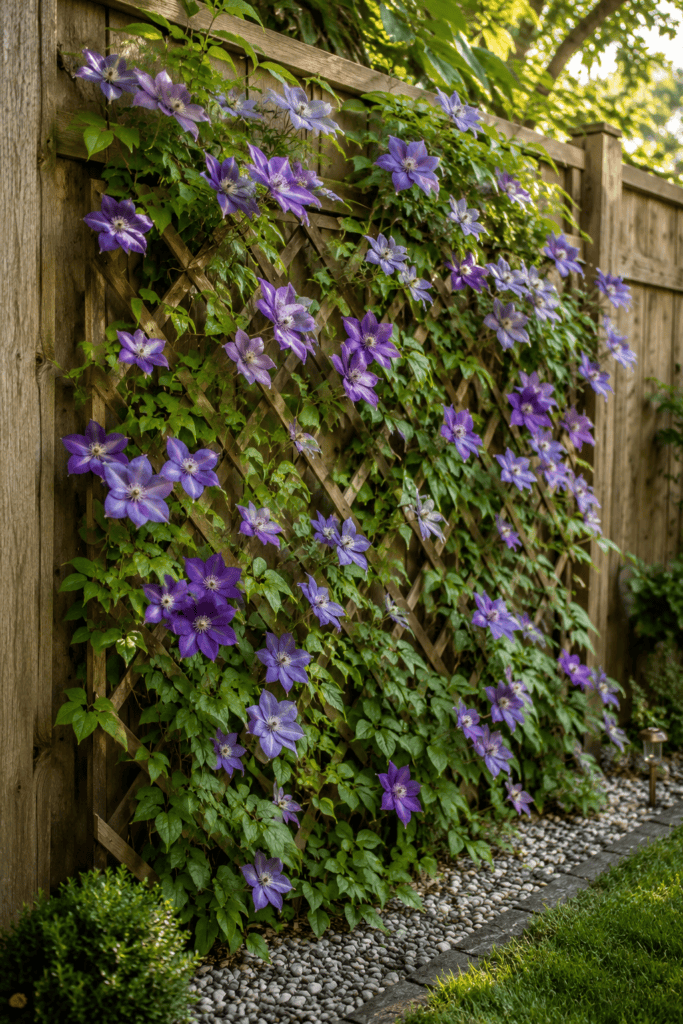
Nobody wants to feel like they’re on display during dinner. Privacy screens, tall planters, or a simple trellis with climbing vines solve this without the “fortress” vibe a full privacy fence sometimes gives.
- Bamboo screening: fast, affordable, natural look
- Lattice with climbing jasmine or clematis: takes time but smells incredible
- Tall potted grasses: flexible and movable
I planted clematis along a cheap lattice panel, and two summers later, it’s basically a living wall. Patience pays off here.
15. Incorporate Multi-Functional Furniture
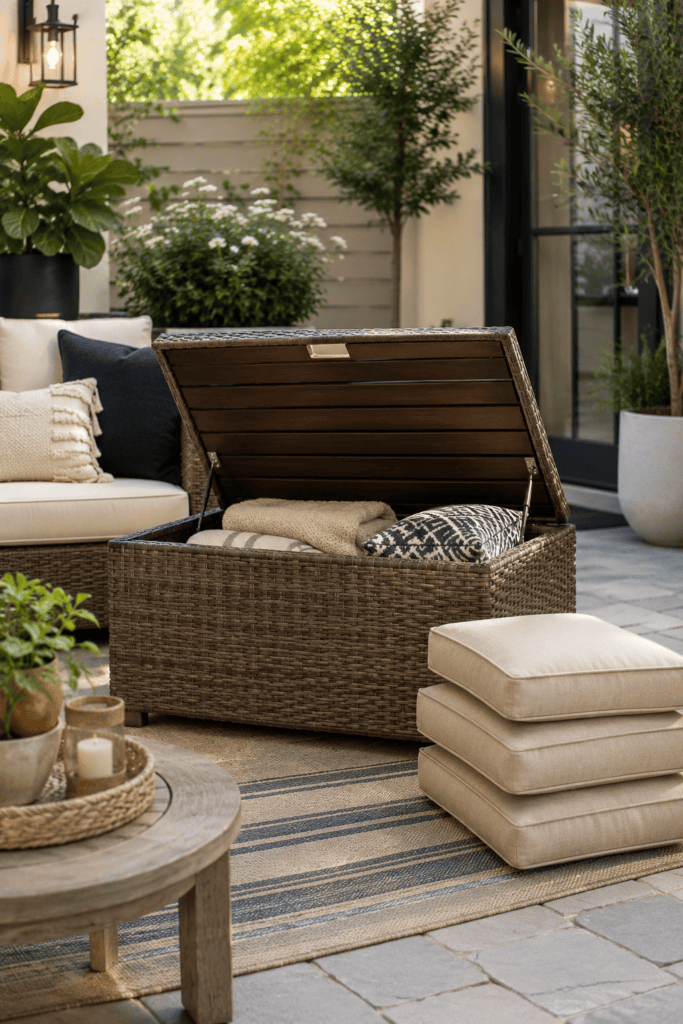
Storage benches, ottomans that double as extra seating, coffee tables with built-in coolers—multi-functional pieces matter more in smaller spaces where every square foot counts.
I swapped a regular side table for a storage ottoman, and it quietly holds all my outdoor cushions overnight. Small change, genuinely useful.
16. Add an Outdoor Rug and Textiles
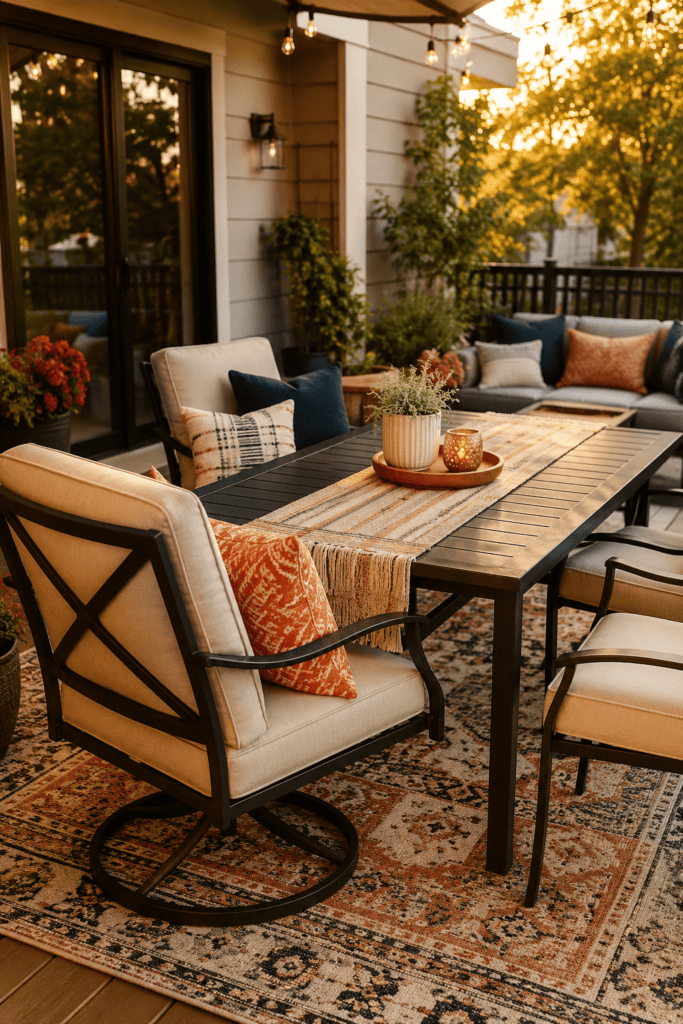
A rug, some outdoor pillows, maybe a table runner—these small textile touches make a space feel finished rather than half-done. FYI, outdoor-rated fabric has come a long way and doesn’t fade or mildew like it used to.
I was skeptical about an outdoor rug surviving rain and dog paws. Two years in, mine still looks great after a simple hose-down.
17. Install Smart Outdoor Tech
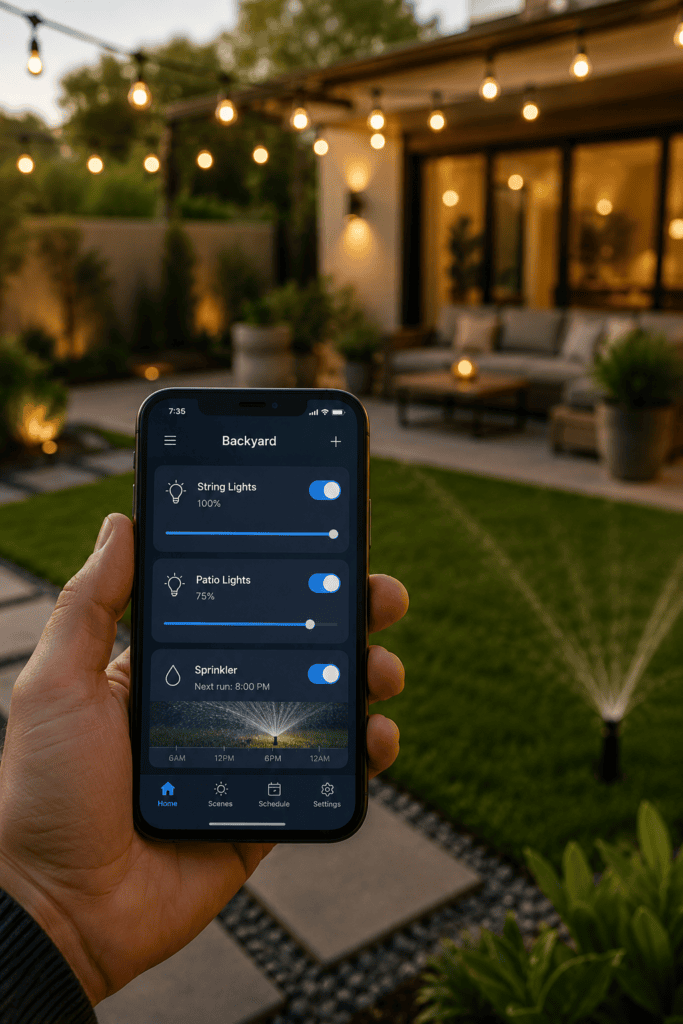
Smart irrigation systems, app-controlled lighting, and outdoor speakers aren’t just for the tech-obsessed anymore—they genuinely make maintenance easier and evenings better.
- Smart sprinkler timers save water and guesswork
- App-controlled string lights let you set moods without leaving your seat
- Weatherproof speakers turn any patio into an actual hangout spot
I resisted smart irrigation for years, convinced it was unnecessary. Then I went on vacation, forgot to ask a neighbor to water, and came home to crispy plants. Lesson learned.
None of this tech needs to be expensive or complicated to set up. A basic smart plug controlling your string lights costs less than a dinner out, and it means you can turn on the ambiance from the couch instead of trudging outside in socks.
18. Finish With a Focal Point
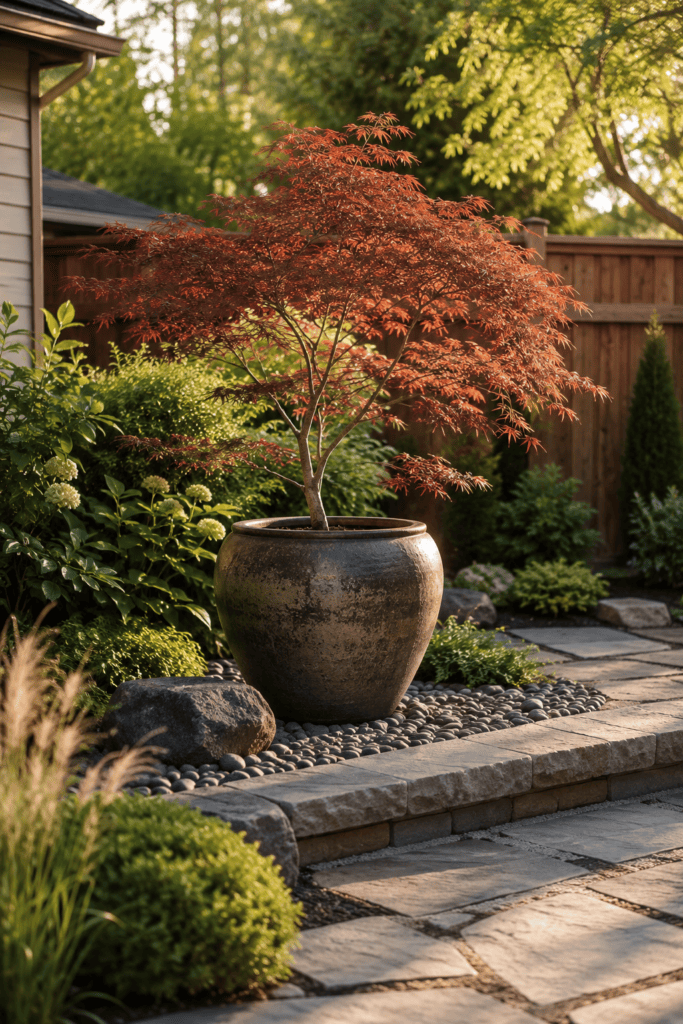
Every great outdoor space has one thing that draws your eye—a sculpture, an oversized planter, a striking tree, or even a bold-colored accent wall. Without a focal point, even a well-designed space can feel scattered.
I added a large ceramic planter with a small Japanese maple as my focal point, and it anchors the whole layout. Everything else in the yard now feels like it’s built around that one piece.
Wrapping This Up
An outdoor makeover doesn’t happen overnight, and honestly, it shouldn’t. The best transformations I’ve seen (mine included) came from layering small, intentional changes—better lighting here, a fire feature there, a focal point tying it all together.
Pick two or three ideas from this list that fit your space and budget right now. Don’t try to do all 18 in one weekend; you’ll burn out faster than a cheap string light in July. Start small, build momentum, and before you know it, you’ll have the backyard everyone wants to hang out in minus the broken lawn chairs.
If I had to rank where to start, I’d say lighting and furniture first—they deliver the most visible payoff for the least effort. Plants and structural features like pergolas can wait until you’ve lived in the space a bit and know exactly what it needs.