
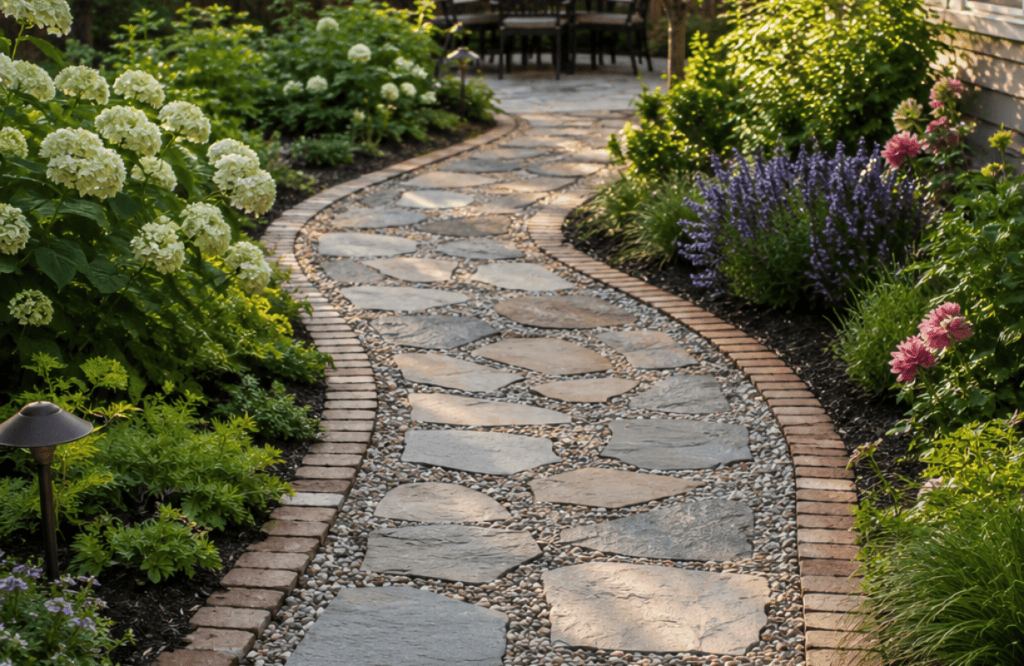
A backyard walkway is one of those features nobody notices until it’s missing and then suddenly it’s the only thing you can think about every time you’re trekking through mud to get to the grill. It’s easy to treat these paths as an afterthought, something you’ll “get to eventually,” but the truth is a well-designed walkway does more heavy lifting for your yard than almost any other feature. It ties your garden beds together, guides foot traffic where you actually want it to go, and turns a random patch of grass into something that looks planned.
The good news? You’ve got way more options than the basic slab of concrete most people default to. From rustic stepping stones to sleek modern pavers, the right walkway can completely change how your backyard feels—and function just as well as it looks. Whether you’re working with a tight budget, a weekend’s worth of DIY energy, or a serious landscaping overhaul, there’s a walkway idea on this list that fits.
Below are 15 ideas covering every style, budget, and yard type, so you can find the one that actually makes sense for your space instead of just copying whatever looked good on Pinterest.
1. Classic Flagstone Pathways
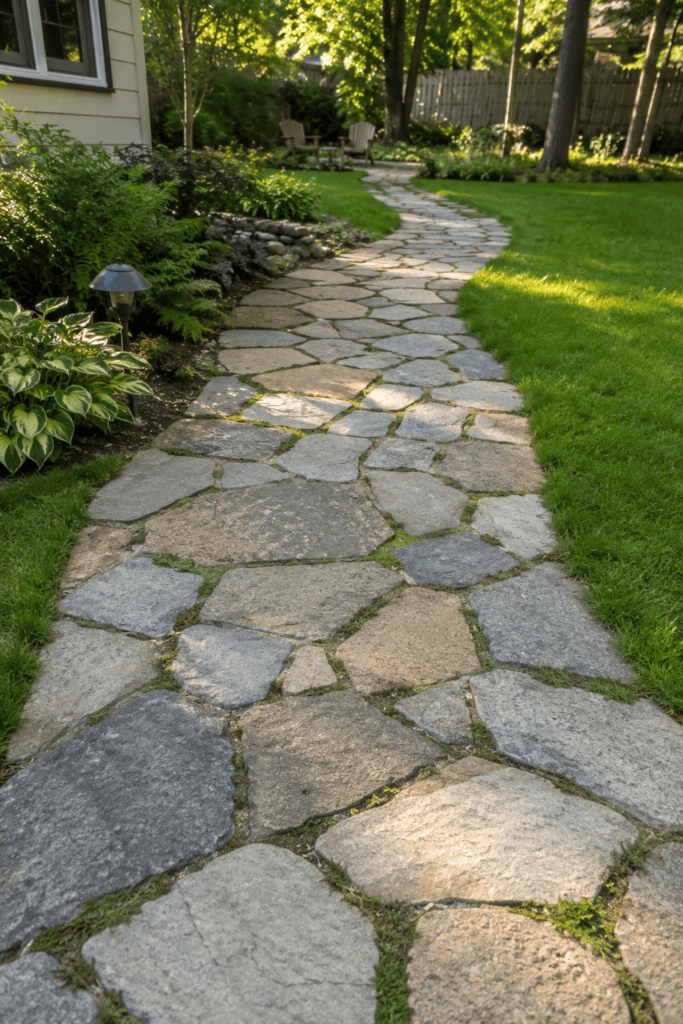
Flagstone is the walkway equivalent of a little black dress—it works with almost everything. The irregular shapes give your yard a natural, organic vibe that feels like it’s always belonged there.
I put flagstone in my own backyard three years ago, and honestly? It’s held up better than my marriage survived the installation weekend. The stones are durable, slip-resistant when properly set, and age beautifully.
- Works with modern, cottage, or rustic yard styles
- Available in bluestone, limestone, sandstone, and more
- Costs more upfront but requires minimal maintenance
IMO, if you’re only going to splurge on one hardscaping feature this year, make it this one.
2. Gravel Paths for the Budget-Conscious
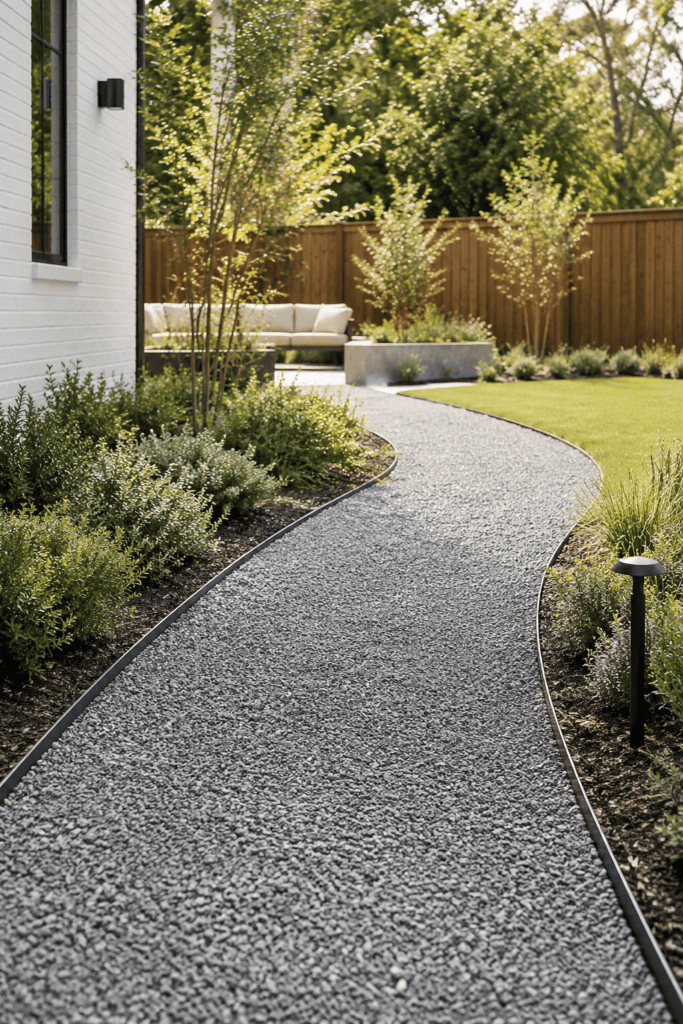
Ever wondered why gravel paths show up in literally every “cheap backyard ideas” article? Because they actually work, and they’re stupid easy to install.
Gravel is the friend who shows up to help you move and doesn’t complain. It drains well, it’s inexpensive, and you can DIY it in an afternoon. Just don’t wear flip-flops near it unless you enjoy pebbles between your toes.
- Pea gravel offers a smoother walking surface
- Crushed granite compacts better for high-traffic areas
- Edging (metal, wood, or stone) keeps gravel from migrating into your lawn
The downside? Weeds. Lay landscape fabric underneath or you’ll be pulling dandelions out of your path every other weekend.
3. Mulch Walkways for Wooded or Garden Areas
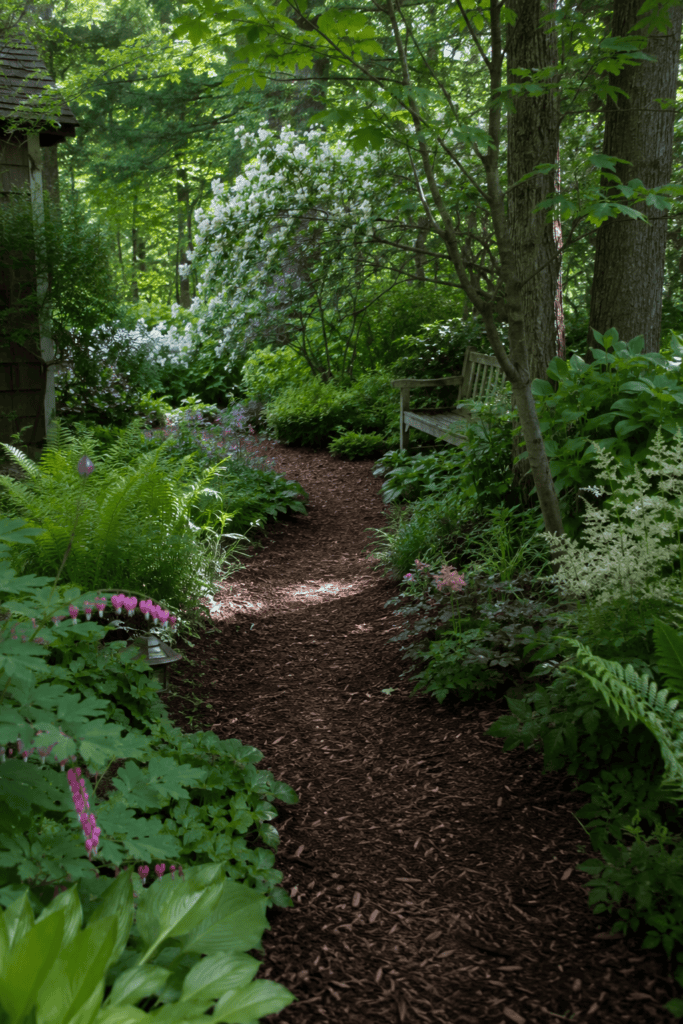
Mulch paths are the underdog of this list, but don’t sleep on them. If your backyard has a woodland or cottage-garden feel, mulch blends right in instead of fighting the aesthetic.
I use mulch on a side path that connects my garden beds, and it’s honestly the coziest-looking part of my yard. It’s cheap, soft underfoot, and easy to refresh every year or two.
- Best for low-traffic, casual garden paths
- Needs replenishing annually as it breaks down
- Pairs beautifully with native plant borders
Just know it’s not a forever solution—more of a “I’ll deal with permanent later” solution.
4. Poured Concrete for a Sleek, Modern Look
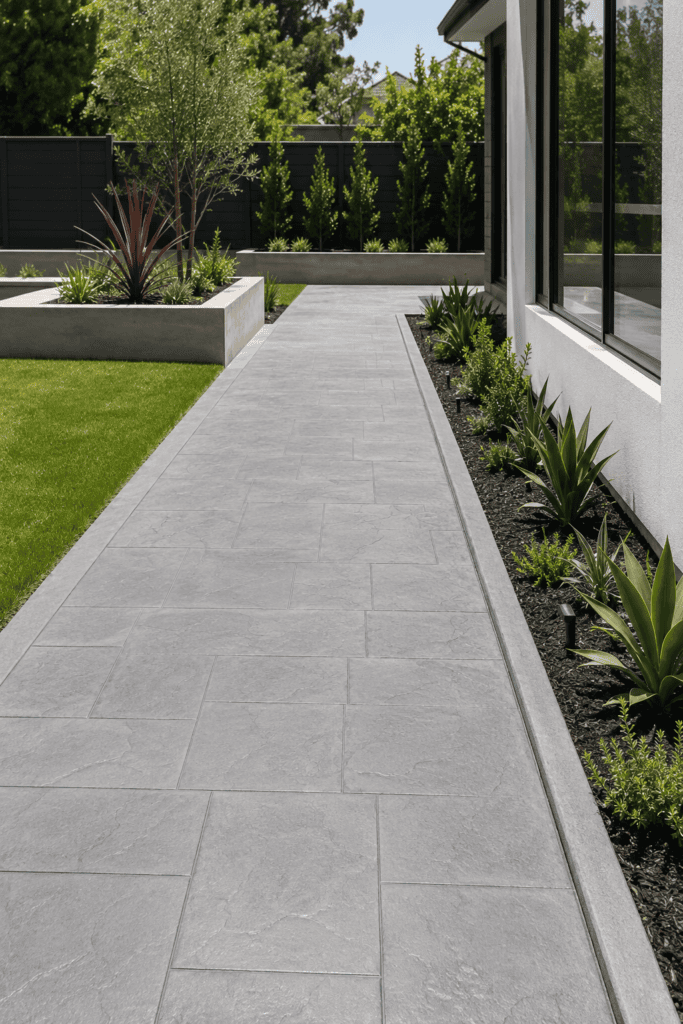
Concrete gets a bad rap for being boring, but modern concrete walkways are anything but. Stamped patterns, exposed aggregate, and colored finishes have turned this old standby into a legitimate design statement.
Here’s my honest take: concrete is the most durable option on this list, full stop. It handles heavy foot traffic, resists weeds completely, and lasts decades if installed correctly.
- Stamped concrete mimics stone or brick at a lower cost
- Exposed aggregate adds texture and slip resistance
- Requires professional installation for best results
The catch? Cracking happens over time, especially in areas with freeze-thaw cycles. IMO it’s worth it anyway.
5. Brick Pathways for Timeless Charm
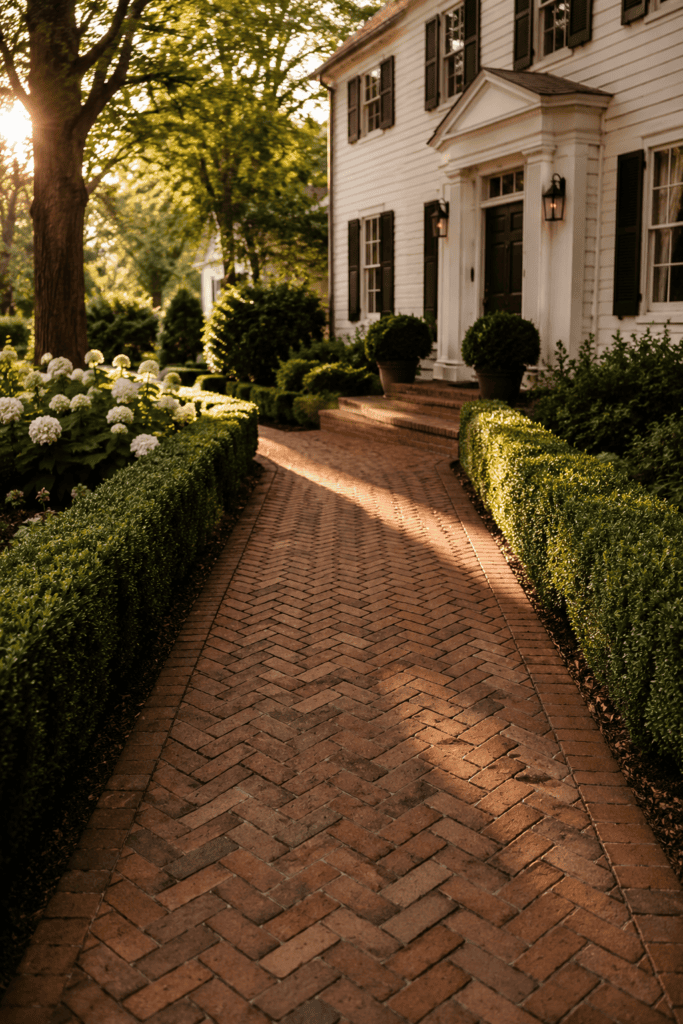
There’s a reason brick walkways show up in every “historic home” magazine spread. They just work. The warm color and classic pattern options make any backyard feel more established and intentional.
- Herringbone, basket weave, and running bond are popular layout patterns
- Reclaimed brick adds character and an aged appearance
- Requires a solid base to prevent shifting over time
I’ll admit brick isn’t my personal favorite (too traditional for my taste), but I can’t argue with how well it photographs. If you’re going for curb appeal or resale value, this is a smart bet.
6. Stepping Stone Paths
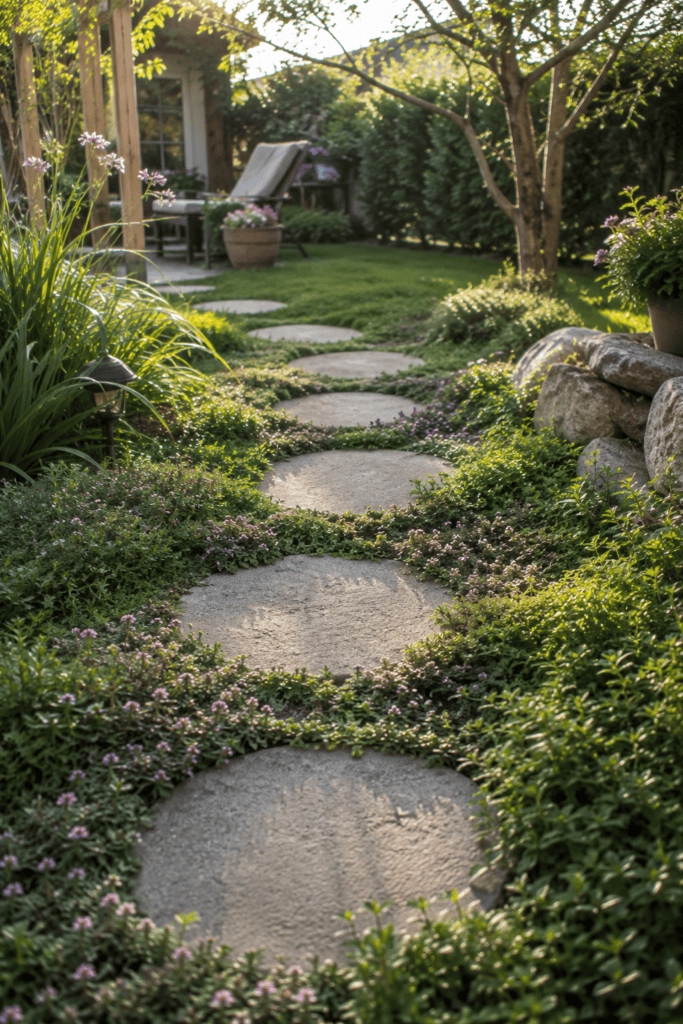
Stepping stones are perfect when you want a path that feels more like a suggestion than a demand. They’re casual, they let grass grow between them, and they don’t scream “I spent a fortune on hardscaping.”
- Space stones 18–24 inches apart for a natural walking stride
- Combine with groundcover plants like creeping thyme for a soft, layered look
- Works well for garden paths, not ideal for main thoroughfares
Ever tried walking a stepping stone path in the dark after a few drinks at a barbecue? Not recommended. Add some solar lights if this is your main route to the fire pit.
7. Wood Plank Walkways
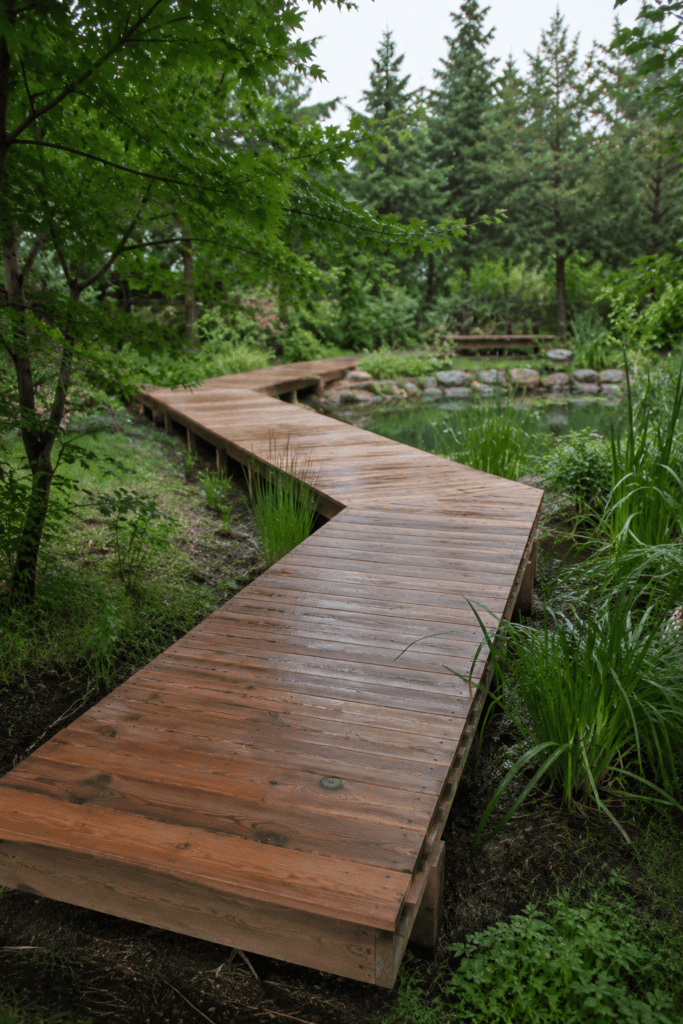
Wood adds warmth that stone and concrete simply can’t replicate. A wood plank path feels intentional, almost architectural, especially in modern or minimalist yards.
Cedar and pressure-treated pine are your best bets for longevity, though composite decking material is becoming a popular low-maintenance alternative.
- Raised wood walkways work great over uneven or wet ground
- Composite boards resist rot and splintering
- Needs periodic sealing if using natural wood
I tried a wood plank path near my pond a few years back, and while it looked gorgeous, I underestimated how slippery wood gets when wet. Add textured strips or a non-slip sealant if moisture is a factor.
8. Pea Gravel with Wood Border Combo
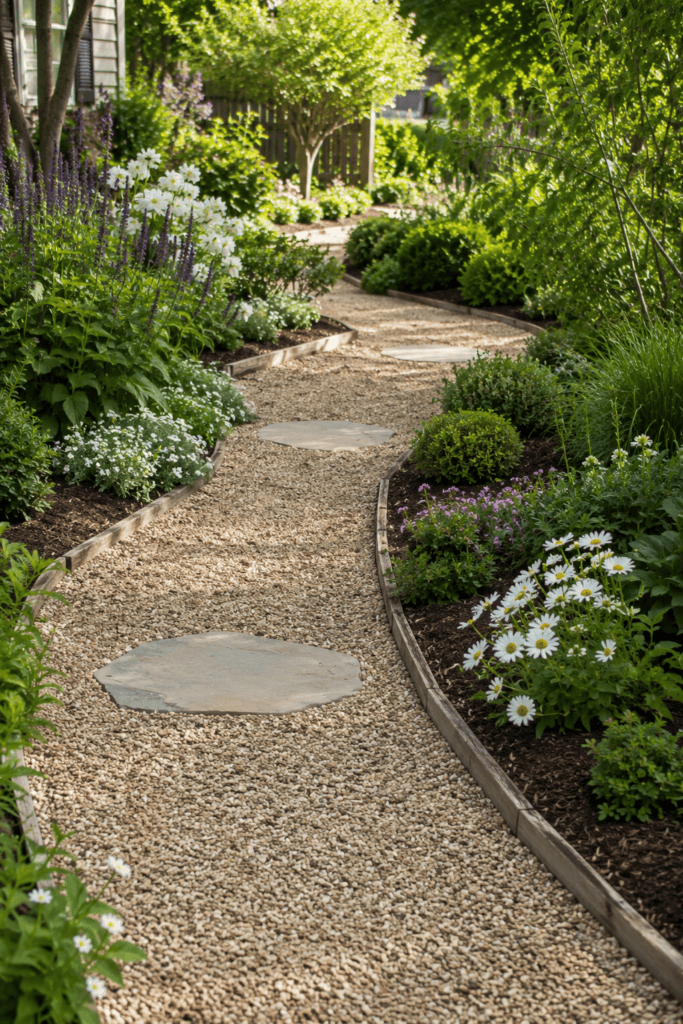
This one’s a personal favorite because it splits the difference between budget-friendly and design-forward. You get the drainage and affordability of gravel with a clean, defined edge from wood borders.
- Wood borders prevent gravel spread into garden beds
- Combine with stepping stones for added texture
- Great for winding paths through informal gardens
FYI, this combo works especially well if you’ve got a dog that likes to dig—the wood edge gives you a clear boundary to reinforce if needed.
9. Permeable Pavers for Eco-Friendly Yards
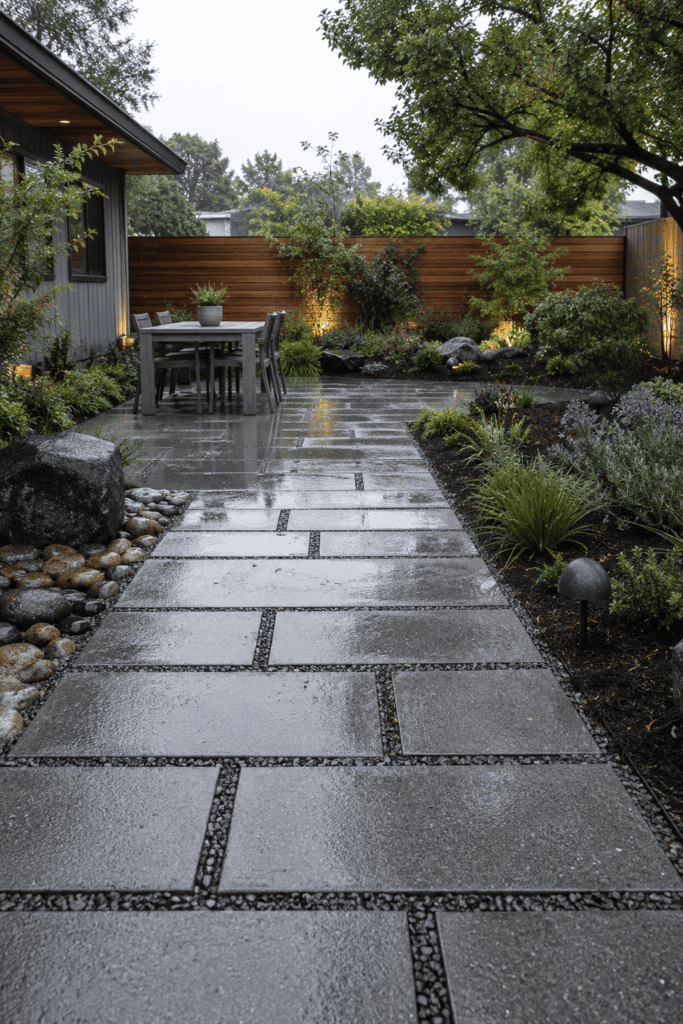
If you’re dealing with drainage issues or just want to be a little kinder to the planet, permeable pavers deserve a serious look. These let water soak through instead of running off, which reduces erosion and helps recharge groundwater.
- Ideal for yards with poor natural drainage
- Reduces runoff into storm drains
- Available in concrete, plastic grid, or porous asphalt options
I’ll be honest, these aren’t the cheapest option, but if you live somewhere with heavy rainfall, this walkway idea will save you headaches (and puddles) down the road.
10. Mosaic Tile Accents
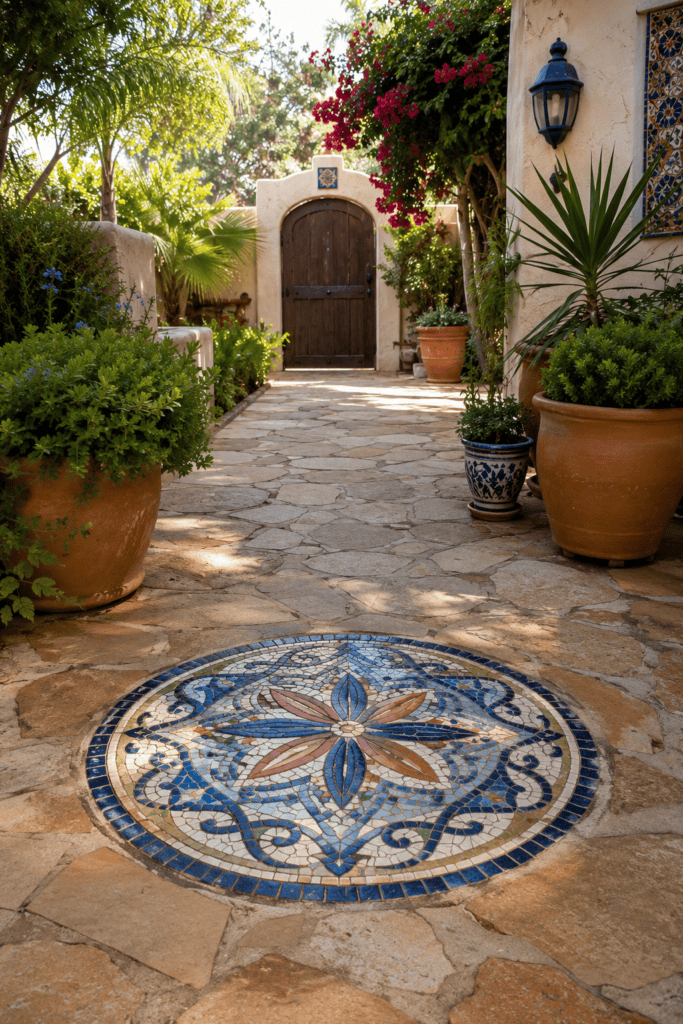
Want your walkway to double as a piece of art? Mosaic tile inlays add unexpected color and pattern to an otherwise standard path. Think Mediterranean courtyards or bohemian garden vibes.
- Best used as accent sections rather than the entire path
- Durable outdoor tile is essential—don’t use indoor tile
- Adds serious personality without a full material overhaul
This is where you can really let your personality shine. I added a small mosaic medallion at the entrance to my garden path, and it’s become the thing every guest comments on. Worth it? Absolutely.
11. Curved Pathways for Visual Interest
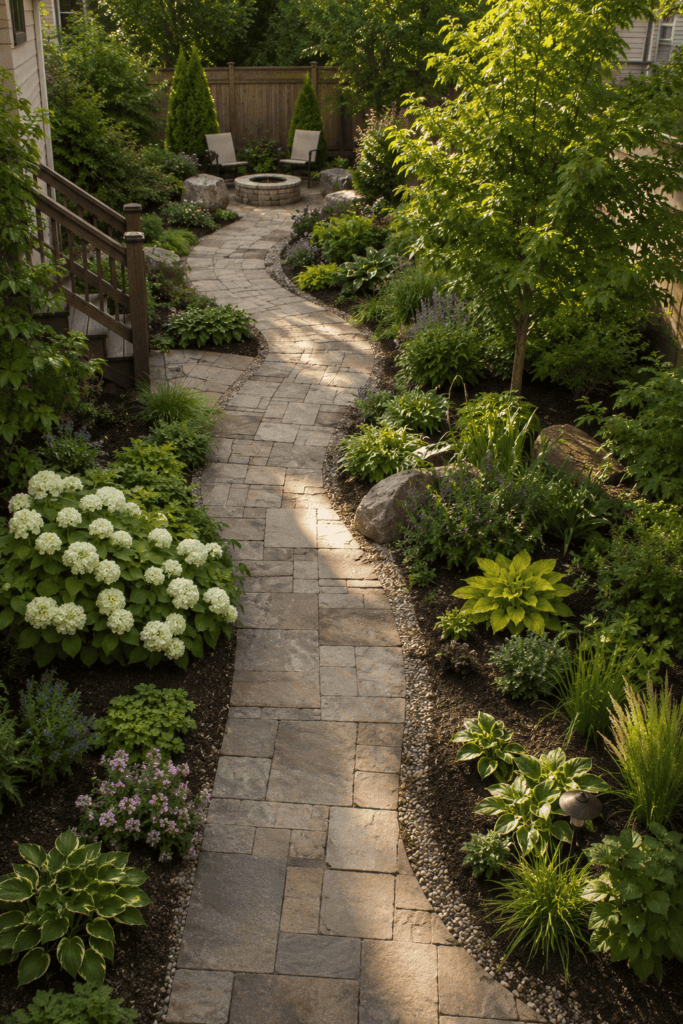
Straight paths get you where you’re going. Curved paths make the journey feel like an experience. A gentle curve adds depth and makes a small yard feel bigger than it actually is.
- Works especially well in yards under 1,500 square feet
- Pairs nicely with layered plantings along the edges
- Slightly more complex to install than straight runs
Ever notice how curved paths in botanical gardens make you slow down and actually look around? That’s not an accident—it’s intentional design psychology, and you can steal it for your own yard.
12. Rustic Log Slice Walkways
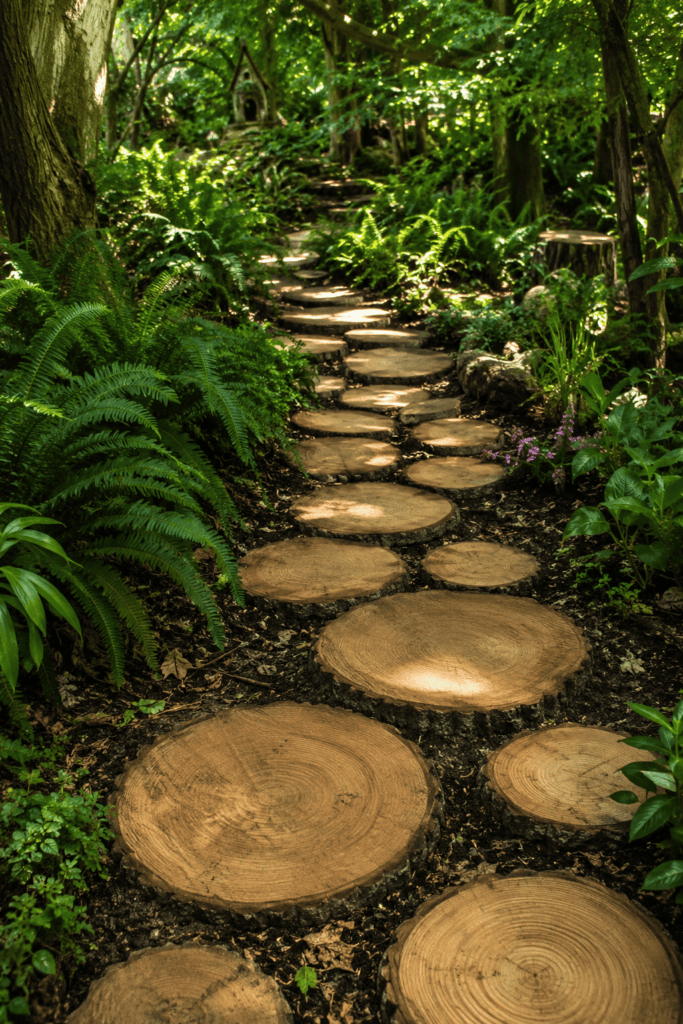
This one’s niche, but it’s stunning when done right. Cross-cut log slices, sometimes called cookies, create a whimsical, forest-inspired path that looks straight out of a fairytale.
- Best suited for shaded, woodland-style yards
- Requires sealing to prevent rot and pest issues
- Not ideal for high-traffic or heavily-used areas
I’ll be real with you: this is more of a Pinterest-board idea than a practical, everyday walkway. But for an accent path to a reading nook or garden shed? Chef’s kiss.
13. Two-Tone Paver Patterns
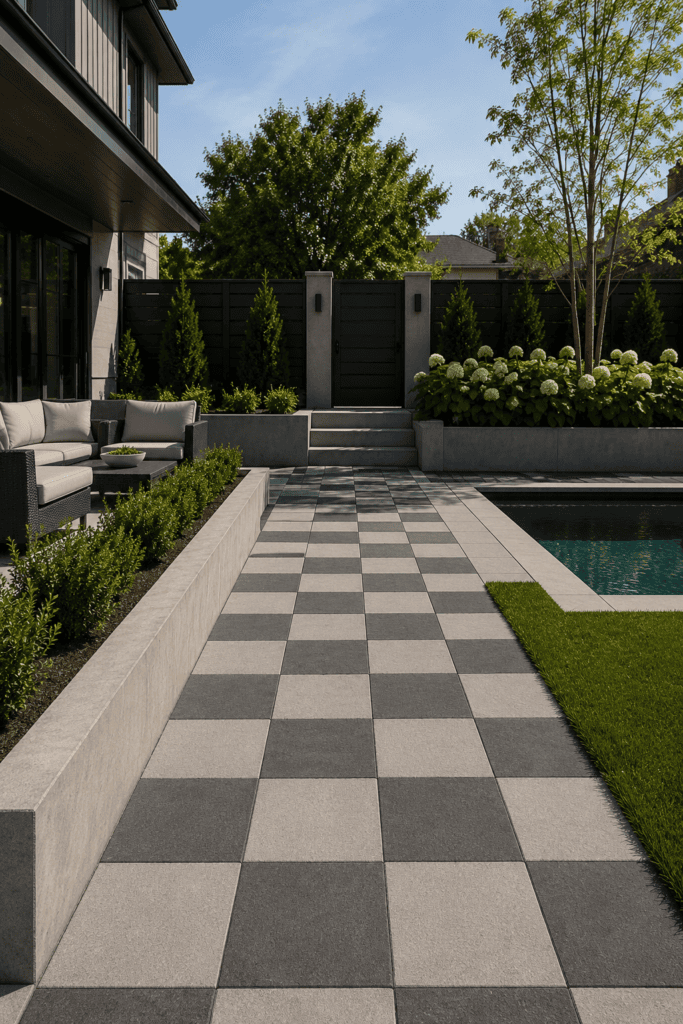
Mixing paver colors or materials creates visual rhythm without going full mosaic. Alternating light and dark pavers, or combining concrete with brick accents, adds sophistication without much extra cost.
- Herringbone or checkerboard patterns work particularly well
- Easy to DIY with pre-cut pavers
- Great middle ground between “boring” and “trying too hard”
This is probably the easiest way to upgrade a basic paver walkway without a total redesign. IMO it’s an underrated option that more people should consider.
14. Elevated Boardwalks for Wet or Sloped Yards
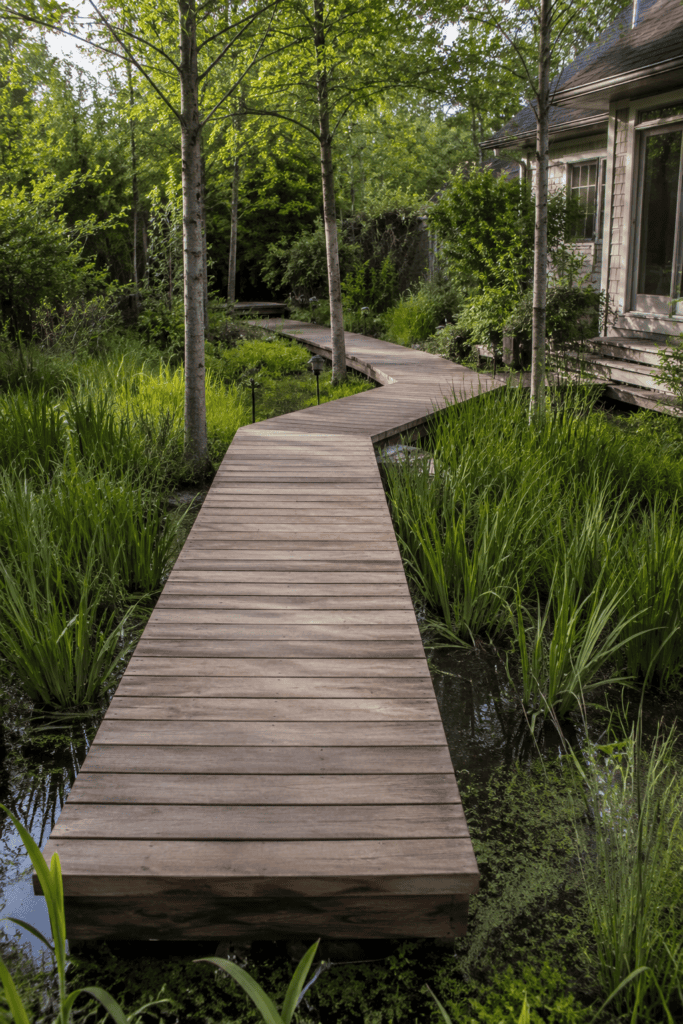
If your backyard has drainage issues, a slope, or a low spot that turns into a swamp every spring, an elevated boardwalk solves the problem while looking intentional rather than like a workaround.
- Raised design prevents standing water issues
- Works over uneven terrain without major grading
- Composite or pressure-treated lumber recommended for durability
I’ve seen homeowners try to fight a wet yard with more sod and more frustration. A boardwalk just accepts the problem and builds around it. Smarter move, honestly.
15. Multi-Material Combination Paths
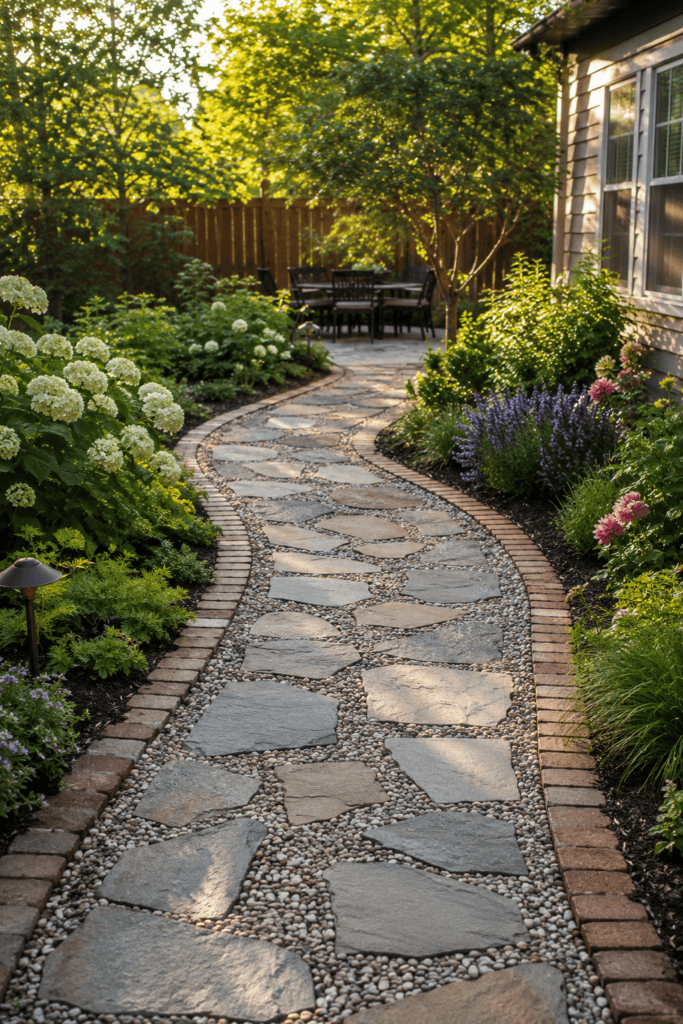
Why choose one material when you can layer several? Combining flagstone with gravel infill, or brick borders with concrete centers, gives you a custom look that’s genuinely hard to replicate.
- Allows you to balance cost, durability, and style
- Requires more planning to ensure materials transition smoothly
- Best tackled with a landscape designer if you’re mixing more than two materials
This is the option for people who can’t commit to just one idea on this list (no judgment, I get it). It’s also the most “you” option since the combination is entirely up to your taste.
Putting It All
Fifteen ideas, one goal: get you from your back door to your favorite backyard spot without ruining your shoes or your patience. Whether you go budget-friendly with gravel or splurge on flagstone, the right walkway ties your whole outdoor space together in a way that’s easy to underestimate until you actually have one.
My advice? Start with your yard’s existing style and your actual foot traffic patterns before falling in love with a Pinterest photo. A stunning stepping stone path is useless if it’s your daily route to the garage with an armful of groceries 🙂
Pick the idea that fits your yard, your budget, and your patience level for maintenance—then get out there and start digging.