
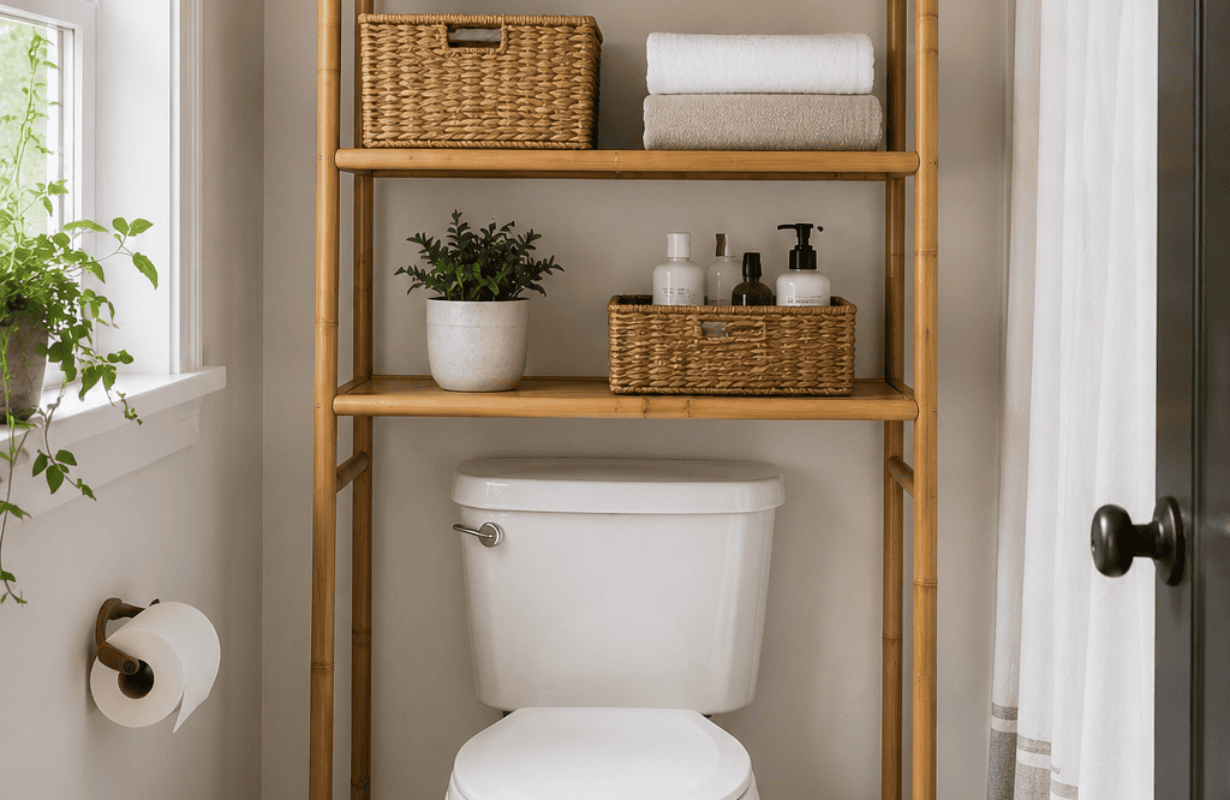
Small bathrooms have a talent for turning into clutter traps. One week everything’s in its place, the next you’ve got three half-empty shampoo bottles, a stray hairbrush, and a wobbling stack of towels threatening to slide off the counter. I’ve lived with bathrooms so tight I could touch both walls at once, and the only thing that ever fixed it was smarter storage not more stuff, just better systems for the stuff I already had.
Below are 15 small bathroom storage ideas, each with real specifics: what to buy, what size to look for, what it costs roughly, and where it works best. I’ve used most of these myself, so I’ll flag what actually holds up versus what looks good in a photo and falls apart in daily use.
1. Over-the-Toilet Storage Units
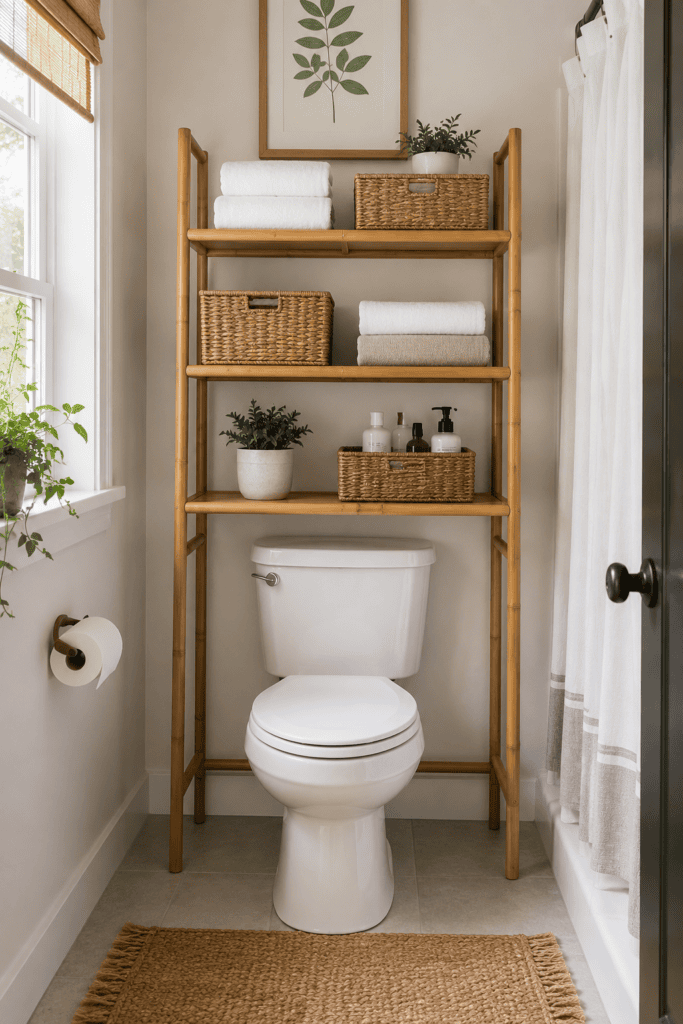
The space above your toilet is almost always empty, and that’s wasted square footage in a room where every inch counts. An over-the-toilet storage unit (sometimes called an étagère) straddles the toilet tank and gives you two or three tiers of shelving without touching your floor space.
What to look for:
- Width: Standard units run 24–27 inches wide—measure your toilet and the wall space on either side before buying
- Adjustable shelves: Lets you fit taller bottles or bins on one tier and stack towels on another
- Material: Bamboo or metal holds up better in humidity than particleboard, which can swell and warp over time
- Weight capacity: Check this if you plan to store heavier items like extra towel stacks or a small first-aid kit
Installation is usually tool-free since the unit rests on the floor and leans against the wall, though some models include a strap to anchor them for stability. Expect to pay $40–$120 depending on material and finish.
2. Corner Shelves for Dead Space
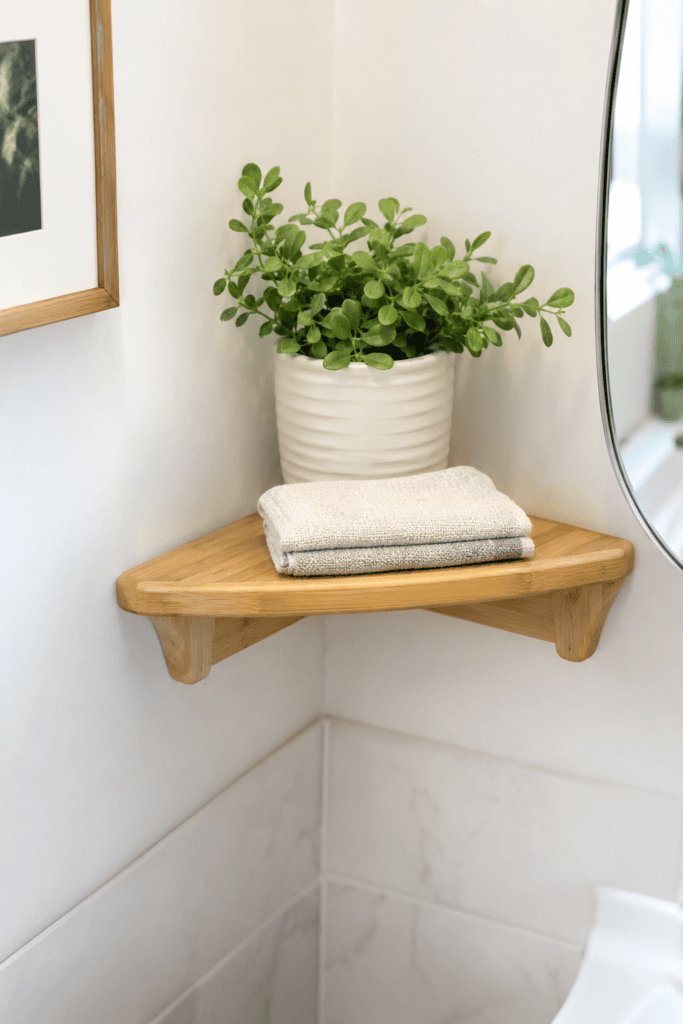
Corners are the most underused real estate in any bathroom. Corner shelves—either floating or tiered—fit into that triangular gap that otherwise does nothing.
Floating corner shelves mount with brackets or adhesive strips rated for wet environments. If you’re renting and can’t drill, look specifically for command-strip-rated corner shelves, which hold up to 5–7 pounds depending on the brand.
Shower Corner Caddies
A shower corner caddy is a related but distinct product—it’s designed to sit in the shower itself, either tension-mounted between floor and ceiling or suction-cupped to tile. Tension-pole caddies tend to hold up better long-term since suction cups lose grip in humidity and eventually fall. If your shower has a niche already built in, skip the caddy altogether and use small tiered organizers instead.
3. Over-the-Door Organizers
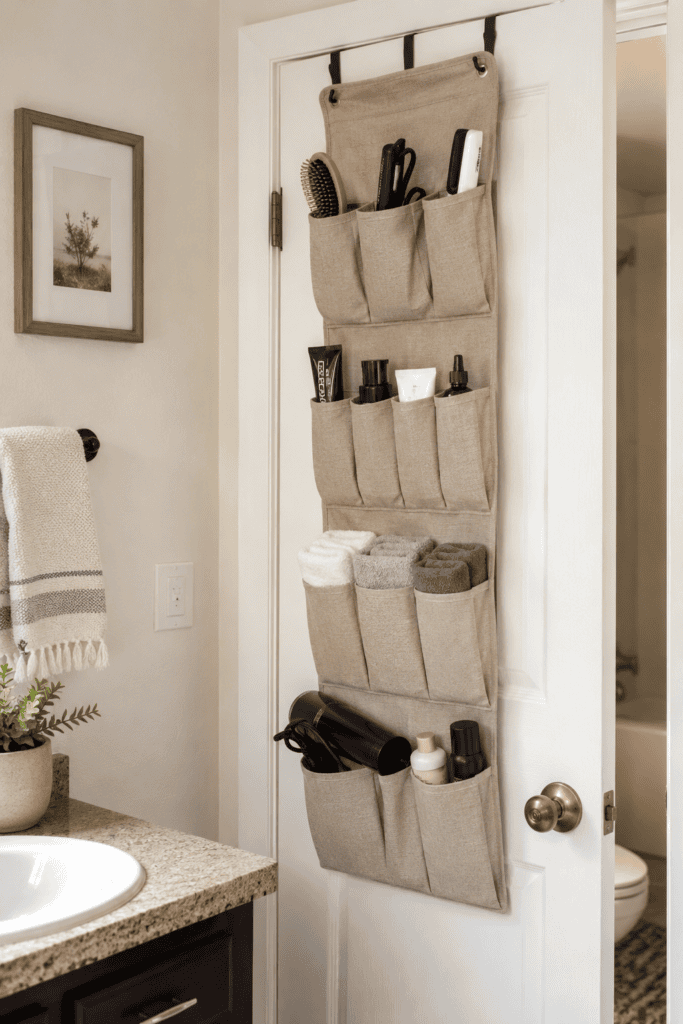
An over-the-door organizer hangs on the top of your bathroom door with zero drilling, making it one of the best options for renters. These come in two main styles:
- Fabric pocket organizers: Good for lightweight items like hair tools, washcloths, and travel-size toiletries
- Rigid hook-and-basket systems: Better for heavier items like cleaning supplies or a hair dryer
Check your door’s thickness before buying—most organizers fit doors up to 1.75 inches thick, but hollow-core doors (common in apartments) can sag slightly under heavier loads. Distribute weight evenly across the organizer rather than loading one section.
4. Floating Shelves Above the Sink
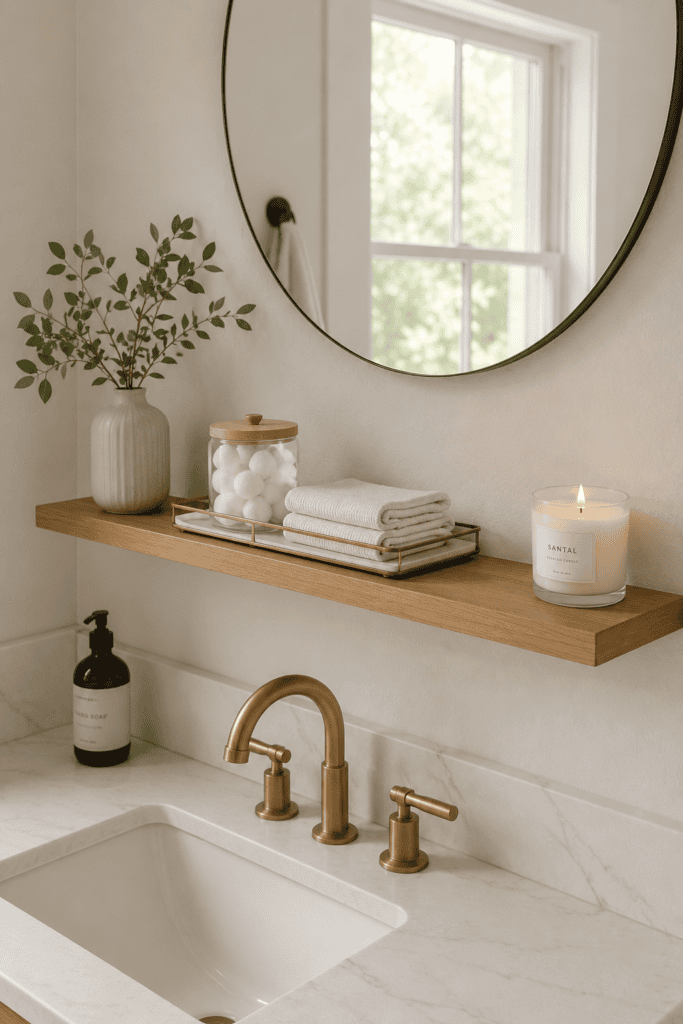
A floating shelf above the sink adds storage without the visual bulk of a full cabinet. Thin wood or metal-bracket shelves in the 18–24 inch range work well above most vanities.
Practical tips:
- Mount shelves at least 6 inches above the tallest item you plan to store on the counter below, so nothing gets knocked into the sink
- Use small trays or baskets on the shelf itself to keep loose items like cotton balls contained
- Limit yourself to 2–3 items per shelf if the shelf is under 10 inches deep—overloading narrow shelves is the most common installation mistake
5. Under-Sink Pull-Out Drawers
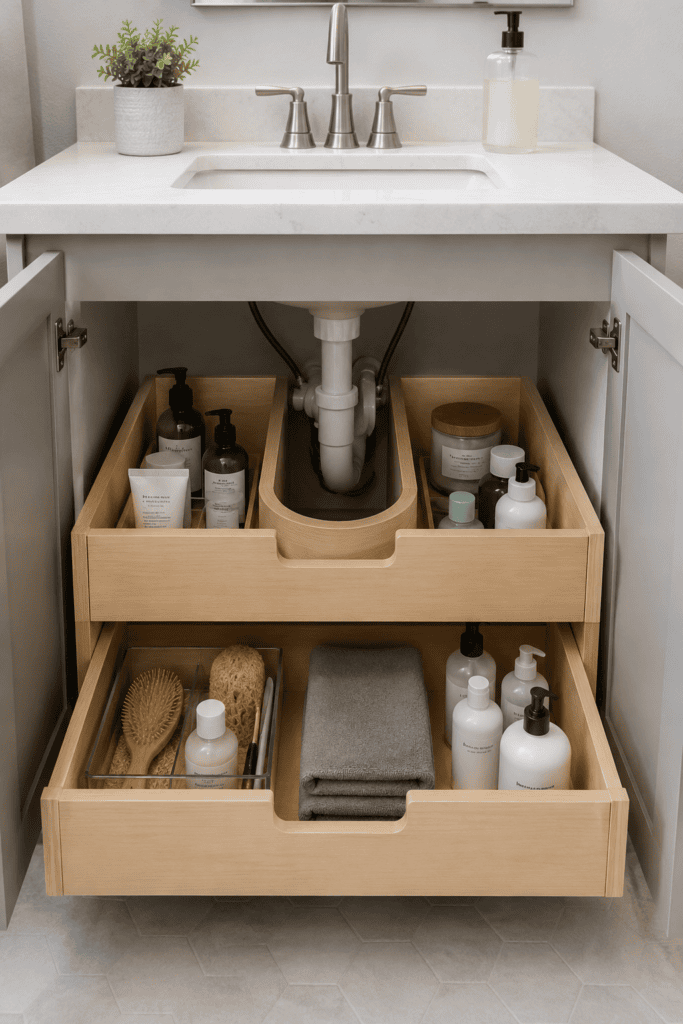
The cabinet under your sink usually gets wasted on a jumble of bottles hidden behind pipes. Pull-out drawer systems designed specifically for under-sink cabinets solve this by giving you sliding, compartmentalized storage you can actually see into.
Before buying, measure the clearance around your plumbing—most under-sink pull-outs come in a U-shaped or split design specifically to work around a P-trap, but dimensions vary by brand. Stackable bin systems (plastic, around $15–$30 per tier) are a cheaper alternative if a full pull-out drawer doesn’t fit your cabinet’s plumbing layout.
6. Tension Rod Shelving Under the Sink
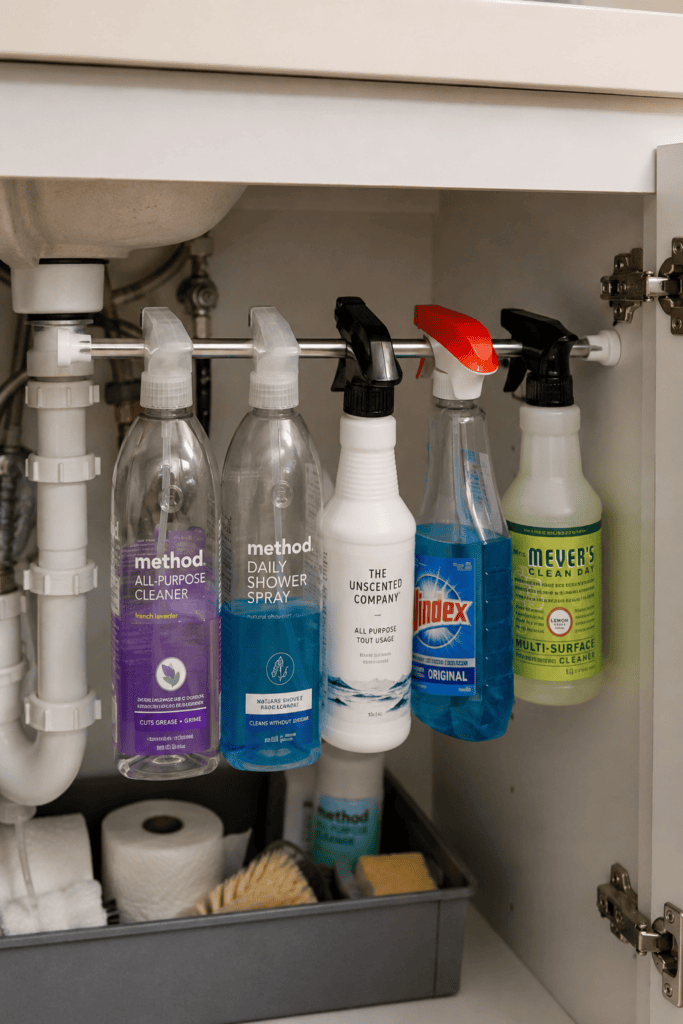
If a full drawer system is out of budget, a plain tension rod ($5–$10) wedged horizontally under the sink lets you hang spray bottles by their trigger handles, freeing up floor space in the cabinet for bins or boxes.
This works best for glass cleaner, all-purpose spray, and similar bottles with a trigger neck. It won’t work for pump-top bottles like lotion or soap, since those don’t have a handle to hang from.
7. Magnetic Strips for Metal Tools
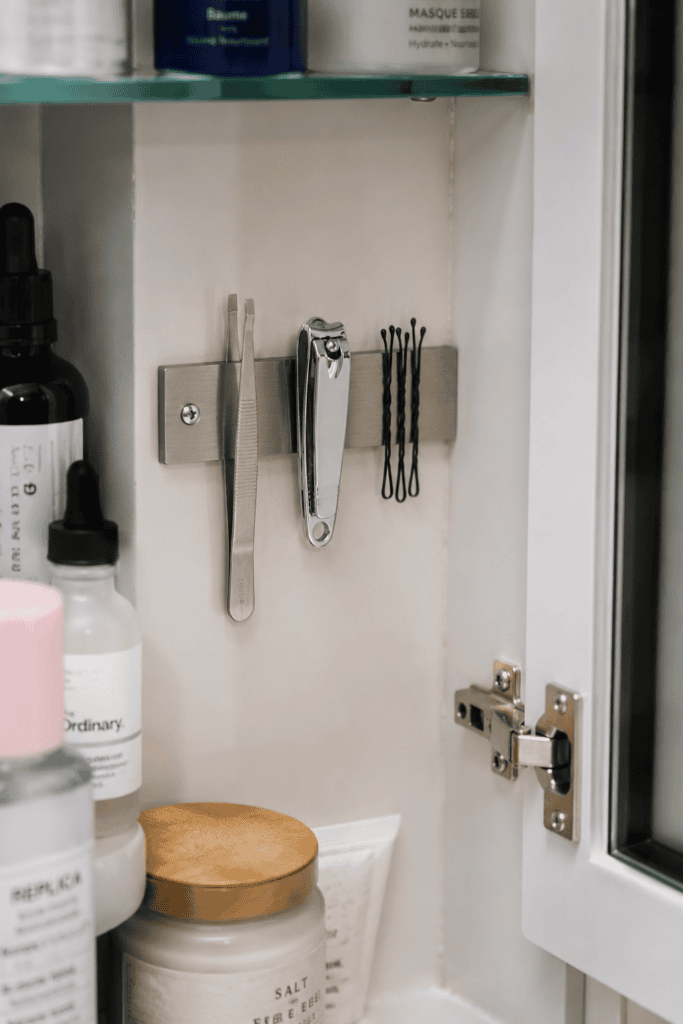
A magnetic strip mounted inside a cabinet door or medicine cabinet keeps small metal tools—tweezers, nail clippers, bobby pins, cuticle scissors—from disappearing into a drawer. Look for a strip rated for at least 5 pounds of pull force if you’re hanging anything heavier than tweezers.
Adhesive-backed magnetic strips work fine for lightweight tools, but for anything heavier, use one with mounting screws so it doesn’t peel off in humid conditions over time.
8. Rolling Storage Carts
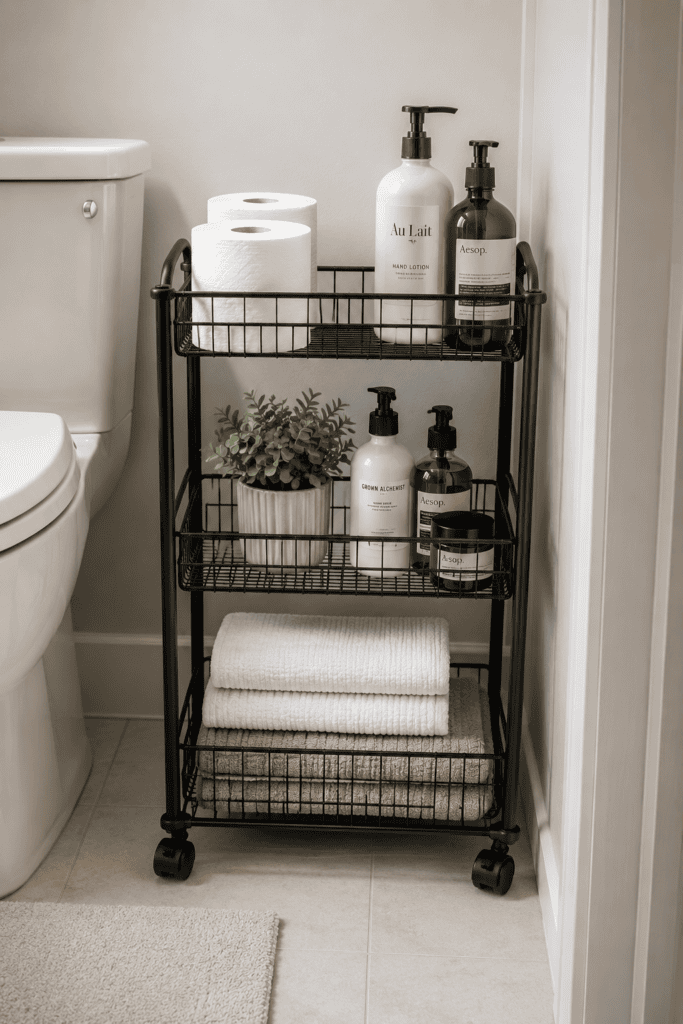
A rolling cart, usually 3-tier wire or metal, works as a mobile storage unit that can slide beside a toilet, into a corner, or under a sloped ceiling where fixed shelving won’t fit. Standard bathroom-sized carts run about 10–12 inches wide and 24–30 inches tall.
Why Carts Beat Fixed Shelving in Tight Spaces
Fixed shelving is permanent—once it’s installed, that’s your layout. A cart can be rearranged in seconds, which matters if your bathroom serves double duty (say, storage during the week and overflow space for guests). It’s also easy to wheel out entirely during a deep clean, which fixed shelving never lets you do.
9. Recessed Medicine Cabinets
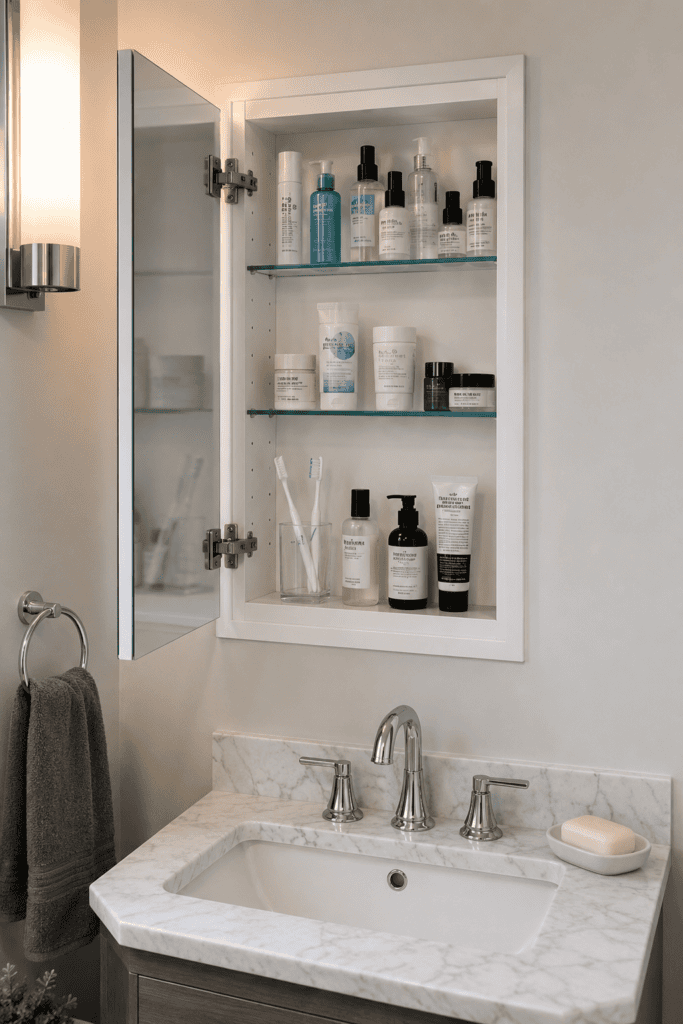
If you’re renovating or building new, a recessed medicine cabinet is worth the extra installation cost. Instead of mounting on the wall’s surface, it’s installed inside the wall cavity between studs, so it adds storage without protruding into the room.
This requires cutting into the wall (usually between 14–16 inches for standard stud spacing) and may need a licensed contractor if plumbing or electrical lines run through that section of wall. Recessed units typically cost $100–$300 more than surface-mount cabinets of the same size, but they make a small bathroom feel noticeably larger since there’s no cabinet edge to bump into.
10. Baskets and Bins for Open Shelving
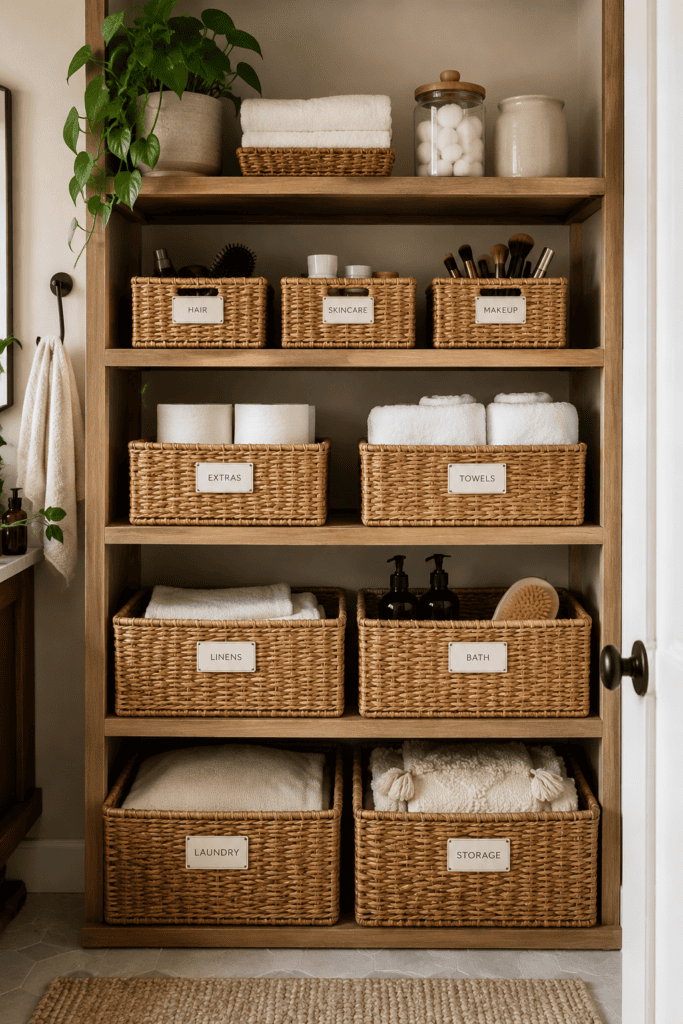
Open shelving looks clean in photos but turns messy fast without containment. Woven baskets or fabric bins group similar items together and hide visual clutter from loose bottles and tubes.
Sizing guide:
- Small baskets (6–8 inches): cotton balls, Q-tips, small toiletries
- Medium baskets (10–12 inches): rolled washcloths, extra soap
- Large baskets (14+ inches): towels, spare toilet paper
Label bins if you’re sharing the bathroom with roommates or kids—it cuts down on the “where did you put the—” conversations significantly.
11. Wall-Mounted Hair Tool Organizers
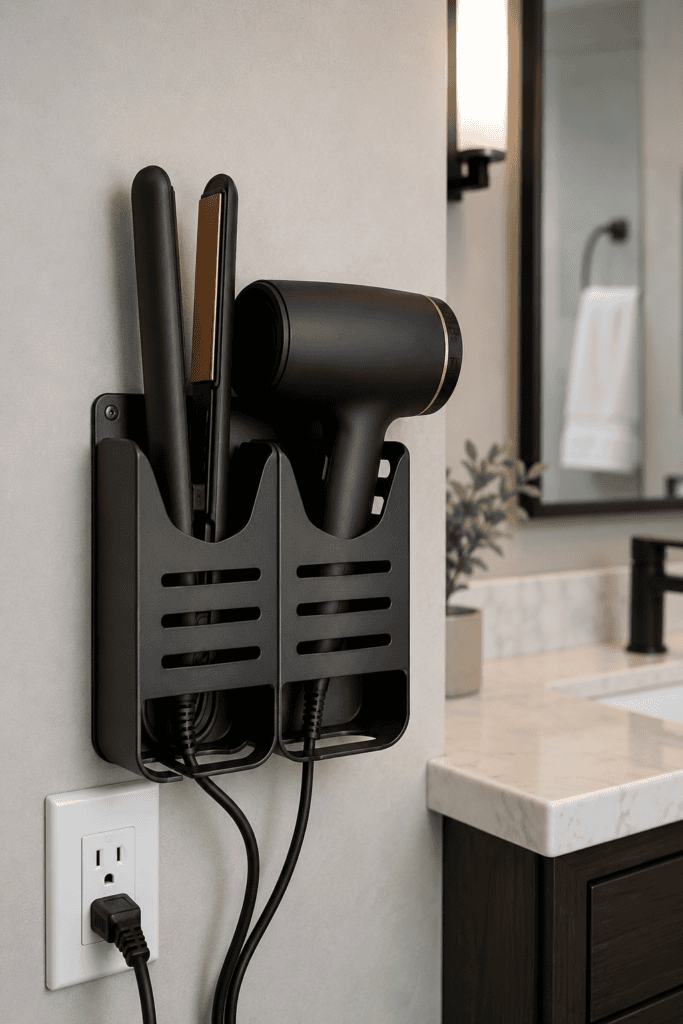
Flat irons and hair dryers are bulky and often still hot when you want to put them away. A wall-mounted hair tool organizer holds these upright, usually with a heat-resistant pouch rated to handle tools up to 400°F while they cool.
Mount these near an outlet so the cord reaches without stretching across the counter—cord strain is the most common reason these organizers pull loose from the wall over time.
12. Ladder Shelves for Vertical Storage
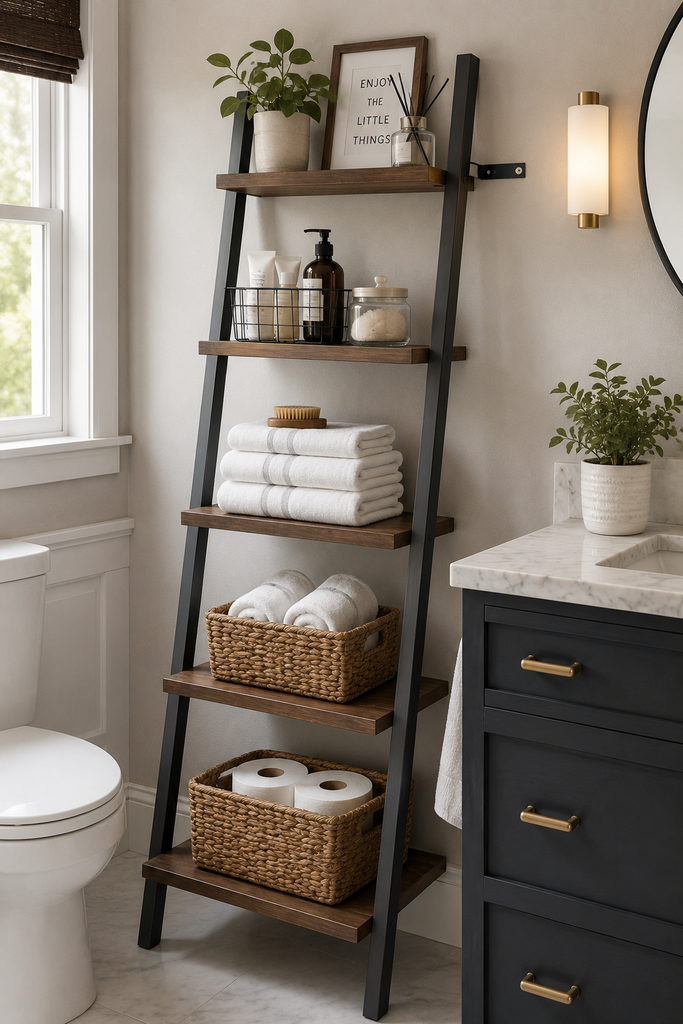
When floor space is scarce, a ladder shelf leans against the wall at an angle and takes up a footprint of roughly 20 x 20 inches while offering 4–5 tiers of storage. This works especially well in bathrooms too narrow for a freestanding shelving unit.
Look for a ladder shelf with a wall-anchor strap—the leaning design is stable on its own, but an anchor prevents tipping if the bathroom sees kids or pets.
13. Drawer Dividers for Small Items
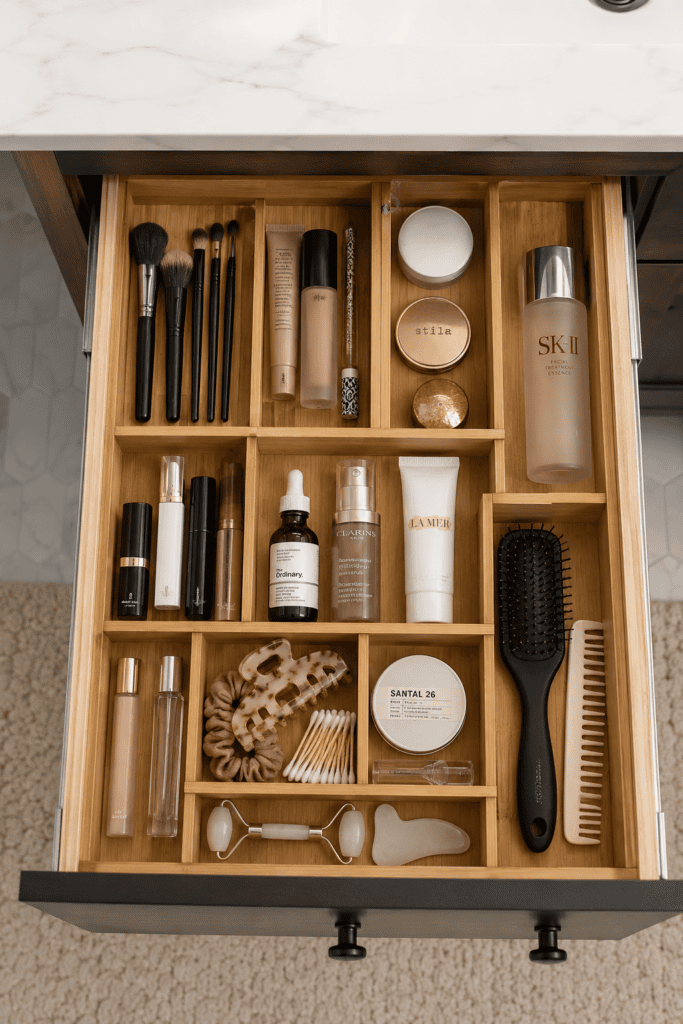
If you have drawer space but everything slides around every time you open it, drawer dividers solve this by creating fixed compartments for makeup, skincare, and grooming tools. Expandable plastic or bamboo dividers (around $10–$20 for a set) adjust to fit most standard bathroom drawer widths.
Measure your drawer’s interior depth before buying—many dividers are designed for 2–3 inch deep drawers and won’t sit flush in shallower ones.
14. Towel Ladders and Hooks
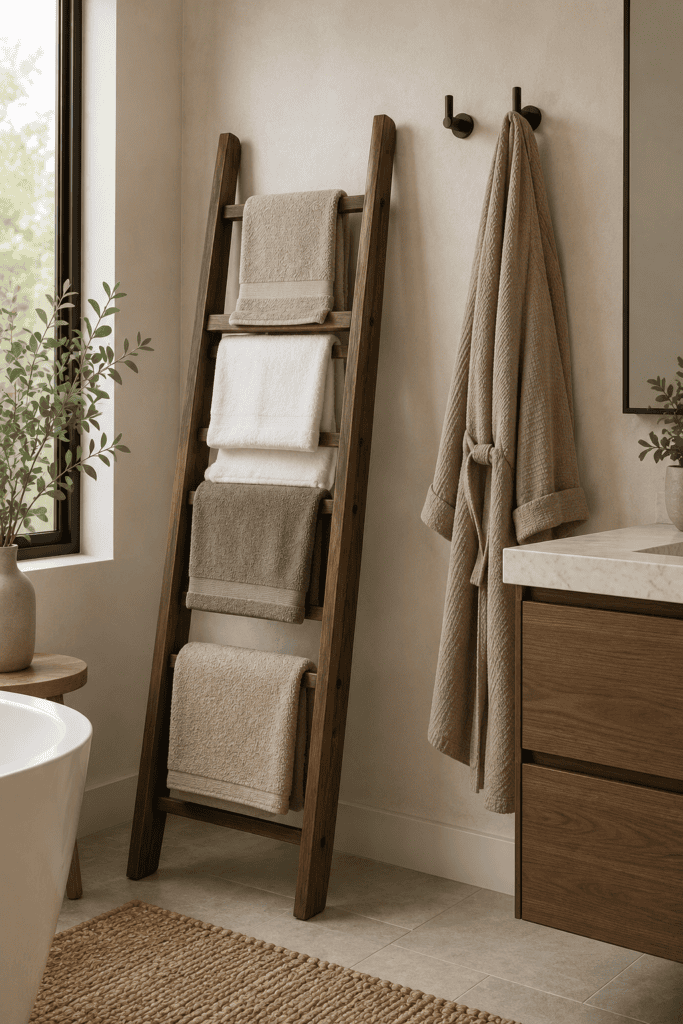
A towel ladder leans against the wall and holds multiple towels vertically, using a footprint of about 20 x 4 inches—far less wall space than a standard towel bar setup while holding more towels. Combine it with a few wall hooks near the shower for robes or extra towels.
Wood ladders look better long-term in humid bathrooms if sealed or treated; untreated wood can warp within a year in a bathroom with poor ventilation.
15. Multi-Tier Lazy Susans
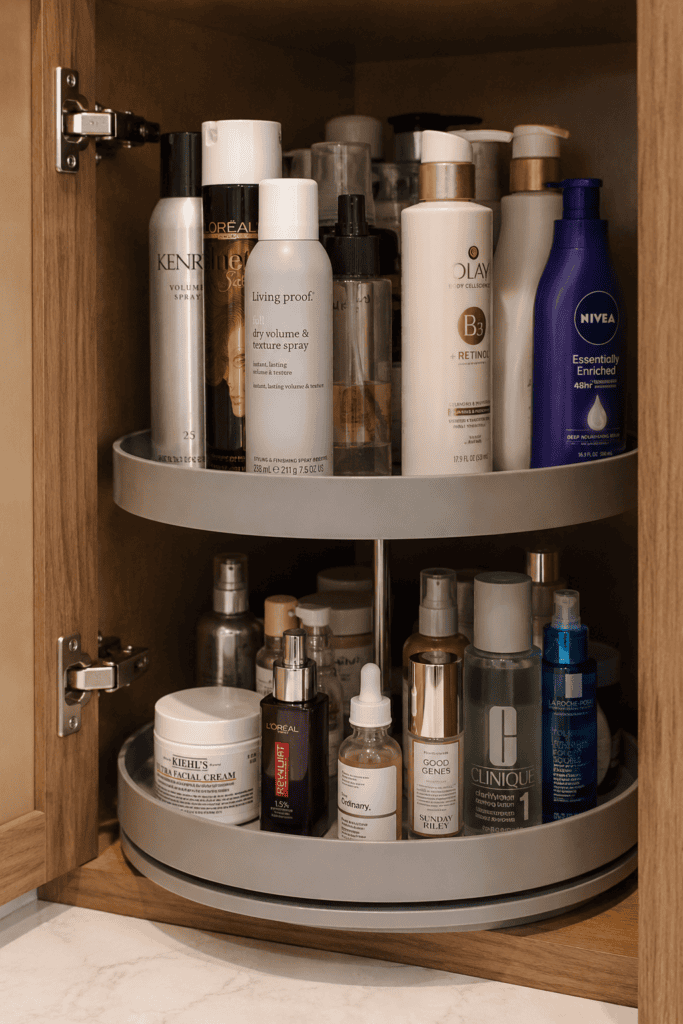
A lazy Susan (rotating tray) works just as well in a bathroom cabinet as it does in a kitchen pantry. Spin it to reach items in the back without unloading everything in front first. Two-tier lazy Susans (around 10–12 inches in diameter) fit most standard under-sink or vanity cabinets and typically cost $15–$25.
This is one of the cheapest upgrades on this list relative to how much daily friction it removes—no more digging through the cabinet to find one bottle buried in the back.
Putting It All Together
Small bathrooms don’t need more stuff—they need smarter systems for what you already own. Start with one or two ideas that solve your biggest daily frustration, whether that’s a cluttered counter, a chaotic under-sink cabinet, or a towel bar that’s never big enough.
A simple starting checklist:
- Identify your worst pain point (counter clutter, under-sink chaos, no towel space, etc.)
- Measure the relevant space before buying anything
- Pick 1–2 solutions from this list that match your budget and rental restrictions
- Install and use for two weeks before adding more—you’ll often find one good system solves more than you expected
A small bathroom can function just as well as a large one when the storage actually matches how you use the space.