
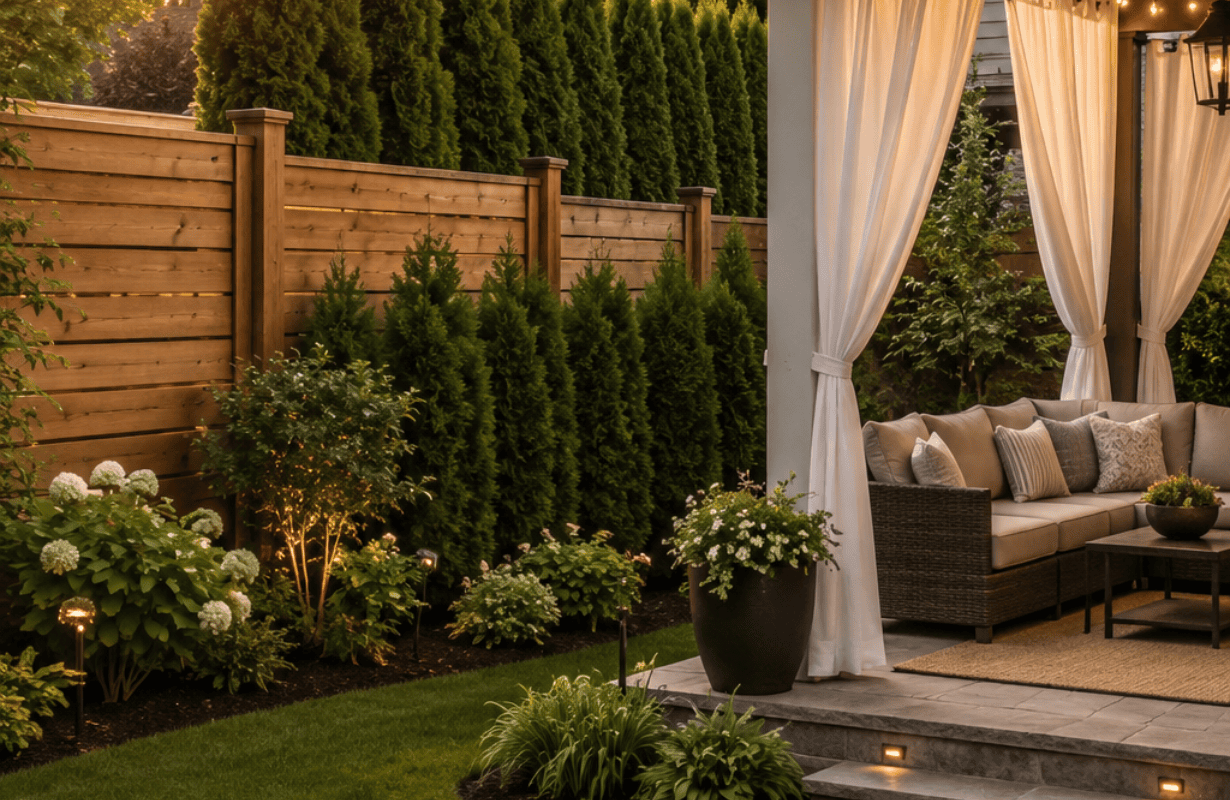
Nosy neighbors. Peeping joggers. That one guy across the street who “just happens” to look over every time you’re sunbathing. Sound familiar? I’ve been there, and honestly, it’s exhausting.
A few summers ago, I turned my backyard into a fishbowl-free zone, and it changed how I use my outdoor space completely. I stopped hiding indoors and started actually living out there. Below, I’m sharing every trick, hack, and plant I tested along the way—the good, the bad, and the “why didn’t I do this sooner.”
Grab a coffee (or a beer, no judgment here), and let’s get your yard back to being yours.
1. Plant a Living Privacy Fence
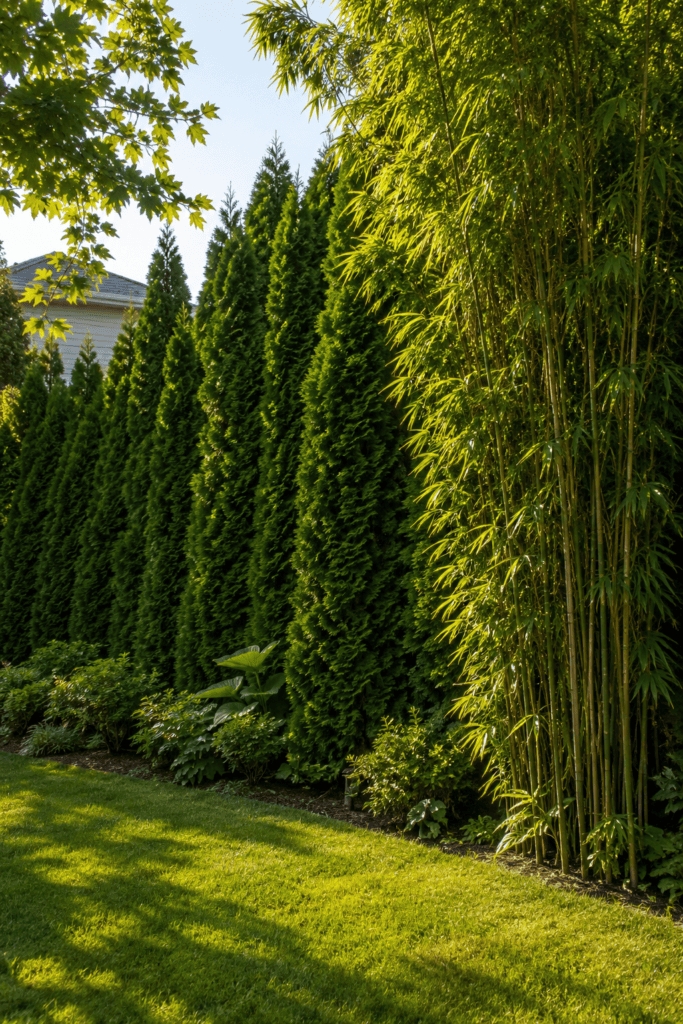
Nothing beats greenery when you want privacy that also looks intentional instead of defensive. Arborvitae, bamboo, and privet hedges grow tall and dense fast, blocking sightlines within a season or two.
I planted a row of arborvitae along my property line, and within two years, my neighbor’s second-story window view disappeared completely. Sure, it takes patience, but IMO nothing beats a living wall that also cleans your air and looks gorgeous in every season.
Best options for fast growth:
- Green Giant Arborvitae (grows up to 3 feet per year)
- Clumping bamboo (non-invasive, unlike the running kind)
- Leyland Cypress (great for larger properties)
2. Install a Classic Wood Privacy Fence
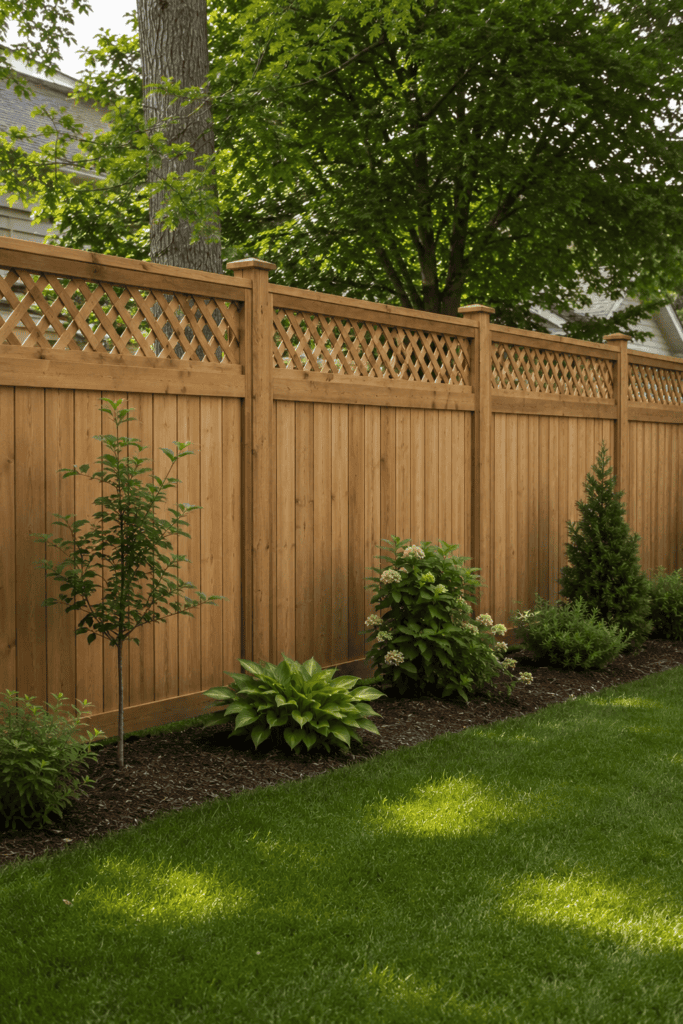
Sometimes you just need the tried-and-true solution. A solid wood fence, six to eight feet tall, blocks views instantly—no waiting for nature to catch up.
I’ll be honest, wood fences require upkeep. You’ll stain them, you’ll patch them, and eventually a board will warp just to spite you. But the instant privacy and classic curb appeal make it worth the maintenance headache for most homeowners.
Ever wondered why lattice-topped fences are so popular? They add height without looking like a prison wall, and they let a little breeze through so your yard doesn’t feel boxed in.
3. Try a Modern Metal or Composite Fence
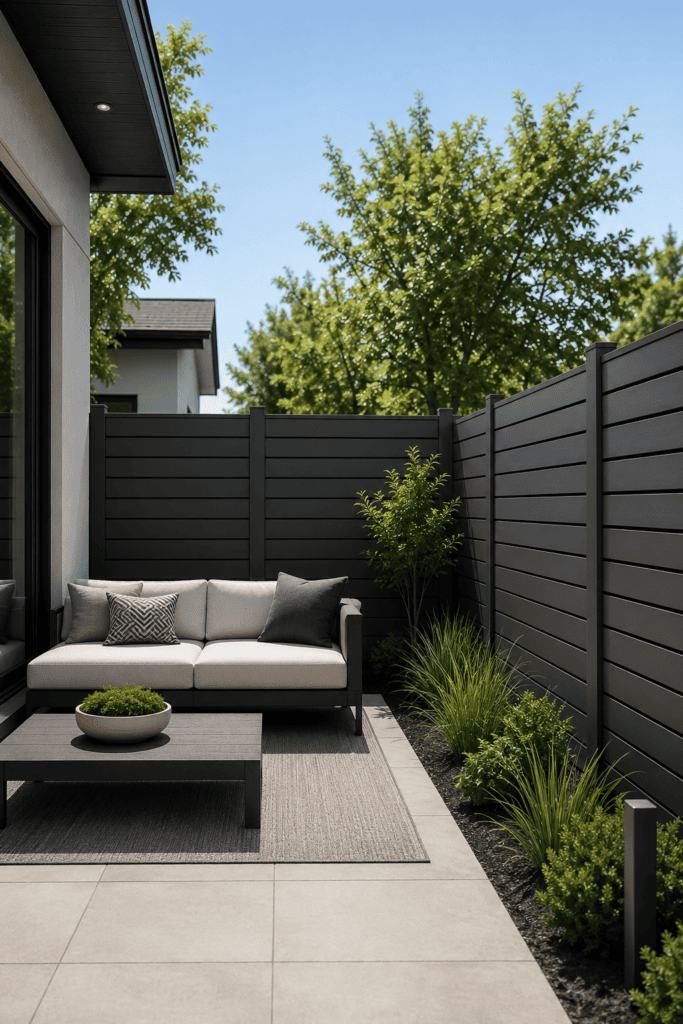
If wood maintenance sounds like a chore you’d rather skip, composite or aluminum fencing is worth a look. These materials resist rot, warping, and the never-ending cycle of restaining.
I switched a section of my fence to composite last year, and I haven’t touched it since. Zero upkeep, and it still looks sharp. The upfront cost stings a bit more than wood, but you’ll save money (and weekends) over time.
4. Build a Pergola with Curtains or Screens
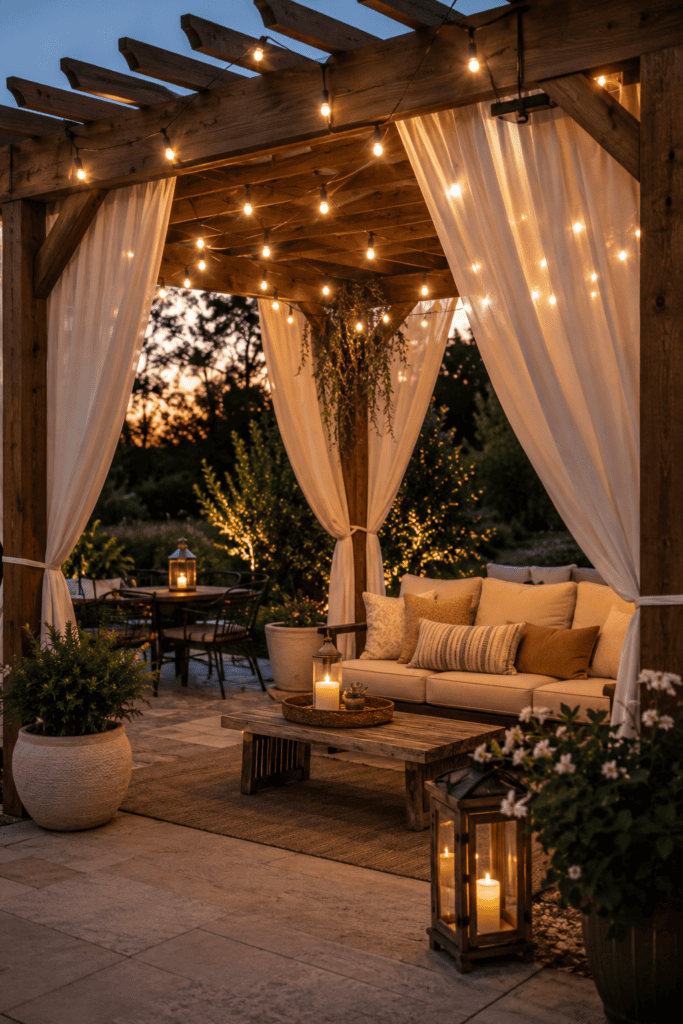
A pergola gives you shade, structure, and a frame for privacy add-ons like curtains, bamboo screens, or climbing vines. It’s basically an outdoor room without the drywall.
I added outdoor curtains to mine, and now I can close them off when I want privacy or leave them open for that breezy, resort-vibe look. Bonus: it doubles as a stylish focal point for the whole backyard.
Why Pergolas Work So Well
- They add vertical privacy without a full fence
- Curtains can be opened or closed depending on your mood
- Climbing plants like clematis or jasmine add natural coverage over time
5. Use Outdoor Privacy Screens
Sometimes you don’t need a permanent fix—you need something flexible. Freestanding privacy screens work great for patios, hot tubs, or that one awkward sightline from your neighbor’s kitchen window.
These come in wood, metal, or woven bamboo styles, and most are easy to move around. I keep one folded up in my shed and pull it out whenever I’m hosting a pool day and want to block the view from the side yard.
6. Go Vertical with Trellises and Climbing Vines
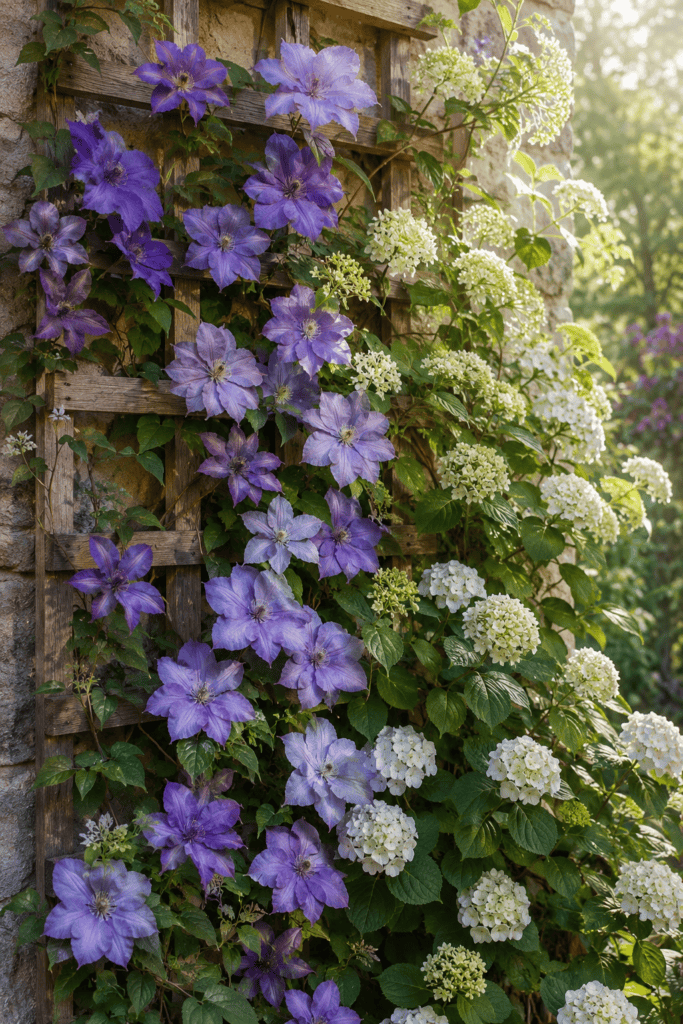
A trellis covered in climbing plants gives you privacy that looks like it grew there naturally (because, well, it did). Clematis, honeysuckle, and climbing hydrangea are all solid choices depending on your climate.
Full disclosure: this option takes time. You’re not getting instant coverage here, but the payoff is a living wall of flowers that smells incredible and attracts pollinators. Worth it? Absolutely.
7. Build a Raised Deck with Privacy Walls
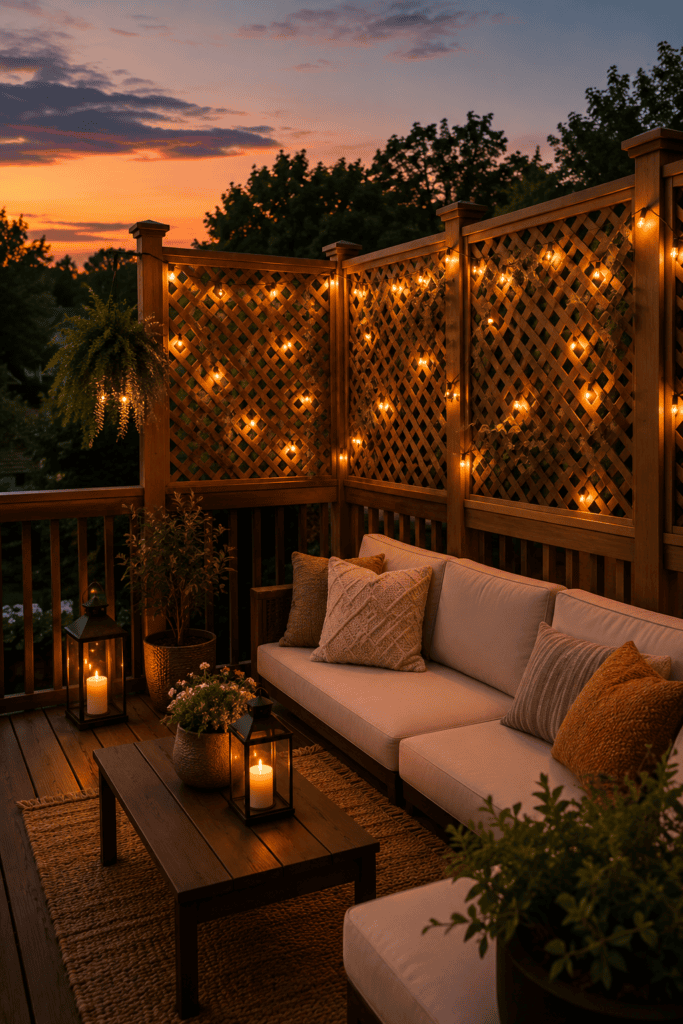
If your deck feels like a stage where the whole neighborhood watches you grill, it’s time for privacy walls or lattice panels along the edges. This works especially well for elevated decks where neighbors can see right onto your space.
I added a simple lattice wall with lights woven through it, and now my deck feels like its own little hideaway at night. It’s functional, but let’s be real, it also looks amazing in photos. 🙂
8. Use Outdoor Curtains for Flexible Coverage
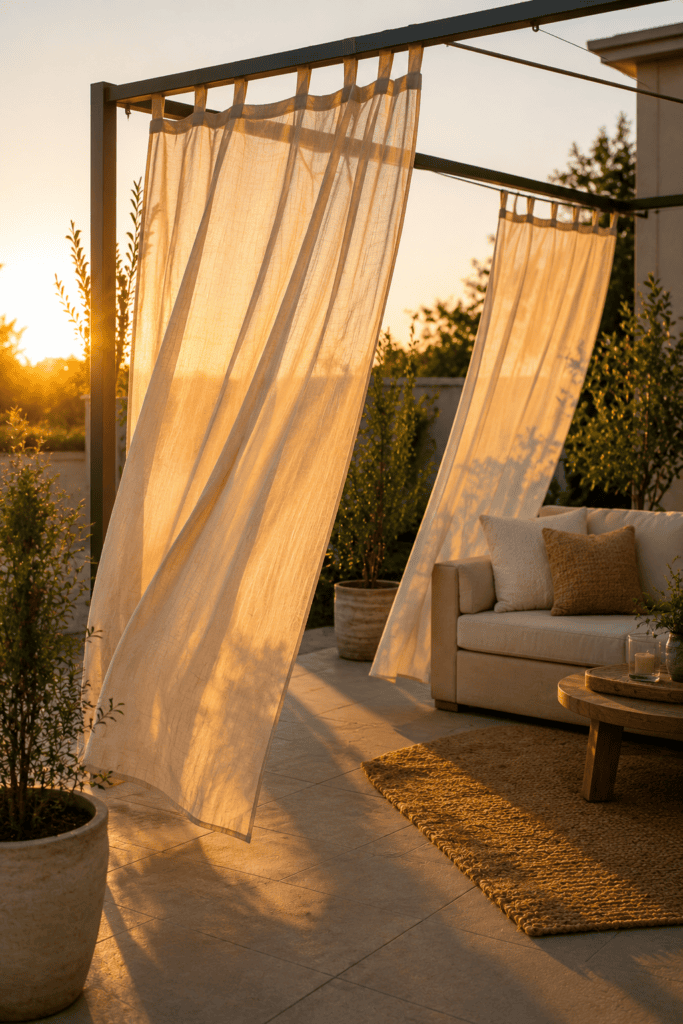
Outdoor curtains aren’t just for pergolas. Hang them from a simple frame, gazebo, or even a wall-mounted rod for instant, adjustable privacy anywhere in your yard.
The best part? You control exactly how much privacy you want at any given moment. Closed for a nap, open for a barbecue—it’s basically a mood ring for your backyard.
Popular fabric options:
- Weather-resistant polyester (dries fast, resists mildew)
- Canvas (durable but heavier and slower to dry)
- Sheer outdoor fabric (softens light while adding subtle privacy)
9. Build a Fire Pit Lounge with Privacy Screens
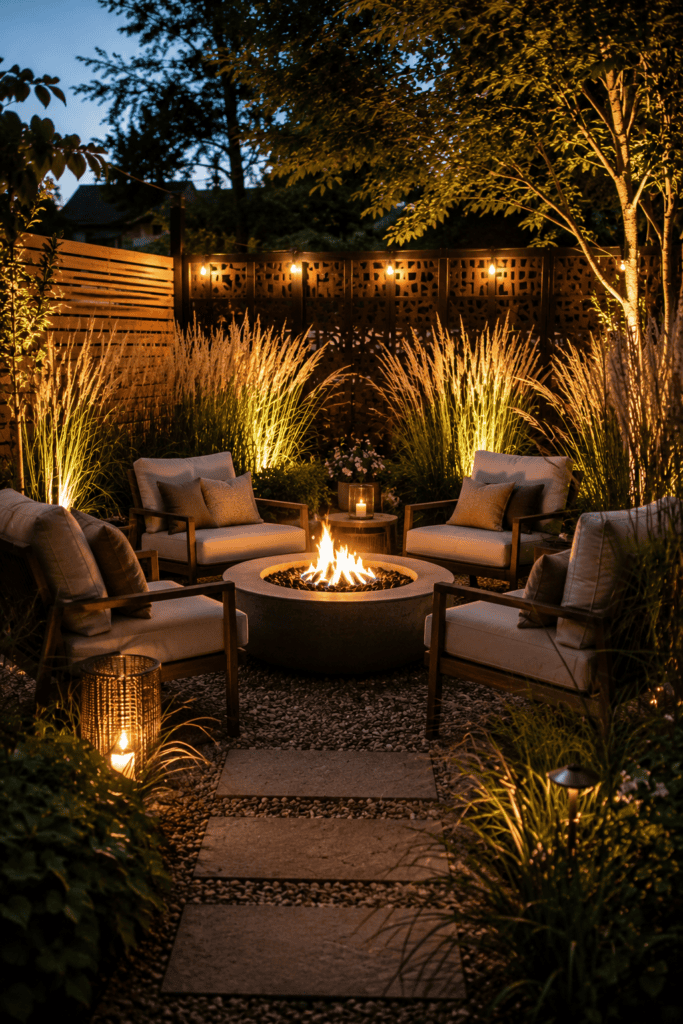
A fire pit area naturally becomes the social hub of your backyard, so it deserves its own privacy setup. Surround it with low privacy screens, tall planters, or a semi-circle hedge to create a cozy, enclosed feel.
I added tall grasses around mine, and it instantly felt like a secluded little retreat instead of an exposed corner of the yard. Ever notice how a fire pit just feels better when it’s tucked away? There’s a reason for that.
10. Add a Pergola-Covered Hot Tub Enclosure
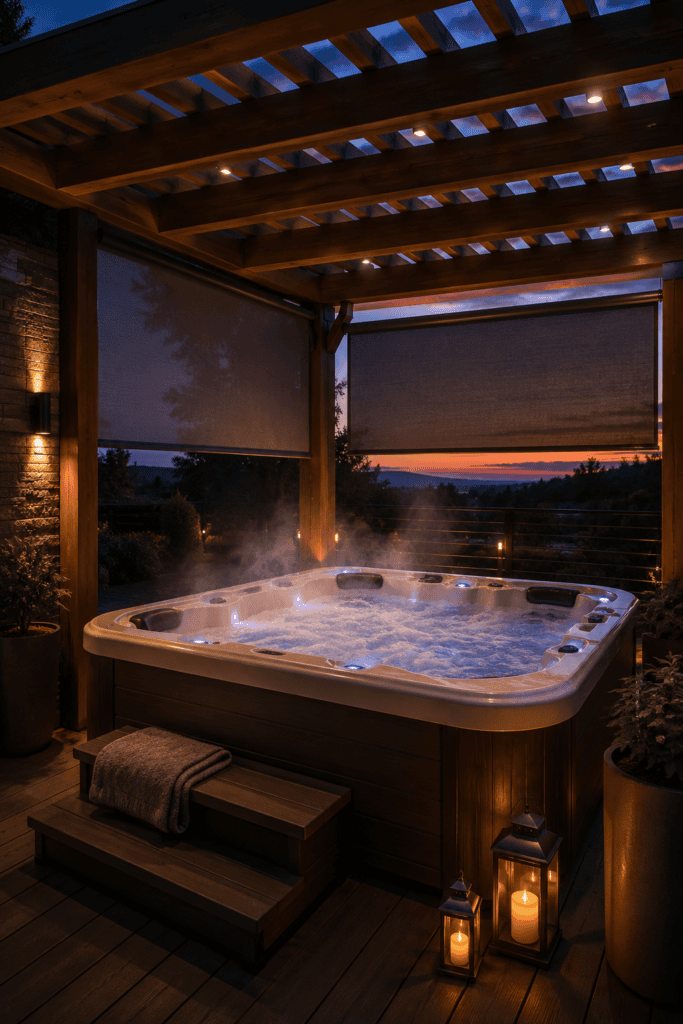
Hot tubs and privacy go together like peanut butter and jelly—you really can’t have one without wanting the other. A pergola with retractable screens or curtains creates a private soak without fully enclosing the space.
I added a simple screen setup around mine, and honestly, it turned “quick soak” into “why would I ever leave this yard.” Ten out of ten, would recommend to literally anyone with a hot tub and nosy neighbors.
11. Use Tall Planters as Portable Privacy Walls
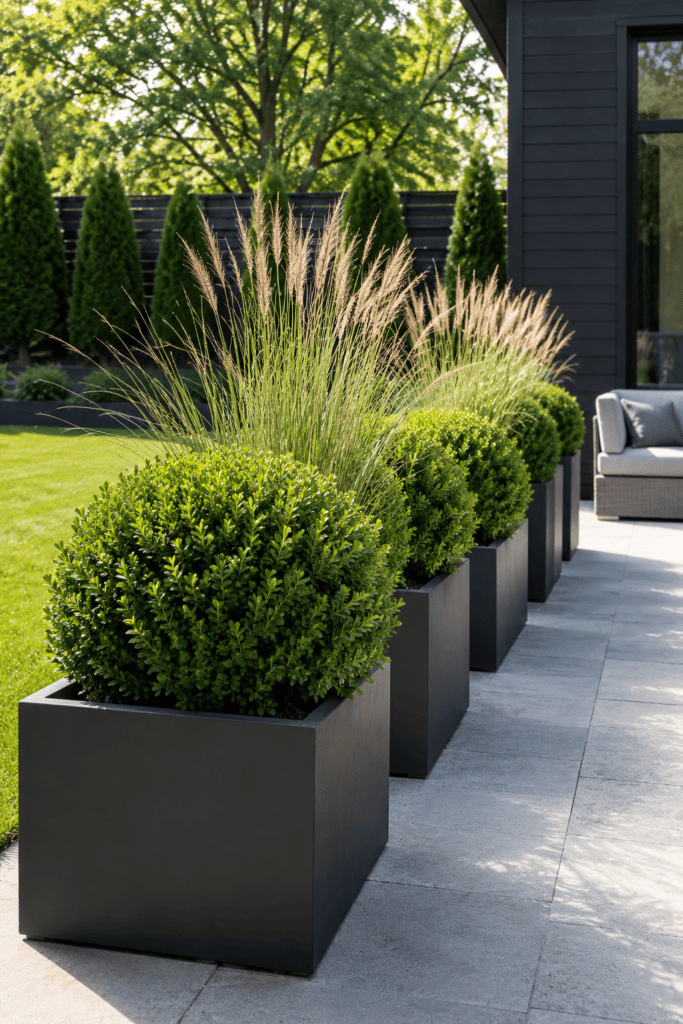
Don’t want to commit to permanent structures? Tall planters filled with dense shrubs or ornamental grasses work as a flexible, movable privacy solution.
I use large planters with boxwood and ornamental grass along my patio edge, and I can literally rearrange my privacy setup whenever I redesign the space. FYI, this is also a great renter-friendly option since nothing gets installed permanently.
Best plants for planter privacy:
- Boxwood (dense, evergreen, easy to shape)
- Ornamental grasses (fast-growing, adds movement and texture)
- Dwarf citrus trees (bonus points if you live somewhere warm)
12. Create a Shade Sail Privacy Zone
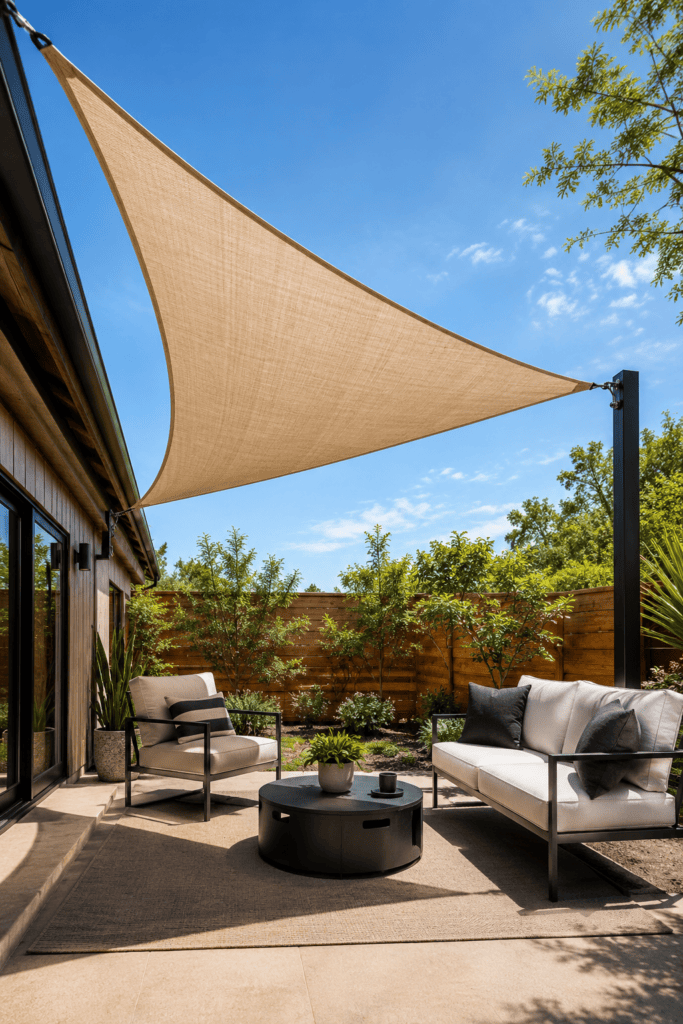
Shade sails aren’t just for blocking sun—angle them right, and they block sightlines from second-story windows too. This is a genuinely underrated privacy hack that most people overlook.
I installed one over my seating area, and it solved two problems at once: harsh afternoon sun and my neighbor’s balcony view. Why didn’t I think of this years ago? Honestly, no clue.
13. Install a Water Feature to Mask Conversations
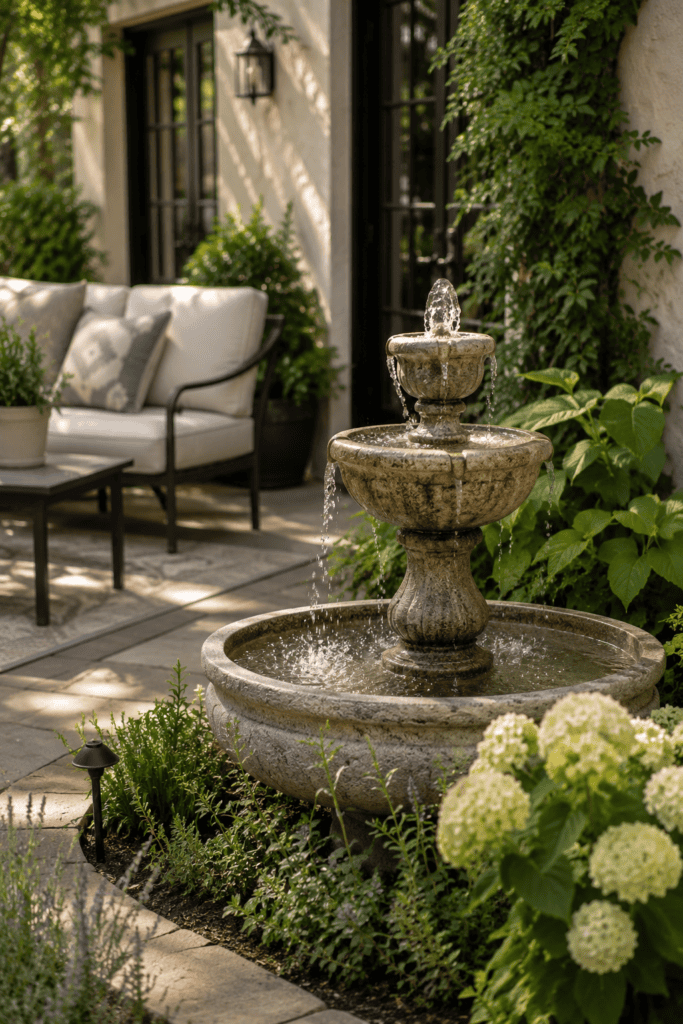
Privacy isn’t just visual—it’s auditory too. A fountain, small waterfall, or pond creates ambient noise that masks conversations from nearby yards.
I added a small tiered fountain near my patio, and it’s surprisingly effective at drowning out the “did you hear that?” factor when you’re chatting with friends. Plus, the sound is genuinely relaxing, so it’s a win-win.
Why Sound Privacy Matters
- Reduces the chance of neighbors overhearing conversations
- Masks street noise for a calmer outdoor experience
- Adds a spa-like ambiance to your backyard
14. Combine Layers for Maximum Privacy
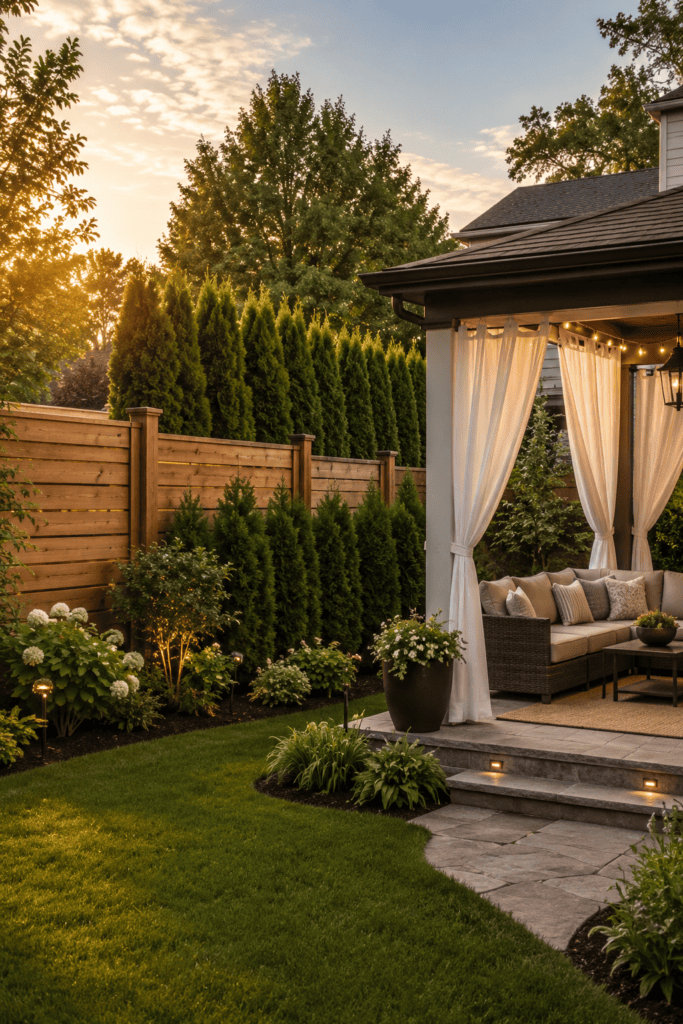
Here’s the truth nobody tells you: one privacy solution rarely does the whole job. The best backyards combine two or three methods—fencing plus plants, curtains plus a trellis, screens plus a water feature.
My own yard uses a wood fence as the base layer, arborvitae along the back for height, and outdoor curtains near the patio for flexible coverage. Layering gives you privacy from every angle, at every height, and in every season. It’s the difference between “decent privacy” and “wait, can anyone even see us back here?”
Final Thoughts
Your backyard should feel like an extension of your home, not a stage for the entire neighborhood. Whether you go all-natural with hedges and vines, add structure with a fence or pergola, or mix a few of these ideas together, the goal stays the same: create a space where you can actually relax.
So, which idea are you trying first? Personally, I’m still obsessed with my fire pit lounge setup, and I have a feeling you’ll find your own favorite once you start experimenting. Your neighbors might miss the view, but trust me, you won’t miss giving them one.