
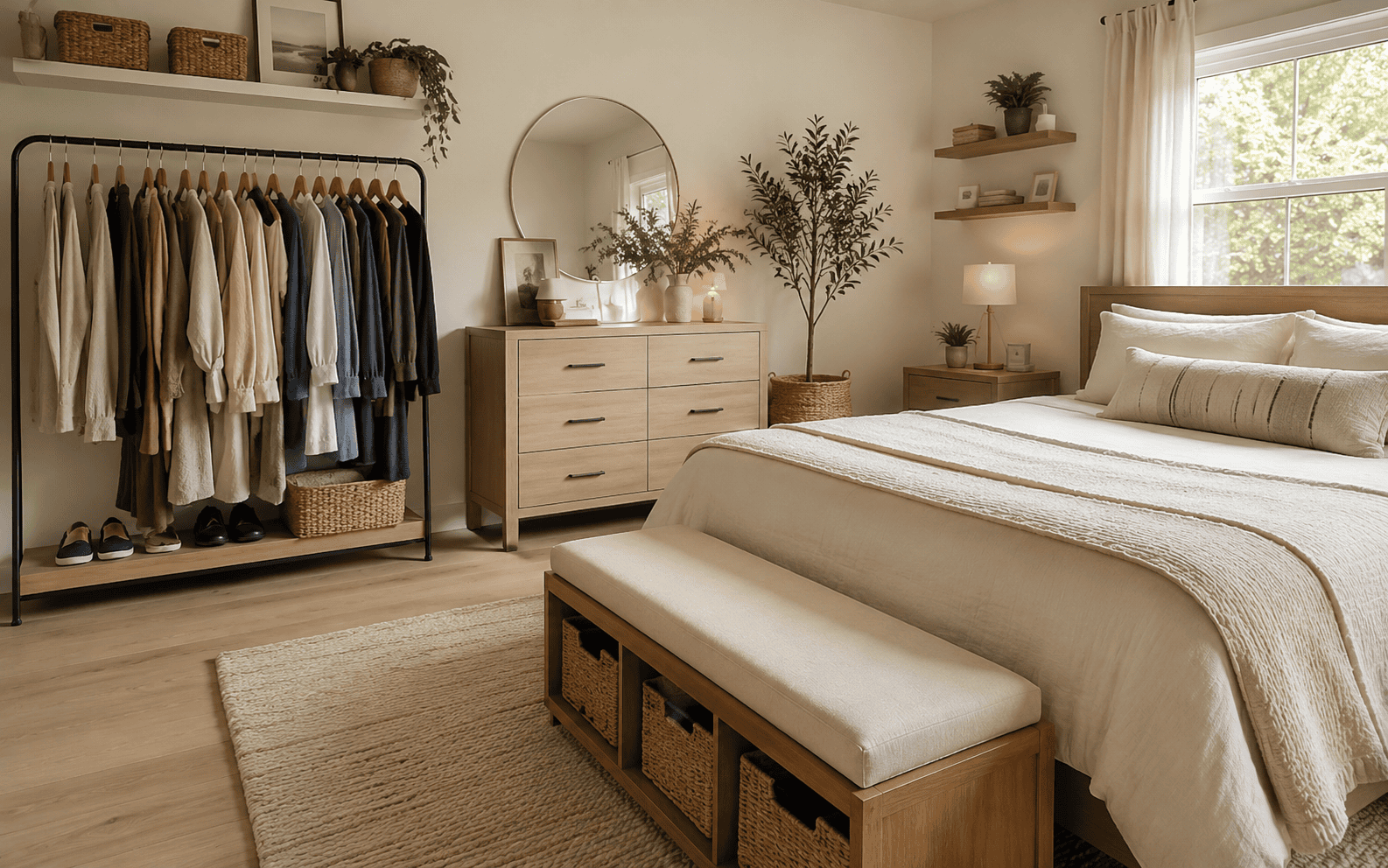
If you’re trying to figure out how to organize a bedroom with no closet, you’ve probably discovered that most organization advice assumes you already have one. Every article tells you to “hang this” or “store that in your closet,” which isn’t exactly helpful when your bedroom has four walls and nowhere to hang your clothes.
I’ve lived in bedrooms like this before, and honestly, they’re frustrating at first. Clothes end up on chairs, shoes migrate across the floor, and that one corner somehow becomes a permanent pile of things you “need to put away later.” It doesn’t necessarily mean you’re messy. The room simply wasn’t designed with enough built-in storage.
Here’s the thing: you don’t actually need a closet to have an organized bedroom. What you need is a better system.
Most people assume they need one giant wardrobe to replace the missing closet. Sometimes that’s the right answer, but more often it isn’t. What actually works is spreading your storage across the room in a way that feels intentional instead of trying to force everything into one oversized piece of furniture.
In this guide, I’ll walk through practical ways to organize a bedroom without a closet, explain why certain storage ideas work better than others, and share simple changes that make a surprisingly big difference in how your room looks and functions.
Why a Bedroom Without a Closet Feels So Difficult to Keep Organized
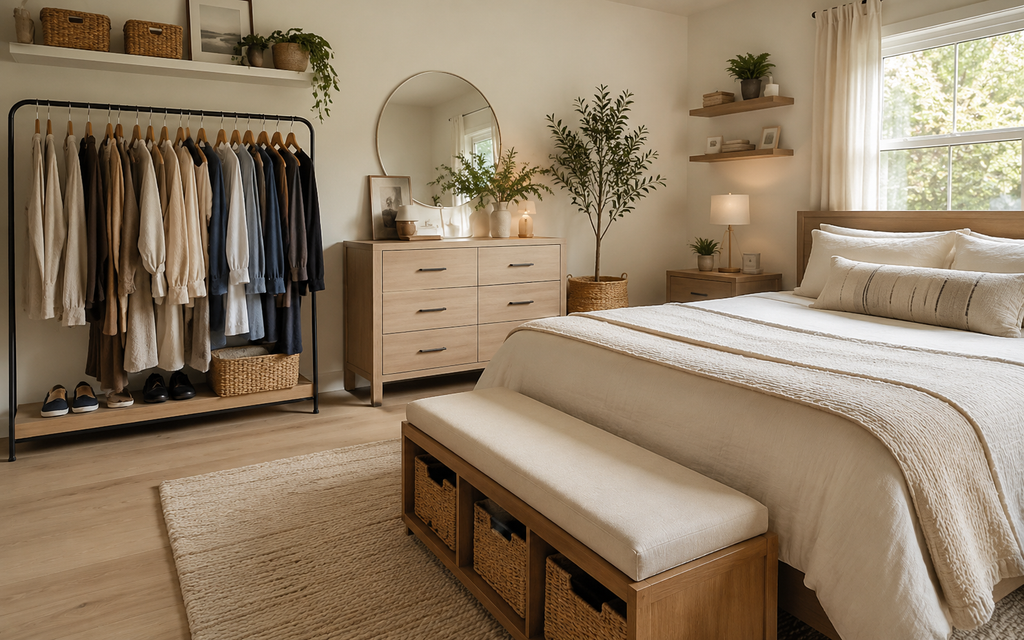
Before buying storage furniture, it helps to understand what makes these rooms so challenging.
A closet does two important jobs. The obvious one is storing clothes. The less obvious one is hiding visual clutter. Behind those doors are shirts, jackets, shoes, storage bins, extra blankets, laundry baskets, and all the little things that would otherwise be sitting out in the open.
When there’s no closet, every single storage decision becomes part of the room’s design. That’s why even a relatively tidy bedroom can still feel cluttered.
Most people think they have a storage problem when they actually have a visibility problem. If everything is constantly in sight, your brain interprets the room as busy even if it’s technically organized.
Understanding that difference changes the way you approach the entire space.
The Biggest Mistakes People Make
Buying Storage Before Decluttering
This is probably the most common mistake, and I’ve made it myself.
When storage feels limited, it’s tempting to buy organizers immediately. But adding more containers doesn’t solve the real issue if they’re simply filled with clothes you haven’t worn in years.
Before you purchase anything, pull everything out and go through it honestly. If you wouldn’t buy it again today, ask yourself why it’s still taking up valuable space. Bedrooms without closets reward people who keep only what they actually use.
You’ll usually discover that you need far less storage than you originally thought.
Trying to Replace a Closet With One Giant Wardrobe
At first glance, buying the largest wardrobe you can find sounds like the perfect solution.
Sometimes it is.
But in smaller bedrooms, an oversized wardrobe can dominate the entire room, making it feel darker and more cramped. It also creates one huge storage area where everything gets mixed together.
What actually works is spreading storage across several smaller pieces. A dresser, a storage bench, floating shelves, and under-bed containers often provide more usable storage while making the room feel balanced.
Instead of relying on one giant piece of furniture, you’re creating multiple storage zones that are easier to maintain.
Leaving Every Storage Solution Completely Open
Open shelving looks amazing online.
Real life is a little different.
Those beautiful photos usually show perfectly folded neutral sweaters and carefully styled baskets. They don’t show gym clothes, charging cables, mismatched socks, or yesterday’s laundry.
If you’re using open storage, give yourself permission to hide everyday clutter inside decorative baskets or fabric bins. You still get the convenience of easy access without making the room feel visually overwhelming.
Think in Storage Zones Instead of One Closet
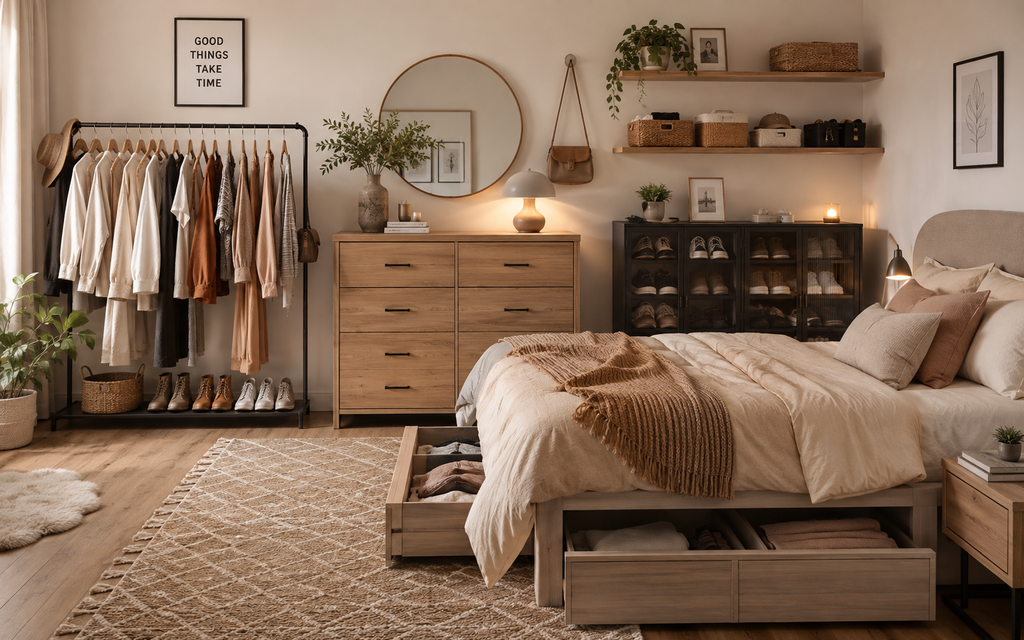
One idea completely changed the way I organize small bedrooms.
Instead of asking, “Where will my closet go?” ask yourself, “Where should each category of my belongings live?”
That small shift makes organizing much easier because every item has a logical destination.
For example, your everyday clothing should live where it’s easiest to reach because you’ll use it constantly. Seasonal clothes, on the other hand, don’t need premium storage space. They can easily be tucked under the bed or placed on higher shelves until the weather changes.
Shoes deserve their own dedicated area rather than being scattered throughout the room. Accessories like belts, scarves, hats, and handbags also benefit from staying together instead of disappearing into random drawers.
When every category has a home, putting things away becomes almost automatic.
Choose Furniture That Does More Than One Job
When space is limited, every piece of furniture should solve more than one problem.
This is one of those principles that interior designers use all the time because it makes smaller rooms feel more functional without making them feel crowded.
A storage bed is probably the best example. Instead of wasting the large empty space underneath your mattress, you gain hidden storage for bulky bedding, winter clothes, luggage, or extra towels. Everything stays out of sight while remaining easy to access.
The same idea applies to benches placed at the foot of the bed. They provide seating while secretly storing blankets, seasonal clothing, or extra pillows.
Even something as simple as replacing a traditional nightstand with a narrow chest of drawers can dramatically increase storage without taking up additional floor space.
Furniture that serves two purposes is almost always a better investment than furniture with only one job.
Use Your Walls Instead of Your Floor
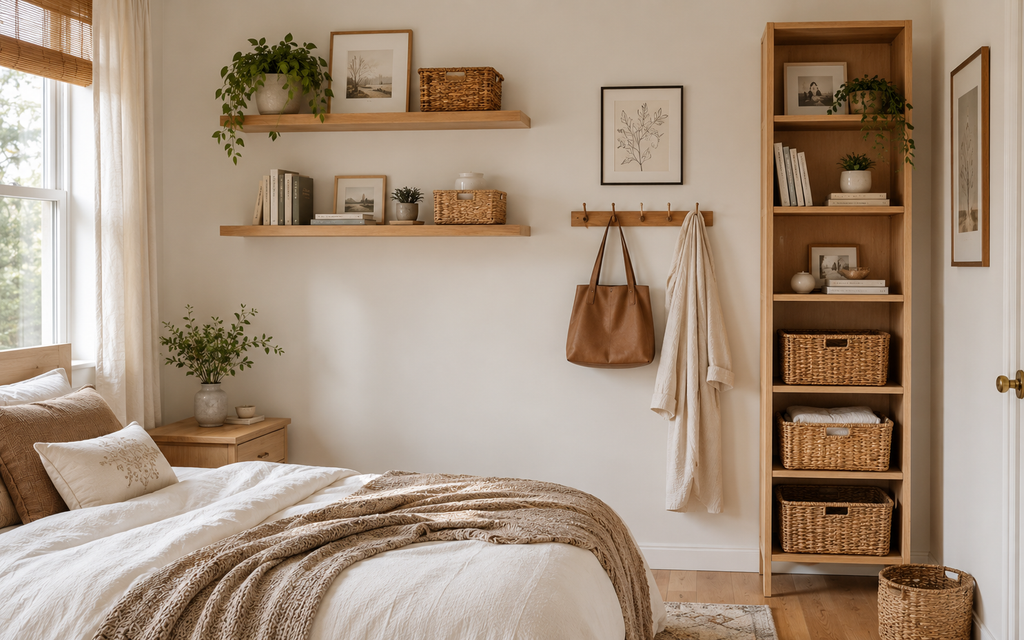
One of the biggest mistakes people make in small bedrooms is focusing only on floor space.
Walls are storage too.
Floating shelves above a dresser, beside the bed, or above a desk create room for books, baskets, plants, and decorative accessories without making the bedroom feel crowded.
Wall hooks are another underrated solution. Used intentionally, they provide a convenient place for tomorrow’s outfit, a favorite handbag, or a robe without turning into a dumping ground.
Tall bookcases can also become surprisingly effective clothing storage when paired with matching baskets. Instead of looking like office furniture, they become custom storage that blends into the room’s design.
Using vertical space keeps the floor more open, which naturally makes the bedroom feel larger.
Don’t Be Afraid of an Open Clothing Rack
Open clothing racks get mixed reviews, but I actually think they’re one of the best solutions when they’re used correctly.
The mistake people make is trying to hang everything they own.
That’s when the room starts looking like a retail clearance rack.
Instead, treat the rack like a boutique display. Keep only your current-season clothing there, use matching hangers, leave a little space between garments, and organize similar colors together.
The result feels intentional rather than cluttered.
Everything else can live inside drawers or hidden storage.
Make Better Use of the Space Under Your Bed
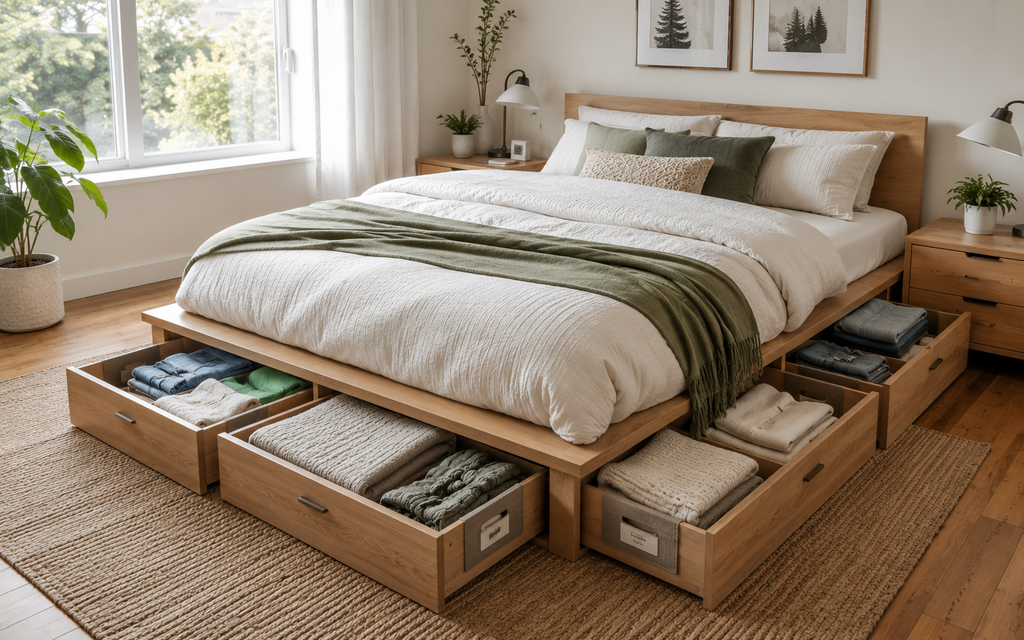
The area underneath your bed is often the largest unused storage space in the entire bedroom.
Instead of sliding random boxes underneath and forgetting about them, think of this space as your seasonal storage area.
Winter coats during summer, extra bedding, holiday decorations, luggage, and clothes you don’t currently need all fit perfectly here.
Storage containers with wheels or handles make the space much easier to use, which means you’re more likely to keep it organized over time.
The less frequently you need something, the better candidate it is for under-bed storage.
Create a Daily Organization Routine That Actually Sticks
Here’s something I’ve noticed.
People often spend an entire weekend organizing their bedroom but never think about how they’ll maintain it afterward.
That’s usually why the room slowly returns to its old state.
A good organization system shouldn’t require a lot of effort to keep tidy.
If putting something away takes more than a few seconds, you’ll eventually stop doing it.
That’s why storage zones matter so much. When clothes always return to the same drawer, bags always hang on the same hook, and shoes always go back to the same shelf, cleaning your room becomes a five-minute habit instead of a two-hour project.
Simple systems are almost always the ones that last.
Final Thoughts
Learning how to organize a bedroom with no closet isn’t about finding one magical storage product. It’s about making the room work differently. Once you stop thinking of a closet as the only solution, you’ll start noticing storage opportunities everywhere, from under the bed and on the walls to multifunctional furniture that quietly does double duty.
Start by decluttering, then build a few dedicated storage zones that fit your daily routine. Add furniture that works harder, use vertical space wisely, and don’t be afraid to display clothing if it’s done thoughtfully. Before long, your bedroom won’t feel like it’s missing a closet at all. Instead, it’ll feel organized, functional, and designed around the way you actually live.