
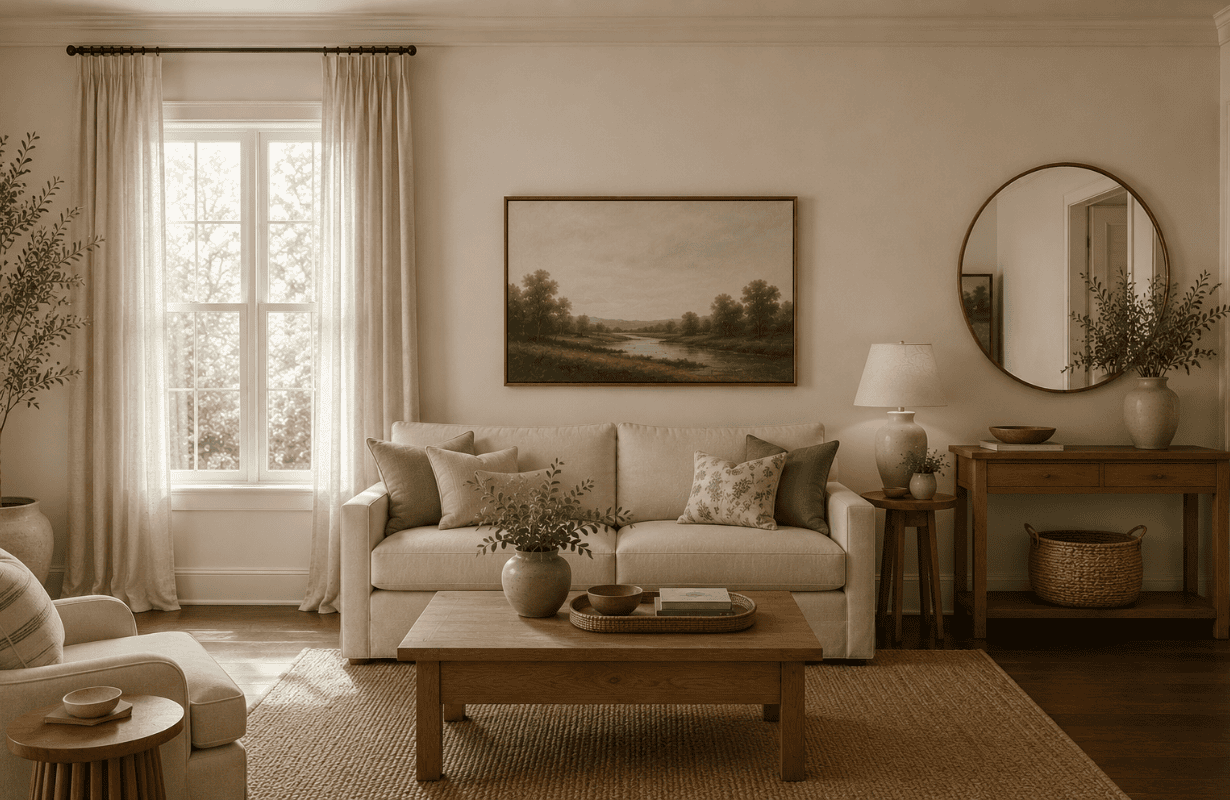
You can have beautiful curtains, a great mirror, and artwork you genuinely love—and still feel like something is slightly off in the room. A lot of the time, the problem isn’t what you chose. It’s where you hung it.
I’ve seen curtains installed directly above window trim that make an eight-foot ceiling suddenly feel much lower. Mirrors get hung so high that you have to practically stretch to use them. And wall art? That’s probably the biggest offender. People tend to hang it wherever the empty wall seems to be rather than where it visually connects to the furniture.
Here’s the thing: getting the height right can make surprisingly inexpensive decor look much more intentional.
If you’re wondering how high to hang curtains, mirrors and wall art, you don’t need complicated designer formulas. You need a few reliable starting measurements—and, more importantly, an understanding of when those measurements should change.
Why Hanging Height Makes Such a Big Difference
Your eye naturally looks for relationships between objects. A painting above a sofa should feel connected to the sofa. Curtains should visually belong to the window while helping emphasize the height of the room.
When those relationships are wrong, you notice the empty gaps.
Most people get this wrong because they treat every wall item independently. They center artwork on the wall, center a mirror between the ceiling and furniture, or place a curtain rod directly above the window frame.
What actually works is designing around visual groups.
Think of the sofa and artwork as one composition. Treat the vanity and mirror as another. Consider the window, curtains, and surrounding wall together.
That simple shift makes the measurements below much easier to understand.
How High Should You Hang Curtains?
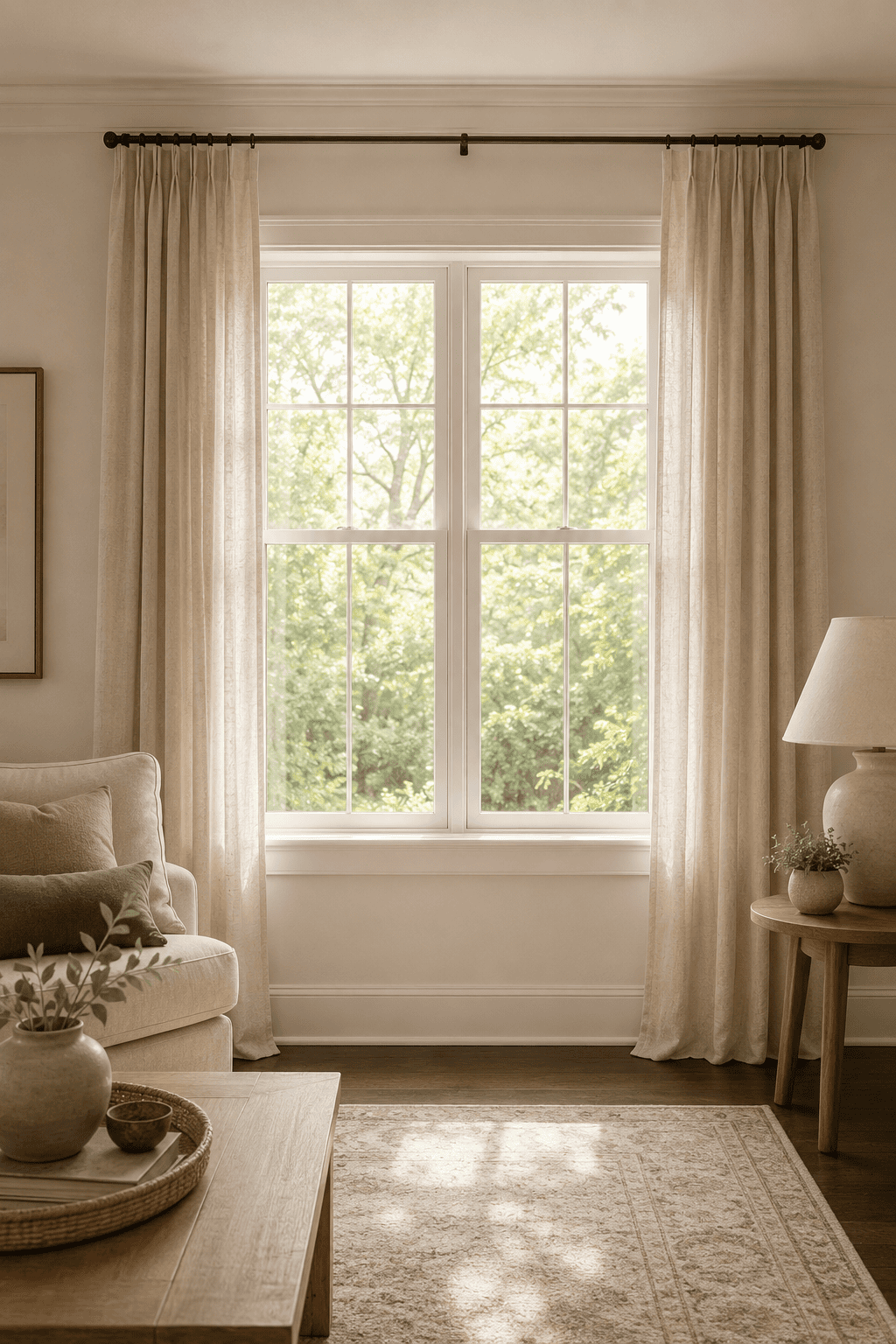
Start Above the Window Frame
For a standard room, a good starting point is installing the curtain rod about 4 to 6 inches above the top of the window frame.
If there’s enough wall space, you can go higher. Hanging the rod roughly halfway between the window trim and ceiling often creates a taller, more finished-looking room.
I generally prefer going slightly higher rather than lower.
The mistake I’d avoid is attaching the rod just an inch above the trim unless architectural details leave you no other option. It visually compresses the window.
Don’t Forget Curtain Width
Height gets all the attention, but rod width matters almost as much.
Extend your curtain rod approximately 6 to 12 inches beyond each side of the window, when wall space allows. This gives the panels somewhere to sit when they’re open instead of covering valuable glass.
The result is a window that feels larger and lets in more daylight.
For curtain length, floor-length panels should usually just skim the floor or hover roughly half an inch above it. Curtains ending several inches above the floor often look accidentally short.
How High Should You Hang Wall Art?
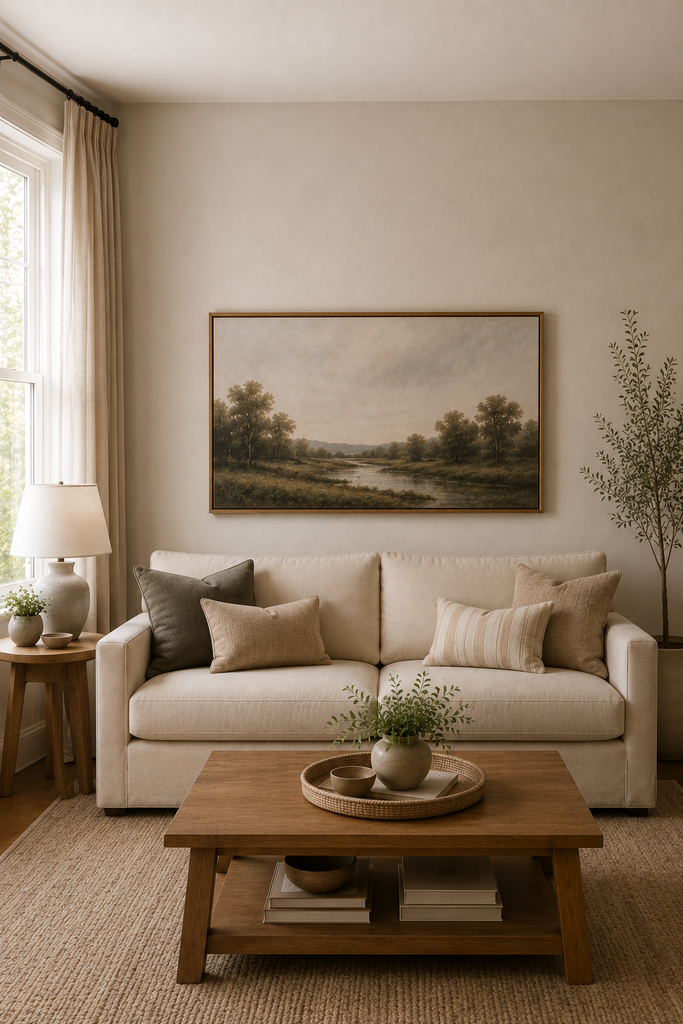
Use Eye Level as Your Starting Point
For artwork hanging on an open wall, aim for the center of the artwork to sit around 57 to 60 inches from the floor.
Notice that the measurement applies to the center—not the top or bottom of the frame.
This creates a comfortable viewing height for most rooms and prevents that common “floating near the ceiling” look.
But this rule changes when furniture enters the picture.
Above Furniture, Measure From the Furniture
When hanging artwork over a sofa, console, dresser, or headboard, leave approximately 6 to 10 inches between the furniture and the bottom of the artwork.
This is one of those situations where blindly following the 57-inch rule can actually make things worse.
Your priority is making the art feel connected to the furniture underneath it.
For example, if you have a low sofa and an eight-foot ceiling, hanging a painting according to wall center alone might leave a huge awkward gap above the sofa. Lowering the artwork creates a much stronger composition.
Also consider scale. Artwork above a sofa generally looks balanced when it occupies roughly two-thirds of the sofa’s width. One tiny frame centered over a large sectional rarely works.
How High Should You Hang Mirrors?
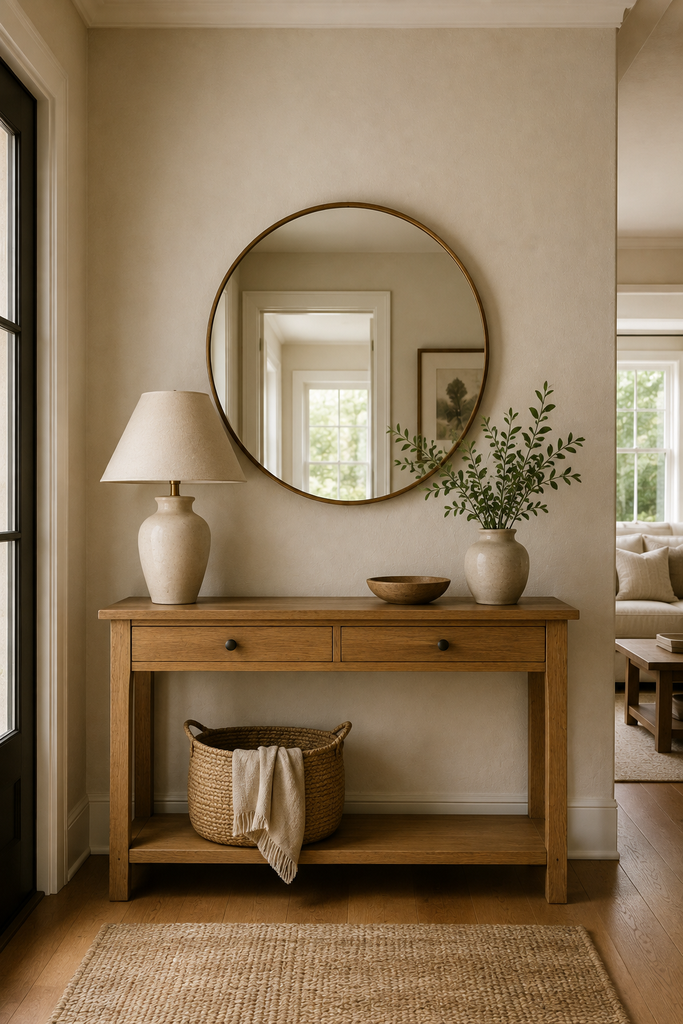
Mirror height depends heavily on what the mirror needs to do.
Mirrors Above Vanities and Consoles
For a mirror above furniture, start with approximately 5 to 10 inches of space between the furniture surface and the bottom of the mirror.
Then check whether the mirror is actually usable.
That second part matters.
A beautiful bathroom mirror hung according to a decorative formula isn’t helpful if shorter members of the household can’t comfortably see themselves.
Over a bathroom vanity, consider the faucet, backsplash, lighting, and users together rather than relying on one universal measurement.
Full-Length Mirrors Need a Different Approach
Full-length mirrors should prioritize function.
You generally don’t need to hang them high. Position the mirror so you can comfortably see your full reflection from a normal standing distance.
Leaning mirrors can work beautifully in bedrooms and dressing areas, but make sure large mirrors are appropriately secured—especially in homes with children or pets.
A Simple Step-by-Step Method Before Making Holes
Step 1: Measure the Furniture First
If you’re hanging something above furniture, measure the furniture before touching the wall.
Find its width, height, and center point.
This establishes the visual area your artwork or mirror needs to relate to.
Step 2: Mark the Proposed Height
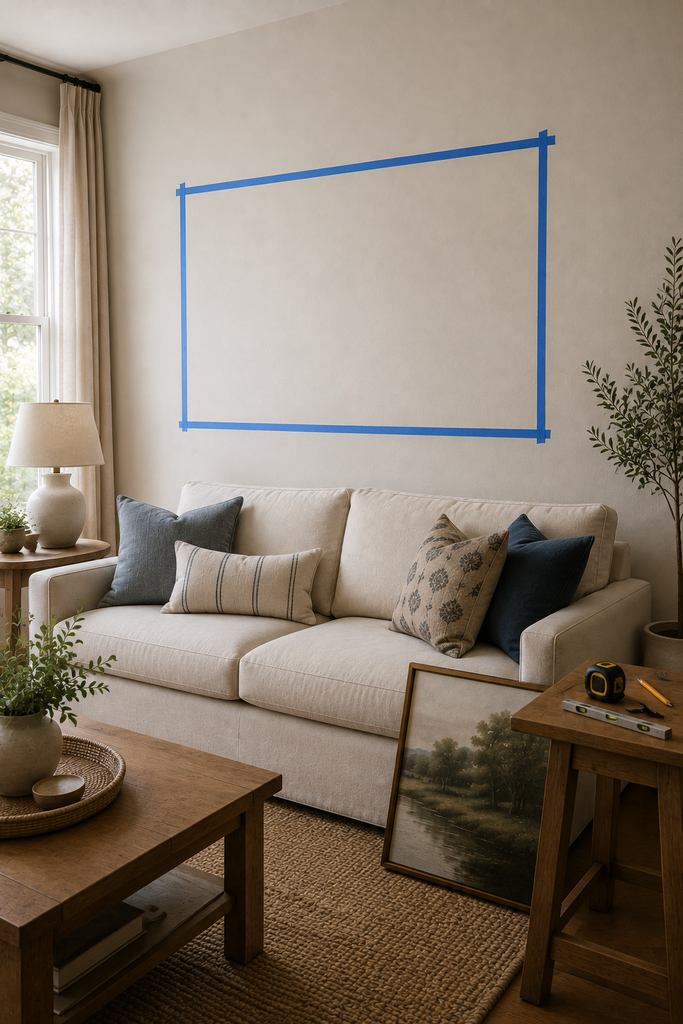
Use painter’s tape to mark the outer dimensions of the artwork, mirror, or curtain placement.
This takes a few minutes and can save you from patching unnecessary holes later.
Stand across the room and look at it.
You’ll often spot height problems immediately.
Step 3: Check the Whole Room
Don’t judge placement while standing twelve inches from the wall.
Walk to the doorway. Sit on the sofa. Look from the hallway.
A frame that seems perfectly positioned while you’re installing it can suddenly look too high when viewed from your normal seating position.
Step 4: Adjust Before Drilling
Treat standard measurements as starting points rather than laws.
If 57 inches puts your artwork awkwardly close to a tall piece of furniture, adjust it. If hanging curtains six inches above the window interferes with crown molding, find the visually cleanest position available.
The room gets the final vote.
Common Hanging Mistakes That Make Rooms Feel Off
The biggest mistake is hanging everything too high. People naturally seem to creep upward when installing wall decor.
Another is centering artwork on the wall instead of the furniture below it. If your sofa sits slightly off-center because of a doorway, the artwork should usually align with the sofa—not the entire wall.
Curtains that are too narrow are another giveaway. Even perfectly positioned rods won’t help much if closed panels barely cover the window.
And finally, don’t ignore groups of artwork.
For a gallery wall, treat the entire collection as one large piece of art. Keep gaps between frames relatively consistent—roughly 2 to 4 inches is a useful starting point—and position the center of the overall arrangement near eye level.
The Measurements Worth Remembering
You really don’t need twenty different decorating rules.
For curtains, start around 4 to 6 inches above the window and extend the rod roughly 6 to 12 inches beyond each side when possible. For standalone artwork, place the center around 57 to 60 inches from the floor. Above furniture, keep artwork roughly 6 to 10 inches above the piece. For mirrors above furniture, about 5 to 10 inches is usually a practical starting point.
Then look at the room.
That last part matters more than obsessing over an extra inch.
Once you understand how high to hang curtains, mirrors and wall art, decorating becomes much less about guessing. Measure first, mock up the placement with tape, view it from across the room, and adjust before making holes. Those few extra minutes can make the entire space feel noticeably more polished.