
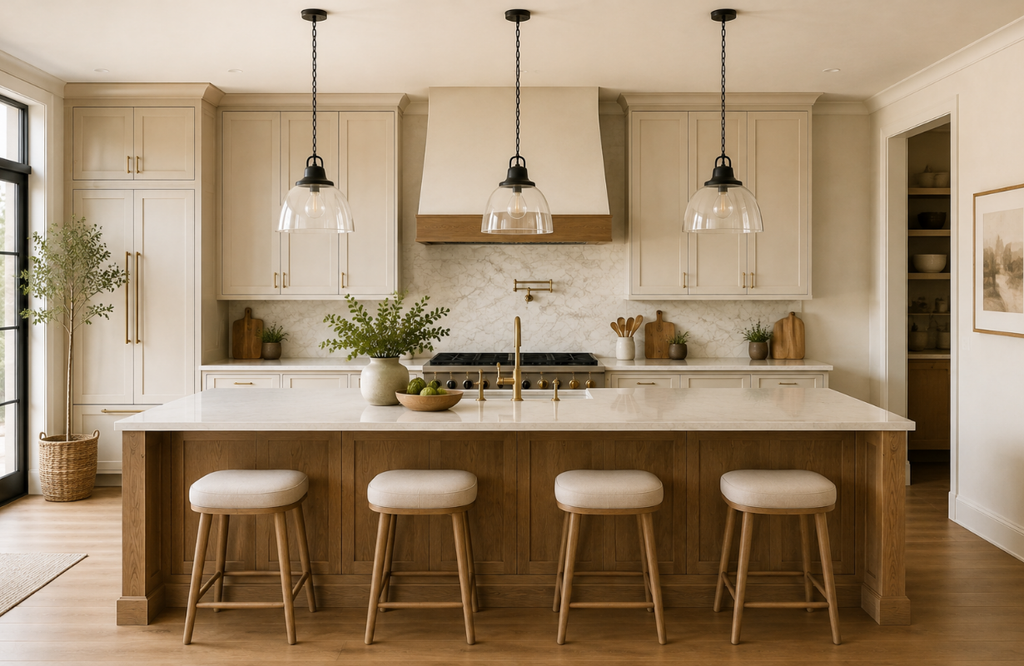
Pendant lights seem like one of the easier kitchen decisions until you actually have to choose them. Suddenly you’re comparing 10-inch pendants with 18-inch pendants, wondering whether you need two or three, and trying to figure out how low they should hang without making your kitchen feel like a restaurant booth.
And honestly, size is where a lot of otherwise beautiful kitchens go wrong.
A pendant that’s too small can look strangely insignificant over a substantial island. Go too large, and the lights start blocking sightlines and competing with everything else in the room. Then there’s spacing, ceiling height, island length, and the fact that an open glass pendant has a completely different visual weight from a solid metal shade.
If you’re trying to figure out how to choose pendant light size for a kitchen island, don’t rely on one magic formula. Measurements matter, but proportion matters more. Here’s how I’d work through the decision so the finished kitchen actually looks balanced.
Why Pendant Size Matters More Than You Think
Kitchen islands are usually large, visually heavy features. You have a long countertop, cabinets underneath, stools on one side, and often a range hood or tall cabinetry nearby.
Your lighting has to hold its own against all of that.
This is why tiny pendants are such a common problem. A 7-inch fixture might look substantial in an online product photo, but place three of them above an 8-foot island and they can practically disappear.
On the other hand, bigger isn’t automatically better. Oversized pendants can make a smaller kitchen feel cramped, especially if they have solid shades that visually interrupt the room.
What actually works is thinking about scale, visual weight, and spacing together rather than choosing diameter in isolation.
Start With the Size of Your Kitchen Island
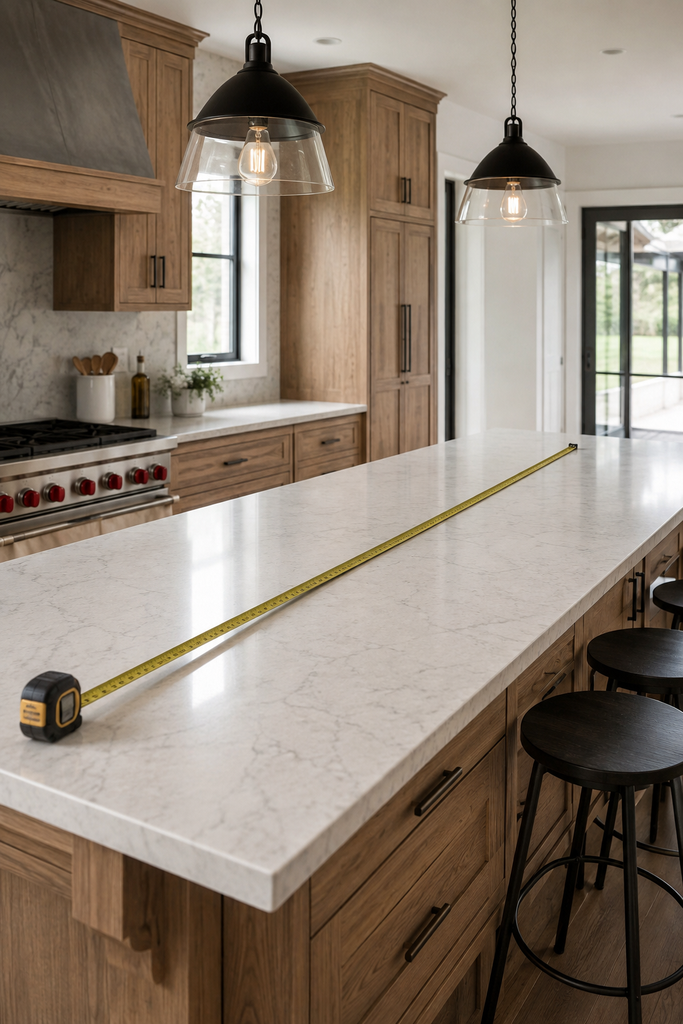
Your island should be the starting point, not the pendant you happened to fall in love with online.
Measure the Actual Countertop
Measure the full length and width of your island before shopping.
For a smaller island around 4 to 5 feet long, two modestly sized pendants often look more intentional than squeezing in three tiny ones.
Once you get into the 6-to-8-foot range, you have more flexibility. Two larger statement pendants or three medium fixtures can both work.
A very long island—say 9 or 10 feet—can usually handle larger fixtures without looking overwhelmed.
Here’s the thing: don’t assume a long island automatically needs more pendants. Two substantial fixtures often look cleaner than four undersized ones.
Use Diameter as a Starting Point, Not a Law
For many average residential islands, pendants somewhere around 12 to 20 inches in diameter are a useful range to start exploring.
Smaller fixtures around 8 to 12 inches can work when you’re using several of them or when the island itself is compact. Pendants in the 14-to-18-inch range tend to have enough presence for many standard islands, while fixtures around 20 inches or larger start behaving more like statement lighting.
But those numbers aren’t rules.
A 20-inch clear glass globe can feel surprisingly light. A 20-inch matte-black dome can feel huge because you’re looking at a solid visual mass.
Always look at the fixture itself, not just the number beside “diameter.”
Decide How Many Pendants You Actually Need
Most people get this wrong by choosing the number of pendants first.
Maybe you’ve seen three pendants over every kitchen island on Pinterest, so three feels like the default. It isn’t.
Two Pendants Create a Cleaner, Larger-Scale Look
Two larger pendants work especially well over medium and long islands. They create fewer visual interruptions and give each fixture enough breathing room to feel intentional.
For example, over an 8-foot island, two 16-to-20-inch pendants can create a much stronger composition than three 9-inch fixtures.
This approach also works beautifully when the kitchen already has other strong features—a large range hood, open shelving, patterned backsplash, or dramatic stone.
You don’t need every surface competing for attention.
Three Pendants Give You Rhythm
Three fixtures can make sense over longer islands when the pendants themselves are relatively narrow or visually lightweight.
The repetition creates rhythm and can spread illumination more evenly across the countertop.
Just don’t cram three fixtures into a space that really wants two. If the outer pendants are almost hanging off the ends of the island, you’ve already lost the proportion battle.
Get the Spacing Right
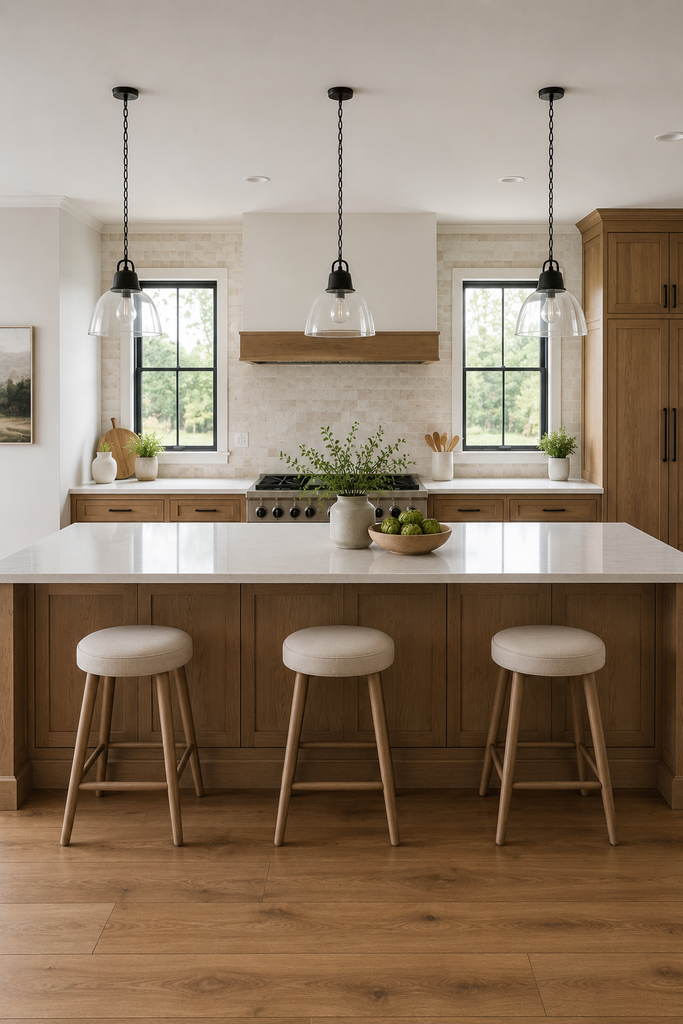
Once you know roughly how large your pendants will be and how many you’re using, spacing becomes much easier.
A useful starting point is to leave roughly 24 to 30 inches between pendant edges, although fixture size and island length can push you outside that range.
The important part is breathing room.
Imagine two 18-inch pendants installed so closely together that there’s only a tiny gap between the shades. Even if the overall arrangement technically fits above the island, visually it will feel crowded.
Also pay attention to the ends of the countertop. You generally don’t want the outer edges of your fixtures lining up exactly with the ends of the island. Bringing them inward creates a more composed look and keeps the lighting centered over the working area.
Before installation, use painter’s tape to mark the approximate pendant centers on the countertop. It sounds almost too simple, but it makes awkward spacing much easier to spot.
Hang Pendants at the Right Height
Choosing the right pendant size means nothing if you hang it at the wrong height.
For a typical kitchen with an 8-to-9-foot ceiling, a good starting point is approximately 30 to 36 inches between the countertop and the bottom of the pendant.
That range usually keeps the light close enough to feel connected to the island without constantly sitting in your sightline.
Adjust for the People Using the Kitchen
Numbers aren’t the whole story here either.
If you’re tall and frequently talk to someone sitting across the island, a large solid pendant hanging at the lower end of that range might drive you crazy.
Raise it slightly.
If your pendants are delicate glass fixtures and you have a taller ceiling, you may be able to hang them a little higher without losing their visual relationship to the countertop.
The goal is simple: you should be able to stand at the island and comfortably see across it.
Consider Ceiling Height Before Going Oversized
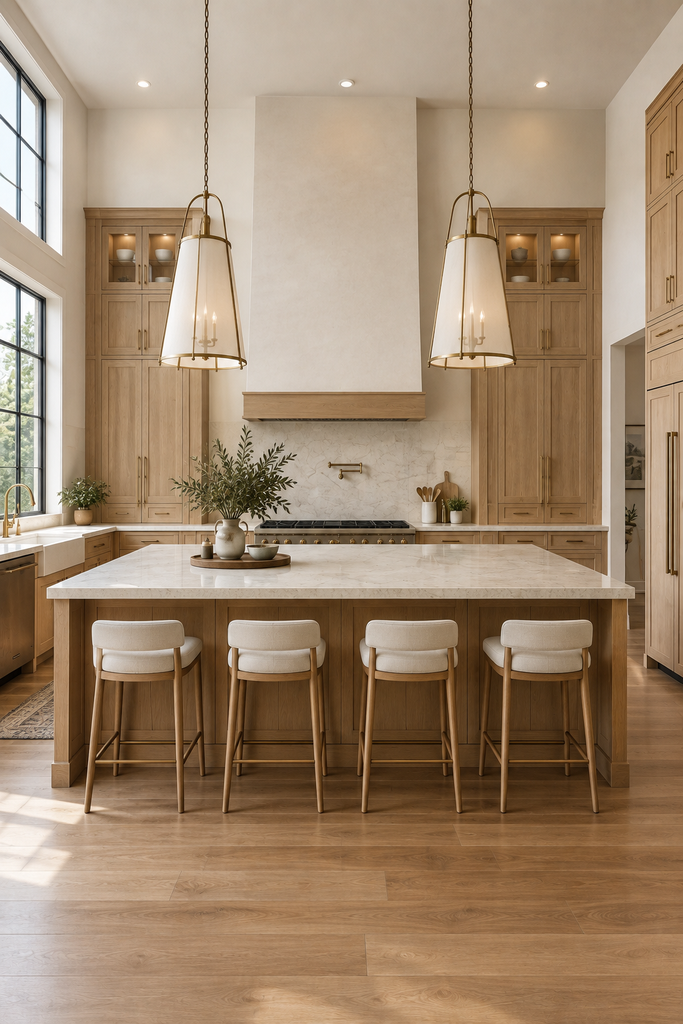
Higher ceilings can usually support larger and taller fixtures.
With a standard 8-foot ceiling, a very tall pendant can make the area above the island feel compressed. You have limited vertical space between the ceiling and the recommended hanging height.
With 10-, 11-, or 12-foot ceilings, you have much more room to work with.
This is where elongated lanterns, large globes, and sculptural fixtures start making sense. Their additional height helps visually connect the ceiling with the island rather than leaving a big empty zone overhead.
If your ceiling is vaulted, don’t choose tiny pendants simply because they’re hanging from long cords. The extra cord doesn’t create visual presence. The fixture itself still needs enough scale for the room.
Pay Attention to Visual Weight
This is probably the part of pendant sizing that gets overlooked most.
Two fixtures with identical measurements can feel completely different once installed.
A clear glass pendant lets your eye travel straight through it, so it feels relatively light. Open-frame lanterns work similarly.
Solid metal domes, woven shades, milk-glass globes, and dark fixtures have more visual weight.
So if you’re deciding between two 18-inch pendants, ask yourself whether you’re looking at 18 inches of transparency or 18 inches of solid material.
In a smaller kitchen, an oversized clear-glass fixture may work beautifully where the same size black metal shade would dominate the room.
Think About Everything Around the Island
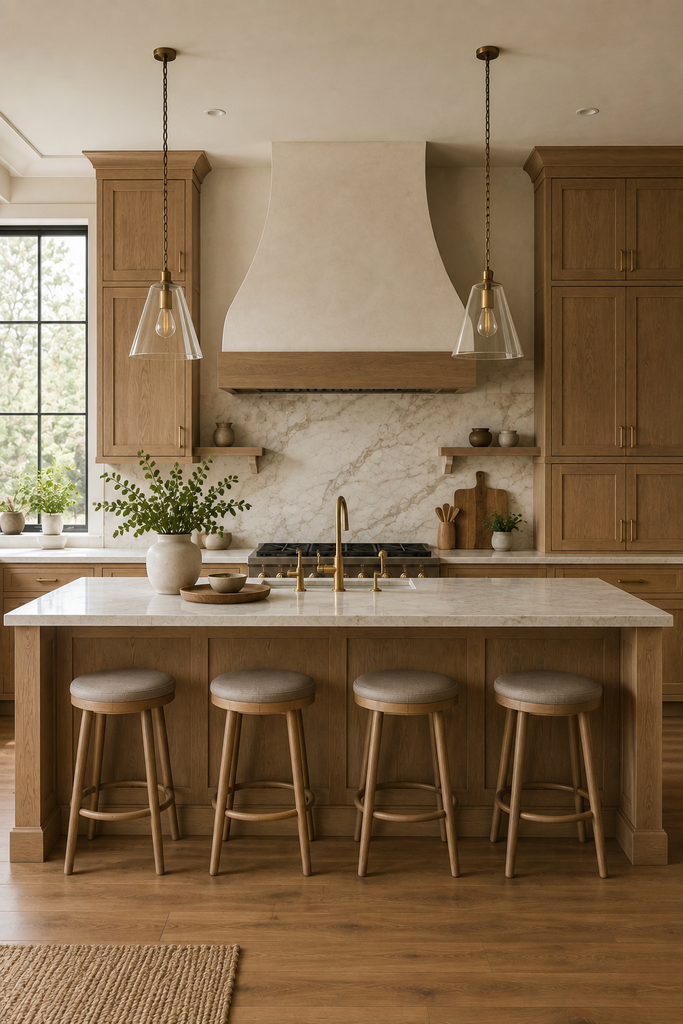
Pendant lights don’t exist in a vacuum.
Look at your range hood, upper cabinets, backsplash, stools, dining-room lighting, and any nearby windows.
If you already have a dramatic plaster hood and heavily veined stone backsplash, I’d probably lean toward simpler pendant lighting. Adding three huge decorative fixtures on top of those elements can quickly become too much.
The opposite is also true.
If your kitchen is simple—white cabinetry, quiet countertops, minimal hardware—the pendants are a great place to introduce shape and character.
You want a hierarchy. Decide what should grab your attention first and let everything else support it.
Common Pendant Lighting Mistakes to Avoid
One of the biggest mistakes is buying fixtures before measuring the island. Product photography makes pendant lights look much larger than they often are, particularly when there isn’t much context around them.
Another is spacing lights evenly across the entire island without accounting for the diameter of the shades. You need to think about the empty space between the edges of the fixtures, not just the distance between electrical boxes.
And don’t choose size based only on how much light you need. Modern LEDs can produce plenty of illumination from a relatively small fixture. Pendant size is largely a proportion and design decision; actual lighting performance depends on the bulb, shade, diffuser, and surrounding lighting plan.
Finally, don’t automatically choose three pendants because that’s what you’ve seen most often. Sometimes two is the better design decision.
A Simple Step-by-Step Way to Choose Your Pendant Size
If all these measurements are starting to blur together, this is the order I’d use:
- Measure your island — length and width.
- Look at your ceiling height so you know how much vertical room you have.
- Choose two or three pendants based on the island length and the visual weight you want.
- Start exploring fixtures around 12–20 inches wide for an average island, adjusting smaller or larger as needed.
- Check the fixture’s visual weight—clear, open fixtures can usually go larger than heavy solid shades.
- Plan approximately 30–36 inches above the countertop as your initial hanging height.
- Check the gaps between fixtures rather than relying only on center-to-center measurements.
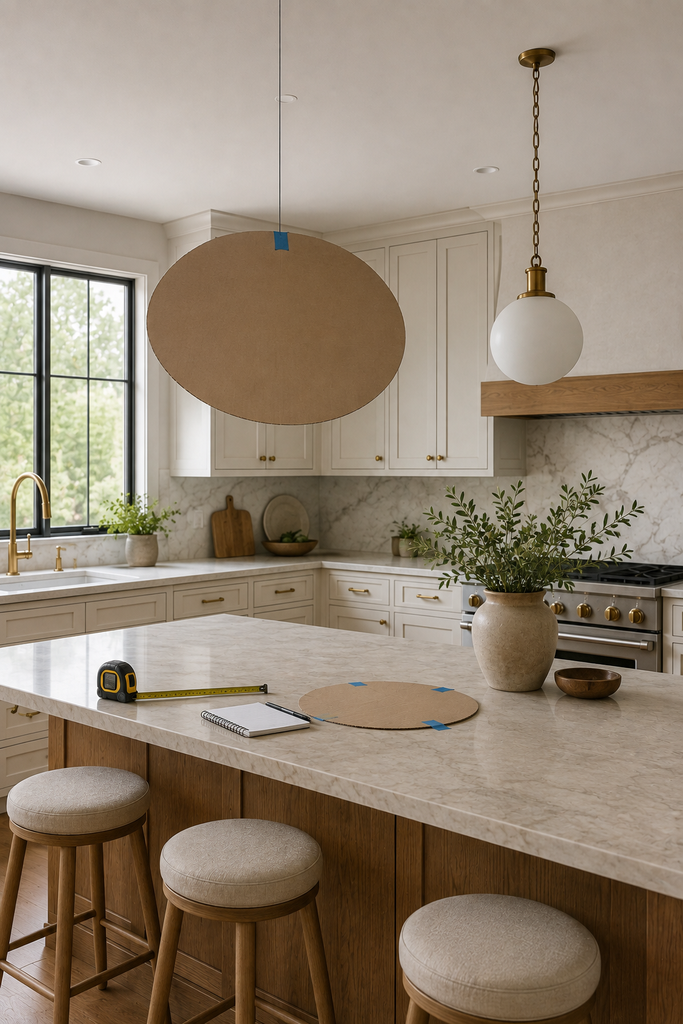
- Mock up the size before buying if you’re unsure.
That last step is worth doing. Cut a circle from cardboard roughly matching the pendant diameter, or tape together some paper to approximate the shade. Hold it where the fixture will hang.
It won’t be glamorous, but you’ll learn more from that five-minute test than from staring at another twenty product photos.
The Bottom Line
Learning how to choose pendant light size for a kitchen island is really about getting several proportions to work together. Your island dimensions give you the starting point, but ceiling height, fixture shape, spacing, and visual weight determine whether the final result actually feels right.
Start with the island. Decide whether two or three fixtures create the cleaner composition. Then choose a diameter substantial enough to hold its own without blocking the room.