
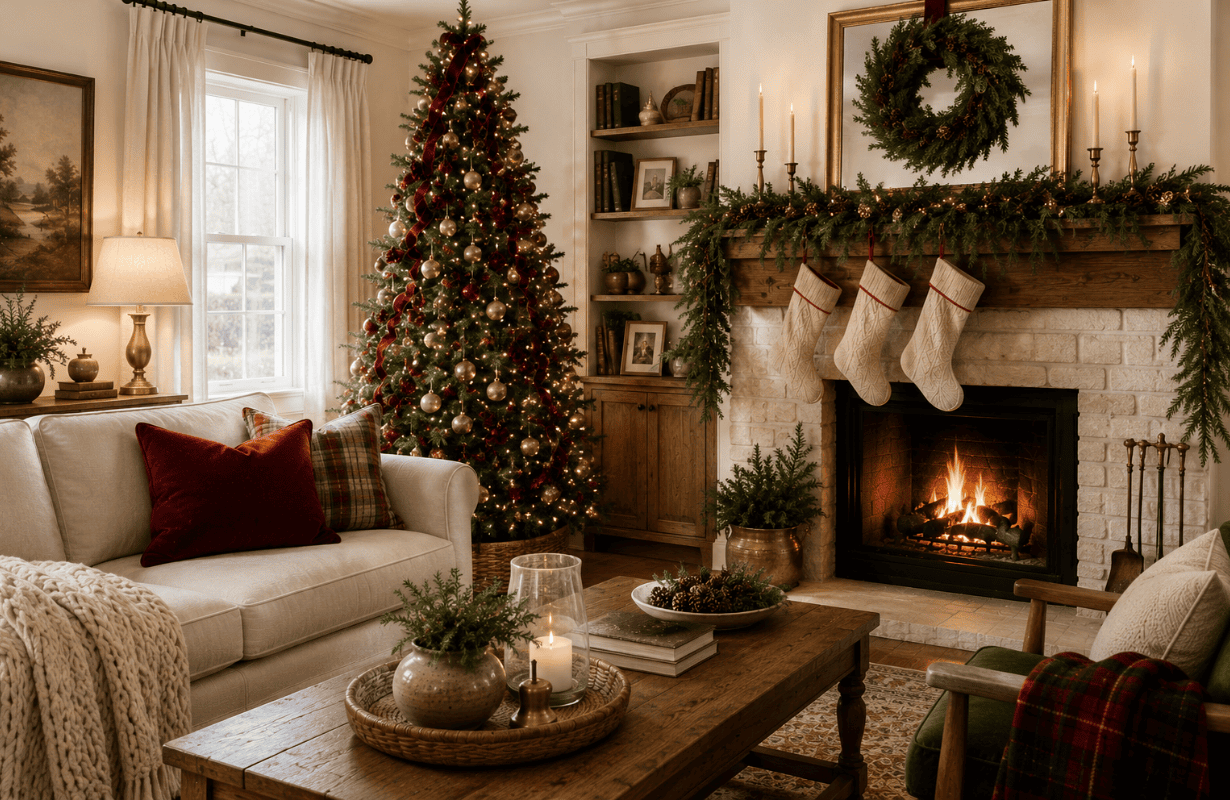
There’s a funny thing that happens when you start decorating the living room for Christmas. You bring out the tree, add a garland, put a few holiday pillows on the sofa…and somehow the room can still feel unfinished. Or you go in the opposite direction, keep adding things, and suddenly every table, shelf, and empty corner is competing for attention.
The sweet spot is somewhere in between.
The best Christmas living room decoration ideas don’t require covering every surface in ornaments or replacing half your regular decor. Usually, it’s about choosing a few areas that naturally deserve attention—the tree, fireplace, coffee table, sofa, and maybe a window or console—and letting everything else support them.
Whether your style leans traditional and nostalgic, warm and neutral, rustic, or a little more polished, these ideas are meant to work in an actual home. Some are incredibly simple, some make a bigger statement, and plenty can be recreated with decorations you probably already own.
Here are 18 ways to make your living room feel genuinely cozy and Christmas-ready.
1. Build the Room Around a Beautiful Christmas Tree
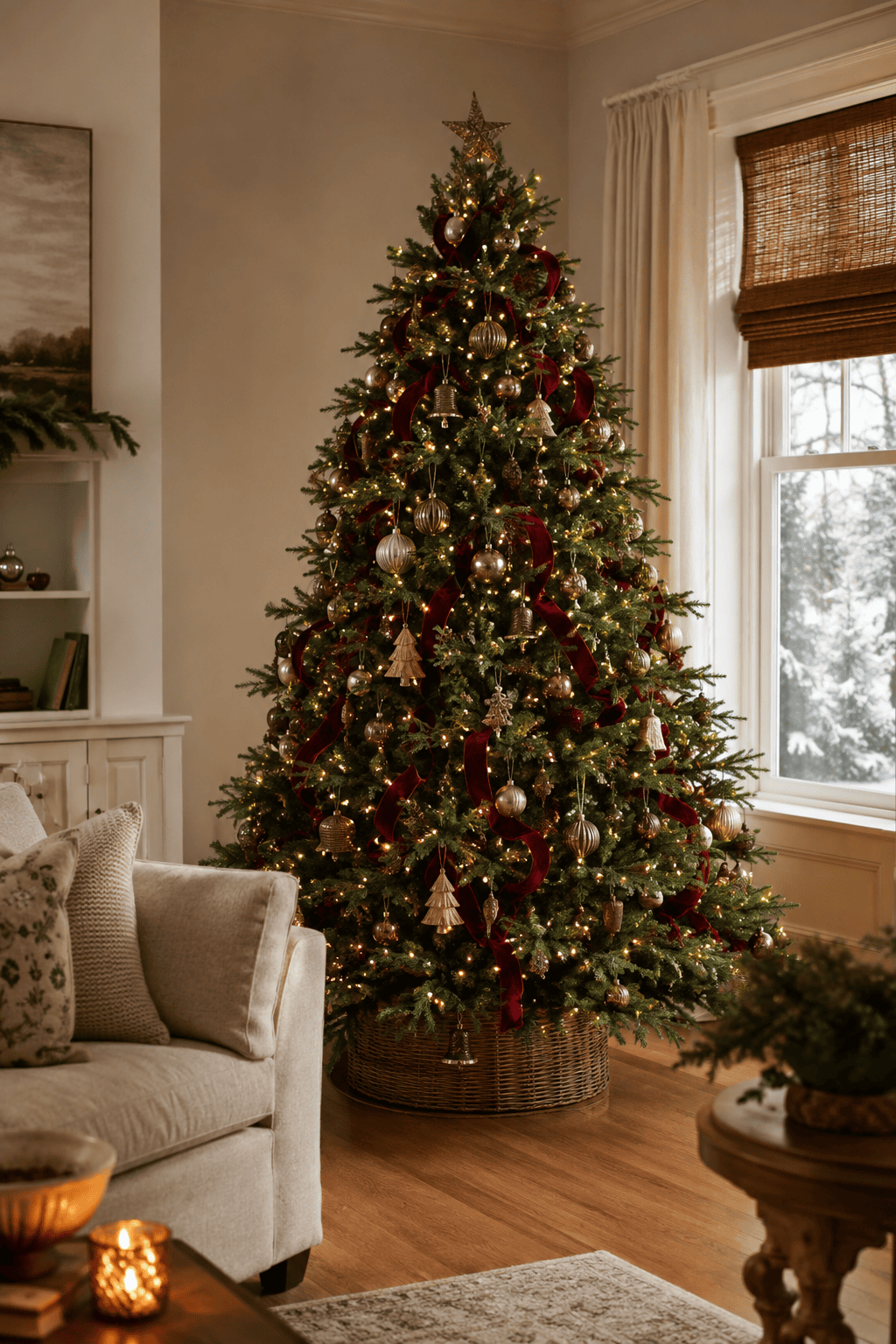
If your Christmas tree is going in the living room, let it be the star instead of trying to create five other equally dramatic focal points.
Start with a tree that fits the scale of your room. A huge tree squeezed between furniture rarely looks as good as a slightly smaller one with breathing room around it. Position it where you can enjoy it from the sofa without blocking an important walkway or window.
For decorating, pick two or three repeating elements. You might combine warm white lights, burgundy ornaments, and antique gold, or keep things softer with cream ribbon, wood ornaments, and brass bells. Repetition makes even inexpensive decorations look intentional.
And honestly, you don’t need to fill every branch. A little visible greenery gives the ornaments room to stand out.
2. Give the Fireplace Mantel a Lush Evergreen Garland
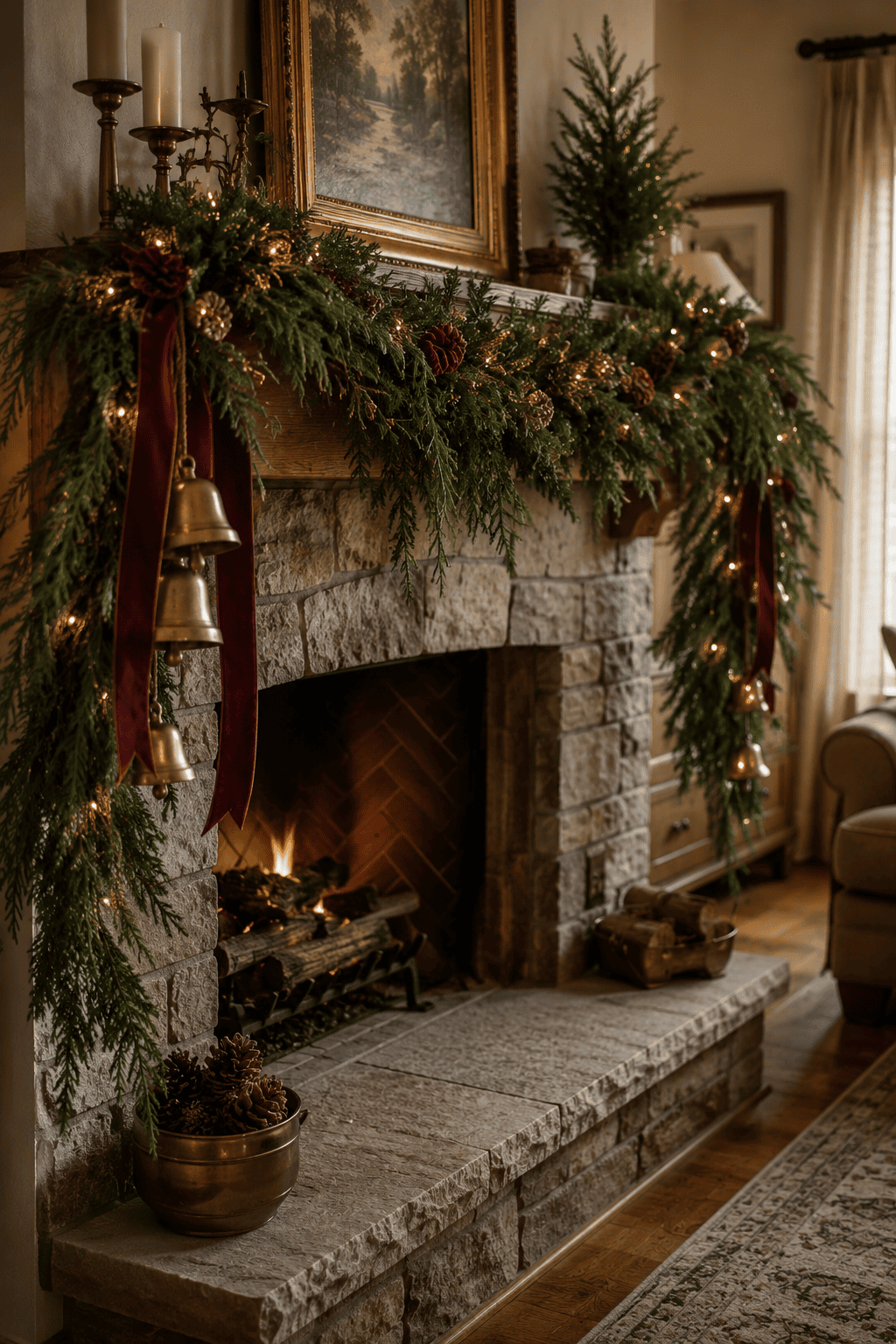
A fireplace is already a natural focal point, so Christmas is the perfect excuse to make a little more of it.
Drape mixed evergreen garland across the mantel, allowing the ends to fall slightly rather than forcing everything into a perfectly symmetrical line. Combining cedar, pine, and fir creates much more depth than one uniform type of greenery.
Add a few pinecones, velvet ribbon, dried orange slices, or small brass bells depending on your style. Warm white lights woven deep into the greenery can make the entire fireplace glow after dark.
No real greenery? Artificial garland can look surprisingly convincing when you layer two thinner strands together and tuck in a few realistic faux branches.
Just keep combustible decorations and stockings safely away from flames and hot surfaces when the fireplace is operating.
3. Hang Stockings Without Making the Mantel Feel Busy

Stockings are nostalgic, but they can easily disappear underneath an already elaborate mantel.
The trick is treating them as part of the overall composition. If your garland is lush and colorful, choose simple stockings in cream, oatmeal, muted plaid, or another quiet fabric. If your greenery is minimal, stockings can carry more pattern and color.
Space them evenly enough to look intentional without worrying about making everything ruler-perfect.
Don’t have a fireplace? This idea still works. Hang stockings from sturdy hooks on a console, staircase railing, or dedicated wall-mounted wooden rail. You get the tradition without needing a mantel at all.
4. Add Christmas Pillows Without Replacing Your Whole Sofa

You absolutely do not need six pillows that say “Merry Christmas.”
Instead, think about holiday color and texture. A deep forest-green velvet pillow, cranberry lumbar cushion, subtle tartan plaid, or chunky cream knit can make your regular sofa feel festive without screaming Christmas.
Keep some of your everyday pillows and replace only one or two. This is one of those ideas that works particularly well when you want your room to feel seasonal but still sophisticated.
Pillow covers are also far easier to store than entire seasonal cushions. When January arrives, fold them up and put them away until next year.
5. Layer a Cozy Throw Over the Sofa
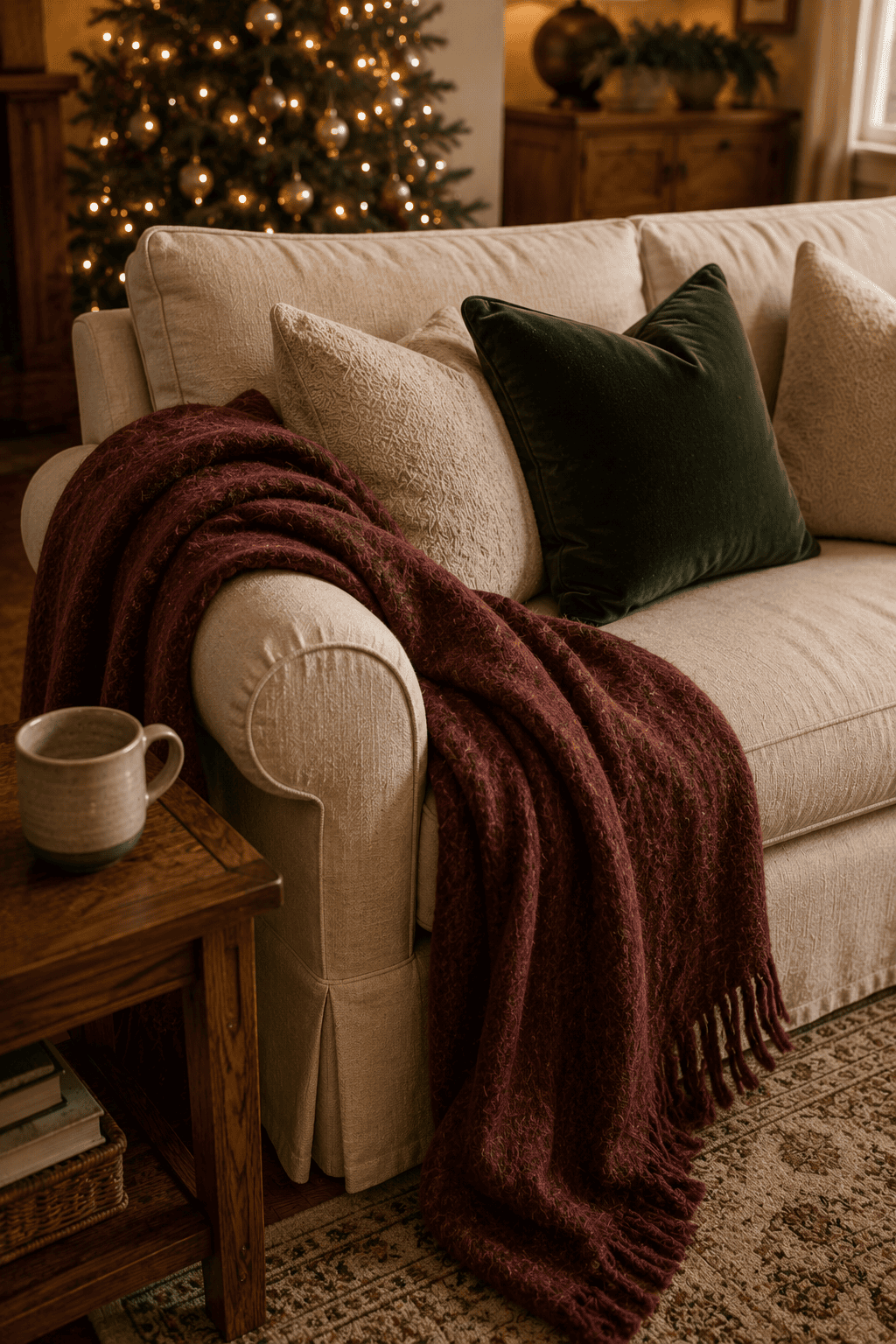
Sometimes the smallest addition makes the room feel noticeably warmer.
Drape a thick knit, brushed wool, faux shearling, or plaid throw casually over one corner of your sofa. The key word here is casually. You don’t need to fold it into a perfect rectangle.
Choose a throw that connects with another color in the room. If you’ve used burgundy ribbon on your tree, for example, a muted cranberry throw creates a subtle visual link.
This also happens to be one Christmas decoration you’ll actually use. A beautiful blanket that gets pulled over your legs during a holiday movie is much more worthwhile than another decorative object you have to find storage for later.
6. Create a Simple Christmas Coffee Table Arrangement
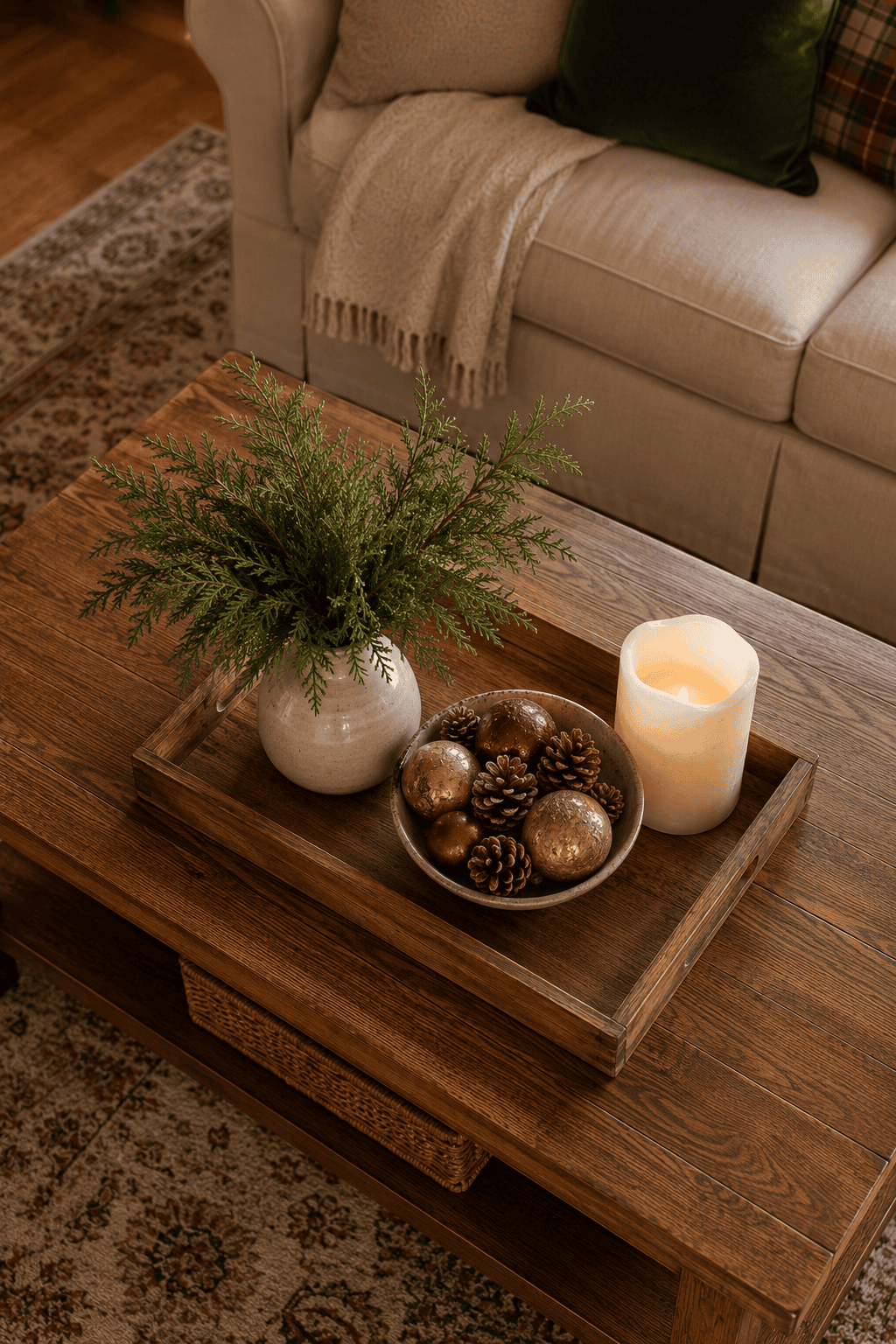
The coffee table is where Christmas decorating can get impractical fast. You still need somewhere to put a mug, remote, or snack plate.
Instead of scattering decorations across the entire surface, group them on one tray.
Try a small vase of cedar branches, a bowl filled with pinecones or ornaments, and a flameless candle or another safe light source. Varying the heights keeps the arrangement interesting while the tray makes everything easy to move.
If your coffee table is small, simplify further. A shallow bowl containing a handful of beautiful ornaments and greenery may be all you need.
Holiday decorating should work with everyday life, not make the room harder to use.
7. Bring a Little Christmas to Your Bookshelves
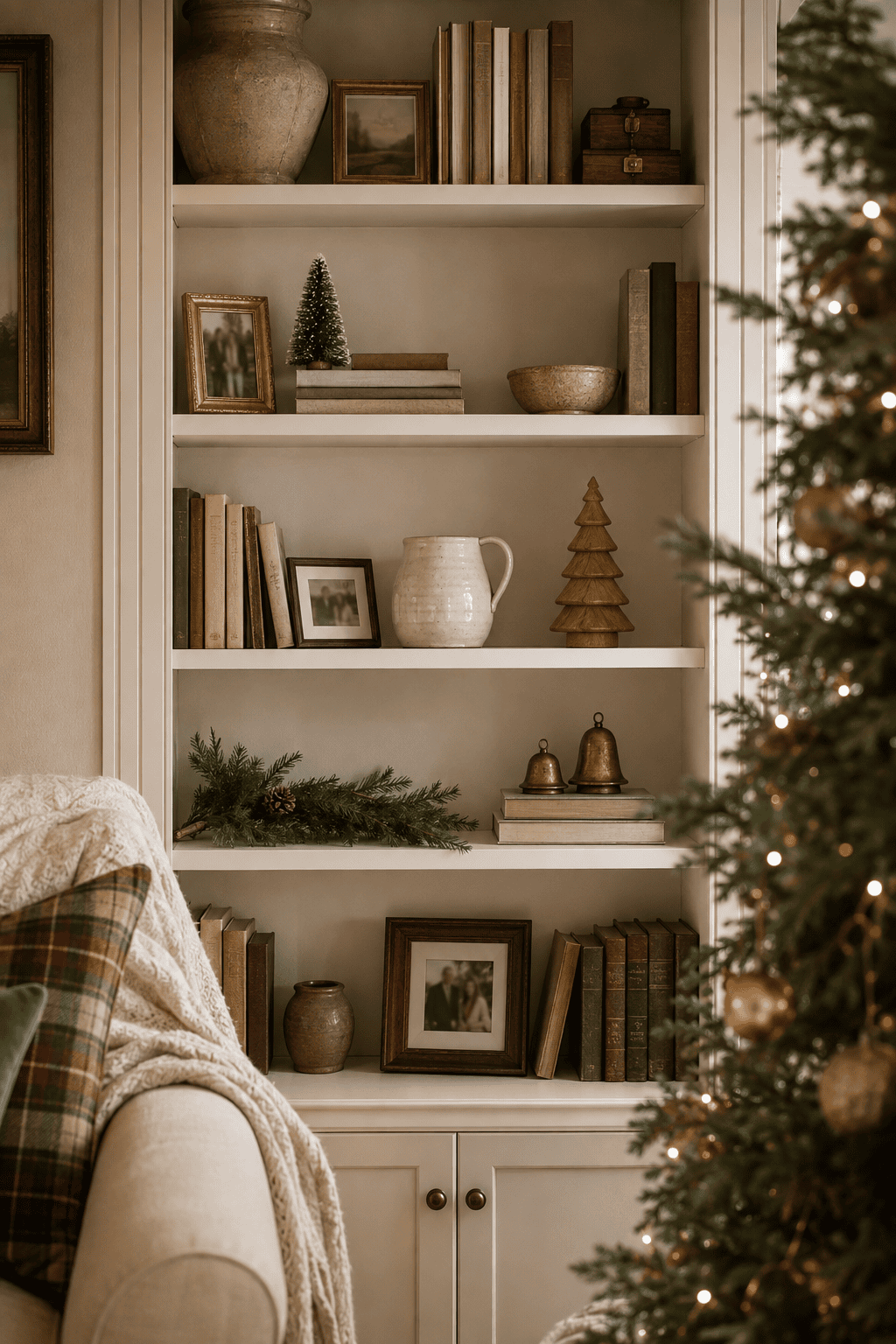
Bookshelves are tempting because there are so many little spaces to decorate. That’s also exactly why they’re easy to overdo.
Rather than filling every shelf with Christmas objects, choose three or four spots throughout the bookcase. Tuck a small bottle-brush tree beside a stack of books, lay a short cedar branch across another shelf, or add a tiny brass bell near an existing framed photograph.
Leave your books and normal accessories in place.
The Christmas details should look as though they’ve been layered into your home, not as though the bookshelf was emptied and turned into a seasonal retail display.
8. Use a Bowl of Ornaments as an Easy Decoration
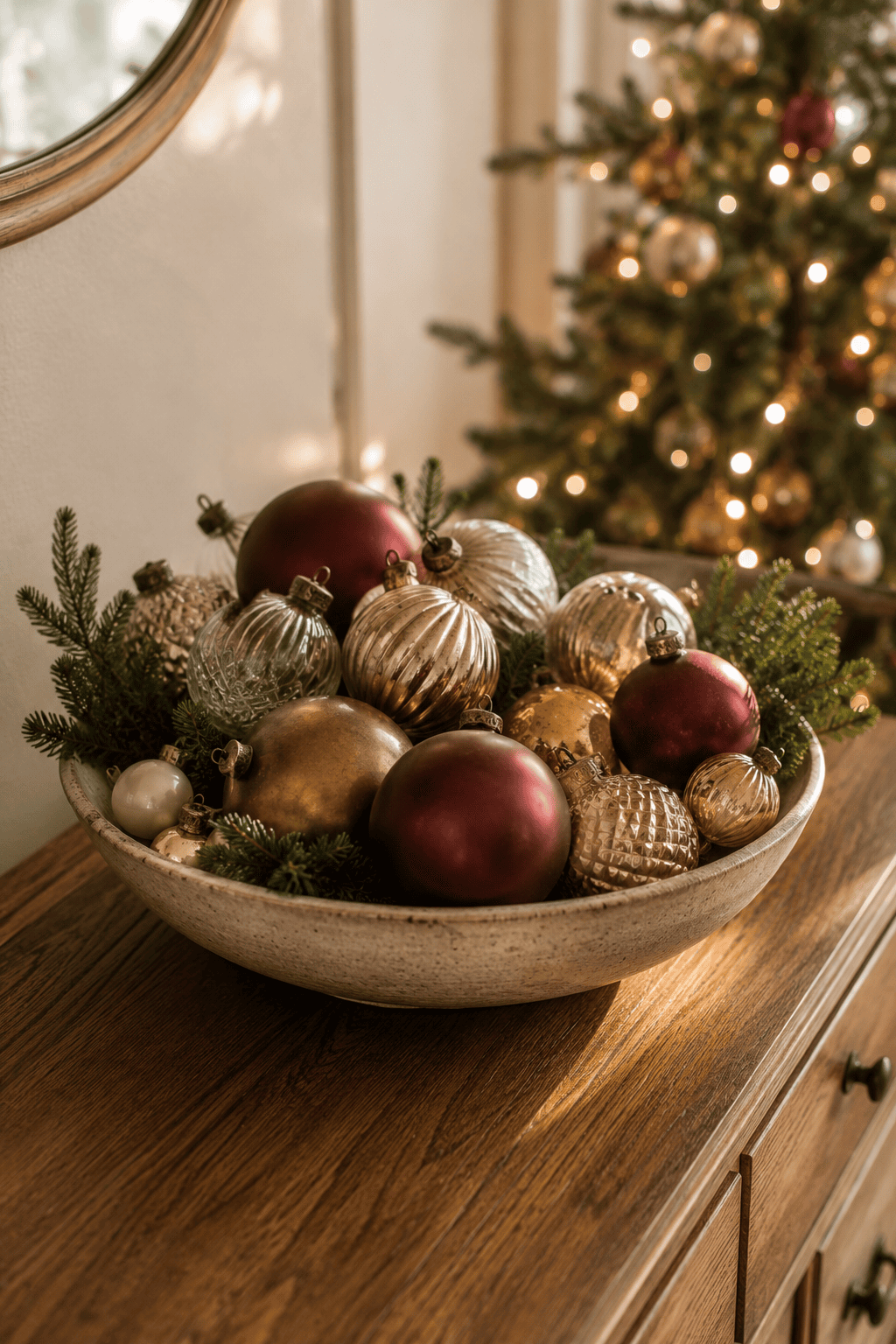
Have leftover ornaments that didn’t make it onto the tree? Put them to work.
Fill a low ceramic, wood, or metal bowl with a small collection of ornaments and place it on a coffee table, console, or closed storage cabinet. Mixing finishes—matte, aged metallic, glass, and perhaps one patterned ornament—creates more interest than using identical baubles.
Stick to colors already appearing elsewhere in your Christmas living room decor.
It’s incredibly simple, costs practically nothing if you already own the ornaments, and takes about two minutes to put together. Sometimes that’s exactly the kind of decorating idea you need in December.
9. Frame the Windows With Simple Evergreen Garland
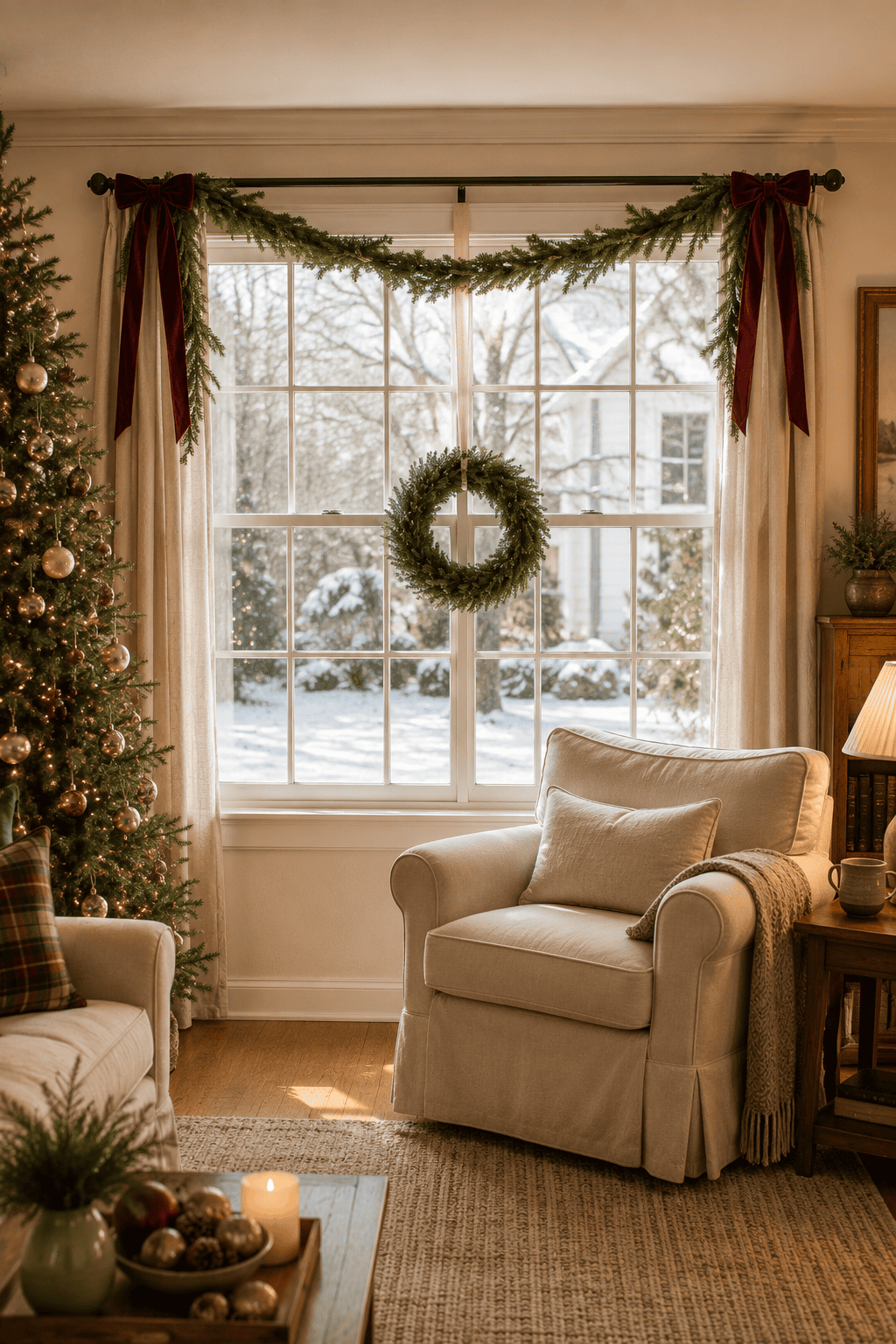
Windows often get forgotten once the tree and mantel are decorated, but they’re a great place to add greenery without taking up floor space.
A thin evergreen garland across the top of a window can soften the room beautifully. Keep it relatively lightweight so it doesn’t overwhelm your curtains or block natural light.
For a more traditional look, add small velvet bows at the corners. If your living room is more minimal, plain cedar-style greenery may be enough.
You could also hang a modest wreath centered in a large window. From inside, it becomes part of your living room; from outside, it adds a little Christmas charm to the house too.
10. Try a Warm Neutral Christmas Color Palette
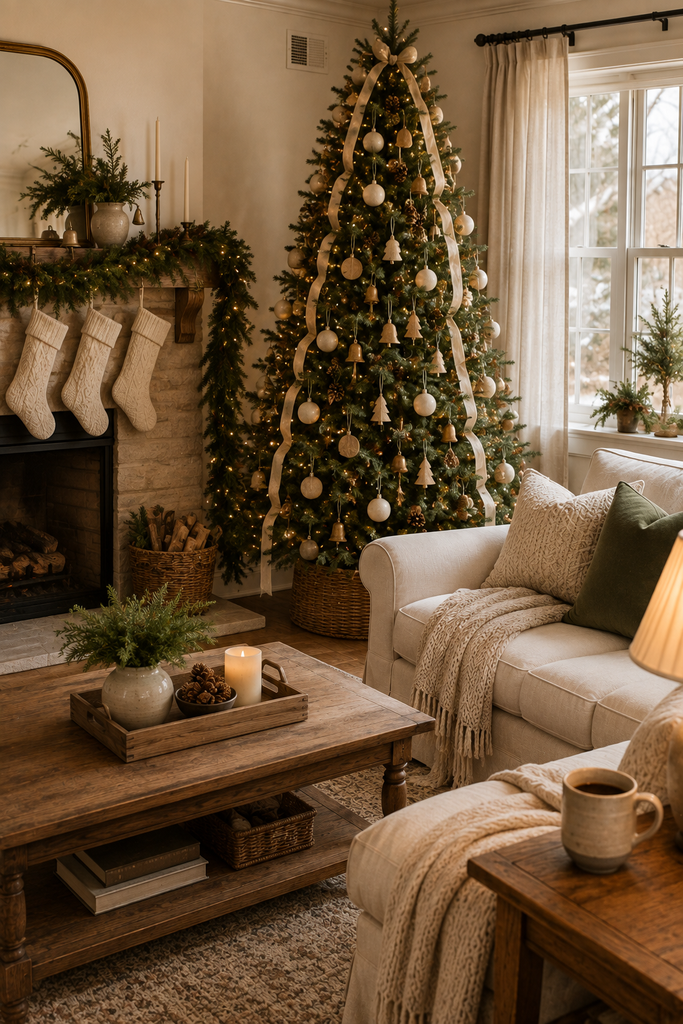
Red and green will always be Christmas classics, but they’re certainly not your only option.
If your living room already has lots of beige, cream, warm white, or natural wood, consider building your holiday decorations around those tones. Use cream stockings, wood ornaments, brown velvet ribbon, brass bells, pinecones, and plenty of evergreen branches.
Why does this work so well? The greenery provides enough seasonal contrast while the neutral decorations blend naturally with the room you already have.
Just don’t remove every bit of contrast. A completely beige Christmas room can start looking flat. Dark green foliage, aged metal, wood, and different fabric textures keep a neutral palette interesting.
11. Go Traditional With Cranberry Red and Evergreen
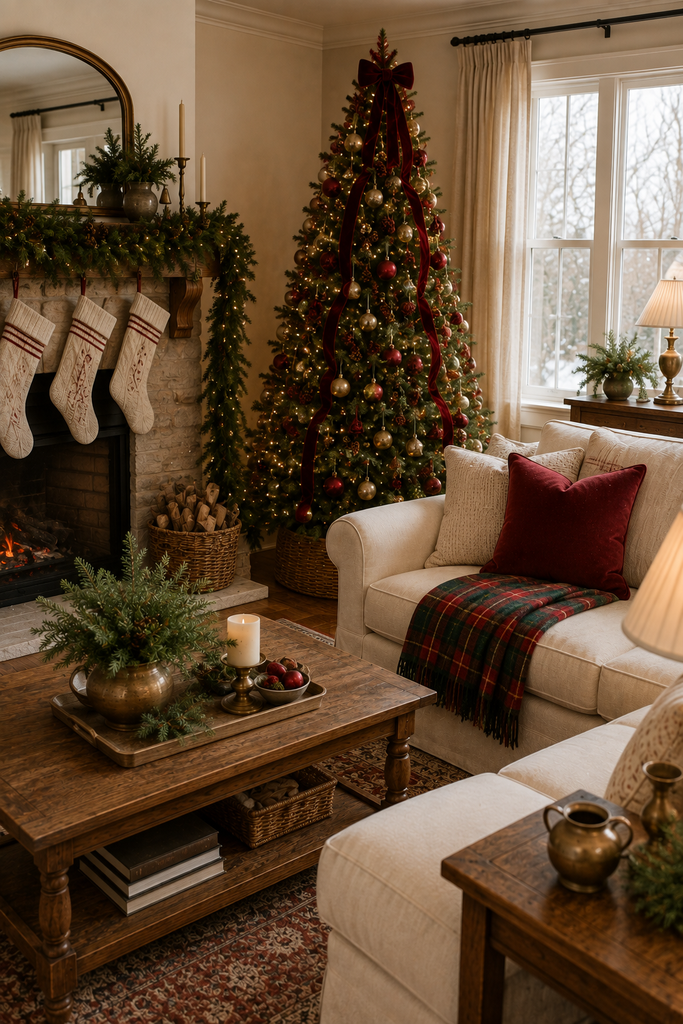
If neutral Christmas decor isn’t your thing, embrace the classics.
Deep cranberry red paired with natural evergreen has a timeless quality that feels festive without becoming overly bright. Bring red into the room through smaller repeating accents—velvet tree ribbon, a throw pillow, berries in a wreath, stockings, or a plaid blanket.
The important part is restraint.
You don’t need a red rug, red sofa pillows, red ornaments, red candles, red bows, and red wall art all at once. Let evergreen dominate and use the richer red as an accent.
Add warm wood and antique brass, and the combination feels cozy and traditional rather than cartoonishly Christmas-themed.
12. Decorate a Console Table as a Secondary Holiday Moment
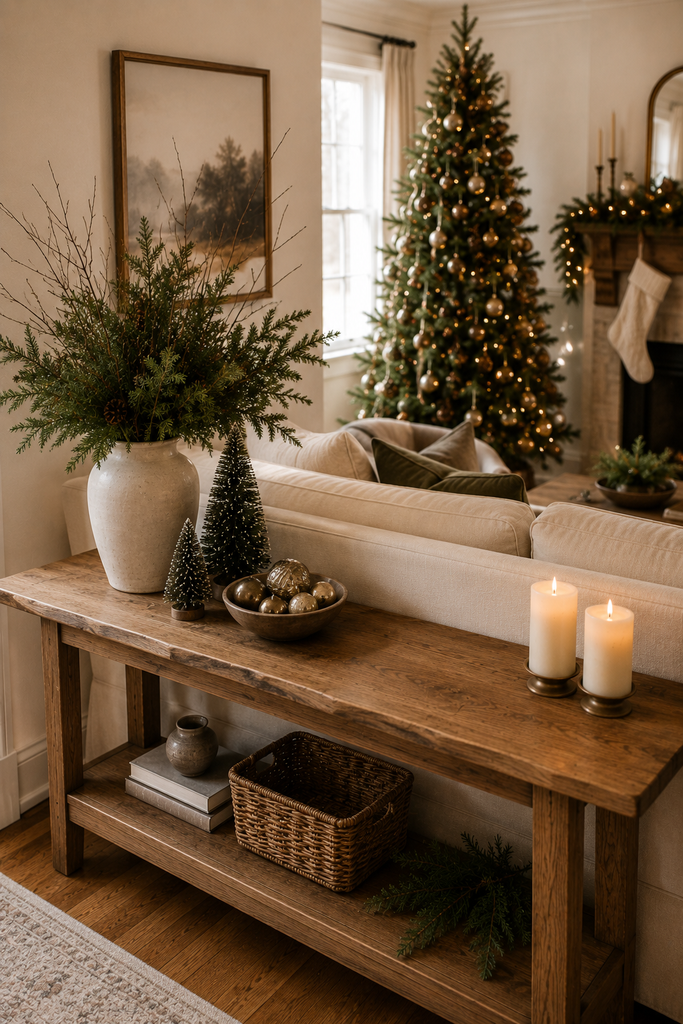
If your living room has a console behind the sofa or along an empty wall, use it for a quieter Christmas arrangement.
Start with something tall, such as a vase filled with cedar, pine, or bare winter branches. Add one or two smaller objects beside it—a miniature tree, a bowl of ornaments, or a pair of substantial flameless pillar candles.
Keep part of the tabletop empty.
That negative space is what stops the arrangement from looking like a collection of random holiday decorations. If you want something that actually works visually, think in groups rather than spreading individual objects from one end of the table to the other.
13. Add a Wreath Somewhere Unexpected
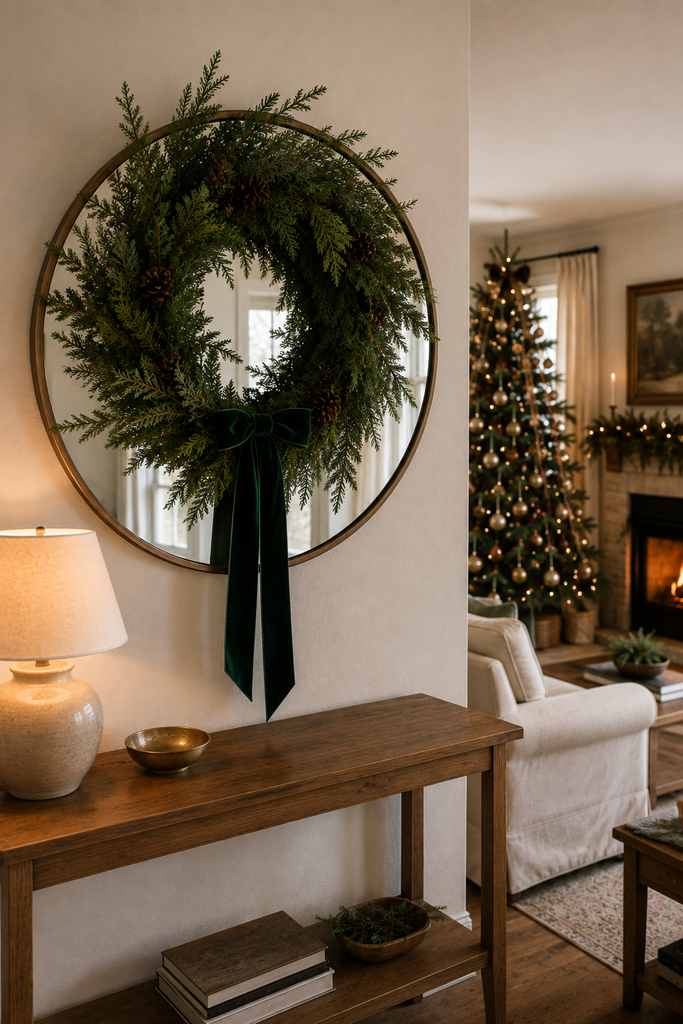
Wreaths aren’t limited to the front door.
A simple evergreen wreath can look gorgeous above a fireplace, over a console, on an interior door, or even layered over an existing mirror if it can be attached safely.
Choose the scale carefully. A tiny wreath floating above a wide mantel usually looks accidental, while an oversized wreath can dominate a small room.
For a simple finish, add one long velvet ribbon in burgundy, brown, forest green, or cream.
This is particularly useful in living rooms where there isn’t enough floor space for additional Christmas decor. You’re decorating vertically instead of adding more things around the furniture.
14. Bring in Natural Pinecones and Winter Branches
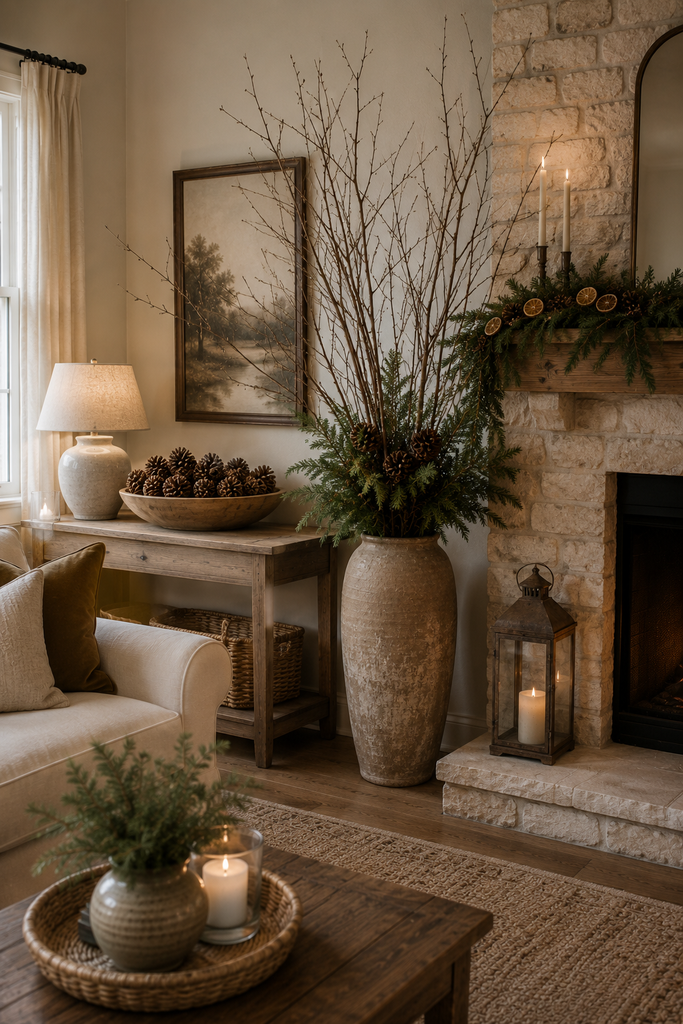
Not every Christmas decoration has to come from the holiday aisle.
Pinecones, bare branches, cedar clippings, dried oranges, and other natural-looking materials add texture while making polished ornaments feel less formal.
Fill a substantial vase with tall winter branches for a console or empty corner. Scatter a few pinecones through mantel greenery or place several large ones in a wooden bowl.
Natural materials are especially effective in rustic, farmhouse, traditional, and Scandinavian-inspired rooms, but they can soften contemporary spaces too.
If you’re gathering anything outdoors, make sure it’s clean, dry, pest-free, and appropriate to bring inside before using it.
15. Make the Room Glow With Warm Christmas Lighting
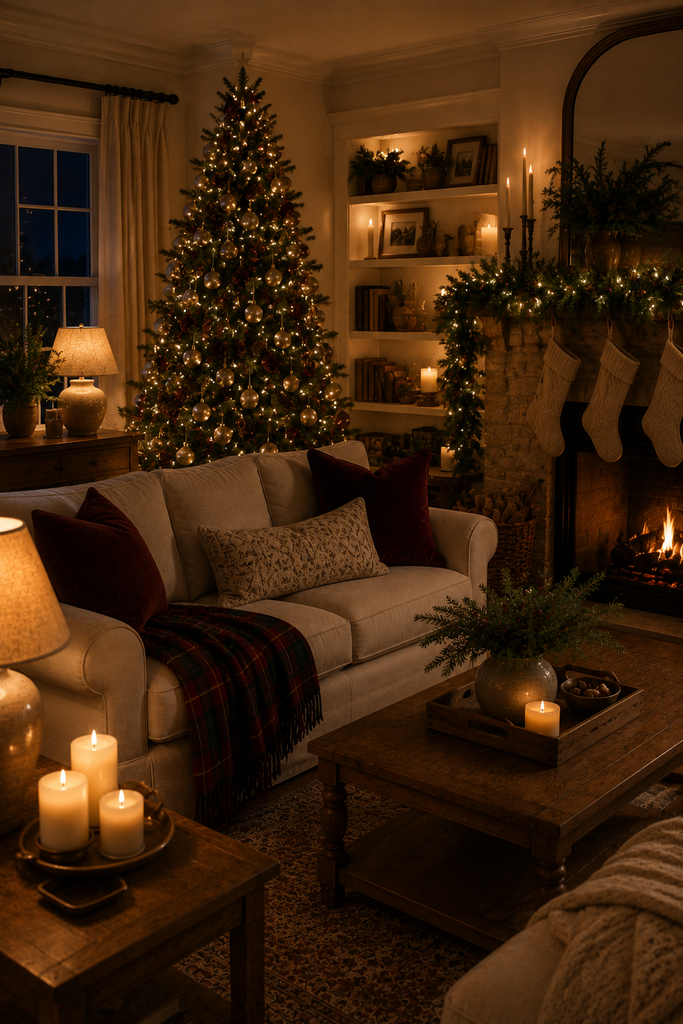
Want to know what makes a Christmas living room feel cozy faster than almost anything else? Lighting.
Warm white tree lights are the obvious starting point, but don’t stop there. Weave a small strand through mantel greenery, turn on table lamps instead of relying entirely on overhead lights, and use flameless candles in areas where you want a soft evening glow.
You want several small pools of warm light around the room rather than one extremely bright source overhead.
It’s especially effective after sunset. Even relatively simple decorations suddenly feel richer when the lighting is warm and layered.
And yes, this is one place where I’d prioritize atmosphere over adding another ornament.
16. Create a Small Christmas Corner in a Tight Living Room
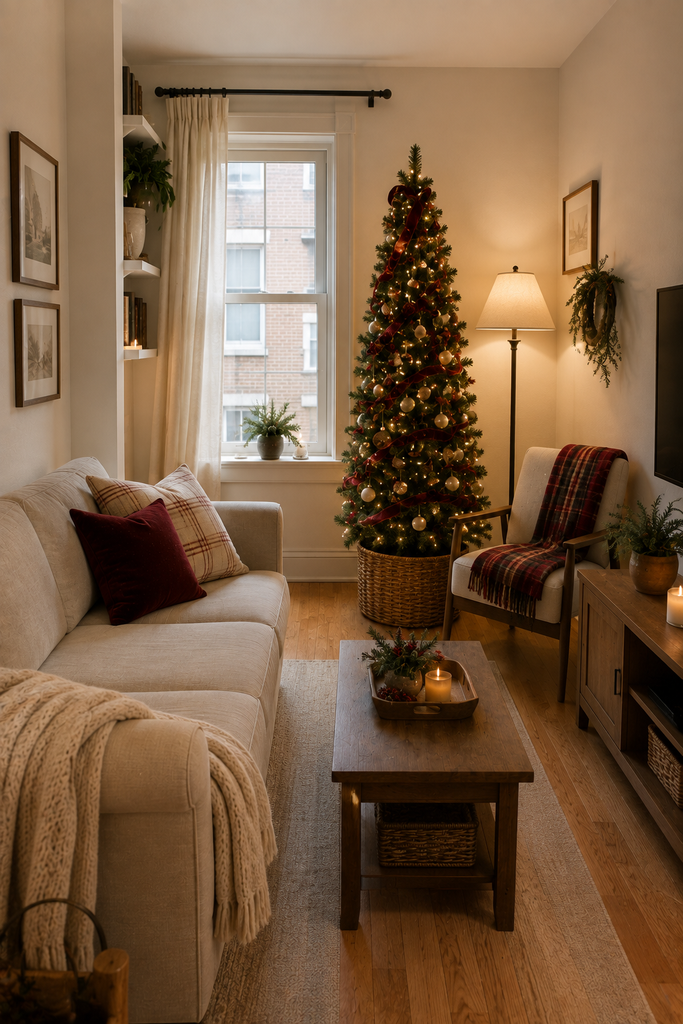
A small living room doesn’t need to miss out on Christmas, but you do need to be selective.
Choose one corner and make that your holiday zone. A slim tree in a woven basket or simple tree collar, a small chair with a seasonal throw, and perhaps a compact floor lamp can create plenty of atmosphere without consuming the entire room.
Keep nearby floor space clear so you still have comfortable pathways.
If a full-size tree simply won’t fit, don’t force it. A tabletop tree on a sturdy console or a narrow realistic faux tree can look far better than a huge tree squeezed between the sofa and television.
Scale matters more than size.
17. Add a Few Vintage-Inspired Christmas Details
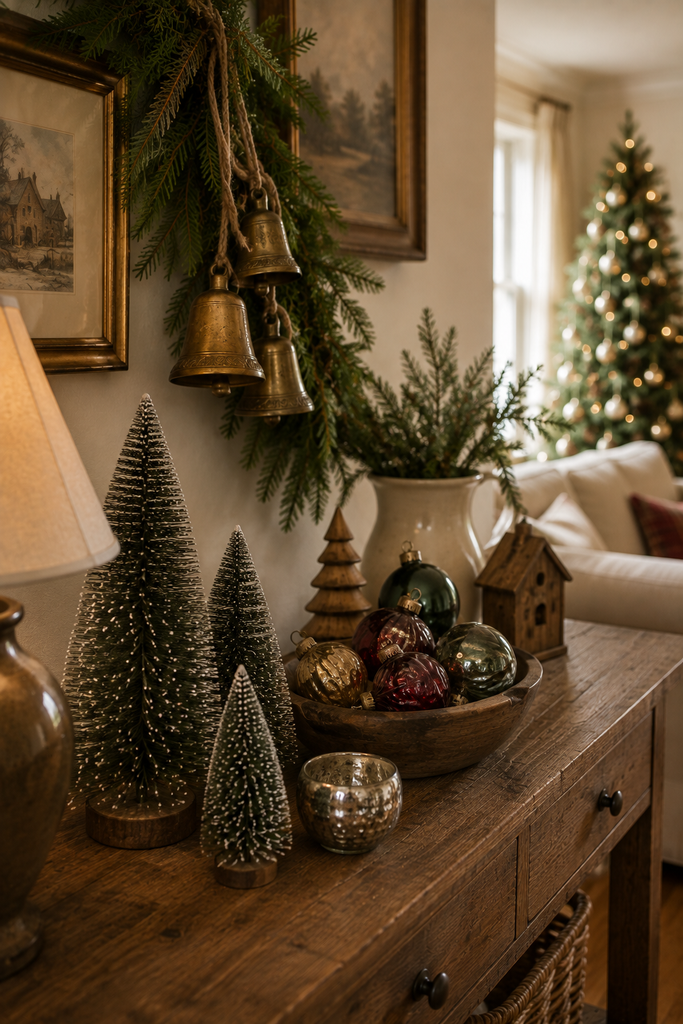
A little nostalgia can keep Christmas decor from feeling too perfect.
Look for bottle-brush trees, aged brass bells, wooden ornaments, vintage-style glass baubles, old-fashioned plaid ribbon, mercury-style glass, or ceramic Christmas houses. You don’t need all of them—just a few pieces mixed among your existing decorations.
They work because they introduce objects with different finishes and personalities. A room filled entirely with brand-new matching decorations can sometimes feel more like a catalog than a home.
Check thrift stores and flea markets before buying everything new. Even inexpensive secondhand brass pieces, baskets, and wood bowls can become part of your Christmas decorating.
18. Finish With a Few Quiet Christmas Details
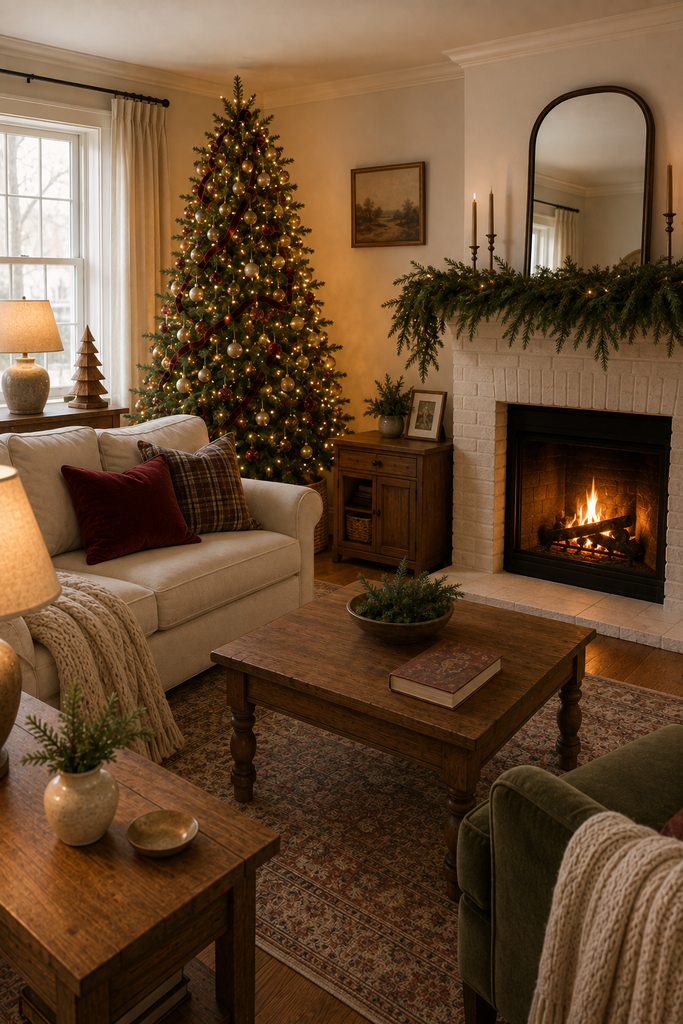
Once the tree, mantel, and main surfaces are decorated, stop and look around before adding anything else.
The finishing touches should be subtle: a cedar clipping in a small vase on an end table, a Christmas book on the coffee table, a little greenery tucked beside a framed photograph, or one small tree on a side cabinet.
These aren’t supposed to compete with your main decorations. They’re there to make the room feel connected.
And honestly, knowing when to stop is one of the most useful Christmas decorating skills. Leave some regular objects untouched and some surfaces empty. Your living room will feel festive without losing the comfortable, lived-in quality that makes you want to spend time there.
Quick Tips for Decorating Your Living Room for Christmas
Before you start pulling every decoration out of storage, keep a few things in mind:
- Choose your color palette first. Two or three main colors make mixing old and new decorations much easier.
- Pick your focal points. Usually the tree and fireplace are enough; everything else can be quieter.
- Repeat materials around the room. Using the same velvet ribbon, brass finish, wood tone, or evergreen in several areas creates continuity.
- Don’t decorate every surface. Empty space helps your favorite Christmas pieces stand out.
- Keep walkways functional. Trees, baskets, presents, and floor decorations shouldn’t interfere with how you move through the room.
- Use lighting strategically. Warm, layered lighting can create more atmosphere than adding another dozen decorations.
- Be careful around heat and flames. Keep greenery, stockings, ribbon, paper, textiles, and other combustible decorations safely away from fireplaces, candles, heaters, and other heat sources.
Let’s Wrap Up
The nicest Christmas living room decoration ideas aren’t necessarily the ones involving the most decorations. They’re the ones that make your existing living room feel warmer, softer, and a little more special for the season.
Start with your biggest focal point—usually the tree or fireplace—and build outward slowly. Add greenery, repeat a few colors, bring in cozy textiles, and use warm lighting to tie everything together. Then give yourself permission to leave some areas alone.
You can go classic with cranberry red and evergreen, keep things natural with cream and wood tones, or mix old decorations with a few new finds. There isn’t one correct Christmas look.