
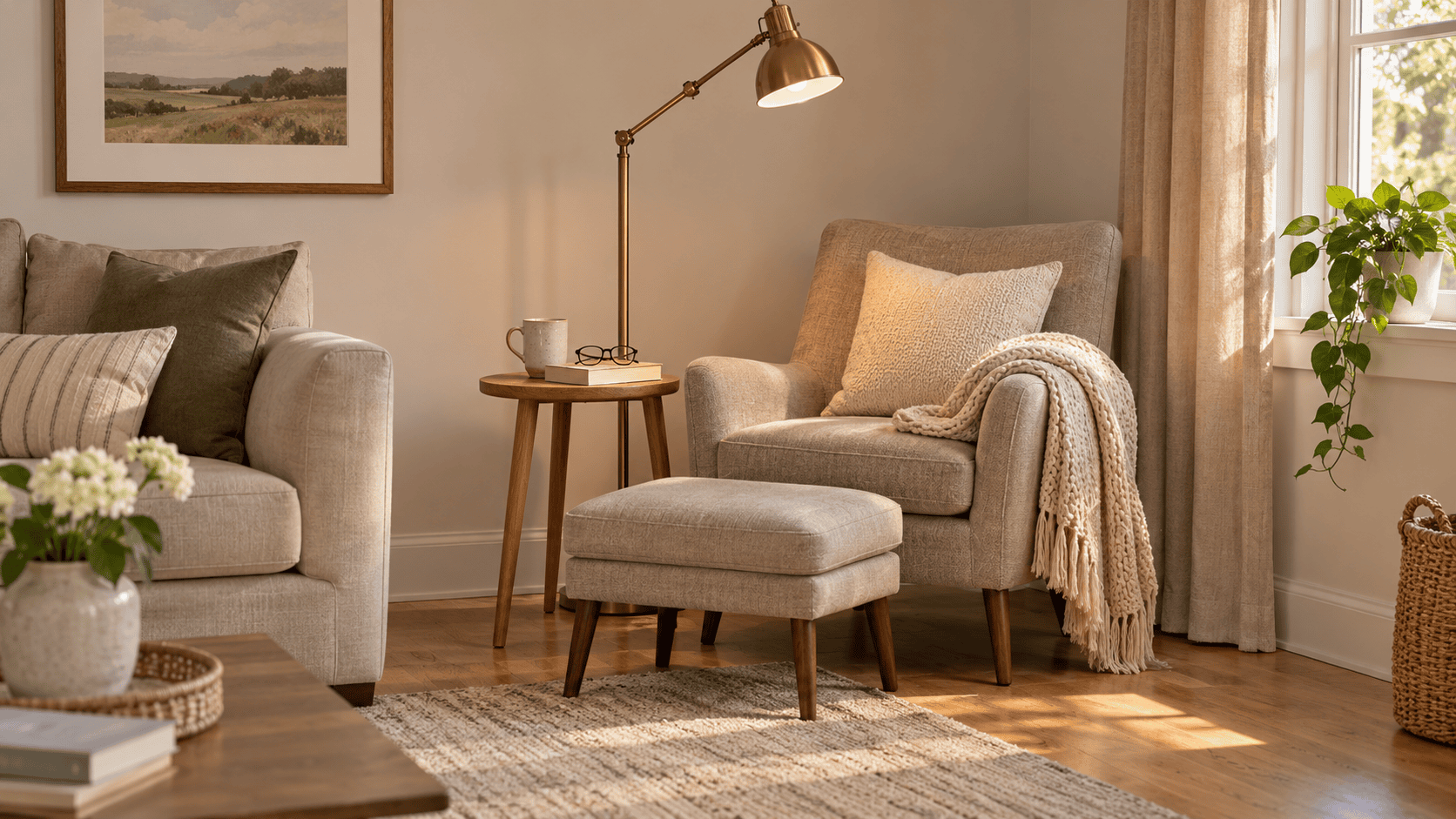
There’s always that one corner of the house that never quite figures out what it wants to be. Maybe it’s the awkward space beside a window, the empty spot in your bedroom, or that little area under the stairs where random things seem to collect. You keep meaning to do something with it, but somehow, it stays empty. Or worse, becomes the unofficial home for laundry baskets.
Here’s the thing: you don’t need an entire spare room to create somewhere that feels peaceful. Sometimes, a comfortable chair, a warm lamp, and a little thought about how you actually like to relax are enough.
And honestly, having a dedicated spot where you can read a few chapters, enjoy your morning coffee, or just sit without staring at a television sounds pretty wonderful.
These 15 small nook ideas for reading and relaxation are all about making the most of those overlooked spaces. From cozy window seats to tucked-away bedroom corners, there are plenty of ways to create a little retreat without spending a fortune or rearranging your entire house.
1. Turn an Empty Window Corner Into a Cozy Reading Spot
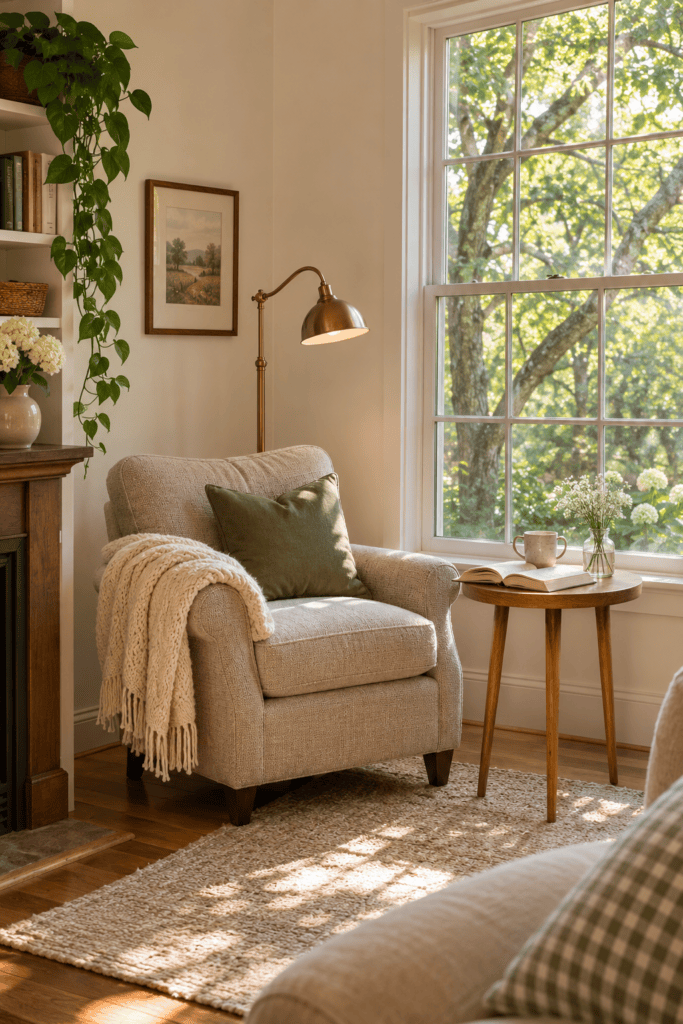
A window corner is one of the easiest places to create a reading nook, especially if your home already gets beautiful natural light. Instead of letting that space sit empty, bring in a comfortable armchair, a small side table, and somewhere to rest your feet.
The best part about a window reading nook is that you don’t have to work very hard to make it inviting. Natural light does most of the heavy lifting during the day, and being able to look outside between chapters makes the whole space feel more relaxing.
Choose a chair with a supportive back and enough seat depth to curl up comfortably. Add a small lamp for evening reading, preferably one that directs light toward your book rather than across the entire room. If the window gets strong afternoon sun, a light-filtering shade will help control glare.
For smaller rooms, skip the oversized accent chair. A compact upholstered chair with slim arms can feel just as comfortable without swallowing up the corner.
2. Create a Built-In Bench Nook With Hidden Storage
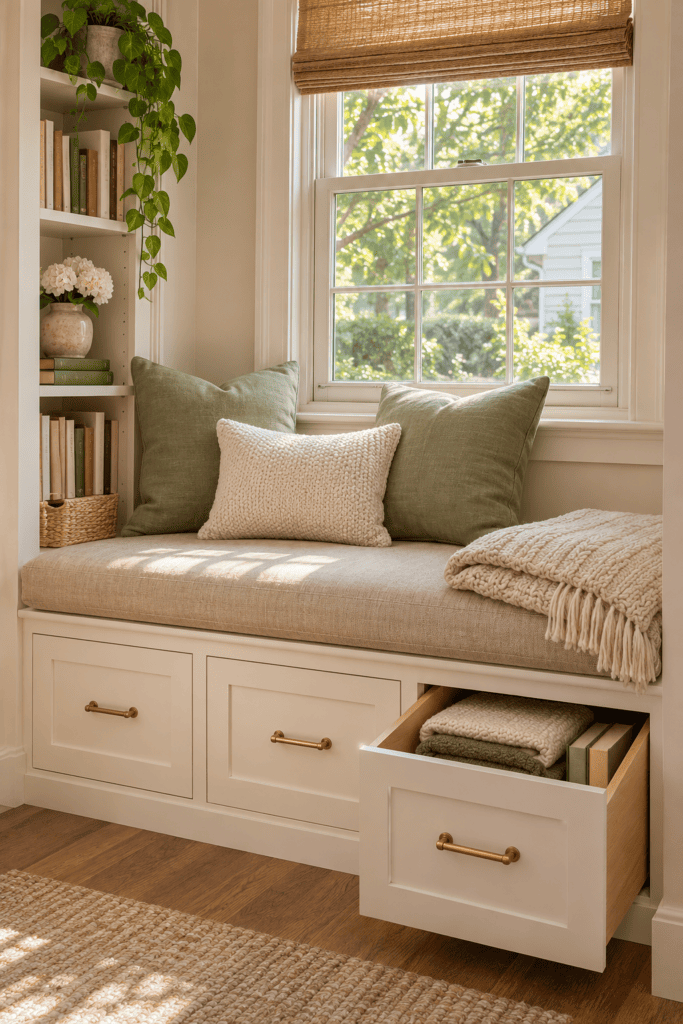
If you’re dealing with limited square footage, a built-in bench is one of those ideas that earns its keep. You get a comfortable place to sit while turning otherwise unused space into practical storage.
This setup works especially well in bedrooms, upstairs landings, and narrow spaces beneath windows. A simple wooden bench with drawers underneath can hold extra blankets, books, seasonal accessories, or anything else that usually ends up piled somewhere inconvenient.
Comfort matters here more than people realize. A bare wooden bench might photograph beautifully, but you probably won’t spend an hour reading on it. Use a firm foam cushion that’s thick enough for extended sitting, along with a couple of supportive back pillows.
You also don’t necessarily need custom cabinetry. A sturdy storage bench with a fitted cushion can create a similar look for much less money. Just make sure the bench is designed to support an adult’s weight.
3. Make a Bedroom Corner Feel Like a Little Retreat

Your bedroom might already be the quietest room in the house, so why not give yourself somewhere to relax that isn’t the bed?
A bedroom reading nook can be as simple as a soft accent chair positioned beside a dresser or window. The trick is to make it feel slightly separate from the sleeping area, even if there’s only a few feet between them.
Try placing a small round rug beneath the chair and adding a narrow floor lamp behind it. These two details help establish the corner as its own little space without needing a divider or additional furniture.
Stick with colors that complement your existing bedding rather than introducing a completely different palette. Warm beige, muted sage, dusty blue, and soft brown are especially easy to work with.
And here’s a practical tip: avoid putting your laundry hamper right beside the chair. Otherwise, your relaxing retreat could quickly become the world’s most expensive clothes rack.
4. Use a Small Bookshelf to Carve Out a Private Reading Space
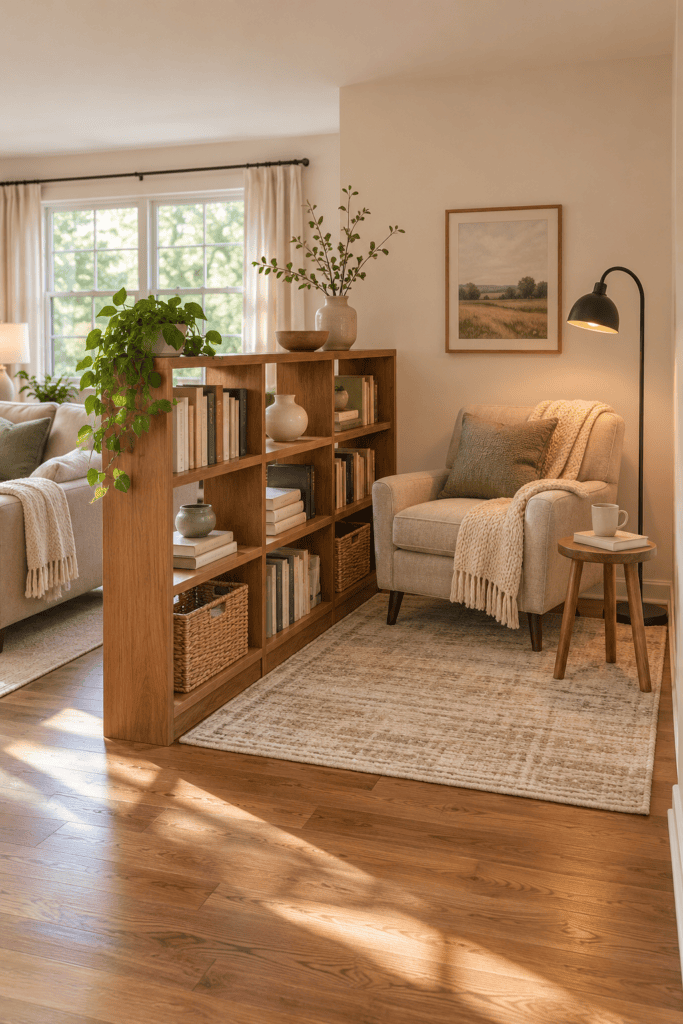
Open-plan rooms can be convenient, but finding somewhere that feels private isn’t always easy. A bookshelf can help create that separation without requiring a wall.
Position a low or medium-height bookshelf perpendicular to an existing wall, leaving enough space behind it for a chair and reading lamp. The shelf creates a visual boundary while still allowing light to move through the room.
An open-backed shelving unit is particularly useful in smaller living rooms because it doesn’t completely close off the space. You can store your favorite books on the shelves while using a few baskets to keep smaller items organized.
Just be careful about stability. Any freestanding bookshelf used as a divider needs to be properly secured according to the manufacturer’s instructions, especially in homes with children or pets.
This arrangement works beautifully in studio apartments or living rooms where you want a dedicated reading area without making everything feel cramped.
5. Turn the Space Under Your Stairs Into a Secret Hideaway
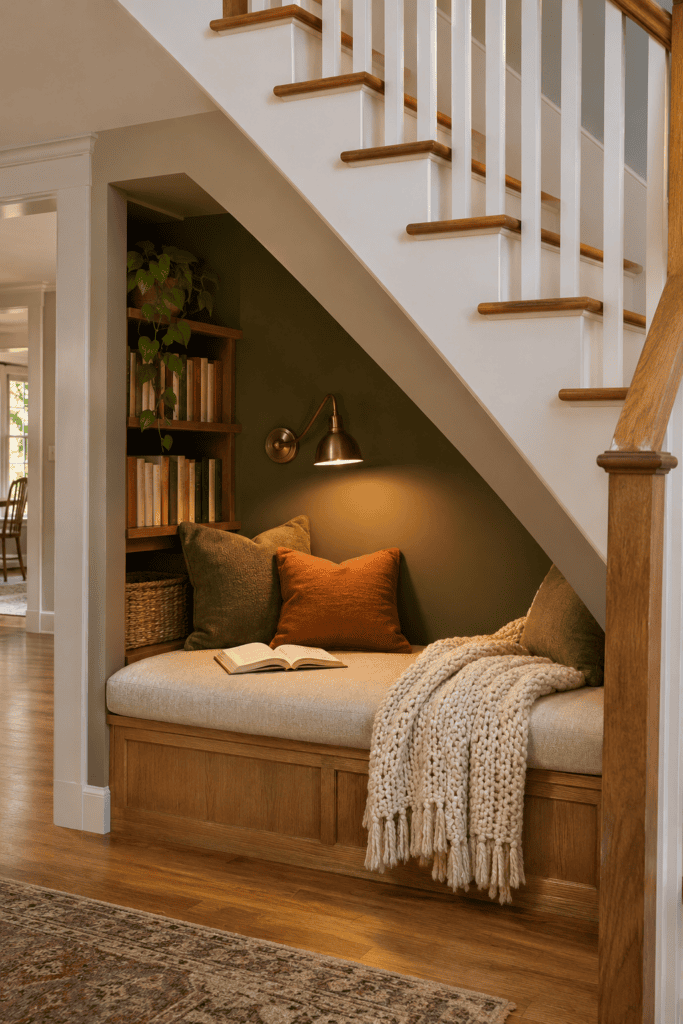
The space beneath a staircase has a habit of becoming a dumping ground for shoes, cleaning supplies, and things nobody knows where to put.
But if you’ve got enough clearance to sit comfortably, it can become one of the coziest corners in the house.
A low bench with cushions works better than a tall armchair in most under-stair spaces. Add a wall-mounted reading light, a narrow bookshelf, and a soft throw blanket to make the area feel intentionally designed rather than squeezed into an awkward gap.
Darker paint can look surprisingly good here. A muted olive, warm charcoal, or deep navy creates a snug atmosphere, especially when paired with warm lighting and natural wood.
If the nook feels too enclosed, keep the walls a lighter color and use a mirror or pale upholstery to bounce light around.
Just don’t block access to electrical panels, plumbing, or other utilities that may be tucked beneath the stairs.
6. Build a Relaxing Floor Cushion Nook
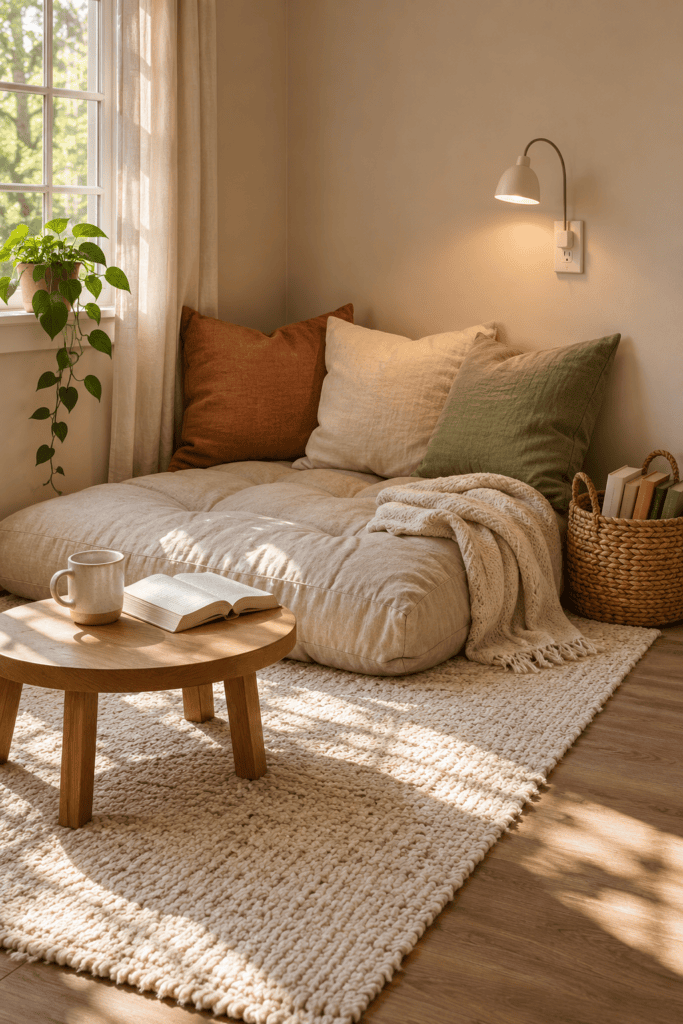
Not every cozy reading corner needs a chair. If you enjoy sitting closer to the floor, oversized cushions can create an informal little retreat that feels especially inviting.
Start with a thick floor mattress or a structured floor cushion rather than scattering a few thin pillows across hardwood flooring. You want something that provides actual support, particularly if you plan to sit there for longer than a few minutes.
Layer two or three large back cushions against the wall, then add a soft blanket and a low table for your coffee or tea. A washable rug underneath makes the setup warmer and helps define the space.
This idea works particularly well in small bedrooms, quiet corners of family rooms, and casual apartments where traditional furniture feels too bulky.
One thing worth remembering: floor seating isn’t comfortable for everyone. If getting up and down from the floor is difficult, a low lounge chair may be the better alternative.
7. Create a Tiny Library Corner With Floating Shelves

There’s something wonderfully satisfying about having your favorite books within arm’s reach. And no, you don’t need floor-to-ceiling bookshelves or a separate library room to pull it off.
A narrow wall with two or three floating shelves can become a charming mini library. Place a reading chair beneath or beside the shelves, then use a wall-mounted lamp to save valuable floor space.
Keep the shelves at a height that’s easy to reach from a standing position. Trying to grab a book from above your head while balancing on the arm of a chair is not exactly the peaceful experience we’re going for.
For a more collected look, arrange books naturally rather than turning every spine into a perfectly color-coordinated display. Mix upright rows with a few horizontal stacks, leaving enough space that the shelves don’t feel overloaded.
Use properly rated brackets and wall anchors, since books are surprisingly heavy. A secure, practical arrangement will serve you much better than a pretty shelf that can’t safely hold your collection.
8. Add a Window Seat With Soft Curtains for Extra Privacy
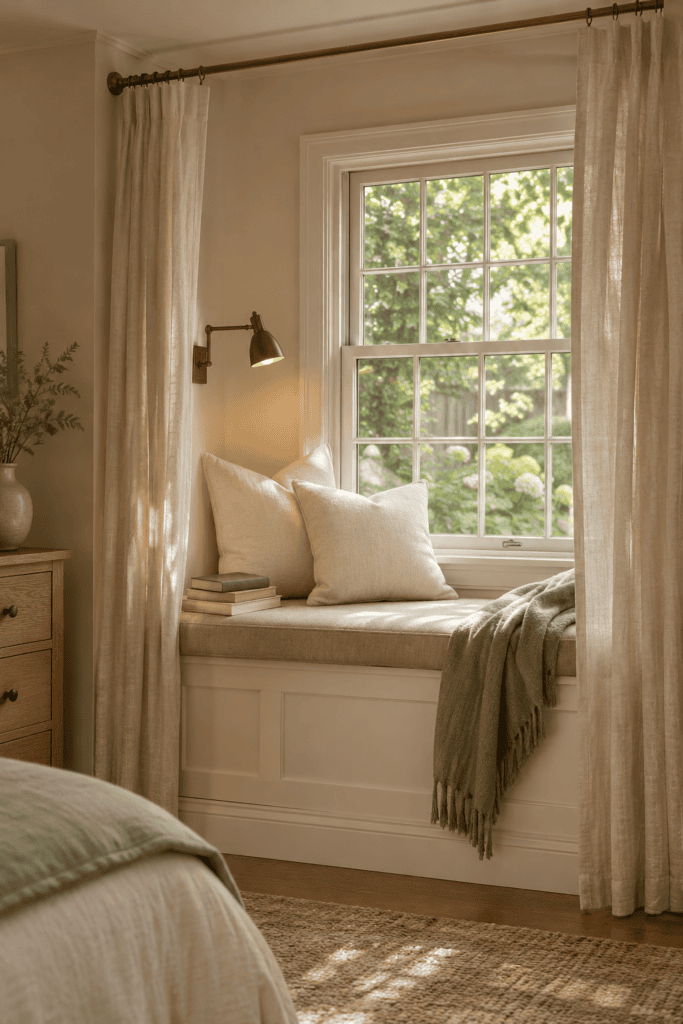
If you love the idea of sitting by a window but want something a little more tucked away, soft curtains can make an ordinary window seat feel like a private escape.
The curtains don’t need to be dramatic or heavy. In fact, lightweight linen or cotton panels usually work better in small spaces because they create softness without blocking every bit of daylight.
Install the curtain rod above the window and extend it slightly beyond the frame. This gives the fabric room to hang neatly and creates the impression of a wider, more generous nook.
Keep the seat simple with a fitted cushion, one supportive pillow, and a small throw. Too many decorative pillows might look lovely in photos, but they leave nowhere for an actual person to sit.
This is an especially good idea for bedrooms and living rooms that face neighboring houses. You can enjoy natural light while having a little more control over privacy.
9. Turn an Unused Closet Into a Reading Nook
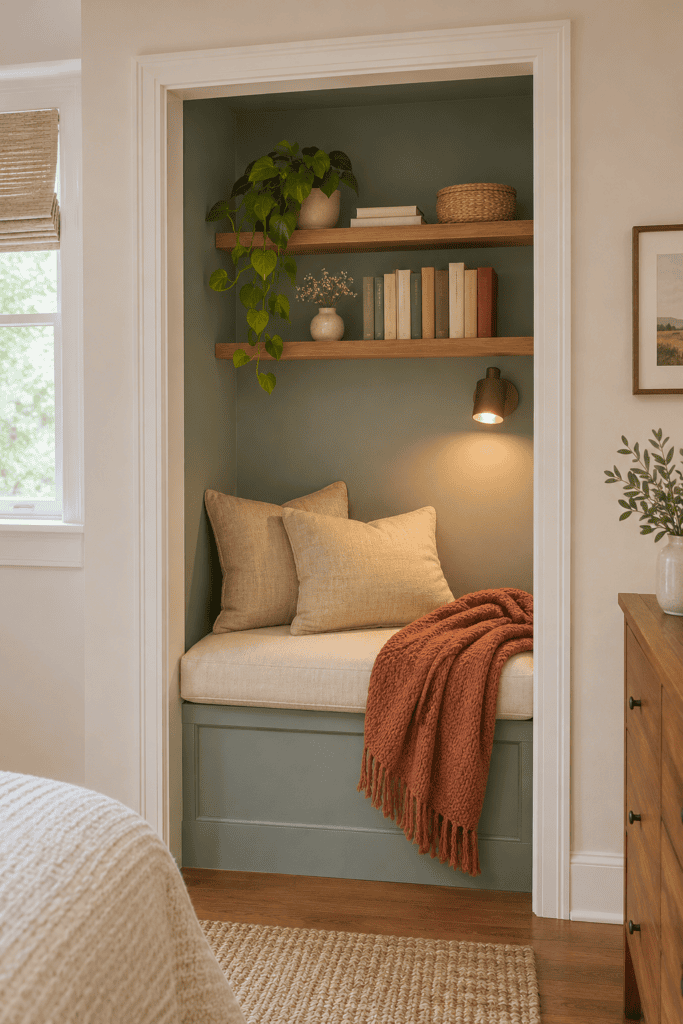
Have a small closet that’s doing a terrible job of staying organized? Depending on its size and location, it might be more useful as a cozy reading nook.
Removing the doors from a shallow closet creates a recessed space that already feels separate from the rest of the room. Paint the inside a comforting color, add a fitted seat cushion, and use the back wall for a few narrow shelves.
Because closets rarely have natural light, proper lighting is important. A hardwired wall sconce installed by an electrician is a practical option, while a rechargeable reading lamp can work when electrical changes aren’t possible.
Measure the available depth before buying furniture. A shallow bench is often more suitable than a full chair, particularly when you’re working with a standard reach-in closet.
This idea is also lovely for kids’ rooms, although you’ll want to avoid doors that can trap someone inside and make sure the space remains well ventilated.
10. Make a Living Room Nook With a Comfy Accent Chair
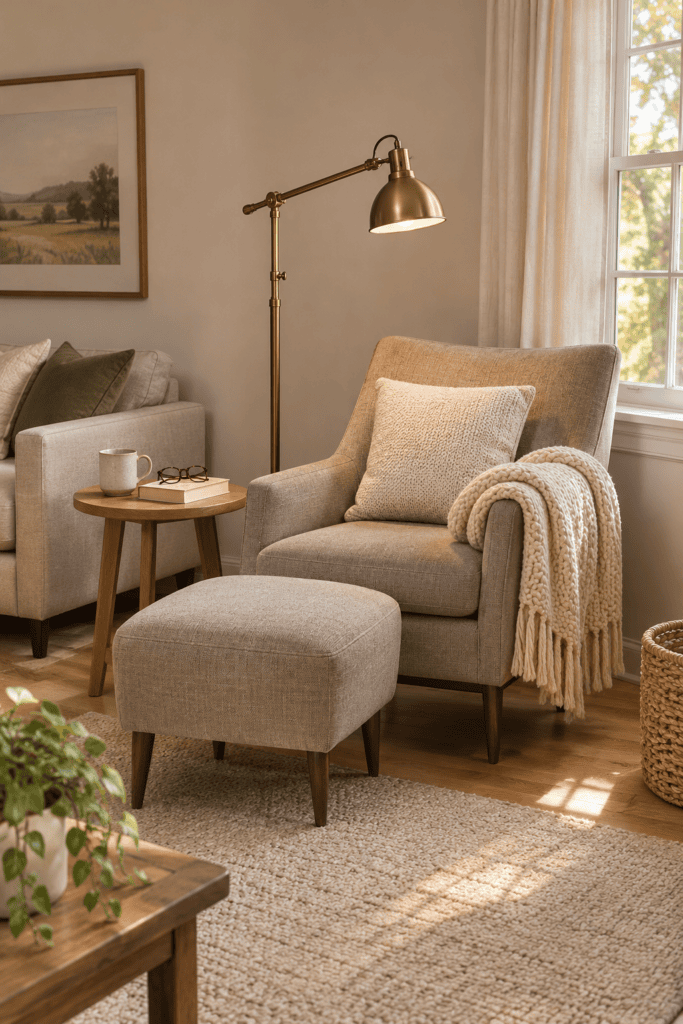
Sometimes the simplest solution really is the best one.
If your living room has a neglected corner, a well-chosen accent chair can turn it into a reading spot without making the entire room feel redesigned.
Look for a chair that suits the scale of your space. In a small living room, narrow arms, raised legs, and a slightly upright back can provide comfort without the visual bulk of an oversized recliner.
Pair the chair with a compact side table large enough for a mug, a book, and maybe your reading glasses. Position a floor lamp nearby, ensuring it won’t interfere with the main walking path.
What actually works is keeping the nook connected to the rest of the room while giving it a clear purpose. You don’t need a separate rug or a dozen accessories if the chair, lighting, and table already create a comfortable arrangement.
A small upholstered ottoman is worth adding if space allows. Being able to put your feet up makes casual reading feel considerably more relaxing.
11. Make an Awkward Attic Corner Feel Warm and Inviting
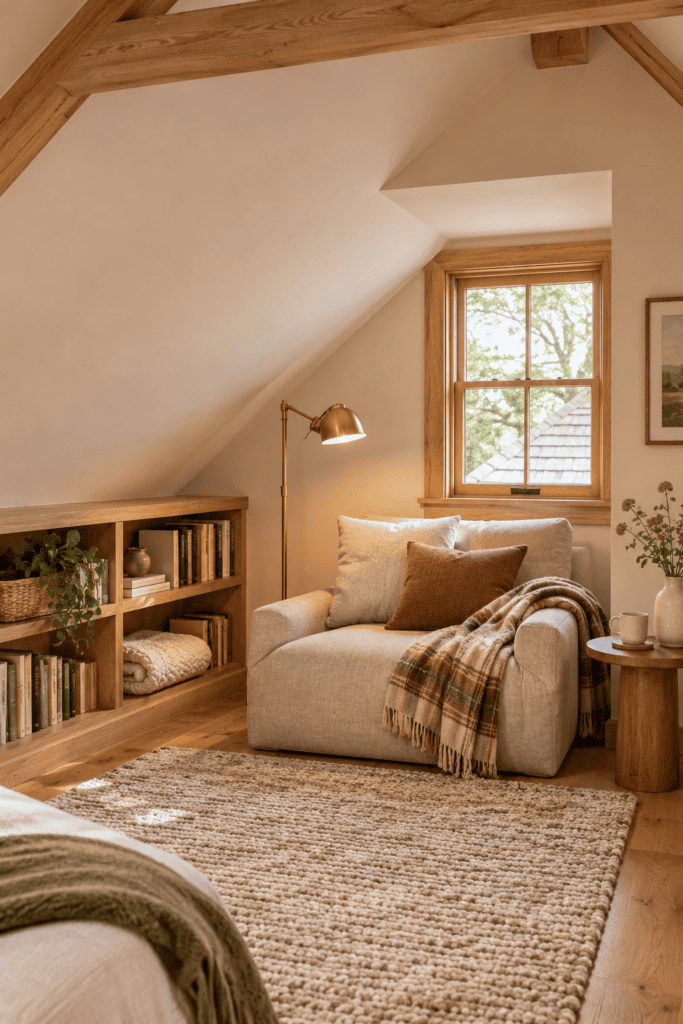
Sloped ceilings can make decorating an attic room frustrating, but they’re actually perfect for creating intimate little spaces.
Instead of fighting the low ceiling with tall furniture, embrace the proportions. A low upholstered chair, compact daybed, or cushioned bench can sit comfortably beneath the slope without making the room feel crowded.
Keep taller furniture toward the center of the room, where the ceiling is highest. Near the eaves, use low shelves or built-in cubbies for books and blankets.
Lighting makes a huge difference in attic spaces. If you have a small dormer window, position your seating to benefit from daylight. Otherwise, use a warm floor lamp or wall light to avoid that dim, forgotten-storage-room feeling.
A thick rug also helps soften the room, particularly if the attic has wooden floors.
Before setting up a regular reading space, make sure the area has suitable flooring, safe access, ventilation, and comfortable temperatures throughout the year.
12. Create a Calm Reading Corner With Minimalist Decor

If your home already feels busy, adding more furniture and accessories might be the last thing you want.
A minimalist reading nook focuses on a few carefully chosen pieces that genuinely improve comfort. Think one good chair, one functional light, and one small surface for essentials.
Start with a restrained color palette. Cream, oatmeal, warm gray, soft taupe, and natural wood tend to feel peaceful without making the room appear cold.
Instead of filling the wall with art, let one simple framed print or the natural texture of the wall be enough. Keep books in a small basket or on a nearby shelf rather than stacking them across the floor.
Here’s where minimalist decorating sometimes goes wrong: people remove so much that the space stops being comfortable. You still need proper lighting, supportive seating, and somewhere convenient to put things.
The goal isn’t an empty corner. It’s a nook that feels easy to use and just as easy to keep tidy.
13. Use a Hanging Chair for a Playful Relaxation Nook
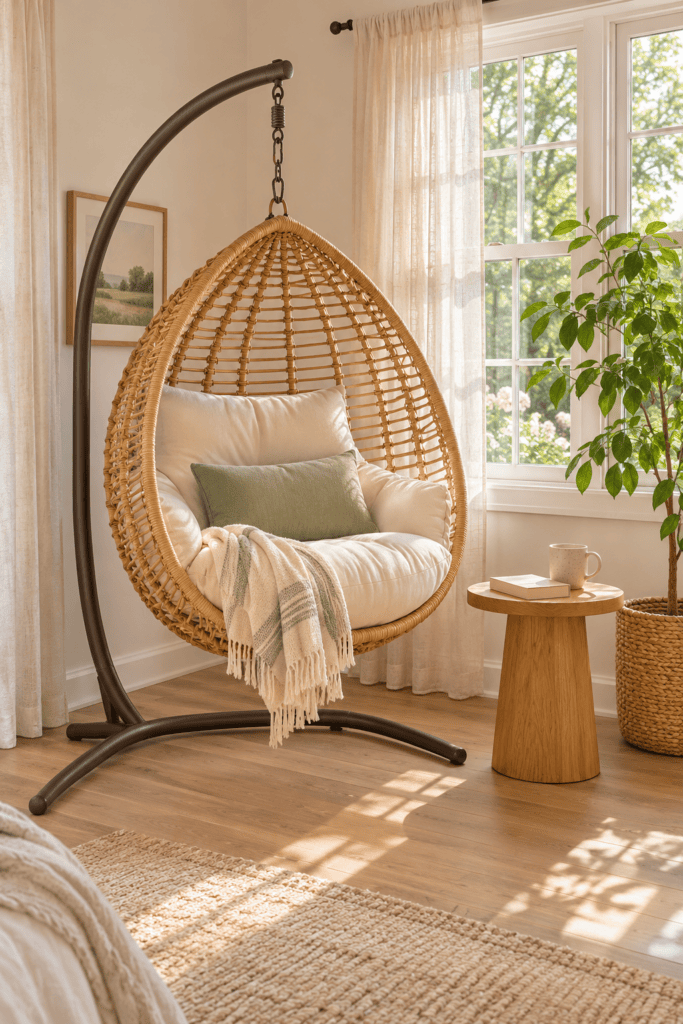
A hanging chair can turn a small corner into something a little more fun, especially in a casual bedroom, sunroom, or relaxed living space.
The gentle movement makes it an appealing spot for listening to music, flipping through a magazine, or simply taking a break. Woven rattan-style designs feel airy, while upholstered hanging seats offer a softer, more cushioned look.
However, this idea takes more planning than placing an ordinary chair on the floor. Ceiling-mounted chairs need properly engineered structural support and hardware rated for the intended load. Never attach one directly to drywall or decorative ceiling panels.
If you don’t want to deal with ceiling installation, a hanging chair with its own manufacturer-approved stand is often a more practical option, provided the floor is level and there’s adequate clearance.
Keep the surrounding area fairly open so the chair can move without hitting furniture or walls.
And remember, a hanging chair isn’t always ideal for serious, hour-long reading sessions. Some models prioritize looks over back support, so comfort-test one before committing.
14. Make a Small Sunroom Corner Your Morning Escape

If you have a sunroom, enclosed porch, or even a bright corner with several windows, you’ve already got a great starting point for a peaceful nook.
Natural light and a view of greenery make these spaces feel connected to the outdoors without giving up indoor comfort.
A compact rattan chair with upholstered cushions is a lovely choice because it looks light and casual. Add a small wooden side table for coffee, along with a washable throw for cooler mornings.
Keep plants grouped near the windows rather than surrounding the chair on every side. One taller leafy plant and a couple of smaller pots usually provide enough greenery without making the corner difficult to move around in.
Pay attention to temperature and sunlight. Some sunrooms become extremely hot in summer or chilly in winter, so adjustable shades and suitable insulation may be more valuable than extra decorative touches.
This is one of those nook ideas that feels especially good in the morning, when the house is still quiet and you have a few minutes to yourself.
15. Create a Cozy Daybed Nook That Doubles as Extra Seating
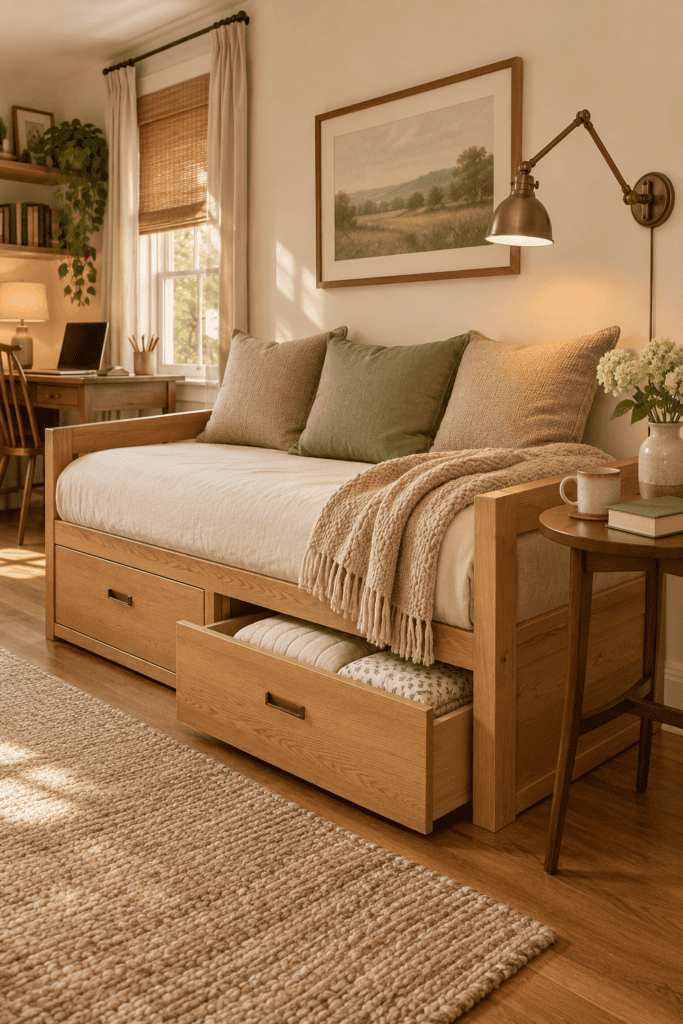
A daybed is a clever choice when you want a reading nook that can also handle occasional guests or provide extra seating.
It’s particularly useful in a home office, spare bedroom, or multipurpose room where every piece of furniture needs to do more than one job.
Choose a daybed with a simple frame and position it against a wall. Add a proper mattress, two or three large back cushions, and a soft blanket to make it comfortable for lounging. During the day, it can function almost like a small sofa.
If floor space is tight, look for models with drawers underneath. They’re useful for storing bedding, extra pillows, and those blankets that never seem to have a permanent home.
One thing people often overlook is seat depth. A standard twin-size mattress is much deeper than a regular sofa, so substantial back cushions can help make upright reading more comfortable.
Place an adjustable wall lamp above one end and keep a small table nearby. You’ll have a practical place to stretch out with a book without sacrificing the room’s other functions.
A Few Things to Keep in Mind Before Setting Up Your Nook
Before you start moving furniture around, think about how you’ll actually use the space. A nook that looks beautiful but feels uncomfortable probably won’t get much attention after the first week.
- Prioritize comfortable seating. Supportive cushions and a suitable backrest matter more than matching the latest decorating trend.
- Get the lighting right. Daylight is wonderful, but you’ll also want a dedicated reading light for evenings.
- Leave enough room to move. Avoid squeezing furniture into corners where it blocks doors, drawers, or everyday walking paths.
- Keep essentials close. A small table, book basket, or nearby shelf prevents unnecessary clutter.
- Choose easy-care materials. Washable cushion covers and durable upholstery make a big difference in spaces you use regularly.
You don’t have to get everything perfect immediately. Start with the furniture you already own, spend a little time in the space, and adjust what doesn’t feel quite right.
Final Thoughts
The nicest thing about creating a small reading nook is that it doesn’t require a big renovation, expensive furniture, or even much extra space.
Sometimes that awkward corner beside the window just needs a comfortable chair. Maybe the unused closet could become something genuinely useful. Or perhaps all your bedroom needs is a lamp, a little rug, and a place to sit that isn’t covered in laundry.
These 15 small nook ideas for reading and relaxation show just how many possibilities are hiding around the average home.
Pick the idea that suits your space and the way you actually like to unwind. Start small, focus on comfort, and don’t worry about making everything picture-perfect.
After all, the best reading nook isn’t the prettiest one. It’s the one you genuinely look forward to spending time in.