
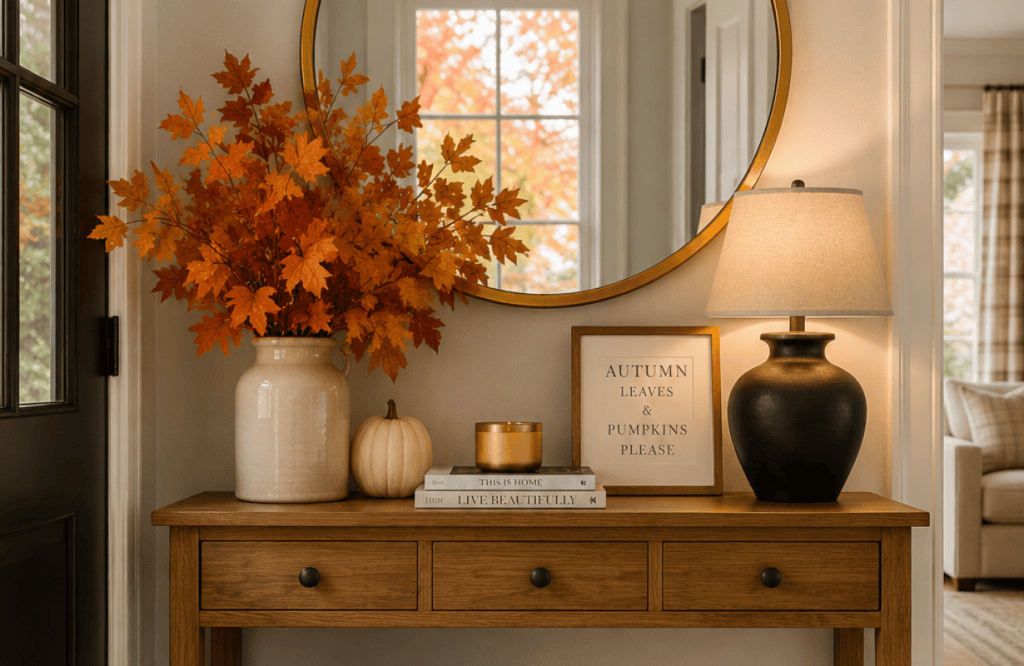
Your entry table is basically the handshake of your home it’s the first thing anyone sees the second they walk through the door, and it sets the tone for everything that follows. Yet somehow, it’s also the spot that gets neglected the longest. Summer decor lingers well past its welcome, a stray mail pile takes over, and before you know it, the leaves outside have already turned while the table inside hasn’t caught up at all.
Here’s the thing: a great fall entryway doesn’t have to be complicated, expensive, or Pinterest-perfect to actually work. Most of the time, it just comes down to a handful of smart choices layered together in the right way — the right texture, the right height, the right pop of color. Skip one of those elements and a table can look thrown together. Nail all three, and suddenly it looks like it belongs in a design magazine.
Whether you’re working with a big statement console table or a narrow little entry ledge that barely fits a candle, these thirteen ideas are built to scale up or down depending on your space.
1. Start With a Layered Runner Instead of a Tablecloth
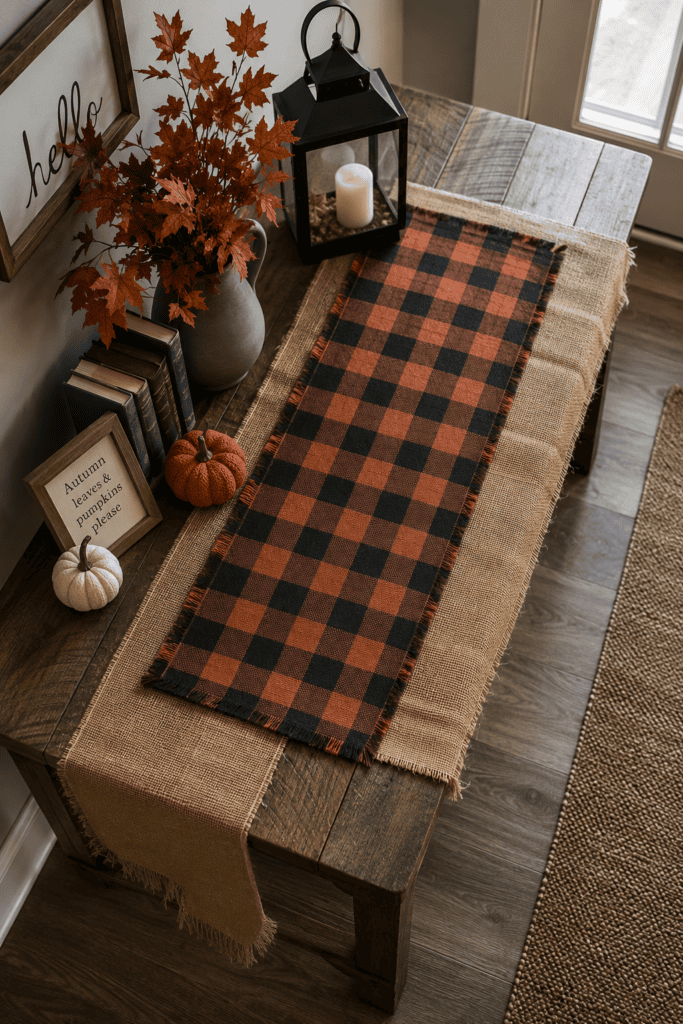
A flat tablecloth is fine, but it’s kind of boring, right? I switched to layering a burlap runner under a smaller plaid or buffalo-check topper, and the texture alone makes the table feel intentional. The trick is contrast — rough burlap against a smooth ceramic pumpkin looks so much richer than one flat surface.
- Burlap or jute runner as the base layer
- A shorter plaid, gingham, or velvet runner on top
- Let the ends drape unevenly for a relaxed, “I didn’t try too hard” look
IMO, this two-layer trick is the single easiest upgrade on this whole list. It costs about $15 and instantly reads as “styled” instead of “stuff I found in a drawer.”
2. Go Big With a Statement Pumpkin
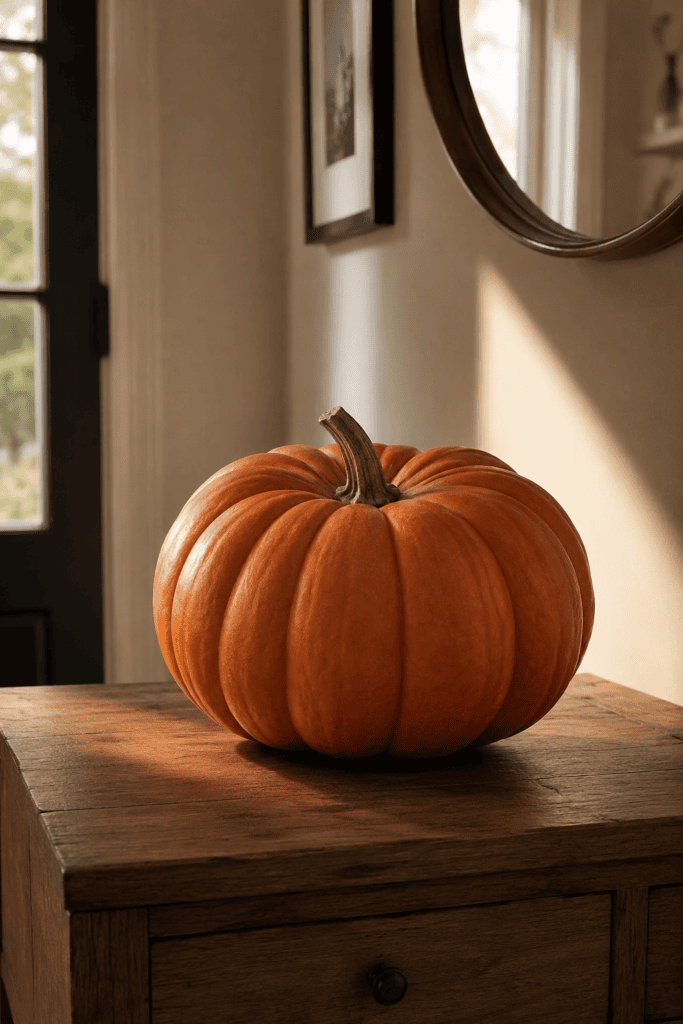
Every entry table needs one hero piece, and nothing says fall louder than an oversized pumpkin. Skip the tiny decorative gourds as your focal point — they get lost. Grab one large pumpkin, real or faux, and let it anchor the whole display.
I learned this the hard way after arranging twelve mini pumpkins in a neat little row and having the whole thing look like a science fair project. One big pumpkin fixed everything. Ever notice how one bold item does more work than ten small ones?
3. Mix Real and Faux Foliage
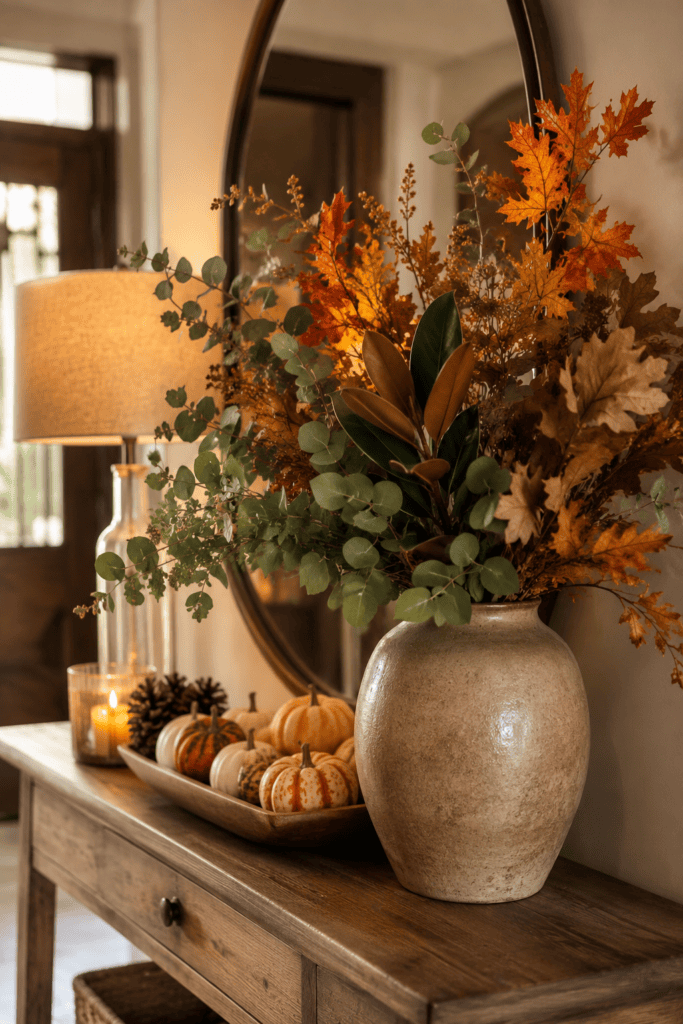
Fresh branches smell incredible, but they wilt fast, and nobody wants a table full of crispy dead leaves by week two. My solution: mix real stems with high-quality faux ones. The eye can’t tell the difference from a few feet away, and you get longevity without sacrificing that authentic look.
- Use fresh eucalyptus or magnolia leaves for a few days of fragrance
- Fill in with faux maple or oak branches for the long haul
- Spray a light layer of matte varnish on faux leaves to kill that shiny “clearly plastic” look
4. Add Height With Candlesticks or Lanterns
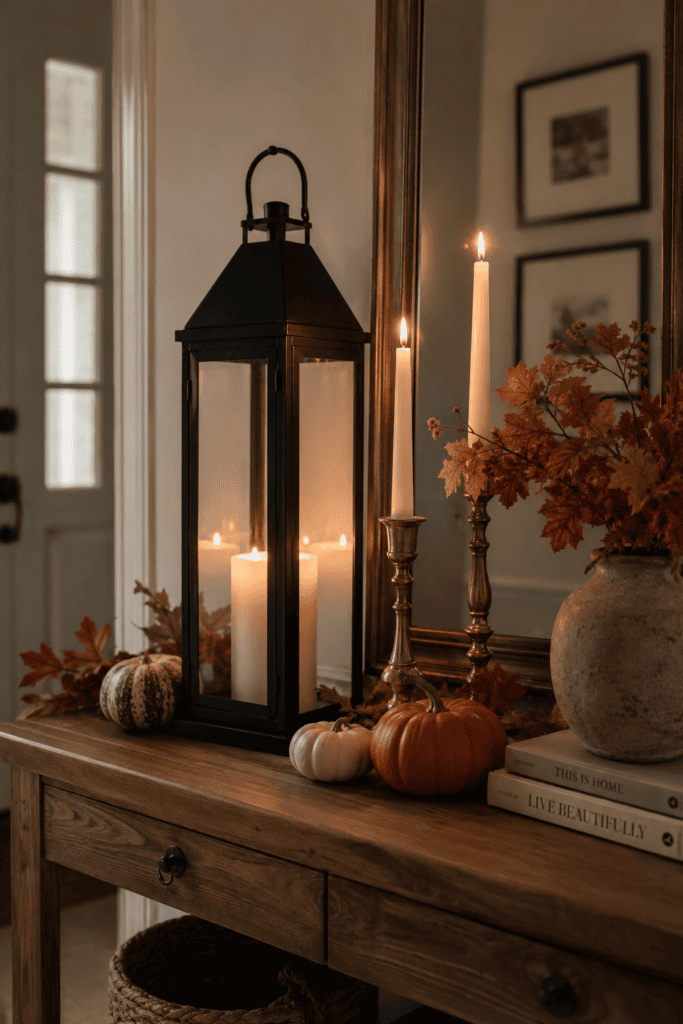
Flat arrangements read as flat, period. You need height variation to make a table feel designed rather than dumped. I always add at least one tall element — usually a lantern or a pair of mismatched candlesticks — so the eye travels up and down instead of just sideways.
Why Height Matters More Than You’d Think
A table with everything at the same level looks like a buffet line, not a vignette. Vary your heights in odd numbers: one tall piece, one medium, one short. It’s a simple rule, but it works every single time.
5. Bring In Texture With Natural Materials
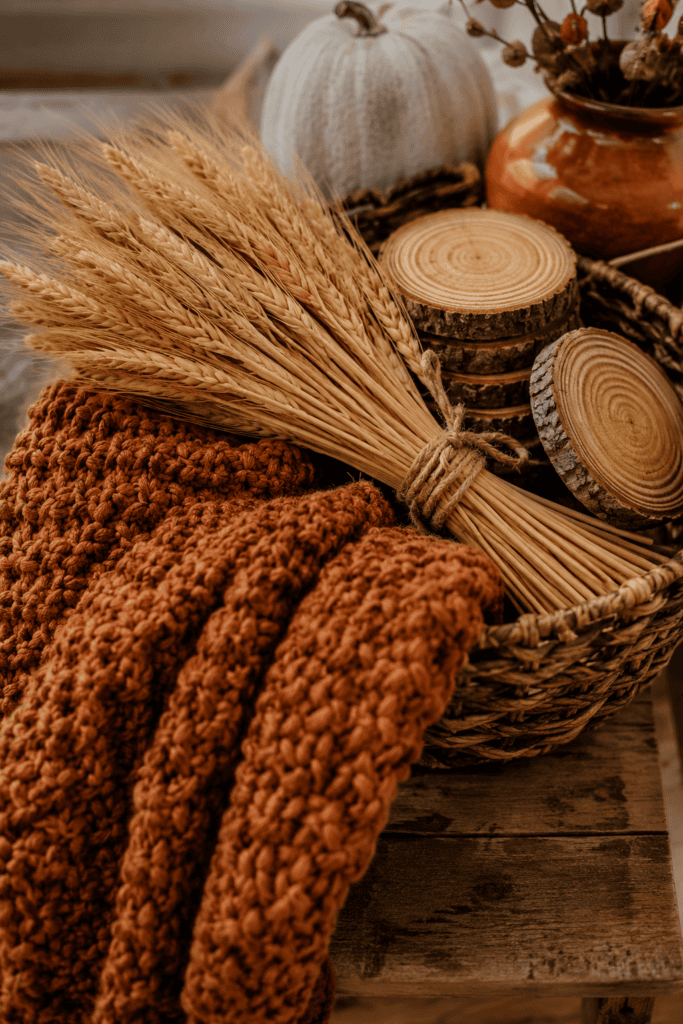
Smooth surfaces are fine, but fall decor practically begs for texture. Think dried wheat bundles, woven baskets, chunky knit throws draped over the table edge, and rough wood slices used as coasters or risers. Texture is what separates “decorated” from “styled like a magazine spread.”
I keep a small basket of dried hydrangeas on hand every September because they’re basically indestructible and look expensive even though mine cost about four dollars at a farmer’s market. Not gonna lie, that’s my favorite fall decorating hack of all time.
6. Use a Seasonal Color Palette (But Don’t Overdo Orange)
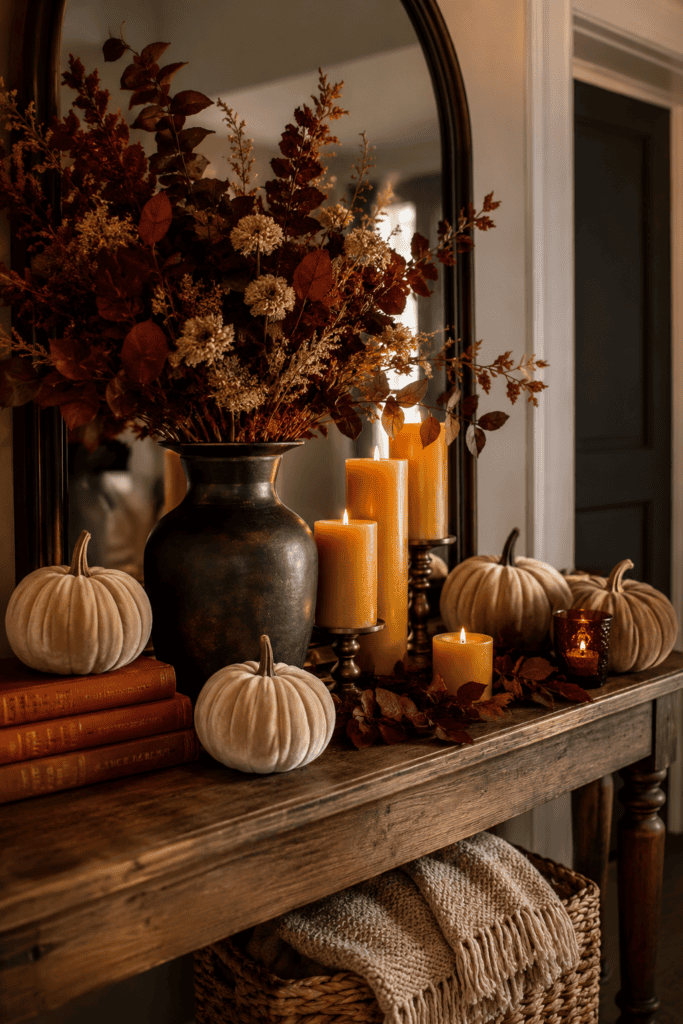
Here’s an unpopular opinion: orange is not the only fall color, and honestly, an entry table drowning in orange starts to look like a Halloween store threw up on your console. Instead, build a layered palette — deep burgundy, mustard, warm cream, and touches of black or charcoal.
- Burgundy mums or dried florals
- Mustard-colored pillar candles
- Cream pumpkins to soften the darker tones
- A single black or bronze accent (vase, tray, or frame)
This combo feels rich instead of costume-y, and honestly, it transitions beautifully right into Thanksgiving without needing a full re-do.
7. Frame the Display With a Mirror or Art
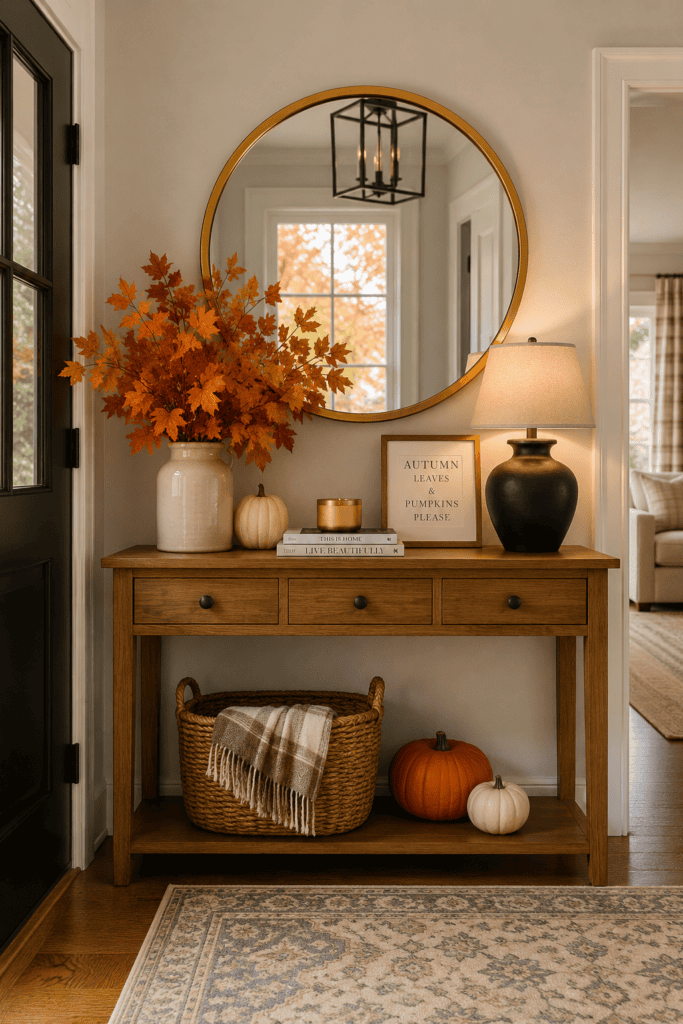
An entry table without anything above it feels incomplete, like a sentence without a period. Hang a round mirror or a piece of framed art above your table to give the whole vignette a backdrop. Mirrors also bounce light around your entryway, which is a nice bonus if your hallway tends to feel dark.
Ever walked into someone’s house and immediately felt like the entryway was “off” without knowing why? Nine times out of ten, it’s because there’s nothing framing the table from above.
8. Incorporate a Tray to Corral Small Items
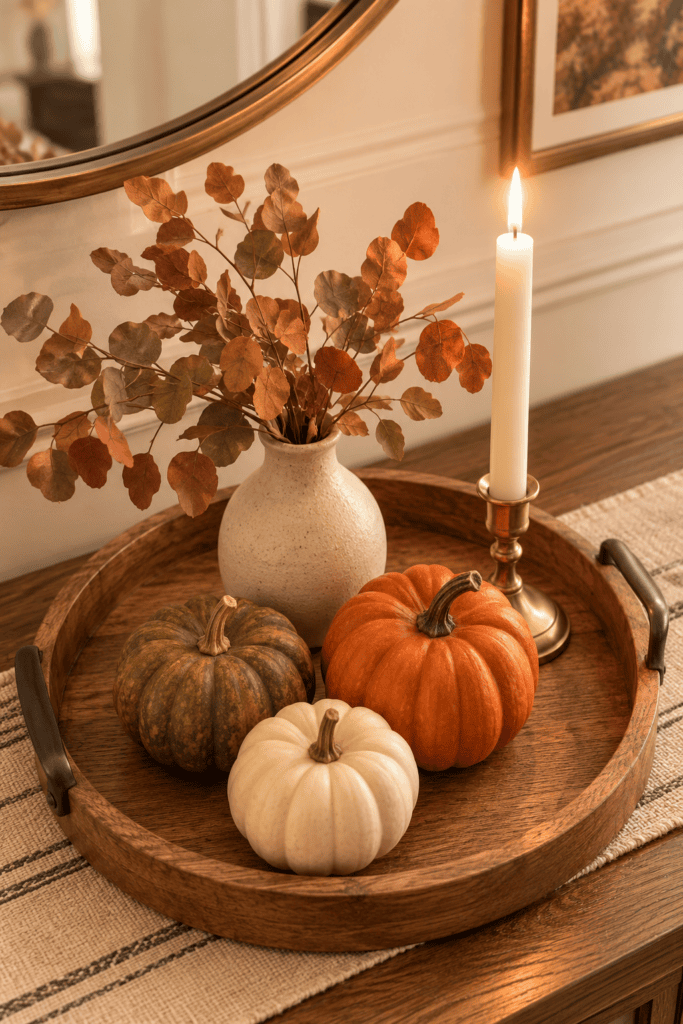
Small decor pieces scattered across a table look messy fast — candles here, a pinecone there, keys nobody remembers dropping. A decorative tray groups everything into one clean zone and instantly makes the table look more curated.
- Choose a wood, metal, or woven tray depending on your palette
- Group 3–5 items max on the tray (odd numbers again — it’s not a coincidence)
- Leave the rest of the table surface open for breathing room
9. Don’t Forget Scent
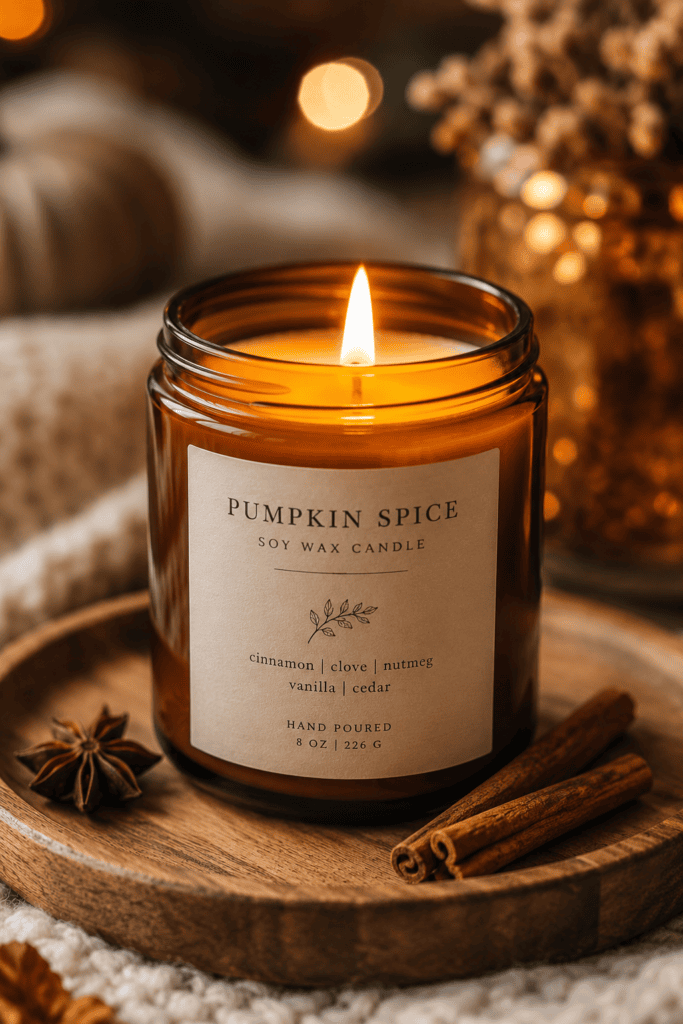
Decorating isn’t just visual, FYI. A fall-scented candle or diffuser sitting on that tray does a lot of heavy lifting the second someone walks through your door. Cinnamon, clove, fig, and amber are the classic fall notes, but honestly, anything that isn’t “beachy coconut” will do the job.
I keep a candle burning on my entry table every time we have guests, and I swear people comment on the smell before they even notice the pumpkins. Scent memory is powerful — use it.
10. Layer in Books for Extra Height and Personality
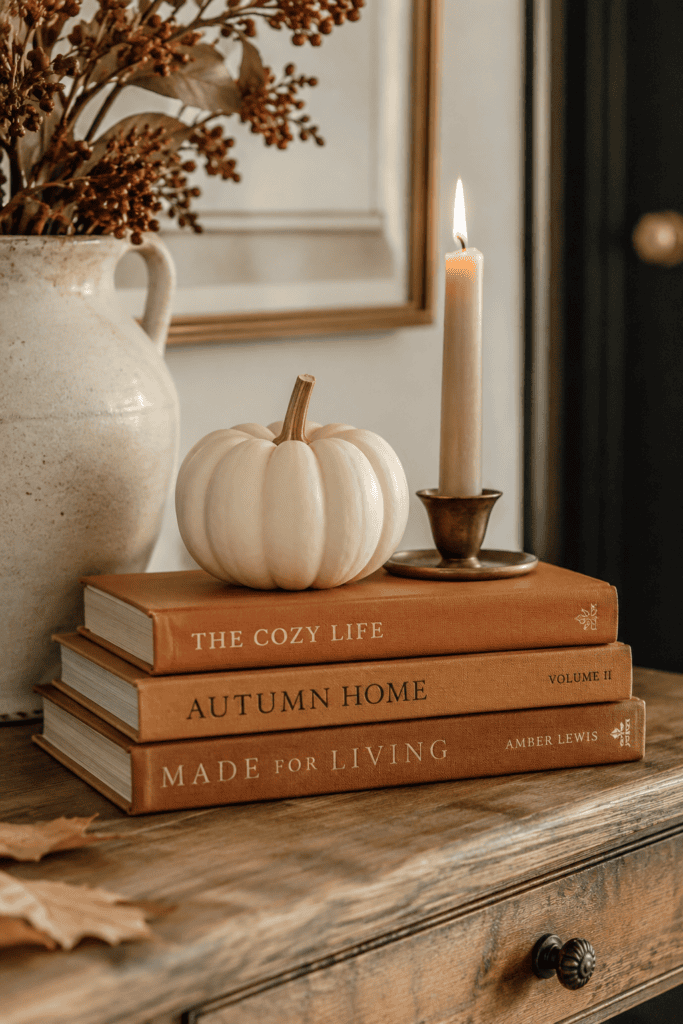
Stacked books are an old interior design trick, but they work particularly well on a fall entry table. Grab two or three hardcovers with warm-toned spines and stack them to create an instant riser for a small pumpkin or candle. It’s cheap, it’s easy, and it adds a lived-in, personal touch that store-bought decor can’t fake.
I always use books I actually own instead of buying “decorative” ones, because let’s be real — who’s paying $40 for a book they’ll never read just to make it look pretty?
11. Play With Asymmetry Instead of Perfect Symmetry
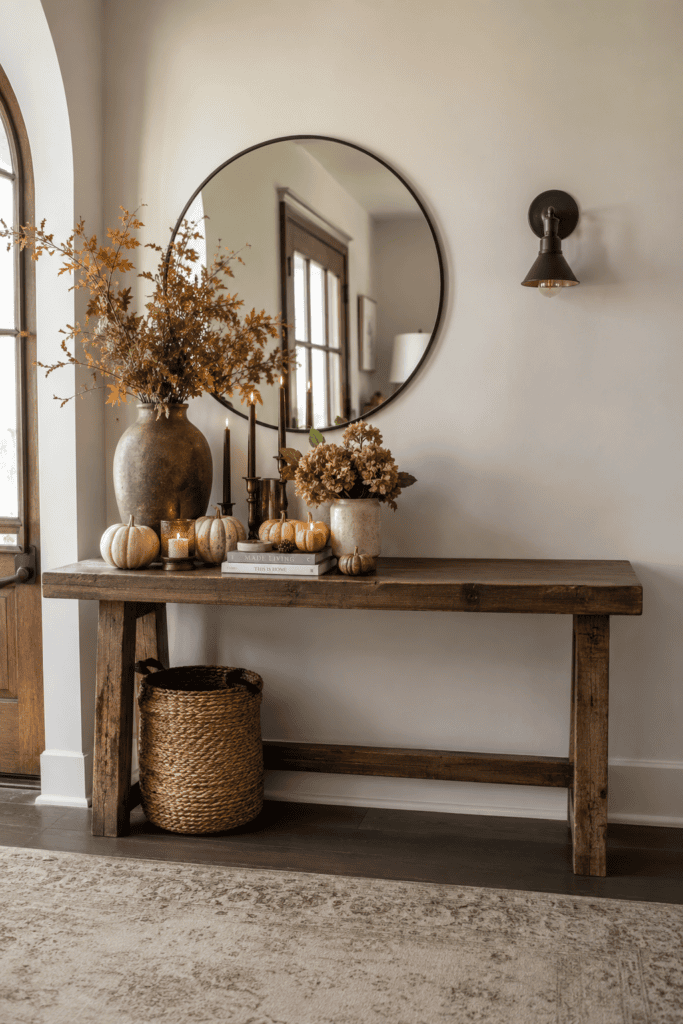
Symmetrical arrangements (a candle on each side, matching vases, etc.) look formal, but they can also feel stiff. For a cozier fall vibe, try an asymmetrical layout — cluster items on two-thirds of the table and leave the remaining third open. It creates visual movement instead of a static, mirrored look.
This is genuinely my favorite styling tip in this entire article. Once you stop forcing symmetry, arranging decor gets so much easier and so much more natural-looking.
12. Add a Garland That Drapes Off the Edge
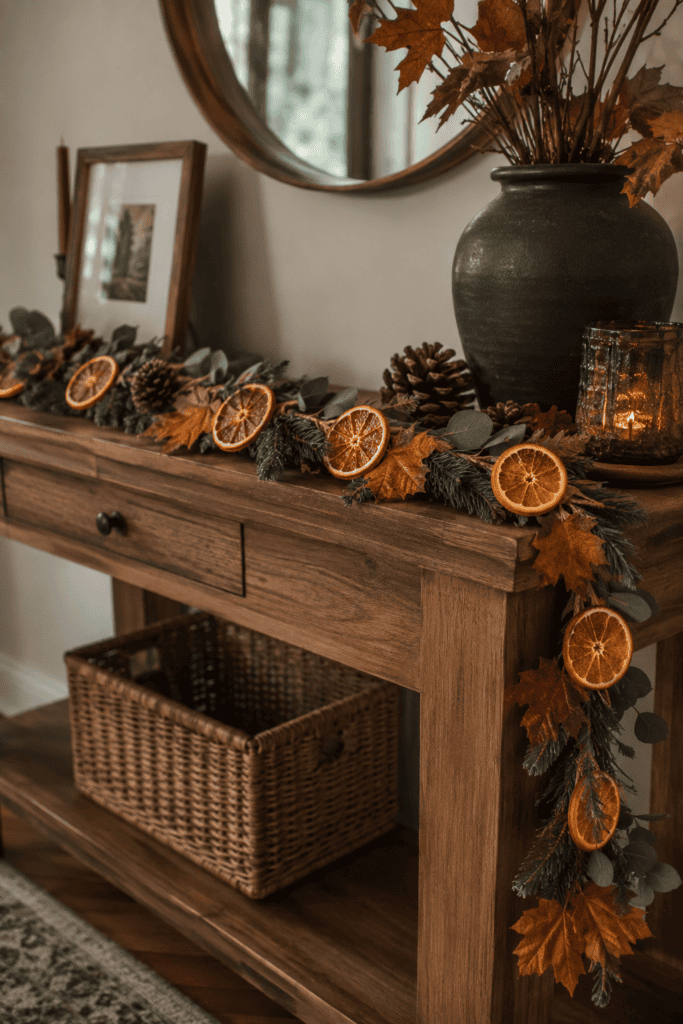
A garland doesn’t have to sit flat on top of the table. Let it drape slightly off one corner to soften the hard edges and add movement. Faux fall leaf garlands, dried orange slice garlands, or even a simple grapevine strand all work beautifully here.
- Drape one end 4–6 inches off the table edge
- Tuck small pinecones or berries into the garland for texture
- Avoid draping both ends — one side looks intentional, two sides looks like you gave up halfway through
13. Rotate a Few Pieces Weekly to Keep It Feeling Fresh
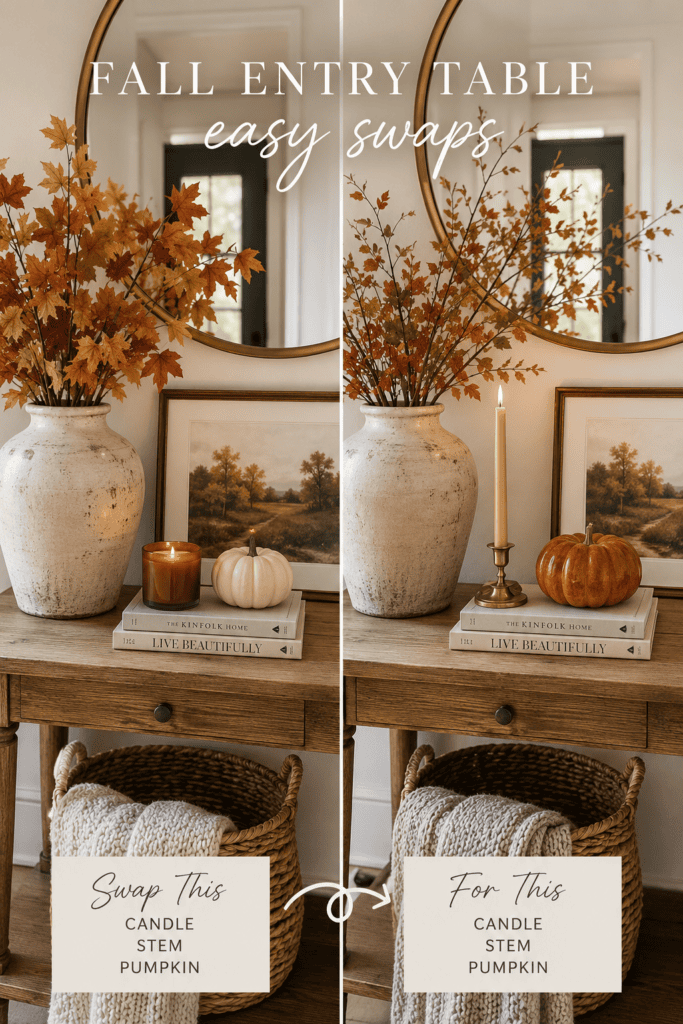
Here’s a tip most articles skip: your fall table shouldn’t be a “set it and forget it” situation. Swap out one or two small items every week — a candle color, a stem, a pumpkin — so the display feels alive rather than static for two straight months. It takes five minutes and makes a genuinely noticeable difference.
I do this every Sunday while my coffee brews, and it’s honestly become a nice little ritual. Small tweaks keep the whole entryway from going stale by mid-November.
Wrapping It Up
So there you have it thirteen ways to take your entry table from “meh” to “wait, did you hire a designer?” The real secret isn’t any single item on this list. It’s layering texture, varying height, and picking a palette that goes beyond basic orange. Start with two or three ideas that fit your space, and build from there.
Which one are you trying first the layered runner, the statement pumpkin, or finally admitting that twelve mini pumpkins in a row was never a good look? Whatever you pick, your entryway is about to have its best fall yet.