
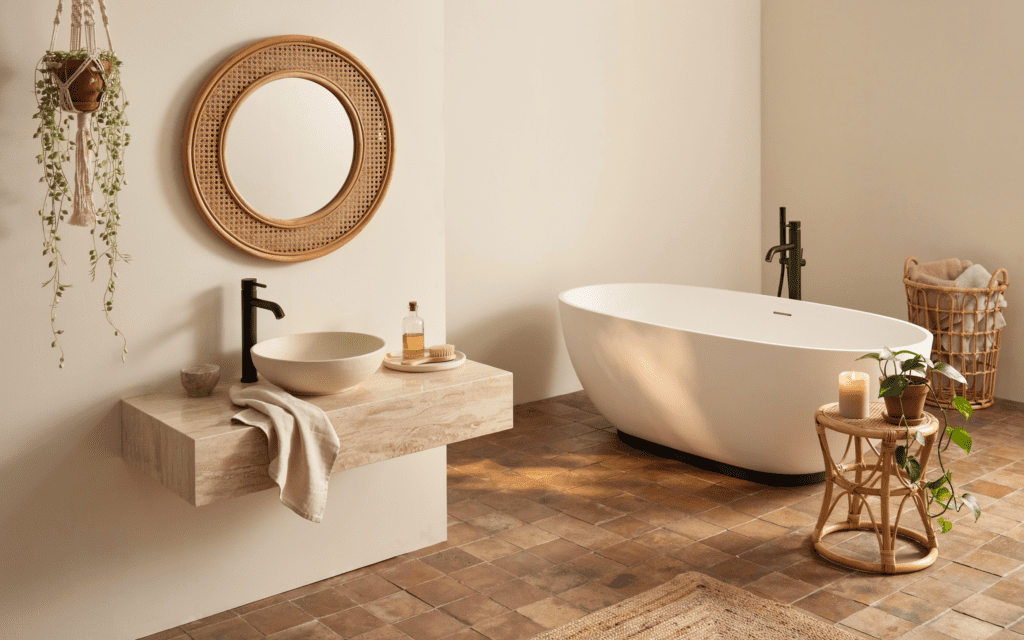
Have you ever walked into someone’s bathroom and immediately felt your shoulders drop? That instant ahh moment where the space just wraps around you like a warm hug? That’s not magic. That’s an earth tone bathroom doing exactly what it was designed to do.
I’ve been obsessing over interior design for years now, and if there’s one category that consistently delivers both beauty and that elusive “calm” feeling, it’s earth tone bathrooms. There’s something deeply human about surrounding yourself with the colors and textures of the natural world — warm browns, sandy beiges, terracotta reds, mossy greens, dusty ochres. These aren’t just colors. They’re a whole mood.
Whether you’re planning a full gut renovation or just want to refresh your space without spending a fortune, this list has something for every budget, every bathroom size, and every style personality. I’ll walk you through 16 genuinely great ideas, share some honest opinions along the way, and give you practical tips you can actually use. Let’s go.
1. Warm Terracotta Floor Tiles That Set the Whole Tone
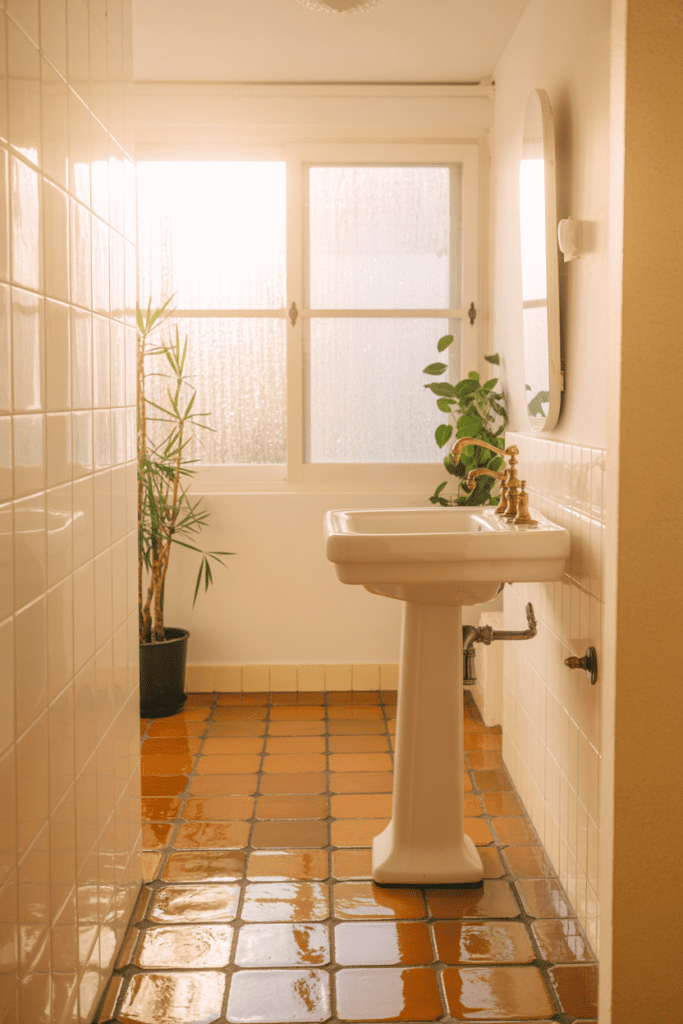
If there’s one design choice that single-handedly defines the “earth tone bathroom” aesthetic, it’s terracotta floor tiles. And honestly? They’ve been around for centuries because they just work.
Terracotta floor tiles bring immediate warmth and character to a bathroom that no other flooring option can quite replicate. The reddish-orange, sun-baked quality of genuine terracotta feels ancient and grounded — in the best possible way. When natural light hits terracotta tiles in the morning, the room glows. Genuinely glows.
The key to making terracotta work is contrast. Pair them with white or cream walls to keep the room feeling bright rather than heavy. A white pedestal sink, linen window curtains, and a few green plants are all you need to complete the look. Simple, effective, stunning.
Important maintenance note: Always seal terracotta tiles before installation and reseal periodically. These tiles are naturally porous, which means they’ll absorb moisture and stain if you skip this step. A good-quality penetrating sealer will protect them for years.
- Best finish: Matte or honed (avoid glossy — it kills the rustic appeal)
- Best pairings: White walls, brass fixtures, wooden vanities
- Works in: Small and large bathrooms equally well
2. Sandy Beige Walls — The Most Underrated Earth Tone
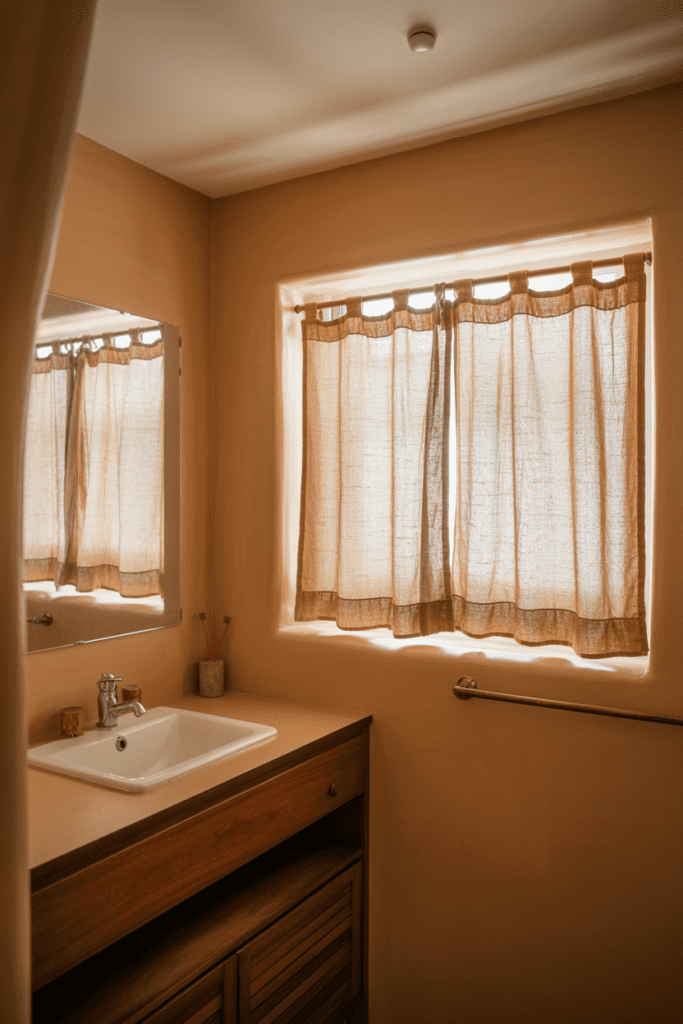
People always reach for gray or stark white when painting a bathroom, but warm sandy beige? It’s the quiet overachiever of the color world. It never screams for attention, but once you paint your walls beige, you’ll wonder why you ever bothered with cold, lifeless gray.
Sandy beige creates a softness that immediately makes a bathroom feel more luxurious and spa-like. It plays beautifully with natural light, shifting from warm gold in the morning to a softer, muted tone in the evening. The color has enough depth to feel considered and intentional, without overpowering anything else in the room.
Think of sandy beige as your design foundation. Layer in richer earth tones through tiles, textiles, and accessories, and let the beige walls hold it all together. You can also achieve this look through large-format matte ceramic tiles in a warm beige tone — it adds texture while maintaining that soft, sandy palette.
My personal experience: I once helped a friend repaint her bathroom from a cool gray to a warm sandy beige. She texted me two days later saying the room felt “ten degrees warmer and three times bigger.” Beige doesn’t get nearly enough credit.
3. Olive Green Accents for That Sophisticated Earthy Feel
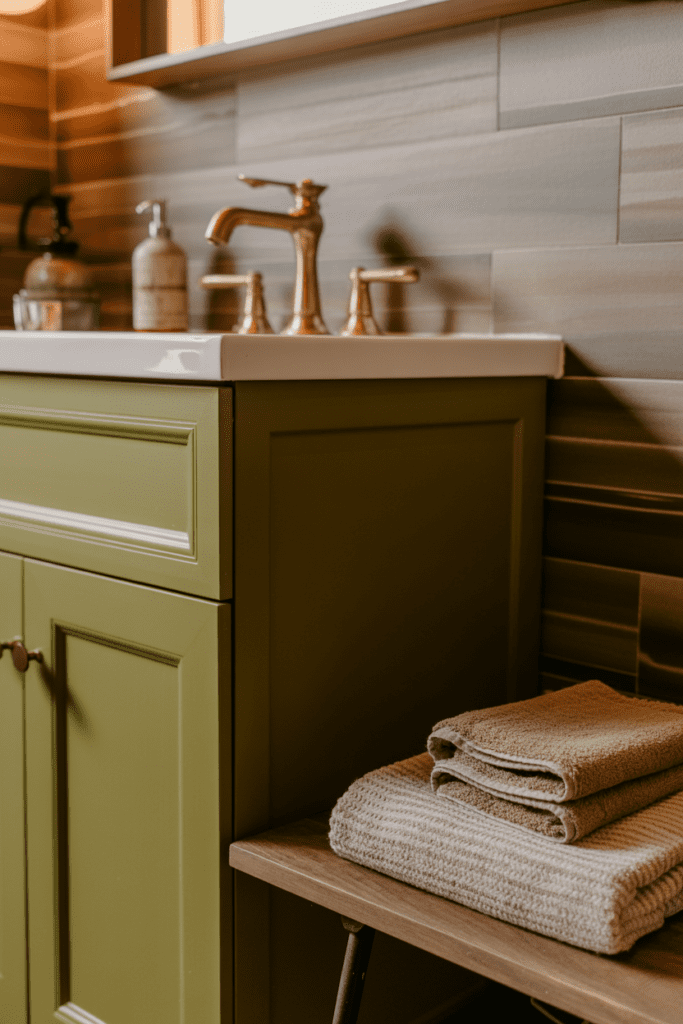
Olive green is one of those colors that just refuses to go out of style, and IMO, it’s because it sits in that rare sweet spot between earthy and elegant. It’s not too bold, not too subtle — it’s just deeply, satisfyingly right.
Use olive green as an accent wall, a vanity color, or even through smaller accessories like towels, soap dispensers, and plant pots. The color responds beautifully to both warm and cool lighting, and it pairs with almost every other earth tone on this list — terracotta, sandy beige, warm wood, brass, stone.
If you want to go bolder, painting your vanity in a deep olive green is one of the most impactful weekend upgrades you can do. A matte finish works best — it gives the color a natural, almost velvety quality that glossy finishes just don’t achieve.
Best color combinations with olive green:
- Olive green + warm white + aged brass = timeless and sophisticated
- Olive green + terracotta + natural wood = bohemian and warm
- Olive green + dark stone + matte black = moody and modern
4. Raw Stone or Slate Feature Wall Behind the Tub
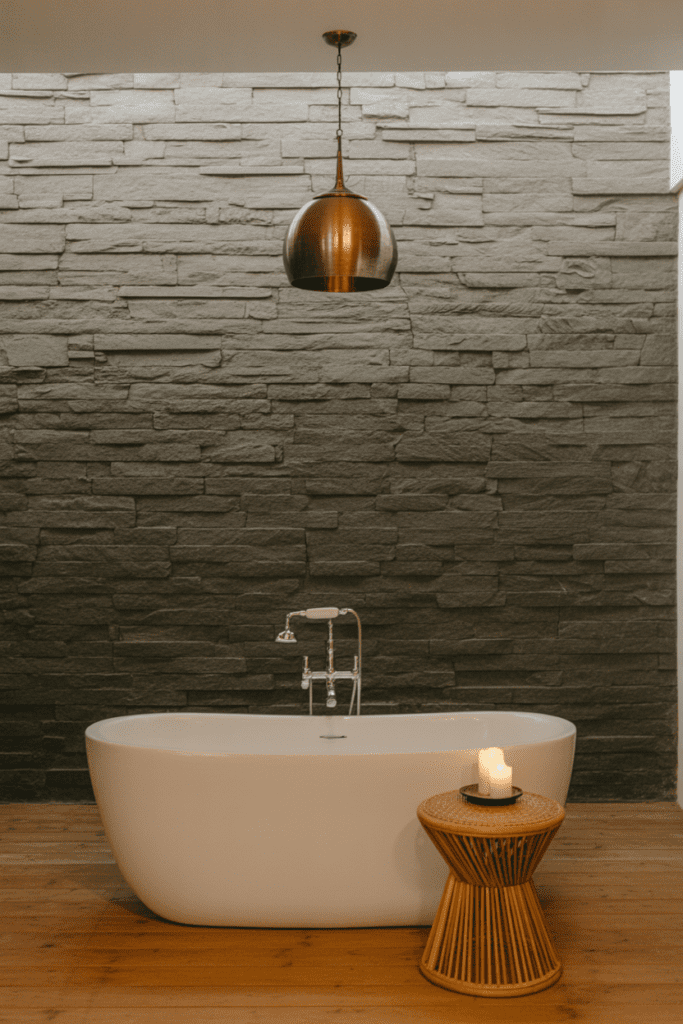
Here’s the thing about feature walls — when done wrong, they look like an afterthought. But a raw stone or slate feature wall? It never looks like an afterthought. It looks like a decision made by someone who genuinely has taste.
A stacked stone or slate wall behind a freestanding bathtub is one of the most dramatic earth tone design moves you can make. The texture alone transforms the room. Suddenly your bathroom doesn’t feel like a bathroom — it feels like a private grotto, a Japanese onsen, a mountain retreat. All without leaving your house.
Travertine, slate, stacked quartzite, and rough-cut limestone are all excellent material choices. Each has its own texture and color range, so spend some time looking at samples before you commit. Travertine tends toward warm beige and cream tones; slate skews cooler and more gray-green; quartzite can range from sandy white to rich brown.
Pro tip: Even in a small bathroom, a single stone-clad wall makes a huge impact. You don’t need four walls of stone to get the effect — in fact, one feature wall usually looks more intentional and sophisticated than going all-in.
5. Warm Wood Vanities That Bring the Outside In
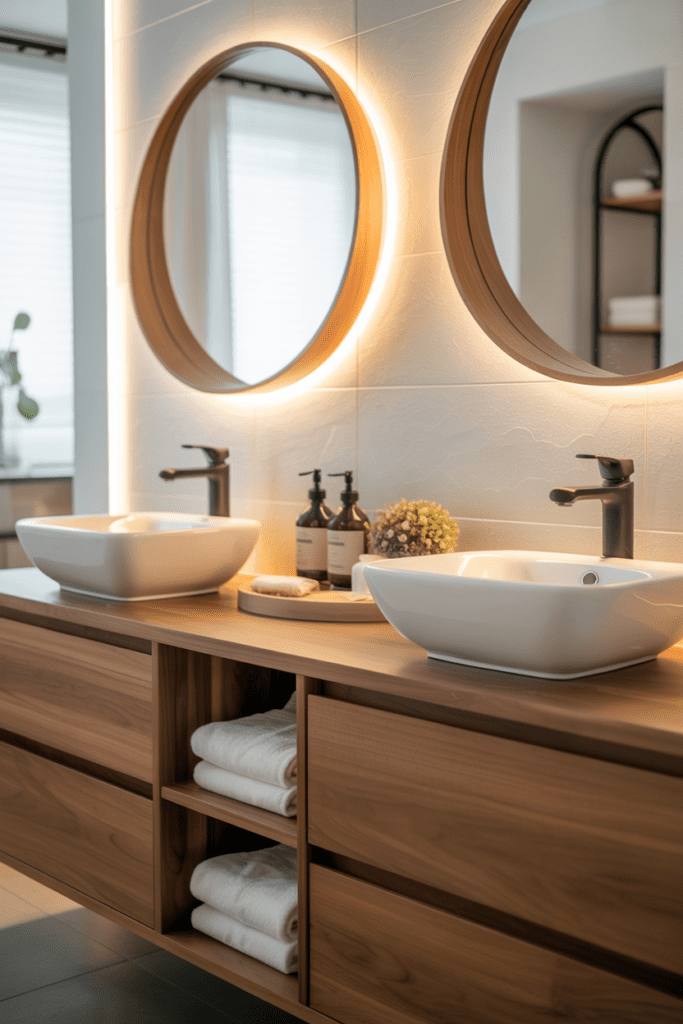
A warm wood vanity is arguably the most versatile earth tone element you can add to a bathroom. Teak, walnut, oak, and bamboo are all excellent choices, each bringing a slightly different personality to the space.
Walnut is rich and deep — it gives the bathroom a serious, elegant weight. Oak is lighter and more relaxed — it works beautifully in Scandinavian-inspired or boho spaces. Teak is incredibly moisture-resistant, making it genuinely one of the best practical choices for a bathroom environment. Bamboo is sustainable and has a slightly more exotic, tropical energy.
The rule with wood vanities is balance. Too much wood and the space starts to feel like a sauna (which, admittedly, some people would love — but it’s not for everyone). Keep your walls lighter, your fixtures warm-toned, and let the vanity be the natural focal point it deserves to be.
You can also incorporate wood through open shelving, a wooden mirror frame, or even a wooden bath caddy across your tub. Small wooden elements add warmth without committing to a full vanity replacement.
6. Earthy Mosaic Tile Accents in Shower Niches and Borders
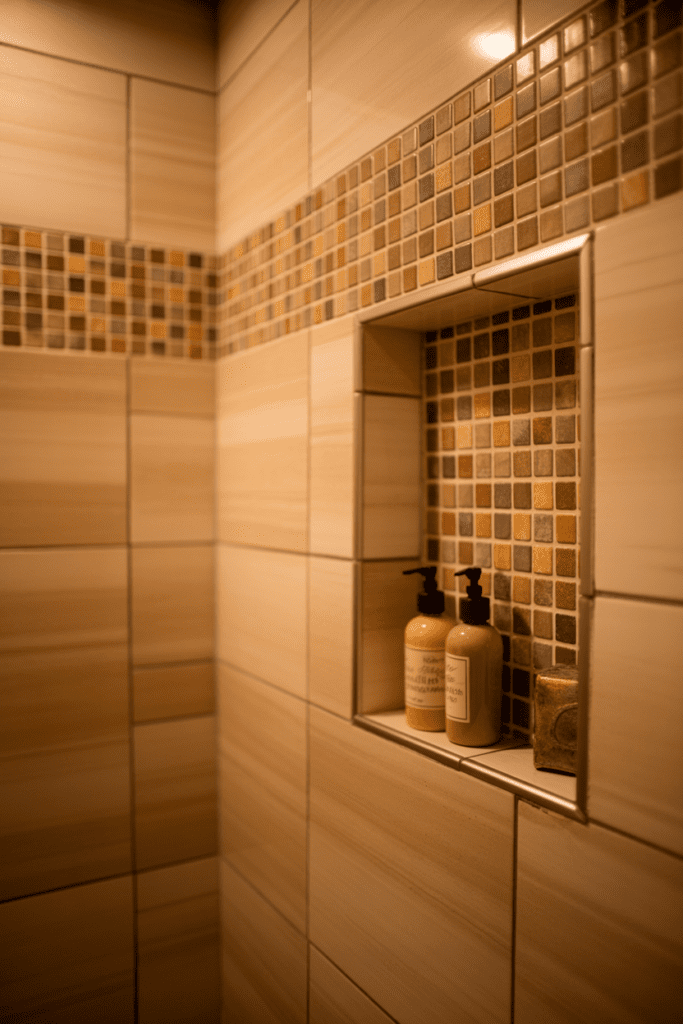
Mosaic tiles are one of those design elements that punch way above their weight. A small section of earthy mosaic — burnt sienna, dusty gold, warm brown, faded rose — can tie together an entire color palette in a single glance.
The best places to use earthy mosaic tiles:
- Shower floor (the texture also provides grip — practical and beautiful)
- Shower niche or recessed shelf
- Backsplash strip behind the vanity
- Floor border where tile meets wall
- Decorative strip running horizontally through large-format wall tiles
Mosaic accents work especially well in bathrooms that are otherwise quite minimal. If your walls are a clean, warm white and your floor is a simple stone-look tile, a strip of earthy mosaic brings personality and artisan quality to the room without overwhelming anything else.
7. Cream and Warm White as Your Base — Not Bright White
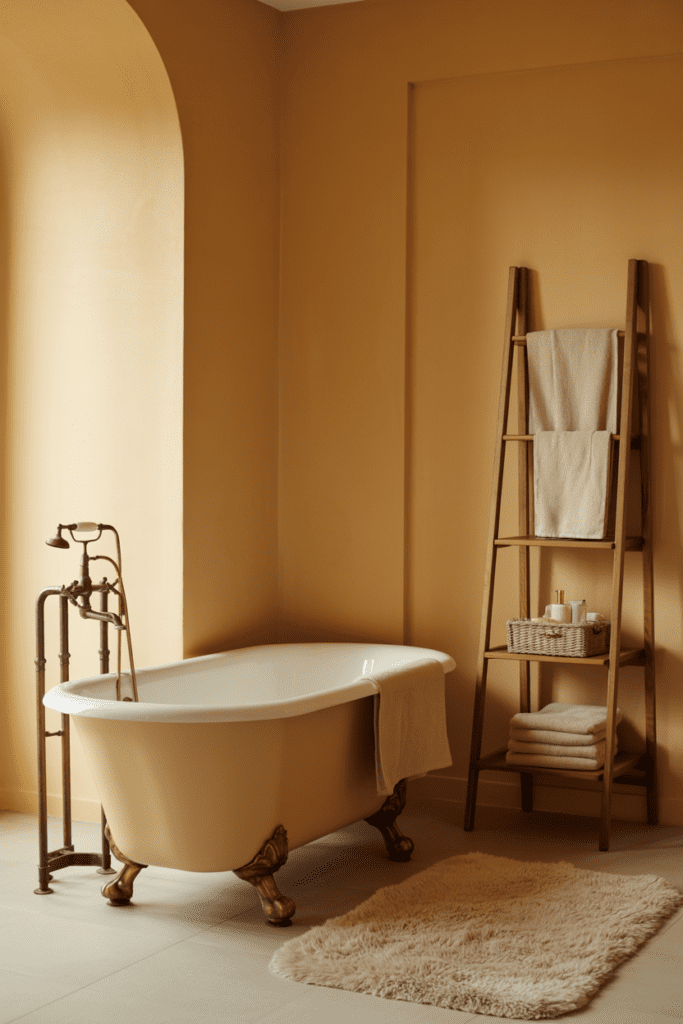
This deserves its own section because the difference between bright white and warm white is enormous in a bathroom setting, and most people don’t realize this until they’ve already made the wrong choice.
Cool, bright white walls reflect blue-toned light and make a bathroom feel clinical — like a hospital corridor, but smaller. Warm white and cream tones, on the other hand, reflect the warm end of the light spectrum and make the room feel soft, inviting, and comfortable.
If you’re not sure which direction to go, hold up paint swatches next to your existing fixtures and flooring in natural light. Warm white swatches will look noticeably more harmonious with terracotta, wood, brass, and stone. The difference is obvious once you see it side by side.
My recommendation: Benjamin Moore’s “White Dove” and Dulux’s “Warm Cream” are two of the most consistently loved warm whites in interior design — both work beautifully in earth tone bathrooms.
8. Hammered Brass and Bronze Fixtures — The Jewelry of Your Bathroom
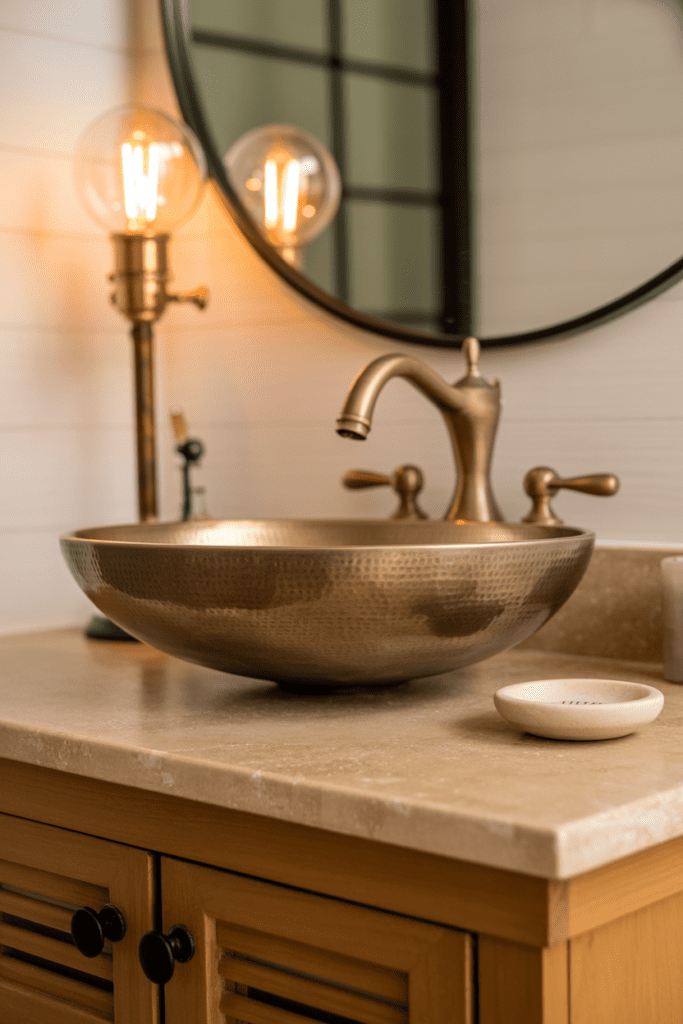
Let’s talk hardware. Your faucet, showerhead, towel rail, toilet paper holder — these are the jewelry of your bathroom. They’re small, but they tie everything together. And when you choose hammered brass or aged bronze, you’re picking pieces that actively contribute to your earth tone story rather than just existing in the background.
These finishes have a warm, organic, almost handcrafted quality. Hammered brass especially — every tap on the surface creates a slightly different reflective angle, so the fixture catches light in a rich, varied way that polished chrome simply can’t replicate.
Aged bronze works particularly well in more rustic or traditional earth tone bathrooms, while unlacquered brass suits both modern and classic spaces. FYI — unlacquered brass develops a natural patina over time, which many people love because it adds to the organic, lived-in feel of the space.
Quick comparison:
- Polished chrome: Modern, clean, cold — doesn’t work with earth tones
- Brushed nickel: Neutral, works with some earth tones but lacks warmth
- Hammered brass: Warm, organic, beautiful — perfect for earth tone palettes
- Aged bronze: Rustic, rich, dramatic — excellent for deeper, darker earth tone spaces
9. Limewash and Venetian Plaster Walls for Texture and Depth
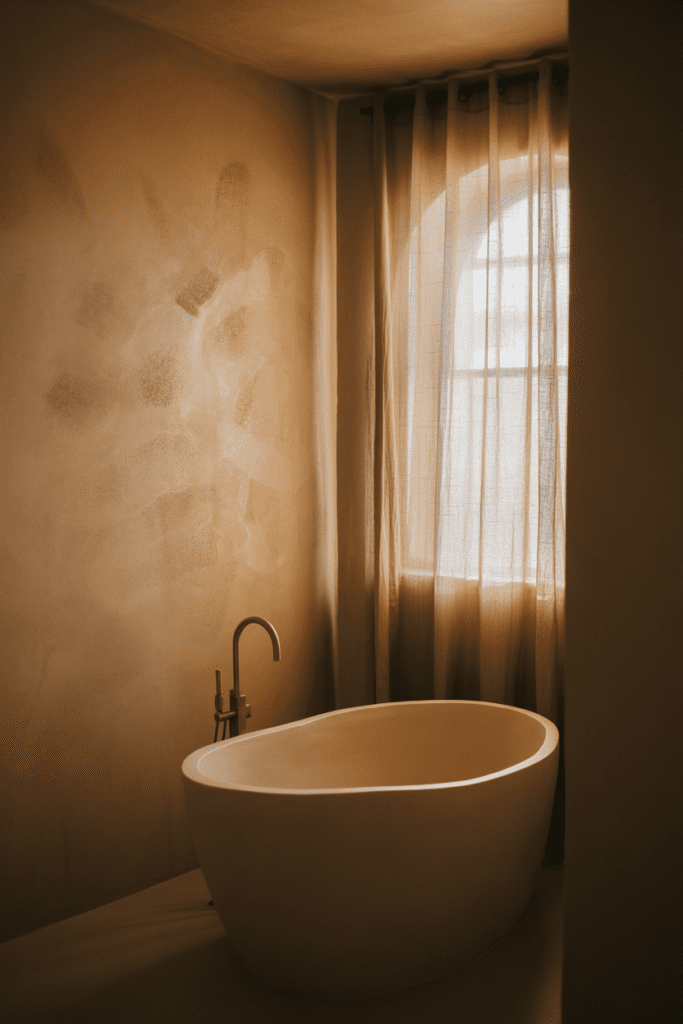
If you’ve ever seen a limewash wall in real life, you already know why this is on the list. The texture, the depth, the way the color varies across the surface — it’s the kind of wall that makes you want to just stand and look at it. Which sounds weird, but trust me.
Limewash is a traditional paint technique that creates a layered, slightly chalky effect with natural tonal variation. No two sections of a limewash wall look exactly the same, which is exactly what makes it so beautiful and organic. It’s one of the best ways to introduce an earthy, artisan quality to a bathroom without adding any physical texture to the wall.
Venetian plaster takes this a step further — it’s applied in thin layers and burnished to a smooth, almost polished surface that resembles natural marble or stone. It’s more labor-intensive (and usually requires a professional), but the result is genuinely spectacular.
Both finishes work beautifully in earth tone color palettes — warm taupe, dusty rose, ochre, terracotta, and sandy beige are all stunning options. If you want one design upgrade that will make guests stop mid-conversation to ask “what did you do to these walls?” — this is it.
10. Natural Fiber Accessories: The Easiest Earth Tone Upgrade
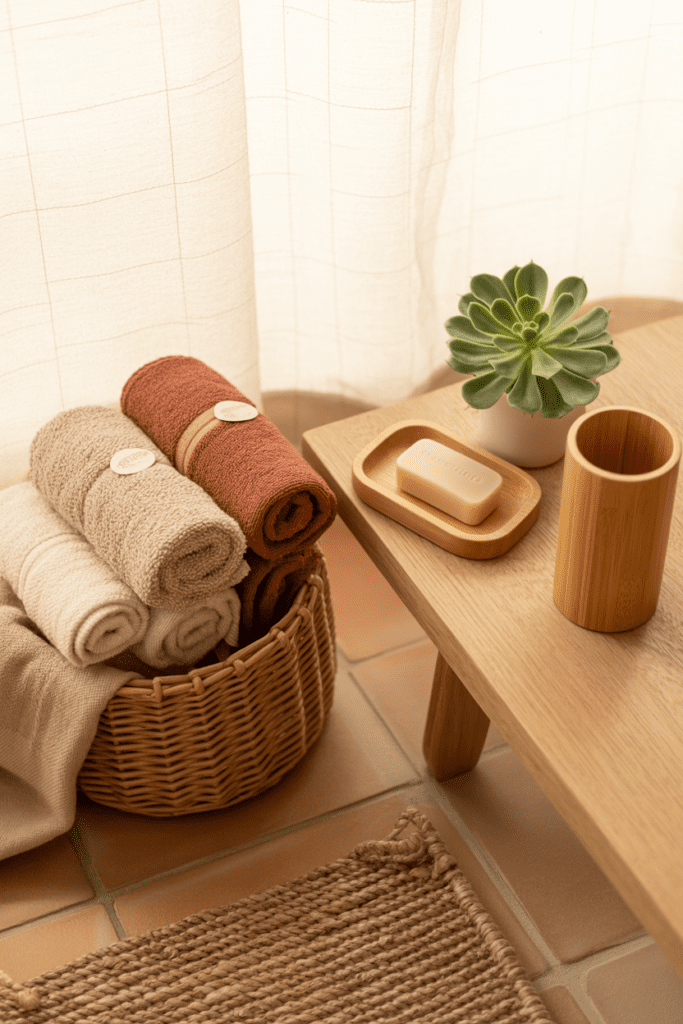
You don’t always need to renovate to refresh your bathroom’s earth tone energy. Sometimes swapping your accessories is all it takes, and natural fiber pieces are the fastest, most affordable way to do this.
Here’s what to look for:
- Jute or seagrass bath mats instead of synthetic rugs
- Wicker or bamboo baskets for storage
- Linen or cotton waffle towels in warm beige, terracotta, or olive tones
- Wooden soap dishes, toothbrush holders, and trays
- Rattan or bamboo shelving units
These pieces collectively create a layered, textured, organic atmosphere that synthetic alternatives simply can’t achieve. They’re also genuinely functional — bamboo and teak are naturally moisture-resistant, jute is durable, and linen towels get softer with every wash.
This is the kind of upgrade you can do on a Saturday afternoon for under ₹3,000–₹5,000, and the difference in atmosphere is remarkable.
11. Deep Matte Brown or Chocolate Tiles for a Moody Statement
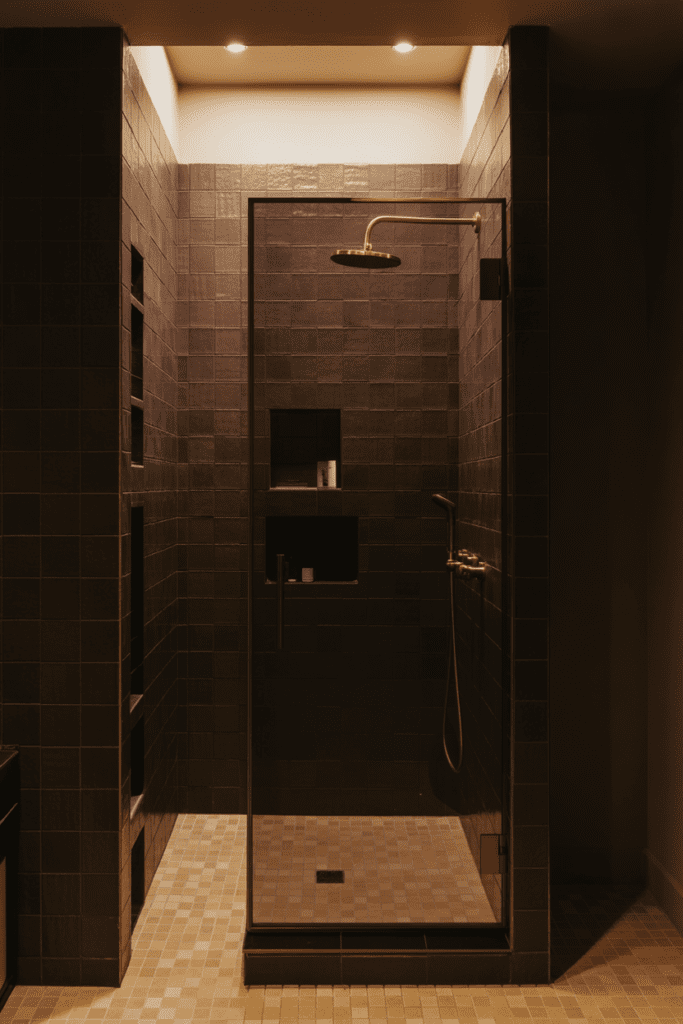
For anyone who wants their bathroom to feel like a seriously sophisticated, moody retreat — deep matte brown or chocolate tiles are your answer. This is a bold choice, but when it’s done well, it’s absolutely stunning.
Dark brown tiles work best in bathrooms with decent natural light or well-planned artificial lighting. Use them on a single feature wall or in the shower enclosure, and keep everything else lighter — warm white ceiling, sandy beige floor tiles, light brass fixtures. The contrast between deep brown and light tones creates a bathroom that feels rich, dramatic, and intentional.
Matte finish is essential here. Glossy dark tiles pick up every water spot and fingerprint (which, in a bathroom, is approximately every four minutes). Matte finishes hide imperfections and give the tiles a natural, stone-like quality.
12. Terracotta and White — The Classic Stripe Combination
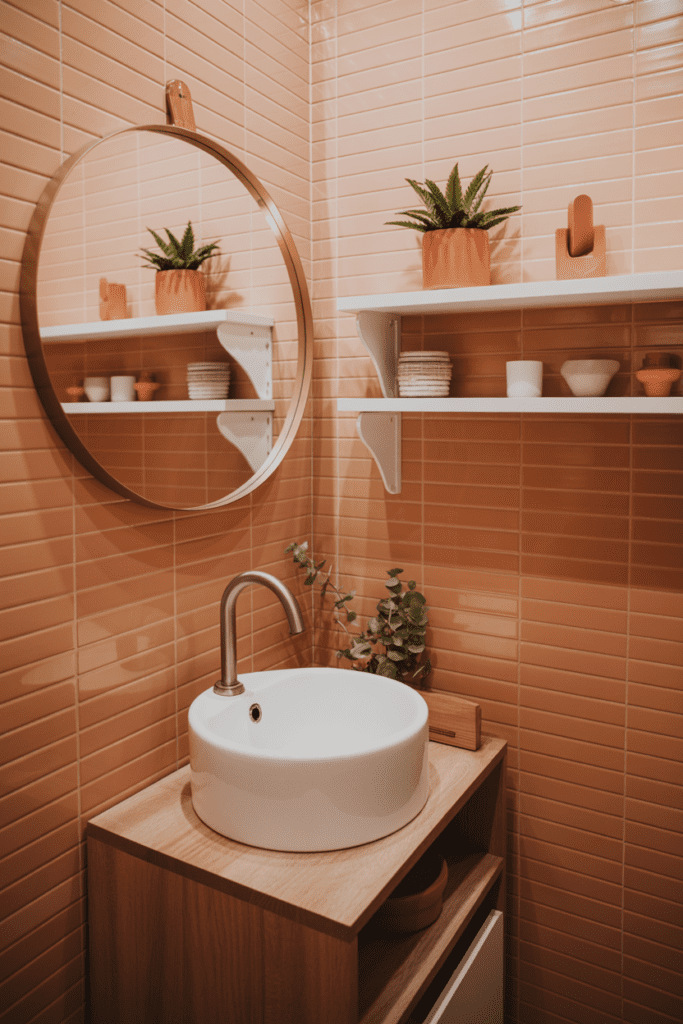
Here’s a combination that’s been working for hundreds of years and shows absolutely no sign of stopping: terracotta and white. Whether you do it as stripes, a two-tone tile pattern, or through painted wall sections, this combination delivers warmth, character, and a timeless quality that trendy colors simply can’t match.
Horizontal stripes in terracotta and white make a bathroom feel wider. Vertical stripes make it feel taller. A checkerboard pattern in terracotta and white feels playful and retro. You have a lot of options here, and all of them work.
You can also achieve this look through moisture-resistant wallpaper — yes, that’s a real product now, and it’s significantly easier to install than tiling an entire wall. If you’re renting or just want a non-permanent option, this is worth exploring.
13. Sandy Stone Countertops with Natural Veining
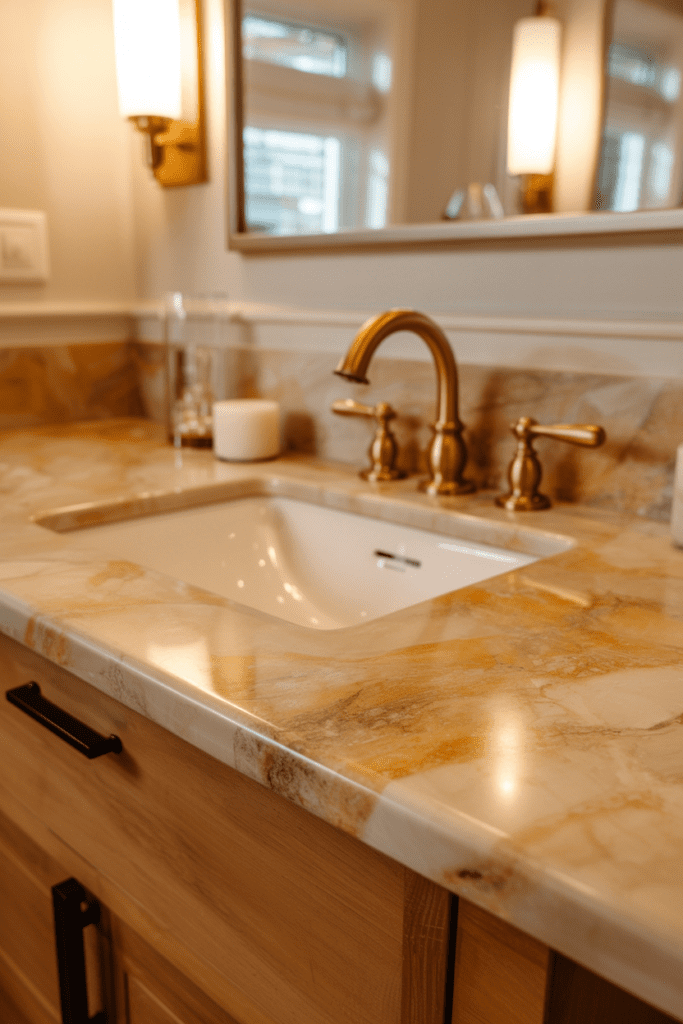
A countertop in sandy quartzite, warm-veined granite, or beige travertine is one of the most luxurious-feeling upgrades you can make to a bathroom vanity. These surfaces bring natural variation and visual interest that manufactured solid colors simply can’t replicate.
Quartzite is my personal favorite for bathrooms — it has the gorgeous, organic look of marble but performs much better in wet, high-use environments. Look for quartzite in sandy white, warm beige, or light brown tones with natural veining in cream, gold, or soft gray.
A stone countertop also anchors every other earth tone element in the room. It’s the piece that makes everything else look more intentional and cohesive.
14. Warm Lighting — The Element That Makes or Breaks Everything
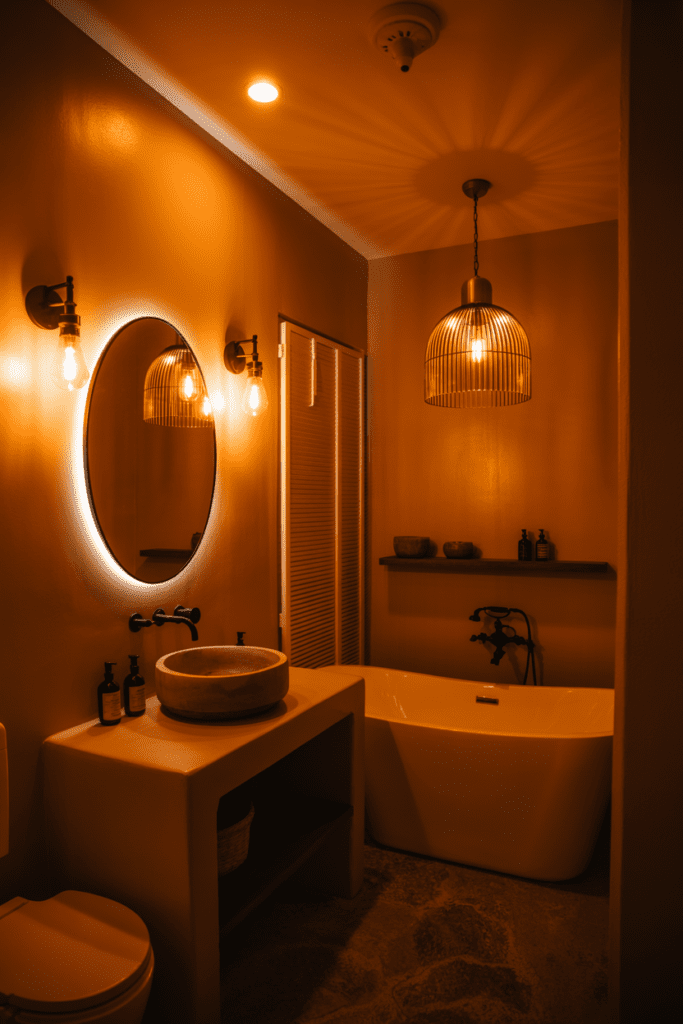
Here’s a hard truth: you could execute every single idea on this list perfectly, and cool white lighting would still ruin it. Lighting temperature matters enormously in an earth tone bathroom, and it’s one of the most commonly overlooked elements in bathroom design.
Warm-toned bulbs — 2700K to 3000K on the color temperature scale — are absolutely essential in an earth tone bathroom. They amplify the warmth of terracotta, wood, brass, and stone, making everything glow. Cool white bulbs (4000K and above) cast a blue-white light that drains all the warmth out of your carefully chosen palette.
Consider layering your lighting with:
- Wall sconces on either side of the mirror (eliminates shadows on the face)
- A warm-toned backlit mirror with adjustable color temperature
- Pendant lights above a freestanding tub for drama and ambiance
- Recessed downlights on a dimmer for flexibility
Dimmers are genuinely life-changing in a bathroom. Morning shower? Bright. Evening bath? Dim and golden. It’s a small investment that dramatically improves your daily experience.
15. Botanical Earthy Wallpaper for Instant Personality
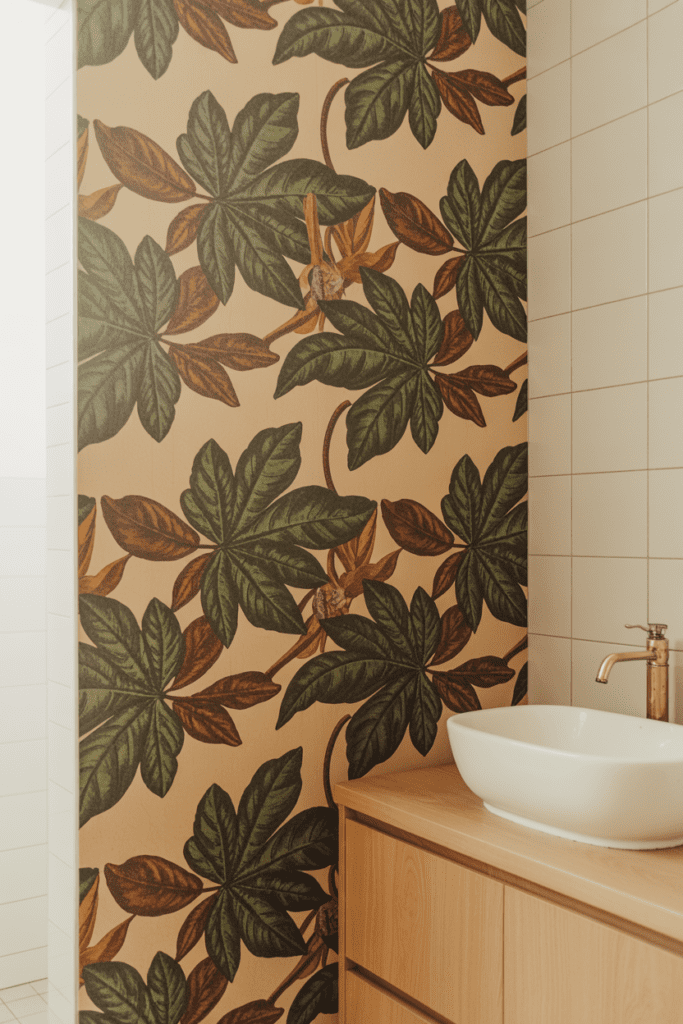
Moisture-resistant bathroom wallpaper has come a long way, and botanical or geometric prints in earthy tones are currently one of the most impactful ways to inject personality into a bathroom quickly.
Imagine a wall covered in a large-scale botanical print — tropical leaves in deep olive and warm brown against a sandy cream background. Or a hand-painted-style geometric pattern in terracotta, ochre, and dusty rose. These prints immediately transform a plain bathroom into a space with genuine character and story.
Limit the wallpaper to one wall — the wall behind the vanity or the back wall behind a freestanding bath are both excellent choices. One patterned wall creates a focal point; four patterned walls create chaos. Keep it contained and intentional.
16. Rattan and Cane Furniture Pieces for Bohemian Earthiness
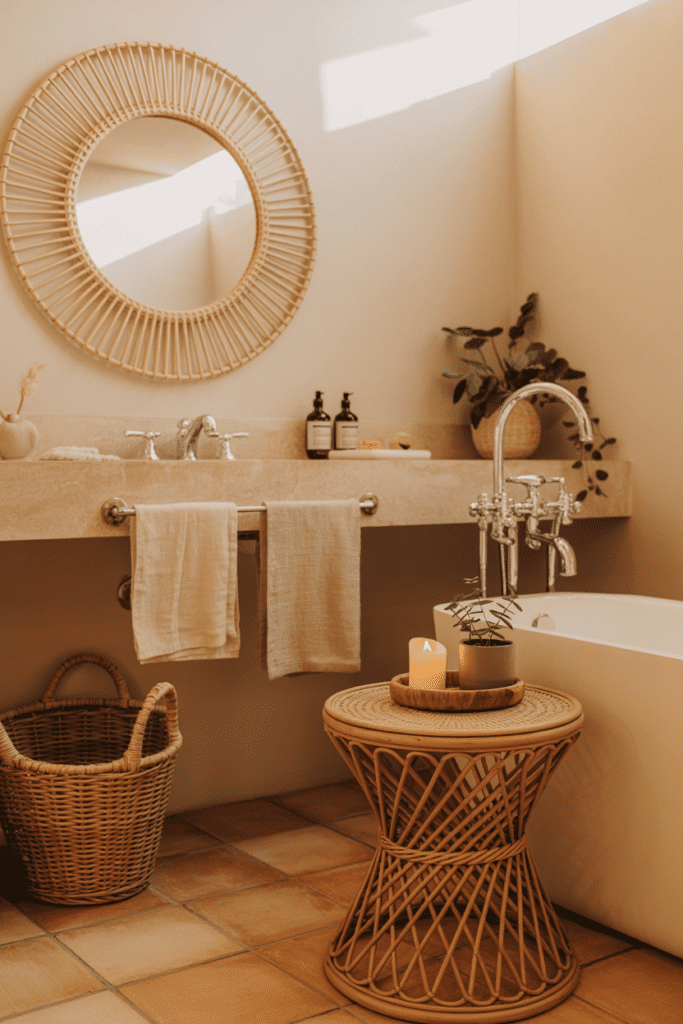
The final idea on this list is also one of the most fun: rattan and cane furniture pieces in the bathroom. A rattan side table next to the tub. A cane-framed mirror above the vanity. A woven laundry basket in the corner. These pieces bring a relaxed, sun-soaked, almost tropical quality to an earth tone bathroom that’s genuinely joyful to live with.
Rattan and cane are naturally moisture-tolerant (within reason — don’t put them directly in the shower), lightweight, and affordable. They also photograph beautifully, if that matters to you :). More importantly, they add layers of texture and warmth that make a bathroom feel curated rather than just decorated.
Pair rattan pieces with terracotta tones, linen textiles, and warm brass fixtures, and you’ve essentially created a resort bathroom in your own home. Which, let’s be honest, is the dream.
Bringing Your Earth Tone Bathroom to Life
Here’s the thing about earth tone bathrooms — there’s no single “right” way to do them. The beauty of this palette is its flexibility. You can go minimal with just warm lighting and natural fiber accessories, or go all-in with stone walls, terracotta floors, and a wooden vanity. Both approaches work. Both deliver that calm, grounded, natural energy that makes earth tone bathrooms so enduringly popular.
Start where you are. If you’re renting, swap your accessories and upgrade your lighting this weekend. If you own your space, consider one bigger investment — a wood vanity, a terracotta tile floor, or a limewash accent wall — and build the rest of the palette around it over time.