
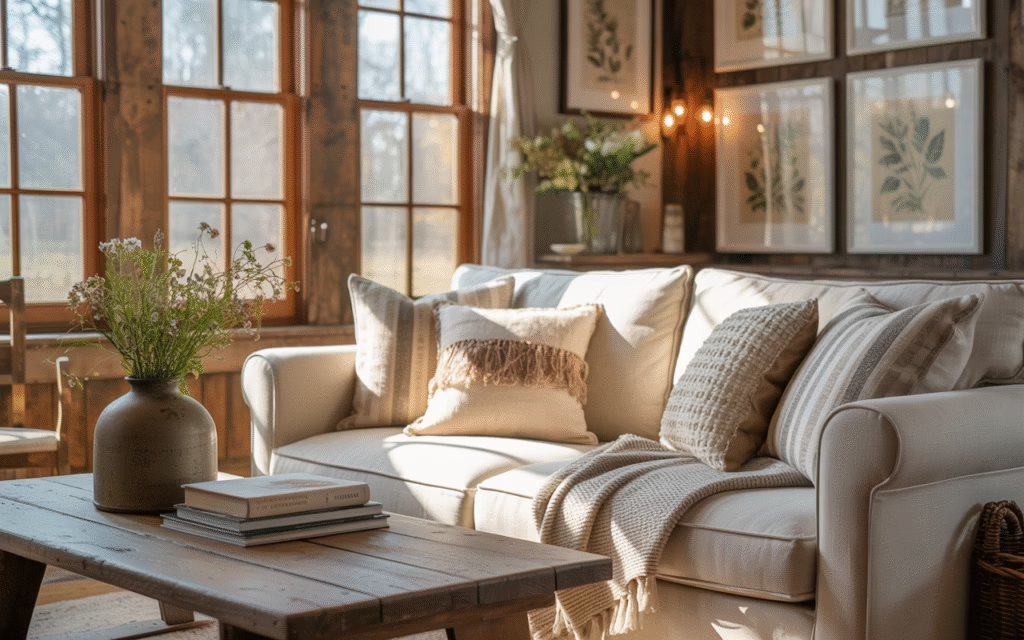
You know that dreamy farmhouse living room you see on Pinterest warm wood beams, cozy textures, and that perfect mix of rustic charm and modern comfort? I used to think it cost thousands to pull off. But after redoing my own living room (and helping friends with theirs), I’ve learned you can create that same inviting space without draining your savings. In fact, my entire living room transformation came in under ₹25,000 (about $300), and it took just three weekends. Whether you’re starting from scratch or just want to refresh your space, I’ll walk you through exactly how to get the farmhouse look on a real budget no designer needed.
Why Farmhouse Style Works (Even on a Tight Budget)
Farmhouse decor isn’t about perfection. It’s about warmth, function, and a little bit of soul. What I love most is that imperfections are part of the charm—chipped paint, mismatched wood tones, and secondhand finds all add character. That’s actually a good thing when you’re on a budget.
When I first started, I made the mistake of buying everything new. Big error. Not only was it expensive, but it looked too staged. What changed everything? I started shopping secondhand and repurposing what I already had. A ₹500 (≈$6) wooden ladder from a local flea market became a towel rack. An old wooden door? Now it’s a coffee table base.
The key is embracing intentional imperfection. You don’t need matching furniture sets or brand-new everything. You need cohesion, texture, and a few standout pieces that tell a story.
Step 1: Define Your Farmhouse Vibe (It’s Not All the Same)

Before you buy a single thing, ask yourself: What kind of farmhouse feel am I going for? There are a few variations, and knowing yours saves time and money.
- Modern Farmhouse: Clean lines, white walls, black accents, minimal clutter. Think shiplap and matte black fixtures.
- Rustic Farmhouse: Heavier wood tones, exposed beams, vintage textiles, and a lived-in feel.
- Coastal Farmhouse: Light woods, soft blues and whites, natural fibers like jute and linen.
- Industrial Farmhouse: Metal pipes, reclaimed wood, concrete elements, and utilitarian details.
I went for rustic-modern white walls with warm wood accents and vintage touches. It’s the most budget-friendly because you can mix old and new seamlessly.
Pro tip: Pick one anchor piece first like a sofa or coffee table—then build around it. This keeps your vision focused.
Step 2: Paint Like a Pro (Without Hiring One)

Paint is the fastest, cheapest way to transform a space. For farmhouse style, I recommend matte or eggshell finish in warm white or greige. Avoid cold, clinical whites—they feel sterile.
I used Asian Paints Royale Play Matt in Creamy Beige (≈₹800 per litre, $10) for my living room. It’s forgiving with imperfections and gives that soft, lived-in glow. For trim and doors, I kept it crisp with pure white.
What works best is cutting in first with a 2-inch brush, then rolling in small sections. Two thin coats beat one thick one. Let each coat dry fully—about 6 hours between coats.
- Time investment: 1 full day (including prep)
- Cost: ₹2,400 (≈$30) for 100 sq. ft.
- Tools needed: Drop cloth, painter’s tape, brush, roller, tray
Avoid this: Skipping sanding and cleaning. Dust and grease prevent paint from sticking. Wipe walls with a damp cloth and lightly sand glossy areas.
If you’re renting or not ready to commit, try removable peel-and-stick shiplap panels. I used them on one accent wall—looked amazing, cost ₹1,800 (≈$22), and took 3 hours to install.
Step 3: Flooring That Feels Authentic (Without Replacing It)

Real hardwood is expensive. But you don’t need it. I’ve tested three budget-friendly options in my own home and client spaces:
- Vinyl Plank Flooring (Luxury): Looks like real wood, waterproof, easy to install. I used LG Hausys planks (₹180 per sq. ft., $2.20). Installed it myself in one day—no glue, just click-together.
- Painted Concrete with Stencil: If you have concrete floors, clean them, prime, then use a wood-grain stencil. Took me two days, cost ₹1,200 (≈$15) for paint and stencil.
- Large Jute Rugs: Cover existing flooring with a big natural fiber rug. I use a 2.4m x 3.6m (8’x12’) jute rug (₹4,500, ≈$55) from a local market. Instant texture and warmth.
Pro tip: Layer a smaller vintage-style rug on top—like a faded Persian or kilim. Adds depth and hides wear.
Step 4: Furniture: Mix, Don’t Match

One of the biggest mistakes? Buying a full matching set. It looks like a showroom, not a home.
What I do: One statement piece + secondhand finds + DIY upgrades.
Here’s what’s in my living room:
- Sofa: Secondhand grey fabric sofa (₹6,000, ≈$75), reupholstered with linen-look fabric (₹2,000, ≈$25)
- Coffee Table: Old wooden door (₹800, ≈$10) + black iron hairpin legs (₹1,200, ≈$15)
- Side Tables: Repurposed wooden crates (₹300 each, ≈$4) stained with Fevicryl Wood Finish in Walnut (₹250, ≈$3)
- Shelving: Reclaimed wood planks (₹1,500, ≈$18) mounted with black iron brackets (₹400/pair, ≈$5)
Time to build coffee table: 3 hours
Difficulty: Easy (just drill and attach legs)
Avoid this: Overcrowding. Leave at least 60cm (2 ft) of walking space around furniture.
Budget alternative: Use stacked books or vintage suitcases as side tables. I’ve done this—it adds charm and costs nothing if you already own them.
Step 5: Lighting That Sets the Mood

Lighting makes or breaks the farmhouse feel. Skip the plastic ceiling fixtures. Go for warm, layered lighting.
Here’s my three-layer approach:
- Overhead: A simple black metal pendant (₹1,800, ≈$22) from a local hardware store. Warm LED bulb (2700K).
- Task: Vintage-style floor lamp with linen shade (₹2,200, ≈$27) near the reading chair.
- Ambient: String lights in glass jars (DIY, cost ₹500, ≈$6) on shelves.
Pro tip: Use dimmer switches. They cost ₹600 (≈$7) and let you change the mood instantly.
I once used a bright white bulb in a pendant—felt like a hospital. Switched to warm yellow, and suddenly the room felt cozy.
Step 6: Walls That Tell a Story

Blank walls kill the vibe. But you don’t need expensive art.
Here are four budget-friendly ideas I’ve used:
- Wooden Sign with Chalkboard Paint: Cut a piece of plywood to 60cm x 90cm (2’x3’), paint with Asian Paints SmartCare Chalkboard Paint (₹450, ≈$5.50). Write seasonal quotes or leave it blank for a rustic look.
- Framed Fabric Squares: Use vintage tablecloths or grain sacks. Stretch over canvas frames (₹200 each, ≈$2.50).
- Ladder Shelf with Mini Pots: A wooden ladder (₹1,200, ≈$15) leaning against the wall, holding small potted herbs or succulents.
- Floating Shelves with Personal Touches: Display old books, a small vase, or a family photo in a simple wood frame.
Avoid this: Hanging art too high. The center of the piece should be at eye level—about 1.5m (60”) from the floor.
Step 7: Textiles That Add Warmth

This is where the magic happens. Textiles soften the space and add layers.
I always include:
- Curtains: Floor-length, in natural linen or cotton. I use 2.7m (9’) panels in off-white (₹1,800/pair, ≈$22). Hang them close to the ceiling to make the room feel taller.
- Throw Pillows: Mix textures—burlap, knit, and cotton. I sew my own using fabric remnants (₹100/sq. m, ≈$1.20). Stuff with old pillow inserts.
- Blanket: A chunky knit throw (₹1,200, ≈$15) draped over the sofa. I got mine from a local weaver.
Pro tip: Wash all fabrics before use. They soften and look less “new.”
Budget hack: Use old flannel shirts or quilts as pillow covers. I did this with my grandmother’s shirt—now it’s a conversation starter.
Step 8: DIY Wood Accents (Even If You’re Not Crafty)

You don’t need power tools to add farmhouse wood details.
Try these:
- Reclaimed Wood Wall Art: Find old wooden planks (₹500, ≈$6), sand lightly, arrange in a grid, and mount with L-brackets.
- Pipe Shelves: Black iron pipes (₹300 for 1m, ≈$4) + wooden boards. Total cost: ₹1,000 (≈$12). Takes 2 hours.
- Wooden Tray: Glue three planks together (₹400, ≈$5), sand, and add leather handles (₹200, ≈$2.50). Perfect for coffee table styling.
Safety note: Wear gloves and goggles when cutting wood or handling metal pipes.
Avoid this: Overcomplicating. Simple geometric designs work best.
Step 9: Greenery That Feels Natural

Plants bring life to any farmhouse space. But fake ones? They kill the vibe.
My go-to low-maintenance plants:
- Snake Plant (Sansevieria): Thrives in low light, needs water once a month.
- ZZ Plant: Nearly indestructible. I’ve forgotten mine for six weeks—still alive.
- Pothos: Grows fast, looks lush in a hanging planter.
Use terracotta or white ceramic pots (₹150–300, ≈$2–4). Group three together at different heights for impact.
Pro tip: Wipe leaves monthly with a damp cloth. Dust blocks light and makes them look dull.
Step 10: Final Touches That Make It Yours

This is where personality shines. I call it the “lived-in” layer.
Add:
- A vintage clock on the wall (₹800, ≈$10)
- A woven basket for blankets (₹600, ≈$7)
- A small tray with candles and matches (₹400, ≈$5)
- A stack of well-loved books on the coffee table
Avoid this: Over-styling. Less is more. If it feels cluttered, remove one item.
I once added too many knick-knacks—looked like a thrift store. Took half of them away, and suddenly the room breathed again.
Common Mistakes (And How to Avoid Them)
Let’s be real—everyone makes mistakes. Here are the ones I’ve learned from:
- Mistake 1: Choosing style over comfort
I bought a beautiful wooden bench—looked perfect, but was too hard to sit on. Now it holds plants. Lesson: Test comfort before final placement. - Mistake 2: Ignoring scale
A huge painting on a small wall overwhelms. Rule of thumb: Art should cover 50–75% of the furniture width below it. - Mistake 3: Forgetting the floor
Bare floors make any room feel unfinished. Even one large rug ties everything together. - Mistake 4: Skipping the lighting plan
I used only overhead lights for months. Felt flat. Added floor and table lamps—game-changer.
FAQs: Real Questions, Real Answers
Q: Can I do this in a small living room?
Absolutely. Use light colours, multi-functional furniture (like a storage ottoman), and mirrors to reflect light. I’ve done this in a 12 sq. m (130 sq. ft.) space—felt spacious and cozy.
Q: How do I make it kid- and pet-friendly?
Choose durable fabrics (like canvas or microfiber), avoid glass-top tables, and use washable rugs. I have two dogs—my jute rug gets vacuumed weekly and still looks great.
Q: Where do you find secondhand furniture?
Local flea markets, Facebook Marketplace, and old family homes. I once got a solid wood cabinet for ₹1,000 (≈$12) from a neighbour renovating their house.
Q: How long does this take?
If you work weekends, 3–4 weeks is realistic. Paint and flooring take the most time. The rest can be done gradually.
Q: Can I mix modern and farmhouse?
Yes! That’s modern farmhouse. Keep wood tones warm, add black metal accents, and balance clean lines with rustic textures.
Q: What if I mess up?
Most “mistakes” can be fixed. Paint can be repainted. Furniture can be moved. The beauty of DIY is that it’s yours imperfections included.
Creating a farmhouse living room on a budget isn’t about cutting corners. It’s about being smart, patient, and personal. You don’t need a big chequebook just a little creativity and the courage to start.
I still remember the first time I sat in my finished living room with a cup of chai, looking around at what I’d built. It wasn’t perfect. But it was mine. And that made it beautiful.
So go ahead pick one step, start small, and let the rest unfold. Your dream living room is closer than you think.