
You’ve probably noticed it before: the way some houses just feel welcoming from the sidewalk, while others seem a little… blank. That magic doesn’t come from the paint color or the size of the door. It comes from the front garden. The space between your curb and your doorstep is more than just dirt—it’s your home’s first impression, your daily greeting, and the quiet statement of who you are.
And here’s the good news: crafting a front-of-house garden that sings doesn’t require a designer, a bold budget, or endless hours. Whether you’re working with a tiny patch in a city apartment, a sprawling yard in Rajasthan, or a corner that’s been forgotten for years, there’s a garden idea that fits you. In fact, you don’t need to transform everything at once. Small changes a clearer path, a splash of color, a touch of green—can make all the difference.
This guide walks you through 17 practical, stylish, and totally doable garden ideas for the front of your house. Each one is designed to be easy to start, flexible for your space, and built to last. From simple pathways and flower beds to vertical gardens and seating nooks, you’ll find options for every climate, budget, and skill level.
So, grab your watering can, take a deep breath, and let’s grow this together.
1. Start with a Clear Pathway (Because Chaos Is Not a Style)
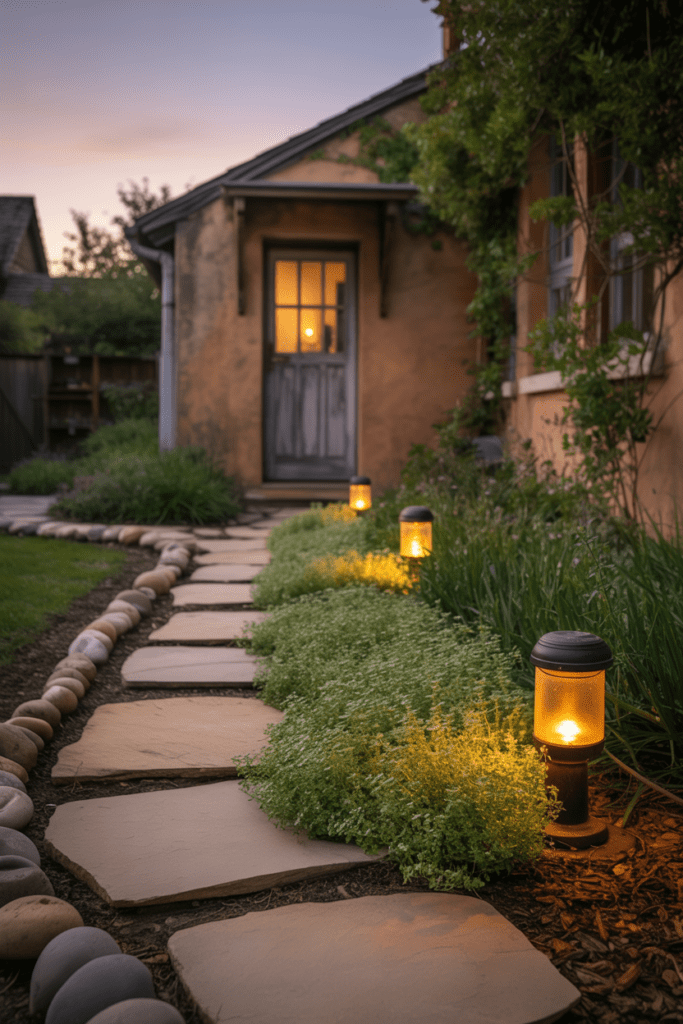
Ever wondered why some front gardens feel welcoming while others feel like a maze? It’s the path. A clear, well-defined walkway guides visitors straight to your door and makes the whole space feel intentional.
I don’t care if you use gravel, stone slabs, or even recycled bricks—just make sure it’s straight, clean, and easy to follow. No one wants to dodge puddles or tripping over random rocks. I once tried to build a path with loose stones I found in the neighborhood. It looked cool for a week. Then, after the first rain, half of them sank into the dirt. I had to redo it with edge stones and compacted soil. Lesson learned: stability matters.
- Use natural materials that blend with your home’s exterior. If your house is brick, use brick pavers. If it’s painted white, go for light stone.
- Add edge stones to keep the path tidy. They stop weeds from creeping in and make the path look professional.
- Lighting the path at night? Yes, please. It’s safe and stylish. I use solar path lights—they charge during the day and glow at night. No wiring, no cost.
My first path was made of old tiles I found behind my neighbor’s garage. Free? Yes. Ugly? For a week. Then I planted creeping thyme along the edges, and boom—magical. Now, when people walk up, they say, “This feels like a garden.” Not “This feels like a construction site.”
And here’s the secret: a good path doesn’t just connect places—it connects people. It invites them in. It says, “I care about you. I made this for you.”
2. Add Color with Flower Beds (But Don’t Go Overboard)
Color is the soul of any garden. But too much color? That’s a circus, not a garden.
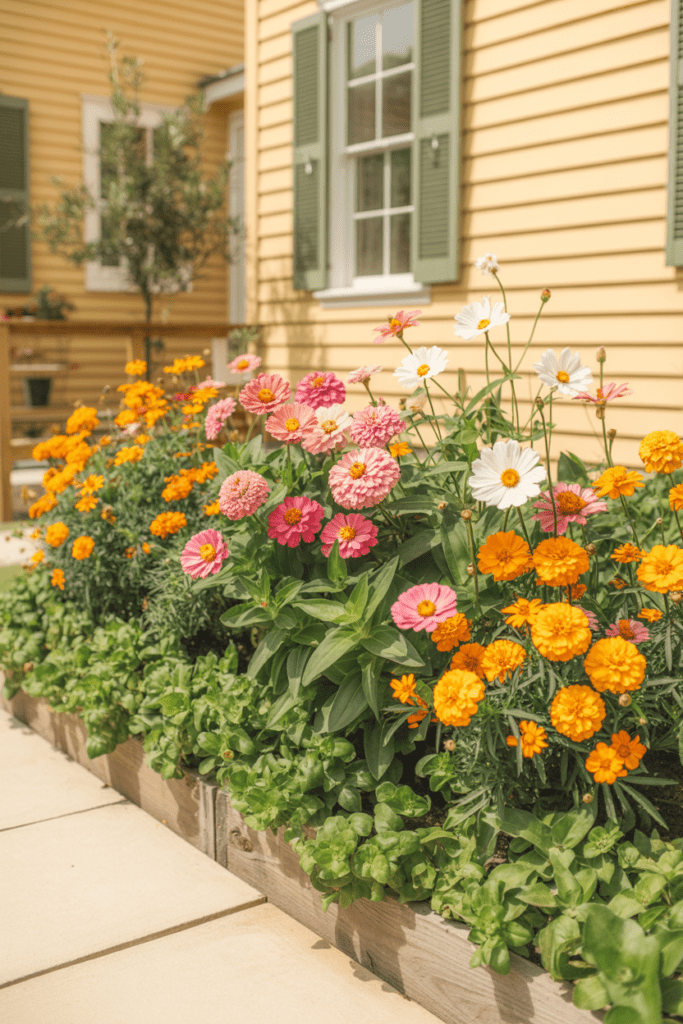
I love planting seasonal flowers like marigolds, zinnias, or cosmos in front-of-house beds. They’re cheap, hardy, and bloom like they’re trying to win a prize. Marigolds? They’re the MVPs. Bright orange, tough as nails, and they even repel pests. Plus, they look like little suns rolling across your garden. 🙂
- Pick 3–4 main colors that match your house. If your house is beige, go for warm yellows and soft pinks. If it’s blue, try white and lavender.
- Group flowers in clusters, not sprinkled everywhere. Clusters create impact. Sprinkling looks messy.
- Rotate them every season for fresh vibes. I swap my spring flowers for summer ones, then fall ones. It keeps my garden dynamic.
IMO, marigolds are the MVPs. They’re bright, tough, and even repel pests. Plus, they look like little suns rolling across your garden. 🙂
I once planted 10 different colors in one bed. It looked like a rainbow explosion. Beautiful? Yes. Coordinated? No. People said, “It’s too much.” I learned: less is more.
3. Use Corner Planters to Maximize Space (Even If You’re Tiny)
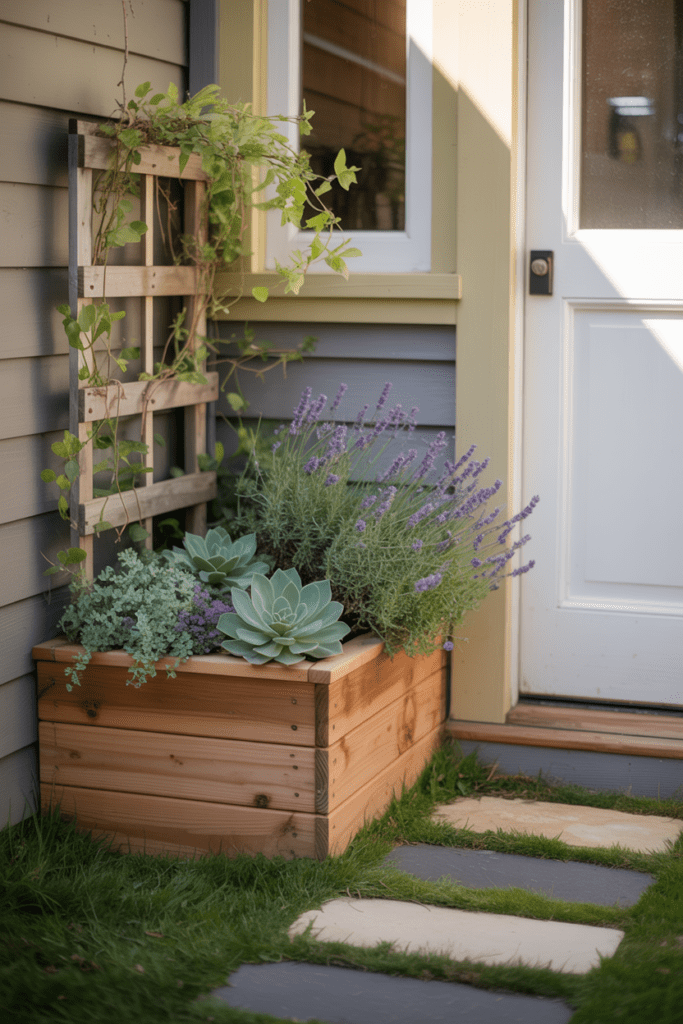
If your front yard is small, don’t panic. Corner planters are your secret weapon. They turn useless corners into blooming spots without taking up extra ground.
I used to ignore my corner until I dropped a wooden planter there and filled it with lavender and succulents. Now? People stop to ask, “Is that your garden?” (It is. And it’s awesome.)
Corner planters are perfect for small spaces and renters who can’t dig. Plus, they’re easy to move if you want a reset.
- Choose weather-resistant planters. Wood, ceramic, or metal? All work. Just avoid plastic that cracks in heat.
- Fill with drought-tolerant plants if you’re busy. Succulents, lavender, and aloe are great.
- Add vertical elements like trellises for extra height. They make small spaces look bigger.
I once had a corner that was just a dead zone. I added a planter, filled it with herbs, and hung a small trellis with climbing beans. Now, that corner is alive.
4. Install a Water Feature (Because Serenity Is a Mood)
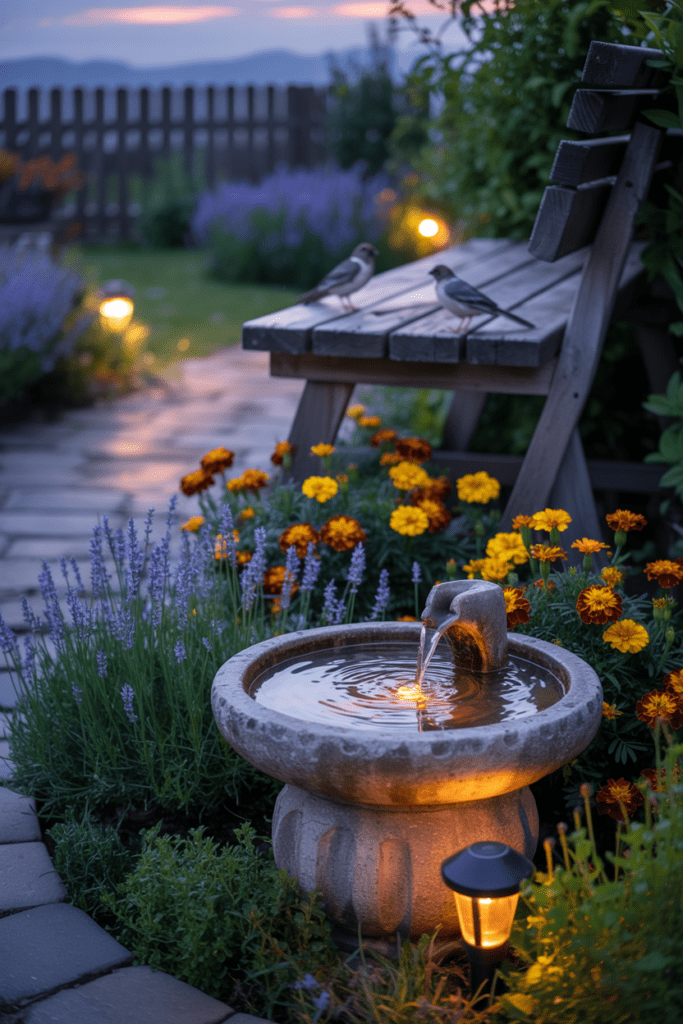
Okay, hear me out: a tiny water feature in your front garden can change the whole vibe. It’s not about size—it’s about sound.
I added a small tabletop fountain to my front garden last year. The sound of trickling water? Instant stress relief. It’s like nature’s white noise.
- Go for small fountains or bird baths with dripping spouts. They’re cheap and effective.
- Place it near the path so you hear it first. Sound travels.
- Use solar pumps to save energy. No wiring, no cost.
No room for a fountain? A bird bath with a gentle drip works too. And hey, birds will thank you. 🐦
I once thought water features were too fancy. But after hearing my first fountain, I realized: it’s not about luxury. It’s about peace.
5. Layer Your Plants (Like a Good Sandwich)
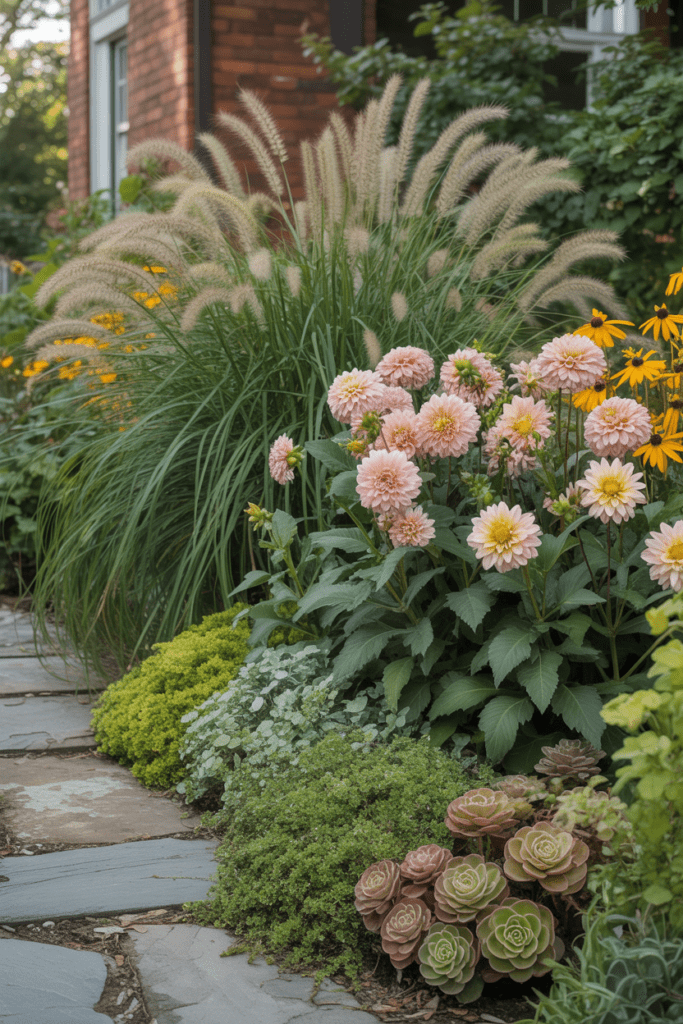
Ever noticed how some gardens look flat while others feel lush? It’s layering. Just like a good sandwich, you need top, middle, and bottom layers.
I plant tall shrubs in the back, mid-height flowers in the middle, and low-growing ground covers in front. This creates depth and makes your garden feel full.
- Back layer: Tall grasses, small trees, or shrubs.
- Middle layer: Flowers, perennials, or ornamental grasses.
- Front layer: Succulents, moss, or creeping plants.
This trick makes even small gardens look bigger. And it’s not just pretty—it’s practical. Layering helps control weeds and retain moisture.
I once planted everything at the same height. It looked flat. Then I layered. Now, it looks like a forest corner.
6. Add Lighting for Nighttime Glamour (Because Gardens Don’t Sleep)
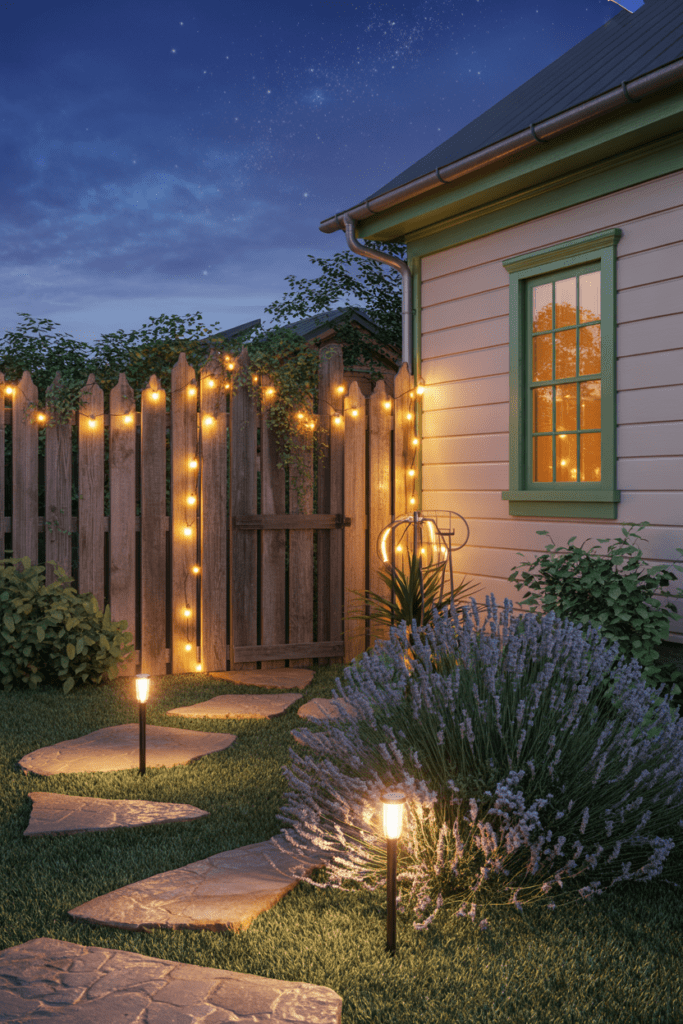
Your garden shouldn’t disappear at sunset. Lighting brings it back to life and makes your front yard glowing by night.
I strung warm LED bulbs along my fence and added solar path lights. Now, my garden looks like a dreamy café after dark.
- Use path lights for safety.
- Hang string lights for ambiance.
- Add spotlights to highlight key plants.
Lighting is cheap, easy, and instantly upgrades your space. Plus, it’s great for security. Who wants a dark house?
7. Use Mulch to Keep It Clean (And Weed-Free)
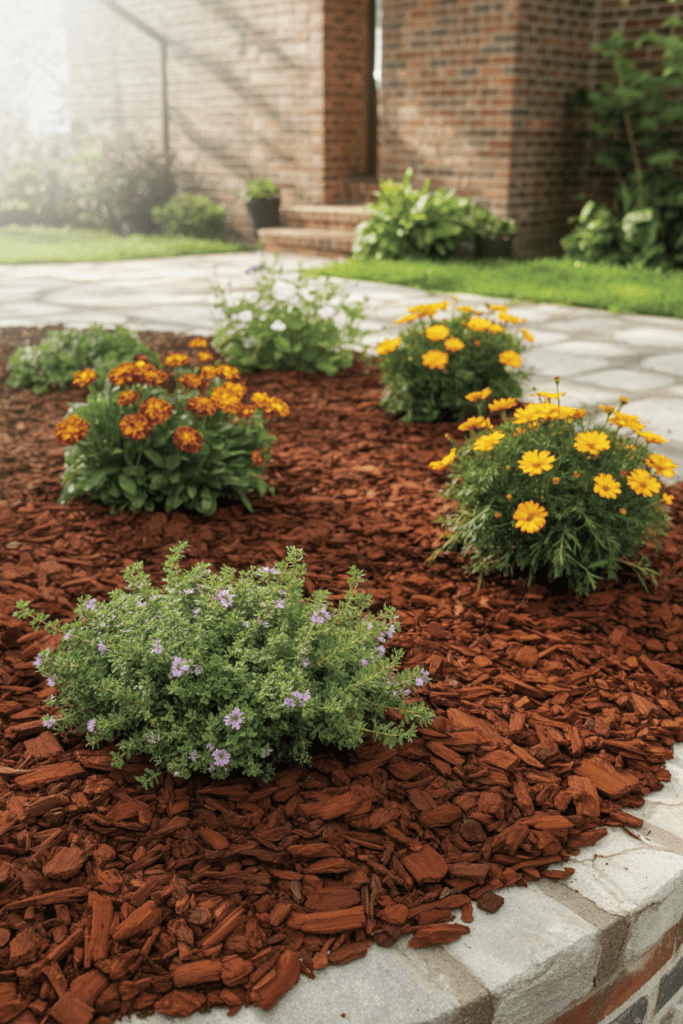
Mulch is the unsung hero of front gardens. It keeps soil moist, blocks weeds, and makes everything look tidy.
I used bare soil for years until I got mulched. Game changer. My garden looked professional in one day.
- Choose organic mulch like wood chips or straw.
- Spread 2–3 inches thick.
- Reapply every 6 months.
Mulch isn’t just pretty—it’s practical. It saves water, reduces weeds, and protects your plants. And it’s so cheap.
8. Plant Native Species (Because Local Plants Know Best)
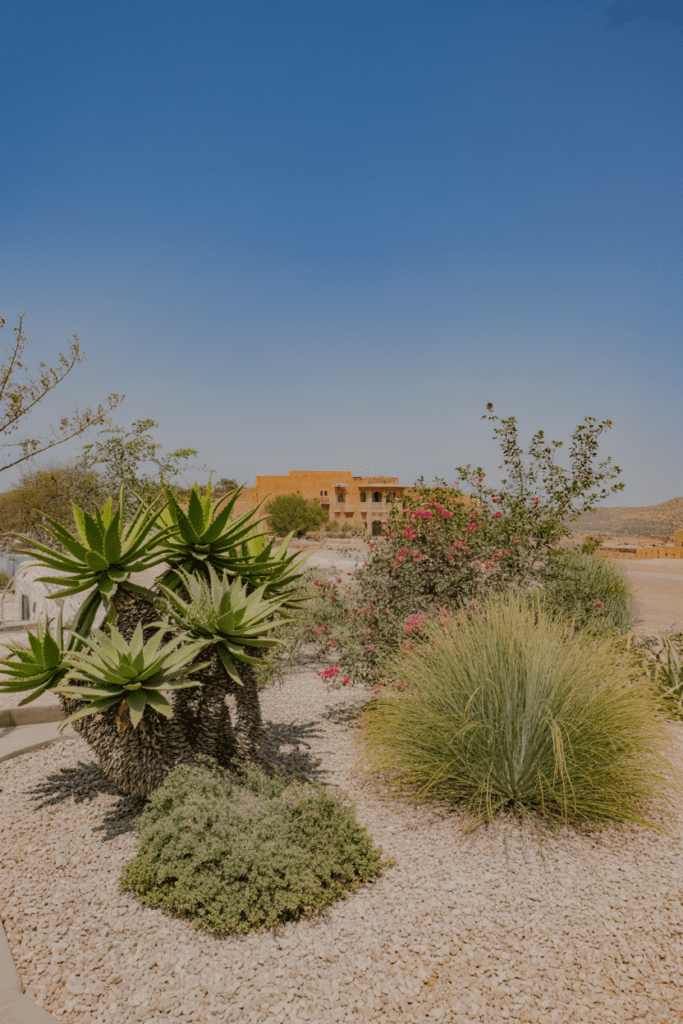
Why fight nature? Native plants are adapted to your local climate, so they need less water, less care, and less drama.
In Rajasthan, I switched to desert-adapted natives likekene, aloe, and hardy grasses. They thrived while my exotic plants died.
- Pick plants native to your region.
- Avoid high-maintenance exotics.
- Group them by water needs.
Native plants are eco-friendly, low-cost, and long-lasting. Plus, they support local pollinators. 🌸🐝
9. Create a Seating Nook (Because Gardens Are for Living)
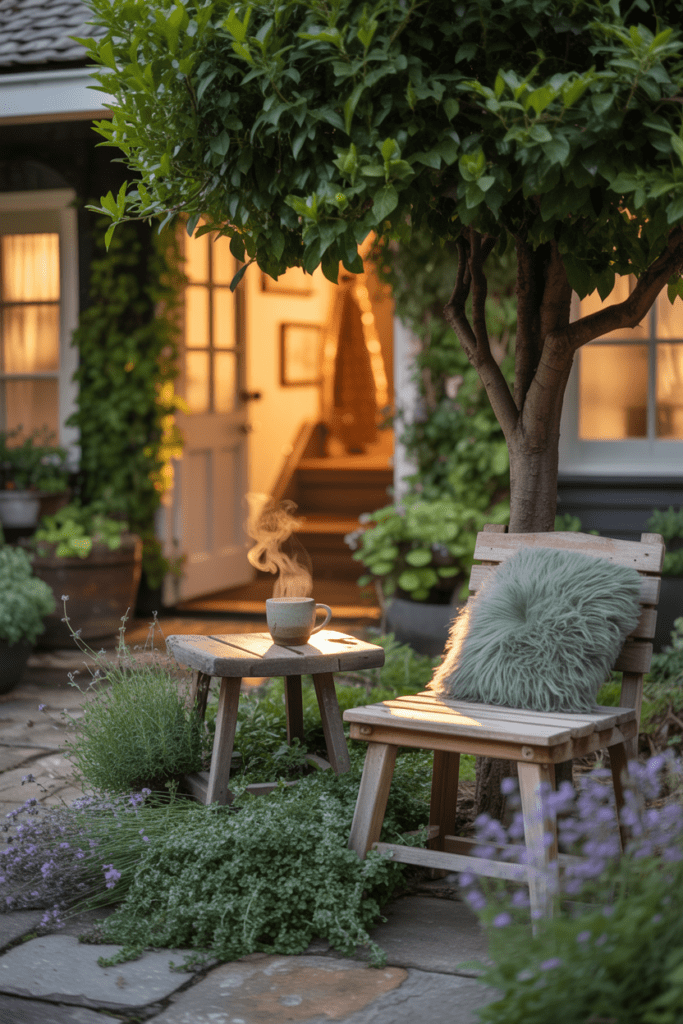
Your front garden isn’t just for looking. It’s for living. A tiny seating spot makes it feel like a room, not just dirt.
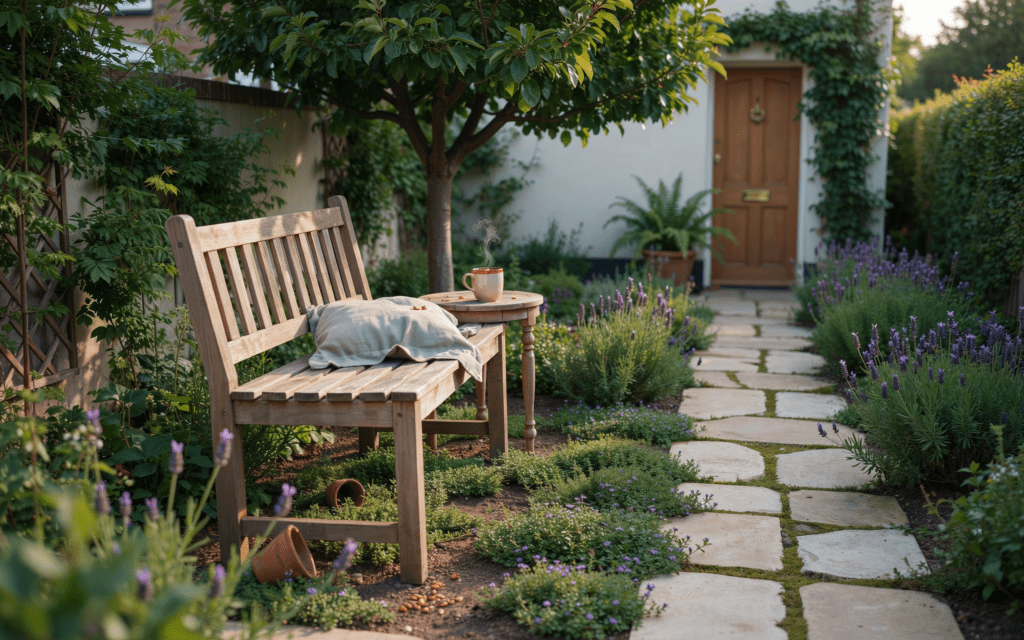
I added a small bench under a tree with a cushion and a side table. Now, I sip chai there every morning. It’s my happy spot.
- Choose weather-resistant furniture.
- Add cushions for comfort.
- Place it near greenery for shade.
Seating turns your garden into a lifestyle space. It’s not just pretty—it’s functional.
10. Use Vertical Gardens (For Small Yards and Big Dreams)
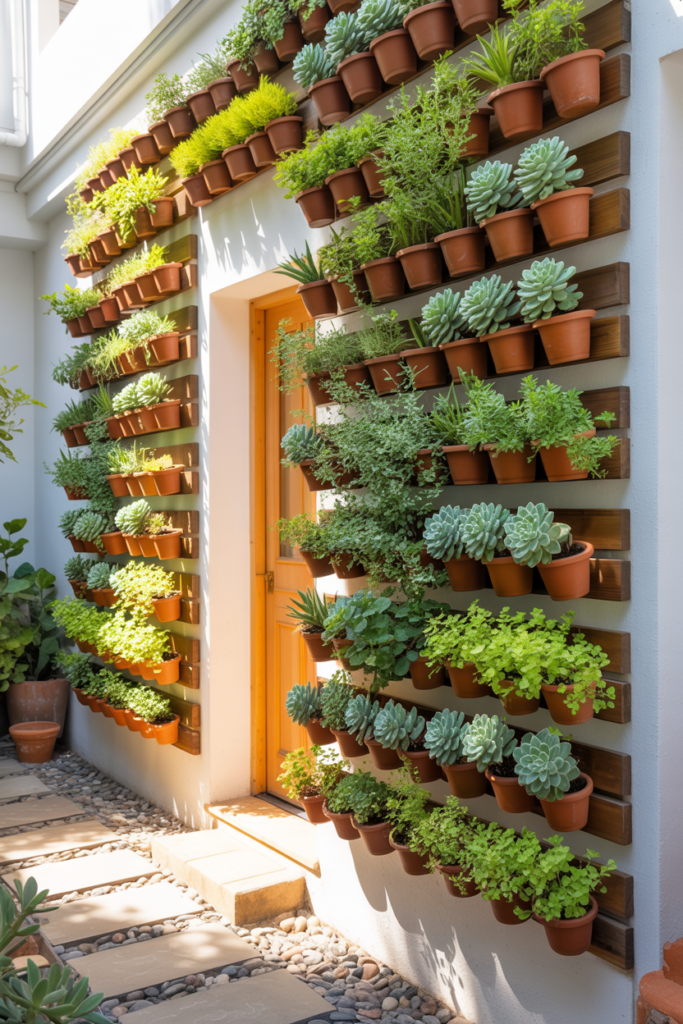
If you’re space-crunched, go vertical. Wall-mounted planters, trellises, or hanging baskets turn walls into gardens.
I hung a vertical planter on my front wall with succulents and herbs. Now, my wall is alive, and I don’t need extra ground.
- Use hanging pots or wall slats.
- Plant lightweight species like succulents.
- Add irrigation for easy care.
Vertical gardens are perfect for apartments, small yards, and renters. Plus, they’re super stylish.
11. Add Decorative Elements (Because Personality Matters)
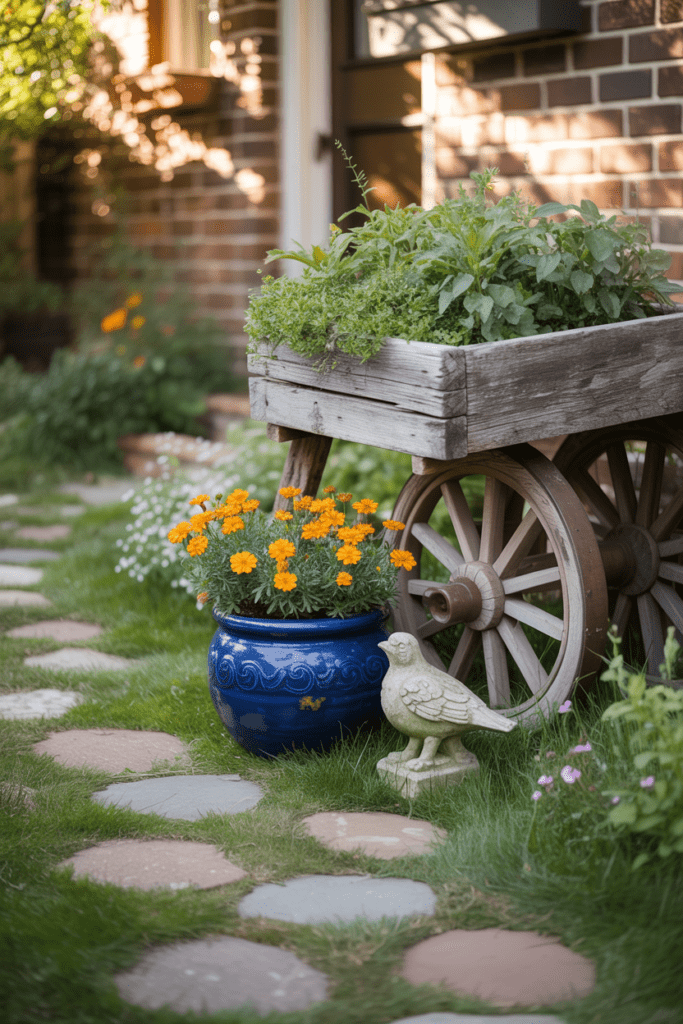
A garden without personality is like a house without a door. Decorative touches make it yours.
I added a rustic wheel, a tiny statue, and a colorful pot. Now, my garden has a story.
- Use repurposed items like old chairs or wheels.
- Add sculptures or wind chimes.
- Paint pots in bold colors.
Decor isn’t just fun—it’s expressive. It shows who you are. And that’s magic.
12. Grow Edibles in Front Beds (Because Food Is Beautiful)
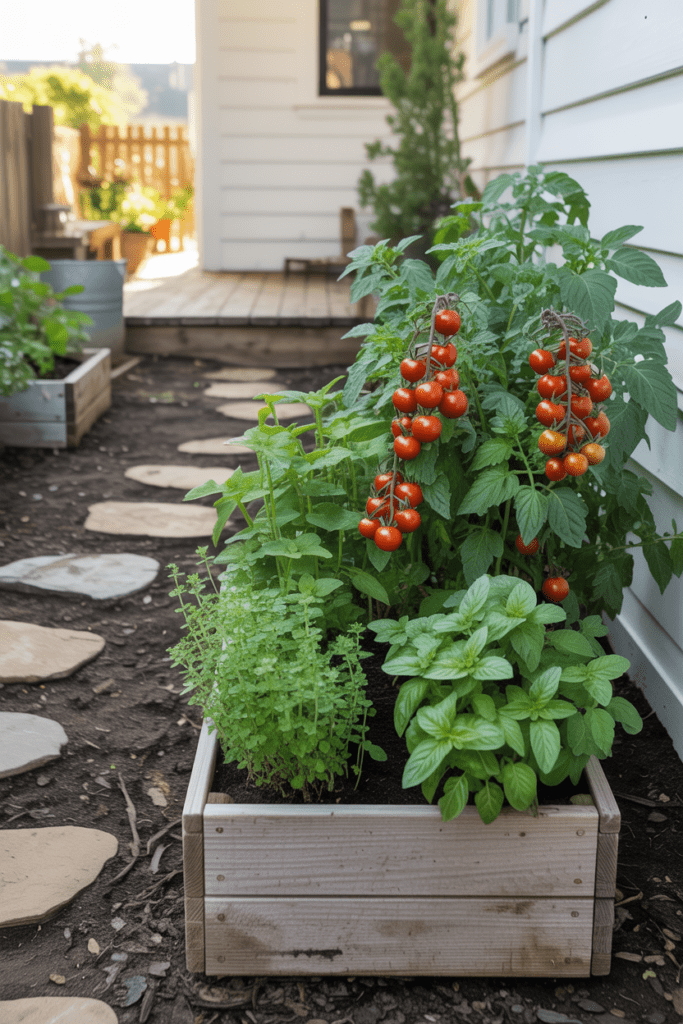
Who says front gardens can’t feed you? Edible plants like herbs, tomatoes, or peppers look great and taste better.
I grew mint, basil, and cherry tomatoes in my front bed. Now, I cook with what I grow. It’s free, fresh, and fun.
- Pick compact edibles for small spaces.
- Use raised beds for better soil.
- Rotate crops for yearly harvest.
Edibles are practical, pretty, and rewarding. Why not eat your garden?
13. Use Ground Covers to Fill Gaps (Like a Green Carpet)
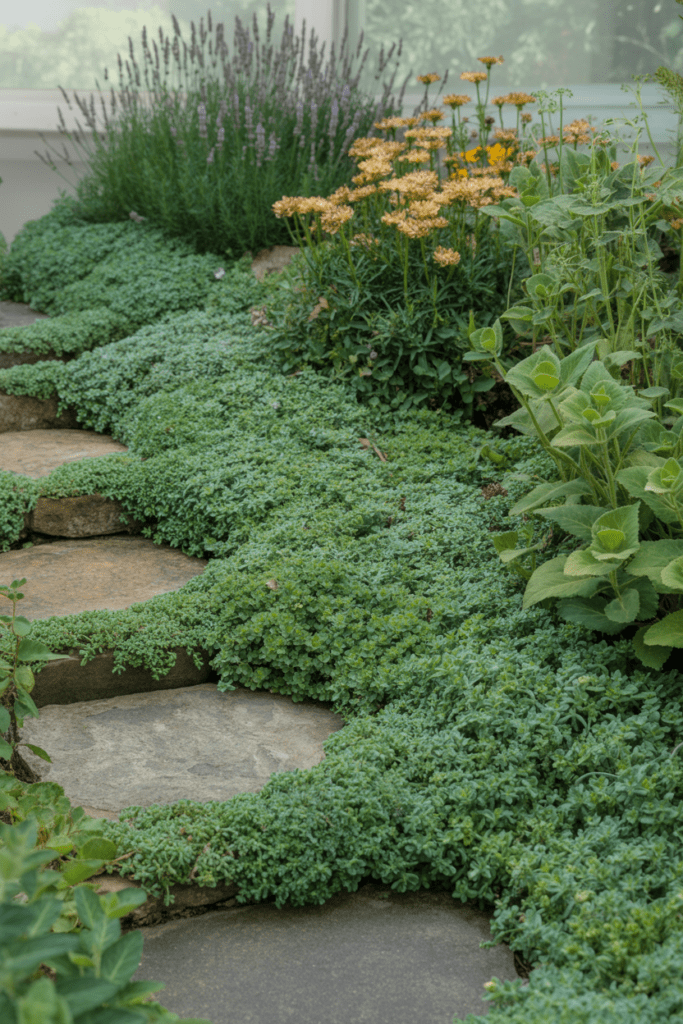
Empty soil? Boring. Ground covers fill gaps, block weeds, and look like a green carpet.
I planted creeping thyme and sedum between my path and flowers. Now, my garden feels complete.
- Choose low-growing, hardy plants.
- Plant in clusters for coverage.
- Water until established.
Ground covers are eco-friendly, low-maintenance, and beautiful. They’re the blanket your garden needs.
14. Add a Small Gate or Arch (Because Entrances Matter)
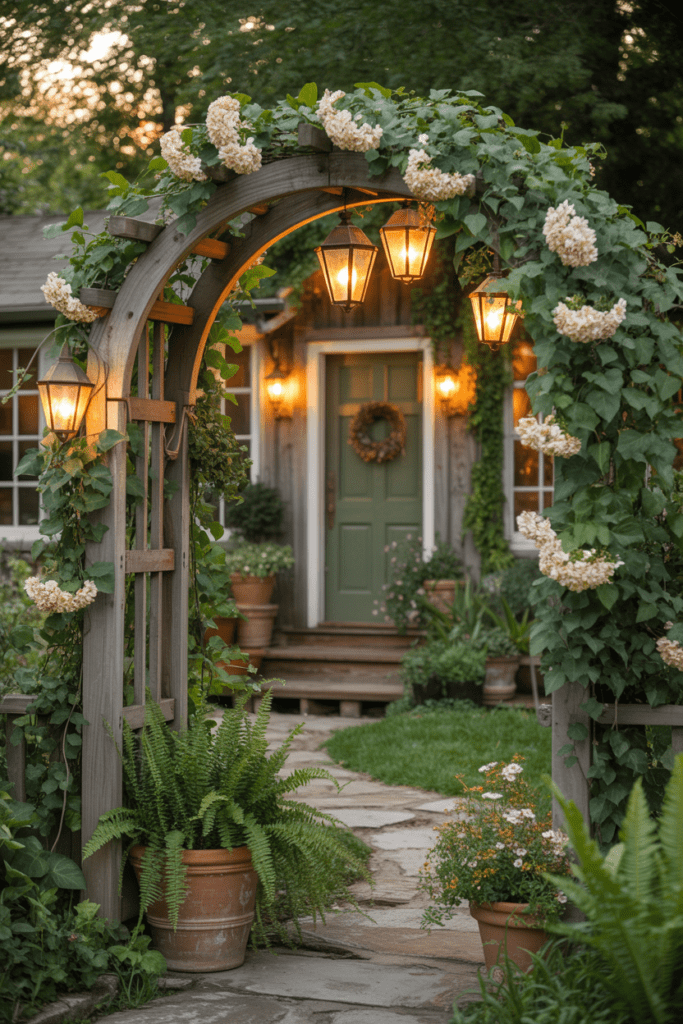
A gate or arch at your front garden entrance makes it feel like a portal to another world.
I added a wooden arch with ivy climbing it. Now, walking in feels like entering a secret garden.
- Use natural materials like wood or stone.
- Add climbing plants for greenery.
- Light it at night for drama.
Gates and arches are symbolic, stylish, and inviting. They say, “You’re home.”
15. Plant in Containers (For Flexibility and Fun)
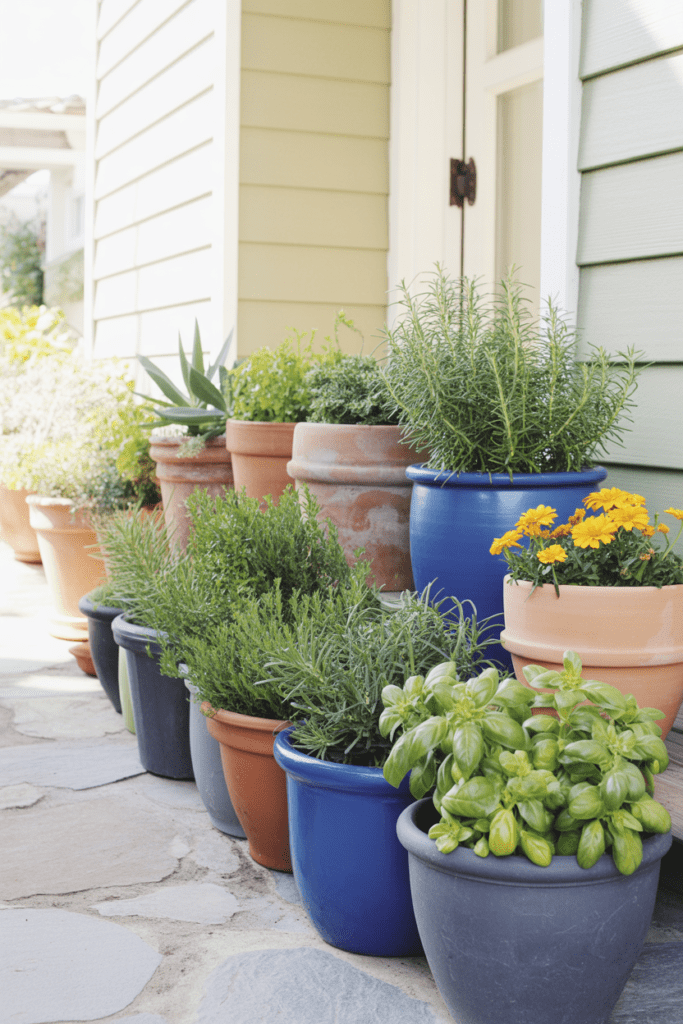
Containers are perfect for renters, small yards, or anyone who wants to experiment.
I switch my container plants every season. Now, I have fresh blooms all year.
- Use weather-resistant pots.
- Pick drought-tolerant plants.
- Move them for fresh looks.
Containers are flexible, cheap, and fun. You can reset your garden without digging.
16. Add a Mini Garden House (For Tools and Charm)
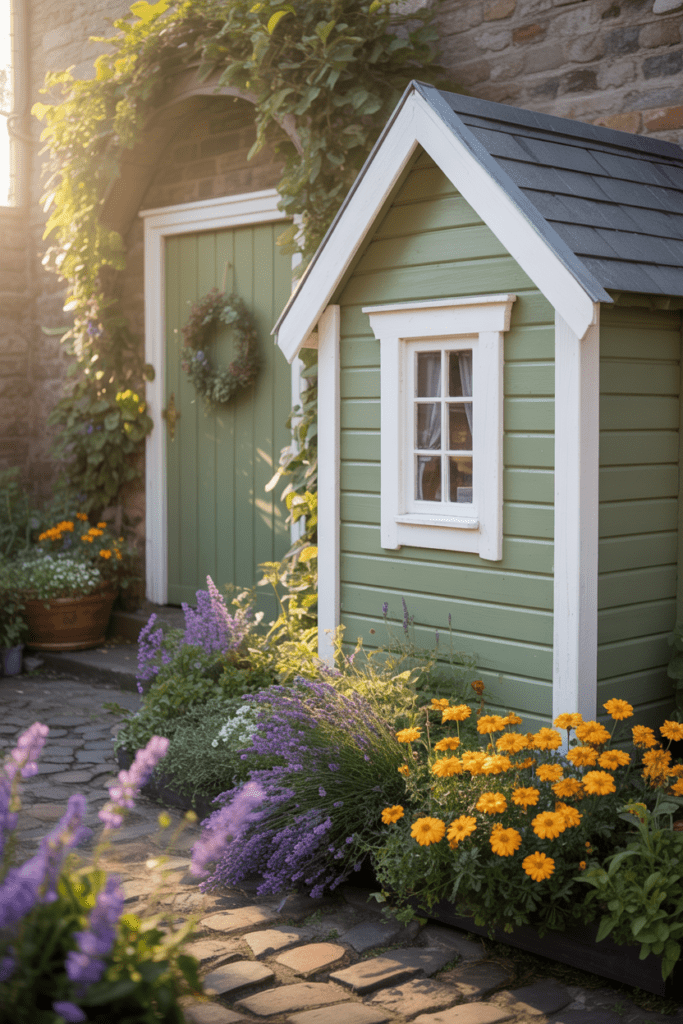
A tiny shed or house in your front garden stores tools and adds charm.
I built a mini wooden house for my tools. Now, my garden looks like a storybook.
- Make it small and neat.
- Paint it in matching colors.
- Add windows for light.
A garden house is practical, cute, and personal. It’s the final touch your garden needs.
17. Keep It Simple (Because Less Is More)
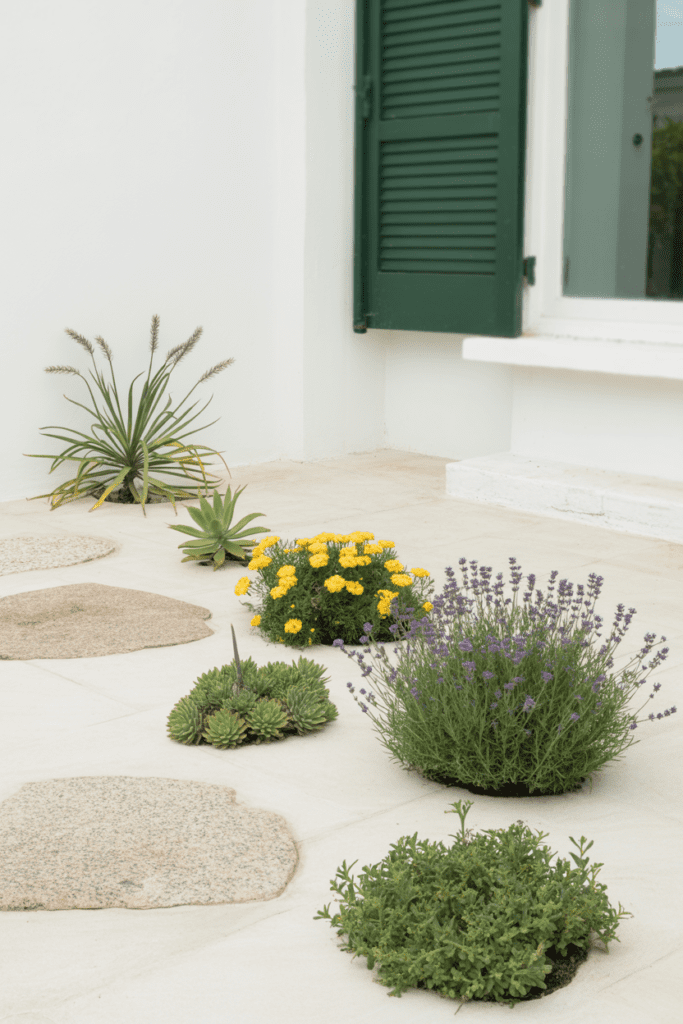
The best gardens aren’t the most complex. Less is more. Keep it clean, simple, and intentional.
I stripped my garden to 5 key plants and 1 path. Now, it’s calm, clear, and beautiful.
- Focus on quality over quantity.
- Avoid overcrowding.
- Edit regularly for freshness.
Simplicity is elegant, easy, and enduring. Your garden should breathe, not scream.
You’ve just got 17 garden ideas that are real, doable, and pure joy. From paths to lighting, from containers to edibles—each one brings your front-of-house space to life.
So, what’s your first move? Pick one idea, try it, and watch your garden bloom. And hey, if you get stuck? Just remember: every garden starts with a single plant. And you’ve got that.
Now go out there, dig in, and make your front yard the first thing people love about your home. Because a garden isn’t just dirt—it’s your story, your peace, and your welcome.
DONT WAIT. START TODAY. 🌱